
11 Books Recommended

Here, in Margaret Jull Costa and Patricio Ferrari’s splendid new translations, are the complete poems of Alberto Caeiro, the imaginary “heteronym” coterie created by Fernando Pessoa, the Portuguese modernist master. Pessoa conceived Caeiro around 1914 and may have named him loosely after his friend, the poet Mário de Sa-Cárrneiro. What followed was a collection of some of Fernando Pessoa’s greatest poems, grouped under the titles The Keeper of Sheep, The Shepherd in Love, and Uncollected Poems. This imaginary author was a shepherd who spent most of his life in the countryside, had almost no education, and was ignorant of most literature; yet he (Pessoa) wrote some of the most beautiful and profound poems in Portuguese literature. This edition of The Complete Works of Alberto Caeiro is based on the magnificent Portuguese Tinta-da-China edition, published in Lisbon in 2016, and contains an illuminating introduction by the Portuguese editors Jerónimo Pizarro and Patricio Ferrari, some facsimiles of the original Portuguese texts, and prose excerpts about Caeiro and his work written by Fernando Pessoa well as his other heteronyms Álvaro de Campos and Ricardo Reis, and other fictitious authors such as Antonio Mora and I. I. Crosse.

La semaine de 4 heures (French Edition)

Le Cygne noir : La Puissance de l'imprévisible
by Nassim Nicholas Taleb
Rating: 3.3 ⭐
• 1 recommendation ❤️
Quel est le point commun entre l'invention de la roue, Pompei, le krach boursier de 1987, Harry Potter et Internet? Pourquoi ne devrait-on jamais lire un journal ni courir pour attraper un train? Que peuvent nous apprendre les amants de Catherine de Russie sur les probabilites? Pourquoi les previsionnistes sont-ils pratiquement tous des arnaqueurs? Ce livre revele tout des Cygnes Noirs, ces evenements aleatoires, hautement improbables, qui jalonnent notre vie: ils ont un impact enorme, sont presque impossibles a prevoir, et pourtant, a posteriori, nous essayons toujours de leur trouver une explication rationnelle. Dans cet ouvrage eclairant, plein d'esprit d'impertinence et bien souvent prophetique, Taleb nous exhorte a ne pas tenir compte des propos de certains experts, et nous montre comment cesser de tout prevoir ou comment tirer parti de l'incertitude.
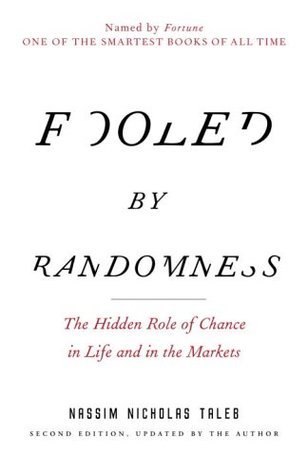
Fooled by Randomness: The Hidden Role of Chance in Life and in the Markets
by Nassim Nicholas Taleb
Rating: 4.1 ⭐
• 1 recommendation ❤️
Fooled by Randomness is a standalone book in Nassim Nicholas Taleb’s landmark Incerto series, an investigation of opacity, luck, uncertainty, probability, human error, risk, and decision-making in a world we don’t understand. The other books in the series are The Black Swan, Antifragile,and The Bed of Procrustes.

Skin in the Game: Hidden Asymmetries in Daily Life
by Nassim Nicholas Taleb
Rating: 4.1 ⭐
• 4 recommendations ❤️
#1 NEW YORK TIMES BESTSELLER - A bold work from the author of The Black Swan that challenges many of our long-held beliefs about risk and reward, politics and religion, finance and personal responsibilityIn his most provocative and practical book yet, one of the foremost thinkers of our time redefines what it means to understand the world, succeed in a profession, contribute to a fair and just society, detect nonsense, and influence others. Citing examples ranging from Hammurabi to Seneca, Antaeus the Giant to Donald Trump, Nassim Nicholas Taleb shows how the willingness to accept one's own risks is an essential attribute of heroes, saints, and flourishing people in all walks of life.As always both accessible and iconoclastic, Taleb challenges long-held beliefs about the values of those who spearhead military interventions, make financial investments, and propagate religious faiths. Among his insights:- For social justice, focus on symmetry and risk sharing. You cannot make profits and transfer the risks to others, as bankers and large corporations do. You cannot get rich without owning your own risk and paying for your own losses. Forcing skin in the game corrects this asymmetry better than thousands of laws and regulations. - Ethical rules aren't universal. You're part of a group larger than you, but it's still smaller than humanity in general. - Minorities, not majorities, run the world. The world is not run by consensus but by stubborn minorities imposing their tastes and ethics on others. - You can be an intellectual yet still be an idiot. "Educated philistines" have been wrong on everything from Stalinism to Iraq to low-carb diets. - Beware of complicated solutions (that someone was paid to find). A simple barbell can build muscle better than expensive new machines. - True religion is commitment, not just faith. How much you believe in something is manifested only by what you're willing to risk for it.The phrase "skin in the game" is one we have often heard but rarely stopped to truly dissect. It is the backbone of risk management, but it's also an astonishingly rich worldview that, as Taleb shows in this book, applies to all aspects of our lives. As Taleb says, "The symmetry of skin in the game is a simple rule that's necessary for fairness and justice, and the ultimate BS-buster," and "Never trust anyone who doesn't have skin in the game. Without it, fools and crooks will benefit, and their mistakes will never come back to haunt them."

Harceler et licencier en toute impunité." L'entreprise a décidé de mettre un terme à votre contrat. " J'annonce à Marie-Antoinette que ses trente années de service prennent fin. Option 1 : un licenciement dont le motif, infamant, reste à inventer ; option 2 : en échange d'une somme d'argent, la victime renonce à nous poursuivre. Surtout, éviter le blocage ; laisser croire au futur chômeur qu'il a une marge de manœuvre... Même si celle-ci revient à choisir entre la peste et le choléra. Objectifs inatteignables, injonctions paradoxales, harcèlement moral, évaluations truquées, propagande corporate... Pour la première fois, un DRH dénonce la collusion entre les ressources humaines et les directions d'entreprise visant à dissoudre le lien social, et à instaurer une culture de la peur. L'auteur révèle ici les techniques froides et cyniques de licenciement abusif, les pratiques scandaleuses et hypocrites de sa fonction qui n'a d'humain que l'adjectif. Les ressources humaines ne sont en réalité que des marionnettes dont les fils sont tirés par le pouvoir en place. Quant à l'individu, il est réduit à un coût que l'entreprise tolère et exploite en attendant de pouvoir s'en passer. Un récit glaçant et décapant sur l'enfer des RH, où tous les coups bas sont permis.
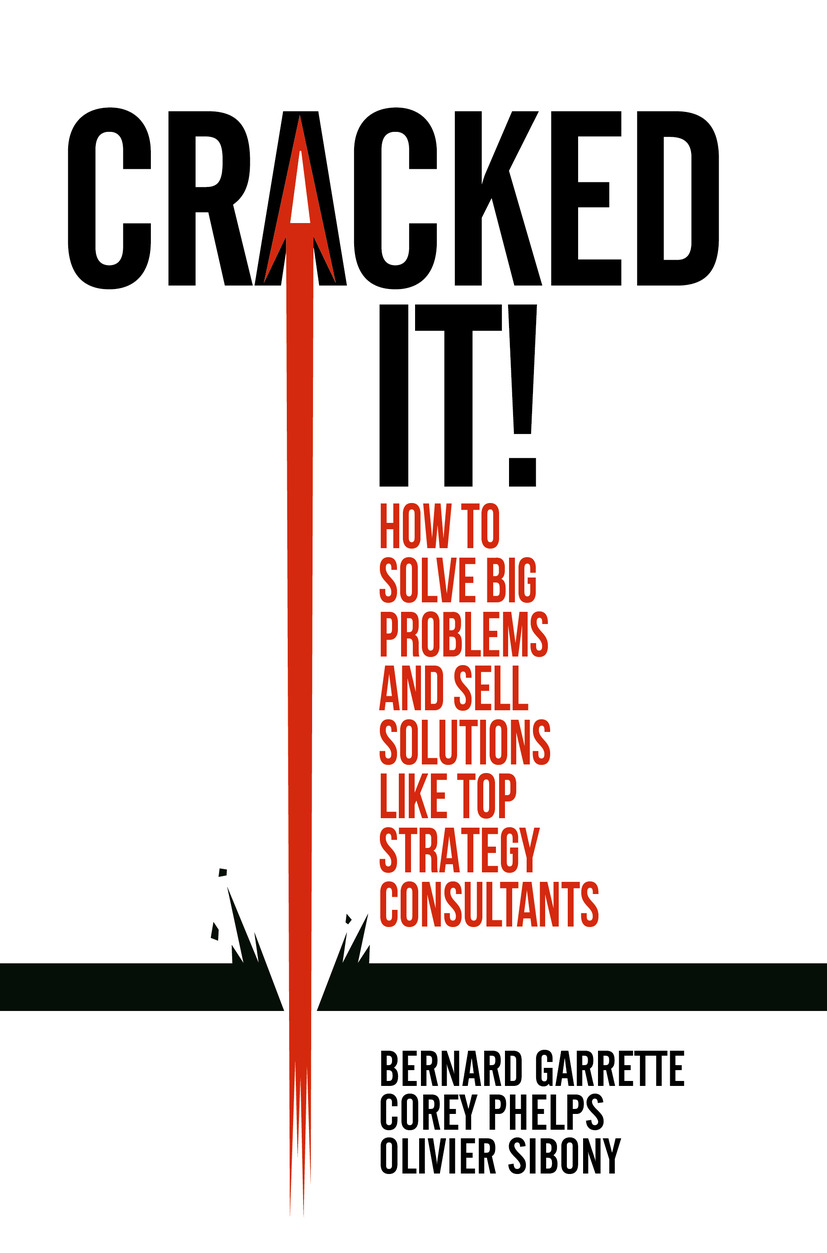
Cracked It! How to solve big problems and sell solutions like top strategy consultants
by Bernard Garrette
Rating: 4.4 ⭐
• 1 recommendation ❤️
Solving complex problems and selling their solutions is critical for personal and organizational success. For most of us, however, it doesn’t come naturally and we haven’t been taught how to do it well. Research shows a host of pitfalls trips us up when we try: We’re quick to believe we understand a situation and jump to a flawed solution. We seek to confirm our hypotheses and ignore conflicting evidence. We view challenges incompletely through the frameworks we know instead of with a fresh pair of eyes. And when we communicate our recommendations, we forget our reasoning isn’t obvious to our audience.How can we do it better?In Cracked It!, seasoned strategy professors and consultants Bernard Garrette, Corey Phelps and Olivier Sibony present a rigorous and practical four-step approach to overcome these pitfalls. Building on tried-and-tested (but rarely revealed) methods of top strategy consultants, research in cognitive psychology, and the latest advances in design thinking, they provide a step-by-step process and toolkit that will help readers tackle any challenging business problem. Using compelling stories and detailed case examples, the authors guide readers through each step in the process: from how to state, structure and then solve problems to how to sell the solutions.Written in an engaging style by a trio of experts with decades of experience researching, teaching and consulting on complex business problems, this book will be an indispensable manual for anyone interested in creating value by helping their organizations crack the problems that matter most.

De la Performance à l'excellence: Devenir une entreprise leader
by Jim Collins
Rating: 3.2 ⭐
• 3 recommendations ❤️

What You Do Is Who You Are: How to Create Your Business Culture
by Ben Horowitz
Rating: 4.3 ⭐
• 1 recommendation ❤️
Ben Horowitz, a leading venture capitalist, modern management expert, and New York Times bestselling author combines lessons both from history and modern organisational practice with practical and often surprising advice to help us build cultures that can weather both good and bad times.The times and circumstances in which people were raised often shape them—yet a few leaders have managed to shape their times. In this follow-up to the bestselling business classic The Hard Thing About Hard Things, Ben Horowitz turns his attention to a question crucial to every organisation: How do you create and sustain the culture you want?This book is a journey through cultures ancient to modern, spotlighting models of leadership and culture-building from the samurai to prison gangs. Along the way, it answers fundamental questions: Who are we? How do people talk about us when we’re not around? How do we treat our customers? Can we be trusted?Because who you are is not the values you list on the wall. It’s not what you say in a company-wide meeting. It’s not your marketing campaign. It’s not even what you believe. Who you are is what you do. This book will help you do the things needed to become the kind of leader you want to be—and others want to follow.

Vous allez commettre une terrible erreur !: Combattre les biais cognitifs pour prendre de meilleures décisions
by Olivier Sibony
Rating: 4.3 ⭐
• 1 recommendation ❤️
Nous prenons tous constamment des décisions. Cela nous semble tellement naturel que nous n’avons pas l’impression d’avoir besoin pour cela d’une méthode particulière… Pourtant, même les meilleurs d’entre nous commettent régulièrement des erreurs prévisibles ! Alors qu’est-ce qu’une bonne décision ? Faut-il se fier à ses intuitions ? Comment remédier aux biais cognitifs qui nous égarent alors que nous n’en avons même pas conscience ? Dans ce livre nourri de son expérience et des derniers travaux de l’économie comportementale, Olivier Sibony passe en revue nos erreurs les plus fréquentes. Il développe une méthode pour les éviter en mobilisant l’intelligence collective, et propose des solutions concrètes pour permettre à chaque lecteur d’inventer son propre «art de décider». Vous allez prendre d’excellentes décisions !

Vous allez redécouvrir le management !: 40 clés scientifiques pour prendre de meilleures décisions (Essais)
by Olivier Sibony
Rating: 4.3 ⭐
• 2 recommendations ❤️
Et si le management était aussi une science ? Voilà une thèse qui fera sourire les « vrais » scientifiques... mais qui, surtout, déroutera les dirigeants aguerris. Face à l'incertitude des décisions quotidiennes, à quoi peuvent-ils se fier, sinon à leur bon sens, à leur expérience et à leur jugement ? Au fil de ses chroniques dans la newsletter Time To Sign Off, Olivier Sibony montre pourtant que ce management superstitieux est source d'innombrables erreurs. Il en développe ici quarante illustrations concrètes et surprenantes, dans des domaines aussi variés que le recrutement, la créativité ou la décision en équipe. Chacun de ces exemples donnera aux managers des clés pour améliorer leurs décisions. Leur réunion dessine une vision moderne du management : une pratique, un art, bien sûr. Mais aussi un domaine où, comme ailleurs, la démarche scientifique s'impose.