
Noam Chomsky Recommended Books
American linguist and activist (born 1928)
87 Books Recommended

Here in their own words are Frederick Douglass, George Jackson, Chief Joseph, Martin Luther King Jr, Plough Jogger, Sacco & Vanzetti, Patti Smith, Bruce Springsteen, Mark Twain & Malcolm X, to name just a few of the hundreds appearing in Voices of a People’s History of the United States, edited by Howard Zinn & Anthony Arnove. Paralleling the 24 chapters of Zinn’s A People’s History of the United States, Voices of a People’s History is the long-awaited companion volume to the national bestseller. For Voices, Zinn & Arnove have selected testimonies to living history—speeches, letters, poems, songs—left by the people who make history happen, but who usually are underrepresented or misrepresented in history books: women, Native Americans, workers, blacks & Latinos. Zinn has written short introductions to the texts, which themselves range in length from letters or poems of less than a page to entire speeches & essays that run several pages & longer. Voices of a People’s History is a symphony of our nation’s original voices, rich in ideas & actions, an embodiment of the power of civil disobedience & dissent, wherein lies our nation’s true spirit of defiance & resilience. Beloved historian & activist Howard Zinn is the author of the best-selling A People’s History of the United States & many other books, including The Zinn Reader (Seven Stories Press 2000), Artists in the Time of War (Seven Stories, 2003) & Terrorism & War (Seven Stories 2002). Anthony Arnove is editor of Terrorism & War by Howard Zinn & Iraq Under Siege. An activist & contributor to ZNet, his work appears in The Nation, The Financial Times & Mother Jones. He lives in Brooklyn, NY.

Rudolf Rockerb's classic survey of anarcho-syndicalism was written during the Spanish Civil War to explain to the wider reading public the ideology which inspired the social revolution in Spain. It remains unsurpassed as a general introduction to anarchist thought and an authoritative account of the early history of international anarchism by one of the movement's leading figures.

Last Reflections On a War: Bernard B. Fall's Last Comments on Viet-Nam
by Bernard B. Fall
• 2 recommendations ❤️
"Last Reflections on a War stands as a fine representative sample of Fall's work as a whole; as such, it is nearly as personal as an autobiography. . . . That the collection includes an excellent outline of Vietnamese history, a discussion of the basic issues of the war, and an emotive picture of Vietnam, 1967, speaks to the depth of Fall's knowledge and the scope of his concerns."- Frances FitzGerald

The first English translation of Guérin’s monumental anthology of anarchism, published here in one volume. It details a vast array of unpublished documents, letters, debates, manifestos, reports, impassioned calls-to-arms and reasoned analysis; the history, organization and practice of the movement—its theorists, advocates and activists; the great names and the obscure, towering legends and unsung heroes.This definitive anthology portrays anarchism as a sophisticated ideology whose nuances and complexities highlight the natural desire for freedom in all of us. The classical texts will re-establish anarchism as both an intellectual and practical force to be reckoned with. Includes writings by Emma Goldman, Kropotkin, Berkman, Bakunin, Proudhon, and Malatesta.Daniel Guérin was the author of Anarchism: From Theory to Practice.In Oakland, California on March 24, 2015 a fire destroyed the AK Press warehouse along with several other businesses. Please consider visiting the AK Press website to learn more about the fundraiser to help them and their neighbors.

Frustrated by the failure of the peace process to end the Israeli occupation, and outraged by Ariel Sharon’s invasion, with one thousand armed guards, of the Al-Aqsa holy site in East Jerusalem, the Palestinian population of Israel and the Occupied Territories rose up in September 2000. A new intifada has raged ever since.In these pages, a group of writers and analysts, many of them directly involved in the conflict, trace the origins of the uprising, its consequences for the Palestinian people and the Israeli state, and its likely impact on the future of peace in the Middle East. They discuss the role of the United States in the conflict, pick apart the fraudulence of the Oslo accords, examine the brutal response of the Barak and Sharon governments, and critically appraise the strategy of the Palestinian leadership. In addition, several contributors provide eloquent first-hand reports from the front-line of the intifada—from the streets of Jerusalem and Gaza, to refugee camps in Lebanon and schools on the West Bank. Photographs provide searing testimony to the heroism and costs of the resistance. Maps illustrate the stranglehold Israel continues to exert over the Palestinian territories. The case for an international grassroots movement in support of Palestinian rights is made with urgency and persuasive clarity.

The Long Peace: Inquiries Into the History of the Cold War
by John Lewis Gaddis
Rating: 4.0 ⭐
• 2 recommendations ❤️
In this fascinating new interpretation of Cold War history, John Lewis Gaddis focuses on how the United States and the Soviet Union have managed to get through more than four decades of Cold War confrontation without going to war with one another.Using recently-declassified American and British documents, Gaddis argues that the postwar international system has contained previously unsuspected elements of stability. This provocative reassessment of contemporary history--particularly as it relates to the current status of Soviet-American relations--will certainly generate discussion, controversy, and important new perspectives on both past and present aspects of the age in which we live.

Bitter Fruit: The Untold Story Of The American Coup In Guatemala
by Stephen C. Schlesinger
Rating: 4.2 ⭐
• 2 recommendations ❤️
From the New York Times - "Though the events in Bitter Firt happened almost 28 years ago. There is an intriguing similarity to some of the phrase-making of the State Department in Central America today... It is a tale of dirty tricks, the manipulation of public opinion.

The Anatomy of the Nuremberg Trials: A Personal Memoir
by Telford Taylor
Rating: 4.3 ⭐
• 2 recommendations ❤️
“A masterly work of military and judicial history.” — New York Times . Telford Taylor’s book is a defining piece of World War II literature, an engrossing and reflective eyewitness account of one of the most significant events of our century.In 1945, the Allied nations agreed on a judicial process, rather than summary execution, to determine the fate of the Nazis following the end of World War II. Held in Nuremberg, the ceremonial birthplace of the Nazi Party, the British, American, French, and Soviet leaders contributed both judges and prosecutors to the series of trials that would prosecute some of the most prominent politicians, military leaders and businessmen in Nazi Germany.This is the definitive history of the Nuremberg crimes trials by one of the key participants, Telford Taylor, the distinguished lawyer who was a member of the American prosecution staff and eventually became chief counsel. In vivid detail, Taylor portrays the unfolding events as he “saw, heard, and otherwise sensed them at the time, and not as a detached historian working from the documents might picture them.” Table of 1 Nuremberg and the Laws of War2 The Nuremberg Ideas3 Justice Jackson Takes Over4 Establishing the The London Charter5 The Defendants and the Krupp and the German General Staff6 Berlin to Nuremberg7 Pretrial Pains and Problems8 On Trial9 The Nuremberg War Crimes Community10 The SS and the General Staff—High Command11 Individual Defendants, Future Trials, and Criminal Organizations12 The French and Soviet Prosecutions13 The Goering and Hess14 The “Murderers’ Row”15 The Bankers and Admirals16 The The Last Nine17 The Closing Arguments18 The Indicted Organizations19 The Defendants’ Last Words20 The Judgments of Solomons21 Law, Crime, and PunishmentTaylor describes personal vendettas among the Allied representatives and the negotiations that preceded the handing down of sentences. The revelations have not lost their power over the The chamber is reduced to silence when an SS officer recounts impassively that his troops rounded up and killed 90,000 Jews, and panic overcomes the head of the German State Bank as it becomes clear that he knew his institution was receiving jewels and other valuables taken from the bodies of concentration camp inmates.

The Politics of Heroin: CIA Complicity in the Global Drug Trade
by Alfred W. McCoy
Rating: 4.4 ⭐
• 2 recommendations ❤️
A stunning exposé of official hypocrisy, The Politics of Heroin probes the failure of the U.S. “war on drugs” and meticulously documents CIA complicity in international drug trafficking both during and after the Cold War – in Afghanistan, Southeast Asia, Central America, and Latin America. The consequences of this complicity are evident today in an eruption of heroin trafficking worldwide, just as the legacy of the CIA’s covert wars is manifest in vast regions that have become black holes of global instability.After five U.S. drug wars at a cost of over $150 billion, production and consumption of narcotics are currently at record levels. Drug prosecutions in America have packed our prisons without curtailing drug use. This book confronts the utter failure of U.S. drug policy at home and abroad, and raises disturbing questions about the future role of the Central Intelligence Agency in U.S. foreign policy.

In conjunction with the Jawaharlal Nehru Memorial Fund in New Delhi, Oxford proudly announces the reissue of Glimpses of World History and The Discovery of India, two famous works by Jawaharlal Nehru. One of modern day's most articulate statesmen, Jawaharlal Nehru wrote a on a wide variety of subjects. Describing himself as "a dabbler in many things," he committed his life not only to politics but also to nature and wild life, drama, poetry, history, and science, as well as many other fields. These two volumes help to illuminate the depth of his interests and knowledge and the skill and elegance with which he treated the written word!!

Written 75 years ago, 1984 was George Orwell’s chilling prophecy about the future. And while 1984 has come and gone, his dystopian vision of a government that will do anything to control the narrative is timelier than ever...This 75th Anniversary Edition includes:• A New Introduction by Dolen Perkins-Valdez, author of Take My Hand, winner of the 2023 NAACP Image Award for Outstanding Literary Work—Fiction• A New Afterword by Sandra Newman, author of Julia: A Retelling of George Orwell’s 1984“The Party told you to reject the evidence of your eyes and ears. It was their final, most essential command.”Winston Smith toes the Party line, rewriting history to satisfy the demands of the Ministry of Truth. With each lie he writes, Winston grows to hate the Party that seeks power for its own sake and persecutes those who dare to commit thoughtcrimes. But as he starts to think for himself, Winston can’t escape the fact that Big Brother is always watching...A startling and haunting novel, 1984 creates an imaginary world that is completely convincing from start to finish. No one can deny the novel’s hold on the imaginations of whole generations, or the power of its admonitions—a power that seems to grow, not lessen, with the passage of time.• Nominated as one of America’s best-loved novels by PBS’s The Great American Read •

Arabs and Jews describe the first Arab-Israeli war of 1948 in completely different ways. Among Arabs, and especially Palestinians, the events of that year are known as the ""nakba"" - the catastrophe, the trauma, the disaster. For Jews, and in particular for Israelis, their victory in the war of 1948 is a veritable miracle in which, against tremendous odds and through heroic military effort, the Jewish community succeeded in thwarting attempts by the Arab states to destroy it.This book integrates new archival material with the findings of recent scholarship to present the reader with a comprehensive and general history of the origins and consequences of the 1948 war. The author shows, in sharp contrast to the recollections and myths of both sides, that the military events of 1948 were not decisive. The victory of the Zionist organization and the fate of the Palestinians was determined by politicians on both sides - in the discussions and decisions of the United Nations in 1947-8 and in the Arab League - long before a shot had been fired. The author argues that Israel's failure to take advantage of the genuine opportunity for peace with the Arabs at the UN-sponsored Lausanne Conference in 1949 resulted in the prolonged and tragic conflict between Israel and the Arab states still very much alive today.

The United States and the Origins of the Cuban Revolution by Benjamin, Jules R. published by Princeton University Press
by Jules R. Benjamin
• 2 recommendations ❤️
In persuasive detail this work analyzes the kind of misreading of ardent nationalism that continues to plague U.S. policymaking.

Is the United States a force for democracy? This overview of US foreign policy presents an impressive catalog of cases showing how, since World War II, the CIA has helped engineer the downfall of legitimate, democratically elected governments throughout the world. Covering US interventions in more than fifty countries, this book describes the grim role played by the United States in overthrowing governments, perverting elections, assassinating leaders, suppressing revolutions, manipulating trade unions, and manufacturing “news.”

Out of Control: The Story of the Reagan Administration's Secret War in Nicaragua, the Illegal Arms Pipeline & the Contra Drug Connection
by Leslie Cockburn
Rating: 4.1 ⭐
• 2 recommendations ❤️
For two years the author had been investigating the secret funding of the Contras by the White House. Here, she identifies the network of National Security Council staff (led by Colonel Oliver North), CIA operatives & ex-agents who set up this illegal support system, after the passage of the Boland Amendment in 10/1984 which made it illegal for the US government to give direct or indirect aid to the Contras. There is a detailed account of how mercenaries were recruited from all over the world & sent to CIA-run training bases in Costa Rica; how money was obtained thru various means, ranging from the Iran arms deal to an arrangement with cocaine smugglers bringing drugs into Florida in return for quarterly payments into Contra bank accounts; how guns were procured, flown to US-controlled military bases in Central America & then delivered into the hands of the Contras. The author, a British journalist, worked for CBS News beginning in 1978.

Ruthless Criticism: New Perspectives in U.S. Communication History
by WJohn C. Nerone
• 2 recommendations ❤️
Ruthless Criticism was first published in 1993. Minnesota Archive Editions uses digital technology to make long-unavailable books once again accessible, and are published unaltered from the original University of Minnesota Press editions.Ruthless Criticism offers perspectives and subjects largely outside traditional historiography. It broadens the concept of media history to include lesser-studied media, and offers alternative interpretations of traditional media.This anthology of original research includes an array of scholarly and theoretical perspectives. Each addresses specific topic within a specific era. reflecting the diversity of U.S. mass media.Solomon and McChesney begin by using critical theory and deconstruction to examine the meanings of print in the colonial era. Subsequent chapters study the media ecology of the antebellum press; the intense focus on profits of the post-Civil War mainstream press; gender images in the labor press; the diversity of political views within the working-class press; and the development of a commercial press in the black community.The essays concerning the twentieth century focus on the rise of a culture industry and include studies on the origins of the broadcast ratings system and the commercial broadcast system and the commercial broadcast system, early television's portrayals of childhood, the televisions networks' close ties with the federal government, the government's key role in creating and developing the field of mass communication research, and teenage girls' popular culture from 1960–1968 as a formative influence on the feminist movement.

Nicaragua: The Price of Intervention : Reagan's Wars Against the Sandinistas
by Peter Kornbluh
Rating: 3.9 ⭐
• 2 recommendations ❤️
Book by Kornbluh, Peter

Selling Free Enterprise: The Business Assault on Labor and Liberalism, 1945-60
by Elizabeth A. Fones-Wolf
Rating: 4.3 ⭐
• 2 recommendations ❤️
The post-World War II years in the United States were marked by the business community's efforts to discredit New Deal liberalism and undermine the power and legitimacy of organized labor. In Selling Free Enterprise , Elizabeth Fones-Wolf describes how conservative business leaders strove to reorient workers away from their loyalties to organized labor and government, teaching that prosperity could be achieved through reliance on individual initiative, increased productivity, and the protection of personal liberty. Based on research in a wide variety of business and labor sources, this detailed account shows how business permeated every aspect of American life, including factories, schools, churches, and community institutions.

The grand, leading principle, towards which every argument . . . unfolded in these pages directly converges, is the absolute and essential importance of human development in its richest diversity.This description by Wilhelm von Humboldt of his purpose in writing The Limits of State Action animates John Stuart Mill's On Liberty and serves as its famous epigraph. Seldom has a book spoken so dramatically to another writer. Many commentators even believe that Humboldt's discussion of issues of freedom and individual responsibility possesses greater clarity and directness than Mill's. The Limits of State Action, by "Germany's greatest philosopher of freedom," as F. A. Hayek called him, has an exuberance and attention to principle that make it a valuable introduction to classical liberal political thought. It is also crucial for an understanding of liberalism as it developed in Europe at the turn of the nineteenth century. Humboldt explores the role that liberty plays in individual development, discusses criteria for permitting the state to limit individual actions, and suggests ways of confining the state to its proper bounds. In so doing, he uniquely combines the ancient concern for human excellence and the modern concern for what has come to be known as negative liberty.J. W. Burrow is Professor of History at the University of Sussex.

Culture, Inc.: The Corporate Takeover of Public Expression
by Herbert Irving Schiller
Rating: 3.9 ⭐
• 2 recommendations ❤️
Most Americans take for granted that they live in an open society with a free market of ideas. But as Herbert Schiller reveals in Culture, Inc. , the corporate arm has reached into every corner of daily life, and from the shopping mall to the art gallery, big-business influence has broughtabout some frightening changes in American culture. Examining the effects of fifty years worth of corporate growth on American culture, Schiller argues that corporate control over such arenas of culture as museums, theaters, performing arts centers, and public broadcasting stations has resulted ina broad manipulation of consciousness as well as an insidious form of censorship. A disturbing but enlightening picture of corporate America, Culture, Inc. exposes the agenda and methods of the corporate cultural takeover, reveals the growing threat to free access to information at home andabroad, shows how independent channels of expression have been greatly restricted, and explains how the few keep managing to benefit from the many.

In the Name of Democracy: U.S. Policy Toward Latin America in the Reagan Years
by Thomas Carothers
Rating: 3.8 ⭐
• 2 recommendations ❤️
This is the first comprehensive, even-handed examination of U.S. policy in Latin America during the Reagan era. Drawing on interviews with United States officials and his own perspective as a former State Department lawyer, Carothers sheds new light on the much-discussed U.S. involvements in Nicaragua, El Salvador, and Panama, and turns up varied and often unexpected findings in less-studied countries such as Bolivia, Costa Rica, Paraguay, and Chile.

Cambodia 1975-1982 presents a unique and carefully researched analysis of the Democratic Kampuchea regime of Pol Pot and the Khmer Rouge (1975-79) and the early years of the People's Republic of Kampuchea (1979-89). When it was first published in 1984, the book provided one of the few balanced and reasoned voices in a world shocked by media reports of incredible brutality. Now, 15 years later, the book remains unsurpassed as an original historical document bringing a new interpretation based on the earliest primary sources - interviews with the Khmer people themselves.

The Quality of Mercy: Cambodia, Holocaust and Modern Conscience
by William Shawcross
Rating: 4.0 ⭐
• 2 recommendations ❤️
Examines the work of international relief organizations, such as UNICEF, CARE, the Red Cross, OXFAM, and the World Council of Churches, in Cambodia

Inevitable Revolutions: The United States in Central America
by Walter F. LaFeber
Rating: 4.1 ⭐
• 2 recommendations ❤️
This book explains the history of US/Central American relations, explaining why these countries have remained so overpopulated, illiterate and violent; and why US government notions of economic and military security combine to keep in place a system of Central American dependency. This second edition is updated to include new material covering the Reagan and Bush years, and the Iran/Contra affair.

Instruments of Statecraft: U.S. Guerrilla Warfare, Counterinsurgency, and Counterterrorism 1940-1990
by Michael Mc Clintock
Rating: 4.2 ⭐
• 2 recommendations ❤️
Uses recently declassified documents to survey the American use of covert warfare against terrorists and adversarial states

Collusion Across the Jordan: King Abdullah, the Zionist Movement, and the Partition of Palestine
by Avi Shlaim
Rating: 4.1 ⭐
• 2 recommendations ❤️
Recounts the secret negotiations between the Zionist leaders and the Hashemite rulers

Panic Rules!: Everything You Need to Know about the Global Economy
by Robin Hahnel
• 2 recommendations ❤️
A witty and accessible manual to the global economic crisis.

Bringing together an outstanding group of thinkers, Worlds in Collision is the essential book for understanding the debate about the future of global order in the wake of international terrorism and the war in Afghanistan. For years to come, if not decades, the 'war on terrorism' will be the defining paradigm in the struggle for global order. When the victim of such horrific terror attacks happens to be the world's only superpower, the agenda is set for the future global order. This book, offering a comprehensive and provocative collection of viewpoints from leading intellectuals from a number of countries, will help readers understand the ways in which our worlds collided on September 11, 2001. Not only does it comprehensively address the first phase of the war against international terrorism, the book also looks at the wider regional and global ramifications. Worlds in Collision is ultimately about more than the war on terrorism, it concerns itself with the possibilities for re-shaping global order on the basis of new kinds of politics.

An extraordinarily wide-ranging book which brings within a single view the wars which created Europe's empires. Beginning with the post-Napoleonic era, it presents all the major episodes of an often dramatic story in which the military agents of European imperialism met the peoples of the rest of the world in armed conflict. Brilliant sketches of far-off battles and campaigns are interwoven with the changing balance of economic and political power, until the colonial liberation movements turned the tables in the aftermath of the Second World War.

The Real Terror Network: Terrorism in Fact and Propaganda
by Edward S. Herman
Rating: 4.1 ⭐
• 2 recommendations ❤️
A devastating expose of U.S. foreign policy which separates the myth of an "international terrorist conspiracy" from the reality.

U.S. Policy Toward Economic Nationalism in Latin America, 1917-1929
by Michael L. Krenn
Rating: 3.0 ⭐
• 2 recommendations ❤️
Krenn, Michael L.

Award-winning reporter Jason Burke shows how the threat from Islamic terrorism comes not from a single criminal mastermind, or even from one group. In this revealing account, he characterizes it is a broad movement with profound roots in the politics, societies and history of the Islamic world. Using hundreds of interviews and thousands of documents, Burke shows how ""Al-Qaeda"" is a convenient label applied misleadingly to a diverse, disorganized global movement dedicated to fighting a ""cosmic battle"" with the West. This is the definitive account of the mysterious organization, retelling its story from scratch and challenging many myths that threaten the very foundations of the ""War on Terror.""

An account of U.S. policy from the Sandinista revolution through the Iran-contra scandal and beyond. Sklar shows how the White House sabotaged peace negoatiations and sustained the deadly contra war despite public opposition, with secret U.S. special forces and an auxiliary arm of dictators, drug smugglers and death squad godfathers, and illuminates an alternative policy rooted in law and democracy.

Reflections on the Cuban Missile Crisis: Revised to include New Revelations from Soviet & Cuban Sources
by Raymond L. Garthoff
Rating: 3.3 ⭐
• 2 recommendations ❤️
The Soviet response to the first edition of Reflections has been a prime example of the new openness under glasnost in discussing previously taboo subjects. Using new revelations—such as the fact that Moscow had twice as many troops in Cuba as the Kennedy administration believed—from key Soviet and Cuban Sources, Garthoff has revised his earlier analysis to produce the most accurate, eye-opening story yet of the 1963 crisis. In this book Raymond L. Garthoff, a participant in the crisis deliberations of the U.S. government, reflects on the nature of the crisis, it's consequences, and it's lessons for the future. He provides a unique combination of memoir, historical analysis, and political interpretations. He gives particular attention to the aftermath and "afterlife" of the crisis and to its bearing on current and future policy. In the first edition of the book in 1987 the Garthoff presented a number of facts for the first time. Since then, more information has become available, particularly form Soviet sources, in part from conferences in which Garthoff participated but even more from individual interviews and research. This new information, much of it presented here in this volume for the first time, helps to fill in gaps in our knowledge about events and motivations on the Soviet side. More importantly, it enlarges our understanding of the crisis interaction.

Expulsion of the Palestinians: The Concept of "Transfer" in Zionist Political Thought, 1882-1948
by Nur Masalha
Rating: 4.1 ⭐
• 2 recommendations ❤️
In this meticulous work, based almost entirely on Hebrew archival material, Nur Masalha examines the Zionist concept of "transfer," or the expulsion of the Palestinian population to neighboring Arab lands. Masalha establishes the extent to which "transfer" was embraced by the highest levels of Zionist leadership, including virtually all the Founding Fathers of the Israeli state.
To determine the causes of the current socio-economic crisis of the United States and to draw appropriate political conclusions, it is essential to understand how the system evolved toward its present condition. Accumulation and Power helps provide this understanding by showing how the development of corporate enterprises and the corresponding emergence of a class structure composed primarily of capitalists and wage laborers caused fundamental metamorphoses in the processes of competition, aggregate-demand determination, and state policy making. Richard Du Boff demonstrates that although this transformation entailed an unprecedented development of productive capacity, the end result was a system in which the socially-rational utilization of this productive capacity conflicts with the overriding objective of the capitalist class: "to maintain control over the profit-making environment and to keep unwelcome incursions into it bottled up."(Paul Burkett, Feb. 1993)
Confronting the Third World: United States Foreign Policy, 1945-1980
by Gabriel Kolko
Rating: 4.2 ⭐
• 2 recommendations ❤️
Analyzes U.S. foreign policy towards the Middle East and Latin America, and argues that the U.S. has often created political instability

A provocative discussion of recent wars and the issues that surround them, written by a preeminent political theoristMichael Walzer is one of the world’s most eminent philosophers on the subject of war and ethics. Now, for the first time since his classic Just and Unjust Wars was published almost three decades ago, this volume brings together his most provocative arguments about contemporary military conflicts and the ethical issues they raise.The essays in the book are divided into three sections. The first deals with issues such as humanitarian intervention, emergency ethics, and terrorism. The second consists of Walzer’s responses to particular wars, including the first Gulf War, Kosovo, Afghanistan, and Iraq. And the third presents an essay in which Walzer imagines a future in which war might play a less significant part in our lives. In his introduction, Walzer reveals how his thinking has changed over time.Written during a period of intense debate over the proper use of armed force, this book gets to the heart of difficult problems and argues persuasively for a moral perspective on war.

Mark Twain's Weapons of Satire: Anti-imperialist Writings on the Philippine-American War
by Mark Twain
Rating: 4.0 ⭐
• 2 recommendations ❤️
Mark Twain was described by a contemporary newspaper as the "most influential anti-imperialist and the most dreaded critic of the sacrosanct person in the White House that the country contains." Although not a pacifist, Twain was the most prominent opponent of the Philippine-American War. Today, however, this aspect of Mark Twain's career is barely known. His writings on the war have never been collected in a single volume, and a number of them are published here for the first time. Although he was a vice president of the Anti-Imperialist League from 1901 to 1910, until now no thorough study had been made of his relationship with the organized opposition to the war. Drawing upon the unpublished manuscripts of Mark Twain and various leaders of the League, Jim Zwick's Introduction and headnotes provide the most complete account of Twain's involvement in the anti-imperialist movement. Mark Twain's writings sparked intense controversy when they were written. Readers will appreciate the continuing relevance and quotability of his statements on the abuse of patriotism, the "treason" of requiring school children to salute the flag, the right to dissent, the importance of self-government, and the value of America's democratic and anticolonial traditions. This book will prove valuable to all who are interested in Twain and his works as well as to teachers of literature, peace studies, and history.

A Preponderance of Power: National Security, the Truman Administration, and the Cold War
by Melvyn P. Leffler
Rating: 3.9 ⭐
• 2 recommendations ❤️
In the United States the Cold War shaped our political culture, our institutions, and our national priorities. Abroad, it influenced the destinies of people everywhere. It divided Europe, split Germany, and engulfed the Third World. It led to a feverish arms race and massive sales of military equipment to poor nations. For at least four decades it left the world in a chronic state of tension where a miscalculation could trigger nuclear holocaust. Documents, oral histories, and memoirs illuminating the goals, motives, and fears of contemporary U.S. officials were already widely circulated and studied during the Cold War, but in the 1970s a massive declassification of documents from the Army, Navy, Air Force, the Joint Chiefs of Staff, the Department of Defense, and some intelligence agencies reinvigorated historical study of this war which became the definitive conflict of its time. While many historians used these records to explore specialized topics, this author marshals the considerable available evidence on behalf of an overall analysis of national security policy during the Truman years. To date, it is the most comprehensive history of that administration's progressive embroilment in the Cold War.
The Uses of Haiti tells the truth about uncomfortable matters—uncomfortable, that is, for the structures of power and the doctrinal framework that protects them from scrutiny. It tells the truth about what has been happening in Haiti, and the US role in its bitter fate .—Noam Chomsky, from the introduction In this third edition of the classic The Uses of Haiti , Paul Farmer looks at what has happened to the health of the poor in Haiti since the coup. Winner of a McArthur Genius Award, Paul Farmer is a physician and anthropologist who has worked for 25 years in Haiti, where he serves as medical director of a hospital serving the rural poor. He is the subject of the Tracy Kidder biography, Mountains Beyond Mountains .

Taking the Risk Out of Democracy: Corporate Propaganda versus Freedom and Liberty
by Alex Carey
Rating: 4.3 ⭐
• 2 recommendations ❤️
A collection of his essays (several of them previously unpublished) on corporate propaganda were published "Taking the Risk Out of Democracy: Propaganda in the U.S. and Australia" (University of New South Wales Press). This book was reissued in 1997 by University of Illinois Press under the title "Taking the Risk Out of Democracy: Corporate Propaganda versus Freedom and Liberty".

The Crisis of Democracy: Report on the Governability of Democracies to the Trilateral Commission
by Michel Crozier
Rating: 3.5 ⭐
• 2 recommendations ❤️
The Crisis of Democracy: On the Governability of Democracies was initially a 1975 report written by Michel Crozier, Samuel P. Huntington, and Joji Watanuki for the Trilateral Commission and later published as a book.The report observed the political state of the United States, Europe and Japan and says that in the United States the problems of governance "stem from an excess of democracy" and thus advocates "to restore the prestige and authority of central government institutions."

In his explosive new book, Mark Curtis reveals a new picture of Britain's role in the world since 1945 and in the 'war against terrorism' by offering a comprehensive critique of the Blair government's foreign policy. Curtis argues that Britain is an 'outlaw state', often a violator of international law and ally of many repressive regimes. He reasons not only that Britain's foreign policies are generally unethical but that they are also making the world more dangerous and unequal. The Web of Deceit describes the staggering gulf that has arisen between New Labour's professed commitment to upholding ethical values and the reality of current policies. It outlines the new phase in global intervention, the immorality of British policy in Afghanistan, Kosovo, Iraq and Indonesia and support for repressive governments in Israel, Russia, Turkey and Saudi Arabia. Curtis also reveals Britain's acquiescence in the Rwanda genocide and economic policies in the World Trade Organisation that are increasing poverty and inequality around the world. Drawing on formerly secret government files, the book also shows British complicity in the slaughter of a million people in Indonesia in 1965; the depopulation of the island of Diego Garcia; the overthrow of governments in Iran and British Guiana; repressive colonial policies in Kenya, Malaya and Oman; and much more.

The role of human rights in United States policy toward Latin America is the subject of this study. It covers the early sixties to 1980, a period when humanitarian values came to play an important role in determining United States foreign policy. The author is concerned both with explaining why these values came to impinge on government decision making and how internal bureaucratic processes affected the specific content of United States policy.Originally published in 1981.The Princeton Legacy Library uses the latest print-on-demand technology to again make available previously out-of-print books from the distinguished backlist of Princeton University Press. These editions preserve the original texts of these important books while presenting them in durable paperback and hardcover editions. The goal of the Princeton Legacy Library is to vastly increase access to the rich scholarly heritage found in the thousands of books published by Princeton University Press since its founding in 1905.

The people of East Timor voted overwhelmingly in August 1999 for independence and an end to Indonesian occupation. In this updated and much expanded edition of Indonesia's Forgotten The Hidden History of East Timor (Zed Books, rev ed 1994), John Taylor tells the story of what happened following President Suharto's overthrow. The new government conceded the right of the United Nations to organise the long delayed referendum giving the East Timorese a choice between continued association with Indonesia or independence. At the very moment the historic vote was being counted, armed gangs organised by the Indonesian military plunged the island into an orgy of killing, burning and forced flight. John Taylor analyses the world's reaction to this new genocide of the East Timorese people, the despatch of a peacekeeping force, and the prospects of independence.

Image and Reality of the Israel-Palestine Conflict
by Norman G. Finkelstein
Rating: 4.3 ⭐
• 2 recommendations ❤️
This acclaimed study surveys the dominant popular and scholarly images of the Israel–Palestine conflict. Finkelstein opens with a theoretical discussion of Zionism, locating it as a romantic form of nationalism that assumed the bankruptcy of liberal democracy. He goes on to look at the demographic origins of the Palestinians, with particular reference to the work of Joan Peters, and develops critiques of the influential studies of both Benny Morris and Anita Shapira. Reviewing the diplomatic history with Aban Eban‘s oeuvre as his foil, Finkelstein closes by demonstrating that the casting of Israel as the innocent victim of Arab aggression in the June 1967 and October 1973 wars is not supported by the documentary record. This new edition critically reexamines dominant popular and scholarly images in the light of the current failures of the peace process.

Facing West: The Metaphysicis of Indian-Hating and Empire-Building
by Drinnon, Richard
Rating: 4.2 ⭐
• 2 recommendations ❤️
American expansion, says Richard Drinnon, is characterized by repression and racism. In his reinterpretation of "winning" the West, Drinnon links racism with colonialism and traces this interrelationship from the Pequot War in New England, through American expansion westward to the Pacific, and beyond to the Phillippines and Vietnam. He cites parrallels between the slaughter of bison on the Great Plains and the defoliation of Vietnam and notes similarities in the language of aggression used in the American West, the Philippines, and Southeast Asia.

The Record of the Paper: How the New York Times Misreports US Foreign Policy
by Howard Friel
Rating: 4.0 ⭐
• 2 recommendations ❤️
When the New York Times finally apologized for its coverage of Iraq’s weapons of mass destruction in 2004, it was too late. The newspaper had already supported the invasion. The Bush administration was not only violating international law, it was lying to the public, using major media like the Times to spread its message.In this meticulously researched study—the first part of a two-volume work—Howard Friel and Richard Falk demonstrate how the newspaper of record in the United States has consistently, over the last 50 years, misreported the facts related to the wars waged by the United States. From Vietnam in the 1960s to Nicaragua in the 1980s and Iraq today, the authors accuse the New York Times of serial distortions. They claim that such coverage now threatens not only world legal order but constitutional democracy in the United States.Falk and Friel show, for example, that, despite numerous US threats to invade Iraq, and despite the fact that an invasion of one country by another implicates fundamental aspects of the UN Charter and international law, the New York Times editorial page never mentioned the words “UN Charter” or “international law” in any of its 70 editorials on Iraq from September 11, 2001, to March 20, 2003. The authors also show that the editorial page supported the Bush administration’s WMD claims against Iraq, and that its magazine, op-ed and news pages performed just as poorly.In conclusion the authors suggest an alternative editorial policy of “strict scrutiny” that incorporates the UN Charter and the US Constitution in the Times coverage of the use and threat of force by the United States and the protection of civil and human rights at home and abroad.

Little notice has been paid to the growing ethnic and religious tensions within the Serbian province of Kosovo-tensions that now pose a serious threat to the security of the Balkans. Miranda Vickers explores the roots of this conflict, and tracks the recent trajectory of Serbian and Albanian relations in Kosovo. The first third of the book outlines the history of Kosovo during the medieval and Ottoman periods, when relations between the two communities were generally good. The second part of the book examines Kosovo since 1945, when the area fell under Serbian administration in the socialist Yugoslav system. Vickers concludes by surveying the steady deterioration in Serb-Albanian relations since the disintegration of Yugoslavia in 1981. With careful detail, she reveals how a largely peaceful, politically driven campaign for the independence of Kosovo has recently turned to violence with terrorist attacks on Serb political and military institutions, on Albanians thought to be collaborating with the Serbs, and on Serbs themselves. In the process, the author provides a balanced account of the Serb and Albanian positions, while placing much of the blame for the current situation on the repressive policies of Serb dictator Slobodan Milosevic.

Israel's Border Wars, 1949-1956: Arab Infiltration, Israeli Retaliation, and the Countdown to the Suez War
by Benny Morris
Rating: 4.1 ⭐
• 2 recommendations ❤️
This book looks at the development of Israeli-Arab relations during the formative years 1949 to 1956, focusing on Arab infiltration into Israel and Israeli retaliation. Palestinian refugee raiding and cross-border attacks by Egyptian-controlled irregulars and commandos were a core phenomenon during this period and one of the chief causes of Israel's invasion of Sinai and the Gaza strip in 1956.Benny Morris probes the types of Arab infiltration and the attitude of Arab governments towards the phenomenon, and traces the evolution of Israel's defensive and offensive responses. He analyzes Israeli decision-making processes, including the emergence and ultimate failure of Foreign Minister Moshe Sharett's dissident policy of moderation, and describes in detail the history of the Arab infiltration, including the terrorist-guerrilla raids by state-organized Fedayeen in 1955-6, and of the IDF raids of Qibya, Nahhalin, Kinneret, and the Sabha.This was a precedent-setting period in the making of Israeli defense policy, and this pattern of raiding and counter-raiding served to define Israeli-Arab relations during the subsequent four decades. In this pioneering study Morris deepens our understanding of the current situation in the Middle East and of the prospects for a lasting peace there.

This seminal work on political economy and the foundation of the modern market economy was originally published in 1776. Rich in historical background and acute observations of the 18th-century scene, Adam Smith's masterpiece of economic analysis is also an insightful work of political philosophy. Its revolutionary concepts, including the notion that self-interest stimulates the healthiest economic conditions for all, remain influential with politicians and economists alike.

Politicide: Ariel Sharon's War Against the Palestinians
by Baruch Kimmerling
Rating: 3.8 ⭐
• 2 recommendations ❤️
Ariel Sharon was one of the most experienced, shrewd and frightening leaders of the new millennium. Despite being found both directly and indirectly responsible for acts considered war crimes under international law, he became Prime Minister of Israel, a political victory he won by provoking the Palestinians into a new uprising, the second intifada. From the beginning of his career Sharon was regarded as the most brutal, deceitful and unrestrained of all the Israeli generals and politicians. A man of monstrous vision, his attempts to destroy the Palestinian people have included the proposal to make Jordan the Palestinian state and the now infamous invasion of Lebanon in 1982, which resulted in the Sabra and Shatila massacre.Baruch Kimmerling’s new book describes Sharon’s quest to reshape the whole geopolitical landscape of the Middle East. He describes how Sharon is committed to politicide, the destruction of the Palestinian political identity, and how won the support of powerful elements within Israeli society and the American administration in order to achieve this. Kimmerling exposes the brutality of Sharon and his junta’s ‘solutions’, and constructs a devastating indictment of a man whose cruelty and ruthlessness have resulted in widespread and indiscriminate slaughter.

Humanitarian Intervention: The United Nations in an Evolving World Order
by Sean D. Murphy
Rating: 5.0 ⭐
• 2 recommendations ❤️
Over the centuries, societies have gradually developed constraints on the use of armed force in the conduct of foreign relations. The crowning achievement of these efforts occurred in the mid-twentieth century with the general acceptance among the states of the world that the use of military force for territorial expansion was unacceptable. A central challenge for the twenty-first century rests in reconciling these constraints with the increasing desire to protect innocent persons from human rights deprivations that often take place during civil war or result from persecution by autocratic governments. Humanitarian Intervention is a detailed look at the historical development of constraints on the use of force and at incidents of humanitarian intervention prior to, during, and after the Cold War.

The American Occupation of Japan: The Origins of the Cold War in Asia
by Michael Schaller
Rating: 3.4 ⭐
• 2 recommendations ❤️
In this novel and intriguing book, Michael Schaller traces the origins of the Cold War in Asia to the postwar occupation of Japan by U.S. troops. Determined to secure Japan as a bulwark against both Soviet expansion and Asian revolution, the U.S. instituted ambitious social and economic reforms under the direction of the flamboyant Occupation Commander, General Douglas MacArthur. MacArthur was later denounced by the Truman Administration as a "bunko artist" who had wrecked Japan's economy and opened it to Communist influence, and power was shifted to Japan's old elite. Cut off from its former trading partners, which were now all Communist-controlled, Japan, with U.S. backing, turned its attention to the rich but unstable Southeast Asian states. The stage was thus set for U.S. intervention in China, Korea, and Vietnam.
The idea that the United States can and should help Latin America achieve democracy has been a recurrent theme in U.S. foreign policy throughout the twentieth century. By the 1990s, it had become virtually unchallenged doctrine, broadly supported on a bipartisan basis. Yet no systematic and comparative study of U.S. attempts to promote Latin American democracy has ever been published ― and the policy community often seems unaware of this history. In Exporting Democracy, Abraham F. Lowenthal and fourteen other noted scholars from the United States, Latin America, and Europe explore the motives, methods, and results of U.S. efforts to nurture Latin American democracy. Contributors focus on four periods when such efforts were most the years from World War I to the Great Depression, the period immediately following World War II, the 1960s, and the Reagan years. The book tells a cautionary tale ― revealing that U.S. efforts to export democracy in the Americas have met with little enduring success and often have had counterproductive effects. Exporting Democracy is available in two paperback volumes, each introduced by Abraham Lowenthal and organized for convenient course use. In the first paperback volume, Themes and Issues, contributors and their topics are Paul W. Drake, From Good Men to Good 1912-1932; Leslie Bethell, From the Second World War to the Cold 1944-1954; Tony Smith, the Alliance for The 1960s; Thomas Reagan The 1980s; Elizabeth A. Cobbs, U.S. Self-Interest and Neutrality; Paul G. Buchanan, The Impact of U.S. Labor; John Sheahan, Economic Forces and U.S. Policies; Laurence Whitehead, The Imposition of Democracy; Abraham F. Lowenthal, The United States and Latin American Learning from History. In the second paperback volume, Case Studies, the contributors and their topics Carlos Escude, The Costs of Contradiction; Heraldo Munoz, The Limits of "Success"; Jonathan Hartlyn, The Dominican The Legacy of Intermittent Engagement; Lorenzo Meyer, The Exception and the Rule; Joseph Tulchin and Knut Walter, The Limits of Intervention; Elizabeth A. Cobbs, U.S. Self-Interest and Neutrality; Paul G. Buchanan, The Impact of U.S. Labor; John Sheahan, Economic Forces and U.S. Policies; Laurence Whitehead, The Imposition of Democracy; Abraham F. Lowenthal, The United States and Latin American Learning from History.

Danger and Survival: Choices About the Bomb in the First Fifty Years
by McGeorge Bundy
Rating: 3.6 ⭐
• 2 recommendations ❤️
Traces the evolution of the nuclear bomb from its conception in the 1930s to the present-day threat of a nuclear holocaust

Empire Of Fortune: Crowns, Colonies & Tribes in the Seven Years War in America
by Francis Jennings
Rating: 3.7 ⭐
• 2 recommendations ❤️
“ Empire of Fortune is vintage Jennings. He writes with as much flair and involvement as his predecessors, while challenging their assumptions and research at every turn. No one has done more to demystify the early American ‘wilderness’ or worked harder to dynamite the anglocentric folktales of colonial history.” ―Peter H. Wood, Duke University The third volume of the "Covenant Chain" trilogy, this work restores the Indians to the history of colonial America as human beings and shatters the myth of their savagery. It also revises the popular images of Wolfe and Montcalm.
The new epilogue to Condemned to Repetition covers events, such as the Arias peace plan and the debate over funding for the Contras, through February 1988.

John Quincy Adams and American Global Empire
by William Earl Weeks
Rating: 3.5 ⭐
• 2 recommendations ❤️
This is the story of a man, a treaty, and a nation. The man was John Quincy Adams, regarded by most historians as America's greatest secretary of state. The treaty was the Transcontinental Treaty of 1819, of which Adams was the architect. It acquired Florida for the young United States, secured a western boundary extending to the Pacific, and bolstered the nation's position internationally. As William Weeks persuasively argues, the document also represented the first determined step in the creation of an American global empire.Weeks follows the course of the often labyrinthine negotiations by which Adams wrested the treaty from a recalcitrant Spain. The task required all of Adams's skill in diplomacy, for he faced a tangled skein of domestic and international controversies when he became secretary of state in 1817. The final document provided the United States commercial access to the Orient―a major objective of the Monroe administration that paved the way for the Monroe Doctrine of 1823.Adams, the son of a president and later himself president, saw himself as destined to play a crucial role in the growth and development of the United States. In this he succeeded. Yet his legendary statecraft proved bittersweet. Adams came to repudiate the slave society whose interests he had served by acquiring Florida, he was disgusted by the rapacity of the Jacksonians, and he experienced profound guilt over his own moral transgressions while secretary of state. In the end, Adams understood that great virtue cannot coexist with great power.Weeks's book, drawn in part from articles that won the Stuart Bernath Prize, makes a lasting contribution to our understanding of American foreign policy and adds significantly to our picture of one of the nation's most important statesmen.

The Great Transformation: The Political and Economic Origins of Our Time
by Karl Polanyi
Rating: 4.2 ⭐
• 6 recommendations ❤️
In this classic work of economic history and social theory, Karl Polanyi analyzes the economic and social changes brought about by the "great transformation" of the Industrial Revolution. His analysis explains not only the deficiencies of the self-regulating market, but the potentially dire social consequences of untempered market capitalism. New introductory material reveals the renewed importance of Polanyi's seminal analysis in an era of globalization and free trade.

Safe for Democracy: The Anglo-American Response to Revolution, 1913-1923
by Lloyd C. Gardner
Rating: 3.7 ⭐
• 2 recommendations ❤️
This ground-breaking book probes the way that two capitalist superpowers, Great Britain and the United States, responded to the momentous challenge of revolution that emerged during the early years of this century. Focusing on two key figures--Woodrow Wilson and David Lloyd George--the book explores the collective impact on the Western democracies of the revolutions that swept Mexico in 1910, China in 1911, and, especially, Russia in 1917.

The Kennedy Tapes: Inside the White House during the Cuban Missile Crisis
by Ernest R. May
Rating: 4.3 ⭐
• 2 recommendations ❤️
The closest most of us will ever come to being inside the Oval Office at a moment of crisis. For sheer drama, this work of history may never be duplicated. The events of the Cuban Missile Crisis unfold in the actual words of President John F. Kennedy and his top advisers. Now available in a new, concise edition, this book retains its gripping sense of history in the making."[A] splendid achievement, as powerful and exciting a book as one is likely to read this year...."―Barry Gewen, New York Times Book Review "Gripping history."―Richard J. Tofel, Wall Street Journal "[M]esmerizing. I was utterly fascinated....the best, fullest account of crisis yet and will remain so for decades to come."―Stephen E. Ambrose "[A]s close as most people will ever get to being a fly on the wall during the discussions of leaders."― Los Angeles Times Sunday Book Review , James G. Blight 20 photographs
Just the Facts: A Civilian's Guide to U.S. Defense and Security Assistance to Latin America and the Caribbean
by Joy Olson
• 2 recommendations ❤️

Written during and after the Persian Gulf War, this anthology includes original research and in-depth analysis of U.S. foreign policy and its domestic repercussions. The contributors look at the war abroad and at home, addressing race, gender, geo-politics, ecology, economics, and the movement for peace and justice.

Right Turn: The Decline of the Democrats and the Future of American Politics
by Thomas Ferguson
Rating: 4.3 ⭐
• 2 recommendations ❤️
A critical assessment of the 1984 election analyzes the decay of the Democratic party and the rise of a business-oriented political coalition in the GOP

The initial two essays, "Domestic Structure and Foreign Policy" and "Central Issues of American Foreign Policy," appeared in the original edition of this volume and have been retained as backdrops for fifteen major addresses delivered by Mr. Kissinger over the past four years. The new selections include a statement to Congress that traces the main lines of d�tente policy; a review of the step-by-step process of negotiations in the Middle East; an analysis of efforts to achieve accords, with the Soviet Union on strategic arms limitation without imperiling American national security; a speech to the United Nations on the imperative of establishing a balanced global approach to economic development and resource conservation; several papers that candidly appraise prospects for new ties between the United States and the nations of Asia, Africa, and Latin America; and one that sets forth measures to strengthen the bonds among the industrial democracies. In their scope and detail, these documents constitute a remarkable set of designs, blueprints, and working drawings by a master architect of foreign policy.

Ponting's text challenges the Churchill myth, declaring that much of the accepted interpretation of Churchill's life stems from his own writings about himself. Using source material released during the past 25 years, it questions his competence as a war leader and the true level of his popularity.

The Politics of Health Policy: The U.S. Reforms, 1980 - 1994
by Vicenç Navarro
Rating: 5.0 ⭐
• 2 recommendations ❤️
This book analyzes the federal health policies followed by Reagan, Bush, and Clinton and by the Democratic-controlled Congress. The book shows the connection between the crisis of health care and the correlation of class forces in America.

A Peace Denied: The United States, Vietnam, and the Paris Agreement
by Gareth Porter
Rating: 4.0 ⭐
• 2 recommendations ❤️
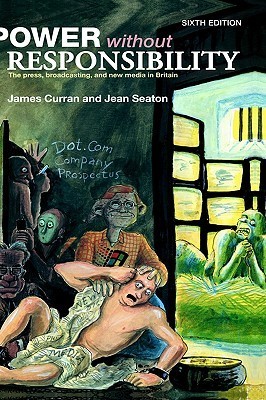
Power Without Responsibility: Press, Broadcasting and the Internet in Britain
by James Curran
Rating: 4.7 ⭐
• 2 recommendations ❤️
Widely regarded as the standard book on the British Media, this authoritative introduction to the history, sociology, theory and politics of media and communications studies has been substantially revised and updated to bring it up to date with developments in the media industry. Its three new chapters describe the battle for the soul of the internet, the impact of the internet on society and the rise of new media in Britain. In addition it examines the recuperation of the BBC, how international and European regulation is changing the British media and why Britain has the least trusted press in Europe.

Kennedy's Quest For Victory: American Foreign Policy, 1961-1963
by
Rating: 3.0 ⭐
• 2 recommendations ❤️
Also available in paperback. Please see page 00 for a full description.

Leonard W. Levy's Legacy of Suppression so disturbed Supreme Court Justice Hugo L. Black that he called it "one of the mosts devastating blows that has been delivered against civil liberty for a long time."Published in 1960, this book challenged the liberal interpretation of the First Amendment by claiming that the framers of the Constitution intended it only as a protection against the prior restraint of a publication. It was not, Levy vehemently argued, meant to be used as a defense in seditious libel cases. In other words, freedom of the press meant that a publisher had the freedom to publish, but not without impunity.In Emergence of Free Press, Levy rethinks many of the controversial opinions put forth in the original work. A revised and enlarged edition of the first volume, it offers a more moderate view of the rights guaranteed by the First Amendment. Based on extensive additional research, especially on the newspapers published in Revolutionary America, Levy now concedes that the original interpretation of the First Amendment, even if it wasn't the framer's intention, was broad in scope. "That so many courageous and irresponsible editors risked imprisonment amazes me." he writes. Though he holds to his belief in the writers' intention, he concludes that we don't have to be limited by their narrow view."Seldom has a major constitutional scholar reversed his field under such brilliant light and with such a startling admission...Mr. Levy's contribution becomes him. He has learned--which makes him a fine teacher for us all--and he makes us think hard about our Constitution."--The New York Times"Emergence of a Free Press delivers an even more rousing lesson than its predecessor."--Philadelphia Inquirer·"A lively and important book."--The ProgressiveA major Constitutional scholar rethinks his controversial views about the First Amendment

Viet Cong: The Organization and Technique of the National Liberation Front of South Vietnam
by Douglas Pike
Rating: 4.2 ⭐
• 2 recommendations ❤️
1966 Softcover. Creases in worn cover. Some corner and edgewear. Stains on outer edges. No markings are highlights, otherwise nice clean copy.

Offers direct answers to the main questions about Qaddafi and U.S. policy toward Libya.

This work has been selected by scholars as being culturally important, and is part of the knowledge base of civilization as we know it. This work was reproduced from the original artifact, and remains as true to the original work as possible. Therefore, you will see the original copyright references, library stamps (as most of these works have been housed in our most important libraries around the world), and other notations in the work. This work is in the public domain in the United States of America, and possibly other nations. Within the United States, you may freely copy and distribute this work, as no entity (individual or corporate) has a copyright on the body of the work.As a reproduction of a historical artifact, this work may contain missing or blurred pages, poor pictures, errant marks, etc. Scholars believe, and we concur, that this work is important enough to be preserved, reproduced, and made generally available to the public. We appreciate your support of the preservation process, and thank you for being an important part of keeping this knowledge alive and relevant.

Supremacy And Oil: Iraq, Turkey, and the Anglo American World Order, 1918-1930
by William Stivers
Rating: 3.3 ⭐
• 2 recommendations ❤️
This book argues that the governments of the US and Britain shared a common interest in the post-WWI era in the Middle East. As a result, they worked to maintain Anglo-American dominance over Iran and Iraq, with cheap oil as the reward. Stivers goes into great depth, exposing and explaining the various moves made by the Americans and Brits to counter the emerging nationalistic movements in the region.

The Origins of the Korean War, Volume II: The Roaring of the Cataract, 1947-1950
by Bruce Cumings
Rating: 5.0 ⭐
• 2 recommendations ❤️
In continuing his argument that the Korean War was civil and revolutionary in character, Bruce Cumings examines the internal political-economic development of the two Korean states and the consequences, for Korea, of Cold War rivalry between the United States and the Soviet Union. He investigates the intense border fighting and internal political instability that preceded the Northern invasion and challenges the notion of sudden Soviet-sponsored intervention. He also discusses how American foreign policy first applied the containment doctrine to Southern Korea, and went beyond it to a "rollback": doctrine aimed at eliminating communism in North Korea.This study uses diplomatic, military, and intelligence documents, and captured North Korean materials. It covers the impact of the revolution in China and of renewed Japanese industrialization on Korean politics and American foreign policy. It also offers an explanation of China's entry into the war in light of the longstanding ties between Chinese and Korean guerrillas.

The Iran Contra-Connection: Secret Teams and Covert Operations in the Reagan Era
by Jonathan Marshall
Rating: 4.0 ⭐
• 2 recommendations ❤️
This explosive book lays bare the personalities and institutional relations behind the headlines. It goes beyond the recent events to discern the roots of contemporary U.S. covert activity within the past two decades. The Iran-Contra Connection delves in to the details of CIA and extra-CIA operations, including drug-trafficking, gun-running, government-toppling, and assassination. The Iran-Contra scandal is not merely a plan gone awry, the authors argue, but a consistent outgrowth of a long tradition of U.S. covert activity- from the Bay of Pigs invasion teams to the NSC organizational team; from the CIA and the World Anti-Communist League to the Israeli connection and the State Department.

Requiem for Revolution: The United States and Brazil, 1961-1969
by Ruth Leacock
Rating: 5.0 ⭐
• 2 recommendations ❤️
An examination of the Brazilian revolution of 1964 which was not the revolutionary effort that Kennedy had sought. Yet it bore an American, anti-communist imprint. When the president was overthrown, Washington embraced the new regime and gave generous support throughout the 1960s.

Conflicting Missions: Havana, Washington, Pretoria
by Piero Gleijeses
Rating: 5.0 ⭐
• 2 recommendations ❤️
Conflicting Missions This title is a compelling and dramatic account of Cuban policy in Africa and of its escalating clash with US policy and later its direct military clashes with the South African defence force in Angola. Full description

The Transformation of American Law, 1870-1960: The Crisis of Legal Orthodoxy
by Morton J. Horwitz
Rating: 4.6 ⭐
• 2 recommendations ❤️
When the first volume of Morton Horwitz's monumental history of American law appeared in 1977, it was universally acclaimed as one of the most significant works ever published in American legal history. The New Republic called it an "extremely valuable book." Library Journal praised it as"brilliant" and "convincing." And Eric Foner, in The New York Review of Books , wrote that "the issues it raises are indispensable for understanding nineteenth-century America." It won the coveted Bancroft Prize in American History and has since become the standard source on American law for theperiod between 1780 and 1860. Now, Horwitz presents The Transformation of American Law, 1870 to 1960 , the long-awaited sequel that brings his sweeping history to completion.In his pathbreaking first volume, Horwitz showed how economic conflicts helped transform law in antebellum America. Here, Horwitz picks up where he left off, tracing the struggle in American law between the entrenched legal orthodoxy and the Progressive movement, which arose in response toever-increasing social and economic inequality. Horwitz introduces us to the people and events that fueled this contest between the Old Order and the New. We sit in on Lochner v. New York in 1905--where the new thinkers sought to undermine orthodox claims for the autonomy of law--and watch asProgressive thought first crystallized. We meet Oliver Wendell Holmes, Jr. and recognize the influence of his incisive ideas on the transformation of law in America. We witness the culmination of the Progressive challenge to orthodoxy with the emergence of Legal Realism in the 1920s and '30s, amovement closely allied with other intellectual trends of the day. And as postwar events unfold--the rise of totalitarianism abroad, the McCarthyism rampant in our own country, the astonishingly hostile academic reaction to Brown v. Board of Education --we come to understand that, rather thanself-destructing as some historians have asserted, the Progressive movement was alive and well and forming the roots of the legal debates that still confront us today.The Progressive legacy that this volume brings to life is an enduring one, one which continues to speak to us eloquently across nearly a century of American life. In telling its story, Horwitz strikes a balance between a traditional interpretation of history on the one hand, and an approachinformed by the latest historical theory on the other. Indeed, Horwitz's rich view of American history--as seen from a variety of perspectives--is undertaken in the same spirit as the Progressive attacks on an orthodoxy that believed law an objective, neutral entity.The Transformation of American Law is a book certain to revise past thinking on the origins and evolution of law in our country. For anyone hoping to understand the structure of American law--or of America itself--this volume is indispensable.
This is an Occasional Paper originating from a discussion that took place at a meeting of the Committee on International Security Studies of the American Academy of Arts & Sciences. Chapter 1. U.S. National Security In Search of Balance. Chapter 2. Gambling on Force, Order, and the Implications of Attacking Iraq. Chapter 3. The Economic Consequences of a War with Iraq.
![Abrégé Sur La Culture De L'olivier Suivi De La Description Et Des Moyens De Détruire Les Insectes Qui Dévorent Cet Arbre, Et D'un Taeleau [sic] ... Particulière De 111 Variétés](https://m.media-amazon.com/images/S/compressed.photo.goodreads.com/books/1677840684i/44119006.jpg)
Abrégé Sur La Culture De L'olivier Suivi De La Description Et Des Moyens De Détruire Les Insectes Qui Dévorent Cet Arbre, Et D'un Taeleau [sic] ... Particulière De 111 Variétés
by J -P Bompard
• 2 recommendations ❤️
This work has been selected by scholars as being culturally important, and is part of the knowledge base of civilization as we know it. This work was reproduced from the original artifact, and remains as true to the original work as possible. Therefore, you will see the original copyright references, library stamps (as most of these works have been housed in our most important libraries around the world), and other notations in the work. This work is in the public domain in the United States of America, and possibly other nations. Within the United States, you may freely copy and distribute this work, as no entity (individual or corporate) has a copyright on the body of the work. As a reproduction of a historical artifact, this work may contain missing or blurred pages, poor pictures, errant marks, etc. Scholars believe, and we concur, that this work is important enough to be preserved, reproduced, and made generally available to the public. We appreciate your support of the preservation process, and thank you for being an important part of keeping this knowledge alive and relevant.

After Such Knowledge, What Forgiveness?: My Encounters with Kurdistan
by Jonathan C Randal
• 2 recommendations ❤️
This book is about the Kurds and Kurdistan, discussing Kurdish nationalist aspirations, the repeated Kurdish revolts, and the rogue chromosome in Kurdish genetics causes what Indians, with their love of fancy words, would call "fissiparous tendencies."
The Regan Administration and Nicaragua: How Washington Constructs Its Case for Counterrevolution in Central America
by Morris Morley
• 2 recommendations ❤️