
Niall Ferguson Recommended Books
British historian
31 Books Recommended

In The Pity of War, Niall Ferguson makes a simple and provocative argument: that the human atrocity known as the Great War was entirely England's fault. Britain, according to Ferguson, entered into war based on naïve assumptions of German aims—and England's entry into the war transformed a Continental conflict into a world war, which they then badly mishandled, necessitating American involvement. The war was not inevitable, Ferguson argues, but rather the result of the mistaken decisions of individuals who would later claim to have been in the grip of huge impersonal forces. That the war was wicked, horrific, inhuman,is memorialized in part by the poetry of men like Wilfred Owen and Siegfried Sassoon, but also by cold statistics. More British soldiers were killed in the first day of the Battle of the Somme than Americans in the Vietnam War; indeed, the total British fatalities in that single battle—some 420,000—exceeds the entire American fatalities for both World Wars. And yet, as Ferguson writes, while the war itself was a disastrous folly, the great majority of men who fought it did so with enthusiasm. Ferguson vividly brings back to life this terrifying period, not through dry citation of chronological chapter and verse but through a series of brilliant chapters focusing on key ways in which we now view the First World War.For anyone wanting to understand why wars are fought, why men are willing to fight them, and why the world is as it is today, there is no sharper nor more stimulating guide than Niall Ferguson's The Pity of War.

From influential British historian A.J.P. Taylor, a reprint of his influential text The Origins of the Second World War. Controversial for his thesis that Hitler was an opportunist with no thorough plan, The Origins of the Second World War is an extensive exploration of the international politics and foreign policy that lead up to the one of the bloodiest conflicts of the 20th century.Published in 1961, The Origins of the Second World War is a classic of modern history. A.J.P. Taylor's years of research helped change the long-accepted view that Adolf Hitler had wanted and planned in detail for a war. With clear and relatable prose, Taylor depicts the diplomatic mistakes from both the Allied and Axis powers that lead to the outbreak of World War II. A groundbreaking work, The Origins of the Second World War "is an almost faultless masterpiece, perfectly proportioned, perfectly controlled" ( The Observer ).

It is 1984, and the worlds' three major powers-Oceania, Eurasia and Eastasia-are constantly at war. In Oceania, where the Party is in power, the thought police unearth every act of dissent, and Big Brother is always watching. Winston Smith, a dutiful citizen of Oceania, works for the Ministry of Truth as a propaganda writer who rewrites history to suit the needs of the authoritarian government. But when Winston falls in love with fellow worker Julia, they begin to question the very system they work for, placing them in immense danger. Pursuing their forbidden love affair, Winston plans a rebellion against the Party in order to regain the freedom to shape his own future. But the ever-watchful Big Brother will not tolerate opposition, and for those who speak up against the system or dare to think what the Party does not want them to think, Room 101 awaits them . . .1984 is George Orwell's haunting prophesy of the future, which has held multiple generations of readers spellbound in its chilling and terrifying vision of life under a totalitarian regime. Powerful and unforgettable, this still-relevant novel explores the obliteration of truth, individuality and liberty in a world where the ruling power seeks to control everything, from information to thought and memory.

A.J.P. Taylor (1906-1990) was one of the most acclaimed and uncompromising historians of the twentieth century. In this clear, lively and now-classic account of the First World War, he tells the story of the conflict from the German advance in the West, through the Marne, Gallipoli, the Balkans and the War at Sea to the offensives of 1918 and the state of Europe after the war.

Featuring the column Orwell wrote for the Socialist weekly Tribune (where he was the literary editor), As I Please also includes Orwell's spirited defense of English cooking, notes on the perfect cup of tea, and accounts of the difficulties with - and ultimate success of - Animal Farm.--From the 2000 edition.

Colossus: The Rise and Fall of the American Empire
by Niall Ferguson
Rating: 3.6 ⭐
• 2 recommendations ❤️
From the bestselling author of The Ascent of Money and The Square and the TowerIs America an empire? Certainly not, according to our government. Despite the conquest of two sovereign states in as many years, despite the presence of more than 750 military installations in two thirds of the world’s countries and despite his stated intention "to extend the benefits of freedom...to every corner of the world," George W. Bush maintains that "America has never been an empire." "We don’t seek empires," insists Defense Secretary Rumsfeld. "We’re not imperialistic." Nonsense, says Niall Ferguson. In Colossus he argues that in both military and economic terms America is nothing less than the most powerful empire the world has ever seen. Just like the British Empire a century ago, the United States aspires to globalize free markets, the rule of law, and representative government. In theory it’s a good project, says Ferguson. Yet Americans shy away from the long-term commitments of manpower and money that are indispensable if rogue regimes and failed states really are to be changed for the better. Ours, he argues, is an empire with an attention deficit disorder, imposing ever more unrealistic timescales on its overseas interventions. Worse, it’s an empire in denial—a hyperpower that simply refuses to admit the scale of its global responsibilities. And the negative consequences will be felt at home as well as abroad. In an alarmingly persuasive final chapter Ferguson warns that this chronic myopia also applies to our domestic responsibilities. When overstretch comes, he warns, it will come from within—and it will reveal that more than just the feet of the American colossus is made of clay.

Empire: The Rise and Demise of the British World Order and the Lessons for Global Power
by Niall Ferguson
Rating: 3.8 ⭐
• 1 recommendation ❤️
A bestselling historian shows how the British Empire created the modern world, in a book lauded as "a rattling good tale" ( Wall Street Journal ) and "popular history at its best" ( Washington Post)The British Empire was the largest in all history: the nearest thing to global domination ever achieved. The world we know today is in large measure the product of Britain's Age of Empire. The global spread of capitalism, telecommunications, the English language, and institutions of representative government -- all these can be traced back to the extraordinary expansion of Britain's economy, population and culture from the seventeenth century until the mid-twentieth. On a vast and vividly colored canvas, Empire shows how the British Empire acted as midwife to modernity.Displaying the originality and rigor that have made Niall Ferguson one of the world's foremost historians, Empire is a dazzling tour de force -- a remarkable reappraisal of the prizes and pitfalls of global empire.

The fall of Metternich in the revolutions which swept Europe in 1848 heralded an era of unprecedented nationalism, which culminated in the collapse of the Habsburg, Romanov, and Hohenzollern dynasties at the of the First World War. In the intervening seventy years which are the subject of this book, the boundaries of Europe changed dramatically from those established at Vienna in 1815: Cavour championed the cause of Risorgimento in Italy; Bismarck brought about the unification of Germany; while the Great Powers scrambled for a place in the sun in Africa.In this, one of his most enduring works, A.J.P. Taylor shows how the changing balance of power determined the course of European history, during this, the last age when Europe was the centre of world history. Throughout, Taylor's narrative is so vivid that the book is as much a work of literature as a contribution to historical scholarship.

"If the courts and lawyers of this country will not do their duty, we shall watch as the victims and survivors of this man pursue justice and vindication in their own dignified and painstaking way, and at their own expense, and we shall be put to shame."Forget Pinochet, Milosevic, Hussein, Kim Jong-il, or Gaddafi: America need look no further than its own lauded leaders for a war criminal whose offenses rival those of the most heinous dictators in recent history-Henry Kissinger.Employing evidence based on firsthand testimony, unpublished documents, and new information uncovered by the Freedom of Information Act, and using only what would hold up in international courts of law, The Trial of Henry Kissinger outlines atrocities authorized by the former secretary of state in Indochina, Bangladesh, Chile, Cyprus, East Timor, and in the plight of the Iraqi Kurds, "including conspiracy to commit murder, kidnap, and torture."With the precision and tenacity of a prosecutor, Hitchens offers an unrepentant portrait of a felonious diplomat who "maintained that laws were like cobwebs," and implores governments around the world, including our own, to bring him swiftly to justice.

In this profoundly affecting memoir from the internationally renowned author of The Caged Virgin, Ayaan Hirsi Ali tells her astonishing life story, from her traditional Muslim childhood in Somalia, Saudi Arabia, and Kenya, to her intellectual awakening and activism in the Netherlands, and her current life under armed guard in the West. One of today's most admired and controversial political figures, Ayaan Hirsi Ali burst into international headlines following an Islamist's murder of her colleague, Theo van Gogh, with whom she made the movie Submission. Infidel is the eagerly awaited story of the coming of age of this elegant, distinguished -- and sometimes reviled -- political superstar and champion of free speech. With a gimlet eye and measured, often ironic, voice, Hirsi Ali recounts the evolution of her beliefs, her ironclad will, and her extraordinary resolve to fight injustice done in the name of religion. Raised in a strict Muslim family and extended clan, Hirsi Ali survived civil war, female mutilation, brutal beatings, adolescence as a devout believer during the rise of the Muslim Brotherhood, and life in four troubled, unstable countries largely ruled by despots. In her early twenties, she escaped from a forced marriage and sought asylum in the Netherlands, where she earned a college degree in political science, tried to help her tragically depressed sister adjust to the West, and fought for the rights of Muslim immigrant women and the reform of Islam as a member of Parliament. Even though she is under constant threat -- demonized by reactionary Islamists and politicians, disowned by her father, and expelled from her family and clan -- she refuses to be silenced. Ultimately a celebration of triumph over adversity, Hirsi Ali's story tells how a bright little girl evolved out of dutiful obedience to become an outspoken, pioneering freedom fighter. As Western governments struggle to balance democratic ideals with religious pressures, no story could be timelier or more significant.

One of A.J.P. Taylor's best-known books, The Course of German History is a notoriously idiosyncratic work. Composed in his famously witty style, yet succinct to the point of sharpness, this is one of the great historian's finest, if more controversial, accomplishments. As Taylor himself noted, 'the history of the Germans is a history of extremes. It contains everything except moderation.' He could, of course, simply be referring to his own book.
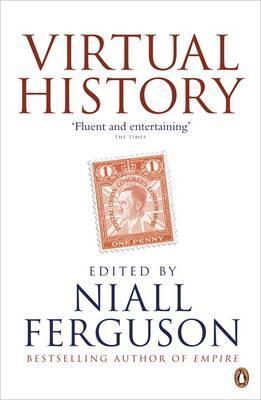
Virtual History: Alternatives and Counterfactuals
by Niall Ferguson
Rating: 3.4 ⭐
• 2 recommendations ❤️
What if Britain had stayed out of the First World War? What if Germany had won the Second? How would England look if there had been no Cromwell? What would the world be like if Communism had never collapsed? And what if John F. Kennedy had lived? In this acclaimed book, leading historians from Andrew Roberts to Michael Burleigh explore what might have been if nine of the most decisive moments in modern history had never happened.

Winner of 1954 James Tait Black Memorial Prize for Fiction. Widely regarded as C. P. Snow's masterpiece, this lucid and compelling story of the contest for the Mastership of a Cambridge college is the fifth novel in C. P. Snow's magnificent Strangers and Brothers sequence. As the old Master slowly dies of cancer, his colleagues and peers jostle for power. Two candidates come to the foreground; Paul Jago - warm and sympathetic, but given to extravagant moods and hindered by an unsuitable wife - and Crawford, a shrewd, cautious and reliable man who lacks any of Jago's human gifts. For Lewis Eliot, through whose eyes the narrative unfurls, the choice is clear, but politics and egos soon cloud the debate and the College is torn in two. Depicting power in a confined setting with clarity and humanity, The Masters remains unsurpassed in its quiet, authoritative insight into the politics of academia. A meticulous study of the public issues and private problems of post-war Britain, C. P. Snow's Strangers and Brothers sequence is a towering achievement that stands alongside Anthony Powell's A Dance to the Music of Time as one of the great romans-fleuves of the twentieth century.
Librarian's note: There is an Alternate Cover Edition for this edition of this book here.A farm is taken over by its overworked, mistreated animals. With flaming idealism and stirring slogans, they set out to create a paradise of progress, justice, and equality. Thus the stage is set for one of the most telling satiric fables ever penned –a razor-edged fairy tale for grown-ups that records the evolution from revolution against tyranny to a totalitarianism just as terrible. When Animal Farm was first published, Stalinist Russia was seen as its target. Today it is devastatingly clear that wherever and whenever freedom is attacked, under whatever banner, the cutting clarity and savage comedy of George Orwell’s masterpiece have a meaning and message still ferociously fresh.

A Farewell to Alms: A Brief Economic History of the World
by Gregory Clark
Rating: 3.7 ⭐
• 2 recommendations ❤️
Why are some parts of the world so rich and others so poor? Why did the Industrial Revolution--and the unprecedented economic growth that came with it--occur in eighteenth-century England, and not at some other time, or in some other place? Why didn't industrialization make the whole world rich--and why did it make large parts of the world even poorer? In "A Farewell to Alms," Gregory Clark tackles these profound questions and suggests a new and provocative way in which culture--not exploitation, geography, or resources--explains the wealth, and the poverty, of nations.Countering the prevailing theory that the Industrial Revolution was sparked by the sudden development of stable political, legal, and economic institutions in seventeenth-century Europe, Clark shows that such institutions existed long before industrialization. He argues instead that these institutions gradually led to deep cultural changes by encouraging people to abandon hunter-gatherer instincts-violence, impatience, and economy of effort-and adopt economic habits-hard work, rationality, and education.The problem, Clark says, is that only societies that have long histories of settlement and security seem to develop the cultural characteristics and effective workforces that enable economic growth. For the many societies that have not enjoyed long periods of stability, industrialization has not been a blessing. Clark also dissects the notion, championed by Jared Diamond in "Guns, Germs, and Steel," that natural endowments such as geography account for differences in the wealth of nations.
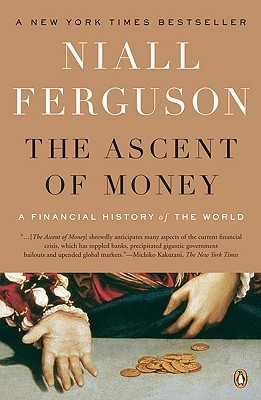
The Ascent of Money: A Financial History of the World: 10th Anniversary Edition
by Niall Ferguson
Rating: 3.9 ⭐
• 5 recommendations ❤️
The 10th anniversary edition, with new chapters on the crash, Chimerica, and cryptocurrency"[An] excellent, just in time guide to the history of finance and financial crisis." — The Washington Post"Fascinating." —Fareed Zakaria, NewsweekIn this updated edition, Niall Ferguson brings his classic financial history of the world up to the present day, tackling the populist backlash that followed the 2008 crisis, the descent of "Chimerica" into a trade war, and the advent of cryptocurrencies, such as Bitcoin, with his signature clarity and expert lens. The Ascent of Money reveals finance as the backbone of history, casting a new light on familiar events: the Renaissance enabled by Italian foreign exchange dealers, the French Revolution traced back to a stock market bubble, the 2008 crisis traced from America's bankruptcy capital, Memphis, to China's boomtown, Chongqing. We may resent the plutocrats of Wall Street but, as Ferguson argues, the evolution of finance has rivaled the importance of any technological innovation in the rise of civilization. Indeed, to study the ascent and descent of money is to study the rise and fall of Western power itself.

A J P Taylor admits to writing, more often than not, to satisfy his own historical curiosity. However unorthodox or surprising his views, the results are invariably enterprising and unambiguous. In Essays in English History, he is mostly concerned with the character of English history seen through the eyes of its great personalities. His choice of subjects is wide-ranging - from Cromwell to Roger Casement, from Queen Victoria to the City of Manchester, his final and most personal essay.

Winner of the Estoril Global Issues Distinguished Book Prize 2013In 1412, Europe was a miserable backwater ravaged by plague, bad sanitation and incessant war, while the Orient was home to dazzling civilizations. Yet, somehow, the West came to dominate the Rest for most of the next half millennium.In this vital, brilliant book, Niall Ferguson reveals the six 'killer applications' that the Rest lacked: competition, science, property rights, medicine, consumerism and the work ethic. And he asks: do we still have these winning tools? Or is this the end of Western ascendancy?'Brilliantly written, full of wit and virtuosity, stuffed with memorable lines and gorgeous bits of information. A great read' The Times'A dazzling history of Western ideas ... epic' Economist'Vivid and fascinating' Daily Telegraph'Superb ... brings history alive ... dazzling' Independent'This is sharp. It feels urgent. Ferguson ... twists his knife with great literary brio' Andrew Marr, Financial Times

Planning Armageddon: British Economic Warfare and the First World War
by Nicholas A. Lambert
Rating: 4.2 ⭐
• 2 recommendations ❤️
*Winner of the 2013 Norman B. Tomlinson PrizeBefore the First World War, the British Admiralty conceived a plan to win rapid victory in the event of war with Germany--economic warfare on an unprecedented scale. This strategy called for the state to exploit Britain's effective monopolies in banking, communications, and shipping--the essential infrastructure underpinning global trade--to create a controlled implosion of the world economic system.

The Son Also Rises: Surnames and the History of Social Mobility
by Gregory Clark
Rating: 3.9 ⭐
• 2 recommendations ❤️
How much of our fate is tied to the status of our parents and grandparents? How much does it influence our children? More than we wish to believe. While it has been argued that rigid class structures have eroded in favor of greater social equality, The Son Also Rises proves that movement on the social ladder has changed little over eight centuries. Using a novel technique--tracking family names over generations to measure social mobility across countries and periods--renowned economic historian Gregory Clark reveals that mobility rates are lower than conventionally estimated, do not vary across societies, and are resistant to social policies.Clark examines and compares surnames in such diverse cases as modern Sweden and Qing Dynasty China. He demonstrates how fate is determined by ancestry and that almost all societies have similarly low social mobility rates. Challenging popular assumptions about mobility and revealing the deeply entrenched force of inherited advantage, The Son Also Rises is sure to prompt intense debate for years to come.
In post-Arthurian Britain, the wars that once raged between the Saxons and the Britons have finally ceased. Axl and Beatrice, an elderly British couple, set off to visit their son, whom they haven’t seen in years. And, because a strange mist has caused mass amnesia throughout the land, they can scarcely remember anything about him. As they are joined on their journey by a Saxon warrior, his orphan charge, and an illustrious knight, Axl and Beatrice slowly begin to remember the dark and troubled past they all share. By turns savage, suspenseful, and intensely moving, The Buried Giant is a luminous meditation on the act of forgetting and the power of memory, an extraordinary tale of love, vengeance, and war.

The Unraveling: High Hopes and Missed Opportunities in Iraq
by Emma Sky
Rating: 4.0 ⭐
• 2 recommendations ❤️
One of the New York Times ' 100 Notable Books of 2015One of Financial Times ' Books of the Year, 2015A New York Times Editors' ChoiceA New Statesman [UK] Essential Book of the Year 2015A Times [UK] Book of the Year 2015Shortlisted for the 2015 Samuel Johnson Prize for NonfictionShortlisted for the 2016 Orwell PrizeWhen Emma Sky volunteered to help rebuild Iraq after the overthrow of Saddam Hussein in 2003, she had little idea what she was getting in to. Her assignment was only supposed to last three months. She went on to serve there longer than any other senior military or diplomatic figure, giving her an unrivaled perspective of the entire conflict.As the representative of the Coalition Provisional Authority in Kirkuk in 2003 and then the political advisor to US General Odierno from 2007-2010, Sky was valued for her knowledge of the region and her outspoken voice. She became a tireless witness to American efforts to transform a country traumatized by decades of war, sanctions, and brutal dictatorship; to insurgencies and civil war; to the planning and implementation of the surge and the subsequent drawdown of US troops; to the corrupt political elites who used sectarianism to mobilize support; and to the takeover of a third of the country by the Islamic State.With sharp detail and tremendous empathy, Sky provides unique insights into the US military as well as the complexities, diversity, and evolution of Iraqi society. The Unraveling is an intimate insider's portrait of how and why the Iraq adventure failed and contains a unique analysis of the course of the war. Highlighting how nothing that happened in Iraq after 2003 was inevitable, Sky exposes the failures of the policies of both Republicans and Democrats, and the lessons that must be learned about the limitations of power.

The definitive biography of Henry Kissinger, based on unprecedented access to his private papers No American statesman has been as revered or as reviled as Henry Kissinger. Once hailed as “Super K”—the “indispensable man” whose advice has been sought by every president from Kennedy to Obama—he has also been hounded by conspiracy theorists, scouring his every “telcon” for evidence of Machiavellian malfeasance. Yet as Niall Ferguson shows in this magisterial two-volume biography, drawing not only on Kissinger’s hitherto closed private papers but also on documents from more than a hundred archives around the world, the idea of Kissinger as the ruthless arch-realist is based on a profound misunderstanding.The first half of Kissinger’s life is usually skimmed over as a quintessential tale of American ascent: the Jewish refugee from Hitler’s Germany who made it to the White House. But in this first of two volumes, Ferguson shows that what Kissinger achieved before his appointment as Richard Nixon’s national security adviser was astonishing in its own right. Toiling as a teenager in a New York factory, he studied indefatigably at night. He was drafted into the U.S. infantry and saw action at the Battle of the Bulge—as well as the liberation of a concentration camp—but ended his army career interrogating Nazis. It was at Harvard that Kissinger found his vocation. Having immersed himself in the philosophy of Kant and the diplomacy of Metternich, he shot to celebrity by arguing for “limited nuclear war.” Nelson Rockefeller hired him. Kennedy called him to Camelot. Yet Kissinger’s rise was anything but irresistible. Dogged by press gaffes and disappointed by “Rocky,” Kissinger seemed stuck—until a trip to Vietnam changed everything. The Idealist is the story of one of the most important strategic thinkers America has ever produced. It is also a political Bildungsroman, explaining how “Dr. Strangelove” ended up as consigliere to a politician he had always abhorred. Like Ferguson’s classic two-volume history of the House of Rothschild, Kissinger sheds dazzling new light on an entire era. The essential account of an extraordinary life, it recasts the Cold War world.

Hillbilly Elegy: A Memoir of a Family and Culture in Crisis
by J.D. Vance
Rating: 4.0 ⭐
• 1 recommendation ❤️
From a former marine and Yale Law School graduate, a powerful account of growing up in a poor Rust Belt town that offers a broader, probing look at the struggles of America’s white working classHillbilly Elegy is a passionate and personal analysis of a culture in crisis—that of white working-class Americans. The decline of this group, a demographic of our country that has been slowly disintegrating over forty years, has been reported on with growing frequency and alarm, but has never before been written about as searingly from the inside. J. D. Vance tells the true story of what a social, regional, and class decline feels like when you were born with it hung around your neck.The Vance family story begins hopefully in postwar America. J. D.’s grandparents were “dirt poor and in love,” and moved north from Kentucky’s Appalachia region to Ohio in the hopes of escaping the dreadful poverty around them. They raised a middle-class family, and eventually their grandchild (the author) would graduate from Yale Law School, a conventional marker of their success in achieving generational upward mobility.But as the family saga of Hillbilly Elegy plays out, we learn that this is only the short, superficial version. Vance’s grandparents, aunt, uncle, sister, and, most of all, his mother, struggled profoundly with the demands of their new middle-class life, and were never able to fully escape the legacy of abuse, alcoholism, poverty, and trauma so characteristic of their part of America. Vance piercingly shows how he himself still carries around the demons of their chaotic family history.A deeply moving memoir with its share of humor and vividly colorful figures, Hillbilly Elegy is the story of how upward mobility really feels. And it is an urgent and troubling meditation on the loss of the American dream for a large segment of this country.

Destined For War: Can America and China Escape Thucydides's Trap?―A Critical Examination of Historical Patterns Leading to War Between Great Powers
by Graham Allison
Rating: 4.2 ⭐
• 2 recommendations ❤️
NATIONAL BESTSELLER | NEW YORK TIMES NOTABLE BOOK OF THE YEAR. From an eminent international security scholar, an urgent examination of the conditions that could produce a catastrophic conflict between the United States and China—and how it might be prevented.China and the United States are heading toward a war neither wants. The reason is Thucydides’s when a rising power threatens to displace a ruling one, violence is the likeliest result. Over the past five hundred years, these conditions have occurred sixteen times; war broke out in twelve.At the time of publication, an unstoppable China approached an immovable America, and both Xi Jinping and Donald Trump promised to make their countries “great again,” the seventeenth case was looking grim—it still is. A trade conflict, cyberattack, Korean crisis, or accident at sea could easily spark a major war.In Destined for War, eminent Harvard scholar Graham Allison masterfully blends history and current events to explain the timeless machinery of Thucydides’s Trap—and to explore the painful steps that might prevent disaster today.SHORT-LISTED FOR THE 2018 LIONEL GELBER PRIZENAMED A BEST BOOK OF THE YEAR FINANCIAL TIMES * THE TIMES (LONDON)* AMAZON“Allison is one of the keenest observers of international affairs around.” — President Joe Biden“[A] must-read book in both Washington and Beijing.” — Boston Globe“[Full of] wide-ranging, erudite case studies that span human history . . . [A] fine book.”— New York Times Book Review

The Square and the Tower: Networks and Power, from the Freemasons to Facebook
by Niall Ferguson
Rating: 3.6 ⭐
• 1 recommendation ❤️
The instant New York Times bestseller.A brilliant recasting of the turning points in world history, including the one we're living through, as a collision between old power hierarchies and new social networks.“Captivating and compelling.” — The New York Times"Niall Ferguson has again written a brilliant book...In 400 pages you will have restocked your mind. Do it." —The Wall Street Journal“ The Square and the Tower, in addition to being provocative history, may prove to be a bellwether work of the Internet Age.” — Christian Science MonitorMost history is it's about emperors, presidents, prime ministers and field marshals. It's about states, armies and corporations. It's about orders from on high. Even history "from below" is often about trade unions and workers' parties. But what if that's simply because hierarchical institutions create the archives that historians rely on? What if we are missing the informal, less well documented social networks that are the true sources of power and drivers of change?The 21st century has been hailed as the Age of Networks. However, in The Square and the Tower , Niall Ferguson argues that networks have always been with us, from the structure of the brain to the food chain, from the family tree to freemasonry. Throughout history, hierarchies housed in high towers have claimed to rule, but often real power has resided in the networks in the town square below. For it is networks that tend to innovate. And it is through networks that revolutionary ideas can contagiously spread. Just because conspiracy theorists like to fantasize about such networks doesn't mean they are not real.From the cults of ancient Rome to the dynasties of the Renaissance, from the founding fathers to Facebook, The Square and the Tower tells the story of the rise, fall and rise of networks, and shows how network theory--concepts such as clustering, degrees of separation, weak ties, contagions and phase transitions--can transform our understanding of both the past and the present.Just as The Ascent of Money put Wall Street into historical perspective, so The Square and the Tower does the same for Silicon Valley. And it offers a bold prediction about which hierarchies will withstand this latest wave of network disruption--and which will be toppled.

Blueprint: The Evolutionary Origins of a Good Society
by Nicholas A. Christakis
Rating: 4.0 ⭐
• 2 recommendations ❤️
For too long, scientists have focused on the dark side of our biological heritage: our capacity for aggression, cruelty, prejudice, and self-interest. But natural selection has given us a suite of beneficial social features, including our capacity for love, friendship, cooperation, and learning. Beneath all of our inventions -- our tools, farms, machines, cities, nations -- we carry with us innate proclivities to make a good society.In Blueprint, Nicholas A. Christakis introduces the compelling idea that our genes affect not only our bodies and behaviors, but also the ways in which we make societies, ones that are surprisingly similar worldwide.With many vivid examples -- including diverse historical and contemporary cultures, communities formed in the wake of shipwrecks, commune dwellers seeking utopia, online groups thrown together by design or involving artificially intelligent bots, and even the tender and complex social arrangements of elephants and dolphins that so resemble our own -- Christakis shows that, despite a human history replete with violence, we cannot escape our social blueprint for goodness.In a world of increasing political and economic polarization, it's tempting to ignore the positive role of our evolutionary past. But by exploring the ancient roots of goodness in civilization, Blueprint shows that our genes have shaped societies for our welfare and that, in a feedback loop stretching back many thousands of years, societies are still shaping our genes today.

Dominion: How the Christian Revolution Remade the World
by Tom Holland
Rating: 4.3 ⭐
• 6 recommendations ❤️
A "marvelous" (Economist) account of how the Christian Revolution forged the Western imagination.Crucifixion, the Romans believed, was the worst fate imaginable, a punishment reserved for slaves. How astonishing it was, then, that people should have come to believe that one particular victim of crucifixion-an obscure provincial by the name of Jesus-was to be worshipped as a god. Dominion explores the implications of this shocking conviction as they have reverberated throughout history. Today, the West remains utterly saturated by Christian assumptions. As Tom Holland demonstrates, our morals and ethics are not universal but are instead the fruits of a very distinctive civilization. Concepts such as secularism, liberalism, science, and homosexuality are deeply rooted in a Christian seedbed. From Babylon to the Beatles, Saint Michael to #MeToo, Dominion tells the story of how Christianity transformed the modern world.

All disasters are in some sense man-made. Setting the annus horribilis of 2020 in historical perspective, Niall Ferguson explains why we are getting worse, not better, at handling disasters.Disasters are inherently hard to predict. Pandemics, like earthquakes, wildfires, financial crises. and wars, are not normally distributed; there is no cycle of history to help us anticipate the next catastrophe. But when disaster strikes, we ought to be better prepared than the Romans were when Vesuvius erupted, or medieval Italians when the Black Death struck. We have science on our side, after all.Yet in 2020 the responses of many developed countries, including the United States, to a new virus from China were badly bungled. Why? Why did only a few Asian countries learn the right lessons from SARS and MERS? While populist leaders certainly performed poorly in the face of the COVID-19 pandemic, Niall Ferguson argues that more profound pathologies were at work--pathologies already visible in our responses to earlier disasters.In books going back nearly twenty years, including Colossus, The Great Degeneration, and The Square and the Tower, Ferguson has studied the foibles of modern America, from imperial hubris to bureaucratic sclerosis and online fragmentation.Drawing from multiple disciplines, including economics, cliodynamics, and network science, Doom offers not just a history but a general theory of disasters, showing why our ever more bureaucratic and complex systems are getting worse at handing them.Doom is the lesson of history that this country--indeed the West as a whole--urgently needs to learn, if we want to handle the next crisis better, and to avoid the ultimate doom of irreversible decline.

The Economic Weapon: The Rise of Sanctions as a Tool of Modern War
by Nicholas Mulder
Rating: 3.8 ⭐
• 2 recommendations ❤️
The first international history of the emergence of economic sanctions during the interwar period and the legacy of this development A Foreign Affairs Best Book of 2022 “Valuable . . . offers many lessons for Western policy makers today.”—Paul Kennedy, Wall Street Journal “The lessons are sobering.”—The Economist Economic sanctions dominate the landscape of world politics today. First developed in the early twentieth century as a way of exploiting the flows of globalization to defend liberal internationalism, their appeal is that they function as an alternative to war. This view, however, ignores the dark paradox at their core: designed to prevent war, economic sanctions are modeled on devastating techniques of warfare. Tracing the use of economic sanctions from the blockades of World War I to the policing of colonial empires and the interwar confrontation with fascism, Nicholas Mulder uses extensive archival research in a political, economic, legal, and military history that reveals how a coercive wartime tool was adopted as an instrument of peacekeeping by the League of Nations. This timely study casts an overdue light on why sanctions are widely considered a form of war, and why their unintended consequences are so tremendous.

Chip War: The Fight for the World's Most Critical Technology
by Chris Miller
Rating: 4.4 ⭐
• 1 recommendation ❤️
An epic account of the decades-long battle to control what has emerged as the world's most critical resource—microchip technology—with the United States and China increasingly in conflict.You may be surprised to learn that microchips are the new oil—the scarce resource on which the modern world depends. Today, military, economic, and geopolitical power are built on a foundation of computer chips. Virtually everything— from missiles to microwaves, smartphones to the stock market — runs on chips. Until recently, America designed and built the fastest chips and maintained its lead as the #1 superpower. Now, America's edge is slipping, undermined by competitors in Taiwan, Korea, Europe, and, above all, China. Today, as Chip War reveals, China, which spends more money each year importing chips than it spends importing oil, is pouring billions into a chip-building initiative to catch up to the US. At stake is America's military superiority and economic prosperity.Economic historian Chris Miller explains how the semiconductor came to play a critical role in modern life and how the U.S. become dominant in chip design and manufacturing and applied this technology to military systems. America's victory in the Cold War and its global military dominance stems from its ability to harness computing power more effectively than any other power. But here, too, China is catching up, with its chip-building ambitions and military modernization going hand in hand. America has let key components of the chip-building process slip out of its grasp, contributing not only to a worldwide chip shortage but also a new Cold War with a superpower adversary that is desperate to bridge the gap.Illuminating, timely, and fascinating, Chip War shows that, to make sense of the current state of politics, economics, and technology, we must first understand the vital role played by chips.