
Neil deGrasse Tyson Recommended Books
American astrophysicist and science communicator
13 Books Recommended
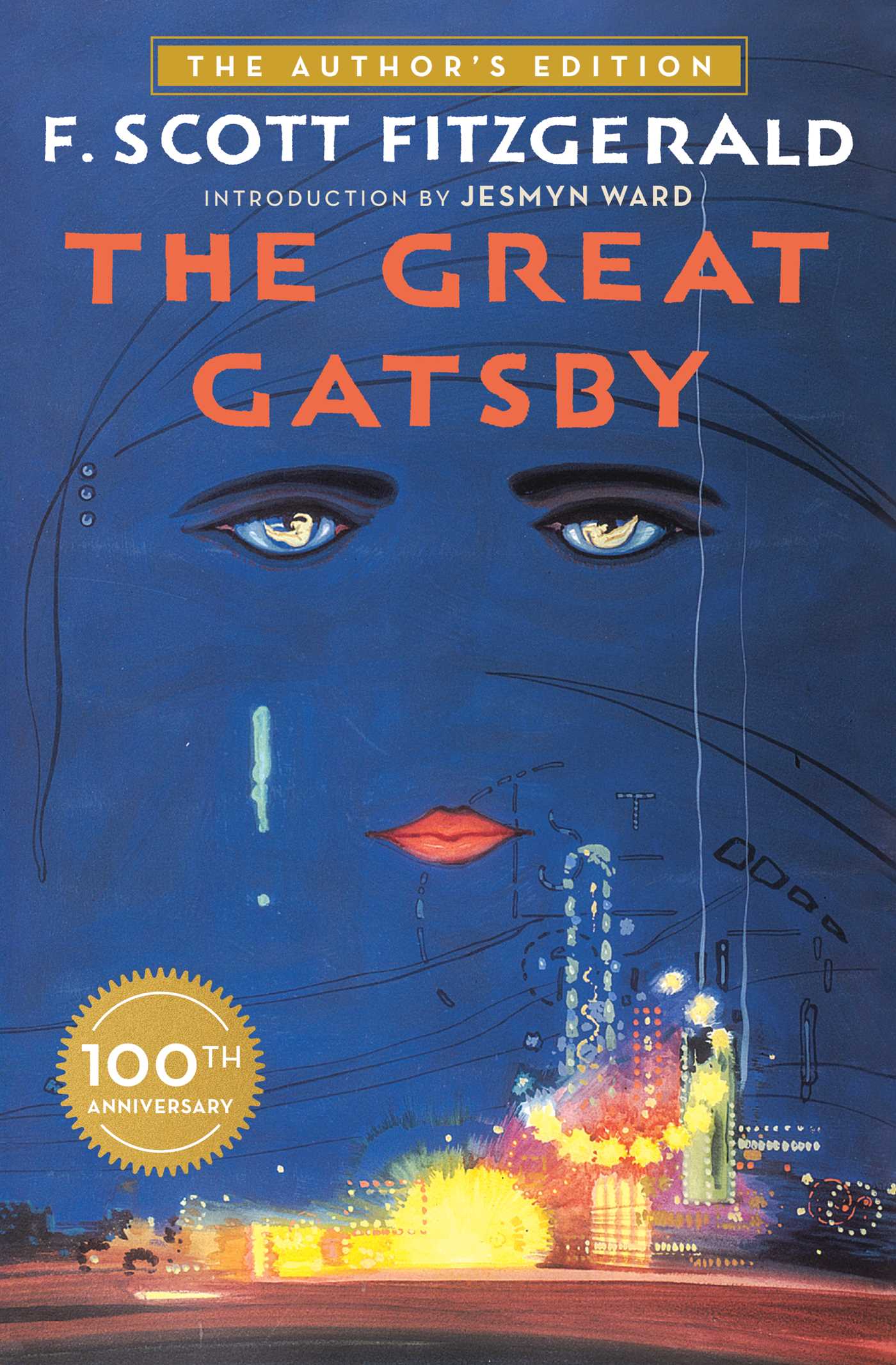
The only edition of the beloved classic that is authorized by Fitzgerald’s family and from his lifelong publisher.This edition is the enduring original text, updated with the author’s own revisions, a foreword by his granddaughter, and with a new introduction by National Book Award winner Jesmyn Ward.The Great Gatsby, F. Scott Fitzgerald’s third book, stands as the supreme achievement of his career. First published by Scribner in 1925, this quintessential novel of the Jazz Age has been acclaimed by generations of readers. The story of the mysteriously wealthy Jay Gatsby and his love for the beautiful Daisy Buchanan is an exquisitely crafted tale of America in the 1920s.
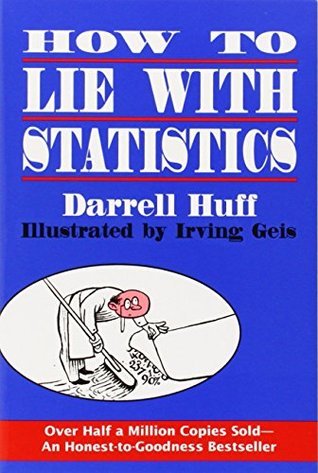
Darrell Huff runs the gamut of every popularly used type of statistic, probes such things as the sample study, the tabulation method, the interview technique, or the way the results are derived from the figures, and points up the countless number of dodges which are used to fool rather than to inform.

The Almagest: Introduction to the Mathematics of the Heavens
by Ptolemy
Rating: 3.7 ⭐
• 2 recommendations ❤️
The Almagest is by far the greatest work in astronomy in ancient times. In a massive series of thirteen books, Ptolemy shows how every detail of the motions of the sun, moon, planets, and stars can be expressed using geometrical models that can be used to compute celestial positions with remarkable accuracy The present selection covers all the essential features of Ptolemy s treatment of the heavens, omitting only more difficult and abstruse matters such as the moon s motion and the calculation of eclipses. In the interest of conciseness, development of planetary theories is restricted to two planets, one inferior (Venus) and one superior (Mars). Ptolemy s text is accompanied by extensive notes and introductions that are aimed at making the book accessible to students encountering Ptolemy for the first time. This edition is designed to provide everything needed for a one-semester course, or it can be a component of a more general course on planetary theory or history of astronomy."

The classic that exploded into public controversy, revolutionized the course of science, and continues to transform our views of the world.Few other books have created such a lasting storm of controversy as The Origin of Species. Darwin's theory that species derive from other species by a gradual evolutionary process and that the average level of each species is heightened by the "survival of the fittest" stirred up popular debate to a fever pitch. Its acceptance revolutionized the course of science.As Sir Julian Huxley, the noted biologist, points out in his illuminating introduction, the importance of Darwin's contribution to modern scientific knowledge is almost impossible to evaluate: "a truly great book, one which after a century of scientific progress can still be read with profit by professional biologists.""Darwin was one of history's towering geniuses and ranks with the greatest heroes of man's intellectual progress." -George Gaylord Simpson in The Meaning of Evolution

The Principia: The Authoritative Translation and Guide: Mathematical Principles of Natural Philosophy
by Isaac Newton
Rating: 4.8 ⭐
• 10 recommendations ❤️
In his monumental 1687 work, Philosophiae Naturalis Principia Mathematica, known familiarly as the Principia, Isaac Newton laid out in mathematical terms the principles of time, force, and motion that have guided the development of modern physical science. Even after more than three centuries and the revolutions of Einsteinian relativity and quantum mechanics, Newtonian physics continues to account for many of the phenomena of the observed world, and Newtonian celestial dynamics is used to determine the orbits of our space vehicles. This authoritative, modern translation by Cohen and Whitman, the first in over 285 years, is based on the 1726 edition, the final revised version approved by Newton; it includes extracts from the earlier editions, corrects errors found in earlier versions, and replaces archaic English with contemporary prose and up-to-date mathematical forms. Newton's principles describe acceleration, deceleration, and inertial movement; fluid dynamics; and the motions of the earth, moon, planets, and comets. A great work in itself, the Principia also revolutionized the methods of scientific investigation. It set forth the fundamental three laws of motion and the law of universal gravity, the physical principles that account for the Copernican system of the world as emended by Kepler, thus effectively ending controversy concerning the Copernican planetary system. The illuminating Guide to the Principia by I. Bernard Cohen, along with his and Anne Whitman's translation, make this preeminent work truly accessible for today's scientists, scholars, and students.

This collection chronicles the fiction and non fiction classics by the greatest writers the world has ever known. The inclusion of both popular as well as overlooked pieces is pivotal to providing a broad and representative collection of classic works.

As a young Florentine envoy to the courts of France and the Italian principalities, Niccolò Machiavelli (1469–1527) was able to observe firsthand the lives of people strongly united under one powerful ruler. His fascination with that political rarity and his intense desire to see the Medici family assume a similar role in Italy provided the foundation for his "primer for princes." In this classic guide to acquiring and maintaining political power, Machiavelli used a rational approach to advise prospective rulers, developing logical arguments and alternatives for a number of potential problems, among them governing hereditary monarchies, dealing with colonies and the treatment of conquered peoples.Refreshing in its directness, yet often disturbing in its cold practicality, The Prince sets down a frighteningly pragmatic formula for political fortune. Starkly relevant to the political upheavals of the 20th century, this calculating prescription for power remains today, nearly 500 years after it was written, a timely and startling lesson in the practice of autocratic rule that continues to be much read and studied by students, scholars and general readers as well.Reprint of The Prince from Vol. 36 of the Harvard Classics series, translated by N. H. Thompson and published by P. F. Collier & Son Company, New York, 1910.

This seminal work on political economy and the foundation of the modern market economy was originally published in 1776. Rich in historical background and acute observations of the 18th-century scene, Adam Smith's masterpiece of economic analysis is also an insightful work of political philosophy. Its revolutionary concepts, including the notion that self-interest stimulates the healthiest economic conditions for all, remain influential with politicians and economists alike.

Regarded as the preeminent prose satirist in the English language, Jonathan Swift (1667–1745) intended this masterpiece, as he once wrote Alexander Pope, to "vex the world rather than divert it." Savagely ironic, it portrays man as foolish at best, and at worst, not much more than an ape.The direct and unadorned narrative describes four remarkable journies of ship's surgeon Lemuel Gulliver, among them, one to the land of Lilliput, where six-inch-high inhabitants bicker over trivialities; and another to Brobdingnag, a land where giants reduce man to insignificance.Written with disarming simplicity and careful attention to detail, this classic is diverse in its appeal: for children, it remains an enchanting fantasy. For adults, it is a witty parody of political life in Swift's time and a scathing send-up of manners and morals in 18th-century England.

Twenty-Five Hundred years ago, Sun Tzu wrote this classic book of military strategy based on Chinese warfare and military thought. Since that time, all levels of military have used the teaching on Sun Tzu to warfare and civilization have adapted these teachings for use in politics, business and everyday life. The Art of War is a book which should be used to gain advantage of opponents in the boardroom and battlefield alike.

The System of the World by Isaac Newton. Sir Isaac Newton (1642–1727) was an English physicist and mathematician who is widely recognised as one of the most influential scientists of all time and as a key figure in the scientific revolution.This great work supplied the momentum for the Scientific Revolution and dominated physics for over 200 years.It was the ancient opinion of not a few, in the earliest ages of philosophy, that the fixed stars stood immoveable in the highest parts of the world; that, under the fixed stars the planets were carried about the sun; that the earth, us one of the planets, described an annual course about the sun, while by a diurnal motion it was in the mean time revolved about its own axis; and that the sun, as the common fire which served to warm the whole, was fixed in the centre of the universe.This was the philosophy taught of old by Philolaus, Aristarchus of Samos, Plato in his riper years, and the whole sect of the Pythagoreans; and this was the judgment of Anaximander, more ancient than any of them; and of that wise king of the Romans, Numa Pompilius, who, as a symbol of the figure of the world with the sun in the centre, erected a temple in honour of Vesta, of a round form, and ordained perpetual fire to be kept in the middle of it.

KJV Holy Bible, Giant Print Standard Size Faux Leather Red Letter Edition - Thumb Index & Ribbon Marker, King James Version, Dark Brown
by Anonymous
Rating: 4.7 ⭐
• 40 recommendations ❤️
New - Holy Bible: KJV Giant Print Thumb Index Edition: Brown (King James Bible). Great for gift or personal study.

An all-encompassing guide to skeptical thinking from podcast host and academic neurologist at Yale University School of Medicine Steven Novella and his SGU co-hosts, which Richard Wiseman calls "the perfect primer for anyone who wants to separate fact from fiction."It is intimidating to realize that we live in a world overflowing with misinformation, bias, myths, deception, and flawed knowledge. There really are no ultimate authority figures-no one has the secret, and there is no place to look up the definitive answers to our questions (not even Google).Luckily, The Skeptic's Guide to the Universe is your map through this maze of modern life. Here Dr. Steven Novella-along with Bob Novella, Cara Santa Maria, Jay Novella, and Evan Bernstein-will explain the tenets of skeptical thinking and debunk some of the biggest scientific myths, fallacies, and conspiracy theories-from anti-vaccines to homeopathy, UFO sightings to N- rays. You'll learn the difference between science and pseudoscience, essential critical thinking skills, ways to discuss conspiracy theories with that crazy co- worker of yours, and how to combat sloppy reasoning, bad arguments, and superstitious thinking.So are you ready to join them on an epic scientific quest, one that has taken us from huddling in dark caves to setting foot on the moon? (Yes, we really did that.) DON'T PANIC! With The Skeptic's Guide to the Universe , we can do this together."Thorough, informative, and enlightening, The Skeptic's Guide to the Universe inoculates you against the frailties and shortcomings of human cognition. If this book does not become required reading for us all, we may well see modern civilization unravel before our eyes." -- Neil deGrasse Tyson"In this age of real and fake information, your ability to reason, to think in scientifically skeptical fashion, is the most important skill you can have. Read The Skeptics' Guide Universe ; get better at reasoning. And if this claim about the importance of reason is wrong, The Skeptics' Guide will help you figure that out, too." -- Bill Nye