
Margaret Atwood Recommended Books
Canadian poet, novelist, literary critic, essayist, teacher, environmental activist, pépiniériste and inventor (born 1939)
37 Books Recommended

Merde!: The Real French You Were Never Taught at School
by Geneviève
Rating: 4.0 ⭐
• 2 recommendations ❤️
Learn all the French argot (slang), dirty words, and necessary tools of communication your teachers left out of their lesson plans with this essential survival guide to understanding everyday French.Deliciously saucy and full of wit Merde! is a practical guide for understanding French, as it really is spoken. This real-life resource is for anyone who remembers thumbing through English/French dictionaries for such words as "toilet paper" and "damn," as well as for the far more interesting, titillating terms that would never be used in polite conversation. But real French isn't spoken with the intent of being polite... With epithets for every occasion, a range of colorful idioms, and a wealth of come-ons and put-downs, this is the only language book you'll need to prepare for a trip to the city of lights.

1491: New Revelations of the Americas Before Columbus
by Charles C. Mann
Rating: 4.2 ⭐
• 4 recommendations ❤️
A groundbreaking study that radically alters our understanding of the Americas before the arrival of the Europeans in 1492.Traditionally, Americans learned in school that the ancestors of the people who inhabited the Western Hemisphere at the time of Columbus’s landing had crossed the Bering Strait twelve thousand years ago; existed mainly in small, nomadic bands; and lived so lightly on the land that the Americas was, for all practical purposes, still a vast wilderness. But as Charles C. Mann now makes clear, archaeologists and anthropologists have spent the last thirty years proving these and many other long-held assumptions wrong.In a book that startles and persuades, Mann reveals how a new generation of researchers equipped with novel scientific techniques came to previously unheard-of conclusions. Among them:• In 1491 there were probably more people living in the Americas than in Europe.• Certain cities–such as Tenochtitlán, the Aztec capital–were far greater in population than any contemporary European city. Furthermore, Tenochtitlán, unlike any capital in Europe at that time, had running water, beautiful botanical gardens, and immaculately clean streets.• The earliest cities in the Western Hemisphere were thriving before the Egyptians built the great pyramids.• Pre-Columbian Indians in Mexico developed corn by a breeding process so sophisticated that the journal Science recently described it as “man’s first, and perhaps the greatest, feat of genetic engineering.”• Amazonian Indians learned how to farm the rain forest without destroying it–a process scientists are studying today in the hope of regaining this lost knowledge.• Native Americans transformed their land so completely that Europeans arrived in a hemisphere already massively “landscaped” by human beings.Mann sheds clarifying light on the methods used to arrive at these new visions of the pre-Columbian Americas and how they have affected our understanding of our history and our thinking about the environment. His book is an exciting and learned account of scientific inquiry and revelation.

In Trickster Makes This World , Lewis Hyde brings to life the playful and disruptive side of human imagination as it is embodied in trickster mythology. He first visits the old stories―Hermes in Greece, Eshu in West Africa, Krishna in India, Coyote in North America, among others―and then holds them up against the lives and work of more recent Picasso, Duchamp, Ginsberg, John Cage, and Frederick Douglass. Twelve years after its first publication, Trickster Makes This World ―authoritative in its scholarship, loose-limbed in its style―has taken its place among the great works of modern cultural criticism.This new edition includes an introduction by Michael Chabon.

The Gift: How the Creative Spirit Transforms the World
by Lewis Hyde
Rating: 3.6 ⭐
• 1 recommendation ❤️
“A manifesto of sorts for anyone who makes art [and] cares for it.” —Zadie Smith“The best book I know of for talented but unacknowledged creators. . . . A masterpiece.” —Margaret Atwood“No one who is invested in any kind of art . . . can read The Gift and remain unchanged.” —David Foster WallaceBy now a modern classic, The Gift is a brilliantly orchestrated defense of the value of creativity and of its importance in a culture increasingly governed by money and overrun with commodities. This book is even more necessary today than when it first appeared.An illuminating and transformative book, and completely original in its view of the world, The Gift is cherished by artists, writers, musicians, and thinkers. It is in itself a gift to all who discover the classic wisdom found in its pages.

Reissued in a handsome A List edition, the largest collection of critical prose to date from world renowned author and poet Margaret Atwood, featuring an introduction by Lennie Goodings. Originally published in 1982, Second Words brings together fifty of Margaret Atwood’s finest essays and reviews spanning two decades, beginning in 1962, with an introduction and commentary by the author. With her incomparable wit and originality, Atwood discusses the process of writing and the literary life, with insightful looks at the work of such figures as Erica Jong, E. L. Doctorow, Northrop Frye, Roch Carrier, Marie-Claire Blais, Gwendolyn MacEwen, Marge Piercy, Adrienne Rich, Sylvia Plath, and many more. In several pieces, we see the development of her ideas on Canadian identity and the American dream, as well as her controversial attitudes toward feminism, sexism, and the strange mythologies imposed on men and women in contemporary North America. Second Words remains the largest collection of Atwood’s critical prose to date.

Following the Brontë sisters through their many reincarnations at the hands of biographers, Lucasta Miller reveals as much about the impossible art of biography as she does about the Brontës themselves. Their first biographer, Mrs Gaskell, transformed their story of literary ambition into one of the great legends of the 19th century, a dramatic tale of three lonely sisters playing out their tragic destiny on top of a windswept moor. Lucasta Miller reveals where this image came from and how it took such a hold on the popular imagination.Each generation has rewritten the Brontës to reflect changing attitudes - towards the role of the woman writer, towards sexuality, towards the very concept of personality. The Brontë Myth gives vigorous new life to our understanding of the novelists and their culture. It is a witty, erudite and refreshingly unsentimental unravelling of what Henry James described as "the most complete intellectual muddle ever achieved on a literary question by our wonderful public."

An essential survival guide—both to pandemic influenza, and to the hype surrounding it.Written by an emergency physician and a public health physician, The Flu Pandemic and You is a timely and forthright guide on how to prepare for an influenza pandemic, and how to understand the broader context in which this health threat exists.With cool heads and professional expertise, Drs. Lam and Lee carefully explain how readers can assess their level of risk, and set out practical advice on how to contend with a pandemic, addressing such issues • How the flu virus works and what level of threat Canadians really face• How to help protect yourself and your family from contracting influenza• How to identify symptoms• What you need to know about antiviral drugs• What to do in a worst-case scenarioThe Flu Pandemic and You develops a lucid framework to help people understand the current anxiety about influenza in the context of the risks we all face in our daily lives. This crucially important book, full of reasoned, knowledgeable advice, is an indispensable resource for fearful times.

Originally published in 1978, this classic exploration of humanity’s complex relationship with and understanding of wolves returns with a new afterword by the author.Humankind's relationship with the wolf is the sum of a spectrum of responses ranging from fear to admiration and affection. Lopez’s classic, careful study has won praise from a wide range of reviewers and improved the way books on wild animals are written. Of Wolves and Men explores the uneasy interaction between wolves and civilization over the centuries, and the wolf's prominence in our thoughts about wild creatures. Drawing upon an impressive array of literature, history, science, and mythology as well as extensive personal experience with captive and free-ranging wolves, Lopez argues for the wolf's preservation and immerses the reader in its sensory world, creating a compelling portrait of the wolf both as a real animal and as imagined by different kinds of men. A scientist might perceive the wolf as defined by research data, while an Eskimo hunter sees a family provider much like himself. For many Native Americans the wolf is also a spiritual symbol, a respected animal that can strengthen the individual and the community. With irresistible charm and elegance, Of Wolves and Men celebrates careful scientific fieldwork, dispels folklore that has enabled the Western mind to demonize wolves, explains myths, and honors indigenous traditions, allowing us to understand how this remarkable animal has become so prominent for so long in the human heart.

Cat's Eye is the story of Elaine Risley, a controversial painter who returns to Toronto, the city of her youth, for a retrospective of her art. Engulfed by vivid images of the past, she reminisces about a trio of girls who initiated her into the fierce politics of childhood and its secret world of friendship, longing, and betrayal. Elaine must come to terms with her own identity as a daughter, a lover, and artist, and woman—but above all she must seek release from her haunting memories. Disturbing, hilarious, and compassionate, Cat's Eye is a breathtaking novel of a woman grappling with the tangled knots of her life.

Offred is a Handmaid in the Republic of Gilead. She may leave the home of the Commander and his wife once a day to walk to food markets whose signs are now pictures instead of words because women are no longer allowed to read. She must lie on her back once a month and pray that the Commander makes her pregnant, because in an age of declining births, Offred and the other Handmaids are valued only if their ovaries are viable. Offred can remember the years before, when she lived and made love with her husband, Luke; when she played with and protected her daughter; when she had a job, money of her own, and access to knowledge. But all of that is gone now…Funny, unexpected, horrifying, and altogether convincing, The Handmaid's Tale is at once scathing satire, dire warning, and tour de force.
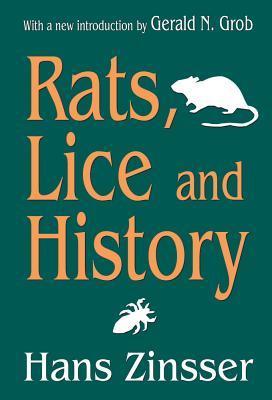
When Rats, Lice and History appeared in 1935, Hans Zinsser was a highly regarded Harvard biologist who had never written about historical events. Although he had published under a pseudonym, virtually all of his previous writings had dealt with infections and immunity and had appeared either in medical and scientific journals or in book format. Today he is best remembered as the author of Rats, Lice, and History , which gone through multiple editions and remains a masterpiece of science writing for a general readership. To Zinsser, scientific research was high adventure and the investigation of infectious disease, a field of battle. Yet at the same time he maintained a love of literature and philosophy. His goal in Rats, Lice and History was to bring science, philosophy, and literature together to establish the importance of disease, and especially epidemic infectious disease, as a major force in human affairs. Zinsser cast his work as the "biography" of a disease. In his view, infectious disease simply represented an attempt of a living organism to survive. From a human perspective, an invading pathogen was abnormal; from the perspective of the pathogen it was perfectly normal. This book is devoted to a discussion of the biology of typhus and history of typhus fever in human affairs. Zinsser begins by pointing out that the louse was the constant companion of human beings. Under certain conditions–to wash or to change clothing–lice proliferated. The typhus pathogen was transmitted by rat fleas to human beings, who then transmitted it to other humans and in some strains from human to human. Rats, Lice and History is a tour de force. It combines Zinsser's expertise in biology with his broad knowledge of the humanities

Alternate cover editions can be found here, here, here and here.Middlemarch is a complex tale of idealism, disillusion, profligacy, loyalty and frustrated love. This penetrating analysis of the life of an English provincial town is set during the time of social unrest prior to the first Reform Bill of 1832. It is told through the lives of Dorothea Brooke and Dr Tertius Lygate and includes a host of other paradigm characters who illuminate the condition of English life in the mid-nineteenth century.Henry James described Middlemarch as a 'treasure-house of detail' while Virginia Woolf famously endorsed George Eliot's masterpiece as 'one of the few English novels written for grown-up people'.

Winner of the National Book AwardThis bestselling, groundbreaking exploration of the Far North is a classic of natural history, anthropology, and travel writing.The Arctic is a perilous place. Only a few species of wild animals can survive its harsh climate. In this modern classic, Barry Lopez explores the many-faceted wonders of the Far North: its strangely stunted forest, its mesmerizing aurora borealis, its frozen seas. Musk oxen, polar bears, narwhal, and other exotic beasts of the region come alive through Lopez’s passionate and nuanced observations. And, as he examines the history and culture of the indigenous people, along with parallel narratives of intrepid, often underprepared and subsequently doomed polar explorers, Lopez drives to the heart of why the austere and formidable Arctic is also a constant source of breathtaking beauty, beguilement, and wonder.Written in prose as memorably pure as the land it describes, Arctic Dreams is a timeless mediation on the ability of the landscape to shape our dreams and to haunt our imaginations.

One of the world’s most important scientists, Edward O. Wilson is also an abundantly talented writer who has twice won the Pulitzer Prize. In this, his most personal and timely book to date, he assesses the precarious state of our environment, examining the mass extinctions occurring in our time and the natural treasures we are about to lose forever. Yet, rather than eschewing doomsday prophesies, he spells out a specific plan to save our world while there is still time. His vision is a hopeful one, as economically sound as it is environmentally necessary. Eloquent, practical and wise, this book should be read and studied by anyone concerned with the fate of the natural world.

In Alias Grace, bestselling author Margaret Atwood has written her most captivating, disturbing, and ultimately satisfying work since The Handmaid's Tale. She takes us back in time and into the life of one of the most enigmatic and notorious women of the nineteenth century.Grace Marks has been convicted for her involvement in the vicious murders of her employer, Thomas Kinnear, and Nancy Montgomery, his housekeeper and mistress. Some believe Grace is innocent; others think her evil or insane. Now serving a life sentence, Grace claims to have no memory of the murders.Dr. Simon Jordan, an up-and-coming expert in the burgeoning field of mental illness, is engaged by a group of reformers and spiritualists who seek a pardon for Grace. He listens to her story while bringing her closer and closer to the day she cannot remember. What will he find in attempting to unlock her memories? Is Grace a female fiend? A bloodthirsty femme fatale? Or is she the victim of circumstances?
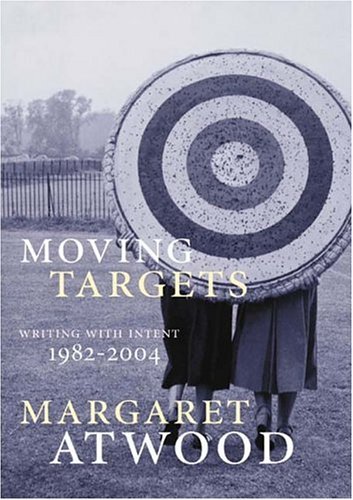
The most precious treasure of this collection is that it gives us the rich back-story and diverse range of influences on Margaret Atwood's work. From the aunts who encouraged her nascent writing career to the influence of George Orwell's Nineteen Eighty-Four on The Handmaid's Tale, we trace the movement of Atwood's fertile and curious mind in action over the years.Atwood's controversial political pieces, Napoleon's Two Biggest Mistakes and Letter to America -- both not-so-veiled warnings about the repercussions of the war in Iraq -- also appear, alongside pieces that exhibit her active concern for the environment, the North, and the future of the human race. Atwood also writes about her John Updike, Marina Warner, Italo Calvino, Marian Engel, Toni Morrison, Angela Carter, Gabriel Garcia Marquez, Mordecai Richler, Elmore Leonard, and Ursula Le Guin.This is a landmark volume from a major writer whose worldwide readership is in the millions, and whose work has influenced and entertained generations. Moving Targets is the companion volume to Second Words.

Guns, Germs, and Steel: The Fates of Human Societies
by Jared Diamond
Rating: 4.1 ⭐
• 24 recommendations ❤️
Winner of the Pulitzer Prize • New York Times Bestseller • Over Two Million Copies Sold“One of the most significant projects embarked upon by any intellectual of our generation” (Gregg Easterbrook, New York Times), Guns, Germs, and Steel presents a groundbreaking, unified narrative of human history.Why did Eurasians conquer, displace, or decimate Native Americans, Australians, and Africans, instead of the reverse? In this “artful, informative, and delightful” (William H. McNeill, New York Review of Books) book, a classic of our time, evolutionary biologist Jared Diamond dismantles racist theories of human history by revealing the environmental factors actually responsible for its broadest patterns.The story begins 13,000 years ago, when Stone Age hunter-gatherers constituted the entire human population. Around that time, the developmental paths of human societies on different continents began to diverge greatly. Early domestication of wild plants and animals in the Fertile Crescent, China, Mesoamerica, the Andes, and other areas gave peoples of those regions a head start at a new way of life. But the localized origins of farming and herding proved to be only part of the explanation for their differing fates. The unequal rates at which food production spread from those initial centers were influenced by other features of climate and geography, including the disparate sizes, locations, and even shapes of the continents. Only societies that moved away from the hunter-gatherer stage went on to develop writing, technology, government, and organized religions as well as deadly germs and potent weapons of war. It was those societies, adventuring on sea and land, that invaded others, decimating native inhabitants through slaughter and the spread of disease.A major landmark in our understanding of human societies, Guns, Germs, and Steel chronicles the way in which the modern world, and its inequalities, came to be.

Journey to the heart of the sea with this larger-than-life classic.Regarded as a Great American Novel, "Moby Dick" is the ultimate tale of seeking vengeance.Narrated by the crew member Ishmael, this epic whaling adventure follows the crew of the "Pequod," as its captain, Ahab, descends deeper and deeper into madness on his quest to find and kill the white whale that maimed him. Beyond the surface--of ship life, whaling, and the hunt for the elusive Moby Dick--are allegorical references to life--and even the universe--in this masterpiece by Herman Melville.Complete and unabridged, this elegantly designed clothbound edition features an elastic closure and a new introduction by Christopher McBride.

Tinker, Tailor, Soldier, Spy: A George Smiley Novel
by John Le Carré
Rating: 3.9 ⭐
• 1 recommendation ❤️
From the New York Times bestselling author of A Legacy of Spies. John le Carré's new novel, Agent Running in the Field, is coming October 2019.The man he knew as "Control" is dead, and the young Turks who forced him out now run the Circus. But George Smiley isn't quite ready for retirement--especially when a pretty, would-be defector surfaces with a shocking accusation: a Soviet mole has penetrated the highest level of British Intelligence. Relying only on his wits and a small, loyal cadre, Smiley recognizes the hand of Karla--his Moscow Centre nemesis--and sets a trap to catch the traitor.The Oscar-nominated feature film adaptation of Tinker Tailor Soldier Spy is directed by Tomas Alfredson (Let the Right One In) and features Gary Oldman as Smiley, Academy Award winner Colin Firth (The King's Speech), and Tom Hardy (Inception).With an introduction by the author.

In his most famous and controversial book, Utopia, Thomas More imagines a perfect island nation where thousands live in peace and harmony, men and women are both educated, and all property is communal. Through dialogue and correspondence between the protagonist Raphael Hythloday and his friends and contemporaries, More explores the theories behind war, political disagreements, social quarrels, and wealth distribution and imagines the day-to-day lives of those citizens enjoying freedom from fear, oppression, violence, and suffering. Originally written in Latin, this vision of an ideal world is also a scathing satire of Europe in the sixteenth century and has been hugely influential since publication, shaping utopian fiction even today.
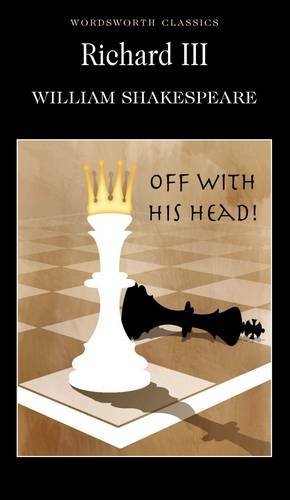
It was probably written c. 1592–1594. It is labeled a history in the First Folio and is usually considered one, but it is sometimes called a tragedy, as in the quarto edition. Richard III concludes Shakespeare's first tetralogy (also containing Henry VI, Part 1, Henry VI, Part 2, and Henry VI, Part 3) and depicts the Machiavellian rise to power and subsequent short reign of King Richard III of England.

O que parecia ser uma estrela cadente, uma linha flamejante perpassando Maybury, no Reino Unido, era na verdade uma invasão extraterrestre. Um amontoado de máquinas trípedes – comandadas por marcianos – passou a marchar sobre os arredores de Londres, exterminando humanos a seu bel-prazer mediante raios de calor e liberação de substâncias venenosas. Espalharam pânico, terror e consolidaram a Guerra.Esse é o ponto de partida de A guerra dos mundos, publicada originalmente em 1897 no periódico britânico Pearson’s Magazine e considerada por especialistas a obra fundamental da ficção científica. O livro em questão serviu como base para múltiplas adaptações para teatro, rádio, televisão e cinema e, apesar de ter sido uma das primeiras obras do autor enquanto romancista, já deixa evidente seu talento singular.Dono de uma originalidade marcante em seu estilo, H. G. Wells consolidou ao longo de sua carreira literária um imaginário que se provou altamente fértil, tornando-se conhecido por seu dinamismo, vigor e exuberância. A guerra dos mundos também ficou famosa como crítica feita de forma voraz ao avanço assombroso do imperialismo europeu – e à subsequente erradicação de espécies animais e populações indígenas nativas das colônias britânicas. Além disso, pode ser considerada uma metáfora acerca da seleção natural e do darwinismo social, demonstrando o conhecimento do autor nos mais variados campos do saber.

The Blind Assassin opens with these simple, resonant words: "Ten days after the war ended, my sister Laura drove a car off a bridge." They are spoken by Iris, whose terse account of her sister's death in 1945 is followed by an inquest report proclaiming the death accidental. But just as the reader expects to settle into Laura's story, Atwood introduces a novel-within-a-novel. Entitled The Blind Assassin, it is a science fiction story told by two unnamed lovers who meet in dingy backstreet rooms. When we return to Iris, it is through a 1947 newspaper article announcing the discovery of a sailboat carrying the dead body of her husband, a distinguished industrialist. Brilliantly weaving together such seemingly disparate elements, Atwood creates a world of astonishing vision and unforgettable impact.

Homer - The IliadThe Iliad is an ancient Greek epic poem, traditionally attributed to Homer . Set during the Trojan War , the ten-year siege of the city of Troy (Ilium) by a coalition of Greek states, it tells of the battles and events during the weeks of a quarrel between King Agamemnon and the warrior Achilles.Although the story covers only a few weeks in the final year of the war, the Iliad mentions or alludes to many of the Greek legends about the siege; the earlier events, such as the gathering of warriors for the siege, the cause of the war, and related concerns tend to appear near the beginning. Then the epic narrative takes up events prophesied for the future, such as Achilles' imminent death and the fall of Troy , although the narrative ends before these events take place. However, as these events are prefigured and alluded to more and more vividly, when it reaches an end the poem has told a more or less complete tale of the Trojan War .

The Odyssey is one of two major ancient Greek epic poems attributed to Homer. It is, in part, a sequel to the Iliad, the other Homeric epic. The Odyssey is a fundamental work in the modern Western canon, being the oldest extant piece of Western literature, second to the Iliad. Scholars believe the Odyssey was composed near the end of the 8th century BC, somewhere in Ionia, the Greek coastal region of Anatolia.

Weeds: In Defense of Nature's Most Unloved Plants
by Richard Mabey
Rating: 3.8 ⭐
• 2 recommendations ❤️
“[A] witty and beguiling meditation on weeds and their wily ways….You will never look at a weed, or flourish a garden fork, in the same way again.”—Richard Holmes, author of The Age of Wonder “In this fascinating, richly detailed book, Richard Mabey gives weeds their full due.”—Carl Zimmer, author of Evolution Richard Mabey, Great Britain’s Britain’s “greatest living nature writer” ( London Times ), has written a stirring and passionate defense of nature’s most unloved plants. Weeds is a fascinating, eye-opening, and vastly entertaining appreciation of the natural world’s unappreciated wildflowers that will appeal to fans of David Attenborough, Robert Sullivan’s Rats , Amy Stewart’s Wicked Plants , and to armchair gardeners, horticulturists, green-thumbs, all those who stop to smell the flowers.

Winter is coming. Such is the stern motto of House Stark, the northernmost of the fiefdoms that owe allegiance to King Robert Baratheon in far-off King’s Landing. There Eddard Stark of Winterfell rules in Robert’s name. There his family dwells in peace and comfort: his proud wife, Catelyn; his sons Robb, Brandon, and Rickon; his daughters Sansa and Arya; and his bastard son, Jon Snow. Far to the north, behind the towering Wall, lie savage Wildings and worse—unnatural things relegated to myth during the centuries-long summer, but proving all too real and all too deadly in the turning of the season. Yet a more immediate threat lurks to the south, where Jon Arryn, the Hand of the King, has died under mysterious circumstances. Now Robert is riding north to Winterfell, bringing his queen, the lovely but cold Cersei, his son, the cruel, vainglorious Prince Joffrey, and the queen’s brothers Jaime and Tyrion of the powerful and wealthy House Lannister—the first a swordsman without equal, the second a dwarf whose stunted stature belies a brilliant mind. All are heading for Winterfell and a fateful encounter that will change the course of kingdoms. Meanwhile, across the Narrow Sea, Prince Viserys, heir of the fallen House Targaryen, which once ruled all of Westeros, schemes to reclaim the throne with an army of barbarian Dothraki—whose loyalty he will purchase in the only coin left to him: his beautiful yet innocent sister, Daenerys.

The remarkable, amusing and inspiring adventures of a Canadian couple who make a year-long attempt to eat foods grown and produced within a 100-mile radius of their apartment.When Alisa Smith and James MacKinnon learned that the average ingredient in a North American meal travels 1,500 miles from farm to plate, they decided to launch a simple experiment to reconnect with the people and places that produced what they ate. For one year, they would only consume food that came from within a 100-mile radius of their Vancouver apartment. The 100-Mile Diet was born.The couple’s discoveries sometimes shook their resolve. It would be a year without sugar, Cheerios, olive oil, rice, Pizza Pops, beer, and much, much more. Yet local eating has turned out to be a life lesson in pleasures that are always close at hand. They met the revolutionary farmers and modern-day hunter-gatherers who are changing the way we think about food. They got personal with issues ranging from global economics to biodiversity. They called on the wisdom of grandmothers, and immersed themselves in the seasons. They discovered a host of new flavours, from gooseberry wine to sunchokes to turnip sandwiches, foods that they never would have guessed were on their doorstep.The 100-Mile Diet struck a deeper chord than anyone could have predicted, attracting media and grassroots interest that spanned the globe. The 100-Mile A Year of Local Eating tells the full story, from the insights to the kitchen disasters, as the authors transform from megamart shoppers to self-sufficient urban pioneers. The 100-Mile Diet is a pathway home for anybody, anywhere.Call me naive, but I never knew that flour would be struck from our 100-Mile Diet. Wheat products are just so ubiquitous, “the staff of life,” that I had hazily imagined the stuff must be grown everywhere. But of I had never seen a field of wheat anywhere close to Vancouver, and my mental images of late-afternoon light falling on golden fields of grain were all from my childhood on the Canadian prairies. What I was able to find was Anita’s Organic Grain & Flour Mill, about 60 miles up the Fraser River valley. I called, and learned that Anita’s nearest grain suppliers were at least 800 miles away by road. She sounded sorry for me. Would it be a year until I tasted a pie?—From The 100-Mile DietFrom the Hardcover edition.

MADDADDAM TRILOGY BOX: Oryx & Crake; The Year of the Flood; Maddaddam
by Margaret Atwood
Rating: 4.5 ⭐
• 2 recommendations ❤️
From Booker Prize–winner and #1 national bestseller Margaret Atwood, The MaddAddam Trilogy is so utterly compelling, so prescient, so relevant, so all-too-likely-to-be-true, that readers may find their view of the world forever changed after reading it. This is Margaret Atwood at the absolute peak of her powers. With breathtaking command of her brilliantly conceived material, and with her customary sharp wit and dark humour, she projects us into an outlandish yet wholly believable realm populated by characters who will continue to inhabit our dreams long after the last chapter. In the tradition of The Handmaid’s Tale, Oryx and Crake and The Year of the Flood envision a near future that is both beyond our imagining and all too familiar: a world devastated by uncontrolled genetic engineering and a widespread plague, with only a few remaining humans fighting for survival. Combining adventure, humour, romance and superb storytelling that is at once dazzlingly inventive and grounded in a recognizable world, MaddAddam is a moving and dramatic conclusion to this internationally celebrated dystopian trilogy.

William Shakespeare's The Tempest retold as Hag-SeedFelix is at the top of his game as Artistic Director of the Makeshiweg Theatre Festival. His productions have amazed and confounded. Now he's staging a Tempest like no other: not only will it boost his reputation, it will heal emotional wounds.Or that was the plan. Instead, after an act of unforeseen treachery, Felix is living in exile in a backwoods hovel, haunted by memories of his beloved lost daughter, Miranda. And also brewing revenge.After twelve years, revenge finally arrives in the shape of a theatre course at a nearby prison. Here, Felix and his inmate actors will put on his Tempest and snare the traitors who destroyed him. It's magic! But will it remake Felix as his enemies fall?Margaret Atwood's novel take on Shakespeare's play of enchantment, retribution, and second chances leads us on an interactive, illusion-ridden journey filled with new surprises and wonders of its own.

Yang Jisheng’s The World Turned Upside Down is the definitive history of the Cultural Revolution, in withering and heartbreaking detail.As a major political event and a crucial turning point in the history of the People’s Republic of China, the Great Proletarian Cultural Revolution (1966–1976) marked the zenith as well as the nadir of Mao Zedong’s ultra-leftist politics. Following Tombstone , his groundbreaking and award-winning history of the Great Famine, Yang Jisheng presents the only history of the Cultural Revolution by an independent scholar based in mainland China, and makes a crucial contribution to understanding the lasting influence of those years.The World Turned Upside Down puts every political incident, major and minor, of those ten years under extraordinary and withering scrutiny, and arrives in English at a moment when contemporary Chinese governance is leaning once more toward a highly centralized power structure and a Mao-style cult of personality.

More than fifteen years after the events of The Handmaid's Tale, the theocratic regime of the Republic of Gilead maintains its grip on power, but there are signs it is beginning to rot from within. At this crucial moment, the lives of three radically different women converge, with potentially explosive results.Two have grown up as part of the first generation to come of age in the new order. The testimonies of these two young women are joined by a third: Aunt Lydia. Her complex past and uncertain future unfold in surprising and pivotal ways.With The Testaments, Margaret Atwood opens up the innermost workings of Gilead, as each woman is forced to come to terms with who she is, and how far she will go for what she believes.The Testaments is a modern masterpiece, a powerful novel that can be read on its own or as a companion to Margaret Atwood's classic, The Handmaid's Tale.

FINALIST FOR THE 2021 PULITZER PRIZE FOR POETRY2021 AMERICAN BOOK AWARD WINNER“An undisputed literary event.” —NPR“History—with its construction and its destruction—is at the heart of In the Lateness of the World . . . . In [it] one feels the poet cresting a wave—a new wave that will crash onto new lands and unexplored territories.” —Hilton Als, The New YorkerOver four decades, Carolyn Forché’s visionary work has reinvigorated poetry’s power to awaken the reader. Her groundbreaking poems have been testimonies, inquiries, and wonderments. They daringly map a territory where poetry asserts our inexhaustible responsibility to one another.Her first new collection in seventeen years, In the Lateness of the World is a tenebrous book of crossings, of migrations across oceans and borders but also between the present and the past, life and death. The world here seems to be steadily vanishing, but in the moments before the uncertain end, an illumination arrives and “there is nothing that cannot be seen.” In the Lateness of the World is a revelation from one of the finest poets writing today.

An Instant New York Times Bestseller A New York Times Notable Book One of Barack Obama's Favorite Books of 2020 Named One of the Best Books of the Year The Washington Post, NPR, Shelf Awareness , Esquire , Electric Literature , Slate , The Los Angeles Times , USA Today , and InStyle A chillingly personal and exquisitely wrought memoir of a daughter reckoning with the brutal murder of her mother at the hands of her former stepfather, and the moving, intimate story of a poet coming into her own in the wake of a tragedyAt age nineteen, Natasha Trethewey had her world turned upside down when her former stepfather shot and killed her mother. Grieving and still new to adulthood, she confronted the twin pulls of life and death in the aftermath of unimaginable trauma and now explores the way this experience lastingly shaped the artist she became. With penetrating insight and a searing voice that moves from the wrenching to the elegiac, Pulitzer Prize–winning poet Natasha Trethewey explores this profound experience of pain, loss, and grief as an entry point into understanding the tragic course of her mother’s life and the way her own life has been shaped by a legacy of fierce love and resilience. Moving through her mother’s history in the deeply segregated South and through her own girlhood as a “child of miscegenation” in Mississippi, Trethewey plumbs her sense of dislocation and displacement in the lead-up to the harrowing crime that took place on Memorial Drive in Atlanta in 1985. Memorial Drive is a compelling and searching look at a shared human experience of sudden loss and absence but also a piercing glimpse at the enduring ripple effects of white racism and domestic abuse. Animated by unforgettable prose and inflected by a poet’s attention to language, this is a luminous, urgent, and visceral memoir from one of our most important contemporary writers and thinkers.

Comoventes, lúdicos e sábios, os poemas aqui reunidos falam de ausências e finais, envelhecimento e retrospecção, mas também de presentes e renovações. Eles exploram corpos e mentes em transição, bem como os objetos e rituais cotidianos que nos inserem no presente. Lobisomens, sereias e sonhos surgem ao lado de diferentes formas de vida animal e fragmentos de nosso ambiente danificado.Poemas tardios reúne muitos dos temas mais reconhecidos e celebrados de Margaret Atwood, permeados por descrições minuciosas do mundo natural, passando por encontros espirituosos com alienígenas, situações triviais e divertidas (como guardar passaportes velhos), questões políticas urgentes, lendas, mitos e a sempre obstinada defesa da mulher.Mestre da escrita, Atwood nos lembra de viver o momento e não apenas estar vivos. O mais importante, segundo a autora, é aproveitar todos os dias, seja esculpindo lanternas de Halloween em abóboras, fazendo sexo ou simplesmente lembrando-nos de ver os cogumelos de setembro brotarem.

Saving Us: A Climate Scientist's Case for Hope and Healing in a Divided World
by Katharine Hayhoe
Rating: 4.3 ⭐
• 2 recommendations ❤️
“A must-read if we’re serious about enacting positive change from the ground up, in communities, and through human connections and human emotions.” —Margaret Atwood, TwitterUnited Nations Champion of the Earth, climate scientist, and evangelical Christian Katharine Hayhoe changes the debate on how we can save our future. Called “one of the nation's most effective communicators on climate change” by The New York Times, Katharine Hayhoe knows how to navigate all sides of the conversation on our changing planet. A Canadian climate scientist living in Texas, she negotiates distrust of data, indifference to imminent threats, and resistance to proposed solutions with ease. Over the past fifteen years, Hayhoe has found that the most important thing we can do to address climate change is talk about it—and she wants to teach you how.In Saving Us, Hayhoe argues that when it comes to changing hearts and minds, facts are only one part of the equation. We need to find shared values in order to connect our unique identities to collective action. This is not another doomsday narrative about a planet on fire. It is a multilayered look at science, faith, and human psychology, from an icon in her field—recently named chief scientist at The Nature Conservancy.Drawing on interdisciplinary research and personal stories, Hayhoe shows that small conversations can have astonishing results. Saving Us leaves us with the tools to open a dialogue with loved ones about how we all can play a role in pushing forward for change.
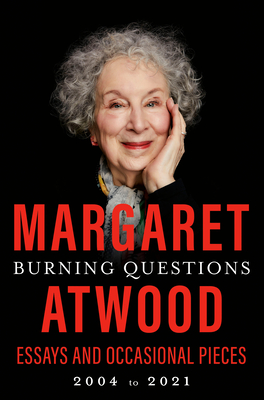
Burning Questions: Essays and Occasional Pieces, 2004 to 2021
by Margaret Atwood
Rating: 4.1 ⭐
• 1 recommendation ❤️
This brilliant selection of essays—funny, erudite, endlessly curious, uncannily prescient—seeks answers to Burning Questions such as: • Why do people everywhere, in all cultures, tell stories?• How much of yourself can you give away without evaporating?• How can we live on our planet?• Is it true? And is it fair?• What do zombies have to do with authoritarianism? In over fifty pieces Atwood aims her prodigious intellect and impish humor at the world, and reports back to us on what she finds. The roller-coaster period covered in the collection brought an end to the end of history, a financial crash, the rise of Trump and a pandemic. From debt to tech, the climate crisis to freedom, from when to dispense advice to the young (answer: only when asked) and how to define granola, we have no better guide than Atwood to the many and varied mysteries of our universe.