
Lena Dunham Recommended Books
American writer, director, actress, and producer
6 Books Recommended
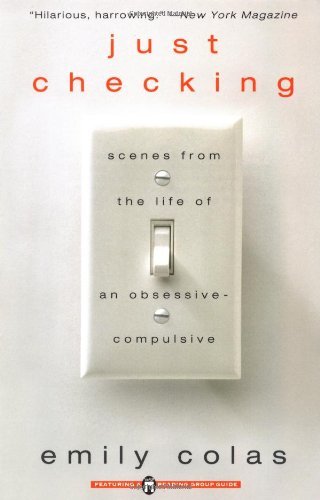
Just Checking: Scenes From the Life of an Obsessive-Compulsive
by Emily Colas
Rating: 3.5 ⭐
• 2 recommendations ❤️
We all worry. We all have moments of unfounded dread (Is someone behind that door?), or little phobias (roaches) or superstitions (step on a crack) that we indulge. Just Checking is an autobiographical account of what it is like to live with a full-blown case of obsessive-compulsive disorder (OCD), which, at its height, finds author Emily Colas nervous that she will contract a disease from blood that she sees on television. In the course of the book, what at first appear to her husband and friends to be Colas's idiosyncratic notions accumulate until she is frozen by the astounding psychological binds of OCD. Using precise (of course), connect-the-dots scenes, Colas draws a life that is at first highly monitored and ultimately unraveled by her disorder. One imagines that from afar, Colas's behavior at the height of her illness would look incomprehensible and just plain weird: She has to check the dishwasher multiple times before using it to make sure the cat is safe; the packaging of every new toothbrush has to meet rigorous sanitary standards; the landlord can't attempt to find new tenants for her apartment she won't let them in the house. But readers are not at a distance here. Instead, we become privy to Colas's somewhat apologetic but firm explanations of what her logic was, and what it felt like to be afraid. She is so honest and witty that one can't help liking her, rooting for her, and wishing help would come. In a typical vignette, when the family tries to go to the Macy's Thanksgiving Day Parade ("definitely a mistake"), Colas is terrified that shewillstep on blood: When I was a kid in New York, all we had to eat on the street were pretzels and hot dogs. Food that was readily identifiable. Now, vendors sell the fanciest things with cherries, berries, jelly, and other crap that's way too close to the color of blood. We finally made it to where we had to go, but not before I had inspected the bottom of my shoes. There was a mushy red object there. Maybe a cherry, possibly a finger. The kids watched the parade on TV and I had a nice new worry. My kids don't even remember that lovely November day, but, lucky for me, I do. This event is sad and resonant, but it also manages to be viscerally entertaining. The result is that instead of inspiring schadenfreude, this book reminds us that psychological disorders are often exaggerations of the ordinary and familiar. We all, on a continuum, wish to survive, to avoid disease, to impose order on our lives. We sympathize with Colas's desperate attempts to find safety and with her seemingly loving husband's gradual loss of tolerance. Even the not-so-funny poems that are occasionally interspersed among the perfectly crafted chapterettes find their place. Strange as it may be to find charm in a memoir of illness, Colas is utterly winning. Hilary Liftin is a writer living in New York City. Her first book, coauthored with Kate Montgomery, is scheduled for publication by Vintage next year. She is the editorial development manager at BookWire (www.bookwire.com).

Prozac Nation: Young and Depressed in America
by Elizabeth Wurtzel
Rating: 3.9 ⭐
• 2 recommendations ❤️
Elizabeth Wurtzel writes with her finger in the faint pulse of an over-diagnosed generation whose ruling icons are Kurt Cobain, Xanax, and pierced tongues. In this famous memoir of her bouts with depression and skirmishes with drugs, Prozac Nation is a witty and sharp account of the psychopharmacology of an era for readers of Girl, Interrupted and Sylvia Plath's The Bell Jar.
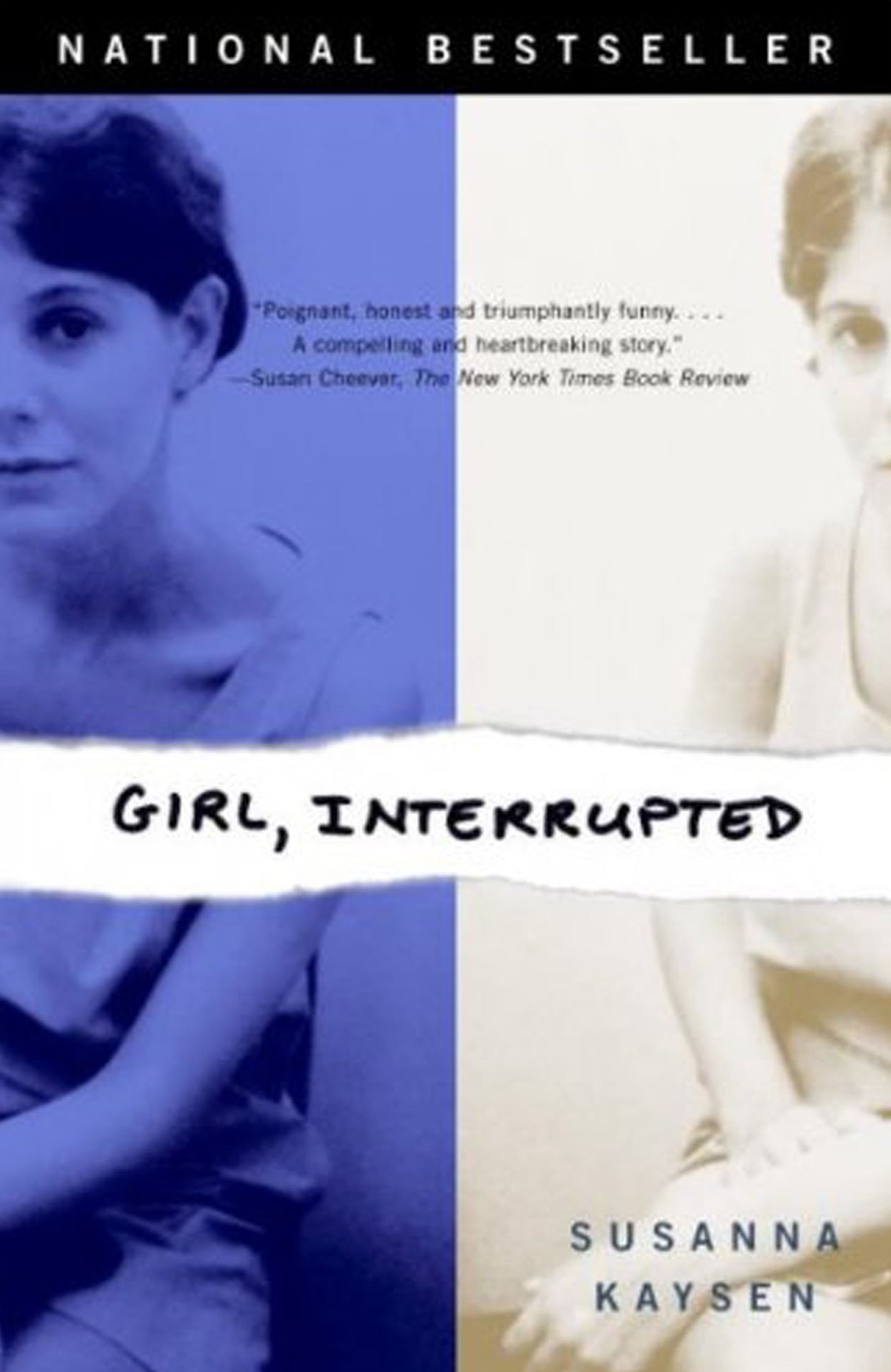
In 1967, after a session with a psychiatrist she'd never seen before, eighteen-year-old Susanna Kaysen was put in a taxi and sent to McLean Hospital. She spent most of the next two years on the ward for teenage girls in a psychiatric hospital as renowned for its famous clientele--Sylvia Plath, Robert Lowell, James Taylor, and Ray Charles--as for its progressive methods of treating those who could afford its sanctuary. Kaysen's memoir encompasses horror and razor-edged perception while providing vivid portraits of her fellow patients and their keepers. It is a brilliant evocation of a "parallel universe" set within the kaleidoscopically shifting landscape of the late sixties. "Girl, Interrupted" is a clear-sighted, unflinching document that gives lasting and specific dimension to our definitions of sane and insane, mental illness, and recovery.

More than 150 inspired—and inspiring—novelists, poets, playwrights, painters, philosophers, scientists, and mathematicians on how they subtly maneuver the many (self-inflicted) obstacles and (self-imposed) daily rituals to get done the work they love to do.Franz Kafka, frustrated with his living quarters and day job, wrote in a letter to Felice Bauer in 1912, “time is short, my strength is limited, the office is a horror, the apartment is noisy, and if a pleasant, straightforward life is not possible then one must try to wriggle through by subtle maneuvers.” Kafka is one of 161 minds who describe their daily rituals to get their work done, whether by waking early or staying up late; whether by self-medicating with doughnuts or bathing, drinking vast quantities of coffee, or taking long daily walks. Thomas Wolfe wrote standing up in the kitchen, the top of the refrigerator as his desk, dreamily fondling his “male configurations”.... Jean-Paul Sartre chewed on Corydrane tablets (a mix of amphetamine and aspirin), ingesting ten times the recommended dose each day ... Descartes liked to linger in bed, his mind wandering in sleep through woods, gardens, and enchanted palaces where he experienced “every pleasure imaginable.”Here are: Anthony Trollope, who demanded of himself that each morning he write three thousand words (250 words every fifteen minutes for three hours) before going off to his job at the postal service, which he kept for thirty-three years during the writing of more than two dozen books ... Karl Marx ... Woody Allen ... Agatha Christie ... George Balanchine, who did most of his work while ironing ... Leo Tolstoy ... Charles Dickens ... Pablo Picasso ... George Gershwin, who, said his brother Ira, worked for twelve hours a day from late morning to midnight, composing at the piano in pajamas, bathrobe, and slippers....Here also are the daily rituals of Charles Darwin, Andy Warhol, John Updike, Twyla Tharp, Benjamin Franklin, William Faulkner, Jane Austen, Anne Rice, and Igor Stravinsky (he was never able to compose unless he was sure no one could hear him and, when blocked, stood on his head to “clear the brain”).

From personal loss to phantom diseases, The Empathy Exams is a bold and brilliant collection; winner of the Graywolf Press Nonfiction Prize.Beginning with her experience as a medical actor who was paid to act out symptoms for medical students to diagnose, Leslie Jamison’s visceral and revealing essays ask essential questions about our basic understanding of others: How should we care about each other? How can we feel another’s pain, especially when pain can be assumed, distorted, or performed? Is empathy a tool by which to test or even grade each other? By confronting pain—real and imagined, her own and others’—Jamison uncovers a personal and cultural urgency to feel. She draws from her own experiences of illness and bodily injury to engage in an exploration that extends far beyond her life, spanning wide-ranging territory—from poverty tourism to phantom diseases, street violence to reality television, illness to incarceration—in its search for a kind of sight shaped by humility and grace.

Melissa Broder always struggled with anxiety. In the fall of 2012, she went through a harrowing cycle of panic attacks and dread that wouldn't abate for months. So she began @sosadtoday, an anonymous Twitter feed that allowed her to express her darkest feelings, and which quickly gained a dedicated following. In So Sad Today, Broder delves deeper into the existential themes she explores on Twitter, grappling with sex, death, love, low self-esteem, addiction, and the drama of waiting for the universe to text you back. With insights as sharp as her humor, Broder explores—in prose that is both gutsy and beautiful, aggressively colloquial and achingly poetic—questions most of us are afraid to even acknowledge, let alone answer, in order to discover what it really means to be a person in this modern world.