26 Books Recommended

Let My People Go Surfing: The Education of a Reluctant Businessman--Including 10 More Years of Business Unusual
by Yvon Chouinard
Rating: 4.3 ⭐
• 5 recommendations ❤️
In his long-awaited memoir, Yvon Chouinard-legendary climber, businessman, environmentalist, and founder of Patagonia, Inc.-shares the persistence and courage that have gone into being head of one of the most respected and environmentally responsible companies on earth. From his youth as the son of a French Canadian blacksmith to the thrilling, ambitious climbing expeditions that inspired his innovative designs for the sport's equipment, Let My People Go Surfing is the story of a man who brought doing good and having grand adventures into the heart of his business life-a book that will deeply affect entrepreneurs and outdoor enthusiasts alike.

The Effective Executive: The Definitive Guide to Getting the Right Things Done
by Peter F. Drucker
Rating: 4.1 ⭐
• 12 recommendations ❤️
What makes an effective executive? The measure of the executive, Peter F. Drucker reminds us, is the ability to "get the right things done." This usually involves doing what other people have overlooked as well as avoiding what is unproductive. Intelligence, imagination, and knowledge may all be wasted in an executive job without the acquired habits of mind that mold them into results. Drucker identifies five practices essential to business effectiveness that can, and must, be learned: Ranging widely through the annals of business and government, Peter F. Drucker demonstrates the distinctive skill of the executive and offers fresh insights into old and seemingly obvious business situations.
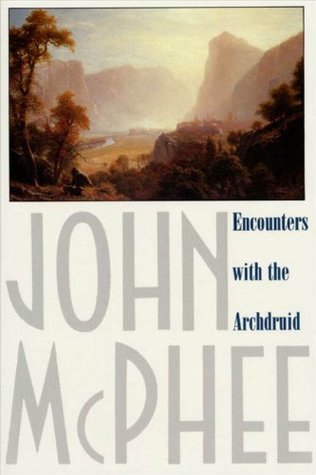
The narratives in this book are of journeys made in three wildernesses - on a coastal island, in a Western mountain range, and on the Colorado River in the Grand Canyon. The four men portrayed here have different relationships to their environment, and they encounter each other on mountain trails, in forests and rapids, sometimes with reserve, sometimes with friendliness, sometimes fighting hard across a philosophical divide.
Built to Last: Successful Habits of Visionary Companies
by Jim Collins
Rating: 4.1 ⭐
• 3 recommendations ❤️
"This is not a book about charismatic visionary leaders. It is not about visionary product concepts or visionary products or visionary market insights. Nor is it about just having a corporate vision. This is a book about something far more important, enduring, and substantial. This is a book about visionary companies." So write Jim Collins and Jerry Porras in this groundbreaking book that shatters myths, provides new insights, and gives practical guidance to those who would like to build landmark companies that stand the test of time. Drawing upon a six-year research project at the Stanford University Graduate School of Business, Collins and Porras took eighteen truly exceptional and long-lasting companies -- they have an average age of nearly one hundred years and have outperformed the general stock market by a factor of fifteen since 1926 -- and studied each company in direct comparison to one of its top competitors. They examined the companies from their very beginnings to the present day -- as start-ups, as midsize companies, and as large corporations. Throughout, the authors asked: "What makes the truly exceptional companies different from other companies?" What separates General Electric, 3M, Merck, Wal-Mart, Hewlett-Packard, Walt Disney, and Philip Morris from their rivals? How, for example, did Procter & Gamble, which began life substantially behind rival Colgate, eventually prevail as the premier institution in its industry? How was Motorola able to move from a humble battery repair business into integrated circuits and cellular communications, while Zenith never became dominant in anything other than TVs? How did Boeing unseat McDonnell Douglas as the world's best commercial aircraft company -- what did Boeing have that McDonnell Douglas lacked? By answering such questions, Collins and Porras go beyond the incessant barrage of management buzzwords and fads of the day to discover timeless qualities that have consistently distinguished out-standing companies. They also provide inspiration to all executives and entrepreneurs by destroying the false but widely accepted idea that only charismatic visionary leaders can build visionary companies. Filled with hundreds of specific examples and organized into a coherent framework of practical concepts that can be applied by managers and entrepreneurs at all levels, Built to Last provides a master blueprint for building organizations that will prosper long into the twenty-first century and beyond.

A Sense of Where You Are: Bill Bradley at Princeton
by John McPhee
Rating: 4.1 ⭐
• 11 recommendations ❤️
The first book from the legendary New Yorker writer John McPhee, tells about Bill Bradley when he was the best basketball player Princeton had ever seen.When John McPhee met Bill Bradley, both were at the beginning of their careers. In A Sense of Where You Are ,McPhee delineates for the reader the training and techniques that made Bradley the extraordinary athlete he was, and this part of the book is a blueprint of superlative basketball. But athletic prowess alone would not explain Bradley's magnetism, which is in the quality of the man himself―his self-discipline, his rationality, and his sense of responsibility.Here is a portrait of Bradley as he was in college, before his time with the New York Knicks and his election to the U.S. Senate―a story that suggests the abundant beginnings of his professional careers in sport and politics.

Creativity in Business: Based on the Famed Stanford University Course That Has Revolutionized the Art ofSuccess
by Michael L. Ray
Rating: 3.6 ⭐
• 2 recommendations ❤️
This exploration of innovative thinking in companies of all kinds "shows us how creativity in business can enrich us, and those who work with us." -- Spencer Johnson, co-author, The One Minute Manager
Good to Great and the Social Sectors: A Monograph to Accompany Good to Great
by Jim Collins
Rating: 4.0 ⭐
• 4 recommendations ❤️
Building upon the concepts introduced in Good to Great , Jim Collins answers the most commonly asked questions raised by his readers in the social sectors. Using information gathered from interviews with over 100 social sector leaders, Jim Collins shows that his "Level 5 Leader" and other good-to-great principles can help social sector organizations make the leap to greatness.

The Power Broker: Robert Moses and the Fall of New York
by Robert A. Caro
Rating: 4.5 ⭐
• 15 recommendations ❤️
One of the most acclaimed books of our time, winner of both the Pulitzer and the Francis Parkman prizes, The Power Broker tells the hidden story behind the shaping (and mis-shaping) of twentieth-century New York (city and state) and makes public what few have known: that Robert Moses was, for almost half a century, the single most powerful man of our time in New York, the shaper not only of the city's politics but of its physical structure and the problems of urban decline that plague us today.In revealing how Moses did it--how he developed his public authorities into a political machine that was virtually a fourth branch of government, one that could bring to their knees Governors and Mayors (from La Guardia to Lindsay) by mobilizing banks, contractors, labor unions, insurance firms, even the press and the Church, into an irresistible economic force--Robert Caro reveals how power works in all the cities of the United States. Moses built an empire and lived like an emperor. He personally conceived and completed public works costing 27 billion dollars--the greatest builder America (and probably the world) has ever known. Without ever having been elected to office, he dominated the men who were--even his most bitter enemy, Franklin D. Roosevelt, could not control him--until he finally encountered, in Nelson Rockefeller, the only man whose power (and ruthlessness in wielding it) equalled his own.

The White Peacock is set in Nethermere (fictional name for real-life Eastwood) and is narrated by Cyril Beardsall, whose sister Laetitia is involved in a love triangle with two young men, George and Leslie Temple. She decides to marry Leslie, even though she feels sexually drawn to George. Spurned by Lettie, George marries the conventional Meg. Both his and Lettie's marriages end in unhappiness, as George slides into alcoholism. The novel involves themes such as the damage associated with mismatched marriages, and the border country between town and country

Beyond Entrepreneurship: Turning Your Business into an Enduring Great Company
by Jim Collins
Rating: 4.1 ⭐
• 4 recommendations ❤️
“This is a hands-on guide to making your company a compelling marketplace force.”— Industry Week Every great company, no matter how large or small, has as its core a compelling vision. Beyond Entrepreneurship explains step by step how any firm can develop this vision and achieve enduring greatness. It provides a complete blueprint for steering your company to success.Packed with real-world examples of firms that have grown and attained corporate greatness—including Nike, L.L. Bean, Mrs. Fields’ Cookies, Sony, and FedEx—this inspirational yet practical book . . .· Covers in depth the five key elements common to all great enduring companies· Shows how to lay a foundation for greatness while a company is still small and adaptable . . . how to set values, purpose, and mission, and instill them into the very roots of your organization· Demonstrates how to develop the most effective leadership style for your specific situation· Shows how to translate vision into effective day-to-day business tactics –and how to foster consistent tactical excellence in everything your company does· Explains how to resolve the critical strategic issues faced by every small and mid-sized firm· Prevents a set of concepts—and a host of practical techniques—for stimulating creativity and maintaining innovation as the company evolves“ Beyond Entrepreneurship is a blueprint for becoming great.” – Entrepreneur Magazine

Good to Great: Why Some Companies Make the Leap... and Others Don't
by Jim Collins
Rating: 4.1 ⭐
• 28 recommendations ❤️
sach hay ve ky nang - bi quyet thanh cong - hinh thanh tu duy tich cuc

Searching for Bobby Fischer: The Father of a Prodigy Observes the World of Chess
by Fred Waitzkin
Rating: 4.0 ⭐
• 3 recommendations ❤️
Searching for Bobby Fischer is the story of Fred Waitzkin and his son Josh, from the moment six-year-old Josh first sits down at a chessboard until he competes for the national championship. Drawn into the insular, international network of chess, they must also navigate the difficult waters of their own relationship. All the while, Waitzkin wonders about and searches for the elusive Bobby Fischer, whose myth still dominates the chess world and profoundly affects Waitzkin's dreams for his son.

"So it we are not given a short life but we are wasteful of it... Life is long if you know how to use it." "But life is very short and anxious for those who forget the past, neglect the present, and fear the future." "We must indulge the mind and from time to time allow it the leisure which is its food and strength." "Often a very old man has no other proof of his long life than his age." On the Shortness of Life is Seneca's best-known work. It offers piercing and profound insights into human nature, and a vision of the good life, summarised in his aphorism, "Life is long, if you know how to use it." Seneca elucidates many of the principles of modern productivity manuals, including the wise valuing of " People are frugal in guarding their personal property; but as soon as it comes to squandering time they are most wasteful of the one thing in which it is right to be stingy," living in the "The greatest obstacle to living is expectancy, which hangs upon tomorrow and loses today," "There is nothing the busy man is less busied with than living," and rest and "We must go for walks out of doors, so that the mind can be strengthened and invigorated by a clear sky and plenty of fresh air. At times it will acquire fresh energy from a journey by carriage and a change of scene, or from socializing and drinking freely." Lucius Annaeus Seneca (4 BC - AD 65), also known as Seneca the Younger, was a Roman philosopher, statesman and dramatist. He was the leading intellectual in the mid-first century and was a trusted advisor to the Emperor Nero. Seneca's books are among the most important primary texts of Stoic philosophy. His literary style and ideas were renowned and influential in his time, and ever since. The reformer Calvin published a commentary on one of Seneca's works, while the Catholic philosopher, Erasmus, edited a volume of Seneca. In today's uncertain world, there is a resurgence of interest in Stoic philosophy and Seneca's body of work. The Shortness of Life , a brief, accessible and carefully argued guide to a wise and full life is an essential classic. Stoic philosophy is, above all, practical. It uses reason and the careful observation of human life to address the problems of daily life. It is also universal-the emperor Marcus Aurelius and the freed slave Epictetus were both prominent Stoic philosophers. In recent years, Stoic philosophy has provided invaluable life lessons to people in all spheres of life including prisoners of war and Holocaust survivors, psychiatrists, and those in the business world. Indeed, modern Stoic thought "hold[s] fascinating promise for business and government leaders tackling global problems in a turbulent, post-recession slump," ( Forbes) .

While John McPhee was working on his previous book, Rising from the Plains, he happened to walk by the engineering building at the University of Wyoming, where words etched in limestone said: "Strive on--the control of Nature is won, not given." In the morning sunlight, that central phrase--"the control of nature"--seemed to sparkle with unintended ambiguity. Bilateral, symmetrical, it could with equal speed travel in opposite directions. For some years, he had been planning a book about places in the world where people have been engaged in all-out battles with nature, about (in the words of the book itself) "any struggle against natural forces--heroic or venal, rash or well advised--when human beings conscript themselves to fight against the earth, to take what is not given, to rout the destroying enemy, to surround the base of Mt. Olympus demanding and expecting the surrender of the gods." His interest had first been sparked when he went into the Atchafalaya--the largest river swamp in North America--and had learned that virtually all of its waters were metered and rationed by a U.S. Army Corps of Engineers' project called Old River Control.In the natural cycles of the Mississippi's deltaic plain, the time had come for the Mississippi to change course, to shift its mouth more than a hundred miles and go down the Atchafalaya, one of its distributary branches. The United States could not afford that--for New Orleans, Baton Rouge, and all the industries that lie between would be cut off from river commerce with the rest of the nation. At a place called Old River, the Corps therefore had built a great fortress--part dam, part valve--to restrain the flow of the Atchafalaya and compel the Mississippi to stay where it is.In Iceland, in 1973, an island split open without warning and huge volumes of lava began moving in the direction of a harbor scarcely half a mile away. It was not only Iceland's premier fishing port (accounting for a large percentage of Iceland's export economy) but it was also the only harbor along the nation's southern coast. As the lava threatened to fill the harbor and wipe it out, a physicist named Thorbjorn Sigurgeirsson suggested a way to fight against the flowing red rock--initiating an all-out endeavor unique in human history. On the big island of Hawaii, one of the world's two must eruptive hot spots, people are not unmindful of the Icelandic example. McPhee went to Hawaii to talk with them and to walk beside the edges of a molten lake and incandescent rivers.Some of the more expensive real estate in Los Angeles is up against mountains that are rising and disintegrating as rapidly as any in the world. After a complex coincidence of natural events, boulders will flow out of these mountains like fish eggs, mixed with mud, sand, and smaller rocks in a cascading mass known as debris flow. Plucking up trees and cars, bursting through doors and windows, filling up houses to their eaves, debris flows threaten the lives of people living in and near Los Angeles' famous canyons. At extraordinary expense the city has built a hundred and fifty stadium-like basins in a daring effort to catch the debris.Taking us deep into these contested territories, McPhee details the strategies and tactics through which people attempt to control nature. Most striking in his vivid depiction of the main contestants: nature in complex and awesome guises, and those who would attempt to wrest control from her--stubborn, often ingenious, and always arresting characters.

Goodbye, Darkness: A Memoir of the Pacific War
by William Manchester
Rating: 4.2 ⭐
• 1 recommendation ❤️
This emotional and honest novel recounts a young man's experiences during World War II and digs deep into what he and his fellow soldiers lived through during those dark times.The nightmares began for William Manchester 23 years after WW II. In his dreams he lived with the recurring image of a battle-weary youth (himself), "angrily demanding to know what had happened to the three decades since he had laid down his arms." To find out, Manchester visited those places in the Pacific where as a young Marine he fought the Japanese, and in this book examines his experiences in the line with his fellow soldiers (his "brothers"). He gives us an honest and unabashedly emotional account of his part in the war in the Pacific. "The most moving memoir of combat on WW II that I have ever read. A testimony to the fortitude of man...a gripping, haunting, book." --William L. Shirer
How The Mighty Fall: And Why Some Companies Never Give In
by Jim Collins
Rating: 4.0 ⭐
• 4 recommendations ❤️
Decline can be avoided.Decline can be detected.Decline can be reversed.Amidst the desolate landscape of fallen great companies, Jim Collins began to wonder: How do the mighty fall? Can decline be detected early and avoided? How far can a company fall before the path toward doom becomes inevitable and unshakable? How can companies reverse course?In How the Mighty Fall, Collins confronts these questions, offering leaders the well-founded hope that they can learn how to stave off decline and, if they find themselves falling, reverse their course. Collins' research project—more than four years in duration—uncovered five step-wise stages of decline:Stage 1: Hubris Born of SuccessStage 2: Undisciplined Pursuit of MoreStage 3: Denial of Risk and PerilStage 4: Grasping for SalvationStage 5: Capitulation to Irrelevance or DeathBy understanding these stages of decline, leaders can substantially reduce their chances of falling all the way to the bottom.Great companies can stumble, badly, and recover.Every institution, no matter how great, is vulnerable to decline. There is no law of nature that the most powerful will inevitably remain at the top. Anyone can fall and most eventually do. But, as Collins' research emphasizes, some companies do indeed recover—in some cases, coming back even stronger—even after having crashed into the depths of Stage 4.Decline, it turns out, is largely self-inflicted, and the path to recovery lies largely within our own hands. We are not imprisoned by our circumstances, our history, or even our staggering defeats along the way. As long as we never get entirely knocked out of the game, hope always remains. The mighty can fall, but they can often rise again.
A gripping portrait of the first president of the United States from the author of Alexander Hamilton, the New York Times bestselling biography that inspired the musical.Celebrated biographer Ron Chernow provides a richly nuanced portrait of the father of our nation and the first president of the United States. With a breadth and depth matched by no other one volume biography of George Washington, this crisply paced narrative carries the reader through his adventurous early years, his heroic exploits with the Continental Army during the Revolutionary War, his presiding over the Constitutional Convention, and his magnificent performance as America's first president. In this groundbreaking work, based on massive research, Chernow shatters forever the stereotype of George Washington as a stolid, unemotional figure and brings to vivid life a dashing, passionate man of fiery opinions and many moods.Winner of the 2011 Pulitzer Prize for Biography“Truly magnificent… [a] well-researched, well-written and absolutely definitive biography” –Andrew Roberts, The Wall Street Journal“Superb… the best, most comprehensive, and most balanced single-volume biography of Washington ever written.” –Gordon S. Wood, The New York Review of Books“A truly gripping biography of George Washington... I can’t recommend it highly enough—as history, as epic, and, not least, as entertainment. It’s as luxuriantly pleasurable as one of those great big sprawling, sweeping Victorian novels.” –Hendrik Hertzberg, The New YorkerLin-Manuel Miranda’s smash Broadway musical Hamilton has sparked new interest in the Revolutionary War and the Founding Fathers. In addition to Alexander Hamilton, the production also features George Washington, Thomas Jefferson, James Madison, Aaron Burr, Lafayette, and many more.
In the highly anticipated Thinking, Fast and Slow, Kahneman takes us on a groundbreaking tour of the mind and explains the two systems that drive the way we think. System 1 is fast, intuitive, and emotional; System 2 is slower, more deliberative, and more logical. Kahneman exposes the extraordinary capabilities—and also the faults and biases—of fast thinking, and reveals the pervasive influence of intuitive impressions on our thoughts and behavior. The impact of loss aversion and overconfidence on corporate strategies, the difficulties of predicting what will make us happy in the future, the challenges of properly framing risks at work and at home, the profound effect of cognitive biases on everything from playing the stock market to planning the next vacation—each of these can be understood only by knowing how the two systems work together to shape our judgments and decisions.Engaging the reader in a lively conversation about how we think, Kahneman reveals where we can and cannot trust our intuitions and how we can tap into the benefits of slow thinking. He offers practical and enlightening insights into how choices are made in both our business and our personal lives—and how we can use different techniques to guard against the mental glitches that often get us into trouble. Thinking, Fast and Slow will transform the way you think about thinking.

Great by Choice: Uncertainty, Chaos, and Luck--Why Some Thrive Despite Them All
by Jim Collins
Rating: 4.1 ⭐
• 6 recommendations ❤️
Ten years after the worldwide bestseller Good to Great , Jim Collins returns withanother groundbreaking work, this time to ask: why do some companies thrive inuncertainty, even chaos, and others do not? Based on nine years of research,buttressed by rigorous analysis and infused with engaging stories, Collins andhis colleague Morten Hansen enumerate the principles for building a truly greatenterprise in unpredictable, tumultuous and fast-moving times. This book isclassic Collins: contrarian, data-driven and uplifting.

Universally acclaimed for their compelling narrative, their fresh insights, and their objective renderings of Winston Churchill's life, The Last Lion trilogy presents a revelatory and unparalleled portrait of this brilliant, flawed, and dynamic adventurer, aristocrat, soldier, and statesman. Born at the end of the 19th century when Imperial Britain still stood at the splendid pinnacle of her power, Churchill would witness the shift a few years later as the Empire hovered on the brink of a catastrophic new era. One of the greatest wartime leaders of our time, he would go on to stand alone, politically isolated in Parliament, as he took the lead in warning of the growing Nazi threat, and would lead Britain to victory against Nazi Germany and the Axis powers in World War II. Now, celebrated historian William Manchester's landmark biographies are collected together for the first time, along with the eagerly anticipated final installment Churchill's last years in power. More than thirty years in the making, The Last Lion is the definitive work on this remarkable man whose courageous vision guided the destiny of a nation during darkly troubled times-and who looms as one of the greatest figures of our century.

Recipient of the Ivan Sandrof Lifetime Achievement AwardDraft No. 4 is a master class on the writer's craft. John McPhee shares insights he has gathered over his long career, and has refined while teaching at Princeton University, where he has nurtured some of the most highly regarded writers of our time. He discusses structure, diction and tone, observing that 'readers are not supposed to notice the structure. It is meant to be about as visible as someone's bones.' This book is a vivid depiction of the writing process, from reporting to drafting to revising - and revising and revising.

Becoming Steve Jobs: The Evolution of a Reckless Upstart into a Visionary Leader
by Brent Schlender
Rating: 4.4 ⭐
• 16 recommendations ❤️
The #1 New York Times bestselling biography of how Steve Jobs became the most visionary CEO in history. Becoming Steve Jobs breaks down the conventional, one-dimensional view of Steve Jobs that he was half-genius, half-jerk from youth, an irascible and selfish leader who slighted friends and family alike. Becoming Steve Jobs answers the central question about the life and career of the Apple cofounder and How did a young man so reckless and arrogant that he was exiled from the company he founded become the most effective visionary business leader of our time, ultimately transforming the daily life of billions of people?Drawing on incredible and sometimes exclusive access, Schlender and Tetzeli tell a different story of a real human being who wrestled with his failings and learned to maximize his strengths over time. Their rich, compelling narrative is filled with stories never told before from the people who knew Jobs best, including his family, former inner circle executives, and top people at Apple, Pixar and Disney, most notably Tim Cook, Jony Ive, Eddy Cue, Ed Catmull, John Lasseter, Robert Iger and many others. In addition, Schlender knew Jobs personally for 25 years and draws upon his many interviews with him, on and off the record, in writing the book. He and Tetzeli humanize the man and explain, rather than simply describe, his behavior. Along the way, the book provides rich context about the technology revolution we've all lived through, and the ways in which Jobs changed our world.A rich and revealing account, Becoming Steve Jobs shows us how one of the most colorful and compelling figures of our times was able to combine his unchanging, relentless passion with an evolution in management style to create one of the most valuable and beloved companies on the planet.

Turning the Flywheel: A Monograph to Accompany Good to Great
by Jim Collins
Rating: 4.2 ⭐
• 3 recommendations ❤️
A companion guidebook to the number-one bestselling Good to Great, focused on implementation of the flywheel concept, one of Jim Collins’ most memorable ideas that has been used across industries and the social sectors, and with startups.The key to business success is not a single innovation or one plan. It is the act of turning the flywheel, slowly gaining momentum and eventually reaching a breakthrough. Building upon the flywheel concept introduced in his groundbreaking classic Good to Great, Jim Collins teaches readers how to create their own flywheel, how to accelerate the flywheel’s momentum, and how to stay on the flywheel in shifting markets and during times of turbulence.Combining research from his Good to Great labs and case studies from organizations like Amazon, Vanguard, and the Cleveland Clinic which have turned their flywheels with outstanding results, Collins demonstrates that successful organizations can disrupt the world around them—and reach unprecedented success—by employing the flywheel concept.
No Rules Rules: Netflix and the Culture of Reinvention
by Reed Hastings
Rating: 4.3 ⭐
• 9 recommendations ❤️
A New York Times Bestseller and Shortlisted for the 2020 Financial Times & McKinsey Business Book of the Year Netflix cofounder Reed Hastings reveals for the first time the unorthodox culture behind one of the world's most innovative, imaginative, and successful companies There's never before been a company like Netflix. Not only because it has led a revolution in the entertainment industries; or because it generates billions of dollars in annual revenue; or even because it is watched by hundreds of millions of people in nearly 200 countries. When Reed Hastings co-founded Netflix, he developed a set of counterintuitive and radical management principles, defying all tradition and expectation, which would allow the company to reinvent itself over and over on the way to becoming one of the most loved brands in the world.Rejecting the conventional wisdom under which other companies operate, Reed set new standards, valuing people over process, emphasizing innovation over efficiency, and giving employees context, not controls. At Netflix, adequate performance gets a generous severance and hard work is irrelevant. At Netflix, you don't try to please your boss, you give candid feedback instead. At Netflix, employees never need approval, and the company always pays top of market. When Hastings and his team first devised these principles, the implications were unknown and untested, but over just a short period of time they have led to unprecedented flexibility, speed, and boldness. The culture of freedom and responsibility has allowed the company to constantly grow and change as the world, and its members' needs, have also transformed.Here for the first time, Hastings and Erin Meyer, bestselling author of The Culture Map and one of the world's most influential business thinkers, dive deep into the controversial philosophies at the heart of the Netflix psyche, which have generated results that are the envy of the business world. Drawing on hundreds of interviews with current and past Netflix employees from around the globe and never-before-told stories of trial and error from his own career, No Rules Rules is the full, fascinating, and untold story of a unique company making its mark on the world.

BE 2.0 (Beyond Entrepreneurship 2.0): Turning Your Business into an Enduring Great Company
by Jim Collins
Rating: 4.4 ⭐
• 2 recommendations ❤️
From Jim Collins, the most influential business thinker of our era, comes an ambitious upgrade of his classic, Beyond Entrepreneurship, that includes all-new findings and world-changing insights.What's the roadmap to create a company that not only survives its infancy but thrives, changing the world for decades to come?Nine years before the publication of his epochal bestseller Good to Great, Jim Collins and his mentor, Bill Lazier, answered this question in their bestselling book, Beyond Entrepreneurship.Beyond Entrepreneurship left a definitive mark on the business community, influencing the young pioneers who were, at that time, creating the technology revolution that was birthing in Silicon Valley. Decades later, successive generations of entrepreneurs still turn to the strategies outlined in Beyond Entrepreneurship to answer the most pressing business questions.BE 2.0 is a new and improved version of the book that Jim Collins and Bill Lazier wrote years ago. In BE 2.0, Jim Collins honors his mentor, Bill Lazier, who passed away in 2005, and reexamines the original text of Beyond Entrepreneurship with his 2020 perspective.The book includes the original text of Beyond Entrepreneurship, as well as four new chapters and fifteen new essays. BE 2.0 pulls together the key concepts across Collins' thirty years of research into one integrated framework called The Map. The result is a singular reading experience, which presents a unified vision of company creation that will fascinate not only Jim's millions of dedicated readers worldwide, but also introduce a new generation to his remarkable work.

The Second World War is a history of the period from the end of the First World War to July 1945, written by Winston Churchill. It was largely responsible for his being awarded the Nobel Prize for Literature in 1953. Volumes include:1. The Gathering Storm2. Their Finest Hour3. The Grand Alliance4. The Hinge of Fate5. Closing the Ring6. Triumph and Tragedy