
Guy Kawasaki Recommended Books
American businessman and author
11 Books Recommended

Influence, the classic book on persuasion, explains the psychology of why people say "yes"—and how to apply these understandings. Dr. Robert Cialdini is the seminal expert in the rapidly expanding field of influence and persuasion. His thirty-five years of rigorous, evidence-based research along with a three-year program of study on what moves people to change behavior has resulted in this highly acclaimed book.You'll learn the six universal principles, how to use them to become a skilled persuader—and how to defend yourself against them. Perfect for people in all walks of life, the principles of Influence will move you toward profound personal change and act as a driving force for your success.

The Effective Executive: The Definitive Guide to Getting the Right Things Done
by Peter F. Drucker
Rating: 4.1 ⭐
• 12 recommendations ❤️
What makes an effective executive? The measure of the executive, Peter F. Drucker reminds us, is the ability to "get the right things done." This usually involves doing what other people have overlooked as well as avoiding what is unproductive. Intelligence, imagination, and knowledge may all be wasted in an executive job without the acquired habits of mind that mold them into results. Drucker identifies five practices essential to business effectiveness that can, and must, be learned: Ranging widely through the annals of business and government, Peter F. Drucker demonstrates the distinctive skill of the executive and offers fresh insights into old and seemingly obvious business situations.

Crossing the Chasm: Marketing and Selling High-Tech Products to Mainstream Customers
by Geoffrey A. Moore
Rating: 4.0 ⭐
• 22 recommendations ❤️
Here is the bestselling guide that created a new game plan for marketing in high-tech industries. Crossing the Chasm has become the bible for bringing cutting-edge products to progressively larger markets. This edition provides new insights into the realities of high-tech marketing, with special emphasis on the Internet. It's essential reading for anyone with a stake in the world's most exciting marketplace.
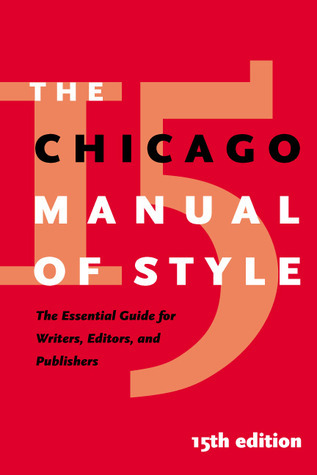
The 15th edition of The Chicago Manual of Style has been superseded by the 17th edition. In the 1890s, a proofreader at the University of Chicago Press prepared a single sheet of typographic fundamentals intended as a guide for the University community. That sheet grew into a pamphlet, and the pamphlet grew into a book—the first edition of the Manual of Style, published in 1906. Now in its fifteenth edition, The Chicago Manual of Style—the essential reference for authors, editors, proofreaders, indexers, copywriters, designers, and publishers in any field—is more comprehensive and easier to use than ever before.Those who work with words know how dramatically publishing has changed in the past decade, with technology now informing and influencing every stage of the writing and publishing process. In creating the fifteenth edition of the Manual, Chicago's renowned editorial staff drew on direct experience of these changes, as well as on the recommendations of the Manual's first advisory board, composed of a distinguished group of scholars, authors, and professionals from a wide range of publishing and business environments.Every aspect of coverage has been examined and brought up to date—from publishing formats to editorial style and method, from documentation of electronic sources to book design and production, and everything in between. In addition to books, the Manual now also treats journals and electronic publications. All chapters are written for the electronic age, with advice on how to prepare and edit manuscripts online, handle copyright and permissions issues raised by technology, use new methods of preparing mathematical copy, and cite electronic and online sources.A new chapter covers American English grammar and usage, outlining the grammatical structure of English, showing how to put words and phrases together to achieve clarity, and identifying common errors. The two chapters on documentation have been reorganized and updated: the first now describes the two main systems preferred by Chicago, and the second discusses specific elements and subject matter, with examples of both systems. Coverage of design and manufacturing has been streamlined to reflect what writers and editors need to know about current procedures. And, to make it easier to search for information, each numbered paragraph throughout the Manual is now introduced by a descriptive heading.Clear, concise, and replete with commonsense advice, The Chicago Manual of Style, fifteenth edition, offers the wisdom of a hundred years of editorial practice while including a wealth of new topics and updated perspectives. For anyone who works with words, whether on a page or computer screen, this continues to be the one reference book you simply must have.What's new in the Fifteenth Edition:* Updated material throughout to reflect current style, technology, and professional practice* Scope expanded to include journals and electronic publications* Comprehensive new chapter on American English grammar and usage by Bryan A. Garner (author of A Dictionary of Modern American Usage)* Updated and rewritten chapter on preparing mathematical copy* Reorganized and updated chapters on documentation, including guidance on citing electronic sources* Streamlined coverage of current design and production processes, with a glossary of key terms* Descriptive headings on all numbered paragraphs for ease of reference* New diagrams of the editing and production processes for both books and journals, keyed to chapter discussions* New, expanded Web site with special tools and features for Manual users at www.chicagomanualofstyle.org.

Inevitable Illusions: How Mistakes of Reason Rule Our Minds
by Massimo Piattelli-Palmarini
Rating: 3.5 ⭐
• 2 recommendations ❤️
"Fascinating and insightful. . . . I cannot recall a book that has made me think more about the nature of thinking." -- Richard C. LewontinHarvard UniversityEveryone knows that optical illusions trick us because of the way we see. Now scientists have discovered that cognitive illusions, a set of biases deeply embedded in the human mind, can actually distort the way we think.In Inevitable Illusions, distinguished cognitive researcher Massimo Piattelli-Palmarini takes us on a provocative, challenging, and thoroughly entertaining exploration of the games our minds play. He opens the doors onto the newly charted realm of the cognitive unconscious to reveal the full range of illusions, showing how they inhibit our ability to reason--no matter what our educational background or IQ. Inevitable Illusions is stimulating, eye-opening food for thought.

Drawing on interviews with 40 winners of the MacArthur Foundation Fellowship—the so-called "genius awards"—the insightful study throws fresh light on the creative process.

The author presents a compelling look at how innovation transforms industries, raising the fortunes of some firms while destroying others. The book draws on the rich history of innovation by inventors and entrepreneurs--ranging from the birth of typewriters to the emergence of personal computers, gas lamps to fluorescent lighting, George Eastman's amateur photography to electronic imaging--to develop a practical model for how innovation enters an industry, how mainstream firms typically respond, and how--over time--new and old players wrestle for dominance. Utterback asserts that existing organizations must consistently abandon past success and embrace innovation--even when it undermines their traditional strengths. He sets forth a strategy to do so, and identifies the responsibilities of managers to lead and focus that effort. Mastering the Dynamics of Innovation offers a pioneering model for how innovation unsettles industries and firms, and features fascinating histories of new product developments and strategies for nurturing innovation. "The most valuable book I've read in years. . . . The analysis is brilliant."--Tom Peters. Available August 1996.

THE HOCKEY HANDBOOK, was the first really comprehensive technical book ever written about hockey. It is still regarded as the classic reference book for hockey players, coaches and spectators.

The Innovator's Dilemma: When New Technologies Cause Great Firms to Fail
by Clayton M. Christensen
Rating: 4.1 ⭐
• 39 recommendations ❤️
The bestselling classic on disruptive innovation, by renowned author Clayton M. Christensen. His work is cited by the world’s best-known thought leaders, from Steve Jobs to Malcolm Gladwell. In this classic bestseller—one of the most influential business books of all time—innovation expert Clayton Christensen shows how even the most outstanding companies can do everything right—yet still lose market leadership. Christensen explains why most companies miss out on new waves of innovation. No matter the industry, he says, a successful company with established products will get pushed aside unless managers know how and when to abandon traditional business practices. Offering both successes and failures from leading companies as a guide, The Innovator’s Dilemma gives you a set of rules for capitalizing on the phenomenon of disruptive innovation. Sharp, cogent, and provocative—and consistently noted as one of the most valuable business ideas of all time—The Innovator’s Dilemma is the book no manager, leader, or entrepreneur should be without.

Future Forward: Leadership Lessons from Patrick McGovern, the Visionary Who Circled the Globe and Built a Technology Media Empire
by Glenn Rifkin
Rating: 3.9 ⭐
• 10 recommendations ❤️
Powerful lessons in forward-thinking leadership from the visionary business pioneer who turned IDG into a $3 billion technology media and venture capital empireLike Steve Jobs, Patrick McGovern built a worldwide multibillion-dollar industry by thinking differently, disrupting old business models, and embracing new technology trends. He drove the future forward and never looked back. With magazines such as Computerworld, PCWorld, and Macworld, his company, International Data Group (IDG), quickly became a global powerhouse with information technology publications in nearly 100 countries.The story of IDG’s astonishing success has been a source of inspiration for entrepreneurs all around the world. No matter what industry you work in―whether you’re heading up a small startup, expanding a mid-sized company, or running a major global corporation―McGovern’s people-first principles, insights, and integrity will help you lead the way.Learn how •Define a clear mission early in the game―for long-term success.•Identify new markets and stay ahead of the curve.•Expand your business globally but have it managed locally.•Listen to your customers and empower your people.•Hire the best and challenge them to do their best work.•Never stop learning and always remain curious.•Foster a let’s-try-it attitude throughout the company.•Lead with optimism and stay true to your values and vision.In addition to these timeless lessons, you’ll learn how this future-forward leader broke new ground in the 1980s by opening offices in China, the Soviet Union, Eastern Europe, and other markets deemed off-limits. You’ll discover how his company thrived in spite of major industry shifts―from mainframe computers to minicomputers to personal computers, from print to digital to smartphones―that upended many rivals. Living at the intersection of these classic disruptions, McGovern never missed a beat. He understood well before most that a revolution in information technology was underway and not only was there money to be made but that this would soon become the world’s largest industry. Most important, he never forgot the human element that is so crucial to any company’s success. His leadership in the creation of one of the world’s leading brain research institutes at MIT only served to cement his legacy.Future Forward shows you how to apply McGovern’s principles to your own organization. These are the lessons of a true visionary. This is how successful leaders take risks, take charge, and take the future by storm.

If You Want to Write: A Book about Art, Independence and Spirit
by Brenda Ueland
Rating: 4.1 ⭐
• 2 recommendations ❤️
In her 93 remarkable years, Brenda Ueland published six million words. She said she had two rules she followed absolutely: to tell the truth, and not to do anything she didn't want to do. Her integrity shines throughout If You Want to Write, her best-selling classic on the process of writing that has already inspired thousands to find their own creative center. Carl Sandburg called this book "The best book ever written about how to write." Yet Ueland reminds us that "Whenever I say 'writing' in this book, I also mean anything that you love and want to do or to make." Ueland's writing and her teaching are made compelling by her feisty spirit of independence and joy.