
Craig Mod Recommended Books
writer and photographer
22 Books Recommended

Number9Dream is the international literary sensation from a writer with astonishing range and imaginative energy—an intoxicating ride through Tokyo’s dark underworlds and the even more mysterious landscapes of our collective dreams.David Mitchell follows his eerily precocious, globe-striding first novel, Ghostwritten , with a work that is in its way even more ambitious. In outward form, Number9Dream is a Dickensian coming-of-age Young dreamer Eiji Miyake, from remote rural Japan, thrust out on his own by his sister’s death and his mother’s breakdown, comes to Tokyo in pursuit of the father who abandoned him. Stumbling around this strange, awesome city, he trips over and crosses—through a hidden destiny or just monstrously bad luck—a number of its secret power centers. Suddenly, the riddle of his father’s identity becomes just one of the increasingly urgent questions Eiji must answer. Why is the line between the world of his experiences and the world of his dreams so blurry? Why do so many horrible things keep happening to him? What is it about the number 9? To answer these questions, and ultimately to come to terms with his inheritance, Eiji must somehow acquire an insight into the workings of history and fate that would be rare in anyone, much less in a boy from out of town with a price on his head and less than the cost of a Beatles disc to his name.

A book that redefines both family and narrative for the twenty-first century. A Heartbreaking Work of Staggering Genius is the moving memoir of a college senior who, in the space of five weeks, loses both of his parents to cancer and inherits his eight-year-old brother. Here is an exhilarating debut that manages to be simultaneously hilarious and wildly inventive as well as a deeply heartfelt story of the love that holds a family together.A Heartbreaking Work of Staggering Genius is an instant classic that will be read for decades to come.

Oku no Hosomichi is a major work of haibun by the Japanese poet Matsuo Basho considered "one of the major texts of classical Japanese literature." The text is written in the form of a prose and verse travel diary and was penned as Basho made an epic and dangerous journey on foot through the Edo Japan of the late 17th century. While the poetic work became seminal of its own account, the poet's travels in the text have since inspired many people to follow in his footsteps and trace his journey for themselves. It has been said of the work that it is as if the very soul of Japan had itself written it.

John Crowley's masterful Little, Big is the epic story of Smoky Barnable, an anonymous young man who travels by foot from the City to a place called Edgewood—not found on any map—to marry Daily Alice Drinkwater, as was prophesied. It is the story of four generations of a singular family, living in a house that is many houses on the magical border of an otherworld. It is a story of fantastic love and heartrending loss; of impossible things and unshakable destinies; and of the great Tale that envelops us all. It is a wonder.

American Journalist Jake Barnes is desperately in love with the beautiful Lady Brett Ashley. She moves seductively through the seemingly glamorous milieu of American and British expats, loving, living and partying in Paris in the 1920's. They're a hedonistic generation, marked by the violence and privations of WW1, in pursuit of adventure.Part of the Macmillan Collector’s Library; a series of stunning, cloth-bound, pocket-sized classics with gold foiled edges and ribbon markers. These beautiful books make perfect gifts or a treat for any book lover.Ever restless, Jake and Lady Brett travel together with a disparate group of friends through France to Pamplona in Spain. There they are taken up by the vitality and the spectacle of the famous Fiesta of St Fermin. In a city famous for its bullfighting, Jake is plagued by jealousy and real love seems forever out of reach. The drama of the bullfighting is captured on the page by Hemingway with brutal realism in a remarkable novel that secured his place as an astonishing new writer and a voice for his generation.

Renowned typographer and poet Robert Bringhurst brings clarity to the art of typography with this masterful style guide. Combining practical, theoretical, and historical, this book is a must for graphic artists, editors, or anyone working with the printed page using digital or traditional methods.Having established itself as a standard in its field The Elements of Typographic Style is house manual at most American university presses, a standard university text, and a reference work in studios of designers around the world. It has been translated into italian and greek, and dutch.
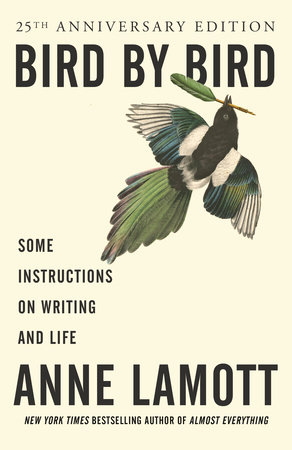
Bird by Bird: Some Instructions on Writing and Life
by Anne Lamott
Rating: 4.3 ⭐
• 25 recommendations ❤️
A previous edition of this title can be found here.For a quarter century, more than a million readers—scribes and scribblers of all ages and abilities—have been inspired by Anne Lamott’s hilarious, big-hearted, homespun advice. Advice that begins with the simple words of wisdom passed down from Anne’s father—also a writer—in the iconic passage that gives the book its title: “Thirty years ago my older brother, who was ten years old at the time, was trying to get a report on birds written that he’d had three months to write. It was due the next day. We were out at our family cabin in Bolinas, and he was at the kitchen table close to tears, surrounded by binder paper and pencils and unopened books on birds, immobilized by the hugeness of the task ahead. Then my father sat down beside him, put his arm around my brother’s shoulder, and said, ‘Bird by bird, buddy. Just take it bird by bird.’” An essential volume for generations of writers young and old, Bird by Bird is a modern classic. This twenty-fifth anniversary edition will continue to spark creative minds for years to come.

Case was the sharpest data thief in the matrix--until he crossed the wrong people and they crippled his nervous system, banishing him from cyberspace. Now a mysterious new employer has recruited him for a last-chance run at an unthinkably powerful artificial intelligence. With a dead man riding shotgun and Molly, a mirror-eyed street samurai, to watch his back, Case is ready for the adventure that upped the ante on an entire genre of fiction.Neuromancer was the first fully realized glimpse of humankind's digital future--a shocking vision that has challenged our assumptions about technology and ourselves, reinvented the way we speak and think, and forever altered the landscape of our imaginations.

A gallery attendant at the Hermitage. A young jazz buff in Tokyo. A crooked British lawyer in Hong Kong. A disc jockey in Manhattan. A physicist in Ireland. An elderly woman running a tea shack in rural China. A cult-controlled terrorist in Okinawa. A musician in London. A transmigrating spirit in Mongolia. What is the common thread of coincidence or destiny that connects the lives of these nine souls in nine far-flung countries, stretching across the globe from east to west? What pattern do their linked fates form through time and space?A writer of pyrotechnic virtuosity and profound compassion, a mind to which nothing human is alien, David Mitchell spins genres, cultures, and ideas like gossamer threads around and through these nine linked stories. Many forces bind these lives, but at root all involve the same universal longing for connection and transcendence, an axis of commonality that leads in two directions—to creation and to destruction. In the end, as lives converge with a fearful symmetry, Ghostwritten comes full circle, to a point at which a familiar idea—that whether the planet is vast or small is merely a matter of perspective—strikes home with the force of a new revelation. It marks the debut novel of a writer with astonishing gifts.

In the amazing original that set off the worldwide search for Waldo, the intrepid traveler is trekking from the beach to the mountains, the city to the county fair. And everywhere he goes, he somehow manages to lose more belongings to be found.

A postmodern visionary who is also a master of styles of genres, David Mitchell combines flat-out adventure, a Nabokovian lore of puzzles, a keen eye for character, and a taste for mind-bending philosophical and scientific speculation in the tradition of Umberto Eco, Haruki Murakami, and Philip K. Dick. The result is brilliantly original fiction as profund as it is playful. Now in his new novel, David Mitchell explores with daring artistry fundamental questions of reality and identity. Cloud Atlas begins in 1850 with Adam Ewing, an American notary voyaging from the Chatham Isles to his home in California. Along the way, Ewing is befriended by a physician, Dr. Goose, who begins to treat him for a rare species of brain parasite. . . . Abruptly, the action jumps to Belgium in 1931, where Robert Frobisher, a disinherited bisexual composer, contrives his way into the household of an infirm maestro who has a beguiling wife and a nubile daughter. . . . From there we jump to the West Coast in the 1970s and a troubled reporter named Luisa Rey, who stumbles upon a web of corporate greed and murder that threatens to claim her life. . . . And onward, with dazzling virtuosity, to an inglorious present-day England; to a Korean superstate of the near future where neocapitalism has run amok; and, finally, to a postapocalyptic Iron Age Hawaii in the last days of history. But the story doesn't end even there. The narrative then boomerangs back through centuries and space, returning by the same route, in reverse, to its starting point. Along the way, Mitchell reveals how his disparate characters connect, how their fates intertwine, and how their souls drift across time like clouds across the sky. As wild as a videogame, as mysterious as a Zen koan, Cloud Atlas is an unforgettable tour de force that, like its incomparable author, has transcended its cult classic status to become a worldwide phenomenon.
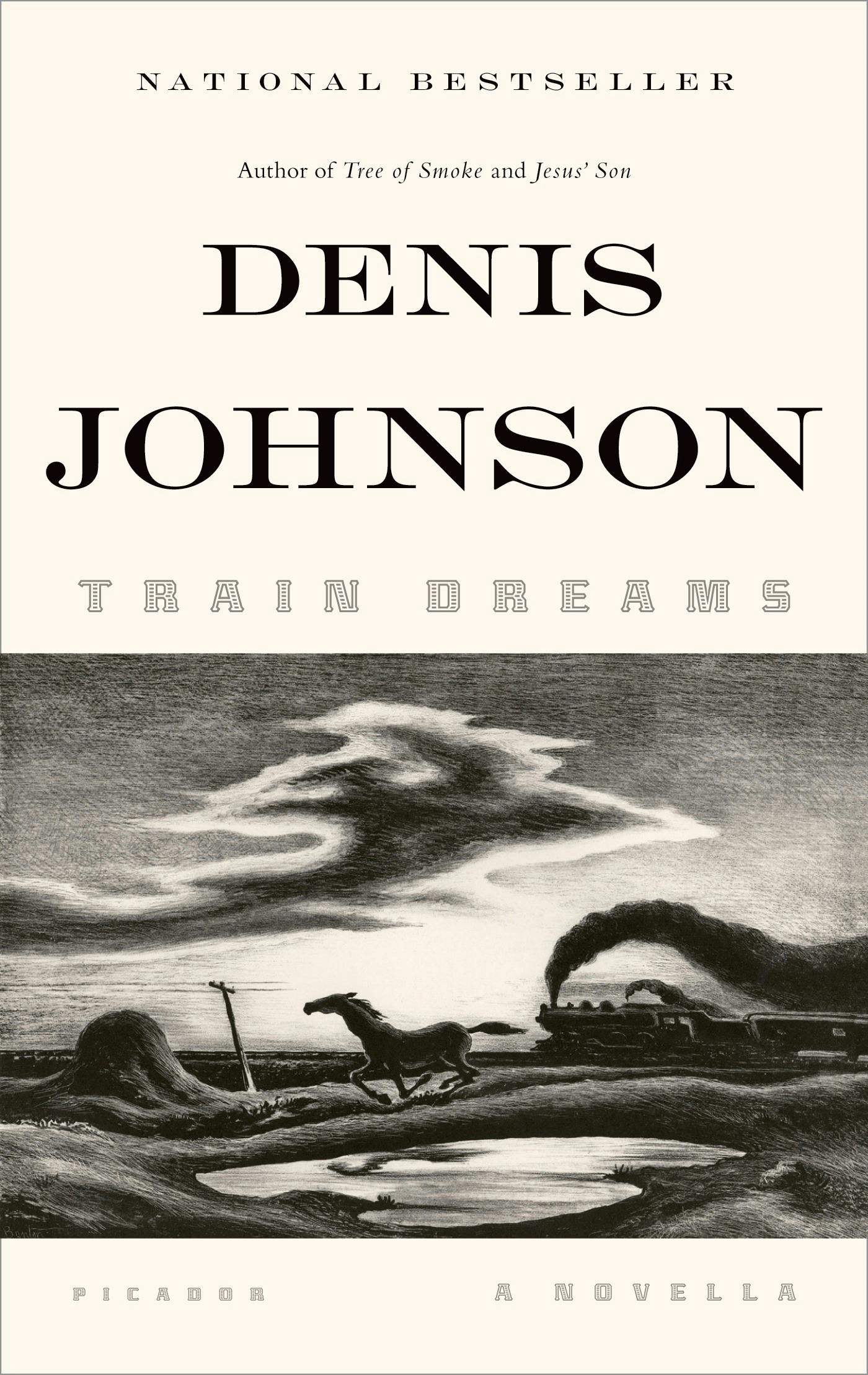
Suffused with the history and landscapes of the American West—its otherworldly flora and fauna, its rugged loggers and bridge builders—this extraordinary novella poignantly captures the disappearance of a distinctly American way of life.Train Dreams tells the story of Robert Grainer, a day laborer in the American West at the start of the twentieth century—an ordinary man in extraordinary times. Buffeted by the loss of his family, Grainer struggles to make sense of this strange new world. As his story unfolds, we witness both his shocking personal defeats and the radical changes that transform America in his lifetime.First published in The Paris Review [Issue 162, Summer 2002]

From award-winning writer David Mitchell comes a sinewy, meditative novel of boyhood on the cusp of adulthood and the old on the cusp of the new.Black Swan Green tracks a single year in what is, for thirteen-year-old Jason Taylor, the sleepiest village in muddiest Worcestershire in a dying Cold War England, 1982. But the thirteen chapters, each a short story in its own right, create an exquisitely observed world that is anything but sleepy. A world of Kissingeresque realpolitik enacted in boys’ games on a frozen lake; of “nightcreeping” through the summer backyards of strangers; of the tabloid-fueled thrills of the Falklands War and its human toll; of the cruel, luscious Dawn Madden and her power-hungry boyfriend, Ross Wilcox; of a certain Madame Eva van Outryve de Crommelynck, an elderly bohemian emigré who is both more and less than she appears; of Jason’s search to replace his dead grandfather’s irreplaceable smashed watch before the crime is discovered; of first cigarettes, first kisses, first Duran Duran LPs, and first deaths; of Margaret Thatcher’s recession; of Gypsies camping in the woods and the hysteria they inspire; and, even closer to home, of a slow-motion divorce in four seasons.Pointed, funny, profound, left-field, elegiac, and painted with the stuff of life, Black Swan Green is David Mitchell’s most subtlest and effective achievement to date.

Pilgrim at Tinker Creek is the story of a dramatic year in Virginia's Blue Ridge valley. Annie Dillard sets out to see what she can see. What she sees are astonishing incidents of "mystery, death, beauty, violence."

Ulysses is one of the most influential novels of the twentieth century. It was not easy to find a publisher in America willing to take it on, and when Jane Jeap and Margaret Anderson started printing extracts from the book in their literary magazine The Little Review in 1918, they were arrested and charged with publishing obscenity. They were fined $100, and even The New York Times expressed satisfaction with their conviction. Ulysses was not published in book form until 1922, when another American woman, Sylvia Beach, published it in Paris her Shakespeare & Company. Ulysses was not available legally in any English-speaking country until 1934, when Random House successfully defended Joyce against obscenity charges and published it in the Modern Library.
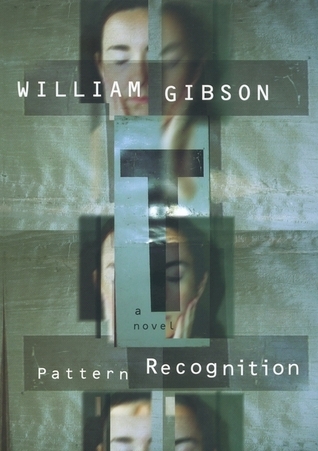
"We have no future because our present is too volatile. We have only risk management. The spinning of the given moment's scenarios. Pattern recognition…"Cayce Pollard is an expensive, spookily intuitive American design consultant with an international reputation. In London to evaluate the redesign of a famous corporate logo, she's offered a very different assignment: find the creator of some haunting, enigmatic video clips being uploaded to the internet by a party or parties unknown. Followers of this footage, and Cayce herself is one, are generating massive underground buzz, worldwide—and her new employer values buzz infinitely more than money.But when her London apartment is burgled, her email hacked, and the records of her Manhattan therapist stolen, she begins to suspect that more is at stake here, to someone, than she could ever have imagined.Still, Cayce is her father's daughter, and danger makes her stubborn. Win Pollard, Cold War security guru, was never a man to be deterred by the unimaginable. But the Cold War is over, and Win is missing, presumed dead, somewhere in Manhattan on the morning of September 11, 2001. Cayce is soon phase-shifting through parallel universes of marketing, globalization, and terror, heading always for the still point where the three converge. From London to Tokyo to Moscow, and finally into the eerie aftermath of a Soviet eco-disaster, she follows the implications of a secret as disturbing, and compelling, as the twenty-first century promises to be.A secret that may, ultimately, belong to her alone."Pattern Recognition is Williams Gibson's best book since he rewrote all the rules in Neuromancer. Gibson casts a master extrapolator's eye on our present, and shows it to us as if for the first time." -- Neil Gaiman

Bringing to life the fabulous, colorful panorama of New Orleans in the first flush of the jazz era, this book tells the story of Buddy Bolden, the first of the great trumpet players--some say the originator of jazz--who was, in any case, the genius, the guiding spirit, and the king of that time and place.In this fictionalized meditation, Bolden, an unrecorded father of Jazz, remains throughout a tantalizingly ungraspable phantom, the central mysteries of his life, his art, and his madness remaining felt but never quite pinned down. Ondaatje's prose is at times startlingly lyrical, and as he chases Bolden through documents and scenes, the novel partakes of the very best sort of modern detective novel--one where the enigma is never resolved, but allowed to manifest in its fullness. Though more 'experimental' in form than either The English Patient or In the Skin of a Lion , it is a fitting addition to the renowned Ondaatje oeuvre .

Since it was first published in English, in 1946, Albert Camus's first novel, THE STRANGER (L'etranger), has had a profound impact on millions of American readers. Through this story of an ordinary man who unwittingly gets drawn into a senseless murder on a sun-drenched Algerian beach, Camus explored what he termed "the nakedness of man faced with the absurd."Now, in an illuminating new American translation, extraordinary for its exactitude and clarity, the original intent of THE STRANGER is made more immediate. This haunting novel has been given a new life for generations to come.

By the New York Times bestselling author of The Bone Clocks and Cloud Atlas | Longlisted for the Man Booker PrizeThe year is 1799, the place Dejima in Nagasaki Harbor, the Japanese Empire’s single port and sole window onto the world, designed to keep the West at bay. To this place of devious merchants, deceitful interpreters, and costly courtesans comes Jacob de Zoet, a devout young clerk who has five years in the East to earn a fortune of sufficient size to win the hand of his wealthy fiancée back in Holland. But Jacob’s original intentions are eclipsed after a chance encounter with Orito Aibagawa, the disfigured midwife to the city’s powerful magistrate. The borders between propriety, profit, and pleasure blur until Jacob finds his vision clouded, one rash promise made and then fatefully broken—the consequences of which will extend beyond Jacob’s worst imaginings.

Atomic Habits: An Easy & Proven Way to Build Good Habits & Break Bad Ones
by James Clear
Rating: 4.4 ⭐
• 9 recommendations ❤️
The instant New York Times bestseller. Over 1 million copies sold! Tiny Changes, Remarkable Results No matter your goals, Atomic Habits offers a proven framework for improving--every day. James Clear, one of the world's leading experts on habit formation, reveals practical strategies that will teach you exactly how to form good habits, break bad ones, and master the tiny behaviors that lead to remarkable results.If you're having trouble changing your habits, the problem isn't you. The problem is your system. Bad habits repeat themselves again and again not because you don't want to change, but because you have the wrong system for change. You do not rise to the level of your goals. You fall to the level of your systems. Here, you'll get a proven system that can take you to new heights.Clear is known for his ability to distill complex topics into simple behaviors that can be easily applied to daily life and work. Here, he draws on the most proven ideas from biology, psychology, and neuroscience to create an easy-to-understand guide for making good habits inevitable and bad habits impossible. Along the way, readers will be inspired and entertained with true stories from Olympic gold medalists, award-winning artists, business leaders, life-saving physicians, and star comedians who have used the science of small habits to master their craft and vault to the top of their field.Learn how to: - make time for new habits (even when life gets crazy); - overcome a lack of motivation and willpower; - design your environment to make success easier; - get back on track when you fall off course;...and much more.Atomic Habits will reshape the way you think about progress and success, and give you the tools and strategies you need to transform your habits--whether you are a team looking to win a championship, an organization hoping to redefine an industry, or simply an individual who wishes to quit smoking, lose weight, reduce stress, or achieve any other goal.

From award-winning novelist and cultural critic Lynne Tillman, Thrilled to Death is a collection of selected stories across the career of America’s most audacious writerAmong the vanguard of American literary writers, Lynne Tillman’s work has defied categorization throughout her legendary career—a singular body of work that both redefined and reimagined the short story form entirely. Curated by the author, Thrilled to Death is the definitive entry point for both established fans and new readers alike. These selected stories collect a bold, playful, and eclectic ensemble of Tillman’s Borgesian fictions that span decades and traverse themes of sex, death, memory, and anxiety.With argumentative wit, Tillman’s meditations and reflections on art, politics, and culture are animated by deliciously paradoxical characters who desire and fret in turn, and who are imbued with searing intelligence and dolorous ambivalence. Describing Tillman's writing, Colm Tóibín “Her style has both tone and undertone; it attempts to register the impossibility of saying very much, but it insists on the right to say a little. So what is essential is the voice itself, its ways of knowing and unknowing.”

A transformative 300-mile walk along Japan’s ancient pilgrimage routes and through depopulating villages inspires a heart-rending remembrance of a long-lost friend, documented alongside remarkable photographs. Photographer and essayist Craig Mod is a veteran of long solo walks. But in 2021, during the pandemic shutdown of Japan’s borders, one particular walk around the Kumano Kodō routes—the ancient pilgrimage paths of Japan’s southern Kii Peninsula—took on an unexpectedly personal new significance. While passing the peninsula’s shrinking villages, Mod found himself reflecting on his own childhood in a post-industrial American town, his experiences as an adoptee, his unlikely relocation to Japan as a student at age nineteen, and his relationship with one lost friend, whose life was tragically cut short after their paths diverged. As the days passed, he considered why he has walked so rigorously and religiously during his twenty-five years as an immigrant in Japan, contemplating the power of walking itself. For Mod, solo walks are a tool to change the very structure of his mind, to better himself, and to bear witness to a quiet grace visible only when “you’re bored out of your skull and the miles left are long.” Through the frame of a 300-mile-long pilgrimage walk, Things Become Other Things folds together history, literature, poetry, Shinto and Buddhist spirituality, and contemporary rural life in Japan via dozens of conversations with aging fishermen, multi-generational inn owners, farmers, and kissaten cafe “mamas.” Along the way, Mod communes with mountain fauna, marvels over evidence of bears and boars, and hopscotches around leeches. He encounters whispering priests and foul-mouthed little kids who ask him "just what the heck are you, anyway?" Through sharp prose and his curious archive of photographs, he records evidence of floods and tsunamis, the disappearance of life on the peninsula, and the capricious fecundity of nature.Things Become Other Things blends memoir and travel writing at their best, transporting readers to an otherwise inaccessible Japan, one only made visible through Mod’s unique bicultural lens.