
Christopher Hitchens Recommended Books
English American author and journalist (1949–2011)
210 Books Recommended

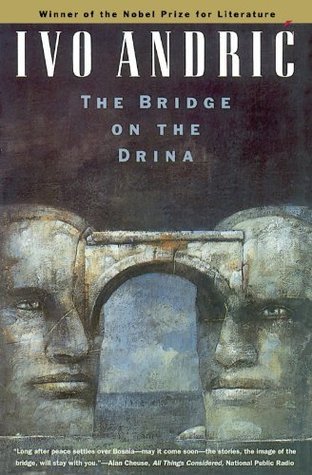
A vivid depiction of the suffering history has imposed upon the people of Bosnia from the late sixteenth century to the beginning of World War I, The Bridge on the Drina earned Ivo Andric the Nobel Prize for Literature in 1961. A great stone bridge built three centuries ago in the heart of the Balkans by a Grand Vezir of the Ottoman Empire dominates the setting of Andric's stunning novel. Spanning generations, nationalities, and creeds, the bridge stands witness to the countless lives played out upon it: Radisav, the workman, who tries to hinder its construction and is impaled on its highest point; to the lovely Fata, who throws herself from its parapet to escape a loveless marriage; to Milan, the gambler, who risks everything in one last game on the bridge with the devil his opponent; to Fedun, the young soldier, who pays for a moment of spring forgetfulness with his life. War finally destroys the span, and with it the last descendant of that family to which the Grand Vezir confided the care of his pious bequest - the bridge.

Ibn Warraq: Defending the West : A Critique of Edward Said's Orientalism (Hardcover); 2007 Edition
by Ibn Warraq
• 2 recommendations ❤️
This is the first systematic critique of Edward Said's influential work, Orientalism, a book that for almost three decades has received wide acclaim, voluminous commentary, and translation into more than fifteen languages. Said’s main thesis was that the Western image of the East was heavily biased by colonialist attitudes, racism, and more than two centuries of political exploitation. Although Said’s critique was controversial, the impact of his ideas has been a pervasive rethinking of Western perceptions of Eastern cultures, plus a tendency to view all scholarship in Oriental Studies as tainted by considerations of power and prejudice. In this thorough reconsideration of Said’s famous work, Ibn Warraq argues that Said’s case against the West is seriously flawed. Warraq accuses Said of not only willfully misinterpreting the work of many scholars, but also of systematically misrepresenting Western civilization as a whole. With example after example, he shows that ever since the Greeks Western civilization has always had a strand in its very makeup that has accepted non-Westerners with open arms and has ever been open to foreign ideas. The author also criticizes Said for inadequate methodology, incoherent arguments, and a faulty historical understanding. He points out, not only Said’s tendentious interpretations, but historical howlers that would make a sophomore blush. Warraq further looks at the destructive influence of Said's study on the history of Western painting, especially of the 19th century, and shows how, once again, the epigones of Said have succeeded in relegating thousands of first-class paintings to the lofts and storage rooms of major museums. An extended appendix reconsiders the value of 18th- and 19th-century Orientalist scholars and artists, whose work fell into disrepute as a result of Said’s work.

Voltaire's Bastards: The Dictatorship of Reason in the West
by John Ralston Saul
Rating: 3.6 ⭐
• 2 recommendations ❤️
With a new Introduction by the author, this “erudite and brilliantly readable book” ( The Observer , London) expertly dissects the political, economic, and social origins of Western civilization to reveal a culture cripplingly enslaved to crude notions of rationality and expertise.With a new introduction by the author, this “erudite and brilliantly readable book” (The Observer, London) astutely dissects the political, economic and social origins of Western civilization to reveal a culture cripplingly enslaved to crude notions of rationality and expertise.The Western world is full of paradoxes. We talk endlessly of individual freedom, yet we’ve never been under more pressure to conform. Our business leaders describe themselves as capitalists, yet most are corporate employees and financial speculators. We call our governments democracies, yet few of us participate in politics. We complain about invasive government, yet our legal, educational, financial, social, cultural and legislative systems are deteriorating.All these problems, John Ralston Saul argues, are largely the result of our blind faith in the value of reason. Over the past 400 years, our “rational elites” have turned the modern West into a vast, incomprehensible, directionless machine, run by process-minded experts—“Voltaire’s bastards”—whose cult of scientific management is empty of both sense and morality. Whether in politics, art, business, the military, entertainment, science, finance, academia or journalism, these experts share the same outlook and methods. The result, Saul maintains, is a civilization of immense technological power whose ordinary citizens are increasingly excluded from the decision-making process.In this wide-ranging anatomy of modern society and its origins—whose “pages explode with insight, style and intellectual rigor” (Camille Paglia, The Washington Post)—Saul presents a shattering critique of the political, economic and cultural establishments of the West.

Dominion: The Power of Man, the Suffering of Animals, and the Call to Mercy
by Matthew Scully
Rating: 4.2 ⭐
• 2 recommendations ❤️
And God said, Let us make man in our image, after our likeness; and let them have dominion over the fish of the sea, and over the fowl of the air, and over the cattle, and over all the earth, and over every creeping thing that creepeth upon the earth.--Genesis 1:24-26In this crucial passage from the Old Testament, God grants mankind power over animals. But with this privilege comes the grave responsibility to respect life, to treat animals with simple dignity and compassion.Somewhere along the way, something has gone wrong.In Dominion, we witness the annual convention of Safari Club International, an organization whose wealthier members will pay up to $20,000 to hunt an elephant, a lion or another animal, either abroad or in American "safari ranches," where the animals are fenced in pens. We attend the annual International Whaling Commission conference, where the skewed politics of the whaling industry come to light, and the focus is on developing more lethal, but not more merciful, methods of harvesting "living marine resources." And we visit a gargantuan American "factory farm," where animals are treated as mere product and raised in conditions of mass confinement, bred for passivity and bulk, inseminated and fed with machines, kept in tightly confined stalls for the entirety of their lives, and slaughtered in a way that maximizes profits and minimizes decency.Throughout Dominion, Scully counters the hypocritical arguments that attempt to excuse animal abuse: from those who argue that the Bible's message permits mankind to use animals as it pleases, to the hunter's argument that through hunting animal populations are controlled, to the popular and "scientifically proven" notions that animals cannot feel pain, experience no emotions, and are not conscious of their own lives.The result is eye opening, painful and infuriating, insightful and rewarding. Dominion is a plea for human benevolence and mercy, a scathing attack on those who would dismiss animal activists as mere sentimentalists, and a demand for reform from the government down to the individual. Matthew Scully has created a groundbreaking work, a book of lasting power and importance for all of us.
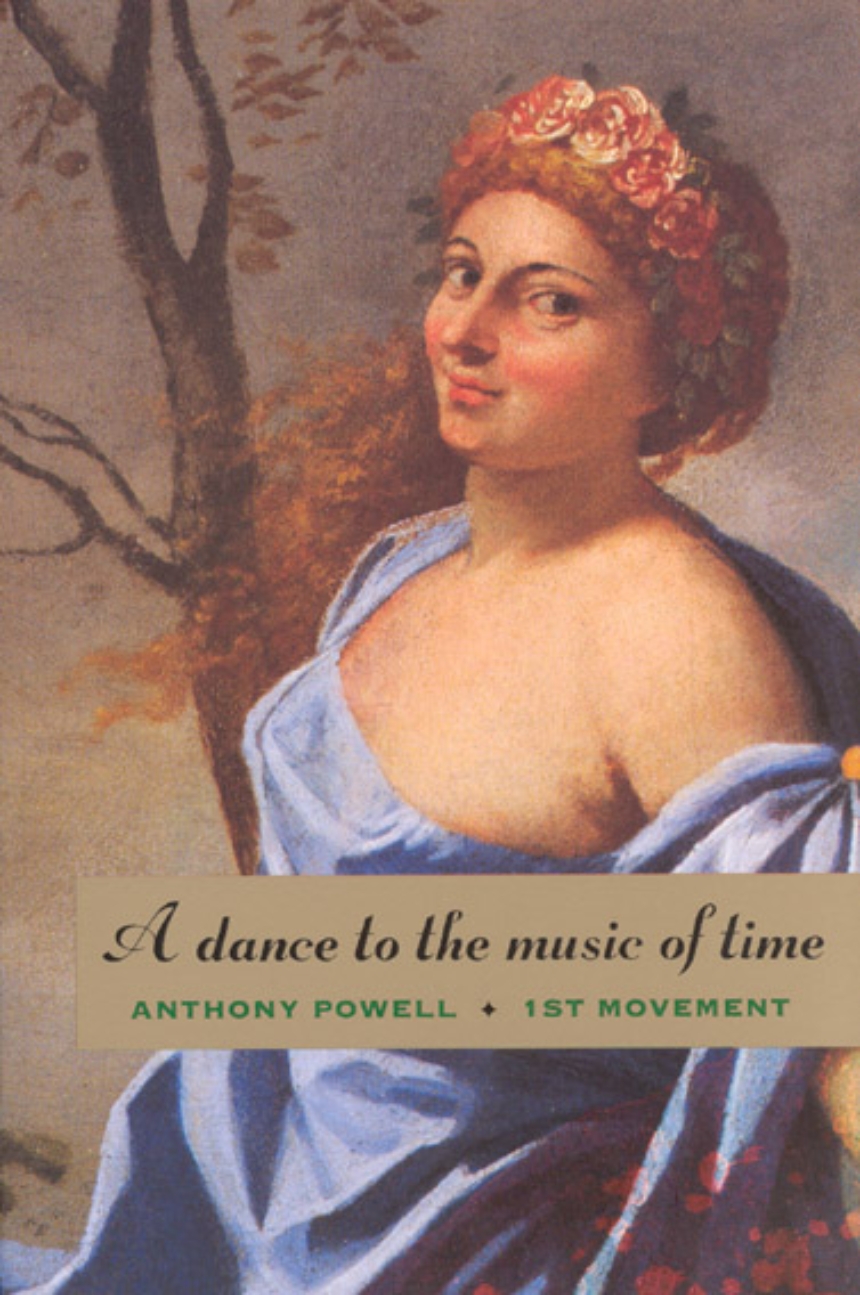
Anthony Powell's universally acclaimed epic encompasses a four-volume panorama of twentieth century London. Hailed by Time as "brilliant literary comedy as well as a brilliant sketch of the times," A Dance to the Music of Time opens just after World War I. Amid the fever of the 1920s and the first chill of the 1930s, Nick Jenkins and his friends confront sex, society, business, and art. In the second volume they move to London in a whirl of marriage and adulteries, fashions and frivolities, personal triumphs and failures. These books "provide an unsurpassed picture, at once gay and melancholy, of social and artistic life in Britain between the wars" (Arthur Schlesinger, Jr.). The third volume follows Nick into army life and evokes London during the blitz. In the climactic final volume, England has won the war and must now count the losses.Four very different young men on the threshold of manhood dominate this opening volume of A Dance to the Music of Time. The narrator, Jenkins—a budding writer—shares a room with Templer, already a passionate womanizer, and Stringham, aristocratic and reckless. Widermerpool, as hopelessly awkward as he is intensely ambitious, lurks on the periphery of their world. Amid the fever of the 1920s and the first chill of the 1930s, these four gain their initiations into sex, society, business, and art. Considered a masterpiece of modern fiction, Powell's epic creates a rich panorama of life in England between the wars.Includes these novels: A Question of Upbringing A Buyer's Market The Acceptance World

Anthony Powell's universally acclaimed epic encompasses a four-volume panorama of twentieth century London. Hailed by Time as "brilliant literary comedy as well as a brilliant sketch of the times," A Dance to the Music of Time opens just after World War I. Amid the fever of the 1920s and the first chill of the 1930s, Nick Jenkins and his friends confront sex, society, business, and art. In the second volume they move to London in a whirl of marriage and adulteries, fashions and frivolities, personal triumphs and failures. These books "provide an unsurpassed picture, at once gay and melancholy, of social and artistic life in Britain between the wars" (Arthur Schlesinger, Jr.). The third volume follows Nick into army life and evokes London during the blitz. In the climactic final volume, England has won the war and must now count the losses.In this third volume of A Dance to the Music of Time, we again meet Widmerpool, doggedly rising in rank; Jenkins, shifted from one dismal army post to another; Stringham, heroically emerging from alcoholism; Templer, still on his eternal sexual quest. Here, too, we are introduced to Pamela Flitton, one of the most beautiful and dangerous women in modern fiction. Wickedly barbed in its wit, uncanny in its seismographic recording of human emotions and social currents, this saga stands as an unsurpassed rendering of England's finest yet most costly hour.Includes these novels:The Valley of BonesThe Soldier's ArtThe Military Philosophers"Anthony Powell is the best living English novelist by far. His admirers are addicts, let us face it, held in thrall by a magician."—Chicago Tribune"A book which creates a world and explores it in depth, which ponders changing relationships and values, which creates brilliantly living and diverse characters and then watches them grow and change in their milieu. . . . Powell's world is as large and as complex as Proust's."—Elizabeth Janeway, New York Times"One of the most important works of fiction since the Second World War. . . . The novel looked, as it began, something like a comedy of manners; then, for a while, like a tragedy of manners; now like a vastly entertaining, deeply melancholy, yet somehow courageous statement about human experience."—Naomi Bliven, New Yorker

It's the end of the world as we know it...Someday soon, you might wake up to the call to prayer from a muezzin. Europeans already are. And liberals will still tell you that "diversity is our strength"--while Talibanic enforcers cruise Greenwich Village burning books and barber shops, the Supreme Court decides sharia law doesn't violate the "separation of church and state," and the Hollywood Left decides to give up on gay rights in favor of the much safer charms of polygamy. If you think this can't happen, you haven't been paying attention, as the hilarious, provocative, and brilliant Mark Steyn--the most popular conservative columnist in the English-speaking world--shows to devastating effect. The future, as Steyn shows, belongs to the fecund and the confident. And the Islamists are both, while the West is looking ever more like the ruins of a civilization. But America can survive, prosper, and defend its freedom only if it continues to believe in itself, in the sturdier virtues of self-reliance (not government), in the centrality of family, and in the conviction that our country really is the world's last best hope. Mark Steyn's America Alone is laugh-out-loud funny--but it will also change the way you look at the world.

The definitive work on Stalin's purges, Robert Conquest's The Great Terror was universally acclaimed when it first appeared in 1968. Harrison Salisbury called it "brilliant...not only an odyssey of madness, tragedy, and sadism, but a work of scholarship and literary craftsmanship." And in recent years it has received equally high praise in the former Soviet Union, where it is now considered the definitive account of the period.When Conquest wrote the original volume, he relied heavily on unofficial sources. With the advent of glasnost, an avalanche of new material became available, and Conquest mined this enormous cache to write, in 1990, a substantially new edition of his classic work, adding enormously to the detail. Both a leading historian and a highly respected poet, Conquest blends profound research with evocative prose, providing not only an authoritative account of Stalin's purges, but also a compelling and eloquent chronicle of one of this century's most tragic events. He provides gripping accounts of everything from the three great "Moscow Trials," to methods of obtaining confessions, the purge of writers and other members of the intelligentsia, life in the labor camps, and many other key matters.On the fortieth anniversary of the first edition, in the light of further archival releases, and new material published in Moscow and elsewhere, it remains remarkable how many of Conquest's most disturbing conclusions have continued to bear up. This volume, featuring a new preface by Conquest, rounds out the picture of this huge historical tragedy, further establishing the book as the key study of one of the twentieth centurys most lethal, and longest misunderstood, offenses against humanity.

"Houellebecq captures precisely the cynical disillusionment of disaffected youth."—Booklist"This boy needs serious therapy. He may be beyond help."—The Washington PostJust thirty, with a well-paid job, depression and no love life, the narrator and anti-hero par excellence of this grim, funny, and clever novel smokes four packs of cigarettes a day and writes weird animal stories in his spare time.A painfully realistic portrayal of the vanishing freedom of a world governed by science and by the empty rituals of daily life.Michel Houellebecq is a multi-award-winning French author. He currently lives in Spain.

The prison writings of Kurdish freedom fighter and PKK leader Abdullah Ocalan

Winner of the E.M. Forster Award and shortlisted for the Booker Prize, this brutal and beautiful narration of the guerrilla war against the Indonesians in Timor, praised by Fretilin Foreign Minister and Nobel prize-winner Jose Ramos-Hortafor its 'perfect authenticity', reappears now in this handsome edition at a topical moment in history as Timor fully joins the UN at last.

Edwin Williamson’s major new biography is the first in any language to encompass the entire span of Jorge Luis Borges’s life and work. Drawing upon previously unknown or unavailable sources, it brings out the human side of Borges: his roots in Argentina, the evolution of his political ideas, his relations with family and friends, the conflicts, desires, and obsessions that drove the man and shaped his work. Williamson’s definitive biography finally unlocks the mysteries that still surround the life of Borges, resulting in a compelling and poignant portrait that will radically transform established views of this modern master.

One of Time’s 100 best novels in the English language—by the acclaimed author of Lionel Asbo: State of England and London FieldsPart of Martin Amis’s “London Trilogy,” along with the novel London Fields and The Information, Money was hailed as "a sprawling, fierce, vulgar display" (The New Republic) and "exhilarating, skillful, savvy" (The Times Literary Supplement) when it made its first appearance in the mid-1980s. Amis’s shocking, funny, and on-target portraits of life in the fast lane form a bold and frightening portrait of Ronald Reagan’s America and Margaret Thatcher’s England. Money is the hilarious story of John Self, one of London’s top commercial directors, who is given the opportunity to make his first feature film—alternately titled Good Money and Bad Money. He is also living money, talking money, and spending money in his relentless pursuit of pleasure and success. As he attempts to navigate his hedonistic world of drinking, sex, drugs, and excessive quantities of fast food, Self is sucked into a wretched spiral of degeneracy that is increasingly difficult to surface from.

At Canaan's Edge: America in the King Years 1965-68
by Taylor Branch
Rating: 4.4 ⭐
• 2 recommendations ❤️
At Canaan's Edge concludes America in the King Years, a three-volume history that will endure as a masterpiece of storytelling on American race, violence, and democracy. Pulitzer Prize-winner and bestselling author Taylor Branch makes clear in this magisterial account of the civil rights movement that Martin Luther King, Jr., earned a place next to James Madison and Abraham Lincoln in the pantheon of American history.

Larry Kramer's Faggots has been in print since its original publication in 1978 and has become one of the best-selling novels about gay life ever written. The book is a fierce satire of the gay ghetto and a touching story of one man's desperate search for love there, and reading it today is a fascinating look at how much, and how little, has changed.

Packed With Magnificent Material On Southern California's Galaxy of Person Alities, This Book Provides Insights Into Subjects Ranging From The Origins Hollywood To The Flowering of International-Style Architecture. and It Does That By Looking At Personalities As Diverse As Helen Hunt Jackson To Aimee Semple McPherson, Huntington The Finan- Cier To Hatfield The Rainmaker.

The Wolf by the Ears: Thomas Jefferson and Slavery
by John Chester Miller
Rating: 3.8 ⭐
• 2 recommendations ❤️
This analysis of Jefferson's antislavery views and the actions to which they gave rise, the subject matter of The Wolf by the Ears, is necessarily episodic; while chronology has been generally observed, it was not possible to weld this disparate material into the form of a biographical narrative.

From his illegitimate birth in a small Austrian village to his fiery death in a bunker under the Reich chancellery in Berlin, Adolf Hitler left a murky trail, strewn with contradictory tales & overgrown with self-created myths. One truth prevails: the sheer scale of the evils that he unleashed on the world has made him a demonic figure without equal in this century. Kershaw's Hitler brings us closer than ever before to the character of the bizarre misfit in his 30-year ascent from a Viennese shelter for the indigent to uncontested rule over the German nation that had tried & rejected democracy in the crippling aftermath of WWI. With extraordinary vividness, Kershaw recreates the settings that made Hitler's rise possible: the virulent anti-Semitism of prewar Vienna, the crucible of a war with immense casualties, the toxic nationalism that gripped Bavaria in the 20s, the undermining of the Weimar Republic by extremists of the Right & the Left, the hysteria that accompanied Hitler's seizure of power in 1933 & then mounted in brutal attacks by his storm troopers on Jews & others condemned as enemies of the Aryan race. In an account drawing on many previously untapped sources, Hitler metamorphoses from an obscure fantasist, a drummer sounding an insistent beat of hatred in Munich beer halls, to the instigator of an infamous failed putsch &, ultimately, to the leadership of a ragtag alliance of right-wing parties fused into a movement that enthralled the German people. This volume, 1st of two, ends with the promulgation of the infamous Nuremberg laws that pushed German Jews to the outer fringes of society, & with the march of the German army into the Rhineland, Hitler's initial move toward the abyss of war.

"More than any other public figure of the eighteenth century, Tom Paine strikes our times like a trumpet blast from a distant world." So begins John Keane's magnificent and award-winning (the Fraunces Tavern Book Award) biography of one of democracy's greatest champions. Among friends and enemies alike, Paine earned a reputation as a notorious pamphleteer, one of the greatest political figures of his day, and the author of three best-selling books, Common Sense, The Rights of Man, and The Age of Reason. Setting his compelling narrative against a vivid social backdrop of prerevolutionary America and the French Revolution, John Keane melds together the public and the shadowy private sides of Paine's life in a remarkable piece of scholarship. This is the definitive biography of a man whose life and work profoundly shaped the modern age. "Provide[s] an engaging perspective on England, America, and France in the tumultuous years of the late eighteenth century." -- Pauline Maier, The New York Times Book Review "It is hard to imagine this magnificent biography ever being superceded.... It is a stylish, splendidly erudite work." -- Terry Eagleton, The Guardian

The Threatening Storm: The Case for Invading Iraq
by Kenneth M. Pollack
Rating: 3.4 ⭐
• 2 recommendations ❤️
In The Threatening Storm , Kenneth M. Pollack, one of the world’s leading experts on Iraq, provides a masterly insider’s perspective on the crucial issues facing the United States as it moves toward a new confrontation with Saddam Hussein.For the past fifteen years, as an analyst on Iraq for the Central Intelligence Agency and the National Security Council, Kenneth Pollack has studied Saddam as closely as anyone else in the United States. In 1990, he was one of only three CIA analysts to predict the Iraqi invasion of Kuwait. As the principal author of the CIA’s history of Iraqi military strategy and operations during the Gulf War, Pollack gained rare insight into the methods and workings of what he believes to be the most brutal regime since Stalinist Russia.Examining all sides of the debate and bringing a keen eye to the military and geopolitical forces at work, Pollack ultimately comes to this controversial through our own mistakes, the perfidy of others, and Saddam’s cunning, the United States is left with few good policy options regarding Iraq. Increasingly, the option that makes the most sense is for the United States to launch a full-scale invasion, eradicate Saddam’s weapons of mass destruction, and rebuild Iraq as a prosperous and stable society—for the good of the United States, the Iraqi people, and the entire region.Pollack believed for many years that the United States could prevent Saddam from threatening the stability of the Persian Gulf and the world through containment—a combination of sanctions and limited military operations. Here, Pollack explains why containment is no longer effective, and why other policies intended to deter Saddam ultimately pose a greater risk than confronting him now, before he gains possession of nuclear weapons and returns to his stated goal of dominating the Gulf region. “It is often said that war should be employed only in the last resort,” Pollack writes. “I reluctantly believe that in the case of the threat from Iraq, we have come to the last resort.”Offering a view of the region that has the authority and force of an intelligence report, Pollack outlines what the leaders of neighboring Arab countries are thinking, what is necessary to gain their support for an invasion, how a successful U.S. operation would be mounted, what the likely costs would be, and how Saddam might react. He examines the state of Iraq today—its economy, its armed forces, its political system, the status of its weapons of mass destruction as best we understand them, and the terrifying security apparatus that keeps Saddam in power. Pollack also analyzes the last twenty years of relations between the United States and Iraq to explain how the two countries reached the unhappy standoff that currently prevails.Commanding in its insights and full of detailed information about how leaders on both sides will make their decisions, The Threatening Storm is an essential guide to understanding what may be the crucial foreign policy challenge of our time.

Written 75 years ago, 1984 was George Orwell’s chilling prophecy about the future. And while 1984 has come and gone, his dystopian vision of a government that will do anything to control the narrative is timelier than ever...This 75th Anniversary Edition includes:• A New Introduction by Dolen Perkins-Valdez, author of Take My Hand, winner of the 2023 NAACP Image Award for Outstanding Literary Work—Fiction• A New Afterword by Sandra Newman, author of Julia: A Retelling of George Orwell’s 1984“The Party told you to reject the evidence of your eyes and ears. It was their final, most essential command.”Winston Smith toes the Party line, rewriting history to satisfy the demands of the Ministry of Truth. With each lie he writes, Winston grows to hate the Party that seeks power for its own sake and persecutes those who dare to commit thoughtcrimes. But as he starts to think for himself, Winston can’t escape the fact that Big Brother is always watching...A startling and haunting novel, 1984 creates an imaginary world that is completely convincing from start to finish. No one can deny the novel’s hold on the imaginations of whole generations, or the power of its admonitions—a power that seems to grow, not lessen, with the passage of time.• Nominated as one of America’s best-loved novels by PBS’s The Great American Read •

Reflections on the Revolution in France is a 1790 book by Edmund Burke, one of the best-known intellectual attacks against the (then-infant) French Revolution. In the twentieth century, it much influenced conservative and classical liberal intellectuals, who recast Burke's Whig arguments as a critique of Communism and Socialist revolutionary programmes.

From the celebrated Russian intellectuals Michael Bakunin and Peter Kropotkin to the little-known Australian bootmaker and radical speaker J. W. Fleming, this book probes the lives and personalities of representative anarchists.

Fenton's work is elegant, highly finished, reticent, witty. Disturbing and deeply affecting, Children in Exile remains an exhilarating and memorable performance."Quite simply, Fenton's poems are frightening." - The New York Times Book Review

Peace and Its Discontents: Essays on Palestine in the Middle East Peace Process
by Edward W. Said
Rating: 4.3 ⭐
• 2 recommendations ❤️
Ever since Yasir Arafat and Yitzhak Rabin shook hands on the White House lawn, Israel and the Palestinian people have been engaged in what commentators persist in calling "the peace process." Yet Israel remains racked by violence and continuing land seizures, and Palestinians are more demoralized than ever before. Now in this probing and impassioned book, one of our foremost Palestinian-American intellectuals explains why the much-vaunted process has yet to produce peace--and is unlikely to as presently constituted.Whether Edward Said is addressing the fatal flaws in the PLO's bargain, denouncing fundamentalists on both sides of the religious divide, or calling our attention to the distortions in official coverage of the Arab world, he offers insights beyond the conventional wisdom and a sympathy that extends to bot Israelis and Palestinians. He does so with an incisiveness, clarity, and fairness that make Peace and Its Discontents essential reading for anyonve who cares about the future of the Middle East.

A New York Review Books Original Victor Serge is one of the great men of the 20th century —and one of its great writers too. He was an anarchist, an agitator, a revolutionary, an exile, a historian of his times, as well as a brilliant novelist, and in Memoirs of a Revolutionary he devotes all his passion and genius to describing this extraordinary—and exemplary—career. Serge tells of his upbringing among exiles and conspirators, of his involvement with the notorious Bonnot Gang and his years in prison, of his role in the Russian Revolution, and of the Revolution’s collapse into despotism and terror. Expelled from the Soviet Union, Serge went to Paris, where he evaded the KGB and the Nazis before fleeing to Mexico. Memoirs of a Revolutionary recounts a thrilling life on the front lines of history and includes vivid portraits not only of Trotsky, Lenin, and Stalin but of countless other figures who struggled to remake the world. Peter Sedgwick’s fine translation of Memoirs of a Revolutionary was abridged when first published in 1963. This is the first edition in English to present the entirety of Serge’s book.

Startlingly human and unflinchingly honest, this thinly veiled fictionalized firsthand account of talented political writer Victor Serge’s time in prison is an important addition to the canon of prison writing as well as an unfiltered view of humanity in the early 20th century. Rejecting the opportunity to present political propaganda, Serge’s portrayal of imprisonment is instead an insightful and emotionally wrought tale of repression. The depraving brutality that Serge experienced behind bars is at once a mirror of a society at war and a deeply personal question of purpose. Originally published in 1930 and translated from the French by Richard Greeman in 1977, this reprint makes a fascinating and compelling novel available again with a new introduction by Greeman that situates the work in the context of Serge’s life.

The New York Intellectuals, Thirtieth Anniversary Edition: The Rise and Decline of the Anti-Stalinist Left from the 1930s to the 1980s
by Alan M. Wald
Rating: 3.8 ⭐
• 2 recommendations ❤️
For a generation, Alan M. Wald's The New York Intellectuals has stood as the authoritative account of an often misunderstood chapter in the history of a celebrated tradition among literary radicals in the United States. His passionate investigation of over half a century of dissident Marxist thought, Jewish internationalism, fervent political activism, and the complex art of the literary imagination is enriched by more than one hundred personal interviews, unparalleled primary research, and critical interpretations of novels and short stories depicting the inner lives of committed writers and thinkers. Wald's commanding biographical portraits of rebel outsiders who mostly became insiders retains its resonance today and includes commentary on Max Eastman, Elliot Cohen, Lionel Trilling, Sidney Hook, Tess Slesinger, Philip Rahv, Mary McCarthy, James T. Farrell, Irving Kristol, Irving Howe, Hannah Arendt, and more. With a new preface by the author that tracks the rebounding influence of these intellectuals in the era of Occupy and Bernie Sanders, this anniversary edition shows that the trajectory and ideological ordeals of the New York intellectual Left still matters today.

The Protestant Establishment: Aristocracy and Caste in America
by Edward Digby Baltzell
Rating: 4.0 ⭐
• 2 recommendations ❤️
This classic account of the traditional upper class in America traces its origins, lifestyles, and political and social attitudes from the time of Theodore Roosevelt to that of John F. Kennedy. Sociologist E. Digby Baltzell describes the problems of exclusion and prejudice within the community of white Anglo-Saxon Protestants (or WASPs, an acronym he coined) and predicts with amazing accuracy what will happen when this inbred group is forced to share privilege and power with talented members of minority groups. “The book may actually hold more interest today than when it was first published. New generations of readers can resonate all the more to this masterly and beautifully written work that provides sociological understanding of its engrossing subject.”―Robert K. Merton, Columbia University “The documentation and illustration in the book make it valuable as social history, quite apart from any theoretical hypothesis. As such, it sketches the rise of the WASP penchant for country clubs, patriotic societies and genealogy. It traces the history of anti-Semitism in America. It describes the intellectual conflict between Social Darwinism and the environmental social science founded half a century ago by men like John Dewey, Charles A. Beard, Thorstein Veblen, Franz Boas and Frederick Jackson Turner. In short, The Protestant Establishment is a wide-ranging, intelligent and provocative book.”―Alvin Toffler, New York Times Book Review “ The Protestant Establishment has many virtues that lift it above the level we have come to expect in works of contemporary social and cultural analysis. It is clearly and convincingly written.”―H. Stuart Hughes, New York Review of Books “What makes Baltzell’s analysis of the evolution of the American elite superior to the accounts of earlier writers . . . is that he exposes the connections between high social status and political and economic power.”―Dennis H. Wrong, Commentary

The Poons, according to gossip in post-war Hong Kong, have plenty of money. But when Wallace Nolasco marries May Ling, daughter of the house of Poon, he finds he has been sold short. Wallace is relegated to the bottom of the household pecking order. By the author of "Sour Sweet".

The Great Melody: A Thematic Biography of Edmund Burke
by Conor Cruise O'Brien
Rating: 4.3 ⭐
• 2 recommendations ❤️
Statesman, political thinker, orator, and ardent campaigner, Edmund Burke was one of the most brilliant figures of the eighteenth century. This unorthodox biography focuses on Burke's thoughts, responses, and actions to the great events and debates surrounding Britain's tumultuous relationships with her three colonies—America, Ireland, and India—and archrival France."In bringing Burke to our attention, Mr. O'Brien has brought back a lost treasure. The Great Melody is a brilliant work of narrative sweep and analytical depth. Conor Cruise O'Brien on Edmund Burke is a literary gift to political thought."—John Patrick Diggins, New York Times Book Review"Serious readers of history are in for a a book by the greatest living Irishman on the greatest Irishman who ever lived. . . . O'Brien's study is not merely a reconstruction of a fascinating man and period. It is also a tract for the times. . . . I cannot remember another time when I finished a book of more than 600 pages wishing it were longer."—Paul Johnson, The Independent" The Great Melody combines superb biography and fascinating history with a profound understanding of political philosophy."—Former President Richard Nixon
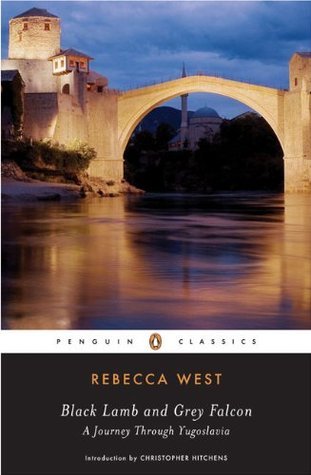
Written on the brink of World War II, Rebecca West's classic examination of the history, people, and politics of Yugoslavia illuminates a region that is still a focus of international concern. A magnificent blend of travel journal, cultural commentary, and historical insight, Black Lamb and Grey Falcon probes the troubled history of the Balkans, and the uneasy relationships amongst its ethnic groups. The landscape and the people of Yugoslavia are brilliantly observed as West untangles the tensions that rule the country's history as well as its daily life.

This timely reissue of Richard Hofstadter's classic work on the fringe groups that influence American electoral politics offers an invaluable perspective on contemporary domestic affairs.In The Paranoid Style in American Politics , acclaimed historian Richard Hofstadter examines the competing forces in American political discourse and how fringe groups can influence — and derail — the larger agendas of a political party. He investigates the politics of the irrational, shedding light on how the behavior of individuals can seem out of proportion with actual political issues, and how such behavior impacts larger groups. With such other classic essays as “Free Silver and the Mind of 'Coin' Harvey” and “What Happened to the Antitrust Movement?, ” The Paranoid Style in American Politics remains both a seminal text of political history and a vital analysis of the ways in which political groups function in the United States.

Michael Kelly, who traveled through every country touched by the Gulf War, moved about as a free-lance journalist for the Boston Globe and the New Republic. He traveled through much of the Middle East during and after the Gulf War, watching the bombs fall on Baghdad and waiting for Scuds in Tel Aviv, inspecting the gold bathroom fixtures installed by the U.S. Army Corps of Engineers in the empire's temporary palace in Kuwait City and dining with Kurdish chieftains in remote mountain camps in northern Iran.When ground war in Iraq began, Michael Kelly rented a four-wheel-drive Nissan Safari, borrowed some camouflage pants and gas-proof rubber gloves, and set off across the desert, where he was mistaken for an advance party of the American Army and surrendered to by a batch of bewildered Iraqi soldiers. In Kuwait after the liberation, he listened to horrific tales of torture and rape, and walked among the grotesque remains of the bombed-out retreating Iraqi army on the roads home. Later, when Kelly went to Kurdistan, he hiked into forbidden Iraqi territory and then traveled with various guerrilla bands at war with Saddam Hussein. He got out of Iraq by swimming across a river into Turkey in the company of smugglers. Kelly's story is witty, moving, and dramatically compelling, at once superb reporting and the very best travel writing. By avoiding the human story of the Gulf War, he has given us an indispensable piece of our history."Restrained yet explosive dispatches from the front . . . Kelly demonstrates a keen eye for the telling detail, a well-developed sense of irony . . . courage and enterprise."--National Magazine

English (translation)Original French
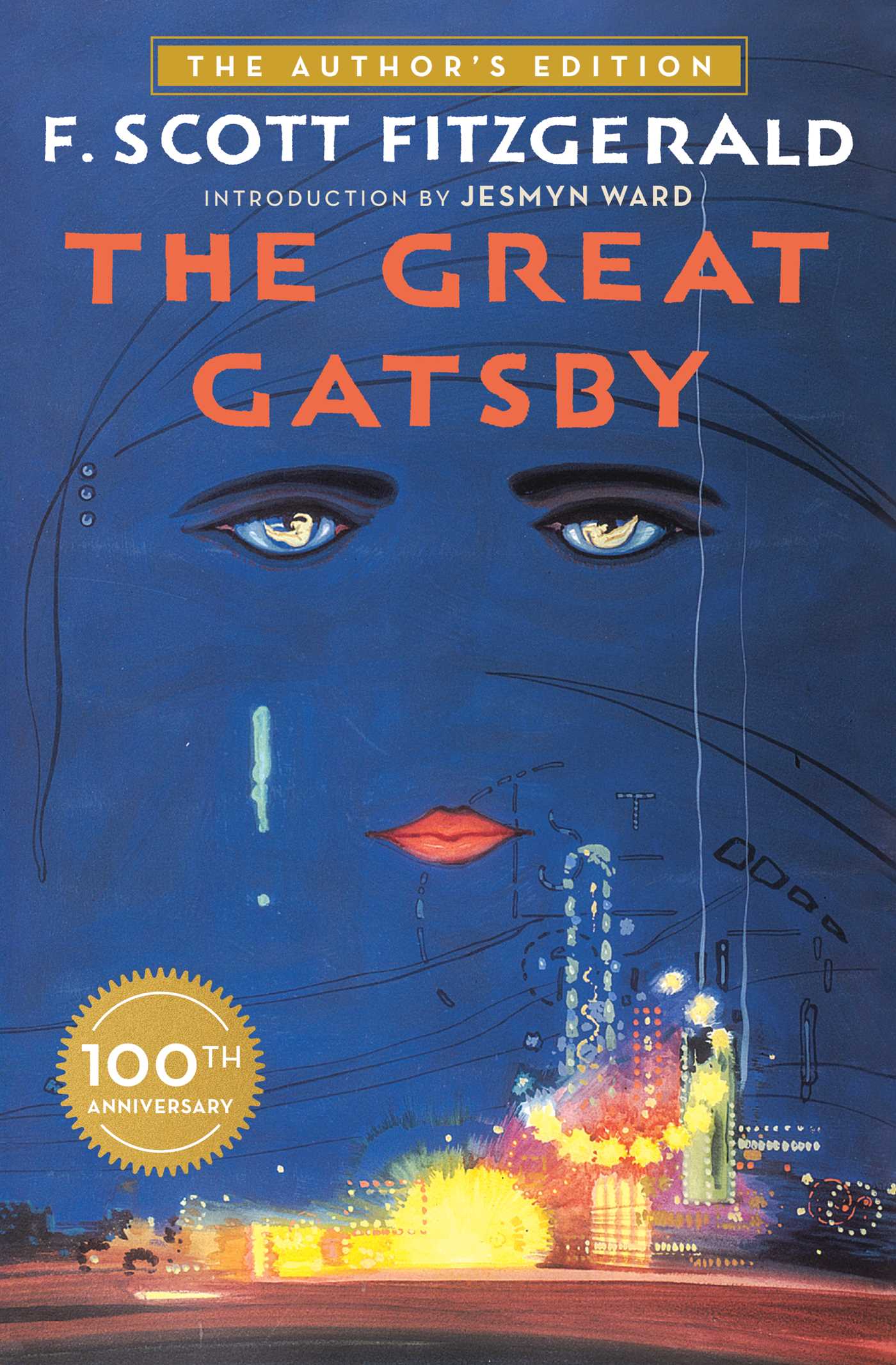
The only edition of the beloved classic that is authorized by Fitzgerald’s family and from his lifelong publisher.This edition is the enduring original text, updated with the author’s own revisions, a foreword by his granddaughter, and with a new introduction by National Book Award winner Jesmyn Ward.The Great Gatsby, F. Scott Fitzgerald’s third book, stands as the supreme achievement of his career. First published by Scribner in 1925, this quintessential novel of the Jazz Age has been acclaimed by generations of readers. The story of the mysteriously wealthy Jay Gatsby and his love for the beautiful Daisy Buchanan is an exquisitely crafted tale of America in the 1920s.

I Will Bear Witness 1933-41: A Diary of the Nazi Years
by Victor Klemperer
Rating: 4.3 ⭐
• 2 recommendations ❤️
The publication of Victor Klemperer's secret diaries brings to light one of the most extraordinary documents of the Nazi period. I Will Bear Witness is a work of literature as well as a revelation of the day-by-day horror of the Nazi years. A Dresden Jew, a veteran of World War I, a man of letters and historian of great sophistication, Klemperer recognized the danger of Hitler as early as 1933. His diaries, written in secrecy, provide a vivid account of everyday life in Hitler's Germany. What makes this book so remarkable, aside from its literary distinction, is Klemperer's preoccupation with the thoughts and actions of ordinary Germans: Berger the greengrocer, who was given Klemperer's house ("anti-Hitlerist, but of course pleased at the good exchange"), the fishmonger, the baker, the much-visited dentist. All offer their thoughts and theories on the progress of the war: Will England hold out? Who listens to Goebbels? How much longer will it last? This symphony of voices is ordered by the brilliant, grumbling Klemperer, struggling to complete his work on eighteenth-century France while documenting the ever- tightening Nazi grip. He loses first his professorship and then his car, his phone, his house, even his typewriter, and is forced to move into a Jews' House (the last step before the camps), put his cat to death (Jews may not own pets), and suffer countless other indignities. Despite the danger his diaries would pose if discovered, Klemperer sees it as his duty to record events. "I continue to write," he notes in 1941 after a terrifying run-in with the police. "This is my heroics. I want to bear witness, precise witness, until the very end." When a neighbor remarks that, in his isolation, Klemperer will not be able to cover the main events of the war, he writes: "It's not the big things that are important, but the everyday life of tyranny, which may be forgotten. A thousand mosquito bites are worse than a blow on the head. I observe, I note, the mosquito bites."

Acclaimed for his vivid re-creations of some of the twentieth century's most significant battles, Antony Beevor is one of the best known and respected military historians writing today. He now offers readers a gripping, street-level portrait of the harrowing days of January 1945 in Berlin when the vengeful Red Army and beleaguered Nazi forces clashed for a final time. The result was the most gruesome display of brutality in the war, with tanks crushing refugee columns, mass rapes, pillage, and destruction. Hundreds of thousands of German civilians froze to death or were massacred because Nazi officials had forbidden their evacuation. Hitler, half crazed in his bunker, issued wild orders while Stalin was prepared to risk any number of his men to seize the city before the other Allies could get there.Making full use of newly disclosed material from former Soviet files as well as from German, American, British, French, and Swedish archives, Beevor has reconstructed the different experiences of those millions caught up in the death throes of the Third Reich. The Fall of Berlin 1945 depicts not only the brutality and desperation of a city under siege but also rare moments of extreme humanity and heroism. This account also contains new revelations about the motives behind Stalin's hurried assault. Sure to appeal to all readers interested in military history and the Second World War, The Fall of Berlin 1945 promises to be the definitive treatment of the subject for years to come.

40 Days and 40 Nights: Darwin, Intelligent Design, God, Oxycontin®, and Other Oddities on Trial in Pennsylvania
by Matthew Chapman
Rating: 4.0 ⭐
• 2 recommendations ❤️
In this fascinating story of evolution, religion, politics, and personalities, Matthew Chapman captures the story behind the headlines in the debate over God and science in America. Kitzmiller v. Dover Board of Education, decided in late 2005, pitted the teaching of intelligent design (sometimes known as "creationism in a lab coat") against the teaching of evolution. Matthew Chapman, the great-great-grandson of Charles Darwin, spent several months covering the trial from beginning to end. Through his in-depth encounters with the participants—creationists, preachers, teachers, scientists on both sides of the issue, lawyers, theologians, the judge, and the eleven parents who resisted the fundamentalist proponents of intelligent design—Chapman tells a sometimes terrifying, often hilarious, and above all moving story of ordinary people doing battle in America over the place of religion and science in modern life.

For nearly two and a half millennia, Alexander the Great has loomed over history as a legend–and an enigma. Wounded repeatedly but always triumphant in battle, he conquered most of the known world, only to die mysteriously at the age of thirty-two. In his day he was revered as a god; in our day he has been reviled as a mass murderer, a tyrant as brutal as Stalin or Hitler.Who was the man behind the mask of power? Why did Alexander embark on an unprecedented program of global domination? What accounted for his astonishing success on the battlefield? In this luminous new biography, the esteemed classical scholar and historian Guy MacLean Rogers sifts through thousands of years of history and myth to uncover the truth about this complex, ambiguous genius.Ascending to the throne of Macedonia after the assassination of his father, King Philip II, Alexander discovered while barely out of his teens that he had an extraordinary talent and a boundless appetite for military conquest. A virtuoso of violence, he was gifted with an uncanny ability to visualize how a battle would unfold, coupled with devastating decisiveness in the field. Granicus, Issos, Gaugamela, Hydaspes–as the victories mounted, Alexander’s passion for conquest expanded from cities to countries to continents. When Persia, the greatest empire of his day, fell before him, he marched at once on India, intending to add it to his holdings.As Rogers shows, Alexander’s military prowess only heightened his exuberant sexuality. Though his taste for multiple partners, both male and female, was tolerated, Alexander’s relatively enlightened treatment of women was nothing short of revolutionary. He outlawed rape, he placed intelligent women in positions of authority, and he chose his wives from among the peoples he conquered. Indeed, as Rogers argues, Alexander’s fascination with Persian culture, customs, and sexual practices may have led to his downfall, perhaps even to his death.Alexander emerges as a charismatic and surprisingly modern figure–neither a messiah nor a genocidal butcher but one of the most imaginative and daring military tacticians of all time. Balanced and authoritative, this brilliant portrait brings Alexander to life as a man, without diminishing the power of the legend.

Minima Moralia: Reflections on a Damaged Life
by Theodor W. Adorno
Rating: 4.0 ⭐
• 2 recommendations ❤️
Adorno's literary and philosophical masterpiece, built from aphorisms and reflections.A reflection on everyday existence in the 'sphere of consumption of late Capitalism', this work is Adorno's literary and philosophical masterpiece. Built from aphorisms and reflections, he shifts in register from personal experience to the most general theoretical problems.

'She felt herself standing at the game of life with many eyes upon her, daring everything to win much'.Gwendolen Harleth gambles her happiness when she marries a sadistic aristocrat for his money. Beautiful, neurotic, and self-centred, Gwendolen is trapped in an increasingly destructive relationship, and only her chance encounter with the idealistic Deronda seems to offer the hope of a brighter future. Deronda is searching for a vocation, and in embracing the Jewish cause he finds one that is both visionary and life-changing. Damaged by their pasts, and alienated from the society around them, they must both discover the values that will give their lives meaning.George Eliot's powerful novel is set in a Britain whose ruling class is decadent and materialistic, its power likely to be threatened by a politically emergent Germany. The novel's exploration of sexuality, guilt, and the will to power anticipates later developments in fiction, and its linking of the personal and the political in a context of social and economic crisis gives it special relevance to the dominant issues of the twenty-first century.ABOUT THE SERIES: For over 100 years Oxford World's Classics has made available the widest range of literature from around the globe. Each affordable volume reflects Oxford's commitment to scholarship, providing the most accurate text plus a wealth of other valuable features, including expert introductions by leading authorities, helpful notes to clarify the text, up-to-date bibliographies for further study, and much more.

The Pity of It All: A Portrait of the German-Jewish Epoch 1743-1933
by Amos Elon
Rating: 4.4 ⭐
• 2 recommendations ❤️
As it's usually told, the story of the German Jews starts at the end, with their tragic demise in Hitler's Third Reich. Now, in this important work of historical restoration, Amos Elon takes us back to the beginning, chronicling a period of achievement and integration that at its peak produced a golden age second only to the Renaissance.Writing with a novelist's eye, Elon shows how a persecuted clan of cattle dealers and wandering peddlers was transformed into a stunningly successful community of writers, philosophers, scientists, tycoons and activists. He peoples his account with dramatic figures: Moses Mendelssohn, who entered Berlin in 1743 through the gate reserved for Jews and cattle, and went on to become "the German Socrates;" Heinrich Heine, beloved lyric poet who famously referred to baptism as the admission ticket to European culture; Hannah Arendt, whose flight from Berlin signaled the end of the German-Jewish idyll. Elon traces how this minority-never more than one percent of the population-came to be perceived as a deadly threat to national integrity, and he movingly demonstrates that this devastating outcome was uncertain almost until the end.A collective biography, full of depth and compassion, The Pity of It All summons up a splendid world and a dream of integration and tolerance that, despite all, remains the essential ennobling project of modernity.(less)

Praised as a “master storyteller” (The Wall Street Journal) and hailed for his “flawless use of language” (Boston Herald), Irish author and playwright Sebastian Barry has created a powerful new novel about divided loyalties and the realities of war. In 1914, Willie Dunne, barely eighteen years old, leaves behind Dublin, his family, and the girl he plans to marry in order to enlist in the Allied forces and face the Germans on the Western Front. Once there, he encounters a horror of violence and gore he could not have imagined and sustains his spirit with only the words on the pages from home and the camaraderie of the mud-covered Irish boys who fight and die by his side. Dimly aware of the political tensions that have grown in Ireland in his absence, Willie returns on leave to find a world split and ravaged by forces closer to home. Despite the comfort he finds with his family, he knows he must rejoin his regiment and fight until the end. With grace and power, Sebastian Barry vividly renders Willie’s personal struggle as well as the overwhelming consequences of war.

A Shameful Act: The Armenian Genocide and the Question of Turkish Responsibility
by Taner Akçam
Rating: 3.6 ⭐
• 2 recommendations ❤️
"The definitive account of the organized destruction of the Ottoman Armenians . . . No future discussion of the history will be able to ignore this brilliant book."―Orhan PamukBeginning in 1915, under the cover of a world war, some one million Armenians were killed through starvation, forced marches, and mass acts of slaughter. Although Armenians and the judgment of history have long held the Ottoman powers responsible for genocide, modern Turkey has rejected any such claim.Now, in a pioneering work of excavation, Turkish historian Taner Akçam has made unprecedented use of Ottoman and other sources―military and court records, parliamentary minutes, letters, and eyewitness reports―to produce a scrupulous account of Ottoman culpability. Tracing the causes of the mass destruction, Akçam reconstructs its planning and implementation by the departments of state, the military, and the ruling political parties, and he probes the multiple failures to bring the perpetrators to justice.As the topic of the Armenian genocide provokes ever-greater passion and controversy around the world, Akçam's work has only become more important and relevant. Beyond its timeliness, however, A Shameful Act is sure to take its lasting place as a classic and necessary work on the subject.

Ecology of Fear: Los Angeles and the Imagination of Disaster
by Mike Davis
Rating: 4.0 ⭐
• 2 recommendations ❤️
A powerful glimpse into the history of disaster in Los Angeles, both real or imagined, argues that the most destructive forces are the many movies and books depicting this city as a veritable hotbed of riots, fires, floods, and earthquakes as well as an apocalyptic locale. 35,000 first printing. Tour.

Cruelty & Silence: the Iraqi Uprising & Its Aftermath
by Kanan Makiya
Rating: 4.4 ⭐
• 2 recommendations ❤️
The first alarm about the brutality and totalitarian nature of Saddam Husain's regime was sounded eloquently in the widely praised international bestseller, Republic of Fear. Writing then under the pseudonym Samir al-Khalil, Kanan Makiya, an Iraqi dissident in exile, exposed the premise and methodology of Saddam's Ba'ath Party and the power it wields over the state. Now - in Cruelty and Silence, writing for the first time under his own name, Makiya widens his scope to bravely - and certainly controversially - confront the rhetoric of Arab and pro-Arab intellectuals with the realities of political cruelty in the Middle East. Part One, a compelling example of the literature of witness, is a journey through cruelty told in the words of Khalil, Abu Haydar, Omar, Mustafa, and Taimour - the Arab and Kurdish heroes of this book. In a bid to place cruelty at the center of Arab discourse, the author fashions their testimony into stories, or metaphors for occupation, prejudice, revolution, and routinized violence. In 1991 Makiya entered Northern Iraq on a clandestine mission. He was the first person to bring the Ba'ath Party's campaign of mass murder known as the Anfal - a campaign comparable to those perpetrated by the Nazis and the Khmer Rouge - to the attention of the outside world. His account of the Anfal is contained in "Taimour" and it brings the journey through cruelty to a close. In Part Two, "Silence," Makiya links these tales of survival to an examination of the Arab intelligentsia's response to Saddam Husain and the Gulf War, showing that the flood of condemnation of the West for its handling of the crisis was barely matched by a trickle of protest over Saddam's brutal massacres of Arabs and Kurds. The words of intellectuals, he demonstrates, are separated by a gigantic chasm from those of the survivors. Makiya is sharply critical of the Israeli occupation of the West Bank and Gaza and also of the way the Gulf War was conducted and left unfinished by the Alli

The Bomb in My Garden: The Secrets of Saddam's Nuclear Mastermind
by Mahdi Obeidi
Rating: 4.1 ⭐
• 2 recommendations ❤️
Acclaim for the Bomb in My Garden""This one book will tell you more about Iraq's quest for weapons of mass destruction than all U.S. intelligence on the subject. It is a fascinating and rare glimpse inside Saddam Hussein's Iraq-and inside a tyrant's mind.""-Fareed Zakaria, author of The Future of Freedom""The Bomb in My Garden is important and utterly gripping. The old clich? is true-you start reading, and you don't want to stop. Mahdi Obeidi's story makes clear how hard Saddam Hussein tried to develop a nuclear weapon, and the reasons he fell short. It is also unforgettable as a picture of how honorable people tried to cope with a despot's demands. I enthusiastically recommend this book.""-James Fallows, National Correspondent, The Atlantic Monthly""One of the three or four accounts that anyone remotely interested in the Iraq debate will simply have to read. Apart from its insight into the workings of the Saddam nuclear project, it provides a haunting account of the atmosphere of sheer evil that permeated every crevice of Iraqi life under the old regime.""-christopher hitchens, Slate""Mahdi Obeidi describes in jaw-dropping detail how Iraq acquired the means to produce highly enriched uranium, the key ingredient to building a nuclear weapon, by the eve of the first Gulf War. . . . [His book] offers insights into how a determined dictator, backed by sufficient resources, can come within reach of acquiring the world's most horrific weapons.""-The Washington Post BookWorld

From one of the great political journalists of our time comes a boldly argued reinterpretation of the central event in our collective past--a book that portrays the American Revolution not as a clash of ideologies but as a Machiavellian struggle for power.

Move Your Shadow: South Africa, Black and White
by Joseph Lelyveld
Rating: 3.0 ⭐
• 2 recommendations ❤️
A former "New York Times" foreign correspondent to South Africa reveals the history and philosophy of the controversial country, with particular regard to the effects of apartheid on the people, the economy, and U.S. relations

Birth of Our Power is an epic novel set in Spain, France, and Russia during the heady revolutionary years 1917–1919. Serge’s tale begins in the spring of 1917, the third year of mass slaughter in the blood-and-rain-soaked trenches of World War I. When the flames of revolution suddenly erupt in Russia and Spain, Europe is “burning at both ends.” Although the Spanish uprising eventually fizzles, in Russia the workers, peasants, and common soldiers are able to take power and hold it. Serge’s “tale of two cities” is constructed from the opposition between Barcelona, the city “we” could not take, and Petrograd, the starving, beleaguered capital of the Russian Revolution besieged by counter-revolutionary Whites. Between the romanticism of radicalized workers awakening to their own power in a sun-drenched Spanish metropolis to the grim reality of workers clinging to power in Russia’s dark, frozen revolutionary outpost. From “victory in defeat” to “defeat in victory.” The novel was composed a decade after the revolution in Leningrad, where Serge was living in semicaptivity because of his declared opposition to Stalin’s dictatorship over the revolution.

The Persian Boy traces the last years of Alexander’s life through the eyes of his lover, Bagoas. Abducted and gelded as a boy, Bagoas was sold as a courtesan to King Darius of Persia, but found freedom with Alexander after the Macedon army conquered his homeland.Their relationship sustains Alexander as he weathers assassination plots, the demands of two foreign wives, a sometimes-mutinous army, and his own ferocious temper. After Alexander’s mysterious death, we are left wondering if this Persian boy understood the great warrior and his ambitions better than anyone.

The Sword of Honour Trilogy: Men at Arms/Officers & Gentlemen/Unconditional Surrender
by Evelyn Waugh
Rating: 4.0 ⭐
• 2 recommendations ❤️
This trilogy spanning World War II, based in part on Evelyn Waugh's own experiences as an army officer, is the author's surpassing achievement as a novelist. Its central character is Guy Crouchback, head of an ancient but decayed Catholic family, who at first discovers new purpose in the challenge to defend Christian values against Nazi barbarism, but then gradually finds the complexities and cruelties of war overwhelming. Though often somber, Sword of Honor is also a brilliant comedy, peopled by the fantastic figures so familiar from Waugh's early satires. The deepest pleasures these novels afford come from observing a great satiric writer employ his gifts with extraordinary subtlety, delicacy, and human feeling, for purposes that are ultimately anything but satiric.

“I did not go to Nicaragua intending to write a book, or, indeed, to write at but my encounter with the place affected me so deeply that in the end I had no choice.” So notes Salman Rushdie in his first work of nonfiction, a book as imaginative and meaningful as his acclaimed novels. In The Jaguar Smile , Rushdie paints a brilliantly sharp and haunting portrait of the people, the politics, the terrain, and the poetry of “a country in which the ancient, opposing forces of creation and destruction were in violent collision.” Recounting his travels there in 1986, in the midst of America’s behind-the-scenes war against the Sandinistas, Rushdie reveals a nation resounding to the clashes between government and individuals, history and morality.

The Nobel Prize-winning author distills his wide experience of countries and peoples into a moving account of the rites of passage endured by all people and all communities undergoing change or decay. • "Naipaul's finest work." — Chicago Tribune"A subtly incisive self-reckoning." — The Washington Post Book WorldThe story of a writer’s singular journey – from one place to another, and from one state of mind to another. At the midpoint of the century, the narrator leaves the British colony of Trinidad and comes to the ancient countryside of England. And from within the story of this journey – of departure and arrival, alienation and familiarity, home and homelessness – the writer reveals how, cut off from his “first” life in Trinidad, he enters a “second childhood of seeing and learning.”Clearly autobiographical, yet woven through with remarkable invention, The Enigma of Arrival is as rich and complex as any novel we have had from this exceptional writer."The conclusion is both heart-breaking and the only antidote to destruction—of dreams, of reality—is remembering. As eloquently as anyone now writing, Naipaul remembers." — Time"Far and away the most curious novel I've read in a long time, and maybe the most hypnotic book I've ever read." — St. Petersburg Times

Listen to what they did.Don't listen to what they said.What was written in bloodHas been set up in lead.―from "Blood and Lead"The leading poet of his generation, James Fenton has over the course of his career built a body of work breathtaking in its range and sensibility. From the passionate political poems that launched him into fame to the intimate illuminations of love―and loss of love―in his later work, Fenton's poetry has always been marked by formal daring, wit, and an abiding empathy for the victims of war and political oppression. With selections from all of his published work since The Memory of War , the entire text of his libretto The Love Bomb , and new, previously uncollected poems, Selected Poems is an imaginative and formal tour de force.

Between 1927 and his death in 1973, W. H. Auden endowed poetry in the English language with a new face. Or rather, with several faces, since his work ranged from the political to the religious, from the urbane to the pastoral, from the mandarin to the invigoratingly plain-spoken.This collection presents all the poems Auden wished to preserve, in the texts that received his final approval. It includes the full contents of his previous collected editions along with all the later volumes of his shorter poems. Together, these works display the astonishing range of Auden's voice and the breadth of his concerns, his deep knowledge of the traditions he inherited, and his ability to recast those traditions in modern times.

W. B. Yeats was Romantic and Modernist, mystical dreamer and leader of the Irish Literary Revival, Nobel prizewinner, dramatist and, above all, poet. He began writing with the intention of putting his 'very self' into his poems. T. S. Eliot, one of many who proclaimed the Irishman's greatness, described him as 'one of those few whose history is the history of their own time, who are part of the consciousness of an age which cannot be understood without them'. For anyone interested in the literature of the late nineteenth century and the twentieth century, Yeats's work is essential. This volume gathers the full range of his published poetry, from the hauntingly beautiful early lyrics (by which he is still fondly remembered) to the magnificent later poems which put beyond question his status as major poet of modern times. Paradoxical, proud and passionate, Yeats speaks today as eloquently as ever.

A vivid exploration of what it means to be Central European using the city of Breslau as a microcosm of the region. Central Europe has always been endowed with a rich variety of migrants and settlers, and has repeatedly been the scene of nomadic invasions, mixed settlements and military conquests. As a result, the area has witnessed a profusion of languages, cultures, religions and nationalities.The history of Silesia’s main city can be seen as a fascinating tale in its own right, but it is more than that. It embodies all the experiences which have made Central Europe what it is – the rich mixture of nationalities and cultures; the German settlement and the reflux of the Slavs; a Jewish presence of exceptional distinction; a turbulent succession of Imperial rulers; and the shattering exposure to both Nazis and Stalinists. In short, it is a Central European microcosm.The third largest German city of the mid-nineteenth century, Breslau’s population reached one million in 1945, before the bitter German defence of the city against the Soviets wrought almost total destruction. Transferred to Poland after the war, Breslau has risen from ruins and is again a thriving economic and cultural centre of the region.

Here is Oscar Wilde's most brilliant tour de force, a witty and buoyant comedy of manners that has delighted millions in countless productions since its first performance in London's St. James' Theatre on February 14, 1895. The Importance of Being Earnest is celebrated not only for the lighthearted ingenuity of its plot, but for its inspired dialogue, rich with scintillating epigrams still savored by all who enjoy artful conversation. Rich in humor, and memorable characters, Wilde offers a captivating satire of Victorian society and its repressive values and traditions, particularly in the pursuit of love and marriage . To recapture their freedom, the characters liberate themselves by leading double lives. From the play's effervescent beginnings in Algernon Moncrieff's London flat to its hilarious dénouement in the drawing room of Jack Worthing's country manor in Hertfordshire, this comic masterpiece keeps audiences breathlessly anticipating a new bon mot or a fresh twist of plot moment to moment. From ancient Greek dramas to great 20th-century masters, Dover publishes low-priced editions of just about every major work of drama, including those by William Shakespeare, Anton Chekhov, and Henrik Ibsen. Bestsellers include A Doll's House , Cyrano de Bergerac , Dr. Faustus , The Importance of Being Ernest , Medea , Oedipus Rex , Pygmalion , Romeo and Juliet , among many others.
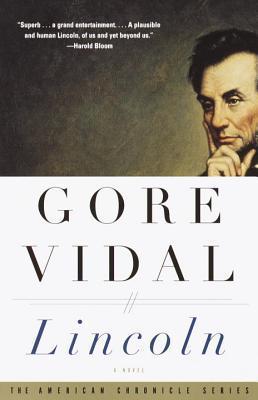
Gore Vidal's Narratives of Empire series spans the history of the United States from the Revolution to the post-World War II years. With their broad canvas and large cast of fictional and historical characters, the novels in this series present a panorama of the American political and imperial experience as interpreted by one of its most worldly, knowing, and ironic observers.To most Americans, Abraham Lincoln is a monolithic figure, the Great Emancipator and Savior of the Union, beloved by all. In Gore Vidal's Lincoln we meet Lincoln the man and Lincoln the political animal, the president who entered a besieged capital where most of the population supported the South and where even those favoring the Union had serious doubts that the man from Illinois could save it. Far from steadfast in his abhorrence of slavery, Lincoln agonizes over the best course of action and comes to his great decision only when all else seems to fail. As the Civil War ravages his nation, Lincoln must face deep personal turmoil, the loss of his dearest son, and the harangues of a wife seen as a traitor for her Southern connections. Brilliantly conceived, masterfully executed, Gore Vidal's Lincoln allows the man to breathe again.
Two young American jettison their careers to start an irreverent weekly paper, in this novel about corruption, greed, race, love, and treachery in Macao and Canton during the Opium Wars of the nineteenth century

Major-General Sir Richard Hannay is called in to investigate rumours of an uprising in Constantinople. Once there, he and his friends must thwart the Germans' plans to use religion in winning the war. The book opens in November 1915, with Hannay and his friend Sandy convalescing from wounds received at the Battle of Loos. Sir Walter Bullivant, a senior intelligence officer, summons Hannay to the Foreign Office. Bullivant briefs Hannay on the political situation in the Middle East, suggesting that the Germans and their Turkish allies are plotting to create a Muslim uprising, that will throw the Middle East, India and North Africa into turmoil. Bullivant proposes that Hannay investigate the rumours, following a clue left on a slip of paper with the words ""Kasredin"", ""cancer"" and ""v.I"" written by Bullivant's son a spy, who was recently killed in the region... Richard Hannay is a character created by Scottish novelist John Buchan, based on Edmund Ironside, from Edinburgh, a spy during the Second Boer War. John Buchan (1875-1940) was a Scottish novelist and historian and also served as Canada's Governor General. His 100 works include nearly thirty novels, seven collections of short stories and biographies. But, the most famous of his books were the adventure and spy thrillers and it is for these that he is now best remembered. "

The Raj Quartet 1: The Jewel in the Crown/The Day of the Scorpion
by Paul Scott
Rating: 4.4 ⭐
• 2 recommendations ❤️
The Raj Quartet, Paul Scott's epic study of British India in its final years, has no equal. Tolstoyan in scope and Proustian in detail but completely individual in effect, it records the encounter between East and West through the experiences of a dozen people caught up in the upheavals of the Second World War and the growing campaign for Indian independence from Britain.The first novel, The Jewel in the Crown, describes the doomed love between an English girl and an Indian boy, Daphne Manners and Hari Kumar. This affair touches the lives of other characters in three subsequent volumes, most of them unknown to Hari and Daphne but involved in the larger social and political conflicts which destroy the lovers. In The Day of the Scorpion, Ronald Merrick, a sadistic policeman who arrested and prosecuted Hari, insinuates himself into an aristocratic British family as World War II escalates.On occasions unsparing in its study of personal dramas and racial differences, the Raj Quartet is at all times profoundly humane, not least in the author’s capacity to identify with a huge range of characters. It is also illuminated by delicate social comedy and wonderful evocations of the Indian scene, all narrated in luminous prose.The other two novels in the Raj Quartet, The Towers of Silence and A Division of the Spoils, are also available from Everyman’s Library. With a new introduction by Hilary Spurling(Book Jacket Status: Jacketed)

Holidays in Hell: In Which Our Intrepid Reporter Travels to the World's Worst Places and Asks, "What's Funny about This?"
by P.J. O'Rourke
Rating: 3.9 ⭐
• 2 recommendations ❤️
Now available from Grove Press, P. J. O'Rourke's classic, best-selling guided tour of the world's most desolate, dangerous, and desperate places. "Tired of making bad jokes" and believing that "the world outside seemed a much worse joke than anything I could conjure," P. J. O'Rourke traversed the globe on a fun-finding mission, investigating the way of life in the most desperate places on the planet, including Warsaw, Managua, and Belfast. The result is Holidays in Hell--a full-tilt, no-holds-barred romp through politics, culture, and ideology. P.J.'s adventures include storming student protesters' barricades with riot police in South Korea, interviewing Communist insurrectionists in the Philippines, and going undercover dressed in Arab garb in the Gaza Strip. He also takes a look at America's homegrown horrors as he braves the media frenzy surrounding the Reagan-Gorbachev summit in Washington D.C., uncovers the mortifying banality behind the white-bread kitsch of Jerry Falwell's Heritage USA, and survives the stultifying boredom of Harvard's 350th anniversary celebration. Packed with P.J.'s classic riffs on everything from Polish nightlife under communism to Third World driving tips, Holidays in Hell is one of the best-loved books by one of today's most celebrated humorists.

The second edition of this seminal work includes the original text, first published in 1974, alongside two major new chapters. Power: A Radical View assesses the main debates about how to conceptualize and study power, including the influential contributions of Michel Foucault. Power Revisited reconsiders Steven Lukes' own views in light of these debates and of criticisms of his original argument.With a new introduction and bibliographical essay, this book has consolidated its reputation as a classic work and a major reference point within Social and Political Theory. It can be used on modules across the Social and Political Sciences dealing with the concept of power and its manifestation in the world. It is also essential reading for all undergraduate and postgraduates interested in the history of Social and Political Thought.

Those who practice the Muslim faith have resisted examinations of their religion. They are extremely guarded about their religion, and what they consider blasphemous acts by sceptical Muslims and non-Muslims alike has only served to pique the world's curiosity. This critical examination reveals an unflattering picture of the faith and its practitioners. Nevertheless, it is the truth, something that has either been deliberately concealed by modern scholars or buried in obscure journals accessible only to a select few.

The Caged Virgin: An Emancipation Proclamation for Women and Islam
by Ayaan Hirsi Ali
Rating: 3.9 ⭐
• 2 recommendations ❤️
Muslims who explore sources of morality other than Islam are threatened with death, and Muslim women who escape the virgins' cage are branded whores. So asserts Ayaan Hirsi Ali's profound meditation on Islam and the role of women, the rights of the individual, the roots of fanaticism, and Western policies toward Islamic countries and immigrant communities. Hard-hitting, outspoken, and controversial, The Caged Virgin is a call to arms for the emancipation of women from a brutal religious and cultural oppression and from an outdated cult of virginity. It is a defiant call for clear thinking and for an Islamic Enlightenment. But it is also the courageous story of how Hirsi Ali herself fought back against everyone who tried to force her to submit to a traditional Muslim woman's life and how she became a voice of reform.Born in Somalia and raised Muslim, but outraged by her religion's hostility toward women, Hirsi Ali escaped an arranged marriage to a distant relative and fled to the Netherlands. There, she learned Dutch, worked as an interpreter in abortion clinics and shelters for battered women, earned a college degree, and started a career in politics as a Dutch parliamentarian. In November 2004, the violent murder on an Amsterdam street of Dutch filmmaker Theo van Gogh, with whom Hirsi Ali had written a film about women and Islam called Submission , changed her life. Threatened by the same group that slew van Gogh, Hirsi Ali now has round-the-clock protection, but has not allowed these circumstances to compromise her fierce criticism of the treatment of Muslim women, of Islamic governments' attempts to silence any questioning of their traditions, and of Western governments' blind tolerance of practices such as genital mutilation and forced marriages of female minors occurring in their countries.Hirsi Ali relates her experiences as a Muslim woman so that oppressed Muslim women can take heart and seek their own liberation. Drawing on her love of reason and the Enlightenment philosophers on whose principles democracy was founded, she presents her firsthand knowledge of the Islamic worldview and advises Westerners how best to address the great divide that currently exists between the West and Islamic nations and between Muslim immigrants and their adopted countries.An international bestseller -- with updated information for American readers and two new essays added for this edition -- The Caged Virgin is a compelling, courageous, eye-opening work.

Compared favorably to the works of Faulkner and Dickens, Arundhati Roy’s debut novel is a modern classic that has been read and loved worldwide. Equal parts powerful family saga, forbidden love story, and piercing political drama, it is the story of an affluent Indian family forever changed by one fateful day in 1969. The seven-year-old twins Estha and Rahel see their world shaken irrevokably by the arrival of their beautiful young cousin, Sophie. It is an event that will lead to an illicit liaison and tragedies accidental and intentional, exposing “big things [that] lurk unsaid” in a country drifting dangerously toward unrest. Lush, lyrical, and unnerving, The God of Small Things is an award-winning landmark that started for its author an esteemed career of fiction and political commentary that continues unabated.

The Eighteenth Brumaire of Louis Bonaparte" is one of Karl Marx' most profound and most brilliant monographs. It may be considered the best work extant on the philosophy of history. On the 18th Brumaire (Nov. 9th), the post-revolutionary development of affairs in France enabled the first Napoleon to take a step that led with inevitable certainty to the imperial throne. The circumstance that fifty and odd years later similar events aided his nephew, Louis Bonaparte, to take a similar step with a similar result, gives the name to this work-"The Eighteenth Brumaire of Louis Bonaparte.

In this historical analysis of Zionism and the state of Israel, a former diplomat writes sympathetically of the Jews' fierce resistance under siege to secure their nation, their heritage, and their future

The Black Jacobins: Toussaint L'Ouverture and the San Domingo Revolution
by C.L.R. James
Rating: 4.4 ⭐
• 4 recommendations ❤️
A powerful and impassioned historical account of the largest successful revolt by enslaved people in the Haitian Revolution of 1791–1803“One of the seminal texts about the history of slavery and abolition.... Provocative and empowering.” — The New York Times Book ReviewThe Black Jacobins, by Trinidadian historian C. L. R. James, was the first major analysis of the uprising that began in the wake of the storming of the Bastille in France and became the model for liberation movements from Africa to Cuba. It is the story of the French colony of San Domingo, a place where the brutality of plantation owners toward enslaved people was horrifyingly severe.And it is the story of a charismatic and barely literate enslaved person named Toussaint L’Ouverture, who successfully led the Black people of San Domingo against successive invasions by overwhelming French, Spanish, and English forces—and in the process helped form the first independent post-colonial nation in the Caribbean.With a new introduction (2023) by Professor David Scott.

Shortlisted for the 1982 Booker Prize, this novel explores the clans and conflicts of Soho's Chinatown, where the Chen family arrive and want to succeed as restaurateurs in the 1960s. No family can survive for long without encountering the Triads. By the author of "The Redundancy of Courage".

The novel that set the stage for his modern classic, The Satanic Verses, Shame is Salman Rushdie’s phantasmagoric epic of an unnamed country that is “not quite Pakistan.” In this dazzling tale of an ongoing duel between the families of two men–one a celebrated wager of war, the other a debauched lover of pleasure–Rushdie brilliantly portrays a world caught between honor and humiliation–“shamelessness, shame: the roots of violence.” Shame is an astonishing story that grows more timely by the day.

Covering Islam: How the Media and the Experts Determine How We See the Rest of the World
by Edward W. Said
Rating: 4.1 ⭐
• 2 recommendations ❤️
In this classic work, now updated, the author of Culture and Imperialism reveals the hidden agendas and distortions of fact that underlie even the most "objective" coverage of the Islamic world.From the Iranian hostage crisis through the Gulf War and the bombing of the World Trade Center, the American news media have portrayed "Islam" as a monolithic entity, synonymous with terrorism and religious hysteria. At the same time, Islamic countries use "Islam" to justify unrepresentative and often repressive regimes. Combining political commentary with literary criticism, Covering Islam continues Edward Said's lifelong investigation of the ways in which language not only describes but also defines political reality.

A hilarious satire about college life and high class manners, this is a classic of postwar English literature.Regarded by many as the finest, and funniest, comic novel of the twentieth century, Lucky Jim remains as trenchant, withering, and eloquently misanthropic as when it first scandalized readers in 1954. This is the story of Jim Dixon, a hapless lecturer in medieval history at a provincial university who knows better than most that “there was no end to the ways in which nice things are nicer than nasty ones.” Kingsley Amis’s scabrous debut leads the reader through a gallery of emphatically English bores, cranks, frauds, and neurotics with whom Dixon must contend in one way or another in order to hold on to his cushy academic perch and win the girl of his fancy.More than just a merciless satire of cloistered college life and stuffy postwar manners, Lucky Jim is an attack on the forces of boredom, whatever form they may take, and a work of art that at once distills and extends an entire tradition of English comic writing, from Fielding and Dickens through Wodehouse and Waugh. As Christopher Hitchens has written, “If you can picture Bertie or Jeeves being capable of actual malice, and simultaneously imagine Evelyn Waugh forgetting about original sin, you have the combination of innocence and experience that makes this short romp so imperishable.”

The newly discovered lost text of Arthur Koestler’s modern masterpiece, Darkness at Noon—the haunting portrait of a revolutionary, imprisoned and tortured under totalitarian rule—is now restored and in a completely new translation.Editor Michael Scammell and translator Philip Boehm bring us a brilliant novel, a remarkable discovery, and a new translation of an international classic.In print continually since 1940, Darkness at Noon has been translated into over 30 languages and is both a stirring novel and a classic anti-fascist text. What makes its popularity and tenacity even more remarkable is that all existing versions of Darkness at Noon are based on a hastily made English translation of the original German by a novice translator at the outbreak of World War II. In 2015, Matthias Weßel stumbled across an entry in the archives of the Zurich Central Library that is a scholar's dream: “Koestler, Arthur. Rubaschow: Roman. Typoskript, März 1940, 326 pages.” What he had found was Arthur Koestler’s original, complete German manuscript for what would become Darkness at Noon, thought to have been irrevocably lost in the turmoil of the war. With this stunning literary discovery, and a new English translation direct from the primary German manuscript, we can now for the first time read Darkness at Noon as Koestler wrote it. Set in the 1930s at the height of the purge and show trials of a Stalinist Moscow, Darkness at Noon is a haunting portrait of an aging revolutionary, Nicholas Rubashov, who is imprisoned, tortured, and forced through a series of hearings by the Party to which he has dedicated his life. As the pressure to confess preposterous crimes increases, he re-lives a career that embodies the terrible ironies and betrayals of a merciless totalitarian movement masking itself as an instrument of deliverance. Koestler’s portrayal of Stalin-era totalitarianism and fascism is as chilling and resonant today as it was in the 1940s and during the Cold War. Rubashov’s plight explores the meaning and value of moral choices, the attractions and dangers of idealism, and the corrosiveness of political corruption. Like The Trial, 1984, and Animal Farm, this is a book you should read as a citizen of the world, wherever you are and wherever you come from.

William Hickling Prescott (May 4, 1796 – January 28, 1859) was an American historian and Hispanist, who is widely recognized by historiographers to have been the first American scientific historian. Despite suffering from serious visual impairment, which at times prevented him from reading or writing for himself, Prescott became one of the most eminent historians of 19th century America. He is also noted for his eidetic memory.After an extensive period of study, during which he sporadically contributed to academic journals, Prescott specialized in late Renaissance Spain and the early Spanish Empire. His works on the subject, The History of the Reign of Ferdinand and Isabella the Catholic (1837), The History of the Conquest of Mexico (1843), A History of the Conquest of Peru (1847) and the unfinished History of the Reign of Phillip II (1856–1858) have become classic works in the field, and have had a great impact on the study of both Spain and Mesoamerica. During his lifetime, he was upheld as one of the greatest living American intellectuals, and knew personally many of the leading political figures of the day, in both the United States and Britain. Prescott has become one of the most widely translated American historians, and was an important figure in the development of history as a rigorous academic discipline. Historians admire Prescott for his exhaustive, careful, and systematic use of archives, his accurate recreation of sequences of events, his balanced judgments and his lively writing style. He was primarily focused on political and military affairs, largely ignoring economic, social, intellectual, and cultural forces that in recent decades historians have focused on. Instead, he wrote narrative history, subsuming unstated causal forces in his driving storyline.

"Steinbeck is an artist; and he tells the stories of these lovable thieves and adulterers with a gentle and poetic purity of heart and of prose." -- New York Herald TribuneAdopting the structure and themes of the Arthurian legend, Steinbeck created a "Camelot" on a shabby hillside above the town of Monterey,California and peopled it with a colorful band of knights. At the center of the tale is Danny, whose house, like Arthur's castle, becomes a gathering place for men looking for adventure, camaraderie, and a sense of belonging. These "knights" are paisanos, men of mixed heritage, whose ancestors settled California hundreds of years before. Free of ties to jobs and other complications of the American way of life, they fiercely resist the corrupting tide of honest toil in the surrounding ocean of civil rectitude.As Steinbeck chronicles their deeds--their multiple loves, their wonderful brawls, their Rabelaisian wine-drinking--he spins a tale as compelling and ultimately as touched by sorrow as the famous legends of the Round Table, which inspired him.

The Two Faces of Islam: Saudi Fundamentalism and Its Role in Terrorism
by Stephen Schwartz
Rating: 3.3 ⭐
• 2 recommendations ❤️
Since its formation in 1932, Saudi Arabia has been ruled by two interdependent families. The Al Sa’uds control politics and the descendants of Ibn Abd al-Wahhab impose Wahhabism—a violent, fanatical perversion of the pluralistic Islam practiced by most Muslims. Stephen Schwartz argues that Wahhabism, vigorously exported with the help of Saudi oil money, is what incites Palestinian suicide bombers, Osama bin Laden, and other Islamic terrorists throughout the world.Schwartz reveals the hypocrisy of the Saudi regime, whose moderate facade conceals state-sponsored repression and terrorism. He also raises troubling questions about Wahhabi infiltration of America’s Islamic community and about U.S. oil companies sanitizing Saudi Arabia’s image for the West. This sharp analysis and eye-opening expose illuminates the background to the September 11th terrorist attacks and offers new approaches for U.S. policy toward its closest ally in the Middle East.

The Captive Mind begins with a discussion of the novel Insatiability by Stanisław Ignacy Witkiewicz and its plot device of Murti-Bing pills, which are used as a metaphor for dialectical materialism, but also for the deadening of the intellect caused by consumerism in Western society. The second chapter considers the way in which the West was seen at the time by residents of Central and Eastern Europe, while the third outlines the practice of Ketman, the act of paying lip service to authority while concealing personal opposition, describing seven forms applied in the people's democracies of mid-20th century Europe.The four chapters at the heart of the book then follow, each a portrayal of a gifted Polish man who capitulated, in some fashion, to the demands of the Communist state. They are identified only as Alpha, the Moralist; Beta, The Disappointed Lover; Gamma, the Slave of History; and Delta, the Troubadour. However, each of the four portraits were easily identifiable: Alpha is Jerzy Andrzejewski, Beta is Tadeusz Borowski, Gamma is Jerzy Putrament and Delta is Konstanty Ildefons Gałczyński.The book moves toward its climax with an elaboration of "enslavement through consciousness" in the penultimate chapter and closes with a pained and personal assessment of the fate of the Baltic nations in particular.

#1 NEW YORK TIMES BESTSELLER • We all have dreams—things we fantasize about doing and generally never get around to. This is the story of Azar Nafisi’s dream and of the nightmare that made it come true.For two years before she left Iran in 1997, Nafisi gathered seven young women at her house every Thursday morning to read and discuss forbidden works of Western literature. They were all former students whom she had taught at university. Some came from conservative and religious families, others were progressive and secular; several had spent time in jail. They were shy and uncomfortable at first, unaccustomed to being asked to speak their minds, but soon they began to open up and to speak more freely, not only about the novels they were reading but also about themselves, their dreams and disappointments. Their stories intertwined with those they were reading—Pride and Prejudice, Washington Square, Daisy Miller and Lolita—their Lolita, as they imagined her in Tehran.Nafisi’s account flashes back to the early days of the revolution, when she first started teaching at the University of Tehran amid the swirl of protests and demonstrations. In those frenetic days, the students took control of the university, expelled faculty members and purged the curriculum. When a radical Islamist in Nafisi’s class questioned her decision to teach The Great Gatsby, which he saw as an immoral work that preached falsehoods of “the Great Satan,” she decided to let him put Gatsby on trial and stood as the sole witness for the defense.Azar Nafisi’s luminous tale offers a fascinating portrait of the Iran-Iraq war viewed from Tehran and gives us a rare glimpse, from the inside, of women’s lives in revolutionary Iran. It is a work of great passion and poetic beauty, written with a startlingly original voice.Praise for Reading Lolita in Tehran“Anyone who has ever belonged to a book group must read this book. Azar Nafisi takes us into the vivid lives of eight women who must meet in secret to explore the forbidden fiction of the West. It is at once a celebration of the power of the novel and a cry of outrage at the reality in which these women are trapped. The ayatollahs don’ t know it, but Nafisi is one of the heroes of the Islamic Republic.” —Geraldine Brooks, author of Nine Parts of Desire

The elusive narrator of this beautifully written, complex, and powerfully disconcerting novel is the scion of a decayed aristocratic family from the farther reaches of the defunct Austro-Hungarian Empire. In five psychologically fraught episodes, he revisits his past, from adolescence to middle age, a period that coincides with the twentieth century’s ugliest years. Central to each episode is what might be called the narrator’s Jewish Question. He is no Nazi. To the contrary, he is apolitical, accommodating, cosmopolitan. He has Jewish friends and Jewish lovers, and their Jewishness is a matter of abiding fascination to him. His deepest and most defining relationship may even be the strange dance of attraction and repulsion that throughout his life he has conducted with this forbidden, desired, inescapable, imaginary Jewish other. And yet it is just this relationship that has blinded him to—and makes him complicit in—the terrible realities of his era.Lyrical, witty, satirical, and unblinking, Gregor von Rezzori’s most controversial work is an intimate foray into the emotional underworld of modern European history.

A collection of poems featuring works by Cope such as "Bloody Men", "Men and their Boring Arguments" and "Two Cures for Love". Other collections include "Making Cocoa for Kingsley Amis" and the long narrative poem "The River Girl".

After a nuclear World War III has destroyed most of the globe, the few remaining survivors in southern Australia await the radioactive cloud that is heading their way and bringing certain death to everyone in its path. Among them is an American submarine captain struggling to resist the knowledge that his wife and children in the United States must be dead. Then a faint Morse code signal is picked up, transmitting from somewhere near Seattle, and Captain Towers must lead his submarine crew on a bleak tour of the ruined world in a desperate search for signs of life. On the Beach is a remarkably convincing portrait of how ordinary people might face the most unimaginable nightmare.

Alternate cover for this ISBN can be found hereMoraes 'Moor' Zogoiby is a 'high-born crossbreed', the last surviving scion of a dynasty of Cochinise spice merchants and crime lords. He is also a compulsive storyteller and an exile. As he travels a route that takes him from India to Spain, he leaves behind a labyrinthine tale of mad passions and volcanic family hatreds, of titanic matriarchs and their mesmerised offspring, of premature deaths and curses that strike beyond the grave. The Moor's Last Sigh is a spectacularly ambitious, funny, satirical and compassionate novel. It is a love song to a vanishing world, but also its last hurrah.~from the back cover

Excellent Book

Jessica Mitford, the great muckraking journalist, was part of a legendary English aristocratic family. Her sisters included Nancy, doyenne of the 1920s London smart set and a noted novelist and biographer; Diana, wife to the English fascist chief Sir Oswald Mosley; Unity, who fell head over in heels in love with Hitler; and Deborah, later the Duchess of Devonshire. Jessica swung left and moved to America, where she took part in the civil rights movement and wrote her classic expose of the undertaking business, The American Way of Death.Hons and Rebels is the hugely entertaining tale of Mitford's upbringing, which was, as she dryly remarks, not exactly conventional. . . Debo spent silent hours in the chicken house learning to do an exact imitation of the look of pained concentration that comes over a hen's face when it is laying an egg. . . . Unity and I made up a complete language called Boudledidge, unintelligible to any but ourselves, in which we translated various dirty songs (for safe singing in front of the grown-ups). But Mitford found her family's world as smothering as it was singular and, determined to escape it, she eloped with Esmond Romilly, Churchill's nephew, to go fight in the Spanish Civil War. The ensuing scandal, in which a British destroyer was dispatched to recover the two truants, inspires some of Mitford's funniest, and most pointed, pages.A family portrait, a tale of youthful folly and high-spirited adventure, a study in social history, a love story, Hons and Rebels is a delightful contribution to the autobiographer's art.

The most comprehensive narrative history of Bosnia available in EnglishThis updated edition of Noel Malcolm's highly-acclaimed A Short History provides the reader with the most comprehensive narrative history of Bosnia in the English language. Malcolm examines the different religious and ethnic inhabitants of Bosnia, a land of vast cultural upheaval where the empires of Rome, Charlemagne, the Ottomans, and the Austro-Hungarians overlapped. Clarifying the various myths that have clouded the modern understanding of Bosnia's past, Malcolm brings to light the true causes of the country's destruction. This expanded edition of Bosnia includes a new epilogue by the author examining the failed Vance-Owen peace plan, the tenuous resolution of the Dayton Accords, and the efforts of the United Nations to keep the uneasy peace.What went wrong in the country where Christians and Muslims mingled and tolerated each other for over five centuries? It was a land with a vibrant political and cultural history, unlike any other in Europe, where great powers and religions-the empires of Rome, Charlemagne, the Ottomans; the faiths of Roman Catholicism, Eastern Orthodoxy, Judaism, and Islam overlapped and combined. In this first English-language history of Bosnia, Noel Malcolm provides a narrative chronicle of the country from its beginnings to its tragic end. Clarifying the various myths that have clouded the modern understanding of Bosnia's past, Malcolm brings to light the true causes of the country's the political strategy of the Serbian leadership, the conflict between the city and the countryside, the fatal inaction and miscalculations of Western politicians.Putting the Bosnia war into perspective, this volume celebrates the complex history of a country whose past, as well as its future, has been all but erased. At last, here is the guide for the general reader seeking a comprehensive and accessible account of the war in the former Yugoslavia.

Explores the complex lives of five very different men, including Xan Meo, a one-time familial paragon who suffers a personality change following a brutal assault, and King Henry IX of England, whose life is complicated by his incapacitated wife.

First published in 1989, just before the Gulf War broke out, Republic of Fear was the only book that explained the motives of the Saddam Hussein regime in invading and annexing Kuwait. This edition, updated in 1998, has a substantial introduction focusing on the changes in Hussein's regime since the Gulf War.In 1968 a coup d'état brought into power an extraordinary regime in Iraq, one that stood apart from other regimes in the Middle East. Between 1968 and 1980, this new regime, headed by the Arab Ba'th Socialist party, used ruthless repression and relentless organization to transform the way Iraqis think and react to political questions. In just twelve years, a party of a few thousand people grew to include nearly ten percent of the Iraqi population.This book describes the experience of Ba'thism from 1968 to 1980 and analyzes the kind of political authority it engendered, culminating in the personality cult around Saddam Hussein. Fear, the author argues, is at the heart of Ba'thi politics and has become the cement for a genuine authority, however bizarre.Examining Iraqi history in a search for clues to understanding contemporary political affairs, the author illustrates how the quality of Ba'thi pan-Arabism as an ideology, the centrality of the first experience of pan-Arabism in Iraq, and the interaction between the Ba'th and communist parties in Iraq from 1958 to 1968 were crucial in shaping the current regime.Saddam Hussein's decision to launch all-out war against Iran in September 1980 marks the end of the first phase of this re-shaping of modern Iraqi politics. The Iraq-Iran war is a momentous event in its own right, but for Iraq, the author argues, the war diverts dissent against the Ba'thi regime by focusing attention on the specter of an enemy beyond Iraq's borders, thus masking a hidden potential for even greater violence inside Iraq.

The curse placed on Oedipus lingers and haunts a younger generation in this new and brilliant translation of Sophocles' classic drama. The daughter of Oedipus and Jocasta, Antigone is an unconventional heroine who pits her beliefs against the King of Thebes in a bloody test of wills that leaves few unharmed. Emotions fly as she challenges the king for the right to bury her own brother. Determined but doomed, Antigone shows her inner strength throughout the play.Antigone raises issues of law and morality that are just as relevant today as they were more than two thousand years ago. Whether this is your first reading or your twentieth, Antigone will move you as few pieces of literature can.To make this quintessential Greek drama more accessible to the modern reader, this Prestwick House Literary Touchstone Edition includes a glossary of difficult terms, a list of vocabulary words, and convenient sidebar notes. By providing these, it is our intention that readers will more fully enjoy the beauty, wisdom, and intent of the play.

A powerful novel of the North Atlantic in World War II, this is the story of the British ships Compass Rose and Saltash and of their desparate cat-and-mouse game with Nazi U-boats. First published to great acclaim in 1951, The Cruel Sea remains a classic novel of endurance and daring.

At the beginning of the twentieth century England's empire spanned the globe, its economy was strong, and its political system seemed immune to the ills that inflicted so many other countries. After a resounding electoral triumph in 1906, the Liberals formed the government of the most powerful nation on earth, yet within a few years the House of Lords lost its absolute veto over legislation, the Home Rule crisis brought Ireland to the brink of civil war and led to an army mutiny, the campaign for woman's suffrage created widespread civil disorder and discredited the legal and penal systems, and an unprecedented wave of strikes swept the land. This is a classic account, first published in 1935, of the dramatic upheaval and political change that overwhelmed England in the period 1910-1914. Few books of history retain their relevance and vitality after more than sixty years. The Strange Death of Liberal England is one of the most important books of the English past, a prime example that history can be abiding literature. As a portrait of England enmeshed in the turbulence of new movements, which often led to violence against the pieties of Liberal England—until it was overwhelmed by the greatest violence of all, World War I—this extraordinary book has continued to exert a powerful influence on the way historians have observed early twentieth-century England.

In five years since the seventh edition of this book was published, a number of significant decisions have been handed down and a wealth of scholarly commentary has been generated. Accordingly, this new edition represents a complete revision and a fresh reevaluation, for purposes of re-editing and re-organizing, of all existing materials. It also constitutes the product of an extensive examination of the recent literature - in an effort to further enrich the notes, comments and questions. In addition to full updating, restructuring has been undertaken where called for by recent developments. The most significant revisions appear in Chapter 3 (Separation of Powers). Chapter 4 (State Power to Regulate), Chapter 13 (Limitations on Judicial Review), and parts of Chapter 10 (Equal Protection) dealing with Affirmative Action (Sec. 2, VI), Discriminations Based on Gender (Sec. 3), and Special Scrutiny for Other Classifications (Sec. 4).

In this profoundly affecting memoir from the internationally renowned author of The Caged Virgin, Ayaan Hirsi Ali tells her astonishing life story, from her traditional Muslim childhood in Somalia, Saudi Arabia, and Kenya, to her intellectual awakening and activism in the Netherlands, and her current life under armed guard in the West. One of today's most admired and controversial political figures, Ayaan Hirsi Ali burst into international headlines following an Islamist's murder of her colleague, Theo van Gogh, with whom she made the movie Submission. Infidel is the eagerly awaited story of the coming of age of this elegant, distinguished -- and sometimes reviled -- political superstar and champion of free speech. With a gimlet eye and measured, often ironic, voice, Hirsi Ali recounts the evolution of her beliefs, her ironclad will, and her extraordinary resolve to fight injustice done in the name of religion. Raised in a strict Muslim family and extended clan, Hirsi Ali survived civil war, female mutilation, brutal beatings, adolescence as a devout believer during the rise of the Muslim Brotherhood, and life in four troubled, unstable countries largely ruled by despots. In her early twenties, she escaped from a forced marriage and sought asylum in the Netherlands, where she earned a college degree in political science, tried to help her tragically depressed sister adjust to the West, and fought for the rights of Muslim immigrant women and the reform of Islam as a member of Parliament. Even though she is under constant threat -- demonized by reactionary Islamists and politicians, disowned by her father, and expelled from her family and clan -- she refuses to be silenced. Ultimately a celebration of triumph over adversity, Hirsi Ali's story tells how a bright little girl evolved out of dutiful obedience to become an outspoken, pioneering freedom fighter. As Western governments struggle to balance democratic ideals with religious pressures, no story could be timelier or more significant.

In Pale Fire Nabokov offers a cornucopia of deceptive pleasures: a 999-line poem by the reclusive genius John Shade; an adoring foreword and commentary by Shade's self-styled Boswell, Dr. Charles Kinbote; a darkly comic novel of suspense, literary idolatry and one-upmanship, and political intrigue.

Expelled from Oxford for indecent behaviour, Paul Pennyfeather is oddly unsurprised to find himself qualifying for the position of schoolmaster at Llanabba Castle. His colleagues are an assortment of misfits, including Prendy (plagued by doubts) and captain Grimes, who is always in the soup (or just plain drunk). Then Sports Day arrives, and with it the delectable Margot Beste-Chetwynde, floating on a scented breeze. As the farce unfolds and the young run riot, no one is safe, least of all Paul. Taking its title from Edward Gibbon's Decline and Fall of the Roman Empire, Evelyn Waugh's first, funniest novel immediately caught the ear of the public with his account of an ingénu abroad in the decadent confusion of 1920s high society.

Parting the Waters: America in the King Years, 1954-63
by Taylor Branch
Rating: 4.6 ⭐
• 8 recommendations ❤️
In Parting the Waters , the first volume of his essential America in the King Years series, Pulitzer Prize winner Taylor Branch gives a “compelling…masterfully told” ( The Wall Street Journal ) account of Martin Luther King’s early years and rise to greatness.Hailed as the most masterful story ever told of the American Civil Rights Movement, Parting the Waters is destined to endure for generations.Moving from the fiery political baptism of Martin Luther King, Jr., to the corridors of Camelot where the Kennedy brothers weighed demands for justice against the deceptions of J. Edgar Hoover, here is a vivid tapestry of America, torn and finally transformed by a revolutionary struggle unequaled since the Civil War.Taylor Branch provides an unsurpassed portrait of King's rise to greatness and illuminates the stunning courage and private conflict, the deals, maneuvers, betrayals, and rivalries that determined history behind closed doors, at boycotts and sit-ins, on bloody freedom rides, and through siege and murder.Epic in scope and impact, Branch's chronicle definitively captures one of the nation's most crucial passages.

This brilliant and evocative book is now widely regarded as the greatest single study of the age in any language. The late George Kitson Clark characterized it as "an historical essay of unique interest and importance." Though the book deserves to rank as a classic, its allusive style makes it rather difficult fare for the general reader. In less than two hundred pages Young paints a picture so subtle and compact that only the specialist in Victorian history can fully appreciate the value of his vivid narrative. The allusive nature of the Portrait recently sent a few dozen scholars scurrying under the guidance of Kitson Clark, to hunt down and verify its numerous references and quotations. Their exhaustive efforts have unearthed a few minor blemishes, but these fail to detract from the book's overall brilliance. Thought the Portrait is esteemed by scholars, few have noted how much the book is a reflection of its time and of the abiding cultural concerns of Young's intellectual life. In print continuously since its first appearance in 1936, this study of the Victorian era from 1837-1901 is regarded as the greatest history of that time ever written. G. M Young's remarkable survey has outstanding clarity, delicious wit, and penetrating scholarship. "An immortal classic, the greatest long essay ever written."--Simon Schama. "A magnificent piece."--Punch. "Every page is delightful reading."--Guardian. "[A] breathtaking range of scholarship, richness and aptness of language, and acid sharpness of wit."--Country Life.

The Monument: Art and Vulgarity in Saddam Hussein's Iraq
by Kanan Makiya
Rating: 4.0 ⭐
• 2 recommendations ❤️
In Baghdad, an enormous monument nearly twice the size of the Arc de Triomphe towers over the city. Two huge forearms emerge from the ground, clutching two swords that clash overhead. Those arms are enlarged casts of those of Saddam Hussein, showing every bump and follicle. The "Victory Arch" celebrates a victory over Iran (in their eight-year-long war) that never happened. This text is a study of the interplay between art and politics - of how culture, normally an unquestioned good, can play into the hands of a power with devastating effects. Kanan Makiya uses the culture invented by Saddam Hussein as a window into the nature of totalitarianism and shows how art can become the weapon of dictatorship. Under Saddam Hussein, culture connived in his evil - this text explains how. It should be useful reading for anyone concerned with the power of culture and the culture of power.
Set in England's Downs, a once idyllic rural landscape, this stirring tale of adventure, courage and survival follows a band of very special creatures on their flight from the intrusion of man and the certain destruction of their home. Led by a stouthearted pair of friends, they journey forth from their native Sandleford Warren through the harrowing trials posed by predators and adversaries, to a mysterious promised land and a more perfect society.

Sylvia Plath's shocking, realistic, and intensely emotional novel about a woman falling into the grip of insanityEsther Greenwood is brilliant, beautiful, enormously talented, and successful, but slowly going under—maybe for the last time. In her acclaimed and enduring masterwork, Sylvia Plath brilliantly draws the reader into Esther's breakdown with such intensity that her insanity becomes palpably real, even rational—as accessible an experience as going to the movies. A deep penetration into the darkest and most harrowing corners of the human psyche, The Bell Jar is an extraordinary accomplishment and a haunting American classic.

Set in Southern Rhodesia under white rule, Doris Lessing's first novel is at once a riveting chronicle of human disintegration, a beautifully understated social critique, and a brilliant depiction of the quiet horror of one woman's struggleagainst a ruthless fate.Mary Turner is a self-confident, independent young woman who becomes the depressed, frustrated wife of an ineffectual, unsuccessful farmer. Little by little the ennui of years on the farm works its slow poison. Mary's despair progresses until the fateful arrival of Moses, an enigmatic, virile black servant. Locked in anguish, Mary and Moses—master and slave—are trapped in a web of mounting attraction and repulsion, until their psychic tension explodes with devastating consequences.

One of the most controversial and acclaimed novels ever written, The Satanic Verses is Salman Rushdie’s best-known and most galvanizing book. Set in a modern world filled with both mayhem and miracles, the story begins with a bang: the terrorist bombing of a London-bound jet in midflight. Two Indian actors of opposing sensibilities fall to earth, transformed into living symbols of what is angelic and evil. This is just the initial act in a magnificent odyssey that seamlessly merges the actual with the imagined. A book whose importance is eclipsed only by its quality, The Satanic Verses is a key work of our times.

The Long Affair: Thomas Jefferson and the French Revolution, 1785-1800
by Conor Cruise O'Brien
Rating: 3.8 ⭐
• 2 recommendations ❤️
As controversial and explosive as it is elegant and learned, The Long Affair is Conor Cruise O'Brien's examination of Thomas Jefferson, as man and icon, through the critical lens of the French Revolution. O'Brien offers a provocative analysis of the supreme symbol of American history and political culture and challenges the traditional perceptions of both Jeffersonian history and the Jeffersonian legacy."The book is an attack on America's long affair with Jeffersonian ideology of radical an ideology that, by confusing Jefferson with a secular prophet, will destroy the United States from within."—David C. Ward, Boston Book Review"With his background as a politician and a diplomat, O'Brien brings a broad perspective to his effort to define Jefferson's beliefs through the prism of his attitudes toward France. . . . This is an important work that makes an essential contribution to the overall picture of Jefferson."— Booklist"O'Brien traces the roots of Jefferson's admiration for the revolution in France but notes that Jefferson's enthusiasm for France cooled in the 1790s, when French egalitarian ideals came to threaten the slave-based Southern economy that Jefferson supported."— Library Journal"In O'Brien's opinion, it's time that Americans face the fact that Jefferson, long seen as a champion of the 'wronged masses,' was a racist who should not be placed on a pedestal in an increasingly multicultural United States."— Boston Phoenix"O'Brien makes a well-argued revisionist contribution to the literature on Jefferson."— Kirkus Reviews"O'Brien is right on target . . . determined not to let the evasions and cover-ups continue."—Forrest McDonald, National Review" The Long Affair should be read by anyone interested in Jefferson—or in a good fight."—Richard Brookhiser, New York Times Book Review

Dorothea Brooke is a beautiful and idealistic young woman set on filling her life with good deeds. She pursues the pompous Edward Casaubon, conviced that he embodies these principles, and becomes trapped in an unhappy marriage. Then there is Tertius Lydgate, an anguished progressive whose determination to bring modern medicine to the provinces is muddied by unrequited love. They, and a multitude of other brilliantly drawn characters, reside in the town Middlemarch - the background to George Eliot's incomparable portrait of Victorian life. A masterpiece of candid observation, emotional insight and humour, Middlemarch is a truly monumental novel. With an introduction by Pulitzer Prize-winning novelist Jennifer Egan.

They Fought Back: The Story of the Jewish Resistance in Nazi Europe
by
Rating: 4.1 ⭐
• 2 recommendations ❤️
Suhl, Yuri, Ed., They Fought The Story Of The Jewish Resistance In Nazi Europe

Designed to appeal to the book lover, the Macmillan Collector's Library is a series of beautifully bound pocket-sized gift editions of much loved classic titles. Bound in real cloth, printed on high quality paper, and featuring ribbon markers and gilt edges, Macmillan Collector's Library are books to love and treasure.Kim (1901) is one of Kipling's masterpieces. Through the story of the young orphan Kimball O'Hara, and his vocation in the Secret Service, Kipling presents a vivid picture of India, its teeming populations, religions, and superstitions, and the life of the bazaars and the road. Two men - Kim, a boy growing into early manhood and the lama, an old ascetic priest - are fired by a quest. While Kim plays the Great Game, the Intelligence-led rivalry with Russia's expansionist ambitions in the north, he is also spiritually bound to the lama and he tries to reconcile these opposing strands, while the lama searches for redemption from the Wheel of Life.With an Afterword by David Stuart Davies.

Distinguished historian seeks to reconcile the doctrine of progress with the present state of the world in the light of modern concepts of dterminism, accident, causatio, objectivity, and the role of the individual in history

Since its original publication in 1975, this groundbreaking work has awakened millions of people to the existence of "speciesism"—our systematic disregard of nonhuman animals—inspiring a worldwide movement to transform our attitudes to animals and eliminate the cruelty we inflict on them.In Animal Liberation, author Peter Singer exposes the chilling realities of today's "factory farms" and product-testing procedures—destroying the spurious justifications behind them, and offering alternatives to what has become a profound environmental and social as well as moral issue. An important and persuasive appeal to conscience, fairness, decency, and justice, it is essential reading for the supporter and the skeptic alike.

The most poignant of all De Vries's novels, The Blood of the Lamb is also the most autobiographical. It follows the life of Don Wanderhop from his childhood in an immigrant Calvinist family living in Chicago in the 1950s through the loss of a brother, his faith, his wife, and finally his daughter-a tragedy drawn directly from De Vries's own life. Despite its foundation in misfortune, The Blood of the Lamb offers glimpses of the comic sensibility for which De Vries was famous. Engaging directly with the reader in a manner that buttresses the personal intimacy of the story, De Vries writes with a powerful blend of grief, love, wit, and fury.

Pillar of Fire: America in the King Years 1963-65
by Taylor Branch
Rating: 4.3 ⭐
• 4 recommendations ❤️
From Pulitzer Prize-winning author Taylor Branch, the second part of his epic trilogy on the American Civil Rights Movement.In the second volume of his three-part history, a monumental trilogy that began with Parting the Waters, winner of the Pulitzer Prize and the National Book Critics Circle Award, Taylor Branch portrays the Civil Rights Movement at its zenith, recounting the climactic struggles as they commanded the national stage.

“I think it A Work of genius, I think it The Work of a Genius, I think it brilliant, splendid, etc. If there is literature (and this proves there is) this is where it’s at.” –John CheeverA Penguin ClassicSaul Bellow’s Pulitzer Prize-winning novel explores the long friendship between Charlie Citrine, a young man with an intense passion for literature, and the great poet Von Humboldt Dleisher. At the time of Humboldt’s death, Charlie’s life is falling his career is at a standstill, and he’s enmeshed in an acrimonious divorce, infatuated with a highly unsuitable young woman, and involved with a neurotic Mafioso. And then Humboldt acts from beyond the grave, bestowing upon Charlie an unexpected legacy that may just help him turn his life around.This Penguin Classics edition features an introduction by Jeffrey Eugenides.For more than seventy years, Penguin has been the leading publisher of classic literature in the English-speaking world. With more than 1,700 titles, Penguin Classics represents a global bookshelf of the best works throughout history and across genres and disciplines. Readers trust the series to provide authoritative texts enhanced by introductions and notes by distinguished scholars and contemporary authors, as well as up-to-date translations by award-winning translators.

NATIONAL BESTSELLER • The Booker Prize winner and bestselling author of Atonement brilliantly illuminates the collision of sexual longing, deep-seated fears, and romantic fantasy on a young couple’s wedding night.“No one now writing in English surpasses or even matches McEwan's accomplishment." — The Washington Post Book WorldIt is 1962, and Florence and Edward are celebrating their wedding in a hotel on the Dorset coast. Yet as they dine, the expectation of their marital duties become overwhelming. Unbeknownst to them both, the decisions they make this night will resonate throughout their lives. With exquisite prose, Ian McEwan creates in On Chesil Beach a story of lives transformed by a gesture not made or a word not spoken.Don’t miss Ian McEwan’s new novel, Lessons .

Gore Vidal's Narratives of Empire series spans the history of the United States from the Revolution to the post-World War II years. With their broad canvas and large cast of fictional and historical characters, the novels in this series present a panorama of the American political and imperial experience as interpreted by one of its most worldly, knowing, and ironic observers. Burr is a portrait of perhaps the most complex and misunderstood of the Founding Fathers. In 1804, while serving as vice president, Aaron Burr fought a duel with his political nemesis, Alexander Hamilton, and killed him. In 1807, he was arrested, tried, and acquitted of treason. In 1833, Burr is newly married, an aging statesman considered a monster by many. Burr retains much of his political influence if not the respect of all. And he is determined to tell his own story. As his amanuensis, he chooses Charles Schermerhorn Schuyler, a young New York City journalist, and together they explore both Burr's past and the continuing political intrigues of the still young United States.

The Company Of Critics: Social Criticism And Political Commitment In The Twentieth Century
by Michael Walzer
Rating: 3.8 ⭐
• 2 recommendations ❤️
The Company of Critics provides a fascinating survey of the terrain of social criticism in the last century. Organizing the book as a series of eleven intellectual biographies, Michael Walzer tells not just the dramatic story of the cultural and political radical but also the more personal story of the meaning of criticism to the critic. By looking at the life and work of Julien Benda, Randolph Bourne, Martin Buber, Antonio Gramsci, Ignazio Silone, George Orwell, Albert Camus, Simone de Beauvoir, Herbert Marcuse, Michel Foucault, and Breyten Breytenbach, Walzer explains the role of the public intellectual in the context of what he identifies as "the triumphs and catastrophes of our time: the two world wars, the struggles of the working class, national liberation, feminism, totalitarian politics."The new edition, featuring a new preface, contains Walzer's thoughts on his own role as a public intellectual and, most important, the challenges that lie ahead for the engaged social critic. With its unique emphasis on life as a proving ground for thought, The Company of Critics is a necessary addition to the literature of social and political engagement both within and outside of the academy.

April 1945: From the ruins of Berlin, a Luftwaffe transport plane takes off carrying secret papers belonging to Adolf Hitler. Half an hour later, it crashes in flames.April 1983: In a bank vault in Switzerland, a German magazine offers to sell more than 50 volumes of Hitler's secret diairies. The asking price is $4 million...Written with the pace and verve of a thriller and hailed on publication as a classic, "Selling Hitler" tells the story of the biggest fraud in publishing history.

The Masque of Anarchy (or The Mask of Anarchy) is a British political poem written in 1819 (see 1819 in poetry) by Percy Bysshe Shelley following the Peterloo Massacre of that year. In his call for freedom, it is perhaps the first modern statement of the principle of nonviolent resistance.

MI6’s man in Havana is Wormold, a former vacuum-cleaner salesman turned reluctant secret agent out of economic necessity. To keep his job, he files bogus reports based on Charles Lamb’s Tales from Shakespeare and dreams up military installations from vacuum-cleaner designs. Then his stories start coming disturbingly true… First published in 1959 against the backdrop of the Cold War, Our Man in Havana remains one of Graham Greene’s most widely read novels. It is an espionage thriller, a penetrating character study, and a political satire of government intelligence that still resonates today. This Penguin Classics edition features an introduction by Christopher Hitchens.

C.L.R. James is one of the twentieth century’s most remarkable individuals. As the author of the influential book The Black Jacobins , he is widely recognized as the premier scholar of slave revolt; the publication of his acute and sensitive volume Beyond a Boundary established an equal reputation as a historian of sport; and his tireless political and intellectual interventions have become the hallmark of a highly creative Marxist thinker, a brilliant dialectician and the last surviving pioneer of Pan-African liberation.James’s work has never previously been studied in its entirety. Now Paul Buhle, a longtime editorial collaborator with James, has produced a rich and informed analysis of his accomplishments. Drawing upon extensive interviews with James, his critics and his erstwhile supporters, together with many previously unpublished documents, Buhle’s book offers an appreciative and enlightening portrait of the man and his times. The author also sheds new light on subjects ranging across Pan-Africanism, West Indian literature, British and American Marxism and the rise of third world nationalism.

In his uproarious first novel Martin Amis, author of the bestselling London Fields, gave us one of the most noxiously believable -- and curiously touching -- adolescents ever to sniffle and lust his way through the pages of contemporary fiction. On the brink of twenty, Charles High-way preps desultorily for Oxford, cheerfully loathes his father, and meticulously plots the seduction of a girl named Rachel -- a girl who sorely tests the mettle of his cynicism when he finds himself falling in love with her.

Few political figures of the twentieth century have aroused as much controversy as the Russian revolutionary Leon Trotsky. Trotsky’s extraordinary life and extensive writings have left an indelible mark on revolutionary conscience; and yet there was at one time a danger that his name would disappear altogether from history. Isaac Deutscher’s magisterial three-volume biography was the first major publication to counter the powerful Stalinist propaganda machine, and in this definitive work Trotsky emerges in his real stature, as the most heroic, and ultimately tragic, character of the Russian revolution.This first volume of the trilogy, originally published in 1954, traces Trotsky’s political development: his early activities, the formation and crystallization of his distinctive and motivating idea—the permanent revolution— his long feud and final reconciliation with Lenin and Bolshevism, and his role in the October insurrection of 1917. The volume ends in the year 1921, when Trotsky, then at the climax of his power, unwittingly sowed the seeds of his own defeat.

An alternative cover edition for this ISBN can be found here.A gripping tale of human unrelieved horror, of survival and resilience, and of the ways in which humankind confronts death, The Plague is at once a masterfully crafted novel, eloquently understated and epic in scope, and a parable of ageless moral resonance, profoundly relevant to our times. In Oran, a coastal town in North Africa, the plague begins as a series of portents, unheeded by the people. It gradually becomes an omnipresent reality, obliterating all traces of the past and driving its victims to almost unearthly extremes of suffering, madness, and compassion.

At once a fiendishly devious mystery, a beguiling love story, and a brilliant symposium on the power of art, My Name Is Red is a transporting tale set amid the splendor and religious intrigue of sixteenth-century Istanbul, from one of the most prominent contemporary Turkish writers.The Sultan has commissioned a cadre of the most acclaimed artists in the land to create a great book celebrating the glories of his realm. Their task: to illuminate the work in the European style. But because figurative art can be deemed an affront to Islam, this commission is a dangerous proposition indeed. The ruling elite therefore mustn’t know the full scope or nature of the project, and panic erupts when one of the chosen miniaturists disappears. The only clue to the mystery–or crime? –lies in the half-finished illuminations themselves. Part fantasy and part philosophical puzzle, My Name is Red is a kaleidoscopic journey to the intersection of art, religion, love, sex and power.

Kingsley Amis, along with being the funniest English writer of his generation was a great chronicler of the fads and absurdities of his age, and Girl, 20 is a delightfully incisive dissection of the flower-power phase of the 1960s. Amis’s antihero, Sir Roy Vandervane, a conductor and composer who bears more than a passing resemblance to Leonard Bernstein, is a pillar of the establishment whohas fallen hard for protest, bellbottoms, and the electric guitar. And since vain Sir Vandervane is a great success, he is also free to pursue his greatest a taste for younger and younger women. Highborn hippie Sylvia (not, in fact, twenty) is his latest infatuation and a threat to his whole family, from his drama-queen wife, Kitty, to Penny, his long-suffering daughter.All this is recounted by Douglas Yandell, a music critic with his own love problems, who finds that he too has a part in this story of botched artistry, bumbling celebrity, and scheming family, in a time that for all its high-minded talk is as low and dishonest as any other.

In his new work, Michel Houellebecq combines erotic provocation with a terrifying vision of a world teetering between satiety and fanaticism, to create one of the most shocking, hypnotic, and intelligent novels in years.In his early forties, Michel Renault skims through his days with as little human contact as possible. But following his father’s death he takes a group holiday to Thailand where he meets a travel agent—the shyly compelling Valérie—who begins to bring this half-dead man to life with sex of escalating intensity and audacity. Arcing with dreamlike swiftness from Paris to Pattaya Beach and from sex clubs to a terrorist massacre, Platform is a brilliant, apocalyptic masterpiece by a man who is widely regarded as one of the world’s most original and daring writers.
Librarian's note: There is an Alternate Cover Edition for this edition of this book here.A farm is taken over by its overworked, mistreated animals. With flaming idealism and stirring slogans, they set out to create a paradise of progress, justice, and equality. Thus the stage is set for one of the most telling satiric fables ever penned –a razor-edged fairy tale for grown-ups that records the evolution from revolution against tyranny to a totalitarianism just as terrible. When Animal Farm was first published, Stalinist Russia was seen as its target. Today it is devastatingly clear that wherever and whenever freedom is attacked, under whatever banner, the cutting clarity and savage comedy of George Orwell’s masterpiece have a meaning and message still ferociously fresh.

The Wind Blows Away Our Words and Other Documents Relating to the Afghan Resistance
by Doris Lessing
Rating: 3.2 ⭐
• 2 recommendations ❤️
An account of the Russian occupation of Afghanistan in the 1980s, the Afghan resistance and the plight of the refugees.

In 1937 Ernest Hemingway traveled to Spain to cover the civil war there for the North American Newspaper Alliance. Three years later he completed the greatest novel to emerge from "the good fight," For Whom the Bell Tolls.The story of Robert Jordan, a young American in the International Brigades attached to an antifascist guerilla unit in the mountains of Spain, it tells of loyalty and courage, love and defeat, and the tragic death of an ideal. In his portrayal of Jordan's love for the beautiful Maria and his superb account of El Sordo's last stand, in his brilliant travesty of La Pasionaria and his unwillingness to believe in blind faith, Hemingway surpasses his achievement in The Sun Also Rises and A Farewell to Arms to create a work at once rare and beautiful, strong and brutal, compassionate, moving, and wise. "If the function of a writer is to reveal reality," Maxwell Perkins wrote Hemingway after reading the manuscript, "no one ever so completely performed it." Greater in power, broader in scope, and more intensely emotional than any of the author's previous works, it stands as one of the best war novels of all time.


Originally published in 1958, In Flanders Fields is a classic of World War I literature. Leon Wolff offers a brilliantly compact fictional narrative of the Third Battle of Ypres, also known as Passchendaele. The battle, which lasted from July to November of 1917, had a staggering cost: it is estimated that 475,000 troops were killed, wounded, or went missing. Through Wolff’s carefully accurate novelization of the strategy, tactics, and events of the battle, we begin to get glimmers of insight into how slaughter on such a scale was possible—how the battle was allowed to continue, month after month, at such a terrible cost. No other book takes readers so close to the mud and danger of the Ypres battlefield; on the centennial of World War I, a new generation of readers now has a chance to discover it.

"Suicide," writes the notes English poet and critic A. Alvarez, "has permeated Western culture like a dye that cannot be washed out." Although the aims of this compelling, compassionate work are broadly cultural and literary, the narrative is rooted in personal experience: it begins with a long memoir of Sylvia Plath, and ends with an account of the author's own suicide attempt. Within this dramatic framework, Alvarez launches his enquiry into the final taboo of human behavior, and traces changing attitudes towards suicide from the perspective of literature. He follows the black thread leading from Dante through Donne and the romantic agony, to the Savage God at the heart of modern literature.

More than three decades after its first publication, Edward Said's groundbreaking critique of the West's historical, cultural, and political perceptions of the East has become a modern classic.In this wide-ranging, intellectually vigorous study, Said traces the origins of "orientalism" to the centuries-long period during which Europe dominated the Middle and Near East and, from its position of power, defined "the orient" simply as "other than" the occident. This entrenched view continues to dominate western ideas and, because it does not allow the East to represent itself, prevents true understanding. Essential, and still eye-opening, Orientalism remains one of the most important books written about our divided world.

Ulysses is a modernist novel by Irish writer James Joyce. It was first serialised in parts in the American journal The Little Review from March 1918 to December 1920, and then published in its entirety by Sylvia Beach in February 1922, in Paris. It is considered to be one of the most important works of modernist literature, and has been called "a demonstration and summation of the entire movement". According to Declan Kiberd, "Before Joyce, no writer of fiction had so foregrounded the process of thinking." However, even proponents of Ulysses such as Anthony Burgess have described the book as "inimitable, and also possibly mad". Ulysses chronicles the peripatetic appointments and encounters of Leopold Bloom in Dublin in the course of an ordinary day, 16 June 1904. Ulysses is the Latinised name of Odysseus, the hero of Homer's epic poem Odyssey, and the novel establishes a series of parallels between its characters and events and those of the poem.

Returning to Ireland to reclaim a painting that is part of his patrimony, a thirty-eight-year-old man commits a ghastly and motiveless murder, which he confesses in a novel-length narrative.

The End of Faith: Religion, Terror, and the Future of Reason
by Sam Harris
Rating: 3.9 ⭐
• 6 recommendations ❤️
In The End of Faith, Sam Harris delivers a startling analysis of the clash between reason and religion in the modern world. He offers a vivid, historical tour of our willingness to suspend reason in favor of religious beliefs—even when these beliefs inspire the worst human atrocities. While warning against the encroachment of organized religion into world politics, Harris draws on insights from neuroscience, philosophy, and Eastern mysticism to deliver a call for a truly modern foundation for ethics and spirituality that is both secular and humanistic.Winner of the 2005 PEN/Martha Albrand Award for Nonfiction.

Main Currents of Marxism: The Founders - The Golden Age - The Breakdown
by Leszek Kołakowski
Rating: 4.4 ⭐
• 2 recommendations ❤️
Leszek Kolakowski’s masterpiece, one of the twentieth century’s most important books―for the first time in a one-volume paperback. Renowned philosopher Leszek Kolakowski was one of the first scholars to reveal both the shortcomings and the dangers posed by communist regimes. He now presents, for the first time in one paperback volume, his definitive Main Currents of Marxism : “A prophetic work,” according to the Library of Congress, that provides “the most lucid and comprehensive history of the origins, structure, and posthumous development of the system of thought that had the greatest impact on the 20th century.”

Augie comes on stage with one of literature’s most famous opening lines. “I am an American, Chicago born, and go at things as I have taught myself, free-style, and will make the record in my own way: first to knock, first admitted.” It’s the “Call me Ishmael” of mid-20th-century American fiction. (For the record, Bellow was born in Canada.) Or it would be if Ishmael had been more like Tom Jones with a philosophical disposition. With this teeming book Bellow returned a Dickensian richness to the American novel. As he makes his way to a full brimming consciousness of himself, Augie careens himself through numberless occupations, and countless mentors and exemplars, all the while enchanting us with the slapdash American music of his voice.

The Lesser Evil: The Diaries of Victor Klemperer 1945-1959
by Victor Klemperer
Rating: 4.3 ⭐
• 2 recommendations ❤️
Translated from the original German, this final volume of Victor Klemperer’s diaries opens in 1945. After the horrors of the war, Victor and Eva’s return to their Dresden home seems like a fairytale. Victor tries to resume his distinguished academic career and joins East Germany’s Communist Party. In 1951, Eva dies; a year later, aged 70, Victor marries a student—an unlikely but successful love match. But with the growing repression of the Communist Party, and the memory of those who did not survive, Victor’s achievements ring hollow. Politics, he comes to believe, is, above all, the choice of "the lesser evil." A masterpiece both of Holocaust literature and memoir.

Selling more than 300,000 copies the first year it was published, Stowe's powerful abolitionist novel fueled the fire of the human rights debate in 1852. Denouncing the institution of slavery in dramatic terms, the incendiary novel quickly draws the reader into the world of slaves and their masters.Stowe's characters are powerfully and humanly realized in Uncle Tom, a majestic and heroic slave whose faith and dignity are never corrupted; Eliza and her husband, George, who elude slave catchers and eventually flee a country that condones slavery; Simon Legree, a brutal plantation owner; Little Eva, who suffers emotionally and physically from the suffering of slaves; and fun-loving Topsy, Eva's slave playmate.Critics, scholars, and students are today revisiting this monumental work with a new objectivity, focusing on Stowe's compelling portrayal of women and the novel's theological underpinnings.

Follows the life of a strong Hindu woman who must adjust to an arranged marriage to a foolish man

'She had been forced into prudence in her youth, she learned romance as she grew older' At twenty-seven, Anne Elliot is no longer young and has few romantic prospects. Eight years earlier, she had been persuaded by her friend Lady Russell to break off her engagement to Frederick Wentworth, a handsome naval captain with neither fortune nor rank. What happens when they encounter each other again is movingly told in Jane Austen’s last completed novel. Set in the fashionable societies of Lyme Regis and Bath, Persuasion is a brilliant satire of vanity and pretension, but, above all, it is a love story tinged with the heartache of missed opportunities.In her introduction, Gillian Beer discusses Austen’s portrayal of the double-edged nature of persuasion and the clash between old and new worlds. This edition also includes a new chronology and full textual notes.

Imperialism at Bay: The United States and the Decolonization of the British Empire, 1941-1945
by William Roger Louis
Rating: 3.9 ⭐
• 2 recommendations ❤️
This book examines the wartime controversies between Britain and America about the future of the colonial world, and considers the ethical, military, and economic forces behind imperialism during World War II. It concludes that, for Britain, there was a revival of the sense of colonial mission; the Americans, on the other hand, felt justified in creating a strategic fortress in the Pacific Islands while carrying the torch of "international trusteeship" throughout the rest of the world--a scheme that Churchill and others viewed as a cloak for American expansion.

Paul Bäumer enlisted with his classmates in the German army of World War I. Youthful, enthusiastic, they become soldiers. But despite what they have learned, they break into pieces under the first bombardment in the trenches. And as horrible war plods on year after year, Paul holds fast to a single vow: to fight against the principles of hate that meaninglessly pits young men of the same generation but different uniforms against each other --- if only he can come out of the war alive.

In Bitter Lemons, Durrell tells the perceptive, often humorous, story of his experiences on Cyprus between 1953 and 1956-first as a visitor, then as a householder and teacher, and finally as Press Advisor to a government coping with armed rebellion. Here are unforgettable pictures of the sunlit villages and people, the ancient buildings, mountains and sea-and the somber political tragedy that finally engulfed the island.

One of multiple covers for ISBN 9780375706868.A spellbinding tale of disparate yearnings – for love, art, power, and God – set in a remote Turkish town, where stirrings of political Islamism threaten to unravel the secular order; by the winner of the 2006 Nobel Prize for Literature.From the acclaimed author of My Name Is Red comes a spellbinding tale of disparate yearnings–for love, art, power, and God–set in a remote Turkish town, where stirrings of political Islamism threaten to unravel the secular order. Following years of lonely political exile in Western Europe, Ka, a middle-aged poet, returns to Istanbul to attend his mother's funeral. Only partly recognizing this place of his cultured, middle-class youth, he is even more disoriented by news of strange events in the wider country: a wave of suicides among girls forbidden to wear their head scarves at school. An apparent thaw of his writer's curiosity–a frozen sea these many years–leads him to Kars, a far-off town near the Russian border and the epicenter of the suicides. No sooner has he arrived, however, than we discover that Ka's motivations are not purely journalistic; for in Kars, once a province of Ottoman and then Russian glory, now a cultural gray-zone of poverty and paralysis, there is also Ipek, a radiant friend of Ka's youth, lately divorced, whom he has never forgotten. As a snowstorm, the fiercest in memory, descends on the town and seals it off from the modern, westernized world that has always been Ka's frame of reference, he finds himself drawn in unexpected directions: not only headlong toward the unknowable Ipek and the desperate hope for love–or at least a wife–that she embodies, but also into the maelstrom of a military coup staged to restrain the local Islamist radicals, and even toward God, whose existence Ka has never before allowed himself to contemplate. In this surreal confluence of emotion and spectacle, Ka begins to tap his dormant creative powers, producing poem after poem in untimely, irresistible bursts of inspiration. But not until the snows have melted and the political violence has run its bloody course will Ka discover the fate of his bid to seize a last chance for happiness. Blending profound sympathy and mischievous wit, Snow illuminates the contradictions gripping the individual and collective heart in many parts of the Muslim world. But even more, by its narrative brilliance and comprehension of the needs and duties

The first novel Nabokov wrote while living in America and the most overtly political novel he ever wrote, Bend Sinister is a modern classic. While it is filled with veiled puns and characteristically delightful wordplay, it is, first and foremost, a haunting and compelling narrative about a civilized man caught in the tyranny of a police state. It is first and foremost a compelling narrative about a civilized man and his child caught up in the tyranny of a police state. Professor Adam Krug, the country's foremost philosopher, offers the only hope of resistance to Paduk, dictator and leader of the Party of the Average Man. In a folly of bureaucratic bungling and ineptitude, the government attempts to co-opt Krug's support in order to validate the new regime.

The Pulitzer Prize-winning epic of the Great Depression, a book that galvanized—and sometimes outraged—millions of readers. First published in 1939, Steinbeck’s Pulitzer Prize-winning epic of the Great Depression chronicles the Dust Bowl migration of the 1930s and tells the story of one Oklahoma farm family, the Joads-driven from their homestead and forced to travel west to the promised land of California. Out of their trials and their repeated collisions against the hard realities of an America divided into Haves and Have-Nots evolves a drama that is intensely human yet majestic in its scale and moral vision, elemental yet plainspoken, tragic but ultimately stirring in its human dignity. A portrait of the conflict between the powerful and the powerless, of one man’s fierce reaction to injustice, and of one woman’s stoical strength, the novel captures the horrors of the Great Depression and probes into the very nature of equality and justice in America. The Grapes of Wrath summed up its era in the way that Uncle Tom’s Cabin summed up the years of slavery before the Civil War. Sensitive to fascist and communist criticism, Steinbeck insisted that “The Battle Hymn of the Republic” be printed in its entirety in the first edition of the book—which takes its title from the first verse: “He is trampling out the vintage where the grapes of wrath are stored.” At once a naturalistic epic, captivity narrative, road novel, and transcendental gospel, Steinbeck’s powerful landmark novel is perhaps the most American of American Classics. This edition contains an introduction and notes by Steinbeck scholar Robert Demott.

The Clinton Tapes: Conversations with a President, 1993 - 2001
by Taylor Branch
Rating: 4.2 ⭐
• 2 recommendations ❤️
Taylor Branch’s groundbreaking book about the modern presidency, The Clinton Tapes , invites readers into private dialogue with a gifted, tormented, resilient president. Here is what President Clinton thought and felt but could not say in public.This book rests upon a secret project, initiated by Clinton, to preserve for future historians an unfiltered record of presidential experience. During his eight years in office, between 1993 and 2001, Clinton answered questions and told stories in the White House, usually late at night. His friend Pulitzer Prize-winning author Taylor Branch recorded seventy-nine of these dialogues to compile a trove of raw information about a presidency as it happened. Clinton drew upon the diary transcripts for his memoir in 2004.Branch recorded his own detailed recollections immediately after each session, covering not only the subjects discussed but also the look and feel of each evening with the president. The text engages Clinton from many angles. Readers hear candid stories, feel buffeting pressures, and weigh vivid descriptions of the White House settings.Branch's firsthand narrative is confessional, unsparing, and personal. The author admits straying at times from his primary role -- to collect raw material for future historians -- because his discussions with Clinton were unpredictable and intense. What should an objective prompter say when the President of the United States seeks advice, argues facts, or lodges complaints against the press? The dynamic relationship that emerges from these interviews is both affectionate and charged, with flashes of anger and humor. President Clinton drives the history, but this story is also about friends.The Clinton Tapes highlights major events of Clinton's two terms, including wars in Bosnia and Kosovo, the failure of health care reform, peace initiatives on three continents, the anti-deficit crusade, and titanic political struggles from Whitewater to American history's second presidential impeachment trial. Along the way, Clinton delivers colorful portraits of countless political figures and world leaders from Nelson Mandela to Pope John Paul II.These unprecedented White House dialogues will become a staple of presidential scholarship. Branch's masterly account opens a new window on a controversial era and Bill Clinton's eventual place among our chief executives.
The wellsprings of desire and the impediments to love come brilliantly into focus in Evelyn Waugh's masterpiece -- a novel that immerses us in the glittering and seductive world of English aristocracy in the waning days of the empire.Through the story of Charles Ryder's entanglement with the Flytes, a great Catholic family, Evelyn Waugh charts the passing of the privileged world he knew in his own youth and vividly recalls the sensuous pleasures denied him by wartime austerities. At once romantic, sensuous, comic, and somber, Brideshead Revisited transcends Waugh's early satiric explorations and reveals him to be an elegiac, lyrical novelist of the utmost feeling and lucidity."A genuine literary masterpiece." --Time "Heartbreakingly beautiful...The twentieth century's finest English novel." --Los Angeles TimesSelected by Modern Library as one of the 100 best novels of the century and called "Evelyn Waugh's finest achievement" by the New York Times, Brideshead Revisited is a stunning exploration of desire, duty, and memory.

It was the time of the French Revolution — a time of great change and great danger. It was a time when injustice was met by a lust for vengeance, and rarely was a distinction made between the innocent and the guilty. Against this tumultuous historical backdrop, Dickens' great story of unsurpassed adventure and courage unfolds.Unjustly imprisoned for 18 years in the Bastille, Dr. Alexandre Manette is reunited with his daughter, Lucie, and safely transported from France to England. It would seem that they could take up the threads of their lives in peace. As fate would have it though, the pair are summoned to the Old Bailey to testify against a young Frenchman — Charles Darnay — falsely accused of treason. Strangely enough, Darnay bears an uncanny resemblance to another man in the courtroom, the dissolute lawyer's clerk Sydney Carton. It is a coincidence that saves Darnay from certain doom more than once. Brilliantly plotted, the novel is rich in drama, romance, and heroics that culminate in a daring prison escape in the shadow of the guillotine.--back cover

This new edition of C. L. R. James's classic Beyond a Boundary celebrates the fiftieth anniversary of one of the greatest books on sport and culture ever written.Named one of the Top 50 Sports Books of All Time by Sports Illustrated"Beyond a Boundary . . . should find its place on the team with Izaak Walton, Ivan Turgenev, A. J. Liebling, and Ernest Hemingway."—Derek Walcott, The New York Times Book Review"As a player, James the writer was able to see in cricket a metaphor for art and politics, the collective experience providing a focus for group effort and individual performance. . . . [In] his scintillating memoir of his life in cricket, Beyond a Boundary (1963), James devoted some of his finest pages to this theme."—Edward Said, The Washington Post"A work of double reverence—for the resilient, elegant ritualism of cricket and for the black people of the world."—Whitney Balliett, The New Yorker"Beyond a Boundary is a book of remarkable richness and force, which vastly expands our understanding of sports as an element of popular culture in the Western and colonial world."—Mark Naison, The Nation"Everything James has done has had the mark of originality, of his own flexible, sensitive, and deeply cultured intelligence. He conveys not a rigid doctrine but a delight and curiosity in all the manifestations of life, and the clue to everything lies in his proper appreciation of the game of cricket."—E. P. Thompson, author of The Making of the English Working Class"Beyond a Boundary is . . . first and foremost an autobiography of a living legend—probably the greatest social theorist of our times."—Manning Marable, Journal of Sport & Social Issues"The great triumph of Beyond a Boundary is its ability to rise above genre and in its very form explore the complex nature of colonial West Indian society."—Caryl Phillips, The New Republic

Hailed by The Washington Post as "a definitive synthesis of the best editions" and by The Times of London as "a monument to Shakespearean scholarship," The Oxford Shakespeare is the ultimate anthology of the Bard's work: the most authoritative edition of the plays and poems ever published.Now, almost two decades after the original volume, Oxford is proud to announce a thoroughly updated second edition, including for the first time the texts of The Reign of Edward III and Sir Thomas More, recognizing these two plays officially as authentic works by Shakespeare. This beautiful collection is the product of years of full-time research by a team of British and American scholars and represents the most thorough examination ever undertaken of the nature and authority of Shakespeare's work. The editors reconsidered every detail of the text in the light of modern scholarship and they thoroughly re-examined the earliest printed versions of the plays, firmly establishing the canon and chronological order of composition. All stage directions have been reconsidered in light of original staging, and many new directions for essential action have been added. This superb volume also features a brief introduction to each work as well as an illuminating General Introduction. Finally, the editors have added a wealth of secondary material, including an essay on language, a list of contemporary allusions to Shakespeare, an index of Shakespearean characters, a glossary, a consolidated bibliography, and an index of first lines of the Sonnets.Compiled by the world's leading authorities, packed with information, and attractively designed, The Oxford Shakespeare is the gold standard of Shakespearean anthologies.Table of ContentsIntroductionContemporary Allusions to ShakespeareCommendatory Poems and Prefaces (1599-1640)1. The Two Gentlemen of Verona2. The Taming of the Shrew3. The First Part of the Contention of the Two Famous Houses of York and Lancaster (2 Henry VI)4. The True Tragedy of Richard Duke of York and the Good King Henry the Sixth (3 Henry VI)5. The First Part of Henry the Sixth6. The Most Lamentable Tragedy of Titus Andronicus7. The Tragedy of King Richard the Third8. Venus and Adonis9. The Rape of Lucrece10. The Reign of King Edward the Third11. The Comedy of Errors12. Love's Labour's Lost13. Love's Labour's Won: A Brief Account14. The Tragedy of King Richard the Second15. The Most Excellent and Lamentable Tragedy of Romeo and Juliet16. A Midsummer Night's Dream17. The Life and Death of King John18. The Comical History of The Merchant of Venice, or Otherwise Called the Jew of Venice19. The History of Henry the Fourth (1 Henry IV)20. The Merry Wives of Windsor21. The Second Part of Henry the Fourth (2 Henry IV)22. Much Ado About Nothing23. The Life of Henry the Fifth24. The Tragedy of Julius Caesar25. As You Like It26. The Tragedy of Hamlet, Prince of Denmark27. Twelfth Night, or What You Will28. Troilus and Cressida29. Sonnets and 'A Lover's Complaint'30. Various Poems31. Sir Thomas More32. Measure for Measure33. The Tragedy of Othello, the Moor of Venice34. The Life of Timon of Athens35. The History of King Lear: The Quarto Text36. The Tragedy of Macbeth37. The Tragedy of Antony and Cleopatra38. All's Well That Ends Well39. Pericles, Prince of Tyre: A Reconstructed Text40. The Tragedy of Coriolanus41. The Winter's Tale42. The Tragedy of King Lear: The Folio Text43. Cymbeline, King of Britain44. The Tempest45. Cardenio: A Brief Account46. All Is True (Henry VIII)47. The Two Noble KinsmenSelect Glossary

If Gabriel García Márquez had chosen to write about Pakistani immigrants in England, he might have produced a novel as beautiful and devastating as Maps for Lost Lovers. Jugnu and Chanda have disappeared. Like thousands of people all over England, they were lovers and living together out of wedlock. To Chanda’s family, however, the disgrace was unforgivable. Perhaps enough so as to warrant murder. As he explores the disappearance and its aftermath through the eyes of Jugnu’s worldly older brother, Shamas, and his devout wife, Kaukab, Nadeem Aslam creates a closely observed and affecting portrait of people whose traditions threaten to bury them alive. The result is a tour de force, intimate, affecting, tragic and suspenseful.

NATIONAL BESTSELLER • From the bestselling, Booker Prize-winning author of Sense of an Ending, “an elegant memoir and meditation” ( The New York Times Book Review ) that grapples with the most natural thing in the the fear of death.A memoir on mortality as only Julian Barnes can write it, one that touches on faith and science and family as well as a rich array of exemplary figures who over the centuries have confronted the same questions he now poses about the most basic fact of its inevitable extinction. If the fear of death is “the most rational thing in the world,” how does one contend with it? An atheist at twenty and an agnostic at sixty, Barnes looks into the various arguments for, against, and with God, and at his own bloodline, which has become, following his parents’ death, another realm of mystery.Deadly serious, masterfully playful, and surprisingly hilarious, Nothing to Be Frightened Of is a riveting display of how this supremely gifted writer goes about his business and a highly personal tour of the human condition and what might follow the final diagnosis.

First published in London in 1939, Minty Alley is now available to American readers. In the pages of this work, C. L. R. James is both an imaginative political theorist and a sensitive commentator on the West Indian social and cultural scene.James's novel has been acclaimed as "a groundbreaking example of regional social realism" and as "a major forerunner of the Caribbean literary movements in English." Many of James's readers believe that it is not possible fully to comprehend Caribbean literary art in English without first reading Minty Alley . In the interactions of the characters of Maisie, Haynes, Mrs. Rouse, and Benoit, James discerns new forms of society rooted in the oldest of desires and aspirations. In the everyday language of the unforgettable dialogues in the novel James reveals new modes of human relationships.Haynes, a young middle-class lodger at No. 2 Minty Alley, becomes both confidant and judge as he examines the other inhabitants at this address. From his experiences, he realizes the mutually impoverishing alienation of the educated West Indian from the mainstream. Through Haynes's vivid narration, James presents the rich cultural life on Minty Alley. Haynes, an outsider among people of lower class, knows his fellow lodgers only as they have revealed themselves to him through their speech and actions, yet each has a mysterious inner life.Frequently reprinted in the United Kingdom, Minty Alley at last reaches the United States so that American readers can learn what much of the rest of the English-speaking world has long known, that before such masterworks as The Black Jacobins , World Revolution , and Beyond a Boundary , C. L. R. James had already made his mark as one of the foremost of West Indian novelists.

Mary Anne (alternatively Mary Ann or Marian) Evans (22 November 1819 – 22 December 1880), better known by her pen name George Eliot, was an English novelist, journalist and translator, and one of the leading writers of the Victorian era. She is the author of seven novels, including Adam Bede (1859), The Mill on the Floss (1860), Silas Marner (1861), Middlemarch (1871–72), and Daniel Deronda (1876), most of them set in provincial England and well known for their realism and psychological insight. Scenes of Clerical Life is the title under which George Eliot's first published fictional work, a collection of three short stories, was released in book form, and the first of her works to be released under her famous pseudonym. The stories were first published in Blackwood's Magazine over the course of the year 1857, initially anonymously, before being released as a two-volume set by Blackwood and Sons in January 1858. The three stories are set during the last twenty years of the eighteenth century and the first half of the nineteenth century over a fifty year period. The Stories take place in and around the fictional town of Milby in the English Midlands. Each of the Scenes concerns a different Anglican clergyman, but is not necessarily centred upon him. Eliot examines, among other things, the effects of religious reform and the tension between the Established and the Dissenting Churches on the clergymen and their congregations, and draws attention to various social issues, such as poverty, alcoholism, and domestic violence. (wikipedia.org)

Ian McEwan's Somerset Maugham Award-winning collection First Love, Last Rites brought him instant recognition as one of the most influential voices writing in England today. Taut, brooding, and densely atmospheric, these stories show us the ways in which murder can arise out of boredom, perversity can result from adolescent curiosity, and sheer evil might be the solution to unbearable loneliness. These tales are as horrifying as anything written by Clive Barker or Stephen King, but they are crafted with a lyricism and intensity that compel us to confront our secret kinship with the horrifying.

At once chilling and beguiling, the seven stories in this collection engage and implicate us in the most fearful ways imaginable. McEwan, the bestselling author of Atonement and one of literature's most acclaimed practitioners of literary unease, is "an acute psychologist of the ordinary mind" ( The New York Times Book Review).A two-timing pornographer becomes an unwilling object in the fantasies of one of his victims. A jaded millionaire buys himself the perfect mistress and plunges into a hell of jealousy and despair. And in the course of a weekend with his teenage daughter, a guilt-ridden father discovers the depths of his own blundering innocence.Don’t miss Ian McEwan’s new novel, Lessons .

The World Is What It Is: The Authorized Biography of V.S. Naipaul
by Patrick French
Rating: 4.7 ⭐
• 2 recommendations ❤️
The first major biography of V.S. Naipaul, the controversial and enigmatic Nobel a stunning writer whose only stated ambition was greatness, in pursuit of which goal nothing else was sacred.Beginning in rich detail in Trinidad, where Naipaul was born into an Indian family, Patrick French skillfully examines Naipaul’ s life within a displaced community and his fierce ambition at school. He describes how, on scholarship at Oxford, homesickness and depression struck with great force; the ways in which Naipaul’s first wife helped him to cope and their otherwise fraught marriage; and Naipaul’s struggles throughout subsequent uncertainties in England, including his twenty-five-year-long affair.Naipaul’s extraordinary gift—producing, uniquely, masterpieces of both fiction and nonfiction—is most of all born of a forceful, visionary impulse, whose roots French traces with a sympathetic brilliance and devastating insight.

Thomas Mann's last great novel, first published in 1947 and now rendered into English by acclaimed translator John E. Woods, is a modern reworking of the Faust legend, in which Germany sells its soul to the Devil. Mann's protagonist, the composer Adrian Leverkühn, is the flower of German culture, a brilliant, isolated, overreaching figure, his radical new music a breakneck game played by art at the very edge of impossibility. In return for twenty-four years of unparalleled musical accomplishment, he bargains away his soul - and the ability to love his fellow man.Leverkühn's life story is a brilliant allegory of the rise of the Third Reich, of Germany's renunciation of its own humanity and its embrace of ambition and its nihilism. It is also Mann's most profound meditation on the German genius - both national and individual - and the terrible responsibilities of the truly great artist.

Language & Silence: Essays on Language, Literature, and the Inhuman
by George Steiner
Rating: 4.2 ⭐
• 2 recommendations ❤️
"When Steiner deals with transactions between languages . . . as in discussion of various English versions of the Bible or Robert Lowell`s translation of Racine, we see a keenly discriminating literary mind at work on what it loves."-Robert Gorham Davis, New York Times Book Review "An extraordinarily sharp, brilliant, and thoughtful discussion of the strange conditions into which modern writing has worked itself. . . . Few, very few writers today have as much that is worthwhile to say on today`s writing as does the author."-Joseph G. Harrison, Christian Science Monitor "Whoever has valued and needed this book for its insights into some one particular matter . . . will upon rereading discover the astounding breadth of attention in [it]: from Homer to Thomas Mann, from Marshall McLuhan to The Warsaw Diary of Chaim Kaplan. In each of these essays, a single sentence, and often more than one, can endlessly provoke and illuminate thought."-John Felstiner How do we evaluate the power and utility of language when it has been made to articulate falsehoods in certain totalitarian regimes or has been charged with vulgarity and imprecision in a mass-consumer democracy? How will language react to the increasingly urgent claims of more exact speech such as mathematics and symbolic notation? These are some of the questions Steiner addresses in this elegantly written book, first published in 1967 to international acclaim.

Brave New World is a dystopian social science fiction novel by English author Aldous Huxley. Largely set in a futuristic World State, whose citizens are environmentally engineered into an intelligence-based social hierarchy, the novel anticipates huge scientific advancements in reproductive technology, sleep-learning, psychological manipulation and classical conditioning that are combined to make a dystopian society which is challenged by only a single individual: the story's protagonist.

A pre-cursor to his more famous works of Animal Farm and 1984 , Keep the Aspidistra Flying is Orwell’s social commentary on capitalism’s constraints. Orwell captures the struggles of an aspiring writer with almost pitch-perfect attention to psychological detail, exploring the gulf between art and life.Gordon Comstock is a poor young man who works in a grubby London bookstore and spends his evenings shivering in a rented room, trying to write. He is determined to stay free of the “money world” of lucrative jobs, family responsibilities, and the kind of security symbolized by the homely aspidistra plant that sits in every middle-class British window.

2018 Reprint of 1928 Edition. Lyric and sensual, D.H. Lawrence's last novel is one of the major works of fiction of the twentieth century. Filled with scenes of intimate beauty, explores the emotions of a lonely woman trapped in a sterile marriage and her growing love for the robust gamekeeper of her husband's estate. The most controversial of Lawrence's books, Lady Chatterly's Lover joyously affirms the author's vision of individual regeneration through sexual love. The book's power, complexity, and psychological intricacy make this a completely original work—a triumph of passion, an erotic celebration of life.

First published in Italy in 1957 amid international controversy, Doctor Zhivago is the story of the life and loves of a poet/physician during the turmoil of the Russian Revolution. Taking his family from Moscow to what he hopes will be shelter in the Ural Mountains, Zhivago finds himself instead embroiled in the battle between the Whites and the Reds. Set against this backdrop of cruelty and strife is Zhivago's love for the tender and beautiful Lara, the very embodiment of the pain and chaos of those cataclysmic times. Pevear and Volokhonsky masterfully restore the spirit of Pasternak's original—his style, rhythms, voicings, and tone—in this beautiful translation of a classic of world literature.

One of the most influential literary works of our time, One Hundred Years of Solitude remains a dazzling and original achievement by the masterful Gabriel Garcia Marquez, winner of the Nobel Prize in Literature.One Hundred Years of Solitude tells the story of the rise and fall, birth and death of the mythical town of Macondo through the history of the Buendiá family. Inventive, amusing, magnetic, sad and alive with unforgettable men and women—brimming with truth, compassion, and a lyrical magic that strikes the soul—this novel is a masterpiece in the art of fiction.

“Spectacular story-telling . . . the author’s elaborate skill in weaving intimate emotional detail into the broad canvas of history is in fantastic display.”—Atlanta Journal-ConstitutionA spellbinding family saga—a sequel to Daughter of Fortune—from the bestselling author of The House of the Spirits and A Long Petal of the Sea.After suffering a brutal trauma, Aurora del Valle cannot remember the first five years of her life. Raised by her ambitious grandmother, the regal Paulina del Valle, she enjoys a life of privilege. Yet nothing offers protection from the horrible nightmares that torment her. When she is betrayed by the man she loves, Aurora, bereft and alone, decides to unravel the tangled mystery of her past. An epic story rich with historical detail, infused with atmosphere, and intimate in its probing of human character, Portrait in Sepia is vintage Isabel Allende: a story that illuminates the complexity of family ties and the heart of a strong and unforgettable woman.

Chilean writer Isabel Allende’s classic novel is both a richly symbolic family saga and the riveting story of an unnamed Latin American country’s turbulent history.In a triumph of magic realism, Allende constructs a spirit-ridden world and fills it with colorful and all-too-human inhabitants. The Trueba family’s passions, struggles, and secrets span three generations and a century of violent social change, culminating in a crisis that brings the proud and tyrannical patriarch and his beloved granddaughter to opposite sides of the barricades. Against a backdrop of revolution and counterrevolution, Allende brings to life a family whose private bonds of love and hatred are more complex and enduring than the political allegiances that set them at odds. The House of the Spirits not only brings another nation’s history thrillingly to life, but also makes its people’s joys and anguishes wholly our own.

Raskolnikov, a destitute and desperate former student, wanders through the slums of St Petersburg and commits a random murder without remorse or regret. He imagines himself to be a great man, a Napoleon: acting for a higher purpose beyond conventional moral law. But as he embarks on a dangerous game of cat and mouse with a suspicious police investigator, Raskolnikov is pursued by the growing voice of his conscience and finds the noose of his own guilt tightening around his neck. Only Sonya, a downtrodden prostitute, can offer the chance of redemption.This vivid translation by David McDuff has been acclaimed as the most accessible version of Dostoyevsky’s great novel, rendering its dialogue with a unique force and naturalism.

“Allende has created a masterpiece of historical fiction that is passionate, adventurous, and brilliantly insightful. . . . suspenseful and surprising.”—Denver PostFrom the revered New York Times bestselling author of The House of the Spirits and A Long Petal of the Sea comes a passionate tale of one young woman's quest to save her lover, set against the chaos, greed, and promise of the 1849 California Gold Rush.Raised in the British colony of Valparaíso, Chile, English orphan Eliza Sommers meets and falls in love with the wildly inappropriate Joaquín Andieta, a lowly clerk with ambitious dreams. When gold is discovered in the hills of northern California. Chileans, including Joaquín, head north to seek their fortune. Eliza, pregnant with Joaquín’s child, leaves behind everything she knows to follow her lover. In the rough-and-tumble world of San Francisco, Eliza must navigate a society dominated by greedy men. But with the help of her natural spirit and a good friend, Chinese doctor Tao Chi’en, Eliza soon comes to discover that her search for love has become a quest of personal freedom.


Few political figures of the twentieth century have aroused as much controversy as the Russian revolutionary Leon Trotsky. Trotsky’s extraordinary life and extensive writings have left an indelible mark on revolutionary conscience, yet there was a danger that his name would disappear from history. Originally published in 1954, Deutscher’s magisterial three-volume biography was the first major publication to counter the powerful Stalinist propaganda machine. In this definitive biography Trotsky emerges in his real stature, as the most heroic, and ultimately tragic, character of the Russian Revolution.This second volume of the trilogy, first published in 1959, is a self-contained account of the great struggle between Stalin and Trotsky that followed the end of the civil war in Russia in 1921 and the death of Lenin. From the narrative of Trostsky’s uncompromising opposition to Stalin’s policies emerge character studies of the important Soviet leaders; a brilliant portrait of Trotsky the man of ideas, the Marxist philosopher and literary critic; and a new assessment of the causes of defeat which led to his expulsion from the party, his exile, and his banishment from Russia.

Few political figures of the twentieth century have aroused as much controversy as the Russian revolutionary Leon Trotsky. Trotsky’s extraordinary life and extensive writings have left an indelible mark on revolutionary conscience, yet there was a danger that his name would disappear from history. Originally published in 1954, Deutscher’s magisterial three-volume biography was the first major publication to counter the powerful Stalinist propaganda machine. In this definitive biography Trotsky emerges in his real stature, as the most heroic, and ultimately tragic, character of the Russian Revolution. This third volume of the trilogy, first published in 1963, is a self-contained narrative of Trotsky’s years in exile and of his murder in Mexico in 1940. Deutscher’s masterful account of the period, and of the ideological controversies ranging throughout it, forms a background against which, as he says, ‘the protagonist’s character reveals itself, while he is moving towards catastrophe.’

Armenian Golgotha: A Memoir of the Armenian Genocide, 1915-1918
by Grigoris Balakian
Rating: 3.9 ⭐
• 2 recommendations ❤️
On April 24, 1915, Grigoris Balakian was arrested along with some 250 other leaders of Constantinople's Armenian community. It was the beginning of the Ottoman Empire's systematic attempt to eliminate the Armenian people from Turkey-a campaign that continued through World War I and the fall of the empire. Over the next four years. Balakian would hear witness to a seemingly endless caravan of blood surviving to recount his miraculous escape and expose the atrocities that led to over a million deaths.Armenian Golgotha is Balakian's devastating eyewitness account-a haunting reminder of the first modern genocide and a controversial historical document that is destined to become a classic of survivor literature.

Watching the Door: Drinking Up, Getting Down, and Cheating Death in 1970s Belfast
by Kevin Myers
Rating: 4.1 ⭐
• 2 recommendations ❤️
Kevin Myers was a young, wide-eyed, and naive outsider thrust into the thick of the conflict in Northern Ireland as it teetered on the brink of civil war. Quickly absorbed into the local community and privy to the secrets of both the Protestant and Catholic paramilitaries, Myers gained a unique perspective into both sides of the sectarian violence.Devoid of any political agenda, Myers describes the streets of Belfast at its bloodiest with searing clarity, capturing every inch of the city's disturbing violence. Flirting with death at every turn, Myers comes of age as the world around him falls apart, fueled by the psychotic rage, senseless murder, and unrelenting terror that surround Northern Ireland's loyalist gangs, paratroopers, police force, and, of course, average citizen.Part unofficial history, part personal memoir, Watching the Door is raw, provocative, and darkly funny, offering an unbridled account of sex, death, and violence in Northern Ireland by one of its most dynamic witnesses.

They joined for their country. They fought for each other.When war breaks out in 1914, Mark Fenner and his Sheffield friends immediately flock to Kitchener's call. Amid waving flags and boozy celebration, the three men - Fen, his best friend Locky and self-assured Frank, rival for the woman Fen loves - enlist as volunteers to take on the Germans and win glory.Through ramshackle training in sodden England and a stint in arid Egypt, rebellious but brave Fen proves himself to be a natural leader, only undermined by on-going friction with Frank. Headed by terse, tough Sergeant Major Bold, this group of young men form steel-strong bonds, and yearn to face the great adventure of the Western Front.Then, on one summer's day in 1916, Fen and his band of brothers are sent to the Somme, and this very ordinary hero discovers what it means to fight for your life.Stirringly told from the down-to-earth view of everyday soldiers, Covenant with Death is acclaimed as one of the greatest novels about war ever written.

England in the 1520s is a heartbeat from disaster. If the king dies without a male heir, the country could be destroyed by civil war. Henry VIII wants to annul his marriage of twenty years and marry Anne Boleyn. The pope and most of Europe opposes him. Into this impasse steps Thomas Cromwell: a wholly original man, a charmer and a bully, both idealist and opportunist, astute in reading people, and implacable in his ambition. But Henry is volatile: one day tender, one day murderous. Cromwell helps him break the opposition, but what will be the price of his triumph?

Theatres of Memory: Past and Present in Contemporary Culture
by Raphael Samuel
Rating: 4.1 ⭐
• 2 recommendations ❤️
When Theatres of Memory was first published in 1994, it transformed the debate about what is to be considered history and questioned the role of “heritage” that lies at the heart of every Western nation’s obsession with the past. Today, in the age of Downton Abbey and Mad Men , we are once again conjuring historical fictions to make sense of our everyday lives.In this remarkable book, Samuel looks at the many different ways we use the ‘unofficial knowledge’ of the past. Considering such varied areas as the fashion for “retrofitting,” the rise of family history, the joys of collecting old photographs, the allure of reenactment societies and televised adaptations of Dickens, Samuel transforms our understanding of the uses of history. He shows us that history is a living practice, something constantly being reassessed in the world around us.

This groundbreaking volume, never before published in the United States, at last introduces the interior life of George Orwell, the writer who defined twentieth-century political thought. Written as individual books throughout his career, the eleven surviving diaries collected here record Orwell’s youthful travels among miners and itinerant laborers, the fearsome rise of totalitarianism, the horrific drama of World War II, and the feverish composition of his great masterpieces Animal Farm and 1984 (which have now sold more copies than any two books by any other twentieth-century author). Personal entries cover the tragic death of his first wife and Orwell’s own decline as he battled tuberculosis. Exhibiting great brilliance of prose and composition, these treasured dispatches, edited by the world’s leading Orwell scholar, exhibit “the seeds of famous passages to come” (New Statesman) and amount to a volume as penetrating as the autobiography he would never write.

Christianity: The First Three Thousand Years
by Diarmaid MacCulloch
Rating: 4.0 ⭐
• 2 recommendations ❤️
Once in a generation a historian will redefine his field, producing a book that demands to be read-a product of electrifying scholarship conveyed with commanding skill. Diarmaid MacCulloch's Christianity is such a book. Breathtaking in ambition, it ranges back to the origins of the Hebrew Bible and covers the world, following the three main strands of the Christian faith. Christianity will teach modern readers things that have been lost in time about how Jesus' message spread and how the New Testament was formed. We follow the Christian story to all corners of the globe, filling in often neglected accounts of conversions and confrontations in Africa and Asia. And we discover the roots of the faith that galvanized America, charting the rise of the evangelical movement from its origins in Germany and England. This book encompasses all of intellectual history-we meet monks and crusaders, heretics and saints, slave traders and abolitionists, and discover Christianity's essential role in driving the enlightenment and the age of exploration, and shaping the course of World War I and World War II. We are living in a time of tremendous religious awareness, when both believers and non-believers are deeply engaged by questions of religion and tradition, seeking to understand the violence sometimes perpetrated in the name of God. The son of an Anglican clergyman, MacCulloch writes with deep feeling about faith. His last book, The Reformation, was chosen by dozens of publications as Best Book of the Year and won the National Book Critics Circle Award. This awe-inspiring follow-up is a landmark new history of the faith that continues to shape the world.

This is a remarkable historical and psychological examination of the enigma of Adolf Hitler--who he was, how he wielded power, and why he was destined to fail.Beginning with Hitler's early life, Sebastian Haffner probes the historical, political, and emotional forces that molded his character. In examining the inhumanity of a man for whom politics became a substitute for life, he discusses Hitler's bizarre relationships with women, his arrested psychological development, his ideological misconceptions, his growing obsession with racial extermination, and the murderous rages of his distorted mind. Finally, Haffner confronts the most disturbing question of all: Could another Hitler rise to power in modern Germany?

Rebel Land: Unraveling the Riddle of History in a Turkish Town
by Christopher de Bellaigue
Rating: 3.5 ⭐
• 2 recommendations ❤️
An esteemed journalist travels to Turkey to investigate the legacy of the Armenian genocide and the quest for Kurdish statehood.In 2001, Christopher de Bellaigue, then the Economist's correspondent in Istanbul, wrote a piece about the history of Turkey for The New York Review of Books . In it, he briefly discussed the killing and deportation of half a million Armenians in 1915. These massacres, he suggested, were best understood as part of the struggles that attended the end of the Ottoman empire.After the story was published, the magazine was besieged with letters. This wasn't war, the correspondents said; it was genocide. And the death toll was not half a million but three times that many. De Bellaigue was mortified. How had he gotten it so wrong? He went back to Turkey, but found that the national archives had sealed all documents pertaining to those times. Undeterred and armed with a stack of contraband histories, he set out to the conflicted southeastern Turkish city of Varto to discover what had really happened.There, de Bellaigue found a place in which the centuries-old conflict among Turks, Armenians, and Kurds was still very much alive. His government escort began their association by marching with him arm in arm through the town's shopping district to show his presence; the local police chief, sent by the central office in Ankara to keep an eye on the Kurds, was sure he was a spy. He found houses built from the ruins of old Armenian churches, young boys playing soccer with old skulls, and a cast of villagers who all seemed unwilling to talk.What emerges is both an intellectual detective story and a reckoning with memory and identity that brings to life the basic conflicts of the Middle East: between statehood and religion, imperial borders and ethnic identity. Combining a deeply informed view of the area's history with the testimonials of the townspeople who slowly come to trust him, de Bellaigue unravels the enigma of the Turkish twentieth century, a time that contains the death of an empire, the founding of a nation, and the near extinction of a people. Rebel Land exposes the historical and emotional fault lines that lie behind many of today's headlines: about Turkey and its faltering bid for membership into the EU, about the Kurds and their bid for nationhood, and the Armenians' campaign for genocide recognition.

Saki is perhaps the most graceful spokesman for England's 'Golden Afternoon' - the slow and peaceful years before the First World War. Although, like so many of his generation, he died tragically young, in action on the Western Front, his reputation as a writer continued to grow long after his death. The stories are humorous, satiric, supernatural, and macabre, highly individual, full of eccentric wit and unconventional situations. With his great gift as a social satirist of his contemporaryupper-class Edwardian world, Saki is one of the few undisputed English masters of the short story.

Great Soul: Mahatma Gandhi and His Struggle with India
by Joseph Lelyveld
Rating: 3.9 ⭐
• 2 recommendations ❤️
A highly original, stirring book on Mahatma Gandhi that deepens our sense of his achievements and disappointments—his success in seizing India’s imagination and shaping its independence struggle as a mass movement, his recognition late in life that few of his followers paid more than lip service to his ambitious goals of social justice for the country’s minorities, outcasts, and rural poor.Pulitzer Prize–winner Joseph Lelyveld shows in vivid, unmatched detail how Gandhi’s sense of mission, social values, and philosophy of nonviolent resistance were shaped on another subcontinent—during two decades in South Africa—and then tested by an India that quickly learned to revere him as a Mahatma, or “Great Soul,” while following him only a small part of the way to the social transformation he envisioned. The man himself emerges as one of history’s most remarkable self-creations, a prosperous lawyer who became an ascetic in a loincloth wholly dedicated to political and social action. Lelyveld leads us step-by-step through the heroic—and tragic—last months of this selfless leader’s long campaign when his nonviolent efforts culminated in the partition of India, the creation of Pakistan, and a bloodbath of ethnic cleansing that ended only with his own assassination.India and its politicians were ready to place Gandhi on a pedestal as “Father of the Nation” but were less inclined to embrace his teachings. Muslim support, crucial in his rise to leadership, soon waned, and the oppressed untouchables—for whom Gandhi spoke to Hindus as a whole—produced their own leaders.Here is a vital, brilliant reconsideration of Gandhi’s extraordinary struggles on two continents, of his fierce but, finally, unfulfilled hopes, and of his ever-evolving legacy, which more than six decades after his death still ensures his place as India’s social conscience—and not just India’s.

Arguably Conor Cruise O'Brien's most influential and admired book was this brilliant collection of essays - on history, literature and public affairs - first published in 1965. 'I can still remember the excitement with which I discovered a copy of Writers and Politics, in a provincial library in Devonshire thirty years ago. Nobody who tries to write about either of those subjects, or about "the bloody crossroads" where they have so often met, can disown a debt to the Cruiser.' Christopher Hitchens, London Review of Books'When a liberal can write such pieces as "Mercy and Mercenaries", "Journal de Combat", "Varieties of Anti-Communism", "A New Yorker Critic", and "Generation of Saints", an important voice has returned to our culture.' Raymond Williams, Guardian
First published in 1961 this brief Penguin Special by Arthur Koestler and C. H. Rolph (both notable advocates for the abolition of capital punishment) is, "a short, violent attack on the degradation of capital punishment. The authors show that capital punishment is not a deterrent and serves no useful purpose whatsoever. They examine the attitude of the retentionists and of the judges. They analyse the actions for which those convicted have been hanged in recent times. Finally they make a moving plea for sanity in the future." (quoted text comes from the blurb on the back of the book)

The complete poems of the most admired British poet of his generationThis entirely new edition brings together all of Philip Larkin’s poems. In addition to those that appear in Collected Poems (1988) and Early Poems and Juvenilia (2005), some unpublished pieces from Larkin’s typescripts and workbooks are included, as well as verse—by turns scurrilous, satirical, affectionate, and sentimental—that had been tucked away in his letters. For the first time, Larkin’s poems are given a comprehensive commentary. This draws critically upon, and substantially extends, the accumulated scholarship on Larkin, and covers closely relevant historical contexts, persons and places, allusions and echoes, and linguistic usage. Prominence is given to the poet’s comments on his own work, which often outline the circumstances that gave rise to a poem or state that he was trying to achieve. Larkin often played down his literariness, but his poetry enrichingly alludes to and echoes the writings of many others. Archie Burnett’s commentary establishes Larkin as a more complex and more literary poet than many readers have suspected.

An Unabridged, Digitally Enlarged Printing Of Volume I of III: Part I - MATHEMATICAL LOGIC - The Theory Of Deduction - Theory Of Apparent Variables - Classes And Relations - Logic And Relations - Products And Sums Of Classes - Part II - PROLEGOMENA TO CARDIANL ARITHMITIC - Unit Classes And Couples - Sub-Classes, Sub-Relations, And Relative Types - One-Many, Many-One, And One-One Relations - Selections - Inductive Relations

On the surface a traditional "Bildungsroman" describing the narrator’s journey of self-discovery, this huge and complex book is also a panoramic and richly comic portrait of France in the author’s lifetime, and a profound meditation on the nature of art, love, time, memory and death. But for most readers it is the characters of the novel who loom the largest: Swann and Odette, Monsieur de Charlus, Morel, the Duchesse de Guermantes, Françoise, Saint-Loup and so many others — Giants, as the author calls them, immersed in Time. "In Search of Lost Time" is a novel in seven volumes. The novel began to take shape in 1909. Proust continued to work on it until his final illness in the autumn of 1922 forced him to break off. Proust established the structure early on, but even after volumes were initially finished he kept adding new material, and edited one volume after another for publication. The last three of the seven volumes contain oversights and fragmentary or unpolished passages as they existed in draft form at the death of the author; the publication of these parts was overseen by his brother Robert.For this authoritative English-language edition, D. J. Enright has revised the late Terence Kilmartin’s acclaimed reworking of C. K. Scott Moncrieff’s translation to take into account the new definitive French editions of À la recherche du temps perdu (the final volume of these new editions was published by the Bibliothèque de la Pléiade in 1989).

Hardback re-issue of this classic collection of stories This is the first volume of Doris Lessing's Collected African Stories. A classic work of twentieth-century literature. 'In story after story, Doris Lessing portrays the helpless collisions and alienations of the races. One brings away a sense of the sheer human impossibility of South Africa, as a place fit only for habitation by the imagination of exiles and of children. All else seems lost, betrayed and spoiled, except the glare of the sun, the dust, the boulders. An impressive collection.' Daily Telegraph

By Any Means Necessary: Trials And Tribulations of the Making of Malcolm X
by Spike Lee
Rating: 4.2 ⭐
• 2 recommendations ❤️
The director of Do the Right Thing and Jungle Fever describes the troubles he encountered while making Malcolm X, a film based on the life of the slain African-American leader. Original.

From the winner of the Nobel Prize for Literature, Doris Lessing, a short story about a young woman’s attempts to juggle her political beliefs with everyday life. On the day that the newspapers report that Stalin is dying, a young woman, with communist sympathies, attempts to look after her aunt and cousin on a disastrous trip to a photographer. Lightly satirical about the absurd ways people can behave, no matter what their political views, ‘The Day Stalin Died’ shows Doris Lessing at her most wry. This story also appears in the collection To Room Nineteen.

I Will Bear Witness 1942-45 A Diary of the Nazi Years
by Victor Klemperer
Rating: 4.4 ⭐
• 2 recommendations ❤️

Handsome matching blue cloth hardcovers with gold lettered binding & cover decorations, deckled page edges, and dust jackets. Full-size hardcovers from Little, Brown and Company. Six Volume Set, 1: Jefferson the Virginian, 2: Jefferson and the Rights of Man, 3: Jefferson and the Ordeal of Liberty, 4: Jefferson the President, First Term 1801-1805, 5: Jefferson the President, Second Term 1805-1809, 6: Jefferson and His Time, The Sage of Monticello.

Nightfrost in Prague: The End of Humane Socialism
by Zdenek Mlynar
Rating: 3.3 ⭐
• 2 recommendations ❤️
Mlynar's Nightfrost in Prague is an inside history of the futile struggle of Czechoslovak reform communists against Stalinism. Eastern European “socialist humanism” has been discussed often by such communist intellectuals as Markovic, Stojanovic, Schaff, Kolakowsky, Bahro and Kosik, but Mlynar has the unique perspective of an intellectual who was once in the highest ranks of a communist party. While most Eastern bloc socialist humanists are dissidents outside the state controlled domination system, Mlynar “experienced the Prague Spring inside those structures of power” and "not only saw them from up close and inside, but…also tried to reshape them”

The is the second volume of Chesterton's novels in this series of his Collected Works. (Volume VI is the other book of novels.) Besides his well-known philosophical-theological writings, Chesterton's fiction is very popular (Father Brown Mysteries, The Man Who Was Thursday, etc.) and among those who regarded him as a great literary figure are T.S. Eliot, Evelyn Waugh, C.S. Lewis and W.H. Auden. The reader will encounter characters in these novels that defend with great vigor the dignity of the person and fundamental Christian beliefs.

לגרג נמאס שלא מפרגנים לו. אבא שלו אומר שהוא לא מתמיד בכלום, ואמא שלו טוענת שהמחשב הורס לו את המוח. כשהמתח בבית עולה, גרג מחליט להוכיח עד כמה ההורים שלו טועים. הוא יכבוש את הוליווד בסרט גאוני שאף אחד אחר לא יכול ליצור. נחוצים לו רק רעיון, מצלמה וכמה נחשי גומי... הכול או כלום הוא הספר האחד־עשר בסדרת יומנו של חנון. הספרים תורגמו ל־46 שפות וזכו להצלחה מסחררת בעולם כולו. הספר יומנו של חנון נבחר לספר העשור, מחבר הסדרה נכלל ברשימת מאה האנשים המשפיעים בעולם של מגזין טיים, ושלושה מספרי הסדרה עובדו לסרטים מצליחים. הספרים הם רבי־מכר גם בישראל, ובכל שנה נבחרים לרשימת הספרים האהובים במצעד הספרים של משרד החינוך.

Tony Benn was one of the twentieth century's most charismatic politicians. The Benn Diaries, kept for almost seventy years, are a uniquely authoritative, fascinating and readable record of the political life of our times.This single-volume edition is the selected highlights of the complete diaries from Tony's schooldays in the 1940s until he ceased keeping a record of his day-to-day thoughts in 2009.The narrative starts with Tony as a schoolboy and takes the reader through his experience as a trainee pilot during the war, his tentative first days as a backbencher in Atlee's post-war government, through his battle to remain in the Commons after the death of his father. From cabinet posts and leadership battles, through election highs ands lows to becoming a retired widower. Tony Benn was a consistently radical voice campaigning for the causes he was passionate about.This volume of The Benn Diaries is the definitive legacy of the best political diarist of our times.

KJV Holy Bible, Giant Print Standard Size Faux Leather Red Letter Edition - Thumb Index & Ribbon Marker, King James Version, Dark Brown
by Anonymous
Rating: 4.7 ⭐
• 40 recommendations ❤️
New - Holy Bible: KJV Giant Print Thumb Index Edition: Brown (King James Bible). Great for gift or personal study.

Solzhenitsyn's first book, this economical, relentless novel is one of the most forceful artistic indictments of political oppression in the Stalin-era Soviet Union. The simply told story of a typical, grueling day of the titular character's life in a labor camp in Siberia, is a modern classic of Russian literature and quickly cemented Solzhenitsyn's international reputation upon publication in 1962. It is painfully apparent that Solzhenitsyn himself spent time in the gulags--he was imprisoned for nearly a decade as punishment for making derogatory statements about Stalin in a letter to a friend. Introduction by Yevgeny Yevtushenko

Wilfred Owen was born in 1893 in Plas Wilmot, near Oswestry in Shropshire. He worked as a teacher of English as a Foreign Language and was tutoring in France when war was declared against Germany. He enlisted in 1915 and fought for two years before suffering from concussion and trench fever. He was sent to recover at Craiglockart War Hospital, near Edinburgh where he introduced himself to the established poet Siegfried Sassoon, who was also a patient. Sassoon encouraged Owen to write and worked with him on some of his poems.When he was recovered, Owen was posted back to France where he won the military cross but was killed on the bank of the Oise-Sambre Canal just a week before the end of the war.Only five of Owen's poems were published while he was alive. Sassoon collected his poems and published then in 1920. It has been said that Owen's poems shaped the attitude of a generation to the futility and tragedy of war, exemplified by his own life.This edition includes all Owen's known poems, his Preface to his poems, an Introduction by Siegfried Sassoon and a Memoir by Edmund Blunden.

Richard Wagner En Caricatures: 130 Reproductions de Caricatures Françaises, Allemandes, Anglaises, Italiennes, Portraits: Autographes (Lettre Et ... Moloch Et Tiret-Bognet
by John Grand-Carteret
• 2 recommendations ❤️
This work has been selected by scholars as being culturally important, and is part of the knowledge base of civilization as we know it. This work was reproduced from the original artifact, and remains as true to the original work as possible. Therefore, you will see the original copyright references, library stamps (as most of these works have been housed in our most important libraries around the world), and other notations in the work. This work is in the public domain in the United States of America, and possibly other nations. Within the United States, you may freely copy and distribute this work, as no entity (individual or corporate) has a copyright on the body of the work. As a reproduction of a historical artifact, this work may contain missing or blurred pages, poor pictures, errant marks, etc. Scholars believe, and we concur, that this work is important enough to be preserved, reproduced, and made generally available to the public. We appreciate your support of the preservation process, and thank you for being an important part of keeping this knowledge alive and relevant.

Poetry. Edited by Elizabeth Conquest. This volume brings together eight decades of work by a writer described in the Dictionary of National Biography as "a man of letters, attaining equal distinction as poet, historian, and political commentator." Robert Conquest's many honours include the PEN Brazil Prize (for the best long poem about the Second World War), a Festival of Britain verse prize, and the Michael Braude Award for Light Verse. His poems cover an astonishing Clive James praised his "fastidiously chiselled poems which proved his point that cool reason was not necessarily lyricism's enemy," while Philip Larkin, applauding Conquest's virtuosity with the limerick form, inscribed a copy of High Windows "To Bob, Il Miglior Fabbro (or whatever it was) -- at least over five lines." Conquest neatly skewered pretension wherever he found it, but throughout his long life also wrote eloquent poems of love, longing, and loss. As the poet and critic David Mason observed, "These are poems by a man of the world who has seen and studied much and has apparently lived with gusto. It is good to be in his company." "All Conquest's strengths are evident here -- wit, love of life, ferocious technique, and the infinite taking of pains."--Martin Amis "These vigorous poems have an exquisite colour sense ... They linger wittily over longing ... They are irreverent to the cosmos ... and, with a nod to Larkin, savage to biographers."--Alison Brackenbury, Poetry Review "Much of Conquest's best-known poetry is funny, even absurdly hilarious, but when it is serious it is continuous with the voice that wrote on history and politics."--Dick Davis, The Hopkins Review "A strong and individual voice talking about things that matter ... hard energetic movement ... lucidity and power."--Thom Gunn, The Spectator "Only a first-rate poet could have written stanzas of such deceptive lightness and ease."--Selina Hastings "In poems about love, the subversive, lyrical proof that desire goes on into old age is alive in every cadence and perception. As ever, he makes many a younger writer look short of energy."--Clive James "[Conquest's] virtues--precision, wit, craftsmanship--only seem old fashioned to those who believe poetry can do without them. For others, this book will be a continual reminder of times when poetry was turned to in the sure and certain hope of pleasure and instruction."--Alan Jenkins "The poems ... are smart, funny, tough-minded, generous, and utterly individual."--Zachary Leader "A fully developed and impressive style ... he writes with clarity, authority and cunning."-- New York Times Book Review "Among the most original short pieces to be published in recent years ... remarkable in their combination of lyrical rhetoric and delicate observation."-- The Times Literary Supplement "Conquest's red-blooded approach to Eros in these poems refreshes rather than repels. For someone critics have accused of blokishness, Conquest writes with great subtlety and often with great tenderness."--David Yezzi, The New Criterion "These are poems of elegant irreverence from the same humane writer of history, the same Renaissance man, good with a joke, who practiced what one of his poems calls 'strong, natural art.'"--David Mason, The Wall Street Journal

1974 Papperback published by Bantam Books, 309 pages in Acceptable Condition. Cover shows wear along the edges with a rear on the lower right-hand corner and some scuffing (PLEASE SEE THE PHOTO OF THIS BOOK THAT I POSTED ON THE PRODUCT PAGE) there is a creased corner on the back cover. Spine is creased. There appears to be a phone number on the Title page and some notes on the back End Sheet. Text is clean and unmarked but tanned. Doris Lessing's novellas are first-rate literature that deal with the hazards of sex and politics, the terrors of poverty, the imminence of science-fiction apocalypse, religious temptation, radical truths. They are all powerful, intelligent imbued with passion and courage that has made her name and her work synonymous with the exploration of consciousness in our time. We ship within 24 hours of your purchase with a Delivery Confirmation.

