22 Books Recommended

Influence, the classic book on persuasion, explains the psychology of why people say "yes"—and how to apply these understandings. Dr. Robert Cialdini is the seminal expert in the rapidly expanding field of influence and persuasion. His thirty-five years of rigorous, evidence-based research along with a three-year program of study on what moves people to change behavior has resulted in this highly acclaimed book.You'll learn the six universal principles, how to use them to become a skilled persuader—and how to defend yourself against them. Perfect for people in all walks of life, the principles of Influence will move you toward profound personal change and act as a driving force for your success.

• Why are lovers quicker to forgive their partners for infidelity than for leaving dirty dishes in the sink? • Why will sighted people pay more to avoid going blind than blind people will pay to regain their sight? • Why do dining companions insist on ordering different meals instead of getting what they really want? • Why do pigeons seem to have such excellent aim; why can’t we remember one song while listening to another; and why does the line at the grocery store always slow down the moment we join it? In this brilliant, witty, and accessible book, renowned Harvard psychologist Daniel Gilbert describes the foibles of imagination and illusions of foresight that cause each of us to mis-conceive our tomorrows and mis-estimate our satisfactions. Vividly bringing to life the latest scientific research in psychology, cognitive neuroscience, philosophy, and behavioral economics, Gilbert reveals what scientists have discovered about the uniquely human ability to imagine the future, and about our capacity to predict how much we will like it when we get there. With penetrating insight and sparkling prose, Gilbert explains why we seem to know so little about the hearts and minds of the people we are about to become.

Made to Stick: Why Some Ideas Survive and Others Die
by Chip Heath
Rating: 4.0 ⭐
• 10 recommendations ❤️
NEW YORK TIMES BESTSELLER - The instant classic about why some ideas thrive, why others die, and how to improve your idea's chances--essential reading in the "fake news" era.Mark Twain once observed, "A lie can get halfway around the world before the truth can even get its boots on." His observation rings true: Urban legends, conspiracy theories, and bogus news stories circulate effortlessly. Meanwhile, people with important ideas--entrepreneurs, teachers, politicians, and journalists--struggle to make them "stick."In Made to Stick, Chip and Dan Heath reveal the anatomy of ideas that stick and explain ways to make ideas stickier, such as applying the human scale principle, using the Velcro Theory of Memory, and creating curiosity gaps. Along the way, we discover that sticky messages of all kinds--from the infamous "kidney theft ring" hoax to a coach's lessons on sportsmanship to a vision for a new product at Sony--draw their power from the same six traits.Made to Stick will transform the way you communicate. It's a fast-paced tour of success stories (and failures): the Nobel Prize-winning scientist who drank a glass of bacteria to prove a point about stomach ulcers; the charities who make use of the Mother Teresa Effect; the elementary-school teacher whose simulation actually prevented racial prejudice.Provocative, eye-opening, and often surprisingly funny, Made to Stick shows us the vital principles of winning ideas--and tells us how we can apply these rules to making our own messages stick.

How do you land a sweet six-figure marketing gig at the hallowed record label known for having signed everyone from Led Zeppelin to Stone Temple Pilots? You start with a resume like Dan Kennedy' * Dressed up as a member of Kiss every Halloween * Memorized Led Zeppelin Iv at age ten * Fronted a lip-sync band in junior high * Worked as a college Dj while he was a college drop-out In his outrageous memoir, McSweeney's contributor Kennedy chronicles his misadventures at a major record label. Whether he's directing a gangsta rapper's commercial or battling his punk roots to create an ad campaign celebrating the love songs of Phil Collins, Kennedy's in way over his head. And from the looks of those sitting around the boardroom, he's not alone. Egomaniacs, wackos, incompetents, and executive assistants who know more than their seven-figure bosses round out this power-ballad to office life and rock and roll.

Jonathan Safran Foer spent much of his life oscillating between enthusiastic carnivore and occasional vegetarian. Once he started a family, the moral dimensions of food became increasingly important.Faced with the prospect of being unable to explain why we eat some animals and not others, Foer set out to explore the origins of many eating traditions and the fictions involved with creating them. Traveling to the darkest corners of our dining habits, Foer raises the unspoken question behind every fish we eat, every chicken we fry, and every burger we grill.Part memoir and part investigative report, Eating Animals is a book that, in the words of the Los Angeles Times, places Jonathan Safran Foer "at the table with our greatest philosophers."

The Invention of Air: A Story Of Science, Faith, Revolution, And The Birth Of America
by Steven Johnson
Rating: 3.8 ⭐
• 2 recommendations ❤️
From the bestselling author of Where Good Ideas Come From, The Ghost Map and Everything Bad Is Good for You, a new national bestseller: the “exhilarating”( Los Angeles Times) story of Joseph Priestley, “a founding father long forgotten”(Newsweek) and a brilliant man who embodied the relationship between science, religion, and politics for America's Founding Fathers. In The Invention of Air, national bestselling author Steven Johnson tells the fascinating story of Joseph Priestley—scientist and theologian, protégé of Benjamin Franklin, friend of Thomas Jefferson—an eighteenth-century radical thinker who played pivotal roles in the invention of ecosystem science, the discovery of oxygen, the uses of oxygen, scientific experimentation, the founding of the Unitarian Church, and the intellectual development of the United States. As he did so masterfully in The Ghost Map, Steven Johnson uses a dramatic historical story to explore themes that have long engaged him: innovative strategies, intellectual models, and the way new ideas emerge and spread, and the environments that foster these breakthroughs.

At last, for a generation that's materially ambitious yet financially clueless comes I Will Teach You To Be Rich, Ramit Sethi's 6-week personal finance program for 20-to-35-year-olds. A completely practical approach delivered with a nonjudgmental style that makes readers want to do what Sethi says, it is based around the four pillars of personal finance— banking, saving, budgeting, and investing—and the wealth-building ideas of personal entrepreneurship.Sethi covers how to save time by not wasting it managing money; the guns and cars myth of credit cards; how to negotiate like an Indian—the conversation begins with "no"; why "Budgeting Doesn't Have to Suck!"; how to get things rolling—for real—with only $20; what most people don't understand about taxes; how to get a CEO to take you out to lunch; how to avoid the Super Mario Brothers trap by making your savings work harder than you do; the difference between cheap and frugal; the hidden relationship between money and food. Not to mention his first key lesson: Getting started is more important than being the smartest person in the room. Integrated with his website, where readers can use interactive charts, follow up on the latest information, and join the community, it is a hip blueprint to building wealth and financial security.Every month, 175,000 unique visitors come to Ramit Sethi's website, Iwillteachyoutoberich.com, to discover the path to financial freedom. They praise him thoughtfully ("Your site summarizes everything I want with my life—to be rich in finances, rich in experience, rich in family blessings," --Dan Esparza) and effusively ("Dude, you rock. I love this site!" --Richard Wu). The press has caught on, too: "Ramit Sethi is a rising star in the world of personal finance writing . . . one singularly attuned to the sensibilities of his generation. his style is part frat boy and part silicon Valley geek, with a little bit of San Francisco hipster thrown in" (San Francisco Chronicle). His writing is smart, his voice is full of attitude, and his ideas are uncommonly sound and refreshingly hype-free.
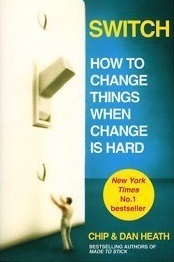
Why is it so hard to make lasting changes in our companies, in our communities, and in our own lives?The primary obstacle is a conflict that's built into our brains, say Chip and Dan Heath, authors of the critically acclaimed bestseller Made to Stick. Psychologists have discovered that our minds are ruled by two different systems - the rational mind and the emotional mind - that compete for control. The rational mind wants a great beach body; the emotional mind wants that Oreo cookie. The rational mind wants to change something at work; the emotional mind loves the comfort of the existing routine. This tension can doom a change effort - but if it is overcome, change can come quickly.In Switch, the Heaths show how everyday people - employees and managers, parents and nurses - have united both minds and, as a result, achieved dramatic results:- The lowly medical interns who managed to defeat an entrenched, decades-old medical practice that was endangering patients (see page 242)- The home-organizing guru who developed a simple technique for overcoming the dread of housekeeping (see page 130)- The manager who transformed a lackadaisical customer-support team into service zealots by removing a standard tool of customer service (see page 199)In a compelling, story-driven narrative, the Heaths bring together decades of counterintuitive research in psychology, sociology, and other fields to shed new light on how we can effect transformative change. Switch shows that successful changes follow a pattern, a pattern you can use to make the changes that matter to you, whether your interest is in changing the world or changing your waistline.

Most business books give you the same old advice: Write a business plan, study the competition, seek investors, yadda yadda. If you're looking for a book like that, put this one back on the shelf.Rework shows you a better, faster, easier way to succeed in business. Read it and you'll know why plans are actually harmful, why you don't need outside investors, and why you're better off ignoring the competition. The truth is, you need less than you think. You don't need to be a workaholic. You don't need to staff up. You don't need to waste time on paperwork or meetings. You don't even need an office. Those are all just excuses. What you really need to do is stop talking and start working. This book shows you the way. You'll learn how to be more productive, how to get exposure without breaking the bank, and tons more counterintuitive ideas that will inspire and provoke you.With its straightforward language and easy-is-better approach, Rework is the perfect playbook for anyone who’s ever dreamed of doing it on their own. Hardcore entrepreneurs, small-business owners, people stuck in day jobs they hate, victims of "downsizing," and artists who don’t want to starve anymore will all find valuable guidance in these pages.

“Every adult life could be said to be defined by two great love stories. The first—the story of our quest for sexual love—is well known and well charted. . . . The second—the story of our quest for love from the world—is a more secret and shameful tale. And yet this second love story is no less intense than the first.”This is a book about an almost universal anxiety that rarely gets mentioned an anxiety about what others think of us, about whether we’re judged a success or a failure, a winner or a loser. This is a book about status anxiety.Alain de Botton, best-selling author of The Consolations of Philosophy and The Art of Travel , asks—with lucidity and charm—where our worries about status come from and what, if anything, we can do to surmount them. With the help of philosophers, artists and writers, he examines the origins of status anxiety (ranging from the consequences of the French Revolution to our secret dismay at the success of our friends) before revealing ingenious ways in which people have been able to overcome their worries in the search for happiness. We learn about sandal-less philosophers and topless bohemians, about the benefits of putting skulls on our sideboards, and about looking at ancient ruins.The result is a book that isn’t just highly entertaining and thought-provoking, but that is genuinely wise and helpful, too.

The Fish That Ate the Whale: The Life and Times of America's Banana King
by Rich Cohen
Rating: 4.2 ⭐
• 10 recommendations ❤️
Named a Best Book of the Year by the San Francisco Chronicle and The Times-Picayune The fascinating untold tale of Samuel Zemurray, the self-made banana mogul who went from penniless roadside banana peddler to kingmaker and capitalist revolutionary When Samuel Zemurray arrived in America in 1891, he was tall, gangly, and penniless. When he died in the grandest house in New Orleans sixty-nine years later, he was among the richest, most powerful men in the world. Working his way up from a roadside fruit peddler to conquering the United Fruit Company, Zemurray became a symbol of the best and worst of the United States: proof that America is the land of opportunity, but also a classic example of the corporate pirate who treats foreign nations as the backdrop for his adventures.Zemurray lived one of the great untold stories of the last hundred years. Starting with nothing but a cart of freckled bananas, he built a sprawling empire of banana cowboys, mercenary soldiers, Honduran peasants, CIA agents, and American statesmen. From hustling on the docks of New Orleans to overthrowing Central American governments and precipitating the bloody thirty-six-year Guatemalan civil war, the Banana Man lived a monumental and sometimes dastardly life. Rich Cohen's brilliant historical profile The Fish That Ate the Whale unveils Zemurray as a hidden power broker, driven by an indomitable will to succeed.

Triumphs of Experience: The Men of the Harvard Grant Study
by George E. Vaillant
Rating: 4.1 ⭐
• 4 recommendations ❤️
At a time when many people around the world are living into their tenth decade, the longest longitudinal study of human development ever undertaken offers some welcome news for the new old age: our lives continue to evolve in our later years, and often become more fulfilling than before.Begun in 1938, the Grant Study of Adult Development charted the physical and emotional health of over 200 men, starting with their undergraduate days. The now-classic "Adaptation to Life" reported on the men's lives up to age 55 and helped us understand adult maturation. Now George Vaillant follows the men into their nineties, documenting for the first time what it is like to flourish far beyond conventional retirement.Reporting on all aspects of male life, including relationships, politics and religion, coping strategies, and alcohol use (its abuse being by far the greatest disruptor of health and happiness for the study's subjects), "Triumphs of Experience" shares a number of surprising findings. For example, the people who do well in old age did not necessarily do so well in midlife, and vice versa. While the study confirms that recovery from a lousy childhood is possible, memories of a happy childhood are a lifelong source of strength. Marriages bring much more contentment after age 70, and physical aging after 80 is determined less by heredity than by habits formed prior to age 50. The credit for growing old with grace and vitality, it seems, goes more to ourselves than to our stellar genetic makeup.

The Hard Thing About Hard Things: Building a Business When There Are No Easy Answers―Straight Talk on the Challenges of Entrepreneurship
by Ben Horowitz
Rating: 4.2 ⭐
• 60 recommendations ❤️
A lot of people talk about how great it is to start a business, but only Ben Horowitz is brutally honest about how hard it is to run one.In The Hard Thing About Hard Things, Ben Horowitz, cofounder of Andreessen Horowitz and one of Silicon Valley's most respected and experienced entrepreneurs, draws on his own story of founding, running, selling, buying, managing, and investing in technology companies to offer essential advice and practical wisdom for navigating the toughest problems business schools don't cover. His blog has garnered a devoted following of millions of readers who have come to rely on him to help them run their businesses. A lifelong rap fan, Horowitz amplifies business lessons with lyrics from his favorite songs and tells it straight about everything from firing friends to poaching competitors, from cultivating and sustaining a CEO mentality to knowing the right time to cash in.His advice is grounded in anecdotes from his own hard-earned rise—from cofounding the early cloud service provider Loudcloud to building the phenomenally successful Andreessen Horowitz venture capital firm, both with fellow tech superstar Marc Andreessen (inventor of Mosaic, the Internet's first popular Web browser). This is no polished victory lap; he analyzes issues with no easy answers through his trials, including demoting (or firing) a loyal friend;whether you should incorporate titles and promotions, and how to handle them;if it's OK to hire people from your friend's company; how to manage your own psychology, while the whole company is relying on you; what to do when smart people are bad employees; why Andreessen Horowitz prefers founder CEOs, and how to become one; whether you should sell your company, and how to do it.Filled with Horowitz's trademark humor and straight talk, and drawing from his personal and often humbling experiences, The Hard Thing About Hard Things is invaluable for veteran entrepreneurs as well as those aspiring to their own new ventures.
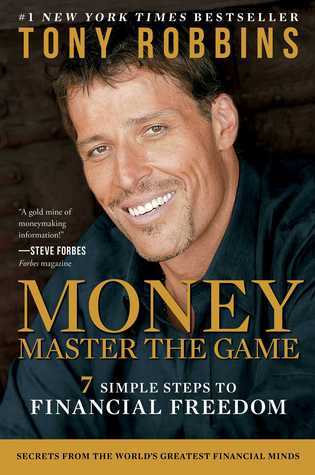
Money Master the Game: 7 Simple Steps to Financial Freedom
by Anthony Robbins
Rating: 4.0 ⭐
• 8 recommendations ❤️
Tony Robbins has coached and inspired more than 50 million people from over 100 countries. More than 4 million people have attended his live events. Oprah Winfrey calls him super-human. Now for the first time - in his first book in two decades - he's turned to the topic that vexes us all: How to secure financial freedom for ourselves and our families. Based on extensive research and one-on-one interviews with more than 50 of the most legendary financial experts in the world - from Carl Icahn and Warren Buffett, to Ray Dalio and Steve Forbes - Tony Robbins has created a simple 7-step blueprint that anyone can use for financial freedom.Robbins has a brilliant way of using metaphor and story to illustrate even the most complex financial concepts - making them simple and actionable. With expert advice on our most important financial decisions, Robbins is an advocate for the reader, dispelling the myths that often rob people of their financial dreams.Tony Robbins walks readers of every income level through the steps to become financially free by creating a lifetime income plan. This book delivers invaluable information and essential practices for getting your financial house in order. MONEY: Master the Game is the book millions of people have been waiting for.

Losing the Signal: The Untold Story Behind the Extraordinary Rise and Spectacular Fall of BlackBerry
by Jacquie McNish
Rating: 4.0 ⭐
• 6 recommendations ❤️
In 2009, BlackBerry controlled half of the smartphone market. Today that number is less than one percent. What went so wrong?Losing the Signal is a riveting story of a company that toppled global giants before succumbing to the ruthlessly competitive forces of Silicon Valley. This is not a conventional tale of modern business failure by fraud and greed; instead, the rise and fall of BlackBerry reveals the dangerous speed at which innovators race along the information superhighway.With unprecedented access to key players, senior executives, directors, and competitors, Losing the Signal unveils the remarkable rise of a company that started above a bagel store in a small Canadian city and went on to briefly control one half of the smartphone market. At the heart of the story is an unlikely partnership between a visionary engineer, Mike Lazaridis, and an aggressive Harvard Business School grad, Jim Balsillie. Together, they engineered a pioneering pocket e-mail device that became the tool of choice for CEOs and world leaders. The partnership enjoyed only a brief moment on top of the world, however. At the very moment BlackBerry was ranked the world's fastest-growing company, internal feuds and chaotic growth crippled the company as it faced its gravest test: Apple and Google's entry into the mobile phone market.Expertly told by acclaimed journalists Jacquie McNish and Sean Silcoff, this is an entertaining, whirlwind narrative that goes behind the scenes to reveal one of the most compelling business stories of the new century.

Tao of Charlie Munger: A Compilation of Quotes from Berkshire Hathaway's Vice Chairman on Life, Business, and the Pursuit of Wealth With Commentary by David Clark
by David Clark
Rating: 4.1 ⭐
• 3 recommendations ❤️
Words of wisdom from Charlie Munger—Warren Buffett’s longtime business partner and the visionary Vice Chairman of Berkshire Hathaway—collected and interpreted with an eye towards investing by David Clark, coauthor of the bestselling Buffettology series.Born in Omaha, Nebraska in 1924, Charlie Munger studied mathematics at the University of Michigan, trained as a meteorologist at Cal Tech Pasadena while in the Army, and graduated magna cum laude from Harvard Law School without ever earning an undergraduate degree. Today, Munger is one of America’s most successful investors, the Vice Chairman of Berkshire Hathaway, and Warren Buffett’s business partner for almost forty years. Buffett says “Berkshire has been built to Charlie’s blueprint. My role has been that of general contractor.” Munger is an intelligent, opinionated businessman whose ideas can teach professional and amateur investors how to be successful in finance and life.Like The Tao of Warren Buffett and The Tao of Te Ching, The Tao of Charlie Munger is a compendium of pithy quotes including, “Knowing what you don’t know is more useful than being brilliant” and “In my whole life, I have known no wise people who didn’t read all the time—none, zero.” This collection, culled from interviews, speeches, and questions and answers at the Berkshire Hathaway and Wesco annual meetings, offers insights into Munger’s amazing financial success and life philosophies. Described by Business Insider as “sharp in his wit and investing wisdom,” Charlie Munger’s investment tips, business philosophy, and rules for living are as unique as his life story, intelligent as he clearly is, and as successful as he has been.

American Kingpin: The Epic Hunt for the Criminal Mastermind Behind the Silk Road
by Nick Bilton
Rating: 4.5 ⭐
• 15 recommendations ❤️
NEW YORK TIMES BESTSELLER. The unbelievable true story of the man who built a billion-dollar online drug empire from his bedroom--and almost got away with it.In 2011, a twenty-six-year-old libertarian programmer named Ross Ulbricht launched the ultimate free market: the Silk Road, a clandestine Web site hosted on the Dark Web where anyone could trade anything--drugs, hacking software, forged passports, counterfeit cash, poisons--free of the government's watchful eye.It wasn't long before the media got wind of the new Web site where anyone--not just teenagers and weed dealers but terrorists and black hat hackers--could buy and sell contraband detection-free. Spurred by a public outcry, the federal government launched an epic two-year manhunt for the site's elusive proprietor, with no leads, no witnesses, and no clear jurisdiction. All the investigators knew was that whoever was running the site called himself the Dread Pirate Roberts.The Silk Road quickly ballooned into $1.2 billion enterprise, and Ross embraced his new role as kingpin. He enlisted a loyal crew of allies in high and low places, all as addicted to the danger and thrill of running an illegal marketplace as their customers were to the heroin they sold. Through his network he got wind of the target on his back and took drastic steps to protect himself--including ordering a hit on a former employee. As Ross made plans to disappear forever, the Feds raced against the clock to catch a man they weren't sure even existed, searching for a needle in the haystack of the global Internet.Drawing on exclusive access to key players and two billion digital words and images Ross left behind, Vanity Fair correspondent and New York Times bestselling author Nick Bilton offers a tale filled with twists and turns, lucky breaks and unbelievable close calls. It's a story of the boy next door's ambition gone criminal, spurred on by the clash between the new world of libertarian-leaning, anonymous, decentralized Web advocates and the old world of government control, order, and the rule of law. Filled with unforgettable characters and capped by an astonishing climax, American Kingpin might be dismissed as too outrageous for fiction. But it's all too real.
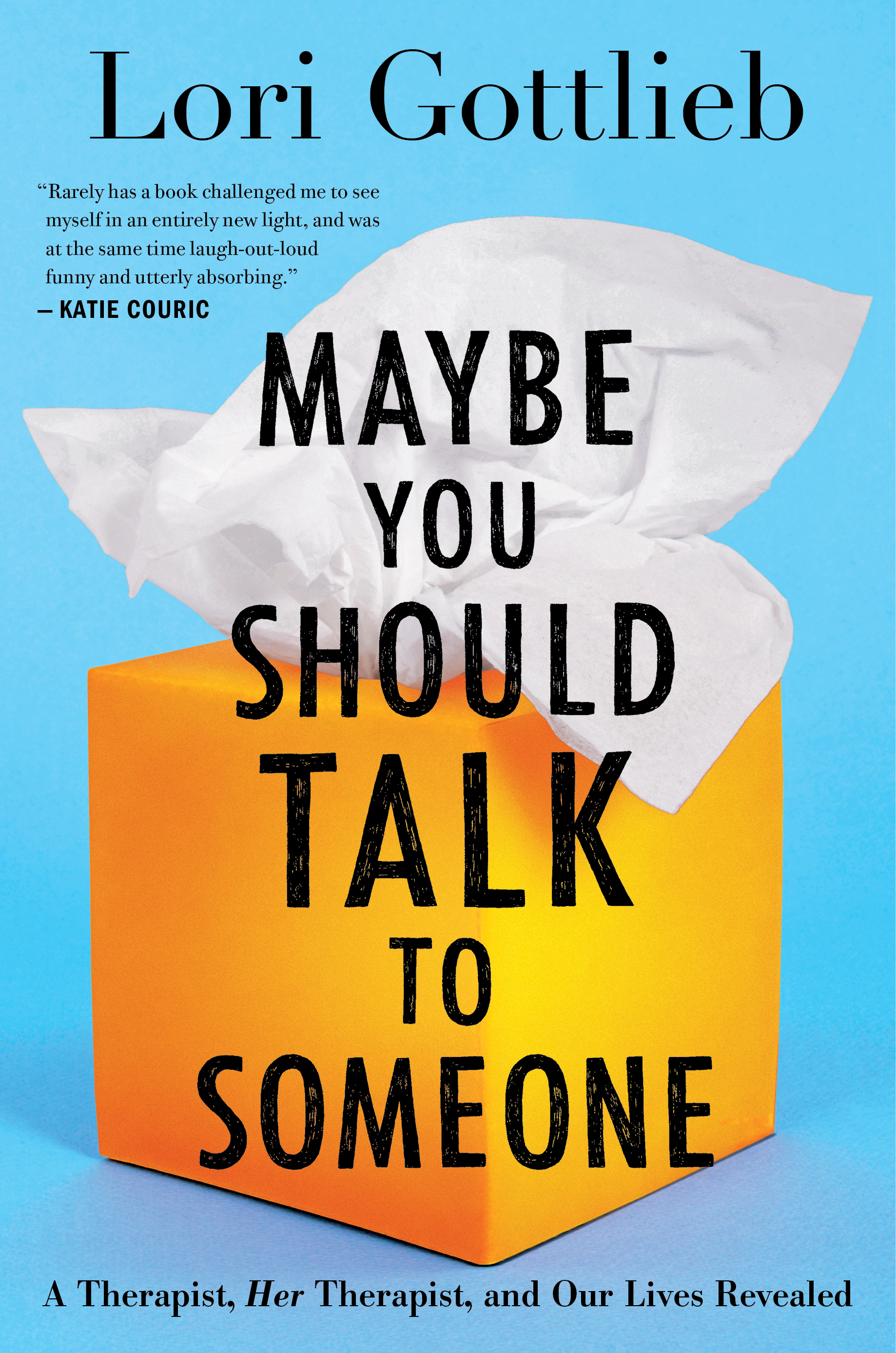
Maybe You Should Talk to Someone: A Therapist, Her Therapist, and Our Lives Revealed
by Lori Gottlieb
Rating: 4.4 ⭐
• 10 recommendations ❤️
From a psychotherapist, and national advice columnist comes a thought-provoking new book that takes us behind the scenes of a therapist's world -- where her patients are looking for answers (and so is she). One day, Lori Gottlieb is a therapist who helps patients in her Los Angeles practice. The next, a crisis causes her world to come crashing down. Enter Wendell, the quirky but seasoned therapist in whose office she suddenly lands. With his balding head, cardigan, and khakis, he seems to have come straight from Therapist Central Casting. Yet he will turn out to be anything but. As Gottlieb explores the inner chambers of her patients' lives -- a self-absorbed Hollywood producer, a young newlywed diagnosed with a terminal illness, a senior citizen threatening to end her life on her birthday if nothing gets better, and a twenty-something who can't stop hooking up with the wrong guys -- she finds that the questions they are struggling with are the very ones she is now bringing to Wendell. With startling wisdom and humor, Gottlieb invites us into her world as both clinician and patient, examining the truths and fictions we tell ourselves and others as we teeter on the tightrope between love and desire, meaning and mortality, guilt and redemption, terror and courage, hope and change.Maybe You Should Talk to Someone is revolutionary in its candor, offering a deeply personal yet universal tour of our hearts and minds and providing the rarest of gifts: a boldly revealing portrait of what it means to be human, and a disarmingly funny and illuminating account of our own mysterious lives and our power to transform them.

Bad Blood: Secrets and Lies in a Silicon Valley Startup
by John Carreyrou
Rating: 4.5 ⭐
• 8 recommendations ❤️
The full inside story of the breathtaking rise and shocking collapse of a multibillion-dollar startup, by the prize-winning journalist who first broke the story and pursued it to the end in the face of pressure and threats from the CEO and her lawyers. In 2014, Theranos founder and CEO Elizabeth Holmes was widely seen as the female Steve Jobs: a brilliant Stanford dropout whose startup "unicorn" promised to revolutionize the medical industry with a machine that would make blood tests significantly faster and easier. Backed by investors such as Larry Ellison and Tim Draper, Theranos sold shares in a fundraising round that valued the company at $9 billion, putting Holmes's worth at an estimated $4.7 billion. There was just one problem: The technology didn't work. For years, Holmes had been misleading investors, FDA officials, and her own employees. When Carreyrou, working at The Wall Street Journal, got a tip from a former Theranos employee and started asking questions, both Carreyrou and the Journal were threatened with lawsuits. Undaunted, the newspaper ran the first of dozens of Theranos articles in late 2015. By early 2017, the company's value was zero and Holmes faced potential legal action from the government and her investors. Here is the riveting story of the biggest corporate fraud since Enron, a disturbing cautionary tale set amid the bold promises and gold-rush frenzy of Silicon Valley.

The Man Who Solved the Market: How Jim Simons Launched the Quant Revolution
by Gregory Zuckerman
Rating: 4.2 ⭐
• 6 recommendations ❤️
Gregory Zuckerman, the bestselling author of The Greatest Trade Ever and The Frackers, answers the question investors have been asking for decades: How did Jim Simons do it?Shortlisted for the Financial Times/McKinsey Business Book of the Year AwardJim Simons is the greatest money maker in modern financial history. No other investor--Warren Buffett, Peter Lynch, Ray Dalio, Steve Cohen, or George Soros--can touch his record. Since 1988, Renaissance's signature Medallion fund has generated average annual returns of 66 percent. The firm has earned profits of more than $100 billion; Simons is worth twenty-three billion dollars.Drawing on unprecedented access to Simons and dozens of current and former employees, Zuckerman, a veteran Wall Street Journal investigative reporter, tells the gripping story of how a world-class mathematician and former code breaker mastered the market. Simons pioneered a data-driven, algorithmic approach that's sweeping the world.As Renaissance became a market force, its executives began influencing the world beyond finance. Simons became a major figure in scientific research, education, and liberal politics. Senior executive Robert Mercer is more responsible than anyone else for the Trump presidency, placing Steve Bannon in the campaign and funding Trump's victorious 2016 effort. Mercer also impacted the campaign behind Brexit.The Man Who Solved the Market is a portrait of a modern-day Midas who remade markets in his own image, but failed to anticipate how his success would impact his firm and his country. It's also a story of what Simons's revolution means for the rest of us.

Lights Out: Pride, Delusion, and the Fall of General Electric
by Thomas Gryta
Rating: 4.0 ⭐
• 6 recommendations ❤️
A WALL STREET JOURNAL BESTSELLER"If you’re in any kind of leadership role—whether at a company, a non-profit, or somewhere else—there’s a lot you can learn here."—Bill Gates, Gates NotesHow could General Electric—perhaps America’s most iconic corporation—suffer such a swift and sudden fall from grace?This is the definitive history of General Electric’s epic decline, as told by the two Wall Street Journal reporters who covered its fall.Since its founding in 1892, GE has been more than just a corporation. For generations, it was job security, a solidly safe investment, and an elite business education for top managers.GE electrified America, powering everything from lightbulbs to turbines, and became fully integrated into the American societal mindset as few companies ever had. And after two decades of leadership under legendary CEO Jack Welch, GE entered the twenty-first century as America’s most valuable corporation. Yet, fewer than two decades later, the GE of old was gone. Lights Out examines how Welch’s handpicked successor, Jeff Immelt, tried to fix flaws in Welch’s profit machine, while stumbling headlong into mistakes of his own. In the end, GE’s traditional win-at-all-costs driven culture seemed to lose its direction, which ultimately caused the company’s decline on both a personal and organizational scale. Lights Out details how one of America’s all-time great companies has been reduced to a cautionary tale for our times.

Wanting: The Power of Mimetic Desire in Everyday Life
by Luke Burgis
Rating: 3.8 ⭐
• 4 recommendations ❤️
A groundbreaking exploration of why we want what we want, and a toolkit for freeing ourselves from chasing unfulfilling desires.Gravity affects every aspect of our physical being, but there's a psychological force just as powerful – yet almost nobody has heard of it. It's responsible for bringing groups of people together and pulling them apart, making certain goals attractive to some and not to others, and fueling cycles of anxiety and conflict. In Wanting, Luke Burgis draws on the work of French polymath René Girard to bring this hidden force to light and reveals how it shapes our lives and societies.According to Girard, humans don't desire anything independently. Human desire is mimetic – we imitate what other people want. This affects the way we choose partners, friends, careers, clothes, and vacation destinations. Mimetic desire is responsible for the formation of our very identities. It explains the enduring relevancy of Shakespeare's plays, why Peter Thiel decided to be the first investor in Facebook, and why our world is growing more divided as it becomes more connected.Wanting also shows that conflict does not arise because of our differences--it comes from our sameness. Because we learn to want what other people want, we often end up competing for the same things. Ignoring our large similarities, we cling to our perceived differences.Drawing on his experience as an entrepreneur, teacher, and student of classical philosophy and theology, Burgis shares tactics that help turn blind wanting into intentional wanting – not by trying to rid ourselves of desire, but by desiring differently. It's possible to be more in control of the things we want, to achieve more independence from trends and bubbles, and to find more meaning in our work and lives.The future will be shaped by our desires. Wanting shows us how to desire a better one.