
Adam Grant Recommended Books
American organizational psychologist (b. 1981)
37 Books Recommended

The Paradox of Choice: Why More Is Less, Revised Edition
by Barry Schwartz
Rating: 3.9 ⭐
• 6 recommendations ❤️
In the spirit of Alvin Tofflers' Future Shock, a social critique of our obsession with choice, and how it contributes to anxiety, dissatisfaction and regret.Whether were buying a pair of jeans, ordering a cup of coffee, selecting a long-distance carrier, applying to college, choosing a doctor, or setting up a 401(k), everyday decisions — both big and small — have become increasingly complex due to the overwhelming abundance of choice with which we are presented.We assume that more choice means better options and greater satisfaction. But beware of excessive choice: choice overload can make you question the decisions you make before you even make them, it can set you up for unrealistically high expectations, and it can make you blame yourself for any and all failures. In the long run, this can lead to decision-making paralysis, anxiety, and perpetual stress. And, in a culture that tells us that there is no excuse for falling short of perfection when your options are limitless, too much choice can lead to clinical depression.In The Paradox of Choice, Barry Schwartz explains at what point choice - the hallmark of individual freedom and self-determination that we so cherish - becomes detrimental to our psychological and emotional well-being. In accessible, engaging, and anecdotal prose, Schwartz shows how the dramatic explosion in choice — from the mundane to the profound challenges of balancing career, family, and individual needs — has paradoxically become a problem instead of a solution. Schwartz also shows how our obsession with choice encourages us to seek that which makes us feel worse.

Mistakes Were Made (but Not by Me): Why We Justify Foolish Beliefs, Bad Decisions, and Hurtful Acts
by Carol Tavris
Rating: 4.2 ⭐
• 5 recommendations ❤️
“Entertaining, illuminating and—when you recognize yourself in the stories it tells—mortifying.” — Wall Street Journal“Every page sparkles with sharp insight and keen observation. Mistakes were made—but not in this book!” —Daniel Gilbert, author of Stumbling on Happiness Why is it so hard to say “I made a mistake”—and really believe it? When we make mistakes, cling to outdated attitudes, or mistreat other people, we must calm the cognitive dissonance that jars our feelings of self-worth. And so, unconsciously, we create fictions that absolve us of responsibility, restoring our belief that we are smart, moral, and right—a belief that often keeps us on a course that is dumb, immoral, and wrong. Backed by years of research, Mistakes Were Made (But Not by Me ) offers a fascinating explanation of self-justification—how it works, the damage it can cause, and how we can overcome it. This updated edition features new examples and concludes with an extended discussion of how we can live with dissonance, learn from it, and perhaps, eventually, forgive ourselves. “A revelatory study of how lovers, lawyers, doctors, politicians—and all of us—pull the wool over our own eyes . . . Reading it, we recognize the behavior of our leaders, our loved ones, and—if we’re honest—ourselves, and some of the more perplexing mysteries of human nature begin to seem a little clearer.” —Francine Prose, O, The Oprah Magazine

Moonwalking with Einstein: The Art and Science of Remembering Everything
by Joshua Foer
Rating: 4.0 ⭐
• 7 recommendations ❤️
The blockbuster phenomenon that charts an amazing journey of the mind while revolutionizing our concept of memory“Highly entertaining.” —Adam Gopnik, The New Yorker“Funny, curious, erudite, and full of useful details about ancient techniques of training memory.” — The Boston GlobeAn instant bestseller that has now become a classic, Moonwalking with Einstein recounts Joshua Foer's yearlong quest to improve his memory under the tutelage of top "mental athletes." He draws on cutting-edge research, a surprising cultural history of remembering, and venerable tricks of the mentalist's trade to transform our understanding of human memory. From the United States Memory Championship to deep within the author's own mind, this is an electrifying work of journalism that reminds us that, in every way that matters, we are the sum of our memories.
Why is it so hard to make lasting changes in our companies, in our communities, and in our own lives?The primary obstacle is a conflict that's built into our brains, say Chip and Dan Heath, authors of the critically acclaimed bestseller Made to Stick. Psychologists have discovered that our minds are ruled by two different systems - the rational mind and the emotional mind - that compete for control. The rational mind wants a great beach body; the emotional mind wants that Oreo cookie. The rational mind wants to change something at work; the emotional mind loves the comfort of the existing routine. This tension can doom a change effort - but if it is overcome, change can come quickly.In Switch, the Heaths show how everyday people - employees and managers, parents and nurses - have united both minds and, as a result, achieved dramatic results:- The lowly medical interns who managed to defeat an entrenched, decades-old medical practice that was endangering patients (see page 242)- The home-organizing guru who developed a simple technique for overcoming the dread of housekeeping (see page 130)- The manager who transformed a lackadaisical customer-support team into service zealots by removing a standard tool of customer service (see page 199)In a compelling, story-driven narrative, the Heaths bring together decades of counterintuitive research in psychology, sociology, and other fields to shed new light on how we can effect transformative change. Switch shows that successful changes follow a pattern, a pattern you can use to make the changes that matter to you, whether your interest is in changing the world or changing your waistline.

Quiet: The Power of Introverts in a World That Can't Stop Talking
by Susan Cain
Rating: 4.2 ⭐
• 14 recommendations ❤️
The book that started the Quiet RevolutionAt least one-third of the people we know are introverts. They are the ones who prefer listening to speaking; who innovate and create but dislike self-promotion; who favor working on their own over working in teams. It is to introverts—Rosa Parks, Chopin, Dr. Seuss, Steve Wozniak—that we owe many of the great contributions to society. In Quiet, Susan Cain argues that we dramatically undervalue introverts and shows how much we lose in doing so. She charts the rise of the Extrovert Ideal throughout the twentieth century and explores how deeply it has come to permeate our culture. She also introduces us to successful introverts—from a witty, high-octane public speaker who recharges in solitude after his talks, to a record-breaking salesman who quietly taps into the power of questions. Passionately argued, superbly researched, and filled with indelible stories of real people, Quiet has the power to permanently change how we see introverts and, equally important, how they see themselves.Now with Extra Libris material, including a reader’s guide and bonus content.

Give and Take: Why Helping Others Drives Our Success
by Adam M. Grant
Rating: 4.2 ⭐
• 32 recommendations ❤️
A groundbreaking look at why our interactions with others hold the key to success, from the bestselling author of Originals For generations, we have focused on the individual drivers of success: passion, hard work, talent, and luck. But in today’s dramatically reconfigured world, success is increasingly dependent on how we interact with others. In Give and Take, Adam Grant, an award-winning researcher and Wharton’s highest-rated professor, examines the surprising forces that shape why some people rise to the top of the success ladder while others sink to the bottom. Praised by social scientists, business theorists, and corporate leaders, Give and Take opens up an approach to work, interactions, and productivity that is nothing short of revolutionary.

The #1 national bestseller and New York Times bestseller that examines how people can champion new ideas—and how leaders can fight groupthink“Reading Originals made me feel like I was seated across from Adam Grant at a dinner party, as one of my favorite thinkers thrilled me with his insights and his wonderfully new take on the world.” —Malcolm Gladwell, author of Outliers and The Tipping Point“Originals is one of the most important and captivating books I have ever read, full of surprising and powerful ideas. It will not only change the way you see the world; it might just change the way you live your life. And it could very well inspire you to change your world.” —Sheryl Sandberg, COO of Facebook and author of Lean In With Give and Take, Adam Grant not only introduced a landmark new paradigm for success but also established himself as one of his generation’s most compelling and provocative thought leaders. In Originals he again addresses the challenge of improving the world, but now from the perspective of becoming original: choosing to champion novel ideas and values that go against the grain, battle conformity, and buck outdated traditions. How can we originate new ideas, policies, and practices without risking it all? Using surprising studies and stories spanning business, politics, sports, and entertainment, Grant explores how to recognize a good idea, speak up without getting silenced, build a coalition of allies, choose the right time to act, and manage fear and doubt; how parents and teachers can nurture originality in children; and how leaders can build cultures that welcome dissent. Learn from an entrepreneur who pitches his start-ups by highlighting the reasons not to invest, a woman at Apple who challenged Steve Jobs from three levels below, an analyst who overturned the rule of secrecy at the CIA, a billionaire financial wizard who fires employees for failing to criticize him, and a TV executive who didn’t even work in comedy but saved Seinfeld from the cutting-room floor. The payoff is a set of groundbreaking insights about rejecting conformity and improving the status quo.From the Hardcover edition.
The Culture Code: The Secrets of Highly Successful Groups
by Daniel Coyle
Rating: 4.2 ⭐
• 7 recommendations ❤️
What do Pixar, Google and the San Antonio Spurs basketball team have in common?The answer is that they all owe their extraordinary success to their team-building skills. In The Culture Code, Daniel Coyle goes inside some of the most effective organisations in the world and reveals their secrets. He not only explains what makes such groups tick, but also identifies the key factors that can generate team cohesion in any walk of life. He examines the verbal and physical cues that bring people together. He determines specific strategies that encourage collaboration and build trust. And he offers cautionary tales of toxic cultures and advises how to reform them, above all demonstrating the extraordinary achievements that result when we know how to cooperate effectively.

Option B: Facing Adversity, Building Resilience, and Finding Joy
by Sheryl Sandberg
Rating: 4.0 ⭐
• 7 recommendations ❤️
Sheryl Sandberg – Giám đốc Vận hành (COO) của Facebook và là tác giả cuốn sách Dấn thân – cảm thấy rõ ngay sau khi người chồng đột ngột qua đời rằng cuộc sống của cô và các con sẽ không bao giờ như trước đây nữa. Và cô biết rằng, trong cuộc sống, cho dù chúng ta đã cố gắng ngăn trở tai họa, bất bình đẳng, chấn thương,… nhưng chúng vẫn tồn tại, và chúng ta vẫn phải tìm cách đối mặt. Sheryl Sandberg biết rằng cô hay bất kỳ ai đang trước nghịch cảnh cũng phải đối mặt, chiến đấu để ngày mai tốt đẹp hơn. Giáo sư hàng đầu của trường Wharton – Adam Grant – tác giả viết sách đồng thời là bạn thân của cô, đã chia sẻ giúp đỡ Sheryl vượt qua nỗi đau mất người bạn đời. Và thông qua quyển sách này, Sheryl và Adam chia sẻ với độc giả những nghiên cứu về cách hồi phục và đứng dậy trong nhiều dạng tai họa và nghịch cảnh khác nhau. Quyển sách sẽ thảo luận những cách thức để giúp rèn tính kiên cường trước mọi việc không may, trong cuộc sống và kinh doanh,... Hai tác giả cũng đề xuất những cách để kiến tạo cộng đồng và công ty kiên cường, nuôi dạy con cái mạnh mẽ, và tìm lại tình yêu.Cuộc sống không bao giờ hoàn hảo. Chúng ta ai cũng phải sống với một Phương án B nào đó. Quyển sách này sẽ giúp bạn cách triển khai hiệu quả Phương án B khi buộc phải sống với nó.

Insight: The Surprising Truth About How Others See Us, How We See Ourselves, and Why the Answers Matter More Than We Think
by Tasha Eurich
Rating: 4.0 ⭐
• 1 recommendation ❤️
Most people feel like they know themselves pretty well. But what if you could know yourself just a little bit better--and with this small improvement, get a big payoff...not just in your career, but in your life?Research shows that self-awareness - knowing who we are and how others see us - is the foundation for high performance, smart choices, and lasting relationships. There's just one problem: most people don't see themselves quite as clearly as they could.Fortunately, reveals organizational psychologist Tasha Eurich, self-awareness is a surprisingly developable skill. Integrating hundreds of studies with her own research and work in the Fortune 500 world, she shows us what it really takes to better understand ourselves on the inside - and how to get others to tell us the honest truth about how we come across.Through stories of people who've made dramatic gains in self-awareness, she offers surprising secrets, techniques and strategies to help readers do the same - and how to use this insight to be more fulfilled, confident, and successful in life and in work.In INSIGHT, you'll learn:* The 7 types of self-knowledge that self-aware people possess.* The 2 biggest invisible roadblocks to self-awareness.* Why approaches like therapy and journaling don't always lead to true insight* How to stop your confidence-killing habits and learn to love who you are.* How benefit from mindfulness without uttering a single mantra.* Why other people don't tell us the truth about ourselves - and how to find out what they really think.* How to deepen our insight into our passions, gifts, and the blind spots that could be holding us back.* How to hear critical feedback without losing your mojo.* Why the people with the most power can often be the least-self-aware, and how smart leaders avoid this trap.* The 3 building blocks for self-aware teams.*How to deal with delusional bosses, clients, and coworkers.
A Uterus Is a Feature, Not a Bug: The Working Woman's Guide to Overthrowing the Patriarchy
by Sarah Lacy
Rating: 3.9 ⭐
• 6 recommendations ❤️
A rallying cry for working mothers everywhere that demolishes the "distracted, emotional, weak" stereotype and definitively shows that these professionals are more focused, decisive, and stronger than any other force.Working mothers aren’t a liability. They are assets you—and every manager and executive—want in your company, in your investment portfolio, and in your corner.There is copious academic research showing the benefits of working mothers on families and the benefits to companies who give women longer and more flexible parental leave. There are even findings that demonstrate women with multiple children actually perform better at work than those with none or one.Yet despite this concrete proof that working mothers are a lucrative asset, they still face the "Maternal Wall"—widespread unconscious bias about their abilities, contributions, and commitment. Nearly eighty percent of women are less likely to be hired if they have children—and are half as likely to be promoted. Mothers earn an average $11,000 less in salary and are held to higher punctuality and performance standards. Forty percent of Silicon Valley women said they felt the need to speak less about their family to be taken more seriously. Many have been told that having a second child would cost them a promotion.Fortunately, this prejudice is slowly giving way to new attitudes, thanks to more women starting their own businesses, and companies like Netflix, Facebook, Apple, and Google implementing more parent-friendly policies. But the most important barrier to change isn’t about men. Women must rethink the way they see themselves after giving birth. As entrepreneur Sarah Lacy makes clear in this cogent, persuasive analysis and clarion cry, the strongest, most lucrative, and most ambitious time of a woman’s career may easily be after she sees a plus sign on a pregnancy test.

New Power: How Anyone Can Persuade, Mobilize, and Succeed in Our Chaotic, Connected Age
by Jeremy Heimans
Rating: 3.8 ⭐
• 12 recommendations ❤️
NOW A NATIONAL BESTSELLER The definitive guide to spreading ideas, building movements, and leaping ahead in our chaotic, connected age. Get the book New York Times columnist David Brooks calls "the best window I've seen into this new world."Why do some leap ahead while others fall behind in our chaotic, connected age? In New Power, Jeremy Heimans and Henry Timms confront the biggest stories of our time--the rise of mega-platforms like Facebook and Uber; the out-of-nowhere victories of Obama and Trump; the unexpected emergence of movements like #MeToo--and reveal what's really behind them: the rise of "new power." For most of human history, the rules of power were clear: power was something to be seized and then jealously guarded. This "old power" was out of reach for the vast majority of people. But our ubiquitous connectivity makes possible a different kind of power. "New power" is made by many. It is open, participatory, and peer-driven. It works like a current, not a currency--and it is most forceful when it surges. The battle between old and new power is determining who governs us, how we work, and even how we think and feel. New Power shines fresh light on the cultural phenomena of our day, from #BlackLivesMatter to the Ice Bucket Challenge to Airbnb, uncovering the new power forces that made them huge. Drawing on examples from business, activism, and pop culture, as well as the study of organizations like Lego, NASA, Reddit, and TED, Heimans and Timms explain how to build new power and channel it successfully. They also explore the dark side of these forces: the way ISIS has co-opted new power to monstrous ends, and the rise of the alt-right's "intensity machine." In an era increasingly shaped by new power, this groundbreaking book offers us a new way to understand the world--and our role in it.

Thirst: A Story of Redemption, Compassion, and a Mission to Bring Clean Water to the World
by Scott Harrison
Rating: 4.4 ⭐
• 10 recommendations ❤️
An inspiring personal story of redemption, second chances, and the transformative power within us all, from the founder and CEO of the nonprofit charity: water. At 28 years old, Scott Harrison had it all. A top nightclub promoter in New York City, his life was an endless cycle of drugs, booze, models--repeat. But 10 years in, desperately unhappy and morally bankrupt, he asked himself, "What would the exact opposite of my life look like?" Walking away from everything, Harrison spent the next 16 months on a hospital ship in West Africa and discovered his true calling. In 2006, with no money and less than no experience, Harrison founded charity: water. Today, his organization has raised over $300 million to bring clean drinking water to more than 8.2 million people around the globe.In Thirst, Harrison recounts the twists and turns that built charity: water into one of the most trusted and admired nonprofits in the world. Renowned for its 100% donation model, bold storytelling, imaginative branding, and radical commitment to transparency, charity: water has disrupted how social entrepreneurs work while inspiring millions of people to join its mission of bringing clean water to everyone on the planet within our lifetime.In the tradition of such bestselling books as Shoe Dog and Mountains Beyond Mountains, Thirst is a riveting account of how to build a better charity, a better business, a better life--and a gritty tale that proves it's never too late to make a change.100% of the author's net proceeds from Thirst will go to fund charity: water projects around the world.

Declutter your desk and brighten up your business with this transformative guide from an organizational psychologist and the #1 New York Times bestselling author of The Life-Changing Magic of Tidying Up.The workplace is a magnet for clutter and mess. Who hasn’t felt drained by wasteful meetings, disorganized papers, endless emails, and unnecessary tasks? These are the modern-day hazards of working, and they can slowly drain the joy from work, limit our chances of career progress, and undermine our well-being.There is another way. In Joy at Work, bestselling author and Netflix star Marie Kondo and Rice University business professor Scott Sonenshein offer stories, studies, and strategies to help you eliminate clutter and make space for work that really matters.Using the world-renowned KonMari Method and cutting-edge research, Joy at Work will help you overcome the challenges of workplace mess and enjoy the productivity, success, and happiness that come with a tidy desk and mind.

Together The Healing Power of Human Connection in a Sometimes Lonely World
by Vivek H. Murthy
Rating: 4.2 ⭐
• 11 recommendations ❤️
Instant New York Times Bestseller! The book we need NOW to avoid a social recession, Murthy’s prescient message is about the importance of human connection, the hidden impact of loneliness on our health, and the social power of community.Humans are social creatures: In this simple and obvious fact lies both the problem and the solution to the current crisis of loneliness. In his groundbreaking book, the 19th surgeon general of the United States Dr. Vivek Murthy makes a case for loneliness as a public health concern: a root cause and contributor to many of the epidemics sweeping the world today from alcohol and drug addiction to violence to depression and anxiety. Loneliness, he argues, is affecting not only our health, but also how our children experience school, how we perform in the workplace, and the sense of division and polarization in our society.But, at the center of our loneliness is our innate desire to connect. We have evolved to participate in community, to forge lasting bonds with others, to help one another, and to share life experiences. We are, simply, better together.The lessons in Together have immediate relevance and application. These four key strategies will help us not only to weather this crisis, but also to heal our social world far into the future.Spend time each day with those you love. Devote at least 15 minutes each day to connecting with those you most care about.Focus on each other. Forget about multitasking and give the other person the gift of your full attention, making eye contact, if possible, and genuinely listening.Embrace solitude. The first step toward building stronger connections with others is to build a stronger connection with oneself. Meditation, prayer, art, music, and time spent outdoors can all be sources of solitary comfort and joy.Help and be helped. Service is a form of human connection that reminds us of our value and purpose in life. Checking on a neighbor, seeking advice, even just offering a smile to a stranger six feet away, all can make us stronger. During Murthy’s tenure as Surgeon General and during the research for Together, he found that there were few issues that elicited as much enthusiastic interest from both very conservative and very liberal members of Congress, from young and old people, or from urban and rural residents alike. Loneliness was something so many people have known themselves or have seen in the people around them. In the book, Murthy also shares his own deeply personal experiences with the subject--from struggling with loneliness in school, to the devastating loss of his uncle who succumbed to his own loneliness, as well as the important example of community and connection that his parents modeled. Simply, it’s a universal condition that affects all of us directly or through the people we love—now more than ever.

An intimate, revealing look at one artist’s journey from self-censorship to full expression.As one of the most celebrated musicians of our time, Alicia Keys has enraptured the nation with her heartfelt lyrics, extraordinary vocal range, and soul-stirring piano compositions. Yet away from the spotlight, Alicia has grappled with private heartache―over the challenging and complex relationship with her father, the people-pleasing nature that characterized her early career, the loss of privacy surrounding her romantic relationships, and the oppressive expectations of female perfection.Since her rise to fame, Alicia’s public persona has belied a deep personal truth: she has spent years not fully recognizing or honoring her own worth. After withholding parts of herself for so long, she is at last exploring the questions that live at the heart of her story: Who am I, really? And once I discover that truth, how can I become brave enough to embrace it?More Myself is part autobiography, part narrative documentary. Alicia’s journey is revealed not only through her own candid recounting, but also through vivid recollections from those who have walked alongside her. The result is a 360-degree perspective on Alicia’s path―from her girlhood in Hell’s Kitchen and Harlem, to the process of self-discovery she’s still navigating.In More Myself, Alicia shares her quest for truth―about herself, her past, and her shift from sacrificing her spirit to celebrating her worth. With the raw honesty that epitomizes Alicia’s artistry, More Myself is at once a riveting account and a clarion call to readers: to define themselves in a world that rarely encourages a true and unique identity.

You're Not Listening: What You're Missing and Why It Matters
by Kate Murphy
Rating: 4.1 ⭐
• 4 recommendations ❤️
Who listens to you?New York Times contributor Kate Murphy asked people on five continents this question, and the response was typically a long, awkward pause. People struggled to come up with someone, anyone, who truly listened to them without glazing over, glancing down at a phone, or jumping in to offer an opinion. Many admitted that they, themselves, weren’t very good listeners, and most couldn’t even describe what it meant to be a good listener.Despite living in a world where technology allows constant digital communication and opportunities to connect, it seems no one is really listening or even knows how. And it’s making us lonelier, more isolated, and less tolerant than ever before. A listener by trade, Murphy wanted to know how we got here.In this illuminating and often humorous deep dive, Murphy explains why we’re not listening, what it’s doing to us, and how we can reverse the trend. She makes accessible the psychology, neuroscience, and sociology of listening while also introducing us to some of the best listeners out there (including a CIA agent, focus-group moderator, bartender, radio producer, and top furniture salesman).While listening is often regarded as talking’s meek counterpart, Murphy discovered it’s actually the more powerful position in communication. We learn when we listen. It’s how we connect, cooperate, empathize, and fall in love. Listening is something we do or don’t do every day. While we might take listening for granted, how well we listen, to whom, and under what circumstances determines who we are and the paths we take in life.Equal parts cultural observation, scientific exploration, and rousing call to action that’s full of practical advice, You’re Not Listening is to listening what Susan Cain’s Quiet was to introversion. It’s time to stop talking and start listening.
With stark poignancy and political dispassion, Tightrope draws us deep into an "other America." The authors tell this story, in part, through the lives of some of the children with whom Kristof grew up, in rural Yamhill, Oregon, an area that prospered for much of the twentieth century but has been devastated in the last few decades as blue-collar jobs disappeared. About one-quarter of the children on Kristof's old school bus died in adulthood from drugs, alcohol, suicide, or reckless accidents. And while these particular stories unfolded in one corner of the country, they are representative of many places the authors write about, ranging from the Dakotas and Oklahoma to New York and Virginia. But here too are stories about resurgence, among them: Annette Dove, who has devoted her life to helping the teenagers of Pine Bluff, Arkansas, as they navigate the chaotic reality of growing up poor; Daniel McDowell, of Baltimore, whose tale of opioid addiction and recovery suggests that there are viable ways to solve our nation's drug epidemic. Taken together, these accounts provide a picture of working-class families needlessly but profoundly damaged as a result of decades of policy mistakes. With their superb, nuanced reportage, Kristof and WuDunn have given us a book that is both riveting and impossible to ignore.

Friendship: The Evolution, Biology, and Extraordinary Power of Life's Fundamental Bond
by Lydia Denworth
Rating: 3.6 ⭐
• 2 recommendations ❤️
An engaging and deeply reported investigation of friendship: its evolution, purpose, and centrality in human and nonhuman lives alike.The bonds of friendship are universal and elemental. In Friendship, journalist Lydia Denworth visits the front lines of the science of friendship in search of its biological, psychological, and evolutionary foundations. Finding it to be as old as life on the African savannas, she also discovers that friendship is reflected in our brain waves, detectable in our genomes, and capable of strengthening our cardiovascular and immune systems. Its opposite, loneliness, can kill. As a result, social connection is finally being recognized as critical to our physical and emotional well-being.With warmth and compassion, Denworth weaves together past and present, field biology and cutting-edge neuroscience, to show how our bodies and minds are designed to make friends, the process by which social bonds develop, and how a drive for friendship underpins human (and nonhuman) society. With its refreshingly optimistic vision of the evolution of human nature, this book puts friendship at the center of our lives.

The first ever memoir from the most decorated female skier of all time, revealing never-before-told stories of her life in the fast lane, her struggle with depression, and the bold decisions that helped her break down barriers on and off the slopes.82 World Cup wins. 20 World Cup titles. 3 Olympic medals. 7 World Championship Medals. A fixture in the American sports landscape for almost twenty years, Lindsey Vonn is a legend. With a career that spanned a transformation in how America recognizes and celebrates female athletes, Vonn—who retired in 2019 as the most decorated American skier of all time—was in the vanguard of that change, helping blaze a trail for other world-class female athletes and reimagining what it meant to pursue speed at all costs. In Rise , Vonn shares her incredible journey for the first time, going behind the scenes of a badass life built around resilience and risk-taking. One of the most aggressive skiers ever, Vonn offers a fascinating glimpse into the relentless pursuit of her limits, a pursuit so focused on one-upping herself that she pushed her body past its breaking point as she achieved greatness. While this iconic grit and perseverance helped her battle a catalog of injuries, these injuries came with a cost—physical, of course, but also mental. Vonn opens up about her decades-long depression and struggles with self-confidence, discussing candidly how her mental health challenges influenced her career without defining her. Through it all, she dissects the moments that sidelined her and how, each time, she clawed her way back using an iconoclastic approach rooted in hard work—pushing boundaries, challenging expectations, and speaking her mind, even when it got her into trouble. At once empowering and raw, Rise is an inspirational look at her hard-fought success as well as an honest appraisal of the sacrifices she made along the way—an emotional journey of winning that understands all too well that every victory comes with a price.

How to Decide: Simple Tools for Making Better Choices
by Annie Duke
Rating: 3.9 ⭐
• 10 recommendations ❤️
Through a blend of compelling exercises, illustrations, and stories, the bestselling author of Thinking in Bets will train you to combat your own biases, address your weaknesses, and help you become a better and more confident decision-maker.What do you do when you're faced with a big decision? If you're like most people, you probably make a pro and con list, spend a lot of time obsessing about decisions that didn't work out, get caught in analysis paralysis, endlessly seek other people's opinions to find just that little bit of extra information that might make you sure, and finally go with your gut.What if there was a better way to make quality decisions so you can think clearly, feel more confident, second-guess yourself less, and ultimately be more decisive and be more productive?Making good decisions doesn't have to be a series of endless guesswork. Rather, it's a teachable skill that anyone can sharpen. In How to Decide , bestselling author Annie Duke and former professional poker player lays out a series of tools anyone can use to make better decisions. You'll • To identify and dismantle hidden biases. • To extract the highest quality feedback from those whose advice you seek. • To more accurately identify the influence of luck in the outcome of your decisions. • When to decide fast, when to decide slow, and when to decide in advance. • To make decisions that more effectively help you to realize your goals and live your values.Through interactive exercises and engaging thought experiments, this book helps you analyze key decisions you've made in the past and troubleshoot those you're making in the future. Whether you're picking investments, evaluating a job offer, or trying to figure out your romantic life, How to Decide is the key to happier outcomes and fewer regrets.
Clearer, Closer, Better: How Successful People See the World
by Emily Balcetis
Rating: 3.2 ⭐
• 2 recommendations ❤️
Successful people literally see the world differently. Now an award-winning scientist explains how anyone can leverage this "perception gap" to their advantage.When it comes to setting and meeting goals, we may see--quite literally--our plans, our progress, and our potential in the wrong ways. We perceive ourselves as being closer to or further from the end than we may actually be depending on our frame of reference. We handicap ourselves by looking too often at the big picture and at other times too long at the fine detail. But as award-winning social psychologist Emily Balcetis explains, there is great power in these misperceptions. We can learn to leverage perceptual illusions if we know when and how to use them to our advantage.Drawing on her own rigorous research and cutting-edge discoveries in vision science, cognitive research, and motivational psychology, Balcetis offers unique accounts of the perceptual habits, routines, and practices that successful people use to set and meet their ambitions. Through case studies of entrepreneurs, athletes, artists, and celebrities--as well as her own colorful experience of trying to set and reach a goal--she brings to life four powerful yet largely untapped visual tactics that can be applied according to the situation.Narrow your focus: Closing the aperture of your attention helps you exercise effectively, save money, and find more time in your day. Widen the bracket: Seeing the forest instead of the trees reduces temptations and helps you recognize when a change of course is in order. Materialize your plan and your progress: Creating checklists and objective assessments inspires better planning and adjusts your gauge of what's really left to be done. Control your frame of reference: Knowing where to direct attention improves your ability to read others' emotions, negotiate better deals, foster stronger relationships, and overcome a fear of public speaking.A mind-blowing and original tour of perception, Clearer, Closer, Better will help you see the possibilities in what you can't see now. Inspiring, motivating, and always entertaining, it demonstrates that if we take advantage of our visual experiences, they can lead us to live happier, healthier, and more productive lives every day.

Powershift: How to Master the Three Prongs of Influence to Close Any Deal and Achieve Any Outcome
by Daymond John
Rating: 3.9 ⭐
• 2 recommendations ❤️
Bestselling author and Shark Tank star Daymond John reveals the secrets to cultivating influence, building relationships, and negotiating your way to any deal or outcome.Getting what you want in life is all about relationships: establishing them, leveraging them at the right time, and continuing to nurture them long afterwards. In Powershift, bestselling author, founder and CEO of FUBU, and star of ABC's Shark Tank Daymond John shares the recipe. First, you need to establish a reputation and create a sphere of influence. Then, you'll learn how to secure the best possible deal. Finally, you'll learn how to maintain those essential, career-defining relationships so you can call on them later on.Drawing on never-before-told stories from his life and career, Daymond shares the lessons and principles that got him to where he is today: from how he remade his public image as he made the unlikely transition from clothing mogul to television personality, to new negotiation strategies he honed "in the tank," to how he learned to navigate a new web of relationships as a serial entrepreneur. Whether you're a seasoned professional trying to land the next big client, an entrepreneur trying to close a round of funding, or a recent graduate negotiating your first salary, Powershift will show you how to achieve any outcome, big or small.

Perfectly Confident: How to Calibrate Your Decisions Wisely
by Don A. Moore
Rating: 4.1 ⭐
• 2 recommendations ❤️
An expert on the psychology of decision making at Berkeley’s Haas School of Business considers how to calibrate examines the importance of being confident, arguing that confidence is good, but overconfidence can hinder growth.A surge of confidence can feel fantastic—offering a rush of energy, even a dazzling vision of the future. It can give us courage and bolster our determination when facing adversity. But if that self-assurance leads us to pursue impossible goals, it can waste time, money, and energy. Self-help books and motivational speakers tell us that the more confident we are, the better. But this way of thinking can lead to enormous trouble.Decades of research demonstrates that we often have an over-inflated sense of self and are rarely as good as we believe. Perfectly Confident is the first book to bring together the best psychological and economic studies to explain exactly what confidence is, when it can be helpful, and when it can be destructive in our lives. Confidence is an attitude that takes into account both personal feelings and the facts. Don Moore identifies the ways confidence behaves in real life and raises thought-provoking questions. How optimistic should you be about an uncertain future? What justifies your confidence in something amorphous and subjective like your attractiveness or sense of humor? Moore reminds us that the key to success is to avoid being both over- and under-confident. In this essential guide, he shows how to become perfectly confident—how to strive for and maintain the well-calibrated, adaptive confidence that can elevate all areas of our lives.

Weird: The Power of Being an Outsider in an Insider World
by Olga Khazan
Rating: 3.5 ⭐
• 3 recommendations ❤️
In the tradition of Susan Cain's Quiet and Scott Stossel's My Age of Anxiety, Atlantic staff writer Olga Khazan reclaims the concept of "weird" and turns it into a badge of honor rather than a slur, showing how being different -- culturally, socially, physically, or mentally -- can actually be a person's greatest strength.Most of us have at some point in our lives felt like an outsider, sometimes considering ourselves "too weird" to fit in. Growing up as a Russian immigrant in West Texas, Olga Khazan always felt there was something different about her. This feeling has permeated her life, and as she embarked on a science writing career, she realized there were psychological connections between this feeling of being an outsider and both her struggles and successes later in life. She decided to reach out to other people who were unique in their environments to see if they had experienced similar feelings of alienation, and if so, to learn how they overcame them. Weird is based on in-person interviews with many of these individuals, such as a woman who is professionally surrounded by men, a liberal in a conservative area, and a Muslim in a predominantly Christian town. In addition, it provides actionable insights based on interviews with dozens of experts and a review of hundreds of scientific studies.Weird explores why it is that we crave conformity, how that affects people who are different, and what they can do about it. First, the book dives into the history of social norms and why some people hew to them more strictly than others. Next, Khazan explores the causes behind-and the consequences of-social rejection. She then reveals the hidden upsides to being "weird," as well as the strategies that people who are different might use in order to achieve success in a society that values normalcy. Finally, the book follows the trajectories of unique individuals who either decided to be among others just like them; to stay weird; or to dwell somewhere in between.Combining Khazan's own story with those of others and with fascinating takeaways from cutting-edge psychology research, Weird reveals how successful individuals learned to embrace their weirdness, using it to their advantage.

In 2004, David Chang opened a noodle restaurant named Momofuku in Manhattan's East Village, not expecting the business to survive its first year. In 2018, he was the owner and chef of his own restaurant empire, with 15 locations from New York to Australia, the star of his own hit Netflix show and podcast, was named one of the most influential people of the 21st century and had a following of over 1.2 million. In this inspiring, honest and heartfelt memoir, Chang shares the extraordinary story of his culinary coming-of-age.Growing up in Virginia, the son of Korean immigrant parents, Chang struggled with feelings of abandonment, isolation and loneliness throughout his childhood. After failing to find a job after graduating, he convinced his father to loan him money to open a restaurant. Momofuku's unpretentious air and great-tasting simple staples - ramen bowls and pork buns - earned it rave reviews, culinary awards and before long, Chang had a cult following.Momofuku's popularity continued to grow with Chang opening new locations across the U.S. and beyond. In 2009, his Ko restaurant received two Michelin stars and Chang went on to open Milk Bar, Momofuku's bakery. By 2012, he had become a restaurant mogul with the opening of the Momofuku building in Toronto, encompassing three restaurants and a bar.Chang's love of food and cooking remained a constant in his life, despite the adversities he had to overcome. Over the course of his career, the chef struggled with suicidal thoughts, depression and anxiety. He shied away from praise and begged not to be given awards. In Eat a Peach, Chang opens up about his feelings of paranoia, self-confidence and pulls back the curtain on his struggles, failures and learned lessons. Deeply personal, honest and humble, Chang's story is one of passion and tenacity, against the odds.
Think Like a Rocket Scientist: Simple Strategies You Can Use to Make Giant Leaps in Work and Life
by Ozan Varol
Rating: 4.2 ⭐
• 8 recommendations ❤️
Named a "must read" by Susan Cain, "endlessly fascinating" by Daniel Pink, and "bursting with practical insights" by Adam Grant. A former rocket scientist reveals the habits, ideas, and strategies that will empower you to turn the seemingly impossible into the possible. Rocket science is often celebrated as the ultimate triumph of technology. But it's not. Rather, it's the apex of a certain thought process -- a way to imagine the unimaginable and solve the unsolvable. It's the same thought process that enabled Neil Armstrong to take his giant leap for mankind, that allows spacecraft to travel millions of miles through outer space and land on a precise spot, and that brings us closer to colonizing other planets. Fortunately, you don't have to be a rocket scientist to think like one. In this accessible and practical book, Ozan Varol reveals nine simple strategies from rocket science that you can use to make your own giant leaps in work and life -- whether it's landing your dream job, accelerating your business, learning a new skill, or creating the next breakthrough product. Today, thinking like a rocket scientist is a necessity. We all encounter complex and unfamiliar problems in our lives. Those who can tackle these problems -- without clear guidelines and with the clock ticking -- enjoy an extraordinary advantage. Think Like a Rocket Scientist will inspire you to take your own moonshot and enable you to achieve liftoff.
Do Nothing: How to Break Away from Overworking, Overdoing, and Underliving
by Celeste Headlee
Rating: 3.8 ⭐
• 2 recommendations ❤️
Despite our constant search for new ways to 'hack' our bodies and minds for peak performance, human beings are working more instead of less, living harder not smarter, and becoming more lonely and anxious. We strive for the absolute best in every aspect of our lives, ignoring what we do well naturally. Why do we measure our time in terms of efficiency instead of meaning? Why can't we just take a break?In Do Nothing, award-winning journalist Celeste Headlee illuminates a new path ahead, seeking to institute a global shift in our thinking so we can stop sabotaging our well-being, put work aside and start living instead of doing. The key lies in embracing what makes us human: our creativity, our social connections (Instagram doesn't count), our ability for reflective thought, and our capacity for joy. Celeste's strategies will allow you to regain control over your life and break your addiction to false efficiency, including:-Increase your time perception and determine how your hours are being spent. -Stop comparing yourself to others.-Invest in quality idle time. Take a hot bath and listen to music.-Spend face-to-face time with friends and familyIt's time to recover our leisure time and reverse the trend that's making us all sadder, sicker, and less productive.

What's Your Problem?: To Solve Your Toughest Problems, Change the Problems You Solve
by Thomas Wedell-Wedellsborg
Rating: 4.3 ⭐
• 2 recommendations ❤️
"The author makes a compelling case that we often start solving a problem before thinking deeply about whether we are solving the right problem. If you want the superpower of solving better problems, read this book." -- Eric Schmidt, former CEO, Google Are you solving the right problems ? Have you or your colleagues ever worked hard on something, only to find out you were focusing on the wrong problem entirely? Most people have. In a survey, 85 percent of companies said they often struggle to solve the right problems. The consequences are Leaders fight the wrong strategic battles. Teams spend their energy on low-impact work. Startups build products that nobody wants. Organizations implement "solutions" that somehow make things worse, not better. Everywhere you look, the waste is staggering. As Peter Drucker pointed out, there's nothing more dangerous than the right answer to the wrong question. There is a way to do better. The key is reframing , a crucial, underutilized skill that you can master with the help of this book. Using real-world stories and unforgettable examples like "the slow elevator problem," author Thomas Wedell-Wedellsborg offers a simple, three-step method - Frame, Reframe, Move Forward - that anyone can use to start solving the right problems. Reframing is not difficult to learn. It can be used on everyday challenges and on the biggest, trickiest problems you face. In this visually engaging, deeply researched book, you’ll learn from leaders at large companies, from entrepreneurs, consultants, nonprofit leaders, and many other breakthrough thinkers. It's time for everyone to stop barking up the wrong trees. Teach yourself and your team to reframe, and growth and success will follow.

The 4 Day Week: How the flexible work revolution can increase productivity, profitability and wellbeing, and help create a sustainable future
by Andrew Barnes
Rating: 3.5 ⭐
• 2 recommendations ❤️
In The 4 Day Week, entrepreneur and business innovator Andrew Barnes makes the case for the four-day week as the answer to many of the ills of the 21st-century global economy.Barnes conducted an experiment in his own business, the New Zealand trust company Perpetual Guardian, and asked his staff to design a four-day week that would permit them to meet their existing productivity requirements on the same salary but with a 20% cut in work hours. The outcomes of this trial, which no business leader had previously attempted on these terms, were stunning. People were happier and healthier, more engaged in their personal lives, and more focused and productive in the office.The world of work has seen a dramatic shift in recent times: the former security and benefits associated with permanent employment are being displaced by the less stable gig economy. Barnes explains the dangers of a focus on flexibility at the expense of hard-won worker protections, and argues that with the four-day week, we can have the best of allworlds: optimal productivity, work-life balance, worker benefits and, at long last, a solution to pervasive economic inequities such as the gender pay gap and lack of diversity in business and governance.The 4 Day Week is a practical, how-to guide for business leaders and employees alike that is applicable to nearly every industry. Using qualitative and quantitative data from research gathered through the Perpetual Guardian trial and other sources by the University of Auckland and Auckland University of Technology, the book presents a step-by-step approach to preparing businesses for productivity-focused flexibility, from the necessary cultural conditions to the often complex legislative considerations.The story of Perpetual Guardian's unprecedented work experiment has made headlines around the world and stormed social media, reaching a global audience over 4.5 billion. A mix of trenchant analysis, personal observation and actionable advice, The 4 Day Week is an essential guide for leaders and workers seeking to make a change for the better intheir work world.
All You Have to Do Is Ask: How to Master the Most Important Skill for Success
by Wayne E. Baker
Rating: 3.5 ⭐
• 2 recommendations ❤️
A set of tools for mastering the one skill standing between us and success: the ability to ask for the things we need to succeed.Imagine you’re on a deadline for a big project, and feeling overwhelmed. Or you're looking for a job, but can't seem to get your foot in the door. Or you're dying for tickets to a sold out concert, and all your leads have gone cold.What do these problems have in common? They can all be solved simply by reaching out to a colleague, friend, or wider network and making an ask.Studies show that asking for help makes us better and less frustrated at our jobs. It helps us find new opportunities and new talent. It unlocks new ideas and solutions, and enhances team performance. And it helps us get the things we need outside the workplace as well. And yet, we rarely give ourselves permission to ask. Luckily, the research shows that asking—and getting—what we need is much easier than we tend to think. Here, Wayne Baker shares a set of strategies—used at companies like Google, GM, and IDEO—that individuals, teams, and leaders can use to make asking for help a personal and organizational habit, including:• A quiz to identify your asking-giving style• SMART criteria for who, when, and how to ask• “Plug-and-play ” routines that make requests a standard component of meetings• Mini-games that incentivize asking within teams• The Reciprocity Ring, a guided activity that allows people to tap into the giving power of a networkPicking up where the bestselling book Give and Take left off, All You Have to Do Is Ask shows us how to ignite the cycle of giving and receiving by asking for the things we need.

Upstream: The Quest to Solve Problems Before They Happen
by Dan Heath
Rating: 4.1 ⭐
• 2 recommendations ❤️
New York Times bestselling author Dan Heath examines how to prevent problems before they happen, drawing on insights from his innovative behavior research, as well as hundreds of new interviews with unconventional problem solvers.Most of us spend our days handling a deluge of pressing issues. We’re so accustomed to managing emergencies as they strike that we often don’t stop to think about how we could prevent crises before they happen. Why stop at treating the symptoms when you could develop a cure? How many daily headaches do we tolerate because we’ve forgotten to fix them?Whether it’s time management, supply chain logistics, or healthcare decisions, all over the world, persistent problems cost time, money, and lives. Upstream explains how to target the source of the problem rather than just reacting to it as it happens and introduces you to the thinkers who are chipping away at everyday frustrations and deep-rooted issues. One travel company saved 25 million customer phone calls every year by adding a simple step to its booking system. An insurance business, determined to help YMCAs across the country lower their number of accidental drownings to zero, has saved an untold number of lives. The LAPD track down more accurate addresses for suspects by buying access to the delivery data from local pizza shops. The CDC realized they could anticipate flu outbreaks by tracking thermometer sales in local pharmacies.Drawing on hundreds of interviews, as well as his own innovative behavior research, New York Times bestselling author Dan Heath delivers practical solutions for preventing problems rather than simply reacting to them—revolutionizing how we approach professional and personal goals in our daily lives.
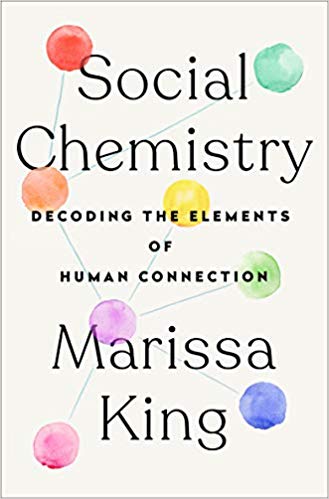
Social Chemistry: Decoding the Elements of Human Connection
by Marissa King
Rating: 3.7 ⭐
• 2 recommendations ❤️
Social Chemistry will utterly transform the way you think about “networking.” Understanding the contours of your social network can dramatically enhance personal relationships, work life, and even your global impact. Are you an Expansionist, a Broker, or a Convener? The answer matters more than you think. . . . Yale professor Marissa King shows how anyone can build more meaningful and productive relationships based on insights from neuroscience, psychology, and network analytics. Conventional wisdom says it's the size of your network that matters, but social science research has proven there is more to it. King explains that the quality and structure of our relationships has the greatest impact on our personal and professional lives. As she shows, there are three basic types of networks, so readers can see the role they are already playing: Expansionist, Broker, or Convener. This network decoder enables readers to own their network style and modify it for better alignment with their life plans and values. High-quality connections in your social network strongly predict cognitive functioning, emotional resilience, and satisfaction at work. A well-structured network is likely to boost the quality of your ideas, as well as your pay. Beyond the office, social connections are the lifeblood of our health and happiness. The compiled results from dozens of previous studies found that our social relationships have an effect on our likelihood of dying prematurely—equivalent to obesity or smoking. Rich stories of Expansionists like Vernon Jordan, Brokers like Yo-Yo Ma, and Conveners like Anna Wintour, as well as personal experiences from King's own world of connections, inform this warm, engaging, revelatory investigation into some of the most consequential decisions we can make about the trajectory of our lives.
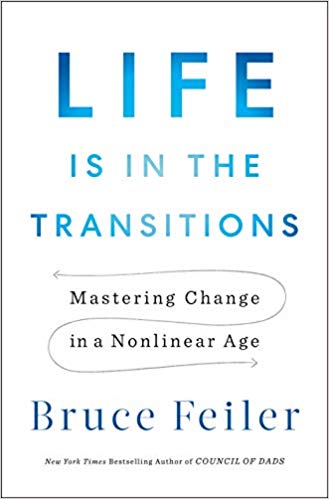
Life Is in the Transitions: Mastering Change in a Nonlinear Age
by Bruce Feiler
Rating: 4.0 ⭐
• 2 recommendations ❤️
From the New York Times bestselling author of The Secrets of Happy Families and Council of Dads, a pioneering study of the disruptions upending contemporary life and a bold guide for how to navigate life’s growing number of transitions with more meaning, balance, and joy. Bruce Feiler has long been writing about the stories that give our lives meaning. Recently he began to notice a new pattern: our old stories, with their predictable plot points along linear paths, no longer hold true. The idea that we’ll have one job, one relationship, one source of happiness is hopelessly outdated. Yet many people feel overwhelmed by this change. We’re concerned that our lives are not what we expected; that we’re living life out of order. Galvanized by a personal crisis and family emergency, Feiler set out on what became an epic journey to harvest American stories and see what he could learn from them. He crisscrossed the country, collecting hundreds of life stories from a breathtaking range of Americans in all 50 states. He then sifted through and coded these stories, building a massive database of patterns and takeaways that can help all of us live better. LIFE IS IN THE TRANSITIONS introduces the fresh, pressing vision of the nonlinear life, in which personal disruptions and lifequakes are becoming more plentiful, nontraditional life shapes are becoming the norm, and each of us has the opportunity to write our own story. Drawing on an extraordinary trove of insights, Feiler offers a powerful, new transition toolkit with original strategies for coping with the difficult, painful, or unsettling times of life. From a master storyteller with a timely message, LIFE IS IN THE TRANSITIONS can move readers of any age to think deeply about times of change in their lives and how to transform them into periods of creativity and growth.

Adam Grant, the New York Times best-selling author of Give and Take, Originals, and Option B, went to the World Economic Forum in Davos to find out what the world’s most visionary and influential leaders had to say about power—and its transformative role in our society.What he learned there may surprise you.Grant delivers a heady mix of captivating interviews, compelling data, and his unmistakably incisive and actionable analysis, to give us a crash course in power that both inspires and instructs from the front lines. In interviews with two dozen CEOs, start-up founders, top scientists, and thought leaders—including top executives at Google, GM, Slack, and Goldman Sachs, the CEO of the Gates Foundation, and NASA’s former chief scientist—he shares hard-earned insights on how to succeed in this new era of hyper-linked power. He also explores how power is reshaping everything from the workforce, to the rise of women in the office, to the influence of scientists on policy.As pillars of traditional power are transformed by networks of informed citizens, the use of power is increasingly seen as a force for good in the world, from one that was once coveted to one that demands to be shared.

Masters of Scale: Surprising Truths from the World's Most Successful Entrepreneurs
by Reid Hoffman
Rating: 4.0 ⭐
• 8 recommendations ❤️
What can you learn from a Silicon Valley legend and a pantheon of iconic leaders? The key to scaling a successful business isn’t talent, network, or strategy. It’s an entrepreneurial mindset—and that mindset can be cultivated.“If you’re scaling a company—or if you just love a well-told story—this is a book to savor.”—Robert Iger, #1 New York Times bestselling author of The Ride of a LifetimeBehind the scenes in Silicon Valley, Reid Hoffman (founder of LinkedIn, investor at Greylock) is a sought-after adviser to heads of companies and heads of state. On each episode of his podcast, Masters of Scale, he sits down with a guest from an all-star list of visionary founders and leaders, digging into the surprising strategies that power their company’s growth. In this book, he draws on their most riveting, revealing stories—as well as his own experience as a founder and investor—to distill the secrets behind the most extraordinary success stories of our times.Here, Hoffman teams up with Masters of Scale ’s executive producers to offer a rare window into the entrepreneurial mind, sharing hard-won wisdom from leaders of iconic companies (including Apple, Nike, Netflix, Spotify, Starbucks, Google, Instagram, and Microsoft) as well as the bold, disruptive startups (such as 23andMe, TaskRabbit, Black List, and Walker & Co.) that are solving the problems of the twenty-first century.Through vivid storytelling and incisive analysis, Masters of Scale distills their collective insights into a set of counterintuitive principles that anyone can use. How do you find a winning idea and turn it into a scalable venture? What can you learn from a “squirmy no”? When should you stop listening to your customers? Which fires should you put out right away, and which should you let burn? And can you really make money while making the world a better place? ( Yes. But you have to keep your profits and values aligned.)Based on more than a hundred interviews and including a wealth of new material never aired on the podcast, this unique insider’s guide will inspire you to reimagine how you do business today.

Stolen Focus: Why You Can't Pay Attention— and How to Think Deeply Again
by Johann Hari
Rating: 4.2 ⭐
• 13 recommendations ❤️
Our ability to pay attention is collapsing. From the New York Times bestselling author of Chasing the Scream and Lost Connections comes a groundbreaking examination of why this is happening--and how to get our attention back. In the United States, teenagers can focus on one task for only sixty-five seconds at a time, and office workers average only three minutes. Like so many of us, Johann Hari was finding that constantly switching from device to device and tab to tab was a diminishing and depressing way to live. He tried all sorts of self-help solutions--even abandoning his phone for three months--but nothing seemed to work. So Hari went on an epic journey across the world to interview the leading experts on human attention--and he discovered that everything we think we know about this crisis is wrong.We think our inability to focus is a personal failure to exert enough willpower over our devices. The truth is even more disturbing: our focus has been stolen by powerful external forces that have left us uniquely vulnerable to corporations determined to raid our attention for profit. Hari found that there are twelve deep causes of this crisis, from the decline of mind-wandering to rising pollution, all of which have robbed some of our attention. In Stolen Focus, he introduces readers to Silicon Valley dissidents who learned to hack human attention, and veterinarians who diagnose dogs with ADHD. He explores a favela in Rio de Janeiro where everyone lost their attention in a particularly surreal way, and an office in New Zealand that discovered a remarkable technique to restore workers' productivity.Crucially, Hari learned how we can reclaim our focus--as individuals, and as a society--if we are determined to fight for it. Stolen Focus will transform the debate about attention and finally show us how to get it back.