Loading genres...
Explore the best books about Renaissance genre.


Painting and Experience in Fifteenth Century Italy An introduction to 15th century Italian painting and the social history behind it, arguing that the two are interlinked and that the conditions of the time helped fashion distinctive elements in the painter's style. Serving as both an introduction to fifteenth-century Italian painting and as a text on how to interpret social history from the style of pictures in a given historical period, this new edition to Baxandall's pre-eminent scholarly volume examines early Renaissance painting, and explains how the style of painting in any society reflects the visual skills and habits that evolve out of daily life. Renaissance painting, for example, mirrors the experience of such activities as preaching, dancing, and gauging barrels. The volume includes discussions of a wide variety of painters, including Filippo Lippi, Fra Angelico, Stefano di Giovanni, Sandro Botticelli, Masaccio, Luca Signorelli, Boccaccio, and countless others. Baxandall also defines and illustrates sixteen concepts used by a contemporary critic of painting, thereby assembling the basic equipment needed to explore fifteenth-century art.


Combining engrossing detail and magisterial overview, Venice, A Maritime Republic traces the history of Venice from its origins in the sixth century through its rise and decline as the first modern empire of Europe. "Among the many cities men have made," Frederic C. Lane writes, "Venice stands out as a symbol of beauty, of wise government, and of communally controlled capitalism." Drawing on a lifetime of study and reflection, the author shows how that resplendent city came to have the institutions, the buildings, and the pattern of urban life that make it unique.

What difference did printing make? Although the importance of the advent of printing for the Western world has long been recognized, it was Elizabeth Eisenstein in her monumental, two-volume work, The Printing Press as an Agent of Change, who provided the first full-scale treatment of the subject. This illustrated and abridged edition provides a stimulating survey of the communications revolution of the fifteenth century. After summarizing the initial changes, and introducing the establishment of printing shops, it considers how printing effected three major cultural movements: the Renaissance, the Reformation, and the rise of modern science. First Edition Hb (1984) 0-521-25858-8 First Edition Pb (1984) 0-521-27735-3

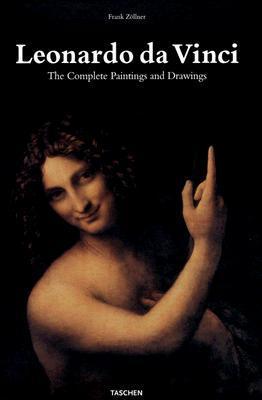
TASCHEN's 25th anniversary - Special edition! Special bestseller price Leonardo da Vinci (1452-1519) possessed one of the greatest minds of all time; his importance and influence are inestimable. This XXL-format comprehensive survey is the most complete book ever made on the subject of this Italian painter, sculptor, architect, engineer, scientist and all-around genius. With huge, full-bleed details of Leonardo's masterworks, this highly original publication allows the reader to inspect the subtlest facets of his brushstrokes. * Part I explores Leonardo's life and work in ten chapters. All of his paintings are interpreted in depth, with The Annunciation and The Last Supper featured on large double-spreads. * Part II comprises a catalogue raisonn? of Leonardo's paintings, which covers all of his surviving and lost painted works and includes texts describing their states of preservation. * Part III contains an extensive catalogue of his drawings (numbering in the thousands, they cannot all be reproduced in one book); 663 are presented, arranged by category (architecture, technical, anatomical, figures, proportion, cartography, etc). This sumptuous TASCHEN offering is the most thorough and beautifully produced Leonardo book ever published, and this special edition offers it for a third of the usual price.

A magisterial work of gripping history, City of Fortune tells the story of the Venetian ascent from lagoon dwellers to the greatest power in the Mediterranean - an epic five hundred year voyage that encompassed crusade and trade, plague, sea battles and colonial adventure. In Venice, the path to empire unfolded in a series of extraordinary contests - the sacking of Constantinople in 1204, the fight to the finish with Genoa and a desperate defence against the Turks. Under the lion banner of St Mark, she created an empire of ports and naval bases which funnelled the goods of the world through its wharfs. In the process the city became the richest place on earth - a brilliant mosaic fashioned from what it bought, traded, borrowed and stole.Based on first hand accounts of trade and warfare, seafaring and piracy and the places where Venetians sailed and died, City of Fortune is narrative history at its finest. Beginning on Ascension Day in the year 1000 and ending with an explosion off the coast of Greece - and the calamitous news that the Portuguese had pioneered a sea route to India - it will fascinate anyone who loves Venice and the Mediterranean world.

A painter and architect in his own right, Giorgio Vasari (1511-74) achieved immortality for this book on the lives of his fellow Renaissance artists, first published in Florence in 1550. Although he based his work on a long tradition of biographical writing, Vasari infused these literary portraits with a decidedly modern form of critical judgment. The result is a work that remains to this day the cornerstone of art historical scholarship. Spanning the period from the thirteenth century to Vasari's own time, the Lives opens a window on the greatest personalities of the period, including Giotto, Brunelleschi, Mantegna, Leonardo, Raphael, Michelangelo, and Titian. This Modern Library edition, abridged from the original text with notes drawn from earlier commentaries, as well as current research, reminds us why The Lives of the Most Excellent Painters, Sculptors, and Architects is indispensable to any student interested in Renaissance art. "From the Trade Paperback edition."

The creator of the hit podcast series Tides of History and Fall of Rome explores the four explosive decades between 1490 and 1530, bringing to life the dramatic and deeply human story of how the West was reborn. In the bestselling tradition of The Swerve and A Distant Mirror , The Verge tells the story of a period that marked a decisive turning point for both European and world history. Here, author Patrick Wyman examines two complementary and contradictory sides of the same historical coin: the world-altering implications of the developments of printed mass media, extreme taxation, exploitative globalization, humanistic learning, gunpowder warfare, and mass religious conflict in the long term, and their intensely disruptive consequences in the short-term.As told through the lives of ten real people—from famous figures like Christopher Columbus and wealthy banker Jakob Fugger to a ruthless small-time merchant and a one-armed mercenary captain— The Verge illustrates how their lives, and the times in which they lived, set the stage for an unprecedented globalized future.Over an intense forty-year period, the seeds for the so-called "Great Divergence" between Western Europe and the rest of the globe would be planted. From Columbus's voyage across the Atlantic to Martin Luther's sparking the Protestant Reformation, the foundations of our own, recognizably modern world came into being.For the past 500 years, historians, economists, and the policy-oriented have argued which of these individual developments best explains the West's rise from backwater periphery to global dominance. As The Verge presents it, however, the answer is far more nuanced.