Loading genres...
Explore the best books about Hinduism genre.

The Bhagavad Gita tells the story of how Arjuna, the great warrior, is seated in his chariot about to engage in battle, when he sees his own kinsmen and his revered teacher arrayed in battle against him, and feels that he cannot fight. It is then that Krishna, the Cosmic Lord, comes to counsel him. Arjuna represents the human soul seated in the chariot of the body and Krishna is the inner Spirit, the God within, who is there to consel him. Today we see humanity divided against itself and threatened with nuclear war and mutual destruction. No political means are adequate to deal with this problem, and many are driven to despair. It is then that the message of the Gita comes to teach us that it is only when we rise above human schemes and calculations and awake to the presence of the indwelling Spirit that we can hope to find the answer to our need.
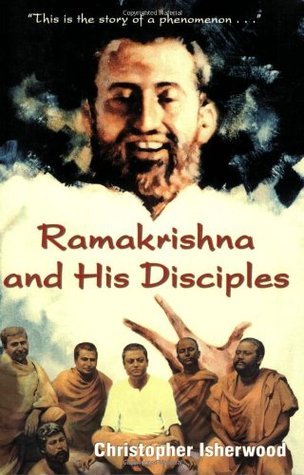
This biography of Ramakrishna was written for the West by one of England's most talented authors. The writing is beautiful in itself, but the story of a most unusual man with unheard of spiritual yearning is what this book is really about. "This is the story of a phenomenon. I will begin by calling him simply that, rather than "holy man,""mystic,"or "saint"; all emotive words with mixed associations which may attract some readers, repel others."A phenomenon is always a fact, an object of experience. That is how I shall try to approach Ramakrishna . . . I only ask you to approach Ramakrishna with the same open-minded curiosity you might feel for any highly unusual human being."

The earliest of the four Hindu religious scriptures known as the Vedas, and the first extensive composition to survive in any Indo-European language, the Rig Veda is a collection of over 1000 individual Sanskrit hymns. A work of intricate beauty, it provides a unique insight into early Indian mythology, religion and culture. This selection of 18 of the hymns, chosen for their eloquence and wisdom, focuses on the enduring themes of creation, sacrifice, death, women, the sacred plant soma and the gods. Inspirational and profound, it provides a fascinating introduction to one of the founding texts of Hindu scripture, an awesome and venerable ancient work of Vedic ritual, prayer, philosophy, legend and faith.

This collection of lectures of Max Muller portrays India, specially the Vedic India, as an epitome of a virtuosity and morality.

This is Swami Venkatesananda's longer Yoga Vasiṣṭha. His two volume book is here offered between two covers. Its purpose is to provide a means to eliminate psychological conditioning and to attain liberation. Containing the instructions of the sage Vasiṣṭha to Lord Rama, this scripture is full of intricately woven tales, the kind a great teacher might tell to hold the interest of a student.

This book is a systematic introduction to Hindu mysticism as it evolved in India through the ages. Mysticism is not an intellectual theory, It is fundamentally an active, formative, creative, elevating and ennobling principle of life. According to the author, mysticism means a spiritual grasp of the aims and problems of life in a much more real and ultimate manner than is possible to mere reason. This small book gives a brief general outline of some of the most important types of mysticism, indicating their mutual relations, sometimes genetically and and sometimes logically. After describing the sacrificial type of mysticism, it discusses the four chief types of mysticism - the Upanishadic, the Yogic, the Buddhistic and the Bhakti. Their striking characteristics have been briefly touched upon and materials have largely been drawn directly from the original sources.

In this long-awaited follow up to The Journey Home, renowned spiritual leader Radhanath Swami shares intimate stories from his forty years as a teacher of devotional (bhakti) yoga. His heartfelt down-to-earth writing makes accessible topics that have remained esoteric for generations: explanations of the material and spiritual selves, three levels of God-realization, the feminine nature of divinity, the way of righteousness (dharma), what happens at death, and formulas for spiritual health. In brief sidebars, he spells out how to adapt chanting as a daily practice, how to recognize an authentic guru, which rituals to attempt, methods for achieving balance in relationships, and ways to transform a home or apartment into a place of pilgrimage. Radhanath Swami may be the Dr. Oz of yoga, prescribing through anecdote and wise commentary simple principles for balancing our material and spiritual lives.Destined to become a classic of self-discovery, The Journey Within escorts readers from remote villages of South India to the halls of power in Europe and America. The author’s palette of storytelling includes tales of the famous and infamous, moguls of industry, lepers, newborn babies, the redwoods of California, and jellyfish in Italy. In simple, approachable language, he demystifies India’s ancient path of devotion and reveals how heaven is within the grasp of every man, woman, and child. What is love? Who is God? How can we live in the world without becoming entangled? Radhanath Swami addresses these and other seminal questions with vivid portraits of people confronting life-threatening tragedies with life-affirming tools of devotion, people who discover how to solve impossible dilemmas with the simplest of resources and who uncover miracles in the ordinary course of a day

“A wonderful translation, full of contemporary insight yet luminous with eternal truth.”—Jacob NeedlemanThe Yoga Sutras were cast in their present form in India around the third century b.c. Yoga is from the Sanskrit root meaning “union,” and a sutra is a thread or aphoristic verse. The basic questions “Who am I?” “Where am I going?” “What is the purpose of life?” are asked by each new generation, and Patanjali’s answers form one of the oldest and most vibrant spiritual texts in the world. He explains what yoga is, how it works, and exactly how to purify the mind and let it settle into absolute stillness. This stillness is our own Self. It is the indispensable ground for Enlightenment, which is the ultimate goal of all our aspirations.Alistair Shearer’s lucid introduction and superb translation, fully preserving Patanjali’s jewel-like style, bring these ancient but vital teachings to those who seek the path of self-knowledge today.Bell Tower’s series, Sacred Teachings, offers essential spiritual classics from all traditions. May each book become a trusted companion on the way of truth, encouraging readers to study the wisdom of the ages and put it into practice each day.