
Christopher Isherwood
English-born American writer Christopher William Bradshaw Isherwood portrayed Berlin in the early 1930s in his best known works, such as Goodbye to Berlin (1939), the basis for the musical Cabaret (1966). Isherwood was a novelist, playwright, screenwriter, autobiographer, and diarist. With W.H. Auden he wrote three plays— The Dog Beneath the Skin (1932), The Ascent of F6 (1936), and On the Frontier (1938). Isherwood tells the story in his first autobiography, Lions and Shadows . After Isherwood wrote joke answers on his second-year exams, Cambridge University in 1925 asked him to leave. He briefly attended medical school and progressed with his first two novels, All the Conspirators (1928) and The Memorial (1932). In 1930, he moved to Berlin, where he taught English, dabbled in Communism, and enthusiastically explored his homosexuality. His experiences provided the material for Mister Norris Changes Trains (1935) and Goodbye to Berlin (1938), still his most famous book. In Berlin in 1932, he also began an important relationship with Heinz Neddermeyer, a young German with whom he fled the Nazis in 1933. England refused entry to Neddermeyer on his second visit in 1934, and the pair moved restlessly about Europe until the Gestapo arrested Neddermeyer in May 1937 and then finally separated them. In 1938, Isherwood sailed with Auden to China to write Journey to a War (1939), about the Sino-Japanese conflict. They returned to England and Isherwood went on to Hollywood to look for movie-writing work. He also became a disciple of the Ramakrishna monk, Swami Prabhavananda, head of the Vedanta Society of Southern California. He decided not to take monastic vows, but he remained a Hindu for the rest of his life, serving, praying, and lecturing in the temple every week and writing a biography, Ramakrishna and His Disciples (1965). In 1945, Isherwood published Prater Violet, fictionalizing his first movie writing job in London in 1933-1934. In Hollywood, he spent the start of the 1950s fighting his way free of a destructive five-year affair with an attractive and undisciplined American photographer, William Caskey. Caskey took the photographs for Isherwood’s travel book about South America, The Condor and The Cows (1947). Isherwood’s sixth novel, The World in the Evening (1954), written mostly during this period, was less successful than earlier ones. In 1953, he fell in love with Don Bachardy, an eighteen-year-old college student born and raised in Los Angeles. They were to remain together until Isherwood’s death. In 1961, Isherwood and completed the final revisions to his new novel Down There on a Visit (1962). Their relationship nearly ended in 1963, and Isherwood moved out of their Santa Monica house. This dark period underpins Isherwood’s masterpiece A Single Man (1964). Isherwood wrote another novel, A Meeting by the River (1967), about two brothers, but he gave up writing fiction and turned entirely to autobiography. In Kathleen and Frank (1971), he drew on the letters and diaries of his parents. In Christopher and His Kind (1976), he returned to the 1930s to tell, as a publicly avowed homosexual, the real story of his life in Berlin and his wanderings with Heinz Neddermeyer. The book made him a hero of gay liberation and a national celebrity all over again but now in his true, political and personal identity.
29 Books Written
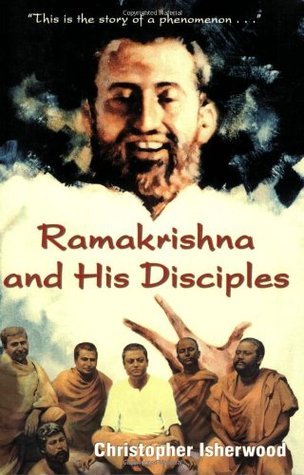
This biography of Ramakrishna was written for the West by one of England's most talented authors. The writing is beautiful in itself, but the story of a most unusual man with unheard of spiritual yearning is what this book is really about. "This is the story of a phenomenon. I will begin by calling him simply that, rather than "holy man,""mystic,"or "saint"; all emotive words with mixed associations which may attract some readers, repel others."A phenomenon is always a fact, an object of experience. That is how I shall try to approach Ramakrishna . . . I only ask you to approach Ramakrishna with the same open-minded curiosity you might feel for any highly unusual human being."

"When A Single Man was originally published, it shocked many by its frank, sympathetic, and moving portrayal of a gay man in midlife. George, the protagonist, is adjusting to life on his own after the sudden death of his partner, determined to persist in the routines of his daily life. An Englishman and a professor living in suburban Southern California, he is an outsider in every way, and his internal reflections and interactions with others reveal a man who loves being alive despite everyday injustices and loneliness. Wry, suddenly manic, constantly funny, surprisingly sad, this novel catches the true textures of life itself."--BOOK JACKET.

Here, meine Damen und Herren, is Christopher Isherwood's brilliant farewell to a city which was not only buildings, streets, and people, but was also a state of mind which will never come around again.In linked short stories, he says goodbye to Sally Bowles, to Fraulein Schroeder, to pranksters, perverts, political manipulators; to the very, very guilty and to the dwindling band of innocents. It is goodbye to a Berlin wild, wicked, breathtaking, decadent beyond belief and already -- in the years between the wars -- welcoming death in through the door, though more with a wink than a whimper.~from the back cover

First published in 1935 and 1939, the two related novels, The Last of Mr. Norris and Goodbye to Berlin, which make up The Berlin Stories are recognized today as classics of modern fiction.A charming city of avenues and cafés, a grotesque city of night-people and fantasts, a dangerous city of vice and intrigue, a powerful city of millionaires and mobs - all this was Berlin in 1931, the period when Hitler was beginning his move to power.Here are Mr. Norris, the improbable old debauchee mysteriously caught in the struggle between Nazis and Communists; plump Fräulein Schroeder, who thinks an operation to reduce the scale of her Büste might relieve her heart palpitations; the Landauers, a distinguished and doomed Jewish family; Sally Bowles, whose misadventures in the demimonde were popularized on the American stage and screen by Julie Harris in "I Am a Camera" and by Liza Minelli in "Cabaret."

After a chance encounter on a train the English teacher William Bradshaw starts a close friendship with the mildly sinister Arthur Norris. Norris is a man of contradictions; lavish but heavily in debt, excessively polite but sexually deviant. First published in 1935 Mr Norris Changes Trains piquantly evokes the atmosphere of Berlin during the rise of the Nazis.

Originally published in 1976, Christopher and His Kind covers the most memorable ten years in the writer's life-from 1929, when Isherwood left England to spend a week in Berlin and decided to stay there indefinitely, to 1939, when he arrived in America. His friends and colleagues during this time included W. H. Auden, Stephen Spender, and E. M. Forster, as well as colorful figures he met in Germany and later fictionalized in his two Berlin novels-who appeared again, fictionalized to an even greater degree, in I Am a Camera and Cabaret. What most impressed the first readers of this memoir, however, was the candor with which he describes his life in gay Berlin of the 1930s and his struggles to save his companion, a German man named Heinz, from the Nazis. An engrossing and dramatic story and a fascinating glimpse into a little-known world, Christopher and His Kind remains one of Isherwood's greatest achievements. A major figure in twentieth-century fiction and the gay rights movement, Christopher Isherwood (1904-1986) is the author of Down There on a Visit, Lions and Shadows, A Meeting by the River, The Memorial, Prater Violet, A Single Man, and The World in the Evening, all available from the University of Minnesota Press.

Originally published in 1945, Prater Violet is a semi-comic novel about the UK film industry. It centers on the production of the vacuous movie melodrama Prater Violet, set in Olde Vienna, providing ironic counterpoint to tragic events as Hitler annexes the real Vienna of the 1930s. The novel features the portraits of imperious, passionate, and witty Austrian director Friedrich Bergmann and a genial young screenwriter -- the fictionalized Christopher Isherwood.

Christopher Isherwood originally intended Down There on a Visit to be part of The Lost, the unfinished epic novel that would also incorporate his famous Berlin Stories. Tracing many of the same themes as that earlier work, this novel is a bemused, sometimes acid portrait of people caught in private sexual hells of their own making. Its four episodes are connected by four narrators. All are called "Christopher Isherwood, " but each is a different character inhabiting a new Berlin in 1928, the Greek Isles in 1933, London in 1938, and California in 1940. Down There on a Visit is a major work that shows Isherwood at the height of his literary powers.

Two English brothers meet, after a long separation, in India. Oliver, the idealistic younger brother, prepares to take his final vows as a Hindu monk. Patrick, a successful publisher with a wife and children in London and a male lover in California, has publicly admired his brother's convictions while privately criticizing his choices. First published in 1967, A Meeting by the River delicately depicts the complexity of sibling relationships - the resentment and competitiveness as well as the love and respect.

Against the backdrop of World War II, The World in the Evening charts the emotional development of Stephen Monk, an aimless Englishman living in California. After his second marriage suddenly ends, Stephen finds himself living with a relative in a small Pennsylvania Quaker town, haunted by memories of his prewar affair with a younger man during a visit to the Canary Islands. The world traveler comes to a gradual understanding of himself and of his newly adopted homeland. When first published in 1953, The World in the Evening was notable for its clear-eyed depiction of European and American mores, sexuality, and religion. Today, readers herald Christopher Isherwood’s frank portrayal of bisexuality and his early appreciation of low and high camp

In 1938 the legendary Hogarth Press published the first of Christopher Isherwood's autobiographical writings, Lions and Shadows. In this book, Isherwood evokes the atmosphere of Cambridge as only he knew it, describing his life as a tutor, medical student, and struggling writer. The result is a captivating account of a young novelist's development in the burgeoning literary culture of the 1920s and of his experiences as he forges lifelong friendships with his peers W. H. Auden, Stephen Spender, and Edward Upward.

With The Memorial, Christopher Isherwood began his lifelong work of rewriting his own experiences into witty yet almost forensic portraits of modern society. Set in the aftermath of World War I, The Memorial portrays the dissolution of a tradition-bound English family. Cambridge student Eric Vernon finds himself torn between his desire to emulate his heroic father, who led a life of quiet sacrifice before dying in the war, and his envy for his father's great friend Edward Blake, who survived the war only to throw himself into gay life in Berlin and the pursuit of meaningless relationships.

"My Guru and His Disciple is a sweetly modest and honest portrait of Isherwood’s spiritual instructor, Swami Prabhavananda, the Hindu priest who guided Isherwood for some thirty years. It is also a book about the often amusing and sometimes painful counterpoint between worldliness and holiness in Isherwood’s own life. Sexual sprees, all-night drinking bouts, a fast car ride with Greta Garbo, script-writing conferences at M-G-M, and intellectual sparring sessions with Bertolt Brecht alternated with nights of fasting at the Vedanta Center and a six-month period of celibacy and sobriety. Seldom has a single man been endowed with such strong drives toward both sensuality and spirituality, abandon and discipline. . . . In these pages, Isherwood has reinvented the spirit of devotion for the modern reader." Edmund White, New York Times Book Review "This book is a humbling tribute to someone who revealed to Isherwood inner grounds for spiritual awareness." Alan Hollinghurst, New Statesman A major figure in twentieth-century fiction and the gay rights movement, Christopher Isherwood (1904–1986) is the author of Down There on a Visit, Lions and Shadows, A Meeting by the River, The Memorial, Prater Violet, A Single Man, and The World in the Evening, all available from the University of Minnesota Press.

A timeless story of decaying middle-class English life after WWI and the generation that tried to escape its valuesChristopher Isherwood was only twenty-one when he began his first novel, All the Conspirators. in his introduction to the American edition, Isherwood explains: “All the Conspirators records a minor engagement in what Shelley calls ‘the great war between the old and young.’ And what a war it was!” in many ways this novel (like the classic Berlin Stories) is a period piece growing out of a particular historical situation―clashes between parents and children with all their passionate moral struggles. Isherwood’s vivid portrayal of an older generation trying to hold on while a younger generation tries to wrench free still resonates and disarms.

At times pious, at times profane but always unashamedly honest, "The Diaries of Christopher Isherwood" provide an inside look at the life and times of one of the most celebrated writers of the century. Chronicling Isherwood's life from 1939, when he emigrated to the United States, until 1960, these entries cover some of the most turbulent years of his career and give readers unprecedented insight into the major turning points in his life. Here, Isherwood relates the spiritual crisis he went through as World War II began, his discipleship (along with Aldous Huxley and Gerald Heard) with the Hindu monk Swami Prabhavananda and his decision to become a pacifist. Here also are his accounts of his intense social life in Hollywood, his career as a screenwriter and his many sexual affairs. Readers will be particularly fascinated by his revealing anecdotes and gossip about the literary greats (such as W. H. Auden, Thomas Mann, E. M. Forster, and Tennessee Williams) and movie stars (such as Greta Garbo, Charlie Chaplin and Sir Laurence Olivier) of the time.

“An intimate portrait of the life of a beautiful if neurotic mind… streaked with gossip, flinty observations, great good humor and—despite Isherwood’s fundamental discretion—plenty of frank talk.” — Dwight Garner, New York Times“These diaries are, in their core, a love story…thanks to [them], we bear witness to it all—and are all the richer for it.” — New York Journal of Books“A good writer…intensely self-aware…a fascinating companion…THE SIXTIES [is] accessible to everyone…a true piece of social history.” — Edmund White, New York Times Book Review“The diary entries in The Sixties are a mix of quotidian detail, social observation, moody reverie, gossip and self-rebuke.” — Wall Street Journal“Gossipy, funny, wide-ranging, and revealing…[Isherwood] comes across as approachable, aware, and passionately interested.” — Publishers Weekly

In September 1947, long before mass tourism and with no knowledge of Spanish, Christopher Isherwood and his lover Bill Caskey left for a six-month tour of Colombia, Ecuador, Peru, Bolivia, and Argentina. Isherwood's account of this journey, The Condor and the Cows, is one of very few classic travel books on South America and was among the books Isherwood considered his best. Based on his trip journal and loosely structured by the vagaries of his travels, these pages give us an Isherwood who dreams of voluntary exile in the tropical paradise of Curaçao and dines out on stories of Nazis in Berlin, missionaries in China, and movie stars in Hollywood. He describes the surprising and sometimes unnerving people and places he encounters through telling, cinematic details-of Inca drinking vessels, the Spanish colonial city of Cuzco (which he calls "one of the most beautiful monuments to bigotry and sheer brutal stupidity in the whole world"), a bullfight in Bogotá, the towering ruins of Machu Picchu. Unsentimental, rich, and wonderfully rendered, this expanded edition includes additional photographs by Bill Caskey and a new foreword by Jeffrey Meyers.

The late author of Goodbye to Berlin describes his "lost years" in postwar Santa Monica, New York, and London, a time spent in frantic socializing, increasing dissipation, and debilitating anxiety and despair.

Kathleen and Frank is a love story set in the glory days of the British Empire, the last decades before World War IIt is the story of Christopher Isherwood’s parents, the winsome and lively daughter of a successful wine merchant and the reticent, artistically gifted soldier-son of a country squire. They met in 1895 outside a music rehearsal in an army camp and married in 1903 after Christopher’s father returned from the Boer War. Frank was killed in an assault near Ypres in 1915; Kathleen remained a widow for the rest of her life.Their story is told through letters and Kathleen’s diary, with connecting commentary by Isherwood. Kathleen and Frank is a family memoir, but it is also a richly detailed social history of a period of striking change― Queen Victoria’s funeral, Blériot’s flight across the English Channel, Sarah Bernhardt’s Hamlet , suffragettes, rising hemlines, the beginning of the Troubles in Ireland―the period that shaped Isherwood himself.As a young man, Isherwood fled the tragedy that engulfed his parents’ lives and threatened his own; in Kathleen and Frank, he reweaves the tapestry of family and heritage and places himself in the pattern.

Candid and revealing, the final volume of Christopher Isherwood's diaries brings together his thoughts on life, love, and death. Beginning in the period of his life when he wrote Kathleen and Frank , his first intensely personal book, Diaries 1970–1983 intimately and wittily records Isherwood's immersion in the 1970s art scene in Los Angeles, New York, and London—a world peopled by the likes of Robert Rauschenberg, Ed Ruscha, Andy Warhol, and David Hockney, as well as his Broadway writing career, which brought him in touch with John Huston, Merchant and Ivory, John Travolta, John Voight, Elton John, David Bowie, Joan Didion, and Armistead Maupin. With a preface by Edmund White, Liberation is a rich and engaging final memoir by one of the most celebrated writers of his generation.

The Animals: Love Letters Between Christopher Isherwood and Don Bachardy
by Christopher Isherwood
Rating: 3.6 ⭐
The love story between Christopher Isherwood and Don Bachardy―in their own wordsThe English novelist and screenwriter Christopher Isherwood was already famous as the author of Goodbye to Berlin when he met Don Bachardy, a California teenager, on the beach in Santa Monica in 1952. Within a year, they began to live together as an openly gay couple, defying convention in the closeted world of Hollywood. Isherwood was forty-eight; Bachardy was eighteen. The Animals is the testimony in letters to their extraordinary partnership, which lasted until Isherwood's death in 1986―despite the thirty year age gap, affairs and jealousy (on both sides), the pressures of increasing celebrity, and the disdain of twentieth-century America for love between two men.The letters reveal the private world of the Isherwood was "Dobbin," a stubborn old workhorse; Bachardy was the rash, playful "Kitty." Isherwood had a gift for creating a safe and separate domestic milieu, necessary for a gay man in mid-twentieth-century America. He drew Bachardy into his semi-secret realm, nourished Bachardy's talent as a painter, and launched him into the artistic career that was first to threaten and eventually to secure their life together.The letters also tell of public achievements―the critical acclaim for A Single Man , the commercial success of Cabaret ―and the bohemian whirl of friendships in Los Angeles, London, and New York with such stars as Truman Capote, Julie Harris, David Hockney, Vanessa Redgrave, Gore Vidal, and Tennessee Williams. Bold, transgressive, and playful, The Animals articulates the devotion, in tenderness and in storms, between two uniquely original spirits.
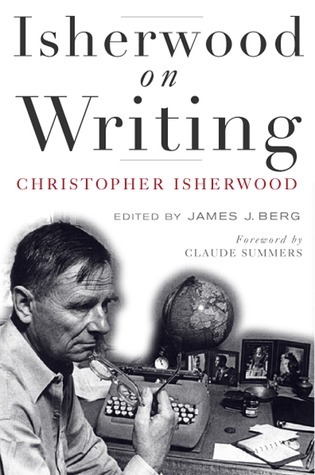
In the 1960s, Christopher Isherwood gave an unprecedented series of lectures at California universities on the theme “A Writer and His World.” During this time Isherwood, who would liberate the memoir and become the founding father of modern gay writing, spoke openly for the first time about his craft—on writing for film, theater, and novels—and on spirituality. Isherwood on Writing brings these public addresses together to reveal a distinctly—and surprisingly—American Isherwood. Given at a critical time in Isherwood’s career, these lectures mark the era when he turned from fiction to memoir. In free-flowing, wide-ranging discussions, he reflects on such topics as why writers write, what makes a novel great, and what influenced his own work. Isherwood talks about his working relationship with W. H. Auden; his literary friendships with E. M. Forster, Virginia Woolf, Stephen Spender, Aldous Huxley, and Somerset Maugham; and his work in the film industry in London and Hollywood. He also explores uncharted territory in candid comments on his own work, something not contained in his diaries. Isherwood on Writing uncovers an important and often-misunderstood time in Isherwood’s life in America. The lectures present, in James J. Berg’s words, “an example of a man, comfortable in his own sexuality and self, trying to talk about himself and his own life in a society that is not yet ready to hear the whole story.” A major figure in twentieth-century fiction and the gay rights movement, Christopher Isherwood (1904–1986) is the author of many books, including A Single Man and Down There on a Visit, available from Minnesota. James J. Berg is dean of liberal arts and sciences at Lake Superior College in Duluth, Minnesota. He is editor, with Chris Freeman, of The Isherwood Essays on the Life and Work of Christopher Isherwood (winner of the Lambda Award) and Conversations with Christopher Isherwood. Claude Summers is professor emeritus of English at the University of Michigan, Dearborn and author of many works, including Gay Wilde to Stonewall.

A collection of eighteen illustrated poems about a variety of animals with some particularly human characteristics.

Please search for isbn 0874810558 to order the updated version.Does a spiritual classic need updating? Vedanta philosophy is, by definition, timeless. But while spiritual truths are eternal, the society which interprets them changes from generation to generation. Each generation looks at the world through its own prism of experience. For this reason Living Vedanta in the West has been born.Please search for isbn 0874810558 to order this updated version.

Rare history sample in great condition!!

L'autore si sforza di essere totalmente aperto e sincero, esprimendo la sua vita con uno stile meravigliosamente equilibrato, scorrevole e di suprema eleganza. Particolarmente esplicito sul tema dell'omosessualità e del movimento di liberazione gay, di cui parla a più riprese; anche nell'intervista pubblicata in appendice.


An omnibus edition of Christopher Isherwood's stories set in Berlin in the early 1930s. It includes the novel 'Mr. Norris Changes Trains' and 'Goodbye to Berlin' comprising several short stories and the novella 'Sally Bowles'.

The chilling tale of the doctor who creates life out of death is now retold, charged with more terror and suspense than ever before. Written especially for the Universal Studios television presentation, “ The True Story” is a symbolic portrayal of men and women caught in a nightmare of their own making.