
Sudhir Hazareesingh
Sudhir Hazareesingh FBA is a British-Mauritian historian. He has been a fellow and Tutor in Politics at Balliol College, Oxford since 1990. Most of his work relates to modern political history from 1850; including the history of contemporary France as well as Napoleon, the Republic and Charles de Gaulle.
23 Books Written

Black Spartacus: The Epic Life of Toussaint Louverture
by Sudhir Hazareesingh
Rating: 3.9 ⭐
• 2 recommendations ❤️
A new interpretation of the life of the Haitian revolutionary Toussaint Louverture Among the defining figures of the Age of Revolution, Toussaint Louverture is the most enigmatic. Though the Haitian revolutionary’s image has multiplied across the globe—appearing on banknotes and in bronze, on T-shirts and in film—the only definitive portrait executed in his lifetime has been lost. Well versed in the work of everyone from Machiavelli to Rousseau, he was nonetheless dismissed by Thomas Jefferson as a “cannibal.” A Caribbean acolyte of the European Enlightenment, Toussaint nurtured a class of black Catholic clergymen who became one of the pillars of his rule, while his supporters also believed he communicated with vodou spirits. And for a leader who once summed up his modus operandi with the phrase “Say little but do as much as possible,” he was a prolific and indefatigable correspondent, famous for exhausting the five secretaries he maintained, simultaneously, at the height of his power in the 1790s.Employing groundbreaking archival research and a keen interpretive lens, Sudhir Hazareesingh restores Toussaint to his full complexity in Black Spartacus. At a time when his subject has, variously, been reduced to little more than a one-dimensional icon of liberation or criticized for his personal failings—his white mistresses, his early ownership of slaves, his authoritarianism —Hazareesingh proposes a new conception of Toussaint’s understanding of himself and his role in the Atlantic world of the late eighteenth century. Black Spartacus is a work of both biography and intellectual history, rich with insights into Toussaint’s fundamental hybridity—his ability to unite European, African, and Caribbean traditions in the service of his revolutionary aims. Hazareesingh offers a new and resonant interpretation of Toussaint’s racial politics, showing how he used Enlightenment ideas to argue for the equal dignity of all human beings while simultaneously insisting on his own world-historical importance and the universal pertinence of blackness—a message which chimed particularly powerfully among African Americans.Ultimately, Black Spartacus offers a vigorous argument in favor of “getting back to Toussaint”—a call to take Haiti’s founding father seriously on his own terms, and to honor his role in shaping the postcolonial world to come.

How the French Think: An Affectionate Portrait of an Intellectual People
by Sudhir Hazareesingh
Rating: 3.5 ⭐
Why are the French such an exceptional nation? Why do they think they are so exceptional? The French take pride in the fact that their history and culture have decisively shaped the values and ideals of the modern world. French ideas are no less distinct in their form: while French thought is abstract, stylish and often opaque, it has always been bold and creative, and driven by the relentless pursuit of innovation.In How the French Think, the internationally-renowned historian Sudhir Hazareesingh tells the epic and tumultuous story of French intellectual thought from Descartes, Rousseau, and Auguste Comte to Sartre, Claude Lévi-Strauss, and Derrida. He shows how French thinking has shaped fundamental Westerns ideas about freedom, rationality, and justice, and how the French mind-set is intimately connected to their own way of life—in particular to the French tendency towards individualism, their passion for nature, their celebration of their historical heritage, and their fascination with death. Hazareesingh explores the French veneration of dissent and skepticism, from Voltaire to the Dreyfus Affair and beyond; the obsession with the protection of French language and culture; the rhetorical flair embodied by the philosophes, which today's intellectuals still try to recapture; the astonishing influence of French postmodern thinkers, including Foucault and Barthes, on postwar American education and life, and also the growing French anxiety about a globalized world order under American hegemony.How the French Think sweeps aside generalizations and easy stereotypes to offer an incisive and revealing exploration of the French intellectual tradition. Steeped in a colorful range of sources, and written with warmth and humor, this book will appeal to all lovers of France and of European culture.

"God was bored with Napoleon" wrote Victor Hugo and as is well known, the Emperor was duly defeated at Waterloo in 1815 and exiled to St Helena, where he died an agonizing and horrifying death. The Emperor's real legacy is the modernizing and beautifying of Paris, the official promotion of religious tolerance, the current French legal and educational systems, and the European Union, to name but a few Napoleonic initiatives. And of course, the legend lives on. Drawing on new archival research, Hazareesingh traces not only the emergence of the Napoleonic myth and how it developed into a potent political culture, but also the amazing tenacity of popular affection for the emperor, manifest in countless busts and portraits in ordinary citizens' homes, grass-roots political activism, miraculous apparitions reported after his death, and the memories kept alive by thousands of imperial war veterans. This book is a timely study of why the fascination with Napoleon has endured for two centuries.
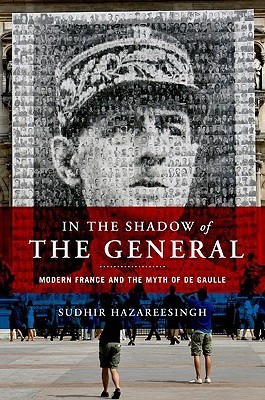
In the Shadow of the General: Modern France and the Myth of De Gaulle
by Sudhir Hazareesingh
Rating: 3.4 ⭐
Charles De Gaulle's leadership of the French while in exile during World War II cemented his place in history. In contemporary France, he is the stuff of legend, consistently acclaimed as the nation's pre-eminent historical figure. But paradoxes abound. For one thing, his personal popularity sits oddly with his social origins and professional background. Neither the Army nor the Catholic Church is particularly well-regarded in France today, as they are seen to represent antiquated traditions and values. So why, then, do the French nonetheless identify with, celebrate, and even revere this austere and devout Catholic, who remained closely wedded to military values throughout his life? In The Shadow of the General resolves this mystery and explains how de Gaulle has come to occupy such a privileged position in the French imagination. Sudhir Hazareesingh's story of how an individual life was transformed into national myth also tells a great deal about the French collective self inthe twenty-first its fractured memory, its aspirations to greatness, and its manifold anxieties. Indeed, alongside the tale of de Gaulle's legacy, the author unfolds a much broader the story of modern France.

This integrated account of French political experience describes three key features: the role of political ideas; the nature of political movements; and the significance of history in creating and sustaining divisions among political groups. It has chapters on the roles of intellectuals, the ideologies of republicanism, clericalism, nationalism and the functions of the state. The last four chapters examine the political traditions of liberalism, socialism, Gaullism and Communism.

Les Français seraient arrogants, présomptueux, ingouvernables… Mais ne seraient-ils pas, avant tout, de grands amoureux des idées ?Au fond, à quoi reconnaît-on la pensée française ? Sans doute à son inextinguible vitalité : si les Français donnent l’impression de ne jamais débattre sans se disputer, c’est qu’ils ont l’exercice de la controverse trop à cœur ; s’ils passent pour des donneurs de leçons, c’est qu’ils aspirent à l’universel, au point de s’en estimer seuls garants ; s’ils sont râleurs, anarchiques et prompts à la révolte, c’est qu’ils ont l’esprit critique chevillé au corps ; s’ils se croient supérieurs, c’est qu’ils ont le goût de l’abstraction, l’art d’inventer des concepts qui séduisent au-delà des frontières – le socialisme, le structuralisme, l’existentialisme, la déconstruction, le mot même d’intellectuel. Enfin, s’ils exigent tant de leurs hommes politiques aujourd’hui, c’est qu’ils sont nostalgiques de leur grandeur passée et qu’ils refusent d’abdiquer.Catalogue passionné des spécificités de la pensée française, ce livre nous décrit mieux que nous ne saurions le faire, en même temps qu’il nous pousse à interroger nos inquiétudes face à l’idée de notre déclin.Postface inédite de l'auteur.Grand prix du livre d’idées 2015.

From Subject to Citizen offers an original account of the Second Empire (1852-1870) as a turning point in modern French political a period in which thinkers of all political persuasions combined forces to create the participatory democracy alive in France today. Here Sudhir Hazareesingh probes beyond well-known features of the Second Empire, its centralized government and authoritarianism, and reveals the political, social, and cultural advances that enabled publicists to engage an increasingly educated public on issues of political order and good citizenship. He portrays the 1860s in particular as a remarkably intellectual decade during which Bonapartists, legitimists, liberals, and republicans applied their ideologies to the pressing problem of decentralization. Ideals such as communal freedom and civic cohesion rapidly assumed concrete and lasting meaning for many French people as their country entered the age of nationalism.With the restoration of universal suffrage for men in 1851, constitutionalist political ideas and values could no longer be expressed within the narrow confines of the Parisian elite. Tracing these ideas through the books, pamphlets, articles, speeches, and memoirs of the period, Hazareesingh examines a discourse that connects the central state and local political life. In a striking reappraisal of the historical roots of current French democracy, he ultimately shows how the French constructed an ideal of citizenship that was "local in form but national in substance."Originally published in 1998.The Princeton Legacy Library uses the latest print-on-demand technology to again make available previously out-of-print books from the distinguished backlist of Princeton University Press. These editions preserve the original texts of these important books while presenting them in durable paperback and hardcover editions. The goal of the Princeton Legacy Library is to vastly increase access to the rich scholarly heritage found in the thousands of books published by Princeton University Press since its founding in 1905.
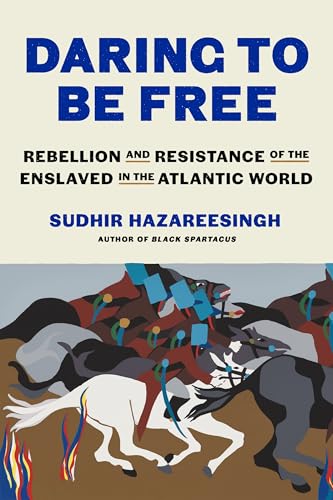
Daring to Be Free: Rebellion and Resistance of the Enslaved in the Atlantic World
by Sudhir Hazareesingh
Rating: 5.0 ⭐
A revelatory history of enslaved people's resistance and self-emancipation, across the Atlantic world and beyond. The ending of the slave trade and the abolition of slavery by European powers during the nineteenth century is generally told as the work of enlightened liberals. Sudhir Hazareesingh turns this narrative on its head, showing the extraordinary degree to which the enslaved resisted their oppressors and emancipated themselves. Daring to Be Free portrays the struggle for liberation from the perspective of the enslaved and, wherever possible, in their own words. It shines a light on the lives of revolutionaries like Toussaint Louverture, Nat Turner, and the pregnant mutineer Solitude; freed writers of narrative accounts like Frederick Douglass; and the countless rebels, insurgents, and conspirators. Hazareesingh gives particular emphasis to the role of powerful women as campaigners, warriors, and disrupters. Drawing on both written archives and oral history, the book traces the networks of cooperation that connected runaway settlements and rebellions from Haiti, Jamaica, Brazil, and Cuba to Mauritius and the United States. It shows how the struggle for freedom was shaped less by Western Enlightenment ideals than by spiritual, martial, and religious influences from the lives of the enslaved in Africa before the Middle Passage. Daring to Be Free reshapes our understanding of Atlantic slavery by portraying how enslaved lives were defined not by their dehumanization at the hands of colonialists and slavers but by their own resilience, rebellion, and commitment to emancipation.

The Saint-Napoleon: Celebrations of Sovereignty in Nineteenth-Century France
by Sudhir Hazareesingh
Rating: 4.0 ⭐
In 1852, President Louis Napoleon of France declared that August 15--Napoleon Bonaparte's birthday--would be celebrated as France's national day. Leading up to the creation of the Second Empire, this was the first in a series of attempts to "Bonapartize" his regime and strengthen its popular legitimacy. Across France, public institutions sought to draw local citizens together to celebrate civic ideals of unity, order, and patriotism. But the new sense of French togetherness was fraught with tensions.Drawing on a wealth of archival evidence, Sudhir Hazareesingh vividly reconstructs the symbolic richness and political complexity of the Saint-Napoleon festivities in a work that opens up broader questions about the nature of the French state, unity and lines of fracture in society, changing boundaries between public and private spheres, and the role of myth and memory in constructing nationhood. The state's Bonapartist identity was at times vigorously contested by local social, political, and religious groups. In various regions, people used the national day to celebrate their own communities and to honor their hometown veterans; but elsewhere, the revival of republican sentiment clashed sharply with imperial attitudes.Sophisticated and gracefully written, this book offers rich insights into modern French history and culture.

L'image du général de Gaulle a connu d'étranges retournements. L'homme d'État de son vivant le plus contesté est devenu après sa mort le plus incontestable. Celui qui avait si longtemps passé pour le diviseur de la nation est devenu le sauveur de la République, l'incarnation même de la France. L'historien britannique Sudhir Hazareesingh éclaire ici les étapes et les moyens de cette métamorphose en exploitant les riches fonds des Archives nationales et de la Fondation Charles de Gaulle, en particulier l'immense correspondance du Général récemment ouverte. Adossé aux grands précédents de l'histoire de France - Jeanne d'Arc, Louis XIV, Napoléon -, le mythe gaullien se distingue par sa capacité à transcender les clivages. Ce faisant, il marque, selon l'auteur, la forme la plus achevée du mythe politique national dans la France contemporaine.

Daring to be Free: Rebellion and Resistance of the Enslaved in the Atlantic World
by Sudhir Hazareesingh
![[In the Shadow of the General: Modern France and the Myth of De Gaulle] [By: Hazareesingh, Sudhir] [May, 2012]](/placeholder.svg?height=400&width=300)
[In the Shadow of the General: Modern France and the Myth of De Gaulle] [By: Hazareesingh, Sudhir] [May, 2012]
by Sudhir Hazareesingh
[Sudhir Hazareesingh]-[Black Spartacus]-[Hardcover]
by Sudhir Hazareesingh
Among the defining figures of the Age of Revolution, Toussaint Louverture is the most enigmatic. Though the Haitian revolutionary’s image has multiplied across the globe―appearing on banknotes and in bronze, on T-shirts and in film―the only definitive portrait executed in his lifetime has been lost. Well versed in the work of everyone from Machiavelli to Rousseau, he was nonetheless dismissed by Thomas Jefferson as a “cannibal.” A Caribbean acolyte of the European Enlightenment, Toussaint nurtured a class of black Catholic clergymen who became one of the pillars of his rule, while his supporters also believed he communicated with vodou spirits.

Les intellectuels fondateurs de la République: Cinq études sur la pensée politique au XIXe siècle
by Sudhir Hazareesingh
Intellectual Founders of the Republic étudie cinq penseurs et militants républicains, qui appartiennent à la génération précédant celle des «Jules» : Émile Littré (1801-1881), Charles Dupont-White (1807-1878), Étienne Vacherot (1809-1897), Eugène Pelletan (1813-1884) et Jules Barni (1818-1878).Cet ouvrage cherche à comprendre comment se forgent, au contact des événements, les théories des uns et des autres, et comment se combinent, sans cesse, principes abstraits et enjeux concrets.

How the French Think: An Affectionate Portrait of an Intellectual People by Hazareesingh, Sudhir(September 22, 2015) Hardcover
by Sudhir Hazareesingh

LA SAINT NAPOLEON
by Sudhir Hazareesingh
Au dbut des annes 1850, le 15 aot devient la fte nationale en France. Cette clbration permet au prsident Louis-Napolon d'amorcer la transition vers le second Empire, et d'imposer avec succs un modle de fte nationale populaire qui sera largement repris par la Rpublique. S'appuyant sur une documentation indite aux Archives nationales et dpartementales, Sudhir Hazareesingh fait revivre cette fte riche et multiforme. Moment d'exaltation de la mmoire napolonienne, la fte impriale est aussi le thtre de tensions cratives : entre la solennit pieuse des croyants et la jubilation carnavalesque du peuple, entre la glorification de la Nation et le culte des traditions locales, et entre la clbration du soutien populaire au rgime et la peur de la foule. L'ouvrage renouvelle notre vision de la tradition napolonienne sous le second Empire. Hazareesingh insiste particulirement sur la dimension locale des ftes, qui permet aux notables de clbrer les travaux publics et l'action caritative des associations, et donne l'occasion aux municipalits de se mettre en valeur. La Saint-Napolon met galement en scne des moments de liesse collective, comme lors des remises des mdailles de Sainte-Hlne aux anciens vtrans des guerres de l'Empire. Mais cette harmonie fragile peut aussi prendre une fcheuse tournure : au sein mme de l'tat bonapartiste, entre le clerg et les autorits civiles, et entre les reprsentants de l'tat et les forces de l'opposition rpublicaine, qui utilisent sciemment le dcor de la fte nationale pour subvertir l'ordre bonapartiste. crit avec humour et humanit, et fourmillant d'anecdotes savoureuses, cette tude originale apporte des clairages nouveaux sur la sociabilit et la culture politique franaise, et souligne le poids de la tradition napolonienne dans la mmoire collective nationale.

O maior revolucionário das Américas: A vida épica de Toussaint Louverture
by Sudhir Hazareesingh
A extraordinária história do ex-escravizado que enfrentou as principais forças de seu tempo e inspirou gerações na luta anticolonial e antirracista.Toussaint Louverture, a figura mais emblemática da Revolução Haitiana, dedicou sua vida à construção de uma sociedade baseada na igualdade. Autodidata que se tornou erudito e general do exército francês, Toussaint liderou a imensa revolta de escravizados que libertou a colônia franco-caribenha de Saint-Domingue em 1791 — e culminou com a proclamação da primeira república negra livre e independente no mundo. Foi o guia de seu povo, comandante do exército republicano e, por fim, seu governador.Em O maior revolucionário das Américas, Sudhir Hazareesingh acompanha cada passo da jornada deste personagem memorá desde seus triunfos contra as tropas francesas, espanholas e britânicas até sua ousada promulgação de uma Constituição autônoma. Toussaint se tornou um farol para os escravizados do Atlântico e para muitas gerações de progressistas republicanos, tendo inspirado figuras como Frederick Douglass, movimentos anticoloniais e antirracistas e as ideias seminais de negritude do século XX.* Um dos livros do ano em The Economist, Times Literary Supplement e New Statesman.* Vencedor do Wolfson History Prize, prêmio de não ficção mais importante da Inglaterra

From Subject to Citizen: The Second Empire and the Emergence of Modern French Democracy
by Sudhir Hazareesingh
From Subject to Citizen offers an original account of the Second Empire (1852-1870) as a turning point in modern French political a period in which thinkers of all political persuasions combined forces to create the participatory democracy alive in France today. Here Sudhir Hazareesingh probes beyond well-known features of the Second Empire, its centralized government and authoritarianism, and reveals the political, social, and cultural advances that enabled publicists to engage an increasingly educated public on issues of political order and good citizenship. He portrays the 1860s in particular as a remarkably intellectual decade during which Bonapartists, legitimists, liberals, and republicans applied their ideologies to the pressing problem of decentralization. Ideals such as communal freedom and civic cohesion rapidly assumed concrete and lasting meaning for many French people as their country entered the age of nationalism.With the restoration of universal suffrage for men in 1851, constitutionalist political ideas and values could no longer be expressed within the narrow confines of the Parisian elite. Tracing these ideas through the books, pamphlets, articles, speeches, and memoirs of the period, Hazareesingh examines a discourse that connects the central state and local political life. In a striking reappraisal of the historical roots of current French democracy, he ultimately shows how the French constructed an ideal of citizenship that was "local in form but national in substance."Originally published in 1998.The Princeton Legacy Library uses the latest print-on-demand technology to again make available previously out-of-print books from the distinguished backlist of Princeton University Press. These editions preserve the original texts of these important books while presenting them in durable paperback and hardcover editions. The goal of the Princeton Legacy Library is to vastly increase access to the rich scholarly heritage found in the thousands of books published by Princeton University Press since its founding in 1905.
The Left in France: An Intellectual History
by Sudhir Hazareesingh

Intellectual Founders of the Republic: Five Studies in Nineteenth-Century French Republican Political Thought
by Sudhir Hazareesingh
In this innovative study of French political culture, Sudhir Hazareesingh re-examines the origins of modern republicanism through the writings and political practices of five key nineteenth century intellectuals: Jules Barni, Charles Dupont-White, Emile Littré, Eugène Pelletan, and Etienne Vacherot.

Intellectuals and the French Communist Party: Disillusion and Decline
by Sudhir Hazareesingh
In this work, the author examines the emergence and demise of intellectual identification with the French Communist Party between 1945 to 1989. He argues that, after 1978 political conflicts between the party leadership and intellectuals led to an erosion of support, sharpened by wider ideological changes. Based on a critical examination of the available literature in both French and English, this systematic exploration of the role of intellectuals in French politics also explains why this social group has been so prominent in public life throughout the modern era.