
Neil MacGregor
Neil MacGregor was born in Glasgow to two doctors, Alexander and Anna MacGregor. At the age of nine, he first saw Salvador Dalí's Christ of Saint John of the Cross, newly acquired by Glasgow's Kelvingrove Art Gallery, which had a profound effect on him and sparked his lifelong interest in art. MacGregor was educated at Glasgow Academy and then read modern languages at New College, Oxford, where he is now an honorary fellow. The period that followed was spent studying philosophy at the École Normale Supérieure in Paris (coinciding with the events of May 1968), and as a law student at Edinburgh University, where he received the Green Prize. Despite being called to the bar in 1972, MacGregor next decided to take an art history degree. The following year, on a Courtauld Institute (University of London) summer school in Bavaria, the Courtauld's director Anthony Blunt spotted MacGregor and persuaded him to take a master's degree under his supervision. Blunt later considered MacGregor "the most brilliant pupil he ever taught". From 1975 to 1981, MacGregor taught History of Art and Architecture at the University of Reading. He left to assume the editorship of The Burlington Magazine. He oversaw the transfer of the magazine from the Thomson Corporation to an independent and charitable status. In 1987 MacGregor became a highly successful director of the National Gallery in London. There he was dubbed "Saint Neil", partly because of his popularity at that institution and partly because of his devout Christianity, and the nickname stuck after his departure from the Gallery. During his directorship, MacGregor presented three BBC television series on art: Painting the World in 1995, Making Masterpieces, a behind-the-scenes tour of the National Gallery, in 1997 and Seeing Salvation, on the representation of Jesus in western art, in 2000. He declined the offer of a knighthood in 1999, the first director of the National Gallery to do so. MacGregor was made director of the British Museum in August 2002, at a time when that institution was £5 million in deficit. He has been lauded for his "diplomatic" approach to the post, though MacGregor rejects this description, stating that "diplomat is conventionally taken to mean the promotion of the interests of a particular state and that is not what we are about at all". He has vowed never to return the Parthenon Marbles to Greece, saying that it is the museum's duty to "preserve the universality of the marbles, and to protect them from being appropriated as a nationalistic political symbol". He did agree to discuss a loan of the marbles on the condition that Athens rejects all claims of ownership to them. In January 2008, MacGregor was appointed chairman of the World Collections programme, for training international curators at British museums. The exhibition The First Emperor, focussing on Qin Shi Huang and including a small number of his Terracotta Warriors, was mounted in 2008 in the British Museum Reading Room. That year MacGregor was invited to succeed Philippe de Montebello as the Director of the Metropolitan Museum of Art in New York. He declined the offer as the Metropolitan charges its visitors for entry and is thus "not a public institution". In 2010, MacGregor presented a series on BBC Radio 4 and the World Service entitled A History of the World in 100 Objects, based on objects from the British Museum's collection. From September 2010 to January 2011 the British Museum lent the ancient Persian Cyrus Cylinder to an exhibition in Tehran. This was seen by at least a million visitors by the Museum's estimation, more than any loan exhibition to the United Kingdom had attracted since the Treasures of Tutankhamun exhibition in 1972. On 4 November 2010 MacGregor was appointed to the Order of Merit by Queen Elizabeth II. In July 2011, MacGregor spoke at TEDGlobal in Edinburgh about the Cyrus Cylinder and provided a concise summary of the role the artefact has played in Middle East pol
21 Books Written
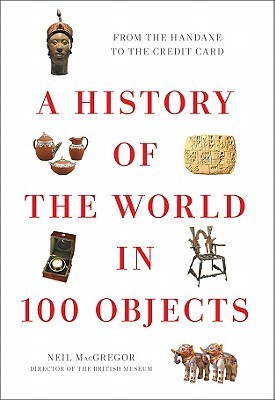
From the renowned director of the British Museum, a kaleidoscopic history of humanity told through things we have made. When did people first start to wear jewelry or play music? When were cows domesticated and why do we feed their milk to our children? Where were the first cities and what made them succeed? Who invented math-or came up with money?The history of humanity is a history of invention and innovation, as we have continually created new items to use, to admire, or to leave our mark on the world. In this original and thought-provoking book, Neil MacGregor, director of the British Museum, has selected one hundred man-made artifacts, each of which gives us an intimate glimpse of an unexpected turning point in human civilization. A History of the World in 100 Objects stretches back two million years and covers the globe. From the very first hand axe to the ubiquitous credit card, each item has a story to tell; together they relate the larger history of mankind-revealing who we are by looking at what we have made.Handsomely designed, with more than 150 color photographs throughout the text, A History of the World in 100 Objects is a gorgeous reading book and makes a great gift for anyone interested in history.

A major new series from the makers of "A History of the World in 100 Objects," exploring the fascinating and complex history of Germany from the origins of the Holy Roman Empire right up to the present day. Written and presented by Neil MacGregor, it is produced by BBC Radio 4, in partnership with the British Museum.Whilst Germany s past is too often seen through the prism of the two World Wars, this series investigates a wider six hundred-year-old history of the nation through its objects. It examines the key moments that have defined Germany s past its great, world-changing achievements and its devastating tragedies and it explores the profound influence that Germany s history, culture, and inventiveness have had across Europe.The objects featured in the radio series range from large sculptures to small individual artifacts and items that are prosaic, iconic, and symbolic. Each has a story to tell and a memory to invoke."

The New York Times bestselling author of A History of the World in 100 Objects brings the world of Shakespeare and the Tudor era of Elizabeth I into focus We feel we know Shakespeare’s characters. Think of Hamlet, trapped in indecision, or Macbeth’s merciless and ultimately self-destructive ambition, or the Machiavellian rise and short reign of Richard III. They are so vital, so alive and real that we can see aspects of ourselves in them. But their world was at once familiar and nothing like our own. In this brilliant work of historical reconstruction Neil MacGregor and his team at the British Museum, working together in a landmark collaboration with the Royal Shakespeare Company and the BBC, bring us twenty objects that capture the essence of Shakespeare’s universe. A perfect complement to A History of the World in 100 Objects, MacGregor’s landmark New York Times bestseller, Shakespeare’s Restless World highlights a turning point in human history. This magnificent book, illustrated throughout with more than one hundred vibrant color photographs, invites you to travel back in history and to touch, smell, and feel what life was like at that pivotal moment, when humankind leaped into the modern age. This was an exhilarating time when discoveries in science and technology altered the parameters of the known world. Sir Francis Drake’s circumnavigation map allows us to imagine the age of exploration from the point of view of one of its most ambitious navigators. A bishop’s cup captures the most sacred and divisive act in Christendom. With A History of the World in 100 Objects, MacGregor pioneered a new way of telling history through artifacts. Now he trains his eye closer to home, on a subject that has mesmerized him since childhood, and lets us see Shakespeare and his world in a whole new light.

One of the central facts of human existence is that every society shares a set of beliefs and assumptions - a faith, an ideology, a religion - that goes far beyond the life of the individual. These beliefs are an essential part of a shared identity. They have a unique power to define - and to divide - us, and are a driving force in the politics of much of the world today. Throughout history they have most often been, in the widest sense, religious.Yet this book is not a history of religion, nor an argument in favour of faith. It is about the stories which give shape to our lives, and the different ways in which societies imagine their place in the world. Looking across history and around the globe, it interrogates objects, places and human activities to try to understand what shared beliefs can mean in the public life of a community or a nation, how they shape the relationship between the individual and the state, and how they help give us our sense of who we are.For in deciding how we live with our gods, we also decide how to live with each other.

Without contemporary accounts of Jesus' appearance, artists through the ages have been free to create many images of him--images that sometimes reflect the spiritual world of the artist and other times the desires of the patron or the needs of the spectator. In this magnificently illustrated book, Neil MacGregor traces the life of Christ and the development of Christian culture in the work of artists from different times and diverse cultures. Copublished with the National Gallery, London

This Tiny Folio book highlights the works of The National Gallery, London, which has one of the most magnificent—and the most beloved—collections of paintings in the world.Founded in 1824, the National Gallery houses a rich and comprehensive range of European painting from the Middle Ages to the 1920s. Among the works represented in this colorful and compact survey of the Gallery's collection are masterpieces by Sandro Botticelli, Leonardo da Vinci, Michelangelo, Raphael, Titian, Rembrandt, Peter Paul Rubens, Claude Monet, Vincent van Gogh, Edgar Degas, and Paul Cézanne, as well as some lesser-known delights. Located on Trafalgar Square, in the heart of London, the original Wilkins Building has recently been extended by the handsome new Sainsbury Wing, which contains some of the world's greatest paintings.

Ob Berlin, London oder Singapur: Jede Metropole vereint Menschen aus der ganzen Welt mit ihren unterschiedlichen Traditionen, Religionen und Sprachen. Auch die großen Museen spiegeln diese kulturelle Vielfalt der Welt wider, stammen ihre Sammlungen doch ebenfalls aus aller Welt. Das Verhältnis der urbanen Vielfalt zu den globalen Sammlungen – die in Berlin mit dem Humboldt-Forum einen neuen, prominenten Ort erhalten werden – wirft die Frage auf, welche Rolle Museen in der modernen Stadt spielen. Beziehen sie die Menschen aus den Kulturen, aus denen ihre Objekte stammen, ein? Welche bürgerschaftlichen Aufgaben übernehmen Museen in der globalisierten Welt? Anhand zahlreicher Beispiele stellt MacGregor das Museum als Theatrum Mundi vor, als einen Ort, an dem die Besucher die Welt erfahren und die Stimmen derjenigen vernehmen können, die bislang keinen Widerhall in ihr fanden.

Are there miscarriages of justice in art history? Neil MacGregor believes there are. However great an artist, if his name is lost he will not receive a fair verdict from posterity. No exhibition will be devoted to his work; no books will be written about him; he will not even figure in indexes.

English 231 (Throughout Color Illustrations)About the BookWhat is the earliest of humans Story in India and how does that compare with other parts of the world? What was happening in India when the pyramids were being built in Egypt? What was different about Ashoka's inscriptions when compared with the public inscriptions of other emperors? How have different civilizations pictured the divine? How did rulers promote themselves through grand court art and aesthetics? What were the routes of civilization exchange over land and sea that made India a part of the world? And have those exchanges always been peaceful? How have different countries and communities articulated their quest for freedom in recent history? Does everyone in the world perceive history and time in the same way? Objects-be they coins, sculptures, documents or paintings-tell rich stories. India & the World accompanies a collaborative exhibition that creates dialogues between the world and India through a fascinating array of arte facts. On the one hand they reveal how different cultures have responded to situations in their own way, and on the other, they provide an understanding of the complex panorama of a deeply interconnected global history. **Contents and Sample Pages**


All ten episodes of BBC Radio 4’s ambitious global series, presented by Neil MacGregor‘Insightful, provocative, satisfying’ TelegraphWith the United Kingdom on the brink of potentially momentous change, historian and broadcaster Neil MacGregor embarks on a worldwide voyage to discover how Britain is perceived from abroad.Visiting Germany, Egypt, Nigeria, Canada, India, Singapore, the United States, Spain, Australia and Poland – all countries with significant historical links to the UK – he talks to leading opinion formers to find out how they, as individuals and members of their wider communities, see Britain.His interviewees reveal what they learnt about Britain at school, and how key events and cultural influences, as well as their own personal experiences, have shaped their impressions of the country now. Each has a defining image that symbolises the UK to them: from Shakespeare to Monty Python, the 1966 World Cup, the Suez Crisis, the Financial Times, ‘99’ ice cream and The Crown.Throughout his travels, MacGregor uncovers tensions and frustrations, admiration and affection – along with an underlying sense of hope and a desire to retain close links with Britain as it prepares to reevaluate its relationship with Europe and the world.

Britain has one of the world's finest collections of Western art. From Raphael to Reynolds, from Botticelli to Bacon, amazing paintings grace the walls of our galleries, museums, historic houses and palaces. Neil MacGregor has set out to demonstrate the richness of the paintings that this country enjoys. The book is arranged by theme as opposed to chronology, identifying the major ideas that have inspired artists all over the world for many centuries. There is also a richly illustrated chronology of artists complete with biographical notes and where they can be seen in Britain as well as a comprehensive guide to the Galleries of England, Scotland and Wales.

World-renowned art historian Neil MacGregor takes us across Britain to discover local museums and their hidden gemsNeil MacGregor, former director of the National Gallery and the British Museum, knows the importance of public museums. In The Museums That Make Us, he takes us around the country to visit twenty local museums and to talk to their curators, staff and local figures about the most prized objects in their collections. Often a child's first experience of valuable objects and historical belongings, these regional spaces can be a wonderful way to recognise local pride and shine a light on buried history.At Penrhyn Castle in North Wales, the museum strives to tell the story of their rich collection of art while also being truthful about the slave trade that made it possible; on the Isle of Lewis, the Museum Tasglann nan Eilean wants to share the story of land ownership and clearances through their objects; at the Leeds Museum, a Roman child's sandal has been chosen to demonstrate their ambitious and thriving scheme of having exhibits leave the museum to go out to schools; and in Bristol's M Shed Museum, one of the city's old Lodekka Buses is used to tell the story of the successful Bristol Bus boycott of 1963.Travelling from Stowe, one of the first examples of a vision of Britain outside London, to the Ashmolean Museum in Oxford, where he looks at an ancient Syrian model clay wagon, possibly a child's toy, to examine how museums can provide for a huge breadth of local people from all over the world, Neil MacGregor uses these invaluable community sites to consider how they are run, who they draw in, and how they can inspire us all.Episode guideFirst broadcast on BBC Radio 4 on the following dates:Stowe and the Temple of British Worthies 7 March 2022The Tower Museum, Derry Londonderry 8 March 2022Penrhyn Castle, North Wales 9 March 2022PK Porthcurno - Museum of Global Communications 10 March 2022Museum & Tasglann nan Eilean, Stornoway 11 March 2022Derby - The Museum of Making 14 March 2022The Food Museum, Suffolk 15 March 2022The Auckland Project, Bishop Auckland 16 March 2022The Hepworth, Wakefield 17 March 2022Royal Pavilion and Museums, Brighton 18 March 2022Leicester Museum and Art Gallery 11 April 2022Bristol's M Shed Museum 12 April 2022Birmingham 13 April 2022Liverpool 14 April 2022Leeds 15 April 2022The National Museum of Scotland 18 April 2022The National Museum of NI, Belfast 19 April 2022The National Museums of Wales, Cardiff 20 April 2022The Ashmolean Museum, Oxford 21 April 2022What are museums for? 22 April 2022Production creditsPresented by Neil MacGregorProduced by Tom AlbanOriginal music by Phil Channell©2022 BBC Studios Distribution Ltd (P) 2022 BBC Studios Distribution Ltd

Neil MacGregor, the Director of the British Museum, marks the 400th anniversary of Rembrandt's birth in R3's Sunday Feature Rembrandt 400 on Sunday July 9. He visits Amsterdam where Rembrandt made his home for the major part of his creative life and where he painted the masterpieces which hang in galleries around the world. The actual birthday of Rembrandt is on July 15 and Amsterdam has been marking the year with all kinds of events from a new musical on Rembrandt's life to exhibitions looking at every aspect of Rembrandt's work, from the epic painting of The Night Watch to the small-scale etchings and drawings.

À monde nouveau, nouveaux musées: Les musées, les monuments, et la communauté réinventée
by Neil MacGregor
Rating: 3.0 ⭐
Publication officielle des cinq conférences données les 15, 18, 22, 25 et 29 novembre 2021 au musée du Louvre, par Neil MacGregor, membre du conseil scientifique du musée du Louvre, ancien directeur de la National Gallery et du British Museum à Londres, ancien directeur fondateur du Humboldt Forum à Berlin, à l’occasion de nouvelle édition de la Chaire du Louvre. Chaque année, un historien de renom présente à l’Auditorium du musée du Louvre une synthèse inédite sur un sujet original, qui permet des rapprochements transdisciplinaires entre des oeuvres du monde entier. Les grandes questions politiques s'invitent désormais dans les débats culturels. Quel rôle pour nos musées - et pour les monuments - dans ces tentatives visant à repenser notre société ? C'est la question qu'entendent poser cette série de conférences et l'ouvrage qui l'accompagne : nous habitons un monde qui n’a plus de centre.Les cartes familières ne correspondent plus aux réalités que nous vivons, qu’elles soient politiques, économiques ou climatiques. De tous côtés, les hiérarchies et les hégémonies établies – culturelles, épistémologiques, sexuelles, raciales – sont remises en cause. L’idée qu’il existe des communautés distinctes au sein d’un même État est (re)devenue explosive. Dans ce contexte, qui racontera les histoires particulières et contradictoires des communautés diverses ? Qui a le droit de les raconter ? Quel rôle pour nos musées, et pour les monuments, dans ces tentatives visant à repenser notre société ? Dans sa synthèse audacieuse, Neil MacGregor explore avec une série d’exemples, à l’échelle mondiale, les répercussions de ces bouleversements et les stratégies retenues pour faire des musées, et des monuments publics, les activateurs de nouveaux récits mieux adaptés à la complexité de notre société plurielle.Détails des cinq conférences :1. À monde nouveau, musées nouveaux : des « contes » à réglerC’est aussi le passé qui raconte l’avenir ; préparer le second conduit à poser un regard renouvelé sur le premier. C’est dans les musées et les monuments que les États présentent aux citoyens et au monde l’image de ce qu’ils pensent avoir été et de ce qu’ils souhaitent devenir. Depuis quarante ans, dans le monde entier, les idées reçues d’identité nationale et de hiérarchie globale sont remises en cause – phénomène qui oblige à penser différemment les musées existants, à mettre en perspective leurs missions et leurs discours, ou, même, à construire de nouvelles institutions muséales. Ces nouveaux musées – que ce soit à Varsovie ou à Dakar, à Washington ou à Canberra – ont pour vocation de proposer des histoires nouvelles, de rendre justice aux groupes dont l’histoire aurait été négligée, voire supprimée. Cela pose une question de fond ; le musée peut-il être à la fois lieu de mémoire et lieu de contestation ?2. Palais, pouvoir, musée : les contradictions créatrices du Humboldt Forum à BerlinDepuis 1945, Varsovie, Vilnius et Berlin ont reconstruit les palais de leurs anciens souverains. Les objectifs étaient identiques, mais les résultats fort différents. Appelé à jouer un rôle de symbole dans la capitale d’une Allemagne nouvellement réunie, la reconstruction de l’ancien palais royal de Berlin incarne dans son architecture et dans ses collections toutes les tensions du XX e siècle allemand. Comment réconcilier ses façades classiques, où règne le langage décoratif – militaire et triomphaliste – du baroque européen, avec les œuvres africaines, américaines, océaniennes et asiatiques qui y seront exposées ; la croix dominante, de nouveau présente sur la coupole, avec la notion d’une institution où toutes les religions jouissent d’un respect égal ?3. Quand la foi entre au musée : religions et identitésL’Occident laïc considère depuis longtemps la religion comme une affaire privée ; la foi a repris, dans bien des pays, la place qu’elle détenait au premier plan de la vie politique : en Russie, en Inde, en Turquie, entre autres, elle est ainsi redevenue un composant incontournable de l’identité nationale ou communautaire. L’Europe entière, où l’immigration a radicalement changé la donne religieuse, peine à trouver une réponse appropriée. Pour les musées dits de société, cela pose des questions épineuses et complexes, notamment pour les musées français, fondés sur le principe d’une laïcité rigoureuse. Les questions soulevées sont nombreuses. Comment présenter le sacré ? Qui a le droit de l’interpréter ou peut se donner le droit de le faire? Peut-on admettre au musée des références cultuelles, voire même des actes cultuels en rapport avec les objets exposés ?4. Passés troubles et troublants : les musées qui gênentSi l’on décide de mettre en œuvre cette nouvelle lecture du passé, et de l’imposer, on peut, sans trop grande difficulté matérielle, déboulonner des statues qui ne correspondraient plus à ce nouveau regard sur l’histoire. Les collections alors jugées inconvenantes peuvent être mises en dépôt, exposées dans des contextes ...

To the Happier Carpenter
by Neil MacGregor
'To the Happier Carpenter: Rembrandt's War-Heroine Margaretha de Geer, the London Public and the Right to Pictures' by Neil MacGregor was the eight Gerson Lecture, held in memory of Horst Gerson (1907-1978) in the aula of the University of Groningen on the 9th of November 1995.

The Burlington Magazine, November 1986
by Neil MacGregor

The Museums That Make Us: Curating Our Shared History
by Neil MacGregor
World-renowned art historian Neil MacGregor takes us across Britain to discover local museums and their hidden gemsNeil MacGregor, former director of the National Gallery and the British Museum, knows the importance of public museums. In The Museums That Make Us , he takes us around the country to visit twenty local museums and to talk to their curators, staff and local figures about the most prized objects in their collections. Often a child's first experience of valuable objects and historical belongings, these regional spaces can be a wonderful way to recognise local pride and shine a light on buried history.At Penrhyn Castle in North Wales, the museum strives to tell the story of their rich collection of art while also being truthful about the slave trade that made it possible; on the Isle of Lewis, the Museum Tasglann nan Eilean wants to share the story of land ownership and clearances through their objects; at the Leeds Museum, a Roman child's sandal has been chosen to demonstrate their ambitious and thriving scheme of having exhibits leave the museum to go out to schools; and in Bristol's M Shed Museum, one of the city's old Lodekka Buses is used to tell the story of the successful Bristol Bus boycott of 1963.Travelling from Stowe, one of the first examples of a vision of Britain outside London, to the Ashmolean Museum in Oxford, where he looks at an ancient Syrian model clay wagon, possibly a child's toy, to examine how museums can provide for a huge breadth of local people from all over the world, Neil MacGregor uses these invaluable community sites to consider how they are run, who they draw in, and how they can inspire us all. Episode guide First broadcast on BBC Radio 4 on the following Stowe and the Temple of British Worthies 7 March 2022 The Tower Museum, Derry Londonderry 8 March 2022 Penrhyn Castle, North Wales 9 March 2022 PK Porthcurno - Museum of Global Communications 10 March 2022 Museum & Tasglann nan Eilean, Stornoway 11 March 2022 Derby - The Museum of Making 14 March 2022 The Food Museum, Suffolk 15 March 2022 The Auckland Project, Bishop Auckland 16 March 2022 The Hepworth, Wakefield 17 March 2022 Royal Pavilion and Museums, Brighton 18 March 2022 Leicester Museum and Art Gallery 11 April 2022 Bristol's M Shed Museum 12 April 2022 Birmingham 13 April 2022 Liverpool 14 April 2022 Leeds 15 April 2022 The National Museum of Scotland 18 April 2022 The National Museum of NI, Belfast 19 April 2022 The National Museums of Wales, Cardiff 20 April 2022 The Ashmolean Museum, Oxford 21 April 2022 What are museums for? 22 April 2022Production credits Presented by Neil MacGregor Produced by Tom Alban Original music by Phil Channell

Living with the Gods: The BBC Radio 4 Series
by Neil MacGregor
In this major new BBC radio series, Neil MacGregor investigates the role and expression of shared beliefs through time and around the world.One of the central facts of human existence is that every society shares a set of beliefs and assumptions - a faith, an ideology, a religion - that goes far beyond the life of the individual. These beliefs are an essential part of a shared identity. They have a unique power to define - and to divide - us, and are a driving force in the politics of much of the world today. Throughout history they have most often been, in the widest sense, religious.Yet this is not a history of religion, nor an argument in favour of faith. It is about the stories which give shape to our lives, and the different ways in which societies imagine their place in the world. Looking across history and around the globe, it interrogates objects, places and human activities to try to understand what shared beliefs can mean in the public life of a community or a nation, how they shape the relationship between the individual and the state, and how they help give us our sense of who we are.For in deciding how we live with our gods, we also decide how to live with each other.Using specially selected objects from the British Museum and beyond, talking to experts from various disciplines and visiting key locations from the river Ganges to Jerusalem, he examines how rituals and systems of belief have shaped our societies. Looking at communities from the distant past to the present day, both in Europe and worldwide, his focus moves from the beginnings of belief and the elemental worship of fire, water and the sun, through festivals, pilgrimages and sacrifices, to power struggles and political battles between faiths and states.Among the objects featured are the Lion Man, a small ivory sculpture which is about 40,000 years old; a 16th century ivory and gold qibla, used to find the direction of Mecca; and the Lampedusa Cross, made from pieces of a refugee boat wrecked off the Italian coast in 2013.Produced by BBC Radio 4 in partnership with the British Museum, this enlightening series explores humanity's enduring need to believe, belong and connect with the cosmos.