G. Wayne Miller
http://www.gwaynemiller.com/bio.htm
30 Books Written

King of Hearts: The True Story of the Maverick Who Pioneered Open Heart Surgery
by G. Wayne Miller
Rating: 4.3 ⭐
• 2 recommendations ❤️
Few of the great stories of medicine are as palpably dramatic as the invention of open-heart surgery, yet, until now, no journalist has ever brought all of the thrilling specifics of this triumph to life.This is the story of the surgeon many call the father of open-heart surgery, Dr. C. Walton Lillehei, who, along with colleagues at University Hospital in Minneapolis and a small band of pioneers elsewhere, accomplished what many experts considered to be an impossible feat: He opened the heart, repaired fatal defects, and made the miraculous routine.Acclaimed author G. Wayne Miller draws on archival research and exclusive interviews with Lillehei and legendary pioneers such as Michael DeBakey and Christiaan Barnard, taking readers into the lives of these doctors and their patients as they progress toward their landmark achievement. In the tradition of works by Richard Rhodes and Tracy Kidder, King of Hearts tells the story of an important and gripping piece of forgotten science history.

Toy Wars: The Epic Struggle Between G.I. Joe, Barbie, and the Companies that Make Them
by G. Wayne Miller
Rating: 3.8 ⭐
This is the real toy story, an unprecedented behind-the-scenes journey through a world of influence, fantasy, and multimillion-dollar Hollywood deals, a world where the whims of children make millionaires and topple titans.This is also the story of an unusual man. Alan Hassenfeld, the chief executive officer of Hasbro, never intended to run a Fortune 500 company. A free spirit who dreamed of being a writer and exploring Asia, he was content to remain in the shadow of his older brother Stephen, a marketing genius who transformed a family firm established by immigrant Jews into powerhouse and Wall Street darling.Then tragedy struck. Stephen, and intensely private man, died of AIDS, a disease he had not acknowledged he had, even to his family. Alan Hassenfeld was named CEO, just as Hasbro was facing a daunting onslaught of challenges. Toy Wars is about Alan's struggle to balance the demands of the bottom line with his ideals about the kind of toys children deserve, as well as the ethical obligations of management.Wayne Miller, an award-winning journalist and novelist, was granted unprecedented access to Hasbro, the maker of G.I. Joe, Star Wars toys, Mr. Potato Head, Batman, Monopoly, Scrabble, Trivial Pursuit, and countless other favorites. For five years, he sat in on design sessions, marketing meetings, and focus groups, and interviewed employees in every part of the company. He witnessed a major corporate restructuring; crucial deal with Dreamworks SKG; a hostile takeover bid by archrival Mattel; the collapse of a $45 million virtual reality game; and the company makeover of G.I. Joe, Hasbro's flagship product and one of the most popular toys of all time.Toy Wars is filled with many colorful characters, Hollywood moguls Steven Spielberg and George Lucas, whose kid-friendly movies can translate into licensing gold for toymakersMighty Morphin Power Rangers creator Haim Saban, who tapped into a popular Japanese TV series and made it a worldwide television and merchandising phenomenonMattel CEO Jill Barad, the second-highest-paid woman in corporate America, who promotes and defends Barbie with the zeal of a religious crusaderHasbro executive Al Verrecchia, the loyal second in command who did not let friendship or tradition stand in the way of a dramatic restructuringLarry Bernstein, arguably the best toy salesman ever, a riotous raconteur whose divisional presidency crumbled when he was unable to meet Hasbro's profit goalsRich in family drama and written with sly wit, Toy Wars is a deeply compelling business story, a fascinating tour through a billion-dollar industry that exerts tremendous influence on the lives of children everywhere.

Car Crazy: The Battle for Supremacy between Ford and Olds and the Dawn of the Automobile Age
by G. Wayne Miller
Rating: 3.6 ⭐
In Car Wars, G. Wayne Miller, author of Toy Wars: The Epic Struggle Between G.I. Joe, Barbie, and the Companies That Make Them and Men and Speed: A Wild Ride through NASCAR’s Breakout Season, takes readers back to the wild and wooly years of the early automobile era—from 1893, when the first U.S.-built auto was introduced, through 1908, when General Motors was founded and Ford’s Model T went on the market. The motorcar was new, paved roads few, and devotees of this exciting and unregulated technology battled with citizens who thought the car a dangerous scourge of the wealthy which was shattering a more peaceful way of life. As the machine transformed American culture for better and worse, early corporate battles for survival and market share transform the economic landscape. Among the pioneering competitors are: Ransom E. Olds, founder of Olds Motor Works, inventor of the assembly line (Henry Ford copied him), and creator of a new company called REO; Frederic L Smith, cutthroat businessman who became CEO of Olds Motor Works after Olds was ousted in a corporate power play; William C. “Billy” Durant of Buick Motor Company (who would soon create General Motors), and genius inventor Henry Ford.The fiercest fight pits Henry Ford against Frederic Smith of Olds. Olds was the early winner in the race for dominance, but now the Olds empire is in trouble, its once-industry leading market share shrinking, its cash dwindling. Ford is just revving up. But this is Ford’s third attempt at a successful auto company—and if this one fails, quite possibly his last. So Smith fights Ford with the weapons he knows best: lawyers, blackmail, intimidation, and a vicious advertising smear campaign that ultimately backfires.Increasingly desperate, in need of dazzling PR that will help lure customers to his showrooms, Smith stages the most outrageous stunt of the era: the first car race across the continental United States, with two of his Olds cars. The race pits the dashing writer Percy Megargel, a wealthy New Yorker, against Everyman mechanic Dwight B. Huss, a sturdy Midwesterner—men who share a passion for adventure and the new machine. Covered breathlessly by the press and witnessed by thousands in the communities they pass through, Megargel and Huss encounter marvel, mishap, conflict, and danger on their wild 3,500-mile race from Manhattan to Portland, Oregon, most of it through regions lacking paved roads—or any roads at all…Meanwhile, the Ford/Smith battle develops in the newspapers and courtroom dramas. Its outcome will shape the American car industry for a century to come.Car Wars is a page-turning story of popular culture, business, and sport at the dawn of the twentieth century, filled with compelling, larger-than-life characters, each an American original

A report on a day in the life of trailblazing surgeon Dr. Hardy Hendren provides an unprecedented tour through the halls of Children's Hospital in Boston--the nation's premier pediatric medical center. 20,000 first printing.

Something is happening to the children of Morgantown...One by one, they are claimed by a strange illness that cannot be identified.Night after night, they are haunted by terrifying creatures that invade their dreams.Moment to moment, they dread the final hours of daylight. When the towering mountain called Thunder Rise casts its shadow over the town. When childhood innocence surrenders to primal fear. When evil reaches out - and into - their minds.

What is it that makes a man strap himself into an automobile and drive it hundreds of laps around a track at speeds surpassing 200 miles per hour? Critically acclaimed journalist G. Wayne Miller decided to find out by spending a year on the NASCAR circuit with Roush Racing's legendary owner Jack Roush and his four title-contending Winston Cup Mark Martin, Jeff Burton, Matt Kenseth, and Kurt Busch. Miller plumbs the allure of speed and the exploding popularity of stock-car racing through the dramatic 2001 season, which opened with the most famous Daytona 500 in history, when NASCAR legend Dale Earnhardt died as his car slammed into the wall on the final turn. Miller takes us inside the minds and behind the wheels of the of the hottest drivers of the past two seasons, as they cope with the thrills and the dangers along the way to the Cup. Miller also takes us inside Roush Racing, a 125 million business, showing a side of NASCAR that few fans ever get to see. For longtime fans and curious newcomers alike, Men and Speed takes you for a wild ride through the fastest sport in the land.
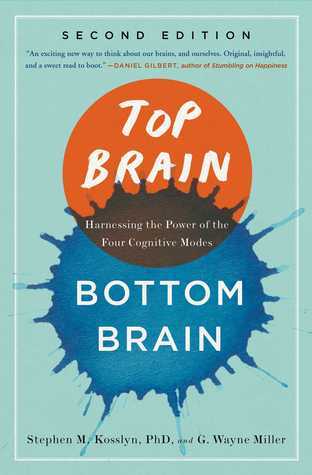
Top Brain, Bottom Brain: Harnessing the Power of the Four Cognitive Modes
by G. Wayne Miller
Rating: 3.1 ⭐
One of the world’s leading neuroscientists teams up with an accomplished writer to debunk the popular left-brain/right-brain theory and offer an exciting new way of thinking about our minds. The second edition, with expanded practical applications, highlights how readers can harness the theory to succeed in their own lives.For the past fifty years, popular culture has led us to believe in the left-brain vs. right-brain theory of personality types. Right-brain people, we’ve been told, are artistic, intuitive, and thoughtful, while left-brain people tend to be more analytical, logical, and objective. It would be an illuminating theory if it did not have one major drawback: It is simply not supported by science.Dr. Stephen M. Kosslyn, who Steven Pinker calls “one of the world’s great cognitive neuroscientists,” explains with cowriter G. Wayne Miller an exciting new theory of the brain. Presenting extensive research in an inviting and accessible way, Kosslyn and Miller describe how the human brain uses patterns of thought that can be identified and understood through four modes of thinking: Mover, Perceiver, Stimulator, and Adaptor. These ways of thinking and behaving shape your personality, and with the scientifically developed test provided in the book, you’ll quickly be able to determine which mode best defines your own usual style. Once you’ve identified your usual mode of thought, the practical applications are limitless, from how you work with others when you conduct business, to your personal relationships, to your voyage of self-discovery.

Claiborne Pell (1918-2009) was Rhode Island's longest serving U.S. senator, with six consecutive terms from 1961 to 1997. A liberal Democrat, Pell is best known as the sponsor of the Pell Grants. He was also the force behind the creation of the National Endowment for the Arts and the National Endowment for the Humanities, and a visionary in high-speed rail transportation and other areas. An early environmentalist and opponent of the Vietnam War, Pell left his mark on several treaties and peace initiatives.Born into the wealthy family that settled the Bronx, New York, Pell married Nuala O'Donnell, an heiress to the A&P fortune. He lived on the waterfront in exclusive Newport, Rhode Island, yet was a favorite of blue-collar voters. Frugal and quirky, he believed in ESP and UFOs, and was often seen jogging in a sports coat and shorts. Both his hard work and his personality left an indelible mark on this small but influential state--and on America. This lively biography was written with the cooperation of the senator's family, and with exclusive access to family records and the extensive archives at the University of Rhode Island.

The Xeno Chronicles: Two Years on the Frontier of Medicine Inside Harvard's Transplant Research Lab
by G. Wayne Miller
Rating: 2.9 ⭐
Dr. David H. Sachs of the Harvard Medical School and Massachusetts General Hospital is not a household name, but within medical science, he is a giant. An immunologist and surgeon, Sachs has made significant contributions in the field of organ transplantation. But Sachs's real passion— and the possibility for a revolution in medicine—lays in xenotransplantation: using animal parts to treat sick people. "Xeno" might save the lives of untold thousands. It could also lead to a multi-billion-dollar business. Millions of dollars have been invested in Sachs's work in the hopes of staking a lucrative claim in the future of medicine. As The Xeno Chronicles begins, Sachs's decades of work and hopes have all converged on a genetically engineered, cloned pig named Goldie, whose organs have been designed not to be rejected by their recipients. Experiments begin but just as Sachs begins to get unprecedented results, he loses his biggest financial support and the collaboration of an important outside lab. He is almost sixty-two. Time and money are starting to run out. G. Wayne Miller's absorbing, dramatic narrative account of a brilliant scientist's attempts to achieve a breakthrough offers an illuminating look into the minds, hearts, labs, and practical realities of those on the very forefront of medical science. Based on exclusive and unprecedented inside-the-lab access, The Xeno Chronicles clarifies both how science works and the ethical issues it raises through an absorbing human story and intimate portrait of Sachs, his colleagues, and patients.

A story of heart, soul and business, featuring Alan Hassenfeld and Hasbro.In this sequel (and prequel) to his best-selling Toy The epic struggle between G.I. Joe, Barbie and the companies that make them, G. Wayne Miller takes us on a tour-de-force deep inside the world of entertainment, Hollywood, and philanthropy.“Compulsively readable… beautifully researched… a unique and fascinating book.” –DANIELA LAMAS, AUTHOR OF THE BEST-SELLING YOU CAN STOP HUMMING NOW“G. Wayne Miller reports like a demon and writes like an angel, and Kid Number One is a masterful example of his craft… A triumph!” –WASHINGTON POST SENIOR CORRESPONDENT KEVIN SULLIVAN, AUTHOR OF #1 NEW YORK TIMES BESTSELLER A MEMOIR OF SURVIVAL AND CLEVELAND“Miller’s tenderly painted portrait of Alan Hassenfeld, a quiet, hard-working, ambitious and yet socially conscious entrepreneur and philanthropist who embodied the American Dream, will leave a lasting impression on the minds of readers.” –PADMA VENKATRAMAN, BESTSELLING AUTHOR OF THE BRIDGE HOME“From family business to a cornerstone of American popular culture, Miller's history sheds light on the family and the values at the heart of one of the globe's most recognizable brands.” –JULIAN C. CHAMBLISS, HISTORIAN, SCHOLAR AND AUTHOR OF ASSEMBLING THE MARVEL CINEMATIC UNIVERSE

G. Wayne Miller explores the drama and passion teenagers hide from everyone but their peers in this warm, funny, and eye-opening account of two kids from a small New England town as they come of age. As Dave Bettencourt, seventeen, begins his senior year of high school, there are many things he wants to be elected class clown; start on the varsity basketball team; turn his high school upside down with his radical underground newspaper, Total Godhead; finally convince his mother, a biology teacher, that he’ll never be a scientist; and take his strikingly beautiful girlfriend, Beth Sunn—whose passion is in-your-face rap—to the prom. Beth’s plans for her sophomore year loving Dave forever; being a cheerleader; surviving school; and staying absolutely cool. All over America, teens like Beth and Dave are coming of age in a world that is dramatically different from the one in which most of us grew up. But their experience is They’re falling in love, defying their parents, learning to be independent, and discovering who they are. This is the true story of two kids growing up on Main Street, U.S.A., away from urban violence and the glare of the national media—a place where, despite all the pressures of a new age, it is still possible to believe the good things about being young. “Offers a sympathetic and insightful portrait of high school life in the heartland.”—Julie Salamon, author of Devil’s Candy

Mark Gray had it all together. Until he didn’t. Remarkably creative, successful in business, Gray was a husband, father and son of an elderly clergyman—and a superhero in the online and gaming worlds. Until one night in New York City, when it seems he was responsible for the death of a mysterious woman. Suddenly one of America’s Most Wanted criminals, Gray went on the run—taking a journey back in time and place, where he discovered a long-buried secret. Blue Hill is a story of mystery, memory, faith, forgiveness, and acceptance—a story of lies and truths, of what is real and what is fleeting. Set in 1997, Blue Hill also is a fictional chronicle of an epochal real the dawning of the Internet Age, when the culture churned and the world was entering a virtual other-existence. Chat rooms. AOL. Dial-up. Floppy discs. Files measured in kilobytes. The dot-com boom. PlayStation. Nintendo. Super Mario 64. Remember? Here we are today, the fruits of our labor realized, so to speak, with Facebook, Twitter, Instagram, disinformation, viral conspiracy theories, deep-fake videos, etcetera. A new world has arrived, and the real-life artifacts in this novel are its roots. Part thriller, part fantasy and farce, Blue Hill is mostly a novel about who and what matter most in this short life. ********** Blue Hill is a story of seduction by a time and a technology, a painful story of narcissism, compromise, and redemption. G. Wayne Miller helps us to see ourselves as we are, not as who we want to be, and to see a time (1997) and a culture for what it was. In this hard to put down novel, G. Wayne Miller helps us understand who we become, and even better, who we might be if we take the time to think, look at ourselves in the mirror, and remember what matters. -- Michael Fine, author of Health Care Revolt, Abundance and The Bull and Other Stories

In this page-turning sequel to his popular Thunder Rise trilogy (Thunder Rise, Asylum, Summer Place), G. Wayne Miller breathes unnerving new life into the time-honored zombie story. An idyllic New England town panics as national media cover what seems to be a serial killer or satanic cult with echoes of Charles Manson. With a this killer kills with drowning. In reality, something worse that a cult is Sully, a murdered outcast brought back to life one drug-crazed night in a cemetery by Joel White, a quirky college student who has been initiated into the rites of the dark Haitian bocor priesthood. As the killings continue and the police, FBI and National Guard are stymied, Joel enlists the help of Pierre Antoine, a Haitian houngan, or good voodoo priest, to stop Sully – who, moving methodically down the list of people who wronged him in life, has taken aim at Joel, his boyhood pal, and his girlfriend. Part horror, part mystery, and told with a distinctive style and strong sense of character and place, Drowned climaxes on the Fourth of July, when police finally have made an arrest and a relieved public is eager for summer fun. But the authorities have the wrong man — and Sully, who not even bullets can stop, remains intent on revenge. Only Pierre Antoine, with the help of Native American Charlie Moonlight, the hero of Thunder Rise, has any chance of stopping The Evil — “the source of all suffering, of all human sickness and misery and pain,” as the good Haitian priest describes the darkest of dark forces that zombie Sully is channeling.

Toy Wars: The Epic Struggle Between G.I. Joe, Barbie and the Companies That Make Them
by G. Wayne Miller
Rating: 4.4 ⭐
This is the real toy story, an unprecedented behind-the-scenes journey through a world of influence, fantasy, and multimillion-dollar Hollywood deals, a world where the whims of children make millionaires and topple titans. This is also the story of an unusual man. Alan Hassenfeld, the chief executive officer of Hasbro, never intended to run a Fortune 500 company. A free spirit who dreamed of being a writer and exploring Asia, he was content to remain in the shadow of his older brother Stephen, a marketing genius who transformed a family firm established by immigrant Jews into powerhouse and Wall Street darling. Then tragedy struck. Stephen, and intensely private man, died of AIDS, a disease he had not acknowledged he had, even to his family. Alan Hassenfeld was named CEO, just as Hasbro was facing a daunting onslaught of challenges. Toy Wars is about Alan's struggle to balance the demands of the bottom line with his ideals about the kind of toys children deserve, as well as the ethical obligations of management. Wayne Miller, an award-winning journalist and novelist, was granted unprecedented access to Hasbro, the maker of G.I. Joe, Star Wars toys, Mr. Potato Head, Batman, Monopoly, Scrabble, Trivial Pursuit, and countless other favorites. For five years, he sat in on design sessions, marketing meetings, and focus groups, and interviewed employees in every part of the company. He witnessed a major corporate restructuring; crucial deal with Dreamworks SKG; a hostile takeover bid by archrival Mattel; the collapse of a $45 million virtual reality game; and the company makeover of G.I. Joe, Hasbro's flagship product and one of the most popular toys of all time. Toy Wars is filled with many colorful characters, Hollywood moguls Steven Spielberg and George Lucas, whose kid-friendly movies can translate into licensing gold for toymakers Mighty Morphin Power Rangers creator Haim Saban, who tapped into a popular Japanese TV series and made it a worldwide television and merchandising phenomenon Mattel CEO Jill Barad, the second-highest-paid woman in corporate America, who promotes and defends Barbie with the zeal of a religious crusader Hasbro executive Al Verrecchia, the loyal second in command who did not let friendship or tradition stand in the way of a dramatic restructuring Larry Bernstein, arguably the best toy salesman ever, a riotous raconteur whose divisional presidency crumbled when he was unable to meet Hasbro's profit goals Rich in family drama and written with sly wit, Toy Wars is a deeply compelling business story, a fascinating tour through a billion-dollar industry that exerts tremendous influence on the lives of children everywhere.

Despite carrying the scars of childhood trauma, Mary McAllister has enjoyed a successful career and become the mother of two wonderful children. Then their deadbeat father leaves, her young daughter dies, and she is hospitalized in a psychiatric center as she seeks to recover from this devastating loss. But she is not the same when she is released—and during escalating periods of crisis, she claims to be possessed by Z-DA, an evil creature from a distant galaxy that has come to earth in a war almost as old as the universe itself with Ordo, leader of a good species.Is this real, or only extreme psychosis? Is Mary's young son, Billy, really Ordo, as she increasingly believes, a monster that must be vanquished? Is Billy's dead sister, Jessica, really reaching out to her brother for help in freeing her from the dark and distant place where she is trapped? As a city is engulfed in mayhem, events race toward a stunning conclusion in Traces of Mary, a one-of-a-kind mix of horror, science-fiction, thriller and mystery by best-selling author G. Wayne Miller.

With the support of his wife, Sharon, young neurosurgeon Nick Emin has left medicine to pursue his longtime dream of architecture -- and now he has just won his first big contract, to design a luxury resort from the remains of an old state psychiatric hospital that lies in the shadow of Thunder Rise. It seems his decision to quit operating was wise, after all, despite the criticism he endured when he put down the scalpel.Taking up temporary residence near the long-closed Elmwood State Hospital, Nick is slowly drawn into the institution -- and back in time, to when Nazi-inspired experimental surgery on the mentally ill was conducted behind the old brick walls of Elmwood. And not just lobotomy, once so widely practiced in America...The pull of Nick into Elmwood’s past is no random development or horror-novel cliché. With his neurosurgical expertise, Nick has been called for a specific reason, by a specific person he will come to know well -- someone of great importance to him. When Sharon becomes pregnant with their first child, Nick begins to understand.But first, the enigmatic Saint Peter and his friends have a mission for Nick that pits him against Elmwood’s inhumane administration -- a mission of salvation with terrible consequences if it fails.A portion of the proceeds from Asylum will be donated to Zambarano State Hospital in Pascoag, R.I., in the memory of the late Frank Beazley, artist, poet and great champion of the disabled. Read the story of Frank’s amazing and inspiring life at

Kid Number One: A story of heart, soul and business, featuring Alan Hassenfeld and Hasbro
by G. Wayne Miller
Rating: 4.3 ⭐
Having escaped religious persecution in Eastern Europe in 1903, Alan Hassenfeld's grandfather and great-uncle arrived in America as penniless teenage immigrants - refugees who went from hawking rags on the streets of New York City to building what became the world's largest toy company, Hasbro. Alan's father, Merrill, brought Mr. Potato Head and G.I. Joe to consumers and his only brother, Stephen, made Hasbro a Fortune 500 company and Hollywood player. Alan was the free spirit who wanted to write novels, date beautiful women and travel the world. He never wanted to run Hasbro, and no one ever believed he would - or could.And then Stephen died, tragically of AIDS. "Kid Number One," as Alan liked to call himself, was suddenly chairman and CEO. Silencing the skeptics, he took the company to greater heights - and then almost killed it with a series of bad decisions including Hasbro's acquisition of rights to POKéMON. Putting ego aside, Hassenfeld gave his long-time lieutenant Al Verrecchia command and set in motion a plan whereby he would leave the corner office. Verrecchia saved the company, and after renewed success, he himself retired, leaving Hasbro in the hands of current CEO and chairman Brian Goldner, so highly regarded that he was brought onto the board of CBS.With his fortune, Hassenfeld could have sailed into the sunset on a yacht, but instead, he went to work expanding the long family tradition of Tikkun Olam - "repairing the world" - begun by his grandfather and great-uncle, who, grateful to have survived, tirelessly helped immigrants and needy citizens of their new country. Alan Hassenfeld's philanthropy has helped build two children's hospitals, establish numerous educational and health programs, train young doctors and scientists, resettle refugees, promote peace in the Mideast and more. For decades, he also has been a highly visible advocate for national political and ethics reform, despite personal threats and the scorn of crooked politicians.Kid Number One: A story of heart, soul and business, featuring Alan Hassenfeld and Hasbro, weaves these stories into a seamless, dramatic narrative that begins with the slaughter of Jews in 1903 Poland and continues to today -- when in an era of unchecked narcissism and greed, Hassenfeld, like Bill Gates, serves as a model for what people of great wealth can do when they put self aside. Kid Number One also chronicles the history of American toys -- and not just such Hasbro classics as Monopoly, Transformers and Star Wars, but also Mattel's timeless brands including Barbie and many lesser-known toys by companies large and small, many no longer in existence.Granted exclusive and unprecedented access inside a $5-billion toy and family-entertainment company and one of America's leading if largely unknown philanthropies, G. Wayne Miller, author of the best-selling Toy Wars: The epic struggle between G.I. Joe, Barbie and the companies that make them, is uniquely qualified to tell this tale.

Best-known for his critically acclaimed non-fiction books and documentary films, Miller has been praised for his fiction writing, dating to his first book, Thunder Rise: A Novel of Terror. For several years, he was a regular at fantasy and horror conventions, notably NECON, the fabled annual gathering that has featured Stephen King, Peter Straub and other writers. Fiction remains his passion.The Vapors collection is the second volume in a planned trilogy. Included are thirteen tales, some of which are being published for the first time, of horror and dark fantasy:Nothing ThereVaporsThe SenatorSweetieHoney LoveGod of SelfGnawingDeath TrainSimonDriveChiganookMonsterThe Devil at BayIn addition, his screenplay titled Summer Love is included in this collection.Miller is the author of Thunder Rise and seven books of non-fiction, including King of Hearts and Toy Wars. He is the writer and co-producer of three feature-length documentary movies: On The Lake, Behind the Hedgerow and Coming Home, all broadcast on PBS stations. Visit Miller at www.gwaynemiller.com

State senator Ken Callahan is beginning to think his wife, Carol, is on the verge of going crazy. Her insect phobia seems to be intensifying, and it threatens repercussions not just for him and their two young children — but also his political ambitions. He is running for lieutenant governor of Massachusetts, against a tough opponent. All he needs as the campaign heats up is for Carol to lose it in some public fashion. The media would crucify him. The race would be lost.And so beyond the usual reasons for buying a vacation home, Ken is pleased that his wife and kids can spend the summer there, away from the political spotlight. For her part, Carol envisions this beautiful old Victorian on acres of Berkshire County woods as a place to reset — to resume the promising artistic career she dropped when she became a mother, and maybe even rekindle relations with her driven husband.But the summer place lies in the shadow of Thunder Rise, in what Carol will discover is a vortex of malevolence made worse by the mysterious doings of the long-dead previous owner, the eccentric loner Myron Valkenburgh. Something to do with insects, Carol learns, as dragonflies seem to act as sentinels and the family dog dies a terrible death in a swarm of yellow jackets... and what started as escape spirals down into dark madness that the innocent young children Caleb and Sarah instinctively sense.Third in the Thunder Rise trilogy, Summer Place is a study in fear, paranoia, stubborn pride, and lost love — and heartless ambition ultimately destroyed by something uncontrollable and far ghostlier than a mere insect phobia.

Mark Gray had it all together.Until he didn’t.Remarkably creative, successful in business, Gray was a husband, father and son of an elderly clergyman—and a superhero in the online and gaming worlds.Until one night in New York City, when it seems he was responsible for the death of a mysterious woman.Suddenly one of America’s Most Wanted criminals, Gray went on the run—taking a journey back in time and place, where he discovered a long-buried secret.Blue Hill is a story of mystery, memory, faith, forgiveness, and acceptance—a story of lies and truths, of what is real and what is fleeting.Set in 1997, Blue Hill also is a fictional chronicle of an epochal real the dawning of the Internet Age, when the culture churned and the world was entering a virtual other-existence. Chat rooms. AOL. Dial-up. Floppy discs. Files measured in kilobytes. The dot-com boom. PlayStation. Nintendo. Super Mario 64. Remember?Here we are today, the fruits of our labor realized, so to speak, with Facebook, Twitter, Instagram, disinformation, viral conspiracy theories, deep-fake videos, etcetera. A new world has arrived, and the real-life artifacts in this novel are its roots.Part thriller, part fantasy and farce, Blue Hill is mostly a novel about who and what matter most in this short life.

THE GROWING A STORY OF A REMARKABLE MAN UNLIKE ANY OTHEROUTSIDERS KNEW FRANK BEAZLEY as a poet who'd won national awards and as an artist who painted in an impressionist style, donating the proceeds from his acrylics and water colors to charity. They knew him as an eloquent man who spoke for those less fortunate than he at legislative hearings. Vice President Al Gore was among those who had honored his advocacy. I had met Frank many years ago, and I wrote a story about him, published in December 1992, in which he disclosed that all he'd ever wanted for Christmas was to have his mother call him "son." Frank intrigued me, but my work took me elsewhere and it wasn't until much later that I set out to learn more about him. His story was unlike any I have ever told.Frank had been abandoned at birth, and experienced a paralyzing accident, the loss of the woman he loved, and cancer. He never knew his father. He didn't meet his mother until he was a teenager, but she refused to confirm who she was, refused to ever call him "son" - even though he later lived in the same house with her and her mother, his grandmother. In Frank's native Nova Scotia, a heartless secrecy surrounded children like him who had been born out of wedlock. Often, these secrets followed their keepers to the grave.He had his dark moments, to be sure, but they were rare. The Frank I came to know was a man of goodwill. He told jokes (sometimes corny ones) and funny stories, and his laugh was contagious. He taught mostly by example - lessons about patience and forgiveness, of the importance of smelling roses and counting blessings, which he did not consider cliches. And while he was too humble to call himself wise, he was. ALL PROCEEDS FROM SALES OF THIS BOOK WILL BE DONATED TO ADVOCATES IN ACTION RHODE ISLAND!

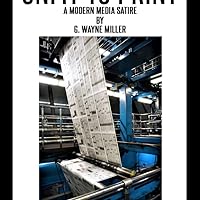
What happens when SuperGoodMedia, a ridiculous out-of-town newspaper chain, buys the venerable Boston Daily Tribune, which has published every day since 1823? Heads roll and the few journalists left wonder when it will be their turn. That’s protagonist Nick Nolan’s worry, too – until he gets exclusive coverage of a single mother who claims that the Virgin Mary is speaking to the world through her young comatose daughter.Nolan not only keeps his job but becomes an international celebrity as The Tribune’s circulation soars, advertisers bring record revenues, SuperGoodMedia negotiates lucrative movie and TV contracts, and circus-like crowds of thousands gather outside the single mother’s home, awaiting miracles as the pope plans to visit... and a secret disaster looms.Enter Benjamin Franklin, Founding Father and early pillar of the American press. Appearing to Nolan in dreams, Franklin offers a brutal critique of much of today’s media, when real-life hedge funds and chains gut and close local newspapers, creating an unprecedented threat to American democracy. Franklin also prompts Nolan’s eventual crisis of conscience, which leads to his redemption and an initiative that might help save local journalism while furthering social-justice causes.By turns dramatic, fantastical, and darkly comedic, “Unfit to Print” is a scathing indictment of today’s media by G. Wayne Miller, author and multiple award-winning journalist for four decades, most of them at the Pulitzer Prize-winning Providence Journal, oldest continuously published daily newspaper in the U.S. “Unfit to Print” is also a keen commentary on today’s politics and culture, when so many get their “news” from social media, misinformation from domestic and foreign sources distorts truth, and reporters are disparaged as enemies of the people.But why a novel and not a memoir or exposé?Because as Ralph Waldo Emerson is purported to have said, “fiction reveals truth that reality obscures.”******"A witty, zany and outrageously effective take on the state of print journalism today. A tale that's one part cautionary tale and two parts laugh out loud, sidesplitting fun." – Jon Land, New York Times and USA Today bestselling author"An unflinching, deeply entertaining, and often satirical take on our modern media." – Vanessa Lillie, bestselling author of Little Voices and Blood Sisters"A story that will stay with you, much as Ben Franklin's ghost gleefully haunts its hero." – Tom Nichols, author and Staff Writer at The Atlantic"G. Wayne Miller’s wickedly fun skewering of vulture capitalists and clickbait grifters paints a darkly satiric picture of the decline of journalism. But he also pens a love letter to American journalism and offers a road map for restoring local news – and our democracy." – Mike Stanton, New York Times bestselling author and University of Connecticut Journalism professor"Unfit to Print is easily the best Miller book so far and I've read more than a few of this author's works." – Padma Venkatraman, award-winning author of The Bridge Home and Born Behind Bars"EXTRA! EXTRA! READ ALL OF IT! Read it and weep, despite the laughs." – Mark Thompson, Pulitzer Prize winning reporter and former Time magazine correspondent"This eye- and mind-opening book is timely and not-to-be-missed.

In an alternative 1919, the very air is toxic and the world lies in ruins. Zenith City, dominated by the corporation Illusion Inc., has seized control of the global economy. The Great War ended after the corporation invented Synthetic Men who defeated the enemy but went on to wipe out most of the population. After their creations murder his wife, one man swears revenge on the corporation and its CEO Ronald Pryor. With the aid of a small band of operators, including Spider Nelson and Glory McBride, Alastor—a Magician whose real name is Talbot Carruthers—wages a personal vendetta against the corporation, battling Pryor and his right-hand man Gavril Princip, while searching for the missing pages of the Book of Magik in a perilous world of flying cars and ancient sorcery.

Explorations of alienation, madness, the afterlife and post-apocalyptic existence fill this first volume of the collected short stories of G. Wayne Miller.Best-known for his critically acclaimed non-fiction books and documentary films, Miller has been praised for his fiction writing, dating to his first book, Thunder Rise: A Novel of Terror. For several years, he was a regular at fantasy and horror conventions, notably NECON, the fabled annual gathering that has featured Stephen King, Peter Straub and other writers. Fiction remains his passion.In these ten provocative science-fiction and horror tales, Miller bring readers inside darkly imagined worlds with a distinctive voice and mastery of characters, setting and narration. The title story, set in a dystopian future when the atmosphere has been all but incinerated, presents a nightmarish landscape of survival that resonates in this time of global warming. The Since the Sky Blew Off collection, first volume in a planed series, also includes new previously unpublished treatments for horror and science-fiction movies.Miller is the author of Thunder Rise and seven books of non-fiction, including King of Hearts and Toy Wars. He is the writer and co-producer of three feature-length documentary movies: On The Lake, Behind the Hedgerow and Coming Home, all broadcast on PBS stations. Visit Miller at www.gwaynemiller.com

The Beach That Summer
by G. Wayne Miller
Best known for his critically acclaimed non-fiction books and documentary films, G. Wayne Miller has been praised for his fiction writing, dating to his first book, Thunder Rise: A Novel of Terror. For several years, he was a regular at fantasy and horror conventions, notably NECON, the fabled annual gathering that has featured Stephen King, Peter Straub and other writers. Fiction remains his passion.The Beach That Summer is the third volume in his short story collections trilogy. Included are fifteen tales of horror and dark fantasy:The FeelingThe Beach That SummerChristmas in the Year of Our Lord TenBrief Encounters with BabyA Proper BurialElevatorsEvery Step of the WayTime on CharityFirst LoveLabor of LoveTreesMommaSomething for HeidiThe OverseerThe Place He Was InMiller is the author of Thunder Rise and seven books of non-fiction, including King of Hearts and Toy Wars. He is the writer and co-producer of three feature-length documentary movies: On The Lake, Behind the Hedgerow and Coming Home, all broadcast on PBS stations. Visit Miller at www.gwaynemiller.com

Car Crazy: The Battle for Supremacy between Ford and Olds and the Dawn of the Automobile Age
by G. Wayne Miller
Before the “Big Three,” even before the Model T, the race for dominance in the American car market was fierce, fast, and sometimes farcical. Car Crazy takes readers back to the passionate and reckless years of the early automobile era, from 1893, when the first US-built auto was introduced, through 1908, when General Motors was founded and Ford's Model T went on the market. The motorcar was new, paved roads few, and devotees of this exciting and unregulated technology battled with citizens who considered the car a dangerous scourge, wrought by the wealthy, that was shattering a more peaceful way of life.Among the pioneering competitors were Ransom E. Olds, founder of Olds Motor Works and creator of a new company called REO; Olds' cutthroat new CEO Frederic L. Smith; William C. “Billy” Durant of Buick Motor Company (and soon General Motors); and inventor Henry Ford. They shared a passion for innovation, both mechanical and entrepreneurial, but their maniacal pursuit of market share would also involve legal manipulation, vicious smear campaigns, and zany publicity stunts—including a wild transcontinental car race that transfixed the public. Their war on wheels ultimately culminated in a courtroom battle that would shape the American car industry forever.Based on extensive original research, Car Crazy is a page-turning story of popular culture, business, and sport at the dawn of the twentieth century, filled with compelling, larger-than-life characters, each an American original.

The Beach That Summer -- The Essential G. Wayne Miller Fiction, Vol. 3
by G. Wayne Miller
Best known for his critically acclaimed non-fiction books and documentary films, G. Wayne Miller has been praised for his fiction writing, dating to his first book, Thunder A Novel of Terror. For several years, he was a regular at fantasy and horror conventions, notably NECON, the fabled annual gathering that has featured Stephen King, Peter Straub and other writers. Fiction remains his passion.The Beach That Summer is the third volume in his short story collections trilogy. Included are fifteen tales of horror and dark FeelingThe Beach That SummerChristmas in the Year of Our Lord TenBrief Encounters with BabyA Proper BurialElevatorsEvery Step of the WayTime on CharityFirst LoveLabor of LoveTreesMommaSomething for HeidiThe OverseerThe Place He Was InMiller is the author of Thunder Rise and seven books of non-fiction, including King of Hearts and Toy Wars. He is the writer and co-producer of three feature-length documentary On The Lake, Behind the Hedgerow and Coming Home, all broadcast on PBS stations. Visit Miller at www.gwaynemiller.com

Toy Wars: The Epic Struggle Between G.I. Joe, Barbie and the Companies That Make Them
by G. Wayne Miller
This is the real toy story, an unprecedented behind-the-scenes journey through a world of influence, fantasy, and multimillion-dollar Hollywood deals, a world where the whims of children make millionaires and topple titans.This is also the story of an unusual man. Alan Hassenfeld, the chief executive officer of Hasbro, never intended to run a Fortune 500 company. A free spirit who dreamed of being a writer and exploring Asia, he was content to remain in the shadow of his older brother Stephen, a marketing genius who transformed a family firm established by immigrant Jews into powerhouse and Wall Street darling.Then tragedy struck. Stephen, and intensely private man, died of AIDS, a disease he had not acknowledged he had, even to his family. Alan Hassenfeld was named CEO, just as Hasbro was facing a daunting onslaught of challenges. Toy Wars is about Alan's struggle to balance the demands of the bottom line with his ideals about the kind of toys children deserve, as well as the ethical obligations of management.Wayne Miller, an award-winning journalist and novelist, was granted unprecedented access to Hasbro, the maker of G.I. Joe, Star Wars toys, Mr. Potato Head, Batman, Monopoly, Scrabble, Trivial Pursuit, and countless other favorites. For five years, he sat in on design sessions, marketing meetings, and focus groups, and interviewed employees in every part of the company. He witnessed a major corporate restructuring; crucial deal with Dreamworks SKG; a hostile takeover bid by archrival Mattel; the collapse of a $45 million virtual reality game; and the company makeover of G.I. Joe, Hasbro's flagship product and one of the most popular toys of all time.Toy Wars is filled with many colorful characters, moguls Steven Spielberg and George Lucas, whose kid-friendly movies can translate into licensing gold for toymakersMighty Morphin Power Rangers creator Haim Saban, who tapped into a popular Japanese TV series and made it a worldwide television and merchandising phenomenonMattel CEO Jill Barad, the second-highest-paid woman in corporate America, who promotes and defends Barbie with the zeal of a religious crusaderHasbro executive Al Verrecchia, the loyal second in command who did not let friendship or tradition stand in the way of a dramatic restructuringLarry Bernstein, arguably the best toy salesman ever, a riotous raconteur whose divisional presidency crumbled when he was unable to meet Hasbro's profit goalsRich in family drama and written with sly wit, Toy Wars is a deeply compelling business story, a fascinating tour through a billion-dollar industry that exerts tremendous influence on the lives of children everywhere.

King of Hearts: The True Story of the Maverick Who Pioneered Open Heart Surgery by G. Wayne Miller
by G. Wayne Miller
![[Coming of Age: The True Adventures of Two American Teens] [By: Miller, G. Wayne] [May, 1995]](/placeholder.svg?height=400&width=300)
[Coming of Age: The True Adventures of Two American Teens] [By: Miller, G. Wayne] [May, 1995]
by G. Wayne Miller