
Epicurus
Epicurus (Greek: Ἐπίκουρος, Epikouros, "upon youth"; Samos, 341 BCE – Athens, 270 BCE; 72 years) was an ancient Greek philosopher and the founder of the school of philosophy called Epicureanism. Only a few fragments and letters remain of Epicurus's 300 written works. Much of what is known about Epicurean philosophy derives from later followers and commentators. For Epicurus, the purpose of philosophy was to attain the happy, tranquil life, characterized by aponia, the absence of pain and fear, and by living a self-sufficient life surrounded by friends. He taught that pleasure and pain are the measures of what is good and bad, that death is the end of the body and the soul and should therefore not be feared, that the gods do not reward or punish humans, that the universe is infinite and eternal, and that events in the world are ultimately based on the motions and interactions of atoms moving in empty space. His parents, Neocles and Chaerestrate, both Athenian citizens, had immigrated to the Athenian settlement on the Aegean island of Samos about ten years before Epicurus' birth in February 341 BCE. As a boy he studied philosophy for four years under the Platonist teacher Pamphilus. At the age of 18 he went to Athens for his two-year term of military service. The playwright Menander served in the same age-class of the ephebes as Epicurus. After the death of Alexander the Great, Perdiccas expelled the Athenian settlers on Samos to Colophon. After the completion of his military service, Epicurus joined his family there. He studied under Nausiphanes, who followed the teachings of Democritus. In 311/310 BC Epicurus taught in Mytilene but caused strife and was forced to leave. He then founded a school in Lampsacus before returning to Athens in 306 BC. There he founded The Garden, a school named for the garden he owned about halfway between the Stoa and the Academy that served as the school's meeting place. Even though many of his teachings were heavily influenced by earlier thinkers, especially by Democritus, he differed in a significant way with Democritus on determinism. Epicurus would often deny this influence, denounce other philosophers as confused, and claim to be "self-taught". Epicurus never married and had no known children. He suffered from kidney stones, to which he finally succumbed in 270 BCE at the age of 72, and despite the prolonged pain involved, he wrote to Idomeneus: "I have written this letter to you on a happy day to me, which is also the last day of my life. For I have been attacked by a painful inability to urinate, and also dysentery, so violent that nothing can be added to the violence of my sufferings. But the cheerfulness of my mind, which comes from the recollection of all my philosophical contemplation, counterbalances all these afflictions. And I beg you to take care of the children of Metrodorus, in a manner worthy of the devotion shown by the young man to me, and to philosophy." -http://en.wikipedia.org/wiki/Epicurus
30 Books Written

New to Penguin Classics and the perfect companion volume to bestselling author Daniel Klein's new book, Travels with Epicurus The teachings of Epicurus—about life and death, religion and science, physical sensation, happiness, morality, and friendship—attracted legions of adherents throughout the ancient Mediterranean world and deeply influenced later European thought. Though Epicurus faced hostile opposition for centuries after his death, he counts among his many admirers Thomas Hobbes, Thomas Jefferson, Karl Marx, and Isaac Newton. This volume includes all of his extant writings—his letters, doctrines, and Vatican sayings—alongside parallel passages from the greatest exponent of his philosophy, Lucretius, extracts from Diogenes Laertius' Life of Epicurus, a lucid introductory essay about Epicurean philosophy, and a foreword by Daniel Klein, author of Travels with Epicurus and coauthor of the New York Times bestseller Plato and a Platypus Walk into a Bar.

Epicureanism is commonly regarded as the refined satisfaction of physical desires. As a philosophy, however, it also denoted the striving after an independent state of mind and body, imperturbability, and reliance on sensory data as the true basis of knowledge.Epicurus (ca. 341-271 B.C.) founded one of the most famous and influential philosophical schools of antiquity. In these remains of his vast output of scientific and ethical writings, we can trace Epicurus' views on atomism, physical sensation, duty, morality, the soul, and the nature of the gods.

A total philosophy of life, death, religion, science, ethics, and culture promising liberation from the obstacles that stand in the way of our happiness, the teachings of Epicurus claimed many thousand committed followers all over the ancient Mediterranean world and deeply influenced later European thought. From the first years of its development, however, Epicureanism faced hostile opposition, and, as a result, much of our evidence for the content of this teaching is unhelpful and even misleading. "The Epicurus Reader" fills the need for a reliable selection and translation of the main surviving evidence, some of it never previously translated into English.Included here, with the exception of "Lucretius De Rerum Natura", are the most important surviving ancient texts of a system of thought that even today remains a powerful living philosophy. "The Epicurus Reader" will be greatly welcomed by anybody who teaches Hellenistic Philosophy, or Epicureanism in particular, at any level. It offers a judicious and ample selection of texts, including the only extant writings by Epicurus. More importantly it provides a reliable, often admirably accurate translation of these sometimes difficult texts. Finally, there is an introduction the general reader or the undergraduate will find very helpful.
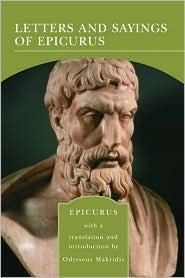
Some rubbing & edgewear; some yellowing; few creases & scrathces; otherwise overall clean & tight. 100 pages

La sociedad helenística estaba, en tiempos de Epicuro, gravemente enferma, aquejada de males orgánicos y psíquicos. Con intención de devolverle la salud perdida aparecen numerosos médicos, cada uno provisto de su particular terapia. Epicuro fue uno de ellos. Diagnosticó los males, coyunturales y permanentes, y puso toda su sabiduría y empeño en encontrar una solución definitiva y eterna. En buena parte lo consiguió, pues muchos espíritus lo han seguido desde entonces con devoción.

The Principal Doctrines are forty authoritative conclusions set up as official doctrines by the founders of Epicureanism: Epicurus of Samos, Metrodorus of Lampsacus, Hermarchus of Mitilene and Polyaenus of Lampsacus. The first four doctrines make up the Tetrapharmakon (Four Cures), which have sometimes been compared to Buddhism's Four Noble Truths. They are often cited as "PDs" in English.Since most of Epicurus' 37 books "On Nature" are lost to us, the Principal Doctrines are, together with Epicurus' Letters to Herodotus, Menoeceus, and Pythocles, the most authoritative writings in Epicureanism. The Principal Doctrines exemplify the Epicurean philosophers' practice of publishing summaries and outlines of their teachings for easy memorization. However, they are so concise and short that it's difficult to understand them in depth without the context of additional commentaries and writings by ancient sources or by modern Epicurean practitioners, whenever possible.

Testo greco a fronte.Dal naufragio quasi completo della vastissima produzione di Epicuro si sono salvate, tra i pochi altri scritti, tre Lettere. Indirizzate ad altrettanti amici ma in realtà destinate alla diffusione più ampia possibile, le Lettere contengono una sintesi chiara ed essenziale di determinati aspetti del pensiero del filosofo. Dalla costituzione fisica dell'universo come aggregazione di atomi sempre in movimento, all'astronomia, all'etica, Epicuro è interessato a ogni campo del sapere perchè solo la conoscenza della verità in tutti i suoi aspetti può aiutare l'uomo a vivere privo di paure infondate e di desideri ingannevoli e tormentosi.

Pocos, muy pocos filósofos han sufrido tantas censuras, calumnias y encubrimientos como Epicuro. Siglos y siglos de difamación y mordaza. Lo cual no debería extrañarnos. Epicuro cultivó buena parte de sus teorías y sus prácticas en un jardín situado a las afueras de Atenas, en la periferia de toda filosofía oficial. En aquel jardín vivieron, debatieron y rieron hombres y mujeres, aristócratas y esclavos, todos iguales. Mientras el estado y la democracia atenienses se desmoronaban en el Ágora, en ese jardín cada cual se construía a sí mismo y se orientaba hacia su propia felicidad. Epicuro inventó allí nuevas posibilidades de existencia, nuevas virtudes, nuevos conceptos. Revolucionó por completo la historia del pensamiento. Fue el primero, muchos siglos antes que Nietzsche, en afirmar que sólo es posible filosofar con el cuerpo, desde el cuerpo. Fue el primero en enfrentarse a la hipocresía de los líderes políticos y económicos, que se apropiaban (y se apropian) del placer y la riqueza mientras pregonaban (y pregonan) la tristeza y la resignación. Fue el primero, en definitiva, en proponer una idea general de la filosofía como medicina de la mente, como camino hacia una vida buena, una existencia feliz para todo hombre y mujer. ¿Cómo no iban a querer silenciarlo? En este libro presentamos los principales textos y fragmentos que la historia nos ha dejado de Epicuro. Lo hacemos en la impecable traducción de Carlos García Gual, que consideramos, como editores y como lectores, la mejor versión jamás realizada en nuestra lengua de la obra de este pensador. Y la completamos con tres ensayos sobre la filosofía epicúrea escritos por tres de los más importantes especialistas internacionales en el ámbito de la filosofía el propio Carlos García Gual, Emilio Lledó y Pierre Hadot, donde reflexionan sobre Epicuro o el Jardín, Epicuro o el pensamiento, Epicuro o la subversión, Epicuro o la risa, Epicuro o el placer de la existencia

Epicurus summarizes the key doctrines from “On Nature” (of which only a few fragments have been recovered) in this letter to Herodotus. At a time when most philosophers still endorsed what amounted to a magical world-view, Epicurus squarely places himself in the atomistic/materialistic tradition of Democritus. Epicurus also adds some brilliant and daring insights of his own, notably in his explanation of mental function in terms of the movements of specialized neural atoms and his suggestion that the universe is filled with other worlds where extraterrestrial life is possible.

Ο Επίκουρος επιστρέφει στον κατεξοχήν τόπο της φιλοσοφίας, στην Αθήνα, όταν αρχίζουν οι ελληνιστικοί χρόνοι. Αγνοεί επιδεικτικά τον Πλάτωνα και τον Αριστοτέλη και ξαναπιάνει το νήμα της Ιωνικής και της Δημοκρίτειας παράδοσης. Ανοίγει τη δική του σχολή, τον Κήπο, όπου δεν διδάσκει τη φιλοσοφία ως ένα σύνολο γνώσεων αλλά την ασκεί ως έναν θεραπευτικό τρόπο ζωής μέσα στην κοινότητα των φίλων.Με γλώσσα σκοπίμως απλή και χωρίς να ηθικολογεί, ο Επίκουρος ξαναθέτει και απαντά σε βασικά ερωτήματα: τι είμαι; πως αντιμετωπίζω τους θεούς και τον θάνατο; πως μπορώ να ευτυχήσω; είμαι ελεύθερος; γιατί να νοιάζομαι για τους άλλους;Η ηθική του Επίκουρου είναι ένα ιδιαίτερο κεφάλαιο της αρχαίας φιλοσοφίας και της φιλοσοφικής ηθικής. Αν είναι ενδιαφέρουσα, πιστεύω να φανεί -ανεξάρτητα από τη μεταφραστική μου μεσολάβηση- μέσα από τα κείμενα του ίδιου του Επίκουρου. Αν φανεί όμως απλοϊκή, θα είναι η δική μου προσπάθεια που δεν κατάφερε να αναδείξει το αντίθετο αλλά, ας μου επιτραπεί, και οι αναγνωστικές μας συνήθειες. Ενδιαφέρουσα, έστω γιατί και για ποιον; Για λόγους ιστορικούς, επειδή αποτελεί μια εννοιολόγηση του αρχαίου έλληνα ανθρώπου για επείγοντα ζητήματα ηθικής πράξης: Για την καλύτερη δική μας κατανόηση της ελληνιστικής εποχής, στην οποία κυριάρχησε ο επικουρισμός; (Αλλά εδώ υποκρύπτεται το ερώτημα σχετικά με τους λόγους του τυχόν ενδιαφέροντος μας για την ελληνιστική εποχή ή γενικότερα για το παρελθόν.) Επειδή η ηθική του Επίκουρου αποτελεί μία από τις πρώτες περιπτώσεις εγωισμού και ηδονισμού, τάσεων που μάλλον δεν μας είναι ανοίκειες σήμερα; Επειδή την επικαλούνται φιλόσοφοι τόσο διαφορετικοί όσο ο Νίτσε, ο Μαρξ και ο Τζων Στιούαρτ Μιλλ, ή ερευνητές που μας έμαθαν να κατανοούμε διαφορετικά την αρχαία φιλοσοφία, όπως ο Πιερ Αντό; Είναι ενδιαφέρουσα και επίκαιρη μήπως, στο πλαίσιο μιας, ολοένα περισσότερο της μόδας, πρακτικής φιλοσοφίας που φιλοδοξεί να αντικαταστήσει την ψυχοθεραπεία με τη φιλοσοφική συμβουλευτική; Ή μήπως επειδή ομάδες ανά τον κόσμο αυτοκατανοούνται σαν επικούρειες και επαγγέλονται τη, σοβαρή ή γραφική, αναβίωση του επικουρισμού;

Library of Liberal Arts title.

Epicurus of Samos (341-270 BCE) was the founder of the philosophical system to which he gave his name: Epicureanism. It is a label that is often misused and misunderstood today, with ‘a life of pleasure’ as the key aim misinterpreted as a life of indulgence. In fact, the philosophy of Epicurus demonstrated also by his life, was anything but! He established a school in Athens called The Garden, underpinned by his system of ethics.He promoted, by his own example, a simple, ordered, calm and reflective life.A life of true pleasure, he proposed, is only possible when unharnessed desire for wealth, position, luxury and power has been dissolved and instead steady living and friendship are the watchwords. It is against this background that the understanding and acceptance of the vicissitudes of life, and the inevitability of death, are the rules by which to live. This was in contrast to Platonism on the one hand and the Cynics on the other. The second major facet of Epicurus’ philosophy was his physics, in which he adopted and furthered the theory of atomism introduced by Democritus (460-370 BCE): there was no ‘first mover’, no creation myth, no afterlife. Atoms underpinned all existence. Epicurus was a prodigious author, producing many books - yet very few survive. Diogenes Laertius, the third-century Greek biographer, in his sizeable Lives of Eminent Philosophers, devotes Book X, the final book, to Epicurus. In it he gives an account of the life of the philosopher and including three letters from Epicurus to friends, to Herodotus, Pythocles and Menoeceus. The biography concludes with the concise The Principal Doctrines of Epicurus. Then there are various fragments which have come down to us: The Vatican Sayings (a collection found in the Vatican Library, originally compiled in the 14th century and rediscovered in the 19th century); Epicurean Fragments collected in the 19th century from many classical authors; further fragments included in the collection The Villa of the Papyri; and Diogenes’ Wall Inscription. There are also important works clearly influenced by Epicurus, notably the long important poem De Rerum Natura (On the Nature of Things) by Lucretius (c99 BCE-c55 BCE). And finally, there is a chapter on The Legacy. This represents comments by such figures as Cicero (who though principally a Stoic clearly retained an admiration for Epicurus) and later Epicureans, including Thomas Jefferson, one of the founding fathers of the US. In Epicurus of Samos, His Life and Philosophy, Hiram Crespo, (founder of the Society of Epicurus) has compiled all the source texts and provided introductions to the topic and each chapter. The title is an original commission by Ukemi Audiobooks.

“Elinde olanı küçümseme, bir zamanlar buna sahip olmayı dilemiştin.”Elinizde tuttuğunuz kitap mutluluk felsefesiyle bütünleşmiş en önemli filozof olan Epikür’ün bir yandan kıymetli öğütlerini hatırlatırken bir yandan da mutluluğun reçetesini veriyor.Öğretisini “Bahçe” adını verdiği, yeşilliklerin ve doğanın içindeki okulunda anlatan Epikür, 2000 yıl sonra bizi yine o bahçeye davet ediyor.Peki nedir Bahçe?Her bir bitkinin, her çiçeğin büyümesine tanıklık etmektir. Bir gülün en güzel çağını yaşadıktan sonra soluşuna şahit olmaktır. Kurumuş olanın başını koparmaktır. Ağacın üzerinde yol alan karıncayı, bir kayısının dalında çürüyüşünü, bir zeytinin dalında olgunlaşmasını seyretmektir.Bir bahçede ne kadar çok doğum varsa o kadar da ölüm vardır. Bir bahçede hayatın bütün zıtlıkları vardır. Bir bahçe mikrokozmostur. Bahçeye dikkatle bakan, bütün bir evreni görür.Bahçemize buyurmaz mısınız?

الكتاب عن أبيقور فلسفته وحكمه وهو أحد الفلاسفة القدماء

Τα σωζόμενα αποσπάσματα ενός από τους πολυγραφότερους συγγραφείς της αρχαιότητας. Οι βασικές διδασκαλίες του (Κύριαι δόξαι) και οι επιστολές που συνοψίζουν τις θεωρίες του στη φυσική και την ηθική. Το 10ο βιβλίο του Διογένη Λαέρτιου.ΠΕΡΙΕΧΟΜΕΝΑΕπίκουρος (Εισαγωγή)Βίος Επίκουρου Διογένους ΛαέρτιουΔιαθήκηΕπιστολή προς ΗρόδοτοΕπιστολή προς ΠυθοκλήΕπιστολή προς ΜενοικέαΚύριαι ΔόξαιΕπίκουρου ΠροσφώνησιςΣχόλιαΒιβλιογραφίαΠίνακας κύριων ονομάτων

“It is folly for a man to pray to the gods for that which he has the power to obtain by himself.” - Epicurus.Founded in the fourth century BC, Epicureanism was the main alternative philosophy to Stoicism. Based upon the teachings of Greek philosopher Epicurus, the philosophy propounded an ethic of individual pleasure as the sole or chief good in life. Epicurus advocated living in such a way as to derive the greatest amount of pleasure possible during one's lifetime, yet doing so moderately in order to avoid the suffering incurred by overindulgence in such pleasure. It is not the same as hedonism which advocates the partaking in fleeting pleasures such as constant partying, sexual excess and decadent food. Epicurus considered prudence an important virtue and perceived excess and overindulgence to be contrary to the attainment of true happiness. The emphasis was placed on pleasures of the mind rather than on physical pleasures. For Epicurus, who you dine with is more important than what you eat. Epicurus lived a celibate life but did not impose this restriction on his followers. He ran a school from his home called The Garden, a small but prestigious gathering that emphasized friendship as an important ingredient of happiness. It was a sophisticated place by Athenian standards, counting women and slaves among its members and it was the first recorded organization to make vegetarianism a way of life. The school's popularity grew and it became, along with Stoicism and Skepticism, one of the three dominant schools of Hellenistic Philosophy. Epicureanism flourished for seven centuries. toic Six Pack 3: The Epicureans brings together six Epicurean The Letters of Epicurus Principal Doctrines of Epicurus De Finibus Bonorum et Malorum by Cicero On The Nature of Things by Lucretius Upon The Gardens of Epicurus by William Temple Stoics vs Epicureans by Robert Drew Hicks These six texts provide a full introduction to Epicureanism from Epicurus himself in Letters and Principal Doctrines, perspective from perhaps the most articulate Roman of all, Cicero, in De Finibus Bonorum et Malorum, poetic elucidation from Lucretius in On The Nature of Things, analysis from English philosopher William Temple in Upon The Gardens of Epicurus and a direct comparison of Epicureanism with Stoicism in Robert Hicks’ lively essay Stoics vs Epicureans.Thomas Jefferson referred to himself as an Epicurean. It is reasonable to infer that Epicurus had an influence on the founding father when he penned the immortal phrase "… life, liberty and the pursuit of happiness." More recently, Stephen Greenblatt, in his best selling book The Swerve, identified himself as strongly sympathetic to Epicureanism.

Despite its modern-day connotations of hedonism, "Epicureanism" has more to do with living a mindful, uncomplicated life. Epicurus — who was born at Samos, Greece, in 341 BC and died at Athens in 270 BC — founded a school of philosophy that focused on maximizing simple pleasures and minimizing pain, such as the irrational fear of death. "Death is nothing to us," declared Epicurus, "since when we are, death has not come, and when death has come, we are not." The philosopher did not believe that humans would be punished for their sins after death, and he stressed the lifelong search for lasting tranquility, friendship, and philosophical inquiry. Although Epicurus was a prolific author, very few of his writings have survived. This volume, edited and translated by George K. Strodach, features three important letters and a collection of observations preserved by the biographer of ancient philosophers, Diogenes Laertius. Students of philosophy and ancient history will appreciate this compilation of Epicurus's enduring wisdom.

Este livro contém os textos fundamentais do Epicurismo: 1) Principais Doutrinas de Epicuro – Princípios 2) Carta a Heródoto, sobre física atômica 3) Carta a Pítocles, sobre astronomia 4) Carta a Meneceu, sobre a FelicidadeUma geração depois de Aristóteles, Epicuro argumentou que conforme os átomos se moviam através do vazio, havia ocasiões em que eles "desviavam-se" de seus caminhos de outra forma determinados, iniciando assim novas cadeias causais. Então a intuição de Epicuro acerca de uma aleatoriedade fundamental estava correta. Assim como a intuição de Demócrito de átomos no vazio foi confirmada pela física moderna, também o desviar de Epicuro foi confirmado pela física quântica.A carta a Pítocles é a segunda da trilogia de cartas que Epicuro escreveu para resumir os aspectos centrais de sua filosofia. Em contraste com a carta a Heródoto, esta carta focaliza o problema de explicar as coisas que vemos no céu, em vez de assuntos que estão diretamente diante de nós aqui na terra.Esta mudança de foco nos permite ver um dos aspectos mais essenciais do cânone de Epicuro sobre a verdade. Os fenômenos celestes são exemplos clássicos de assuntos sobre os quais temos apenas provas limitadas. Nessas situações, onde a evidência não é suficiente para chegar a uma conclusão com certeza, o homem sábio deve se abster de pronunciar julgamento, e deve "esperar" por evidências adicionais. Entretanto, a menos que e até que mais provas sejam encontradas, o sábio será muito cuidadoso ao classificar uma teoria como verdadeira ou falsa. Ele pronunciará apenas que algumas teorias são possíveis, porque estão de acordo com a evidência, ou que algumas teorias não são possíveis, porque entram em conflito com a evidência, ou que algumas teorias, que são possíveis, são mais prováveis que outras, devido ao peso da evidência que suporta cada uma delas.Embora saibamos agora que, em relação ao tamanho do sol, Epicuro vaticinou de forma equivocada, o método de pensar que ele empregava continua sendo válido, e estudando seu raciocínio podemos observar a aplicação de várias das mais importantes regras canônicas de Epicuro.Primeiro, onde as evidências são conflitantes, a certeza não deve ser alegada.Segundo, onde uma nova teoria supõe uma questão que entraria em conflito com um fato previamente estabelecido com convicção, a nova teoria deve ser rejeitada. A suposição dos platonistas, de que o sol era de tamanho imenso, foi baseada em parte em sua teoria de que o sol era um deus. Para Epicuro, o ato de lançar-se pelo espaço, como uma imensa bola de fogo, entraria em conflito com as expectativas dos homens da natureza divina como calma e bem-aventurada, por isso a suposição deve ser rejeitada. Aqueles que são tentados a descartar Epicuro, por causa dos erros, são melhor respondidos por Cícero, que escreveu há dois mil anos, a seguinte "Você se diverte pensando que Epicuro era inculto.

Principal Doctrines and Letter to Menoeceus Epicurus Translated by Robert Drew Hicks Epicurus (341-270 BC) was an ancient Greek philosopher as well as the founder of the school of philosophy called Epicureanism. Only a few fragments and letters of Epicurus's 300 written works remain. Much of what is known about Epicurean philosophy derives from later followers and commentators. For Epicurus, the purpose of philosophy was to attain the happy, tranquil life, characterized by ataraxia-peace and freedom from fear-and aponia-the absence of pain-and by living a self-sufficient life surrounded by friends. He taught that pleasure and pain are the measures of what is good and evil; death is the end of both body and soul and should therefore not be feared; the gods neither reward nor punish humans; the universe is infinite and eternal; and events in the world are ultimately based on the motions and interactions of atoms moving in empty space. His parents, Neocles and Chaerestrate, both Athenian-born, and his father a citizen, had emigrated to the Athenian settlement on the Aegean island of Samos about ten years before Epicurus's birth in February 341 BC. As a boy, he studied philosophy for four years under the Platonist teacher Pamphilus. At the age of 18, he went to Athens for his two-year term of military service. The playwright Menander served in the same age-class of the ephebes as Epicurus.

Greek philosopher Epicurus defined philosophy as ‘ a daily business of speech and thought to secure happiness ’ . He believed happiness to be the goal of human life and thought it could be achieved by pursuing pleasure. However, the Epicurean philosophy was then and still is now often erroneously interpreted as promoting hedonism. Rather, Epicurus considered pleasure to be connected to virtue not excess or sensual self-indulgence.This volume contains Cyril Bailey’s masterly, classic translations of the most important surviving writing of Epicurus—the Letter to Menoeceus, the Principal Doctrines and the Vatican Sayings—and offers the contemporary reader a comprehensive overview of Epicurean ethics, his philosophy on what matters in life and how we should live.

Letters of Epicurus contains 4 letters by Epicurus sent to: Menoeceus, Herodotus, Pythocles and Ideomeneus followed by Epicurus’ last will.Epicurus was an ancient Greek philosopher and the founder of the school of philosophy called Epicureanism.For Epicurus, the purpose of philosophy was to attain the happy, tranquil life, characterized by ataraxia—peace and freedom from fear—and aponia—the absence of pain—and by living a self-sufficient life surrounded by friends. He taught that pleasure and pain are the measures of what is good and evil, that death is the end of the body and the soul and should therefore not be feared, that the gods do not reward or punish humans, that the universe is infinite and eternal, and that events in the world are ultimately based on the motions and interactions of atoms moving in empty space.

Epikur verstand unter dem Schlüsselwort der Lust die Erlösung von allen seelischen wie körperlichen Schmerzen. Dafür gibt der Philosoph eine Vielzahl von Hinweisen, Maximen, Ratschlägen aus. Die prägnantesten Aussagen sind in diesem Band versammelt und bis heute Wegweiser zu einem lustvoll glücklichen Leben in heiterer Seelenruhe.


Epicurus' letters to Herodotus and to Menoeceus are some of the only extant works of the founder of Epicureanism, and the letters explain the core tenets of his natural and ethical philosophy.

Το μοναδικό αυθεντικό αγαθό, μας λέει ο Επίκουρος, είναι η απόλαυση, η ηδονή. Ωστόσο για να την εξασφαλίσουμε στον εαυτό μας αδιατάρακτα, πρέπει να στραφούμε σε μορφές απόλαυσης που θα ελέγχονται και δεν θα συνεπάγονται δυσάρεστα επακόλουθα. Ας αποφεύγουμε, λοιπόν, ό,τι θα μπορούσε να μας κάνει να πονέσουμε ή να μας αναστατώσει ψυχικά και ας αρκεστούμε στη ζεστασιά ενός μικρού φιλικού κύκλου, όπου τρώγοντας λίγο τυρί και πίνοντας λίγο κρασί θα απολαμβάνουμε την εκλεκτή συναναστροφή: είναι ό,τι καλύτερο θα είχαμε να κάνουμε για την ευτυχία μας.

Delle opere di Epicuro, che nel 310 a.C. circa, a 32 anni, fondò una scuola filosofica a Mitilene, trasferita nel 306 ad Atene, sono state conservate la Lettera a Meneceo, che è un compendio della sua etica e del suo ideale di saggezza; le Massime capitali, cioè una raccolta di quaranta sentenze ed insegnamenti, che i discepoli dovevano imparare a memoria per conservare inalterati i principi fondamentali della dottrina; la Lettera ad Erodoto, che è un compendio della sua fisica e della logica; la Lettera a PitocleTestamento e vari frammenti di opere e di lettere. Tutti questi testi, insieme alla biografia di Diogene Laerzio sono compresi in questa edizione. All'idea platonica che il mondo non abbia valore di per sé ma in un fine che lo trascende, Epicuro oppone il suo meccanicismo e il suo «materialismo», che sono l'espressione di una realizzata conciliazione con la realtà; e alla concezione della scienza come contemplazione di verità eterne, Epicuro oppone quella della scienza come progressivo strumento di liberazione dai timori e dalla superstizione religiosa. Per questo la sua lettura può essere ancora oggi un punto di riferimento essenziale in una situazione per tanti aspetti influenzata dalla tradizione platonica.Edizione priva di ISBNEdition without ISBNEdición sin ISBN

Reunião de todos os escritos de Epicuro, um dos filósofos antigos mais influentes na modernidade, Cartas & Máximas principais é uma introdução para a filosofia do bem viver.Os ensinamentos do filósofo grego Epicuro atraíram legiões de adeptos em todo o mundo antigo e influenciaram profundamente o pensamento europeu moderno. Embora tenha enfrentado oposição hostil por séculos após sua morte, Epicuro tem Thomas Hobbes, Thomas Jefferson, Karl Marx e Isaac Newton entre seus muitos admiradores.Dentre os pensadores antigos, ele seria o verdadeiro pai de ideias e tendências filosófico-científicas, como a base materialista do marxismo, o princípio de incerteza da física quântica, a ideia de seleção natural, o problema da vontade livre, a doutrina da vida em comunidade afastada da política e, por fim e não menos importante, o repúdio à crença em castigos após a morte. Talvez ele seja o autor mais antigo no gênero do “manual de autoajuda”.Neste volume, que inclui todos os escritos existentes de Epicuro, o leitor encontrará as três cartas dedicadas aos discípulos do filósofo, bem como o conjunto de sentenças e aforismos que sobreviveu até nossa época. Sistema filosófico de importantes desdobramentos tanto no período helenístico como no romano, o epicurismo continua atual.Tradução do grego, apresentação e notas de: Maria Cecília Gomes dos Reis.


Brieven van de Griekse filosoof (ca. 342-270 v.Chr.) over zijn natuurkundige wereldbeeld en zijn levensfilosofie, alsmede twee spreukenverzamelingen.

The Fundamental Books of Epicurus: Principal Doctrines, Vatican Sayings, and Letters
by Epicurus
Rating: 3.6 ⭐
One of the main philosophers of all time, Epicurus (341–270 BC) was an ancient Greek philosopher and sage who founded Epicureanism, a highly influential school of philosophy.Epicurus is said to have originally written over 300 works on various subjects, but the vast majority of these writings have been lost. Only three letters written by him—the letters to Menoeceus, Pythocles, and Herodotus—and two collections of quotes—the Principal Doctrines and the Vatican Sayings—have survived intact.This book brings the Principal Doctrines and the letters of Epicurus translated by Robert Drew Hicks (1900) and the version of Vatican Sayings, made by R. Medeiros (2021).