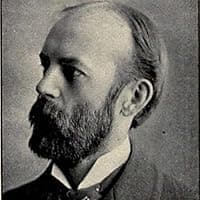
Charles Horton Cooley
22 Books Written

This work remains a pioneer sociological treatise on American culture. By understanding the individual not as the product of society but as its mirror image, Cooley concludes that the social order cannot be imposed from outside human nature but that it arises from the self. Cooley stimulated pedagogical inquiry into the dynamics of society with the publication of Human Nature and the Social Order

This classic text has set a standard for American sociol-ogy. Cooley provides analysis without empiricism, applying psychological insight to his study of the individual and collective self. First published in 1909, this work attempts to motivate man and society to be more responsible to each other.-The style of his book is clear and attractive, the text abounding in happy quotation.---

It is almost impossible now to imagine the prestigious position Charles Horton Cooley (1864-1929) held within the founding generation of American sociologists. His seminal work on human communication, social organization, and public opinion stimulated and guided much of early American sociological thought.Cooley's work relating self and community is now more relevant than ever to the p

Personal Competition: Its Place in the Social Order and Effect Upon Individuals : With Some Considerations On Success
by Charles Horton Cooley
This work has been selected by scholars as being culturally important, and is part of the knowledge base of civilization as we know it. This work was reproduced from the original artifact, and remains as true to the original work as possible. Therefore, you will see the original copyright references, library stamps (as most of these works have been housed in our most important libraries around the

Two Major Works: Social Organization. Human Nature And The Social Order...
by Charles Horton Cooley
Rating: 3.0 ⭐
This is a reproduction of a book published before 1923. This book may have occasional imperfectionssuch as missing or blurred pages, poor pictures, errant marks, etc. that were either part of the original artifact,or were introduced by the scanning process. We believe this work is culturally important, and despite the imperfections,have elected to bring it back into print as part

The Theory Of Transportation
by Charles Horton Cooley
This work has been selected by scholars as being culturally important, and is part of the knowledge base of civilization as we know it. This work was reproduced from the original artifact, and remains as true to the original work as possible. Therefore, you will see the original copyright references, library stamps (as most of these works have been housed in our most important libraries around the

The Process Of Social Change
by Charles Horton Cooley
This work has been selected by scholars as being culturally important, and is part of the knowledge base of civilization as we know it. This work was reproduced from the original artifact, and remains as true to the original work as possible. Therefore, you will see the original copyright references, library stamps (as most of these works have been housed in our most important libraries around the

Introduced and edited by Daniel Sharp, Looking Glass Self is a new special version of Cooley's pioneer work of social theory which was originally published as Human Nature and the Social Order. The new introduction of Looking Glass Self accessibly presents Cooley's distinctive model of socialisation as an extention of Descartes' ultimate scepticism commonly expressed as 'I think therefore I am'.<b

Reflections upon the Sociology of Herbert Spencer
by Charles Horton Cooley
I imagine that nearly all of us who took up sociology between 1870, say, and 1890 did so at the instigation of Spencer. While he did not invent the word (though most of us had never heard it before), much less the idea, he gave new life to both, and seemed to show us an open road into those countries which as yet we had only vaguely yearned to explore. His book, The Study of Sociology, perhaps the

Roots of Social Knowledge
by Charles Horton Cooley

Understanding of social organization
by Charles Horton Cooley
Understanding of social organizationThe Social Organization, which was published in 1909, is a collection of articles on human nature and social order (1902) published 7 years ago, and the Understanding of Social Processes Social Process, 1918), which represents Courlies thought. Cooley was influenced by American social psychologist James Mark Baldwin, philosopher and psychologist William James, a

Genius, Fame And The Comparions Of Races
by Charles Horton Cooley
This is a reproduction of a book published before 1923. This book may have occasional imperfections such as missing or blurred pages, poor pictures, errant marks, etc. that were either part of the original artifact, or were introduced by the scanning process. We believe this work is culturally important, and despite the imperfections, have elected to bring it back into print as part of our continu

Introductory sociology
by Charles Horton Cooley
![1909 DEMOCRATIC MIND PUBLIC OPINION CAPITALISM POVERTY FREUD RESPONSE PSYCHOLOGY [Hardcover] CHARLES HORTON COOLEY](https://m.media-amazon.com/images/S/compressed.photo.goodreads.com/books/1695999149i/145317784.jpg)
1909 DEMOCRATIC MIND PUBLIC OPINION CAPITALISM POVERTY FREUD RESPONSE PSYCHOLOGY [Hardcover] CHARLES HORTON COOLEY
by Charles Horton Cooley
This rare and vintage book is a perfect addition to any bibliophile's collection
Sociological Theory and Social Research: Being Selected Papers of Charles Horton Cooley
by Charles Horton Cooley

The progress of pecuniary valuation
by Charles Horton Cooley

A Study of the Early Use of Selfwords by a Child
by Charles Horton Cooley

Human nature and the social order
by Charles Horton Cooley
"Society and the Individual" is really the subject of this whole book, and not merely of Chapter One. It is my general aim to set forth, from various points of view, what the individual is, considered as a member of a social whole; while the special purpose of this chapter is only to offer a preliminary statement of the matter, as I conceive it, afterward to be unfolded at some length and variousl

Social process
by Charles Horton Cooley
We see around us in the world of men an onward movement of life. There seems to be a vital impulse, of unknown origin, that tends to work ahead in innumerable directions and manners, each continuous with something of the same sort in the past. The whole thing appears to be a kind of growth, and we might add that it is an adaptive growth, meaning by this that the forms of life we see—men, associati

Social Organization: A Study of the Larger Mind
by Charles Horton Cooley

Social Organization
by Charles Horton Cooley

Social Organization
by Charles Horton Cooley