
Walter Isaacson Recommended Books
American author, journalist and professor (born 1952)
26 Books Recommended

The Great Influenza: The Story of the Deadliest Pandemic in History
by John M. Barry
Rating: 4.0 ⭐
• 7 recommendations ❤️
At the height of WWI, history’s most lethal influenza virus erupted in an army camp in Kansas, moved east with American troops, then exploded, killing as many as 100 million people worldwide. It killed more people in twenty-four months than AIDS killed in twenty-four years, more in a year than the Black Death killed in a century. But this was not the Middle Ages, and 1918 marked the first collision of science and epidemic disease. Magisterial in its breadth of perspective and depth of research and now revised to reflect the growing danger of the avian flu, The Great Influenza is ultimately a tale of triumph amid tragedy, which provides us with a precise and sobering model as we confront the epidemics looming on our own horizon. John M. Barry has written a new afterword for this edition that brings us up to speed on the terrible threat of the avian flu and suggest ways in which we might head off another flu pandemic.

On the Bus: The Complete Guide to the Legendary Trip of Ken Kesey and the Merry Pranksters and the Birth of
by Paul Perry
Rating: 3.7 ⭐
• 2 recommendations ❤️
Documents Ken Kesey's fabled 1964 trip with Neal Cassady

The Double Helix: A Personal Account of the Discovery of the Structure of DNA
by James D. Watson
Rating: 3.6 ⭐
• 7 recommendations ❤️
The classic personal account of Watson and Crick’s groundbreaking discovery of the structure of DNA, now with an introduction by Sylvia Nasar, author of A Beautiful Mind .By identifying the structure of DNA, the molecule of life, Francis Crick and James Watson revolutionized biochemistry and won themselves a Nobel Prize. At the time, Watson was only twenty-four, a young scientist hungry to make his mark. His uncompromisingly honest account of the heady days of their thrilling sprint against other world-class researchers to solve one of science’s greatest mysteries gives a dazzlingly clear picture of a world of brilliant scientists with great gifts, very human ambitions, and bitter rivalries.With humility unspoiled by false modesty, Watson relates his and Crick’s desperate efforts to beat Linus Pauling to the Holy Grail of life sciences, the identification of the basic building block of life. Never has a scientist been so truthful in capturing in words the flavor of his work.

The Autobiography of Benjamin Franklin

Written during the English Civil War (1642–1651), Leviathan argues for a social contract and rule by an absolute sovereign. Hobbes wrote that civil war and the brute situation of a state of nature ("the war of all against all") could only be avoided by strong, undivided government. After lengthy discussion with Thomas Hobbes, the Parisian Abraham Bosse created the etching for the book's famous frontispiece in the géometrique style which Bosse himself had refined. It is similar in organisation to the frontispiece of Hobbes' De Cive (1642), created by Jean Matheus. The frontispiece has two main elements, of which the upper part is by far the more striking.In it, a giant crowned figure is seen emerging from the landscape, clutching a sword and a crosier, beneath a quote from the Book of Job—"Non est potestas Super Terram quae Comparetur ei. Iob. 41 . 24" ("There is no power on earth to be compared to him. Job 41 . 24")—linking the figure to the monster of that book. (Due to disagreements over the precise location of the chapters and verses when they were divided in the Late Middle Ages, the verse Hobbes quotes is usually given as Job 41:33 in modern Christian translations into English, Job 41:25 in the Masoretic text, Septuagint, and the Luther Bible; it is Iob 41:24 in the Vulgate.) The torso and arms of the figure are composed of over three hundred persons, in the style of Giuseppe Arcimboldo; all are facing inwards with just the giant's head having visible features. (A manuscript of Leviathan created for Charles II in 1651 has notable differences – a different main head but significantly the body is also composed of many faces, all looking outwards from the body and with a range of expressions.)The lower portion is a triptych, framed in a wooden border. The centre form contains the title on an ornate curtain. The two sides reflect the sword and crosier of the main figure – earthly power on the left and the powers of the church on the right. Each side element reflects the equivalent power – castle to church, crown to mitre, cannon to excommunication, weapons to logic, and the battlefield to the religious courts. The giant holds the symbols of both sides, reflecting the union of secular, and spiritual in the sovereign, but the construction of the torso also makes the figure the state.

In this authoritative and engrossing full-scale biography, Walter Isaacson, bestselling author of Einstein and Steve Jobs, shows how the most fascinating of America's founders helped define our national character.Benjamin Franklin is the founding father who winks at us, the one who seems made of flesh rather than marble. In a sweeping narrative that follows Franklin’s life from Boston to Philadelphia to London and Paris and back, Walter Isaacson chronicles the adventures of the runaway apprentice who became, over the course of his eighty-four-year life, America’s best writer, inventor, media baron, scientist, diplomat, and business strategist, as well as one of its most practical and ingenious political leaders. He explores the wit behind Poor Richard’s Almanac and the wisdom behind the Declaration of Independence, the new nation’s alliance with France, the treaty that ended the Revolution, and the compromises that created a near-perfect Constitution. In this colorful and intimate narrative, Isaacson provides the full sweep of Franklin’s amazing life, showing how he helped to forge the American national identity and why he has a particular resonance in the twenty-first century.

Einstein was a rebel and nonconformist from boyhood days, and these character traits drove both his life and his science. In this narrative, Walter Isaacson explains how his mind worked and the mysteries of the universe that he discovered.

When "The Moviegoer" was first published in 1961, it won the National Book Award and established Walker Percy as one of the supplest and most deftly modulated new voices in Southern literature. In his portrait of a boyish New Orleans stockbroker wavering between ennui and the longing for redemption, Percy managed to combine Bourbon Street elegance with the spiritual urgency of a Russian novel.On the eve of his thirtieth birthday, Binx Bolling is adrift. He occupies himself dallying with his secretaries and going to movies, which provide him with the "treasurable moments" absent from his real life. But one fateful Mardi Gras, Binx embarks on a quest - a harebrained search for authenticity that outrages his family, endangers his fragile cousin Kate, and sends him reeling through the gaudy chaos of the French Quarter. Wry and wrenching, rich in irony and romance, "The Moviegoer" is a genuine American classic.

A biography of the political figure, based on more than 150 interviews with Kissinger and others, chronicles his childhood in Nazi Germany, his rise in politics, his political relationships, and more. 75,000 first printing. Major ad/promo. First serial, Vanity Fair. Reader's Digest Cond Bks. Tour.

Pulsating with the rhythms of fifties underground America, jazz, sex, illicit drugs, and the mystery and promise of the open road, Jack Kerouac's classic novel of freedom and longing defined what it meant to be "Beat," and has inspired every generation since its initial publication in 1957. Based on Kerouac's adventures with Neal Cassady, On the Road tells the story of two friends, whose four cross-country road trips are a quest for meaning and true experience. Written with a mixture of sad-eyed naivete and wild abandon, and imbued with Kerouac's love of America, his compassion for humanity, and his sense of language as jazz, One the Road is the quintessential American vision of freedom and hope-vibrant, compelling, and full of wonder.

Referring to Adventures of Huckleberry Finn, H. L. Mencken noted that his discovery of this classic American novel was "the most stupendous event of my whole life"; Ernest Hemingway declared that "all modern American literature stems from this one book," while T. S. Eliot called Huck "one of the permanent symbolic figures of fiction, not unworthy to take a place with Ulysses, Faust, Don Quixote, Don Juan, Hamlet."The novel's preeminence derives from its wonderfully imaginative re-creation of boyhood adventures along the Mississippi River, its inspired characterization, the author's remarkable ear for dialogue, and the book's understated development of serious underlying themes: "natural" man versus "civilized" society, the evils of slavery, the innate value and dignity of human beings, and other topics. Most of all, Huckleberry Finn is a wonderful story, filled with high adventure and unforgettable characters. (back cover)Reprint of the Charles L. Webster and Company, New York, 1885 edition.
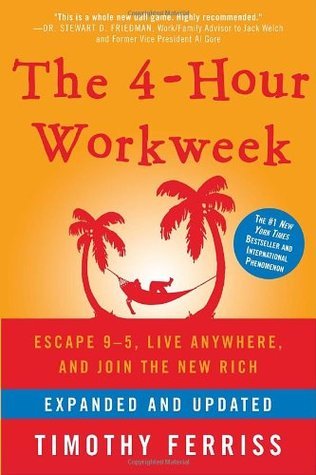
The 4-Hour Workweek: Escape 9-5, Live Anywhere, and Join the New Rich
by Timothy Ferriss
Rating: 3.9 ⭐
• 48 recommendations ❤️
sach ky nang

If you like Poor Richard's Almanack By Benjamin Franklin, please see the original compilation "Poor Richard's Almanack of Common An Original Compilation Consisting of Poor Richard's Almanack and Thomas Paine's Common Sense," by Benjamin Franklin & Thomas Pain ( 978-1642270068),

Sing to me of the man, Muse, the man of twists and turnsdriven time and again off course, once he had plunderedthe hallowed heights of Troy.If the Iliad is the world's greatest war epic, then the Odyssey is literature's grandest evocation of everyman's journey though life. Odysseus' reliance on his wit and wiliness for survival in his encounters with divine and natural forces, during his ten-year voyage home to Ithaca after the Trojan War, is at once a timeless human story and an individual test of moral endurance. In the myths and legends that are retold here, Fagles has captured the energy and poetry of Homer's original in a bold, contemporary idiom, and given us an Odyssey to read aloud, to savor, and to treasure for its sheer lyrical mastery.Renowned classicist Bernard Knox's superb Introduction and textual commentary provide new insights and background information for the general reader and scholar alike, intensifying the strength of Fagles' translation.This is an Odyssey to delight both the classicist and the public at large, and to captivate a new generation of Homer's students.--Robert Fagles, winner of the PEN/Ralph Manheim Medal for Translation and a 1996 Academy Award in Literature from the American Academy of Arts and Letters, presents us with Homer's best-loved and most accessible poem in a stunning new modern-verse translation.

Walter Isaacson's worldwide bestselling biography of Apple cofounder Steve Jobs. Based on more than forty interviews with Steve Jobs conducted over two years--as well as interviews with more than 100 family members, friends, adversaries, competitors, and colleagues--Walter Isaacson has written a riveting story of the roller-coaster life and searingly intense personality of a creative entrepreneur whose passion for perfection and ferocious drive revolutionized six industries: personal computers, animated movies, music, phones, tablet computing, and digital publishing. Isaacson's portrait touched millions of readers. At a time when America is seeking ways to sustain its innovative edge, Jobs stands as the ultimate icon of inventiveness and applied imagination. He knew that the best way to create value in the twenty-first century was to connect creativity with technology. He built a company where leaps of the imagination were combined with remarkable feats of engineering. Although Jobs cooperated with the author, he asked for no control over what was written. He put nothing off-limits. He encouraged the people he knew to speak honestly. He himself spoke candidly about the people he worked with and competed against. His friends, foes, and colleagues offer an unvarnished view of the passions, perfectionism, obsessions, artistry, devilry, and compulsion for control that shaped his approach to business and the innovative products that resulted. His tale is instructive and cautionary, filled with lessons about innovation, character, leadership, and values. Steve Jobs is the inspiration for the movie of the same name starring Michael Fassbender, Kate Winslet, Seth Rogen, and Jeff Daniels, directed by Danny Boyle with a screenplay by Aaron Sorkin.

Can we live robustly until our last breath?Do we have to suffer from debilitating conditions and sickness? Is it possible to add more vibrant years to our lives? In the #1 New York Times bestselling The End of Illness , Dr. David Agus tackles these fundamental questions and dismantles misperceptions about what “health” really means. Presenting an eye-opening picture of the human body and all the ways it works—and fails—Dr. Agus shows us how a new perspective on our individual health will allow us to achieve a long, vigorous life.Offering insights and access to powerful new technologies that promise to transform medicine, Dr. Agus emphasizes his belief that there is no “right” answer, no master guide that is “one size fits all.” Each one of us must get to know our bodies in uniquely personal ways, and he shows us exactly how to do that. A bold call for all of us to become our own personal health advocates, The End of Illness is a moving departure from orthodox thinking.

The Innovators: How a Group of Hackers, Geniuses and Geeks Created the Digital Revolution
by Walter Isaacson
Rating: 4.1 ⭐
• 2 recommendations ❤️
Following his blockbuster biography of Steve Jobs, The Innovators is Walter Isaacson’s revealing story of the people who created the computer and the Internet. It is destined to be the standard history of the digital revolution and an indispensable guide to how innovation really happens.What were the talents that allowed certain inventors and entrepreneurs to turn their visionary ideas into disruptive realities? What led to their creative leaps? Why did some succeed and others fail?In his masterly saga, Isaacson begins with Ada Lovelace, Lord Byron’s daughter, who pioneered computer programming in the 1840s. He explores the fascinating personalities that created our current digital revolution, such as Vannevar Bush, Alan Turing, John von Neumann, J.C.R. Licklider, Doug Engelbart, Robert Noyce, Bill Gates, Steve Wozniak, Steve Jobs, Tim Berners-Lee, and Larry Page.This is the story of how their minds worked and what made them so inventive. It’s also a narrative of how their ability to collaborate and master the art of teamwork made them even more creative.For an era that seeks to foster innovation, creativity, and teamwork, The Innovators shows how they happen.

The Only Game in Town: Central Banks, Instability, and Avoiding the Next Collapse
by Mohamed El-Erian
Rating: 3.5 ⭐
• 4 recommendations ❤️
NEW YORK TIMES BESTSELLER • A roadmap to what lies ahead and the decisions we must make now to stave off the next global economic and financial crisis, from one of the world’s most influential economic thinkers and the author of When Markets Collide“The one economic book you must read now . . . If you want to understand [our] bifurcated world and where it’s headed, there is no better interpreter than Mohamed El-Erian.”— Time Our current economic path is coming to an end. The signposts are all around sluggish growth, rising inequality, stubbornly high pockets of unemployment, and jittery financial markets, to name a few. Soon we will reach a fork in the One path leads to renewed growth, prosperity, and financial stability, the other to recession and market disorder.In The Only Game in Town, El-Erian casts his gaze toward the future of the global economy and markets, outlining the choices we face both individually and collectively in an era of economic uncertainty and financial insecurity. Beginning with their response to the 2008 global crisis, El-Erian explains how and why our central banks became the critical policy actors—and, most important, why they cannot continue is this role alone. They saved the financial system from collapse in 2008 and a multiyear economic depression, but lack the tools to enable a return to high inclusive growth and durable financial stability. The time has come for a policy handoff, from a prolonged period of monetary policy experimentation to a strategy that better targets what ails economies and distorts the financial sector—before we stumble into another crisis.The future, critically, is not predestined. It is up to us to decide where we will go from here as households, investors, companies, and governments. Using a mix of insights from economics, finance, and behavioral science, this book gives us the tools we need to properly understand this turning point, prepare for it, and come out of it stronger. A comprehensive, controversial look at the realities of our global economy and markets, The Only Game in Town is required reading for investors, policymakers, and anyone interested in the future.
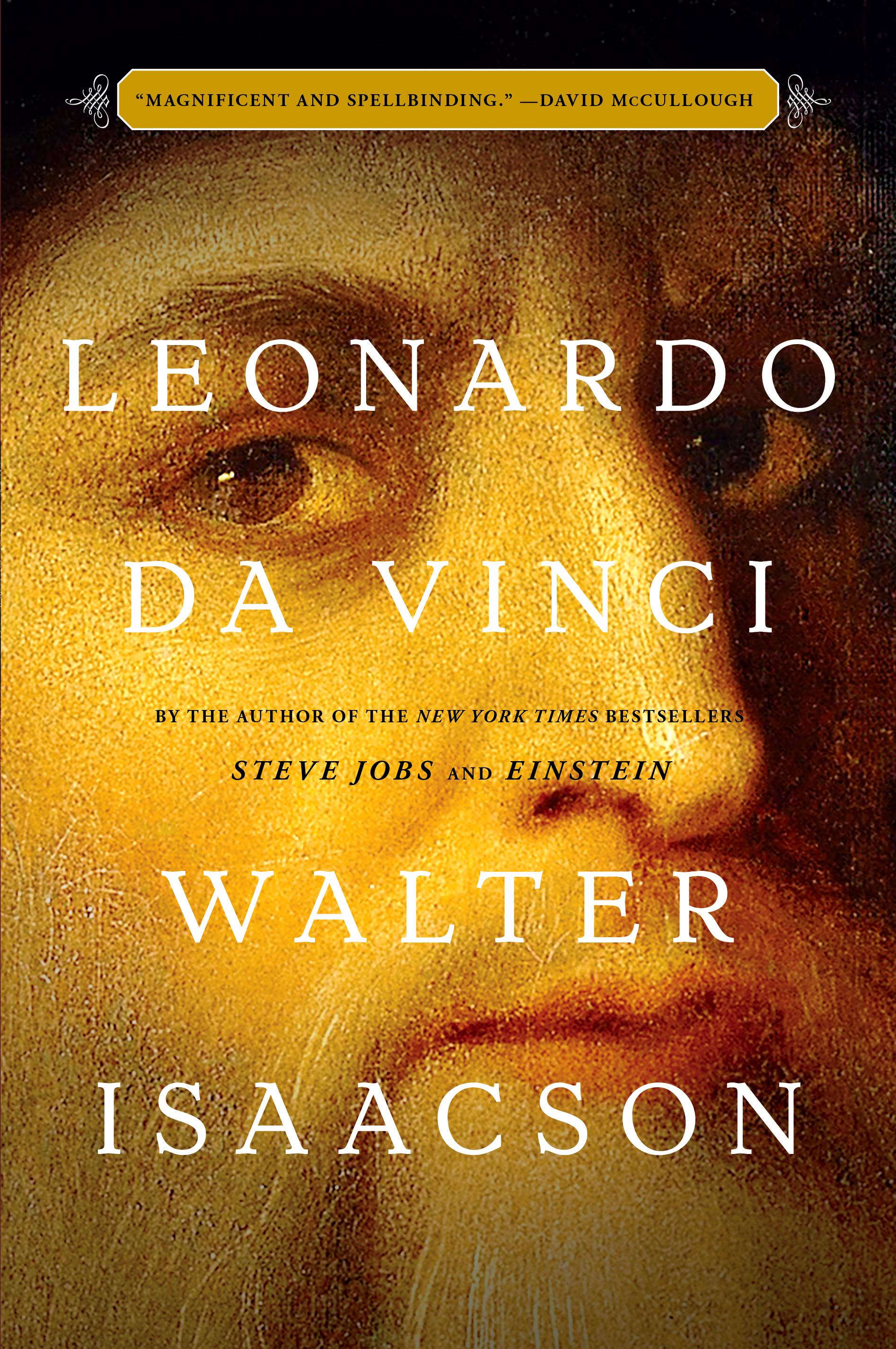
Based on thousands of pages from Leonardo's astonishing notebooks and new discoveries about his life and work, Walter Isaacson weaves a narrative that connects his art to his science. He shows how Leonardo's genius was based on skills we can improve in ourselves, such as passionate curiosity, careful observation, and an imagination so playful that it flirted with fantasy. He produced the two most famous paintings in history, The Last Supper and the Mona Lisa. But in his own mind, he was just as much a man of science and technology. With a passion that sometimes became obsessive, he pursued innovative studies of anatomy, fossils, birds, the heart, flying machines, botany, geology, and weaponry. His ability to stand at the crossroads of the humanities and the sciences, made iconic by his drawing of Vitruvian Man, made him history's most creative genius

Fantasyland: How America Went Haywire: A 500-Year History
by Kurt Andersen
Rating: 4.0 ⭐
• 2 recommendations ❤️
NEW YORK TIMES BESTSELLER - "The single most important explanation, and the fullest explanation, of how Donald Trump became president of the United States . . . nothing less than the most important book that I have read this year."--Lawrence O'DonnellHow did we get here?In this sweeping, eloquent history of America, Kurt Andersen shows that what's happening in our country today--this post-factual, "fake news" moment we're all living through--is not something new, but rather the ultimate expression of our national character. America was founded by wishful dreamers, magical thinkers, and true believers, by hucksters and their suckers. Fantasy is deeply embedded in our DNA.Over the course of five centuries--from the Salem witch trials to Scientology to the Satanic Panic of the 1980s, from P. T. Barnum to Hollywood and the anything-goes, wild-and-crazy sixties, from conspiracy theories to our fetish for guns and obsession with extraterrestrials--our love of the fantastic has made America exceptional in a way that we've never fully acknowledged. From the start, our ultra-individualism was attached to epic dreams and epic fantasies--every citizen was free to believe absolutely anything, or to pretend to be absolutely anybody. With the gleeful erudition and tell-it-like-it-is ferocity of a Christopher Hitchens, Andersen explores whether the great American experiment in liberty has gone off the rails.Fantasyland could not appear at a more perfect moment. If you want to understand Donald Trump and the culture of twenty-first-century America, if you want to know how the lines between reality and illusion have become dangerously blurred, you must read this book.NAMED ONE OF THE BEST BOOKS OF THE YEAR BY THE SAN FRANCISCO CHRONICLE"This is a blockbuster of a book. Take a deep breath and dive in."--Tom Brokaw"[An] absorbing, must-read polemic . . . a provocative new study of America's cultural history."--Newsday"Compelling and totally unnerving."--The Village Voice"A frighteningly convincing and sometimes uproarious picture of a country in steep, perhaps terminal decline that would have the founding fathers weeping into their beards."--The Guardian"This is an important book--the indispensable book--for understanding America in the age of Trump."--Walter Isaacson, #1 New York Times bestselling author of Leonardo da Vinci

KJV Holy Bible, Giant Print Standard Size Faux Leather Red Letter Edition - Thumb Index & Ribbon Marker, King James Version, Dark Brown
by Anonymous
Rating: 4.7 ⭐
• 40 recommendations ❤️
New - Holy Bible: KJV Giant Print Thumb Index Edition: Brown (King James Bible). Great for gift or personal study.

Future Forward: Leadership Lessons from Patrick McGovern, the Visionary Who Circled the Globe and Built a Technology Media Empire
by Glenn Rifkin
Rating: 3.9 ⭐
• 10 recommendations ❤️
Powerful lessons in forward-thinking leadership from the visionary business pioneer who turned IDG into a $3 billion technology media and venture capital empireLike Steve Jobs, Patrick McGovern built a worldwide multibillion-dollar industry by thinking differently, disrupting old business models, and embracing new technology trends. He drove the future forward and never looked back. With magazines such as Computerworld, PCWorld, and Macworld, his company, International Data Group (IDG), quickly became a global powerhouse with information technology publications in nearly 100 countries.The story of IDG’s astonishing success has been a source of inspiration for entrepreneurs all around the world. No matter what industry you work in―whether you’re heading up a small startup, expanding a mid-sized company, or running a major global corporation―McGovern’s people-first principles, insights, and integrity will help you lead the way.Learn how •Define a clear mission early in the game―for long-term success.•Identify new markets and stay ahead of the curve.•Expand your business globally but have it managed locally.•Listen to your customers and empower your people.•Hire the best and challenge them to do their best work.•Never stop learning and always remain curious.•Foster a let’s-try-it attitude throughout the company.•Lead with optimism and stay true to your values and vision.In addition to these timeless lessons, you’ll learn how this future-forward leader broke new ground in the 1980s by opening offices in China, the Soviet Union, Eastern Europe, and other markets deemed off-limits. You’ll discover how his company thrived in spite of major industry shifts―from mainframe computers to minicomputers to personal computers, from print to digital to smartphones―that upended many rivals. Living at the intersection of these classic disruptions, McGovern never missed a beat. He understood well before most that a revolution in information technology was underway and not only was there money to be made but that this would soon become the world’s largest industry. Most important, he never forgot the human element that is so crucial to any company’s success. His leadership in the creation of one of the world’s leading brain research institutes at MIT only served to cement his legacy.Future Forward shows you how to apply McGovern’s principles to your own organization. These are the lessons of a true visionary. This is how successful leaders take risks, take charge, and take the future by storm.

Begin Again: James Baldwin's America and Its Urgent Lessons for Our Own
by Eddie S. Glaude Jr.
Rating: 4.4 ⭐
• 8 recommendations ❤️
We live, according to Eddie S. Glaude Jr., in a moment when the struggles of Black Lives Matter and the attempt to achieve a new America have been challenged by the election of Donald Trump, a president whose victory represents yet another failure of America to face the lies it tells itself about race. From Charlottesville to the policies of child separation at the border, his administration turned its back on the promise of Obama's presidency and refused to embrace a vision of the country shorn of the insidious belief that white people matter more than others.We have been here before: For James Baldwin, these after times came in the wake of the civil rights movement, when a similar attempt to compel a national confrontation with the truth was answered with the murders of Medgar Evers, Malcolm X, and Martin Luther King, Jr. In these years, spanning from the publication of The Fire Next Time in 1963 to that of No Name in the Street in 1972, Baldwin transformed into a more overtly political writer, a change that came at great professional and personal cost. But from that journey, Baldwin emerged with a sense of renewed purpose about the necessity of pushing forward in the face of disillusionment and despair.In the story of Baldwin's crucible, Glaude suggests, we can find hope and guidance through our own after times, this Trumpian era of shattered promises and white retrenchment. Mixing biography--drawn partially from newly uncovered interviews--with history, memoir, and trenchant analysis of our current moment, Begin Again is Glaude's endeavor, following Baldwin, to bear witness to the difficult truth of race in America today. It is at once a searing exploration that lays bare the tangled web of race, trauma, and memory, and a powerful interrogation of what we all must ask of ourselves in order to call forth a new America.

The Founders: The Story of Paypal and the Entrepreneurs Who Shaped Silicon Valley
by Jimmy Soni
Rating: 4.2 ⭐
• 8 recommendations ❤️
NAMED A BEST BOOK OF 2022 BY THE NEW YORKERNational Bestseller * New York Times Editors’ Choice * Financial Times “Books to Read in 2022”A SABEW BEST IN BUSINESS BOOK AWARDS FINALIST“A gripping account of PayPal’s origins and a vivid portrait of the geeks and contrarians who made its meteoric rise possible” ( The Wall Street Journal )—including Elon Musk, Amy Rowe Klement, Peter Thiel, Julie Anderson, Max Levchin, Reid Hoffman, and many others whose stories have never been shared.Today, PayPal’s founders and earliest employees are considered the technology industry’s most powerful network. Since leaving PayPal, they have formed, funded, and advised the leading companies of our era, including Tesla, Facebook, YouTube, SpaceX, Yelp, Palantir, and LinkedIn, among many others. As a group, they have driven twenty-first-century innovation and entrepreneurship. Their names stir passions; they’re as controversial as they are admired.Yet for all their influence, the story of where they first started has gone largely untold. Before igniting the commercial space race or jumpstarting social media’s rise, they were the unknown creators of a scrappy online payments start-up called PayPal. In building what became one of the world’s foremost companies, they faced bruising competition, internal strife, the emergence of widespread online fraud, and the devastating dot-com bust of the 2000s. Their success was anything but certain.In The The Story of PayPal and the Entrepreneurs Who Shaped Silicon Valley , award-winning author and biographer Jimmy Soni explores PayPal’s turbulent early days. With hundreds of interviews and unprecedented access to thousands of pages of internal material, he shows how the seeds of so much of what shapes our world today—fast-scaling digital start-ups, cashless currency concepts, mobile money transfer—were planted two decades ago. He also reveals the stories of countless individuals who were left out of the front-page features and banner headlines but who were central to PayPal’s success.Described as “an intensely magnetic chronicle” ( The New York Times ) and “engrossing” ( Business Insider ), The Founders is a story of iteration and inventiveness—the products of which have cast a long and powerful shadow over modern life. This narrative illustrates how this rare assemblage of talent came to work together and how their collaboration changed our world forever.

The Code Breaker: Jennifer Doudna, Gene Editing, and the Future of the Human Race
by Walter Isaacson
Rating: 4.2 ⭐
• 3 recommendations ❤️
When Jennifer Doudna was in sixth grade, she came home one day to find that her dad had left a paperback titled The Double Helix on her bed. As she sped through the pages, she became enthralled by the intense drama behind the competition to discover the code of life. Even though her high school counselor told her girls didn’t become scientists, she decided she would.Driven by a passion to understand how nature works and to turn discoveries into inventions, she would help to make what the book’s author, James Watson, told her was the most important biological advance since his co-discovery of the structure of DNA. She and her collaborators turned a curiosity of nature into an invention that will transform the human race: an easy-to-use tool that can edit DNA. Known as CRISPR, it opened a brave new world of medical miracles and moral questions. The development of CRISPR and the race to create vaccines for coronavirus will hasten our transition to the next great innovation revolution. The past half-century has been a digital age, based on the microchip, computer, and internet. Now we are entering a life-science revolution. Children who study digital coding will be joined by those who study genetic code. Should we use our new evolution-hacking powers to make us less susceptible to viruses? What a wonderful boon that would be! And what about preventing depression? Hmmm…Should we allow parents, if they can afford it, to enhance the height or muscles or IQ of their kids? After helping to discover CRISPR, Doudna became a leader in wrestling with these moral issues and, with her collaborator Emmanuelle Charpentier, won the Nobel Prize in 2020.

A Shot to Save the World: The Inside Story of the Life-or-Death Race for a COVID-19 Vaccine
by Gregory Zuckerman
Rating: 4.2 ⭐
• 4 recommendations ❤️
Few were ready when a mysterious respiratory illness emerged in Wuhan, China in January 2020. Politicians, government officials, business leaders, and public-health professionals were unprepared for the most devastating pandemic in a century. Many of the world’s biggest drug and vaccine makers were slow to react or couldn’t muster an effective response. It was up to a small group of unlikely and untested scientists and executives to save civilization. A French businessman dismissed by many as a fabulist. A Turkish immigrant with little virus experience. A quirky Midwesterner obsessed with insect cells. A Boston scientist employing questionable techniques. A British scientist despised by his peers. Far from the limelight, each had spent years developing innovative vaccine approaches. Their work was met with skepticism and scorn. By 2020, these individuals had little proof of progress. Yet they and their colleagues wanted to be the ones to stop the virus holding the world hostage. They scrambled to turn their life’s work into life-saving vaccines in a matter of months, each gunning to make the big breakthrough—and to beat each other for the glory that a vaccine guaranteed. A #1 New York Times bestselling author and award-winning Wall Street Journal investigative journalist, Zuckerman takes us inside the top-secret laboratories, corporate clashes, and high-stakes government negotiations that led to effective shots. Deeply reported and endlessly gripping, this is a dazzling, blow-by-blow chronicle of the most consequential scientific breakthrough of our time. It’s a story of courage, genius, and heroism. It’s also a tale of heated rivalries, unbridled ambitions, crippling insecurities, and unexpected drama. A Shot to Save the World is the story of how science saved the world.