
10 Books Recommended
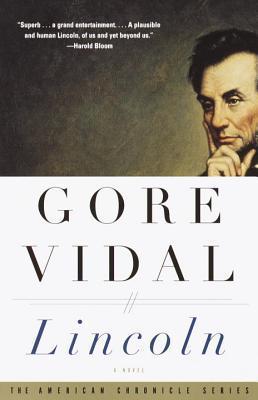
Gore Vidal's Narratives of Empire series spans the history of the United States from the Revolution to the post-World War II years. With their broad canvas and large cast of fictional and historical characters, the novels in this series present a panorama of the American political and imperial experience as interpreted by one of its most worldly, knowing, and ironic observers.To most Americans, Abraham Lincoln is a monolithic figure, the Great Emancipator and Savior of the Union, beloved by all. In Gore Vidal's Lincoln we meet Lincoln the man and Lincoln the political animal, the president who entered a besieged capital where most of the population supported the South and where even those favoring the Union had serious doubts that the man from Illinois could save it. Far from steadfast in his abhorrence of slavery, Lincoln agonizes over the best course of action and comes to his great decision only when all else seems to fail. As the Civil War ravages his nation, Lincoln must face deep personal turmoil, the loss of his dearest son, and the harangues of a wife seen as a traitor for her Southern connections. Brilliantly conceived, masterfully executed, Gore Vidal's Lincoln allows the man to breathe again.

The Rise and Fall of Nations: Forces of Change in the Post-Crisis World
by Ruchir Sharma
Rating: 4.1 ⭐
• 2 recommendations ❤️
International Bestseller"Quite simply the best guide to the global economy today." ―Fareed Zakaria Shaped by his twenty-five years traveling the world, and enlivened by encounters with villagers from Rio to Beijing, tycoons, and presidents, Ruchir Sharma’s The Rise and Fall of Nations rethinks the "dismal science" of economics as a practical art. Narrowing the thousands of factors that can shape a country’s fortunes to ten clear rules, Sharma explains how to spot political, economic, and social changes in real time. He shows how to read political headlines, black markets, the price of onions, and billionaire rankings as signals of booms, busts, and protests. Set in a post-crisis age that has turned the world upside down, replacing fast growth with slow growth and political calm with revolt, Sharma’s pioneering book is an entertaining field guide to understanding change in this era or any era. A Library Journal Best Book of 2016

The Death of Expertise: The Campaign against Established Knowledge and Why it Matters
by Thomas M. Nichols
Rating: 4.0 ⭐
• 2 recommendations ❤️
Technology and increasing levels of education have exposed people to more information than ever before. These societal gains, however, have also helped fuel a surge in narcissistic and misguided intellectual egalitarianism that has crippled informed debates on any number of issues. Today, everyone knows everything: with only a quick trip through WebMD or Wikipedia, average citizens believe themselves to be on an equal intellectual footing with doctors and diplomats. All voices, even the most ridiculous, demand to be taken with equal seriousness, and any claim to the contrary is dismissed as undemocratic elitism.Tom Nichols' The Death of Expertise shows how this rejection of experts has occurred: the openness of the internet, the emergence of a customer satisfaction model in higher education, and the transformation of the news industry into a 24-hour entertainment machine, among other reasons. Paradoxically, the increasingly democratic dissemination of information, rather than producing an educated public, has instead created an army of ill-informed and angry citizens who denounce intellectual achievement. When ordinary citizens believe that no one knows more than anyone else, democratic institutions themselves are in danger of falling either to populism or to technocracy or, in the worst case, a combination of both. An update to the 2017breakout hit, the paperback edition of The Death of Expertise provides a new foreword to cover the alarming exacerbation of these trends in the aftermath of Donald Trump's election. Judging from events on the ground since it first published, The Death of Expertise issues a warning about the stability and survival of modern democracy in the Information Age that is even more important today.

The Curse of Cash: How Large-Denomination Bills Aid Crime and Tax Evasion and Constrain Monetary Policy
by Kenneth S. Rogoff
Rating: 4.1 ⭐
• 2 recommendations ❤️
“A brilliant and lucid new book” (John Lanchester, New York Times Magazine ) about why paper money and digital currencies lie at the heart of many of the world’s most difficult problems―and their solutionsIn The Curse of Cash , acclaimed economist and bestselling author Kenneth Rogoff explores the past, present, and future of currency, showing why, contrary to conventional economic wisdom, the regulation of paper bills―and now digital currencies―lies at the heart some of the world’s most difficult problems, but also their potential solutions. When it comes to currency, history shows that the private sector often innovates but eventually the government regulates and appropriates. Using examples ranging from the history of standardized coinage to the development of paper money, Rogoff explains why the cryptocurrency boom will inevitably end with dominant digital currencies created and controlled by governments, regardless of what Bitcoin libertarians want. Advanced countries still urgently need to stem the global flood of large paper bills―the vast majority of which serve no legitimate purpose and only enable tax evasion and other crimes―but cryptocurrencies are like $100 bills on steroids.The Curse of Cash is filled with revealing insights about many of the most pressing issues facing monetary policymakers, from quantitative easing to alternative inflation targeting regimes. It also explains in detail why, if low interest rates persist, the best way to reinvigorate monetary policy is to implement fully effective and unconstrained negative interest rates.Provocative, engaging, and backed by compelling original arguments and evidence, The Curse of Cash has sparked widespread debate and its ideas have moved to the center of financial and policy discussions.

64 Shots: Leadership in a Crazy World is a compendium of value-accelerators for business and life. It is gathered as a 64 shot method from the astute observations and remarkable life of creative business leader and iconoclast Kevin Roberts. A provocative figure traversing the peaks of global commerce, media and sport, Kevin Roberts - creator of the groundbreaking idea Lovemarks - is recognized as one of today's most uncompromisingly-positive and inspirational leaders. In 64 Shots , Roberts draws on the biggest ideas, toughest experiences and greatest influences of his life to present 16X4 stripped down, straight-forward and instantly-absorbable insights on how to bring order to the chaos of business and life. The punchy insights into winning - hitting readers lightly jab after jab - are an array of one-liners, sound bites, tweets, charts, quotes and historical reference points. They are loaded with Roberts' experience, story, brio, provocation and direction. The language is extreme, brimming with the irrepressible attitude and provocation that fueled Roberts' meteoric career. While there is a sequence, the 64 shots are stand-alone signposts towards living an enterprising and winning life. Anyone can dip into the book anywhere and find value. The writing is accompanied by (not necessarily linked to) a visual order of black-and-white photos of leaders in their cultural fields, some modern, many historical, some famous, and all personal. This eclectic selection of people are both direct and indirect influences to Kevin Roberts' life. They all have an interesting - and some mysterious - connection to concepts of leadership in a crazy world. Examples are: Mary Quant, Vince Lombardi, Margaret Thatcher, Vivienne Westwood, Twiggy, Tom Peters, Peter Drucker, Martin Luther King, Renzo Rosso, Brigit Bardot, Bob Dylan, Sean Fitzpatrick (a rugby player). The book is high touch and glossy. It feels like Apple, not Shakespeare. 64 Shots - will you take them?

Grave New World: The End of Globalization, the Return of History
by Stephen D. King
Rating: 3.8 ⭐
• 2 recommendations ❤️
A controversial look at the end of globalization and what it means for prosperity, peace, and the global economic orderGlobalization, long considered the best route to economic prosperity, is not inevitable. An approach built on the principles of free trade and, since the 1980s, open capital markets, is beginning to fracture. With disappointing growth rates across the Western world, nations are no longer willing to sacrifice national interests for global growth; nor are their leaders able—or willing—to sell the idea of pursuing a global agenda of prosperity to their citizens. Combining historical analysis with current affairs, economist Stephen D. King provides a provocative and engaging account of why globalization is being rejected, what a world ruled by rival states with conflicting aims might look like, and how the pursuit of nationalist agendas could result in a race to the bottom. King argues that a rejection of globalization and a return to “autarky” will risk economic and political conflict, and he uses lessons from history to gauge how best to avoid the worst possible outcomes.

The Economists' Diet: The Surprising Formula for Losing Weight and Keeping It Off
by Christopher Payne
Rating: 2.0 ⭐
• 2 recommendations ❤️
A bold and sensible new behavioral approach to dieting—driven by economic principles— that recommends micro-habits and meta-rules to help control impulses to overeat, approach food in a healthier way, and lose weight once and for all.Christopher Payne and Rob Barnett are two formerly obese economists who met while working at Bloomberg. They faced the same problems that so many others face long hours, frequently eating out for lunch and dinner, and snacking out of boredom. When they finally lost weight by applying what they know best—economics—to their waistlines. By carefully considering economic theories, real-world data, and their own personal experiences, they developed behavioral best practices that helped them control their impulses to overeat and approach food in a healthier way.Full of Barnett and Payne’s personal weight-loss stories, The Economists' Diet is a practical guide that explains how to control those ever-present impulses to overeat and, in the process, lose weight and keep it off. It is “[a] uniquely themed and user-friendly guide” ( Publisher’s Weekly ), and “full of advice [that] makes a lot of sense and is habit-forming (Charles Duhigg, bestselling author of The Power of Habit ).

New York Times BestsellerIconoclastic entrepreneur and New York legend Ken Langone tells the compelling story of how a poor boy from Long Island became one of America's most successful businessmen.Ken Langone has seen it all on his way to a net worth beyond his wildest dreams. A pillar of corporate America for decades, he's a co-founder of Home Depot, a former director of the New York Stock Exchange, and a world-class philanthropist (including $200 million for NYU's Langone Health). In this memoir he finally tells the story of his unlikely rise and controversial career. It's also a passionate defense of the American Dream -- of preserving a country in which any hungry kid can reach the maximum potential of his or her talents and work ethic.In a series of fascinating stories, Langone shows how he struggled to get an education, break into Wall Street, and scramble for an MBA at night while competing with privileged competitors by day. He shares how he learned how to evaluate what a business is worth and apply his street smarts to 8-figure and 9-figure deals . And he's not shy about discussing, for the first time, his epic legal and PR battle with former NY Governor Eliot Spitzer.His ultimate theme is that free enterprise is the key to giving everyone a leg up. As he This book is my love song to capitalism. Capitalism works! And I'm living proof -- it works for everybody. Absolutely anybody is entitled to dream big, and absolutely everybody should dream big. I did. Show me where the silver spoon was in my mouth. I've got to argue profoundly and I'm the American Dream.

An invaluable primer from Richard Haass, president of the Council on Foreign Relations, that will help anyone, expert and non-expert alike, navigate our fast-changing worldToday's headlines generate more questions than answers. Should the United States attack North Korea and Iran or negotiate with them? What are the implications of climate change and what should be done about it? Are tariffs a good idea? What do we owe refugees and others who want to enter our country? Should democratic countries promote democracy and human rights elsewhere? What can be done to stop terrorism? Are the United States and China heading for a second cold war--and, if so, what can be done to head it off?The World is designed to provide readers of any age and experience with the essential background and building blocks needed to answer these and other critical questions for themselves. It will empower them to manage the flood of daily news. Readers will become more informed, discerning citizens, better able to arrive at sound, independent judgments and to hold elected representatives to account. Those who read The World will be less vulnerable to being misled by politicians and others claiming to be experts.In short, this book will make readers more globally literate. Global literacy--knowing how the world works--is a must, as what goes on outside a country matters enormously to what happens inside. Although the United States is bordered by two oceans, those oceans are not moats. And the so-called Vegas rule--what happens there stays there--does not apply in today's globalized world to anyone anywhere. U.S. foreign policy is uniquely American, but the world Americans seek to shape is not.The tectonic plates of international relations are moving. This is a critical time for high school and college students and others to understand what is taking place around the world, why it is taking place, and how it will affect our lives. Toward these ends, The World focuses on essential history, what makes each region of the world tick, the many challenges globalization presents, and the most influential countries, events, and ideas. Explaining complex ideas with wisdom and clarity, Richard Haass's The World is an evergreen book that will remain relevant and useful even as history continues to unfold.

On March 12, 2034, US Navy Commodore Sarah Hunt is on the bridge of her flagship, the guided missile destroyer USS John Paul Jones, conducting a routine freedom of navigation patrol in the South China Sea when her ship detects an unflagged trawler in clear distress, smoke billowing from its bridge. On that same day, US Marine aviator Major Chris "Wedge" Mitchell is flying an F35E Lightning over the Strait of Hormuz, testing a new stealth technology as he flirts with Iranian airspace.By the end of that day, Wedge will be an Iranian prisoner, and Sarah Hunt's destroyer will lie at the bottom of the sea, sunk by the Chinese Navy. Iran and China have clearly coordinated their moves, which involve the use of powerful new forms of cyber weaponry that render US ships and planes defenseless. In a single day, America's faith in its military's strategic pre-eminence is in tatters. A new, terrifying era is at hand.So begins a disturbingly plausible work of speculative fiction, co-authored by an award-winning novelist and decorated Marine veteran and the former commander of NATO, a legendary admiral who has spent much of his career strategically out maneuvering America's most tenacious adversaries.Written with a powerful blend of geopolitical sophistication and literary, human empathy, 2034 takes us inside the minds of a global cast of characters--Americans, Chinese, Iranians, Russians, Indians--as a series of arrogant miscalculations on all sides leads the world into an intensifying international storm. In the end, China and the United States will have paid a staggering cost, one that forever alters the global balance of power.Everything in 2034 is an imaginative extrapolation from present-day facts on the ground combined with the authors' years working at the highest and most classified levels of national security. Sometimes it takes a brilliant work of fiction to illuminate the most dire of warnings: 2034 is all too close at hand, and this cautionary tale presents the reader a dark yet possible future that we must do all we can to avoid.