
Timothy J. Keller Recommended Books
American pastor (1950–2023)
30 Books Recommended

Dominion: How the Christian Revolution Remade the World
by Tom Holland
Rating: 4.3 ⭐
• 6 recommendations ❤️
A "marvelous" (Economist) account of how the Christian Revolution forged the Western imagination.Crucifixion, the Romans believed, was the worst fate imaginable, a punishment reserved for slaves. How astonishing it was, then, that people should have come to believe that one particular victim of crucifixion-an obscure provincial by the name of Jesus-was to be worshipped as

Has liberalism failed because it has succeeded? "Why Liberalism Failed offers cogent insights into the loss of meaning and community that many in the West feel, issues that liberal democracies ignore at their own peril." — President Barack Obama "Deneen's book is valuable because it focuses on today's central issue. The important debates now are not about policy. They are a

The Valley of Vision: A Collection of Puritan Prayers and Devotions
by Arthur Bennett
Rating: 4.5 ⭐
• 2 recommendations ❤️
The strength of Puritan character and life lay in prayer and meditation. In this practice the spirit of prayer was regarded as of first importance and the best form of prayer, for living prayer is the characteristic of genuine spirituality. Yet prayer is also vocal and may therefore on occasions be written. Consequently in the Puritan tradition there are many written prayers and meditations which

The Universe Next Door: A Basic Worldview Catalog
by James W. Sire
Rating: 4.3 ⭐
• 2 recommendations ❤️
For more than forty years, The Universe Next Door has set the standard for a clear, readable introduction to worldviews. Using his widely influential model of eight basic worldview questions, James Sire examines prominent worldviews that have shaped the Western world:theismdeismnaturalismMarxismnihilismexistentialismEastern monism

This classic defense of orthodox Christianity, written to counter the liberalism that arose in the early 1900s, establishes the importance of scriptural doctrine and contrasts the teachings of liberalism and orthodoxy on God and man, the Bible, Christ, salvation, and the church. J. Gresham Machen's Christianity and Liberalism has remained relevant through the years ever since its original publicat

Urban Ministry: The Kingdom, the City & the People of God
by Harvie M. Conn
Rating: 3.8 ⭐
• 2 recommendations ❤️
No. 3 in the Academy of Parish Clergy Top Ten Books of the Year The city presents serious challenges that cry out for answers: poverty, racism, human exploitation and government corruption. How can the church move ahead in the midst of these demands with the gospel of hope? Here, in one comprehensive volume, Harvie Conn and Manuel Ortiz, two noted scholars and proven practitioners of urban ministr

Spiritual Depression: Its Causes and Cure
by D. Martyn Lloyd-Jones
Rating: 4.4 ⭐
• 2 recommendations ❤️
This enduring collection of twenty-one sermons by D. Martyn Lloyd-Jones, each originally delivered at Westminster Chapel in London, carefully and compassionately analyzes an undeniable feature of modern society from which Christians have not escaped -- spiritual depression."Christian people," writes Lloyd-Jones, "too often seem to be perpetually in the doldrums and too often give this

In partnership with the Dutch Reformed Translation Society, Baker Academic is proud to offer the first volume of Herman Bavinck's complete Reformed Dogmatics in English for the very first time. Bavinck's approach throughout is meticulous. As he discusses the standard topics of dogmatic theology, he stands on the shoulders of giants such as Augustine, John Calvin, Francis Turretin, and Charl

The timeliness of this book, first published in 1901, is shown by the fact that a great number of academic texts quote from it. "The Certainty of Faith" is one of the small but powerful classics written by one of the greatest theologians Holland has ever produced. Bavinck examines the difference between the certainty of science and that of religion historically, biblically, and theologically.

In his discussion of natural theology (arguments to prove the existence of God) and natural atheology (arguments for the falsehood of theistic belief) Plantinga focuses on two of the traditional arguments: the ontological argument as an example of natural theology, and the problem of evil as the most important representative of natural atheology. Accessible to serious general readers.

Grace and Glory: Sermons Preached in Chapel at Princeton Seminary
by Geerhardus Vos
Rating: 4.5 ⭐
• 2 recommendations ❤️
John Murray said of him, "Dr. Vos is, in my judgment, the most penetrating exegete it has been my privilege to know, and I believe, the most incisive exegete that has appeared in the English-speaking world in this century." The uniqueness of Vos's emphasis on the centrality of the covenantal work of Jesus Christ in history and our possession of that work through His mediation draws us back time an

Political Visions & Illusions: A Survey & Christian Critique of Contemporary Ideologies
by David T. Koyzis
Rating: 4.5 ⭐
• 2 recommendations ❤️
What you believe about politics matters. The decades since the Cold War, with new alignments of post–9/11 global politics and the chaos of the late 2010s, are swirling with alternative visions of political life, ranging from ethnic nationalism to individualistic liberalism.Political ideologies are not merely a matter of governmental efficacy, but are intrinsically and inescapabl

Religion's influence in American politics is obvious in recent debates about school prayer, abortion, and homosexuality, as well as in the success of grassroots religious organizations in mobilizing voters. Many liberal secularists decry this trend, rejecting any interaction between politics and religion. But in Why I Am Not a Secularist, distinguished political theorist William E. Connolly

In this prize-winning book Nathan O. Hatch offers a provocative reassessment of religion and culture in the early days of the American republic, arguing that during this period American Christianity was democratized and common people became powerful actors on the religious scene. Hatch examines five distinct traditions or mass movements that emerged early in the nineteenth century—the Christian mo

Tolerance currently occupies a very high place in Western societies: it is considered gauche, even boorish, to question it. In The Intolerance of Tolerance, however, questioning tolerance -- or, at least, contemporary understandings of tolerance -- is exactly what D. A . Carson does.Carson traces the subtle but enormous shift in the way we have come to understand tolerance over recent years -- fro

We want to demonstrate to all the pious children of God, who from their hearts pray for the future of the kingdom of Christ, our own duty in this so deplorable scattering of the church.The fact that all people have been made by God and are God s creatures should therefore be reason enough for us to go to them, seeking with the utmost faithfulness to bring them to eternal life.<br

The End for Which God Created the World: Updated to Modern English
by Jonathan Edwards
Rating: 4.5 ⭐
• 2 recommendations ❤️
Why did God make the world? Though rarely asked today, the question of why God created the world captured the thought and imagination of Jonathan Edwards, one of history's most profound thinkers. Using both reason and Scripture, Edwards determined that God created the world primarily as an arena for his eternal and innate glory to flow outward like a fountain, and for his emanating glory to be rec

From Shame to Sin: The Christian Transformation of Sexual Morality in Late Antiquity
by Kyle Harper
Rating: 4.1 ⭐
• 2 recommendations ❤️
When Rome was at its height, an emperor’s male beloved, victim of an untimely death, would be worshipped around the empire as a god. In this same society, the routine sexual exploitation of poor and enslaved women was abetted by public institutions. Four centuries later, a Roman emperor commanded the mutilation of men caught in same-sex affairs, even as he affirmed the moral dignity of women witho

The Tech-Wise Family: Everyday Steps for Putting Technology in Its Proper Place
by Andy Crouch
Rating: 4.2 ⭐
• 2 recommendations ❤️
Making conscientious choices about technology in our families is more than just using internet filters and determining screen time limits for our children. It's about developing wisdom, character, and courage in the way we use digital media rather than accepting technology's promises of ease, instant gratification, and the world's knowledge at our fingertips. And it's definitely not just about the

Disruptive Witness: Speaking Truth in a Distracted Age
by Alan Noble
Rating: 4.2 ⭐
• 2 recommendations ❤️
We live in a distracted, secular age. These two trends define life in Western society today. We are increasingly addicted to habits―and devices―that distract and "buffer" us from substantive reflection and deep engagement with the world. And we live in what Canadian philosopher Charles Taylor calls "a secular age"―an age in which all beliefs are equally viable and real transcendence is less and le

Thinking Through Creation: Genesis 1 and 2 as Tools of Cultural Critique
by Christopher Watkin
Rating: 4.3 ⭐
• 2 recommendations ❤️
Reading Genesis 1 and 2, we are tempted to see only problems to solve. Yet these two chapters burst with glorious truths about God, our world, and ourselves. In fact, their foundational doctrines are among the richest sources of insight as we pursue robust, sensitive, and constructive engagement with others about contemporary culture and ideas.With deftness and clarity, Christopher Wat

The Year of Our Lord 1943: Christian Humanism in an Age of Crisis
by Alan Jacobs
Rating: 4.0 ⭐
• 2 recommendations ❤️
By early 1943, it had become increasingly clear that the Allies would win the Second World War. Around the same time, it also became increasingly clear to many Christian intellectuals on both sides of the Atlantic that the soon-to-be-victorious nations were not culturally or morally prepared for their success. A war won by technological superiority merely laid the groundwork for a post-war society

In recent years atheism has become ever more visible, acceptable, and influential. Atheist apologists have become increasingly vociferous and confident in their that a morality requiring benevolence towards all and universal human rights need not be grounded in religion; that modern science disproves the existence of God; and that there is nothing innately religious about human beings.
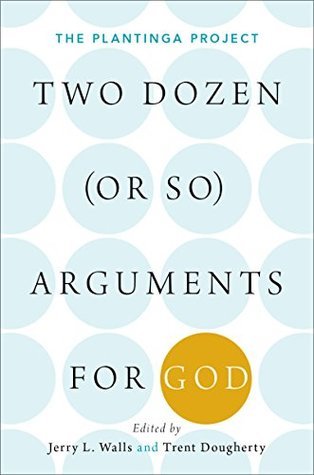
Thirty years ago, Alvin Plantinga gave a lecture called "Two Dozen (or so) Theistic Arguments," which served as an underground inspiration for two generations of scholars and students. In it, he proposed a number of novel and creative arguments for the existence of God which have yet to receive the attention they deserve. In Two Dozen (or so) Arguments for God, each of Plantinga's origina

Dynamics of Spiritual Life: An Evangelical Theology of Renewal
by Richard F. Lovelace
Rating: 4.3 ⭐
• 2 recommendations ❤️
In this classic work of spiritual theology, historian Richard Lovelace presents a history of spiritual renewals in light of biblical models. Drawing from the best of different Protestant traditions, Dynamics of Spiritual Life lays out a comprehensive approach to the renewal of the church. In the first half of the book, Lovelace surveys awakening movements since the Reform

Taking America Back for God: Christian Nationalism in the United States
by Andrew L. Whitehead
Rating: 4.1 ⭐
• 2 recommendations ❤️
Why do so many conservative Christians continue to support Donald Trump despite his many overt moral failings? Why do many Americans advocate so vehemently for xenophobic policies, such as a border wall with Mexico? Why do many Americans seem so unwilling to acknowledge the injustices that ethnic and racial minorities experience in the United States? Why do a sizeable proportion of Americans conti

The Book of Genesis is God’s autobiography and the foundation upon which all revelation rests. The purpose of this book is to give the origin of all things, including the cosmic order of the universe and the covenant relationship between God and his people. Speaking the Word from his eternal dwelling place of light, God fashioned everything from nothing, perfectly displaying his awesom

“I will put enmity between you and the woman, and between your offspring and her offspring; he shall bruise your head, and you shall bruise his heel.”― Genesis 3:15 We’ve all heard this story: the hero fights a dragon in an epic battle, and just as it appears the dragon is going to prevail, the hero saves the day. Best-selling novels and blockbuster movies are filled with this type of story,

Breaking the Social Media Prism: How to Make Our Platforms Less Polarizing
by Chris Bail
Rating: 3.9 ⭐
• 2 recommendations ❤️
A revealing look at how user behavior is powering deep social divisions online―and how we might yet defeat political tribalism on social mediaIn an era of increasing social isolation, platforms like Facebook and Twitter are among the most important tools we have to understand each other. We use social media as a mirror to decipher our place in society but, as Chris Bail explains, it fu
