
Tim Cook Recommended Books
American business executive
6 Books Recommended
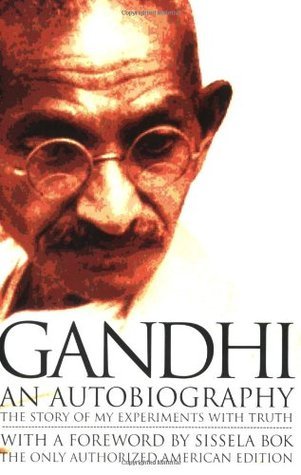
Gandhi An Autobiography: The Story of My Experiments With Truth
by Mahatma Gandhi
Rating: 4.1 ⭐
• 6 recommendations ❤️
Mohandas K. Gandhi is one of the most inspiring figures of our time. In his classic autobiography he recounts the story of his life and how he developed his concept of active nonviolent resistance, which propelled the Indian struggle for independence and countless other nonviolent struggles of the twentieth century.In a new foreword, noted peace expert and teacher Sissela Bok urges us to adopt Gandhi's "attitude of experimenting, of tesing what will and will not bear close scrutiny, what can and cannot be adapted to new circumstances,"in order to bring about change in our own lives and communities. All royalties earned on this book are paid to the Navajivan Trust, founded by Gandhi, for use in carrying on his work.

Competing Against Time: How Time-Based Competition is Reshaping Global Markets
by George Stalk Jr.
Rating: 4.0 ⭐
• 2 recommendations ❤️
Today, time is the cutting edge. In fact, as a strategic weapon, contend George Stalk, Jr., and Thomas M. Hout, time is the equivalent of money, productivity, quality, even innovation. In this path-breaking book based upon ten years of research, the authors argue that the ways leading companies manage time—in production, in new product development, and in sales and distribution—represent the most powerful new sources of competitive advantage.With many detailed examples from companies that have put time-based strategies in place, such as Federal Express, Ford, Milliken, Honda, Deere, Toyota, Sun Microsystems, Wal-Mart, Citicorp, Harley-Davidson, and Mitsubishi, the authors describe exactly how reducing elapsed time can make the critical difference between success and failure. Give customers what they want when they want it, or the competition will. Time-based companies are offering greater varieties of products and services, at lower costs, and with quicker delivery times than their more pedestrian competitors. Moreover, the authors show that by refocusing their organizations on responsiveness, companies are discovering that long-held assumptions about the behavior of costs and customers are not Costs do not increase when lead times are reduced; they decline. Costs do not increase with greater investment in quality; they decrease. Costs do not go up when product variety is increased and response time is decreased; they go down. And contrary to a commonly held belief that customer demand would be only marginally improved by expanded product choice and better responsiveness, the authors show that the actual results have been an explosion in the demand for the product or service of a time-sensitive competitor, in most cases catapulting it into the most profitable segments of its markets.With persuasive evidence, Stalk and Hout document that time consumption, like cost, is quantifiable and therefore manageable. Today's new-generation companies recognize time as the fourth dimension of competitiveness and, as a result, operate with flexible manufacturing and rapid-response systems, and place extraordinary emphasis on R&D and innovation. Factories are close to the customers they serve. Organizations are structured to produce fast responses rather than low costs and control. Companies concentrate on reducing if not eliminating delays and using their response advantage to attract the most profitable customers.Stalk and Hout conclude that virtually all businesses can use time as a competitive weapon. In industry after industry, they illustrate the processes involved in becoming a time-based competitor and the ways managers can open and sustain a significant advantage over the competition.

In this candid and riveting memoir, for the first time ever, Nike founder and CEO Phil Knight shares the inside story of the company’s early days as an intrepid start-up and its evolution into one of the world’s most iconic, game-changing, and profitable brands.In 1962, fresh out of business school, Phil Knight borrowed $50 from his father and created a company with a simple mission: import high-quality, low-cost athletic shoes from Japan. Selling the shoes from the trunk of his lime green Plymouth Valiant, Knight grossed $8,000 his first year. Today, Nike’s annual sales top $30 billion. In an age of startups, Nike is the ne plus ultra of all startups, and the swoosh has become a revolutionary, globe-spanning icon, one of the most ubiquitous and recognizable symbols in the world today.But Knight, the man behind the swoosh, has always remained a mystery. Now, for the first time, in a memoir that is candid, humble, gutsy, and wry, he tells his story, beginning with his crossroads moment. At 24, after backpacking around the world, he decided to take the unconventional path, to start his own business—a business that would be dynamic, different.Knight details the many risks and daunting setbacks that stood between him and his dream—along with his early triumphs. Above all, he recalls the formative relationships with his first partners and employees, a ragtag group of misfits and seekers who became a tight-knit band of brothers. Together, harnessing the transcendent power of a shared mission, and a deep belief in the spirit of sport, they built a brand that changed everything.

#1 NEW YORK TIMES BESTSELLER • PULITZER PRIZE FINALIST • OVER TWO MILLION COPIES SOLDThis inspiring, exquisitely observed memoir finds hope and beauty in the face of insurmountable odds as an idealistic young neurosurgeon attempts to answer the question, What makes a life worth living?“Unmissable . . . Finishing this book and then forgetting about it is simply not an option.”—Janet Maslin, The New York TimesONE OF THE BEST BOOKS OF THE YEAR: The New York Times Book Review, People, NPR, The Washington Post, Slate, Harper’s Bazaar, Time Out New York, Publishers Weekly, BookPageAn Oprah Daily Best Nonfiction Book of the Past Two Decades • A Kirkus Reviews Best Nonfiction Book of the CenturyAt the age of thirty-six, on the verge of completing a decade’s worth of training as a neurosurgeon, Paul Kalanithi was diagnosed with stage IV lung cancer. One day he was a doctor treating the dying, and the next he was a patient struggling to live. And just like that, the future he and his wife had imagined evaporated. When Breath Becomes Air chronicles Kalanithi’s transformation from a naïve medical student “possessed,” as he wrote, “by the question of what, given that all organisms die, makes a virtuous and meaningful life” into a neurosurgeon at Stanford working in the brain, the most critical place for human identity, and finally into a patient and new father confronting his own mortality.What makes life worth living in the face of death? What do you do when the future, no longer a ladder toward your goals in life, flattens out into a perpetual present? What does it mean to have a child, to nurture a new life as another fades away? These are some of the questions Kalanithi wrestles with in this profoundly moving, exquisitely observed memoir.Paul Kalanithi died in March 2015, while working on this book, yet his words live on as a guide and a gift to us all. “I began to realize that coming face to face with my own mortality, in a sense, had changed nothing and everything,” he wrote. “Seven words from Samuel Beckett began to repeat in my head: ‘I can’t go on. I’ll go on.’” When Breath Becomes Air is an unforgettable, life-affirming reflection on the challenge of facing death and on the relationship between doctor and patient, from a brilliant writer who became both.Finalist for the PEN Center USA Literary Award in Creative Nonfiction and the Books for a Better Life Award in Inspirational Memoir

New York Times bestselling author of Satchel: The Life and Times of an American Legend Larry Tye was given unprecedented access by the Kennedy family to write this in-depth, vibrant and editorially independent biography.History remembers Robert F. Kennedy as a racial healer, a tribune for the poor, and the last progressive knight. But Kennedy—nurtured on the rightist orthodoxies of his dynasty-building father—started his public life as counsel to the left-baiting, table-thumping Senator Joseph McCarthy.A bare-knuckled political operative who masterminded his brother’s whatever-it-takes bids for senator and president, Kennedy okayed FBI wiretaps of Martin Luther King Jr. and cloak-and-dagger operations against communist Cuba that included blowing up railroad bridges, sabotaging crops, and plotting the elimination of President Fidel Castro.Remembered now as a rare optimist in an age of political cynicism, RFK’s profoundly moving journey from cold warrior to hot-blooded liberal also offers a lens into two of the most chaotic and confounding decades of twentieth century America.

LA HISTORIA DE UNA LUCHA CONTRA LO ESTABLECIDO CONTADA POR UNO DE SUS PROTAGONISTASEl congresista John Lewis es una de las figuras más importantes del movimiento por los derechos civiles del pueblo afroamericano de EE. UU.Su compromiso con la justicia y la no violencia le llevó de una granja de Alabama al Congreso de los Estados Unidos de América, de una escuela segregada a la Marcha de Washington de 1963, y de recibir duras palizas de la policía estatal a ser reconocido con la Medalla de la Libertad por el primer presidente afroamericano de EE. UU.Ahora, con la intención de compartir su historia con las nuevas generaciones, Lewis presenta March, una premiada novela gráfica creada en colaboración con Andrew Aydin y el artista Nate Powell.Hace muchos años, John Lewis y otros estudiantes activistas se inspiraron en un cómic de los años 1950 sobre Martin Luther King Jr. Hoy, su propio cómic rememora esa época para nuevos lectores, dejando constancia de un movimiento cuyos ecos seguirán oyéndose durante muchas generaciones.