Tai Lopez Recommended Books
Entrepreneur, social media personality
21 Books Recommended

This timeless book holds that the key to success lies in the secrets of the ancients. Based on the famous "Babylonian principles," it's been hailed as the greatest of all inspirational works on the subject of thrift and financial planning.

A wise and witty compendium of the greatest thoughts, greatest minds, and greatest books of all time—listed in accessible and succinct form—by one of the world's greatest scholars.From the “Hundred Best Books” to the “Ten Greatest Thinkers” to the “Ten Greatest Poets,” here is a concise collection of the world’s most significant knowledge. For the better part of a century, Will Durant dwelled upon—and wrote about—the most significant eras, individuals, and achievements of human history. His selections have finally been brought together in a single, compact volume. Durant eloquently defends his choices of the greatest minds and ideas, but he also stimulates readers into forming their own opinions, encouraging them to shed their surroundings and biases and enter “The Country of the Mind,” a timeless realm where the heroes of our species dwell.From a thinker who always chose to exalt the positive in the human species, The Greatest Minds and Ideas of All Time stays true to Durant's optimism. This is a book containing the absolute best of our heritage, passed on for the benefit of future generations. Filled with Durant's renowned wit, knowledge, and unique ability to explain events and ideas in simple and exciting terms, this is a pocket-size liberal arts and humanist curriculum in one volume.

Winner of the Pulitzer prize in 1974 and the culmination of a life's work, The Denial of Death is Ernest Becker's brilliant and impassioned answer to the "why" of human existence. In bold contrast to the predominant Freudian school of thought, Becker tackles the problem of the vital lie -- man's refusal to acknowledge his own mortality. In doing so, he sheds new light on the nature of humanity and issues a call to life and its living that still resonates more than twenty years after its writing.

"He either enchants or antagonizes everyone he meets. But even his enemies agree there are three things Ray Kroc does damned well: sell hamburgers, make money, and tell stories." -- from Grinding It OutFew entrepreneurs can claim to have radically changed the way we live, and Ray Kroc is one of them. His revolutions in food-service automation, franchising, shared national training, and advertising have earned him a place beside the men and women who have founded not only businesses, but entire empires. But even more interesting than Ray Kroc the business man is Ray Kroc the man. Not your typical self-made tycoon, Kroc was fifty-two years old when he opened his first franchise. In Grinding It Out, you'll meet the man behind McDonald's, one of the largest fast-food corporations in the world with over 32,000 stores around the globe.Irrepressible enthusiast, intuitive people person, and born storyteller, Kroc will fascinate and inspire you on every page.

Updated and revised for a new generation, David Bach's classic money guide teaches women how to build stable financial wealth that lasts.With hundreds of thousands of copies in print around the world, Smart Women Finish Rich, by renowned financial adviser David Bach, has shown women of all ages and backgrounds how to take control of their financial future and finish rich. Whether you're working with a few dollars a week or a significant inheritance, Bach's nine-step program gives you tools for spending wisely, establishing security, and aligning money with your values. Plus, in this revised and updated edition, David Bach includes critical new long-term investment advice, information on teaching your kids about money, Internet resources, and new ways to attract greater wealth--personal and financial--into your life.

The million copy international bestseller, critically acclaimed and translated into over 25 languages. As influential today as when it was first published, The Selfish Gene has become a classic exposition of evolutionary thought. Professor Dawkins articulates a gene's eye view of evolution - a view giving centre stage to these persistent units of information, and in which organisms can be seen as vehicles for their replication. This imaginative, powerful, and stylistically brilliant work not only brought the insights of Neo-Darwinism to a wide audience, but galvanized the biology community, generating much debate and stimulating whole new areas of research. Forty years later, its insights remain as relevant today as on the day it was published. This 40th anniversary edition includes a new epilogue from the author discussing the continuing relevance of these ideas in evolutionary biology today, as well as the original prefaces and foreword, and extracts from early reviews. Oxford Landmark Science books are 'must-read' classics of modern science writing which have crystallized big ideas, and shaped the way we think.

Peter Bevelin begins his fascinating book with Confucius' great "A man who has committed a mistake and doesn't correct it, is committing another mistake." Seeking Wisdom is the result of Bevelin's learning about attaining wisdom. His quest for wisdom originated partly from making mistakes himself and observing those of others but also from the philosophy of super-investor and Berkshire Hathaway Vice Chairman Charles Munger. A man whose simplicity and clarity of thought was unequal to anything Bevelin had seen. In addition to naturalist Charles Darwin and Munger, Bevelin cites an encyclopedic range of from first-century BCE Roman poet Publius Terentius to Mark Twain—from Albert Einstein to Richard Feynman—from 16th Century French essayist Michel de Montaigne to Berkshire Hathaway Chairman Warren Buffett. In the book, he describes ideas and research findings from many different fields. This book is for those who love the constant search for knowledge. It is in the spirit of Charles Munger, who says, "All I want to know is where I'm going to die so I'll never go there." There are roads that lead to unhappiness. An understanding of how and why we can "die" should help us avoid them. We can't eliminate mistakes, but we can prevent those that can really hurt us. Using exemplars of clear thinking and attained wisdom, Bevelin focuses on how our thoughts are influenced, why we make misjudgments and tools to improve our thinking. Bevelin tackles such eternal questions Why do we behave like we do? What do we want out of life? What interferes with our goals? Read and study this wonderful multidisciplinary exploration of wisdom. It may change the way you think and act in business and in life.

Poor Charlie's Almanack: The Wit and Wisdom of Charles T. Munger
by Charles T. Munger
Rating: 4.6 ⭐
• 37 recommendations ❤️
EXPANDED THIRD EDITION includes Charlie's 2007 USC Law School Commencement address. Edited by Peter D. Kaufman. Brand New.

Discusses the variety of reactions that people experience because of the loss of a love and provides numerous recommendations for coping with pain and achieving comfort

Most people want to be successful in life. And of course, everyone wants to be happy. When it comes to the pursuit of success and happiness, most people assume the same formula: if you work hard, you will become successful, and once you become successful, then you'll be happy. The only problem is that a decade of cutting-edge research in the field of positive psychology has proven that this formula is backwards. Success does not beget happiness.Based on the largest study ever conducted on happiness and human potential (a survey conducted by the author of more than 1,600 students), Harvard lecturer Shawn Achor shares seven core principles of positive psychology that each one of us can use to improve our performance, grow our careers, and gain a competitive edge at work. He reveals how happiness actually fuels success and performance, not the other way around. Why? Because when we are happier and more positive we are more engaged, creative, resilient to stress, and productive. The Happiness Advantage will appeal to anyone who wants practical advice on how to become happier and also more successful.

How Successful People Lead: Taking Your Influence to the Next Level
by John C. Maxwell
Rating: 4.2 ⭐
• 2 recommendations ❤️
In this perfectly compact read, #1 New York Times bestselling author John C. Maxwell explains how true leadership works.It is not generated by your title. In fact, being named to a position is the lowest of the five levels every effective leader achieves. To be more than a boss people are required to follow, you must master the ability to inspire and invest in people. You need to build a team that produces not only results, but also future leaders. By combining the advice contained in these pages with skill and dedication, you can reach the pinnacle of leadership—where your influence extends beyond your immediate reach for the benefit of others.Derived from material previously published in the Wall Street Journal bestseller The 5 Levels of Leadership .

The H Factor of Personality: Why Some People Are Manipulative, Self-Entitled, Materialistic, and Exploitative and Why It Matters for Everyone
by Kibeom Lee
Rating: 4.0 ⭐
• 2 recommendations ❤️
The “H” in the H factor stands for “Honesty-Humility,” and it’s one of only six basic dimensions of personality. People who have high levels of H are sincere and modest; people who have low levels are deceitful and pretentious. It isn’t intuitively obvious that traits of honesty and humility go hand in hand, and until very recently the H factor hadn’t been recognized as a personality dimension. But scientific evidence shows that honesty and humility belong to a unified group of personality characteristcs, separate from five other groups identified several decades ago.This book, written by the discoverers of the H factor, explores the importance of this personality dimension in various aspects of people’s lives: their approaches to money, power, and sex; their inclination to commit crimes or obey the law; their attitudes about society, politics, and religion; and their choice of friends and spouse. Finally, the book provides ways of identifying people who are low in the H factor, as well as advice on how to raise one’s own level of H.

Compelling People: The Hidden Qualities That Make Us Influential
by John Neffinger
Rating: 3.8 ⭐
• 2 recommendations ❤️
Required reading at Harvard Business School and Columbia Business School. Everyone wants to be more appealing and effective, but few believe we can manage the personal magnetism of a Bill Clinton or an Oprah Winfrey. John Neffinger and Matthew Kohut trace the path to influence through a balance of strength (the root of respect) and warmth (the root of affection). Each seems simple, but only a few of us figure out the tricky task of projecting both at once.Drawing on cutting-edge social science research as well as their own work with Fortune 500 executives, members of Congress, TED speakers, and Nobel Prize winners, Neffinger and Kohut reveal how we size each other up—and how we can learn to win the admiration, respect, and affection we desire.

The Story of the Human Body: Evolution, Health, and Disease
by Daniel E. Lieberman
Rating: 4.3 ⭐
• 2 recommendations ❤️
In this landmark book of popular science, Daniel E. Lieberman—chair of the department of human evolutionary biology at Harvard University and a leader in the field—gives us a lucid and engaging account of how the human body evolved over millions of years, even as it shows how the increasing disparity between the jumble of adaptations in our Stone Age bodies and advancements in the modern world is occasioning this paradox: greater longevity but increased chronic disease. The Story of the Human Body brilliantly illuminates as never before the major transformations that contributed key adaptations to the body: the rise of bipedalism; the shift to a non-fruit-based diet; the advent of hunting and gathering, leading to our superlative endurance athleticism; the development of a very large brain; and the incipience of cultural proficiencies. Lieberman also elucidates how cultural evolution differs from biological evolution, and how our bodies were further transformed during the Agricultural and Industrial Revolutions. While these ongoing changes have brought about many benefits, they have also created conditions to which our bodies are not entirely adapted, Lieberman argues, resulting in the growing incidence of obesity and new but avoidable diseases, such as type 2 diabetes. Lieberman proposes that many of these chronic illnesses persist and in some cases are intensifying because of “dysevolution,” a pernicious dynamic whereby only the symptoms rather than the causes of these maladies are treated. And finally—provocatively—he advocates the use of evolutionary information to help nudge, push, and sometimes even compel us to create a more salubrious environment. (With charts and line drawings throughout.)

#1 NEW YORK TIMES BESTSELLER • David Brooks challenges us to rebalance the scales between the focus on external success—“résumé virtues”—and our core principles. NAMED ONE OF THE BEST BOOKS OF THE YEAR BY THE ECONOMIST With the wisdom, humor, curiosity, and sharp insights that have brought millions of readers to his New York Times column and his previous bestsellers, David Brooks has consistently illuminated our daily lives in surprising and original ways. In The Social Animal, he explored the neuroscience of human connection and how we can flourish together. Now, in The Road to Character, he focuses on the deeper values that should inform our lives.Looking to some of the world’s greatest thinkers and inspiring leaders, Brooks explores how, through internal struggle and a sense of their own limitations, they have built a strong inner character. Labor activist Frances Perkins understood the need to suppress parts of herself so that she could be an instrument in a larger cause. Dwight Eisenhower organized his life not around impulsive self-expression but considered self-restraint. Dorothy Day, a devout Catholic convert and champion of the poor, learned as a young woman the vocabulary of simplicity and surrender. Civil rights pioneers A. Philip Randolph and Bayard Rustin learned reticence and the logic of self-discipline, the need to distrust oneself even while waging a noble crusade.Blending psychology, politics, spirituality, and confessional, The Road to Character provides an opportunity for us to rethink our priorities, and strive to build rich inner lives marked by humility and moral depth.“Joy,” David Brooks writes, “is a byproduct experienced by people who are aiming for something else. But it comes.”Praise for The Road to Character“A hyper-readable, lucid, often richly detailed human story.” — The New York Times Book Review“This profound and eloquent book is written with moral urgency and philosophical elegance.” —Andrew Solomon, author of Far from the Tree and The Noonday Demon“A powerful, haunting book that works its way beneath your skin.” —The Guardian“Original and eye-opening . . . Brooks is a normative version of Malcolm Gladwell, culling from a wide array of scientists and thinkers to weave an idea bigger than the sum of its parts.” — USA Today

The Upright Thinkers: The Human Journey from Living in Trees to Understanding the Cosmos
by Leonard Mlodinow
Rating: 3.9 ⭐
• 4 recommendations ❤️
How did a near-extinct species, eking out a meager existence with stone axes, become the dominant power on earth, able to harness a knowledge of nature ranging from tiny atoms to the vast structures of the universe? Leonard Mlodinow takes us on an enthralling tour of the history of human progress, from our time on the African savannah through the invention of written language, all the way to modern quantum physics. Along the way, he explores the colorful personalities of the great philosophers, scientists, and thinkers, and traces the cultural conditions—and the elements of chance—that influenced scientific discovery.Deeply informed, accessible, and infused with the author’s trademark humor and insight, The Upright Thinkers is a stunning tribute to humanity’s intellectual curiosity and an important book for any reader with an interest in the scientific issues of our day.

Official U.S. edition with full color illustrations throughout. NEW YORK TIMES BESTSELLER Yuval Noah Harari, author of the critically-acclaimed New York Times bestseller and international phenomenon Sapiens , returns with an equally original, compelling, and provocative book, turning his focus toward humanity’s future, and our quest to upgrade humans into gods. Over the past century humankind has managed to do the impossible and rein in famine, plague, and war. This may seem hard to accept, but, as Harari explains in his trademark style—thorough, yet riveting—famine, plague and war have been transformed from incomprehensible and uncontrollable forces of nature into manageable challenges. For the first time ever, more people die from eating too much than from eating too little; more people die from old age than from infectious diseases; and more people commit suicide than are killed by soldiers, terrorists and criminals put together. The average American is a thousand times more likely to die from binging at McDonalds than from being blown up by Al Qaeda. What then will replace famine, plague, and war at the top of the human agenda? As the self-made gods of planet earth, what destinies will we set ourselves, and which quests will we undertake? Homo Deus explores the projects, dreams and nightmares that will shape the twenty-first century—from overcoming death to creating artificial life. It asks the fundamental Where do we go from here? And how will we protect this fragile world from our own destructive powers? This is the next stage of evolution. This is Homo Deus. With the same insight and clarity that made Sapiens an international hit and a New York Times bestseller, Harari maps out our future.

Deep Work: Rules for Focused Success in a Distracted World
by Cal Newport
Rating: 4.2 ⭐
• 9 recommendations ❤️
One of the most valuable skills in our economy is becoming increasingly rare. If you master this skill, you'll achieve extraordinary results.Deep work is the ability to focus without distraction on a cognitively demanding task. It's a skill that allows you to quickly master complicated information and produce better results in less time. Deep work will make you better at what you do and provide the sense of true fulfillment that comes from craftsmanship. In short, deep work is like a super power in our increasingly competitive twenty-first century economy. And yet, most people have lost the ability to go deep-spending their days instead in a frantic blur of e-mail and social media, not even realizing there's a better way.In Deep Work, author and professor Cal Newport flips the narrative on impact in a connected age. Instead of arguing distraction is bad, he instead celebrates the power of its opposite. Dividing this book into two parts, he first makes the case that in almost any profession, cultivating a deep work ethic will produce massive benefits. He then presents a rigorous training regimen, presented as a series of four "rules," for transforming your mind and habits to support this skill.A mix of cultural criticism and actionable advice, Deep Work takes the reader on a journey through memorable stories-from Carl Jung building a stone tower in the woods to focus his mind, to a social media pioneer buying a round-trip business class ticket to Tokyo to write a book free from distraction in the air-and no-nonsense advice, such as the claim that most serious professionals should quit social media and that you should practice being bored. Deep Work is an indispensable guide to anyone seeking focused success in a distracted world.

The Start-Up J Curve: The Six Steps to Entrepreneurial Success
by Howard Love
Rating: 4.2 ⭐
• 2 recommendations ❤️
Amazon Bestseller in Strategic Management, Startups, Lean Quality Control & Management, and Venture Capital A predictable pattern of successEntrepreneurs who have read early drafts of The Start-Up J Curve responded, “I wish I had this book years ago.” A startup unfolds in a predictable pattern; the more aware entrepreneurs are of this pattern, the better able they will be to capitalize on it. Author Howard Love calls this pattern the start-up J The toughest part of the endeavor is the time between the actual start of a new business and when the product and model are firmly established. The Start-Up J Curve gives entrepreneurs the tools they need to get through the early challenges so they can reach the primary value creation that lies beyond. Love brings thirty-five years of start-up experience to this comprehensive guide to starting a business. He outlines the six predictable stages of start-up growth and details the activities that should be undertaken at each stage to ensure success and to avoid common pitfalls. Instead of feeling lost and confused after a setback, start-up founders and investors can anticipate the challenges, overcome the obstacles, and ride the curve to the top.
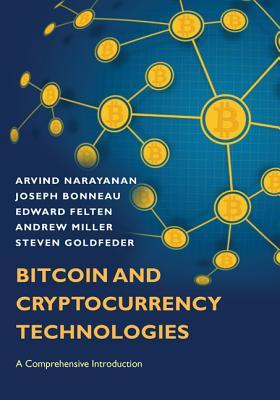
Bitcoin and Cryptocurrency Technologies: A Comprehensive Introduction
by Arvind Narayanan
Rating: 4.3 ⭐
• 2 recommendations ❤️
Bitcoin and Cryptocurrency Technologies provides a comprehensive introduction to the revolutionary yet often misunderstood new technologies of digital currency. Whether you are a student, software developer, tech entrepreneur, or researcher in computer science, this authoritative and self-contained book tells you everything you need to know about the new global money for the Internet age.How do Bitcoin and its block chain actually work? How secure are your bitcoins? How anonymous are their users? Can cryptocurrencies be regulated? These are some of the many questions this book answers. It begins by tracing the history and development of Bitcoin and cryptocurrencies, and then gives the conceptual and practical foundations you need to engineer secure software that interacts with the Bitcoin network as well as to integrate ideas from Bitcoin into your own projects. Topics include decentralization, mining, the politics of Bitcoin, altcoins and the cryptocurrency ecosystem, the future of Bitcoin, and more.An essential introduction to the new technologies of digital currencyCovers the history and mechanics of Bitcoin and the block chain, security, decentralization, anonymity, politics and regulation, altcoins, and much moreFeatures an accompanying website that includes instructional videos for each chapter, homework problems, programming assignments, and lecture slidesAlso suitable for use with the authors' Coursera online courseElectronic solutions manual (available only to professors)

Robert Greene is a master guide for millions of readers, distilling ancient wisdom and philosophy into essential texts for seekers of power, understanding and mastery. Now he turns to the most important subject of all - understanding people's drives and motivations, even when they are unconscious of them themselves.We are social animals. Our very lives depend on our relationships with people. Knowing why people do what they do is the most important tool we can possess, without which our other talents can only take us so far. Drawing from the ideas and examples of Pericles, Queen Elizabeth I, Martin Luther King Jr, and many others, Greene teaches us how to detach ourselves from our own emotions and master self-control, how to develop the empathy that leads to insight, how to look behind people's masks, and how to resist conformity to develop your singular sense of purpose. Whether at work, in relationships, or in shaping the world around you, The Laws of Human Nature offers brilliant tactics for success, self-improvement, and self-defence.