29 Books Recommended
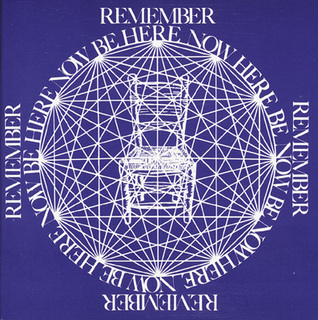
The enhanced edition of Be Here Now Two guided video meditations, 30 minutes in length * Twenty minute video retrospective of Ram Dass' spiritual journey *The first chapter of Ram Dass' new book, Be Love Now

A Buddhist holy man whose songs have been sung and studied since the twelfth century, Milarepa exchanged a life of sin and maliciousness for one of contemplation and love, eventually reaching—according to his disciples—the ultimate state of enlightenment. His thousands of extemporaneously composed songs communicate complex ideas in a simple, lucid style. This volume features the best and most highly esteemed of the religious leader's songs of love and compassion that include lessons on the negative aspects of ambition and the importance of finding inner peace. In addition, he stresses the briefness of life: ". . . so apply yourself to meditation. Avoid doing evil, and acquire merit, to the best of your ability, even at the cost of life itself. In short: Act so that you have no cause to be ashamed of yourselves and hold fast to this rule."

Dhammapada means “the path of dharma,” the path of truth, harmony, and righteousness that anyone can follow to reach the highest good. Easwaran’s translation of this classic Buddhist text is the best-selling edition in its field, praised by Huston Smith as a “sublime rendering.”The introduction gives an overview of the Buddha’s teachings that is penetrating and clear – accessible for readers new to Buddhism, but also with fresh insights and practical applications for readers familiar with this text. Chapter introductions place individual verses into the context of the broader Buddhist canon.Easwaran is a master storyteller, and his opening essay includes many stories that make moving, memorable reading, bringing young Siddhartha and his heroic spiritual quest vividly to life.But Easwaran’s main qualification for interpreting the Dhammapada, he said, was that he knew from his own experience that these verses could transform our lives. This faithful rendition brings us closer to the compassionate heart of the Buddha.


The Way Of The White Clouds: The Classic Spiritual Travelogue by One of Tibet's Best-known Explorers
by Anagarika Govinda
Rating: 4.9 ⭐
• 2 recommendations ❤️
'It tells of terrible journeys, of men masked against the sun (riding through ethereal regions with their feet frozen), of welcoming fog-girt monasteries lit by butter lamps at the journey's end' New StatesmanThe Way of the White Clouds is the remarkable narrative of a pilgrimage which could not be made today. Lama Anagarika Govinda was among the last to journey through Tibet before its invasion by the Chinese. His unique account is not only a spectacular and gloriously poetic story of exploration and discovery, it is also invaluable for its sensitive and clearly presented interpretation of the Tibetan tradition.'Why is it that the fate of Tibet has found such a deep echo in the world? There can only be one Tibet has become the symbol of all that present-day humanity is longing for' Lama Anagarika Govinda
The Collected Poems of Dylan Thomas contains poems that Thomas personally decided best represented his work. A year before its publication Thomas died from swelling of the brain triggered by excessive drinking. Since its initial publication in 1953, this book has become the definitive edition of the poet’s work. Thomas wrote “Prologue” addressed to “my readers, the strangers” — an introduction in verse that was the last poem he would ever write. Also included are classics such as “And Death Shall Have No Dominion,” “Do Not Go Gentle into that Good Night,” and “Fern Hill” that have influenced generations of artists from Bob Dylan (who changed his last name from Zimmerman in honor of the poet), to John Lennon (The Beatles included Thomas’ portrait on the cover of Sgt. Pepper’s Lonely Hearts Club Band); this collection even appears in the film adaptation of Cormac McCarthy’s The Road when it is retrieved from the rubble of a bookshelf.
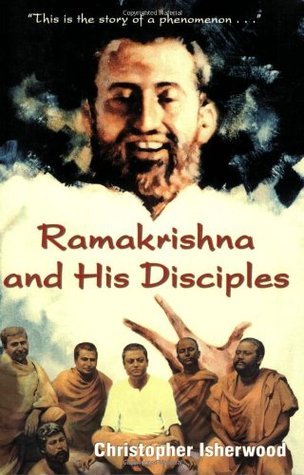
This biography of Ramakrishna was written for the West by one of England's most talented authors. The writing is beautiful in itself, but the story of a most unusual man with unheard of spiritual yearning is what this book is really about. "This is the story of a phenomenon. I will begin by calling him simply that, rather than "holy man,""mystic,"or "saint"; all emotive words with mixed associations which may attract some readers, repel others."A phenomenon is always a fact, an object of experience. That is how I shall try to approach Ramakrishna . . . I only ask you to approach Ramakrishna with the same open-minded curiosity you might feel for any highly unusual human being."

2012 Reprint of 1960 New York Edition. Exact facsimile of the original edition, not reproduced with Optical Recognition Software. Lama Anagarika Govinda, born Ernst Lothar Hoffman, was the founder of the order of the Arya Maitreya Mandala and an expositor of Tibetan Buddhism, Abhidharma, Buddhist Meditation as well as other aspects of Buddhism. He was also a painter and poet. This title is a complete explanation of the esoteric principles of Mantra that also clarifies the differences between Hindu and Tibetan yoga. Translated into many languages, this is an important text for any student of Buddhism. With bibliography, index, and illustrations. Contents: Om: the path of universality -- Mani: the path of unification and of inner equality -- Padma: the path of creative vision -- Hum: the path of integration -- Om mani padme hum: the path of the great mantra -- Ah: the path of action.

Only the Paranoid Survive: How to Exploit the Crisis Points That Challenge Every Company
by Andrew S. Grove
Rating: 4.0 ⭐
• 17 recommendations ❤️
Andy Grove, founder and former CEO of Intel shares his strategy for success as he takes the reader deep inside the workings of a major company in Only the Paranoid Survive .Under Andy Grove's leadership, Intel became the world's largest chip maker and one of the most admired companies in the world. In Only the Paranoid Survive , Grove reveals his strategy for measuring the nightmare moment every leader dreads--when massive change occurs and a company must, virtually overnight, adapt or fall by the wayside--in a new way.Grove calls such a moment a Strategic Inflection Point, which can be set off by almost mega-competition, a change in regulations, or a seemingly modest change in technology. When a Strategic Inflection Point hits, the ordinary rules of business go out the window. Yet, managed right, a Strategic Inflection Point can be an opportunity to win in the marketplace and emerge stronger than ever.Grove underscores his message by examining his own record of success and failure, including how he navigated the events of the Pentium flaw, which threatened Intel's reputation in 1994, and how he has dealt with the explosions in growth of the Internet. The work of a lifetime, Only the Paranoid Survive is a classic of managerial and leadership skills.
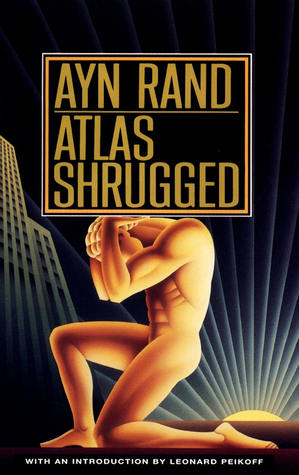
This is the story of a man who said that he would stop the motor of the world and did. Was he a destroyer or the greatest of liberators?Why did he have to fight his battle, not against his enemies, but against those who needed him most, and his hardest battle against the woman he loved? What is the world’s motor — and the motive power of every man? You will know the answer to these questions when you discover the reason behind the baffling events that play havoc with the lives of the characters in this story. Tremendous in its scope, this novel presents an astounding panorama of human life — from the productive genius who becomes a worthless playboy — to the great steel industrialist who does not know that he is working for his own destruction — to the philosopher who becomes a pirate — to the composer who gives up his career on the night of his triumph — to the woman who runs a transcontinental railroad — to the lowest track worker in her Terminal tunnels. You must be prepared, when you read this novel, to check every premise at the root of your convictions.This is a mystery story, not about the murder — and rebirth — of man’s spirit. It is a philosophical revolution, told in the form of an action thriller of violent events, a ruthlessly brilliant plot structure and an irresistible suspense. Do you say this is impossible? Well, that is the first of your premises to check.

Two ebullient young men search for Truth the Zen way: from marathon wine-drinking bouts, poetry jam sessions, and "yabyum" in San Francisco's Bohemia to solitude in the high Sierras and a vigil atop Desolation Peak in Washington State. Published just a year after On the Road put the Beat Generation on the map, The Dharma Bums is sparked by Kerouac's expansiveness, humor, and a contagious zest for life.
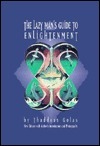
$10.95 cloth hardcover 1-58685-190-X 5 x 7 in, 112 pp, W, Self-Help Originally published by the author in 1972, the underground classic Lazy Man's Guide to Enlightenment teaches how to improve the quality of life, to feel good, and to determine what's real. Golas leads the reader down the path toward enlightenment with simple steps, like memorizing key phrases and incorporating them into daily life and thought. Think of how much better your life might be if you reminded yourself to "love as much as you can from wherever you are" or "love it the way it is." This classic book is full of useful tips on how to live a more conscious life and to be an engaged and aware member of the universal community. "While we have humility and pride enough to act on the knowledge that we exist in an infinite harmony, that we are neither greater nor lesser than any others, we can enjoy exquisite spiritual wealth and pleasures. When you love yourself, you are in truth expanding in love into many other things. And the more loving you are, the more loving the beings within and around you. On all levels we are mutually dependent vibrations. Play a happy tune and happy dancers will join your trip." - From The Lazy Man's Guide to Enlightenment After serving in World War II, author Thaddeus Golas graduated from Columbia College in New York. He later moved to San Francisco, where he became involved in the activism and spiritual quests of the 1960s. He was an editor of Redbook magazine and a book representative for publisher Harper and Row.

Two classic Zen Buddhist texts that present the foundational teachings of the tradition—now collected in one volume for the modern practitionerThe Diamond Sutra , composed in India in the fourth century CE, is one of the most treasured works of Buddhist literature and is the oldest existing printed book in the world. It is known as the Diamond Sutra because its teachings are said to be like diamonds that cut away all dualistic thought, releasing one from the attachment to objects and bringing one to the further shore of enlightenment. The format of this important sutra is presented as a conversation between the Buddha and one of his disciples. The Sutra of Hui-neng , also known as the Platform Sutra , contains the autobiography of a pivotal figure in Zen history and some of the most profound passages of Zen literature. Hui-neng (638–713) was the sixth patriarch of Zen in China but is often regarded as the true father of the Zen tradition. He was a poor, illiterate woodcutter who is said to have attained enlightenment upon hearing a recitation of the Diamond Sutra . Together, these two scriptures present the central teaching of the Zen Buddhist tradition and are essential reading for all students of Buddhism.

The Way of Zen begins as a succinct guide through the histories of Buddhism and Taoism leading up to the development of Zen Buddhism, which drew deeply from both traditions. It then goes on to paint a broad but insightful picture of Zen as it was and is practiced, both as a religion and as an element of diverse East Asian arts and disciplines. Watts's narrative clears away the mystery while enhancing the mystique of Zen. Since the first publication of this book in 1957, Zen Buddhism has become firmly established in the West. As Zen has taken root in Western soil, it has incorporated much of the attitude and approach set forth by Watts in The Way of Zen, which remains one of the most important introductory books in Western Zen.

In this modern spiritual classic, the Tibetan meditation master Chögyam Trungpa highlights the commonest pitfall to which every aspirant on the spiritual path falls prey: what he calls spiritual materialism. The universal tendency, he shows, is to see spirituality as a process of self-improvement—the impulse to develop and refine the ego when the ego is, by nature, essentially empty. "The problem is that ego can convert anything to its own use," he said, "even spirituality." His incisive, compassionate teachings serve to wake us up from this trick we all play on ourselves, and to offer us a far brighter reality: the true and joyous liberation that inevitably involves letting go of the self rather than working to improve it. It is a message that has resonated with students for nearly thirty years, and remains fresh as ever today. This new edition includes a foreword by Chögyam Trungpa's son and lineage holder, Sakyong Mipham.

The Innovator's Dilemma: When New Technologies Cause Great Firms to Fail
by Clayton M. Christensen
Rating: 4.1 ⭐
• 39 recommendations ❤️
The bestselling classic on disruptive innovation, by renowned author Clayton M. Christensen. His work is cited by the world’s best-known thought leaders, from Steve Jobs to Malcolm Gladwell. In this classic bestseller—one of the most influential business books of all time—innovation expert Clayton Christensen shows how even the most outstanding companies can do everything right—yet still lose market leadership. Christensen explains why most companies miss out on new waves of innovation. No matter the industry, he says, a successful company with established products will get pushed aside unless managers know how and when to abandon traditional business practices. Offering both successes and failures from leading companies as a guide, The Innovator’s Dilemma gives you a set of rules for capitalizing on the phenomenon of disruptive innovation. Sharp, cogent, and provocative—and consistently noted as one of the most valuable business ideas of all time—The Innovator’s Dilemma is the book no manager, leader, or entrepreneur should be without.

Pulsating with the rhythms of fifties underground America, jazz, sex, illicit drugs, and the mystery and promise of the open road, Jack Kerouac's classic novel of freedom and longing defined what it meant to be "Beat," and has inspired every generation since its initial publication in 1957. Based on Kerouac's adventures with Neal Cassady, On the Road tells the story of two friends, whose four cross-country road trips are a quest for meaning and true experience. Written with a mixture of sad-eyed naivete and wild abandon, and imbued with Kerouac's love of America, his compassion for humanity, and his sense of language as jazz, One the Road is the quintessential American vision of freedom and hope-vibrant, compelling, and full of wonder.

A good book may have the power to change the way we see the world, but a great book actually becomes part of our daily consciousness, pervading our thinking to the point that we take it for granted, and we forget how provocative and challenging its ideas once were—and still are. The Structure of Scientific Revolutions is that kind of book. When it was first published in 1962, it was a landmark event in the history and philosophy of science. Fifty years later, it still has many lessons to teach. With The Structure of Scientific Revolutions, Kuhn challenged long-standing linear notions of scientific progress, arguing that transformative ideas don’t arise from the day-to-day, gradual process of experimentation and data accumulation but that the revolutions in science, those breakthrough moments that disrupt accepted thinking and offer unanticipated ideas, occur outside of “normal science,” as he called it. Though Kuhn was writing when physics ruled the sciences, his ideas on how scientific revolutions bring order to the anomalies that amass over time in research experiments are still instructive in our biotech age. This new edition of Kuhn’s essential work in the history of science includes an insightful introduction by Ian Hacking, which clarifies terms popularized by Kuhn, including paradigm and incommensurability, and applies Kuhn’s ideas to the science of today. Usefully keyed to the separate sections of the book, Hacking’s introduction provides important background information as well as a contemporary context. Newly designed, with an expanded index, this edition will be eagerly welcomed by the next generation of readers seeking to understand the history of our perspectives on science.

The Business Value of Computers: An Executive's Guide
by Paul A. Strassmann
Rating: 4.4 ⭐
• 2 recommendations ❤️
The Business Value of Computers speaks to executives responsible for information technology. Some of the book's findings and 1) There is no relation between spending for computers, profits or productivity. 2) Conventional analysis that apply revenue ratios or return-on-asset measures are unreliable. 3) The published rankings of excellence in using computers do not relate to profitabiilty. 4) The effectiveness of information technology is difficult to evaluate because it mostly supports unmeasurable managerial work. 5) Business over-achievers do not spend more money on comptuers. They concentrate their information technology on business value-added. 6) Business over-achievers automate administrative operations to reduce overhead expenses. 7) Use business value-added to evaluate computer projects. 8) Apply the Return-on-Management to find out where to use computers. 9) Propose business plans with or without added spending to measure the financial contributions of information technology. 10) Rely primarily on financial plans and controls for balancing the costs and benefits of computers. 11) Take advantage of the steady cost reductions available from advances in electronics. 12) Make the communication network the key to future productivity gains. 13) Have computer experts concentrate on the delivery of efficient computer applications. 14) Require that information resources management becomes every manager's job.

Autobiography of a Yogi is one of the best-selling spiritual biographies of all time. The book is not merely read it is treasured and cherished by millions of spiritual seekers throughout the world.

The authoritative edition of King Lear from The Folger Shakespeare Library, the trusted and widely used Shakespeare series for students and general readers.Shakespeare’s King Lear challenges us with the magnitude, intensity, and sheer duration of the pain that it represents. Its figures harden their hearts, engage in violence, or try to alleviate the suffering of others. Lear himself rages until his sanity cracks. What, then, keeps bringing us back to King Lear? For all the force of its language, King Lear is almost equally powerful when translated, suggesting that it is the story, in large part, that draws us to the play.The play tells us about families struggling between greed and cruelty, on the one hand, and support and consolation, on the other. Emotions are extreme, magnified to gigantic proportions. We also see old age portrayed in all its vulnerability, pride, and, perhaps, wisdom—one reason this most devastating of Shakespeare’s tragedies is also perhaps his most moving.This edition includes:-Freshly edited text based on the best early printed version of the play-Full explanatory notes conveniently placed on pages facing the text of the play-Scene-by-scene plot summaries-A key to the play’s famous lines and phrases-An introduction to reading Shakespeare’s language-An essay by a leading Shakespeare scholar providing a modern perspective on the play-Fresh images from the Folger Shakespeare Library’s vast holdings of rare books-An annotated guide to further reading

A masterpiece of storytelling, this epic saga pits Ahab, a brooding and fantastical sea captain, against the great white whale that crippled him. In telling the tale of Ahab's passion for revenge and the fateful voyage that ensued, Melville produced far more than the narrative of a hair-raising journey; Moby-Dick is a tale for the ages that sounds the deepest depths of the human soul.Interspersed with graphic sketches of life aboard a whaling vessel, and a wealth of information on whales and 19th-century whaling, Melville's greatest work presents an imaginative and thrilling picture of life at sea, as well as a portrait of heroic determination. The author's keen powers of observation and firsthand knowledge of shipboard life (he served aboard a whaler himself) were key ingredients in crafting a maritime story that dramatically examines the conflict between man and nature."A valuable addition to the literature of the day," said American journalist Horace Greeley on the publication of Moby-Dick in 1851 — a classic piece of understatement about a literary classic now considered by many as "the great American novel." Read and pondered by generations, the novel remains an unsurpassed account of the ultimate human struggle against the indifference of nature and the awful power of fate.Much of Moby Dick was inspired by the 1821 work Narratives of the Wreck of the Whale-Ship Essex , which in turn inspired the 2015 movie In the Heart of the Sea , directed by Ron Howard and starring Chris Hemsworth.


Do you know your desert-island, all-time, top five most memorable split-ups? Rob does. He keeps a list, in fact. But Laura isn't on it—even though she's just become his latest ex. He's got his life back, you see. He can just do what he wants when he wants: like listen to whatever music he likes, look up the girls that are on his list, and generally behaves as if Laura never mattered. But Rob finds he can't move on. He's stuck in a really deep groove—and it's called Laura. Soon, Rob's asking himself some big questions: about love, about life—and about why we choose to share ours with the people we do.

These are the memoirs of the great mystic and teacher who inspired a generation of disciples and followers before, during and briefing after the Second World War. In Meetings With Remarkable Men Gurdjieff introduces us to some of the companions he encountered in his travels to the most remote regions of Central Asia. With colorful episodes from his adventures, he brings to life the story of his own relentless search for a real and universal knowledge. The book can be read as a colorful narrative or psychological autobiography, but the meaning of its contents can be better appreciated in relation to the expositions of his previously published ideas.

The book that started a revolution in the way Americans eatThe extraordinary book that taught America the social and personal significance of a new way of eating is still a complete guide for eating well in the twenty-first century.Sharing her personal evolution and how this groundbreaking book changed her own life, world-renowned food expert Frances Moore Lappé offers an all-new, even more fascinating philosophy on changing yourself—and the world—by changing the way you eat.The Diet for a Small Planet • simple rules for a healthy diet• streamlined, easy-to-use format• food combinations that make delicious, protein-rich meals without meat• indispensable kitchen hints—a comprehensive reference guide for planning and preparing meals and snacks• hundreds of wonderful recipes

Eastern Wisdom: Five Paths to Enlightenment explores Buddhism, Taoism, Hindu Mysticism, Confucianism, and Shinto. Here are spiritual paths that most Westerners have no real understanding of, but the wisdom here is both timeless and liberating. These five classics-The Creed of Buddha; The Sayings of Lao Tzu; The Yengishiki; The Great Learning, and Hindu Mysticism-are valuable introductions of the religions of the East.

Mucusless Diet Healing System: Scientific Method of Eating Your Way to Health
by Arnold Ehret
Rating: 4.2 ⭐
• 2 recommendations ❤️
This is the ORIGINAL, AUTHENTIC version of Prof. Arnold Ehret's Mucusless Diet Healing System , first developed by Ehret in 1922. Ehret presents a complete, workable program for cleansing, repairing, rebuilding, and maintaining a healthy body. Considered a complete course for those who desire to learn how to control their health, this simple and logical plan is presented in plain, understandable language so that anyone can apply this method.

The Essene Gospel of Peace: The Complete 4 Books in One Volume
by
Rating: 4.5 ⭐
• 2 recommendations ❤️
For the first time the complete 4 books of the Essene Gospel of Peace are available in one volume. The Essene Gospel of Peace, The Unknown Book of the Essenes, Lost Scrolls of the Essene Brotherhood & The Teachings of the Elect. The Essene Gospel of Peace were found in the Vatican Library and translated by Edmond Bordeaux Szekely Edmond Bordeaux Szekely, grandson of Alexandre Szekely, eminent poet and Unitarian Bishop of Cluj, is a descendant of Csoma de Koros, Transylvanian traveler and philologist who, over 150 years ago, compiled the first grammar of the Tibetan language, the first English-Tibetan dictionary, and wrote his unsurpassed work, Asiatic Researches.He was also Librarian to the Royal Asiatic Society in India. Dr.Bordeaux earned his Ph. D. degree from the University of Paris, and other degrees from the Universities of Vienna and Leipzig.He also held professorships of Philosophy and Experimental Psychology at the University of Cluj. A well-known philologist in Sanscrit, Aramaic, Greek and Latin, Dr. Bordeaux spoke ten modern languages.In 1928, he founded the International Biogenic Society with Nobel Prize-winning author, Romain Rolland.His most important translations, in addition to selected texts from the Dead Sea Scrolls and the Essene Gospel of Peace over a million copies in 26 languages are selected texts from the Zend Avesta and from pre Columbian codices of ancient Mexico.His last works on the Essene Way of Biogenic Living have attracted worldwide interest.He is the author of more than 80 books published in many countries on philosophy and ancient cultures.