20 Books Recommended
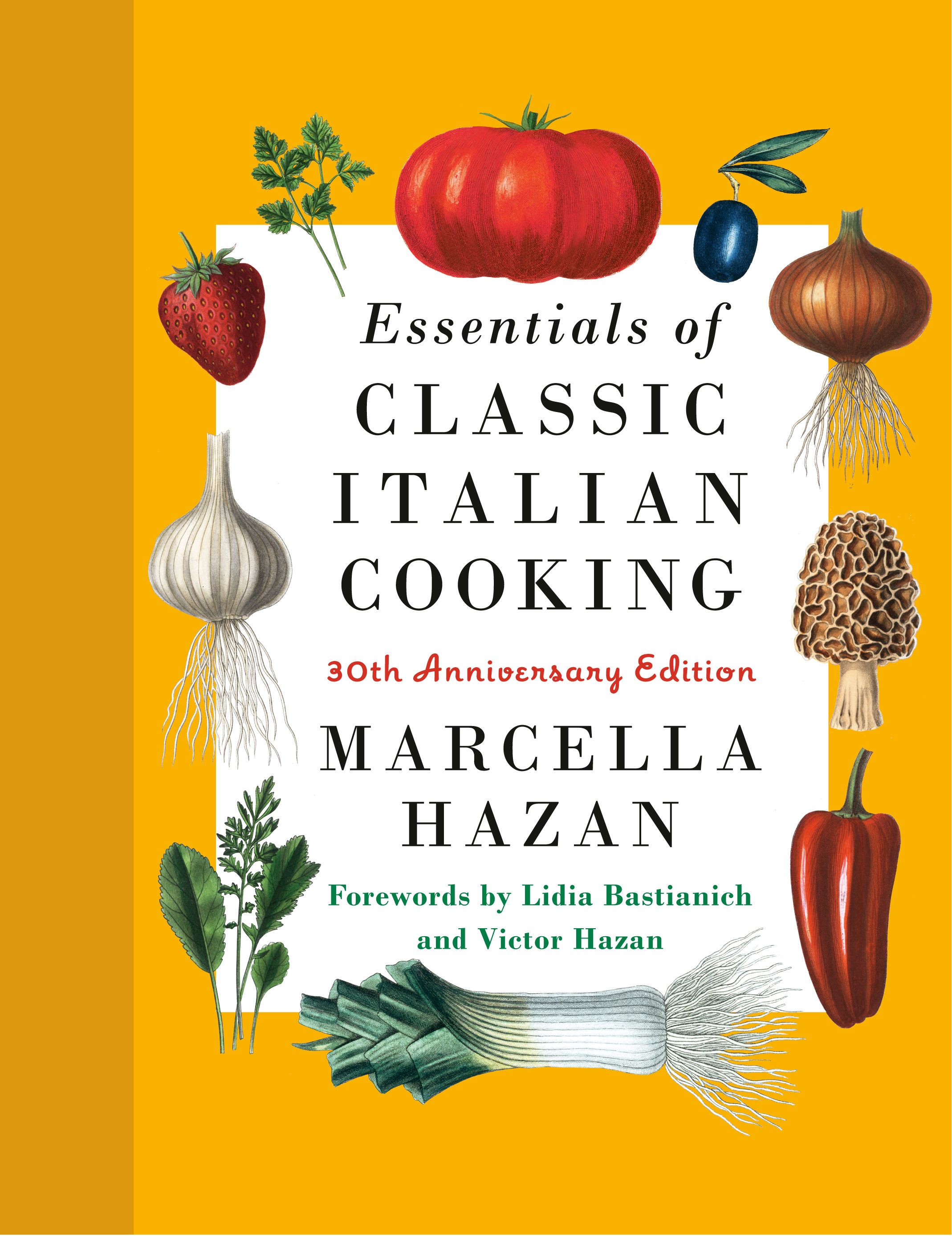
The most important, consulted, and enjoyed Italian cookbook of all time, from the woman who introduced Americans to a whole new world of Italian food.Essentials of Italian Cooking is a culinary bible for anyone looking to master the art of Italian cooking, bringing together Marcella Hazan’s most beloved books, The Classic Italian Cook Book and More Classic Italian Cooking, in a single volume, updated and expanded with new entries and 50 new recipes. Designed as a basic manual for cooks of all levels of expertise—from beginners to accomplished professionals—it offers both an accessible and comprehensive guide to techniques and ingredients and a collection of the most delicious recipes from the Italian repertoire. As home cooks who have used Marcella’s classic books for years (and whose copies are now splattered and worn) know, there is no one more gifted at teaching us just what we need to know about the taste and texture of a dish and how to achieve it, and there is no one more passionate and inspiring about authentic Italian food.

In this classic Southern cookbook, the “first lady of Southern cooking” (NPR) shares the seasonal recipes from a childhood spent in a small farming community settled by freed slaves. She shows us how to recreate these timeless dishes in our own kitchens—using natural ingredients, embracing the seasons, and cultivating community. With a preface by Judith Jones and foreword by Alice Waters.With menus for the four seasons, Miss Lewis (as she was almost universally known) shares the ways her family prepared and enjoyed food, savoring the delights of each special time of year.From the fresh taste of spring—the first wild mushrooms and field greens—to the feasts of summer—garden-ripe vegetables and fresh blackberry cobbler—and from the harvest of fall—baked country ham and roasted newly dug sweet potatoes—to the hearty fare of winter—stews, soups, and baked beans—Lewis sets down these marvelous dishes in loving detail.Here are recipes for Corn Pone and Crispy Biscuits, Sweet Potato Casserole and Hot Buttered Beets, Pan-Braised Spareribs, Chicken with Dumplings, Rhubarb Pie, and Brandied Peaches. Dishes are organized into more than 30 seasonal menus, such as A Late Spring Lunch After Wild-Mushroom Picking, A Midsummer Sunday Breakfast, A Christmas Eve Supper, and an Emancipation Day Dinner.In this seminal work, Edna Lewis shows us precisely how to recover, in our own country or city or suburban kitchens, the taste of the fresh, good, and distinctly American cooking that she grew up with.

Honey From a Weed: Fasting and Feasting in Tuscany, Catalonia, the Cyclades and Apulia
by Patience Gray
Rating: 4.2 ⭐
• 3 recommendations ❤️
This book is perhaps the jewel in Prospect Book's crown. Within a few months of its first appearance in 1986 it was hailed as a modern classic. Fiona MacCarthy wrote in The Times that, 'the book is a large and grandiose life history, a passionate narrative of extremes of experience.'; Jeremy Round called Patience Gray 'he high priestess of cooking';, whose book pushes the form of the cookery book as far as it can go. Angela Carter remarked that it was less a cookery book that a summing-up of the genre of the late-modern British cookery book. The work has attracted a cult following in the United States, where passages have been read out at great length on the radio; and it has been anthologized by Paul Levy in The Penguin Book of Food and Drink. It was given a special award by the Andre Simon Book Prize committee in 1987.

My Bombay Kitchen: Traditional and Modern Parsi Home Cooking
by Niloufer King
Rating: 4.3 ⭐
• 2 recommendations ❤️
Chef Samin Nosrat’s Top Ten Favorite Books for VultureWinner, 2008 James Beard Foundation Book Award in Asian CookingThe Persians of antiquity were renowned for their lavish cuisine and their never-ceasing fascination with the exotic. These traits still find expression in the cooking of India's rapidly dwindling Parsi population—descendants of Zoroastrians who fled Persia after the Sassanian empire fell to the invading Arabs. The first book published in the United States on Parsi food written by a Parsi, this beautiful volume includes 165 recipes and makes one of India's most remarkable regional cuisines accessible to Westerners. In an intimate narrative rich with personal experience, the author leads readers into a world of new ideas, tastes, ingredients, and techniques, with a range of easy and seductive menus that will reassure neophytes and challenge explorers.

In the high Alpine valley of La Grande Chartreuse, Roy Andries de Groot discovered by accident a charming and unpretentious little inn, L’Auberge de L’Atre Fleuri. Impressed by the devotion of its owners — les Mesdemoiselles Artraud and Girard — to perpetuating the tradition of supreme country dining, Mr. de Groot returned to the inn to record their recipes for natural country soups, heavy winter stews, roasted meats, pâtes, terrines, and fruity and spirituous desserts — the best of French cooking.Superb food, fine wine, and the perfect blending of both into a series of menus for memorable lunches and dinners, together with the unique French Alpine recipes that build each meal — these are the ingredients of this remarkable book, now considered a classic.

The Botany of Desire: A Plant's-Eye View of the World
by Michael Pollan
Rating: 4.1 ⭐
• 9 recommendations ❤️
Every schoolchild learns about the mutually beneficial dance of honeybees and flowers: The bee collects nectar and pollen to make honey and, in the process, spreads the flowers’ genes far and wide. In The Botany of Desire, Michael Pollan ingeniously demonstrates how people and domesticated plants have formed a similarly reciprocal relationship. He masterfully links four fundamental human desires—sweetness, beauty, intoxication, and control—with the plants that satisfy them: the apple, the tulip, marijuana, and the potato. In telling the stories of four familiar species, Pollan illustrates how the plants have evolved to satisfy humankind’s most basic yearnings. And just as we’ve benefited from these plants, we have also done well by them. So who is really domesticating whom?

This "luminous, brilliant" meditation on life in the countryside will encourage you to see the natural world -- and our place in it -- anew ( New York Times Book Review ). With an eloquence unmatched by any other living writer, Verlyn Klinkenborg observes the juncture at which our lives and the natural world intersect. His yearlong meditation on the rigors and wonders of country life -- encompassing memories of his family's Iowa homestead, time spent in the wide-open spaces of the American West, and his experiences on the small farm in upstate New York where he lives with his wife -- abounds with vicarious pleasures for the reader as it indelibly records and celebrates the everyday beauty of the world we inhabit. "In a voice reminiscent of E.B. White, Klinkenborg paints a picture of a fading world in colors that are solid and authentic. His joy is evident throughout." -- Los Angeles Times

On Food and Cooking The Science and Lore of the Kitchen
by Harold McGee
Rating: 4.3 ⭐
• 6 recommendations ❤️
This is the completely revised and updated version of the hardcover in paperback for the first time in this books 20 year history.

Recipes for antipasto, soup, pasta, main dishes, and sweets are accompanied by descriptions of the people, customs, and scenery typical of Italy's major gastronomic regions

Levels of the Game is John McPhee's astonishing account of a tennis match played by Arthur Ashe against Clark Graebner at Forest Hills in 1968.It begins with the ball rising into the air for the initial serve and ends with the final point. McPhee provides a brilliant, stroke-by-stroke description while examining the backgrounds and attitudes which have molded the players' games."This may be the high point of American sports journalism"- Robert Lipsyte, The New York Times

Characters from the television show "Sesame Street" present a variety of recipes including "Oscar's Junk Food Pie", "Rubber Duckie Floats", and "Snuffle's Truffles" and directions for preparing them.
Only a farmer could delve so deeply into the origins of food, and only a writer of Wendell Berry’s caliber could convey it with such conviction and eloquence. Long before Whole Foods organic produce was available at your local supermarket, Berry was farming with the purity of food in mind. For the last five decades, Berry has embodied mindful eating through his land practices and his writing. In recognition of that influence, Michael Pollan here offers an introduction to this wonderful collection.Drawn from over thirty years of work, this collection joins bestsellers The Omnivore’s Dilemma, by Pollan, and Animal, Vegetable, Miracle, by Barbara Kingsolver, as essential reading for anyone who cares about what they eat. The essays address such concerns as: How does organic measure up against locally grown? What are the differences between small and large farms, and how does that affect what you put on your dinner table? What can you do to support sustainable agriculture?A progenitor of the Slow Food movement, Wendell Berry reminds us all to take the time to understand the basics of what we ingest. “Eating is an agriculture act,” he writes. Indeed, we are all players in the food economy.

An indispensable and distinctive book that will help anyone who wants to write, write better, or have a clearer understanding of what it means for them to be writing, from widely admired writer and teacher Verlyn Klinkenborg. Klinkenborg believes that most of our received wisdom about how writing works is not only wrong but an obstacle to our ability to write. In Several Short Sentences About Writing , he sets out to help us unlearn that “wisdom”—about genius, about creativity, about writer’s block, topic sentences, and outline—and understand that writing is just as much about thinking, noticing, and learning what it means to be involved in the act of writing. There is no gospel, no orthodoxy, no dogma in this book. Instead it is a gathering of starting points in a journey toward lively, lucid, satisfying self-expression.

Food and poetry: in so many ways, a natural pairing, from prayers over bread to street vendor songs. Poetry is said to feed the soul, each poem a delicious morsel. When read aloud, the best poems provide a particular joy for the mouth. Poems about food make these satisfactions explicit and complete. Of course, pages can and have been filled about food's elemental pleasures. And we all know food is more than food: it's identity and culture. Our days are marked by meals; our seasons are marked by celebrations. We plant in spring; harvest in fall. We labor over hot stoves; we treat ourselves to special meals out. Food is nurture; it's comfort; it's reward. While some of the poems here are explicitly about the food itself: the blackberries, the butter, the barbecue--all are evocative of the experience of eating. Many of the poems are also about the everything else that accompanies food: the memories, the company, even the politics. Kevin Young, distinguished poet, editor of this year's Best American Poetry, uses the lens of food - and his impeccable taste - to bring us some of the best poems, classic and current, period. Poets include: Elizabeth Alexander, Elizabeth Bishop, Billy Collins, Mark Doty, Robert Frost, Allen Ginsberg, Louise Gluck, Seamus Heaney, Tony Hoagland, Langston Hughes, Galway Kinnell, Frank O'Hara, Sharon Olds, Mary Oliver, Adrienne Rich, Theodore Roethke, Matthew Rohrer, Charles Simic, Tracy K. Smith, Gertrude Stein, Wallace Stevens, Mark Strand, Kevin Young

Gran Cocina Latina: The Food of Latin America
by Maricel E. Presilla
Rating: 4.3 ⭐
• 2 recommendations ❤️
Gran Cocina Latina unifies the vast culinary landscape of the Latin world, from Mexico to Argentina and all the Spanish-speaking countries of the Caribbean. In one volume it gives home cooks, armchair travelers, and curious chefs the first comprehensive collection of recipes from this region. An inquisitive historian and a successful restaurateur, Maricel E. Presilla has spent more than thirty years visiting each country personally. She’s gathered more than 500 recipes for the full range of dishes, from the foundational adobos and sofritos to empanadas and tamales to ceviches and moles to sancocho and desserts such as flan and tres leches cake. Detailed equipment notes, drink and serving suggestions, and color photographs of finished dishes are also included. This is a one-of-a-kind cookbook to be savored and read as much for the writing and information as for its introduction to heretofore unrevealed recipes.

Michael Pollan, the bestselling author of The Omnivore’s Dilemma, Food Rules, and How to Change Your Mind, explores the previously uncharted territory of his own kitchen in Cooked.Cooked is now a Netflix docuseries based on the book that focuses on the four kinds of “transformations” that occur in cooking. Directed by Oscar-winning filmmaker Alex Gibney and starring Michael Pollan, Cooked teases out the links between science, culture and the flavors we love.In Cooked, Pollan discovers the enduring power of the four classical elements—fire, water, air, and earth—to transform the stuff of nature into delicious things to eat and drink. Apprenticing himself to a succession of culinary masters, Pollan learns how to grill with fire, cook with liquid, bake bread, and ferment everything from cheese to beer.Each section of Cooked tracks Pollan’s effort to master a single classic recipe using one of the four elements. A North Carolina barbecue pit master tutors him in the primal magic of fire; a Chez Panisse–trained cook schools him in the art of braising; a celebrated baker teaches him how air transforms grain and water into a fragrant loaf of bread; and finally, several mad-genius “fermentos” (a tribe that includes brewers, cheese makers, and all kinds of picklers) reveal how fungi and bacteria can perform the most amazing alchemies of all. The reader learns alongside Pollan, but the lessons move beyond the practical to become an investigation of how cooking involves us in a web of social and ecological relationships. Cooking, above all, connects us.The effects of not cooking are similarly far reaching. Relying upon corporations to process our food means we consume large quantities of fat, sugar, and salt; disrupt an essential link to the natural world; and weaken our relationships with family and friends. In fact, Cooked argues, taking back control of cooking may be the single most important step anyone can take to help make the American food system healthier and more sustainable. Reclaiming cooking as an act of enjoyment and self-reliance, learning to perform the magic of these everyday transformations, opens the door to a more nourishing life.

A 25th anniversary edition of the collection of classic recipes from the 'enfant terrible' of theUK restaurant scene, featuring striking photographs of his kitchen and his cooking.Once in a blue moon a book is published that changes irrevocably the face of things. WhiteHeat is one such book. Since it w as originally produced in 1990, it has gone on to becomeone of the most enduring classic cook books of our time. With its unique blend of outspokenopinion, recipes, and dramatic photographs, White Heat captures the magic and spirit ofMarco Pierre White in the heat of his kitchen.Marco Pierre White, the original 'enfant terrible', has earned his place in British culinaryhistory as much for his strong temperament as for his unique talent as a chef. Theyoungest chef ever to earn three Michelin stars, he has become not only a star chef ofinternational renown and food icon of our time, but also a multimillionaire entrepreneur.'White Heat is an edifying read ... a book that breaks new ground.' - Time Out'Wonderfully illustrated with photographs by Bob Carlos Clarke...this will sit equally wellon your coffee table or kitchen worktop.' - GQ'Amazingly religious experience' - Anthony Bourdain'White Heat is as unlike any previously published cook book as Marco is unlike any run of-the-mill chef.' - Sunday Telegraph
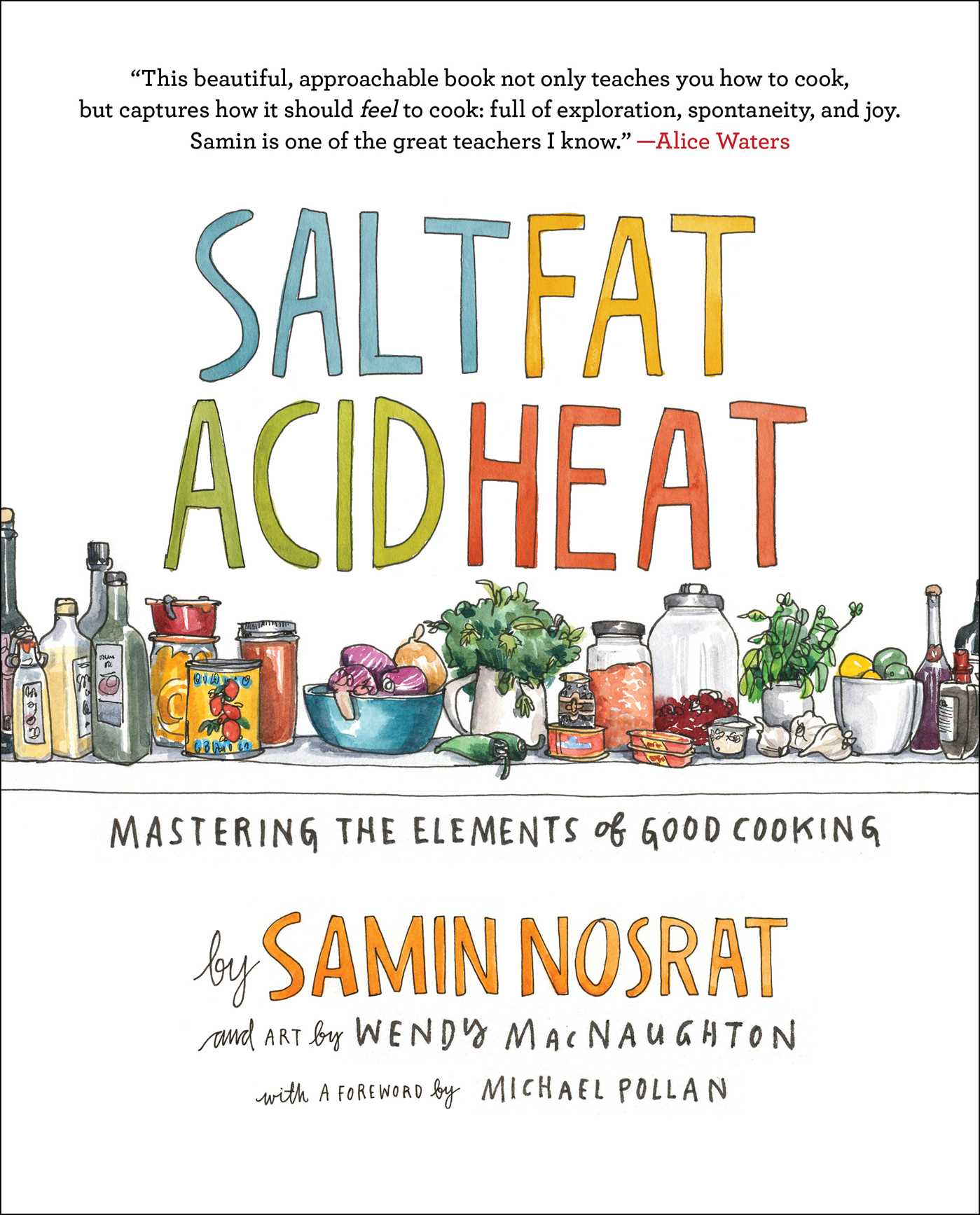
Salt, Fat, Acid, Heat: Mastering the Elements of Good Cooking
by Samin Nosrat
Rating: 4.4 ⭐
• 4 recommendations ❤️
A visionary new master class in cooking that distills decades of professional experience into just four simple elements, from the woman declared “America’s next great cooking teacher” by Alice Waters.In the tradition of The Joy of Cooking and How to Cook Everything comes Salt, Fat, Acid, Heat, an ambitious new approach to cooking by a major new culinary voice. Chef and writer Samin Nosrat has taught everyone from professional chefs to middle school kids to author Michael Pollan to cook using her revolutionary, yet simple, philosophy. Master the use of just four elements—Salt, which enhances flavor; Fat, which delivers flavor and generates texture; Acid, which balances flavor; and Heat, which ultimately determines the texture of food—and anything you cook will be delicious. By explaining the hows and whys of good cooking, Salt, Fat, Acid, Heat will teach and inspire a new generation of cooks how to confidently make better decisions in the kitchen and cook delicious meals with any ingredients, anywhere, at any time. Echoing Samin’s own journey from culinary novice to award-winning chef, Salt, Fat Acid, Heat immediately bridges the gap between home and professional kitchens. With charming narrative, illustrated walkthroughs, and a lighthearted approach to kitchen science, Samin demystifies the four elements of good cooking for everyone. Refer to the canon of 100 essential recipes—and dozens of variations—to put the lessons into practice and make bright, balanced vinaigrettes, perfectly caramelized roast vegetables, tender braised meats, and light, flaky pastry doughs. Featuring 150 illustrations and infographics that reveal an atlas to the world of flavor by renowned illustrator Wendy MacNaughton, Salt, Fat, Acid, Heat will be your compass in the kitchen. Destined to be a classic, it just might be the last cookbook you’ll ever need. With a foreword by Michael Pollan.

Longthroat Memoirs: Soups, Sex and Nigerian Taste Buds
by Yemisi Aribisala
Rating: 4.0 ⭐
• 2 recommendations ❤️
One of the most enduring myths on the Nigerian Femme Fatale - mammy-water, 'winch' or husband-snatcher - has to do with the cooking of fish stew ... A woman can do what she likes with a man When She knows how to satisfy his appetite for food. "Long throat Memoirs presents a sumptuous menu of essays about Nigerian food, lovingly presented by the nation's top epicurean writer. As well as a mouth-watering appraisal of the cultural politics and erotics of Nigerian cuisine, it is therefore a series of love letters to the Nigerian palate. From innovations in soup, fish as aphrodisiac and the powerful seductions of the yam, Long Throat Memoirs examines the complexities, the peculiarities, the meticulousness, and the tactility of Nigerian food. Nigeria has a strong culture of oral storytelling, myth of creation, of imaginative traversing of worlds. Long Throat Memoirs collates some of Those stories into at irresistible soup-pot, overexpressed in the flawless love language of appetite and nourishment.A sensuous testament on why, When and how Nigerians eat the food they love to eat; this book is a welcome addition to the global dining table of ideas.

Edna Lewis (1916-2006) wrote some of America's most resonant, lyrical, and significant cookbooks, including the now classic The Taste of Country Cooking . Lewis cooked and wrote as a means to explore her memories of childhood on a farm in Freetown, Virginia, a community first founded by black families freed from slavery. With such observations as "we would gather wild honey from the hollow of oak trees to go with the hot biscuits and pick wild strawberries to go with the heavy cream," she commemorated the seasonal richness of southern food. After living many years in New York City, where she became a chef and a political activist, she returned to the South and continued to write. Her reputation as a trailblazer in the revival of regional cooking and as a progenitor of the farm-to-table movement continues to grow. In this first-ever critical appreciation of Lewis's work, food-world stars gather to reveal their own encounters with Edna Lewis. Together they penetrate the mythology around Lewis and illuminate her legacy for a new generation.The essayists are Annemarie Ahearn, Mashama Bailey, Scott Alves Barton, Patricia E. Clark, Nathalie Dupree, John T. Edge, Megan Elias, John T. Hill (who provides iconic photographs of Lewis), Vivian Howard, Lily Kelting, Francis Lam, Jane Lear, Deborah Madison, Kim Severson, Ruth Lewis Smith, Toni Tipton-Martin, Michael W. Twitty, Alice Waters, Kevin West, Susan Rebecca White, Caroline Randall Williams, and Joe Yonan. Editor Sara B. Franklin provides an illuminating introduction to Lewis, and the volume closes graciously with afterwords by Lewis's sister, Ruth Lewis Smith, and niece, Nina Williams-Mbengue.