
Sam Altman Recommended Books
American venture-capitalist in Silicon Valley (born 1985)
41 Books Recommended

The Beak of the Finch: A Story of Evolution in Our Time
by Jonathan Weiner
Rating: 4.2 ⭐
• 2 recommendations ❤️
PULITZER PRIZE WINNER • A dramatic story of groundbreaking scientific research of Darwin's discovery of evolution that "spark[s] not just the intellect, but the imagination" ( Washington Post Book World). “Admirable and much-needed.... Weiner’s triumph is to reveal how evolution and science work, and to let them speak clearly for themselves.”— The New York Times Book ReviewOn a desert island in the heart of the Galapagos archipelago, where Darwin received his first inklings of the theory of evolution, two scientists, Peter and Rosemary Grant, have spent twenty years proving that Darwin did not know the strength of his own theory. For among the finches of Daphne Major, natural selection is neither rare nor slow: it is taking place by the hour, and we can watch.In this remarkable story, Jonathan Weiner follows these scientists as they watch Darwin's finches and come up with a new understanding of life itself. The Beak of the Finch is an elegantly written and compelling masterpiece of theory and explication in the tradition of Stephen Jay Gould.

The definitive text in cell biology As the amount of information in biology expands dramatically, it becomes increasingly important for textbooks to distill this vast amount of scientific knowledge into concise principles and enduring concepts. Molecular Biology of the Cell , Sixth Edition accomplishes this goal with clear writing and beautiful illustrations. The Sixth Edition has been extensively revised and updated with the latest research in cell biology, and it provides an exceptional framework for teaching and learning. Table of Part I INTRODUCTION TO THE CELL1. Cells and Genomes2. Cell Chemistry and Bioenergetics3. ProteinsPart II BASIC GENETIC MECHANISMS4. DNA, Chromosomes, and Genomes5. DNA Replication, Repair, and Recombination6. How Cells Read the From DNA to Protein7. Control of Gene ExpressionPart III WAYS OF WORKING WITH CELLS8. Analyzing Cells, Molecules, and Systems9. Visualizing CellsPart IV INTERNAL ORGANIZATION OF THE CELL10. Membrane Structure11. Membrane Transport of Small Molecules and theElectrical Properties of Membranes12. Intracellular Compartments and Protein Sorting13. Intracellular Membrane Traffic14. Energy Mitochondria and Chloroplasts15. Cell Signaling16. The Cytoskeleton17. The Cell Cycle18. Cell Death19. Cell Junctions and the Extracellular MatrixPart V CELLS IN THEIR SOCIAL CONTEXT20. Cancer21. Development of Multicellular Organisms22. Stem Cells and Tissue Renewal23. Pathogens and Infection24. The Innate and Adaptive Immune Systems

A book that redefines both family and narrative for the twenty-first century. A Heartbreaking Work of Staggering Genius is the moving memoir of a college senior who, in the space of five weeks, loses both of his parents to cancer and inherits his eight-year-old brother. Here is an exhilarating debut that manages to be simultaneously hilarious and wildly inventive as well as a deeply heartfelt story of the love that holds a family together.A Heartbreaking Work of Staggering Genius is an instant classic that will be read for decades to come.

In unraveling the long-hidden issues of the most famous free speech case of all time, noted author I.F. Stone ranges far and wide over Roman as well as Greek history to present an engaging and rewarding introduction to classical antiquity and its relevance to society today. The New York Times called this national best-seller an "intellectual thriller."
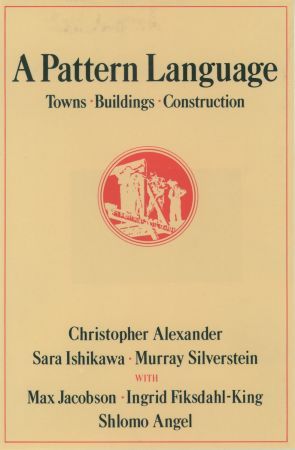
A Pattern Language: Towns, Buildings, Construction
by Christopher W. Alexander
Rating: 4.4 ⭐
• 11 recommendations ❤️
At the core of A Pattern Language is the philosophy that in designing their environments people always rely on certain ‘languages,’ which, like the languages we speak, allow them to articulate and communicate an infinite variety of designs within a formal system which gives them coherence.This book provides a language of this kind. It will enable making a design for almost any kind of building, or any part of the built environment. ‘Patterns,’ the units of this language, are answers to design problems: how high should a window sill be?; how many stories should a building have?; how much space in a neighborhood should be devoted to grass and trees?More than 250 of the patterns in this language are outlined, each consisting of a problem statement, a discussion of the problem with an illustration, and a solution. As the authors say in their introduction, many of the patterns are archetypal, so deeply rooted in the nature of things that it seems likely that they will be a part of human nature and human action as much in five hundred years as they are today.A Pattern Language is related to Alexander’s other works in the Center for Environmental Structure series: The Timeless Way of Building (introductory volume) and The Oregon Experiment.

Skunk Works: A Personal Memoir of My Years at Lockheed
by Ben R. Rich
Rating: 4.5 ⭐
• 2 recommendations ❤️
From the development of the U-2 to the Stealth fighter, the never-before-told story behind the high-stakes quest to dominate the skies Skunk Works is the true story of America's most secret & successful aerospace operation. As recounted by Ben Rich, the operation's brilliant boss for nearly two decades, the chronicle of Lockheed's legendary Skunk Works is a drama of cold war confrontations and Gulf War air combat, of extraordinary feats of engineering & achievement against fantastic odds. Here are up-close portraits of the maverick band of scientists & engineers who made the Skunk Works so renowned. Filled with telling personal anecdotes & high adventure, with narratives from the CIA & from Air Force pilots who flew the many classified, risky missions, this book is a portrait of the most spectacular aviation triumphs of the 20th century.

The Supermen: The Story of Seymour Cray and the Technical Wizards Behind the Supercomputer
by Charles J. Murray
Rating: 4.1 ⭐
• 2 recommendations ❤️
The SUPERMEN"After a rare speech at the National Center for Atmospheric Research in Boulder, Colorado, in 1976, programmers in the audience had suddenly fallen silent when Cray offered to answer questions. He stood there for several minutes, waiting for their queries, but none came. When he left, the head of NCAR's computing division chided the programmers. 'Why didn't someone raise a hand?' After a tense moment, one programmer replied, 'How do you talk to God?'" -from The SUPERMEN The Story of Seymour Cray and the Technical Wizards behind the Supercomputer"They were building revolutionary, not evolutionary, machines. . . . They were blazing a trail-molding science into a product. . . . The freedom to create was extraordinary." -from The SupermenIn 1951, a soft-spoken, skinny young man fresh from the University of Minnesota took a job in an old glider factory in St. Paul. Computer technology would never be the same, for the glider factory was the home of Engineering Research Associates and the recent college grad was Seymour R. Cray. During his extraordinary career, Cray would be alternately hailed as "the Albert Einstein," "the Thomas Edison," and "the Evel Knievel" of supercomputing. At various times, he was all three-a master craftsman, inventor, and visionary whose disdain for the rigors of corporate life became legendary, and whose achievements remain unsurpassed.The Supermen is award-winning writer Charles J. Murray's exhilarating account of how the brilliant-some would say eccentric-Cray and his gifted colleagues blazed the trail that led to the Information Age. This is a thrilling, real-life scientific adventure, deftly capturing the daring, seat-of-the-pants spirit of the early days of computer development, as well as an audacious, modern-day David and Goliath battle, in which a group of maverick engineers beat out IBM to become the runaway industry leaders.Murray's briskly paced narrative begins during the final months of the Second World War, when men such as William Norris and Howard Engstrom began researching commercial applications for the code-breaking machines of wartime, and charts the rise of technological research in response to the Cold War. In those days computers were huge, cumbersome machines with names like Demon and Atlas. When Cray came on board, things quickly changed.Drawing on in-depth interviews-including the last interview Cray completed before his untimely and tragic death-Murray provides rare insight into Cray's often controversial approach to his work. Cray could spend exhausting hours in single-minded pursuit of a particular goal, and Murray takes us behind the scenes to witness late-night brainstorming sessions and miraculous eleventh-hour fixes. Cray's casual, often hostile attitude toward management, although alienating to some, was more than a passionate need for independence; he simply thought differently than others. Seymour Cray saw farther and faster, and trusted his vision with an unassailable confidence. Yet he inspired great loyalty as well, making it possible for his own start-up company, Cray Research, to bring the 54,000-employee conglomerate of Control Data to its knees.Ultimately, The Supermen is a story of genius, and how a unique set of circumstances-a small-team approach, corporate detachment, and a government-backed marketplace-enabled that genius to flourish. In an atmosphere of unparalleled freedom and creativity, Seymour Cray's vision and drive fueled a technological revolution from which America would emerge as the world's leader in supercomputing.

In Medieval Technology and Social Change, Lynn White considers the effects of technological innovation on the societies of medieval Europe: the slow collapse of feudalism with the development of machines and tools that introduced factories in place of cottage industries, and the development of the manorial system with the introduction of new kinds of plows and new methods of crop rotation. One invention of particular import, writes White, was the stirrup, which in turn introduced heavy, long-range cavalry to the medieval battlefield. The development thus escalated small-scale conflict to "shock combat." Cannons and flamethrowers followed, as did more peaceful inventions, such as watermills and reapers.

Texas Hold ’em is not an easy game to play well. To become an expert you must balance many concepts, some of which occasionally contradict each other. In 1988, the first edition appeared. Many ideas, which were only known to a small, select group of players, were made available to anyone who was striving to become an expert, and the hold ’em explosion had begun. It is now a new century, and the authors have again moved the state of the art forward by adding over 100 pages of new material, including extensive sections on "loose games," and "short-handed games." Anyone who studies this text, is well disciplined, and gets the proper experience should become a significant winner. Some of the other ideas discussed include play on the first two cards, semi-bluffing, the free card, inducing bluffs, staying with a draw, playing when a pair flops, playing trash hands, desperation bets, playing in wild games, reading hands, and psychology.

The Constitutional Convention: A Narrative History from the Notes of James Madison
by James Madison
Rating: 4.1 ⭐
• 2 recommendations ❤️
In 1787, the American union was in disarray. The incompatible demands of the separate states threatened its existence; some states were even in danger of turning into the kind of tyranny they had so recently deposed. A truly national government was needed, one that could raise money, regulate commerce, and defend the states against foreign threats–without becoming as overbearing as England. So thirty-six-year-old James Madison believed. That summer, the Virginian was instrumental in organizing the Constitutional Convention, in which one of the world’s greatest documents would be debated, created, and signed. Inspired by a sense of history in the making, he kept the most extensive notes of any attendee.Now two esteemed scholars have made these minutes accessible to everyone. Presented with modern punctuation and spelling, judicious cuts, and helpful notes–plus fascinating background information on every delegate and an overview of the tumultuous times–here is the great drama of how the Constitution came to be, from the opening statements to the final votes. This Modern Library Paperback Classic also includes an Introduction and appendices from the authors.

Solution Selling: Creating Buyers in Difficult Selling Markets
by Michael T. Bosworth
Rating: 4.0 ⭐
• 2 recommendations ❤️
``Solution Selling is the most comprehensive sales and sales management process available today. Mike Bosworth has the best understanding of sales process in corporate America.''Jeffrey M. Fisher, Vice President, Symix Computer Systems.

The Principia: The Authoritative Translation and Guide: Mathematical Principles of Natural Philosophy
by Isaac Newton
Rating: 4.8 ⭐
• 10 recommendations ❤️
In his monumental 1687 work, Philosophiae Naturalis Principia Mathematica, known familiarly as the Principia, Isaac Newton laid out in mathematical terms the principles of time, force, and motion that have guided the development of modern physical science. Even after more than three centuries and the revolutions of Einsteinian relativity and quantum mechanics, Newtonian physics continues to account for many of the phenomena of the observed world, and Newtonian celestial dynamics is used to determine the orbits of our space vehicles. This authoritative, modern translation by Cohen and Whitman, the first in over 285 years, is based on the 1726 edition, the final revised version approved by Newton; it includes extracts from the earlier editions, corrects errors found in earlier versions, and replaces archaic English with contemporary prose and up-to-date mathematical forms. Newton's principles describe acceleration, deceleration, and inertial movement; fluid dynamics; and the motions of the earth, moon, planets, and comets. A great work in itself, the Principia also revolutionized the methods of scientific investigation. It set forth the fundamental three laws of motion and the law of universal gravity, the physical principles that account for the Copernican system of the world as emended by Kepler, thus effectively ending controversy concerning the Copernican planetary system. The illuminating Guide to the Principia by I. Bernard Cohen, along with his and Anne Whitman's translation, make this preeminent work truly accessible for today's scientists, scholars, and students.

环境的极致,信念的极致,生命的极致,你能熬过去吗?700天冰海历劫,20世纪最伟大的南极探险故事!弃船的命令下午5时发出。然而,对于大多数船员来说,其实已经没必要了,因为人人都知道这船彻底完了,是该放弃了。没有人表现出恐惧甚或忧虑。他们已经一刻不停地奋战了整整三天,但最终还是功败垂成。对于逃离沉船后的那种普遍的解脱感,有个人是不认可的。他的名字是欧内斯特·沙克尔顿爵士,就是他率领了这支大英帝国穿越南极探险队。这一天是1915年10月27日。探险船的名字叫“坚忍号”。目前的坐标是南纬69.5度,西经51.3度,处于南极诡秘莫测的威德尔海千里冰原深处,正好在南极点与离得最近的人类居住点之间,居住点距此有1200英里。自从最后一次同现代文明接触之后,已经过去了将近一年时间。外界根本就没有人知道他们遇到了麻烦。当时,他们没有无线电发报机,而且,就算用无线电发出了紧急求救信号, 最后能否有人及时赶来救援还是问题。那是1915年,没有直升机,没有小型登陆车,没有履带式雪地车,也没有合用的救援飞机。已知离得最近的能让他们找到食物和住所的地方,就只有小小的保利特岛。1903年,就在这个小岛上,被威德尔海的坚冰撞坏的瑞典船“南极号”的船员度过了整个冬天。该船最终获救,撤离时船员们将船上的给养留在了保利特岛上,以备日后任何遭遇海难者的不时之需。饶有意味的是,当年正是沙克尔顿受命购买了这些给养,而现在,整整十二年之后,这恰恰是他自己最需要的。

How did Einstein's mind work? What made him a genius? Isaacson's biography shows how his scientific imagination sprang from the rebellious nature of his personality. His fascinating story is a testament to the connection between creativity and freedom.Based on the newly released personal letters of Albert Einstein, Walter Isaacson explores how an imaginative, impertinent patent clerk -- a struggling father in a difficult marriage who couldn't get a teaching job or a doctorate -- became the mind reader of the creator of the cosmos, the locksmith of the mysteries of the atom and the universe. His success came from questioning conventional wisdom and marveling at mysteries that struck others as mundane. This led him to embrace a morality and politics based on respect for free minds, free spirits, and free individuals.These traits are just as vital for this new century of globalization, in which our success will depend on our creativity, as they were for the beginning of the last century, when Einstein helped usher in the modern age.

Dealers of Lightning: Xerox PARC and the Dawn of the Computer Age
by Michael A. Hiltzik
Rating: 4.2 ⭐
• 8 recommendations ❤️
Dealers of Lightning is the riveting story of the legendary Xerox PARC--a collection of eccentric young inventors brought together by Xerox Corporation at a facility in Palo Alto, California, during the mind-blowing intellectual ferment of the seventies and eighties. Here for the first time Michael Hiltzik, a correspondent for the Los Angeles Times, reveals in piercing detail the true story of the extraordinary group that aimed to bring about a technological dawn that would change the world--and succeeded. Based on extensive interviews with the scientists, engineers, administrators, and corporate executives who lived the story, Dealers of Lightning takes the read on a journey from PARC's beginnings in a dusty, abandoned building at the edge of the Stanford University campus to its triumph as a hothouse of ideas that spawned not only the first personal computer, but the windows-style graphical user interface, the laser printer, much of the indispensable technology of the Internet, and a great deal more. It shows how and why Xerox, despite its willingness to grant PARC unlimited funding and the responsibility for developing breakthroughs to keep the corporation on the cutting edge of office technology, remained forever unable to grasp (and, consequently, exploit) the innovations that PARC delivered--and it details the increasing frustration of the original PARC scientists, many of whom would go on to build their fortunes upon the very ideas Xerox so rashly discarded. More than just a riveting historical narrative, Dealers of Lightning brings to life an unforgettable cast of characters. Among

The Mind of Napoleon: A Selection of His Written and Spoken Words
by Napoléon Bonaparte
Rating: 4.2 ⭐
• 2 recommendations ❤️
Book by Napoleon, Herold, J. Christopher

Caroline and Grace Bell, two beautiful orphan sisters eager to begin their lives in a new land, journey to England from Australia. What happens to these young women - seduction and abandonment, marriage and widowhood, love and betrayal - becomes as moving and wonderful and yet as predestined as the transits of the planets themselves.The Transit of Venus is a story of place: Sydney, London, New York, Stockholm; of time: from the fifties to the eighties; and above all, of women and men in their passage through the displacements and absurdities of modern life.

The Origin of Consciousness in the Breakdown of the Bicameral Mind
by Julian Jaynes
Rating: 4.3 ⭐
• 8 recommendations ❤️
At the heart of this classic, seminal book is Julian Jaynes's still-controversial thesis that human consciousness did not begin far back in animal evolution but instead is a learned process that came about only three thousand years ago and is still developing. The implications of this revolutionary scientific paradigm extend into virtually every aspect of our psychology, our history and culture, our religion -- and indeed our future.
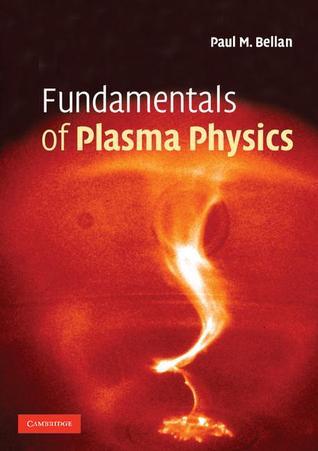
This rigorous explanation of plasmas is relevant to diverse plasma applications such as controlled fusion, astrophysical plasmas, solar physics, magnetospheric plasmas, and plasma thrusters. More thorough than previous texts, it exploits new powerful mathematical techniques to develop deeper insights into plasma behavior. After developing the basic plasma equations from first principles, the book explores single particle motion with particular attention to adiabatic invariance. The author then examines types of plasma waves and the issue of Landau damping. Magnetohydrodynamic equilibrium and stability are tackled with emphasis on the topological concepts of magnetic helicity and self-organization. Advanced topics follow, including magnetic reconnection, nonlinear waves, and the Fokker-Planck treatment of collisions. The book concludes by discussing unconventional plasmas such as non-neutral and dusty plasmas. Written for beginning graduate students and advanced undergraduates, this text emphasizes the fundamental principles that apply across many different contexts.
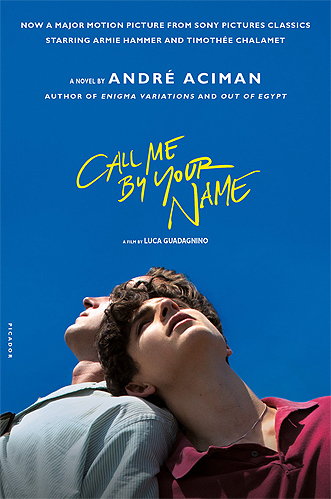
Call Me by Your Name is the story of a sudden and powerful romance that blossoms between an adolescent boy and a summer guest at his parents' cliffside mansion on the Italian Riviera. Each is unprepared for the consequences of their attraction when, during the restless summer weeks, unrelenting currents of obsession, fascination, and desire intensify their passion and test the charged ground between them. Recklessly, the two verge toward the one thing both fear they may never truly find again: total intimacy.

Guns, Sails, and Empires: Technological Innovation and the Early Phases of European Expansion, 1400- 1700
by Carlo M. Cipolla
Rating: 4.0 ⭐
• 4 recommendations ❤️
European expansion was essentially a commercial venture, and the fact that the colonial policies of the European powers had a very pronounced mercantile tone was the natural consequence of the basic motives behind that expansion. A wide range of opportunities magnetized the Europeans overseas. Religion supplied the pretext and gold was the motive.

The Republic by Plato is a landmark achievement in Ancient Greek philosophy - this edition combines an authoritative translation with affordability.The Republic is the most famous text written by Plato, which takes the form of a philosophical dialogue. The text is part conversation between a group of friends active in the Athens intellectual community, and part monologue from various participants in the discussion. The narrator and lead character is Socrates, Plato's friend and mentor, who appears in most of his pupil's dialogues and acts as surrogate to Plato's ideas. Throughout the text the 'Socratic method', whereby Socrates feigns ignorance and questions an adversary to receive insight on a given subject, is demonstrated.Ten books in total comprise The Republic , the divisions thought to have been made due to the length of a roll of papyrus in Ancient Greece. The discussion begins with an attempt to find a definition for justice, wherein a disagreement between Thrasymachus - who believes justice is what is good for who is strongest at a given place and time - and Socrates, who believes that all members of society should, for the highest benefit of all, conform to just action.In Book II, the discussion expands to include justice in the sense of a social contract. Whether or not justice happens only due to fear of reprisal, and whether justice is truly a high virtue of itself, are among the questions considered. Eventually the discussion expands further into the idea of a just city ideas of how such a society, embodying justice and order, might work commences with Socrates proposing an educated 'guardian' class of able-bodied men and women who would uphold order and defend such a city against threats from outside.After expanding their ideas on the guardians, the dialogue proceeds onto other classes. It is here that Plato's famous idea of the philosopher king arises - the notion of a ruler who is appointed for holding the highest understanding of good and just rule, imparted to him at an early age by capable educators.Plato as Socrates eventually proposes that the essence of justice is fulfilling one's role in society. The correct assignment of an occupation to each citizen, to which they can happily commit, will result in a just and capable society. Further stipulations upon this ideal society are given; that education be strictly regulated and human reproduction made a matter for the state, with no offspring knowing their parents.The Republic then covers four forms of injustice manifested in systems of government - timocracy, oligarchy, democracy, and finally tyranny. How these unjust societies occur is talked about at length, with examples from Ancient society cited as Socrates/Plato develops theories on how societies go astray. The most unjust ruler - the tyrant - is discussed at length, and determined to be among the most unhappy, unfree and unfulfilled types of man owing to his thrall to passions, and friendless owing to his commitment to hierarchy. Such malfeasant politics are excoriated; in the end, Socrates says, all are harmed and none benefit from tyranny.Between books VII and VIII Socrates establishes the famous Allegory of the Cave as a way of demonstrating education's effects upon the human mind. By using the image of people who have only lived in a dark caves their whole lives, he illustrates how mere shadows against the walls are the closest such individuals come to seeing reality. Philosophy, Socrates argues, is the way by which humans are freed from this cave of ignorance and propelled to an enlightenment.Socrates concludes the discussion of city politics and rulers, and commences to focus upon the nature of art and its place in the just and ideal city. He also discusses reincarnation, the indestructible nature of the human soul, concluding the epic text on a spiritual note.

In this celebrated work, his only novel, Wilde forged a devastating portrait of the effects of evil and debauchery on a young aesthete in late-19th-century England. Combining elements of the Gothic horror novel and decadent French fiction, the book centers on a striking premise: As Dorian Gray sinks into a life of crime and gross sensuality, his body retains perfect youth and vigor while his recently painted portrait grows day by day into a hideous record of evil, which he must keep hidden from the world. For over a century, this mesmerizing tale of horror and suspense has enjoyed wide popularity. It ranks as one of Wilde's most important creations and among the classic achievements of its kind.

The triumphant memoir of the man behind one of the greatest feats in scientific historyOf all the scientific achievements of the past century, perhaps none can match the deciphering of the human genetic code, both for its technical brilliance and for its implications for our future. In A Life Decoded , J. Craig Venter traces his rise from an uninspired student to one of the most fascinating and controversial figures in science today. Here, Venter relates the unparalleled drama of the quest to decode the human genome?a goal he predicted he could achieve years earlier and more cheaply than the government-sponsored Human Genome Project, and one that he fulfilled in 2001. A thrilling story of detection, A Life Decoded is also a revealing, and often troubling, look at how science is practiced today.

Hateship, Friendship, Courtship, Loveship, Marriage: Stories
by Alice Munro
Rating: 4.1 ⭐
• 2 recommendations ❤️
In the her tenth collection (the title story of which is the basis for the new film Hateship Loveship), Alice Munro achieves new heights, creating narratives that loop and swerve like memory, and conjuring up characters as thorny and contradictory as people we know ourselves.A tough-minded housekeeper jettisons the habits of a lifetime because of a teenager’s practical joke. A college student visiting her brassy, unconventional aunt stumbles on an astonishing secret and its meaning in her own life. An incorrigible philanderer responds with unexpected grace to his wife’s nursing-home romance. Hateship, Friendship, Courtship, Loveship, Marriage is Munro at her best, tirelessly observant, serenely free of illusion, deeply and gloriously humane.

The must-have Pevear and Volokhonsky translation of one of the greatest Russian novels ever writtenDescribed by William Faulkner as the best novel ever written and by Fyodor Dostoevsky as “flawless,” Anna Karenina tells of the doomed love affair between the sensuous and rebellious Anna and the dashing officer, Count Vronsky. Tragedy unfolds as Anna rejects her passionless marriage and thereby exposes herself to the hypocrisies of society. Set against a vast and richly textured canvas of nineteenth-century Russia, the novel's seven major characters create a dynamic imbalance, playing out the contrasts of city and country life and all the variations on love and family happiness.While previous versions have softened the robust and sometimes shocking qualities of Tolstoy's writing, Pevear and Volokhonsky have produced a translation true to his powerful voice. This authoritative edition, which received the PEN Translation Prize and was an Oprah Book Club™ selection, also includes an illuminating introduction and explanatory notes. Beautiful, vigorous, and eminently readable, this Anna Karenina will be the definitive text for fans of the film and generations to come. This Penguin Classics Deluxe Edition also features French flaps and deckle-edged paper.

“How to build a more just world and save the planet.... We should all heed Brown’s advice.”―Bill Clinton In this updated edition of the landmark Plan B , Lester Brown outlines a survival strategy for our early twenty-first-century civilization. The world faces many environmental trends of disruption and decline, including rising temperatures and spreading water shortage. In addition to these looming threats, we face the peaking of oil, annual population growth of 70 million, a widening global economic divide, and a growing list of failing states. The scale and complexity of issues facing our fast-forward world have no precedent. With Plan A, business as usual, we have neglected these issues overly long. In Plan B 3.0 , Lester R. Brown warns that the only effective response now is a World War II–type mobilization like that in the United States after the attack on Pearl Harbor.

Brave New World is a dystopian social science fiction novel by English author Aldous Huxley. Largely set in a futuristic World State, whose citizens are environmentally engineered into an intelligence-based social hierarchy, the novel anticipates huge scientific advancements in reproductive technology, sleep-learning, psychological manipulation and classical conditioning that are combined to make a dystopian society which is challenged by only a single individual: the story's protagonist.

Taking us from Afghanistan in the final days of the monarcy through the horrific invasion of the Taliban, The Kite Runner is the heartbreaking story of the unlikely and inseperable friendship between a wealthy boy and the son of his father's servant, both of whom are caought in the tragic sweep of history. It isa also about the power of reading, the price of betrayal, the possibility of redemption, and the influence of fathers over sons, of a country ofver men - and the sacrifices, loyalty and lies that bind them.--jacket flap

Jean-Baptiste Clamence is a soul in turmoil. Over several drunken nights in an Amsterdam bar, he regales a chance acquaintance with his story. From this successful former lawyer and seemingly model citizen a compelling, self-loathing catalogue of guilt, hypocrisy and alienation pours forth.The Fall (French: La Chute) is a philosophical novel by Albert Camus. First published in 1956, it is his last complete work of fiction. The Fall explores themes of innocence, imprisonment, non-existence, and truth. In a eulogy to Albert Camus, existentialist philosopher Jean-Paul Sartre described the novel as "perhaps the most beautiful and the least understood" of Camus' books.

Man's Search for Meaning has riveted generations of readers with its descriptions of life in Nazi death camps and its lessons for spiritual survival. Between 1942 and 1945 psychiatrist Viktor Frankl labored in four different camps, including Auschwitz, while his parents, brother, and pregnant wife perished. Based on his own experience and the stories of his many patients, Frankl argues that we cannot avoid suffering but we can choose how to cope with it, find meaning in it, and move forward with renewed purpose. Frankl's theory—known as logotherapy, from the Greek word logos ("meaning")—holds that our primary drive in life is not pleasure, as Freud maintained, but the discovery and pursuit of what we personally find meaningful. In the decades since its first publication in 1959, Man's Search for Meaning has become a classic, with more than twelve million copies in print around the world. A 1991 Library of Congress survey that asked readers to name a "book that made a difference in your life" found Man's Search for Meaning among the ten most influential books in America. At once a memoir, a meditation, a treatise, and a history, it continues to inspire us all to find significance in the very act of living.(back cover)

The Score Takes Care of Itself: My Philosophy of Leadership
by Bill Walsh
Rating: 4.3 ⭐
• 16 recommendations ❤️
The last lecture on leadership by the NFL's greatest coach: Bill Walsh Bill Walsh is a towering figure in the history of the NFL. His advanced leadership transformed the San Francisco 49ers from the worst franchise in sports to a legendary dynasty. In the process, he changed the way football is played.Prior to his death, Walsh granted a series of exclusive interviews to bestselling author Steve Jamison. These became his ultimate lecture on leadership.Additional insights and perspective are provided by Hall of Fame quarterback Joe Montana and others.Bill Walsh taught that the requirements of successful leadership are the same whether you run an NFL franchise, a fortune 500 company, or a hardware store with 12 employees. These final words of 'wisdom by Walsh' will inspire, inform, and enlighten leaders in all professions.
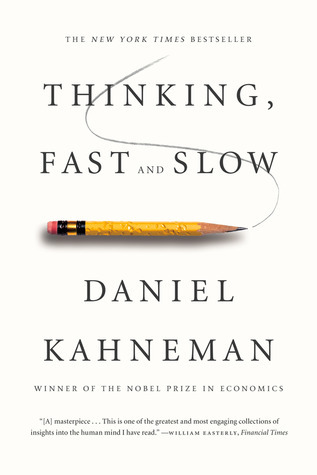
Major New York Times bestsellerWinner of the National Academy of Sciences Best Book Award in 2012Selected by the New York Times Book Review as one of the best books of 2011A Globe and Mail Best Books of the Year 2011 TitleOne of The Economist's 2011 Books of the Year One of The Wall Street Journal's Best Nonfiction Books of the Year 20112013 Presidential Medal of Freedom RecipientIn the international bestseller, Thinking, Fast and Slow, Daniel Kahneman, the renowned psychologist and winner of the Nobel Prize in Economics, takes us on a groundbreaking tour of the mind and explains the two systems that drive the way we think. System 1 is fast, intuitive, and emotional; System 2 is slower, more deliberative, and more logical. The impact of overconfidence on corporate strategies, the difficulties of predicting what will make us happy in the future, the profound effect of cognitive biases on everything from playing the stock market to planning our next vacation—each of these can be understood only by knowing how the two systems shape our judgments and decisions. Engaging the reader in a lively conversation about how we think, Kahneman reveals where we can and cannot trust our intuitions and how we can tap into the benefits of slow thinking. He offers practical and enlightening insights into how choices are made in both our business and our personal lives—and how we can use different techniques to guard against the mental glitches that often get us into trouble. Winner of the National Academy of Sciences Best Book Award and the Los Angeles Times Book Prize and selected by The New York Times Book Review as one of the ten best books of 2011, Thinking, Fast and Slow is destined to be a classic.

The Old Way: A Story of the First People
by Elizabeth Marshall Thomas
Rating: 4.2 ⭐
• 6 recommendations ❤️
Elizabeth Marshall Thomas was nineteen when her father took his family to live among the Bushmen of the Kalahari. Fifty years later, after a life of writing and study, Thomas returns to her experiences with the Bushmen, one of the last hunter-gatherer societies on earth, and discovers among them an essential link to the origins of all human society.Humans lived for 1,500 centuries as roving clans, adapting daily to changes in environment and food supply, living for the most part like their animal ancestors. Those origins are not so easily abandoned, Thomas suggests, and our modern society has plenty still to learn from the Bushmen.Through her vivid, empathic account, Thomas reveals a template for the lives and societies of all humankind.

In Powering the Future , Nobel laureate Robert B. Laughlin transports us two centuries into the future, when we've ceased to use carbon from the ground--either because humans have banned carbon burning or because fuel has simply run out. Boldly, Laughlin predicts no earth-shattering transformations will have taken place. Six generations from now, there will still be soccer moms, shopping malls, and business trips. Firesides will still be snug and warm.How will we do it? Not by discovering a magic bullet to slay our energy problems, but through a slew of fascinating technologies, drawing on wind, water, and fire. Powering the Future is an objective yet optimistic tour through alternative fuel sources, set in a world where we've burned every last drop of petroleum and every last shovelful of coal.The Fossil fuels will run out. The present flow of crude oil out of the ground equals in one day the average flow of the Mississippi River past New Orleans in thirteen minutes. If you add the energy equivalents of gas and coal, it's thirty-six minutes. At the present rate of consumption, we'll be out of fossil fuels in two centuries' time. We always choose the cheapest gas . From the nineteenth-century consolidation of the oil business to the California energy crisis of 2000-2001, the energy business has shown, time and again, how low prices dominate market share. Market forces--not green technology--will be the driver of energy innovation in the next 200 years. The laws of physics remain fixed. Energy will still be conserved, degrade entropically with use, and have to be disposed of as waste heat into outer space. How much energy a fuel can pack away in a given space is fixed by quantum mechanics--and if we want to keep flying jet planes, we will need carbon-based fuels. The Animal waste. If dried and burned, the world's agricultural manure would supply about one-third as much energy as all the coal we presently consume. Trash. The United States disposes of 88 million tons of carbon in its trash per year. While the incineration of waste trash is not enough to contribute meaningfully to the global demand for energy, it will constrain fuel prices by providing a cheap supply of carbon. Solar energy. The power used to light all the cities around the world is only one-millionth of the total power of sunlight pouring down on earth's daytime side. And the amount of hydropump storage required to store the world's daily electrical surge is equal to only eight times the volume of Lake Mead. PRAISE FOR ROBERT B. LAUGHLIN -Perhaps the most brilliant theoretical physicist since Richard Feynman---George Chapline, Lawrence Livermore National Laboratory -Powerful but controversial.--- Financial Times -[Laughlin's] company ... is inspirational.- -- New Scientist

Plentiful Energy: The Story of the Integral Fast Reactor: The complex history of a simple reactor technology, with emphasis on its scientific bases for non-specialists
by Charles E. Till
Rating: 4.2 ⭐
• 2 recommendations ❤️
The Integral Fast Reactor (IFR) is a fast reactor system developed at Argonne National Laboratory in the decade 1984 to 1994. The IFR project developed the technology for a complete system; the reactor, the entire fuel cycle and the waste management technologies were all included in the development program. The reactor concept had important features and characteristics that were completely new and fuel cycle and waste management technologies that were entirely new developments. The reactor is a “fast” reactor – that is, the chain reaction is maintained by “fast” neutrons with high energy – which produces its own fuel. The IFR reactor and associated fuel cycle is a closed system. Electrical power is generated, new fissile fuel is produced to replace the fuel burned, its used fuel is processed for recycling by pyroprocessing – a new development – and waste is put in final form for disposal. All this is done on one self-sufficient site.The scale and duration of the project and its funding made it the largest nuclear energy R and D program of its day. Its purpose was the development of a long term massive new energy source, capable of meeting the nation’s electrical energy needs in any amount, and for as long as it is needed, forever, if necessary. Safety, non-proliferation and waste toxicity properties were improved as well, these three the characteristics most commonly cited in opposition to nuclear power.Development proceeded from success to success. Most of the development had been done when the program was abruptly cancelled by the newly elected Clinton Administration. In his 1994 State of the Union address the president stated that “unnecessary programs in advanced reactor development will be terminated.” The IFR was that program.This book gives the real story of the IFR, written by the two nuclear scientists who were most deeply involved in its conception, the development of its R and D program, and its management.Between the scientific and engineering papers and reports, and books on the IFR, and the non-technical and often impassioned dialogue that continues to this day on fast reactor technology, we felt there is room for a volume that, while accurate technically, is written in a manner accessible to the non-specialist and even to the non-technical reader who simply wants to know what this technology is.


Zero to One: Notes on Startups, or How to Build the Future
by Peter Thiel
Rating: 4.2 ⭐
• 48 recommendations ❤️
If you want to build a better future, you must believe in secrets.The great secret of our time is that there are still uncharted frontiers to explore and new inventions to create. In Zero to One, legendary entrepreneur and investor Peter Thiel shows how we can find singular ways to create those new things. Thiel begins with the contrarian premise that we live in an age of technological stagnation, even if we’re too distracted by shiny mobile devices to notice. Information technology has improved rapidly, but there is no reason why progress should be limited to computers or Silicon Valley. Progress can be achieved in any industry or area of business. It comes from the most important skill that every leader must master: learning to think for yourself.Doing what someone else already knows how to do takes the world from 1 to n, adding more of something familiar. But when you do something new, you go from 0 to 1. The next Bill Gates will not build an operating system. The next Larry Page or Sergey Brin won’t make a search engine. Tomorrow’s champions will not win by competing ruthlessly in today’s marketplace. They will escape competition altogether, because their businesses will be unique. Zero to One presents at once an optimistic view of the future of progress in America and a new way of thinking about innovation: it starts by learning to ask the questions that lead you to find value in unexpected places.

Blitzscaling: The Lightning-Fast Path to Building Massively Valuable Companies
by Reid Hoffman
Rating: 3.9 ⭐
• 16 recommendations ❤️
Foreword by Bill GatesLinkedIn cofounder, legendary investor, and host of the award-winning Masters of Scale podcast reveals the secret to starting and scaling massively valuable companies.What entrepreneur or founder doesn’t aspire to build the next Amazon, Facebook, or Airbnb? Yet those who actually manage to do so are exceedingly rare. So what separates the startups that get disrupted and disappear from the ones who grow to become global giants?The secret is a set of techniques for scaling up at a dizzying pace that blows competitors out of the water. The objective of Blitzscaling is not to go from zero to one, but from one to one billion –as quickly as possible.When growing at a breakneck pace, getting to next level requires very different strategies from those that got you to where you are today. In a book inspired by their popular class at Stanford Business School, Hoffman and Yeh reveal how to navigate the necessary shifts and weather the unique challenges that arise at each stage of a company’s life cycle, such how to design business models for igniting and sustaining relentless growth; strategies for hiring and managing; how the role of the founder and company culture must evolve as the business matures, and more. Whether your business has ten employees or ten thousand, Blitzscaling is the essential playbook for winning in a world where speed is the only competitive advantage that matters.
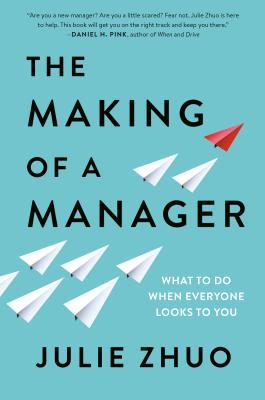
The Making of a Manager: What to Do When Everyone Looks to You
by Julie Zhuo
Rating: 4.2 ⭐
• 14 recommendations ❤️
Instant Wall Street Journal Bestseller! Congratulations, you're a manager! After you pop the champagne, accept the shiny new title, and step into this thrilling next chapter of your career, the truth descends like a fog: you don't really know what you're doing.That's exactly how Julie Zhuo felt when she became a rookie manager at the age of 25. She stared at a long list of logistics--from hiring to firing, from meeting to messaging, from planning to pitching--and faced a thousand questions and uncertainties. How was she supposed to spin teamwork into value? How could she be a good steward of her reports' careers? What was the secret to leading with confidence in new and unexpected situations?Now, having managed dozens of teams spanning tens to hundreds of people, Julie knows the most important lesson of all: great managers are made, not born. If you care enough to be reading this, then you care enough to be a great manager.The Making of a Manager is a modern field guide packed everyday examples and transformative insights, including:* How to tell a great manager from an average manager (illustrations included) * When you should look past an awkward interview and hire someone anyway * How to build trust with your reports through not being a boss * Where to look when you lose faith and lack the answersWhether you're new to the job, a veteran leader, or looking to be promoted, this is the handbook you need to be the kind of manager you wish you had.
![The Book of Limericks [Jan 01, 2018] Debroy, Bibek](https://m.media-amazon.com/images/S/compressed.photo.goodreads.com/books/1534782384i/41284550.jpg)
The Book of Limericks [Jan 01, 2018] Debroy, Bibek
by Bibek Debroy
Rating: 3.0 ⭐
• 13 recommendations ❤️
A compilation of witty verses based on current events, The Book of Limericks by Bibek Debroy is a brilliantly illustrated guide for anyone trying to understand what exactly happened last year.From economic issues to citizen concerns, these hilarious five-liners will take you on a roller coaster ride through the year 2017.