6 Books Recommended

From the writer who shocked and delighted the world with his novels Lolita, Pale Fire, and Ada, or Ardor, and so many others, comes a magnificent collection of stories. Written between the 1920s and 1950s, these sixty-five tales--eleven of which have been translated into English for the first time--display all the shades of Nabokov's imagination. They range from sprightly fables to bittersweet tales of loss, from claustrophobic exercises in horror to a connoisseur's samplings of the table of human folly. Read as a whole, The Stories of Vladimir Nabokov offers and intoxicating draft of the master's genius, his devious wit, and his ability to turn language into an instrument of ecstasy.The wood-sprite --Russian spoken here --Sounds --Wingstroke --Gods --A matter of chance --The seaport --Revenge --Beneficence --Details of a sunset --The thunderstorm --La veneziana --Bachmann --The dragon --Christmas --A letter that never reached Russia --The fight --The return of Chorb --A guide to Berlin --A nursery tale --Terror --Razor --The passenger --The doorbell --An affair of honor --The Christmas story --The potato elf --The aurelian --A dashing fellow --A bad day --The visit to the museum --A busy man --Terra incognita --The reunion --Lips to lips --Orache --Music --Perfection --The admiralty spire --The Leonardo --In memory of L.I. Shigaev --The circle --A Russian beauty --Breaking the news --Torpid smoke --Recruiting --A slice of life --Spring in Fialta --Cloud, castle, lake --Tyrants destroyed --Lik --Mademoiselle O --Vasiliy Shishkov --Ultima Thule --Solus Rex --The assistant producer --That in aleppo once --A forgotten poet --Time and ebb --Conversation piece, 1945 --Signs and symbols --First love --Scenes from the life of a double monster --The Vane sisters --Lance.
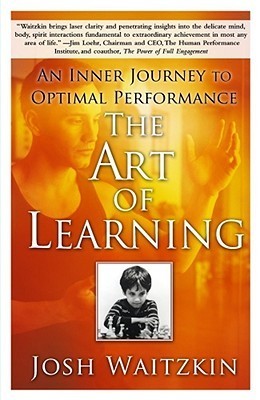
The Art of Learning: An Inner Journey to Optimal Performance
by Josh Waitzkin
Rating: 4.1 ⭐
• 9 recommendations ❤️
In his riveting new book, The Art of Learning , Waitzkin tells his remarkable story of personal achievement and shares the principles of learning and performance that have propelled him to the top—twice.Josh Waitzkin knows what it means to be at the top of his game. A public figure since winning his first National Chess Championship at the age of nine, Waitzkin was catapulted into a media whirlwind as a teenager when his father’s book Searching for Bobby Fischer was made into a major motion picture. After dominating the scholastic chess world for ten years, Waitzkin expanded his horizons, taking on the martial art Tai Chi Chuan and ultimately earning the title of World Champion. How was he able to reach the pinnacle of two disciplines that on the surface seem so different? “I’ve come to realize that what I am best at is not Tai Chi, and it is not chess,” he says. “What I am best at is the art of learning.”With a narrative that combines heart-stopping martial arts wars and tense chess face-offs with life lessons that speak to all of us, The Art of Learning takes readers through Waitzkin’s unique journey to excellence. He explains in clear detail how a well-thought-out, principled approach to learning is what separates success from failure. Waitzkin believes that achievement, even at the championship level, is a function of a lifestyle that fuels a creative, resilient growth process. Rather than focusing on climactic wins, Waitzkin reveals the inner workings of his everyday method, from systematically triggering intuitive breakthroughs, to honing techniques into states of remarkable potency, to mastering the art of performance psychology.Through his own example, Waitzkin explains how to embrace defeat and make mistakes work for you. Does your opponent make you angry? Waitzkin describes how to channel emotions into creative fuel. As he explains it, obstacles are not obstacles but challenges to overcome, to spur the growth process by turning weaknesses into strengths. He illustrates the exact routines that he has used in all of his competitions, whether mental or physical, so that you too can achieve your peak performance zone in any competitive or professional circumstance.In stories ranging from his early years taking on chess hustlers as a seven year old in New York City’s Washington Square Park, to dealing with the pressures of having a film made about his life, to International Chess Championships in India, Hungary, and Brazil, to gripping battles against powerhouse fighters in Taiwan in the Push Hands World Championships, The Art of Learning encapsulates an extraordinary competitor’s life lessons in a page-turning narrative.

The bestselling landmark account of the first emergence of the Ebola virus.Now a mini-series drama starring Julianna Margulies, Topher Grace, Liam Cunningham, James D'Arcy, and Noah Emmerich on National Geographic.A highly infectious, deadly virus from the central African rain forest suddenly appears in the suburbs of Washington, D.C. There is no cure. In a few days 90 percent of its victims are dead. A secret military SWAT team of soldiers and scientists is mobilized to stop the outbreak of this exotic "hot" virus. The Hot Zone tells this dramatic story, giving a hair-raising account of the appearance of rare and lethal viruses and their "crashes" into the human race. Shocking, frightening, and impossible to ignore, The Hot Zone proves that truth really is scarier than fiction.

The No Asshole Rule: Building a Civilized Workplace and Surviving One That Isn't
by Robert I. Sutton
Rating: 3.9 ⭐
• 4 recommendations ❤️
The definitive guide to working with -- and surviving -- bullies, creeps, jerks, tyrants, tormentors, despots, backstabbers, egomaniacs, and all the other assholes who do their best to destroy you at work.What an asshole!How many times have you said that about someone at work? You're not alone! In this groundbreaking book, Stanford University professor Robert I. Sutton builds on his acclaimed Harvard Business Review article to show you the best ways to deal with assholes...and why they can be so destructive to your company. Practical, compassionate, and in places downright funny, this guide offers: Strategies on how to pinpoint and eliminate negative influences for goodIlluminating case histories from major organizationsA self-diagnostic test and a program to identify and keep your own inner jerk from coming outThe No Asshole Rule is a New York Times, Wall Street Journal, USA Today and Business Week bestseller.

The former US Poet Laureate contemplates life, death, and the view from his window in these “alternately lyrical and laugh-out-loud funny” essays ( New York Times ).His entire life, Donald Hall dedicated himself to the written word, putting together a storied career as a poet, essayist, and memoirist. Here, in the “unknown, unanticipated galaxy” of very old age, his essays startle, move, and delight.In Essays After Eighty, Hall ruminates on his “thirty was terrifying, forty I never noticed because I was drunk, fifty was best with a total change of life, sixty extended the bliss of fifty . . .” He also addresses his “When I turned eighty and rubbed testosterone on my chest, my beard roared like a lion and gained four inches.”Most memorably, Hall writes about his enduring love affair with his ancestral Eagle Pond Farm and with the writing life that sustains him every “Yesterday my first nap was at 9:30 a.m., but when I awoke I wrote again.”“Alluring, inspirational hominess . . . Essays After Eighty is a treasure . . . balancing frankness about losses with humor and gratitude.”— Washington Post“A fine book of remembering all sorts of things past, Essays After Eighty is to be treasured.”— Boston Globe

The Net and the Butterfly: The Art and Practice of Breakthrough Thinking
by Olivia Fox Cabane
Rating: 3.9 ⭐
• 2 recommendations ❤️
In The Charisma Myth , Olivia Fox Cabane offered a groundbreaking approach to becoming more charismatic. Now she teams up with Judah Pollack to reveal how anyone can train their brain to have more eureka insights.The creative mode in your brain is like a butterfly. It's beautiful and erratic, hard to catch and highly valued as a result. If you want to capture it, you need a net. Enter the executive mode, the task-oriented network in your brain that help you tie your shoes, run a meeting, or pitch a client. To succeed, you need both modes to work together--your inner butterfly to be active and free, but your inner net to be ready to spring at the right time and create that "aha!" moment. But is there any way to trigger these insights, beyond dumb luck?Thanks to recent neuroscience discoveries, we can now explain these breakthrough moments--and also induce them through a series of specific practices. It turns out there's a hidden pattern to all these seemingly random breakthrough ideas. From Achimedes' iconic moment in the bathtub to designer Adam Cheyer's idea for Siri, accidental breakthroughs throughout history share a common origin story. In this book, you will learn to master the skills that will transform your brain into a consistent generator of insights.Drawing on their extensive coaching and training practice with top Silicon Valley firms, Cabane and Pollack provide a step-by-step process for accessing the part of the brain that produces breakthroughs and systematically removing internal blocks. Their tactics range from simple to zany, such · Imagine an alternate universe where gravity doesn’t exist, and the social and legal rules that govern it.· Map Disney’s Pocahontas story onto James Cameron’s Avatar .· Rid yourself of imposter syndrome through mental exercises.· Literally change your perspective by climbing a tree.· Stimulate your butterfly mode by watching a foreign film without subtitles.By trying the exercises in this book, readers will emerge with a powerful new capacity for breakthrough thinking.