
Ryan Holiday Recommended Books
American writer and businessperson (born 1987)
108 Books Recommended

One of the greatest philosophers of the nineteenth century, Schopenhauer (1788-1860) believed that human action is determined not by reason but by 'will' - the blind and irrational desire for physical existence. This selection of his writings on religion, ethics, politics, women, suicide, books and many other themes is taken from Schopenhauer's last work, Parerga and Paralipomena, which he published in 1851. These pieces depict humanity as locked in a struggle beyond good and evil, and each individual absolutely free within a Godless world, in which art, morality and self-awareness are our only salvation. This innovative - and pessimistic - view has proved powerfully influential upon philosophy and art, directly affecting the work of Nietzsche, Wittgenstein and Wagner among others.

Brilliant distillations of the strategies of war—and the subtle social game of everyday life—by the bestselling author of The 48 Laws of Power and The Laws of Human NatureRobert Greene’s groundbreaking guides, The 48 Laws of Power , The Art of Seduction , and Mastery , espouse profound, timeless lessons from the events of history to help readers vanquish an enemy, ensnare an unsuspecting victim, or become the greatest in your field. In The 33 Strategies of War , Greene has crafted an important addition to this ruthless and unique series.Spanning world civilizations, synthesizing dozens of political, philosophical, and religious texts and thousands of years of violent conflict, The 33 Strategies of War is the I-Ching of conflict, the contemporary companion to Sun Tzu’s The Art of War .Abundantly illustrated with examples from history, including the folly and genius of everyone from Napoleon to Margaret Thatcher, Shaka the Zulu to Lord Nelson, Hannibal to Ulysses S. Grant, as well as movie moguls, Samurai swordsmen, and diplomats, each of the thirty-three chapters outlines a strategy that will help you win life’s wars. Learn the offensive strategies that require you to maintain the initiative and negotiate from a position of strength, or the defensive strategies designed to help you respond to dangerous situations and avoid unwinnable wars. The great warriors of battlefields and drawing rooms alike demonstrate prudence, agility, balance, and calm, and a keen understanding that the rational, resourceful, and intuitive always defeat the panicked, the uncreative, and the stupid. An indispensable book, The 33 Strategies of War provides all the psychological ammunition you need to overcome patterns of failure and forever gain the upper hand.

Boyd: The Fighter Pilot Who Changed the Art of War
by Robert Coram
Rating: 4.1 ⭐
• 4 recommendations ❤️
John Boyd may be the most remarkable unsung hero in all of American military history. Some remember him as the greatest U.S. fighter pilot ever -- the man who, in simulated air-to-air combat, defeated every challenger in less than forty seconds. Some recall him as the father of our country's most legendary fighter aircraft -- the F-15 and F-16. Still others think of Boyd as the most influential military theorist since Sun Tzu. They know only half the story.Boyd, more than any other person, saved fighter aviation from the predations of the Strategic Air Command. His manual of fighter tactics changed the way every air force in the world flies and fights. He discovered a physical theory that forever altered the way fighter planes were designed. Later in life, he developed a theory of military strategy that has been adopted throughout the world and even applied to business models for maximizing efficiency. And in one of the most startling and unknown stories of modern military history, the Air Force fighter pilot taught the U.S. Marine Corps how to fight war on the ground. His ideas led to America's swift and decisive victory in the Gulf War and foretold the terrorist attacks of September 11, 2001.On a personal level, Boyd rarely met a general he couldn't offend. He was loud, abrasive, and profane. A man of daring, ferocious passion and intractable stubbornness, he was that most American of heroes -- a rebel who cared not for his reputation or fortune but for his country. He was a true patriot, a man who made a career of challenging the shortsighted and self-serving Pentagon bureaucracy. America owes Boyd and his disciples -- the six men known as the "Acolytes" -- a great debt.Robert Coram finally brings to light the remarkable story of a man who polarized all who knew him, but who left a legacy that will influence the military -- and all of America -- for decades to come . . .

An alternative cover edition for this ISBN can be found hereThis classic biography is the story of seven men—a naturalist, a writer, a lover, a hunter, a ranchman, a soldier, and a politician—who merged at age forty-two to become the youngest President in history.The Rise of Theodore Roosevelt begins at the apex of his international prestige. That was on New Year’s Day, 1907, when TR, who had just won the Nobel Peace Prize, threw open the doors of the White House to the American people and shook 8,150 hands. One visitor remarked afterward, “You go to the White House, you shake hands with Roosevelt and hear him talk—and then you go home to wring the personality out of your clothes.”The rest of this book tells the story of TR’s irresistible rise to power. During the years 1858–1901, Theodore Roosevelt transformed himself from a frail, asthmatic boy into a full-blooded man. Fresh out of Harvard, he simultaneously published a distinguished work of naval history and became the fist-swinging leader of a Republican insurgency in the New York State Assembly. He chased thieves across the Badlands of North Dakota with a copy of Anna Karenina in one hand and a Winchester rifle in the other. Married to his childhood sweetheart in 1886, he became the country squire of Sagamore Hill on Long Island, a flamboyant civil service reformer in Washington, D.C., and a night-stalking police commissioner in New York City. As assistant secretary of the navy, he almost single-handedly brought about the Spanish-American War. After leading “Roosevelt’s Rough Riders” in the famous charge up San Juan Hill, Cuba, he returned home a military hero, and was rewarded with the governorship of New York. In what he called his “spare hours” he fathered six children and wrote fourteen books. By 1901, the man Senator Mark Hanna called “that damned cowboy” was vice president. Seven months later, an assassin’s bullet gave TR the national leadership he had always craved.His is a story so prodigal in its variety, so surprising in its turns of fate, that previous biographers have treated it as a series of haphazard episodes. This book, the only full study of TR’s pre-presidential years, shows that he was an inevitable chief executive. “It was as if he were subconsciously aware that he was a man of many selves,” the author writes, “and set about developing each one in turn, knowing that one day he would be President of all the people.”
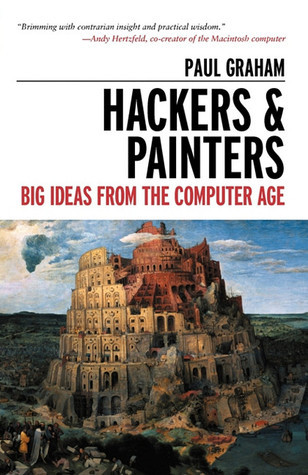
Hackers & Painters: Big Ideas from the Computer Age
by Paul Graham
Rating: 4.2 ⭐
• 14 recommendations ❤️
"The computer world is like an intellectual Wild West, in which you can shoot anyone you wish with your ideas, if you're willing to risk the consequences. " --from Hackers & Big Ideas from the Computer Age , by Paul Graham We are living in the computer age, in a world increasingly designed and engineered by computer programmers and software designers, by people who call themselves hackers. Who are these people, what motivates them, and why should you care? Consider these Everything around us is turning into computers. Your typewriter is gone, replaced by a computer. Your phone has turned into a computer. So has your camera. Soon your TV will. Your car was not only designed on computers, but has more processing power in it than a room-sized mainframe did in 1970. Letters, encyclopedias, newspapers, and even your local store are being replaced by the Internet. Hackers & Big Ideas from the Computer Age , by Paul Graham, explains this world and the motivations of the people who occupy it. In clear, thoughtful prose that draws on illuminating historical examples, Graham takes readers on an unflinching exploration into what he calls "an intellectual Wild West." The ideas discussed in this book will have a powerful and lasting impact on how we think, how we work, how we develop technology, and how we live. Topics include the importance of beauty in software design, how to make wealth, heresy and free speech, the programming language renaissance, the open-source movement, digital design, internet startups, and more.

An alternate cover edition for this ISBN can be found: here Through a life of passion and struggle, Malcolm X became one of the most influential figures of the 20th Century. In this riveting account, he tells of his journey from a prison cell to Mecca, describing his transition from hoodlum to Muslim minister. Here, the man who called himself "the angriest Black man in America" relates how his conversion to true Islam helped him confront his rage and recognize the brotherhood of all mankind. An established classic of modern America, "The Autobiography of Malcolm X" was hailed by the New York Times as "Extraordinary. A brilliant, painful, important book." Still extraordinary, still important, this electrifying story has transformed Malcom X's life into his legacy. The strength of his words, the power of his ideas continue to resonate more than a generation after they first appeared.

It follows the experiences of an unnamed protagonist struggling with insomnia. Inspired by his doctor's exasperated remark that insomnia is not suffering, the protagonist finds relief by impersonating a seriously ill person in several support groups. Then he meets a mysterious man named Tyler Durden and establishes an underground fighting club as radical psychotherapy.

In an L.A. delicatessen, a group of Brooklyn natives gets together to discuss basketball, boxing, the weather back east, and the Jewish gangsters of yesteryear. Meyer Lansky. Bugsy Siegel. Louis Lepke, the self-effacing mastermind of Murder, Inc. Red Levine, the Orthodox hit man who refused to kill on the Sabbath. Abe "Kid Twist" Reles, who looked like a mama's boy but once buried a rival alive. These are just some of the vibrant, vicious characters Rich Cohen's father reminisced about and the author evokes so pungently in Tough Jews.Tracing a generation of Jewish gangsters from the candy stores of Brownsville to the clubhouses of the Lower East Side--and, occasionally, to suites at the Waldorf--Cohen creates a densely anecdotal and gruesomely funny history of muscle, moxie, and money. Filled with fixers and schlammers, the squeal of tires and the rattle of gunfire, his book shatters stereotypes as deftly as its subjects once shattered kneecaps.

Like the Meditations of Marcus Aurelius, Seneca’s Letters are a treasure of practical wisdom on how to live and enjoy life. The focus is on living a simple, stress-free life thorough the use of rationalism. The letters provide practical steps for people to deal with the human suffering that comes with life’s problems. Topics featured range from discussions on the shortness of life and anger to immortality and death. The Letters are part of the foundation of Stoic thought making Seneca one of the indispensable thinkers from Ancient Roman philosophy. Although Stoicism is not now as widely practiced as it once was, many people can still find wisdom and inspiration through Seneca's words and letters. “In the last three years, I’ve begun to explore one philosophical system in particular: Stoicism. Through my preferred Stoic writer, Lucius Seneca, I’ve found it to be a simple and immensely practical set of rules for better results with less effort.” Timothy Ferriss, author of Four Hour Workweek. *Includes link to free audio recording of the Letters. *Image gallery. *Special low price.

Founders at Work: Stories of Startups' Early Days
by Jessica Livingston
Rating: 4.1 ⭐
• 10 recommendations ❤️
Now available in paperback―with a new preface and interview with Jessica Livingston about Y Combinator! Founders at Work: Stories of Startups' Early Days is a collection of interviews with founders of famous technology companies about what happened in the very earliest days. These people are celebrities now. What was it like when they were just a couple friends with an idea? Founders like Steve Wozniak (Apple), Caterina Fake (Flickr), Mitch Kapor (Lotus), Max Levchin (PayPal), and Sabeer Bhatia (Hotmail) tell you in their own words about their surprising and often very funny discoveries as they learned how to build a company. Where did they get the ideas that made them rich? How did they convince investors to back them? What went wrong, and how did they recover? Nearly all technical people have thought of one day starting or working for a startup. For them, this book is the closest you can come to being a fly on the wall at a successful startup, to learn how it's done. But ultimately these interviews are required reading for anyone who wants to understand business, because startups are business reduced to its essence. The reason their founders become rich is that startups do what businesses do―create value―more intensively than almost any other part of the economy. How? What are the secrets that make successful startups so insanely productive? Read this book, and let the founders themselves tell you.

Ulysses S. Grant: Triumph over Adversity, 1822-1865
by Brooks Simpson
Rating: 3.9 ⭐
• 2 recommendations ❤️
Many modern historians have painted Ulysses S. Grant as a butcher, a drunk, and a failure as president. Others have argued the exact opposite and portray him with saintlike levels of ethic and intellect.In Ulysses S. Grant: Triumph over Adversity 1822–1865, historian Brooks D. Simpson takes neither approach, recognizing Grant as a complex and human figure with human faults, strengths, and motivations. Simpson offers a balanced and complete study of Grant from birth to the end of the Civil War, with particular emphasis on his military career and family life and the struggles he overcame in his unlikely rise from unremarkable beginnings to his later fame as commander of the Union Army. Chosen as a New York Times Notable Book upon its original publication, Ulysses S. Grant is a readable, thoroughly researched portrait that sheds light on this controversial figure.

Perhaps more than any other writer, Juvenal (c. AD 55-138) captures the splendour, the squalor, and the sheer energy of everyday Roman life. In The Sixteen Satires he evokes a fascinating world of whores, fortune-tellers, boozy politicians, slick lawyers, shameless sycophants, ageing flirts and downtrodden teachers. A member of the traditional land-owning class that was rapidly seeing power slip into the hands of outsiders, Juvenal also creates savage portraits of decadent aristocrats - male and female - seeking excitement among the lower orders of actors and gladiators, and of the jumped-up sons of newly-rich former slaves. Constantly comparing the corruption of his own generation with its stern and upright forebears, Juvenal's powers of irony and invective make his work a stunningly satirical and bitter denunciation of the degeneracy of Roman society

Fragments of wisdom from the ancient worldIn the sixth century b.c.-twenty-five hundred years before Einstein--Heraclitus of Ephesus declared that energy is the essence of matter, that everything becomes energy in flux, in relativity. His great book, On Nature, the world's first coherent philosophical treatise and touchstone for Plato, Aristotle, and Marcus Aurelius, has long been lost to history--but its surviving fragments have for thousands of years tantalized our greatest thinkers, from Montaigne to Nietzsche, Heidegger to Jung. Now, acclaimed poet Brooks Haxton presents a powerful free-verse translation of all 130 surviving fragments of the teachings of Heraclitus, with the ancient Greek originals beautifully reproduced en face.For more than seventy years, Penguin has been the leading publisher of classic literature in the English-speaking world. With more than 1,700 titles, Penguin Classics represents a global bookshelf of the best works throughout history and across genres and disciplines. Readers trust the series to provide authoritative texts enhanced by introductions and notes by distinguished scholars and contemporary authors, as well as up-to-date translations by award-winning translators.

First published in 1952 and immediately hailed as a masterpiece, Invisible Man is one of those rare novels that have changed the shape of American literature. For not only does Ralph Ellison's nightmare journey across the racial divide tell unparalleled truths about the nature of bigotry and its effects on the minds of both victims and perpetrators, it gives us an entirely new model of what a novel can be.As he journeys from the Deep South to the streets and basements of Harlem, from a horrifying "battle royal" where black men are reduced to fighting animals, to a Communist rally where they are elevated to the status of trophies, Ralph Ellison's nameless protagonist ushers readers into a parallel universe that throws our own into harsh and even hilarious relief. Suspenseful and sardonic, narrated in a voice that takes in the symphonic range of the American language, black and white, Invisible Man is one of the most audacious and dazzling novels of our century.

William Lee Miller’s ethical biography is a fresh, engaging telling of the story of Lincoln’s rise to power. Through careful scrutiny of Lincoln’s actions, speeches, and writings, and of accounts from those who knew him, Miller gives us insight into the moral development of a great politician — one who made the choice to go into politics, and ultimately realized that vocation’s fullest moral possibilities.As Lincoln’s Virtues makes refreshingly clear, Lincoln was not born with his face on Mount Rushmore; he was an actual human being making choices — moral choices — in a real world. In an account animated by wit and humor, Miller follows this unschooled frontier politician’s rise, showing that the higher he went and the greater his power, the worthier his conduct would become. He would become that rare bird, a great man who was also a good man. Uniquely revealing of its subject’s heart and mind, it represents a major contribution to our understanding and of Lincoln, and to the perennial American discussion of the relationship between politics and morality.
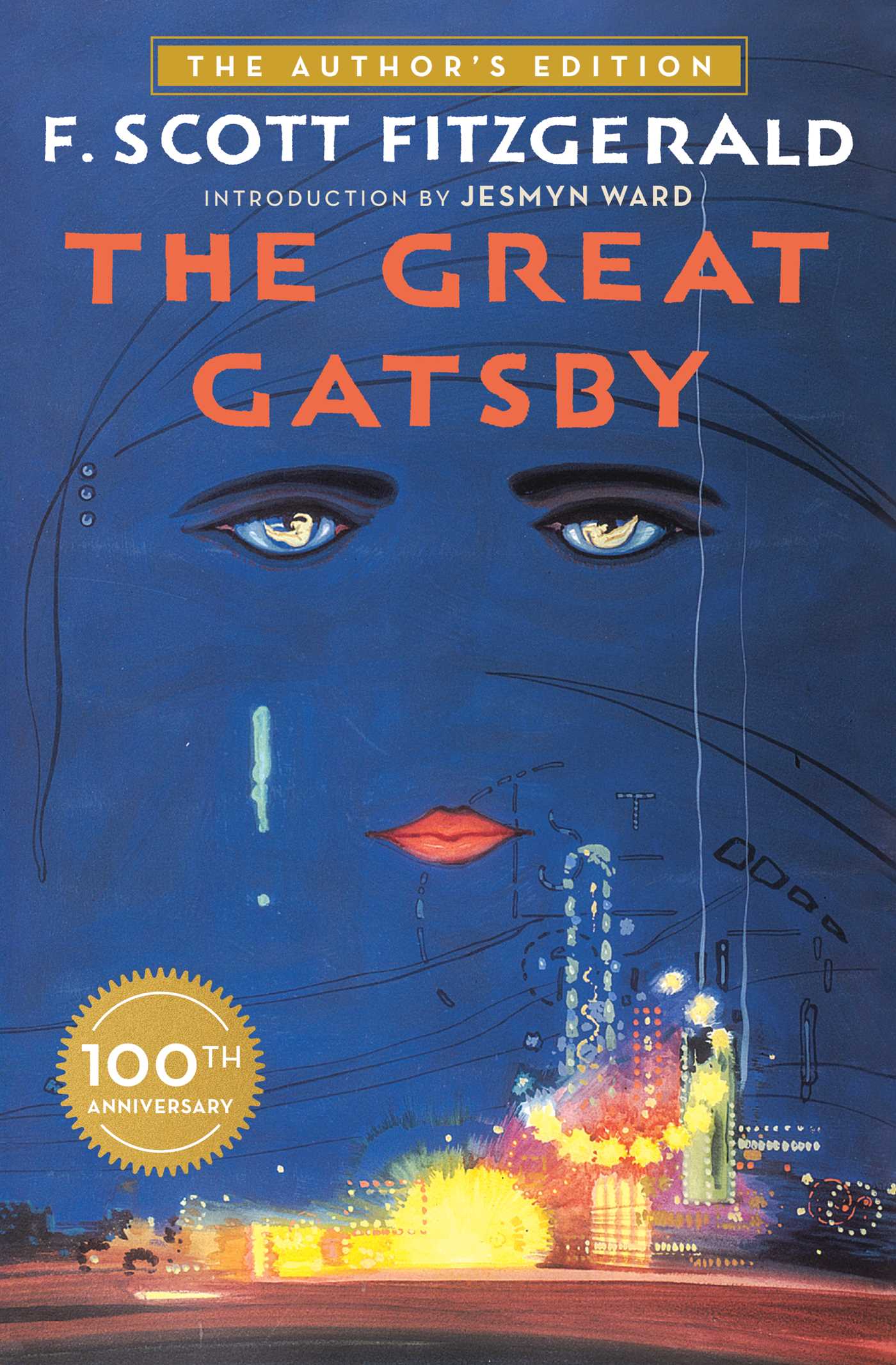
The only edition of the beloved classic that is authorized by Fitzgerald’s family and from his lifelong publisher.This edition is the enduring original text, updated with the author’s own revisions, a foreword by his granddaughter, and with a new introduction by National Book Award winner Jesmyn Ward.The Great Gatsby, F. Scott Fitzgerald’s third book, stands as the supreme achievement of his career. First published by Scribner in 1925, this quintessential novel of the Jazz Age has been acclaimed by generations of readers. The story of the mysteriously wealthy Jay Gatsby and his love for the beautiful Daisy Buchanan is an exquisitely crafted tale of America in the 1920s.

American Caesar: Douglas MacArthur 1880-1964
by William Manchester
Rating: 4.5 ⭐
• 4 recommendations ❤️
The bestselling classic that indelibly captures the life and times of one of the most brilliant and controversial military figures of the twentieth century."Electric...Tense with the feeling that this is the authentic MacArthur...Splendid reading." -- New York TimesInspiring, outrageous... A thundering paradox of a man. Douglas MacArthur, one of only five men in history to have achieved the rank of General of the United States Army. He served in World Wars I, II, and the Korean War, and is famous for stating that "in war, there is no substitute for victory."American Caesar examines the exemplary army career, the stunning successes (and lapses) on the battlefield, and the turbulent private life of the soldier-hero whose mystery and appeal created a uniquely American legend.

Selections from one of the greatest essayists of the Graeco-Roman worldPlutarch used an encyclopedic knowledge of the Roman Empire to produce a compelling and individual voice. In this superb selection from his writings, he offers personal insights into moral subjects that include the virtue of listening, the danger of flattery and the avoidance of anger, alongside more speculative essays on themes as diverse as God's slowness to punish man, the use of reason by supposedly "irrational" animals and the death of his own daughter. Brilliantly informed, these essays offer a treasure-trove of ancient wisdom, myth and philosophy, and a powerful insight into a deeply intelligent man.For more than seventy years, Penguin has been the leading publisher of classic literature in the English-speaking world. With more than 1,700 titles, Penguin Classics represents a global bookshelf of the best works throughout history and across genres and disciplines. Readers trust the series to provide authoritative texts enhanced by introductions and notes by distinguished scholars and contemporary authors, as well as up-to-date translations by award-winning translators.

For the first time in a single volume, this book provides a complete Latin text and facing-page English translation of Vergil's epic account of the fall of Troy and the history of Rome. While useful for anyone reading primarily in English who wishes to consult the original language, this edition is especially intended for classical schools or AP courses, where teachers and students can use the Latin and English in a variety of ways, from identifying examples of Latin grammar and syntax to analyzing and evaluating the translator's choices.

Practical English Usage: Fully Revised International Edition
by Michael Swan
Rating: 4.1 ⭐
• 3 recommendations ❤️
Please Read Notes: Brand New, International Softcover Edition, Printed in black and white pages, minor self wear on the cover or pages, Sale restriction may be printed on the book, but Book name, contents, and author are exactly same as Hardcover Edition. Fast delivery through DHL/FedEx express.

This engaging series of childhood recollections tells about an ideal school in Tokyo during World War II that combined learning with fun, freedom, and love. This unusual school had old railroad cars for classrooms, and it was run by an extraordinary man--its founder and headmaster, Sosaku Kobayashi--who was a firm believer in freedom of expression and activity.

Born in a Virginia slave hut, Booker T. Washington (1856–1915) rose to become the most influential spokesman for African Americans of his day. In this eloquently written book, he describes events in a remarkable life that began in bondage and culminated in worldwide recognition for his many accomplishments. In simply written yet stirring passages, he tells of his impoverished childhood and youth, the unrelenting struggle for an education, early teaching assignments, his selection in 1881 to head Tuskegee Institute, and more.A firm believer in the value of education as the best route to advancement, Washington disapproved of civil-rights agitation and in so doing earned the opposition of many black intellectuals. Yet, he is today regarded as a major figure in the struggle for equal rights, one who founded a number of organizations to further the cause and who worked tirelessly to educate and unite African Americans.
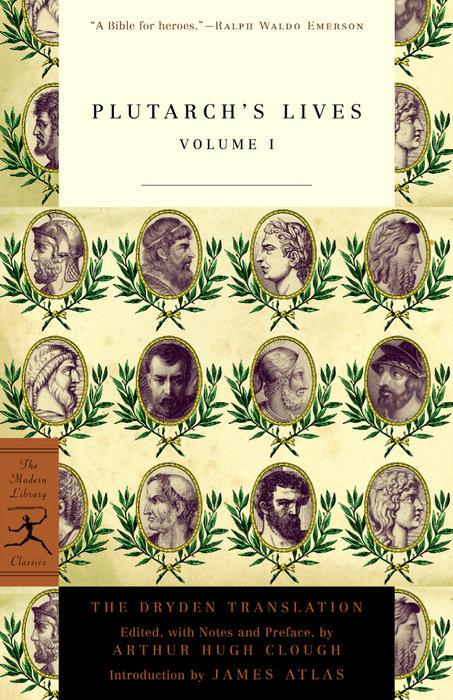
Plutarch's Lives, written at the beginning of the second century A.D., is a social history of the ancient world by one of the greatest biographers and moralists of all time. In what is by far his most famous and influential work, Plutarch reveals the character and personality of his subjects and how they led ultimately to tragedy or victory. Richly anecdotal and full of detail, Volume I contains profiles and comparisons of Romulus and Theseus, Numa and Lycurgus, Fabius and Pericles, and many more powerful figures of ancient Greece and Rome. The present translation, originally published in 1683 in conjunction with a life of Plutarch by John Dryden, was revised in1864 by the poet and scholar Arthur Hugh Clough, whose notes and preface are also included in this edition. Publisher: Modern Library 2001 Author: Plutarch Translated by: John Dryden Volume: 1 Format: 816 pages, paperback ISBN: 9780375756764Theseus, Romulus, Lycurgus, Numa, Solon, Poplicola, Themistocles, Camillus, Pericles, Fabius, Alcibiadas, Coriolanes, Timoleon, Aemilius Paulus, Pelopidas, Marcellus, Aristides, Marcus Cato, Philopoemen, Flaminius, Pyrrhus, Caius Marius, Lysander, Sylla, Cimon, Lucullus, Nicias, Crassus

The Power Broker: Robert Moses and the Fall of New York
by Robert A. Caro
Rating: 4.5 ⭐
• 15 recommendations ❤️
One of the most acclaimed books of our time, winner of both the Pulitzer and the Francis Parkman prizes, The Power Broker tells the hidden story behind the shaping (and mis-shaping) of twentieth-century New York (city and state) and makes public what few have known: that Robert Moses was, for almost half a century, the single most powerful man of our time in New York, the shaper not only of the city's politics but of its physical structure and the problems of urban decline that plague us today.In revealing how Moses did it--how he developed his public authorities into a political machine that was virtually a fourth branch of government, one that could bring to their knees Governors and Mayors (from La Guardia to Lindsay) by mobilizing banks, contractors, labor unions, insurance firms, even the press and the Church, into an irresistible economic force--Robert Caro reveals how power works in all the cities of the United States. Moses built an empire and lived like an emperor. He personally conceived and completed public works costing 27 billion dollars--the greatest builder America (and probably the world) has ever known. Without ever having been elected to office, he dominated the men who were--even his most bitter enemy, Franklin D. Roosevelt, could not control him--until he finally encountered, in Nelson Rockefeller, the only man whose power (and ruthlessness in wielding it) equalled his own.

Plutarch's vivid and engaging portraits of the Spartans and their customs are a major source of our knowledge about the rise and fall of this remarkable Greek city-state between the sixth and third centuries BC. Through his Lives of Sparta's leaders and his recording of memorable Spartan Sayings he depicts a people who lived frugally and mastered their emotions in all aspects of life, who also disposed of unhealthy babies in a deep chasm, introduced a gruelling regime of military training for boys, and treated their serfs brutally. Rich in anecdote and detail, Plutarch's writing brings to life the personalities and achievements of Sparta with unparalleled flair and humanity.Lives: Lycurgus, Agesilaus, Agis, Cleomenes. Sayings: sayings of Spartans, sayings of Spartan Women. Appendix: Xenephon: Spartan Society

How to Measure Anything: Finding the Value of Intangibles in Business
by Douglas W. Hubbard
Rating: 4.0 ⭐
• 3 recommendations ❤️
Now updated with new measurement methods and new examples, How to Measure Anything shows managers how to inform themselves in order to make less risky, more profitable business decisions This insightful and eloquent book will show you how to measure those things in your own business, government agency or other organization that, until now, you may have considered "immeasurable," including customer satisfaction, organizational flexibility, technology risk, and technology ROI. Written by recognized expert Douglas Hubbard―creator of Applied Information Economics― How to Measure Anything, Third Edition illustrates how the author has used his approach across various industries and how any problem, no matter how difficult, ill defined, or uncertain can lend itself to measurement using proven methods.

The Strategy Paradox: Why Committing to Success Leads to Failure
by Michael E. Raynor
Rating: 3.9 ⭐
• 2 recommendations ❤️
A compelling vision. Bold leadership. Decisive action. Unfortunately, these prerequisites of success are almost always the ingredients of failure, too. In fact, most managers seeking to maximize their chances for glory are often unwittingly setting themselves up for ruin. The sad truth is that most companies have left their futures almost entirely to chance, and don’t even realize it. The reason? Managers feel they must make choices with far-reaching consequences today, but must base those choices on assumptions about a future they cannot predict. It is this collision between commitment and uncertainty that creates THE STRATEGY PARADOX.This paradox sets up a ubiquitous but little-understood tradeoff. Because managers feel they must base their strategies on assumptions about an unknown future, the more ambitious of them hope their guesses will be right – or that they can somehow adapt to the turbulence that will arise. In fact, only a small number of lucky daredevils prosper, while many more unfortunate, but no less capable managers find themselves at the helms of sinking ships. Realizing this, even if only intuitively, most managers shy away from the bold commitments that success seems to demand, choosing instead timid, unremarkable strategies, sacrificing any chance at greatness for a better chance at mere survival.Michael E. Raynor, coauthor of the bestselling The Innovator's Solution, explains how leaders can break this tradeoff and achieve results historically reserved for the fortunate few even as they reduce the risks they must accept in the pursuit of success. In the cutthroat world of competitive strategy, this is as close as you can come to getting something for nothing.Drawing on leading-edge scholarship and extensive original research, Raynor’s revolutionary principle of Requisite Uncertainty yields a clutch of critical, counter-intuitive findings. Among -- The Board should not evaluate the CEO based on the company’s performance, but instead on the firm’s strategic risk profile-- The CEO should not drive results, but manage uncertainty-- Business unit leaders should not focus on execution, but on making strategic choices-- Line managers should not worry about strategic risk, but devote themselves to delivering on commitmentsWith detailed case studies of success and failure at Sony, Microsoft, Vivendi Universal, Johnson & Johnson, AT&T and other major companies in industries from financial services to energy, Raynor presents a concrete framework for strategic action that allows companies to seize today’s opportunities while simultaneously preparing for tomorrow’s promise.

When Liddell Hart's Sherman was first published in 1929, it received encomiums such as these:"A masterly performance . . . one of the most thorougly dignified, one of the most distinguished biographies of the year." -- Henry Steele Commager, New York Herald Tribune"It is not often that one comes upon a biography that is so well done as this book. Nearly every page bears evidence of the fact that it is the product of painstaking and exhaustive research, mature thought, and an expert understanding of the subject in hand . . ." -- Saturday Review of Literature

Budd Schulberg's celebrated novel of the prize ring has lost none of its power since its first publication almost fifty years ago. Crowded with unforgettable characters, it is a relentless expose of the fight racket. A modern Samson in the form of a simple Argentine peasant is ballyhooed by an unscrupulous fight promoter and his press agent and then betrayed and destroyed by connivers. Mr. Schulberg creates a wonderfully authentic atmosphere for this book that many critics hailed as even better than What Makes Sammy Run? "The quintessential novel of boxing and corruption."― USA Today "The book will stand not only as the novel about boxing but also as a book that indirectly tells more about civilization than do most books about civilization itself."―Arthur Miller. "Brilliant, witty, and amusing―the best book on fighting that I have read."―Gene Tunney.

Brave New War: The Next Stage of Terrorism and the End of Globalization
by John Robb
Rating: 3.8 ⭐
• 2 recommendations ❤️
The counterterrorism expert John Robb reveals how the same technology that has enabled globalization also allows terrorists and criminals to join forces against larger adversaries with relative ease and to carry out small, inexpensive actions--like sabotaging an oil pipeline--that generate a huge return. He shows how combating the shutdown of the world's oil, high-tech, and financial markets could cost us the thing we've come to value the most--worldwide economic and cultural integration--and what we must do now to safeguard against this new method of warfare.

The Moral Animal: Why We Are the Way We Are - The New Science of Evolutionary Psychology
by Robert Wright
Rating: 4.1 ⭐
• 4 recommendations ❤️
Are men literally born to cheat? Does monogamy actually serve women's interests? These are among the questions that have made The Moral Animal one of the most provocative science books in recent years. Wright unveils the genetic strategies behind everything from our sexual preferences to our office politics--as well as their implications for our moral codes and public policies. Illustrations.

The War of Art: Break Through the Blocks and Win Your Inner Creative Battles
by Steven Pressfield
Rating: 4.1 ⭐
• 38 recommendations ❤️
The Art of War meets "The Artist's Way" in this no-nonsense, profoundly inspiring guide to overcoming creative blocks of every kind.

Regarded as the classic standard biography on Thomas Edison. It is the only biography written in the last 40 years to be recommended by the official voice of the caretakers of the Edison Laboratory National Monument in New Jersey which houses all of Edison's original records, sketches, notes, correspondence and memoranda. Depicts Edison as a pivotal figure in America's economic and industrial revolution success and at the same time as a human being, including his exploitative and, at times, crude qualities.

Written four hundred years before the birth of Christ, this detailed contemporary account of the long life-and-death struggle between Athens and Sparta stands an excellent chance of fulfilling its author's ambitious claim. Thucydides himself (c.460-400 BC) was an Athenian and achieved the rank of general in the earlier stages of the war. He applied thereafter a passion for accuracy and a contempt for myth and romance in compiling this factual record of a disastrous conflict.

Nine biographies that illuminate the careers, personalities and military campaigns of some of Rome's greatest statesmenThe lives of the statesmen featured in this collection span the earliest days of the Republic to the establishment of the Empire. Selected from Plutarch's Roman Lives , they include prominent figures who achieved fame for their pivotal roles in Roman history, such as soldierly Marcellus, eloquent Cato and cautious Fabius. Here too are vivid portraits of ambitious, hot-tempered Coriolanus; objective, principled Brutus and open-hearted Mark Anthony, who would later be brought to life by Shakespeare. In recounting the lives of these great leaders, Plutarch also explores the problems of statecraft and power and illustrates the Roman people's genius for political compromise, which led to their mastery of the ancient world.For more than seventy years, Penguin has been the leading publisher of classic literature in the English-speaking world. With more than 1,700 titles, Penguin Classics represents a global bookshelf of the best works throughout history and across genres and disciplines. Readers trust the series to provide authoritative texts enhanced by introductions and notes by distinguished scholars and contemporary authors, as well as up-to-date translations by award-winning translators.
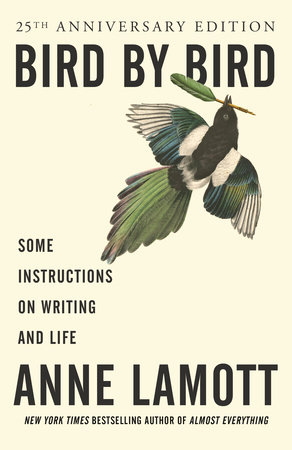
Bird by Bird: Some Instructions on Writing and Life
by Anne Lamott
Rating: 4.3 ⭐
• 25 recommendations ❤️
A previous edition of this title can be found here.For a quarter century, more than a million readers—scribes and scribblers of all ages and abilities—have been inspired by Anne Lamott’s hilarious, big-hearted, homespun advice. Advice that begins with the simple words of wisdom passed down from Anne’s father—also a writer—in the iconic passage that gives the book its title: “Thirty years ago my older brother, who was ten years old at the time, was trying to get a report on birds written that he’d had three months to write. It was due the next day. We were out at our family cabin in Bolinas, and he was at the kitchen table close to tears, surrounded by binder paper and pencils and unopened books on birds, immobilized by the hugeness of the task ahead. Then my father sat down beside him, put his arm around my brother’s shoulder, and said, ‘Bird by bird, buddy. Just take it bird by bird.’” An essential volume for generations of writers young and old, Bird by Bird is a modern classic. This twenty-fifth anniversary edition will continue to spark creative minds for years to come.

Liar's Poker: Rising Through the Wreckage on Wall Street
by Michael Lewis
Rating: 4.0 ⭐
• 3 recommendations ❤️
The time was the 1980s. The place was Wall Street. The game was called Liar’s Poker.Before there was Flash Boys and The Big Short, there was Liar's Poker. A knowing and unnervingly talented debut, this insider’s account of 1980s Wall Street excess transformed Michael Lewis from a disillusioned bond salesman to the best-selling literary icon he is today. Together, the three books cover thirty years of endemic global corruption—perhaps the defining problem of our age—which has never been so hilariously skewered as in Liar's Poker, now in a twenty-fifth-anniversary edition with a new afterword by the author.It was wonderful to be young and working on Wall Street in the 1980s: never before had so many twenty-four-year-olds made so much money in so little time. After you learned the trick of it, all you had to do was pick up the phone and the money poured in your lap.This wickedly funny book endures as the best record we have of those heady, frenzied years. In it Lewis describes his own rake’s progress through a powerful investment bank. From an unlikely beginning (art history at Princeton?) he rose in two short years from Salomon Brothers trainee to Geek (the lowest form of life on the trading floor) to Big Swinging Dick, the most dangerous beast in the jungle, a bond salesman who could turn over millions of dollars' worth of doubtful bonds with just one call.As he has continued to do for a quarter century, Michael Lewis here shows us how things really worked on Wall Street. In the Salomon training program a roomful of aspirants is stunned speechless by the vitriolic profanity of the Human Piranha; out on the trading floor, bond traders throw telephones at the heads of underlings and Salomon chairmen Gutfreund challenges his chief trader to a hand of liar’s poker for one million dollars.

环境的极致,信念的极致,生命的极致,你能熬过去吗?700天冰海历劫,20世纪最伟大的南极探险故事!弃船的命令下午5时发出。然而,对于大多数船员来说,其实已经没必要了,因为人人都知道这船彻底完了,是该放弃了。没有人表现出恐惧甚或忧虑。他们已经一刻不停地奋战了整整三天,但最终还是功败垂成。对于逃离沉船后的那种普遍的解脱感,有个人是不认可的。他的名字是欧内斯特·沙克尔顿爵士,就是他率领了这支大英帝国穿越南极探险队。这一天是1915年10月27日。探险船的名字叫“坚忍号”。目前的坐标是南纬69.5度,西经51.3度,处于南极诡秘莫测的威德尔海千里冰原深处,正好在南极点与离得最近的人类居住点之间,居住点距此有1200英里。自从最后一次同现代文明接触之后,已经过去了将近一年时间。外界根本就没有人知道他们遇到了麻烦。当时,他们没有无线电发报机,而且,就算用无线电发出了紧急求救信号, 最后能否有人及时赶来救援还是问题。那是1915年,没有直升机,没有小型登陆车,没有履带式雪地车,也没有合用的救援飞机。已知离得最近的能让他们找到食物和住所的地方,就只有小小的保利特岛。1903年,就在这个小岛上,被威德尔海的坚冰撞坏的瑞典船“南极号”的船员度过了整个冬天。该船最终获救,撤离时船员们将船上的给养留在了保利特岛上,以备日后任何遭遇海难者的不时之需。饶有意味的是,当年正是沙克尔顿受命购买了这些给养,而现在,整整十二年之后,这恰恰是他自己最需要的。

From Mordecai Richler, one of our greatest satirists, comes one of literature's most delightful characters, Duddy Kravitz -- in a novel that belongs in the pantheon of seminal twentieth century books. Duddy -- the third generation of a Jewish immigrant family in Montreal -- is combative, amoral, scheming, a liar, and totally hilarious. From his street days tormenting teachers at the Jewish academy to his time hustling four jobs at once in a grand plan to "be somebody," Duddy learns about living -- and the lesson is an outrageous roller-coaster ride through the human comedy. As Richler turns his blistering commentary on love, money, and politics, The Apprenticeship Of Duddy Kravitz becomes a lesson for us all...in laughter and in life.

The River of Doubt: Theodore Roosevelt's Darkest Journey
by Candice Millard
Rating: 4.2 ⭐
• 6 recommendations ❤️
At once an incredible adventure narrative and a penetrating biographical portrait, The River of Doubt is the true story of Theodore Roosevelt’s harrowing exploration of one of the most dangerous rivers on earth.The River of Doubt—it is a black, uncharted tributary of the Amazon that snakes through one of the most treacherous jungles in the world. Indians armed with poison-tipped arrows haunt its shadows; piranhas glide through its waters; boulder-strewn rapids turn the river into a roiling cauldron.After his humiliating election defeat in 1912, Roosevelt set his sights on the most punishing physical challenge he could find, the first descent of an unmapped, rapids-choked tributary of the Amazon. Together with his son Kermit and Brazil’s most famous explorer, Cândido Mariano da Silva Rondon, Roosevelt accomplished a feat so great that many at the time refused to believe it. In the process, he changed the map of the western hemisphere forever.Along the way, Roosevelt and his men faced an unbelievable series of hardships, losing their canoes and supplies to punishing whitewater rapids, and enduring starvation, Indian attack, disease, drowning, and a murder within their own ranks. Three men died, and Roosevelt was brought to the brink of suicide. The River of Doubt brings alive these extraordinary events in a powerful nonfiction narrative thriller that happens to feature one of the most famous Americans who ever lived.From the soaring beauty of the Amazon rain forest to the darkest night of Theodore Roosevelt’s life, here is Candice Millard’s dazzling debut.

The classic book that shaped two generations’ view of the movie business and introduced the archetypal Hollywood player Sammy Glick. He’s got a machete mouth and a genius for double-cross. As Budd Shulberg—author of the screenplay On the Waterfront —follows Sammy’s relentless upward progress, he creates a virtuoso study in character that manages to be hilariously appalling yet deeply compassionate. “Sammy Glick remains at the top of the Hollywood sleaze heap, a hustler nonpareil…. What Makes Sammy Run? Is still the quintessential novel about “the all-American heel.’” – Moredcai Richler, GQ

Both an exploration of character and a reflection on the meaning of history, Memoirs of Hadrian has received international acclaim since its first publication in France in 1951. In it, Marguerite Yourcenar reimagines the Emperor Hadrian's arduous boyhood, his triumphs and reversals, and finally, as emperor, his gradual reordering of a war-torn world, writing with the imaginative insight of a great writer of the twentieth century while crafting a prose style as elegant and precise as those of the Latin stylists of Hadrian's own era.

When "The Moviegoer" was first published in 1961, it won the National Book Award and established Walker Percy as one of the supplest and most deftly modulated new voices in Southern literature. In his portrait of a boyish New Orleans stockbroker wavering between ennui and the longing for redemption, Percy managed to combine Bourbon Street elegance with the spiritual urgency of a Russian novel.On the eve of his thirtieth birthday, Binx Bolling is adrift. He occupies himself dallying with his secretaries and going to movies, which provide him with the "treasurable moments" absent from his real life. But one fateful Mardi Gras, Binx embarks on a quest - a harebrained search for authenticity that outrages his family, endangers his fragile cousin Kate, and sends him reeling through the gaudy chaos of the French Quarter. Wry and wrenching, rich in irony and romance, "The Moviegoer" is a genuine American classic.

Letters from a Self-Made Merchant to His Son - Being the Letters written by John Graham, Head of the House - of Graham & Company, Pork-Packers in Chicago, familiarly - known on 'Change as

Parting the Waters: America in the King Years, 1954-63
by Taylor Branch
Rating: 4.6 ⭐
• 8 recommendations ❤️
In Parting the Waters , the first volume of his essential America in the King Years series, Pulitzer Prize winner Taylor Branch gives a “compelling…masterfully told” ( The Wall Street Journal ) account of Martin Luther King’s early years and rise to greatness.Hailed as the most masterful story ever told of the American Civil Rights Movement, Parting the Waters is destined to endure for generations.Moving from the fiery political baptism of Martin Luther King, Jr., to the corridors of Camelot where the Kennedy brothers weighed demands for justice against the deceptions of J. Edgar Hoover, here is a vivid tapestry of America, torn and finally transformed by a revolutionary struggle unequaled since the Civil War.Taylor Branch provides an unsurpassed portrait of King's rise to greatness and illuminates the stunning courage and private conflict, the deals, maneuvers, betrayals, and rivalries that determined history behind closed doors, at boycotts and sit-ins, on bloody freedom rides, and through siege and murder.Epic in scope and impact, Branch's chronicle definitively captures one of the nation's most crucial passages.

Ex-slave Frederick Douglass's second autobiography-written after ten years of reflection following his legal emancipation in 1846 and his break with his mentor William Lloyd Garrison-catapulted Douglass into the international spotlight as the foremost spokesman for American blacks, both freed and slave. Written during his celebrated career as a speaker and newspaper editor, My Bondage and My Freedom reveals the author of the Narrative of the Life of Frederick Douglass (1845) grown more mature, forceful, analytical, and complex with a deepened commitment to the fight for equal rights and liberties. Edited with an Introduction and Notes by John David Smith"

Shadow Divers: The True Adventure of Two Americans Who Risked Everything to Solve One of the Last Mysteries of World War II
by Robert Kurson
Rating: 4.5 ⭐
• 4 recommendations ❤️
In the fall of 1991, in the frigid Atlantic waters sixty miles off the coast of New Jersey, weekend scuba divers John Chatterton and Richied Kohler made a startling discovery under decades of accumulated sediment: a World War II German U-boat, its interior a maze of twisted metal and human bones. Equally astonishing: All the official records agreed that there simply could not be a sunken U-boat at that location. Over the next six years, an elite team of divers embarked on a quest to solve the mystery. Some of them would not live to see its end. Chatterton and Kohler, at first bitter rivals, were drawn into a deep bond of friendship. As the men's marriages frayed under the pressure of a shared obsession, their diver grew more daring, and each realized that he was hunting for more than the identities of a lost U-boat and its nameless crew.(back cover)

Nearly seventy years after its original publication, Ray Bradbury’s internationally acclaimed novel Fahrenheit 451 stands as a classic of world literature set in a bleak, dystopian future. Today its message has grown more relevant than ever before.Guy Montag is a fireman. His job is to destroy the most illegal of commodities, the printed book, along with the houses in which they are hidden. Montag never questions the destruction and ruin his actions produce, returning each day to his bland life and wife, Mildred, who spends all day with her television “family.” But when he meets an eccentric young neighbor, Clarisse, who introduces him to a past where people didn’t live in fear and to a present where one sees the world through the ideas in books instead of the mindless chatter of television, Montag begins to question everything he has ever known.

Amoral, cunning, ruthless, and instructive, this multi-million-copy New York Times bestseller is the definitive manual for anyone interested in gaining, observing, or defending against ultimate control – from the author of The Laws of Human Nature.In the book that People magazine proclaimed “beguiling” and “fascinating,” Robert Greene and Joost Elffers have distilled three thousand years of the history of power into 48 essential laws by drawing from the philosophies of Machiavelli, Sun Tzu, and Carl Von Clausewitz and also from the lives of figures ranging from Henry Kissinger to P.T. Barnum. Some laws teach the need for prudence (“Law 1: Never Outshine the Master”), others teach the value of confidence (“Law 28: Enter Action with Boldness”), and many recommend absolute self-preservation (“Law 15: Crush Your Enemy Totally”). Every law, though, has one thing in common: an interest in total domination. In a bold and arresting two-color package, The 48 Laws of Power is ideal whether your aim is conquest, self-defense, or simply to understand the rules of the game.

John D. Rockefeller, Sr.--history's first billionaire and the patriarch of America's most famous dynasty--is an icon whose true nature has eluded three generations of historians. Now Ron Chernow, the National Book Award-winning biographer of the Morgan and Warburg banking families, gives us a history of the mogul "etched with uncommon objectivity and literary grace . . . as detailed, balanced, and psychologically insightful a portrait of the tycoon as we may ever have" (Kirkus Reviews). Titan is the first full-length biography based on unrestricted access to Rockefeller's exceptionally rich trove of papers. A landmark publication full of startling revelations, the book will indelibly alter our image of this most enigmatic capitalist. Born the son of a flamboyant, bigamous snake-oil salesman and a pious, straitlaced mother, Rockefeller rose from rustic origins to become the world's richest man by creating America's most powerful and feared monopoly, Standard Oil. Branded "the Octopus" by legions of muckrakers, the trust refined and marketed nearly 90 percent of the oil produced in America. Rockefeller was likely the most controversial businessman in our nation's history. Critics charged that his empire was built on unscrupulous tactics: grand-scale collusion with the railroads, predatory pricing, industrial espionage, and wholesale bribery of political officials. The titan spent more than thirty years dodging investigations until Teddy Roosevelt and his trustbusters embarked on a marathon crusade to bring Standard Oil to bay. While providing abundant new evidence of Rockefeller's misdeeds, Chernow discards the stereotype of the cold-blooded monster to sketch an unforgettably human portrait of a quirky, eccentric original. A devout Baptist and temperance advocate, Rockefeller gave money more generously--his chosen philanthropies included the Rockefeller Foundation, the University of Chicago, and what is today Rockefeller University--than anyone before him. Titan presents a finely nuanced portrait of a fascinating, complex man, synthesizing his public and private lives and disclosing numerous family scandals, tragedies, and misfortunes that have never before come to light. John D. Rockefeller's story captures a pivotal moment in American history, documenting the dramatic post-Civil War shift from small business to the rise of giant corporations that irrevocably transformed the nation. With cameos by Joseph Pulitzer, William Randolph Hearst, Jay Gould, William Vanderbilt, Ida Tarbell, Andrew Carnegie, Carl Jung, J. Pierpont Morgan, William James, Henry Clay Frick, Mark Twain, and Will Rogers, Titan turns Rockefeller's life into a vivid tapestry of American society in the late nineteenth and early twentieth centuries. It is Ron Chernow's signal triumph that he narrates this monumental saga with all the sweep, drama, and insight that this giant subject deserves.From the Hardcover edition.

Miyamoto Musashi's Go Rin no Sho or the book of five rings, is considered a classic treatise on military strategy, much like Sun Tzu's The Art of War and Chanakya's Arthashastra. The five "books" refer to the idea that there are different elements of battle, just as there are different physical elements in life, as described by Buddhism, Shinto, and other Eastern religions. Through the book Musashi defends his thesis: a man who conquers himself is ready to take it on on the world, should need arise.

As a young Florentine envoy to the courts of France and the Italian principalities, Niccolò Machiavelli (1469–1527) was able to observe firsthand the lives of people strongly united under one powerful ruler. His fascination with that political rarity and his intense desire to see the Medici family assume a similar role in Italy provided the foundation for his "primer for princes." In this classic guide to acquiring and maintaining political power, Machiavelli used a rational approach to advise prospective rulers, developing logical arguments and alternatives for a number of potential problems, among them governing hereditary monarchies, dealing with colonies and the treatment of conquered peoples.Refreshing in its directness, yet often disturbing in its cold practicality, The Prince sets down a frighteningly pragmatic formula for political fortune. Starkly relevant to the political upheavals of the 20th century, this calculating prescription for power remains today, nearly 500 years after it was written, a timely and startling lesson in the practice of autocratic rule that continues to be much read and studied by students, scholars and general readers as well.Reprint of The Prince from Vol. 36 of the Harvard Classics series, translated by N. H. Thompson and published by P. F. Collier & Son Company, New York, 1910.

Sex on the Brain: The Biological Differences Between Men and Women
by Deborah Blum
Rating: 3.7 ⭐
• 2 recommendations ❤️
Go beyond the headlines and the hype to get the newest findings in the burgeoning field of gender studies. Drawing on disciplines that include evolutionary science, anthropology, animal behavior, neuroscience, psychology, and endocrinology, Deborah Blum explores matters ranging from the link between immunology and sex to male/female gossip styles. The results are intriguing, startling, and often very amusing. For instance, did you know that. . .• Male testosterone levels drop in happy marriages; scientists speculate that women may use monogamy to control male behavior• Young female children who are in day-care are apt to be more secure than those kept at home; young male children less so• Anthropologists classify Western societies as "mildly polygamous"The Los Angeles Times has called Sex on the Brain "superbly crafted science writing, graced by unusual compassion, wit, and intelligence, that forms an important addition to the literature of gender studies."

Pillar of Fire: America in the King Years 1963-65
by Taylor Branch
Rating: 4.3 ⭐
• 4 recommendations ❤️
From Pulitzer Prize-winning author Taylor Branch, the second part of his epic trilogy on the American Civil Rights Movement.In the second volume of his three-part history, a monumental trilogy that began with Parting the Waters, winner of the Pulitzer Prize and the National Book Critics Circle Award, Taylor Branch portrays the Civil Rights Movement at its zenith, recounting the climactic struggles as they commanded the national stage.

Rules for Radicals: A Pragmatic Primer for Realistic Radicals
by Saul D. Alinsky
Rating: 3.7 ⭐
• 4 recommendations ❤️
First published in 1971, Rules for Radicals is Saul Alinsky's impassioned counsel to young radicals on how to effect constructive social change and know “the difference between being a realistic radical and being a rhetorical one.” Written in the midst of radical political developments whose direction Alinsky was one of the first to question, this volume exhibits his style at its best. Like Thomas Paine before him, Alinsky was able to combine, both in his person and his writing, the intensity of political engagement with an absolute insistence on rational political discourse and adherence to the American democratic tradition.ContentsThe PurposeOf Means and EndsA Word about WordsThe Education of an OrganizerCommunicationIn the BeginningTacticsThe Genesis of Tactic ProxyThe Way Ahead

Many consider the tragedy of "Hamlet" to be Shakespeare's masterpiece and one of the greatest plays of all time. It has entertained audiences for centuries and the role of Hamlet is one of the most sought after by actors. It is the story of Hamlet, the Prince of Denmark who learns of the death of his father at the hands of his uncle, Claudius. Claudius murders Hamlet's father, his own brother, to take the throne of Denmark and to marry Hamlet's widowed mother. Hamlet is sunk into a state of great despair as a result of discovering the murder of his father and the infidelity of his mother. Hamlet is torn between his great sadness and his desire for the revenge of his father's murder. "Hamlet" is a work of great complexity and as such has drawn many different critical interpretations. Hamlet has been seen as a victim of circumstance, as an impractical idealist, as the sufferer of an Oedipus complex, as an opportunist wishing to kill his Uncle not for revenge but to ascend to the throne, as the sufferer of a great melancholy, and as a man blinded by his desire for revenge. The true motivations of Hamlet are complex and enigmatic and have been debated for centuries. Read this classic tragedy and decide for yourself where Hamlet's true motivations lie and how they influence his ultimate demise.

Here Comes Everybody: The Power of Organizing Without Organizations
by Clay Shirky
Rating: 3.7 ⭐
• 4 recommendations ❤️
A revelatory examination of how the wildfirelike spread of new forms of social interaction enabled by technology is changing the way humans form groups and exist within them, with profound long-term economic and social effects-for good and for ill A handful of kite hobbyists scattered around the world find each other online and collaborate on the most radical improvement in kite design in decades. A midwestern professor of Middle Eastern history starts a blog after 9/11 that becomes essential reading for journalists covering the Iraq war. Activists use the Internet and e-mail to bring offensive comments made by Trent Lott and Don Imus to a wide public and hound them from their positions. A few people find that a world-class online encyclopedia created entirely by volunteers and open for editing by anyone, a wiki, is not an impractical idea. Jihadi groups trade inspiration and instruction and showcase terrorist atrocities to the world, entirely online. A wide group of unrelated people swarms to a Web site about the theft of a cell phone and ultimately goads the New York City police to take action, leading to the culprit's arrest. With accelerating velocity, our age's new technologies of social networking are evolving, and evolving us, into new groups doing new things in new ways, and old and new groups alike doing the old things better and more easily. You don't have to have a MySpace page to know that the times they are a changin'. Hierarchical structures that exist to manage the work of groups are seeing their raisons d’être swiftly eroded by the rising technological tide. Business models are being destroyed, transformed, born at dizzying speeds, and the larger social impact is profound. One of the culture's wisest observers of the transformational power of the new forms of tech-enabled social interaction is Clay Shirky, and Here Comes Everybody is his marvelous reckoning with the ramifications of all this on what we do and who we are. Like Lawrence Lessig on the effect of new technology on regimes of cultural creation, Shirky's assessment of the impact of new technology on the nature and use of groups is marvelously broad minded, lucid, and penetrating; it integrates the views of a number of other thinkers across a broad range of disciplines with his own pioneering work to provide a holistic framework for understanding the opportunities and the threats to the existing order that these new, spontaneous networks of social interaction represent. Wikinomics, yes, but also wikigovernment, wikiculture, wikievery imaginable interest group, including the far from savory. A revolution in social organization has commenced, and Clay Shirky is its brilliant chronicler.

Fascinated by the leading military figures of his day, Prussian General Carl von Clausewitz spent over ten years writing a book - “On War” – that he would never finish. The book examines the tactics of Napoleon, Frederick II of Prussia, and others. In this insightful, well-informed work of military analysis, Von Clausewitz theorizes that war is an instrument of political commerce.

The Pirate's Dilemma: How Youth Culture Is Reinventing Capitalism
by Matt Mason
Rating: 3.5 ⭐
• 2 recommendations ❤️
It started with punk. Hip-hop, rave, graffiti, and gaming took it to another level, and now modern technology has made the ideas and innovations of youth culture increasingly intimate and increasingly global at the same time.In The Pirate's Dilemma , VICE magazine's Matt Mason -- poised to become the Malcolm Gladwell of the iPod Generation -- brings the exuberance of a passionate music fan and the technological savvy of an IT wizard to the task of sorting through the changes brought about by the interface of pop culture and innovation. He charts the rise of various youth movements -- from pirate radio to remix culture -- and tracks their ripple effect throughout larger society. Mason brings a passion and a breadth of intelligence to questions such as the following: How did a male model who messed with disco records in the 1970s influence the way Boeing designs airplanes? Who was the nun who invented dance music, and how is her influence undermining capitalism as we know it? Did three high school kids who remixed Nazis into Smurfs in the 1980s change the future of the video game industry? Can hip-hop really bring about world peace? Each chapter crystallizes the idea behind one of these fringe movements and shows how it combined with technology to subvert old hierarchies and empower the individual.With great wit and insight -- and a cast of characters that includes such icons as the Ramones, Andy Warhol, Madonna, Russell Simmons, and 50 Cent -- Mason uncovers the trends that have transformed countercultural scenes into burgeoning global industries and movements, ultimately changing our way of life.
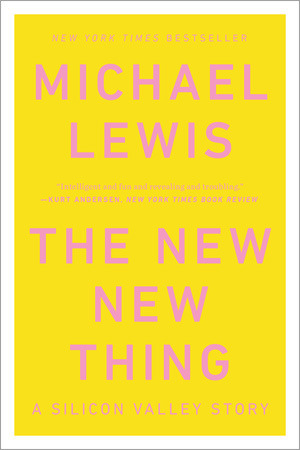
In the weird glow of the dying millennium, Michael Lewis set out on a safari through Silicon Valley to find the world’s most important technology entrepreneur. He found this in Jim Clark, a man whose achievements include the founding of three separate billion-dollar companies. Lewis also found much more, and the result—the best-selling book The New New Thing—is an ingeniously conceived history of the Internet revolution.

Wikinomics: How Mass Collaboration Changes Everything
by Don Tapscott
Rating: 3.6 ⭐
• 4 recommendations ❤️
The acclaimed bestseller that's teaching the world about the power of mass collaboration.Translated into more than twenty languages and named one of the best business books of the year by reviewers around the world, Wikinomics has become essential reading for business people everywhere. It explains how mass collaboration is happening not just at Web sites like Wikipedia and YouTube, but at traditional companies that have embraced technology to breathe new life into their enterprises.This national bestseller reveals the nuances that drive wikinomics, and share fascinating stories of how masses of people (both paid and volunteer) are now creating TV news stories, sequencing the human gnome, remixing their favorite music, designing software, finding cures for diseases, editing school texts, inventing new cosmetics, and even building motorcycles.

In his acclaimed book Lincoln's Virtues , William Lee Miller explored Abraham Lincoln's intellectual and moral development. Now he completes his "ethical biography," showing how the amiable and inexperienced backcountry politician was transformed by constitutional alchemy into an oath-bound head of state. Faced with a radical moral contradiction left by the nation's Founders, Lincoln struggled to find a balance between the universal ideals of Equality and Liberty and the monstrous injustice of human slavery.With wit and penetrating sensitivity, Miller brings together the great themes that have become Lincoln's legacy—preserving the United States of America while ending the odious institution that corrupted the nation's meaning—and illuminates his remarkable presidential indomitable resolve and supreme magnanimity.
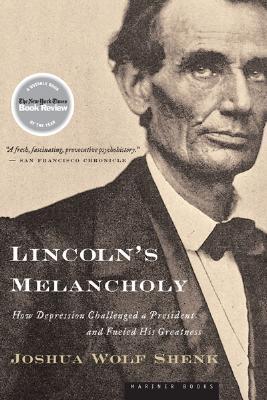
Lincoln's Melancholy: How Depression Challenged a President and Fueled His Greatness
by Joshua Wolf Shenk
Rating: 3.9 ⭐
• 2 recommendations ❤️
Drawing on a wealth of his own research and the work of other Lincoln scholars, Shenk reveals how the sixteenth president harnessed his depression to fuel his astonishing success. Lincoln found the solace and tactics he needed to deal with the nation's worst crisis in the coping strategies he developed over a lifetime of persevering through depressive episodes and personal tragedies. With empathy and authority gained from his own experience with depression, Shenk crafts a nuanced, revelatory account of Lincoln and his legacy, and in the process unveils a wholly new perspective on how our greatest president guided America through its greatest turmoil.
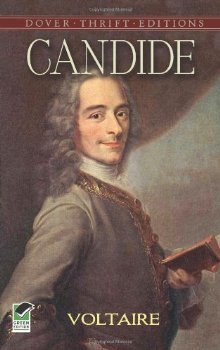
Candide is the story of a gentle man who, though pummeled and slapped in every direction by fate, clings desperately to the belief that he lives in "the best of all possible worlds." On the surface a witty, bantering tale, this eighteenth-century classic is actually a savage, satiric thrust at the philosophical optimism that proclaims that all disaster and human suffering is part of a benevolent cosmic plan. Fast, funny, often outrageous, the French philosopher's immortal narrative takes Candide around the world to discover that — contrary to the teachings of his distinguished tutor Dr. Pangloss — all is not always for the best. Alive with wit, brilliance, and graceful storytelling, Candide has become Voltaire's most celebrated work.

Letters to His Son on the Art of Becoming a Man of the World and a Gentleman
by Philip Dormer Stanhope
Rating: 3.9 ⭐
• 2 recommendations ❤️
Dear Boy is the selected correspondence of Lord Chesterfield to his son Philip, which began in 1737 and continued for thirty years. The letters comprise a powerful strategy for success which is as relevant today as it ever was.

An insider's history of Texas that examines the people, politics, and events which have shaped the Lone Star State, from prehistory to the modern dayHere is an up-to-the-moment history of the Lone Star State, together with an insider's look at the people, politics, and events that have shaped Texas from the beginning right up to our days. Never before has the story been told with more vitality and immediacy. Fehrenbach re-creates the Texas saga from prehistory to the Spanish and French invasions to the heyday of the cotton and cattle empires. He dramatically describes the emergence of Texas as a republic, the vote for secession before the Civil War, and the state's readmission to the Union after the War. In the twentieth century oil would emerge as an important economic resource and social change would come. But Texas would remain unmistakably Texas, because Texans "have been made different by the crucible of history; they think and act in different ways, according to the history that shaped their hearts and minds."

Have you ever wondered how one day the media can assert that alcohol is bad for us and the next unashamedly run a story touting the benefits of daily alcohol consumption? Or how a drug that is pulled off the market for causing heart attacks ever got approved in the first place? How can average readers, who aren't medical doctors or Ph.D.s in biochemistry, tell what they should be paying attention to and what's, well, just more bullshit?Ben Goldacre has made a point of exposing quack doctors and nutritionists, bogus credentialing programs, and biased scientific studies. He has also taken the media to task for its willingness to throw facts and proof out the window. But he's not here just to tell you what's wrong. Goldacre is here to teach you how to evaluate placebo effects, double-blind studies, and sample sizes, so that you can recognize bad science when you see it. You're about to feel a whole lot better.

The searing, post-apocalyptic novel about a father and son’s fight to survive.A father and his son walk alone through burned America. Nothing moves in the ravaged landscape save the ash on the wind. It is cold enough to crack stones, and when the snow falls it is gray. The sky is dark. Their destination is the coast, although they don’t know what, if anything, awaits them there. They have nothing; just a pistol to defend themselves against the lawless bands that stalk the road, the clothes they are wearing, a cart of scavenged food—and each other.The Road is the profoundly moving story of a journey. It boldly imagines a future in which no hope remains, but in which the father and his son, “each the other’s world entire,” are sustained by love. Awesome in the totality of its vision, it is an unflinching meditation on the worst and the best that we are capable of: ultimate destructiveness, desperate tenacity, and the tenderness that keeps two people alive in the face of total devastation.

Man's Search for Meaning has riveted generations of readers with its descriptions of life in Nazi death camps and its lessons for spiritual survival. Between 1942 and 1945 psychiatrist Viktor Frankl labored in four different camps, including Auschwitz, while his parents, brother, and pregnant wife perished. Based on his own experience and the stories of his many patients, Frankl argues that we cannot avoid suffering but we can choose how to cope with it, find meaning in it, and move forward with renewed purpose. Frankl's theory—known as logotherapy, from the Greek word logos ("meaning")—holds that our primary drive in life is not pleasure, as Freud maintained, but the discovery and pursuit of what we personally find meaningful. In the decades since its first publication in 1959, Man's Search for Meaning has become a classic, with more than twelve million copies in print around the world. A 1991 Library of Congress survey that asked readers to name a "book that made a difference in your life" found Man's Search for Meaning among the ten most influential books in America. At once a memoir, a meditation, a treatise, and a history, it continues to inspire us all to find significance in the very act of living.(back cover)

"Perhaps the most honest and haunting accounts of the struggle for mental health in literature." — ObserverThis dramatic memoir recounts an eight-month stay at a Westchester mental hospital in the early 1930s. William Seabrook, a renowned journalist and explorer, voluntarily committed himself to an asylum for treatment of acute alcoholism. His sincere, self-critical appraisal of his experiences offers a highly interesting look at addiction and treatment in the days before Alcoholics Anonymous and other modern programs."Very few people could be as honest as Seabrook is here," noted The New York Times, "and it is honesty plus the talent Seabrook has already had that makes a book of this sort first-rate." This edition of the soul-baring narrative features a new graphic novel–style introduction by Joe Ollmann, who also created the cover art."With zombies in vogue and his books coming back onto the market after decades out of print, maybe old Willie Seabrook, the lost king of the weird, can finally get the recognition and infamy he earned." ― Benjamin Welton, Vice.com

The $12 Million Stuffed Shark: The Curious Economics of Contemporary Art
by Don Thompson
Rating: 4.0 ⭐
• 1 recommendation ❤️
Why would a smart New York investment banker pay $12 million for the decaying, stuffed carcass of a shark? By what alchemy does Jackson Pollock's drip painting No. 5, 1948 sell for $140 million?Intriguing and entertaining, The $12 Million Stuffed Shark is a Freakonomics approach to the economics and psychology of the contemporary art world. Why were record prices achieved at auction for works by 131 contemporary artists in 2006 alone, with astonishing new heights reached in 2007? Don Thompson explores the money, lust, and self-aggrandizement of the art world in an attempt to determine what makes a particular work valuable while others are ignored.This book is the first to look at the economics and the marketing strategies that enable the modern art market to generate such astronomical prices. Drawing on interviews with past and present executives of auction houses and art dealerships, artists, and the buyers who move the market, Thompson launches the reader on a journey of discovery through the peculiar world of modern art. Surprising, passionate, gossipy, revelatory, The $12 Million Stuffed Shark reveals a great deal that even experienced auction purchasers do not know.

This revised edition (1972) provides a prose rendering of The Epic of Gilgamesh, the cycle of poems preserved on clay tablets surviving from ancient Mesopotamia of the third millennium B.C. One of the best and most important pieces of epic poetry from human history, predating even Homer's Iliad by roughly 1,500 years, the Gilgamesh epic tells of the various adventures of that hero-king, including his quest for immortality, and an account of a great flood similar in many details to the Old Testament's story of Noah. The translator also provides an interesting and useful introduction explaining much about the historical context of the poem and the archeological discovery of the tablets.

In Good condition. Fast Amazon shipping, delivery tracking number, no-hassle return policy - your satisfaction is guaranteed!

“A fine, invaluable book. . . . Certain to become essential to our understanding of the 16th president. . . . Kaplan meticulously analyzes how Lincoln’s steadily maturing prose style enabled him to come to grips with slavery and, as his own views evolved, to express his deepening opposition to it.” — Jonathan Yardley, The Washington Post Book World For Abraham Lincoln, whether he was composing love letters, speeches, or legal arguments, words mattered. In Lincoln , acclaimed biographer Fred Kaplan explores the life of America's sixteenth president through his use of language both as a vehicle to express complex ideas and feelings and as an instrument of persuasion and empowerment. This unique and engrossing account of Lincoln's life and career highlights the shortcomings of the modern presidency, reminding us, through Lincoln's legacy and appreciation for language, that the careful and honest use of words is a necessity for successful democracy.

The Score Takes Care of Itself: My Philosophy of Leadership
by Bill Walsh
Rating: 4.3 ⭐
• 16 recommendations ❤️
The last lecture on leadership by the NFL's greatest coach: Bill Walsh Bill Walsh is a towering figure in the history of the NFL. His advanced leadership transformed the San Francisco 49ers from the worst franchise in sports to a legendary dynasty. In the process, he changed the way football is played.Prior to his death, Walsh granted a series of exclusive interviews to bestselling author Steve Jamison. These became his ultimate lecture on leadership.Additional insights and perspective are provided by Hall of Fame quarterback Joe Montana and others.Bill Walsh taught that the requirements of successful leadership are the same whether you run an NFL franchise, a fortune 500 company, or a hardware store with 12 employees. These final words of 'wisdom by Walsh' will inspire, inform, and enlighten leaders in all professions.

The #1 New York Times bestseller: "It is the work of our greatest financial journalist, at the top of his game. And it's essential reading."—Graydon Carter, Vanity FairThe real story of the crash began in bizarre feeder markets where the sun doesn't shine and the SEC doesn't dare, or bother, to tread: the bond and real estate derivative markets where geeks invent impenetrable securities to profit from the misery of lower- and middle-class Americans who can't pay their debts. The smart people who understood what was or might be happening were paralyzed by hope and fear; in any case, they weren't talking.Michael Lewis creates a fresh, character-driven narrative brimming with indignation and dark humor, a fitting sequel to his #1 bestseller Liar's Poker. Out of a handful of unlikely-really unlikely-heroes, Lewis fashions a story as compelling and unusual as any of his earlier bestsellers, proving yet again that he is the finest and funniest chronicler of our time.

The creators of the award-winning website of the same name draw on science, art and blogs to reveal what people throughout the world are actually feeling, in a volume that summarizes a database compilation of several million search results analyzed by weather, location and other factors.
William Buehler Seabrook (1884 -1945) was an American Lost Generation occultist, explorer, traveler, cannibal, and journalist, born in Westminster, Maryland.

A NATIONAL BESTSELLERA programmer, musician, and father of virtual reality technology, Jaron Lanier was a pioneer in digital media, and among the first to predict the revolutionary changes it would bring to our commerce and culture. Now, with the Web influencing virtually every aspect of our lives, he offers this provocative critique of how digital design is shaping society, for better and for worse. Informed by Lanier’s experience and expertise as a computer scientist, You Are Not a Gadget discusses the technical and cultural problems that have unwittingly risen from programming choices—such as the nature of user identity—that were “locked-in” at the birth of digital media and considers what a future based on current design philosophies will bring. With the proliferation of social networks, cloud-based data storage systems, and Web 2.0 designs that elevate the “wisdom” of mobs and computer algorithms over the intelligence and wisdom of individuals, his message has never been more urgent.

No matter your field, industry, or specialty, as a leader you make a series of crucial decisions every single day. And the harsh truth is that the majority of decisions—no matter how good the intentions behind them—are mismanaged, resulting in a huge toll on organizations, the people they employ, and even the people they serve.So why is it so hard to make sound decisions? In Think Twice , now in paperback, Michael Mauboussin argues that we often fall victim to simplified mental routines that prevent us from coping with the complex realities inherent in important judgment calls. Yet these cognitive errors are preventable.In this engaging book, Mauboussin shows us how to recognize and avoid common mental missteps. These include misunderstanding cause-and-effect linkages, not considering enough alternative possibilities in making a decision, and relying too much on experts.Through vivid stories, the author presents memorable rules for avoiding each error and explains how to recognize when you should “think twice”—questioning your reasoning and adopting decision-making strategies that are far more effective, even if they seem counterintuitive. Armed with this awareness, you'll soon begin making sounder judgment calls that benefit (rather than hurt) your organization.

How to Live: Or A Life of Montaigne in One Question and Twenty Attempts at an Answer
by Sarah Bakewell
Rating: 4.2 ⭐
• 6 recommendations ❤️
Winner of the National Book Critics Circle Award for Biography, from the author of Humanly PossibleHow to get along with people, how to deal with violence, how to adjust to losing someone you love—such questions arise in most people’s lives. They are all versions of a bigger How do you live? This question obsessed Renaissance writers, none more than Michel Eyquem de Montaigne, considered by many to be the first truly modern individual. He wrote free-roaming explorations of his thoughts and experience, unlike anything written before. More than four hundred years later, Montaigne’s honesty and charm still draw people to him. Readers come to him in search of companionship, wisdom, and entertainment —and in search of themselves. Just as they will to this spirited and singular biography.

The Tiger: A True Story of Vengeance and Survival
by John Vaillant
Rating: 4.1 ⭐
• 4 recommendations ❤️
NATIONAL BESTSELLER • A gripping story of man pitted against nature’s most fearsome and efficient predator. This "travelogue about tiger poaching in Russia’s far east opens up a new genre ... [the] conservation thriller" ( Nature ).Outside a remote village in Russia’s Far East a man-eating tiger is on the prowl. The tiger isn’t just killing people, it’s murdering them, almost as if it has a vendetta. A team of trackers is dispatched to hunt down the tiger before it strikes again. They know the creature is cunning, injured, and starving, making it even more dangerous. As John Vaillant re-creates these extraordinary events, he gives us an unforgettable and masterful work of narrative nonfiction that combines a riveting portrait of a stark and mysterious region of the world and its people, with the natural history of nature’s most deadly predator.

More Money Than God: Hedge Funds and the Making of a New Elite (Council on Foreign Relations Books
by Sebastian Mallaby
Rating: 4.2 ⭐
• 9 recommendations ❤️
The New York Times bestseller“The bright light shed by More Money Than God is particularly welcome. Mr. Mallaby . . . brings a keen sense of financial theory to his subject and a vivid narrative style.” — Wall Street Journal“Splendid . . . the definitive history of the hedge fund history, a compelling narrative full of larger-than-life characters and dramatic tales of their financial triumphs and reversals.” — The Washington PostThe first authoritative history of hedge funds-from their rebel beginnings to their role in defining the future of finance, from the author of The Power LawWealthy, powerful, and potentially dangerous, hedge fund moguls have become the It Boys of twenty-first-century capitalism. Beating the market was long thought to be impossible, but hedge funds cracked its mysteries and made fortunes in the process. Drawing on his unprecedented access to the industry, esteemed financial writer Sebastian Mallaby tells the inside story of the hedge funds, from their origins in the 1960s to their role in the financial crisis of 2007 to 2009 — and explains why understanding the history of hedge funds is key to predicting the future of finance.

African American historian Gerald Early refers to Jack Johnson (1878-1946), the first African American heavyweight champion of the world, as the first African American pop culture icon. Johnson is a seminal and iconic figure in the history of race and sport in America. This manuscript is the translation of a memoir by Johnson that was published in French, has never before been translated, and is virtually unknown. Originally published as a series of articles in 1911 and then in revised form as a book in 1914, it covers Johnson's colorful life and battles, both inside and outside the ring, up until and including his famous defeat of Jim Jeffries in Reno, on July 4, 1910.In addition to the fights themselves, the memoir recounts, among many other things, Johnson's brief and amusing career as a local politician in Galveston, Texas; his experience hunting kangaroos in Australia; and his epic bouts of seasickness. It includes portraits of some of the most famous boxers of the 1900-1915 era―such truly legendary figures as Joe Choynski, Jim Jeffries, Sam McVey, Bob Fitzsimons, Philadelphia Jack O'Brien, and Stanley Ketchel. Johnson comments explicitly on race and the color line in boxing and in American society at large in ways that he probably would not have in a publication destined for an American reading public. The text constitutes genuinely new, previously unavailable material and will be of great interest for the many readers intrigued by Jack Johnson. In addition to providing information about Johnson's life, it is a fascinating exercise in self-mythologizing that provides substantial insights into how Johnson perceived himself and wished to be perceived by others. Johnson's personal voice comes through clearly-brash, clever, theatrical, and invariably charming. The memoir makes it easy to see how and why Johnson served as an important role model for Muhammad Ali and why so many have compared the two.

The Moral Sayings Of Publius Syrus: A Roman Slave
by Publilius Syrus
Rating: 3.9 ⭐
• 2 recommendations ❤️
The Moral Sayings of Publius A Roman Slave is a book written by Publius Syrus in 1855. The book comprises a collection of moral sayings and maxims that were written by Publius Syrus, a Roman slave who lived during the first century BC. The book is divided into several sections, each containing a different set of sayings. The sayings cover a wide range of topics, including love, friendship, honesty, and the importance of hard work. Many of the sayings are still relevant today and are often quoted by scholars and philosophers. The book provides readers with an insight into the mindset of ancient Rome and the values that were important to its people. It also serves as a reminder that wisdom and insight can come from unexpected sources, such as a Roman slave. Overall, The Moral Sayings of Publius Syrus is a fascinating read that offers valuable lessons for people of all ages and backgrounds.This scarce antiquarian book is a facsimile reprint of the old original and may contain some imperfections such as library marks and notations. Because we believe this work is culturally important, we have made it available as part of our commitment for protecting, preserving, and promoting the world's literature in affordable, high quality, modern editions, that are true to their original work.

“Every adult life could be said to be defined by two great love stories. The first—the story of our quest for sexual love—is well known and well charted. . . . The second—the story of our quest for love from the world—is a more secret and shameful tale. And yet this second love story is no less intense than the first.”This is a book about an almost universal anxiety that rarely gets mentioned an anxiety about what others think of us, about whether we’re judged a success or a failure, a winner or a loser. This is a book about status anxiety.Alain de Botton, best-selling author of The Consolations of Philosophy and The Art of Travel , asks—with lucidity and charm—where our worries about status come from and what, if anything, we can do to surmount them. With the help of philosophers, artists and writers, he examines the origins of status anxiety (ranging from the consequences of the French Revolution to our secret dismay at the success of our friends) before revealing ingenious ways in which people have been able to overcome their worries in the search for happiness. We learn about sandal-less philosophers and topless bohemians, about the benefits of putting skulls on our sideboards, and about looking at ancient ruins.The result is a book that isn’t just highly entertaining and thought-provoking, but that is genuinely wise and helpful, too.

Empire State of Mind: How Jay Z Went from Street Corner to Corner Office, Revised Edition
by Zack O'Malley Greenburg
Rating: 4.0 ⭐
• 2 recommendations ❤️
Updated and revised—the story of American rapper Jay-Z's glass-shattering rise from the Brooklyn projects to the top of the business world.Beyond the award-wining albums and chart-topping hits, Jay-Z’s business savvy has cemented his legacy as one of the most successful artists of our time. Now with new insights into how he recently achieved his Forbes -certified billionaire status, Empire State of Mind reveals the inside story behind the rapper's meteoric rise.With a sprawling network of investments ranging from fashion, technology, and top-shelf liquor to nightclubs, streaming services, and record labels, it’s possible for Jay-Z to profit at every turn of your day. So how did a kid from the projects turn himself into a one-man conglomerate? Through the eyes of the people who lived it with him—including the childhood friend who got him into the drug trade, the DJ who persuaded him to stop dealing and focus on his music, and industry collaborators like Alicia Keys and J. Cole—we see how Jay-Z not only honed his craft but transformed each setback into an opportunity for more.For every hustler, mogul, and businessperson who seeks to build something spectacular, this book is the blueprint.

"The revolution will be Twittered!" declared journalist Andrew Sullivan after protests erupted in Iran in June 2009. Yet for all the talk about the democratizing power of the Internet, regimes in Iran and China are as stable and repressive as ever. In fact, authoritarian governments are effectively using the Internet to suppress free speech, hone their surveillance techniques, disseminate cutting-edge propaganda, and pacify their populations with digital entertainment. Could the recent Western obsession with promoting democracy by digital means backfire? In this spirited book, journalist and social commentator Evgeny Morozov shows that by falling for the supposedly democratizing nature of the Internet, Western do-gooders may have missed how it also entrenches dictators, threatens dissidents, and makes it harder -- not easier -- to promote democracy. Buzzwords like "21st-century statecraft" sound good in PowerPoint presentations, but the reality is that "digital diplomacy" requires just as much oversight and consideration as any other kind of diplomacy. Marshaling compelling evidence, Morozov shows why we must stop thinking of the Internet and social media as inherently liberating and why ambitious and seemingly noble initiatives like the promotion of "Internet freedom" might have disastrous implications for the future of democracy as a whole.

Plutarch's Lives, written at the beginning of the second century A.D., is a brilliant social history of the ancient world by one of the greatest biographers and moralists of all time. In what is by far his most famous and influential work, Plutarch reveals the character and personality of his subjects and how they led ultimately to tragedy or victory. Richly anecdotal and full of detail, Volume I contains profiles and comparisons of Romulus and Theseus, Numa and Lycurgus, Fabius and Pericles, and many more powerful figures of ancient Greece and Rome.The present translation, originally published in 1683 in conjunction with a life of Plutarch by John Dryden, was revised in 1864 by the poet and scholar Arthur Hugh Clough, whose notes and preface are also included in this edition.

Tiny Beautiful Things: Advice on Love and Life from Dear Sugar
by Cheryl Strayed
Rating: 4.4 ⭐
• 10 recommendations ❤️
Life can be hard: your lover cheats on you; you lose a family member; you can’t pay the bills—and it can be great: you’ve had the hottest sex of your life; you get that plum job; you muster the courage to write your novel. Sugar—the once-anonymous online columnist at The Rumpus, now revealed as Cheryl Strayed, author of the bestselling memoir Wild—is the person thousands turn to for advice.Tiny Beautiful Things brings the best of Dear Sugar in one place and includes never-before-published columns and a new introduction by Steve Almond. Rich with humor, insight, compassion—and absolute honesty—this book is a balm for everything life throws our way.

The Fish That Ate the Whale: The Life and Times of America's Banana King
by Rich Cohen
Rating: 4.2 ⭐
• 10 recommendations ❤️
Named a Best Book of the Year by the San Francisco Chronicle and The Times-Picayune The fascinating untold tale of Samuel Zemurray, the self-made banana mogul who went from penniless roadside banana peddler to kingmaker and capitalist revolutionary When Samuel Zemurray arrived in America in 1891, he was tall, gangly, and penniless. When he died in the grandest house in New Orleans sixty-nine years later, he was among the richest, most powerful men in the world. Working his way up from a roadside fruit peddler to conquering the United Fruit Company, Zemurray became a symbol of the best and worst of the United States: proof that America is the land of opportunity, but also a classic example of the corporate pirate who treats foreign nations as the backdrop for his adventures.Zemurray lived one of the great untold stories of the last hundred years. Starting with nothing but a cart of freckled bananas, he built a sprawling empire of banana cowboys, mercenary soldiers, Honduran peasants, CIA agents, and American statesmen. From hustling on the docks of New Orleans to overthrowing Central American governments and precipitating the bloody thirty-six-year Guatemalan civil war, the Banana Man lived a monumental and sometimes dastardly life. Rich Cohen's brilliant historical profile The Fish That Ate the Whale unveils Zemurray as a hidden power broker, driven by an indomitable will to succeed.
So Good They Can't Ignore You: Why Skills Trump Passion in the Quest for Work You Love
by Cal Newport
Rating: 4.1 ⭐
• 1 recommendation ❤️
In this eye-opening account, Cal Newport debunks the long-held belief that "follow your passion" is good advice. Not only is the cliché flawed-preexisting passions are rare and have little to do with how most people end up loving their work-but it can also be dangerous, leading to anxiety and chronic job hopping.After making his case against passion, Newport sets out on a quest to discover the reality of how people end up loving what they do. Spending time with organic farmers, venture capitalists, screenwriters, freelance computer programmers, and others who admitted to deriving great satisfaction from their work, Newport uncovers the strategies they used and the pitfalls they avoided in developing their compelling careers.Matching your job to a preexisting passion does not matter, he reveals. Passion comes after you put in the hard work to become excellent at something valuable, not before.In other words, what you do for a living is much less important than how you do it.With a title taken from the comedian Steve Martin, who once said his advice for aspiring entertainers was to "be so good they can't ignore you," Cal Newport's clearly written manifesto is mandatory reading for anyone fretting about what to do with their life, or frustrated by their current job situation and eager to find a fresh new way to take control of their livelihood. He provides an evidence-based blueprint for creating work you love.SO GOOD THEY CAN'T IGNORE YOU will change the way we think about our careers, happiness, and the crafting of a remarkable life.

The #1 New York Times–bestselling sequel to The 48 Laws of PowerMastery synthesizes the years of research Robert Greene conducted while writing the international bestsellers The 48 Laws of Power, The 33 Strategies of War, and The Art of Seduction and demonstrates that the ultimate form of power is mastery itself. By analyzing the lives of such past masters as Charles Darwin, Benjamin Franklin, Albert Einstein, and Leonard da Vinci, as well as by interviewing nine contemporary masters, including tech guru Paul Graham and animal rights advocate Temple Grandin, Greene debunks our culture’s many myths about genius and distills the wisdom of the ages to reveal the secret to greatness. With this seminal text as a guide, readers will learn how to unlock the passion within and become masters.
Average Is Over: Powering America Beyond the Age of the Great Stagnation
by Tyler Cowen
Rating: 3.6 ⭐
• 2 recommendations ❤️
Widely acclaimed as one of the world’s most influential economists, Tyler Cowen returns with his groundbreaking follow-up to the New York Times bestseller The Great Stagnation .The widening gap between rich and poor means dealing with one big, uncomfortable If you’re not at the top, you’re at the bottom.The global labor market is changing radically thanks to growth at the high end—and the low. About three quarters of the jobs created in the United States since the great recession pay only a bit more than minimum wage. Still, the United States has more millionaires and billionaires than any country ever, and we continue to mint them.In this eye-opening book, renowned economist and bestselling author Tyler Cowen explains that High earners are taking ever more advantage of machine intelligence in data analysis and achieving ever-better results. Meanwhile, low earners who haven’t committed to learning, to making the most of new technologies, have poor prospects. Nearly every business sector relies less and less on manual labor, and this fact is forever changing the world of work and wages. A steady, secure life somewhere in the middle—average—is over.With The Great Stagnation, Cowen explained why median wages stagnated over the last four decades; in Average Is Over he reveals the essential nature of the new economy, identifies the best path forward for workers and entrepreneurs, and provides readers with actionable advice to make the most of the new economic landscape. It is a challenging and sober must-read but ultimately exciting, good news. In debates about our nation’s economic future, it will be impossible to ignore.

Have you ever found yourself stretched too thin?Do you simultaneously feel overworked and underutilized?Are you often busy but not productive? Do you feel like your time is constantly being hijacked by other people’s agendas?If you answered yes to any of these, the way out is the Way of the EssentialistThe Way of the Essentialist isn’t about getting more done in less time. It’s about getting only the right things done. It is not a time management strategy, or a productivity technique. It is a systematic discipline for discerning what is absolutely essential, then eliminating everything that is not, so we can make the highest possible contribution towards the things that really matter. By forcing us to apply a more selective criteria for what is Essential, the disciplined pursuit of less empowers us to reclaim control of our own choices about where to spend our precious time and energy – instead of giving others the implicit permission to choose for us.Essentialism is not one more thing – it’s a whole new way of doing everything. A must-read for any leader, manager, or individual who wants to learn how to do less, but better, in every area of their lives, Essentialism is a movement whose time has come.

This lively translation accurately captures the wit and uncensored bawdiness of the epigrams of Martial, who satirized Roman society, both high and low, in the first century CE. His pithy little poems amuse, but also offer vivid insight into the world of patrons and clients, doctors and lawyers, prostitutes, slaves, and social climbers in ancient Rome. The selections cover nearly a third of Martial's 1,500 or so epigrams, augmented by a foreword by historian Marc Kleijwegt and informative notes on literary allusion and wordplay by translator Susan McLean.

Legendary community organizer Saul Alinsky inspired a generation of activists and politicians with Reveille for Radicals , the original handbook for social change. Alinsky writes both practically and philosophically, never wavering from his belief that the American dream can only be achieved by an active democratic citizenship. First published in 1946 and updated in 1969 with a new introduction and afterword, this classic volume is a bold call to action that still resonates today.

While the history books are filled with tales of obsessive, visionary geniuses who remade the world in their image with sheer, almost irrational force, I’ve found that history is also made by individuals who fought their egos at every turn, who eschewed the spotlight, and who put their higher goals above their desire for recognition.” – from the PrologueMany of us insist the main impediment to a full, successful life is the outside world. In fact, the most common enemy lies within: our ego. Early in our careers, it impedes learning and the cultivation of talent. With success, it can blind us to our faults and sow future problems. In failure, it magnifies each blow and makes recovery more difficult. At every stage, ego holds us back.The Ego is the Enemy draws on a vast array of stories and examples, from literature to philosophy to history. We meet fascinating figures like Howard Hughes, Katharine Graham, Bill Belichick, and Eleanor Roosevelt, all of whom reached the highest levels of power and success by conquering their own egos. Their strategies and tactics can be ours as well.But why should we bother fighting ego in an era that glorifies social media, reality TV, and other forms of shameless self-promotion? Armed with the lessons in this book, as Holiday writes, “you will be less invested in the story you tell about your own specialness, and as a result, you will be liberated to accomplish the world-changing work you’ve set out to achieve.

The Lives of the Most Excellent Painters, Sculptors, and Architects
by Giorgio Vasari
Rating: 3.7 ⭐
• 2 recommendations ❤️
A painter and architect in his own right, Giorgio Vasari (1511-74) achieved immortality for this book on the lives of his fellow Renaissance artists, first published in Florence in 1550. Although he based his work on a long tradition of biographical writing, Vasari infused these literary portraits with a decidedly modern form of critical judgment. The result is a work that remains to this day the cornerstone of art historical scholarship. Spanning the period from the thirteenth century to Vasari’s own time, the Lives opens a window on the greatest personalities of the period, including Giotto, Brunelleschi, Mantegna, Leonardo, Raphael, Michelangelo, and Titian. This Modern Library edition, abridged from the original text with notes drawn from earlier commentaries, as well as current research, reminds us why The Lives of the Most Excellent Painters, Sculptors, and Architects is indispensable to any student interested in Renaissance art.

The Woman's Hour: The Great Fight to Win the Vote
by Elaine F. Weiss
Rating: 4.1 ⭐
• 2 recommendations ❤️
Soon to be a major television event, the nail-biting climax of one of the greatest political battles in American history: the ratification of the constitutional amendment that granted women the right to vote.Nashville, August 1920. Thirty-five states have approved the Nineteenth Amendment, granting women the right to vote; one last state--Tennessee--is needed for women's voting rights to be the law of the land. The suffragists face vicious opposition from politicians, clergy, corporations, and racists who don't want black women voting. And then there are the "Antis"--women who oppose their own enfranchisement, fearing suffrage will bring about the nation's moral collapse. And in one hot summer, they all converge for a confrontation, replete with booze and blackmail, betrayal and courage. Following a handful of remarkable women who led their respective forces into battle, The Woman's Hour is the gripping story of how America's women won their own freedom, and the opening campaign in the great twentieth-century battles for civil rights.

In this culmination of five decades of acclaimed studies in presidential history, Pulitzer Prize-winning author Doris Kearns Goodwin offers an illuminating exploration of the early development, growth, and exercise of leadership.Are leaders born or made? Where does ambition come from? How does adversity affect the growth of leadership? Does the leader make the times or do the times make the leader?In Leadership, Goodwin draws upon the four presidents she has studied most closely—Abraham Lincoln, Theodore Roosevelt, Franklin D. Roosevelt, and Lyndon B. Johnson (in civil rights)—to show how they recognized leadership qualities within themselves and were recognized as leaders by others. By looking back to their first entries into public life, we encounter them at a time when their paths were filled with confusion, fear, and hope.Leadership tells the story of how they all collided with dramatic reversals that disrupted their lives and threatened to shatter forever their ambitions. Nonetheless, they all emerged fitted to confront the contours and dilemmas of their times.No common pattern describes the trajectory of leadership. Although set apart in background, abilities, and temperament, these men shared a fierce ambition and a deep-seated resilience that enabled them to surmount uncommon hardships. At their best, all four were guided by a sense of moral purpose. At moments of great challenge, they were able to summon their talents to enlarge the opportunities and lives of others.This seminal work provides an accessible and essential road map for aspiring and established leaders in every field. In today’s polarized world, these stories of authentic leadership in times of apprehension and fracture take on a singular urgency.--front flap

On the morning of April 29, 1986, a fire alarm sounded in the Los Angeles Public Library. As the moments passed, the patrons and staff who had been cleared out of the building realized this was not the usual fire alarm. As one fireman recounted, “Once that first stack got going, it was ‘Goodbye, Charlie.’” The fire was disastrous: it reached 2000 degrees and burned for more than seven hours. By the time it was extinguished, it had consumed four hundred thousand books and damaged seven hundred thousand more. Investigators descended on the scene, but more than thirty years later, the mystery remains: Did someone purposefully set fire to the library—and if so, who? Weaving her lifelong love of books and reading into an investigation of the fire, award-winning New Yorker reporter and New York Times bestselling author Susan Orlean delivers a mesmerizing and uniquely compelling book that manages to tell the broader story of libraries and librarians in a way that has never been done before. In The Library Book, Orlean chronicles the LAPL fire and its aftermath to showcase the larger, crucial role that libraries play in our lives; delves into the evolution of libraries across the country and around the world, from their humble beginnings as a metropolitan charitable initiative to their current status as a cornerstone of national identity; brings each department of the library to vivid life through on-the-ground reporting; studies arson and attempts to burn a copy of a book herself; reflects on her own experiences in libraries; and reexamines the case of Harry Peak, the blond-haired actor long suspected of setting fire to the LAPL more than thirty years ago. Along the way, Orlean introduces us to an unforgettable cast of characters from libraries past and present—from Mary Foy, who in 1880 at eighteen years old was named the head of the Los Angeles Public Library at a time when men still dominated the role, to Dr. C.J.K. Jones, a pastor, citrus farmer, and polymath known as “The Human Encyclopedia” who roamed the library dispensing information; from Charles Lummis, a wildly eccentric journalist and adventurer who was determined to make the L.A. library one of the best in the world, to the current staff, who do heroic work every day to ensure that their institution remains a vital part of the city it serves. Brimming with her signature wit, insight, compassion, and talent for deep research, The Library Book is Susan Orlean’s thrilling journey through the stacks that reveals how these beloved institutions provide much more than just books—and why they remain an essential part of the heart, mind, and soul of our country. It is also a master journalist’s reminder that, perhaps especially in the digital era, they are more necessary than ever.

Keep Going: 10 Ways to Stay Creative in Good Times and Bad
by Austin Kleon
Rating: 4.3 ⭐
• 2 recommendations ❤️
Keep Working. Keep Playing. Keep Creating.In his previous books Steal Like an Artist and Show Your Work! , both New York Times bestsellers, Austin Kleon gave readers the keys to unlock their creativity and showed them how to become known. Now he offers his most inspiring work yet, with ten simple rules for how to stay creative, focused, and true to yourself—for life.The creative life is not a linear journey to a finish line, it’s a loop—so find a daily routine, because today is the only day that matters. Disconnect from the world to connect with yourself—sometimes you just have to switch into airplane mode. Keep Going celebrates getting outdoors and taking a walk (as director Ingmar Bergman told his daughter, ”The demons hate fresh air”). Pay attention, and especially pay attention to what you pay attention to. Worry less about getting things done, and more about the worth of what you’re doing. Instead of focusing on making your mark, work to leave things better than you found them.Keep Going and its timeless, practical, and ethical principles are for anyone trying to sustain a meaningful and productive life.

In The Second Mountain, David Brooks explores the four commitments that define a life of meaning and purpose: to a spouse and family, to a vocation, to a philosophy or faith, and to a community. Our personal fulfillment depends on how well we choose and execute these commitments. In The Second Mountain, Brooks looks at a range of people who have lived joyous, committed lives, and who have embraced the necessity of dependence. He gathers their wisdom on how to choose a partner, how to pick a vocation, how to live out a philosophy, and how we can begin to integrate our commitments into one overriding purpose.In short, this book is meant to help us all lead more meaningful lives. But it’s also a provocative social commentary. We live in a society, Brooks argues, that celebrates freedom, that tells us to be true to ourselves, at the expense of surrendering to a cause, rooting ourselves in a neighborhood, binding ourselves to others by social solidarity and love. We have taken individualism to the extreme—and in the process we have torn the social fabric in a thousand different ways. The path to repair is through making deeper commitments. In The Second Mountain, Brooks shows what can happen when we put commitment-making at the center of our lives.

In The Obstacle Is the Way and Ego Is the Enemy, bestselling author Ryan Holiday made ancient wisdom wildly popular with a new generation of leaders in sports, politics, and technology. In his new book, Stillness Is the Key, Holiday draws on timeless Stoic and Buddhist philosophy to show why slowing down is the secret weapon for those charging ahead.All great leaders, thinkers, artists, athletes, and visionaries share one indelible quality. It enables them to conquer their tempers. To avoid distraction and discover great insights. To achieve happiness and do the right thing. Ryan Holiday calls it stillness--to be steady while the world spins around you.In this book, he outlines a path for achieving this ancient, but urgently necessary way of living. Drawing on a wide range of history's greatest thinkers, from Confucius to Seneca, Marcus Aurelius to Thich Nhat Hanh, John Stuart Mill to Nietzsche, he argues that stillness is not mere inactivity, but the doorway to self-mastery, discipline, and focus.Holiday also examines figures who exemplified the power of stillness: baseball player Sadaharu Oh, whose study of Zen made him the greatest home run hitter of all time; Winston Churchill, who in balancing his busy public life with time spent laying bricks and painting at his Chartwell estate managed to save the world from annihilation in the process; Fred Rogers, who taught generations of children to see what was invisible to the eye; Anne Frank, whose journaling and love of nature guided her through unimaginable adversity.More than ever, people are overwhelmed. They face obstacles and egos and competition. Stillness Is the Key offers a simple but inspiring antidote to the stress of 24/7 news and social media. The stillness that we all seek is the path to meaning, contentment, and excellence in a world that needs more of it than ever.

New York Times and Wall Street Journal BestsellerA New York Times technology correspondent presents the dramatic story of Uber, the Silicon Valley startup at the center of one of the great venture capital power struggles of our time. In June 2017, Travis Kalanick, the hard-charging CEO of Uber, was ousted in a boardroom coup that capped a brutal year for the transportation giant. Uber had catapulted to the top of the tech world, yet for many came to symbolize everything wrong with Silicon Valley. Award-winning New York Times technology correspondent Mike Isaac’s Super Pumped presents the dramatic rise and fall of Uber, set against an era of rapid upheaval in Silicon Valley. Backed by billions in venture capital dollars and led by a brash and ambitious founder, Uber promised to revolutionize the way we move people and goods through the world. A near instant “unicorn,” Uber seemed poised to take its place next to Amazon, Apple, and Google as a technology giant. What followed would become a corporate cautionary tale about the perils of startup culture and a vivid example of how blind worship of startup founders can go wildly wrong. Isaac recounts Uber’s pitched battles with taxi unions and drivers, the company’s toxic internal culture, and the bare-knuckle tactics it devised to overcome obstacles in its quest for dominance. With billions of dollars at stake, Isaac shows how venture capitalists asserted their power and seized control of the startup as it fought its way toward its fateful IPO. Based on hundreds of interviews with current and former Uber employees, along with previously unpublished documents, Super Pumped is a page-turning story of ambition and deception, obscene wealth, and bad behavior that explores how blistering technological and financial innovation culminated in one of the most catastrophic twelve-month periods in American corporate history.

Believe in People: Bottom-Up Solutions for a Top-Down World
by Charles G. Koch
Rating: 3.7 ⭐
• 6 recommendations ❤️
A surprising take on how you can help tackle the really big problems in society–from one of America’s most successful entrepreneurs.People are looking for a better way. Towering barriers are holding millions of people back, and the institutions that should help everyone rise are not doing the job. Crumbling communities. One-size fits all education. Businesses that rig the economy. Public policy that stifles opportunity and emboldens the extremes. As a result, this country is quickly heading toward a two-tiered society.Today’s challenges call for nothing short of a paradigm shift – away from a top-down approach that sees people as problems to be managed, toward bottom-up solutions that empower everyone to realize their potential and foster a more inclusive society.Such a shift starts by asking: What would it mean to truly believe in people?Businessman and philanthropist Charles Koch has devoted his life to answering that question. Learn what he’s discovered during his 60-year career to help you apply the principles of empowerment in your life, in your business, and in society.By learning from the social movements and applying the principles that have enabled social progress throughout history, Koch has achieved more than he dreamed possible – building one of the world’s most successful companies and founding Stand Together, one of America’s most innovative philanthropic communities. Stand Together CEO Brian Hooks and Koch show how the only way to solve the really big problems – from poverty and addiction to harmful business practices and destructive public policy – is for each and every one of us to find and take action in our unique role as part of the solution.Full of compelling examples of what works – including several first-person accounts from individuals whose lives have been transformed – Koch and Hooks’ refreshing approach promotes partnership instead of partisanship and speaks to people from different perspectives and all walks of life. They show that no injustice is too tough to overcome if you share a deep belief in people, are willing to unite with anyone to do right, and work to empower others from the bottom up.

Cyrus, a great Persian leader, was so widely and memorably respected that a hundred years later, Xenophon of Athens wrote this admiring book about the greatest leader of his era. Larry Hedrick's Introduction describes Cyrus and his times.Among his many achievements, this great leader of wisdom and virtue founded and extended the Persian Empire; conquered Babylon; freed 40,000 Jews from captivity; wrote mankind's first human rights charter; and ruled over those he had conquered with respect and benevolence.According to historian Will Durant, Cyrus the Great's military enemies knew that he was lenient, and they did not fight him with that desperate courage which men show when their only choice is "to kill or die." As a result the Iranians regarded him as "The Father," the Babylonians as "The Liberator," the Greeks as the "Law-Giver," and the Jews as the "Anointed of the Lord."By freshening the voice, style and diction of Cyrus, Larry Hedrick has created a more contemporary Cyrus. A new generation of readers, including business executives and managers, military officers, and government officials, can now learn about and benefit from Cyrus the Great's extraordinary achievements, which exceeded all other leaders' throughout antiquity.