
Rory Sutherland Recommended Books
British advertising executive
8 Books Recommended
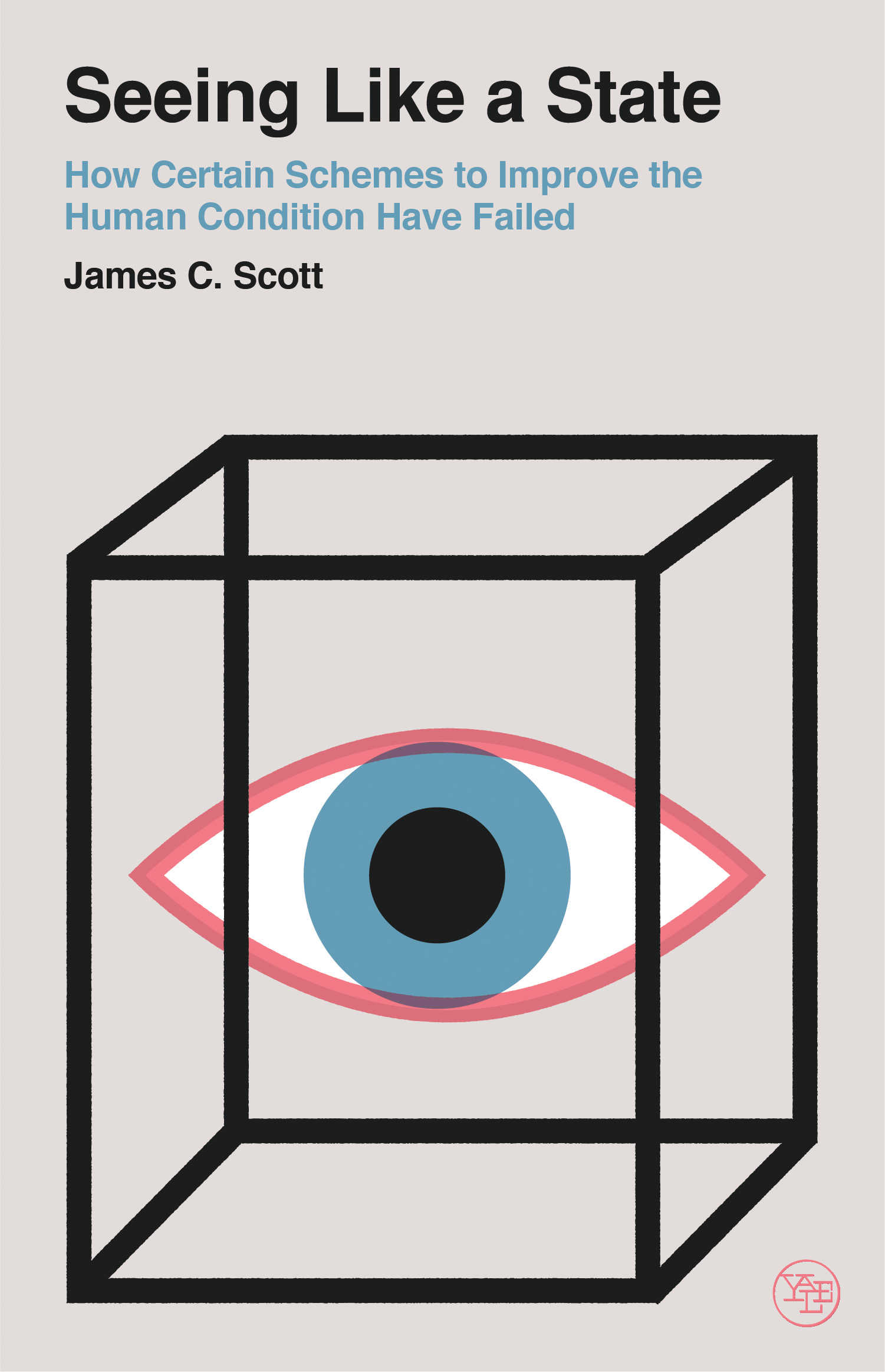
Seeing Like a State: How Certain Schemes to Improve the Human Condition Have Failed
by James C. Scott
Rating: 4.2 ⭐
• 4 recommendations ❤️
"One of the most profound and illuminating studies of this century to have been published in recent decades." —John Gray, New York Times Book ReviewHailed as "a magisterial critique of top-down social planning" by the New York Times, this essential work analyzes disasters from Russia to Tanzania to uncover why states so often fail—sometimes catastrophically—in grand efforts to engineer their society or their environment, and uncovers the conditions common to all such planning disasters."Beautifully written, this book calls into sharp relief the nature of the world we now inhabit." —New Yorker"A tour de force." —Charles Tilly, Columbia University

A new edition of the timeless business classic featured on Mad Men—as fresh and relevant now as the day it was written "We admire people who work hard, who are objective and thorough. We detest office politicians, toadies, bullies, and pompous asses. We abhor ruthlessness. The way up our ladder is open to everybody. In promoting people to top jobs, we are influenced as much by their character as anything else." —David Ogilvy David Ogilvy was considered the "father of advertising" and a creative genius by many of the biggest global brands. First published in 1963, this seminal book revolutionized the world of advertising and became a bible for the 1960s ad generation. It also became an international bestseller, translated into 14 languages. Fizzing with Ogilvy's pioneering ideas and inspirational philosophy, it covers not only advertising, but also people management, corporate ethics, and office politics, and forms an essential blueprint for good practice in business.

In this brilliant, lively, and eye-opening investigation, Tom Vanderbilt examines the perceptual limits and cognitive underpinnings that make us worse drivers than we think we are. He demonstrates why plans to protect pedestrians from cars often lead to more accidents. He uncovers who is more likely to honk at whom, and why. He explains why traffic jams form, outlines the unintended consequences of our quest for safety, and even identifies the most common mistake drivers make in parking lots. Traffic is about more than driving: it's about human nature. It will change the way we see ourselves and the world around us, and it may even make us better drivers.

Different cover. Specialist Publishing Company, 1929,5th Printing. Cardboard covers in very good condition(see photos); hinges repaired inside. Wear on spine; lighter wear corners and edges. Pages moderately tanned; no marks noted. 31 p ages w/scattered illustrations.Tiny wrinkle at bottom p. 29/30; tiny chip at edge of ffep. Sold by Friends of the Fullerton Library. 17

"John Kay tells a fast-paced detective story as he searches for the surprising secret to success...Brilliant."-Tim Harford, author of The Logic of Life In this revolutionary book, economist John Kay proves a notion that feels at once paradoxical and deeply the best way to achieve any complex or broadly defined goal, from happiness to preventing forest fires, is the indirect way. We can learn how to achieve our objectives only through a gradual process of risk taking and discovery-what Kay calls obliquity. The author traces this seemingly counterintuitive path to success as it manifests itself in nearly every aspect of life, including business, politics, sports, and more.

Obvious Adams: The Story of a Successful Businessman
by Robert R Updegraff
Rating: 4.3 ⭐
• 2 recommendations ❤️
OBVIOUS ADAMS was first published as a short story in the Saturday Evening Post in April, 1916. Though it was the story of an advertising man, it was quickly recognized as presenting a germ idea basic to outstanding success in the business world and the professions. Harper & Brothers brought out the story in book form in September of the year of its publication in the Post. The book met with a ready sale. In reviewing it, the New York Times said, "The young man who is going to seek his fortune in the advertising business should have Obvious Adams for a handbook. Indeed, any young man who is going to seek his fortune in anything might be aided by the common sense and business acumen displayed in this little volume." "Obvious Adams" soon became a legendary character. He was quoted in business conferences and at board meetings. Heads of companies wrote the author to ask if the hero of the story was a real person; that if he was they wanted to engage his services. His "obviousness" influenced the thinking of some of the outstanding industrial leaders of the day. Fun Way Learning Press is now proud to publish a new Business Edition of this classic text, updating some of the author's original usage and including a Manager's Toolkit for the business owner or executive who wants to leverage the "obvious" in his or her own business.
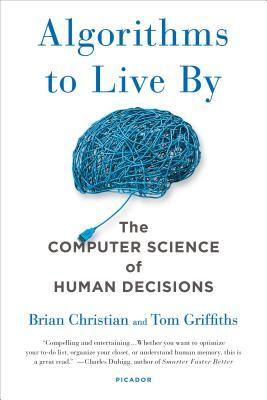
Algorithms to Live By: The Computer Science of Human Decisions
by Brian Christian
Rating: 4.1 ⭐
• 2 recommendations ❤️
What should we do, or leave undone, in a day or a lifetime? How much messiness should we accept? What balance of the new and familiar is the most fulfilling? These may seem like uniquely human quandaries, but they are not. Computers, like us, confront limited space and time, so computer scientists have been grappling with similar problems for decades. And the solutions they've found have much to teach us.In a dazzlingly interdisciplinary work, Brian Christian and Tom Griffiths show how algorithms developed for computers also untangle very human questions. They explain how to have better hunches and when to leave things to chance, how to deal with overwhelming choices and how best to connect with others. From finding a spouse to finding a parking spot, from organizing one's inbox to peering into the future, Algorithms to Live By transforms the wisdom of computer science into strategies for human living.

When More Is Not Better: Overcoming America's Obsession with Economic Efficiency
by Roger L. Martin
Rating: 3.8 ⭐
• 2 recommendations ❤️
American democratic capitalism is in imminent danger. More than forty years ago, a dangerous decline began that has created an unprecedented state of economic disparity. While the rich are getting richer faster than ever, the middle-class family has fallen so far behind it would take three generations to recover – perhaps even longer in the wake of the COVID-19 pandemic. The moment to rethink our economy and embark on a journey to repair our broken system is now. Roger L. Martin – former Dean of the Rotman School of Management and the world’s #1 management thinker (Thinkers50) – believes the problem is that we view our economy as a machine that can be perfected by pursuing increasing levels of efficiency. In his new book When More Is Not Better, Martin argues that we have relentlessly pursued efficiency at the expense of resilience, turning efficiency into a destructive force that has produced an unequal society and a fragile economy. That fragility makes our economy more vulnerable to shocks and brutally undermines our capacity to deal with catastrophic events like the pandemic.In the book, Martin reveals the dark side of efficiency, providing evidence, rigorous economic analysis, and insight to demonstrate that our constant effort to make the economic machine more efficient means fewer bigger winners and plenty left behind.