
Ray Dalio Recommended Books
American billionaire hedge fund manager
36 Books Recommended

My Stroke of Insight: A Brain Scientist's Personal Journey
by Jill Bolte Taylor
Rating: 4.2 ⭐
• 2 recommendations ❤️
"Transformative...[Taylor's] experience...will shatter [your] own perception of the world."—ABC NewsThe astonishing New York Times bestseller that chronicles how a brain scientist's own stroke led to enlightenment On December 10, 1996, Jill Bolte Taylor, a thirty-seven- year-old Harvard-trained brain scientist experienced a massive stroke in the left hemisphere of her brain. As she observed her mind deteriorate to the point that she could not walk, talk, read, write, or recall any of her life-all within four hours-Taylor alternated between the euphoria of the intuitive and kinesthetic right brain, in which she felt a sense of complete well-being and peace, and the logical, sequential left brain, which recognized she was having a stroke and enabled her to seek help before she was completely lost. It would take her eight years to fully recover. For Taylor, her stroke was a blessing and a revelation. It taught her that by "stepping to the right" of our left brains, we can uncover feelings of well-being that are often sidelined by "brain chatter." Reaching wide audiences through her talk at the Technology, Entertainment, Design (TED) conference and her appearance on Oprah's online Soul Series, Taylor provides a valuable recovery guide for those touched by brain injury and an inspiring testimony that inner peace is accessible to anyone.

The Evolving Self: Problem and Process in Human Development
by Robert Kegan
Rating: 4.2 ⭐
• 4 recommendations ❤️
The Evolving Self focuses upon the most basic and universal of psychological problems--the individual's effort to make sense of experience, to make meaning of life. According to Robert Kegan, meaning-making is a lifelong activity that begins in earliest infancy and continues to evolve through a series of stages encompassing childhood, adolescence, and adulthood. The Evolving Self describes this process of evolution in rich and human detail, concentrating especially on the internal experience of growth and transition, its costs and disruptions as well as its triumphs.At the heart of our meaning-making activity, the book suggests, is the drawing and redrawing of the distinction between self and other. Using Piagetian theory in a creative new way to make sense of how we make sense of ourselves, Kegan shows that each meaning-making stage is a new solution to the lifelong tension between the universal human yearning to be connected, attached, and included, on the one hand, and to be distinct, independent, and autonomous on the other. The Evolving Self is the story of our continuing negotiation of this tension. It is a book that is theoretically daring enough to propose a reinterpretation of the Oedipus complex and clinically concerned enough to suggest a variety of fresh new ways to treat those psychological complaints that commonly arise in the course of development.Kegan is an irrepressible storyteller, an impassioned opponent of the health-and-illness approach to psychological distress, and a sturdy builder of psychological theory. His is an original and distinctive new voice in the growing discussion of human development across the life span.

Benjamin Franklin is the Founding Father who winks at us. An ambitious urban entrepreneur who rose up the social ladder, from leather-aproned shopkeeper to dining with kings, he seems made of flesh rather than of marble. In bestselling author Walter Isaacson's vivid and witty full-scale biography, we discover why Franklin seems to turn to us from history's stage with eyes that twinkle from behind his new-fangled spectacles. By bringing Franklin to life, Isaacson shows how he helped to define both his own time and ours.He was, during his 84-year life, America's best scientist, inventor, diplomat, writer, and business strategist, and he was also one of its most practical—though not most profound—political thinkers. He proved by flying a kite that lightning was electricity, and he invented a rod to tame it. He sought practical ways to make stoves less smoky and commonwealths less corrupt. He organized neighborhood constabularies and international alliances, local lending libraries and national legislatures. He combined two types of lenses to create bifocals and two concepts of representation to foster the nation's federal compromise. He was the only man who shaped all the founding documents of America: the Albany Plan of Union, the Declaration of Independence, the treaty of alliance with France, the peace treaty with England, and the Constitution. And he helped invent America's unique style of homespun humor, democratic values, and philosophical pragmatism.But the most interesting thing that Franklin invented, and continually reinvented, was himself. America's first great publicist, he was, in his life and in his writings, consciously trying to create a new American archetype. In the process, he carefully crafted his own persona, portrayed it in public, and polished it for posterity.Through it all, he trusted the hearts and minds of his fellow "leather-aprons" more than he did those of any inbred elite. He saw middle-class values as a source of social strength, not as something to be derided. His guiding principle was a "dislike of everything that tended to debase the spirit of the common people." Few of his fellow founders felt this comfort with democracy so fully, and none so intuitively.In this colorful and intimate narrative, Isaacson provides the full sweep of Franklin's amazing life, from his days as a runaway printer to his triumphs as a statesman, scientist, and Founding Father. He chronicles Franklin's tumultuous relationship with his illegitimate son and grandson, his practical marriage, and his flirtations with the ladies of Paris. He also shows how Franklin helped to create the American character and why he has a particular resonance in the twenty-first century.
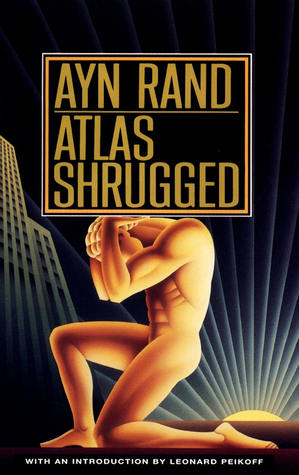
This is the story of a man who said that he would stop the motor of the world and did. Was he a destroyer or the greatest of liberators?Why did he have to fight his battle, not against his enemies, but against those who needed him most, and his hardest battle against the woman he loved? What is the world’s motor — and the motive power of every man? You will know the answer to these questions when you discover the reason behind the baffling events that play havoc with the lives of the characters in this story. Tremendous in its scope, this novel presents an astounding panorama of human life — from the productive genius who becomes a worthless playboy — to the great steel industrialist who does not know that he is working for his own destruction — to the philosopher who becomes a pirate — to the composer who gives up his career on the night of his triumph — to the woman who runs a transcontinental railroad — to the lowest track worker in her Terminal tunnels. You must be prepared, when you read this novel, to check every premise at the root of your convictions.This is a mystery story, not about the murder — and rebirth — of man’s spirit. It is a philosophical revolution, told in the form of an action thriller of violent events, a ruthlessly brilliant plot structure and an irresistible suspense. Do you say this is impossible? Well, that is the first of your premises to check.

In Over Our Heads: The Mental Demands of Modern Life
by Robert Kegan
Rating: 4.2 ⭐
• 4 recommendations ❤️
If contemporary culture were a school, with all the tasks and expectations meted out by modern life as its curriculum, would anyone graduate? In the spirit of a sympathetic teacher, Robert Kegan guides us through this tricky curriculum, assessing the fit between its complex demands and our mental capacities, and showing what happens when we find ourselves, as we so often do, in over our heads. In this dazzling intellectual tour, he completely reintroduces us to the psychological landscape of our private and public lives. A decade ago in The Evolving Self, Kegan presented a dynamic view of the development of human consciousness. Here he applies this widely acclaimed theory to the mental complexity of adulthood. As parents and partners, employees and bosses, citizens and leaders, we constantly confront a bewildering array of expectations, prescriptions, claims, and demands, as well as an equally confusing assortment of expert opinions that tell us what each of these roles entails. Surveying the disparate expert "literatures, " which normally take no account of each other, Kegan brings them together to reveal, for the first time, what these many demands have in common. Our frequent frustration in trying to meet these complex and often conflicting claims results, he shows us, from a mismatch between the way we ordinarily know the world and the way we are unwittingly expected to understand it. In Over Our Heads provides us entirely fresh perspectives on a number of cultural controversies - the "abstinence vs. safe sex" debate, the diversity movement, communication across genders, the meaning of postmodernism. What emerges in these pages is a theory of evolving ways of knowing that allows usto view adult development much as we view child development, as an open-ended process born of the dynamic interaction of cultural demands and emerging mental capabilities. If our culture is to be a good "school, " as Kegan suggests, it must offer, along with a challenging curriculu

环境的极致,信念的极致,生命的极致,你能熬过去吗?700天冰海历劫,20世纪最伟大的南极探险故事!弃船的命令下午5时发出。然而,对于大多数船员来说,其实已经没必要了,因为人人都知道这船彻底完了,是该放弃了。没有人表现出恐惧甚或忧虑。他们已经一刻不停地奋战了整整三天,但最终还是功败垂成。对于逃离沉船后的那种普遍的解脱感,有个人是不认可的。他的名字是欧内斯特·沙克尔顿爵士,就是他率领了这支大英帝国穿越南极探险队。这一天是1915年10月27日。探险船的名字叫“坚忍号”。目前的坐标是南纬69.5度,西经51.3度,处于南极诡秘莫测的威德尔海千里冰原深处,正好在南极点与离得最近的人类居住点之间,居住点距此有1200英里。自从最后一次同现代文明接触之后,已经过去了将近一年时间。外界根本就没有人知道他们遇到了麻烦。当时,他们没有无线电发报机,而且,就算用无线电发出了紧急求救信号, 最后能否有人及时赶来救援还是问题。那是1915年,没有直升机,没有小型登陆车,没有履带式雪地车,也没有合用的救援飞机。已知离得最近的能让他们找到食物和住所的地方,就只有小小的保利特岛。1903年,就在这个小岛上,被威德尔海的坚冰撞坏的瑞典船“南极号”的船员度过了整个冬天。该船最终获救,撤离时船员们将船上的给养留在了保利特岛上,以备日后任何遭遇海难者的不时之需。饶有意味的是,当年正是沙克尔顿受命购买了这些给养,而现在,整整十二年之后,这恰恰是他自己最需要的。
“A hero ventures forth from the world of common day into a region of supernatural wonder: fabulous forces are there encountered and a decisive victory is won” Since its release in 1949, The Hero with a Thousand Faces has influenced millions of readers by combining the insights of modern psychology with Joseph Campbell’s revolutionary understanding of comparative mythology. In these pages, Campbell outlines the Hero’s Journey, a universal motif of adventure and transformation that runs through virtually all of the world’s mythic traditions. He also explores the Cosmogonic Cycle, the mythic pattern of world creation and destruction.As part of the Joseph Campbell Foundation’s Collected Works of Joseph Campbell, this third edition features expanded illustrations, a comprehensive bibliography, and more accessible sidebars.As relevant today as when it was first published, The Hero with a Thousand Faces continues to find new audiences in fields ranging from religion and anthropology to literature and film studies. The book has also profoundly influenced creative artists — including authors, songwriters, game designers, and filmmakers — and continues to inspire all those interested in the inherent human need to tell stories.

How did Einstein's mind work? What made him a genius? Isaacson's biography shows how his scientific imagination sprang from the rebellious nature of his personality. His fascinating story is a testament to the connection between creativity and freedom.Based on the newly released personal letters of Albert Einstein, Walter Isaacson explores how an imaginative, impertinent patent clerk -- a struggling father in a difficult marriage who couldn't get a teaching job or a doctorate -- became the mind reader of the creator of the cosmos, the locksmith of the mysteries of the atom and the universe. His success came from questioning conventional wisdom and marveling at mysteries that struck others as mundane. This led him to embrace a morality and politics based on respect for free minds, free spirits, and free individuals.These traits are just as vital for this new century of globalization, in which our success will depend on our creativity, as they were for the beginning of the last century, when Einstein helped usher in the modern age.

A Magic Web: The Forest of Barro Colorado Island
by Christian Ziegler
Rating: 3.4 ⭐
• 3 recommendations ❤️
The tropical forest of Panama's Barro Colorado Island is a luxuriant community of plants and animals, pulsating with life and offering an astonishing view of nature's myriad processes. What does the forest look like? How do the activities of this forest's plants and animals create a community? Now, in A Magic Web, photographer Christian Ziegler and ecologist Egbert Leigh invite readers to enter the marvelous world of Barro Colorado Island. This book provides a unique combination of the spectacular photography of a picture-book and clear, authoritative text written by an active scientist who has spent half a lifetime trying to understand tropical forests. The photographs provide views of the forest and its spectacular diversity of inhabitants, and show many of the activities that give the forest its character and lend structure to its community. Drawing on decades of work on Barro Colorado Island, Egbert Leigh explains how the forest works. The photographs and text reveal the many ways its plants and animals compete with but also depend on each other: the contrasts between solitary cats and intricately organized armies of ants; the different ways plants struggle for a place in the sun, and the ways these plants attract, or domesticate, animals to pollinate their flowers. Finally, the authors show why this, and by implication all other, tropical forests matter to the people who live near them and to the world at large, what we can learn from these forests, and how they differ from temperate-zone forests. Full of gorgeous full-color photographs accompanied by clear and accessible text, A Magic Web is a must for anyone planning to visit a tropical forest, and for all those who only wish they could.

How did the replication bomb we call ”life” begin and where in the world, or rather, in the universe, is it heading? Writing with characteristic wit and an ability to clarify complex phenomena (the New York Times described his style as ”the sort of science writing that makes the reader feel like a genius”), Richard Dawkins confronts this ancient mystery.

John D. Rockefeller, Sr.--history's first billionaire and the patriarch of America's most famous dynasty--is an icon whose true nature has eluded three generations of historians. Now Ron Chernow, the National Book Award-winning biographer of the Morgan and Warburg banking families, gives us a history of the mogul "etched with uncommon objectivity and literary grace . . . as detailed, balanced, and psychologically insightful a portrait of the tycoon as we may ever have" (Kirkus Reviews). Titan is the first full-length biography based on unrestricted access to Rockefeller's exceptionally rich trove of papers. A landmark publication full of startling revelations, the book will indelibly alter our image of this most enigmatic capitalist. Born the son of a flamboyant, bigamous snake-oil salesman and a pious, straitlaced mother, Rockefeller rose from rustic origins to become the world's richest man by creating America's most powerful and feared monopoly, Standard Oil. Branded "the Octopus" by legions of muckrakers, the trust refined and marketed nearly 90 percent of the oil produced in America. Rockefeller was likely the most controversial businessman in our nation's history. Critics charged that his empire was built on unscrupulous tactics: grand-scale collusion with the railroads, predatory pricing, industrial espionage, and wholesale bribery of political officials. The titan spent more than thirty years dodging investigations until Teddy Roosevelt and his trustbusters embarked on a marathon crusade to bring Standard Oil to bay. While providing abundant new evidence of Rockefeller's misdeeds, Chernow discards the stereotype of the cold-blooded monster to sketch an unforgettably human portrait of a quirky, eccentric original. A devout Baptist and temperance advocate, Rockefeller gave money more generously--his chosen philanthropies included the Rockefeller Foundation, the University of Chicago, and what is today Rockefeller University--than anyone before him. Titan presents a finely nuanced portrait of a fascinating, complex man, synthesizing his public and private lives and disclosing numerous family scandals, tragedies, and misfortunes that have never before come to light. John D. Rockefeller's story captures a pivotal moment in American history, documenting the dramatic post-Civil War shift from small business to the rise of giant corporations that irrevocably transformed the nation. With cameos by Joseph Pulitzer, William Randolph Hearst, Jay Gould, William Vanderbilt, Ida Tarbell, Andrew Carnegie, Carl Jung, J. Pierpont Morgan, William James, Henry Clay Frick, Mark Twain, and Will Rogers, Titan turns Rockefeller's life into a vivid tapestry of American society in the late nineteenth and early twentieth centuries. It is Ron Chernow's signal triumph that he narrates this monumental saga with all the sweep, drama, and insight that this giant subject deserves.From the Hardcover edition.

The Role of the Individual in History was first published in 1898, and occupies a very prominent place among those of Plekhanov's works in which he substantiates and defends Marxism and advocates the Marxian theory of social development. Georgi Valentinovich Plekhanov (1856-1918) was one of the leaders of Russian populism and after his emigration to Western Europe in 1880 became the foremost Russian Marxist abroad. He founded in 1883, together with Pavel Axelrod, the 'Group for the Liberation of Labor', the first Russian social democratic party, and in 1900 together with Lenin the 'Iskra', the first Russian Marxist newspaper, but a few years later broke with Lenin and sided with the Mensheviks.

Leadership the Outward Bound Way: Becoming a Better Leader in the Workplace, in the Wilderness, and in Your Community
by
Rating: 3.9 ⭐
• 2 recommendations ❤️
* Teaches the basic principles that Outward Bound uses to nurture leadership in thousands of program participants in the United States each year* Shows how those same principles apply in everyday contexts, from a backpacking trip through the mountains to a strategy meeting in the boardroom* Challenges and inspires you to apply these principles of good leadership through thought-provoking case-study exercises, based on real-life situationsOutward Bound has been teaching leadership internationally for more than sixty years. In the United States alone, some 700,000 people have learned life-changing, transferable leadership skills and strategies through Outward Bound experiences.You don't need to summit a mountain to learn these invaluable skills. Now anyone can benefit from Outward Bound USA's collective wisdom and experience, as articulated by its top leadership experts. Leadership the Outward Bound Way introduces readers to the fundamentals of good communicating effectively, building trust, building teams, overcoming fear, taking risks, and making decisions. The book explores how these leadership basics can be applied in different areas of life-in outdoor travel and recreation, in the office or the boardroom, and in community work or volunteerism.The text is punctuated by accounts of real-life events during Outward Bound programs, call-outs of key points and helpful tips and case-study exercises. This leadership approach is based on a teaching method developed at the Harvard Business School that challenges and informs readers about how to respond to real-life leadership situations.

A concise survey of the culture and civilization of mankind, The Lessons of History is the result of a lifetime of research from Pulitzer Prize–winning historians Will and Ariel Durant.With their accessible compendium of philosophy and social progress, the Durants take us on a journey through history, exploring the possibilities and limitations of humanity over time. Juxtaposing the great lives, ideas, and accomplishments with cycles of war and conquest, the Durants reveal the towering themes of history and give meaning to our own.

Einstein's Mistakes: The Human Failings of Genius
by Hans C. Ohanian
Rating: 3.6 ⭐
• 1 recommendation ❤️
“A thought-provoking critique of Einstein’s tantalizing combination of brilliance and blunder.”―Andrew Robinson, New Scientist Never before translated into English, the Manimekhalai is one of the great classics of Indian culture. 25 illustrations

Creativity is a uniquely human ability highly prized and sought after, defining the excellence of individuals, corporations, and nations. In the modern era of global competition, the nurturing of creativity in oneself and others has become a major concern for the general public. Until recently, however, human creativity had been treated as a mysterious process of brain activity, since we had neither tools to measure precisely the brain activities nor the theories to analyze and synthesize creativity.The quick advancement of brain science these days — thanks largely to the development of various measurement tools such as EEG, EMG, and fMRI and to new attitudes which view the brain as a system — has enabled us to discuss creativity in the context of science.Written in an entertaining manner, the book is a modern primer on the science of creativity and would attract a wide audience — from those already versed in cognitive or brain sciences to the layman from the street.

Being More Effective in Your MBTI Type is the only research-based leadership development book built around the 16 personality types measured by the Myers Briggs Type Indicator instrument, and the 20 facets underlying those types (MBTI Step II). YOU is a book of development tools and tips designed to help you be more effective personally and professionally through greater understanding of personality types.

More Money Than God: Hedge Funds and the Making of a New Elite (Council on Foreign Relations Books
by Sebastian Mallaby
Rating: 4.2 ⭐
• 9 recommendations ❤️
The New York Times bestseller“The bright light shed by More Money Than God is particularly welcome. Mr. Mallaby . . . brings a keen sense of financial theory to his subject and a vivid narrative style.” — Wall Street Journal“Splendid . . . the definitive history of the hedge fund history, a compelling narrative full of larger-than-life characters and dramatic tales of their financial triumphs and reversals.” — The Washington PostThe first authoritative history of hedge funds-from their rebel beginnings to their role in defining the future of finance, from the author of The Power LawWealthy, powerful, and potentially dangerous, hedge fund moguls have become the It Boys of twenty-first-century capitalism. Beating the market was long thought to be impossible, but hedge funds cracked its mysteries and made fortunes in the process. Drawing on his unprecedented access to the industry, esteemed financial writer Sebastian Mallaby tells the inside story of the hedge funds, from their origins in the 1960s to their role in the financial crisis of 2007 to 2009 — and explains why understanding the history of hedge funds is key to predicting the future of finance.

Walter Isaacson’s “enthralling” ( The New Yorker ) worldwide bestselling biography of Apple cofounder Steve Jobs.Based on more than forty interviews with Steve Jobs conducted over two years—as well as interviews with more than 100 family members, friends, adversaries, competitors, and colleagues—Walter Isaacson has written a riveting story of the roller-coaster life and searingly intense personality of a creative entrepreneur whose passion for perfection and ferocious drive revolutionized six personal computers, animated movies, music, phones, tablet computing, and digital publishing. Isaacson’s portrait touched millions of readers.At a time when America is seeking ways to sustain its innovative edge, Jobs stands as the ultimate icon of inventiveness and applied imagination. He knew that the best way to create value in the twenty-first century was to connect creativity with technology. He built a company where leaps of the imagination were combined with remarkable feats of engineering.Although Jobs cooperated with the author, he asked for no control over what was written. He put nothing off-limits. He encouraged the people he knew to speak honestly. He himself spoke candidly about the people he worked with and competed against.His friends, foes, and colleagues offer an unvarnished view of the passions, perfectionism, obsessions, artistry, devilry, and compulsion for control that shaped his approach to business and the innovative products that resulted.His tale is instructive and cautionary, filled with lessons about innovation, character, leadership, and values.Steve Jobs is the inspiration for the movie of the same name starring Michael Fassbender, Kate Winslet, Seth Rogen, and Jeff Daniels, directed by Danny Boyle with a screenplay by Aaron Sorkin.
Major New York Times bestsellerWinner of the National Academy of Sciences Best Book Award in 2012Selected by the New York Times Book Review as one of the best books of 2011A Globe and Mail Best Books of the Year 2011 TitleOne of The Economist's 2011 Books of the Year One of The Wall Street Journal's Best Nonfiction Books of the Year 20112013 Presidential Medal of Freedom RecipientIn the international bestseller, Thinking, Fast and Slow, Daniel Kahneman, the renowned psychologist and winner of the Nobel Prize in Economics, takes us on a groundbreaking tour of the mind and explains the two systems that drive the way we think. System 1 is fast, intuitive, and emotional; System 2 is slower, more deliberative, and more logical. The impact of overconfidence on corporate strategies, the difficulties of predicting what will make us happy in the future, the profound effect of cognitive biases on everything from playing the stock market to planning our next vacation—each of these can be understood only by knowing how the two systems shape our judgments and decisions. Engaging the reader in a lively conversation about how we think, Kahneman reveals where we can and cannot trust our intuitions and how we can tap into the benefits of slow thinking. He offers practical and enlightening insights into how choices are made in both our business and our personal lives—and how we can use different techniques to guard against the mental glitches that often get us into trouble. Winner of the National Academy of Sciences Best Book Award and the Los Angeles Times Book Prize and selected by The New York Times Book Review as one of the ten best books of 2011, Thinking, Fast and Slow is destined to be a classic.

Who's in Charge?: Free Will and the Science of the Brain
by Michael S. Gazzaniga
Rating: 4.1 ⭐
• 2 recommendations ❤️
The author of Human, Michael S. Gazzaniga has been called the “father of cognitive neuroscience.” In his remarkable book, Who’s in Charge?, he makes a powerful and provocative argument that counters the common wisdom that our lives are wholly determined by physical processes we cannot control. His well-reasoned case against the idea that we live in a “determined” world is fascinating and liberating, solidifying his place among the likes of Oliver Sacks, Antonio Damasio, V.S. Ramachandran, and other bestselling science authors exploring the mysteries of the human brain

The Power of Habit: Why We Do What We Do in Life and Business
by Charles Duhigg
Rating: 4.3 ⭐
• 21 recommendations ❤️
NEW YORK TIMES BESTSELLER • This instant classic explores how we can change our lives by changing our habits.NAMED ONE OF THE BEST BOOKS OF THE YEAR BY The Wall Street Journal • Financial TimesIn The Power of Habit, award-winning business reporter Charles Duhigg takes us to the thrilling edge of scientific discoveries that explain why habits exist and how they can be changed. Distilling vast amounts of information into engrossing narratives that take us from the boardrooms of Procter & Gamble to the sidelines of the NFL to the front lines of the civil rights movement, Duhigg presents a whole new understanding of human nature and its potential. At its core, The Power of Habit contains an exhilarating argument: The key to exercising regularly, losing weight, being more productive, and achieving success is understanding how habits work. As Duhigg shows, by harnessing this new science, we can transform our businesses, our communities, and our lives.With a new Afterword by the author “Sharp, provocative, and useful.” —Jim Collins “Few [books] become essential manuals for business and living. The Power of Habit is an exception. Charles Duhigg not only explains how habits are formed but how to kick bad ones and hang on to the good.” — Financial Times “A flat-out great read.” —David Allen, bestselling author of Getting Things Done: The Art of Stress-Free Productivity“You’ll never look at yourself, your organization, or your world quite the same way.” —Daniel H. Pink, bestselling author of Drive and A Whole New Mind“Entertaining . . . enjoyable . . . fascinating . . . a serious look at the science of habit formation and change.” — The New York Times Book Review

From a renowned historian comes a groundbreaking narrative of humanity’s creation and evolution—a #1 international bestseller—that explores the ways in which biology and history have defined us and enhanced our understanding of what it means to be “human.”One hundred thousand years ago, at least six different species of humans inhabited Earth. Yet today there is only one—homo sapiens. What happened to the others? And what may happen to us?Most books about the history of humanity pursue either a historical or a biological approach, but Dr. Yuval Noah Harari breaks the mold with this highly original book that begins about 70,000 years ago with the appearance of modern cognition. From examining the role evolving humans have played in the global ecosystem to charting the rise of empires, Sapiens integrates history and science to reconsider accepted narratives, connect past developments with contemporary concerns, and examine specific events within the context of larger ideas.Dr. Harari also compels us to look ahead, because over the last few decades humans have begun to bend laws of natural selection that have governed life for the past four billion years. We are acquiring the ability to design not only the world around us, but also ourselves. Where is this leading us, and what do we want to become?Featuring 27 photographs, 6 maps, and 25 illustrations/diagrams, this provocative and insightful work is sure to spark debate and is essential reading for aficionados of Jared Diamond, James Gleick, Matt Ridley, Robert Wright, and Sharon Moalem.

The #1 New York Times bestseller that examines how people can champion new ideas—and how leaders can fight groupthink, from the author of Give and Take and co-author of Option B“Reading Originals made me feel like I was seated across from Adam Grant at a dinner party, as one of my favorite thinkers thrilled me with his insights and his wonderfully new take on the world.” —Malcolm Gladwell, author of Outliers and The Tipping Point“Originals is one of the most important and captivating books I have ever read, full of surprising and powerful ideas. It will not only change the way you see the world; it might just change the way you live your life. And it could very well inspire you to change your world.” —Sheryl Sandberg, COO of Facebook and author of Lean InWith Give and Take, Adam Grant not only introduced a landmark new paradigm for success but also established himself as one of his generation’s most compelling and provocative thought leaders. In Originals he again addresses the challenge of improving the world, but now from the perspective of becoming original: choosing to champion novel ideas and values that go against the grain, battle conformity, and buck outdated traditions. How can we originate new ideas, policies, and practices without risking it all? Using surprising studies and stories spanning business, politics, sports, and entertainment, Grant explores how to recognize a good idea, speak up without getting silenced, build a coalition of allies, choose the right time to act, and manage fear and doubt; how parents and teachers can nurture originality in children; and how leaders can build cultures that welcome dissent. Learn from an entrepreneur who pitches his start-ups by highlighting the reasons not to invest, a woman at Apple who challenged Steve Jobs from three levels below, an analyst who overturned the rule of secrecy at the CIA, a billionaire financial wizard who fires employees for failing to criticize him, and a TV executive who didn’t even work in comedy but saved Seinfeld from the cutting-room floor. The payoff is a set of groundbreaking insights about rejecting conformity and improving the status quo.

The Serengeti Rules: The Quest to Discover How Life Works and Why It Matters - With a new Q&A with the author
by Sean B. Carroll
Rating: 4.2 ⭐
• 3 recommendations ❤️
How does life work? How does nature produce the right numbers of zebras and lions on the African savanna, or fish in the ocean? How do our bodies produce the right numbers of cells in our organs and bloodstream? In The Serengeti Rules, award-winning biologist and author Sean Carroll tells the stories of the pioneering scientists who sought the answers to such simple yet profoundly important questions, and shows how their discoveries matter for our health and the health of the planet we depend upon.One of the most important revelations about the natural world is that everything is regulated--there are rules that regulate the amount of every molecule in our bodies and rules that govern the numbers of every animal and plant in the wild. And the most surprising revelation about the rules that regulate life at such different scales is that they are remarkably similar--there is a common underlying logic of life. Carroll recounts how our deep knowledge of the rules and logic of the human body has spurred the advent of revolutionary life-saving medicines, and makes the compelling case that it is now time to use the Serengeti Rules to heal our ailing planet.A bold and inspiring synthesis by one of our most accomplished biologists and gifted storytellers, The Serengeti Rules is the first book to illuminate how life works at vastly different scales. Read it and you will never look at the world the same way again.

The Upside of Inequality: How Good Intentions Undermine the Middle Class
by Edward Conard
Rating: 3.2 ⭐
• 1 recommendation ❤️
The scourge of America’s economy isn't the success of the 1 percent—quite the opposite. The real problem is the government’s well-meaning but misguided attempt to reduce the payoffs for success. Four years ago, Edward Conard wrote a controversial bestseller, Unintended Consequences , which set the record straight on the financial crisis of 2008 and explained why U.S. growth was accelerating relative to other high-wage economies. He warned that loose monetary policy would produce neither growth nor inflation, that expansionary fiscal policy would have no lasting benefit on growth in the aftermath of the crisis, and that ill-advised attempts to rein in banking based on misplaced blame would slow an already weak recovery. Unfortunately, he was right. Now he’s back with another provocative argument: that our current obsession with income inequality is misguided and will only slow growth further. Using fact-based logic, Conard tracks the implications of an economy now constrained by both its capacity for risk-taking and by a shortage of properly trained talent—rather than by labor or capital, as was the case historically. He uses this fresh perspective to challenge the conclusions of liberal economists like Larry Summers and Joseph Stiglitz and the myths of “crony capitalism” more broadly. Instead, he argues that the growing wealth of most successful Americans is not to blame for the stagnating incomes of the middle and working classes. If anything, the success of the 1 percent has put upward pressure on employment and wages. Conard argues that high payoffs for success motivate talent to get the training and take the risks that gradually loosen the constraints to growth. Well-meaning attempts to decrease inequality through redistribution dull these incentives, gradually hurting not just the 1 percent but everyone else as well. Conard outlines a plan for growing middle- and working-class wages in an economy with a near infinite supply of labor that is shifting from capital-intensive manufacturing to knowledge-intensive, innovation-driven fields. He urges us to stop blaming the success of the 1 percent for slow wage growth and embrace the upside of inequality: faster growth and greater prosperity for everyone.
From Bacteria to Bach and Back: The Evolution of Minds
by Daniel C. Dennett
Rating: 3.7 ⭐
• 7 recommendations ❤️
How did we come to have minds?For centuries, this question has intrigued psychologists, physicists, poets, and philosophers, who have wondered how the human mind developed its unrivaled ability to create, imagine, and explain. Disciples of Darwin have long aspired to explain how consciousness, language, and culture could have appeared through natural selection, blazing promising trails that tend, however, to end in confusion and controversy. Even though our understanding of the inner workings of proteins, neurons, and DNA is deeper than ever before, the matter of how our minds came to be has largely remained a mystery.That is now changing, says Daniel C. Dennett. In From Bacteria to Bach and Back, his most comprehensive exploration of evolutionary thinking yet, he builds on ideas from computer science and biology to show how a comprehending mind could in fact have arisen from a mindless process of natural selection. Part philosophical whodunit, part bold scientific conjecture, this landmark work enlarges themes that have sustained Dennett’s legendary career at the forefront of philosophical thought.In his inimitable style—laced with wit and arresting thought experiments—Dennett explains that a crucial shift occurred when humans developed the ability to share memes, or ways of doing things not based in genetic instinct. Language, itself composed of memes, turbocharged this interplay. Competition among memes—a form of natural selection—produced thinking tools so well-designed that they gave us the power to design our own memes. The result, a mind that not only perceives and controls but can create and comprehend, was thus largely shaped by the process of cultural evolution.An agenda-setting book for a new generation of philosophers, scientists, and thinkers, From Bacteria to Bach and Back will delight and entertain anyone eager to make sense of how the mind works and how it came about.

The Undoing Project: A Friendship That Changed Our Minds
by Michael Lewis
Rating: 4.0 ⭐
• 1 recommendation ❤️
Bestselling author Michael Lewis examines how a Nobel Prize–winning theory of the mind altered our perception of reality.Forty years ago, Israeli psychologists Daniel Kahneman and Amos Tversky wrote a series of breathtakingly original studies undoing our assumptions about the decision-making process. Their papers showed the ways in which the human mind erred, systematically, when forced to make judgments about uncertain situations. Their work created the field of behavioral economics, revolutionized Big Data studies, advanced evidence-based medicine, led to a new approach to government regulation, and made much of Michael Lewis’s own work possible. Kahneman and Tversky are more responsible than anybody for the powerful trend to mistrust human intuition and defer to algorithms.The Undoing Project is about the fascinating collaboration between two men who have the dimensions of great literary figures. They became heroes in the university and on the battlefield―both had important careers in the Israeli military―and their research was deeply linked to their extraordinary life experiences. In the process they may well have changed, for good, mankind’s view of its own mind.

After interviewing fifty of the world’s greatest financial minds and penning the #1 New York Times bestseller Money: Master the Game, Tony Robbins returns with a step-by-step playbook, taking you on a journey to transform your financial life and accelerate your path to financial freedom. No matter your salary, your stage of life, or when you started, this book will provide the tools to help you achieve your financial goals more rapidly than you ever thought possible.Robbins, who has coached more than fifty million people from 100 countries, is the world’s #1 life and business strategist. In this book, he teams up with Peter Mallouk, the only man in history to be ranked the #1 financial advisor in the US for three consecutive years by Barron’s. Together they reveal how to become unshakeable—someone who can not only maintain true peace of mind in a world of immense uncertainty, economic volatility, and unprecedented change, but who can profit from the fear that immobilizes so many. In these pages, through plain English and inspiring stories, you’ll discover… -How to put together a simple, actionable plan that will deliver true financial freedom. -Strategies from the world’s top investors on how to protect yourself and your family and maximize profit from the inevitable crashes and corrections to come. -How a few simple steps can add a decade or more of additional retirement income by discovering what your 401(k) provider doesn’t want you to know. -The core four principles that most of the world’s greatest financial minds utilize so that you can maximize upside and minimize downside. -The fastest way to put money back in your pocket: uncover the hidden fees and half truths of Wall Street—how the biggest firms keep you overpaying for underperformance. -Master the mindset of true wealth and experience the fulfillment you deserve today.

Strength in Stillness: The Power of Transcendental Meditation
by Bob Roth
Rating: 3.1 ⭐
• 10 recommendations ❤️
Instant New York Times BestsellerA simple, straightforward exploration of Transcendental Meditation and its benefits from world authority Bob Roth.Oprah Winfrey and Jerry Seinfeld. Ray Dalio and Ellen DeGeneres. Gwyneth Paltrow and Howard Stern. Tom Hanks and Gisele Bündchen. What do they have in common? The answer is a Transcendental Meditation teacher named Bob Roth, who has spent the past forty-five years helping many thousands of people access their innate creativity and power through this simple, nonreligious technique. Roth’s students range from titans of business and the arts to federal prisoners, from war-scarred veterans to overworked moms and dads. Medical experts agree that the epidemic of stress is damaging our physical and emotional health at younger and younger ages. While there is no one single cure, the Transcendental Meditation technique is a simple practice that dramatically changes how we respond to stress and life’s challenges. With scientifically proven benefits— reduced stress and anxiety, and improved focus, sleep, resilience, creativity, and memory, to name a few—this five-thousand-year-old technique has a clear and direct impact on our very modern problems. Once a skeptic, Roth trained under Maharishi Mahesh Yogi, the twentieth century’s foremost scientist of consciousness and meditation, and has since become one of the most experienced and sought-after meditation teachers in the world. In Strength in Stillness, Roth breaks down the science behind Transcendental Meditation in a new, accessible way. He highlights the three distinct types of meditation—Focused Attention, Open Monitoring, and Self-Transcending—and showcases the evidence that the third, Self-Transcending, or Transcendental Meditation, is a uniquely accessible, effective, and efficient way to reduce stress, access inner power, and build resilience. Free of gimmicks, mystical verbiage, and obscure theory, Strength in Stillness offers a clear explanation for how Transcendental Meditation can calm the mind, body, and spirit.

Ray Dalio, one of the world’s most successful investors and entrepreneurs, shares the unconventional principles that he’s developed, refined, and used over the past forty years to create unique results in both life and business—and which any person or organization can adopt to help achieve their goals.In 1975, Ray Dalio founded an investment firm, Bridgewater Associates, out of his two-bedroom apartment in New York City. Forty years later, Bridgewater has made more money for its clients than any other hedge fund in history and grown into the fifth most important private company in the United States, according to Fortune magazine. Dalio himself has been named to Time magazine’s list of the 100 most influential people in the world. Along the way, Dalio discovered a set of unique principles that have led to Bridgewater’s exceptionally effective culture, which he describes as “an idea meritocracy that strives to achieve meaningful work and meaningful relationships through radical transparency.” It is these principles, and not anything special about Dalio—who grew up an ordinary kid in a middle-class Long Island neighborhood—that he believes are the reason behind his success.In Principles, Dalio shares what he’s learned over the course of his remarkable career. He argues that life, management, economics, and investing can all be systemized into rules and understood like machines. The book’s hundreds of practical lessons, which are built around his cornerstones of “radical truth” and “radical transparency,” include Dalio laying out the most effective ways for individuals and organizations to make decisions, approach challenges, and build strong teams. He also describes the innovative tools the firm uses to bring an idea meritocracy to life, such as creating “baseball cards” for all employees that distill their strengths and weaknesses, and employing computerized decision-making systems to make believability-weighted decisions. While the book brims with novel ideas for organizations and institutions, Principles also offers a clear, straightforward approach to decision-making that Dalio believes anyone can apply, no matter what they’re seeking to achieve.Here is a rare opportunity to gain proven advice unlike anything you’ll find in the conventional business press.

Keeping At It: The Quest for Sound Money and Good Government
by Paul A. Volcker
Rating: 3.8 ⭐
• 8 recommendations ❤️
The extraordinary life story of the former chairman of the Federal Reserve, whose absolute integrity provides the inspiration we need as our constitutional system and political tradition are being tested to the breaking point.As chairman of the Federal Reserve (1979-1987), Paul Volcker slayed the inflation dragon that was consuming the American economy and restored the world's faith in central bankers. That extraordinary feat was just one pivotal episode in a decades-long career serving six presidents.Told with wit, humor, and down-to-earth erudition, the narrative of Volcker's career illuminates the changes that have taken place in American life, government, and the economy since World War II. He vibrantly illustrates the crises he managed alongside the world's leading politicians, central bankers, and financiers. Yet he first found his model for competent and ethical governance in his father, the town manager of Teaneck, NJ, who instilled Volcker's dedication to absolute integrity and his "three verities" of stable prices, sound finance, and good government.

Trailblazer: The Power of Business as the Greatest Platform for Change
by Marc Benioff
Rating: 4.0 ⭐
• 10 recommendations ❤️
NEW YORK TIMES BESTSELLER • The founder and co-CEO of Salesforce delivers a n inspiring vision for successful companies of the future—in which changing the world is everyone’s business.“The gold standard on how to use business as a platform for change at this urgent time.”— Ray Dalio, founder of Bridgewater Associates and author of Principles: Life and WorkWhat’s the secret to business growth and innovation and a purpose-driven career in a world that is becoming vastly more complicated by the day? According to Marc Benioff, the answer is embracing a culture in which your values permeate everything you do.In Trailblazer, Benioff gives readers a rare behind-the-scenes look at the inner workings of one of the world’s most admired companies. He reveals how Salesforce’s core values—trust, customer success, innovation, and equality—and commitment to giving back have become the company’s greatest competitive advantage and the most powerful engine of its success. Because no matter what business you’re in, Benioff says, values are the bedrock of a resilient company culture that inspires all employees, at every level, to do the best work of their lives. Along the way, he shares insights and best practices for anyone who wants to cultivate a company culture positioned to thrive in the face of the inevitable disruption ahead.None of us in the business world can afford to sit on the sidelines and ignore what’s going on outside the walls of our workplaces. In the future, profits and progress will no longer be sustainable unless they serve the greater good. Whether you run a company, lead a small team, or have just draped an ID badge around your neck for the first time, Trailblazer reveals how anyone can become an agent of change.Praise for Trailblazer“A guide for what every business and organization must do to thrive in this period of profound political and economic change.” —Jamie Dimon, chairman and CEO of JPMorgan Chase“In Trailblazer, Benioff explores how companies can nurture a values-based culture to become powerful platforms for change.” —Susan Wojcicki, CEO of YouTube

What It Takes: Lessons in the Pursuit of Excellence
by Stephen A. Schwarzman
Rating: 4.2 ⭐
• 4 recommendations ❤️
NEW YORK TIMES BESTSELLERFrom Blackstone chairman, CEO, and co-founder Stephen A. Schwarzman, a long-awaited book that uses impactful episodes from Schwarzman's life to show readers how to build, transform, and lead thriving organizations. Whether you are a student, entrepreneur, philanthropist, executive, or simply someone looking for ways to maximize your potential, the same lessons apply.People know who Stephen Schwarzman is—at least they think they do. He’s the man who took $400,000 and co-founded Blackstone, the investment firm that manages over $500 billion (as of January 2019). He’s the CEO whose views are sought by heads of state. He’s the billionaire philanthropist who founded Schwarzman Scholars, this century’s version of the Rhodes Scholarship, in China. But behind these achievements is a man who has spent his life learning and reflecting on what it takes to achieve excellence, make an impact, and live a life of consequence.Folding handkerchiefs in his father’s linen shop, Schwarzman dreamed of a larger life, filled with purpose and adventure. His grades and athleticism got him into Yale. After starting his career in finance with a short stint at a financial firm called DLJ, Schwarzman began working at Lehman Brothers where he ascended to run the mergers and acquisitions practice. He eventually partnered with his mentor and friend Pete Peterson to found Blackstone, vowing to create a new and different kind of financial institution.Building Blackstone into the leading global financial institution it is today didn’t come easy. Schwarzman focused intensely on culture, hiring great talent, and establishing processes that allow the firm to systematically analyze and evaluate risk. Schwarzman’s simple mantra “don’t lose money” has helped Blackstone become a leading private equity and real estate investor, and manager of alternative assets for institutional investors globally. Both he and the firm are known for the rigor of their investment process, their innovative approach to deal making, the diversification of their business lines, and a conviction to be the best at everything they do.Schwarzman is also an active philanthropist, having given away more than a billion dollars. In philanthropy, as in business, he is drawn to situations where his capital and energy can be applied to drive transformative solutions and change paradigms, notably in education. He uses the skills learned over a lifetime in finance to design, establish, and support impactful and innovative organizations and initiatives. His gifts have ranged from creating a new College of Computing at MIT for the study of artificial intelligence, to establishing a first-of-its-kind student and performing arts center at Yale, to enabling the renovation of the iconic New York Public Library, to founding the Schwarzman Scholars fellowship program at Tsinghua University in Beijing—the single largest philanthropic effort in China’s history from international donors.Schwarzman’s story is an empowering, entertaining, and informative guide for anyone striving for greater personal impact. From deal making to investing, leadership to entrepreneurship, philanthropy to diplomacy, Schwarzman has lessons for how to think about ambition and scale, risk and opportunities, and how to achieve success through the relentless pursuit of excellence. Schwarzman not only offers readers a thoughtful reflection on all his own experiences, but in doing so provides a practical blueprint for success.

Think Like a Monk: Train Your Mind for Peace and Purpose Every Day
by Jay Shetty
Rating: 4.3 ⭐
• 6 recommendations ❤️
Dopo aver conseguito la laurea in Economia alla Cass Business School di Londra, Jay Shetty si trova di fronte a un bivio: può intraprendere una sicura carriera nel mondo degli affari oppure seguire un sentiero meno battuto e investigare la profondità di una chiamata interiore. Decidendo per la seconda opzione, pochi mesi dopo è in India in un noto ashram dove decide di diventare un monaco. Lì impara che dare ascolto a quella parte più profonda di noi stessi che spesso ignoriamo è il primo passo per riuscir ad accettare chi intimamente siamo, e che solo così facendo possiamo rendere significative le nostre vite e toccare la felicità. Jay Shetty comprende anche che essere un monaco è fondamentalmente uno stato d'animo e così dopo tre anni dedicati alla ricerca interiore, in pieno accordo con il suo maestro, decide di lasciare il monastero per raccontare al mondo tutta la bellezza di quell'antica sapienza.E in Pensa come un monaco condivide con il lettore le sue intuizioni maturate a partire da quell'esperienza, sottolineando che non è necessario trasferirsi a vivere in un monastero perché la saggezza insegnata dai monaci è sempre accessibile, e una volta che la si sappia accendere è capace di offrire una risposta a molte delle domande che quotidianamente affollano la mente. La magnetica capacità comunicativa di Jay Shetty è formidabile nel rendere attualissima la saggezza e nel farci comprendere che è possibile raggiungere l'agognata armonia con il nostro sé più intimo e dimorare in quel fugace equilibro interiore che sembra altrimenti sempre sfuggirci. Ci sono tre fasi di apprendimento della mentalità del monaco.La prima è il lasciar andare, liberandoci dalle influenze esterne, dagli ostacoli interni e dalle paure che ci bloccano. Potete vederla come una pulizia che farà spazio per la crescita. La seconda fase è la crescita. Ci aiuterà a ripensare la nostra vita in modo da poter prendere le decisioni con intenzione, determinazione e sicurezza. La terza è il dare, volgendoci al mondo al di fuori di noi, espandendo e condividendo il senso di gratitudine e approfondendo le nostre relazioni. Condivideremo con gli altri i nostri doni e il nostro amore e scopriremo l'autentica gioia e i sorprendenti benefici del servizio.
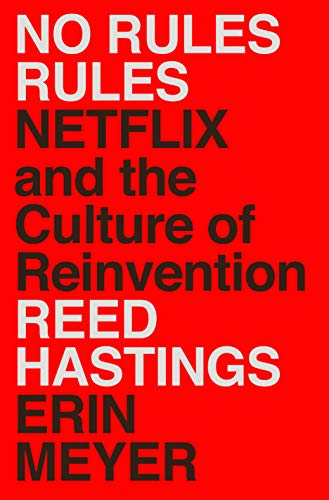
No Rules Rules: Netflix and the Culture of Reinvention
by Reed Hastings
Rating: 4.3 ⭐
• 9 recommendations ❤️
A New York Times Bestseller and Shortlisted for the 2020 Financial Times & McKinsey Business Book of the Year Netflix cofounder Reed Hastings reveals for the first time the unorthodox culture behind one of the world's most innovative, imaginative, and successful companies There's never before been a company like Netflix. Not only because it has led a revolution in the entertainment industries; or because it generates billions of dollars in annual revenue; or even because it is watched by hundreds of millions of people in nearly 200 countries. When Reed Hastings co-founded Netflix, he developed a set of counterintuitive and radical management principles, defying all tradition and expectation, which would allow the company to reinvent itself over and over on the way to becoming one of the most loved brands in the world.Rejecting the conventional wisdom under which other companies operate, Reed set new standards, valuing people over process, emphasizing innovation over efficiency, and giving employees context, not controls. At Netflix, adequate performance gets a generous severance and hard work is irrelevant. At Netflix, you don't try to please your boss, you give candid feedback instead. At Netflix, employees never need approval, and the company always pays top of market. When Hastings and his team first devised these principles, the implications were unknown and untested, but over just a short period of time they have led to unprecedented flexibility, speed, and boldness. The culture of freedom and responsibility has allowed the company to constantly grow and change as the world, and its members' needs, have also transformed.Here for the first time, Hastings and Erin Meyer, bestselling author of The Culture Map and one of the world's most influential business thinkers, dive deep into the controversial philosophies at the heart of the Netflix psyche, which have generated results that are the envy of the business world. Drawing on hundreds of interviews with current and past Netflix employees from around the globe and never-before-told stories of trial and error from his own career, No Rules Rules is the full, fascinating, and untold story of a unique company making its mark on the world.