27 Books Recommended

Flow: The Psychology of Optimal Experience
by Mihály Csíkszentmihályi
Rating: 4.1 ⭐
• 9 recommendations ❤️
Psychologist Mihaly Csikszentmihalyi's famous investigations of "optimal experience" have revealed that what makes an experience genuinely satisfying is a state of consciousness called flow. During flow, people typically experience deep enjoyment, creativity, and a total involvement with life. In this new edition of his groundbreaking classic work, Csikszentmihalyi demonstrates the ways this positive state can be controlled, not just left to chance. Flow: The Psychology of Optimal Experience teaches how, by ordering the information that enters our consciousness, we can discover true happiness and greatly improve the quality of our lives.

Technical Analysis of the Financial Markets: A Comprehensive Guide to Trading Methods and Applications
by John J. Murphy
Rating: 4.2 ⭐
• 2 recommendations ❤️
John J. Murphy has updated his landmark bestseller Technical Analysis of the Futures Markets , to include all of the financial markets. This outstanding reference has already taught thousands of traders the concepts of technical analysis and their application in the futures and stock markets. Covering the latest developments in computer technology, technical tools, and indicators, the second edition features new material on candlestick charting, intermarket relationships, stocks and stock rotation, plus state-of-the-art examples and figures. From how to read charts to understanding indicators and the crucial role technical analysis plays in investing, readers gain a thorough and accessible overview of the field of technical analysis, with a special emphasis on futures markets. Revised and expanded for the demands of today's financial world, this book is essential reading for anyone interested in tracking and analyzing market behavior.

Inside the House of Money: Top Hedge Fund Traders on Profiting in the Global Markets
by Steven Drobny
Rating: 4.3 ⭐
• 2 recommendations ❤️
New commentary and updates to enlightening interviews with today's top global macro hedge fund managers This updated paperback edition of Inside the House of Money lifts the veil on the typically opaque world of hedge funds offering a rare glimpse at how today's highest paid money managers approach their craft. Now with new commentary, author, Steve Drobny takes you even further into the hedge fund industry. He demystifies how these star traders make billions for their well-heeled investors, revealing their theories, strategies and approaches to markets. Whereas some still maintain that rationality permeates financial markets, Drobny captures a different dimension, showing how the unquantifiable human forces of emotion and intuition are also at play. Along the way, readers get an inside look at firsthand trading experiences through some of the major world financial crises of the last few decades. Highly accessible and filled with in-depth expert opinion, this updated paperback edition of Inside the House of Money is a must-read for financial professionals and anyone else interested in understanding how greed, fear, and the human forces of emotion drive world markets.

The New Market Wizards: Conversations with America's Top Traders
by Jack D. Schwager
Rating: 4.3 ⭐
• 4 recommendations ❤️
In The New Market Wizards, successful traders relate the financial strategies that have rocketed them to success. Asking questions that readers with an interest or involvement in the financial markets would love to pose to the financial superstars, Jack D. Schwager encourages these financial wizards to share their insights. Entertaining, informative, and invaluable, The New Market Wizards is destined to become another Schwager classic.

THE INVESTMENT CLASSIC "I've read Market Wizards at several stages of my career as it shows the staying power of good down-to-earth wisdoms of true practitioners with skin in the game. This is the central document showing the heuristics that real-life traders use to manage their affairs, how people who do rather than talk have done things. Twenty years from now, it will still be fresh. There is no other like it."—NASSIM N. TALEB , former derivatives trader, author of The Black Swan , and professor, NYU-Poly " Market Wizards is one of the most fascinating books ever written about Wall Street. A few of the 'Wizards' are my friends—and Jack Schwager has nailed their modus operandi on the head."—MARTIN W. ZWEIG, PhD , Editor, The Zweig Forecast "It is difficult enough to develop a method that works. It then takes experience to believe what your method is telling you. But the toughest task of all is turning analysis into money. If you don't believe it, try it. These guys have it a method, the conviction, and the discipline to act decisively time after time, regardless of distractions and pressures. They are heroes of Wall Street, and Jack Schwager's book brings their characters vividly to life."—ROBERT R. PRECHTER, JR. , Editor, The Elliott Wave Theorist

Legendary investor Jim Rogers gives us his view of the world on a twenty-two-month, fifty-two-country motorcycle odyssey in his bestselling business/adventure book, Investment Biker , which has already sold more than 200,000 copies.Before you invest another dollar anywhere in the world (including the United States), read this book by the man Time magazine calls “the Indiana Jones of finance.”Jim Rogers became a Wall Street legend when he co-founded the Quantum Fund. Investment Biker is the fascinating story of Rogers’s global motorcycle journey/investing trip, with hardheaded advice on the current state and future direction of international economies that will guide and inspire investors interested in foreign markets.

John Kenneth Galbraith's classic examination of the 1929 financial collapse.Arguing that the 1929 stock market crash was precipitated by rampant speculation in the stock market, Galbraith notes that the common denominator of all speculative episodes is the belief of participants that they can become rich without work. It was Galbraith's belief that a good knowledge of what happened in 1929 was the best safeguard against its recurrence.Atlantic Monthly wrote, "Economic writings are seldom notable for their entertainment value, but this book is. Galbraith's prose has grace and wit, and he distills a good deal of sardonic fun from the whopping errors of the nation's oracles and the wondrous antics of the financial community."

Looks at the social and economic problems that face the world, and analyzes global free trade, the welfare state, modern agriculture, and nuclear energy

Manias, Panics, and Crashes: A History of Financial Crises
by Robert Z. Aliber
Rating: 3.8 ⭐
• 2 recommendations ❤️
The first edition of Charles Kindleberger's brilliant, panoramic history, published in 1978, summarized the pattern of market developments and the five stages in the evolution of a financial crisis. Robert Z. Aliber probes the sequence of four waves of crises that have involved more than forty countries since the early 1980s and shows that implosions of their banking systems do not follow from the decisions of 'bad actors' but instead are symptomatic of a dysfunctional international monetary arrangement. With an updated Foreword from Robert M. Solow and a new Afterword from Lord Robert Skidelsky, this seventh edition exemplifies the continued importance of Kindleberger's work and Aliber's ongoing examination of financial crises around the world.

Audio edition of the landmark of 20th Century literature, by acclaimed author Paul Bowles In this classic work of psychological terror, Paul Bowles examines the ways in which Americans apprehend an alien culture -- and the ways in which their incomprehension destroys them. The story of three American travelers adrift in the cities and deserts of North Africa after World War II, The Sheltering Sky is at once merciless and heartbreaking in its compassion. It etches the limits of human reason and intelligence -- perhaps even the limits of human life -- when they touch the unfathomable emptiness and impassive cruelty of the desert.

Lords of Finance: The Bankers Who Broke the World
by Liaquat Ahamed
Rating: 4.0 ⭐
• 2 recommendations ❤️
With penetrating insights for today, this vital history of the world economic collapse of the late 1920s offers unforgettable portraits of the four men whose personal and professional actions as heads of their respective central banks changed the course of the twentieth century It is commonly believed that the Great Depression that began in 1929 resulted from a confluence of events beyond any one person’s or government’s control. In fact, as Liaquat Ahamed reveals, it was the decisions taken by a small number of central bankers that were the primary cause of the economic meltdown, the effects of which set the stage for World War II and reverberated for decades. In Lords of Finance, we meet the neurotic and enigmatic Montagu Norman of the Bank of England, the xenophobic and suspicious Émile Moreau of the Banque de France, the arrogant yet brilliant Hjalmar Schacht of the Reichsbank, and Benjamin Strong of the Federal Reserve Bank of New York, whose façade of energy and drive masked a deeply wounded and overburdened man. After the First World War, these central bankers attempted to reconstruct the world of international finance. Despite their differences, they were united by a common fear—that the greatest threat to capitalism was inflation— and by a common vision that the solution was to turn back the clock and return the world to the gold standard. For a brief period in the mid-1920s they appeared to have succeeded. The world’s currencies were stabilized and capital began flowing freely across the globe. But beneath the veneer of boom-town prosperity, cracks started to appear in the financial system. The gold standard that all had believed would provide an umbrella of stability proved to be a straitjacket, and the world economy began that terrible downward spiral known as the Great Depression. As yet another period of economic turmoil makes headlines today, the Great Depression and the year 1929 remain the benchmark for true financial mayhem. Offering a new understanding of the global nature of financial crises, Lords of Finance is a potent reminder of the enormous impact that the decisions of central bankers can have, of their fallibility, and of the terrible human consequences that can result when they are wrong.

Monsoon: The Indian Ocean and the Future of American Power
by Robert D. Kaplan
Rating: 4.0 ⭐
• 2 recommendations ❤️
On the world maps common in America, the Indian Ocean all but disappears. The Western Hemisphere lies front and center, while the Indian Ocean region is relegated to the edges, split up along the maps’ outer reaches. This convention reveals the geopolitical focus of the now-departed twentieth century, for it was in the Atlantic and Pacific theaters that the great wars of that era were lost and won. Thus, many Americans are barely aware of the Indian Ocean at all.But in the twenty-first century this will fundamentally change. In Monsoon, a pivotal examination of the Indian Ocean region and the countries known as “Monsoon Asia,” bestselling author Robert D. Kaplan deftly shows how crucial this dynamic area has become to American power in the twenty-first century. Like the monsoon itself, a cyclical weather system that is both destructive and essential for growth and prosperity, the rise of these countries (including India, Pakistan, China, Indonesia, Burma, Oman, Sri Lanka, Bangladesh, and Tanzania) represents a shift in the global balance that cannot be ignored. The Indian Ocean area will be the true nexus of world power and conflict in the coming years. It is here that the fight for democracy, energy independence, and religious freedom will be lost or won, and it is here that American foreign policy must concentrate if America is to remain dominant in an ever-changing world. From the Horn of Africa to the Indonesian archipelago and beyond, Monsoon explores the multilayered world behind the headlines. Kaplan offers riveting insights into the economic and naval strategies of China and India and how they will affect U.S. interests. He provides an on-the-ground perspective on the more volatile countries in the region, plagued by weak infrastructures and young populations tempted by extremism. This, in one of the most nuclearized areas of the world, is a dangerous mix.The map of this fascinating region contains Here lies the entire arc of Islam, from the Sahara Desert to the Indonesian archipelago, and it is here that the political future of Islam will most likely be determined. Here is where the five-hundred-year reign of Western power is slowly being replaced by the influence of indigenous nations, especially India and China, and where a tense dialogue is taking place between Islam and the United States. With Kaplan’s incisive mix of policy analysis, travel reportage, sharp historical perspective, and fluid writing, Monsoon offers a thought-provoking exploration of the Indian Ocean as a strategic and demographic hub and an in-depth look at the issues that are most pressing for American interests both at home and abroad. Exposing the effects of explosive population growth, climate change, and extremist politics on this unstable region—and how they will affect our own interests—Monsoon is a brilliant, important work about an area of the world Americans can no longer afford to ignore.

Most startups fail. But many of those failures are preventable. The Lean Startup is a new approach being adopted across the globe, changing the way companies are built and new products are launched. Eric Ries defines a startup as an organization dedicated to creating something new under conditions of extreme uncertainty. This is just as true for one person in a garage or a group of seasoned professionals in a Fortune 500 boardroom. What they have in common is a mission to penetrate that fog of uncertainty to discover a successful path to a sustainable business.The Lean Startup approach fosters companies that are both more capital efficient and that leverage human creativity more effectively. Inspired by lessons from lean manufacturing, it relies on "validated learning," rapid scientific experimentation, as well as a number of counter-intuitive practices that shorten product development cycles, measure actual progress without resorting to vanity metrics, and learn what customers really want. It enables a company to shift directions with agility, altering plans inch by inch, minute by minute.Rather than wasting time creating elaborate business plans, The Lean Startup offers entrepreneurs - in companies of all sizes - a way to test their vision continuously, to adapt and adjust before it's too late. Ries provides a scientific approach to creating and managing successful startups in a age when companies need to innovate more than ever.

Trust Me, I'm Lying: Confessions of a Media Manipulator
by Ryan Holiday
Rating: 4.0 ⭐
• 7 recommendations ❤️
You've seen it all before. A malicious online rumor costs a company millions. A political sideshow derails the national news cycle and destroys a candidate. Some product or celebrity zooms from total obscurity to viral sensation. What you don’t know is that someone is responsible for all this. Usually, someone like me. I’m a media manipulator. In a world where blogs control and distort the news, my job is to control blogs—as much as any one person can. IN TODAY’S CULTURE…Blogs like Gawker, BuzzFeed, and The Huffington Post drive the media agenda. Bloggers are slaves to money, technology, and deadlines. Manipulators wield these levers to shape everything you read, see, and hear— online and off. Why am I giving away these secrets? Because I’m tired of a world where blogs take indirect bribes, marketers help write the news, reckless journalists spread lies, and no one is accountable for any of it. I’m going to explain exactly how the media really works. What you choose to do with this information is up to you.

The Hard Thing About Hard Things: Building a Business When There Are No Easy Answers―Straight Talk on the Challenges of Entrepreneurship
by Ben Horowitz
Rating: 4.2 ⭐
• 60 recommendations ❤️
A lot of people talk about how great it is to start a business, but only Ben Horowitz is brutally honest about how hard it is to run one.In The Hard Thing About Hard Things, Ben Horowitz, cofounder of Andreessen Horowitz and one of Silicon Valley's most respected and experienced entrepreneurs, draws on his own story of founding, running, selling, buying, managing, and investing in technology companies to offer essential advice and practical wisdom for navigating the toughest problems business schools don't cover. His blog has garnered a devoted following of millions of readers who have come to rely on him to help them run their businesses. A lifelong rap fan, Horowitz amplifies business lessons with lyrics from his favorite songs and tells it straight about everything from firing friends to poaching competitors, from cultivating and sustaining a CEO mentality to knowing the right time to cash in.His advice is grounded in anecdotes from his own hard-earned rise—from cofounding the early cloud service provider Loudcloud to building the phenomenally successful Andreessen Horowitz venture capital firm, both with fellow tech superstar Marc Andreessen (inventor of Mosaic, the Internet's first popular Web browser). This is no polished victory lap; he analyzes issues with no easy answers through his trials, including demoting (or firing) a loyal friend;whether you should incorporate titles and promotions, and how to handle them;if it's OK to hire people from your friend's company; how to manage your own psychology, while the whole company is relying on you; what to do when smart people are bad employees; why Andreessen Horowitz prefers founder CEOs, and how to become one; whether you should sell your company, and how to do it.Filled with Horowitz's trademark humor and straight talk, and drawing from his personal and often humbling experiences, The Hard Thing About Hard Things is invaluable for veteran entrepreneurs as well as those aspiring to their own new ventures.

The Energy World is Flat: Opportunities from the End of Peak Oil
by Daniel Lacalle
Rating: 4.0 ⭐
• 2 recommendations ❤️
A stronger, more informed approach to the energy markets The Energy World Is Flat provides a forward-looking analysis of the energy markets and addresses the implications of their rapid transformation. Written by acknowledged expert Daniel Lacalle, who is actively engaged with energy portfolios in the financial space, this book is grounded in experience with the world of high-stakes finance, and relays a realist's perspective of the current and future state of the energy markets. Readers will be brought up to date on the latest developments in the area, and learn the strategies that allow investors to profit from these developments. An examination of the markets' history draws parallels between past and current shifts, and a discussion of technological advancements helps readers understand the issues driving these changes.Energy has always been at the forefront of the economic agenda, being both the key to and a driver for development and growth. Its centrality to the world of finance makes it imperative for investors and analysts to understand the energy markets, irrespective of where on the wide range of energy spectrum observers they fall. The Energy World Is Flat is a guide to the past, present, and future of these crucial markets, and the strategies that make them profitable. These include:Understanding the state of the energy markets, including key developments and changes Discovering the ten pillars of a successful energy investment strategy Reviewing the history of the energy markets to put recent changes into perspective Learning which technologies are driving the changes, and how it will affect investors The recent energy market changes were both unexpected and so fundamental in nature that they represent a true shift in the energy macro- and microeconomic landscape. Investors and analysts seeking a stronger approach to these markets need the expert guidance provided by The Energy World Is Flat.

Official U.S. edition with full color illustrations throughout. NEW YORK TIMES BESTSELLER Yuval Noah Harari, author of the critically-acclaimed New York Times bestseller and international phenomenon Sapiens , returns with an equally original, compelling, and provocative book, turning his focus toward humanity’s future, and our quest to upgrade humans into gods. Over the past century humankind has managed to do the impossible and rein in famine, plague, and war. This may seem hard to accept, but, as Harari explains in his trademark style—thorough, yet riveting—famine, plague and war have been transformed from incomprehensible and uncontrollable forces of nature into manageable challenges. For the first time ever, more people die from eating too much than from eating too little; more people die from old age than from infectious diseases; and more people commit suicide than are killed by soldiers, terrorists and criminals put together. The average American is a thousand times more likely to die from binging at McDonalds than from being blown up by Al Qaeda. What then will replace famine, plague, and war at the top of the human agenda? As the self-made gods of planet earth, what destinies will we set ourselves, and which quests will we undertake? Homo Deus explores the projects, dreams and nightmares that will shape the twenty-first century—from overcoming death to creating artificial life. It asks the fundamental Where do we go from here? And how will we protect this fragile world from our own destructive powers? This is the next stage of evolution. This is Homo Deus. With the same insight and clarity that made Sapiens an international hit and a New York Times bestseller, Harari maps out our future.

Far more than a history of the Silk Roads, this book is truly a revelatory new history of the world, promising to destabilize notions of where we come from and where we are headed next. From the Middle East and its political instability to China and its economic rise, the vast region stretching eastward from the Balkans across the steppe and South Asia has been thrust into the global spotlight in recent years. Frankopan teaches us that to understand what is at stake for the cities and nations built on these intricate trade routes, we must first understand their astounding pasts.Frankopan realigns our understanding of the world, pointing us eastward. It was on the Silk Roads that East and West first encountered each other through trade and conquest, leading to the spread of ideas, cultures and religions. From the rise and fall of empires to the spread of Buddhism and the advent of Christianity and Islam, right up to the great wars of the twentieth century--this book shows how the fate of the West has always been inextricably linked to the East.Also available: The New Silk Roads, a timely exploration of the dramatic and profound changes our world is undergoing right now--as seen from the perspective of the rising powers of the East.

A Great Leap Forward?: Making Sense of China’s Cooling Credit Boom, Technological Transformation, High Stakes Rebalancing, Geopolitical Rise, & Reserve Currency Dream
by
Rating: 3.9 ⭐
• 2 recommendations ❤️
China is going to shake the world. Will you be ready?The world’s second largest economy is on the edge of a great transformation… or an epic disaster. It has enormous implications for the global economy either way.This e-book from best-selling author John Mauldin and Worth Wray features an all-star cast of China watchers. Whether you’ve watched from afar or seen the China miracle firsthand, this book will help you consider China’s future from a variety of perspectives. Most important, you’ll learn what China’s changes means for your portfolio.About the Many economists and historians credit Beijing’s central planners for the nation’s transformation from a poor agrarian economy in the 1970s to a space-age industrial dynamo today. Some think an even greater leap forward is coming.John Mauldin and Worth Wray say that either way, China will shake the world.Decades of command & control governance have left China’s “old” smokestack economy overbuilt and awash in debt, with a banking system that may be seriously underwater. Beijing hopes rising retail consumption and productivity will usher in a new era of growth—but the devil is in the details.China’s reformers face high & rising debt, zombie industries, a “deliquified” banking system, widespread risks to employment, and even threats to the Communist Party itself.The People’s Republic needs a new plan. We will all learn in the next five years what it will look like… and whether or not it will work.In A Great Leap Forward?, John and Worth continue the Mauldin Economics tradition of making the complex simple. Their handpicked experts will take you on a fascinating journey through China’s past, present, and future.China’s future is the entire world’s future. What will it look like? Read A Great Leap Forward? to find out.Nouriel RoubiniIan BremmerMichael PettisLouis-Vincent GaveRaoul PalGillem TullochAmbrose Evans-PritchardNeil HoweJack RivkinDavid GoldmanJawad MianGeorge MagnusLeland MillerMark HartLogan WrightErnan Cui,Andrew BatsonSimon HuntSamuel RinesJason Daw and Wei Yao

Why Minsky Matters: An Introduction to the Work of a Maverick Economist
by L. Randall Wray
Rating: 4.1 ⭐
• 2 recommendations ❤️
Perhaps no economist was more vindicated by the global financial crisis than Hyman P. Minsky (1919–96). Although a handful of economists raised alarms as early as 2000, Minsky's warnings began a half-century earlier, with writings that set out a compelling theory of financial instability. Yet even today he remains largely outside mainstream economics; few people have a good grasp of his writings, and fewer still understand their full importance. Why Minsky Matters makes the maverick economist’s critically valuable insights accessible to general readers for the first time. L. Randall Wray shows that by understanding Minsky we will not only see the next crisis coming but we might be able to act quickly enough to prevent it.As Wray explains, Minsky’s most important idea is that "stability is destabilizing": to the degree that the economy achieves what looks to be robust and stable growth, it is setting up the conditions in which a crash becomes ever more likely. Before the financial crisis, mainstream economists pointed to much evidence that the economy was more stable, but their predictions were completely wrong because they disregarded Minsky’s insight. Wray also introduces Minsky’s significant work on money and banking, poverty and unemployment, and the evolution of capitalism, as well as his proposals for reforming the financial system and promoting economic stability.A much-needed introduction to an economist whose ideas are more relevant than ever, Why Minsky Matters is essential reading for anyone who wants to understand why economic crises are becoming more frequent and severe―and what we can do about it.

Chaos Monkeys: Obscene Fortune and Random Failure in Silicon Valley
by Antonio García Martínez
Rating: 4.0 ⭐
• 4 recommendations ❤️
The instant New York Times bestseller, now available in paperback and featuring a new afterword from the author--the insider's guide to the Facebook/Cambridge Analytica scandal, the inner workings of the tech world, and who really runs Silicon Valley“Incisive.... The most fun business book I have read this year.... Clearly there will be people who hate this book — which is probably one of the things that makes it such a great read.”— Andrew Ross Sorkin, New York TimesImagine a chimpanzee rampaging through a datacenter powering everything from Google to Facebook. Infrastructure engineers use a software version of this “chaos monkey” to test online services’ robustness—their ability to survive random failure and correct mistakes before they actually occur. Tech entrepreneurs are society’s chaos monkeys. One of Silicon Valley’s most audacious chaos monkeys is Antonio García Martínez.After stints on Wall Street and as CEO of his own startup, García Martínez joined Facebook’s nascent advertising team. Forced out in the wake of an internal product war over the future of the company’s monetization strategy, García Martínez eventually landed at rival Twitter. In Chaos Monkeys, this gleeful contrarian unravels the chaotic evolution of social media and online marketing and reveals how it is invading our lives and shaping our future.
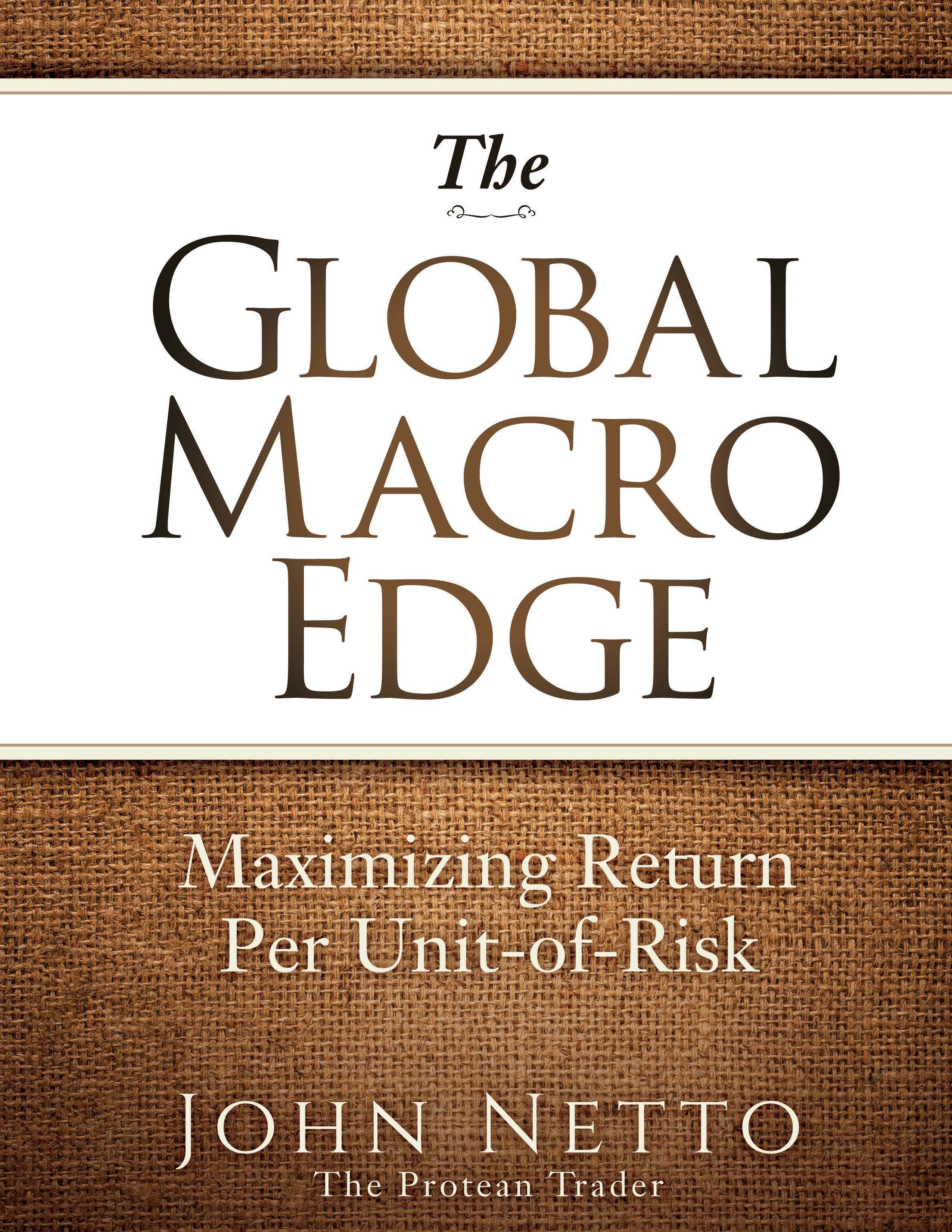
The Global Macro Edge: Maximizing Return Per Unit-of-Risk
by John Netto
Rating: 4.3 ⭐
• 2 recommendations ❤️
With a proven personal track record of trading experience, John Netto, The Protean Trader, has found great success and personal satisfaction in working the market. Now, in The Global Macro Edge, he pulls back the curtain to reveal the tools and techniques he's used (and created) to identify and solve the largest problems facing investors, traders, and financial advisors today at a level of transparency rarely seen in books on investing. The Global Macro Edge includes chapters from a talented team of market practitioners as it details how to maximize return per unit-of-risk. And, in the process, it shatters some of the longest held investment myths: -More risk equals more return-Money always find its most efficient home-Emotions are your enemy-Diversification is the only strategy you needToday's markets offer fewer opportunitiesCompensation should be based on returnsThe Global Macro Edge presents a logical and robust investment framework that can help investors, traders, and financial advisors profitably navigate global markets by enhancing their operations, analytics, and execution. The Global Macro Edge gives you, the reader, both a top-down and bottom-up approach to Next Generation Investing that is driven by one overarching goal: maximizing return per unit-of-risk. Contributing authors include:Foreword by Wesley R Gray, PhDNeil AzousJessica HoversenCameron CriseDarrell MartinJoe DiNapoliFotis PapatheofanousWilliam GlennRaoul PalTodd GordonJason RoneyPatrick HemmingerBob SavageSteve HotovecDenise ShullJohn Netto is a cross-asset class trader and the creator of the Netto Number, the Risk Factor Compensation System, and the Protean Strategy, for which he was named by Collective2.com as Strategy Developer of the Month. Mr. Netto has conducted numerous live trading webinars where viewers watch his P&L, positions, and orders in real time for total transparency of his methods. He has appeared on CNBC s Fast Money, Closing Bell, and Squawk on the Street, as well as Bloomberg, CNN, Fox Business Channel, and PBS. Mr. Netto is also the author of One Shot One Kill Trading. Mr. Netto speaks, reads, and writes Japanese, Chinese, Portuguese, and Spanish to help him articulate his vision of the markets to an international audience.A portion of the profits of this book will be donated to charities who train and place service dogs with military veterans.

Dylan Jones's engrossing, magisterial biography of David Bowie is unlike any Bowie story ever written. Drawn from over 180 interviews with friends, rivals, lovers, and collaborators, some of whom have never before spoken about their relationship with Bowie, this oral history weaves a hypnotic spell as it unfolds the story of a remarkable rise to stardom and an unparalleled artistic path. Tracing Bowie's life from the English suburbs to London to New York to Los Angeles, Berlin, and beyond, its collective voices describe a man profoundly shaped by his relationship with his schizophrenic half-brother Terry; an intuitive artist who could absorb influences through intense relationships and yet drop people cold when they were no longer of use; and a social creature equally comfortable partying with John Lennon and dining with Frank Sinatra. By turns insightful and deliciously gossipy, DAVID BOWIE is as intimate a portrait as may ever be drawn. It sparks with admiration and grievances, lust and envy, as the speakers bring you into studios and bedrooms they shared with Bowie, and onto stages and film sets, opening corners of his mind and experience that transform our understanding of both artist and art. Including illuminating, never-before-seen material from Bowie himself, drawn from a series of Jones's interviews with him across two decades, DAVID BOWIE is an epic, unforgettable cocktail-party conversation about a man whose enigmatic shapeshifting and irrepressible creativity produced one of the most sprawling, fascinating lives of our time.

The Bitcoin Standard: The Decentralized Alternative to Central Banking
by Saifedean Ammous
Rating: 4.1 ⭐
• 6 recommendations ❤️
Bitcoin is the newest technology for money—find out how it fits in the future.Bitcoin is the digital age's novel, decentralized, and automated solution to the problem of money: accessible worldwide, controlled by nobody. Can this young upstart money challenge the global monetary order? Economist Saifedean Ammous traces the history of the technologies of money to seashells, limestones, cattle, salt, beads, metals, and government debt, explaining what gave these technologies their monetary role, what makes for sound money, and the benefits of a sound monetary regime to economic growth, innovation, culture, trade, individual freedom, and international peace.The monetary and historical analysis sets the stage for understanding the mechanics of the operation of Bitcoin, the reasons for its initial success, and the role it could play in an information economy. Rather than serving as a currency and network for consumer purchases, the author argues Bitcoin is better suited as a store of value and network for settlement between large financial institutions. With an automated and perfectly predictable monetary policy, and the ability to perform final settlement of large sums across the world in a matter of minutes, Bitcoin's true importance may just lie in providing a decentralized, neutral, free-market alternative to national central banks.

Conspiracy: Peter Thiel, Hulk Hogan, Gawker, and the Anatomy of Intrigue
by Ryan Holiday
Rating: 4.0 ⭐
• 8 recommendations ❤️
In the tradition of Janet Malcolm's THE JOURNALIST AND THE MURDERER and Robert Greene's THE 48 LAWS OF POWER, author Ryan Holiday examines the case that rocked the media world--and the billionaire mastermind behind itIn 2007, a short blogpost on Valleywag, the Silicon Valley-vertical of Gawker Media, outed PayPal founder and billionaire investor Peter Thiel as gay. Thiel's sexuality had been known to close friends and family, but he didn't consider himself a public figure, and believed the information was private.This post would be the casus belli for a meticulously plotted conspiracy that would end nearly a decade later with a $140 million dollar judgment against Gawker, its bankruptcy and with Nick Denton, Gawker's CEO and founder, out of a job. Only later would the world learn that Gawker's demise was not incidental--it had been masterminded by Thiel.For years, Thiel had searched endlessly for a solution to what he'd come to call the "Gawker Problem." When an unmarked enveloped delivered an illegally recorded sex tape of Hogan with his best friend's wife, Gawker had seen the chance for millions of pageviews and to say the things that others were afraid to say. Thiel saw their publication of the tape as the opportunity he was looking for. He would come to pit Hogan against Gawker in a multi-year proxy war through the Florida legal system, while Gawker remained confidently convinced they would prevail as they had over so many other lawsuit--until it was too late.The verdict would stun the world and so would Peter's ultimate unmasking as the man who had set it all in motion. Why had he done this? How had no one discovered it? What would this mean--for the First Amendment? For privacy? For culture?In Holiday's masterful telling of this nearly unbelievable conspiracy, informed by interviews with all the key players, this case transcends the narrative of how one billionaire took down a media empire or the current state of the free press. It's a study in power, strategy, and one of the most wildly ambitious--and successful--secret plots in recent memory.Some will cheer Gawker's destruction and others will lament it, but after reading these pages--and seeing the access the author was given--no one will deny that there is something ruthless and brilliant about Peter Thiel's shocking attempt to shake up the world.

Billion Dollar Whale: The Man Who Fooled Wall Street, Hollywood, and the World
by Tom Wright
Rating: 4.0 ⭐
• 12 recommendations ❤️
An epic true-tale of hubris and greed from two Pulitzer-finalist Wall Street Journal reporters, Billion Dollar Whale reveals how a young social climber pulled off one of the biggest financial heists in history--right under the nose of the global financial industry--exposing the shocking secret nexus of elite wealth, banking, Hollywood, and politics. The dust had yet to settle on the global financial crisis in 2009 when an unlikely Wharton grad was setting in motion a fraud of unprecedented gall and magnitude--one that would come to symbolize the next great threat to the global financial system. Billion Dollar Whale will become a classic, harrowing parable about the financial world in the twenty-first century.

The Cryptopians: Idealism, Greed, Lies, and the Making of the First Big Cryptocurrency Craze
by Laura Shin
Rating: 3.6 ⭐
• 2 recommendations ❤️
The story of the idealists, technologists, and opportunists fighting to bring cryptocurrency to the masses.In their short history, Bitcoin and other cryptocurrencies have gone through booms, busts, and internecine wars, recently reaching a market valuation of more than $2 trillion. The central promise of crypto endures—vast fortunes made from decentralized networks not controlled by any single entity and not yet regulated by many governments.The recent growth of crypto would have been all but impossible if not for a brilliant young man named Vitalik Buterin and his Ethereum. In this book, Laura Shin takes readers inside the founding of this novel cryptocurrency network, which enabled users to launch their own new coins, thus creating a new crypto fever. She introduces readers to larger-than-life characters like Buterin, the Web3 wunderkind; his short-lived CEO, Charles Hoskinson; and Joe Lubin, a former Goldman Sachs VP who became one of crypto’s most well-known billionaires. Sparks fly as these outsized personalities fight for their piece of a seemingly limitless new business opportunity.This fascinating book shows the crypto market for what it really a deeply personal struggle to influence the coming revolution in money, culture, and power.