
31 Books Recommended

Influence, the classic book on persuasion, explains the psychology of why people say "yes"—and how to apply these understandings. Dr. Robert Cialdini is the seminal expert in the rapidly expanding field of influence and persuasion. His thirty-five years of rigorous, evidence-based research along with a three-year program of study on what moves people to change behavior has resulted in this highly acclaimed book.You'll learn the six universal principles, how to use them to become a skilled persuader—and how to defend yourself against them. Perfect for people in all walks of life, the principles of Influence will move you toward profound personal change and act as a driving force for your success.

Never Eat Alone: And Other Secrets to Success, One Relationship at a Time
by Keith Ferrazzi
Rating: 3.9 ⭐
• 2 recommendations ❤️
Do you want to get ahead in life?Climb the ladder to personal success?The secret, master networker Keith Ferrazzi claims, is in reaching out to other people. As Ferrazzi discovered early in life, what distinguishes highly successful people from everyone else is the way they use the power of relationships—so that everyone wins.In Never Eat Alone , Ferrazzi lays out the specific steps—and inner mindset—he uses to reach out to connect with the thousands of colleagues, friends, and associates on his Rolodex, people he has helped and who have helped him.The son of a small-town steelworker and a cleaning lady, Ferrazzi first used his remarkable ability to connect with others to pave the way to a scholarship at Yale, a Harvard MBA, and several top executive posts. Not yet out of his thirties, he developed a network of relationships that stretched from Washington’s corridors of power to Hollywood’s A-list, leading to him being named one of Crain’s 40 Under 40 and selected as a Global Leader for Tomorrow by the Davos World Economic Forum.Ferrazzi's form of connecting to the world around him is based on generosity, helping friends connect with other friends. Ferrazzi distinguishes genuine relationship-building from the crude, desperate glad-handling usually associated with “networking.” He then distills his system of reaching out to people into practical, proven principles. Among them:Don’t keep score: It’s never simply about getting what you want. It’s about getting what you want and making sure that the people who are important to you get what they want, too.“Ping” constantly: The Ins and Outs of reaching out to those in your circle of contacts all the time—not just when you need something.Never eat alone: The dynamics of status are the same whether you’re working at a corporation or attending a society event— “invisibility” is a fate worse than failure.In the course of the book, Ferrazzi outlines the timeless strategies shared by the world’s most connected individuals, from Katherine Graham to Bill Clinton, Vernon Jordan to the Dalai Lama.Chock full of specific advice on handling rejection, getting past gatekeepers, becoming a “conference commando,” and more, Never Eat Alone is destined to take its place alongside How to Win Friends and Influence People as an inspirational classic.

This book will literally change the way you think about your next meal.Food psychologist Brian Wansink revolutionizes our awareness of how much, what, and why we’re eating—often without realizing it. His findings will astound you. • Can the size of your plate really influence your appetite?• Why do you eat more when you dine with friends?• What “hidden persuaders” are used by restaurants and supermarkets to get us to overeat?• How does music or the color of the room influence how much—and how fast—we eat?• How can we “mindlessly” lose—instead of gain—up to twenty pounds in the coming year? Starting today, you can make more mindful, enjoyable, and healthy choices at the dinner table, in the supermarket, at the office—wherever you satisfy your appetite.

It's Your Ship: Management Techniques from the Best Damn Ship in the Navy, 10th Anniversary Edition
by D. Michael Abrashoff
Rating: 4.2 ⭐
• 2 recommendations ❤️
The legendary New York Times bestselling tale of top-down change for anyone trying to navigate today's uncertain business seas.When Captain Abrashoff took over as commander of USS Benfold , it was like a business that had all the latest technology but only some of the productivity. Knowing that responsibility for improving performance rested with him, he realized he had to improve his own leadership skills before he could improve his ship. Within months, he created a crew of confident and inspired problem-solvers eager to take the initiative and responsibility for their actions. The slogan on board became "It's your ship," and Benfold was soon recognized far and wide as a model of naval efficiency. How did Abrashoff do it? Against the backdrop of today's United States Navy, Abrashoff shares his secrets of successful management including:From achieving amazing cost savings to winning the highest gunnery score in the Pacific Fleet, Captain Abrashoff's extraordinary campaign sent shock waves through the U.S. Navy. It can help you change the course of your ship, no matter where your business battles are fought.

The Continuum Concept: In Search of Happiness Lost
by Jean Liedloff
Rating: 4.0 ⭐
• 8 recommendations ❤️
Jean Liedloff, an American writer, spent two and a half years in the South American jungle living with Stone Age Indians. The experience demolished her Western preconceptions of how we should live and led her to a radically different view of what human nature really is. She offers a new understanding of how we have lost much of our natural well-being and shows us practical ways to regain it for our children and for ourselves.

Focusing on research to introduce modern social psychology, Social Animal takes the patterns and motives of human behavior to analyze distinct topics like terrorism, conformity, obedience, politics, race relations, advertising, war, interpersonal attraction, and the power of religious cults.
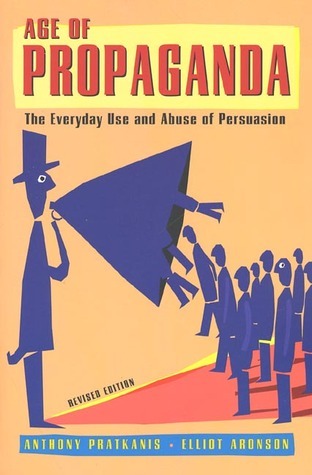
Age of Propaganda: The Everyday Use and Abuse of Persuasion
by Anthony R. Pratkanis
Rating: 4.0 ⭐
• 2 recommendations ❤️
Americans create 57% of the world's advertising while representing only 6% of its population; half of our waking hours are spent immersed in the mass media. Persuasion has always been integral to the democratic process, but increasingly, thoughtful discussion is being replaced with simplistic soundbites and manipulative messages.Drawing on the history of propaganda as well as on contemporary research in social psychology, Age of Propaganda shows how the tactics used by political campaigners, sales agents, advertisers, televangelists, demagogues, and others often take advantage of our emotions by appealing to our deepest fears and most irrational hopes, creating a distorted vision of the world we live in.This revised and updated edition includes coverage of the Clinton/Lewinsky scandal, recent election campaigns, talk radio, teen suicide, U.F.O. abductions, the Columbine shootings, and novel propaganda tactics based on hypocrisy and false allegations.

What They Don't Teach You at Harvard Business School: Notes from a Street-smart Executive
by Mark H. McCormack
Rating: 3.6 ⭐
• 2 recommendations ❤️
This business classic features straight-talking advice you’ll never hear in school. Featuring a new foreword by Ariel Emanuel and Patrick Whitesell Mark H. McCormack, one of the most successful entrepreneurs in American business, is widely credited as the founder of the modern-day sports marketing industry. On a handshake with Arnold Palmer and less than a thousand dollars, he started International Management Group and, over a four-decade period, built the company into a multimillion-dollar enterprise with offices in more than forty countries. To this day, McCormack’s business classic remains a must-read for executives and managers at every level. Relating his proven method of “applied people sense” in key chapters on sales, negotiation, reading others and yourself, and executive time management, McCormack presents powerful real-world guidance on • the secret life of a deal• management philosophies that don’t work (and one that does)• the key to running a meeting—and how to attend one• the positive use of negative reinforcement• proven ways to observe aggressively and take the edge• and much more Praise for What They Don’t Teach You at Harvard Business School “Incisive, intelligent, and witty, What They Don’t Teach You at Harvard Business School is a sure winner—like the author himself. Reading it has taught me a lot.” —Rupert Murdoch , executive chairman, News Corp, chairman and CEO, 21st Century Fox “Clear, concise, and informative . . . Like a good mentor, this book will be a valuable aid throughout your business career.” —Herbert J. Siegel, chairman, Chris-Craft Industries, Inc. “Mark McCormack describes the approach I have personally seen him adopt, which has not only contributed to the growth of his business, but mine as well.” —Arnold Palmer “There have been what we love to call dynasties in every sport. IMG has been different. What this one brilliant man, Mark McCormack, created is the only dynasty ever over all sport.” —Frank Deford, senior contributing writer, Sports Illustrated

“Vintage Iacocca . . . He is fast-talking, blunt, boastful, and unabashedly patriotic. Lee Iacocca is also a genuine folk hero. . . . His career is breathtaking.”— Business WeekHe’s an American legend, a straight-shooting businessman who brought Chrysler back from the brink and in the process became a media celebrity, newsmaker, and a man many had urged to run for president.The son of Italian immigrants, Lee Iacocca rose spectacularly through the ranks of Ford Motor Company to become its president, only to be toppled eight years later in a power play that should have shattered him. But Lee Iacocca didn’t get mad, he got even. He led a battle for Chrysler’s survival that made his name a symbol of integrity, know-how, and guts for millions of Americans.In his classic hard-hitting style, he tells us how he changed the automobile industry in the 1960s by creating the phenomenal Mustang. He goes behind the scenes for a look at Henry Ford’s reign of intimidation and manipulation. He recounts the miraculous rebirth of Chrysler from near bankruptcy to repayment of its $1.2 billion government loan so early that Washington didn’t know how to cash the check.
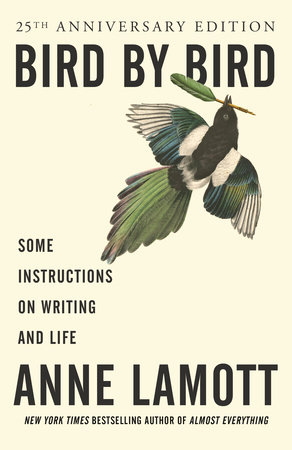
Bird by Bird: Some Instructions on Writing and Life
by Anne Lamott
Rating: 4.3 ⭐
• 25 recommendations ❤️
A previous edition of this title can be found here.For a quarter century, more than a million readers—scribes and scribblers of all ages and abilities—have been inspired by Anne Lamott’s hilarious, big-hearted, homespun advice. Advice that begins with the simple words of wisdom passed down from Anne’s father—also a writer—in the iconic passage that gives the book its title: “Thirty years ago my older brother, who was ten years old at the time, was trying to get a report on birds written that he’d had three months to write. It was due the next day. We were out at our family cabin in Bolinas, and he was at the kitchen table close to tears, surrounded by binder paper and pencils and unopened books on birds, immobilized by the hugeness of the task ahead. Then my father sat down beside him, put his arm around my brother’s shoulder, and said, ‘Bird by bird, buddy. Just take it bird by bird.’” An essential volume for generations of writers young and old, Bird by Bird is a modern classic. This twenty-fifth anniversary edition will continue to spark creative minds for years to come.

The Gift of Fear: and Other Survival Signals That Protect Us from Violence
by Gavin de Becker
Rating: 4.3 ⭐
• 6 recommendations ❤️
True fear is a gift.Unwarranted fear is a curse.Learn how to tell the difference.A date won't take "no" for an answer. The new nanny gives a mother an uneasy feeling. A stranger in a deserted parking lot offers unsolicited help. The threat of violence surrounds us every day. But we can protect ourselves, by learning to trust—and act on—our gut instincts.In this empowering book, Gavin de Becker, the man Oprah Winfrey calls the nation's leading expert on violent behavior, shows you how to spot even subtle signs of danger—before it's too late. Shattering the myth that most violent acts are unpredictable, de Becker, whose clients include top Hollywood stars and government agencies, offers specific ways to protect yourself and those you love, including how to act when approached by a stranger, when you should fear someone close to you, what to do if you are being stalked, how to uncover the source of anonymous threats or phone calls, the biggest mistake you can make with a threatening person, and more. Learn to spot the danger signals others miss. It might just save your life.
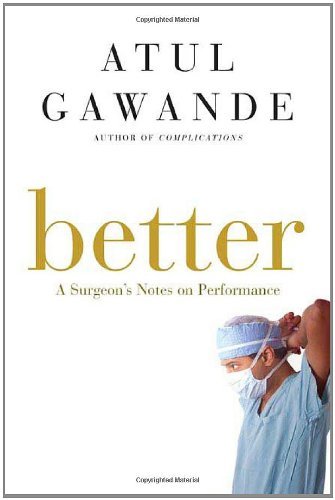
The struggle to perform well is universal: each one of us faces fatigue, limited resources, and imperfect abilities in whatever we do. But nowhere is this drive to do better more important than in medicine, where lives are on the line with every decision. In his new book, Atul Gawande explores how doctors strive to close the gap between best intentions and best performance in the face of obstacles that sometimes seem insurmountable. Gawande's gripping stories of diligence, ingenuity, and what it means to do right by people take us to battlefield surgical tents in Iraq, to labor and delivery rooms in Boston, to a polio outbreak in India, and to malpractice courtrooms around the country. He discusses the ethical dilemmas of doctors participation in lethal injections, examines the influence of money on modern medicine, and recounts the astoundingly contentious history of hand washing. And as in all his writing, Gawande gives us an inside look at his own life as a practicing surgeon, offering a searingly honest firsthand account of work in a field where mistakes are both unavoidable and unthinkable. At once unflinching and compassionate, Better is an exhilarating journey narrated by arguably the best nonfiction doctor-writer around (Salon). Gawande's investigation into medical professionals and how they progress from merely good to great provides rare insight into the elements of success, illuminating every area of human endeavor.

Crucial Conversations: Tools for Talking When Stakes Are High
by Kerry Patterson
Rating: 4.2 ⭐
• 1 recommendation ❤️
The New York Times and Washington Post bestseller that changed the way millions communicate"[Crucial Conversations] draws our attention to those defining moments that literally shape our lives, our relationships, and our world. . . . This book deserves to take its place as one of the key thought leadership contributions of our time."--from the Foreword by Stephen R. Covey, author of The 7 Habits of Highly Effective People"The quality of your life comes out of the quality of your dialogues and conversations. Here's how to instantly uplift your crucial conversations."--Mark Victor Hansen, cocreator of the #1 New York Times bestselling series Chicken Soup for the Soul(R)The first edition of Crucial Conversations exploded onto the scene and revolutionized the way millions of people communicate when stakes are high. This new edition gives you the tools to:* Prepare for high-stakes situations* Transform anger and hurt feelings into powerful dialogue* Make it safe to talk about almost anything* Be persuasive, not abrasive

First published in 1931, The Robert Collier Letter Book is by far the top book on writing sales letters. But it goes beyond that. As every great copywriter knows, these techniques are directly transferable to the Internet, whether through web copy or email or whatever. This book earned Robert Collier the distinction of being one of the greatest marketing minds in history. Robert Collier sales letters were successful because he wrote to his readers' needs. As an expert in marketing, his sales savvy and writing expertise placed hundreds of millions of dollars in his clients' pockets.

No B.S. Marketing to the Affluent: No Holds Barred, Take No Prisoners, Guide to Getting Really Rich
by Dan S. Kennedy
Rating: 4.1 ⭐
• 2 recommendations ❤️
THE SCARY TRUTH: The middle-class consumer population--and their buying power--is massively shrinking. Customers are buying less and in fewer categories.THE SILVER LINING: It takes no more work to attract customers from the explosively growing Mass-Affluent, Affluent, and Ultra-Affluent populations eager to pay premium prices in return for exceptional expertise, service, and experiences. In this new edition of No B.S. Marketing to the Affluent, millionaire maker Dan S. Kennedy shows you how to re-position your business, practice, or sales career to attract customers or clients for whom price is NOT a determining factor. Learn how to sell to those who will always be spending as Kennedy shines the spotlight on the practical strategies used by The Ritz-Carlton, Disney, Harrah's Entertainment, Dove, AARP, Dr. Oz, Starbucks, Williams-Sonoma, DeBeers, the health and wellness industry and many other fascinating and diverse true-life examples. You'll also discover how to:Use 10 surprising emotional buy triggers the affluent find irresistible Stop selling products and services and learn how selling aspirations and emotional fulfillment is more profitable Use Kennedy's Million-Dollar Marketing System. A step-by-step blueprint comparable to those developed for six-figure clients, ready for do-it-yourself use Apply the magic language of "membership" to any business for the affluent... from pizza shops and medical practices to retail stores and pet hotels

Poor Charlie's Almanack: The Wit and Wisdom of Charles T. Munger
by Charles T. Munger
Rating: 4.6 ⭐
• 37 recommendations ❤️
EXPANDED THIRD EDITION includes Charlie's 2007 USC Law School Commencement address. Edited by Peter D. Kaufman. Brand New.
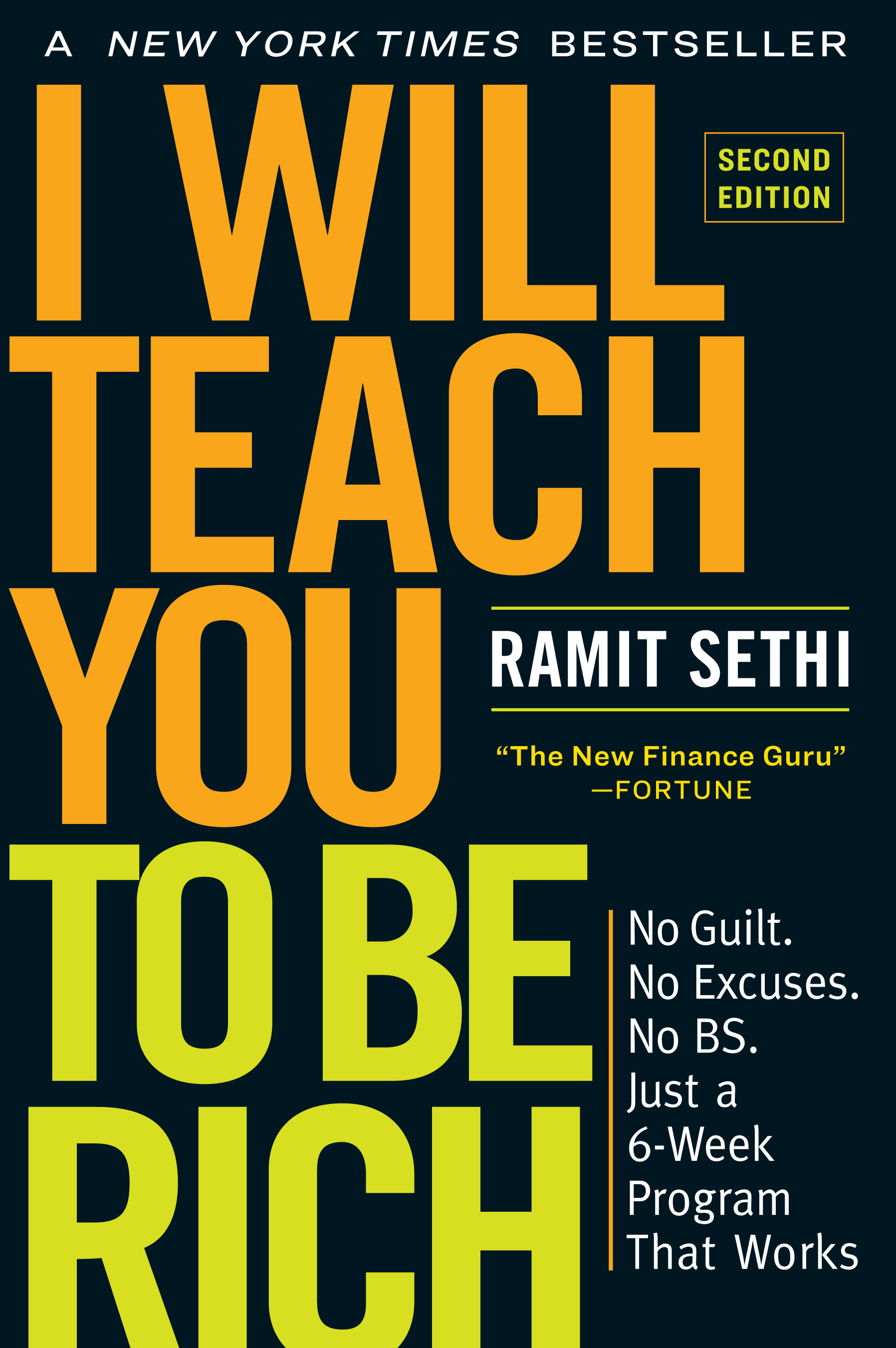
I Will Teach You to Be Rich: No Guilt. No Excuses. No BS. Just a 6-Week Program That Works
by Ramit Sethi
Rating: 4.2 ⭐
• 5 recommendations ❤️
As seen on the new NETFLIX series! The groundbreaking NEW YORK TIMES and WALL STREET JOURNAL BESTSELLER that taught a generation how to earn more, save more, and live a rich life—now in a revised 2nd edition. Buy as many lattes as you want. Choose the right accounts and investments so your money grows for you—automatically. Best of all, spend guilt-free on the things you love. Personal finance expert Ramit Sethi has been called a “wealth wizard” by Forbes and the “new guru on the block” by Fortune . Now he’s updated and expanded his modern money classic for a new age, delivering a simple, powerful, no-BS 6-week program that just works. I Will Teach You to Be Rich will show • How to crush your debt and student loans faster than you thought possible• How to set up no-fee, high-interest bank accounts that won’t gouge you for every penny• How Ramit automates his finances so his money goes exactly where he wants it to—and how you can do it too• How to talk your way out of late fees (with word-for-word scripts)• How to save hundreds or even thousands per month (and still buy what you love)• A set-it-and-forget-it investment strategy that’s dead simple and beats financial advisors at their own game• How to handle buying a car or a house, paying for a wedding, having kids, and other big expenses—stress free• The exact words to use to negotiate a big raise at work Plus, this 10th anniversary edition features over 80 new pages, • New tools• New insights on money and psychology• Amazing stories of how previous readers used the book to create their rich lives Master your money—and then get on with your life.

No matter what discipline your training, the information contained in these pages will enlighten. Not only in clinical matters, but few will not find helpful information to ponder in the private life.

In his latest bestseller, Atul Gawande shows what the simple idea of the checklist reveals about the complexity of our lives and how we can deal with it. The modern world has given us stupendous know-how. Yet avoidable failures continue to plague us in health care, government, the law, the financial industry—in almost every realm of organized activity. And the reason is the volume and complexity of knowledge today has exceeded our ability as individuals to properly deliver it to people—consistently, correctly, safely. We train longer, specialize more, use ever-advancing technologies, and still we fail. Atul Gawande makes a compelling argument that we can do better, using the simplest of the checklist. In riveting stories, he reveals what checklists can do, what they can’t, and how they could bring about striking improvements in a variety of fields, from medicine and disaster recovery to professions and businesses of all kinds. And the insights are making a difference. Already, a simple surgical checklist from the World Health Organization designed by following the ideas described here has been adopted in more than twenty countries as a standard for care and has been heralded as “the biggest clinical invention in thirty years” ( The Independent ).

This is not a book just for copywriters and other advertising experts but a book for every business owner, marketing expert or anyone who needs to increase sales.The reason why is because it deals with how to channel the forces in the marketplace which control sales.Put simply, Gene's book addresses the universal problem of all copywriting: How to write a headline — and an ad that follows it — that will open up a whole new market.

Bringing Up Bébé: One American Mother Discovers the Wisdom of French Parenting
by Pamela Druckerman
Rating: 4.0 ⭐
• 2 recommendations ❤️
The secret behind France's astonishingly well-behaved children. When American journalist Pamela Druckerman has a baby in Paris, she doesn't aspire to become a "French parent." French parenting isn't a known thing, like French fashion or French cheese. Even French parents themselves insist they aren't doing anything special.Yet, the French children Druckerman knows sleep through the night at two or three months old while those of her American friends take a year or more. French kids eat well-rounded meals that are more likely to include braised leeks than chicken nuggets. And while her American friends spend their visits resolving spats between their kids, her French friends sip coffee while the kids play.Motherhood itself is a whole different experience in France. There's no role model, as there is in America, for the harried new mom with no life of her own. French mothers assume that even good parents aren't at the constant service of their children and that there's no need to feel guilty about this. They have an easy, calm authority with their kids that Druckerman can only envy.Of course, French parenting wouldn't be worth talking about if it produced robotic, joyless children. In fact, French kids are just as boisterous, curious, and creative as Americans. They're just far better behaved and more in command of themselves. While some American toddlers are getting Mandarin tutors and preliteracy training, French kids are- by design-toddling around and discovering the world at their own pace.With a notebook stashed in her diaper bag, Druckerman-a former reporter for The Wall Street Journal-sets out to learn the secrets to raising a society of good little sleepers, gourmet eaters, and reasonably relaxed parents. She discovers that French parents are extremely strict about some things and strikingly permissive about others. And she realizes that to be a different kind of parent, you don't just need a different parenting philosophy. You need a very different view of what a child actually is.While finding her own firm non, Druckerman discovers that children-including her own-are capable of feats she'd never imagined.

Walkable City: How Downtown Can Save America, One Step at a Time
by Jeff Speck
Rating: 4.4 ⭐
• 2 recommendations ❤️
Jeff Speck has dedicated his career to determining what makes cities thrive. And he has boiled it down to one key factor: walkability. Making downtown into a walkable, viable community is the essential fix for the typical American city; it is eminently achievable and its benefits are manifold. Walkable City—bursting with sharp observations and key insights into how urban change happens—lays out a practical, necessary, and inspiring vision for how to make American cities great again.A Best Book of the Year according to Planetizen and the American Society of Landscape Architects

A Wall Street Journal and Washington Post Bestseller A playbook for creating your company's winning strategy. Strategy is not complex. But it is hard. It’s hard because it forces people and organizations to make specific choices about their future—something that doesn’t happen in most companies.Now two of today’s best-known business thinkers get to the heart of strategy—explaining what it’s for, how to think about it, why you need it, and how to get it done. And they use one of the most successful corporate turnarounds of the past century, which they achieved together, to prove their point.A.G. Lafley, former CEO of Procter & Gamble, in close partnership with strategic adviser Roger Martin, doubled P&G’s sales, quadrupled its profits, and increased its market value by more than $100 billion in just ten years. Now, drawn from their years of experience at P&G and the Rotman School of Management, where Martin is dean, this book shows how leaders in organizations of all sizes can guide everyday actions with larger strategic goals built around the clear, essential elements that determine business success— where to play and how to win .The result is a playbook for winning. Lafley and Martin have created a set of five essential strategic choices that, when addressed in an integrated way, will move you ahead of your competitors. They are:• What is our winning aspiration?• Where will we play?• How will we win?• What capabilities must we have in place to win?• What management systems are required to support our choices?The stories of how P&G repeatedly won by applying this method to iconic brands such as Olay, Bounty, Gillette, Swiffer, and Febreze clearly illustrate how deciding on a strategic approach—and then making the right choices to support it—makes the difference between just playing the game and actually winning.

This marketing classic has been expanded to include new commentary, new illustrations, and a bonus The 11 Immutable Laws of Internet Branding Smart and accessible, The 22 Immutable Laws of Branding is the definitive text on branding, pairing anecdotes about some of the best brands in the world, like Rolex, Volvo, and Heineken, with the signature savvy of marketing gurus Al and Laura Ries. Combining The 22 Immutable Laws of Branding and The 11 Immutable Laws of Internet Branding, this book proclaims that the only way to stand out in today's marketplace is to build your product or service into a brand—and provides the step-by-step instructions you need to do so. The 22 Immutable Laws of Branding also tackles one of the most challenging marketing problems branding on the Web. The Rieses divulge the controversial and counterintuitive strategies and secrets that both small and large companies have used to establish internet brands. The 22 Immutable Laws of Branding is the essential primer on building a category-dominating, world-class brand.

The Geography of Madness: Penis Thieves, Voodoo Death, and the Search for the Meaning of the World's Strangest Syndromes
by Frank Bures
Rating: 3.4 ⭐
• 4 recommendations ❤️
Jon Ronson meets David Grann in this fascinating, wildly entertaining adventure and travel story about how culture can make us go totally insaneThe Geography of Madness is an investigation of "culture-bound" syndromes, which are far stranger than they sound. Why is it, for example, that some men believe, against all reason, that vandals stole their penises, even though they're in good physical shape? In The Geography of Madness, acclaimed magazine writer Frank Bures travels around the world to trace culture-bound syndromes to their sources—and in the process, tells a remarkable story about the strange things all of us believe.Book Club Discussion Questions: For the paperback edition, a list of book club discussion questions is also being issued. If you’d like to add the The Geography of Madness to your group’s reading list, here are several conversation starters:1) One main themes of The Geography of Madness is that stories (about the world, about our lives, about our bodies) are contagious. Can you think of a story, or an experience, that changed what you believed was possible?2) Do you believe the brain and the mind are the same thing? If not, what is the difference? 3) The stories in The Geography of Madness raise the question of free will: How much do you choose the life you live? How much do you learn (or catch) you life choices from those around you? 4) Have you ever found yourself immersed in a situation where you did not know the rules? What was that like?5) In The Geography of Madness, the author argues that our mindset and our expectations have biological consequences. Does that resemble your experience? If so, how?6) Try to imagine living in a world where it was possible to have your genitals stolen, either by magic or by ghosts. How would you protect yourself?7) In The Geography of Madness, the author argues that a strong sense of self—of your story— can help to activate your endogenous (internal) healing systems and vice versa. Do you remember a time when a stressful or difficult period seemed to be followed by a health problem or sickness? 8) In The Geography of Madness, did anyone’s genital actually disappear? If not, what happened? Does it matter?9) Is there a belief that everyone around you holds, but that you don’t share? How did you come to doubt this?10) The Handbook of Depression points to a genetic marker associated with greater vulnerability to depression. Yet this link only holds true in Western cultures. Why would that be?11) Have you ever had a health problem you were afraid to talk about, or that others didn’t believe in?12) In The Geography of Madness, the author argues that cultural syndromes are “real” syndromes, but that their causes might not lie where we think they do. Do you think they are “real” or “imaginary”? 13) Over the last few years, gluten intolerance has been rising. This rise occurs at a time of increasing anxiety about the relationship between food, health and identity. What’s changed: our bodies or our culture?14) After reading The Geography of Madness, how would you describe what culture is?15) How much does a your culture create you? How much do you create your culture?16) Have you ever had a cultural syndrome?

Monetizing Innovation: How Smart Companies Design the Product Around the Price
by Madhavan Ramanujam
Rating: 4.3 ⭐
• 4 recommendations ❤️
The book explains how most companies get sidetracked by Product-Driven Thinking and how to innovate by starting with the price customers will pay, and creating the product for that price. It will present a process that Simon-Kucher & Partners has used to help dozens of others avoid innovation failure by making pricing and marketing their guiding light throughout the product development process.This book will also explain the following 4 common red flags: Feature Shocks - Product concepts overloaded with features and functions, the result of trying to serve too many customers and customer needs because the core customer and need has not been nailed down. That makes the product costly to produce, forcing it to be overpriced. Dead on Arrivals - Products that hit the market dead on arrival because they are the wrong answer to the right market need, or the right answer to the wrong market need (i.e., one that very few have), at a price the market will not bear. Minivations - Products that fall short of their potential and the company's expectations Hidden Gems - An internal failure to recognize and commercialize a truly breakthrough product under development because the market or consumer need has not been thoroughly explored.

The Myth of Millionaire Tax Flight: How Place Still Matters for the Rich
by Cristobal Young
Rating: 4.0 ⭐
• 2 recommendations ❤️
In this age of globalization, many countries and U.S. states are worried about the tax flight of the rich. As income inequality grows and U.S. states consider raising taxes on their wealthiest residents, there is a palpable concern that these high rollers will board their private jets and fly away, taking their wealth with them. Many assume that the importance of location to a person's success is at an all-time low. Cristobal Young, however, makes the surprising argument that location is very important to the world's richest people. Frequently, he says, place has a great deal to do with how they make their millions. In The Myth of Millionaire Tax Flight , Young examines a trove of data on millionaires and billionaires―confidential tax returns, Forbes lists, and census records―and distills down surprising insights. While economic elites have the resources and capacity to flee high-tax places, their actual migration is surprisingly limited. For the rich, ongoing economic potential is tied to the place where they become successful―often where they are powerful insiders―and that success ultimately diminishes both the incentive and desire to migrate. This important book debunks a powerful idea that has driven fiscal policy for years, and in doing so it clears the way for a new era. Millionaire taxes, Young argues, could give states the funds to pay for infrastructure, education, and other social programs to attract a group of people who are much more mobile―the younger generation.

Outer Order, Inner Calm: Declutter and Organize to Make More Room for Happiness
by Gretchen Rubin
Rating: 3.8 ⭐
• 2 recommendations ❤️
For most of us, outer order contributes to inner calm. And for most of us, a rigid, one-size-fits-all solution doesn't work. The fact is, when we tailor our approach to suit our own particular challenges and habits, we're then able to create the order that will make our lives happier, healthier, more productive, and more creative. Gretchen Rubin has found that getting control of our stuff makes us feel more in control of our lives. By getting rid of things we don't use, don't need, or don't love, we free our minds (and our shelves) for what we truly value. With a sense of fun, and a clear idea of what's realistic for most people, Gretchen Rubin suggests dozens of manageable steps for creating a more serene, orderly environment—one that helps us to create the lives we want.

Dying of Whiteness: How the Politics of Racial Resentment Is Killing America's Heartland
by Jonathan M. Metzl
Rating: 4.2 ⭐
• 2 recommendations ❤️
A physician's "remarkable" account of how right-wing backlash policies have mortal consequences (Minneapolis Star Tribune) -- even for the white voters they promise to help.In election after election, conservative white Americans have embraced politicians who pledge to make their lives great again. But as physician Jonathan M. Metzl shows in Dying of Whiteness shows, the policies that result actually place white Americans at ever-greater risk of sickness and death. Interviewing a range of everyday Americans, Metzl examines how racial resentment has fueled progun laws in Missouri, resistance to the Affordable Care Act in Tennessee, and cuts to schools and social services in Kansas. e shows these policies' costs: increasing deaths by gun suicide, falling life expectancies, and rising dropout rates. Now updated with a new afterword, Dying of Whiteness demonstrates how much white America would benefit by emphasizing cooperation rather than chasing false promises of supremacy.

The 99% Invisible City: A Field Guide to the Hidden World of Everyday Design
by Roman Mars
Rating: 4.0 ⭐
• 2 recommendations ❤️
A beautifully designed guidebook to the unnoticed yet essential elements of our cities, from the creators of the wildly popular 99% Invisible podcastHave you ever wondered what those bright, squiggly graffiti marks on the sidewalk mean?Or stopped to consider why you don't see metal fire escapes on new buildings?Or pondered the story behind those dancing inflatable figures in car dealerships?99% Invisible is a big-ideas podcast about small-seeming things, revealing stories baked into the buildings we inhabit, the streets we drive, and the sidewalks we traverse. The show celebrates design and architecture in all of its functional glory and accidental absurdity, with intriguing tales of both designers and the people impacted by their designs.Now, in The 99% Invisible City: A Field Guide to Hidden World of Everyday Design, host Roman Mars and coauthor Kurt Kohlstedt zoom in on the various elements that make our cities work, exploring the origins and other fascinating stories behind everything from power grids and fire escapes to drinking fountains and street signs. With deeply researched entries and beautiful line drawings throughout, The 99% Invisible City will captivate devoted fans of the show and anyone curious about design, urban environments, and the unsung marvels of the world around them.

The Pulitzer Prize–winning, bestselling author of The Warmth of Other Suns examines the unspoken caste system that has shaped America and shows how our lives today are still defined by a hierarchy of human divisions.“As we go about our daily lives, caste is the wordless usher in a darkened theater, flashlight cast down in the aisles, guiding us to our assigned seats for a performance. The hierarchy of caste is not about feelings or morality. It is about power—which groups have it and which do not.”In this brilliant book, Isabel Wilkerson gives us a masterful portrait of an unseen phenomenon in America as she explores, through an immersive, deeply researched narrative and stories about real people, how America today and throughout its history has been shaped by a hidden caste system, a rigid hierarchy of human rankings.Beyond race, class, or other factors, there is a powerful caste system that influences people’s lives and behavior and the nation’s fate. Linking the caste systems of America, India, and Nazi Germany, Wilkerson explores eight pillars that underlie caste systems across civilizations, including divine will, bloodlines, stigma, and more. Using riveting stories about people—including Martin Luther King, Jr., baseball’s Satchel Paige, a single father and his toddler son, Wilkerson herself, and many others—she shows the ways that the insidious undertow of caste is experienced every day. She documents how the Nazis studied the racial systems in America to plan their out-cast of the Jews; she discusses why the cruel logic of caste requires that there be a bottom rung for those in the middle to measure themselves against; she writes about the surprising health costs of caste, in depression and life expectancy, and the effects of this hierarchy on our culture and politics. Finally, she points forward to ways America can move beyond the artificial and destructive separations of human divisions, toward hope in our common humanity.