Philippe Journo Recommended Books
7 Books Recommended
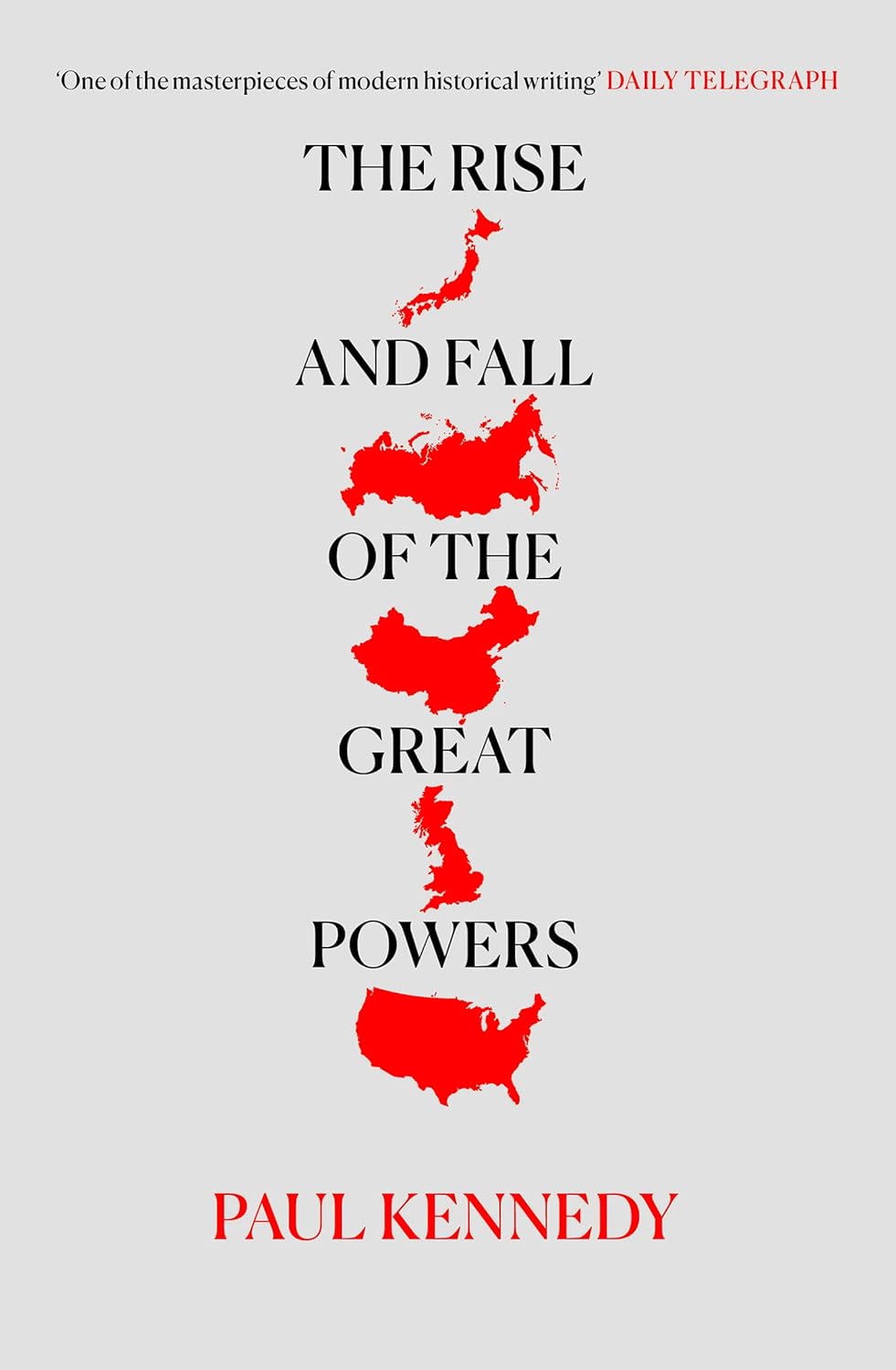
This study describes how the past 500 years shows that nations which became great powers had to decline as their growth rate slowed and their spending on defence continued to increase and explains how this can be eased or worsened by clever or short-sighted policy decisions. The final chapter looks at the current dilemna of the USA, the USSR, the EEC, Japan and China, and peers. Paul Kennedy also wrote "Strategy and Diplomacy, 1870-1945" and "The Realities Behind Diplomacy, 1865-1980"

Jacques Attali raconte ici l'incroyable histoire des cinquante prochaines années telles qu'on peut les imaginer à partir de ce que l'on sait aujourd'hui de l'histoire et de la science. Il dévoile la façon dont vont évoluer les rapports entre les nations, dont les bouleversements démographiques, les mouvements de population, les mutations du travail, le terrorisme, la violence, les changements climatiques, l'emprise croissante du religieux vont affecter notre quotidien. Il montre enfin qu'il serait possible d'éliminer la pauvreté, de faire profiter chacun équitablement des bienfaits de la technologie et de préserver la liberté de ses propres excès comme de ses ennemis, de laisser aux générations à venir un environnement mieux protégé, de faire naître, à partir de toutes les sagesses du monde, de nouvelles façons de vivre et de créer ensemble.

Au XIIe siècle, à Cordoue, avant d'être torturé et pendu, un artisan juif eut le temps de révéler à son neveu comment obtenir le livre « le plus important à avoir jamais été écrit par un être humain ». Lancé dans cette quête à travers l'Europe et le Maroc, Maïmonide croise un jeune musulman, Averroès, entraîné dans la même recherche. L'un et l'autre - qui deviendront des géants de la pensée - sont poursuivis par un groupe mystérieux bien décidé à tout faire pour les empêcher d'aboutir : la Confrérie des Eveillés.La plupart des personnages de ce roman ont vraiment existé. La plupart des événements politiques et personnels auxquels ils sont confrontés ont eu lieu. Tout donne à penser qu'en ce moment crucial de l'histoire du monde, le plus grand des penseurs juifs et le plus grand des philosophes musulmans ont dialogué exactement comme ils le font ici.

L'art de la victoire - Autobiographie du fondateur de NIKE (Sport)
by Phil Knight
Rating: 4.4 ⭐
• 6 recommendations ❤️
In this candid and riveting memoir, for the first time ever, Nike founder and CEO Phil Knight shares the inside story of the company’s early days as an intrepid start-up and its evolution into one of the world’s most iconic, game-changing, and profitable brands.In 1962, fresh out of business school, Phil Knight borrowed $50 from his father and created a company with a simple mission: import high-quality, low-cost athletic shoes from Japan. Selling the shoes from the trunk of his lime green Plymouth Valiant, Knight grossed $8,000 his first year. Today, Nike’s annual sales top $30 billion. In an age of startups, Nike is the ne plus ultra of all startups, and the swoosh has become a revolutionary, globe-spanning icon, one of the most ubiquitous and recognizable symbols in the world today.But Knight, the man behind the swoosh, has always remained a mystery. Now, for the first time, in a memoir that is candid, humble, gutsy, and wry, he tells his story, beginning with his crossroads moment. At 24, after backpacking around the world, he decided to take the unconventional path, to start his own business—a business that would be dynamic, different.Knight details the many risks and daunting setbacks that stood between him and his dream—along with his early triumphs. Above all, he recalls the formative relationships with his first partners and employees, a ragtag group of misfits and seekers who became a tight-knit band of brothers. Together, harnessing the transcendent power of a shared mission, and a deep belief in the spirit of sport, they built a brand that changed everything.

Team of Teams: New Rules of Engagement for a Complex World
by Stanley McChrystal
Rating: 4.2 ⭐
• 1 recommendation ❤️
As commander of Joint Special Operations Command (JSOC), General Stanley McChrystal discarded a century of management wisdom and pivoted from a pursuit of mechanical efficiency to organic adaptability.In this book, he shows how any organization can make the same transition to act like a team of teams - where small groups combine the freedom to experiment with a relentless drive to share their experience.Drawing on a wealth of evidence from his military career and sources as diverse as hospital emergency rooms and NASA's space program, McChrystal frames the existential challenge facing today's organizations, and presents a compelling, effective solution.

The Circadian Code: Lose weight, supercharge your energy and sleep well every night
by Satchin Panda
Rating: 4.4 ⭐
• 1 recommendation ❤️
Millions of frustrated and unsuccessful dieters will be thrilled by this fresh approach to weight loss, which doesn't strictly regulate what you eat but instead focuses on when you eat.

Que serait devenue l’humanité sans tous ceux qui, depuis des milliers d’années, ont accumulé, protégé et partagé des connaissances ? Que serions-nous si la Bible, les œuvres de Platon et d’Aristote, les mathématiques d’Al Jibra, la poésie de Villon, la musique de Mozart, avaient disparu ? Qu’en sera-t-il à l’avenir ? Depuis l’Antiquité jusqu’à aujourd’hui, de la Mésopotamie à la Chine, de Jérusalem à Venise, de Paris à Londres, de New York à Shanghai, les façons de transmettre les savoirs ont joué un rôle déterminant dans l’évolution des cultures, des rapports de pouvoir, des idéologies et des religions ; les puissants cherchant le plus souvent à priver les peuples, et d’abord les filles, des savoirs menaçant leurs privilèges. Aujourd’hui, la situation s’aggrave : très peu de personnes ont réellement accès à une formation de qualité. Demain, si on n’y prend garde, l’humanité sombrera dans une nouvelle barbarie faite d’ignorance et de technologies mal maîtrisées. Pourtant, nous avons les moyens de former tous les humains et de mettre l’éducation au service d’un monde bienveillant en harmonie avec la nature. Plus qu’une histoire mondiale de l’éducation et de son avenir, ce livre propose des choix radicaux pour lutter contre la barbarie, des choix sans lesquels l’humanité ne pourra survivre.