
PewDiePie Recommended Books
Swedish YouTuber (born 1989)
40 Books Recommended

In Either/Or, using the voices of two characters - the aesthetic young man of part one, called simply 'A', and the ethical Judge Vilhelm of the second section - Kierkegaard reflects upon the search for a meaningful existence, contemplating subjects as diverse as Mozart, drama, boredom, and, in the famous Seducer's Diary, the cynical seduction and ultimate rejection of a young, beautiful woman. A masterpiece of duality, Either/Or is a brilliant exploration of the conflict between the aesthetic and the ethical - both meditating ironically and seductively upon Epicurean pleasures, and eloquently expounding the noble virtues of a morally upstanding life.

The Woman in the Dunes, by celebrated writer and thinker Kobo Abe, combines the essence of myth, suspense and the existential novel. After missing the last bus home following a day trip to the seashore, an amateur entomologist is offered lodging for the night at the bottom of a vast sand pit. But when he attempts to leave the next morning, he quickly discovers that the locals have other plans. Held captive with seemingly no chance of escape, he is tasked with shoveling back the ever-advancing sand dunes that threaten to destroy the village. His only companion is an odd young woman, and together their fates become intertwined as they work side by side through this Sisyphean of tasks.

Japanese Death Poems: Written by Zen Monks and Haiku Poets on the Verge of Death
by
Rating: 4.2 ⭐
• 2 recommendations ❤️
"A wonderful introduction the Japanese tradition of jisei , this volume is crammed with exquisite, spontaneous verse and pithy, often hilarious, descriptions of the eccentric and committed monastics who wrote the poems." — The Buddhist ReviewAlthough the consciousness of death is, in most cultures, very much a part of life, this is perhaps nowhere more true than in Japan, where the approach of death has given rise to a centuries-old tradition of writing jisei , or the "death poem." Such a poem is often written in the very last moments of the poet's life.Hundreds of Japanese death poems, many with a commentary describing the circumstances of the poet's death, have been translated into English here, the vast majority of them for the first time. Compiler Yoel Hoffmann explores the attitudes and customs surrounding death in historical and present-day Japan and gives examples of how these have been reflected in the nation's literature in general. The development of writing jisei is then examined—from the longing poems of the early nobility and the more "masculine" verses of the samurai to the satirical death poems of later centuries.Zen Buddhist ideas about death are also described as a preface to the collection of Chinese death poems by Zen monks that are also included. Finally, the last section contains three hundred twenty haiku, some of which have never been assembled before, in translated English and romanized Japanese.

In this fascinating document, one of Japan's best known-and controversial-writers created what might be termed a new literary form. It is new because it combines elements of many existing types of writing, yet in the end fits into none of them.At one level, it may be read as an account of how a puny, bookish boy discovered the importance of his own physical being; the "sun and steel" of the title are themselves symbols respectively of the cult of the open air and the weights used in bodybuilding. At another level, it is a discussion by a major novelist of the relation between action and art, and his own highly polished art in particular. More personally, it is an account of one individual's search for identity and self-integration. Or again, the work could be seen as a demonstration of how an intensely individual preoccupation can be developed into a profound philosophy of life.All these elements are woven together by Mishima's complex yet polished and supple style. The confession and the self-analysis, the philosophy and the poetry combine in the end to create something that is in itself perfect and self-sufficient. It is a piece of literature that is as carefully fashioned as Mishima's novels, and at the same time provides an indispensable key to the understanding of them as art.The road Mishima took to salvation is a highly personal one. Yet here, ultimately, one detects the unmistakable tones of a self transcending the particular and attaining to a poetic vision of the universal. The book is therefore a moving document, and is highly significant as a pointer to the future development of one of the most interesting novelists of modern times.

The Old Man and the Sea, an apparently simple fable, represents the mature Hemingway at his best. He was awarded the Nobel Prize for Literature soon after its publication, and half a century later it is still one of his most read books.

Edith Grossman's definitive English translation of the Spanish masterpiece. Widely regarded as one of the funniest and most tragic books ever written, Don Quixote chronicles the adventures of the self-created knight-errant Don Quixote of La Mancha and his faithful squire, Sancho Panza, as they travel through sixteenth-century Spain. You haven't experienced Don Quixote in English until you've read this masterful translation.

A timeless story of first love set in a remote fishing village in Japan. • "A story that is both happy and a work of art.... Altogether a joyous and lovely thing." — The New York TimesA young fisherman is entranced at the sight of the beautiful daughter of the wealthiest man in the village. They fall in love, but must then endure the calumny and gossip of the villagers.

Osamu Dazai's No Longer Human, this leading postwar Japanese writer's second novel, tells the poignant and fascinating story of a young man who is caught between the breakup of the traditions of a northern Japanese aristocratic family and the impact of Western ideas. In consequence, he feels himself "disqualified from being human" (a literal translation of the Japanese title).Donald Keene, who translated this and Dazai's first novel, The Setting Sun, has said of the author's work: "His world … suggests Chekhov or possibly postwar France, … but there is a Japanese sensibility in the choice and presentation of the material. A Dazai novel is at once immediately intelligible in Western terms and quite unlike any Western book." His writing is in some ways reminiscent of Rimbaud, while he himself has often been called a forerunner of Yukio Mishima.Cover painting by Noe Nojechowiz, from the collection of John and Barbara Duncan; design by Gertrude Huston

In the Buddha's Words: An Anthology of Discourses from the Pali Canon
by
Rating: 4.2 ⭐
• 2 recommendations ❤️
The works of the Buddha can feel vast, and it is sometimes difficult for even longtime students to know where to look, especially since the Buddha never explicitly defined the framework behind his teachings. Designed to provide just such a framework, In the Buddha's Words is an anthology of the Buddha's works that has been specifically compiled by a celebrated scholar and translator. For easy reference, the book is arrayed in ten thematic sections ranging from "The Human Condition" to "Mastering the Mind" to "The Planes of Realization." Each section comes with introductions, notes, and essays to help beginners and experts alike draw greater meaning from the Buddha's words. The book also features a general introduction by the author that fully lays out how and why he has arranged the Buddha's teachings in this volume. This thoughtful compilation is a valuable resource for both teachers and those who want to read the Buddha on their own.

First published in 1862 after Dostoyevsky’s imprisonment in a Siberian labor camp, “The House of the Dead” is a collection of memoirs, related by themes, that portrays the horrific life of convicts. The author drew on his own experiences in prison to depict the squalor, destitution, and severity of a Siberian camp with remorseless detail. Dostoyevsky reveals the characters of many of the other convicts, which includes the depravity many have come to expect through their mental and physical suffering. The protagonist is Aleksandr Petrovich, a gentleman who additionally struggles with the malice of the largely peasant-populated prison. He gradually comes to accept his situation, experiencing a spiritual re-awakening in the unremitting strife of penal servitude. Though told with uncharacteristic detachment, “The House of the Dead” is a work of humanity, not without sympathy or admiration of those in Siberia, which proclaims the tragedy of those institutions, both for the inhabitants and for the country of Russia, and stands to this day as one of Dostoyevsky’s masterpieces. This edition is printed on premium acid-free paper.

One of the most remarkable and influential books of the nineteenth century—Nietzsche's attempt to sum up his philosophy.In nine parts the book is designed to give the reader a comprehensive idea of Nietzsche's thought and style: they span "The Prejudices of Philsophers," "The Free Spirit," religion, morals, scholarship, "Our Virtues," "Peoples and Fatherlands," and "What Is Noble," as well as epigrams and a concluding poem. This translation by Walter Kaufmann has become the standard one, for accuracy and fidelity to the eccentricities and grace of the style of the original. The translation is based on the only edition Nietzsche himself published, and all variant reading in later editions. This volume offers an inclusive index of subjects and persons, as well as a running footnote commentary on the text.
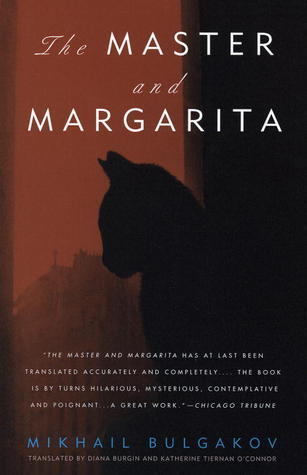
The first complete, annotated English Translation of Mikhail Bulgakov's comic masterpiece.An audacious revision of the stories of Faust and Pontius Pilate, The Master and Margarita is recognized as one of the essential classics of modern Russian literature. The novel's vision of Soviet life in the 1930s is so ferociously accurate that it could not be published during its author's lifetime and appeared only in a censored edition in the 1960s. Its truths are so enduring that its language has become part of the common Russian speech.One hot spring, the devil arrives in Moscow, accompanied by a retinue that includes a beautiful naked witch and an immense talking black cat with a fondness for chess and vodka. The visitors quickly wreak havoc in a city that refuses to believe in either God or Satan. But they also bring peace to two unhappy Muscovites: one is the Master, a writer pilloried for daring to write a novel about Christ and Pontius Pilate; the other is Margarita, who loves the Master so deeply that she is willing literally to go to hell for him. What ensues is a novel of inexhaustible energy, humor, and philosophical depth, a work whose nuances emerge for the first time in Diana Burgin's and Katherine Tiernan O'Connor's splendid English version.

The Sailor Who Fell from Grace with the Sea tells the tale of a band of savage thirteen-year-old boys who reject the adult world as illusory, hypocritical and sentimental, and train themselves in a brutal callousness they call "objectivity." When the mother of one of them begins an affair with a ship's officer, he and his friends idealize the man at first; but it is not long before they conclude that he is in fact soft and romantic. They regard their disappointment in him as an act of betrayal on his part, and react violently.

Because of the boyhood trauma of seeing his mother make love to another man in the presence of his dying father, Mizoguchi becomes a hopeless stutterer. Taunted by his schoolmates, he feels utterly alone until he becomes an acolyte at a famous temple in Kyoto. He quickly becomes obsessed with the beauty of the temple. Even when tempted by a friend into exploring the geisha district, he cannot escape its image. In the novel's soaring climax, he tries desperately to free himself from his fixation.
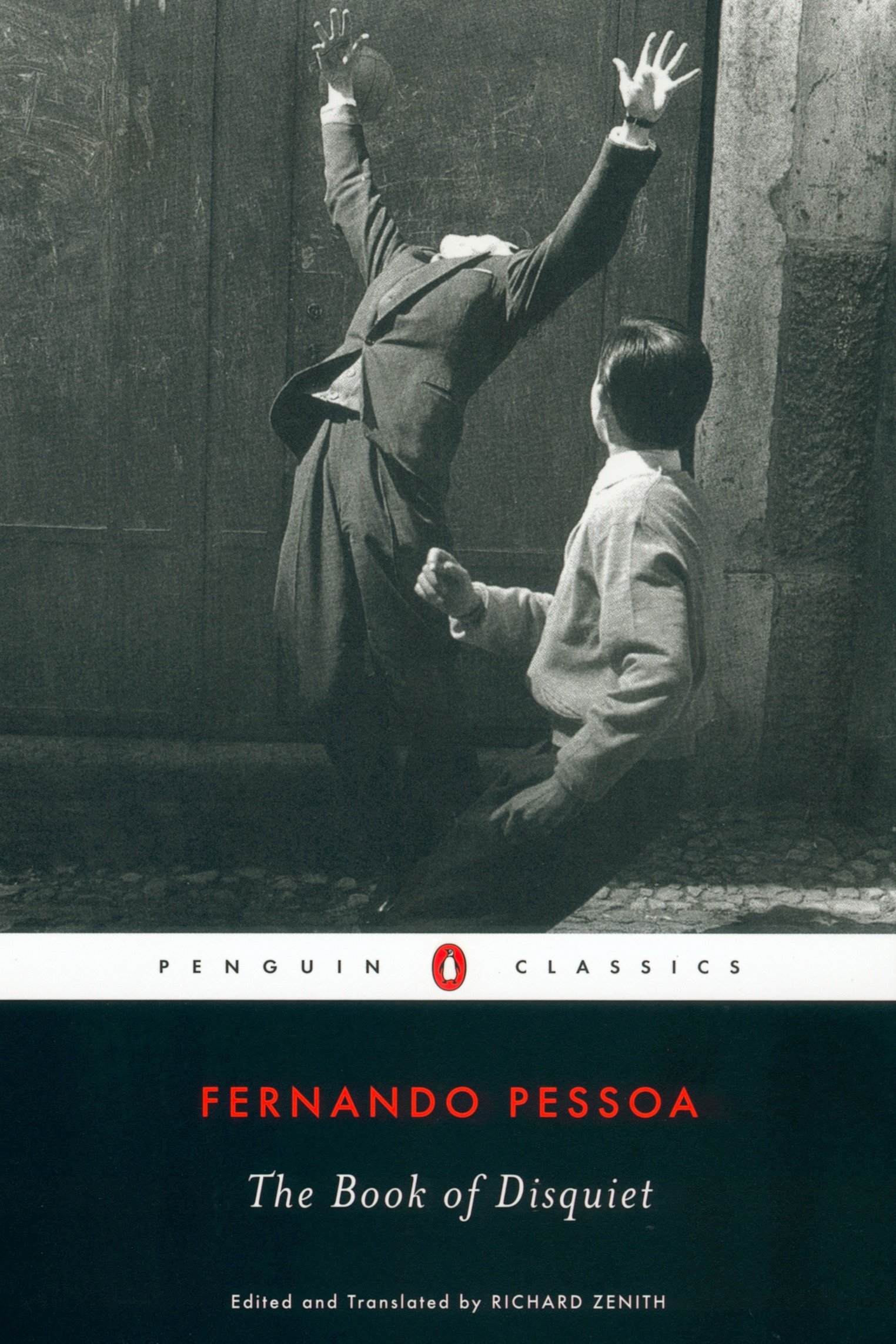
Fernando Pessoa was many writers in one. He attributed his prolific writings to a wide range of alternate selves, each of which had a distinct biography, ideology, and horoscope. When he died in 1935, Pessoa left behind a trunk filled with unfinished and unpublished writings, among which were the remarkable pages that make up his posthumous masterpiece, The Book of Disquiet, an astonishing work that, in George Steiner's words, "gives to Lisbon the haunting spell of Joyce's Dublin or Kafka's Prague." Published for the first time some fifty years after his death, this unique collection of short, aphoristic paragraphs comprises the "autobiography" of Bernardo Soares, one of Pessoa's alternate selves. Part intimate diary, part prose poetry, part descriptive narrative, captivatingly translated by Richard Zenith, The Book of Disquiet is one of the greatest works of the twentieth century.

The cult classic that can still change your life…Let the dice decide! This is the philosophy that changes the life of bored psychiatrist Luke Rhinehart―and in some ways changes the world as well. Because once you hand over your life to the dice, anything can happen. Entertaining, humorous, scary, shocking, subversive, The Dice Man is one of the cult bestsellers of our time.

The most famous and controversial novel from one of the greatest writers of the twentieth century tells the story of Humbert Humbert’s obsessive, devouring, and doomed passion for the nymphet Dolores Haze.Awe and exhilaration—along with heartbreak and mordant wit—abound in Lolita, which tells the story of the aging Humbert Humbert’s obsession for the nymphet Dolores Haze. Lolita is also the story of a hypercivilized European colliding with the cheerful barbarism of postwar America.Most of all, it is a meditation on love—love as outrage and hallucination, madness and transformation.

Miyamoto Musashi's Go Rin no Sho or the book of five rings, is considered a classic treatise on military strategy, much like Sun Tzu's The Art of War and Chanakya's Arthashastra. The five "books" refer to the idea that there are different elements of battle, just as there are different physical elements in life, as described by Buddhism, Shinto, and other Eastern religions. Through the book Musashi defends his thesis: a man who conquers himself is ready to take it on on the world, should need arise.

William Stoner is born at the end of the nineteenth century into a dirt-poor Missouri farming family. Sent to the state university to study agronomy, he instead falls in love with English literature and embraces a scholar’s life, so different from the hardscrabble existence he has known. And yet as the years pass, Stoner encounters a succession of disappointments: marriage into a “proper” family estranges him from his parents; his career is stymied; his wife and daughter turn coldly away from him; a transforming experience of new love ends under threat of scandal. Driven ever deeper within himself, Stoner rediscovers the stoic silence of his forebears and confronts an essential solitude.John Williams’s luminous and deeply moving novel is a work of quiet perfection. William Stoner emerges from it not only as an archetypal American, but as an unlikely existential hero, standing, like a figure in a painting by Edward Hopper, in stark relief against an unforgiving world.

Librarian note: An alternative cover for this ISBN can be found here.Yukio Mishima’s Runaway Horses is the second novel in his masterful tetralogy, The Sea of Fertility . Again we encounter Shigekuni Honda, who narrates this epic tale of what he believes are the successive reincarnations of his childhood friend Kiyoaki Matsugae. In 1932, Shigeuki Honda has become a judge in Osaka. Convinced that a young rightist revolutionary, Isao, is the reincarnation of his friend Kiyoaki , Honda commits himself to saving the youth from an untimely death. Isao, driven to patriotic fanaticism by a father who instilled in him the ethos of the ancient samurai, organizes a violent plot against the new industrialists who he believes are usurping the Emperor’s rightful power and threatening the very integrity of the nation. Runaway Horses is the chronicle of a conspiracy — a novel about the roots and nature of Japanese fanaticism in the years that led to war.

In this celebrated work, his only novel, Wilde forged a devastating portrait of the effects of evil and debauchery on a young aesthete in late-19th-century England. Combining elements of the Gothic horror novel and decadent French fiction, the book centers on a striking premise: As Dorian Gray sinks into a life of crime and gross sensuality, his body retains perfect youth and vigor while his recently painted portrait grows day by day into a hideous record of evil, which he must keep hidden from the world. For over a century, this mesmerizing tale of horror and suspense has enjoyed wide popularity. It ranks as one of Wilde's most important creations and among the classic achievements of its kind.

A special pocket-sized hardcover edition of the New York Times bestselling classic tale of the last man on Earth, I Am Legend by Richard Matheson--one of genre literature's most honored storytellers .Robert Neville is the last living man on Earth...but he is not alone. Every other man, woman, and child on Earth has become a vampire, and they are all hungry for Neville's blood.By day, he is the hunter, stalking the sleeping undead through the abandoned ruins of civilization. By night, he barricades himself in his home and prays for dawn.How long can one man survive in a world of vampires?
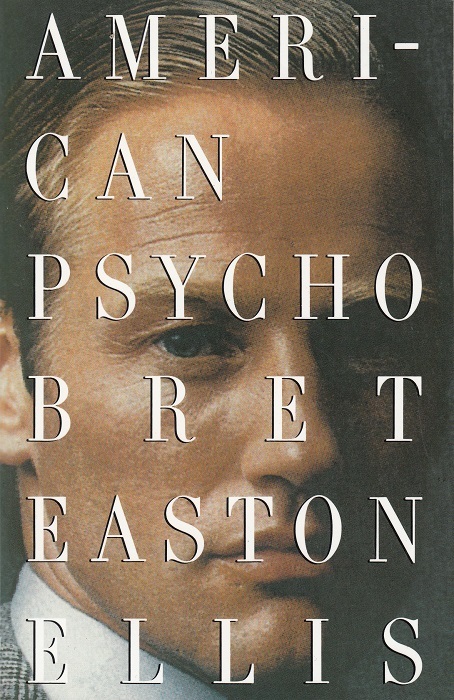
Patrick Bateman is twenty-six and works on Wall Street. He is handsome, sophisticated, charming and intelligent. He is also a psychopath. Taking us to head-on collision with America's greatest dream—and its worst nightmare—American Psycho is a bleak, bitter, black comedy about a world we all recognize but do not wish to confront.

Chivalry is a flower no less indigenous to the soil of Japan than its emblem, the cherry blossom; nor is it a dried-up specimen of an antique virtue preserved in the herbarium of our history. It is still a living object of power and beauty among us; and if it assumes no tangible shape or form, it not the less scents the moral atmosphere, and makes us aware that we are still under its potent spell. The conditions of society which brought it forth and nourished it have long disappeared.

"A classic of Japanese literature" (Chicago Sun-Times ) and the first novel in the masterful tetralogy, The Sea of Fertility, set in 1912 Tokyo, featuring an aspiring lawyer who believes he has met the successive reincarnations of his childhood friend. It is 1912 in Tokyo, and the hermetic world of the ancient aristocracy is being breached for the first time by outsiders—rich provincial families unburdened by tradition, whose money and vitality make them formidable contenders for social and political power. Shigekuni Honda, an aspiring lawyer and his childhood friend, Kiyoaki Matsugae, are the sons of two such families. As they come of age amidst the growing tensions between old and new, Kiyoaki is plagued by his simultaneous love for and loathing of the spirited young woman Ayakura Satoko. But Kiyoaki’s true feelings only become apparent when her sudden engagement to a royal prince shows him the magnitude of his passion—and leads to a love affair both doomed and inevitable.

"The Metamorphosis" (original German title: "Die Verwandlung") is a short novel by Franz Kafka, first published in 1915. It is often cited as one of the seminal works of fiction of the 20th century and is widely studied in colleges and universities across the western world. The story begins with a traveling salesman, Gregor Samsa, waking to find himself transformed into an insect.

A masterpiece of storytelling, this epic saga pits Ahab, a brooding and fantastical sea captain, against the great white whale that crippled him. In telling the tale of Ahab's passion for revenge and the fateful voyage that ensued, Melville produced far more than the narrative of a hair-raising journey; Moby-Dick is a tale for the ages that sounds the deepest depths of the human soul.Interspersed with graphic sketches of life aboard a whaling vessel, and a wealth of information on whales and 19th-century whaling, Melville's greatest work presents an imaginative and thrilling picture of life at sea, as well as a portrait of heroic determination. The author's keen powers of observation and firsthand knowledge of shipboard life (he served aboard a whaler himself) were key ingredients in crafting a maritime story that dramatically examines the conflict between man and nature."A valuable addition to the literature of the day," said American journalist Horace Greeley on the publication of Moby-Dick in 1851 — a classic piece of understatement about a literary classic now considered by many as "the great American novel." Read and pondered by generations, the novel remains an unsurpassed account of the ultimate human struggle against the indifference of nature and the awful power of fate.Much of Moby Dick was inspired by the 1821 work Narratives of the Wreck of the Whale-Ship Essex , which in turn inspired the 2015 movie In the Heart of the Sea , directed by Ron Howard and starring Chris Hemsworth.

From the bestselling author of Kafka on the A magnificent coming-of-age story steeped in nostalgia, “a masterly novel” ( The New York Times Book Review ) blending the music, the mood, and the ethos that were the sixties with a young man’s hopeless and heroic first love.Toru, a serious young college student in Tokyo, is devoted to Naoko, a beautiful and introspective young woman, but their mutual passion is marked by the tragic death of their best friend years before. As Naoko retreats further into her own world, Toru finds himself drawn to a fiercely independent and sexually liberated young woman.Stunning and elegiac, Norwegian Wood first propelled Haruki Murakami into the forefront of the literary scene.

Brave New World is a dystopian social science fiction novel by English author Aldous Huxley. Largely set in a futuristic World State, whose citizens are environmentally engineered into an intelligence-based social hierarchy, the novel anticipates huge scientific advancements in reproductive technology, sleep-learning, psychological manipulation and classical conditioning that are combined to make a dystopian society which is challenged by only a single individual: the story's protagonist.

Charlie Gordon is about to embark upon an unprecedented journey. Born with an unusually low IQ, he has been chosen as the perfect subject for an experimental surgery that researchers hope will increase his intelligence - a procedure that has already been highly successful when tested on a lab mouse named Algernon.As the treatment takes effect, Charlie's intelligence expands until it surpasses that of the doctors who engineered his metamorphosis. The experiment appears to be a scientific breakthrough of paramount importance, until Algernon suddenly deteriorates. Will the same happen to Charlie?

Man's Search for Meaning has riveted generations of readers with its descriptions of life in Nazi death camps and its lessons for spiritual survival. Between 1942 and 1945 psychiatrist Viktor Frankl labored in four different camps, including Auschwitz, while his parents, brother, and pregnant wife perished. Based on his own experience and the stories of his many patients, Frankl argues that we cannot avoid suffering but we can choose how to cope with it, find meaning in it, and move forward with renewed purpose. Frankl's theory—known as logotherapy, from the Greek word logos ("meaning")—holds that our primary drive in life is not pleasure, as Freud maintained, but the discovery and pursuit of what we personally find meaningful. In the decades since its first publication in 1959, Man's Search for Meaning has become a classic, with more than twelve million copies in print around the world. A 1991 Library of Congress survey that asked readers to name a "book that made a difference in your life" found Man's Search for Meaning among the ten most influential books in America. At once a memoir, a meditation, a treatise, and a history, it continues to inspire us all to find significance in the very act of living.(back cover)

Raskolnikov, a destitute and desperate former student, wanders through the slums of St Petersburg and commits a random murder without remorse or regret. He imagines himself to be a great man, a Napoleon: acting for a higher purpose beyond conventional moral law. But as he embarks on a dangerous game of cat and mouse with a suspicious police investigator, Raskolnikov is pursued by the growing voice of his conscience and finds the noose of his own guilt tightening around his neck. Only Sonya, a downtrodden prostitute, can offer the chance of redemption.This vivid translation by David McDuff has been acclaimed as the most accessible version of Dostoyevsky’s great novel, rendering its dialogue with a unique force and naturalism.

Frank Herbert’s classic masterpiece—a triumph of the imagination and one of the bestselling science fiction novels of all time.Set on the desert planet Arrakis, Dune is the story of Paul Atreides—who would become known as Muad’Dib—and of a great family’s ambition to bring to fruition humankind’s most ancient and unattainable dream.A stunning blend of adventure and mysticism, environmentalism and politics, Dune won the first Nebula Award, shared the Hugo Award, and formed the basis of what is undoubtedly the grandest epic in science fiction.
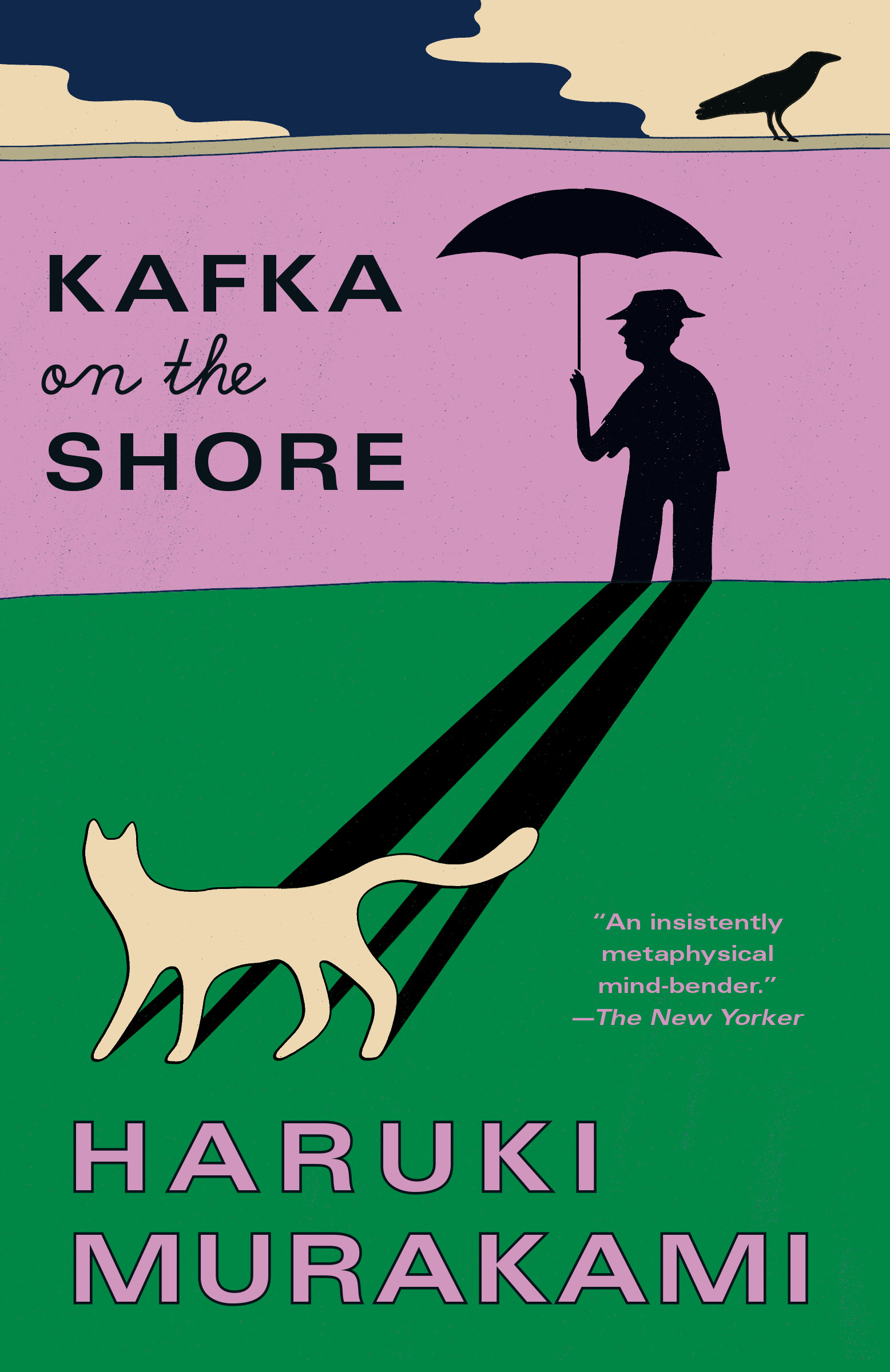
Kafka on the Shore, a tour de force of metaphysical reality, is powered by two remarkable characters: a teenage boy, Kafka Tamura, who runs away from home either to escape a gruesome oedipal prophecy or to search for his long-missing mother and sister; and an aging simpleton called Nakata, who never recovered from a wartime affliction and now is drawn toward Kafka for reasons that, like the most basic activities of daily life, he cannot fathom. Their odyssey, as mysterious to them as it is to us, is enriched throughout by vivid accomplices and mesmerizing events. Cats and people carry on conversations, a ghostlike pimp employs a Hegel-quoting prostitute, a forest harbors soldiers apparently unaged since World War II, and rainstorms of fish (and worse) fall from the sky. There is a brutal murder, with the identity of both victim and perpetrator a riddle—yet this, along with everything else, is eventually answered, just as the entwined destinies of Kafka and Nakata are gradually revealed, with one escaping his fate entirely and the other given a fresh start on his own.

A Summer Reading Pick for President Barack Obama, Bill Gates, and Mark Zuckerberg From a renowned historian comes a groundbreaking narrative of humanity’s creation and evolution—a #1 international bestseller—that explores the ways in which biology and history have defined us and enhanced our understanding of what it means to be “human.”One hundred thousand years ago, at least six different species of humans inhabited Earth. Yet today there is only one—homo sapiens. What happened to the others? And what may happen to us?Most books about the history of humanity pursue either a historical or a biological approach, but Dr. Yuval Noah Harari breaks the mold with this highly original book that begins about 70,000 years ago with the appearance of modern cognition. From examining the role evolving humans have played in the global ecosystem to charting the rise of empires, Sapiens integrates history and science to reconsider accepted narratives, connect past developments with contemporary concerns, and examine specific events within the context of larger ideas.Dr. Harari also compels us to look ahead, because over the last few decades humans have begun to bend laws of natural selection that have governed life for the past four billion years. We are acquiring the ability to design not only the world around us, but also ourselves. Where is this leading us, and what do we want to become?Featuring 27 photographs, 6 maps, and 25 illustrations/diagrams.

Adrian Tchaikovksy's award-winning novel Children of Time , is the epic story of humanity's battle for survival on a terraformed planet.Who will inherit this new Earth?The last remnants of the human race left a dying Earth, desperate to find a new home among the stars. Following in the footsteps of their ancestors, they discover the greatest treasure of the past age -- a world terraformed and prepared for human life.But all is not right in this new Eden. In the long years since the planet was abandoned, the work of its architects has borne disastrous fruit. The planet is not waiting for them, pristine and unoccupied. New masters have turned it from a refuge into mankind's worst nightmare.Now two civilizations are on a collision course, both testing the boundaries of what they will do to survive. As the fate of humanity hangs in the balance, who are the true heirs of this new Earth? Span

Epictetus, a Greek Stoic and freed slave, ran a thriving philosophy school in Nicopolis in the early second century AD. His animated discussions were celebrated for their rhetorical wizardry and were written down by Arrian, his most famous pupil. Together with the Enchiridion, a manual of his main ideas, and the fragments collected here, The Discourses argue that happiness lies in learning to perceive exactly what is in our power to change and what is not, and in embracing our fate to live in harmony with god and nature. In this personal, practical guide to the ethics of Stoicism and moral self-improvement, Epictetus tackles questions of freedom and imprisonment, illness and fear, family, friendship and love, and leaves an intriguing document of daily life in the classical world.In the introduction that accompanies his lively new translation, Robert Dobbin discusses Epictetus' life, his place in the Stoic tradition, his influence on world philosophies and his relevance in the modern day. This edition also includes a bibliography, notes and a glossary of names.

What does everyone in the modern world need to know? Renowned psychologist Jordan B. Peterson's answer to this most difficult of questions uniquely combines the hard-won truths of ancient tradition with the stunning revelations of cutting-edge scientific research.Humorous, surprising, and informative, Dr. Peterson tells us why skateboarding boys and girls must be left alone, what terrible fate awaits those who criticize too easily, and why you should always pet a cat when you meet one on the street.What does the nervous system of the lowly lobster have to tell us about standing up straight (with our shoulders back) and about success in life? Why did ancient Egyptians worship the capacity to pay careful attention as the highest of gods? What dreadful paths do people tread when they become resentful, arrogant, and vengeful? Dr. Peterson journeys broadly, discussing discipline, freedom, adventure, and responsibility, distilling the world's wisdom into 12 practical and profound rules for life. 12 Rules for Life shatters the modern commonplaces of science, faith, and human nature while transforming and ennobling the mind and spirit of its listeners.

Life 3.0: Being Human in the Age of Artificial Intelligence
by Max Tegmark
Rating: 3.9 ⭐
• 12 recommendations ❤️
In this authoritative and eye-opening book, Max Tegmark describes and illuminates the recent, path-breaking advances in Artificial Intelligence and how it is poised to overtake human intelligence. How will AI affect crime, war, justice, jobs, society and our very sense of being human? The rise of AI has the potential to transform our future more than any other technology--and there's nobody better qualified or situated to explore that future than Max Tegmark, an MIT professor who's helped mainstream research on how to keep AI beneficial.How can we grow our prosperity through automation without leaving people lacking income or purpose? What career advice should we give today's kids? How can we make future AI systems more robust, so that they do what we want without crashing, malfunctioning or getting hacked? Should we fear an arms race in lethal autonomous weapons? Will machines eventually outsmart us at all tasks, replacing humans on the job market and perhaps altogether? Will AI help life flourish like never before or give us more power than we can handle?What sort of future do you want? This book empowers you to join what may be the most important conversation of our time. It doesn't shy away from the full range of viewpoints or from the most controversial issues--from superintelligence to meaning, consciousness and the ultimate physical limits on life in the cosmos.

Rediscover the thrills, grandeur, and unabashed fun of the Greek myths—stylishly retold by Stephen Fry. This legendary writer, actor, and comedian breathes new life into beloved tales. From Persephone's pomegranate seeds to Prometheus's fire, from devious divine schemes to immortal love affairs, Fry draws out the humor and pathos in each story and reveals its relevance for our own time. Illustrated throughout with classical art inspired by the myths, this gorgeous volume invites you to explore a captivating world, with a brilliant storyteller as your guide.