
Peter Thiel Recommended Books
German-American entrepreneur and venture capitalist (born 1967)
23 Books Recommended

Resurrection from the Underground: Feodor Dostoevsky
by René Girard
Rating: 4.3 ⭐
• 2 recommendations ❤️
In a fascinating analysis of critical themes in Feodor Dostoevsky’s work, René Girard explores the implications of the Russian author’s “underground,” a site of isolation, alienation, and resentment. Brilliantly translated, this book is a testament to Girard’s remarkable engagement with Dostoevsky’s work, through which he discusses numerous aspects of the human condition, including desire, which Girard argues is “triangular” or “mimetic”―copied from models or mediators whose objects of desire become our own. Girard’s interdisciplinary approach allows him to shed new light on religion, spirituality, and redemption in Dostoevsky’s writing, culminating in a revelatory discussion of the author’s spiritual understanding and personal integration. Resurrection is an essential and thought-provoking companion to Dostoevsky’s Notes from the Underground .

The Sovereign Individual: Mastering the Transition to the Information Age
by James Dale Davidson
Rating: 4.2 ⭐
• 14 recommendations ❤️
Two renowned investment advisors and authors of the bestseller The Great Reckoning bring to light both currents of disaster and the potential for prosperity and renewal in the face of radical changes in human history as we move into the next century.The Sovereign Individual details strategies necessary for adapting financially to the next phase of Western civilization.Few observers of the late twentieth century have their fingers so presciently on the pulse of the global political and economic realignment ushering in the new millennium as do James Dale Davidson and Lord William Rees-Mogg. Their bold prediction of disaster on Wall Street in Blood in the Streets was borne out by Black Tuesday. In their ensuing bestseller, The Great Reckoning, published just weeks before the coup attempt against Gorbachev, they analyzed the pending collapse of the Soviet Union and foretold the civil war in Yugoslavia and other events that have proved to be among the most searing developments of the past few years.In The Sovereign Individual, Davidson and Rees-Mogg explore the greatest economic and political transition in centuries—the shift from an industrial to an information-based society. This transition, which they have termed "the fourth stage of human society," will liberate individuals as never before, irrevocably altering the power of government. This outstanding book will replace false hopes and fictions with new understanding and clarified values.

Discourses on Livy is the founding document of modern republicanism, and Harvey C. Mansfield and Nathan Tarcov have provided the definitive English translation of this classic work. Faithful to the original Italian text, properly attentive to Machiavelli's idiom and subtlety of thought, it is eminently readable. With a substantial introduction, extensive explanatory notes, a glossary of key words, and an annotated index, the Discourses reveals Machiavelli's radical vision of a new science of politics, a vision of "new modes and orders" that continue to shape the modern ethos."[Machiavelli] found in Livy the means to inspire scholars for five centuries. Within the Discourses , often hidden and sometimes unintended by their author, lie the seeds of modern political thought. . . . [Mansfield and Tarcov's] translation is careful and idiomatic."—Peter Stothard, The Times"Translated with painstaking accuracy—but also great readability."— Weekly Standard"A model of contemporary scholarship and a brave effort at Machiavelli translation that allows the great Florentine to speak in his own voice."— Choice

An astonishing work of cultural criticism, this book is widely recognized as a brilliant and devastating challenge to conventional views of literature, anthropology, religion, and psychoanalysis. In its scope and interest it can be compared with Freud's Totem and Taboo, the subtext Girard refutes with polemic daring, vast erudition, and a persuasiveness that leaves the reader compelled to respond, one way or another.This is the single fullest summation of Girard's ideas to date, the book by which they will stand or fall. In a dialogue with two psychiatrists (Jean-Michel Oughourlian and Guy Lefort), Girard probes an encyclopedic array of topics, ranging across the entire spectrum of anthropology, psychoanalysis, and cultural production.Girard's point o departure is what he calls 'mimesis,' the conflict that arises when human rivals compete to differentiate themselves from each other, yet succeed only in becoming more and more alike. At certain points in the life of a society, according to Girard, this mimetic conflict erupts into a crisis in which all difference dissolves in indiscriminate violence. In primitive societies, such crises were resolved by the 'scapegoating mechanism,' in which the community, en masse, turned on an unpremeditated victim. The repression of this collective murder and its repetition in ritual sacrifice then formed the foundations of both religion and the restored social order.How does Christianity, at once the most 'sacrificial' of religions and a faith with a non-violent ideology, fit into this scheme? Girard grants Freud's point, in Totem and Taboo, that Christianity is similar to primitive religion, but only to refute Freud—if Christ is sacrificed, Girard argues, it is not because God willed it, but because human beings wanted it.The book is not merely, or perhaps not mainly, biblical exegesis, for within its scope fall some of the most vexing problems of social history—the paradox that violence has social efficacy, the function of the scapegoat, the mechanism of anti-semitism.

The Fifteen Decisive Battles of the World: From Marathon to Waterloo
by Edward Shepherd Creasy
Rating: 3.7 ⭐
• 4 recommendations ❤️
Each chapter of Creasy’s strategy book dissects a different battle. The fifteen chapters I - THE BATTLE OF MARATHON II - DEFEAT OF THE ATHENIANS AT SYRACUSE, B.C. 413 III - THE BATTLE OF ARBELA, B.C. 331 IV - THE BATTLE OF THE METAURUS, B.C. 207 V - VICTORY OF ARMINIUS OVER THE ROMAN LEGIONS UNDER VARUS, A.D. 9 VI - THE BATTLE OF CHALONS, A.D. 451 VII - THE BATTLE OF TOURS, A.D. 732 VIII - THE BATTLE OF HASTINGS, 1066 IX - JOAN OF ARC'S VICTORY OVER THE ENGLISH AT ORLEANS, A.D. 1429 X - THE DEFEAT OF THE SPANISH ARMADA, A.D. 1588 XI - THE BATTLE OF BLENHEIM, 1704 XII - THE BATTLE OF PULTOWA, 1709 XIII - VICTORY OF THE AMERICANS OVER BURGOYNE AT SARATOGA, A.D. 1777 XIV - THE BATTLE OF VALMY XV – THE BATTLE OF WATERLOO, 1815
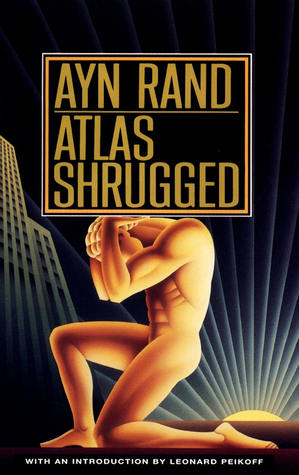
This is the story of a man who said that he would stop the motor of the world and did. Was he a destroyer or the greatest of liberators?Why did he have to fight his battle, not against his enemies, but against those who needed him most, and his hardest battle against the woman he loved? What is the world’s motor — and the motive power of every man? You will know the answer to these questions when you discover the reason behind the baffling events that play havoc with the lives of the characters in this story. Tremendous in its scope, this novel presents an astounding panorama of human life — from the productive genius who becomes a worthless playboy — to the great steel industrialist who does not know that he is working for his own destruction — to the philosopher who becomes a pirate — to the composer who gives up his career on the night of his triumph — to the woman who runs a transcontinental railroad — to the lowest track worker in her Terminal tunnels. You must be prepared, when you read this novel, to check every premise at the root of your convictions.This is a mystery story, not about the murder — and rebirth — of man’s spirit. It is a philosophical revolution, told in the form of an action thriller of violent events, a ruthlessly brilliant plot structure and an irresistible suspense. Do you say this is impossible? Well, that is the first of your premises to check.
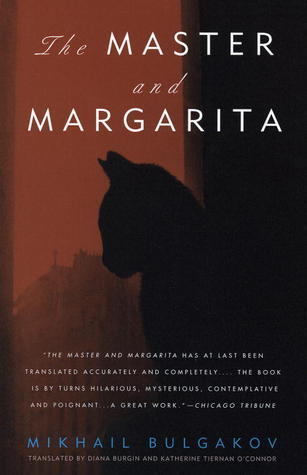
The first complete, annotated English Translation of Mikhail Bulgakov's comic masterpiece.An audacious revision of the stories of Faust and Pontius Pilate, The Master and Margarita is recognized as one of the essential classics of modern Russian literature. The novel's vision of Soviet life in the 1930s is so ferociously accurate that it could not be published during its author's lifetime and appeared only in a censored edition in the 1960s. Its truths are so enduring that its language has become part of the common Russian speech.One hot spring, the devil arrives in Moscow, accompanied by a retinue that includes a beautiful naked witch and an immense talking black cat with a fondness for chess and vodka. The visitors quickly wreak havoc in a city that refuses to believe in either God or Satan. But they also bring peace to two unhappy Muscovites: one is the Master, a writer pilloried for daring to write a novel about Christ and Pontius Pilate; the other is Margarita, who loves the Master so deeply that she is willing literally to go to hell for him. What ensues is a novel of inexhaustible energy, humor, and philosophical depth, a work whose nuances emerge for the first time in Diana Burgin's and Katherine Tiernan O'Connor's splendid English version.

Clarke's masterful evocation of the far future of humanity, considered his finest novel.Men had built cities before, but never such a city as Diaspar. For millennia its protective dome shut out the creeping decay and danger of the world outside. Once, it held powers that rule the stars.But then, as legend has it, the invaders came, driving humanity into this last refuge. It takes one man, a Unique, to break through Diaspar's stifling inertia, to smash the legend and discover the true nature of the Invaders.

John Milton's Paradise Lost is one of the greatest epic poems in the English language. It tells the story of the Fall of Man, a tale of immense drama and excitement, of rebellion and treachery, of innocence pitted against corruption, in which God and Satan fight a bitter battle for control of mankind's destiny. The struggle rages across three worlds - heaven, hell, and earth - as Satan and his band of rebel angels plot their revenge against God. At the center of the conflict are Adam and Eve, who are motivated by all too human temptations but whose ultimate downfall is unyielding love.Marked by Milton's characteristic erudition, Paradise Lost is a work epic both in scale and, notoriously, in ambition. For nearly 350 years, it has held generation upon generation of audiences in rapt attention, and its profound influence can be seen in almost every corner of Western culture.

With this extraordinary first volume in an epoch-making masterpiece, Neal Stephenson hacks into the secret histories of nations and the private obsessions of men, decrypting with dazzling virtuosity the forces that shaped this century. In 1942, Lawrence Pritchard Waterhouse—mathematical genius and young Captain in the U.S. Navy—is assigned to detachment 2702. It is an outfit so secret that only a handful of people know it exists, and some of those people have names like Churchill and Roosevelt. The mission of Waterhouse and Detachment 2702—commanded by Marine Raider Bobby Shaftoe-is to keep the Nazis ignorant of the fact that Allied Intelligence has cracked the enemy's fabled Enigma code. It is a game, a cryptographic chess match between Waterhouse and his German counterpart, translated into action by the gung-ho Shaftoe and his forces. Fast-forward to the present, where Waterhouse's crypto-hacker grandson, Randy, is attempting to create a "data haven" in Southeast Asia—a place where encrypted data can be stored and exchanged free of repression and scrutiny. As governments and multinationals attack the endeavor, Randy joins forces with Shaftoe's tough-as-nails granddaughter, Amy, to secretly salvage a sunken Nazi submarine that holds the key to keeping the dream of a data haven afloat. But soon their scheme brings to light a massive conspiracy with its roots in Detachment 2702 linked to an unbreakable Nazi code called Arethusa. And it will represent the path to unimaginable riches and a future of personal and digital liberty...or to universal totalitarianism reborn. A breathtaking tour de force, and Neal Stephenson's most accomplished and affecting work to date, Cryptonomicon is profound and prophetic, hypnotic and hyper-driven, as it leaps forward and back between World War II and the World Wide Web, hinting all the while at a dark day-after-tomorrow. It is a work of great art, thought and creative daring; the product of a truly iconoclastic imagination working with white-hot intensity.

The Diamond Age: Or, a Young Lady's Illustrated Primer
by Neal Stephenson
Rating: 4.2 ⭐
• 10 recommendations ❤️
The Diamond Age: Or, a Young Lady's Illustrated Primer is a postcyberpunk novel by Neal Stephenson. It is to some extent a science fiction coming-of-age story, focused on a young girl named Nell, and set in a future world in which nanotechnology affects all aspects of life. The novel deals with themes of education, social class, ethnicity, and the nature of artificial intelligence.

The Messianic Character of American Education
by Rousas John Rushdoony
Rating: 4.1 ⭐
• 2 recommendations ❤️
Rushdoony's study tells us an important part of American exactly what has public education been trying to accomplish? Before the 1830s and Horace Mann, no schools in the U.S. were state supported or state controlled. They were local, parent-teacher enterprises, supported without taxes, and taking care of all children. They were remarkably high in standard and were Christian. From Mann to the present, the state has used education to socialize the child. The school's basic purpose, according to its own philosophers, is not education in the traditional sense of the 3 R's. Instead, it is to promote 'democracy' and 'equality,' not in their legal or civic sense, but in terms of the engineering of a socialized citizenry. Public education became the means of creating a social order of the educator's design. Such men saw themselves and the school in messianic terms. This book was instrumental in launching the Christian school and homeschool movements.

The Great Illusion A Study of the Relation of Military Power to National Advantage
by Norman Angell
• 2 recommendations ❤️
American interest in the problems discussed here is hardly less vital than that of Europe. Being more persuaded than when the first American edition of this book was issued in 1910, it is certain that opinion in America will not be equiped for dealing with the problems arising out of the relations with the Spanish American states; with Japan; and with the Philippians; unless it has some fair understanding of the principles with which this book deals. Its general interest even goes farther than this; no great community like that of modern America can remain indifferent to the drift of general opinion throughout the world on matters wrapped up with issues so important as those of war and peace. That the tangible commercial and business interest of America are involved in these European events is obvious from the very factors of financial and commercial interdependence which forms the basis of the argument. That the interest of Americans are inextricably, if indirectly, bound up with those of Europe has become increasingly clear as can be proven by the barest investigation of the trend of political thought in this country.

The must-have Pevear and Volokhonsky translation of one of the greatest Russian novels ever writtenDescribed by William Faulkner as the best novel ever written and by Fyodor Dostoevsky as “flawless,” Anna Karenina tells of the doomed love affair between the sensuous and rebellious Anna and the dashing officer, Count Vronsky. Tragedy unfolds as Anna rejects her passionless marriage and thereby exposes herself to the hypocrisies of society. Set against a vast and richly textured canvas of nineteenth-century Russia, the novel's seven major characters create a dynamic imbalance, playing out the contrasts of city and country life and all the variations on love and family happiness.While previous versions have softened the robust and sometimes shocking qualities of Tolstoy's writing, Pevear and Volokhonsky have produced a translation true to his powerful voice. This authoritative edition, which received the PEN Translation Prize and was an Oprah Book Club™ selection, also includes an illuminating introduction and explanatory notes. Beautiful, vigorous, and eminently readable, this Anna Karenina will be the definitive text for fans of the film and generations to come. This Penguin Classics Deluxe Edition also features French flaps and deckle-edged paper.

100 Plus: How the Coming Age of Longevity Will Change Everything, From Careers and Relationships to Family and Faith
by Sonia Arrison
Rating: 3.5 ⭐
• 2 recommendations ❤️
Humanity is on the cusp of an exciting longevity revolution. The first person to live to 150 years has probably already been born. What will your life look like when you live to be over 100? Will you be healthy? Will your marriage need a sunset clause? How long will you have to work? Will you finish one career at sixty-five only to go back to school to learn a new one? And then, will you be happily working for another sixty years? Maybe you’ll be a parent to a newborn and a grandparent at the same time. Will the world become overpopulated? And how will living longer affect your finances, your family life, and your views on religion and the afterlife? In 100 Plus, futurist Sonia Arrison takes us on an eye-opening journey to the future at our doorsteps, where science and technology are beginning to radically change life as we know it. She introduces us to the people transforming our lives: the brilliant scientists and genius inventors and the billionaires who fund their work. The astonishing advances to extend our lives—and good health—are almost here. In the very near future fresh organs for transplants will be grown in laboratories, cloned stem cells will bring previously unstoppable diseases to their knees, and living past 100 will be the rule, not the exception. Sonia Arrison brings over a decade of experience researching and writing about cutting-edge advances in science and technology to 100 Plus, painting a vivid picture of a future that only recently seemed like science fiction, but now is very real. 100 Plus is the first book to give readers a comprehensive understanding of how life-extending discoveries will change our social and economic worlds. This illuminating and indispensable text will help us navigate the thrilling journey of life beyond 100 years.

Psychopolitics: Conversations with Trevor Cribben Merrill
by Jean-Michel Oughourlian
Rating: 3.9 ⭐
• 2 recommendations ❤️
For thousands of years, political leaders have unified communities by aligning them against common enemies. However, today more than ever, the search for “common” enemies results in anything but unanimity. Scapegoats like Saddam Hussein, for example, led to a stark polarization in the United States. Renowned neuropsychiatrist and psychologist Jean-Michel Oughourlian proposes that the only authentic enemy is the one responsible for both everyday frustrations and global dangers, such as climate change—ourselves. Oughourlian, who pioneered an “interdividual” psychology with René Girard, reveals how all people are bound together in a dynamic, contingent process of imitation, and shows that the same patterns of irrational mimetic desire that bring individuals together and push them apart also explain the behavior of nations.

The Hard Thing About Hard Things: Building a Business When There Are No Easy Answers―Straight Talk on the Challenges of Entrepreneurship
by Ben Horowitz
Rating: 4.2 ⭐
• 60 recommendations ❤️
A lot of people talk about how great it is to start a business, but only Ben Horowitz is brutally honest about how hard it is to run one.In The Hard Thing About Hard Things, Ben Horowitz, cofounder of Andreessen Horowitz and one of Silicon Valley's most respected and experienced entrepreneurs, draws on his own story of founding, running, selling, buying, managing, and investing in technology companies to offer essential advice and practical wisdom for navigating the toughest problems business schools don't cover. His blog has garnered a devoted following of millions of readers who have come to rely on him to help them run their businesses. A lifelong rap fan, Horowitz amplifies business lessons with lyrics from his favorite songs and tells it straight about everything from firing friends to poaching competitors, from cultivating and sustaining a CEO mentality to knowing the right time to cash in.His advice is grounded in anecdotes from his own hard-earned rise—from cofounding the early cloud service provider Loudcloud to building the phenomenally successful Andreessen Horowitz venture capital firm, both with fellow tech superstar Marc Andreessen (inventor of Mosaic, the Internet's first popular Web browser). This is no polished victory lap; he analyzes issues with no easy answers through his trials, including demoting (or firing) a loyal friend;whether you should incorporate titles and promotions, and how to handle them;if it's OK to hire people from your friend's company; how to manage your own psychology, while the whole company is relying on you; what to do when smart people are bad employees; why Andreessen Horowitz prefers founder CEOs, and how to become one; whether you should sell your company, and how to do it.Filled with Horowitz's trademark humor and straight talk, and drawing from his personal and often humbling experiences, The Hard Thing About Hard Things is invaluable for veteran entrepreneurs as well as those aspiring to their own new ventures.

A New York Times #1 BestsellerAn Amazon #1 BestsellerA Wall Street Journal #1 BestsellerA USA Today BestsellerA Sunday Times BestsellerA Guardian Best Book of the 21st CenturyWinner of the Financial Times and McKinsey Business Book of the Year AwardWinner of the British Academy MedalFinalist, National Book Critics Circle Award“It seems safe to say that Capital in the Twenty-First Century, the magnum opus of the French economist Thomas Piketty, will be the most important economics book of the year—and maybe of the decade.”—Paul Krugman, New York Times“The book aims to revolutionize the way people think about the economic history of the past two centuries. It may well manage the feat.”—The Economist“Piketty’s Capital in the Twenty-First Century is an intellectual tour de force, a triumph of economic history over the theoretical, mathematical modeling that has come to dominate the economics profession in recent years.”—Steven Pearlstein, Washington Post“Piketty has written an extraordinarily important book…In its scale and sweep it brings us back to the founders of political economy.”—Martin Wolf, Financial Times“A sweeping account of rising inequality…Piketty has written a book that nobody interested in a defining issue of our era can afford to ignore.”—John Cassidy, New Yorker“Stands a fair chance of becoming the most influential work of economics yet published in our young century. It is the most important study of inequality in over fifty years.”—Timothy Shenk, The Nation

The #1 New York Times bestseller that examines how people can champion new ideas—and how leaders can fight groupthink, from the author of Give and Take and co-author of Option B“Reading Originals made me feel like I was seated across from Adam Grant at a dinner party, as one of my favorite thinkers thrilled me with his insights and his wonderfully new take on the world.” —Malcolm Gladwell, author of Outliers and The Tipping Point“Originals is one of the most important and captivating books I have ever read, full of surprising and powerful ideas. It will not only change the way you see the world; it might just change the way you live your life. And it could very well inspire you to change your world.” —Sheryl Sandberg, COO of Facebook and author of Lean InWith Give and Take, Adam Grant not only introduced a landmark new paradigm for success but also established himself as one of his generation’s most compelling and provocative thought leaders. In Originals he again addresses the challenge of improving the world, but now from the perspective of becoming original: choosing to champion novel ideas and values that go against the grain, battle conformity, and buck outdated traditions. How can we originate new ideas, policies, and practices without risking it all? Using surprising studies and stories spanning business, politics, sports, and entertainment, Grant explores how to recognize a good idea, speak up without getting silenced, build a coalition of allies, choose the right time to act, and manage fear and doubt; how parents and teachers can nurture originality in children; and how leaders can build cultures that welcome dissent. Learn from an entrepreneur who pitches his start-ups by highlighting the reasons not to invest, a woman at Apple who challenged Steve Jobs from three levels below, an analyst who overturned the rule of secrecy at the CIA, a billionaire financial wizard who fires employees for failing to criticize him, and a TV executive who didn’t even work in comedy but saved Seinfeld from the cutting-room floor. The payoff is a set of groundbreaking insights about rejecting conformity and improving the status quo.
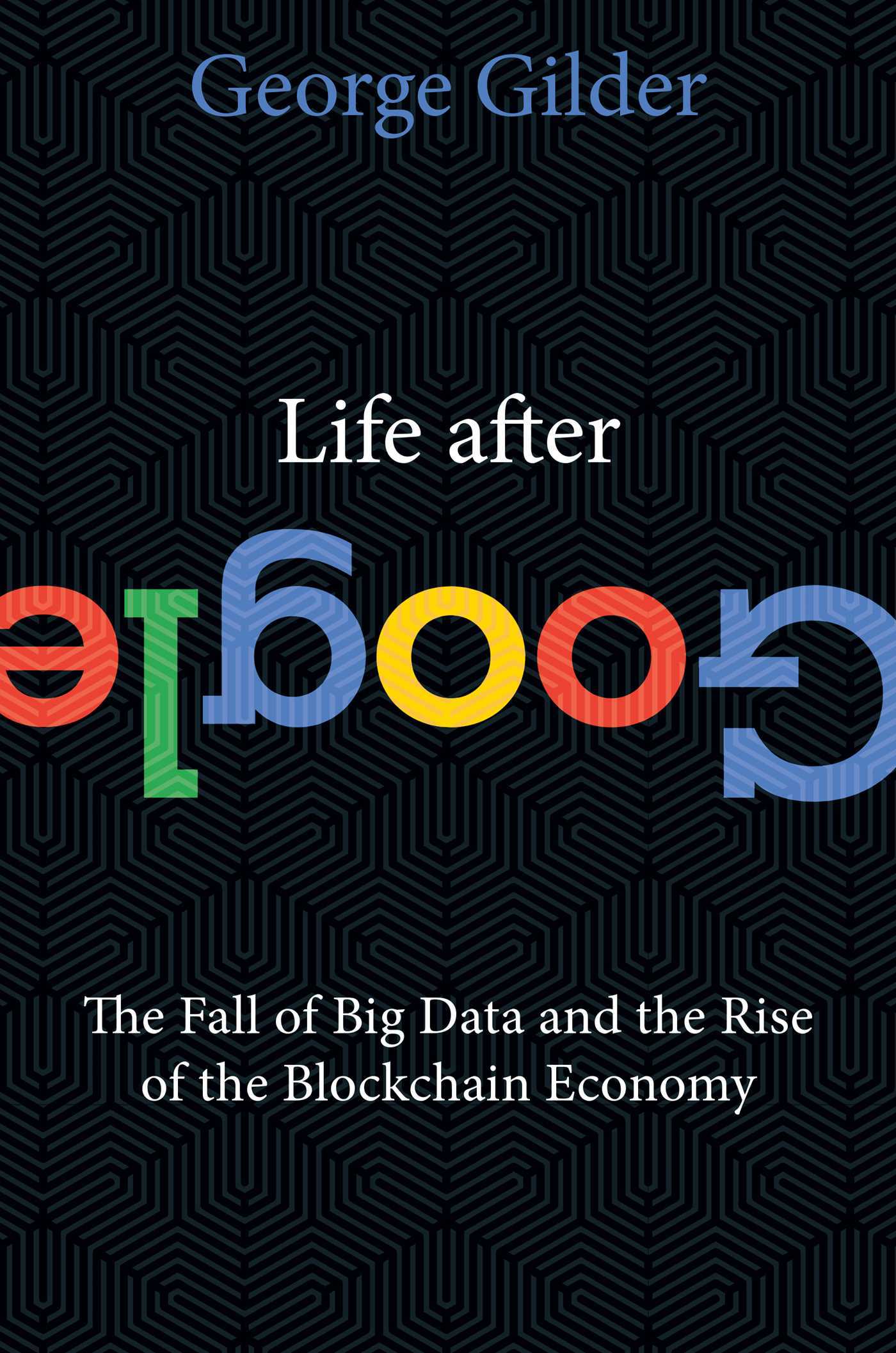
Life After Google: The Fall of Big Data and the Rise of the Blockchain Economy
by George Gilder
Rating: 3.5 ⭐
• 2 recommendations ❤️
A FINANCIAL TIMES BOOK OF THE MONTHFROM THE WALL STREET " Nothing Mr. Gilder says or writes is ever delivered at anything less than the fullest philosophical decibel.. . Mr. Gilder sounds less like a tech guru than a poet, and his words tumble out in a romantic cascade."“Google’s algorithms assume the world’s future is nothing more than the next moment in a random process. George Gilder shows how deep this assumption goes, what motivates people to make it, and why it’s the future depends on human action.” — Peter Thiel, founder of PayPal and Palantir Technologies and author of Zero to Notes on Startups, or How to Build the FutureThe Age of Google, built on big data and machine intelligence, has been an awesome era. But it’s coming to an end. In Life after Google, George Gilder—the peerless visionary of technology and culture—explains why Silicon Valley is suffering a nervous breakdown and what to expect as the post-Google age dawns.Google’s astonishing ability to “search and sort” attracts the entire world to its search engine and countless other goodies—videos, maps, email, calendars….And everything it offers is free, or so it seems. Instead of paying directly, users submit to advertising. The system of “aggregate and advertise” works—for a while—if you control an empire of data centers, but a market without prices strangles entrepreneurship and turns the Internet into a wasteland of ads.The crisis is not just economic. Even as advances in artificial intelligence induce delusions of omnipotence and transcendence, Silicon Valley has pretty much given up on security. The Internet firewalls supposedly protecting all those passwords and personal information have proved hopelessly permeable.The crisis cannot be solved within the current computer and network architecture. The future lies with the “cryptocosm”—the new architecture of the blockchain and its derivatives. Enabling cryptocurrencies such as bitcoin and ether, NEO and Hashgraph, it will provide the Internet a secure global payments system, ending the aggregate-and-advertise Age of Google.Silicon Valley, long dominated by a few giants, faces a “great unbundling,” which will disperse computer power and commerce and transform the economy and the Internet.Life after Google is almost here.For fans of "Wealth and Poverty," "Knowledge and Power," and "The Scandal of Money."
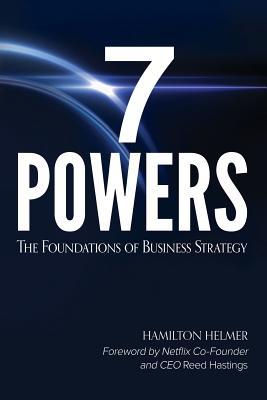
7 Powers: The Foundations of Business Strategy
by Hamilton Wright Helmer
Rating: 4.2 ⭐
• 12 recommendations ❤️
7 Powers breaks fresh ground by constructing a comprehensive strategy toolset that is easy for you to learn, communicate and quickly apply.Drawing on his decades of experience as a business strategy advisor, active equity investor and Stanford University teacher, Hamilton Helmer develops from first principles a practical theory of Strategy rooted in the notion of Power, those conditions which create the potential for persistent differential returns.Using rich real-world examples, Helmer rigorously characterizes exactly what your business must achieve to create Power. And create Power it must, for without it your business is at risk. He explains why invention always comes first and then develops the Power Progression to enable you to target when your Power must be in the origination, take-off or stability phases of your business. Every business faces a do-or-die strategy a crux directional choice made amidst swirling uncertainty. To get this right you need at your fingertips a real-time strategy compass to discern your true north. 7 Powers is that compass.

Milo has become the most dangerous man in America by voicing truths too politically incorrect for the establishment and defending those whose free speech has been trampled not only across the country, but around the world.Like his heroes Skeletor, Darth Vader and Joan Rivers, Milo will say anything about anyone, and he doesn't care who gets triggered by the truth.Milo is an award-winning journalist, the hottest ticket in any town his tour stops in, and the ultimate voice for people of all ages that are proud to be a part of out glorious western civilization. Dangerous is the first book written by Milo Yiannopoulos, and is the first of many bestsellers he will release on the Dangerous Books imprint.

KJV Holy Bible, Giant Print Standard Size Faux Leather Red Letter Edition - Thumb Index & Ribbon Marker, King James Version, Dark Brown
by Anonymous
Rating: 4.7 ⭐
• 40 recommendations ❤️
New - Holy Bible: KJV Giant Print Thumb Index Edition: Brown (King James Bible). Great for gift or personal study.