
Nick Offerman Recommended Books
American actor
8 Books Recommended

The Omnivore's Dilemma: A Natural History of Four Meals
by Michael Pollan
Rating: 4.4 ⭐
• 5 recommendations ❤️
"Outstanding . . . a wide-ranging invitation to think through the moral ramifications of our eating habits." — The New YorkerOne of the New York Times Book Review's Ten Best Books of the Year and Winner of the James Beard AwardAuthor of This is Your Mind on Plants, How to Change Your Mind and the #1 New York Times Bestseller In Defense of Food and Food RulesWhat should we have for dinner? Ten years ago, Michael Pollan confronted us with this seemingly simple question and, with The Omnivore’s Dilemma, his brilliant and eye-opening exploration of our food choices, demonstrated that how we answer it today may determine not only our health but our survival as a species. In the years since, Pollan’s revolutionary examination has changed the way Americans think about food. Bringing wide attention to the little-known but vitally important dimensions of food and agriculture in America, Pollan launched a national conversation about what we eat and the profound consequences that even the simplest everyday food choices have on both ourselves and the natural world. Ten years later, The Omnivore’s Dilemma continues to transform the way Americans think about the politics, perils, and pleasures of eating.

The Lost Carving: A Journey to the Heart of Making
by David Esterly
Rating: 4.5 ⭐
• 2 recommendations ❤️
“A beautiful, intricate meditation on creativity and discovery, on fire and rebirth.” —Elizabeth Gilbert Awestruck at the sight of a Grinling Gibbons carving in a London church, David Esterly chose to dedicate his life to woodcarving—its physical rhythms, intricate beauty, and intellectual demands. Forty years later, he is the foremost practitioner of Gibbons’s forgotten technique, which revolutionized ornamental sculpture in the late 1600s with its spectacular cascades of flowers, fruits, and foliage.After a disastrous fire at Henry VIII’s Hampton Court Palace, Esterly was asked to replace the Gibbons masterpiece destroyed by the flames. It turned out to be the most challenging year in Esterly’s life, forcing him to question his abilities and delve deeply into what it means to make a thing well. Written with a philosopher’s intellect and a poet’s grace, The Lost Carving explores the connection between creativity and physical work and illuminates the passionate pursuit of a vocation that unites head and hand and heart.

Although his career as a bestselling author and on The Daily Show With Jon Stewart was founded on fake news and invented facts, in 2016 that routine didn't seem as funny to John Hodgman anymore. Everyone is doing it now. Disarmed of falsehood, he was left only with the awful truth: John Hodgman is an older white male monster with bad facial hair, wandering like a privileged Sasquatch through three wildernesses: the hills of Western Massachusetts where he spent much of his youth; the painful beaches of Maine that want to kill him (and some day will); and the metaphoric haunted forest of middle age that connects them.Vacationland collects these real life wanderings, and through them you learn of the horror of freshwater clams, the evolutionary purpose of the mustache, and which animals to keep as pets and which to kill with traps and poison. There is also some advice on how to react when the people of coastal Maine try to sacrifice you to their strange god.Though wildly, Hodgmaniacally funny as usual, it is also a poignant and sincere account of one human facing his forties, those years when men in particular must stop pretending to be the children of bright potential they were and settle into the failing bodies of the wiser, weird dads that they are.

How to Change Your Mind: What the New Science of Psychedelics Teaches Us About Consciousness, Dying, Addiction, Depression, and Transcendence
by Michael Pollan
Rating: 4.4 ⭐
• 6 recommendations ❤️
"Pollan keeps you turning the pages . . . cleareyed and assured." --New York Times A #1 New York Times Bestseller, New York Times Book Review 10 Best Books of 2018, and New York Times Notable BookA brilliant and brave investigation into the medical and scientific revolution taking place around psychedelic drugs--and the spellbinding story of his own life-changing psychedelic experiencesWhen Michael Pollan set out to research how LSD and psilocybin (the active ingredient in magic mushrooms) are being used to provide relief to people suffering from difficult-to-treat conditions such as depression, addiction and anxiety, he did not intend to write what is undoubtedly his most personal book. But upon discovering how these remarkable substances are improving the lives not only of the mentally ill but also of healthy people coming to grips with the challenges of everyday life, he decided to explore the landscape of the mind in the first person as well as the third. Thus began a singular adventure into various altered states of consciousness, along with a dive deep into both the latest brain science and the thriving underground community of psychedelic therapists. Pollan sifts the historical record to separate the truth about these mysterious drugs from the myths that have surrounded them since the 1960s, when a handful of psychedelic evangelists inadvertently catalyzed a powerful backlash against what was then a promising field of research.A unique and elegant blend of science, memoir, travel writing, history, and medicine, How to Change Your Mind is a triumph of participatory journalism. By turns dazzling and edifying, it is the gripping account of a journey to an exciting and unexpected new frontier in our understanding of the mind, the self, and our place in the world. The true subject of Pollan's mental travelogue is not just psychedelic drugs but also the eternal puzzle of human consciousness and how, in a world that offers us both suffering and joy, we can do our best to be fully present and find meaning in our lives.
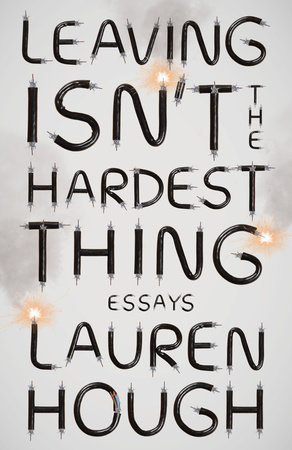
Searing and extremely personal essays from the heart of working-class America, shot through with the darkest elements the country can manifest--cults, homelessness, and hunger--while discovering light and humor in unexpected corners. A VINTAGE ORIGINAL.As an adult, Lauren Hough has had many identities: an airman in the U.S. Air Force, a cable guy, a bouncer at a gay club. As a child, however, she had none. Growing up as a member of the infamous cult The Children of God, Hough had her own self robbed from her. The cult took her all over the globe--to Germany, Japan, Texas, Ecuador--but it wasn't until her mother finally walked away that Lauren understood she could have a life beyond "The Family."Along the way, she's loaded up her car and started over, trading one life for the next. She's taken pilgrimages to the sights of her youth, been kept in solitary confinement, dated a lot of women, dabbled in drugs, and eventually found herself as what she always wanted to be: a writer. Here, as she sweeps through the underbelly of America--relying on friends, family, and strangers alike--she begins to excavate a new identity even as her past continues to trail her and color her world, relationships, and perceptions of self.At once razor-sharp, profoundly brave, and often very, very funny, the essays in Leaving Isn't the Hardest Thing interrogate our notions of ecstasy, queerness, and what it means to live freely. Each piece is a reckoning: of survival, identity, and how to reclaim one's past when carving out a future.

He will be allowed to visit his mother soon. His mother who is terminally ill, his mother who he has been barred from seeing as he recovers from his own bout of pneumonia.Until then, with the help of his physiotherapist Freya, he must navigate his increasingly empty and isolated existence: his father, who finds solace in the bottom of a glass; his Nana Q, whose betting-slip confetti litters her handbag; his friends, who simply wouldn’t understand.Time passes with the promise of soon, but one hundred and fifty-two days later the boy will come face to face with his grief, and move beyond to a world full of possibility, hope and love.

Shortlisted for the Wainwright Prize for UK Nature Writing 2020 'Remarkable, and so profoundly enjoyable to read ... Its importance is huge, setting down a vital marker in the 21st century debate about how we use and abuse the land' - Joyce McMillan, Scotsman Desperate to connect with his native Galloway, Patrick Laurie plunges into work on his family farm in the hills of southwest Scotland. Investing in the oldest and most traditional breeds of Galloway cattle, the Riggit Galloway, he begins to discover how cows once shaped people, places and nature in this remote and half-hidden place. This traditional breed requires different methods of care from modern farming on an industrial, totally unnatural scale. As the cattle begin to dictate the pattern of his life, Patrick stumbles upon the passing of an ancient rural heritage. Always one of the most isolated and insular parts of the country, as the twentieth century progressed, the people of Galloway deserted the land and the moors have been transformed into commercial forest in the last thirty years. The people and the cattle have gone, and this withdrawal has shattered many centuries of tradition and custom. Much has been lost, and the new forests have driven the catastrophic decline of the much-loved curlew, a bird which features strongly in Galloway's consciousness. The links between people, cattle and wild birds become a central theme as Patrick begins to face the reality of life in a vanishing landscape.

As a boy, James Rebanks's grandfather taught him to work the land the old way. Their family farm in the Lake District hills was part of an ancient agricultural landscape: a patchwork of crops and meadows, of pastures grazed with livestock, and hedgerows teeming with wildlife. And yet, by the time James inherited the farm, it was barely recognisable. The men and women had vanished from the fields; the old stone barns had crumbled; the skies had emptied of birds and their wind-blown song.English Pastoral is the story of an inheritance: one that affects us all. It tells of how rural landscapes around the world were brought close to collapse, and the age-old rhythms of work, weather, community and wild things were lost. And yet this elegy from the northern fells is also a song of hope: of how, guided by the past, one farmer began to salvage a tiny corner of England that was now his, doing his best to restore the life that had vanished and to leave a legacy for the future.This is a book about what it means to have love and pride in a place, and how, against all the odds, it may still be possible to build a new pastoral: not a utopia, but somewhere decent for us all.