42 Books Recommended

The Millionaire Next Door: The Surprising Secrets of America's Wealthy
by Thomas J. Stanley
Rating: 4.0 ⭐
• 5 recommendations ❤️
The bestselling The Millionaire Next Door identifies seven common traits that show up again and again among those who have accumulated wealth. Most of the truly wealthy in this country don't live in Beverly Hills or on Park Avenue-they live next door. This new edition, the first since 1998, includes a new foreword for the twenty-first century by Dr. Thomas J. Stanley.

Toward Rational Exuberance: The Evolution of the Modern Stock Market
by B. Mark Smith
Rating: 3.9 ⭐
• 2 recommendations ❤️
A professional stock trader with two decades of practical experience traces the evolution of popular theories of stock market behavior, showing how tey have become widely accepted over time and clarifies some of the theories.

The complete program for building and maintaining a well-conditioned, excellently proportioned body—for a lifetime of fitness and health.In Arnold's Bodybuilding for Men, legendary athlete Arnold Schwarzenegger shows you how to achieve the best physical condition of your life. For every man, at every age, Arnold outlines a step-by-step program of excercise, skillfully combining weight training and aerobic conditioning. The result—total cardiovascular and muscular fitness.Arnold's program of exercise features stretching, warm-up and warm-down routines, and three series of exercises, each more ambitious than the last, all calculated to help you progress at your own speed. In addition, Arnold contributes important advice about equipment, nutrition and diet, and getting started on your program of exercise.Special sections of Arnold's Bodybuilding for Men cover training for teenagers, exercises designed to keep you in shape on the road or when you can't get to the gym, and the regimen Arnold followed to win his seven Mr. Olympia titles.Illustrated with hundreds of photographs of Arnold and other top bodybuilders, Arnold's Bodybuilding for Men will help every man look great and feel terrific.

The Little Book of Common Sense Investing: The Only Way to Guarantee Your Fair Share of Stock Market Returns
by John C. Bogle
Rating: 4.3 ⭐
• 6 recommendations ❤️
The best-selling investing "bible" offers new information, new insights, and new perspectives The Little Book of Common Sense Investing is the classic guide to getting smart about the market. Legendary mutual fund pioneer John C. Bogle reveals his key to getting more out of investing: low-cost index funds. Bogle describes the simplest and most effective investment strategy for building wealth over the long term: buy and hold, at very low cost, a mutual fund that tracks a broad stock market Index such as the S&P 500.While the stock market has tumbled and then soared since the first edition of Little Book of Common Sense was published in April 2007, Bogle's investment principles have endured and served investors well. This tenth anniversary edition includes updated data and new information but maintains the same long-term perspective as in its predecessor.Bogle has also added two new chapters designed to provide further guidance to investors: one on asset allocation, the other on retirement investing.A portfolio focused on index funds is the only investment that effectively guarantees your fair share of stock market returns. This strategy is favored by Warren Buffett, who said this about Bogle: "If a statue is ever erected to honor the person who has done the most for American investors, the hands-down choice should be Jack Bogle. For decades, Jack has urged investors to invest in ultra-low-cost index funds. . . . Today, however, he has the satisfaction of knowing that he helped millions of investors realize far better returns on their savings than they otherwise would have earned. He is a hero to them and to me."Bogle shows you how to make index investing work for you and help you achieve your financial goals, and finds support from some of the world's best financial minds: not only Warren Buffett, but Benjamin Graham, Paul Samuelson, Burton Malkiel, Yale's David Swensen, Cliff Asness of AQR, and many others.This new edition of The Little Book of Common Sense Investing offers you the same solid strategy as its predecessor for building your financial future.Build a broadly diversified, low-cost portfolio without the risks of individual stocks, manager selection, or sector rotation. Forget the fads and marketing hype, and focus on what works in the real world. Understand that stock returns are generated by three sources (dividend yield, earnings growth, and change in market valuation) in order to establish rational expectations for stock returns over the coming decade. Recognize that in the long run, business reality trumps market expectations. Learn how to harness the magic of compounding returns while avoiding the tyranny of compounding costs. While index investing allows you to sit back and let the market do the work for you, too many investors trade frantically, turning a winner's game into a loser's game. The Little Book of Common Sense Investing is a solid guidebook to your financial future.

Bogle On Mutual Funds: New Perspectives For The Intelligent Investor
by John C. Bogle
Rating: 4.0 ⭐
• 2 recommendations ❤️
The seminal work on mutual funds investing is now a Wiley Investment Classic Certain books have redefined the way we view the world of finance and investing―books that should be on every investor’s shelf. Bogle On Mutual Funds―the definitive work on mutual fund investing by one of finance’s great luminaries―is just such a work, and has been added to the catalog of Wiley’s Investment Classic collection. Updated with a new introduction by expert John Bogle, this comprehensive book provides investors with the wisdom of the pioneer of mutual funds to help you identify and execute the ideal mutual fund investment choices for your portfolio. The former Vanguard Chief Executive, Bogle has long been mutual funds' most outspoken critic; in this classic book, he provides guidance on what you should and shouldn't believe when it comes to mutual funds, along with the story of persistence and perseverance that led to this seminal work. You'll learn the differences between common stock, bond, money market, and balanced funds, and why a passively managed "index" fund is a smarter investment than a fund managed by someone making weighted bets on individual securities, sectors, and the economy. Bogle reveals the truth behind the advertising, the mediocre performance, and selfishness, and highlights the common mistakes many investors make. Take a look into this timeless classic and let Bogle On Mutual Funds show you how to invest in mutual funds the right way, with the expert perspective of an industry leader.

There is no one better qualified to tell us about the failures of the American financial system and the grotesque abuses that have taken place in recent years than John Bogle, who as founder and former chief executive of the Vanguard mutual funds group has seen firsthand the innermost workings of the financial industry. A zealous advocate for the small investor for more than fifty years, Bogle has championed the restoration of integrity in industry practices. As an astute observer and commentator, he knows that a trustworthy business and financial complex is essential to America’s continuing leadership in the world and to social and economic progress at home.This book tells not just a story about what went wrong but, more important, the story of why we lost our way and of how we can right our course. Bogle argues for a return to a governance structure in which owners’ capital that has been put at risk is used in their interests rather than in the interests of corporate and financial managers. Given that ownership is now consolidated in the hands of relatively few large mutual and pension funds, the specific reforms Bogle details in this book are essential as well as practical. Every investor, analyst, Wall-Streeter, policy maker, and businessperson should read this deeply informed book.

Get fifty years of industry-defining expertise in a single volume John Bogle on Investing is a compilation of the best speeches ever delivered by one of the 20th century's towering financial giants. Individually, each of these speeches delivers a powerful lesson in investing; taken together, Bogle's lifelong themes ring loud and clear. His investing philosophy has remained more or less constant throughout his illustrious career, and this book lays it out so you can learn from the very best. You'll learn what makes a successful investment strategy, consider the productive economics of long-term investing, and how emotional investment in financial markets is often counterproductive enough to forfeit success. Bogle discusses the "fiscal drag" of investing, and shows you how to cut down on sales charges, management fees, turnover costs, and opportunity costs, as he unravels a lifetime's worth of expertise to give you deep insight into the mind of a master at work. John C. Bogle founded Vanguard in 1974, then in the space of a few years, introduced the index mutual fund, pioneered the no-load mutual fund, and redefined bond fund management. This book wraps up the essence of his half-century of knowledge to deepen your understanding and enhance your investment success. John Bogle is still in there fighting, still pushing the industry onward and upward. Take this rare opportunity to have industry-shaping expertise at your fingertips with John Bogle on Investing .
Character Counts : The Creation and Building of the Vanguard Group
by John C. Bogle
Rating: 3.8 ⭐
• 2 recommendations ❤️
How John Bogle built Vanguard and transformed the investment worldin his own words Jack Bogle remains one of the titans of the investment world and a hero to the independent investor, as renowned for his influence as he is respected for his accomplishments. Character Counts is the story of how Vanguard was born, why it has flourished, and what leadership principles and management practices fostered its development. Covering the period 19742001, the story is told through the dozens of potent and memorable speeches he has given to Vanguard crew members over the years, interspersed with a narrative that provides context and explanation. This "you are there" approach provides new insights into one of the world's most important financial institutionsand into the mutual fund industry itself. Character Counts paints an indelible portrait of the man Fortune named one of the "four giants of finance" of the 20th century.

The Intelligent Asset Allocator: How to Build Your Portfolio to Maximize Returns and Minimize Risk
by William J. Bernstein
Rating: 4.1 ⭐
• 2 recommendations ❤️
Profit through good times and bad with a resilient, diversified portfolioThe Intelligent Asset Allocator has helped thousands of people like you build wealth through carefully diversified portfolios. Now, with global markets in constant flux, balancing risk and reward is more critical than ever.Self-taught investor William Bernstein offers no gimmicks, inside secrets, or magic solutions--just the facts about investing and calm, smart advice on how to build and manage a portfolio designed for the long run. This is all you need, despite claims of the advisors and pundits looking to profit from your hard-earned money. This easy-to-understand guide provides everything you need, including:* The basics of finance--historical, psychological, and institutional* Time-tested strategies for improving the risk/reward ratio* Ways to sharpen your focus to improve portfolio managementBernstein walks you through the fundamentals of important topics like multiple-asset portfolios, optimal asset allocations, market efficiency, and strategy implementation.No one knows the future of markets. Your forecast is as good as that of the last financial pundit you saw on TV. Trust your instincts, trust your research, and trust the proven-effect approach of The Intelligent Asset Allocator, and your portfolio will deliver returns through the blue skies and storms of financial markets.

Struck by Lightning: The Curious World of Probabilities
by Jeffrey S. Rosenthal
Rating: 3.7 ⭐
• 2 recommendations ❤️
From terrorist attacks to big money jackpots, Struck by Lightning deconstructs the odds and oddities of chance, examining both the relevant and irreverent role of randomness in our everyday lives. Human beings have long been both fascinated and appalled by randomness. On the one hand, we love the thrill of a surprise party, the unpredictability of a budding romance, or the freedom of not knowing what tomorrow will bring. We are inexplicably delighted by strange coincidences and striking similarities. But we also hate uncertainty's dark side. From cancer to SARS, diseases strike with no apparent pattern. Terrorists attack, airplanes crash, bridges collapse, and we never know if we'll be that one in a million statistic. We are all constantly faced with situations and choices that involve randomness and uncertainty. A basic understanding of the rules of probability theory, applied to real-life circumstances, can help us to make sense of these situations, to avoid unnecessary fear, to seize the opportunities that randomness presents to us, and to actually enjoy the uncertainties we face. The reality is that when it comes to randomness, you can run, but you can't hide. So many aspects of our lives are governed by events that are simply not in our control. In this entertaining yet sophisticated look at the world of probabilities, author Jeffrey Rosenthal-an improbably talented math professor-explains the mechanics of randomness and teaches us how to develop an informed perspective on probability.
Economics Explained has an announced purpose to explain that mysterious thing called economics. But there is a new urgency to the book. It is announced in the first sentence of the introduction: "Just in case the reader-to-be hasn't noticed, disturbing things are going on in the American economy these days." This new edition is about these disturbing things: a trend toward inequality of incomes, the appearance of a new "globalized" capitalism, the "specter" of inflation. As before, Robert Heilbroner and Lester Thurow treat these problems in language that seeks to make clear their causes and treatments. In this straightforward, highly accessible reference, Heilbroner and Thurow--two of America's most respected and articulate economists--offer all the economics essential for becoming an effective investor, a savvy business decision maker, or simply an informed member of society.

This edition is cleanly formatted for easy reading. 12 point Garamond, 1.25 spacing. For decades millions of people have learned the secrets of success through David J. Shwartz's The Magic of Thinking Big. Achieve financial advancement, work promotions, a positive outlook on life, fulfilling relationships, and lasting happiness. Aim high, and think BIG, and you will not only reach but surpass your goals, you will be a happier, bigger person with a bigger life.

A Random Walk Down Wall Street: The Time-Tested Strategy for Successful Investing
by Burton G. Malkiel
Rating: 4.4 ⭐
• 5 recommendations ❤️
A Best Book For Investors Pick by the Wall Street Journal ’s “Weekend Investor” Whether you’re considering your first 401k contribution, contemplating retirement, or anywhere in between, A Random Walk Down Wall Street is the best investment guide money can buy. In this new edition, Burton G. Malkiel shares authoritative insights spanning the full range of investment opportunities―including valuable new material on cryptocurrencies like bitcoin, and “tax-loss harvesting”―to help you chart a calm course through the turbulent waters of today’s financial markets.

For more than twenty-five years, Your Money or Your Life has been considered the go-to book for taking back your life by changing your relationship with money. Hundreds of thousands of people have followed this nine-step program, learning to live more deliberately and meaningfully with Vicki Robin’s guidance. This fully revised and updated edition with a foreword by "the Frugal Guru" (New Yorker) Mr. Money Mustache is the ultimate makeover of this bestselling classic, ensuring that its time-tested wisdom applies to people of all ages and covers modern topics like investing in index funds, managing revenue streams like side hustles and freelancing, tracking your finances online, and having difficult conversations about money. Whether you’re just beginning your financial life or heading towards retirement, this book will show you how to: • Get out of debt and develop savings• Save money through mindfulness and good habits, rather than strict budgeting• Declutter your life and live well for less• Invest your savings and begin creating wealth• Save the planet while saving money• …and so much more!

The million copy international bestseller, critically acclaimed and translated into over 25 languages. As influential today as when it was first published, The Selfish Gene has become a classic exposition of evolutionary thought. Professor Dawkins articulates a gene's eye view of evolution - a view giving centre stage to these persistent units of information, and in which organisms can be seen as vehicles for their replication. This imaginative, powerful, and stylistically brilliant work not only brought the insights of Neo-Darwinism to a wide audience, but galvanized the biology community, generating much debate and stimulating whole new areas of research. Forty years later, its insights remain as relevant today as on the day it was published. This 40th anniversary edition includes a new epilogue from the author discussing the continuing relevance of these ideas in evolutionary biology today, as well as the original prefaces and foreword, and extracts from early reviews. Oxford Landmark Science books are 'must-read' classics of modern science writing which have crystallized big ideas, and shaped the way we think.

The Snowball: Warren Buffett and the Business of Life
by Alice Schroeder
Rating: 4.3 ⭐
• 9 recommendations ❤️
The personally revealing and complete biography of the man known everywhere as “The Oracle of Omaha”—for fans of the HBO documentary Becoming Warren BuffettHere is the book recounting the life and times of one of the most respected men in the world, Warren Buffett. The legendary Omaha investor has never written a memoir, but now he has allowed one writer, Alice Schroeder, unprecedented access to explore directly with him and with those closest to him his work, opinions, struggles, triumphs, follies, and wisdom.Although the media track him constantly, Buffett himself has never told his full life story. His reality is private, especially by celebrity standards. Indeed, while the homespun persona that the public sees is true as far as it goes, it goes only so far. Warren Buffett is an array of paradoxes. He set out to prove that nice guys can finish first. Over the years he treated his investors as partners, acted as their steward, and championed honesty as an investor, CEO, board member, essayist, and speaker. At the same time he became the world’s richest man, all from the modest Omaha headquarters of his company Berkshire Hathaway. None of this fits the term “simple.”When Alice Schroeder met Warren Buffett she was an insurance industry analyst and a gifted writer known for her keen perception and business acumen. Her writings on finance impressed him, and as she came to know him she realized that while much had been written on the subject of his investing style, no one had moved beyond that to explore his larger philosophy, which is bound up in a complex personality and the details of his life. Out of this came his decision to cooperate with her on the book about himself that he would never write.Never before has Buffett spent countless hours responding to a writer’s questions, talking, giving complete access to his wife, children, friends, and business associates—opening his files, recalling his childhood. It was an act of courage, as The Snowball makes immensely clear. Being human, his own life, like most lives, has been a mix of strengths and frailties. Yet notable though his wealth may be, Buffett’s legacy will not be his ranking on the scorecard of wealth; it will be his principles and ideas that have enriched people’s lives. This book tells you why Warren Buffett is the most fascinating American success story of our time.Praise for The Snowball“Even people who don't care a whit about business will be intrigued by this portrait. . . . Schroeder, a former insurance-industry analyst, spent years interviewing Buffett, and the result is a side of the Oracle of Omaha that has rarely been seen.” — Time“Will mesmerize anyone interested in who Mr. Buffett is or how he got that way. The Snowball tells a fascinating story.” — New York Times“If the replication of any great achievement first requires knowledge of how it was done, then The Snowball , the most detailed glimpse inside Warren Buffett and his world that we likely will ever get, should become a Bible for capitalists.” — Washington Post“Riveting and encyclopedic.” — Wall Street Journal“A monumental biography . . . Schroeder got the best access yet of any Buffett biographer. . . . She deals out marvelously funny and poignant stories about Buffett and the conglomerate he runs, Berkshire Hathaway.” — Forbes“The most authoritative portrait of one of the most important American investors of our time.” — Los Angeles Times

At last! A new edition of the economics book that won’t put you to sleep. In fact, you won’t be able to put this bestseller down. In our challenging economic climate, this perennial favorite of students and general readers is more than a good read, it’s a necessary investment—with a blessedly sure rate of return. This revised and updated edition includes commentary on hot topics such as automation, trade, income inequality, and America’s rising debt. Ten years after the financial crisis, Naked Economics examines how policymakers managed the worst economic crisis since the Great Depression.Demystifying buzzwords, laying bare the truths behind oft-quoted numbers, and answering the questions you were always too embarrassed to ask, the breezy Naked Economics gives you the tools to engage with pleasure and confidence in the deeply relevant, not so dismal science.
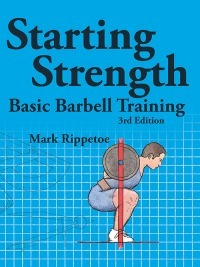
Starting Strength: Basic Barbell Training is the new expanded version of the book that has been called "the best and most useful of fitness books." It picks up where Starting Strength: A Simple and Practical Guide for Coaching Beginners leaves off. With all new graphics and more than 750 illustrations, a more detailed analysis of the five most important exercises in the weight room, and a new chapter dealing with the most important assistance exercises, Basic Barbell Training offers the most complete examination in print of the most effective way to exercise.

The best is now even better! Sculpting Her Body Perfect has helped hundreds of thousands of readers improve muscle tone, sculpt their physiques, and tone up hard-to-reach and troublesome body areas. This third edition of Sculpting Her Body Perfect not only provides the exercises you need to achieve your body-shaping goals, but it also demonstrates them in an easy-to-follow fashion on the accompanying 60-minute DVD! With Brad Schoenfeld's proven conditioning program, you will build an essential foundation for further muscle development. Then, with targeted bodysculpting instruction to smooth out any remaining problem areas, you can add the specific definition you need to complete your new look. The companion DVD provides even more exercise techniques along with tips on creating your own exercise combinations and workout plans. Seeing the program in action, you will learn the secrets of how pacing, transition, varying technique, and effective execution can take your workout to another level. One of the most sought-after personal trainers in the United States, fitness expert Schoenfeld has a sculpting program tailored to the unique training needs and goals of women. Whether you're working out at home or in a gym, before work or after, his program is for you. Read it, watch it, perform it. You'll see the results!

Nudge: Improving Decisions About Health, Wealth, and Happiness
by Richard H. Thaler
Rating: 3.9 ⭐
• 6 recommendations ❤️
From the winner of the 2017 Nobel Prize in Economics, Richard H. Thaler, and Cass R. Sunstein: a revelatory look at how we make decisionsNew York Times bestsellerNamed a Best Book of the Year by The Economist and the Financial Times Every day we make choices—about what to buy or eat, about financial investments or our children’s health and education, even about the causes we champion or the planet itself. Unfortunately, we often choose poorly. Nudge is about how we make these choices and how we can make better ones. Using dozens of eye-opening examples and drawing on decades of behavioral science research, Nobel Prize winner Richard H. Thaler and Harvard Law School professor Cass R. Sunstein show that no choice is ever presented to us in a neutral way, and that we are all susceptible to biases that can lead us to make bad decisions. But by knowing how people think, we can use sensible “choice architecture” to nudge people toward the best decisions for ourselves, our families, and our society, without restricting our freedom of choice.

The Life You Can Save: How to Do Your Part to End World Poverty
by Peter Singer
Rating: 4.2 ⭐
• 2 recommendations ❤️
It is 2021 and the world has experienced unimaginable suffering, death and despair. The pandemic has had a devastating effect on global extreme poverty and harrowing scenes from around the world continue to leave us shocked. As the pandemic rages on, it’s natural to ask: how can I help? Peter Singer – often considered to be the world’s most influential living philosopher– answers this question in The 10th Anniversary Edition of his seminal book, The Life You Can Save. This book will inspire and empower readers to ACT NOW and SAVE LIVES. Moreover, the ebook and the audiobook (narrated by mission–aligned celebrities including Stephen Fry, Kristen Bell, Paul Simon and Michael Schur!) is available to all readers for FREE on The Life You Can Save website. In The Life You Can Save, Peter Singer compellingly lays out the case for why and how we can take action to provide immense benefit to others, at minimal cost to ourselves. Using ethical arguments, illuminating examples, and case studies of charitable giving, he shows that our current response to world poverty is not only insufficient but morally indefensible. And he provides practical recommendations of charities proven to dramatically improve, and even save, the lives of children, women and men living in extreme poverty. The Life You Can Save teaches us to be a part of the solution, helping others as we help ourselves.

Enough: True Measures of Money, Business, and Life
by John C. Bogle
Rating: 3.6 ⭐
• 2 recommendations ❤️
John Bogle puts our obsession with financial success in perspective Throughout his legendary career, John C. Bogle-founder of the Vanguard Mutual Fund Group and creator of the first index mutual fund-has helped investors build wealth the right way and led a tireless campaign to restore common sense to the investment world. Along the way, he's seen how destructive an obsession with financial success can be. Now, with Enough., he puts this dilemma in perspective.Inspired in large measure by the hundreds of lectures Bogle has delivered to professional groups and college students in recent years, Enough. seeks, paraphrasing Kurt Vonnegut, "to poison our minds with a little humanity." Page by page, Bogle thoughtfully considers what "enough" actually means as it relates to money, business, and life.Reveals Bogle's unparalleled insights on money and what we should consider as the true treasures in our lives Details the values we should emulate in our business and professional callings Contains thought-provoking life lessons regarding our individual roles in society Written in a straightforward and accessible style, this unique book examines what it truly means to have "enough" in world increasingly focused on status and score-keeping.

At last, for a generation that's materially ambitious yet financially clueless comes I Will Teach You To Be Rich, Ramit Sethi's 6-week personal finance program for 20-to-35-year-olds. A completely practical approach delivered with a nonjudgmental style that makes readers want to do what Sethi says, it is based around the four pillars of personal finance— banking, saving, budgeting, and investing—and the wealth-building ideas of personal entrepreneurship.Sethi covers how to save time by not wasting it managing money; the guns and cars myth of credit cards; how to negotiate like an Indian—the conversation begins with "no"; why "Budgeting Doesn't Have to Suck!"; how to get things rolling—for real—with only $20; what most people don't understand about taxes; how to get a CEO to take you out to lunch; how to avoid the Super Mario Brothers trap by making your savings work harder than you do; the difference between cheap and frugal; the hidden relationship between money and food. Not to mention his first key lesson: Getting started is more important than being the smartest person in the room. Integrated with his website, where readers can use interactive charts, follow up on the latest information, and join the community, it is a hip blueprint to building wealth and financial security.Every month, 175,000 unique visitors come to Ramit Sethi's website, Iwillteachyoutoberich.com, to discover the path to financial freedom. They praise him thoughtfully ("Your site summarizes everything I want with my life—to be rich in finances, rich in experience, rich in family blessings," --Dan Esparza) and effusively ("Dude, you rock. I love this site!" --Richard Wu). The press has caught on, too: "Ramit Sethi is a rising star in the world of personal finance writing . . . one singularly attuned to the sensibilities of his generation. his style is part frat boy and part silicon Valley geek, with a little bit of San Francisco hipster thrown in" (San Francisco Chronicle). His writing is smart, his voice is full of attitude, and his ideas are uncommonly sound and refreshingly hype-free.

A Guide to the Good Life: The Ancient Art of Stoic Joy
by William B. Irvine
Rating: 4.2 ⭐
• 18 recommendations ❤️
One of the great fears many of us face is that despite all our effort and striving, we will discover at the end that we have wasted our life. In A Guide to the Good Life, William B. Irvine plumbs the wisdom of Stoic philosophy, one of the most popular and successful schools of thought in ancient Rome, and shows how its insight and advice are still remarkably applicable to modern lives. In A Guide to the Good Life, Irvine offers a refreshing presentation of Stoicism, showing how this ancient philosophy can still direct us toward a better life. Using the psychological insights and the practical techniques of the Stoics, Irvine offers a roadmap for anyone seeking to avoid the feelings of chronic dissatisfaction that plague so many of us. Irvine looks at various Stoic techniques for attaining tranquility and shows how to put these techniques to work in our own life. As he does so, he describes his own experiences practicing Stoicism and offers valuable first-hand advice for anyone wishing to live better by following in the footsteps of these ancient philosophers. Readers learn how to minimize worry, how to let go of the past and focus our efforts on the things we can control, and how to deal with insults, grief, old age, and the distracting temptations of fame and fortune. We learn from Marcus Aurelius the importance of prizing only things of true value, and from Epictetus we learn how to be more content with what we have. Finally, A Guide to the Good Life shows readers how to become thoughtful observers of their own life. If we watch ourselves as we go about our daily business and later reflect on what we saw, we can better identify the sources of distress and eventually avoid that pain in our life. By doing this, the Stoics thought, we can hope to attain a truly joyful life.

59 Seconds: Change Your Life in Under a Minute
by Richard Wiseman
Rating: 3.8 ⭐
• 10 recommendations ❤️
A psychologist and best-selling author gives us a myth-busting response to the self-help movement, with tips and tricks to improve your life that come straight from the scientific community.Richard Wiseman has been troubled by the realization that the self-help industry often promotes exercises that destroy motivation, damage relationships, and reduce creativity: the opposite of everything it promises. Now, in 59 Seconds, he fights back, bringing together the diverse scientific advice that can help you change your life in under a minute, and guides you toward becoming more decisive, more imaginative, more engaged, and altogether more happy.From mood to memory, persuasion to procrastination, resilience to relationships, Wiseman outlines the research supporting the new science of “rapid change” and, with clarity and infectious enthusiasm, describes how these quirky, sometimes counterintuitive techniques can be effortlessly incorporated into your everyday life. Or, as he likes to say: “Think a little, change a lot.”

Crash Proof 2.0: How to Profit From the Economic Collapse
by Peter D. Schiff
Rating: 3.4 ⭐
• 2 recommendations ❤️
A fully updated follow-up to Peter Schiff's bestselling financial survival guide- Crash Proof , which described the economy as a house of cards on the verge of collapse, with over 80 pages of new material The economic and monetary disaster which seasoned prognosticator Peter Schiff predicted is no longer hypothetical-it is here today. And nobody understands what to do in this situation better than the man who saw it coming. For more than a decade, Schiff has not only observed the economy, but also helped his clients restructure their portfolios to reflect his outlook. What he sees today is a nation facing an economic storm brought on by growing federal, personal, and corporate debt; too little savings; and a declining dollar. Crash Proof 2.0 picks up right where the first edition-a bestselling book that predicted the current market mayhem-left off. This timely guide takes into account the dramatic economic shifts that are reshaping the world and provides you with the insights and information to navigate the dangerous terrain. Throughout the book, Schiff explains the factors that will affect your future financial stability and offers a specific three step plan to battle the current economic downturn.

The 4 Hour Body: An Uncommon Guide to Rapid Fat-Loss, Incredible Sex and Becoming Superhuman
by Timothy Ferriss
Rating: 3.8 ⭐
• 12 recommendations ❤️
Do you want to lose fat, double testosterone, get the perfect posterior or give your partner a fifteen-minute female orgasm? Whatever your physical goal, The 4-Hour Body eclipses every other health manual by sharing the best kept secrets in the latest science and research to provide new strategies for redesigning the human body.And you don't need to exhaust yourself. International bestselling author, Timothy Ferriss, helps you reach your true genetic potential in 3-6 months with a commitment of less than four hours per week. You can pick and choose from a menu of options, from simple to extreme, for dramatic body changes.Based on over 15 years of research and with personal stories, amazing before and after photos, recipes and sidebars, The 4-Hour Body will give unbelievable results and change the way you look forever.

“Ridley writes with panache, wit, and humor and displays remarkable ingenuity in finding ways to present complicated materials for the lay reader.” — Los Angeles TimesIn a bold and provocative interpretation of economic history, Matt Ridley, the New York Times-bestselling author of Genome and The Red Queen, makes the case for an economics of hope, arguing that the benefits of commerce, technology, innovation, and change—what Ridley calls cultural evolution—will inevitably increase human prosperity. Fans of the works of Jared Diamond (Guns, Germs, and Steel), Niall Ferguson (The Ascent of Money), and Thomas Friedman (The World Is Flat) will find much to ponder and enjoy in The Rational Optimist.
Don't Count on It!: Reflections on Investment Illusions, Capitalism, "Mutual" Funds, Indexing, Entrepreneurship, Idealism, and Heroes
by John C. Bogle
Rating: 3.7 ⭐
• 2 recommendations ❤️
Praise for Don't Count On It! This collection of Jack Bogle's writings couldn't be more timely. The clarity of his thinking--and his insistence on the relevance of ethical standards--are totally relevant as we strive to rebuild a broken financial system. For too many years, his strong voice has been lost amid the cacophony of competing self-interests, misdirected complexity, and unbounded greed. Read, learn, and support Jack's mission to reform the industry that has been his life's work. --PAUL VOLCKER, Chairman of the President's Economic Recovery Advisory Board and former Chairman of the Federal Reserve (1979-1987)Jack Bogle has given investors throughout the world more wisdom and plain financial 'horse sense' than any person in the history of markets. This compendium of his best writings, particularly his post-crisis guidance, is absolutely essential reading for investors and those who care about the future of our society. --ARTHUR LEVITT, former Chairman, U.S. Securities and Exchange CommissionJack Bogle is one of the most lucid men in finance. --NASSIM N.TALEB, PhD, author of The Black SwanJack Bogle is one of the financial wise men whose experience spans the post-World War II years. This book, encompassing his insights on financial behavior, pitfalls, and remedies, with a special focus on mutual funds, is an essential read. We can only benefit from his observations. --HENRY KAUFMAN, President, Henry Kaufman & Company, Inc.It was not an easy sell. The joke at first was that only finance professors invested in Vanguard's original index fund. But what a triumph it has been. And what a focused and passionate drive it took: it is a zero-sum game and only costs are certain. Thank you, Jack. --JEREMY GRANTHAM, Cofounder and Chairman, GMOOn finance, Jack Bogle thinks unconventionally. So, this sound rebel turns out to be right most of the time. Meanwhile, many of us sometimes engage in self-deception. So, this book will set us straight. And in the last few pages, Jack writes, and I agree, that Peter Bernstein was a giant. So is Jack Bogle. --JEAN-MARIE EVEILLARD, Senior Adviser, First Eagle Investment ManagementInsights into investing and leadership from the founder of The Vanguard GroupThroughout his legendary career, John Bogle-founder of the Vanguard mutual fund group and creator of the first index mutual fund-has helped investors build wealth the right way, while, at the same time, leading a tireless campaign to restore common sense to the investment world.A collection of essays based on speeches delivered to professional groups and college students in recent years, in Don't Count on It is organized around eight themesIllusion versus reality in investing Indexing to market returns Failures of capitalism The flawed structure of the mutual fund industry The spirit of entrepreneurship What is enough in business, and in life Advice to America's future leaders The unforgettable characters who have shaped his career Widely acclaimed for his role as the conscience of the mutual fund industry and a relentless advocate for individual investors, in Don't Count on It, Bogle continues to inspire, while pushing the mutual fund industry to measure up to their promise.
Early Retirement Extreme: A Philosophical and Practical Guide to Financial Independence
by Jacob Lund Fisker
Rating: 3.9 ⭐
• 4 recommendations ❤️
A strategic combination of smart financial choices, simple living, and increased self-reliance brought me financial independence at 30 and allowed me to retire from my profession at 33. Early Retirement Extreme shows how I did it and how anyone can formulate their own plan for financial independence. The book provides the principles and framework for a systems theoretical strategy for attaining that independence in 5-10 years. It teaches how a shift in focus from consuming to producing can help people out of the consumer trap, and offers a path to achieving the freedom necessary to pursue interests other than working for a living. The principles in Early Retirement Extreme show how to break the financial chains that hold people back from doing what they truly want to do. The framework has been used by many people over the last few years to accomplish a variety of goals. It provides people a means to achieve almost any goal, whether it’s debt-free living, extended travel, a sabbatical, a career change, time off to raise a child, a traditional retirement, or simply a desire for a more resilient and self-sufficient lifestyle. The book was initially written for people in their 20s and 30s, but its ideas aren’t limited to early retirees. Middle-aged people in the grips of consumerism can use the principles to take back control of their lives. People closer to retirement age who don’t feel adequately prepared can use it to set themselves up for a comfortable retirement in a relatively short period of time. Anyone worried about their financial future can use the principles in Early Retirement Extreme to make their future more secure.

Leo Tolstoy said, "Nobody knows where the human race is going. The highest wisdom, then, is to know where you are going." Yet many today chase the false rabbits of status, luxury, reputation and material possessions. In the quest to "have it all," our lives often lack real meaning and purpose. Beyond Wealth is the antidote. New York Times bestselling author Alexander Green takes things right down to brass We are here for a short time. Knowledge is limitless. Therefore, the most critical knowledge is not any particular skill but rather wisdom about "how to live." Fortunately, men and women have had several thousand years to think about what it means to live "the good life." And the answers found here, from Plato and Aristotle to Mahatma Gandhi and Stephen Hawking, will both surprise and delight you. Beyond Wealth provides insightful commentary on the most important aspects of our love, work, honor, trust, freedom, death, fear, truth, beauty and other timeless issues. The book is both a thought provoking read and the ideal gift, guaranteed to ennoble, uplift and inspire.

The Power of Habit: Why We Do What We Do in Life and Business
by Charles Duhigg
Rating: 4.3 ⭐
• 21 recommendations ❤️
NEW YORK TIMES BESTSELLER • This instant classic explores how we can change our lives by changing our habits.NAMED ONE OF THE BEST BOOKS OF THE YEAR BY The Wall Street Journal • Financial TimesIn The Power of Habit, award-winning business reporter Charles Duhigg takes us to the thrilling edge of scientific discoveries that explain why habits exist and how they can be changed. Distilling vast amounts of information into engrossing narratives that take us from the boardrooms of Procter & Gamble to the sidelines of the NFL to the front lines of the civil rights movement, Duhigg presents a whole new understanding of human nature and its potential. At its core, The Power of Habit contains an exhilarating argument: The key to exercising regularly, losing weight, being more productive, and achieving success is understanding how habits work. As Duhigg shows, by harnessing this new science, we can transform our businesses, our communities, and our lives.With a new Afterword by the author “Sharp, provocative, and useful.” —Jim Collins “Few [books] become essential manuals for business and living. The Power of Habit is an exception. Charles Duhigg not only explains how habits are formed but how to kick bad ones and hang on to the good.” — Financial Times “A flat-out great read.” —David Allen, bestselling author of Getting Things Done: The Art of Stress-Free Productivity“You’ll never look at yourself, your organization, or your world quite the same way.” —Daniel H. Pink, bestselling author of Drive and A Whole New Mind“Entertaining . . . enjoyable . . . fascinating . . . a serious look at the science of habit formation and change.” — The New York Times Book Review

In this lively history of consumer debt in America, economic historian Louis Hyman demonstrates that today’s problems are not as new as we think. Borrow examines how the rise of consumer borrowing—virtually unknown before the twentieth century—has altered our culture and economy. Starting in the years before the Great Depression, increased access to money raised living standards but also introduced unforeseen risks. As lending grew more and more profitable, it displaced funds available for business borrowing, setting our economy on an unsustainable course. Told through the vivid stories of individuals and institutions affected by these changes, Borrow charts the collision of commerce and culture in twentieth-century America, giving an historical perspective on what is new—and what is not—in today’s economic turmoil.A Paperback Original

Happy City: Transforming Our Lives Through Urban Design
by Charles Montgomery
Rating: 4.4 ⭐
• 2 recommendations ❤️
A globe-trotting, eye-opening exploration of how cities can―and do―make us happier peopleCharles Montgomery's Happy City is revolutionizing the way we think about urban life.After decades of unchecked sprawl, more people than ever are moving back to the city. Dense urban living has been prescribed as a panacea for the environmental and resource crises of our time. But is it better or worse for our happiness? Are subways, sidewalks, and condo towers an improvement on the car dependence of the suburbs?The award-winning journalist Charles Montgomery finds answers to such questions at the intersection between urban design and the emerging science of happiness, during an exhilarating journey through some of the world's most dynamic cities. He meets the visionary mayor who introduced a "sexy" bus to ease status anxiety in Bogotá; the architect who brought the lessons of medieval Tuscan hill towns to modern-day New York City; the activist who turned Paris's urban freeways into beaches; and an army of American suburbanites who have hacked the design of their own streets and neighborhoods.Rich with new insights from psychology, neuroscience, and Montgomery's own urban experiments, Happy City reveals how cities can shape our thoughts as well as our behavior. The message is ultimately as surprising as it is by retrofitting cities and our own lives for happiness, we can tackle the urgent challenges of our age. The happy city can save the world―and we can all help build it.

The Clash of the Cultures: Investment vs. Speculation
by John C. Bogle
Rating: 3.8 ⭐
• 4 recommendations ❤️
How speculation has come to dominate investment—a hard-hitting look from the creator of the first index fund.Over the course of his sixty-year career in the mutual fund industry, Vanguard Group founder John C. Bogle has witnessed a massive shift in the culture of the financial sector. The prudent, value-adding culture of long-term investment has been crowded out by an aggressive, value-destroying culture of short-term speculation. Mr. Bogle has not been merely an eye-witness to these changes, but one of the financial sector’s most active participants. In The Clash of the Cultures, he urges a return to the common sense principles of long-term investing.Provocative and refreshingly candid, this book discusses Mr. Bogle's views on the changing culture in the mutual fund industry, how speculation has invaded our national retirement system, the failure of our institutional money managers to effectively participate in corporate governance, and the need for a federal standard of fiduciary duty.Mr. Bogle recounts the history of the index mutual fund, how he created it, and how exchange-traded index funds have altered its original concept of long-term investing. He also presents a first-hand history of Wellington Fund, a real-world case study on the success of investment and the failure of speculation. The book concludes with ten simple rules that will help investors meet their financial goals. Here, he presents a common sense strategy that "may not be the best strategy ever devised. But the number of strategies that are worse is infinite."The Clash of the Cultures: Investment vs. Speculation completes the trilogy of best-selling books, beginning with Bogle on Investing: The First 50 Years (2001) and Don't Count on It! (2011)

Tap Dancing to Work: Warren Buffett on Practically Everything, 1966-2013
by Carol J. Loomis
Rating: 4.1 ⭐
• 4 recommendations ❤️
Warren Buffett built Berkshire Hathaway into something remarkable— and Fortune journalist Carol Loomis had a front-row seat for it all. When Carol Loomis first mentioned a little-known Omaha hedge fund manager in a 1966 Fortune article, she didn’t dream that Warren Buffett would one day be considered the world’s greatest investor—nor that she and Buffett would quickly become close personal friends. As Buffett’s fortune and reputation grew over time, Loomis used her unique insight into Buffett’s thinking to chronicle his work for Fortune, writing and proposing scores of stories that tracked his many accomplishments—and also his occasional mistakes. Now Loomis has collected and updated the best Buffett articles Fortune published between 1966 and 2012, including thirteen cover stories and a dozen pieces authored by Buffett himself. Loomis has provided commentary about each major article that supplies context and her own informed point of view. Readers will gain fresh insights into Buffett’s investment strategies and his thinking on management, philanthropy, public policy, and even parenting. Some of the highlights include:The 1966 A. W. Jones story in which Fortune first mentioned Buffett. The first piece Buffett wrote for the magazine, 1977’s “How Inf lation Swindles the Equity Investor.” Andrew Tobias’s 1983 article “Letters from Chairman Buffett,” the first review of his Berkshire Hathaway shareholder letters. Buffett’s stunningly prescient 2003 piece about derivatives, “Avoiding a Mega-Catastrophe.” His unconventional thoughts on inheritance and philanthropy, including his intention to leave his kids “enough money so they would feel they could do anything, but not so much that they could do nothing.” Bill Gates’s 1996 article describing his early impressions of Buffett as they struck up their close friendship.Scores of Buffett books have been written, but none can claim this work’s combination of trust between two friends, the writer’s deep understanding of Buffett’s world, and a very long-term perspective.

Stress Test: Reflections on Financial Crises
by Timothy F. Geithner
Rating: 4.1 ⭐
• 6 recommendations ❤️
As president of the Federal Reserve Bank of New York and then as President Barack Obama’s secretary of the Treasury, Timothy F. Geithner helped the United States navigate the worst financial crisis since the Great Depression, from boom to bust to rescue to recovery. In a candid, riveting, and historically illuminating memoir, he takes readers behind the scenes of the crisis, explaining the hard choices and politically unpalatable decisions he made to repair a broken financial system and prevent the collapse of the Main Street economy. This is the inside story of how a small group of policy makers—in a thick fog of uncertainty, with unimaginably high stakes—helped avoid a second depression but lost the American people doing it. Stress Test is also a valuable guide to how governments can better manage financial crises, because this one won’t be the last.Stress Test reveals a side of Secretary Geithner the public has never seen, starting with his childhood as an American abroad. He recounts his early days as a young Treasury official helping to fight the international financial crises of the 1990s, then describes what he saw, what he did, and what he missed at the New York Fed before the Wall Street boom went bust. He takes readers inside the room as the crisis began, intensified, and burned out of control, discussing the most controversial episodes of his tenures at the New York Fed and the Treasury, including the rescue of Bear Stearns; the harrowing weekend when Lehman Brothers failed; the searing crucible of the AIG rescue as well as the furor over the firm’s lavish bonuses; the battles inside the Obama administration over his widely criticized but ultimately successful plan to end the crisis; and the bracing fight for the most sweeping financial reforms in more than seventy years. Secretary Geithner also describes the aftershocks of the crisis, including the administration’s efforts to address high unemployment, a series of brutal political battles over deficits and debt, and the drama over Europe’s repeated flirtations with the economic abyss. Secretary Geithner is not a politician, but he has things to say about politics—the silliness, the nastiness, the toll it took on his family. But in the end, Stress Test is a hopeful story about public service. In this revealing memoir, Tim Geithner explains how America withstood the ultimate stress test of its political and financial systems.

Elon Musk: Tesla, SpaceX, and the Quest for a Fantastic Future
by Ashlee Vance
Rating: 4.2 ⭐
• 12 recommendations ❤️
In the spirit of Steve Jobs and Moneyball, Elon Musk is both an illuminating and authorized look at the extraordinary life of one of Silicon Valley’s most exciting, unpredictable, and ambitious entrepreneurs—a real-life Tony Stark—and a fascinating exploration of the renewal of American invention and its new “makers.”Elon Musk spotlights the technology and vision of Elon Musk, the renowned entrepreneur and innovator behind SpaceX, Tesla, and SolarCity, who sold one of his Internet companies, PayPal, for $1.5 billion. Ashlee Vance captures the full spectacle and arc of the genius’s life and work, from his tumultuous upbringing in South Africa and flight to the United States to his dramatic technical innovations and entrepreneurial pursuits.Vance uses Musk’s story to explore one of the pressing questions of our age: can the nation of inventors and creators who led the modern world for a century still compete in an age of fierce global competition? He argues that Musk—one of the most unusual and striking figures in American business history—is a contemporary, visionary amalgam of legendary inventors and industrialists including Thomas Edison, Henry Ford, Howard Hughes, and Steve Jobs. More than any other entrepreneur today, Musk has dedicated his energies and his own vast fortune to inventing a future that is as rich and far-reaching as the visionaries of the golden age of science-fiction fantasy.Thorough and insightful, Elon Musk brings to life a technology industry that is rapidly and dramatically changing by examining the life of one of its most powerful and influential titans.
The Simple Path to Wealth: Your road map to financial independence and a rich, free life
by J.L. Collins
Rating: 4.5 ⭐
• 2 recommendations ❤️
"In the dark, bewildering, trap-infested jungle of misinformation and opaque riddles that is the world of investment, JL Collins is the fatherly wizard on the side of the path, offering a simple map, warm words of encouragement and the tools to forge your way through with confidence. You'll never find a wiser advisor with a bigger heart." -- Malachi Rempen: Filmmaker, cartoonist, author and self-described ruffian This book grew out of a series of letters to my daughter concerning various things-mostly about money and investing-she was not yet quite ready to hear. Since money is the single most powerful tool we have for navigating this complex world we've created, understanding it is critical. "But Dad," she once said, "I know money is important. I just don't want to spend my life thinking about it." This was eye-opening. I love this stuff. But most people have better things to do with their precious time. Bridges to build, diseases to cure, treaties to negotiate, mountains to climb, technologies to create, children to teach, businesses to run. Unfortunately, benign neglect of things financial leaves you open to the charlatans of the financial world. The people who make investing endlessly complex, because if it can be made complex it becomes more profitable for them, more expensive for us, and we are forced into their waiting arms. Here's an important truth: Complex investments exist only to profit those who create and sell them. Not only are they more costly to the investor, they are less effective. The simple approach I created for her and present now to you, is not only easy to understand and implement, it is more powerful than any other. Together we'll explore: Debt: Why you must avoid it and what to do if you have it. The importance of having F-you Money. How to think about money, and the unique way understanding this is key to building your wealth. Where traditional investing advice goes wrong and what actually works. What the stock market really is and how it really works. Why the stock market always goes up and why most people still lose money investing in it. How to invest in a raging bull, or bear, market. Specific investments to implement these strategies. The Wealth Building and Wealth Preservation phases of your investing life and why they are not always tied to your age. How your asset allocation is tied to those phases and how to choose it. How to simplify the sometimes confusing world of 401(k), 403(b), TSP, IRA and Roth accounts. TRFs (Target Retirement Funds), HSAs (Health Savings Accounts) and RMDs (Required Minimum Distributions). What investment firm to use and why the one I recommend is so far superior to the competition. Why you should be very cautious when engaging an investment advisor and whether you need to at all. Why and how you can be conned, and how to avoid becoming prey. Why I don't recommend dollar cost averaging. What financial independence looks like and how to have your money support you. What the 4% rule is and how to use it to safely spend your wealth. The truth behind Social Security. A Case Study on how this all can be implemented in real life. Don't let any of this intimidate you. Those that have gone before you say: .."..in his patented no-frills and often humorous style, JL makes it both approachable and simple. And powerful."..".effective message told in a visual, funny style."..".a refreshingly unique and approachable take on investing.""JL Collins has the gift of making boring financial concepts funny and interesting.""Instead of esoteric equations about measuring a stock's alpha and comparing it to its beta, he lights up the campfire and starts telling stories." Enjoy the read, and the j
The latest groundbreaking book from Tim Ferriss, the #1 New York Times best-selling author of The 4-Hour Workweek. From the author: “For the last two years, I’ve interviewed nearly two hundred world-class performers for my podcast, The Tim Ferriss Show. The guests range from super celebs (Jamie Foxx, Arnold Schwarzenegger, etc.) and athletes (icons of powerlifting, gymnastics, surfing, etc.) to legendary Special Operations commanders and black-market biochemists. For most of my guests, it’s the first time they’ve agreed to a two-to-three-hour interview, and the show is on the cusp of passing 100 million downloads. “This book contains the distilled tools, tactics, and ‘inside baseball’ you won’t find anywhere else. It also includes new tips from past guests, and life lessons from new ‘guests’ you haven’t met. “What makes the show different is a relentless focus on actionable details. This is reflected in the questions. For example: What do these people do in the first sixty minutes of each morning? What do their workout routines look like, and why? What books have they gifted most to other people? What are the biggest wastes of time for novices in their field? What supplements do they take on a daily basis? “I don’t view myself as an interviewer. I view myself as an experimenter. If I can’t test something and replicate results in the messy reality of everyday life, I’m not interested. “Everything within these pages has been vetted, explored, and applied to my own life in some fashion. I’ve used dozens of the tactics and philosophies in high-stakes negotiations, high-risk environments, or large business dealings. The lessons have made me millions of dollars and saved me years of wasted effort and frustration. “I created this book, my ultimate notebook of high-leverage tools, for myself. It’s changed my life, and I hope the same for you.”

In 2005, Joel Greenblatt published a book that is already considered one of the classics of finance literature. In The Little Book that Beats the Market—a New York Times bestseller with 300,000 copies in print—Greenblatt explained how investors can outperform the popular market averages by simply and systematically applying a formula that seeks out good businesses when they are available at bargain prices. Now, with a new Introduction and Afterword for 2010, The Little Book that Still Beats the Market updates and expands upon the research findings from the original book. Included are data and analysis covering the recent financial crisis and model performance through the end of 2009. In a straightforward and accessible style, the book explores the basic principles of successful stock market investing and then reveals the author’s time-tested formula that makes buying above average companies at below average prices automatic. Though the formula has been extensively tested and is a breakthrough in the academic and professional world, Greenblatt explains it using 6th grade math, plain language and humor. He shows how to use his method to beat both the market and professional managers by a wide margin. You’ll also learn why success eludes almost all individual and professional investors, and why the formula will continue to work even after everyone “knows” it. While the formula may be simple, understanding why the formula works is the true key to success for investors. The book will take readers on a step-by-step journey so that they can learn the principles of value investing in a way that will provide them with a long term strategy that they can understand and stick with through both good and bad periods for the stock market. As the Wall Street Journal stated about the original edition, “Mr. Greenblatt…says his goal was to provide advice that, while sophisticated, could be understood and followed by his five children, ages 6 to 15. They are in luck. His ‘Little Book’ is one of the best, clearest guides to value investing out there.”

Stay the Course: The Story of Vanguard and the Index Revolution
by John C. Bogle
Rating: 4.3 ⭐
• 2 recommendations ❤️
A journey through the Index Revolution from the man who started it all Stay the Course is the story the Vanguard Group as told by its founder, legendary investor John C. Bogle. This engrossing book traces the history of Vanguard―the largest mutual fund organization on earth. Offering the world’s first index mutual fund in 1976, John Bogle led Vanguard from a $1.4 billion firm with a staff of 28 to a global company of 16,000 employees and with more than $5 trillion in assets under management. An engaging blend of company history, investment perspective, and personal memoir, this book provides a fascinating look into the mind of an extraordinary man and the company he created. John Bogle continues to be an inspiring and trusted figure to millions of individual investors the world over. His creative innovation, personal integrity, and stubborn determination infuse every aspect of the company he founded. This accessible and engaging book will help The Vanguard Group and John Bogle are inextricably linked―it would be impossible to tell one story without the other. Stay the The Story of Vanguard and the Index Revolution weaves these stories together taking you on a journey through the history of one revolutionary company and one remarkable man. Investors, wealth managers, financial advisors, business leaders, and those who enjoy a good story, will find this book as informative and unique as its author.