63 Books Recommended

Now in a third edition, Robert M. Sapolsky's acclaimed and successful Why Zebras Don't Get Ulcers features new chapters on how stress affects sleep and addiction, as well as new insights into anxiety and personality disorder and the impact of spirituality on managing stress.As Sapolsky explains, most of us do not lie awake at night worrying about whether we have leprosy or malaria. Instead, the diseases we fear—and the ones that plague us now—are illnesses brought on by the slow accumulation of damage, such as heart disease and cancer. When we worry or experience stress, our body turns on the same physiological responses that an animal's does, but we do not resolve conflict in the same way—through fighting or fleeing. Over time, this activation of a stress response makes us sick.

One of our greatest scientists—and the winner of two Pulitzer Prizes for On Human Nature and The Ants—gives us a work of visionary importance that may be the crowning achievement of his career. In Consilience (a word that originally meant "jumping together"), Edward O. Wilson renews the Enlightenment's search for a unified theory of knowledge in disciplines that range from physics to biology, the social sciences and the humanities.Using the natural sciences as his model, Wilson forges dramatic links between fields. He explores the chemistry of the mind and the genetic bases of culture. He postulates the biological principles underlying works of art from cave-drawings to Lolita. Presenting the latest findings in prose of wonderful clarity and oratorical eloquence, and synthesizing it into a dazzling whole, Consilience is science in the path-clearing traditions of Newton, Einstein, and Richard Feynman.

Expert Political Judgment: How Good Is It? How Can We Know?
by Philip E. Tetlock
Rating: 4.0 ⭐
• 6 recommendations ❤️
The intelligence failures surrounding the invasion of Iraq dramatically illustrate the necessity of developing standards for evaluating expert opinion. This book fills that need. Here, Philip E. Tetlock explores what constitutes good judgment in predicting future events, and looks at why experts are often wrong in their forecasts.Tetlock first discusses arguments about whether the world is too complex for people to find the tools to understand political phenomena, let alone predict the future. He evaluates predictions from experts in different fields, comparing them to predictions by well-informed laity or those based on simple extrapolation from current trends. He goes on to analyze which styles of thinking are more successful in forecasting. Classifying thinking styles using Isaiah Berlin's prototypes of the fox and the hedgehog, Tetlock contends that the fox--the thinker who knows many little things, draws from an eclectic array of traditions, and is better able to improvise in response to changing events--is more successful in predicting the future than the hedgehog, who knows one big thing, toils devotedly within one tradition, and imposes formulaic solutions on ill-defined problems. He notes a perversely inverse relationship between the best scientific indicators of good judgement and the qualities that the media most prizes in pundits--the single-minded determination required to prevail in ideological combat.Clearly written and impeccably researched, the book fills a huge void in the literature on evaluating expert opinion. It will appeal across many academic disciplines as well as to corporations seeking to develop standards for judging expert decision-making.
Behavioral decision research provides many important insights into managerial behavior. From negotiation to investment decisions, the authors weave behavioral decision research into the organizational realm by examining judgment in a variety of managerial contexts. Embedded with the latest research and theories, Managerial Decision Making 8 th Edition gives students the opportunity to understand their own decision-making tendencies, learn strategies for overcoming cognitive biases, and become better decision makers.
Creating Shareholder Value: A Guide for Managers and Investors
by Alfred Rappaport
Rating: 4.2 ⭐
• 3 recommendations ❤️
Economist, consultant, and Wall Street Journal contributor Alfred Rappaport provides managers and investors with the practical tools and tests for a corporate strategy that creates shareholder value.The ultimate test of corporate strategy, the only reliable measure, is whether it creates economic value for shareholders.After a decade of downsizings frequently blamed on shareholder value decision making, this book presents a new and indepth assessment of the rationale for shareholder value. Further, Rappaport presents provocative new insights on shareholder value applications (1) business planning, (2) performance evaluation, (3) executive compensation, (4) mergers and acquisitions, (5) interpreting stock market signals, and (6) organizational implementation. Readers will be particularly interested in Rappaport's answers to three management performance evaluation (1) What is the most appropriate measure of performance? (2) What is the most appropriate target level of performance? and (3) How should rewards be linked to performance? The recent acquisition of Duracell International by Gillette is analyzed in detail, enabling the reader to understand the critical information needed when assessing the risks and rewards of a merger from both sides of the negotiating table.The shareholder value approach presented here has been widely embraced by publicly traded as well as privately held companies worldwide. Brilliant and incisive, this is the one book that should be required reading for managers and investors who want to stay on the cutting edge of success in a highly competitive global economy.

2018 Reprint of 1999 Edition. Full facsimile of the original edition. Not reproduced with Optical Recognition software. This volume pulls together and republishes, with some editing, updating, and additions, articles written during 1978-86 for internal use within the CIA Directorate of Intelligence. The information is relatively timeless and still relevant to the never-ending quest for better analysis. The articles are based on reviewing cognitive psychology literature concerning how people process information to make judgments on incomplete and ambiguous information. The essays selected are the most relevant to intelligence analysis and most in need of communication to intelligence analysts. The articles are intended to help the intelligence analysts understand and interpreted the issues that most intelligence analysts face.

Knowledge and the Wealth of Nations: A Story of Economic Discovery
by David Warsh
Rating: 4.1 ⭐
• 2 recommendations ❤️
"What The Double Helix did for biology, David Warsh's Knowledge and the Wealth of Nations does for economics." ― Boston Globe A stimulating and inviting tour of modern economics centered on the story of one of its most important breakthroughs. In 1980, the twenty-four-year-old graduate student Paul Romer tackled one of the oldest puzzles in economics. Eight years later he solved it. This book tells the story of what has come to be called the new growth theory: the paradox identified by Adam Smith more than two hundred years earlier, its disappearance and occasional resurfacing in the nineteenth century, the development of new technical tools in the twentieth century, and finally the student who could see further than his teachers. Fascinating in its own right, new growth theory helps to explain dominant first-mover firms like IBM or Microsoft, underscores the value of intellectual property, and provides essential advice to those concerned with the expansion of the economy. Like James Gleick's Chaos or Brian Greene's The Elegant Universe , this revealing book takes us to the frontlines of scientific research; not since Robert Heilbroner's classic work The Worldly Philosophers have we had as attractive a glimpse of the essential science of economics.

The Blind Watchmaker: Why the Evidence of Evolution Reveals a Universe without Design
by Richard Dawkins
Rating: 4.2 ⭐
• 9 recommendations ❤️
Richard Dawkins’s classic remains the definitive argument for our modern understanding of evolution.The Blind Watchmaker is the seminal text for understanding evolution today. In the eighteenth century, theologian William Paley developed a famous metaphor for creationism: that of the skilled watchmaker. In The Blind Watchmaker, Richard Dawkins crafts an elegant riposte to show that the complex process of Darwinian natural selection is unconscious and automatic. If natural selection can be said to play the role of a watchmaker in nature, it is a blind one—working without foresight or purpose.In an eloquent, uniquely persuasive account of the theory of natural selection, Dawkins illustrates how simple organisms slowly change over time to create a world of enormous complexity, diversity, and beauty.

Against the Gods: The Remarkable Story of Risk
by Peter L. Bernstein
Rating: 4.0 ⭐
• 8 recommendations ❤️
With the stock market breaking records almost daily, leaving longtime market analysts shaking their heads and revising their forecasts, a study of the concept of risk seems quite timely. Peter Bernstein has written a comprehensive history of man's efforts to understand risk and probability, beginning with early gamblers in ancient Greece, continuing through the 17th-century French mathematicians Pascal and Fermat and up to modern chaos theory. Along the way he demonstrates that understanding risk underlies everything from game theory to bridge-building to winemaking.

A History of the Theory of Investments: My Annotated Bibliography
by Mark Rubinstein
Rating: 4.1 ⭐
• 2 recommendations ❤️
"This exceptional book provides valuable insights into the evolution of financial economics from the perspective of a major player."-- Robert Litzenberger, Hopkinson Professor Emeritus of Investment Banking, Univ. of Pennsylvania; and retired partner, Goldman Sachs A History of the Theory of Investments is about ideas -- where they come from, how they evolve, and why they are instrumental in preparing the future for new ideas. Author Mark Rubinstein writes history by rewriting history. In unearthing long-forgotten books and journals, he corrects past oversights to assign credit where credit is due and assembles a remarkable history that is unquestionable in its accuracy and unprecedented in its power. Exploring key turning points in the development of investment theory, through the critical prism of award-winning investment theory and asset pricing expert Mark Rubinstein, this groundbreaking resource follows the chronological development of investment theory over centuries, exploring the inner workings of great theoretical breakthroughs while pointing out contributions made by often unsung contributors to some of investment's most influential ideas and models.

Parent Effectiveness Training: The Proven Program for Raising Responsible Children
by Thomas Gordon
Rating: 4.3 ⭐
• 1 recommendation ❤️
UPDATED 2019 EDITION • The pioneering book that’s guided millions of parents to more effectively resolve conflicts, communicate, and create loving relationships with their children—from Nobel Peace Prize nominee Dr. Thomas Gordon P.E.T., or Parent Effectiveness Training, began in 1962 as the first national parent-training program to teach parents how to communicate more effectively with kids and offer step-by-step advice to resolve family conflicts so everybody wins. This beloved classic is the most studied, highly praised, and proven parenting program in the world—and it will work for you. Now revised and updated, this groundbreaking guide will show • How to avoid being a permissive parent• How to listen so kids will talk to you and talk so kids will listen to you• How to teach your children to “own” their problems and to solve them• How to apply the “No Lose” method to resolve conflicts Using the timeless methods of P.E.T. will have immediate less fighting, fewer tantrums and lies, no need for punishment. Whether you have a toddler striking out for independence or a teenager who has already started rebelling, you’ll find P.E.T. a compassionate, effective way to instill responsibility and create a nurturing family environment in which your child will thrive.

Capital Ideas: The Improbable Origins of Modern Wall Street
by Peter L. Bernstein
Rating: 4.0 ⭐
• 3 recommendations ❤️
Capital Ideas traces the origins of modern Wall Street, from the pioneering work of early scholars and the development of new theories in risk, valuation, and investment returns, to the actual implementation of these theories in the real world of investment management. Bernstein brings to life a variety of brilliant academics who have contributed to modern investment theory over the Louis Bachelier, Harry Markowitz, William Sharpe, Fischer Black, Myron Scholes, Robert Merton, Franco Modigliani, and Merton Miller. Filled with in-depth insights and timeless advice, Capital Ideas reveals how the unique contributions of these talented individuals profoundly changed the practice of investment management as we know it today.

The Economy As An Evolving Complex System: The Proceedings of the Evolutionary Paths of the Global Economy Workshop, Held September, 1987 in Santa Fe, New Mexico
by Philip Anderson
Rating: 4.2 ⭐
• 1 recommendation ❤️
This book proceeds from a meeting at the Santa Fe Institute where economists and physical and biological scientists came together to discuss a conceptual framework incorporating a more appropriate mathematics with a greatly strengthened capacity to deal simultaneously with multiple variables, nonlinearity, incomplete information and dynamical processes.

Billy Beane, general manager of MLB's Oakland A's and protagonist of Michael Lewis's Moneyball, had a problem: how to win in the Major Leagues with a budget that's smaller than that of nearly every other team. Conventional wisdom long held that big name, highly athletic hitters and young pitchers with rocket arms were the ticket to success. But Beane and his staff, buoyed by massive amounts of carefully interpreted statistical data, believed that wins could be had by more affordable methods such as hitters with high on-base percentage and pitchers who get lots of ground outs. Given this information and a tight budget, Beane defied tradition and his own scouting department to build winning teams of young affordable players and inexpensive castoff veterans. Lewis was in the room with the A's top management as they spent the summer of 2002 adding and subtracting players and he provides outstanding play-by-play. In the June player draft, Beane acquired nearly every prospect he coveted (few of whom were coveted by other teams) and at the July trading deadline he engaged in a tense battle of nerves to acquire a lefty reliever. Besides being one of the most insider accounts ever written about baseball, Moneyball is populated with fascinating characters. We meet Jeremy Brown, an overweight college catcher who most teams project to be a 15th round draft pick (Beane takes him in the first). Sidearm pitcher Chad Bradford is plucked from the White Sox triple-A club to be a key set-up man and catcher Scott Hatteberg is rebuilt as a first baseman. But the most interesting character is Beane himself. A speedy athletic can't-miss prospect who somehow missed, Beane reinvents himself as a front-office guru, relying on players completely unlike, say, Billy Beane. Lewis, one of the top nonfiction writers of his era (Liar's Poker, The New New Thing), offers highly accessible explanations of baseball stats and his roadmap of Beane's economic approach makes Moneyball an appealing reading experience for business people and sports fans alike. --John Moe

The Difference: How the Power of Diversity Creates Better Groups, Firms, Schools, and Societies - New Edition
by Scott E. Page
Rating: 3.8 ⭐
• 1 recommendation ❤️
In this landmark book, Scott Page redefines the way we understand ourselves in relation to one another. The Difference is about how we think in groups--and how our collective wisdom exceeds the sum of its parts. Why can teams of people find better solutions than brilliant individuals working alone? And why are the best group decisions and predictions those that draw upon the very qualities that make each of us unique? The answers lie in diversity--not what we look like outside, but what we look like within, our distinct tools and abilities.The Difference reveals that progress and innovation may depend less on lone thinkers with enormous IQs than on diverse people working together and capitalizing on their individuality. Page shows how groups that display a range of perspectives outperform groups of like-minded experts. Diversity yields superior outcomes, and Page proves it using his own cutting-edge research. Moving beyond the politics that cloud standard debates about diversity, he explains why difference beats out homogeneity, whether you're talking about citizens in a democracy or scientists in the laboratory. He examines practical ways to apply diversity's logic to a host of problems, and along the way offers fascinating and surprising examples, from the redesign of the Chicago "El" to the truth about where we store our ketchup.Page changes the way we understand diversity--how to harness its untapped potential, how to understand and avoid its traps, and how we can leverage our differences for the benefit of all.

The Nurture Assumption: Why Children Turn Out the Way They Do, Revised and Updated
by Judith Rich Harris
Rating: 4.1 ⭐
• 2 recommendations ❤️
This groundbreaking book, a Pulitzer Prize finalist and New York Times notable pick, rattled the psychological establishment when it was first published in 1998 by claiming that parents have little impact on their children's development. In this tenth anniversary edition of The Nurture Assumption , Judith Harris has updated material throughout and provided a fresh introduction.Combining insights from psychology, sociology, anthropology, primatology, and evolutionary biology, she explains how and why the tendency of children to take cues from their peers works to their evolutionary advantage. This electrifying book explodes many of our unquestioned beliefs about children and parents and gives us a radically new view of childhood.
The Art of Learning: An Inner Journey to Optimal Performance
by Josh Waitzkin
Rating: 4.1 ⭐
• 9 recommendations ❤️
In his riveting new book, The Art of Learning , Waitzkin tells his remarkable story of personal achievement and shares the principles of learning and performance that have propelled him to the top—twice.Josh Waitzkin knows what it means to be at the top of his game. A public figure since winning his first National Chess Championship at the age of nine, Waitzkin was catapulted into a media whirlwind as a teenager when his father’s book Searching for Bobby Fischer was made into a major motion picture. After dominating the scholastic chess world for ten years, Waitzkin expanded his horizons, taking on the martial art Tai Chi Chuan and ultimately earning the title of World Champion. How was he able to reach the pinnacle of two disciplines that on the surface seem so different? “I’ve come to realize that what I am best at is not Tai Chi, and it is not chess,” he says. “What I am best at is the art of learning.”With a narrative that combines heart-stopping martial arts wars and tense chess face-offs with life lessons that speak to all of us, The Art of Learning takes readers through Waitzkin’s unique journey to excellence. He explains in clear detail how a well-thought-out, principled approach to learning is what separates success from failure. Waitzkin believes that achievement, even at the championship level, is a function of a lifestyle that fuels a creative, resilient growth process. Rather than focusing on climactic wins, Waitzkin reveals the inner workings of his everyday method, from systematically triggering intuitive breakthroughs, to honing techniques into states of remarkable potency, to mastering the art of performance psychology.Through his own example, Waitzkin explains how to embrace defeat and make mistakes work for you. Does your opponent make you angry? Waitzkin describes how to channel emotions into creative fuel. As he explains it, obstacles are not obstacles but challenges to overcome, to spur the growth process by turning weaknesses into strengths. He illustrates the exact routines that he has used in all of his competitions, whether mental or physical, so that you too can achieve your peak performance zone in any competitive or professional circumstance.In stories ranging from his early years taking on chess hustlers as a seven year old in New York City’s Washington Square Park, to dealing with the pressures of having a film made about his life, to International Chess Championships in India, Hungary, and Brazil, to gripping battles against powerhouse fighters in Taiwan in the Push Hands World Championships, The Art of Learning encapsulates an extraordinary competitor’s life lessons in a page-turning narrative.

More Heat than Light: Economics as Social Physics, Physics as Nature's Economics
by Philip Mirowski
Rating: 4.1 ⭐
• 5 recommendations ❤️
This is a history of how physics has drawn some inspiration from economics and how economics has sought to emulate physics, especially with regard to the theory of value. The author traces the development of the energy concept in Western physics and its subsequent effect on the invention and promulgation of neoclassical economics, the modern orthodox theory.

Valuation: Measuring and Managing the Value of Companies
by McKinsey & Company Inc
Rating: 4.2 ⭐
• 4 recommendations ❤️
McKinsey & Company's #1 best-selling guide to corporate valuation--the fully updated seventh editionValuation has been the foremost resource for measuring company value for nearly three decades. Now in its seventh edition, this acclaimed volume continues to help financial professionals around the world gain a deep understanding of valuation and help their companies create, manage, and maximize economic value for their shareholders.This latest edition has been carefully revised and updated throughout, and includes new insights on topics such as digital, ESG (environmental, social and governance), and long-term investing, as well as fresh case studies.Clear, accessible chapters cover the fundamental principles of value creation, analyzing and forecasting performance, capital structure and dividends, valuing high-growth companies, and much more. The Financial Times calls the book "one of the practitioners' best guides to valuation."This book:Provides complete, detailed guidance on every crucial aspect of corporate valuation Explains the strategies, techniques, and nuances of valuation every manager needs to know Covers both core and advanced valuation techniques and management strategies Features/Includes a companion website that covers key issues in valuation, including videos, discussions of trending topics, and real-world valuation examples from the capital markets For over 90 years, McKinsey & Company has helped corporations and organizations make substantial and lasting improvements in their performance. Through seven editions and 30 years, Valuation: Measuring and Managing the Value of Companies, has served as the definitive reference for finance professionals, including investment bankers, financial analysts, CFOs and corporate managers, venture capitalists, and students and instructors in all areas of finance.
"Unique among survival books…stunning…enthralling. Deep Survival makes compelling, and chilling, reading." ― Denver Post Laurence Gonzales’s bestselling Deep Survival has helped save lives from the deepest wildernesses, just as it has improved readers’ everyday lives. Its mix of adventure narrative, survival science, and practical advice has inspired everyone from business leaders to military officers, educators, and psychiatric professionals on how to take control of stress, learn to assess risk, and make better decisions under pressure.
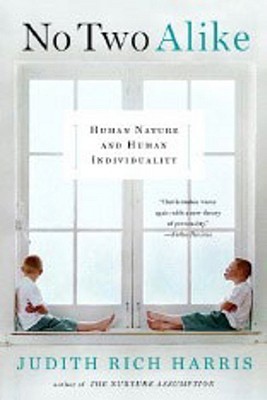
No Two Alike: Human Nature and Human Individuality
by Judith Rich Harris
Rating: 4.1 ⭐
• 3 recommendations ❤️
"A display of scientific courage and imagination." ―William Saletan, New York Times Book Review Why do people―even identical twins reared in the same home―differ so much in personality? Armed with an inquiring mind and insights from evolutionary psychology, Judith Rich Harris sets out to solve the mystery of human individuality. 12 illustrations

Calling for a fundamental rethinking of economics, this book aregues that a market economy is best understood as a living, evolving ecosystem.
Virtual History: Alternatives and Counterfactuals
by Niall Ferguson
Rating: 3.4 ⭐
• 2 recommendations ❤️
What if Britain had stayed out of the First World War? What if Germany had won the Second? How would England look if there had been no Cromwell? What would the world be like if Communism had never collapsed? And what if John F. Kennedy had lived? In this acclaimed book, leading historians from Andrew Roberts to Michael Burleigh explore what might have been if nine of the most decisive moments in modern history had never happened.

"A model of scientific erudite, witty, and clear." ― New York Review of Books In this Pulitzer Prize finalist and national bestseller, one of the world's leading cognitive scientists tackles the workings of the human mind. What makes us rational―and why are we so often irrational? How do we see in three dimensions? What makes us happy, afraid, angry, disgusted, or sexually aroused? Why do we fall in love? And how do we grapple with the imponderables of morality, religion, and consciousness? How the Mind Works synthesizes the most satisfying explanations of our mental life from cognitive science, evolutionary biology, and other fields to explain what the mind is, how it evolved, and how it allows us to see, think, feel, laugh, interact, enjoy the arts, and contemplate the mysteries of life. This edition of Pinker's bold and buoyant classic is updated with a new foreword by the author.

In this fascinating book, New Yorker business columnist James Surowiecki explores a deceptively simple Large groups of people are smarter than an elite few, no matter how brilliant—better at solving problems, fostering innovation, coming to wise decisions, even predicting the future. With boundless erudition and in delightfully clear prose, Surowiecki ranges across fields as diverse as popular culture, psychology, ant biology, behavioral economics, artificial intelligence, military history, and politics to show how this simple idea offers important lessons for how we live our lives, select our leaders, run our companies, and think about our world.
What enables individually simple insects like ants to act with such precision and purpose as a group? How do trillions of neurons produce something as extraordinarily complex as consciousness? In this remarkably clear and companionable book, leading complex systems scientist Melanie Mitchell provides an intimate tour of the sciences of complexity, a broad set of efforts that seek to explain how large-scale complex, organized, and adaptive behavior can emerge from simple interactions among myriad individuals. Based on her work at the Santa Fe Institute and drawing on its interdisciplinary strategies, Mitchell brings clarity to the workings of complexity across a broad range of biological, technological, and social phenomena, seeking out the general principles or laws that apply to all of them. Richly illustrated, Complexity: A Guided Tour--winner of the 2010 Phi Beta Kappa Book Award in Science--offers a wide-ranging overview of the ideas underlying complex systems science, the current research at the forefront of this field, and the prospects for its contribution to solving some of the most important scientific questions of our time.

Free-Range Kids: How Parents and Teachers Can Let Go and Let Grow
by Lenore Skenazy
Rating: 3.9 ⭐
• 2 recommendations ❤️
Learn to raise independent, can-do kids with a new edition of the book that started a movement In the newly revised and expanded Second Edition of Free-Range Kids , New York columnist-turned-movement leader Lenore Skenazy delivers a compelling and entertaining look at how we got so worried about everything our kids do, see, eat, read, wear, watch and lick -- and how to bid a whole lot of that anxiety goodbye. With real-world examples, advice, and a gimlet-eyed look at the way our culture forces fear down our throats, Skenazy describes how parents and educators can step back so kids step up. Positive change is faster, easier and a lot more fun than you’d believe. This is the book that has helped millions of American parents feel brave and optimistic again – and the same goes for their kids. Using research, humor, and feisty common sense, the book shows: Perfect for parents and guardians of children of all ages, Free-Range Kids will also earn a place in the libraries of K-12 educators who want their students to blossom with newfound confidence and cheer.

Think Twice: Harnessing the Power of Counterintuition
by Michael J. Mauboussin
Rating: 4.1 ⭐
• 2 recommendations ❤️
No matter your field, industry, or specialty, as a leader you make a series of crucial decisions every single day. And the harsh truth is that the majority of decisions--no matter how good the intentions behind them--are mismanaged, resulting in a huge toll on organizations, the people they employ, and even the people they serve.So why is it so hard to make sound decisions? In Think Twice, now in paperback, Michael Mauboussin argues that we often fall victim to simplified mental routines that prevent us from coping with the complex realities inherent in important judgment calls. Yet these cognitive errors are preventable.In this engaging book, Mauboussin shows us how to recognize and avoid common mental missteps. These include misunderstanding cause-and-effect linkages, not considering enough alternative possibilities in making a decision, and relying too much on experts.Through vivid stories, the author presents memorable rules for avoiding each error and explains how to recognize when you should "think twice"--questioning your reasoning and adopting decision-making strategies that are far more effective, even if they seem counterintuitive. Armed with this awareness, you'll soon begin making sounder judgment calls that benefit (rather than hurt) your organization.

The first component of intelligence involves effective adaptation to an environment. In order to adapt effectively, organizations require resources, capabilities at using them, knowledge about the worlds in which they exist, good fortune, and good decisions. They typically face competition for resources and uncertainties about the future. Many, but possibly not all, of the factors determining their fates are outside their control. Populations of organizations and individual organizations survive, in part, presumably because they possess adaptive intelligence; but survival is by no means assured. The second component of intelligence involves the elegance of interpretations of the experiences of life. Such interpretations encompass both theories of history and philosophies of meaning, but they go beyond such things to comprehend the grubby details of daily existence. Interpretations decorate human existence. They make a claim to significance that is independent of their contribution to effective action. Such intelligence glories in the contemplation, comprehension, and appreciation of life, not just the control of it.―from The Ambiguities of Experience In The Ambiguities of Experience , James G. March asks a deceptively simple What is, or should be, the role of experience in creating intelligence, particularly in organizations? Folk wisdom both trumpets the significance of experience and warns of its inadequacies. On one hand, experience is described as the best teacher. On the other hand, experience is described as the teacher of fools, of those unable or unwilling to learn from accumulated knowledge or the teaching of experts. The disagreement between those folk aphorisms reflects profound questions about the human pursuit of intelligence through learning from experience that have long confronted philosophers and social scientists. This book considers the unexpected problems organizations (and the individuals in them) face when they rely on experience to adapt, improve, and survive. While acknowledging the power of learning from experience and the extensive use of experience as a basis for adaptation and for constructing stories and models of history, this book examines the problems with such learning. March argues that although individuals and organizations are eager to derive intelligence from experience, the inferences stemming from that eagerness are often misguided. The problems lie partly in errors in how people think, but even more so in properties of experience that confound learning from it. "Experience," March concludes, "may possibly be the best teacher, but it is not a particularly good teacher."

The Righteous Mind: Why Good People are Divided by Politics and Religion
by Jonathan Haidt
Rating: 4.3 ⭐
• 1 recommendation ❤️
An alternate cover edition of ISBN 9780307377906 can be found here.Why can’t our political leaders work together as threats loom and problems mount? Why do people so readily assume the worst about the motives of their fellow citizens? In The Righteous Mind, social psychologist Jonathan Haidt explores the origins of our divisions and points the way forward to mutual understanding. His starting point is moral intuition—the nearly instantaneous perceptions we all have about other people and the things they do. These intuitions feel like self-evident truths, making us righteously certain that those who see things differently are wrong. Haidt shows us how these intuitions differ across cultures, including the cultures of the political left and right. He blends his own research findings with those of anthropologists, historians, and other psychologists to draw a map of the moral domain. He then examines the origins of morality, overturning the view that evolution made us fundamentally selfish creatures. But rather than arguing that we are innately altruistic, he makes a more subtle claim—that we are fundamentally groupish. It is our groupishness, he explains, that leads to our greatest joys, our religious divisions, and our political affiliations. In a stunning final chapter on ideology and civility, Haidt shows what each side is right about, and why we need the insights of liberals, conservatives, and libertarians to flourish as a nation.

The Storytelling Animal: How Stories Make Us Human
by Jonathan Gottschall
Rating: 3.7 ⭐
• 4 recommendations ❤️
A New York Times Editor's Choice A Los Angeles Times Book Prizes Finalist "A jaunty, insightful new book . . . [that] draws from disparate corners of history and science to celebrate our compulsion to storify everything around us."-- New York TimesHumans live in landscapes of make-believe. We spin fantasies. We devour novels, films, and plays. Even sporting events and criminal trials unfold as narratives. Yet the world of story has long remained an undiscovered and unmapped country. Now Jonathan Gottschall offers the first unified theory of storytelling. He argues that stories help us navigate life's complex social problems--just as flight simulators prepare pilots for difficult situations. Storytelling has evolved, like other behaviors, to ensure our survival. Drawing on the latest research in neuroscience, psychology, and evolutionary biology, Gottschall tells us what it means to be a storytelling animal and explains how stories can change the world for the better. We know we are master shapers of story. The Storytelling Animal finally reveals how stories shape us."This is a quite wonderful book. It grips the reader with both stories and stories about the telling of stories, then pulls it all together to explain why storytelling is a fundamental human instinct."--Edward O. Wilson"Charms with anecdotes and examples . . . we have not left nor should we ever leave Neverland."-- Cleveland Plain Dealer
Competitive advantage. The value chain. Five forces. Industry structure. Differentiation. Relative cost . If you want to understand how companies achieve and sustain competitive success, Michael Porter’s frameworks are the foundation. But while everyone in business may know Porter’s name, many managers misunderstand and misuse his concepts.Understanding Michael Porter sets the record straight, providing the first concise, accessible summary of Porter’s revolutionary thinking. Written with Porter’s full cooperation by Joan Magretta, his former editor at Harvard Business Review , this new book delivers fresh, clear examples to illustrate and update Porter’s ideas.Magretta uses her wide business experience to translate Porter’s powerful insights into practice and to correct the most common misconceptions about them—for instance, that competition is about being unique, not being the best; that it is a contest over profits, not a battle between rivals; that strategy is about choosing to make some customers unhappy, not being all things to all customers.An added feature is an original Q&A with Porter himself, which includes answers to managers’ FAQs.Eminently readable, this book will enable every manager in your organization to grasp Porter’s ideas—and swiftly deploy them to drive your company’s success.

The Success Equation: Untangling Skill and Luck in Business, Sports, and Investing
by Michael J. Mauboussin
Rating: 4.1 ⭐
• 2 recommendations ❤️
"Much of what we experience in life results from a combination of skill and luck." - From the Introduction The trick, of course, is figuring out just how many of our successes (and failures) can be attributed to each-and how we can learn to tell the difference ahead of time. In most domains of life, skill and luck seem hopelessly entangled. Different levels of skill and varying degrees of good and bad luck are the realities that shape our lives-yet few of us are adept at accurately distinguishing between the two. Imagine what we could accomplish if we were able to tease out these two threads, examine them, and use the resulting knowledge to make better decisions. In this provocative audiobook, Michael Mauboussin helps to untangle these intricate strands to offer the structure needed to analyze the relative importance of skill and luck. He offers concrete suggestions for making these insights work to your advantage. Once we understand the extent to which skill and luck contribute to our achievements, we can learn to deal with them in making decisions. The Success Equation helps us move toward this goal by:Establishing a foundation so we better understand skill and luck, and can pinpoint where each is most relevantHelping us develop the analytical tools necessary to understand skill and luckOffering concrete suggestions about how to take these findings and put them to workShowcasing Mauboussin's trademark wit, insight, and analytical genius, The Success Equation is a must for anyone seeking to make better decisions-in business and in life.

The Outsiders: Eight Unconventional CEOs and Their Radically Rational Blueprint for Success
by William N. Thorndike Jr.
Rating: 4.2 ⭐
• 14 recommendations ❤️
”It is impossible to produce superior performance unless you do something different.” — John TempletonWhat makes a successful CEO? Most people call to mind a familiar definition: a seasoned manager with deep industry expertise. Others might point to the qualities of today’s so-called celebrity CEOs—charisma, virtuoso communication skills, and a confident management style. But what really matters when you run an organization? What is the hallmark of exceptional CEO performance? Quite simply, it is the returns for the shareholders of that company over the long term.In this refreshing, counterintuitive book, author Will Thorndike brings to bear the analytical wisdom of a successful career in investing, closely evaluating the performance of companies and their leaders. You will meet eight individualistic CEOs whose firms’ average returns outperformed the S&P 500 by a factor of twenty—in other words, an investment of $10,000 with each of these CEOs, on average, would have been worth over $1.5 million twenty-five years later. You may not know all their names, but you will recognize their companies: General Cinema, Ralston Purina, The Washington Post Company, Berkshire Hathaway, General Dynamics, Capital Cities Broadcasting, TCI, and Teledyne. In The Outsiders, you’ll learn the traits and methods—striking for their consistency and relentless rationality—that helped these unique leaders achieve such exceptional performance.Humble, unassuming, and often frugal, these "outsiders” shunned Wall Street and the press, and shied away from the hottest new management trends. Instead, they shared specific traits that put them and the companies they led on winning trajectories: a laser-sharp focus on per share value as opposed to earnings or sales growth; an exceptional talent for allocating capital and human resources; and the belief that cash flow, not reported earnings, determines a company’s long-term value.Drawing on years of research and experience, Thorndike tells eye-opening stories, extracting lessons and revealing a compelling alternative model for anyone interested in leading a company or investing in one—and reaping extraordinary returns.

Trading Bases: How a Wall Street Trader Made a Fortune Betting on Baseball
by Joe Peta
Rating: 4.1 ⭐
• 4 recommendations ❤️
An ex–Wall Street trader improved on Moneyball’s famed sabermetrics and beat the Vegas odds with his own betting methods. Here is the story of how Joe Peta turned fantasy baseball into a dream come true. Joe Peta turned his back on his Wall Street trading career to pursue an ingenious—and incredibly risky—dream. He would apply his risk-analysis skills to Major League Baseball, and treat the sport like the S&P 500. In Trading Bases, Peta takes us on his journey from the ballpark in San Francisco to the trading floors and baseball bars of New York and the sportsbooks of Las Vegas, telling the story of how he created a baseball “hedge fund” with an astounding 41 percent return in his first year. And he explains the unique methods he developed. Along the way, Peta provides insight into the Wall Street crisis he managed to escape: the fragility of the midnineties investment model; the disgraced former CEO of Lehman Brothers, who recruited Peta; and the high-adrenaline atmosphere where million-dollar sports-betting pools were common.

Give and Take: Why Helping Others Drives Our Success
by Adam M. Grant
Rating: 4.2 ⭐
• 32 recommendations ❤️
A groundbreaking look at why our interactions with others hold the key to success, from the bestselling author of Originals For generations, we have focused on the individual drivers of success: passion, hard work, talent, and luck. But in today’s dramatically reconfigured world, success is increasingly dependent on how we interact with others. In Give and Take, Adam Grant, an award-winning researcher and Wharton’s highest-rated professor, examines the surprising forces that shape why some people rise to the top of the success ladder while others sink to the bottom. Praised by social scientists, business theorists, and corporate leaders, Give and Take opens up an approach to work, interactions, and productivity that is nothing short of revolutionary.

The Sports Gene: Inside the Science of Extraordinary Athletic Performance
by David Epstein
Rating: 4.2 ⭐
• 9 recommendations ❤️
The New York Times bestseller – with a new afterword about early specialization in youth sports – from the author of Range: Why Generalists Triumph in a Specialized World .The debate is as old as physical competition. Are stars like Usain Bolt, Michael Phelps, and Serena Williams genetic freaks put on Earth to dominate their respective sports? Or are they simply normal people who overcame their biological limits through sheer force of will and obsessive training? In this controversial and engaging exploration of athletic success and the so-called 10,000-hour rule, David Epstein tackles the great nature vs. nurture debate and traces how far science has come in solving it. Through on-the-ground reporting from below the equator and above the Arctic Circle, revealing conversations with leading scientists and Olympic champions, and interviews with athletes who have rare genetic mutations or physical traits, Epstein forces us to rethink the very nature of athleticism.

Creativity, Inc.: an inspiring look at how creativity can - and should - be harnessed for business success by the founder of Pixar
by Ed Catmull
Rating: 4.3 ⭐
• 16 recommendations ❤️
As a young man, Ed Catmull had a dream: to make the world’s first computer-animated movie. He nurtured that dream first as a Ph.D. student at the University of Utah, where many computer science pioneers got their start, and then forged an early partnership with George Lucas that led, indirectly, to his founding Pixar with Steve Jobs and John Lasseter in 1986. Nine years later and against all odds, Toy Story was released, changing animation forever.Since then, Pixar has dominated the world of animation, producing such beloved films as Monsters, Inc., Finding Nemo, The Incredibles, Up, and WALL-E, which have gone on to set box-office records and garner twenty-seven Academy Awards. The joyousness of the storytelling, the inventive plots, the emotional authenticity: In some ways, Pixar movies are an object lesson in what creativity really is. Now, in this book, Catmull reveals the ideals and techniques, honed over years, that have made Pixar so widely admired—and so profitable.Creativity, Inc. is a book for managers who want to lead their employees to new heights, a manual for anyone who strives for originality, and the first-ever, all-access trip into the nerve center of Pixar Animation Studios—into the story meetings, the postmortems, and the ‘Braintrust’ sessions where art is born. It is, at heart, a book about how to build and sustain a creative culture—but it is also, as Pixar co-founder and president Ed Catmull writes, ‘an expression of the ideas that I believe make the best in us possible.’

The long-awaited guide to writing long-form nonfiction by the legendary author and teacherDraft No. 4 is a master class on the writer's craft. In a series of playful, expertly wrought essays, John McPhee shares insights he has gathered over his career and has refined while teaching at Princeton University, where he has nurtured some of the most esteemed writers of recent decades. McPhee offers definitive guidance in the decisions regarding arrangement, diction, and tone that shape nonfiction pieces, and he presents extracts from his work, subjecting them to wry scrutiny. In one essay, he considers the delicate art of getting sources to tell you what they might not otherwise reveal. In another, he discusses how to use flashback to place a bear encounter in a travel narrative while observing that "readers are not supposed to notice the structure. It is meant to be about as visible as someone's bones." The result is a vivid depiction of the writing process, from reporting to drafting to revising--and revising, and revising.Draft No. 4 is enriched by multiple diagrams and by personal anecdotes and charming reflections on the life of a writer. McPhee describes his enduring relationships with The New Yorker and Farrar, Straus and Giroux, and recalls his early years at Time magazine. Throughout, Draft No. 4 is enlivened by his keen sense of writing as a way of being in the world.

Work Rules!: Insights from Inside Google That Will Transform How You Live and Lead
by Laszlo Bock
Rating: 4.1 ⭐
• 6 recommendations ❤️
From the visionary head of Google's innovative People Operations comes a groundbreaking inquiry into the philosophy of work-and a blueprint for attracting the most spectacular talent to your business and ensuring that they succeed. "We spend more time working than doing anything else in life. It's not right that the experience of work should be so demotivating and dehumanizing." So says Laszlo Bock, head of People Operations at the company that transformed how the world interacts with knowledge. This insight is the heart of WORK RULES!, a compelling and surprisingly playful manifesto that offers lessons including:Take away managers' power over employeesLearn from your best employees-and your worstHire only people who are smarter than you are, no matter how long it takes to find themPay unfairly (it's more fair!)Don't trust your gut: Use data to predict and shape the futureDefault to open-be transparent and welcome feedbackIf you're comfortable with the amount of freedom you've given your employees, you haven't gone far enough. Drawing on the latest research in behavioral economics and a profound grasp of human psychology, WORK RULES! also provides teaching examples from a range of industries-including lauded companies that happen to be hideous places to work and little-known companies that achieve spectacular results by valuing and listening to their employees. Bock takes us inside one of history's most explosively successful businesses to reveal why Google is consistently rated one of the best places to work in the world, distilling 15 years of intensive worker R&D into principles that are easy to put into action, whether you're a team of one or a team of thousands. WORK RULES! shows how to strike a balance between creativity and structure, leading to success you can measure in quality of life as well as market share. Read it to build a better company from within rather than from above; read it to reawaken your joy in what you do.

Superforecasting: The Art and Science of Prediction
by Philip E. Tetlock
Rating: 4.1 ⭐
• 13 recommendations ❤️
NEW YORK TIMES BESTSELLER • NAMED ONE OF THE BEST BOOKS OF THE YEAR BY THE ECONOMIST “ The most important book on decision making since Daniel Kahneman's Thinking, Fast and Slow . ” —Jason Zweig, The Wall Street Journal Everyone would benefit from seeing further into the future, whether buying stocks, crafting policy, launching a new product, or simply planning the week’s meals. Unfortunately, people tend to be terrible forecasters. As Wharton professor Philip Tetlock showed in a landmark 2005 study, even experts’ predictions are only slightly better than chance. However, an important and underreported conclusion of that study was that some experts do have real foresight, and Tetlock has spent the past decade trying to figure out why. What makes some people so good? And can this talent be taught? In Superforecasting , Tetlock and coauthor Dan Gardner offer a masterwork on prediction, drawing on decades of research and the results of a massive, government-funded forecasting tournament. The Good Judgment Project involves tens of thousands of ordinary people—including a Brooklyn filmmaker, a retired pipe installer, and a former ballroom dancer—who set out to forecast global events. Some of the volunteers have turned out to be astonishingly good. They’ve beaten other benchmarks, competitors, and prediction markets. They’ve even beaten the collective judgment of intelligence analysts with access to classified information. They are "superforecasters." In this groundbreaking and accessible book, Tetlock and Gardner show us how we can learn from this elite group. Weaving together stories of forecasting successes (the raid on Osama bin Laden’s compound) and failures (the Bay of Pigs) and interviews with a range of high-level decision makers, from David Petraeus to Robert Rubin, they show that good forecasting doesn’t require powerful computers or arcane methods. It involves gathering evidence from a variety of sources, thinking probabilistically, working in teams, keeping score, and being willing to admit error and change course.Superforecasting offers the first demonstrably effective way to improve our ability to predict the future—whether in business, finance, politics, international affairs, or daily life—and is destined to become a modern classic.

Confessions of the Pricing Man: How Price Affects Everything
by Hermann Simon
Rating: 4.2 ⭐
• 2 recommendations ❤️
The world s foremost expert on pricing strategy shows how this mysterious process works and how to maximize value through pricing to company and customer.In all walks of life, we constantly make decisions about whether something is worth our money or our time, or try to convince others to part with their money or their time. Price is the place where value and money meet. From the global release of the latest electronic gadget to the bewildering gyrations of oil futures to markdowns at the bargain store, price is the most powerful and pervasive economic force in our day-to-day lives and one of the least understood.The recipe for successful pricing often sounds like an exotic cocktail, with equal parts psychology, economics, strategy, tools and incentives stirred up together, usually with just enough math to sour the taste. That leads managers to water down the drink with hunches and rules of thumb, or leave out the parts with which they don t feel comfortable. While this makes for a sweeter drink, it often lacks the punch to have an impact on the customer or on the business.It doesn t have to be that way, though, as Hermann Simon illustrates through dozens of stories collected over four decades in the trenches and behind the scenes. A world-renowned speaker on pricing and a trusted advisor to Fortune 500 executives, Simon s lifelong journey has taken him from rural farmers markets, to a distinguished academic career, to a long second career as an entrepreneur and management consultant to companies large and small throughout the world. Along the way, he has learned from Nobel Prize winners and leading management gurus, and helped countless managers and executives use pricing as a way to create new markets, grow their businesses and gain a sustained competitive advantage. He also learned some tough personal lessons about value, how people perceive it, and how people profit from it.In this engaging and practical narrative, Simon leaves nothing out of the pricing cocktail, but still makes it go down smoothly and leaves you wanting to learn more and do more as a consumer or as a business person. You will never look at pricing the same way again."

Pre-Suasion: A Revolutionary Way to Influence and Persuade
by Robert B. Cialdini
Rating: 4.1 ⭐
• 10 recommendations ❤️
The acclaimed New York Times and Wall Street Journal bestseller from Robert Cialdini—“the foremost expert on effective persuasion” (Harvard Business Review)—explains how it’s not necessarily the message itself that changes minds, but the key moment before you deliver that message.What separates effective communicators from truly successful persuaders? With the same rigorous scientific research and accessibility that made his Influence an iconic bestseller, Robert Cialdini explains how to prepare people to be receptive to a message before they experience it. Optimal persuasion is achieved only through optimal pre-suasion. In other words, to change “minds” a pre-suader must also change “states of mind.” Named a “Best Business Books of 2016” by the Financial Times, and “compelling” by The Wall Street Journal, Cialdini’s Pre-Suasion draws on his extensive experience as the most cited social psychologist of our time and explains the techniques a person should implement to become a master persuader. Altering a listener’s attitudes, beliefs, or experiences isn’t necessary, says Cialdini—all that’s required is for a communicator to redirect the audience’s focus of attention before a relevant action. From studies on advertising imagery to treating opiate addiction, from the annual letters of Berkshire Hathaway to the annals of history, Cialdini outlines the specific techniques you can use on online marketing campaigns and even effective wartime propaganda. He illustrates how the artful diversion of attention leads to successful pre-suasion and gets your targeted audience primed and ready to say, “Yes.” His book is “an essential tool for anyone serious about science based business strategies…and is destined to be an instant classic. It belongs on the shelf of anyone in business, from the CEO to the newest salesperson” (Forbes).

Behave: The Biology of Humans at Our Best and Worst
by Robert M. Sapolsky
Rating: 4.4 ⭐
• 1 recommendation ❤️
***'Awe-inspiring… You will learn more about human nature than in any other book I can think of' Henry MarshTHE NEW YORK TIMES BESTSELLER / WINNER OF THE 2017 LA TIMES BOOK PRIZE'One of the best scientist-writers of our time' Oliver SacksWhy do human beings behave as they do? We are capable of savage acts of violence but also spectacular feats of kindness: is one side of our nature destined to win out over the other?Every act of human behaviour has multiple layers of causation, spiralling back seconds, minutes, hours, days, months, years, even centuries, right back to the dawn of time and the origins of our species.In the epic sweep of history, how does our biology affect the arc of war and peace, justice and persecution? How have our brains evolved alongside our cultures?This is the exhilarating story of human morality and the science underpinning the biggest question of all: what makes us human?

Adaptive Markets: Financial Evolution at the Speed of Thought
by Andrew W. Lo
Rating: 4.1 ⭐
• 2 recommendations ❤️
A new, evolutionary explanation of markets and investor behaviorHalf of all Americans have money in the stock market, yet economists can't agree on whether investors and markets are rational and efficient, as modern financial theory assumes, or irrational and inefficient, as behavioral economists believe--and as financial bubbles, crashes, and crises suggest. This is one of the biggest debates in economics and the value or futility of investment management and financial regulation hang on the outcome. In this groundbreaking book, Andrew Lo cuts through this debate with a new framework, the Adaptive Markets Hypothesis, in which rationality and irrationality coexist.Drawing on psychology, evolutionary biology, neuroscience, artificial intelligence, and other fields, Adaptive Markets shows that the theory of market efficiency isn't wrong but merely incomplete. When markets are unstable, investors react instinctively, creating inefficiencies for others to exploit. Lo's new paradigm explains how financial evolution shapes behavior and markets at the speed of thought--a fact revealed by swings between stability and crisis, profit and loss, and innovation and regulation.A fascinating intellectual journey filled with compelling stories, Adaptive Markets starts with the origins of market efficiency and its failures, turns to the foundations of investor behavior, and concludes with practical implications--including how hedge funds have become the Galapagos Islands of finance, what really happened in the 2008 meltdown, and how we might avoid future crises.An ambitious new answer to fundamental questions in economics, Adaptive Markets is essential reading for anyone who wants to know how markets really work.

The Diversity Bonus: How Great Teams Pay Off in the Knowledge Economy
by Scott E. Page
Rating: 3.9 ⭐
• 1 recommendation ❤️
How businesses and other organizations can improve their performance by tapping the power of differences in how people thinkWhat if workforce diversity is more than simply the right thing to do? What if it can also improve the bottom line? It can. The Diversity Bonus shows how and why. Scott Page, a leading thinker, writer, and speaker whose ideas and advice are sought after by corporations, nonprofits, universities, and governments, makes a clear and compelling practical case for diversity and inclusion. He presents overwhelming evidence that teams that include different kinds of thinkers outperform homogenous groups on complex tasks, producing what he calls “diversity bonuses.” These bonuses include improved problem solving, increased innovation, and more accurate predictions―all of which lead to better results. Drawing on research in economics, psychology, computer science, and many other fields, The Diversity Bonus also tells the stories of businesses and organizations that have tapped the power of diversity to solve complex problems. The result changes the way we think about diversity at work―and far beyond.

Why We Sleep: Unlocking the Power of Sleep and Dreams
by Matthew Walker
Rating: 4.4 ⭐
• 16 recommendations ❤️
“Why We Sleep is an important and fascinating book…Walker taught me a lot about this basic activity that every person on Earth needs. I suspect his book will do the same for you.” —Bill Gates A New York Times bestseller and international sensation, this “stimulating and important book” (Financial Times) is a fascinating dive into the purpose and power of slumber.With two appearances on CBS This Morning and Fresh Air's most popular interview of 2017, Matthew Walker has made abundantly clear that sleep is one of the most important but least understood aspects of our life. Until very recently, science had no answer to the question of why we sleep, or what good it served, or why we suffer such devastating health consequences when it is absent. Compared to the other basic drives in life—eating, drinking, and reproducing—the purpose of sleep remains more elusive. Within the brain, sleep enriches a diversity of functions, including our ability to learn, memorize, and make logical decisions. It recalibrates our emotions, restocks our immune system, fine-tunes our metabolism, and regulates our appetite. Dreaming creates a virtual reality space in which the brain melds past and present knowledge, inspiring creativity. In this “compelling and utterly convincing” (The Sunday Times) book, preeminent neuroscientist and sleep expert Matthew Walker provides a revolutionary exploration of sleep, examining how it affects every aspect of our physical and mental well-being. Charting the most cutting-edge scientific breakthroughs, and marshalling his decades of research and clinical practice, Walker explains how we can harness sleep to improve learning, mood and energy levels, regulate hormones, prevent cancer, Alzheimer’s and diabetes, slow the effects of aging, and increase longevity. He also provides actionable steps towards getting a better night’s sleep every night. Clear-eyed, fascinating, and accessible, Why We Sleep is a crucial and illuminating book. Written with the precision of Atul Gawande, Andrew Solomon, and Sherwin Nuland, it is “recommended for night-table reading in the most pragmatic sense” (The New York Times Book Review).

The Fear Factor: How One Emotion Connects Altruists, Psychopaths, and Everyone In-Between
by Abigail Marsh
Rating: 3.9 ⭐
• 2 recommendations ❤️
At fourteen, Amber could boast of killing her guinea pig, threatening to burn down her home, and seducing men in exchange for gifts. She used the tools she had available to get what she wanted, and she didn't care about the damage she inflicted. A few miles away, Lenny Skutnik was so concerned about the life of a drowning woman that he jumped into an ice-cold river to save her. How could Amber care so little about others' lives while Lenny cared so much? Neuroscientist Abigail Marsh studied the brains of both psychopathic children and extreme altruists and found that the answer lies in humans' ability to recognize others' fear. By studying people who demonstrate heroic behavior and evil behavior, we can learn more about how human morality is coded in the brain. An enlightening read, The Fear Factor is essential for anyone seeking to understand the heights and depths of human nature.
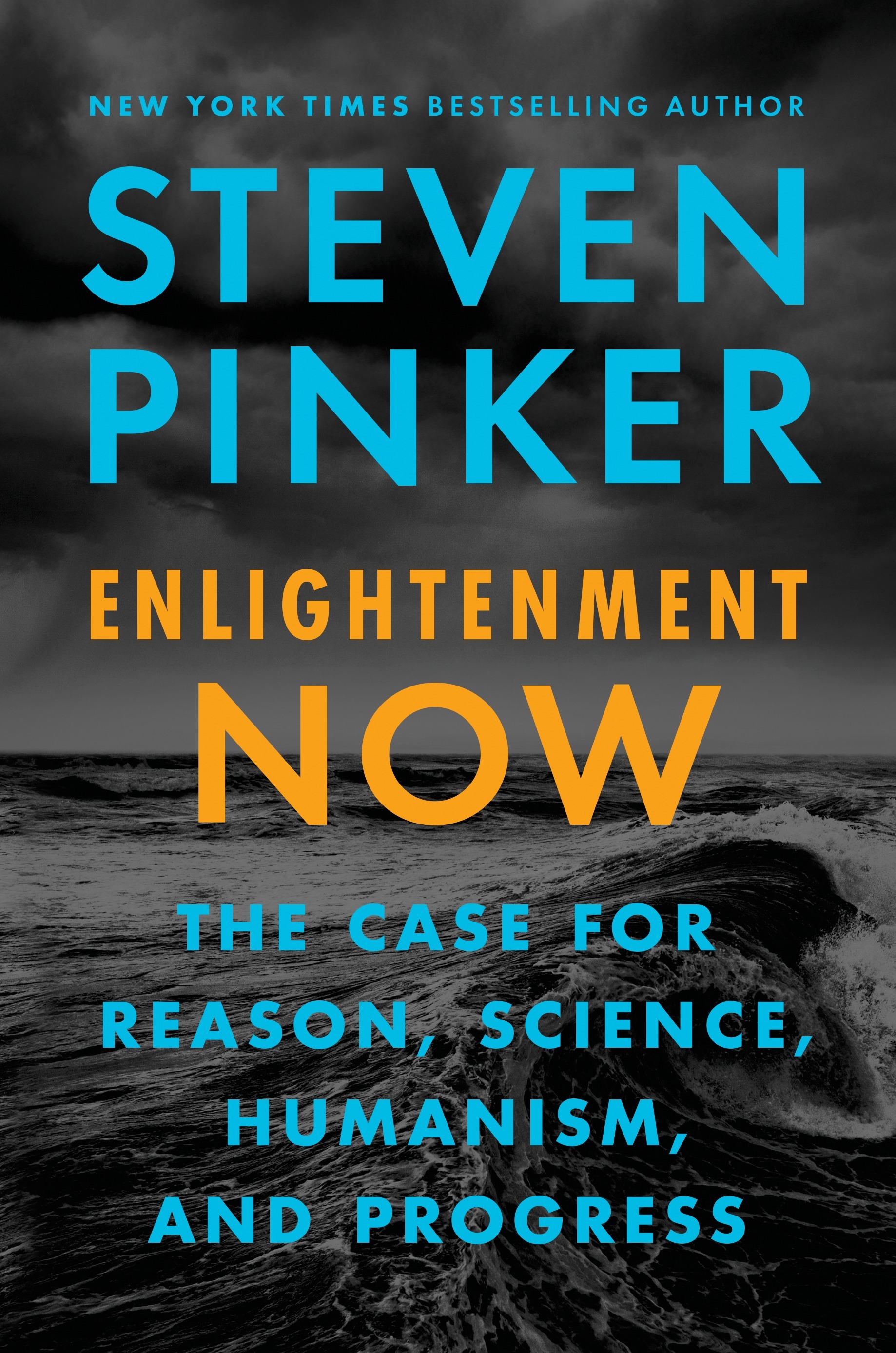
Enlightenment Now: The Case for Reason, Science, Humanism, and Progress
by Steven Pinker
Rating: 4.2 ⭐
• 18 recommendations ❤️
If you think the world is coming to an end, think again: people are living longer, healthier, freer, and happier lives, and while our problems are formidable, the solutions lie in the Enlightenment ideal of using reason and science.Is the world really falling apart? Is the ideal of progress obsolete? In this elegant assessment of the human condition in the third millennium, cognitive scientist and public intellectual Steven Pinker urges us to step back from the gory headlines and prophecies of doom, which play to our psychological biases. Instead, follow the data: In seventy-five jaw-dropping graphs, Pinker shows that life, health, prosperity, safety, peace, knowledge, and happiness are on the rise, not just in the West, but worldwide. This progress is not the result of some cosmic force. It is a gift of the Enlightenment: the conviction that reason and science can enhance human flourishing.Far from being a naïve hope, the Enlightenment, we now know, has worked. But more than ever, it needs a vigorous defense. The Enlightenment project swims against currents of human nature–tribalism, authoritarianism, demonization, magical thinking–which demagogues are all too willing to exploit. Many commentators, committed to political, religious, or romantic ideologies, fight a rearguard action against it. The result is a corrosive fatalism and a willingness to wreck the precious institutions of liberal democracy and global cooperation.With intellectual depth and literary flair, Enlightenment Now makes the case for reason, science, and humanism: the ideals we need to confront our problems and continue our progress.

Thinking in Bets: Making Smarter Decisions When You Don't Have All the Facts
by Annie Duke
Rating: 3.8 ⭐
• 19 recommendations ❤️
In Super Bowl XLIX, Seahawks coach Pete Carroll made one of the most controversial calls in football history: With 26 seconds remaining, and trailing by four at the Patriots' one-yard line, he called for a pass instead of a hand off to his star running back. The pass was intercepted and the Seahawks lost. Critics called it the dumbest play in history. But was the call really that bad? Or did Carroll actually make a great move that was ruined by bad luck?Even the best decision doesn't yield the best outcome every time. There's always an element of luck that you can't control, and there is always information that is hidden from view. So the key to long-term success (and avoiding worrying yourself to death) is to think in bets: How sure am I? What are the possible ways things could turn out? What decision has the highest odds of success? Did I land in the unlucky 10% on the strategy that works 90% of the time? Or is my success attributable to dumb luck rather than great decision making?Annie Duke, a former World Series of Poker champion turned business consultant, draws on examples from business, sports, politics, and (of course) poker to share tools anyone can use to embrace uncertainty and make better decisions. For most people, it's difficult to say "I'm not sure" in a world that values and, even, rewards the appearance of certainty. But professional poker players are comfortable with the fact that great decisions don't always lead to great outcomes and bad decisions don't always lead to bad outcomes.By shifting your thinking from a need for certainty to a goal of accurately assessing what you know and what you don't, you'll be less vulnerable to reactive emotions, knee-jerk biases, and destructive habits in your decision making. You'll become more confident, calm, compassionate and successful in the long run.

She Has Her Mother's Laugh: The Powers, Perversions, and Potential of Heredity
by Carl Zimmer
Rating: 4.3 ⭐
• 2 recommendations ❤️
2019 PEN/E.O. Wilson Literary Science Writing Award FinalistOne of New York Times 100 Notable Books for 2018One of Publishers Weekly's Top Ten Books of 2018One of Kirkus's Best Books of 2018 One of Mental Floss's Best Books of 2018One of Science Friday's Best Science Books of 2018Celebrated New York Times columnist and science writer Carl Zimmer presents a profoundly original perspective on what we pass along from generation to generation. Charles Darwin played a crucial part in turning heredity into a scientific question, and yet he failed spectacularly to answer it. The birth of genetics in the early 1900s seemed to do precisely that. Gradually, people translated their old notions about heredity into a language of genes. As the technology for studying genes became cheaper, millions of people ordered genetic tests to link themselves to missing parents, to distant ancestors, to ethnic identities...But, Zimmer writes, "Each of us carries an amalgam of fragments of DNA, stitched together from some of our many ancestors. Each piece has its own ancestry, traveling a different path back through human history. A particular fragment may sometimes be cause for worry, but most of our DNA influences who we are--our appearance, our height, our penchants--in inconceivably subtle ways." Heredity isn't just about genes that pass from parent to child. Heredity continues within our own bodies, as a single cell gives rise to trillions of cells that make up our bodies. We say we inherit genes from our ancestors--using a word that once referred to kingdoms and estates--but we inherit other things that matter as much or more to our lives, from microbes to technologies we use to make life more comfortable. We need a new definition of what heredity is and, through Carl Zimmer's lucid exposition and storytelling, this resounding tour de force delivers it.Weaving historical and current scientific research, his own experience with his two daughters, and the kind of original reporting expected of one of the world's best science journalists, Zimmer ultimately unpacks urgent bioethical quandaries arising from new biomedical technologies, but also long-standing presumptions about who we really are and what we can pass on to future generations.

The Coddling of the American Mind: How Good Intentions and Bad Ideas Are Setting Up a Generation for Failure
by Greg Lukianoff
Rating: 4.3 ⭐
• 16 recommendations ❤️
A timely investigation into the campus assault on free speech and what it means for students, education, and our democracy.The generation now coming of age has been taught three Great Untruths: their feelings are always right; they should avoid pain and discomfort; and they should look for faults in others and not themselves. These three Great Untruths are part of a larger philosophy that sees young people as fragile creatures who must be protected and supervised by adults. But despite the good intentions of the adults who impart them, the Great Untruths are harming kids by teaching them the opposite of ancient wisdom and the opposite of modern psychological findings on grit, growth, and antifragility. The result is rising rates of depression and anxiety, along with endless stories of college campuses torn apart by moralistic divisions and mutual recriminations.This is a book about how we got here. First Amendment expert Greg Lukianoff and social psychologist Jonathan Haidt take us on a tour of the social trends stretching back to the 1980s that have produced the confusion and conflict on campus today, including the loss of unsupervised play time and the birth of social media, all during a time of rising political polarization.This is a book about how to fix the mess. The culture of "safety" and its intolerance of opposing viewpoints has left many young people anxious and unprepared for adult life, with devastating consequences for them, for their parents, for the companies that will soon hire them, and for a democracy that is already pushed to the brink of violence over its growing political divisions. Lukianoff and Haidt offer a comprehensive set of reforms that will strengthen young people and institutions, allowing us all to reap the benefits of diversity, including viewpoint diversity.This is a book for anyone who is confused by what's happening on college campuses today, or has children, or is concerned about the growing inability of Americans to live and work and cooperate across party lines.

Gridiron Genius: A Master Class in Building Teams and Winning at the Highest Level
by Michael Lombardi
Rating: 4.0 ⭐
• 2 recommendations ❤️
NOW IN PAPERBACK: Former NFL general manager and three-time Super Bowl winner Michael Lombardi reveals what makes football organizations tick at the championship level. From personnel to practice to game-day decisions that win titles, Lombardi shares what he learned working with coaching legends Bill Walsh of the 49ers, Al Davis of the Raiders, and Bill Belichick of the Patriots, among others, during his three decades in football. Why do some NFL franchises dominate year after year while others never crack the code of success? For 30 years Michael Lombardi had a front-row seat and full access as three titans--Bill Walsh, Al Davis, and Bill Belichick-- reinvented the game, turning it into a national obsession while piling up Super Bowl trophies. Now, in Gridiron Genius, Lombardi provides the blueprint that makes a successful organization click and win--and the mistakes unsuccessful organizations make that keep them on the losing side time and again. In reality, very few coaches understand the philosophies, attention to detail, and massive commitment that defined NFL juggernauts like the 49ers and the Patriots. The best organizations are not just employing players, they are building something bigger. Gridiron Genius will explain how the best leaders evaluate, acquire, and utilize personnel in ways other professional minds, football and otherwise, won't even contemplate. How do you know when to trade a player? How do you create a positive atmosphere when everyone is out to maximize his own paycheck? And why is the tight end like the knight on a chessboard? To some, game planning consists only of designing an attack for the next opponent. But Lombardi explains how the smartest leaders script everything: from an afternoon's special teams practice to a season's playoff run to a decade-long organizational blueprint. Readers will delight in the Lombardi tour of an NFL weekend, including what really goes on during the game on and off the field and inside the headset. First stop: Belichick's Saturday-night staff meeting, where he announces how the game will go the next day. Spoiler alert: He always nails it. Football dynasties are built through massive attention to detail and unwavering commitment. From how to build a team to how to watch a game to how to understand the essential qualities of great leaders, Gridiron Genius gives football fans the knowledge needed to be the smartest person in the room every Sunday.

Bad Blood: Secrets and Lies in a Silicon Valley Startup
by John Carreyrou
Rating: 4.5 ⭐
• 8 recommendations ❤️
The full inside story of the breathtaking rise and shocking collapse of a multibillion-dollar startup, by the prize-winning journalist who first broke the story and pursued it to the end in the face of pressure and threats from the CEO and her lawyers. In 2014, Theranos founder and CEO Elizabeth Holmes was widely seen as the female Steve Jobs: a brilliant Stanford dropout whose startup "unicorn" promised to revolutionize the medical industry with a machine that would make blood tests significantly faster and easier. Backed by investors such as Larry Ellison and Tim Draper, Theranos sold shares in a fundraising round that valued the company at $9 billion, putting Holmes's worth at an estimated $4.7 billion. There was just one problem: The technology didn't work. For years, Holmes had been misleading investors, FDA officials, and her own employees. When Carreyrou, working at The Wall Street Journal, got a tip from a former Theranos employee and started asking questions, both Carreyrou and the Journal were threatened with lawsuits. Undaunted, the newspaper ran the first of dozens of Theranos articles in late 2015. By early 2017, the company's value was zero and Holmes faced potential legal action from the government and her investors. Here is the riveting story of the biggest corporate fraud since Enron, a disturbing cautionary tale set amid the bold promises and gold-rush frenzy of Silicon Valley.

Billion Dollar Whale: The Man Who Fooled Wall Street, Hollywood, and the World
by Tom Wright
Rating: 4.0 ⭐
• 12 recommendations ❤️
An epic true-tale of hubris and greed from two Pulitzer-finalist Wall Street Journal reporters, Billion Dollar Whale reveals how a young social climber pulled off one of the biggest financial heists in history--right under the nose of the global financial industry--exposing the shocking secret nexus of elite wealth, banking, Hollywood, and politics. The dust had yet to settle on the global financial crisis in 2009 when an unlikely Wharton grad was setting in motion a fraud of unprecedented gall and magnitude--one that would come to symbolize the next great threat to the global financial system. Billion Dollar Whale will become a classic, harrowing parable about the financial world in the twenty-first century.

'Mind-blowing ... It is a hugely important book ... His story is crucial' Matt Ridley, The Times One of the world's top behavioural geneticists argues that we need a radical rethink about what makes us who we areThe blueprint for our individuality lies in the 1% of DNA that differs between people. Our intellectual capacity, our introversion or extraversion, our vulnerability to mental illness, even whether we are a morning person - all of these aspects of our personality are profoundly shaped by our inherited DNA differences.In Blueprint, Robert Plomin, a pioneer in the field of behavioural genetics, draws on a lifetime's worth of research to make the case that DNA is the most important factor shaping who we are. Our families, schools and the environment around us are important, but they are not as influential as our genes. This is why, he argues, teachers and parents should accept children for who they are, rather than trying to mould them in certain directions. Even the environments we choose and the signal events that impact our lives, from divorce to addiction, are influenced by our genetic predispositions. Now, thanks to the DNA revolution, it is becoming possible to predict who we will become, at birth, from our DNA alone. As Plomin shows us, these developments have sweeping implications for how we think about parenting, education, and social mobility.A game-changing book by a leader in the field, Blueprint shows how the DNA present in the single cell with which we all begin our lives can impact our behaviour as adults.

The Psychology of Money: Timeless Lessons on Wealth, Greed, and Happiness
by Morgan Housel
Rating: 4.5 ⭐
• 11 recommendations ❤️
Doing well with money isn't necessarily about what you know. It's about how you behave. And behavior is hard to teach, even to really smart people. Money--investing, personal finance, and business decisions--is typically taught as a math-based field, where data and formulas tell us exactly what to do. But in the real world people don't make financial decisions on a spreadsheet. They make them at the dinner table, or in a meeting room, where personal history, your own unique view of the world, ego, pride, marketing, and odd incentives are scrambled together. In The Psychology of Money, award-winning author Morgan Housel shares 19 short stories exploring the strange ways people think about money and teaches you how to make better sense of one of life's most important topics.

Patient Capital: The Challenges and Promises of Long-Term Investing
by Victoria Ivashina
Rating: 2.7 ⭐
• 2 recommendations ❤️
How to overcome barriers to the long-term investments that are essential for solving the world’s biggest problemsThere has never been a greater need for long-term investments to tackle the world’s most difficult problems, such as climate change and decaying infrastructure. And it is increasingly unlikely that the public sector will be willing or able to fill this gap. If these critical needs are to be met, the major pools of long-term, patient capital―including pensions, sovereign wealth funds, university endowments, and wealthy individuals and families―will have to play a large role. In this accessible and authoritative account of long-term capital investment, two leading experts on the subject, Harvard Business School professors Victoria Ivashina and Josh Lerner, highlight the significant hurdles facing long-term investors and propose concrete ways to overcome these difficulties.Presenting the best evidence in an engaging way by using memorable stories and examples, Patient Capital describes how large investors increasingly want and need long-run investments that have the potential to deliver greater returns than those in the public markets. Yet success in such investments has been the exception. Performance has suffered from both the limitations of investors and the internal structure of their fund managers, often resulting in the wrong incentives and a lack of long-term planning.Yet the challenges facing long-term investors can be surmounted and the rewards are potentially large, both for investors and society as a whole. Patient Capital shows how to make long-term investment work better for everyone.

War and Chance: Assessing Uncertainty in International Politics
by Jeffrey A. Friedman
Rating: 3.7 ⭐
• 2 recommendations ❤️
Uncertainty surrounds every major decision in international politics. Yet there is almost always room for reasonable people to disagree about what that uncertainty entails. No one can reliably predict the outbreak of armed conflict, forecast economic recessions, anticipate terrorist attacks, or estimate the countless other risks that shape foreign policy choices. Many scholars and practitioners therefore believe that it is better to keep foreign policy debates focused on the facts - that it is, at best, a waste of time to debate uncertain judgments that will often prove to be wrong.In War and Chance , Jeffrey A. Friedman shows how foreign policy officials often try to avoid the challenge of assessing uncertainty, and argues that this behavior undermines high-stakes decision making. Drawing on an innovative combination of historical and experimental evidence, he explains how foreign policy analysts can assess uncertainty in a manner that is theoretically coherent, empirically meaningful, politically defensible, practically useful, and sometimes logically necessary for making sound choices. Each of these claims contradicts widespread skepticism about the value of probabilistic reasoning in international politics, and shows how placing greater emphasis on assessing uncertainty can improve nearly any foreign policy debate.A clear-eyed examination of the logic, psychology, and politics of assessing uncertainty, War and Chance provides scholars and practitioners with new foundations for understanding one of the most controversial elements of foreign policy discourse.

Artificial Intelligence: A Guide for Thinking Humans
by Melanie Mitchell
Rating: 4.3 ⭐
• 2 recommendations ❤️
A sweeping examination of the current state of artificial intelligence and how it is remaking our worldNo recent scientific enterprise has proved as alluring, terrifying, and filled with extravagant promise and frustrating setbacks as artificial intelligence. The award-winning author Melanie Mitchell, a leading computer scientist, now reveals AI’s turbulent history and the recent spate of apparent successes, grand hopes, and emerging fears surrounding it.In Artificial Intelligence, Mitchell turns to the most urgent questions concerning AI today: How intelligent—really—are the best AI programs? How do they work? What can they actually do, and when do they fail? How humanlike do we expect them to become, and how soon do we need to worry about them surpassing us? Along the way, she introduces the dominant models of modern AI and machine learning, describing cutting-edge AI programs, their human inventors, and the historical lines of thought underpinning recent achievements. She meets with fellow experts such as Douglas Hofstadter, the cognitive scientist and Pulitzer Prize–winning author of the modern classic Gödel, Escher, Bach, who explains why he is “terrified” about the future of AI. She explores the profound disconnect between the hype and the actual achievements in AI, providing a clear sense of what the field has accomplished and how much further it has to go.Interweaving stories about the science of AI and the people behind it, Artificial Intelligence brims with clear-sighted, captivating, and accessible accounts of the most interesting and provocative modern work in the field, flavored with Mitchell’s humor and personal observations. This frank, lively book is an indispensable guide to understanding today’s AI, its quest for “human-level” intelligence, and its impact on the future for us all.

How to Decide: Simple Tools for Making Better Choices
by Annie Duke
Rating: 3.9 ⭐
• 10 recommendations ❤️
Through a blend of compelling exercises, illustrations, and stories, the bestselling author of Thinking in Bets will train you to combat your own biases, address your weaknesses, and help you become a better and more confident decision-maker.What do you do when you're faced with a big decision? If you're like most people, you probably make a pro and con list, spend a lot of time obsessing about decisions that didn't work out, get caught in analysis paralysis, endlessly seek other people's opinions to find just that little bit of extra information that might make you sure, and finally go with your gut.What if there was a better way to make quality decisions so you can think clearly, feel more confident, second-guess yourself less, and ultimately be more decisive and be more productive?Making good decisions doesn't have to be a series of endless guesswork. Rather, it's a teachable skill that anyone can sharpen. In How to Decide , bestselling author Annie Duke and former professional poker player lays out a series of tools anyone can use to make better decisions. You'll • To identify and dismantle hidden biases. • To extract the highest quality feedback from those whose advice you seek. • To more accurately identify the influence of luck in the outcome of your decisions. • When to decide fast, when to decide slow, and when to decide in advance. • To make decisions that more effectively help you to realize your goals and live your values.Through interactive exercises and engaging thought experiments, this book helps you analyze key decisions you've made in the past and troubleshoot those you're making in the future. Whether you're picking investments, evaluating a job offer, or trying to figure out your romantic life, How to Decide is the key to happier outcomes and fewer regrets.

Incerto: Fooled by Randomness, The Black Swan, The Bed of Procrustes, Antifragile, Skin in the Game
by Nassim Nicholas Taleb
Rating: 4.4 ⭐
• 5 recommendations ❤️
The landmark five-book series—all together in one boxed setThe Incerto is an investigation of opacity, luck, uncertainty, probability, human error, risk, and decision making when we don’t understand the world, expressed in the form of a personal essay with autobiographical sections, stories, parables, and philosophical, historical, and scientific discussions, in non-overlapping volumes that can be accessed in any order. The main thread is that while there is inordinate uncertainty about what is going on, there is great certainty as to what one should do about it.This boxed set includes:FOOLED BY RANDOMNESSTHE BLACK SWANTHE BED OF PROCRUSTESANTIFRAGILESKIN IN THE GAME

Expectations Investing: Reading Stock Prices for Better Returns, Revised and Updated
by Michael J. Mauboussin
Rating: 4.0 ⭐
• 1 recommendation ❤️
Most investment books try to assess the attractiveness of a stock price by estimating the value of the company. Expectations Investing provides a powerful and insightful alternative to identifying gaps between price and value.Michael J. Mauboussin and Alfred Rappaport suggest that an investor start with a known quantity, the stock price, and ask what it implies for future financial results. After showing how to read expectations, Mauboussin and Rappaport provide a guide to rigorous strategic and financial analysis to help investors assess the likelihood of revisions to these expectations. Their framework traces value creation from the triggers that shape a company's performance to the impact on the value drivers. This allows a practitioner of expectations investing to determine whether a stock is an attractive buy or sell candidate.Investors who read this book will be able to evaluate stocks of companies in any sector or geography more effectively than those who use the standard approaches of most investors. Managers can use the book's principles to devise, adjust, and communicate their company's strategy in light of shareholder expectations.This revised and updated edition reflects the many changes in accounting and the business landscape since the book was first published and provides a wealth of new examples and case studies.