Michael Gervais Recommended Books
8 Books Recommended

The Art of Seeing: An Interpretation of the Aesthetic Encounter
by Mihály Csíkszentmihályi
Rating: 3.8 ⭐
• 1 recommendation ❤️
What is the nature of the aesthetic experience? Is it the same for everyone? It is possible to facilitate its occurrence? This book focuses on the psychology of the aesthetic experience and on the perception and understanding of art, suggesting ways to raise levels of visual literacy andenhance artistic enjoyment. The findings will be of importance not only to museum professionals and art educators, but also to psychologists and those interested in the nature of the aesthetic experience.

The bestselling, widely acclaimed translation from Stephen MitchellIn eighty-one brief chapters, Lao-tzu's Tao Te Ching, or Book of the Way, provides advice that imparts balance and perspective, a serene and generous spirit, and teaches us how to work for the good with the effortless skill that comes from being in accord with the Tao—the basic principle of the universe.

Inch and Miles toot a magic silver whistle to help them find clues to the pyramid of success.

Praise for Mind Gym"Believing in yourself is paramount to success for any athlete. Gary's lessons and David's writing provide examples of the importance of the mental game."--Ben Crenshaw, two-time Masters champion and former Ryder Cup captain"Mind Gym hits a home run. If you want to build mental muscle for the major leagues, read this book."--Ken Griffey Jr., Major League Baseball MVP"I read Mind Gym on my way to the Sydney Olympics and really got a lot out of it. Gary has important lessons to teach, and you'll find the exercises fun and beneficial."--Jason Kidd, NBA All-Star and Olympic gold-medal winner"I love the book Mind Gym."--Madison Kocian, 2016 U.S. Women's Gymnastics Team, 2015 Uneven Bars World Champion, as told to Us WeeklyIn Mind Gym, noted sports psychology consultant Gary Mack explains how your mind influences your performance on the field or on the court as much as your physical skill does, if not more so. Through forty accessible lessons and inspirational anecdotes from prominent athletes--many of whom he has worked with--you will learn the same techniques and exercises Mack uses to help elite athletes build mental "muscle." Mind Gym will give you the "head edge" over the competition.

A poem by a therapist and teacher affirms the uniqueness and worth of the individual

Man's Search for Meaning has riveted generations of readers with its descriptions of life in Nazi death camps and its lessons for spiritual survival. Between 1942 and 1945 psychiatrist Viktor Frankl labored in four different camps, including Auschwitz, while his parents, brother, and pregnant wife perished. Based on his own experience and the stories of his many patients, Frankl argues that we cannot avoid suffering but we can choose how to cope with it, find meaning in it, and move forward with renewed purpose. Frankl's theory—known as logotherapy, from the Greek word logos ("meaning")—holds that our primary drive in life is not pleasure, as Freud maintained, but the discovery and pursuit of what we personally find meaningful. In the decades since its first publication in 1959, Man's Search for Meaning has become a classic, with more than twelve million copies in print around the world. A 1991 Library of Congress survey that asked readers to name a "book that made a difference in your life" found Man's Search for Meaning among the ten most influential books in America. At once a memoir, a meditation, a treatise, and a history, it continues to inspire us all to find significance in the very act of living.(back cover)
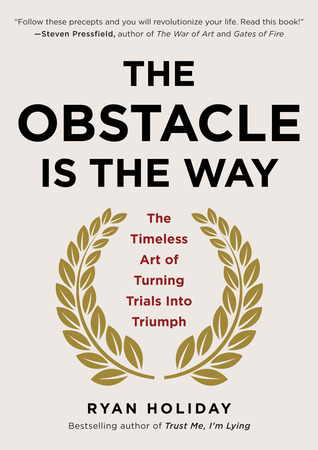
The Obstacle Is the Way: The Timeless Art of Turning Trials into Triumph
by Ryan Holiday
Rating: 4.1 ⭐
• 19 recommendations ❤️
“The impediment to action advances action. What stands in the way becomes the way.” — Marcus AureliusWe are stuck, stymied, frustrated. But it needn’t be this way. There is a formula for success that’s been followed by the icons of history—from John D. Rockefeller to Amelia Earhart to Ulysses S. Grant to Steve Jobs—a formula that let them turn obstacles into opportunities. Faced with impossible situations, they found the astounding triumphs we all seek.These men and women were not exceptionally brilliant, lucky, or gifted. Their success came from timeless philosophical principles laid down by a Roman emperor who struggled to articulate a method for excellence in any and all situations.This book reveals that formula for the first time—and shows us how we can turn our own adversity into advantage.

The Way of the Champion: Lessons from Sun Tzu's the Art of War and Other Tao Wisdom for Sports & Life: Lessons from Sun Tzu's the Art of War and Other Tao Wisdom for Sports & Life
by Jerry Lynch
• 2 recommendations ❤️
Martial artists, great warriors, coaches, generals, and successful corporate CEOs have all effectively used the strategies for winning found in Sun Tzu's Art of War.Authors Jerry Lynch and Chungliang Al Huang, using lessons from the The Art of War, as well as other ancient Taoist books such as the I Ching and Tao Te Ching, teach readers to develop the capacities and qualities that make a champion-such as high self-esteem, courage, fortitude, determination, perseverance, tenacity, self-awareness, integrity, the ability to take risks, and the ability to learn from failure.The emphasis on self-awareness, tactical positioning, and strategic advantage means that practitioners win through inner growth and self-improvement-giving them a universal competitive edge.