
Maya Angelou Recommended Books
American poet, author, and civil rights activist (1928–2014)
7 Books Recommended

First published in 1952 and immediately hailed as a masterpiece, Invisible Man is one of those rare novels that have changed the shape of American literature. For not only does Ralph Ellison's nightmare journey across the racial divide tell unparalleled truths about the nature of bigotry and its effects on the minds of both victims and perpetrators, it gives us an entirely new model of what a novel can be.As he journeys from the Deep South to the streets and basements of Harlem, from a horrifying "battle royal" where black men are reduced to fighting animals, to a Communist rally where they are elevated to the status of trophies, Ralph Ellison's nameless protagonist ushers readers into a parallel universe that throws our own into harsh and even hilarious relief. Suspenseful and sardonic, narrated in a voice that takes in the symphonic range of the American language, black and white, Invisible Man is one of the most audacious and dazzling novels of our century.

This new "most complete" edition of the collected poems of Paul Laurence Dunbar, the virtual father of black American poetry, includes sixty poems not included in the previous―and now out of print―Complete Poems. Sixteen of these were found in manuscript form. Paul Laurence Dunbar's work achieved wide recognition in the first part of the twentieth century. The author of six volumes of poetry, as well as novels, librettos, songs, and essays, he was nationally known and accepted by black and white readers alike. As Joanne M. Braxton points out in her substantive introduction to this edition, a reconsideration of Dunbar's work and influence is long "We reclaim, in Paul Laurence Dunbar, a significant American author whose career transcends race and locality even while he makes use of racialized and regional cultural materials to create an African-American aesthetic and a unique black poetic diction."

Now available from Thomas Wolfe’s original publisher, the final novel by the literary legend, that “will stand apart from everything else that he wrote” ( The New York Times Book Review )—first published in 1940 and long considered a classic of twentieth century literature.A twentieth-century classic, Thomas Wolfe’s magnificent novel is both the story of a young writer longing to make his mark upon the world and a sweeping portrait of America and Europe from the Great Depression through the years leading up to World War II.Driven by dreams of literary success, George Webber has left his provincial hometown to make his name as a writer in New York City. When his first novel is published, it brings him the fame he has sought, but it also brings the censure of his neighbors back home, who are outraged by his depiction of them. Unsettled by their reaction and unsure of himself and his future, Webber begins a search for a greater understanding of his artistic identity that takes him deep into New York’s hectic social whirl; to London with an uninhibited group of expatriates; and to Berlin, lying cold and sinister under Hitler’s shadow. He discovers a world plagued by political uncertainty and on the brink of transformation, yet he finds within himself the capacity to meet it with optimism and a renewed love for his birthplace. He is a changed man yet a hopeful one, awake to the knowledge that one can never fully “go back home to your family, back home to your childhood…away from all the strife and conflict of the world…back home to the old forms and systems of things which once seemed everlasting but which are changing all the time.”
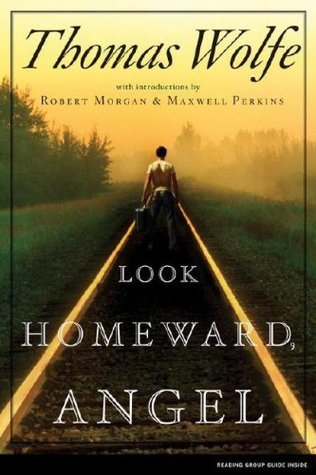
Look Homeward, Angel: A Story of the Buried Life is a 1929 novel by Thomas Wolfe. It is Wolfe's first novel, and is considered a highly autobiographical American Bildungsroman. The character of Eugene Gant is generally believed to be a depiction of Wolfe himself. The novel covers the span of time from Gant's birth to the age of 19. The setting is the fictional town and state of Altamont, Catawba, a fictionalization of his home town, Asheville, North Carolina. Playwright Ketti Frings wrote a theatrical adaptation of Wolfe's work in a 1957 play of the same title.

It was the time of the French Revolution — a time of great change and great danger. It was a time when injustice was met by a lust for vengeance, and rarely was a distinction made between the innocent and the guilty. Against this tumultuous historical backdrop, Dickens' great story of unsurpassed adventure and courage unfolds.Unjustly imprisoned for 18 years in the Bastille, Dr. Alexandre Manette is reunited with his daughter, Lucie, and safely transported from France to England. It would seem that they could take up the threads of their lives in peace. As fate would have it though, the pair are summoned to the Old Bailey to testify against a young Frenchman — Charles Darnay — falsely accused of treason. Strangely enough, Darnay bears an uncanny resemblance to another man in the courtroom, the dissolute lawyer's clerk Sydney Carton. It is a coincidence that saves Darnay from certain doom more than once. Brilliantly plotted, the novel is rich in drama, romance, and heroics that culminate in a daring prison escape in the shadow of the guillotine.--back cover

Louisa May Alcott's timeless text, illustrated with movie stills from Greta Gerwig's star-studded film adaptation is perfect for a holiday gift.Readers have been falling for the March family for over 150 years, and Greta Gerwig's film adaptation is bringing the childhood classic to the big screen for a new generation of fans in 2019. Illustrated throughout with movie stills from the production—starring Saoirse Ronan, Emma Watson, Timothée Chalamet, Laura Dern, Meryl Streep, Bob Odenkirk, and Chris Cooper—this edition of Little Women tells the timeless story of sisters Meg, Jo, Beth, and Amy as they navigate hardship and adventure in post-Civil War Concord, Massachusetts.

KJV Holy Bible, Giant Print Standard Size Faux Leather Red Letter Edition - Thumb Index & Ribbon Marker, King James Version, Dark Brown
by Anonymous
Rating: 4.7 ⭐
• 40 recommendations ❤️
New - Holy Bible: KJV Giant Print Thumb Index Edition: Brown (King James Bible). Great for gift or personal study.