
Q92877 Recommended Books
American entrepreneur
57 Books Recommended
The now-classic Metaphors We Live By changed our understanding of metaphor and its role in language and the mind. Metaphor, the authors explain, is a fundamental mechanism of mind, one that allows us to use what we know about our physical and social experience to provide understanding of countless other subjects. Because such metaphors structure our most basic understandings of our experience, they are "metaphors we live by", metaphors that can shape our perceptions and actions without our ever noticing them.In this updated edition of Lakoff and Johnson's influential book, the authors supply an afterword surveying how their theory of metaphor has developed within the cognitive sciences to become central to the contemporary understanding of how we think and how we express our thoughts in language.

The Art of the Start 2.0: The Time-Tested, Battle-Hardened Guide for Anyone Starting Anything
by Guy Kawasaki
Rating: 4.1 ⭐
• 2 recommendations ❤️
Fully revised and expanded for the first time in a decade, The Art of the Start 2.0 is Guy Kawasaki's classic bestselling guide to launching and making your new product, service or idea a success.This new edition has been expanded to reflect the seismic changes in business over the last decade, in which once-invulnerable market leaders have struggled and many of the basics of getting established have become easier, cheaper and more democratic.Today, business plans are no longer necessary. Social media has replaced PR and advertising as the key method of promotion. Crowdfunding is now a viable alternative to investors. Cloud computing makes basic infrastructure affordable for almost any new venture.The Art of the Start 2.0 will show you how to effectively deploy all these new tools. And it will help you master the fundamental challenges that have not changed: building a strong team, creating an awesome product or service, and facing down your competition.Whether you're an aspiring entrepreneur, own a business, or want to get more entrepreneurial within any organisation, this book will help you make your crazy ideas stick. It's an adventure that's more art than science - the art of the start.'The Art of the Start 2.0 is the ultimate entrepreneurship handbook. Kawasaki's generous wisdom, tips, and humour reflect his successes and failures. We can all benefit from his insights' Arianna Huffington, president and editor in chief, Huffington Post'A successful entrepreneur requires three things: a garage, an idea, and this book - Guy's irrepressible guide to the raw essentials of life in a young company' Michael Moritz, Sequoia CapitaGuy Kawasaki is the chief evangelist of Canva (an online design service) and an executive fellow of the Haas School of Business at U.C. Berkeley. Previously, he was the chief evangelist of Apple and special adviser to the CEO of the Motorola business unit of Google. His many acclaimed books include The Art of Social Media and Enchantment.

An assemblage of reflections on the nature of writing and the writer from one the greatest American writers of the twentieth century.Throughout Hemingway’s career as a writer, he maintained that it was bad luck to talk about writing—that it takes off “whatever butterflies have on their wings and the arrangement of hawk’s feathers if you show it or talk about it.”Despite this belief, by the end of his life he had done just what he intended not to do. In his novels and stories, in letters to editors, friends, fellow artists, and critics, in interviews and in commissioned articles on the subject, Hemingway wrote often about writing. And he wrote as well and as incisively about the subject as any writer who ever lived…This book contains Hemingway’s reflections on the nature of the writer and on elements of the writer’s life, including specific and helpful advice to writers on the craft of writing, work habits, and discipline. The Hemingway personality comes through in general wisdom, wit, humor, and insight, and in his insistence on the integrity of the writer and of the profession itself.—From the Preface by Larry W. Phillips

The Effective Executive: The Definitive Guide to Getting the Right Things Done
by Peter F. Drucker
Rating: 4.1 ⭐
• 12 recommendations ❤️
What makes an effective executive? The measure of the executive, Peter F. Drucker reminds us, is the ability to "get the right things done." This usually involves doing what other people have overlooked as well as avoiding what is unproductive. Intelligence, imagination, and knowledge may all be wasted in an executive job without the acquired habits of mind that mold them into results. Drucker identifies five practices essential to business effectiveness that can, and must, be learned: Ranging widely through the annals of business and government, Peter F. Drucker demonstrates the distinctive skill of the executive and offers fresh insights into old and seemingly obvious business situations.

Awareness: The Perils and Opportunities of Reality
by Anthony de Mello
Rating: 4.3 ⭐
• 19 recommendations ❤️
The heart of Anthony de Mello's bestselling spiritual message is awareness. Mixing Christian spirituality, Buddhist parables, Hindu breathing exercises, and psychological insight, de Mello's words of hope come together in Awareness in a grand synthesis.In short chapters for reading in quiet moments at home or at the office, he cajoles and challenges: We must leave this go-go-go world of illusion and become aware. And this only happens, he insists, by becoming alive to the needs and potential of others, whether at home or in the workplace.Here, then, is a masterful book of the spirit, challenging us to wake up in every aspect of our lives.

Words That Work: It's Not What You Say, It's What People Hear
by Frank Luntz
Rating: 3.7 ⭐
• 4 recommendations ❤️
The nation's premier communications expert shares his wisdom on how the words we choose can change the course of business, of politics, and of life in this countryIn Words That Work , Luntz offers a behind-the-scenes look at how the tactical use of words and phrases affects what we buy, who we vote for, and even what we believe in. With chapters like "The Ten Rules of Successful Communication" and "The 21 Words and Phrases for the 21st Century," he examines how choosing the right words is essential.Nobody is in a better position to explain than Frank Luntz: He has used his knowledge of words to help more than two dozen Fortune 500 companies grow. Hell tell us why Rupert Murdoch's six-billion-dollar decision to buy DirectTV was smart because satellite was more cutting edge than "digital cable," and why pharmaceutical companies transitioned their message from "treatment" to "prevention" and "wellness."If you ever wanted to learn how to talk your way out of a traffic ticket or talk your way into a raise, this book's for you.

The Halo Effect: ... and the Eight Other Business Delusions That Deceive Managers
by Philip M. Rosenzweig
Rating: 3.9 ⭐
• 4 recommendations ❤️
Much of our business thinking is shaped by delusions -- errors of logic and flawed judgments that distort our understanding of the real reasons for a company's performance. In a brilliant and unconventional book, Phil Rosenzweig unmasks the delusions that are commonly found in the corporate world. These delusions affect the business press and academic research, as well as many bestselling books that promise to reveal the secrets of success or the path to greatness. Such books claim to be based on rigorous thinking, but operate mainly at the level of storytelling. They provide comfort and inspiration, but deceive managers about the true nature of business success.The most pervasive delusion is the Halo Effect. When a company's sales and profits are up, people often conclude that it has a brilliant strategy, a visionary leader, capable employees, and a superb corporate culture. When performance falters, they conclude that the strategy was wrong, the leader became arrogant, the people were complacent, and the culture was stagnant. In fact, little may have changed -- company performance creates a Halo that shapes the way we perceive strategy, leadership, people, culture, and more.Drawing on examples from leading companies including Cisco Systems, IBM, Nokia, and ABB, Rosenzweig shows how the Halo Effect is widespread, undermining the usefulness of business bestsellers from "In Search of Excellence" to "Built to Last" and "Good to Great."Rosenzweig identifies nine popular business delusions. Among them:"The Delusion of Absolute Performance: " Company performance is relative to competition, not absolute, which is why following a formula can never guarantee results. Success comes from doing things better than rivals, which means that managers have to take risks."The Delusion of Rigorous Research: " Many bestselling authors praise themselves for the vast amount of data they have gathered, but forget that if the data aren't valid, it doesn't matter how much was gathered or how sophisticated the research methods appear to be. They trick the reader by substituting sizzle for substance."The Delusion of Single Explanations: " Many studies show that a particular factor, such as corporate culture or social responsibility or customer focus, leads to improved performance. But since many of these factors are highly correlated, the effect of each one is usually less than suggested.In what promises to be a landmark book, "The Halo Effect" replaces mistaken thinking with a sharper understanding of what drives business success and failure. "The Halo Effect" is a guide for the thinking manager, a way to detect errors in business research and to reach a clearer understanding of what drives business success and failure.Skeptical, brilliant, iconoclastic, and mercifully free of business jargon, Rosenzweig's book is nevertheless dead serious, making his arguments about important issues in an unsparing and direct way that will appeal to a broad business audience. For managers who want to separate fact from fiction in the world of business, "The Halo Effect" is essential reading -- witty, often funny, and sharply argued, it's an antidote to so much of the conventional thinking that clutters business bookshelves.

The World Is Sound: Nada Brahma: Music and the Landscape of Consciousness
by Joachim-Ernst Berendt
Rating: 4.2 ⭐
• 1 recommendation ❤️
Scientists have only recently learned that the particles of an oxygen atom vibrate in a major key and that blades of grass ‘sing.” Europe’s foremost jazz producer takes the reader on an exhilarating journey through Asia, Europe, Africa, and Latin America, exploring the musical traditions of diverse cultures and reaffirming what the ancients have always known--the world is sound, rhythm, and vibration. Berendt’s book is alive with his experiences--living in Bali, studying at a Zen monastery in Kyoto, and encountering budding jazz stars in Indonesia, Japan, Europe, and the United States. Drawing from his friendships with composers and performers as well as his knowledge of new physics and Tantra, cybernetics, Sufism, and the works of Hermann Hesse, he reveals the importance of sound in shaping cultural and spiritual life worldwide. A tribute to the work of many of the greatest figures of our age--including Hans Kayser, Jean Gebser, Sufi Hazrat lnayat Khan, musicians John Coltrane and Ravi Shankar--Berendt’s book suggests that hearing, rather than seeing, is the key to a more spiritual experience of consciousness. His discussion of sound in relation to mathematics, logic, sacred geometry, myth, and sexuality is practical as well as theoretical, offering readers a variety of techniques for developing the ear as an organ of spiritual perception.

Written 75 years ago, 1984 was George Orwell’s chilling prophecy about the future. And while 1984 has come and gone, his dystopian vision of a government that will do anything to control the narrative is timelier than ever...This 75th Anniversary Edition includes:• A New Introduction by Dolen Perkins-Valdez, author of Take My Hand, winner of the 2023 NAACP Image Award for Outstanding Literary Work—Fiction• A New Afterword by Sandra Newman, author of Julia: A Retelling of George Orwell’s 1984“The Party told you to reject the evidence of your eyes and ears. It was their final, most essential command.”Winston Smith toes the Party line, rewriting history to satisfy the demands of the Ministry of Truth. With each lie he writes, Winston grows to hate the Party that seeks power for its own sake and persecutes those who dare to commit thoughtcrimes. But as he starts to think for himself, Winston can’t escape the fact that Big Brother is always watching...A startling and haunting novel, 1984 creates an imaginary world that is completely convincing from start to finish. No one can deny the novel’s hold on the imaginations of whole generations, or the power of its admonitions—a power that seems to grow, not lessen, with the passage of time.• Nominated as one of America’s best-loved novels by PBS’s The Great American Read •

On Grief and Grieving: Finding the Meaning of Grief Through the Five Stages of Loss
by Elisabeth Kübler-Ross
Rating: 4.3 ⭐
• 2 recommendations ❤️
Ten years after the death of Elisabeth Kübler-Ross, this commemorative edition of her final book combines practical wisdom, case studies, and the authors’ own experiences and spiritual insight to explain how the process of grieving helps us live with loss. Includes a new introduction and resources section.Elisabeth Kübler-Ross's On Death and Dying changed the way we talk about the end of life. Before her own death in 2004, she and David Kessler completed On Grief and Grieving , which looks at the way we experience the process of grief.Just as On Death and Dying taught us the five stages of death -- denial, anger, bargaining, depression, and acceptance -- On Grief and Grieving applies these stages to the grieving process and weaves together theory, inspiration, and practical advice, including sections on sadness, hauntings, dreams, isolation, and healing.

Originally published in 1978, this classic exploration of humanity’s complex relationship with and understanding of wolves returns with a new afterword by the author.Humankind's relationship with the wolf is the sum of a spectrum of responses ranging from fear to admiration and affection. Lopez’s classic, careful study has won praise from a wide range of reviewers and improved the way books on wild animals are written. Of Wolves and Men explores the uneasy interaction between wolves and civilization over the centuries, and the wolf's prominence in our thoughts about wild creatures. Drawing upon an impressive array of literature, history, science, and mythology as well as extensive personal experience with captive and free-ranging wolves, Lopez argues for the wolf's preservation and immerses the reader in its sensory world, creating a compelling portrait of the wolf both as a real animal and as imagined by different kinds of men. A scientist might perceive the wolf as defined by research data, while an Eskimo hunter sees a family provider much like himself. For many Native Americans the wolf is also a spiritual symbol, a respected animal that can strengthen the individual and the community. With irresistible charm and elegance, Of Wolves and Men celebrates careful scientific fieldwork, dispels folklore that has enabled the Western mind to demonize wolves, explains myths, and honors indigenous traditions, allowing us to understand how this remarkable animal has become so prominent for so long in the human heart.

Written four hundred years before the birth of Christ, this detailed contemporary account of the long life-and-death struggle between Athens and Sparta stands an excellent chance of fulfilling its author's ambitious claim. Thucydides himself (c.460-400 BC) was an Athenian and achieved the rank of general in the earlier stages of the war. He applied thereafter a passion for accuracy and a contempt for myth and romance in compiling this factual record of a disastrous conflict.
Bird by Bird: Some Instructions on Writing and Life
by Anne Lamott
Rating: 4.3 ⭐
• 25 recommendations ❤️
A previous edition of this title can be found here.For a quarter century, more than a million readers—scribes and scribblers of all ages and abilities—have been inspired by Anne Lamott’s hilarious, big-hearted, homespun advice. Advice that begins with the simple words of wisdom passed down from Anne’s father—also a writer—in the iconic passage that gives the book its title: “Thirty years ago my older brother, who was ten years old at the time, was trying to get a report on birds written that he’d had three months to write. It was due the next day. We were out at our family cabin in Bolinas, and he was at the kitchen table close to tears, surrounded by binder paper and pencils and unopened books on birds, immobilized by the hugeness of the task ahead. Then my father sat down beside him, put his arm around my brother’s shoulder, and said, ‘Bird by bird, buddy. Just take it bird by bird.’” An essential volume for generations of writers young and old, Bird by Bird is a modern classic. This twenty-fifth anniversary edition will continue to spark creative minds for years to come.

Body for Life: 12 Weeks to Mental and Physical Strength
by Bill Phillips
Rating: 3.7 ⭐
• 1 recommendation ❤️
Mention the name Bill Phillips to any of the people he's helped transform and you will see their faces light up with appreciation and respect. These people include:Hundreds of thousands of men and women who read his magazine for guidance and straightforward information about exercise, nutrition, and living with strength.Elite professional athletes, among them John Elway, Karl Malone, Mike Piazza, and Terrell Davis ?ho have turned to Phillips for clear–cut information to enhance their energy and performance.People once plagued by obesity, alcoholism, and life–threatening ailments who accepted a personal challenge from Bill Phillips and, with his help, have regained control of their bodies and their lives.When you begin to apply the information in this book, you will be proving to yourself that astounding changes are within your grasp too. And, you will discover Body –for–LIFE is much more than a book about physical fitness ?t's a gateway to a new and better life, a life of rewarding and fulfilling moments, perhaps more spectacular than you've ever dared to dream before.Within 12 weeks, you too are going to know ?ot believe, but know : that the transformation you've created with your body is merely an example of the power you have to transform everything else in your world. In language that is vivid and down–to–earth, Bill Phillips guides you, step by step, through the integrated Body –for–LIFE Program, which reveals:How to lose fat and increase your strength by exercising less, not more;How to tap into an endless source of energy by living with the Power MindsetTM;How to create more time for everything meaningful in your life;How to trade hours of aerobics for minutes of weight training ?ith dramatic results;How to make continual progress by using the High–Point TechniqueTM;How to feed your muscles while starving fat with the Nutrition–for–LIFE MethodTM;How thousands of ordinary people have now become extraordinary and how you can, too;How to gain control of your body and life, once and for all.The principles of the Body –for–LIFE Program are surprisingly simple but remarkably powerful. So allow yourself to experience the force of the information in this book, allow yourself to take your mind, your body, your life to a higher point than you may have ever dreamed you could. All in as little as 12 weeks.

On Writing Well: The Classic Guide to Writing Nonfiction
by William Zinsser
Rating: 4.2 ⭐
• 10 recommendations ❤️
On Writing Well has been praised for its sound advice, its clarity and the warmth of its style. It is a book for everybody who wants to learn how to write or who needs to do some writing to get through the day, as almost everybody does in the age of e-mail and the Internet. Whether you want to write about people or places, science and technology, business, sports, the arts or about yourself in the increasingly popular memoir genre, On Writing Well offers you fundamental priciples as well as the insights of a distinguished writer and teacher. With more than a million copies sold, this volume has stood the test of time and remains a valuable resource for writers and would-be writers.

The classic novel, international sensation, and inspiration for the film starring Anthony Quinn explores the struggle between the aesthetic and the rational, the inner life and the life of the mind.The classic novel Zorba the Greek is the story of two men, their incredible friendship, and the importance of living life to the fullest. Zorba, a Greek working man, is a larger-than-life character, energetic and unpredictable. He accompanies the unnamed narrator to Crete to work in the narrator’s lignite mine, and the pair develops a singular relationship. The two men couldn’t be further apart: The narrator is cerebral, modest, and reserved; Zorba is unfettered, spirited, and beyond the reins of civility. Over the course of their journey, he becomes the narrator’s greatest friend and inspiration and helps him to appreciate the joy of living.Zorba has been acclaimed as one of the most remarkable figures in literature; he is a character in the great tradition of Sinbad the Sailor, Falstaff, and Sancho Panza. He responds to all that life offers him with passion, whether he’s supervising laborers at a mine, confronting mad monks in a mountain monastery, embellishing the tales of his past adventures, or making love. Zorba the Greek explores the beauty and pain of existence, inviting readers to reevaluate the most important aspects of their lives and live to the fullest.

The first novel in Isaac Asimov's classic science-fiction masterpiece, the Foundation series For twelve thousand years the Galactic Empire has ruled supreme. Now it is dying. But only Hari Seldon, creator of the revolutionary science of psychohistory, can see into the future--to a dark age of ignorance, barbarism, and warfare that will last thirty thousand years. To preserve knowledge and save humankind, Seldon gathers the best minds in the Empire--both scientists and scholars--and brings them to a bleak planet at the edge of the galaxy to serve as a beacon of hope for future generations. He calls his sanctuary the Foundation.
This daring literary thriller, rich with eroticism and suspense, is one of John Fowles's best-loved and bestselling novels and has contributed significantly to his international reputation as a writer of the first degree. At the center of The Magus is Nicholas Urfe, a young Englishman who accepts a teaching position on a remote Greek island, where he befriends a local millionaire. The friendship soon evolves into a deadly game, in which reality and fantasy are deliberately manipulated, and Nicholas finds that he must fight not only for his sanity but for his very survival.

Peter Drucker's classic book on This is the first book to present innovation and entrepreneurship as a purposeful and systematic discipline that explains and analyzes the challenges and opportunities of America's new entrepreneurial economy. Superbly practical, Innovation and Entrepreneurship explains what established businesses, public service institutions, and new ventures need to know and do to succeed in today's economy.
Amusing Ourselves to Death: Public Discourse in the Age of Show Business
by Neil Postman
Rating: 4.2 ⭐
• 13 recommendations ❤️
Television has conditioned us to tolerate visually entertaining material measured out in spoonfuls of time, to the detriment of rational public discourse and reasoned public affairs. In this eloquent, persuasive book, Neil Postman alerts us to the real and present dangers of this state of affairs, and offers compelling suggestions as to how to withstand the media onslaught. Before we hand over politics, education, religion, and journalism to the show business demands of the television age, we must recognize the ways in which the media shape our lives and the ways we can, in turn, shape them to serve out highest goals.

Women, Fire, and Dangerous Things: What Categories Reveal About the Mind
by George Lakoff
Rating: 4.1 ⭐
• 2 recommendations ❤️
"Its publication should be a major event for cognitive linguistics and should pose a major challenge for cognitive science. In addition, it should have repercussions in a variety of disciplines, ranging from anthropology and psychology to epistemology and the philosophy of science. . . . Lakoff asks: What do categories of language and thought reveal about the human mind? Offering both general theory and minute details, Lakoff shows that categories reveal a great deal."—David E. Leary, American Scientist

Hard-Boiled Wonderland and the End of the World
by Haruki Murakami
Rating: 4.1 ⭐
• 2 recommendations ❤️
Hyperkinetic and relentlessly inventive, Hard-Boiled Wonderland and the End of the World is Haruki Murakami’s deep dive into the very nature of consciousness.Across two parallel narratives, Murakami draws readers into a mind-bending universe in which Bob Dylan, Lauren Bacall, a split-brained data processor, a deranged scientist, his shockingly undemure granddaughter, and various thugs, librarians, and subterranean monsters collide to dazzling effect. What emerges is a novel that is at once hilariously funny and a deeply serious meditation on the nature and uses of the mind.

A concise survey of the culture and civilization of mankind, The Lessons of History is the result of a lifetime of research from Pulitzer Prize–winning historians Will and Ariel Durant.With their accessible compendium of philosophy and social progress, the Durants take us on a journey through history, exploring the possibilities and limitations of humanity over time. Juxtaposing the great lives, ideas, and accomplishments with cycles of war and conquest, the Durants reveal the towering themes of history and give meaning to our own.
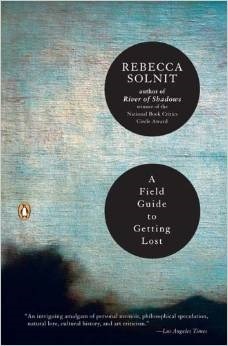
Whether she is contemplating the history of walking as a cultural and political experience over the past two hundred years (Wanderlust), or using the life of photographer Eadweard Muybridge as a lens to discuss the transformations of space and time in late nineteenth-century America (River of Shadows), Rebecca Solnit has emerged as an inventive and original writer whose mind is daring in the connections it makes. A Field Guide to Getting Lost draws on emblematic moments and relationships in Solnit's own life to explore the issues of wandering, being lost, and the uses of the unknown. The result is a distinctive, stimulating, and poignant voyage of discovery.
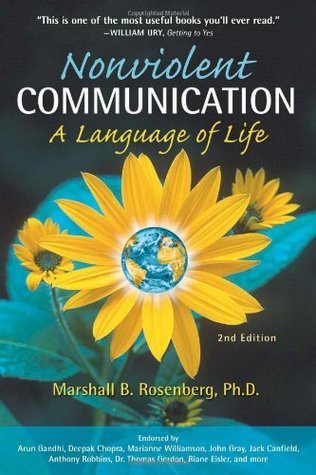
Nonviolent Communication: A Language of Life
by Marshall B. Rosenberg
Rating: 4.3 ⭐
• 3 recommendations ❤️
Do you hunger for skills to improve the quality of your relationships, to deepen your sense of personal empowerment or to simply communicate more effectively? Unfortunately, for centuries our culture has taught us to think and speak in ways that can actually perpetuate conflict, internal pain and even violence. Nonviolent Communication partners practical skills with a powerful consciousness and vocabulary to help you get what you want peacefully.In this internationally acclaimed text, Marshall Rosenberg offers insightful stories, anecdotes, practical exercises and role-plays that will dramatically change your approach to communication for the better. Discover how the language you use can strengthen your relationships, build trust, prevent conflicts and heal pain. Revolutionary, yet simple, Nonviolent Communication offers you the most effective tools to reduce violence and create peace in your life—one interaction at a time.

Brave New World is a dystopian social science fiction novel by English author Aldous Huxley. Largely set in a futuristic World State, whose citizens are environmentally engineered into an intelligence-based social hierarchy, the novel anticipates huge scientific advancements in reproductive technology, sleep-learning, psychological manipulation and classical conditioning that are combined to make a dystopian society which is challenged by only a single individual: the story's protagonist.

Poor Charlie's Almanack: The Wit and Wisdom of Charles T. Munger
by Charles T. Munger
Rating: 4.6 ⭐
• 37 recommendations ❤️
EXPANDED THIRD EDITION includes Charlie's 2007 USC Law School Commencement address. Edited by Peter D. Kaufman. Brand New.

Enriched Classics offer readers accessible editions of great works of literature enhanced by helpful notes and commentary. Each book includes educational tools alongside the text, enabling students and readers alike to gain a deeper and more developed understanding of the writer and their work.This allegorical novel, set in sixth-century India around the time of the Buddha, follows a young man on his search for enlightenment.This edition includes:-A concise introduction that gives the reader important background information-A chronology of the author's life and work-A timeline of significant events that provides the book's historical context-An outline of key themes and plot points to guide the reader's own interpretations-Detailed explanatory notes-Critical analysis, including contemporary and modern perspectives on the work-Discussion questions to promote lively classroom and book group interaction-A list of recommended related books and films to broaden the reader's experience

SUM shows us forty wonderfully imagined possibilities of life beyond death. In one afterlife you may find that God is the size of a microbe and is unaware of your existence. In another, your creators are a species of dim-witted creatures who built us to figure out what they could not. In a different version of the afterlife you work as a background character in other people's dreams. Or you may find that the afterlife contains only people whom you remember, or that the hereafter includes the thousands of previous gods who no longer attract followers. In some afterlives you are split into your different ages; in some you are forced to live with annoying versions of yourself that represent what you could have been; in others you are re-created from your credit card records and Internet history. Many versions of our purpose here are proposed; we are mobile robots for cosmic mapmakers, we are reunions for a scattered confederacy of atoms, we are experimental subjects for gods trying to understand what makes couples stick together. These tales?at once witty, wistful and unsettling?are rooted in science and romance and awe at our mysterious existence while asking the key questions about death, hope, technology, immortality, love, biology and desire that expose radiant new facets of our humanity.

Title: Emergency( This Book Will Save Your Life) <>Binding: Paperback <>Author: NeilStrauss <>Publisher: HarperPaperbacks

Holotropic Breathwork: A New Approach to Self-Exploration and Therapy
by Stanislav Grof
Rating: 3.9 ⭐
• 4 recommendations ❤️
The definitive overview of this transformative breathwork.In this long-awaited book, Stanislav Grof and Christina Grof describe their groundbreaking new form of self-exploration and Holotropic Breathwork. Holotropic means “moving toward wholeness,” from the Greek holos (whole) and trepein (moving in the direction of). The breathwork utilizes the remarkable healing and transformative potential of nonordinary states of consciousness. These states engender a rich array of experiences with unique healing potential—reliving childhood memories, infancy, birth and prenatal life, and elements from the historical and archetypal realms of the collective unconscious. Induced by very simple means—a combination of accelerated breathing, evocative music, and bodywork in a safe and supportive setting, Holotropic Breathwork integrates the insights from modern consciousness research, depth psychology, transpersonal psychology, anthropology, Eastern spiritual practices, and mystical traditions. The Grofs’ work with holotropic states of consciousness has introduced revolutionary changes to psychiatry, psychology, and psychotherapy. Written in a clear, easily understandable style, this indispensable book summarizes their remarkable insights.“Stanislav Grof is one of the most important pioneers in the scientific understanding of consciousness. He and his wife, Christina, have contributed both to its intellectual and experiential understanding through their work with Holotropic Breathwork. Their book on this new approach to self-exploration and therapy is a must read.” — Deepak Chopra, author of Reinventing the Body, Resurrecting the How to Create a New You“This fascinating, informative book invites you to open your mind to explore the depths of the psyche and transpersonal dimensions of consciousness. Stanislav and Christina Grof, who pioneered this powerful, innovative approach to therapy and personal growth, offer sound advice, thoroughly grounded in decades of practical experience.” — Frances Vaughan, author of Shadows of the Seeing Through Spiritual Illusions“Take a few rapid, staccato breaths and open this book. You will have a great read, and at the same time maybe discover a new kind of consciousness, just waiting inside of you to be revealed. Stanislav and Christina Grof are modern pioneers of consciousness and this book is their map of the territory. Holotropic Breathwork reveals how the Grofs developed their revolutionary healing techniques, often told through fascinating stories of people being transformed by the breathwork process. The Grofs are at the center of the current psycho-spiritual revolution in the West, and this book is a testament to their role in our collective healing.” — Wes Nisker, author of The Essential Crazy Wisdom and Buddha’s A Practical Guide to Discovering Your Place in the Cosmos“The Grofs offer the first comprehensive text of the theory and practice of their pioneering and integrative model of experiential psychotherapy and self-exploration. This ‘psychology of the future,’ with its extended cartography of the psyche, provides irrefutable evidence that spontaneous episodes of nonordinary states of consciousness have great healing, transformative, and even evolutionary potential for humankind. History will record that Holotropic Breathwork and the certification training and program designed by the Grofs advanced the field of psychotherapy far beyond the contributions of Freud and Jung.” — Angeles Arrien, author of The Four-Fold Walking the Paths of the Warrior, Teacher, Healer, and Visionary“In this remarkable book Stanislav and Christina Grof summarize their pathbreaking discoveries of the past thirty years. They make two significant contributions, one to science, the other to our shared future. The first, by showing that altered states of consciousness have a dimension that is veridical—‘imaginal’ rather than ‘imaginary’—and thereby transcend the outdated but still persistent belief that our experience of the world is limited to information conveyed by our senses. The second, by demonstrating that the altered states achieved inter alia through their holotropic breathwork method reduce aggression and enhance tolerance, compassion, ecological sensitivity, and a sense of planetary citizenship. Since these are the very qualities we urgently need to cope with the global emergency in which we presently find ourselves, their contribution to the future of humankind matches their contribution to the future of psychology.” — Ervin Laszlo, author of The Connectivity Foundations of an Integral Science of Quantum, Cosmos, Life, and Consciousness“Holotropic Breathwork appears to have the potential for facilitating psychological insights and transformations that can be remarkably rapid and deep.” — Roger Walsh, coeditor of Higher Eminent Elders Explore the...

For anyone who ever wondered what Marcel Proust had in mind when he wrote the one-and-a-quarter-million words of In Search of Lost Time (while bedridden, no less), Alain de Botton has the answer. For, in this stylish, erudite and frequently hilarious book, de Botton dips deeply into Proust’s life and work—his fiction, letter, and conversations—and distills from them that rare self-help manual: one that is actually helpful.Here, tendered in prose almost as luminous as it’s subject’s, is advice on cultivating friendships, suffering successfully, recognizing love and understanding why you should never sleep with someone on the first date. And here, too, is a generously perceptive literary biography that suggests that the master is as relevant today as he was in fin de siècle Paris. At once slyly ironic and genuinely wise, How Proust Can Change Your Life is an unqualified delight.

The Better Angels of Our Nature: Why Violence Has Declined
by Steven Pinker
Rating: 4.1 ⭐
• 28 recommendations ❤️
Selected by The New York Times Book Review as a Notable Book of the Year. The author of The New York Times bestseller The Stuff of Thought offers a controversial history of violence. Faced with the ceaseless stream of news about war, crime, and terrorism, one could easily think we live in the most violent age ever seen. Yet as New York Times bestselling author Steven Pinker shows in this startling and engaging new work, just the opposite is true: violence has been diminishing for millennia and we may be living in the most peaceful time in our species' existence. For most of history, war, slavery, infanticide, child abuse, assassinations, pogroms, gruesome punishments, deadly quarrels, and genocide were ordinary features of life. But today, Pinker shows (with the help of more than a hundred graphs and maps) all these forms of violence have dwindled and are widely condemned. How has this happened?This groundbreaking book continues Pinker's exploration of the essence of human nature, mixing psychology and history to provide a remarkable picture of an increasingly nonviolent world. The key, he explains, is to understand our intrinsic motives- the inner demons that incline us toward violence and the better angels that steer us away-and how changing circumstances have allowed our better angels to prevail. Exploding fatalist myths about humankind's inherent violence and the curse of modernity, this ambitious and provocative book is sure to be hotly debated in living rooms and the Pentagon alike, and will challenge and change the way we think about our society.

Search Inside Yourself: The Unexpected Path to Achieving Success, Happiness
by Chade-Meng Tan
Rating: 4.2 ⭐
• 7 recommendations ❤️
With Search Inside Yourself, Chade-Meng Tan, one of Google's earliest engineers and personal growth pioneer, offers a proven method for enhancing mindfulness and emotional intelligence in life and work.Meng's job is to teach Google's best and brightest how to apply mindfulness techniques in the office and beyond; now, readers everywhere can get insider access to one of the most sought after classes in the country, a course in health, happiness and creativity that is improving the livelihood and productivity of those responsible for one of the most successful businesses in the world.With forewords by Daniel Goleman, author of the international bestseller Emotional Intelligence, and Jon Kabat-Zinn, renowned mindfulness expert and author of Coming To Our Senses, Meng's Search Inside Yourself is an invaluable guide to achieving your own best potential.

From a renowned historian comes a groundbreaking narrative of humanity’s creation and evolution—a #1 international bestseller—that explores the ways in which biology and history have defined us and enhanced our understanding of what it means to be “human.”One hundred thousand years ago, at least six different species of humans inhabited Earth. Yet today there is only one—homo sapiens. What happened to the others? And what may happen to us?Most books about the history of humanity pursue either a historical or a biological approach, but Dr. Yuval Noah Harari breaks the mold with this highly original book that begins about 70,000 years ago with the appearance of modern cognition. From examining the role evolving humans have played in the global ecosystem to charting the rise of empires, Sapiens integrates history and science to reconsider accepted narratives, connect past developments with contemporary concerns, and examine specific events within the context of larger ideas.Dr. Harari also compels us to look ahead, because over the last few decades humans have begun to bend laws of natural selection that have governed life for the past four billion years. We are acquiring the ability to design not only the world around us, but also ourselves. Where is this leading us, and what do we want to become?Featuring 27 photographs, 6 maps, and 25 illustrations/diagrams, this provocative and insightful work is sure to spark debate and is essential reading for aficionados of Jared Diamond, James Gleick, Matt Ridley, Robert Wright, and Sharon Moalem.

Daring Greatly: How the Courage to Be Vulnerable Transforms the Way We Live, Love, Parent, and Lead
by Brené Brown
Rating: 4.4 ⭐
• 14 recommendations ❤️
The #1 New York Times bestseller. More than 2 million copies sold!Look for Brené Brown’s new podcast, Dare to Lead, as well as her ongoing podcast Unlocking Us !From thought leader Brené Brown, a transformative new vision for the way we lead, love, work, parent, and educate that teaches us the power of vulnerability. “It is not the critic who counts; not the man who points out how the strong man stumbles, or where the doer of deeds could have done them better. The credit belongs to the man who is actually in the arena, whose face is marred by dust and sweat and blood; who strives valiantly; . . . who at the best knows in the end the triumph of high achievement, and who at worst, if he fails, at least fails while daring greatly. ”— Theodore RooseveltEvery day we experience the uncertainty, risks, and emotional exposure that define what it means to be vulnerable or to dare greatly. Based on twelve years of pioneering research, Brené Brown PhD, MSW, dispels the cultural myth that vulnerability is weakness and argues that it is, in truth, our most accurate measure of courage.Brown explains how vulnerability is both the core of difficult emotions like fear, grief, and disappointment, and the birthplace of love, belonging, joy, empathy, innovation, and creativity. She writes: “When we shut ourselves off from vulnerability, we distance ourselves from the experiences that bring purpose and meaning to our lives.”Daring Greatly is not about winning or losing. It’s about courage. In a world where “never enough” dominates and feeling afraid has become second nature, vulnerability is subversive. Uncomfortable. It’s even a little dangerous at times. And, without question, putting ourselves out there means there’s a far greater risk of getting criticized or feeling hurt. But when we step back and examine our lives, we will find that nothing is as uncomfortable, dangerous, and hurtful as standing on the outside of our lives looking in and wondering what it would be like if we had the courage to step into the arena—whether it’s a new relationship, an important meeting, the creative process, or a difficult family conversation. Daring Greatly is a practice and a powerful new vision for letting ourselves be seen.

The “work from home” phenomenon is thoroughly explored in this illuminating new book from bestselling 37signals founders Fried and Hansson, who point to the surging trend of employees working from home (and anywhere else) and explain the challenges and unexpected benefits. Most important, they show why – with a few controversial exceptions such as Yahoo -- more businesses will want to promote this new model of getting things done.The Industrial Revolution's "under one roof" model of conducting work is steadily declining owing to technology that is rapidly creating virtual workspaces and allowing workers to provide their vital contribution without physically clustering together. Today, the new paradigm is "move work to the workers, rather than workers to the workplace." According to Reuters, one in five global workers telecommutes frequently and nearly ten percent work from home every day. Moms in particular will welcome this trend. A full 60% wish they had a flexible work option. But companies see advantages too in the way remote work increases their talent pool, reduces turnover, lessens their real estate footprint, and improves the ability to conduct business across multiple time zones, to name just a few advantages. In Remote, inconoclastic authors Fried and Hansson will convince readers that letting all or part of work teams function remotely is a great idea--and they're going to show precisely how a remote work setup can be accomplished.

The Year Without Pants: WordPress.com and the Future of Work
by Scott Berkun
Rating: 3.8 ⭐
• 2 recommendations ❤️
A behind-the-scenes look at the firm behind WordPress.com and the unique work culture that contributes to its phenomenal success50 million websites, or twenty percent of the entire web, use WordPress software. The force behind WordPress.com is a convention-defying company called Automattic, Inc., whose 120 employees work from anywhere in the world they wish, barely use email, and launch improvements to their products dozens of times a day. With a fraction of the resources of Google, Amazon, or Facebook, they have a similar impact on the future of the Internet. How is this possible? What's different about how they work, and what can other companies learn from their methods?To find out, former Microsoft veteran Scott Berkun worked as a manager at WordPress.com, leading a team of young programmers developing new ideas. "The Year Without Pants" shares the secrets of WordPress.com's phenomenal success from the inside. Berkun's story reveals insights on creativity, productivity, and leadership from the kind of workplace that might be in everyone's future.Offers a fast-paced and entertaining insider's account of how an amazing, powerful organization achieves impressive resultsIncludes vital lessons about work culture and managing creativityWritten by author and popular blogger Scott Berkun (scottberkun.com)"The Year Without Pants" shares what every organization can learn from the world-changing ideas for the future of work at the heart of Automattic's success.

The Everything Store: Jeff Bezos and the Age of Amazon
by Brad Stone
Rating: 4.3 ⭐
• 12 recommendations ❤️
The definitive story of Amazon.com, one of the most successful companies in the world, and of its driven, brilliant founder, Jeff Bezos.Amazon.com started off delivering books through the mail. But its visionary founder, Jeff Bezos, wasn't content with being a bookseller. He wanted Amazon to become the everything store, offering limitless selection and seductive convenience at disruptively low prices. To do so, he developed a corporate culture of relentless ambition and secrecy that's never been cracked. Until now. Brad Stone enjoyed unprecedented access to current and former Amazon employees and Bezos family members, giving readers the first in-depth, fly-on-the-wall account of life at Amazon. Compared to tech's other elite innovators -- Jobs, Gates, Zuckerberg -- Bezos is a private man. But he stands out for his restless pursuit of new markets, leading Amazon into risky new ventures like the Kindle and cloud computing, and transforming retail in the same way Henry Ford revolutionized manufacturing.The Everything Store will be the revealing, definitive biography of the company that placed one of the first and largest bets on the Internet and forever changed the way we shop and read.

Zero to One: Notes on Startups, or How to Build the Future
by Peter Thiel
Rating: 4.2 ⭐
• 48 recommendations ❤️
If you want to build a better future, you must believe in secrets.The great secret of our time is that there are still uncharted frontiers to explore and new inventions to create. In Zero to One, legendary entrepreneur and investor Peter Thiel shows how we can find singular ways to create those new things. Thiel begins with the contrarian premise that we live in an age of technological stagnation, even if we’re too distracted by shiny mobile devices to notice. Information technology has improved rapidly, but there is no reason why progress should be limited to computers or Silicon Valley. Progress can be achieved in any industry or area of business. It comes from the most important skill that every leader must master: learning to think for yourself.Doing what someone else already knows how to do takes the world from 1 to n, adding more of something familiar. But when you do something new, you go from 0 to 1. The next Bill Gates will not build an operating system. The next Larry Page or Sergey Brin won’t make a search engine. Tomorrow’s champions will not win by competing ruthlessly in today’s marketplace. They will escape competition altogether, because their businesses will be unique. Zero to One presents at once an optimistic view of the future of progress in America and a new way of thinking about innovation: it starts by learning to ask the questions that lead you to find value in unexpected places.

The Hard Thing About Hard Things: Building a Business When There Are No Easy Answers―Straight Talk on the Challenges of Entrepreneurship
by Ben Horowitz
Rating: 4.2 ⭐
• 60 recommendations ❤️
A lot of people talk about how great it is to start a business, but only Ben Horowitz is brutally honest about how hard it is to run one.In The Hard Thing About Hard Things, Ben Horowitz, cofounder of Andreessen Horowitz and one of Silicon Valley's most respected and experienced entrepreneurs, draws on his own story of founding, running, selling, buying, managing, and investing in technology companies to offer essential advice and practical wisdom for navigating the toughest problems business schools don't cover. His blog has garnered a devoted following of millions of readers who have come to rely on him to help them run their businesses. A lifelong rap fan, Horowitz amplifies business lessons with lyrics from his favorite songs and tells it straight about everything from firing friends to poaching competitors, from cultivating and sustaining a CEO mentality to knowing the right time to cash in.His advice is grounded in anecdotes from his own hard-earned rise—from cofounding the early cloud service provider Loudcloud to building the phenomenally successful Andreessen Horowitz venture capital firm, both with fellow tech superstar Marc Andreessen (inventor of Mosaic, the Internet's first popular Web browser). This is no polished victory lap; he analyzes issues with no easy answers through his trials, including demoting (or firing) a loyal friend;whether you should incorporate titles and promotions, and how to handle them;if it's OK to hire people from your friend's company; how to manage your own psychology, while the whole company is relying on you; what to do when smart people are bad employees; why Andreessen Horowitz prefers founder CEOs, and how to become one; whether you should sell your company, and how to do it.Filled with Horowitz's trademark humor and straight talk, and drawing from his personal and often humbling experiences, The Hard Thing About Hard Things is invaluable for veteran entrepreneurs as well as those aspiring to their own new ventures.

The Three-Body Problem is the first chance for English-speaking readers to experience this multiple award winning phenomenon from China's most beloved science fiction author, Liu Cixin.Fans of hard SF will revel in this intricate and imaginative novel by one of China’s most celebrated genre writers. In 1967, physics professor Ye Zhetai is killed after he refuses to denounce the theory of relativity. His daughter, Ye Wenjie, witnesses his gruesome death.Shortly after, she’s falsely charged with sedition for promoting the works of environmentalist Rachel Carson, and told she can avoid punishment by working at a defense research facility involved with the search for extraterrestrial intelligence. More than 40 years later, Ye’s work becomes linked to a string of physicist suicides and a complex role-playing game involving the classic physics problem of the title.

Fallen Leaves: Last Words on Life, Love, War, and God
by Will Durant
Rating: 4.0 ⭐
• 1 recommendation ❤️
Praised as a “revelatory” book by The Wall Street Journal , this is the last and most personal work of Pulitzer Prize–winning author and historian Will Durant, discovered thirty-two years after his death.The culmination of Will Durant’s sixty-plus years spent researching the philosophies, religions, arts, sciences, and civilizations from across the world, Fallen Leaves is the distilled wisdom of one of the world’s greatest minds, a man with a renowned talent for rendering the insights of the past accessible. Over the course of Durant’s career he received numerous letters from “curious readers who have challenged me to speak my mind on the timeless questions of human life and fate.” With Fallen Leaves , his final book, he at last accepted their challenge.In twenty-two short chapters, Durant addresses everything from youth and old age to religion, morals, sex, war, politics, and art. Fallen Leaves is “a thought-provoking array of opinions” ( Publishers Weekly ), offering elegant prose, deep insights, and Durant’s revealing conclusions about the perennial problems and greatest joys we face as a species. In Durant’s singular voice, here is a message of insight for everyone who has ever sought meaning in life or the counsel of a learned friend while navigating life’s journey.

Ken Liu has quickly become one of the most original and thought-provoking story writers of his generation. Deftly riffing off the power of narrative, this collection is as heartbreaking as it is charming.In “Simulacrum”, the daughter of the revered inventor of augmented reality is irrevocably divided from her father by the technology that is meant to help her be closer to him. In the title story, “The Paper Menagerie”, a child loses touch with the magical paper menagerie built for him by his mother, a mail-order bride in suburban Connecticut, but then discovers as an adult that love knows no bounds. A young man struggling to preserve his culture in the face of utter annihilation finds peace in the transcendence of fleeting memory in “Mono No Aware”. As a couple explores one of the hidden atrocities of the Second World War, they try to speak for those who no longer can in “The Man Who Ended History”. And in “An Advanced Reader’s Picture Book of Comparative Cognitiony”, a mother and father who are separated by vast distances must invoke, for their children, a thousand ways love may take formThese fifteen evocative short stories and novellas tour the poignant history that always haunts immigrants, survivors of war and our consistent technological advances as they are explored through love, race, and politics. An award-winning author, Liu and his stories invoke the magical within the mundane in profound and moving ways.Contents: - Preface- The Bookmaking Habits of Select Species (2012)- State Change (2004) - The Perfect Match (2012) - Good Hunting (2012) - The Literomancer (2010)- Simulacrum (2011) - The Regular (2014)- The Paper Menagerie (2011) - An Advanced Readers' Picture Book of Comparative Cognition (2016)- The Waves (2012)- Mono no Aware (2012)- All the Flavors (2012)- A Brief History of the Trans-Pacific Tunnel (2013)- The Litigation Master and the Monkey King (2013)- The Man Who Ended History: A Documentary (2011)Cover art by Quentin Trollip

Official U.S. edition with full color illustrations throughout. NEW YORK TIMES BESTSELLER Yuval Noah Harari, author of the critically-acclaimed New York Times bestseller and international phenomenon Sapiens , returns with an equally original, compelling, and provocative book, turning his focus toward humanity’s future, and our quest to upgrade humans into gods. Over the past century humankind has managed to do the impossible and rein in famine, plague, and war. This may seem hard to accept, but, as Harari explains in his trademark style—thorough, yet riveting—famine, plague and war have been transformed from incomprehensible and uncontrollable forces of nature into manageable challenges. For the first time ever, more people die from eating too much than from eating too little; more people die from old age than from infectious diseases; and more people commit suicide than are killed by soldiers, terrorists and criminals put together. The average American is a thousand times more likely to die from binging at McDonalds than from being blown up by Al Qaeda. What then will replace famine, plague, and war at the top of the human agenda? As the self-made gods of planet earth, what destinies will we set ourselves, and which quests will we undertake? Homo Deus explores the projects, dreams and nightmares that will shape the twenty-first century—from overcoming death to creating artificial life. It asks the fundamental Where do we go from here? And how will we protect this fragile world from our own destructive powers? This is the next stage of evolution. This is Homo Deus. With the same insight and clarity that made Sapiens an international hit and a New York Times bestseller, Harari maps out our future.

#1 NEW YORK TIMES BESTSELLER • PULITZER PRIZE FINALIST • OVER TWO MILLION COPIES SOLDThis inspiring, exquisitely observed memoir finds hope and beauty in the face of insurmountable odds as an idealistic young neurosurgeon attempts to answer the question, What makes a life worth living?“Unmissable . . . Finishing this book and then forgetting about it is simply not an option.”—Janet Maslin, The New York TimesONE OF THE BEST BOOKS OF THE YEAR: The New York Times Book Review, People, NPR, The Washington Post, Slate, Harper’s Bazaar, Time Out New York, Publishers Weekly, BookPageAn Oprah Daily Best Nonfiction Book of the Past Two Decades • A Kirkus Reviews Best Nonfiction Book of the CenturyAt the age of thirty-six, on the verge of completing a decade’s worth of training as a neurosurgeon, Paul Kalanithi was diagnosed with stage IV lung cancer. One day he was a doctor treating the dying, and the next he was a patient struggling to live. And just like that, the future he and his wife had imagined evaporated. When Breath Becomes Air chronicles Kalanithi’s transformation from a naïve medical student “possessed,” as he wrote, “by the question of what, given that all organisms die, makes a virtuous and meaningful life” into a neurosurgeon at Stanford working in the brain, the most critical place for human identity, and finally into a patient and new father confronting his own mortality.What makes life worth living in the face of death? What do you do when the future, no longer a ladder toward your goals in life, flattens out into a perpetual present? What does it mean to have a child, to nurture a new life as another fades away? These are some of the questions Kalanithi wrestles with in this profoundly moving, exquisitely observed memoir.Paul Kalanithi died in March 2015, while working on this book, yet his words live on as a guide and a gift to us all. “I began to realize that coming face to face with my own mortality, in a sense, had changed nothing and everything,” he wrote. “Seven words from Samuel Beckett began to repeat in my head: ‘I can’t go on. I’ll go on.’” When Breath Becomes Air is an unforgettable, life-affirming reflection on the challenge of facing death and on the relationship between doctor and patient, from a brilliant writer who became both.Finalist for the PEN Center USA Literary Award in Creative Nonfiction and the Books for a Better Life Award in Inspirational Memoir

Becoming Wise: An Inquiry into the Mystery and Art of Living
by Krista Tippett
Rating: 4.1 ⭐
• 4 recommendations ❤️
“I’m a person who listens for a living. I listen for wisdom, and beauty, and for voices not shouting to be heard. This book chronicles some of what I’ve learned in what has become a conversation across time and generations, across disciplines and denominations.” Peabody Award-winning broadcaster and National Humanities Medalist Krista Tippett has interviewed the most extraordinary voices examining the great questions of meaning for our time. The heart of her work on her national public radio program and podcast, On Being, has been to shine a light on people whose insights kindle in us a sense of wonder and courage. Scientists in a variety of fields; theologians from an array of faiths; poets, activists, and many others have all opened themselves up to Tippett's compassionate yet searching conversation. In Becoming Wise, Tippett distills the insights she has gleaned from this luminous conversation in its many dimensions into a coherent narrative journey, over time and from mind to mind. The book is a master class in living, curated by Tippett and accompanied by a delightfully ecumenical dream team of teaching faculty. The open questions and challenges of our time are intimate and civilizational all at once, Tippett says – definitions of when life begins and when death happens, of the meaning of community and family and identity, of our relationships to technology and through technology. The wisdom we seek emerges through the raw materials of the everyday. And the enduring question of what it means to be human has now become inextricable from the question of who we are to each other. This book offers a grounded and fiercely hopeful vision of humanity for this century – of personal growth but also renewed public life and human spiritual evolution. It insists on the possibility of a common life for this century marked by resilience and redemption, with beauty as a core moral value and civility and love as muscular practice. Krista Tippett's great gift, in her work and in Becoming Wise, is to avoid reductive simplifications but still find the golden threads that weave people and ideas together into a shimmering braid. One powerful common denominator of the lessons imparted to Tippett is the gift of presence, of the exhilaration of engagement with life for its own sake, not as a means to an end. But presence does not mean passivity or acceptance of the status quo. Indeed Tippett and her teachers are people whose work meets, and often drives, powerful forces of change alive in the world today. In the end, perhaps the greatest blessing conveyed by the lessons of spiritual genius Tippett harvests in Becoming Wise is the strength to meet the world where it really is, and then to make it better.

Rebirth: A Fable of Love, Forgiveness, and Following Your Heart
by Kamal Ravikant
Rating: 4.0 ⭐
• 3 recommendations ❤️
Inspired by the author's own pilgrimage of walking the legendary Camino de Santiago across Spain comes Rebirth, a novel of reconciliation and forgiveness.After losing his estranged father, Amit wanders across Europe and embarks on the five-hundred and fifty mile Camino de Santiago to reconcile his inner conflict. It is on this path that he begins reflecting on relationships and forgiveness, to find answers we all seek. As Amit runs from his life, it soon becomes clear that it's impossible to run from himself. It is a universal pilgrimage, and a teaching-tale about love, forgiveness, and facing our fears.Told in the traditions of Paulo Coelho and Mitch Albom, the story gets to the heart of some of life's most enlightening lessons about family, devotion, and ambition.

Another Way of Knowing: The Poetry of Psychological Inquiry
by Miller Mair
Rating: 3.5 ⭐
• 1 recommendation ❤️
Miller Mair had a key role in the establishment of Personal Construct Psychology in Britain. He also ran a busy clinical psychology department for more than 20 years. Another Way of Knowing's underlying structure is of an autobiography – one which is both 'intellectual' and 'personal', the two modes inevitably intertwined. His psychotherapeutic thinking grew a long way out from its PCP foundation, though it stayed deeply rooted in it. But Miller's supple and questing sensibility, seemingly there from the start but powerfully validated by George Kelly's work, reached out towards much wider horizons than those of psychology and psychotherapy. There is much in this book, implicitly or explicitly, about politics, science and scientism, spirituality, the arts, the human condition in general. It is also a book about writing the book, and the often anguished struggle Miller had with it.

Why Buddhism is True: The Science and Philosophy of Meditation and Enlightenment
by Robert Wright
Rating: 4.0 ⭐
• 1 recommendation ❤️
From one of America’s greatest minds, a journey through psychology, philosophy, and lots of meditation to show how Buddhism holds the key to moral clarity and enduring happiness.Robert Wright famously explained in The Moral Animal how evolution shaped the human brain. The mind is designed to often delude us, he argued, about ourselves and about the world. And it is designed to make happiness hard to sustain. But if we know our minds are rigged for anxiety, depression, anger, and greed, what do we do? Wright locates the answer in Buddhism, which figured out thousands of years ago what scientists are only discovering now. Buddhism holds that human suffering is a result of not seeing the world clearly—and proposes that seeing the world more clearly, through meditation, will make us better, happier people. In Why Buddhism is True, Wright leads readers on a journey through psychology, philosophy, and a great many silent retreats to show how and why meditation can serve as the foundation for a spiritual life in a secular age. At once excitingly ambitious and wittily accessible, this is the first book to combine evolutionary psychology with cutting-edge neuroscience to defend the radical claims at the heart of Buddhist philosophy. With bracing honesty and fierce wisdom, it will persuade you not just that Buddhism is true—which is to say, a way out of our delusion—but that it can ultimately save us from ourselves, as individuals and as a species.

Ray Dalio, one of the world’s most successful investors and entrepreneurs, shares the unconventional principles that he’s developed, refined, and used over the past forty years to create unique results in both life and business—and which any person or organization can adopt to help achieve their goals.In 1975, Ray Dalio founded an investment firm, Bridgewater Associates, out of his two-bedroom apartment in New York City. Forty years later, Bridgewater has made more money for its clients than any other hedge fund in history and grown into the fifth most important private company in the United States, according to Fortune magazine. Dalio himself has been named to Time magazine’s list of the 100 most influential people in the world. Along the way, Dalio discovered a set of unique principles that have led to Bridgewater’s exceptionally effective culture, which he describes as “an idea meritocracy that strives to achieve meaningful work and meaningful relationships through radical transparency.” It is these principles, and not anything special about Dalio—who grew up an ordinary kid in a middle-class Long Island neighborhood—that he believes are the reason behind his success.In Principles, Dalio shares what he’s learned over the course of his remarkable career. He argues that life, management, economics, and investing can all be systemized into rules and understood like machines. The book’s hundreds of practical lessons, which are built around his cornerstones of “radical truth” and “radical transparency,” include Dalio laying out the most effective ways for individuals and organizations to make decisions, approach challenges, and build strong teams. He also describes the innovative tools the firm uses to bring an idea meritocracy to life, such as creating “baseball cards” for all employees that distill their strengths and weaknesses, and employing computerized decision-making systems to make believability-weighted decisions. While the book brims with novel ideas for organizations and institutions, Principles also offers a clear, straightforward approach to decision-making that Dalio believes anyone can apply, no matter what they’re seeking to achieve.Here is a rare opportunity to gain proven advice unlike anything you’ll find in the conventional business press.

In Sapiens, he explored our past. In Homo Deus, he looked to our future. Now, one of the most innovative thinkers on the planet turns to the present to make sense of today's most pressing issues.How do computers and robots change the meaning of being human? How do we deal with the epidemic of fake news? Are nations and religions still relevant? What should we teach our children?Yuval Noah Harari's 21 Lessons for the 21st Century is a probing and visionary investigation into today's most urgent issues as we move into the uncharted territory of the future. As technology advances faster than our understanding of it, hacking becomes a tactic of war, and the world feels more polarized than ever, Harari addresses the challenge of navigating life in the face of constant and disorienting change and raises the important questions we need to ask ourselves in order to survive.In twenty-one accessible chapters that are both provocative and profound, Harari builds on the ideas explored in his previous books, untangling political, technological, social, and existential issues and offering advice on how to prepare for a very different future from the world we now live in: How can we retain freedom of choice when Big Data is watching us? What will the future workforce look like, and how should we ready ourselves for it? How should we deal with the threat of terrorism? Why is liberal democracy in crisis?Harari's unique ability to make sense of where we have come from and where we are going has captured the imaginations of millions of readers. Here he invites us to consider values, meaning, and personal engagement in a world full of noise and uncertainty. When we are deluged with irrelevant information, clarity is power. Presenting complex contemporary challenges clearly and accessibly, 21 Lessons for the 21st Century is essential reading.
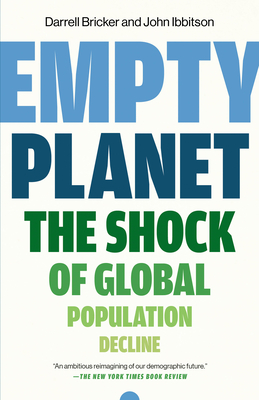
Empty Planet: The Shock of Global Population Decline
by Darrell Bricker
Rating: 3.7 ⭐
• 1 recommendation ❤️
An award-winning journalist and leading international social researcher make the provocative argument that the global population will soon begin to decline, dramatically reshaping the social, political, and economic landscape For half a century, statisticians, pundits, and politicians have warned that a burgeoning population will soon overwhelm the earth's resources. But a growing number of experts are sounding a different alarm. Rather than continuing to increase exponentially, they argue, the global population is headed for a steep decline—and in many countries, that decline has already begun. In Empty Planet , John Ibbitson and Darrell Bricker find that a smaller global population will bring with it many fewer workers will command higher wages; the environment will improve; the risk of famine will wane; and falling birthrates in the developing world will bring greater affluence and autonomy for women. But enormous disruption lies ahead, too. We can already see the effects in Europe and parts of Asia, as aging populations and worker shortages weaken the economy and impose crippling demands on healthcare and social security. The United States and Canada are well-positioned to successfully navigate these coming demographic shifts--that is, unless growing isolationism leads us to close ourselves off just as openness becomes more critical to our survival than ever. Rigorously researched and deeply compelling, Empty Planet offers a vision of a future that we can no longer prevent--but one that we can shape, if we choose.Praise for Empty Planet “An ambitious reimagining of our demographic future.” — The New York Times Book Review “The authors combine a mastery of social-science research with enough journalistic flair to convince fair-minded readers of a simple Fertility is falling faster than most experts can readily explain, driven by persistent forces.” — The Wall Street Journal “The beauty of this book is that it links hard-to-grasp global trends to the easy to-understand individual choices being made all over the world today . . . a gripping narrative of a world on the cusp of profound change.” — The New Statesman“John Ibbitson and Darrell Bricker have written a sparkling and enlightening guide to the contemporary world of fertility as small family sizes and plunging rates of child-bearing go global.” –The Globe and Mail

Conscious: A Brief Guide to the Fundamental Mystery of the Mind
by Annaka Harris
Rating: 3.8 ⭐
• 3 recommendations ❤️
NEW YORK TIMES BESTSELLER"If you’ve ever wondered how you have the capacity to wonder, some fascinating insights await you in these pages.” —Adam Grant, New York Times bestselling author of OriginalsAs concise and enlightening as Seven Brief Lessons on Physics and Astrophysics for People in a Hurry, this mind-expanding dive into the mystery of consciousness is an illuminating meditation on the self, free will, and felt experience.What is consciousness? How does it arise? And why does it exist? We take our experience of being in the world for granted. But the very existence of consciousness raises profound questions: Why would any collection of matter in the universe be conscious? How are we able to think about this? And why should we?In this wonderfully accessible book, Annaka Harris guides us through the evolving definitions, philosophies, and scientific findings that probe our limited understanding of consciousness. Where does it reside, and what gives rise to it? Could it be an illusion, or a universal property of all matter? As we try to understand consciousness, we must grapple with how to define it and, in the age of artificial intelligence, who or what might possess it. Conscious offers lively and challenging arguments that alter our ideas about consciousness—allowing us to think freely about it for ourselves, if indeed we can.

Amos Decker -- the FBI consultant with a perfect memory -- returns to solve a gruesome murder in a booming North Dakota oil town in the newest thriller in David Baldacci's #1 New York Times bestselling Memory Man series. When Amos Decker and his FBI colleague Alex Jamison are called to London, North Dakota, they instantly sense that the thriving fracking town is ripe for trouble. The promise of a second gold rush has attracted an onslaught of newcomers all hoping for a windfall, and the community is growing faster than houses can be built. The sudden boom has also brought a slew of problems with it, including drugs, property crimes, prostitution -- and now murder.Decker and Jamison are ordered to investigate the death of a young woman named Irene Cramer, whose body was expertly autopsied and then dumped in the open -- which is only the beginning of the oddities surrounding the case. As Decker and Jamison dig into Irene's life, they are shocked to discover that the woman who walked the streets by night as a prostitute was a teacher for a local religious sect by day -- a sect operating on land once owned by a mysterious government facility that looms over the entire community.London is a town replete with ruthless business owners, shady government officials, and religious outsiders, all determined to keep their secrets from coming out. When other murders occur, Decker will need all of his extraordinary memory and detective skills, and the assistance of a surprising ally, to root out a killer and the forces behind Cramer's death. . . before the boom town explodes.
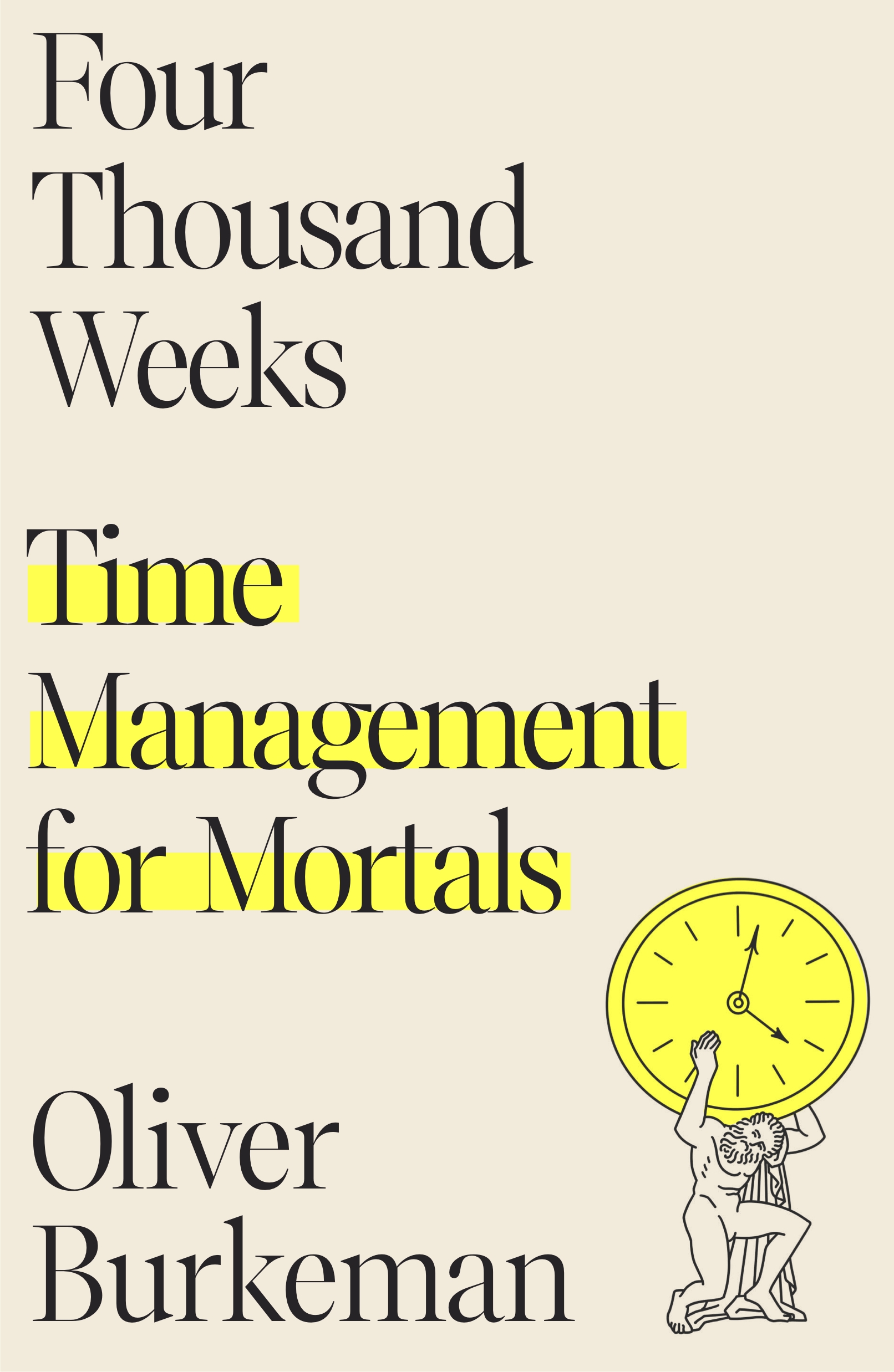
Four Thousand Weeks: Time Management for Mortals
by Oliver Burkeman
Rating: 4.2 ⭐
• 7 recommendations ❤️
The average human lifespan is absurdly, insultingly brief. Assuming you live to be eighty, you have just over four thousand weeks. Nobody needs to be told there isn’t enough time. We’re obsessed with our lengthening to-do lists, overfilled inboxes, work-life balance, and ceaseless battle against distraction; we’re deluged with advice on becoming more productive and efficient and life hacks to optimize our days. But such techniques often end up making things worse. The sense of anxious hurry grows more intense, and still the most meaningful parts of life seem to lie just beyond the horizon. Still, we rarely make the connection between our daily struggles with time and the ultimate time management problem: the challenge of how best to use our four thousand weeks. Drawing on the insights of both ancient and contemporary philosophers, psychologists, and spiritual teachers, Oliver Burkeman delivers an entertaining, humorous, practical, and ultimately profound guide to time and time management. Rejecting the futile modern obsession with “getting everything done,” Four Thousand Weeks introduces readers to tools for constructing a meaningful life by embracing finitude, showing that many of the unhelpful ways we’ve come to think about time aren’t inescapable, unchanging truths, but choices we’ve made as individuals and as a society—and that we could do things differently.

Excellent Advice for Living: Wisdom I Wish I'd Known Earlier
by Kevin Kelly
Rating: 4.1 ⭐
• 1 recommendation ❤️
“I love aphorisms, proverbs, and Secrets of Adulthood . . . Excellent Advice for Living includes wise, practical advice for life.” — Gretchen Rubin, via Twitter“One hundred years from now, when so much of the nonsense of our age is forgotten, people will still remember Kevin Kelly and his wisdom.” —Seth Godin“All will benefit from [Kelly's] idiosyncratic wit and wry humor.” — PeopleWise, practical, optimistic life advice from author and leading technology thinker Kevin KellyOn his 68th birthday, Kevin Kelly began to write down for his young adult children some things he had learned about life that he wished he had known earlier. To his surprise, Kelly had more to say than he thought, and kept adding to the advice over the years, compiling a life’s wisdom into these pages. Kelly’s timeless advice covers an astonishing range, from right living to setting ambitious goals, optimizing generosity, and cultivating compassion. He has wisdom for career, relationships, parenting, and finances, and gives guidance for practical matters ranging from travel to troubleshooting.Excellent Advice for Living is aimed primarily at young people, but speaks to all ages. This is the ideal companion for anyone seeking to navigate life with grace and creativity.