
Martine Rothblatt Recommended Books
American lawyer, researcher, writer, and businessperson
10 Books Recommended
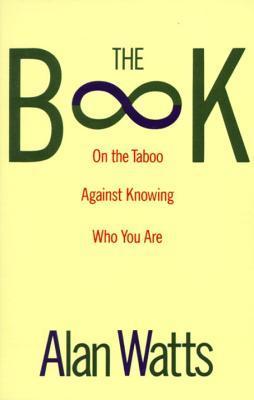
The Book: On the Taboo Against Knowing Who You Are
by Alan W. Watts
Rating: 4.2 ⭐
• 1 recommendation ❤️
At the root of human conflict is our fundamental misunderstanding of who we are. The illusion that we are isolated beings, unconnected to the rest of the universe, has led us to view the “outside” world with hostility, and has fueled our misuse of technology and our violent and hostile subjugation of the natural world. To help us understand that the self is in fact the root and ground of the universe, Watts has crafted a revelatory primer on what it means to be human—and a mind-opening manual of initiation into the central mystery of existence.In The Book, Alan Watts provides us with a much-needed answer to the problem of personal identity, distilling and adapting the Hindu philosophy of Vedanta. A revelatory primer on what it means to be human, from "the perfect guide for a course correction in life" (Deepak Chopra)—and a mind-opening manual of initiation into the central mystery of existence.

When global climate change and economic crises lead to social chaos in the early 2020s, California becomes full of dangers, from pervasive water shortage to masses of vagabonds who will do anything to live to see another day.Fifteen-year-old Lauren Olamina lives inside a gated community with her preacher father, family, and neighbors, sheltered from the surrounding anarchy. In a society where any vulnerability is a risk, she suffers from hyperempathy, a debilitating sensitivity to others' pain.Precocious and clear-eyed, Lauren must make her voice heard in order to protect her loved ones from the imminent disasters her small community stubbornly ignores. But what begins as a fight for survival soon leads to something much more: the birth of a new faith...and a startling vision of human destiny.This highly acclaimed post-apocalyptic novel of hope and terror from award-winning author Octavia E. Butler “pairs well with 1984 or The Handmaid's Tale” (John Green, New York Times)—now with a new foreword by N. K. Jemisin.

The capstone and crowning achievement of the Future History series, from the New York Times bestselling Grand Master of Science Fiction...Time Enough for Love follows Lazarus Long through a vast and magnificent timescape of centuries and worlds. Heinlein's longest and most ambitious work, it is the story of a man so in love with Life that he refused to stop living it; and so in love with Time that he became his own ancestor.
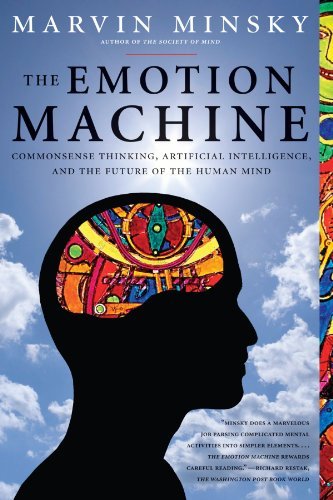
The Emotion Machine: Commonsense Thinking, Artificial Intelligence, and the Future of the Human Mind
by Marvin Minsky
Rating: 3.8 ⭐
• 1 recommendation ❤️
In this mind-expanding book, scientific pioneer Marvin Minsky continues his groundbreaking research, offering a fascinating new model for how our minds work. He argues persuasively that emotions, intuitions, and feelings are not distinct things, but different ways of thinking.By examining these different forms of mind activity, Minsky says, we can explain why our thought sometimes takes the form of carefully reasoned analysis and at other times turns to emotion. He shows how our minds progress from simple, instinctive kinds of thought to more complex forms, such as consciousness or self-awareness. And he argues that because we tend to see our thinking as fragmented, we fail to appreciate what powerful thinkers we really are. Indeed, says Minsky, if thinking can be understood as the step-by-step process that it is, then we can build machines -- artificial intelligences -- that not only can assist with our thinking by thinking as we do but have the potential to be as conscious as we are.Eloquently written, The Emotion Machine is an intriguing look into a future where more powerful artificial intelligences await.

Originally published in 1998, this shockingly prescient novel's timely message of hope and resistance in the face of fanaticism is more relevant than ever.In 2032, Lauren Olamina has survived the destruction of her home and family, and realized her vision of a peaceful community in northern California based on her newly founded faith, Earthseed. The fledgling community provides refuge for outcasts facing persecution after the election of an ultra-conservative president who vows to "make America great again." In an increasingly divided and dangerous nation, Lauren's subversive colony--a minority religious faction led by a young black woman--becomes a target for President Jarret's reign of terror and oppression.Years later, Asha Vere reads the journals of a mother she never knew, Lauren Olamina. As she searches for answers about her own past, she also struggles to reconcile with the legacy of a mother caught between her duty to her chosen family and her calling to lead humankind into a better future.

Robert Heinlein's Hugo Award-winning all-time masterpiece, the brilliant novel that grew from a cult favorite to a bestseller to a science fiction classic.Raised by Martians on Mars, Valentine Michael Smith is a human who has never seen another member of his species. Sent to Earth, he is a stranger who must learn what it is to be a man. But his own beliefs and his powers far exceed the limits of humankind, and as he teaches them about grokking and water-sharing, he also inspires a transformation that will alter Earth's inhabitants forever...

A good book may have the power to change the way we see the world, but a great book actually becomes part of our daily consciousness, pervading our thinking to the point that we take it for granted, and we forget how provocative and challenging its ideas once were—and still are. The Structure of Scientific Revolutions is that kind of book. When it was first published in 1962, it was a landmark event in the history and philosophy of science. Fifty years later, it still has many lessons to teach. With The Structure of Scientific Revolutions, Kuhn challenged long-standing linear notions of scientific progress, arguing that transformative ideas don’t arise from the day-to-day, gradual process of experimentation and data accumulation but that the revolutions in science, those breakthrough moments that disrupt accepted thinking and offer unanticipated ideas, occur outside of “normal science,” as he called it. Though Kuhn was writing when physics ruled the sciences, his ideas on how scientific revolutions bring order to the anomalies that amass over time in research experiments are still instructive in our biotech age. This new edition of Kuhn’s essential work in the history of science includes an insightful introduction by Ian Hacking, which clarifies terms popularized by Kuhn, including paradigm and incommensurability, and applies Kuhn’s ideas to the science of today. Usefully keyed to the separate sections of the book, Hacking’s introduction provides important background information as well as a contemporary context. Newly designed, with an expanded index, this edition will be eagerly welcomed by the next generation of readers seeking to understand the history of our perspectives on science.

From Transgender to Transhuman: A Manifesto On the Freedom Of Form
by Martine Rothblatt
Rating: 3.3 ⭐
• 2 recommendations ❤️
A Manifesto On the Freedom Of Form The Newly Titled and Expanded Second Edition of The Apartheid of Sex

A groundbreaking and compelling book that gives readers an in-depth understanding of the most thought-provoking and important technological innovation of the twenty-first centuryEvery day, social media is automatically uploading our thoughts, memories, preferences, beliefs, and history to a virtual existence, essentially creating a "mindfile" of ourselves. Thousands of software engineers across the globe are working on "mindware" to create from these mindfile personalities and humanlike consciousness in computer software, or cyberconsciousness. In the next decade or two, these efforts will result in the first digital copies of our identities, which will be our "mindclones."In Virtually Human, Martine Rothblatt shares her insights into how cyberconsciousness will manifest in our lives, and what we need to consider when a new, high-tech population of mindclones awakens to the rights, privileges, and obligations humans take for granted.Virtually Human conveys a profound understanding of how close we are to achieving a full simulation of the human brain via software and computer technology in clear, positive language, and raises numerous ethical and moral questions we absolutely need to address now, before the technology becomes commercially viable and accessible to all of us. Virtually Human will be the essential companion book to the future of mankind.

Revival: Your Life or Mine (2003): How Geoethics Can Resolve the Conflict Between Public and Private Interests in Xenotransplantation
by Martine Rothblatt
• 2 recommendations ❤️
This title was first published in 2003. Xenotransplantation - the transplantation of animal organs into humans - poses a fascinating moral dilemma. Should this ability to extend the lives of millions of older people be permitted given that it might trigger a new pandemic similar to AIDS? This study examines the moral dilemma from a combination of humanistic, legalistic, bioethical, economical and technological perspectives. The first part of the book demonstrates that xenografts are the only realistic near-term technological answer to the organ shortage problem. The balance of the book is devoted to assessing whether doctrines such as the 'right to health care' trump the moral and ethical conundrums posed by xenotransplantation. The book concludes with a 'geoethical' solution that proposes authorization of xenotransplantation subject to the prior implementation of a new international organization for epidemiology and basic health care. It also suggests that the costs of operating such an organization could be covered by a global tax on xenografts.