
Mark Zuckerberg Recommended Books
American Internet entrepreneur
46 Books Recommended

"Once there was a tree...and she loved a little boy."So begins a story of unforgettable perception, beautifully written and illustrated by the gifted and versatile Shel Silverstein.Every day the boy would come to the tree to eat her apples, swing from her branches, or slide down her trunk...and the tree was happy. But as the boy grew older he began to want more from the tree, and the tree gave and gave and gave.This is a tender story, touched with sadness, aglow with consolation. Shel Silverstein has created a moving parable for readers of all ages that offers an affecting interpretation of the gift of giving and a serene acceptance of another's capacity to love in return.

For the first time in a single volume, this book provides a complete Latin text and facing-page English translation of Vergil's epic account of the fall of Troy and the history of Rome. While useful for anyone reading primarily in English who wishes to consult the original language, this edition is especially intended for classical schools or AP courses, where teachers and students can use the Latin and English in a variety of ways, from identifying examples of Latin grammar and syntax to analyzing and evaluating the translator's choices.

In this legendary business book and Silicon Valley staple, the former chairman and CEO of Intel shares his perspective on how to build and run a company. A practical handbook for navigating real-life business scenarios and a powerful management manifesto with the ability to revolutionize the way we work. The essential skill of creating and maintaining new businesses—the art of the entrepreneur—can be summed up in a single word: managing. Born of Grove’s experiences at one of America’s leading technology companies (as CEO and employee number three at Intel), High Output Management is equally appropriate for sales managers, accountants, consultants, and teachers, as well as CEOs and startup founders. Grove covers techniques for creating highly productive teams, demonstrating methods of motivation that lead to peak performance. "Generous enough with advice and observations to be required reading." — The Wall Street Journal

"Surely You're Joking, Mr. Feynman!": Adventures of a Curious Character
by
Rating: 4.3 ⭐
• 25 recommendations ❤️
A New York Times bestseller—the outrageous exploits of one of this century's greatest scientific minds and a legendary American original.Richard Feynman, winner of the Nobel Prize in physics, thrived on outrageous adventures. Here he recounts in his inimitable voice his experience trading ideas on atomic physics with Einstein and Bohr and ideas on gambling with Nick the Greek; cracking the uncrackable safes guarding the most deeply held nuclear secrets; accompanying a ballet on his bongo drums; painting a naked female toreador. In short, here is Feynman's life in all its eccentric—a combustible mixture of high intelligence, unlimited curiosity, and raging chutzpah.

In reality, Hiro Protagonist delivers pizza for Uncle Enzo's CosoNostra Pizza Inc., but in the Metaverse he's a warrior prince. Plunging headlong into the enigma of a new computer virus that's striking down hackers everywhere, he races along the neon-lit streets on a search-and-destroy mission for the shadowy virtual villain threatening to bring about infocalypse. Snow Crash is a mind-altering romp through a future America so bizarre, so outrageous… you'll recognize it immediately.

With one famous equation, E=mc2, Einstein proved all matter can be described as energy. It is everywhere and it is everything.In this newly updated and engaging introduction, renowned scientist Vaclav Smil explores energy in all its facets – from the inner workings of the human body to what we eat, the car we drive and the race for more efficient and eco-friendly fuels. A Beginner's Guide highlights the importance of energy in both past and present societies, by shedding light on the science behind global warming and efforts to prevent it, and by revealing how our daily decisions affect energy consumption. Whether you're looking for dinner table conversation or to further your own understanding, this book will amaze and inform, uncovering the truths and exposing the myths behind one of the most important concepts in our universe.

How did Einstein's mind work? What made him a genius? Isaacson's biography shows how his scientific imagination sprang from the rebellious nature of his personality. His fascinating story is a testament to the connection between creativity and freedom.Based on the newly released personal letters of Albert Einstein, Walter Isaacson explores how an imaginative, impertinent patent clerk -- a struggling father in a difficult marriage who couldn't get a teaching job or a doctorate -- became the mind reader of the creator of the cosmos, the locksmith of the mysteries of the atom and the universe. His success came from questioning conventional wisdom and marveling at mysteries that struck others as mundane. This led him to embrace a morality and politics based on respect for free minds, free spirits, and free individuals.These traits are just as vital for this new century of globalization, in which our success will depend on our creativity, as they were for the beginning of the last century, when Einstein helped usher in the modern age.

Mark Zuckerberg's ‘A Year of Books’ SelectionGeorge Orwell’s bleak visions of the future, one in which citizens are monitored through telescreens by an insidious Big Brother, has haunted our imagination long after the publication of 1984 . Orwell’s dystopian image of the telescreen as a repressive instrument of state power has profoundly affected our view of technology, posing a stark confrontational Who will be master, human or machine? Experience has shown, however, that Orwell’s vision of the future was profoundly and significantly The conjunction of the new communications technologies has not produced a master-slave relation between person and computer, but rather exciting possibilities for partnership.In an extraordinary demonstration of the emerging supermedium's potential to engender new forms of creativity, Huber’s book boldly reimagines 1984 from the computer's point of view. After first scanning all of Orwell’s writings into his personal computer, Huber used the machine to rewrite the book completely, for the most part using Orwell’s own language. Alternating fiction and non-fiction chapters, Huber advances Orwell’s plot to a surprising new conclusion while seamlessly interpolating his own explanations and arguments. The result is a fascinating utopian work which envisions a world at our fingertips of ever-increasing information, equal opportunity, and freedom of choice.

A fascinating exploration of the science of the impossible—from death rays and force fields to invisibility cloaks—revealing to what extent such technologies might be achievable decades or millennia into the future.One hundred years ago, scientists would have said that lasers, televisions, and the atomic bomb were beyond the realm of physical possibility. In Physics of the Impossible, the renowned physicist Michio Kaku explores to what extent the technologies and devices of science fiction that are deemed equally impossible today might well become commonplace in the future.From teleportation to telekinesis, Kaku uses the world of science fiction to explore the fundamentals—and the limits—of the laws of physics as we know them today. He ranks the impossible technologies by categories—Class I, II, and III, depending on when they might be achieved, within the next century, millennia, or perhaps never. In a compelling and thought-provoking narrative, he explains:· How the science of optics and electromagnetism may one day enable us to bend light around an object, like a stream flowing around a boulder, making the object invisible to observers “downstream”· How ramjet rockets, laser sails, antimatter engines, and nanorockets may one day take us to the nearby stars· How telepathy and psychokinesis, once considered pseudoscience, may one day be possible using advances in MRI, computers, superconductivity, and nanotechnology· Why a time machine is apparently consistent with the known laws of quantum physics, although it would take an unbelievably advanced civilization to actually build oneKaku uses his discussion of each technology as a jumping-off point to explain the science behind it. An extraordinary scientific adventure, Physics of the Impossible takes readers on an unforgettable, mesmerizing journey into the world of science that both enlightens and entertains.

Gang Leader for a Day: A Rogue Sociologist Takes to the Streets
by Sudhir Venkatesh
Rating: 4.1 ⭐
• 2 recommendations ❤️
A New York Times Bestseller"A rich portrait of the urban poor, drawn not from statistics but from vivid tales of their lives and his, and how they intertwined." — The Economist"A sensitive, sympathetic, unpatronizing portrayal of lives that are ususally ignored or lumped into ill-defined stereotype." — Finanical TimesForeword by Stephen J. Dubner, coauthor of FreakonomicsWhen first-year graduate student Sudhir Venkatesh walked into an abandoned building in one of Chicago’s most notorious housing projects, he hoped to find a few people willing to take a multiple-choice survey on urban poverty--and impress his professors with his boldness. He never imagined that as a result of this assignment he would befriend a gang leader named JT and spend the better part of a decade embedded inside the projects under JT’s protection. From a privileged position of unprecedented access, Venkatesh observed JT and the rest of his gang as they operated their crack-selling business, made peace with their neighbors, evaded the law, and rose up or fell within the ranks of the gang’s complex hierarchical structure. Examining the morally ambiguous, highly intricate, and often corrupt struggle to survive in an urban war zone, Gang Leader for a Day also tells the story of the complicated friendship that develops between Venkatesh and JT--two young and ambitious men a universe apart.Sudhir Venkatesh’s latest book Floating City: A Rogue Sociologist Lost and Found in New York’s Underground Economy— a memoir of sociological investigation revealing the true face of America’s most diverse city—is also published by Penguin Press.

The Republic by Plato is a landmark achievement in Ancient Greek philosophy - this edition combines an authoritative translation with affordability.The Republic is the most famous text written by Plato, which takes the form of a philosophical dialogue. The text is part conversation between a group of friends active in the Athens intellectual community, and part monologue from various participants in the discussion. The narrator and lead character is Socrates, Plato's friend and mentor, who appears in most of his pupil's dialogues and acts as surrogate to Plato's ideas. Throughout the text the 'Socratic method', whereby Socrates feigns ignorance and questions an adversary to receive insight on a given subject, is demonstrated.Ten books in total comprise The Republic , the divisions thought to have been made due to the length of a roll of papyrus in Ancient Greece. The discussion begins with an attempt to find a definition for justice, wherein a disagreement between Thrasymachus - who believes justice is what is good for who is strongest at a given place and time - and Socrates, who believes that all members of society should, for the highest benefit of all, conform to just action.In Book II, the discussion expands to include justice in the sense of a social contract. Whether or not justice happens only due to fear of reprisal, and whether justice is truly a high virtue of itself, are among the questions considered. Eventually the discussion expands further into the idea of a just city ideas of how such a society, embodying justice and order, might work commences with Socrates proposing an educated 'guardian' class of able-bodied men and women who would uphold order and defend such a city against threats from outside.After expanding their ideas on the guardians, the dialogue proceeds onto other classes. It is here that Plato's famous idea of the philosopher king arises - the notion of a ruler who is appointed for holding the highest understanding of good and just rule, imparted to him at an early age by capable educators.Plato as Socrates eventually proposes that the essence of justice is fulfilling one's role in society. The correct assignment of an occupation to each citizen, to which they can happily commit, will result in a just and capable society. Further stipulations upon this ideal society are given; that education be strictly regulated and human reproduction made a matter for the state, with no offspring knowing their parents.The Republic then covers four forms of injustice manifested in systems of government - timocracy, oligarchy, democracy, and finally tyranny. How these unjust societies occur is talked about at length, with examples from Ancient society cited as Socrates/Plato develops theories on how societies go astray. The most unjust ruler - the tyrant - is discussed at length, and determined to be among the most unhappy, unfree and unfulfilled types of man owing to his thrall to passions, and friendless owing to his commitment to hierarchy. Such malfeasant politics are excoriated; in the end, Socrates says, all are harmed and none benefit from tyranny.Between books VII and VIII Socrates establishes the famous Allegory of the Cave as a way of demonstrating education's effects upon the human mind. By using the image of people who have only lived in a dark caves their whole lives, he illustrates how mere shadows against the walls are the closest such individuals come to seeing reality. Philosophy, Socrates argues, is the way by which humans are freed from this cave of ignorance and propelled to an enlightenment.Socrates concludes the discussion of city politics and rulers, and commences to focus upon the nature of art and its place in the just and ideal city. He also discusses reincarnation, the indestructible nature of the human soul, concluding the epic text on a spiritual note.

A good book may have the power to change the way we see the world, but a great book actually becomes part of our daily consciousness, pervading our thinking to the point that we take it for granted, and we forget how provocative and challenging its ideas once were—and still are. The Structure of Scientific Revolutions is that kind of book. When it was first published in 1962, it was a landmark event in the history and philosophy of science. Fifty years later, it still has many lessons to teach. With The Structure of Scientific Revolutions, Kuhn challenged long-standing linear notions of scientific progress, arguing that transformative ideas don’t arise from the day-to-day, gradual process of experimentation and data accumulation but that the revolutions in science, those breakthrough moments that disrupt accepted thinking and offer unanticipated ideas, occur outside of “normal science,” as he called it. Though Kuhn was writing when physics ruled the sciences, his ideas on how scientific revolutions bring order to the anomalies that amass over time in research experiments are still instructive in our biotech age. This new edition of Kuhn’s essential work in the history of science includes an insightful introduction by Ian Hacking, which clarifies terms popularized by Kuhn, including paradigm and incommensurability, and applies Kuhn’s ideas to the science of today. Usefully keyed to the separate sections of the book, Hacking’s introduction provides important background information as well as a contemporary context. Newly designed, with an expanded index, this edition will be eagerly welcomed by the next generation of readers seeking to understand the history of our perspectives on science.

The Varieties of Religious A Study in Human Nature is a book by the Harvard psychologist and philosopher William James comprising 20 lectures given at the University of Edinburgh in Scotland. These lectures concerned the nature of religion and the neglect of science, in James' view, in the academic study of religion. Soon after its publication, the book found its way into the canon of psychology and philosophy, and has remained in print for over a century. James was most interested in direct religious experiences. Theology and the organizational aspects of religion were of secondary interest. He believed that religious experiences were simply human "Religious happiness is happiness. Religious trance is trance." He believed that religious experiences can have "morbid origins" in brain pathology and can be irrational but nevertheless are largely positive. Get Your Copy Now.

Genome: The Autobiography of a Species in 23 Chapters
by Matt Ridley
Rating: 4.0 ⭐
• 8 recommendations ❤️
“Ridley leaps from chromosome to chromosome in a handy summation of our ever increasing understanding of the roles that genes play in disease, behavior, sexual differences, and even intelligence. . . . . He addresses not only the ethical quandaries faced by contemporary scientists but the reductionist danger in equating inheritability with inevitability.” — The New Yorker The genome's been mapped. But what does it mean? Matt Ridley’s Genome is the book that explains it what it is, how it works, and what it portends for the future Arguably the most significant scientific discovery of the new century, the mapping of the twenty-three pairs of chromosomes that make up the human genome raises almost as many questions as it answers. Questions that will profoundly impact the way we think about disease, about longevity, and about free will. Questions that will affect the rest of your life. Genome offers extraordinary insight into the ramifications of this incredible breakthrough. By picking one newly discovered gene from each pair of chromosomes and telling its story, Matt Ridley recounts the history of our species and its ancestors from the dawn of life to the brink of future medicine. From Huntington's disease to cancer, from the applications of gene therapy to the horrors of eugenics, Ridley probes the scientific, philosophical, and moral issues arising as a result of the mapping of the genome. It will help you understand what this scientific milestone means for you, for your children, and for humankind.

"The Muqaddimah," often translated as "Introduction" or "Prolegomenon," is the most important Islamic history of the premodern world. Written by the great fourteenth-century Arab scholar Ibn Khaldun (d. 1406), this monumental work established the foundations of several fields of knowledge, including the philosophy of history, sociology, ethnography, and economics. The first complete English translation, by the eminent Islamicist and interpreter of Arabic literature Franz Rosenthal, was published in three volumes in 1958 as part of the Bollingen Series and received immediate acclaim in the United States and abroad. A one-volume abridged version of Rosenthal's masterful translation first appeared in 1969.This Princeton Classics edition of the abridged version includes Rosenthal's original introduction as well as a contemporary introduction by Bruce B. Lawrence. This volume makes available a seminal work of Islam and medieval and ancient history to twenty-first century audiences."

Once again, Earth is under attack. An alien species is poised for a final assault. The survival of humanity depends on a military genius who can defeat the aliens. But who?Ender Wiggin. Brilliant. Ruthless. Cunning. A tactical and strategic master. And a child.Recruited for military training by the world government, Ender's childhood ends the moment he enters his new home: Battle School. Among the elite recruits Ender proves himself to be a genius among geniuses. He excels in simulated war games. But is the pressure and loneliness taking its toll on Ender? Simulations are one thing. How will Ender perform in real combat conditions? After all, Battle School is just a game. Isn't it?The worldwide bestseller, Ender's Game by Orson Scott Card comes to the screen at last in a major motion picture event in November 2013. Starring Hugo's Asa Butterfield, Harrison Ford, and Ben Kingsley, the movie is sure to inspire a new audience of fans to read the book that started it all.

Four time Hugo Award winner Vernor Vinge has taken readers to the depths of space and into the far future in his bestselling novels A Fire Upon the Deep and A Deepness in the Sky . Now, he has written a science-fiction thriller set in a place and time as exciting and strange as any far-future San Diego, California, 2025.Robert Gu is a recovering Alzheimer's patient. The world that he remembers was much as we know it today. Now, as he regains his faculties through a cure developed during the years of his near-fatal decline, he discovers that the world has changed and so has his place in it. He was a world-renowned poet. Now he is seventy-five years old, though by a medical miracle he looks much younger, and he's starting over, for the first time unsure of his poetic gifts . Living with his son's family, he has no choice but to learn how to cope with a new information age in which the virtual and the real are a seamless continuum, layers of reality built on digital views seen by a single person or millions, depending on your choice. But the consensus reality of the digital world is available only if, like his thirteen-year-old granddaughter Miri, you know how to wear your wireless access―through nodes designed into smart clothes―and to see the digital context―through smart contact lenses.With knowledge comes risk. When Robert begins to re-train at Fairmont High, learning with other older people what is second nature to Miri and other teens at school, he unwittingly becomes part of a wide-ranging conspiracy to use technology as a tool for world domination.In a world where every computer chip has Homeland Security built-in, this conspiracy is something that baffles even the most sophisticated security analysts, including Robert's son and daughter-in law, two top people in the U.S. military. And even Miri, in her attempts to protect her grandfather, may be entangled in the plot.As Robert becomes more deeply involved in conspiracy, he is shocked to learn of a radical change planned for the UCSD Geisel Library; all the books there, and worldwide, would cease to physically exist. He and his fellow re-trainees feel compelled to join protests against the change. With forces around the world converging on San Diego, both the conspiracy and the protest climax in a spectacular moment as unique and satisfying as it is unexpected. This is science fiction at its very best, by a master storyteller at his peak.

A companion novel to the beloved, bestselling science fiction classic Ender's Game by Orson Scott Card, a major motion picture event in November 2013If Julian Delphiki, known as "Bean," has learned anything from living on the streets, it's how to survive. And not with fists—he is too small for that—but with brains.Bean is a genius with a magician's ability to zero in on his enemy and exploit his weakness. What could be a better quality in a future general to lead Earth in a final climactic battle against a hostile alien race?Recruited for Battle School, a military installation designed to select and train children as future officers in the International Fleet, Bean meets Ender Wiggin: soon to become his best friend, and his greatest rival….Readers can revisit the events of Ender's Game through the eyes of Bean in this companion or parallel novel. Readers who have not read Ender's Game will want to read it as soon as they finish Ender's Shadow. As Orson Scott Card says, "these two books complement and fulfill each other."

The definitive biography of a larger-than-life president who defied norms, divided a nation, and changed Washington foreverAndrew Jackson, his intimate circle of friends, and his tumultuous times are at the heart of this remarkable book about the man who rose from nothing to create the modern presidency. Beloved and hated, venerated and reviled, Andrew Jackson was an orphan who fought his way to the pinnacle of power, bending the nation to his will in the cause of democracy. Jackson’s election in 1828 ushered in a new and lasting era in which the people, not distant elites, were the guiding force in American politics. Democracy made its stand in the Jackson years, and he gave voice to the hopes and the fears of a restless, changing nation facing challenging times at home and threats abroad. To tell the saga of Jackson’s presidency, acclaimed author Jon Meacham goes inside the Jackson White House. Drawing on newly discovered family letters and papers, he details the human drama–the family, the women, and the inner circle of advisers– that shaped Jackson’s private world through years of storm and victory.One of our most significant yet dimly recalled presidents, Jackson was a battle-hardened warrior, the founder of the Democratic Party, and the architect of the presidency as we know it. His story is one of violence, sex, courage, and tragedy. With his powerful persona, his evident bravery, and his mystical connection to the people, Jackson moved the White House from the periphery of government to the center of national action, articulating a vision of change that challenged entrenched interests to heed the popular will– or face his formidable wrath. The greatest of the presidents who have followed Jackson in the White House–from Lincoln to Theodore Roosevelt to FDR to Truman–have found inspiration in his example, and virtue in his vision.Jackson was the most contradictory of men. The architect of the removal of Indians from their native lands, he was warmly sentimental and risked everything to give more power to ordinary citizens. He was, in short, a lot like his country: alternately kind and vicious, brilliant and blind; and a man who fought a lifelong war to keep the republic safe–no matter what it took.

Portfolios of the Poor: How the World's Poor Live on $2 a Day
by Daryl Collins
Rating: 3.9 ⭐
• 2 recommendations ❤️
Nearly forty percent of humanity lives on an average of two dollars a day or less. If you've never had to survive on an income so small, it is hard to imagine. How would you put food on the table, afford a home, and educate your children? How would you handle emergencies and old age? Every day, more than a billion people around the world must answer these questions. Portfolios of the Poor is the first book to systematically explain how the poor find solutions to their everyday financial problems.The authors conducted year-long interviews with impoverished villagers and slum dwellers in Bangladesh, India, and South Africa--records that track penny by penny how specific households manage their money. The stories of these families are often surprising and inspiring. Most poor households do not live hand to mouth, spending what they earn in a desperate bid to keep afloat. Instead, they employ financial tools, many linked to informal networks and family ties. They push money into savings for reserves, squeeze money out of creditors whenever possible, run sophisticated savings clubs, and use microfinancing wherever available. Their experiences reveal new methods to fight poverty and ways to envision the next generation of banks for the "bottom billion."Indispensable for those in development studies, economics, and microfinance, Portfolios of the Poor will appeal to anyone interested in knowing more about poverty and what can be done about it.

#1 NATIONAL BESTSELLER • F ar more than a superb memoir about the highest levels of professional tennis, Open is the engrossing story of a remarkable life. • "Agassi’s memoir is just as entrancing as his tennis game.” — Time “Honest in a way that such books seldom are.” — The New York Times Andre Agassi had his life mapped out for him before he left the crib. Groomed to be a tennis champion by his moody and demanding father, by the age of twenty-two Agassi had won the first of his eight grand slams and achieved wealth, celebrity, and the game’s highest honors. But as he reveals in this searching autobiography, off the court he was often unhappy and confused, unfulfilled by his great achievements in a sport he had come to resent.Agassi writes candidly about his early success and his uncomfortable relationship with fame, his marriage to Brooke Shields, his growing interest in philanthropy, and—described in haunting, point-by-point detail—the highs and lows of his celebrated career.

The New Jim Crow: Mass Incarceration in the Age of Colorblindness
by Michelle Alexander
Rating: 4.6 ⭐
• 8 recommendations ❤️
"Jarvious Cotton's great-great-grandfather could not vote as a slave. His great-grandfather was beaten to death by the Klu Klux Klan for attempting to vote. His grandfather was prevented from voting by Klan intimidation; his father was barred by poll taxes and literacy tests. Today, Cotton cannot vote because he, like many black men in the United States, has been labeled a felon and is currently on parole."As the United States celebrates the nation's "triumph over race" with the election of Barack Obama, the majority of young black men in major American cities are locked behind bars or have been labeled felons for life. Although Jim Crow laws have been wiped off the books, an astounding percentage of the African American community remains trapped in a subordinate status--much like their grandparents before them.In this incisive critique, former litigator-turned-legal-scholar Michelle Alexander provocatively argues that we have not ended racial caste in America: we have simply redesigned it. Alexander shows that, by targeting black men and decimating communities of color, the U.S. criminal justice system functions as a contemporary system of racial control, even as it formally adheres to the principle of color blindness. The New Jim Crow challenges the civil rights community--and all of us--to place mass incarceration at the forefront of a new movement for racial justice in America.

“Ridley writes with panache, wit, and humor and displays remarkable ingenuity in finding ways to present complicated materials for the lay reader.” — Los Angeles TimesIn a bold and provocative interpretation of economic history, Matt Ridley, the New York Times-bestselling author of Genome and The Red Queen, makes the case for an economics of hope, arguing that the benefits of commerce, technology, innovation, and change—what Ridley calls cultural evolution—will inevitably increase human prosperity. Fans of the works of Jared Diamond (Guns, Germs, and Steel), Niall Ferguson (The Ascent of Money), and Thomas Friedman (The World Is Flat) will find much to ponder and enjoy in The Rational Optimist.

Decoded is a book like no a collection of lyrics and their meanings that together tell the story of a culture, an art form, a moment in history, and one of the most provocative and successful artists of our time.Praise for Decoded“Compelling . . . provocative, evocative . . . Part autobiography, part lavishly illustrated commentary on the author’s own work, Decoded gives the reader a harrowing portrait of the rough worlds Jay-Z navigated in his youth, while at the same time deconstructing his lyrics.” —Michiko Kakutani, The New York Times“One of a handful of books that just about any hip hop fan should own.” — The New Yorker “Elegantly designed, incisively written . . . an impressive leap by a man who has never been known for small steps.” — Los Angeles Times “A riveting exploration of Jay-Z’s journey . . . So thoroughly engrossing, it reads like a good piece of cultural journalism.” — The Boston Globe “Shawn Carter’s most honest airing of the experiences he drew on to create the mythic figure of Jay-Z . . . The scenes he recounts along the way are fascinating.” — Entertainment Weekly “Hip-hop’s renaissance man drops a classic. . . . Heartfelt, passionate and slick.” — Kirkus Reviews (starred review)

Quiet: The Power of Introverts in a World That Can't Stop Talking
by Susan Cain
Rating: 4.2 ⭐
• 14 recommendations ❤️
The book that started the Quiet RevolutionAt least one-third of the people we know are introverts. They are the ones who prefer listening to speaking; who innovate and create but dislike self-promotion; who favor working on their own over working in teams. It is to introverts—Rosa Parks, Chopin, Dr. Seuss, Steve Wozniak—that we owe many of the great contributions to society. In Quiet, Susan Cain argues that we dramatically undervalue introverts and shows how much we lose in doing so. She charts the rise of the Extrovert Ideal throughout the twentieth century and explores how deeply it has come to permeate our culture. She also introduces us to successful introverts—from a witty, high-octane public speaker who recharges in solitude after his talks, to a record-breaking salesman who quietly taps into the power of questions. Passionately argued, superbly researched, and filled with indelible stories of real people, Quiet has the power to permanently change how we see introverts and, equally important, how they see themselves.Now with Extra Libris material, including a reader’s guide and bonus content.

From the bestselling author of the acclaimed Chaos and Genius comes a thoughtful and provocative exploration of the big ideas of the modern era: Information, communication, and information theory. Acclaimed science writer James Gleick presents an eye-opening vision of how our relationship to information has transformed the very nature of human consciousness. A fascinating intellectual journey through the history of communication and information, from the language of Africa’s talking drums to the invention of written alphabets; from the electronic transmission of code to the origins of information theory, into the new information age and the current deluge of news, tweets, images, and blogs. Along the way, Gleick profiles key innovators, including Charles Babbage, Ada Lovelace, Samuel Morse, and Claude Shannon, and reveals how our understanding of information is transforming not only how we look at the world, but how we live.A New York Times Notable BookA Los Angeles Times and Cleveland Plain Dealer Best Book of the YearWinner of the PEN/E. O. Wilson Literary Science Writing Award

In the year 2044, reality is an ugly place. The only time teenage Wade Watts really feels alive is when he's jacked into the virtual utopia known as the OASIS. Wade's devoted his life to studying the puzzles hidden within this world's digital confines, puzzles that are based on their creator's obsession with the pop culture of decades past and that promise massive power and fortune to whoever can unlock them. When Wade stumbles upon the first clue, he finds himself beset by players willing to kill to take this ultimate prize. The race is on, and if Wade's going to survive, he'll have to win—and confront the real world he's always been so desperate to escape.

The New York Times bestseller: A provocative, imaginative exploration of the nature and progress of knowledge"Dazzling." - Steven Pinker, The GuardianIn this groundbreaking book, award-winning physicist David Deutsch argues that explanations have a fundamental place in the universe--and that improving them is the basic regulating principle of all successful human endeavor. Taking us on a journey through every fundamental field of science, as well as the history of civilization, art, moral values, and the theory of political institutions, Deutsch tracks how we form new explanations and drop bad ones, explaining the conditions under which progress--which he argues is potentially boundless--can and cannot happen. Hugely ambitious and highly original, The Beginning of Infinity explores and establishes deep connections between the laws of nature, the human condition, knowledge, and the possibility for progress.

The Better Angels of Our Nature: Why Violence Has Declined
by Steven Pinker
Rating: 4.1 ⭐
• 28 recommendations ❤️
Selected by The New York Times Book Review as a Notable Book of the Year. The author of The New York Times bestseller The Stuff of Thought offers a controversial history of violence. Faced with the ceaseless stream of news about war, crime, and terrorism, one could easily think we live in the most violent age ever seen. Yet as New York Times bestselling author Steven Pinker shows in this startling and engaging new work, just the opposite is true: violence has been diminishing for millennia and we may be living in the most peaceful time in our species' existence. For most of history, war, slavery, infanticide, child abuse, assassinations, pogroms, gruesome punishments, deadly quarrels, and genocide were ordinary features of life. But today, Pinker shows (with the help of more than a hundred graphs and maps) all these forms of violence have dwindled and are widely condemned. How has this happened?This groundbreaking book continues Pinker's exploration of the essence of human nature, mixing psychology and history to provide a remarkable picture of an increasingly nonviolent world. The key, he explains, is to understand our intrinsic motives- the inner demons that incline us toward violence and the better angels that steer us away-and how changing circumstances have allowed our better angels to prevail. Exploding fatalist myths about humankind's inherent violence and the curse of modernity, this ambitious and provocative book is sure to be hotly debated in living rooms and the Pentagon alike, and will challenge and change the way we think about our society.
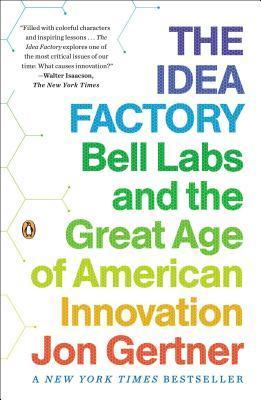
The Idea Factory: Bell Labs and the Great Age of American Innovation
by Jon Gertner
Rating: 4.4 ⭐
• 9 recommendations ❤️
The definitive history of America’s greatest incubator of innovation and the birthplace of some of the 20th century’s most influential technologies“Filled with colorful characters and inspiring lessons . . . The Idea Factory explores one of the most critical issues of our What causes innovation?” —Walter Isaacson, The New York Times Book Review“Compelling . . . Gertner's book offers fascinating evidence for those seeking to understand how a society should best invest its research resources.” — The Wall Street JournalFrom its beginnings in the 1920s until its demise in the 1980s, Bell Labs-officially, the research and development wing of AT&T-was the biggest, and arguably the best, laboratory for new ideas in the world. From the transistor to the laser, from digital communications to cellular telephony, it's hard to find an aspect of modern life that hasn't been touched by Bell Labs. In The Idea Factory , Jon Gertner traces the origins of some of the twentieth century's most important inventions and delivers a riveting and heretofore untold chapter of American history. At its heart this is a story about the life and work of a small group of brilliant and eccentric men-Mervin Kelly, Bill Shockley, Claude Shannon, John Pierce, and Bill Baker-who spent their careers at Bell Labs. Today, when the drive to invent has become a mantra, Bell Labs offers us a way to enrich our understanding of the challenges and solutions to technological innovation. Here, after all, was where the foundational ideas on the management of innovation were born.

Why Nations Fail: The Origins of Power, Prosperity, and Poverty
by Daron Acemoğlu
Rating: 4.1 ⭐
• 4 recommendations ❤️
WHY ARE SOME NATIONS RICH AND OTHERS POOR, DIVIDED BY WEALTH AND POVERTY, HEALTH AND SICKNESS, FOOD AND FAMINE? Is it culture, the weather, geography that determines prosperity or poverty? As Why Nations Fail shows, none of these factors is either definitive or destiny. Drawing on fifteen years of original research, Daron Acemoglu and James Robinson conclusively show that it is man-made political and economic institutions that underlie economic success (or lack of it). Korea, to take one example, is a remarkably homogeneous nation, yet the people of North Korea are among the poorest on earth while their brothers and sisters in South Korea are among the richest. The differences between the Koreas is due to the politics that created those two different institutional trajectories. Acemoglu and Robinson marshal extraordinary historical evidence from the Roman Empire, the Mayan city-states, the Soviet Union, the United States, and Africa to build a new theory of political economy with great relevance for the big questions of today, among them: - Will China's economy continue to grow at such a high speed and ultimately overwhelm the West? - Are America’s best days behind it? Are we creating a vicious cycle that enriches and empowers a a small minority?

A Summer Reading Pick for President Barack Obama, Bill Gates, and Mark Zuckerberg From a renowned historian comes a groundbreaking narrative of humanity’s creation and evolution—a #1 international bestseller—that explores the ways in which biology and history have defined us and enhanced our understanding of what it means to be “human.”One hundred thousand years ago, at least six different species of humans inhabited Earth. Yet today there is only one—homo sapiens. What happened to the others? And what may happen to us?Most books about the history of humanity pursue either a historical or a biological approach, but Dr. Yuval Noah Harari breaks the mold with this highly original book that begins about 70,000 years ago with the appearance of modern cognition. From examining the role evolving humans have played in the global ecosystem to charting the rise of empires, Sapiens integrates history and science to reconsider accepted narratives, connect past developments with contemporary concerns, and examine specific events within the context of larger ideas.Dr. Harari also compels us to look ahead, because over the last few decades humans have begun to bend laws of natural selection that have governed life for the past four billion years. We are acquiring the ability to design not only the world around us, but also ourselves. Where is this leading us, and what do we want to become?Featuring 27 photographs, 6 maps, and 25 illustrations/diagrams.

Dealing with China: An Insider Unmasks the New Economic Superpower
by Henry M. Paulson Jr.
Rating: 4.1 ⭐
• 4 recommendations ❤️
The New York Times bestselling author of Dealing with China takes the reader behind closed doors to witness the creation and evolution and future of China's state-controlled capitalism.Hank Paulson has dealt with China unlike any other foreigner. As head of Goldman Sachs, Paulson had a pivotal role in opening up China to private enterprise. Then, as Treasury secretary, he created the Strategic Economic Dialogue with what is now the world's second-largest economy. He negotiated with China on needed economic reforms, while safeguarding the teetering U.S. financial system. Over his career, Paulson has worked with scores of top Chinese leaders, including Xi Jinping, China's most powerful man in decades.In Dealing with China , Paulson draws on his unprecedented access to modern China's political and business elite, including its three most recent heads of state, to answer several key How did China become an economic superpower so quickly?How does business really get done there?What are the best ways for Western business and political leaders to work with, compete with, and benefit from China?How can the U.S. negotiate with and influence China given its authoritarian rule, its massive environmental concerns, and its huge population's unrelenting demands for economic growth and security?Written in the same anecdote-rich, page-turning style as Paulson's bestselling memoir, On the Brink, Dealing with China is certain to become the classic and definitive examination of how to engage China's leaders as they build their economic superpower.

The End of Power: From Boardrooms to Battlefields and Churches to States, Why Being In Charge Isn't What It Used to Be
by Moisés Naím
Rating: 3.9 ⭐
• 2 recommendations ❤️
The provocative bestseller explaining the decline of power in the twenty-first century -- in government, business, and beyond.Power is shifting -- from large, stable armies to loose bands of insurgents, from corporate leviathans to nimble start-ups, and from presidential palaces to public squares. But power is also changing, becoming harder to use and easier to lose. In The End of Power , award-winning columnist and former Foreign Policy editor Moisés Naím illuminates the struggle between once-dominant megaplayers and the new micropowers challenging them in every field of human endeavor. Drawing on provocative, original research and a lifetime of experience in global affairs, Naím explains how the end of power is reconfiguring our world."The End of Power will . . . change the way you look at the world." -- Bill Clinton"Extraordinary." -- George Soros"Compelling and original." -- Arianna Huffington"A fascinating new perspective . . . Naím makes eye-opening connections." -- Francis Fukuyama

Zero to One: Notes on Startups, or How to Build the Future
by Peter Thiel
Rating: 4.2 ⭐
• 48 recommendations ❤️
If you want to build a better future, you must believe in secrets.The great secret of our time is that there are still uncharted frontiers to explore and new inventions to create. In Zero to One, legendary entrepreneur and investor Peter Thiel shows how we can find singular ways to create those new things. Thiel begins with the contrarian premise that we live in an age of technological stagnation, even if we’re too distracted by shiny mobile devices to notice. Information technology has improved rapidly, but there is no reason why progress should be limited to computers or Silicon Valley. Progress can be achieved in any industry or area of business. It comes from the most important skill that every leader must master: learning to think for yourself.Doing what someone else already knows how to do takes the world from 1 to n, adding more of something familiar. But when you do something new, you go from 0 to 1. The next Bill Gates will not build an operating system. The next Larry Page or Sergey Brin won’t make a search engine. Tomorrow’s champions will not win by competing ruthlessly in today’s marketplace. They will escape competition altogether, because their businesses will be unique. Zero to One presents at once an optimistic view of the future of progress in America and a new way of thinking about innovation: it starts by learning to ask the questions that lead you to find value in unexpected places.

Creativity, Inc.: an inspiring look at how creativity can - and should - be harnessed for business success by the founder of Pixar
by Ed Catmull
Rating: 4.3 ⭐
• 16 recommendations ❤️
As a young man, Ed Catmull had a dream: to make the world’s first computer-animated movie. He nurtured that dream first as a Ph.D. student at the University of Utah, where many computer science pioneers got their start, and then forged an early partnership with George Lucas that led, indirectly, to his founding Pixar with Steve Jobs and John Lasseter in 1986. Nine years later and against all odds, Toy Story was released, changing animation forever.Since then, Pixar has dominated the world of animation, producing such beloved films as Monsters, Inc., Finding Nemo, The Incredibles, Up, and WALL-E, which have gone on to set box-office records and garner twenty-seven Academy Awards. The joyousness of the storytelling, the inventive plots, the emotional authenticity: In some ways, Pixar movies are an object lesson in what creativity really is. Now, in this book, Catmull reveals the ideals and techniques, honed over years, that have made Pixar so widely admired—and so profitable.Creativity, Inc. is a book for managers who want to lead their employees to new heights, a manual for anyone who strives for originality, and the first-ever, all-access trip into the nerve center of Pixar Animation Studios—into the story meetings, the postmortems, and the ‘Braintrust’ sessions where art is born. It is, at heart, a book about how to build and sustain a creative culture—but it is also, as Pixar co-founder and president Ed Catmull writes, ‘an expression of the ideas that I believe make the best in us possible.’

The Hard Thing About Hard Things: Building a Business When There Are No Easy Answers―Straight Talk on the Challenges of Entrepreneurship
by Ben Horowitz
Rating: 4.2 ⭐
• 60 recommendations ❤️
A lot of people talk about how great it is to start a business, but only Ben Horowitz is brutally honest about how hard it is to run one.In The Hard Thing About Hard Things, Ben Horowitz, cofounder of Andreessen Horowitz and one of Silicon Valley's most respected and experienced entrepreneurs, draws on his own story of founding, running, selling, buying, managing, and investing in technology companies to offer essential advice and practical wisdom for navigating the toughest problems business schools don't cover. His blog has garnered a devoted following of millions of readers who have come to rely on him to help them run their businesses. A lifelong rap fan, Horowitz amplifies business lessons with lyrics from his favorite songs and tells it straight about everything from firing friends to poaching competitors, from cultivating and sustaining a CEO mentality to knowing the right time to cash in.His advice is grounded in anecdotes from his own hard-earned rise—from cofounding the early cloud service provider Loudcloud to building the phenomenally successful Andreessen Horowitz venture capital firm, both with fellow tech superstar Marc Andreessen (inventor of Mosaic, the Internet's first popular Web browser). This is no polished victory lap; he analyzes issues with no easy answers through his trials, including demoting (or firing) a loyal friend;whether you should incorporate titles and promotions, and how to handle them;if it's OK to hire people from your friend's company; how to manage your own psychology, while the whole company is relying on you; what to do when smart people are bad employees; why Andreessen Horowitz prefers founder CEOs, and how to become one; whether you should sell your company, and how to do it.Filled with Horowitz's trademark humor and straight talk, and drawing from his personal and often humbling experiences, The Hard Thing About Hard Things is invaluable for veteran entrepreneurs as well as those aspiring to their own new ventures.

“ On Immunity is a book I’ve recommended too many times to count―a searching, empathetic, ultimately unassailable argument, not just for vaccination but for thoroughly acknowledging our interdependence, and for all that becomes necessary and possible once we do. Written before COVID, it nonetheless speaks directly to the concerns of the pandemic era―to the fact that we are dangerous as well as vulnerable, to the way collective well-being and individual self-interest are configured at odds to one another when they are fundamentally intertwined.”―Jia TolentinoIn this bold, fascinating book, Eula Biss addresses our fear of the government, the medical establishment, and what may be in our children's air, food, mattresses, medicines, and vaccines. Reflecting on her own experience as a new mother, she suggests that we cannot immunize our children, or ourselves, against the world. As she explores the metaphors surrounding immunity, Biss extends her conversations with other mothers to meditations on the myth of Achilles, Voltaire's Candide , Bram Stoker's Dracula , Rachel Carson's Silent Spring , Susan Sontag's AIDS and Its Metaphors , and beyond. On Immunity is an inoculation against our fear and a moving account of how we are all interconnected-our bodies and our fates.

Librarian's note: An alternate cover edition can be found hereHenry Kissinger offers in World Order a deep meditation on the roots of international harmony and global disorder. Drawing on his experience as one of the foremost statesmen of the modern era—advising presidents, traveling the world, observing and shaping the central foreign policy events of recent decades—Kissinger now reveals his analysis of the ultimate challenge for the twenty-first century: how to build a shared international order in a world of divergent historical perspectives, violent conflict, proliferating technology, and ideological extremism.There has never been a true “world order,” Kissinger observes. For most of history, civilizations defined their own concepts of order. Each considered itself the center of the world and envisioned its distinct principles as universally relevant. China conceived of a global cultural hierarchy with the emperor at its pinnacle. In Europe, Rome imagined itself surrounded by barbarians; when Rome fragmented, European peoples refined a concept of an equilibrium of sovereign states and sought to export it across the world. Islam, in its early centuries, considered itself the world’s sole legitimate political unit, destined to expand indefinitely until the world was brought into harmony by religious principles. The United States was born of a conviction about the universal applicability of democracy—a conviction that has guided its policies ever since.Now international affairs take place on a global basis, and these historical concepts of world order are meeting. Every region participates in questions of high policy in every other, often instantaneously. Yet there is no consensus among the major actors about the rules and limits guiding this process or its ultimate destination. The result is mounting tension.Grounded in Kissinger’s deep study of history and his experience as national security advisor and secretary of state, World Order guides readers through crucial episodes in recent world history. Kissinger offers a unique glimpse into the inner deliberations of the Nixon administration’s negotiations with Hanoi over the end of the Vietnam War, as well as Ronald Reagan’s tense debates with Soviet Premier Gorbachev in Reykjavík. He offers compelling insights into the future of U.S.–China relations and the evolution of the European Union, and he examines lessons of the conflicts in Iraq and Afghanistan. Taking readers from his analysis of nuclear negotiations with Iran through the West’s response to the Arab Spring and tensions with Russia over Ukraine, World Order anchors Kissinger’s historical analysis in the decisive events of our time.Provocative and articulate, blending historical insight with geopolitical prognostication, World Order is a unique work that could come only from a lifelong policy maker and diplomat.

New York, 1888. Gas lamps still flicker in the city streets, but the miracle of electric light is in its infancy. The person who controls the means to turn night into day will make history--and a vast fortune. A young untested lawyer named Paul Cravath, fresh out of Columbia Law School, takes a case that seems impossible to win. Paul's client, George Westinghouse, has been sued by Thomas Edison over a billion-dollar question: Who invented the light bulb and holds the right to power the country? The case affords Paul entry to the heady world of high society--the glittering parties in Gramercy Park mansions, and the more insidious dealings done behind closed doors. The task facing him is beyond daunting. Edison is a wily, dangerous opponent with vast resources at his disposal--private spies, newspapers in his pocket, and the backing of J. P. Morgan himself. Yet this unknown lawyer shares with his famous adversary a compulsion to win at all costs. How will he do it?In obsessive pursuit of victory, Paul crosses paths with Nikola Tesla, an eccentric, brilliant inventor who may hold the key to defeating Edison, and with Agnes Huntington, a beautiful opera singer who proves to be a flawless performer on stage and off. As Paul takes greater and greater risks, he'll find that everyone in his path is playing their own game, and no one is quite who they seem.

Way of the Warrior Kid: From Wimpy to Warrior the Navy SEAL Way
by Jocko Willink
Rating: 4.5 ⭐
• 1 recommendation ❤️
In this first book of a new illustrated middle grade series by a #1 New York Times-bestselling author, Marc learns to become a Warrior Kid after his uncle Jake, a Navy SEAL, comes to stay for the summer.Fifth grade was the worst year of Marc's life. He stunk at gym class, math was too hard for him, the school lunch was horrible, and his class field trip was ruined because he couldn't swim. But what was most awful thing about fifth grade? Kenny Williamson, the class bully, who calls himself the "King of the Jungle."When Marc's mother tells him that his Uncle Jake is coming to stay for the whole summer, Marc can't wait. Uncle Jake is a for real, super-cool Navy SEAL. And Uncle Jake has a plan.He's going to turn Marc into a warrior.Becoming a warrior isn't easy. It means a lot of pull ups, sit ups, pushups, squats, swimming, eating right, and studying harder than ever before! Can Marc transform himself into a warrior before school starts in the fall - and finally stand up to the King of the Jungle himself? Find out in Jocko Willink's Way of the Warrior Kid.

From an award-winning science fiction writer (whose short story "The Story of Your Life" was the basis for the Academy Award-nominated movie Arrival), the long-awaited new collection of stunningly original, humane, and already celebrated short storiesThis much-anticipated second collection of stories is signature Ted Chiang, full of revelatory ideas and deeply sympathetic characters. In "The Merchant and the Alchemist's Gate," a portal through time forces a fabric seller in ancient Baghdad to grapple with past mistakes and the temptation of second chances. In the epistolary "Exhalation," an alien scientist makes a shocking discovery with ramifications not just for his own people, but for all of reality. And in "The Lifecycle of Software Objects," a woman cares for an artificial intelligence over twenty years, elevating a faddish digital pet into what might be a true living being. Also included are two brand-new stories: "Omphalos" and "Anxiety Is the Dizziness of Freedom."In this fantastical and elegant collection, Ted Chiang wrestles with the oldest questions on earth--What is the nature of the universe? What does it mean to be human?--and ones that no one else has even imagined. And, each in its own way, the stories prove that complex and thoughtful science fiction can rise to new heights of beauty, meaning, and compassion.

America is polarized by identity. Over the past fifty years in America, partisan identities have merged with racial, religious, geographic, ideological, and cultural identities, attaining a weight that is breaking much in politics and tearing at the bonds that hold the country together. Political analyst Ezra Klein shows how and why American politics polarized around identity in the twentieth century and what that polarization did to the way people see the world and one another. He traces the feedback loops—between polarized political identities and polarized political institutions—driving the system toward crisis.Why We’re Polarized reveals the structural and psychological forces behind America’s descent into division and dysfunction. Neither a polemic nor a lament, it offers a clear framework for understanding everything from Donald Trump’s rise to the Democratic Party’s leftward shift to the politicization of everyday culture.

The first published work by a sitting Chinese President, Xi Jinping: The Governance of China offers a unique look inside the Communist Party of China and its vision for the future. The book presents excerpts and summaries of 79 speeches, talks, interviews, instructions and correspondences in 18 chapters. Each item is accompanied by relevant notes about China's social system, history and culture. The book includes 45 photos taken at various stages of Xi's life, which provide readers with more information about his career and personal life.Topics include:The Chinese DreamEconomic DevelopmentThe Rule of LawEcological ProgressNational Defense"One Country, Two Systems"New Model of Major-Country RelationsCombating CorruptionThe CPC Leadership Under the leadership of Xi Jinping the Communist Party of China has set off in a new direction of reform and modernization. The Governance of China It will contribute greatly to the concepts and principles of governance within the CPC leadership, China's future path of development, and the nations domestic and foreign policies as well as responses to international concerns about China. It is essential reading for anyone interested in knowing how China, and more specifically, how it's President views the world and China's place within it.
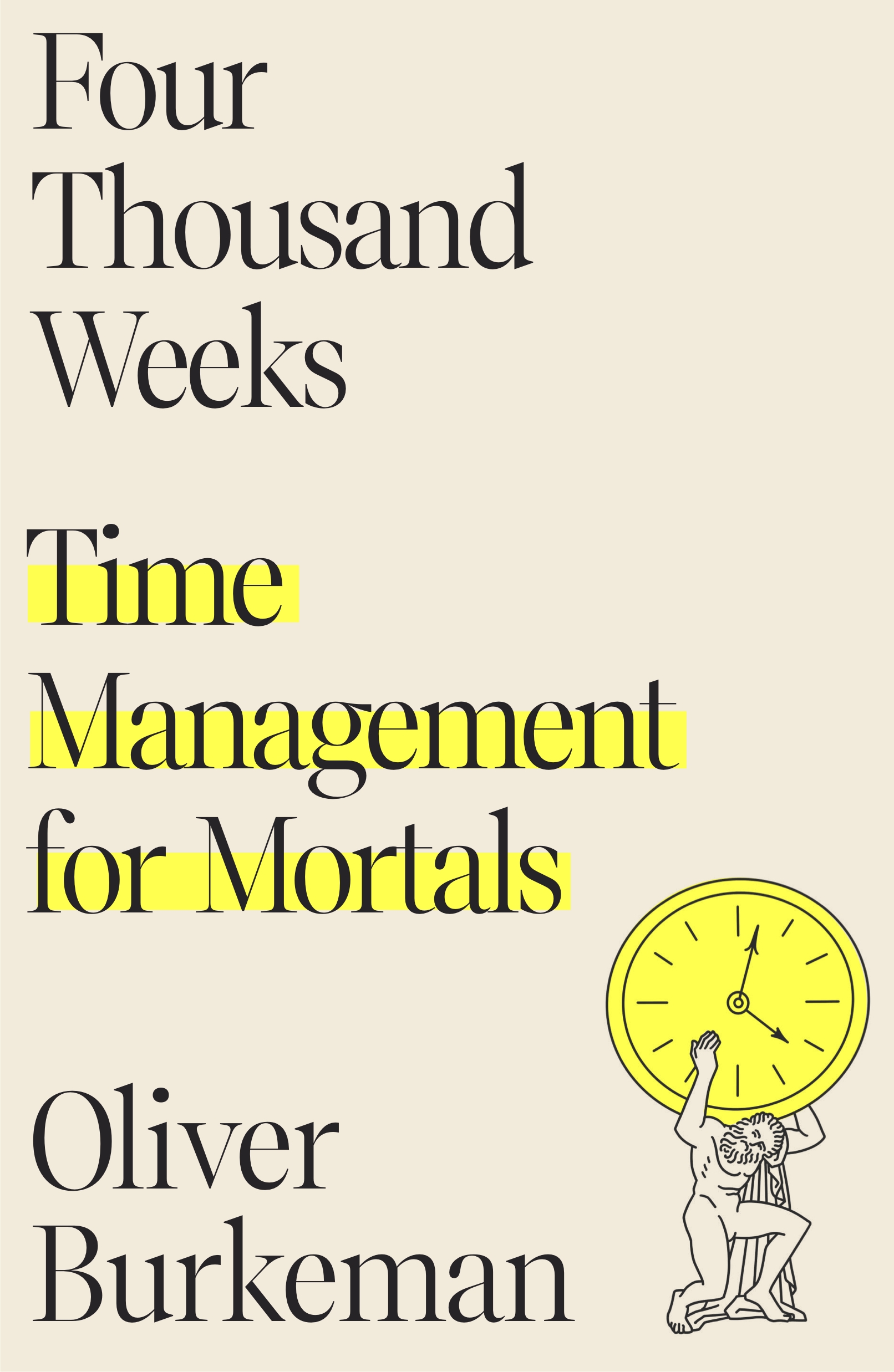
Four Thousand Weeks: Time Management for Mortals
by Oliver Burkeman
Rating: 4.2 ⭐
• 7 recommendations ❤️
The average human lifespan is absurdly, insultingly brief. Assuming you live to be eighty, you have just over four thousand weeks. Nobody needs to be told there isn’t enough time. We’re obsessed with our lengthening to-do lists, overfilled inboxes, work-life balance, and ceaseless battle against distraction; we’re deluged with advice on becoming more productive and efficient and life hacks to optimize our days. But such techniques often end up making things worse. The sense of anxious hurry grows more intense, and still the most meaningful parts of life seem to lie just beyond the horizon. Still, we rarely make the connection between our daily struggles with time and the ultimate time management problem: the challenge of how best to use our four thousand weeks. Drawing on the insights of both ancient and contemporary philosophers, psychologists, and spiritual teachers, Oliver Burkeman delivers an entertaining, humorous, practical, and ultimately profound guide to time and time management. Rejecting the futile modern obsession with “getting everything done,” Four Thousand Weeks introduces readers to tools for constructing a meaningful life by embracing finitude, showing that many of the unhelpful ways we’ve come to think about time aren’t inescapable, unchanging truths, but choices we’ve made as individuals and as a society—and that we could do things differently.

KJV Holy Bible, Giant Print Full-size Faux Leather Red Letter Edition - Thumb Index & Ribbon Marker, King James Version, Pink
by Anonymous
Rating: 4.9 ⭐
• 6 recommendations ❤️
The Pink Faux Leather Giant Print Full-size King James Version Bible is the perfect Bible for the women who raised you—be it a mother, grandmother, aunt, teacher or mentor. The easy-to-read 14-point type print will ease the strain on her eyes when she settles in for her daily quiet time with the LORD. A soft blush pink cover is accented with a heat debossed frame that is embellished with intricate scrollwork. The gold foiled title and heat debossed version reference is displayed within the frame. HOLY BIBLE KING JAMES VERSION On the spine, the heat debossed imprint is placed at the top, followed by the gold foiled title that is flanked by a triple gold foiled faux spine ribbing design. Gilt-edged pages add extra luster to the feminine design. The flexcover opens completely flat without damaging the spine. A soft pink satin ribbon marker and thumb-indexing tabs offer an easy way to navigate and mark your Bible. The easy-to-read 14-point type allows you to read your Bible without eye strain and allows you to read the Giant Print Bible from a fair distance—no need to hold it up close. Essential study resources include double-column formatting, a thematic Scripture verse finder, concordance, topical verse finder, the words of Christ that are printed in red ink and a one-year Bible reading plan. If you are looking for a unique gift for Mother's Day to honor the woman who raised you, consider the Pink Faux Leather Giant Print Full-size King James Version Bible. Simple Framed Design Pink Faux Leather Cover Flexcover Gold Foiled Title and Accents Classic King James Version Thumb-indexing Tabs Satin Ribbon Marker Gilt-edged Pages Double Column Format Words of Christ in Red Thematic Scripture Verse Finder One-year Bible Reading Plan Lay-flat Binding 14 Point Type 9.7" x 6.7" x 1.5" (246 x 170 x 38mm)