
64 Books Recommended
![The Game [Paperback] [Jan 01, 2013] Neil Strauss](https://m.media-amazon.com/images/S/compressed.photo.goodreads.com/books/1428953438i/25353704.jpg)
About the Book: The Game Penetrating the Secret Society of Pickup Artists A bestselling author and journalists intriguing, humorous, and informative inside look at a subculture of men striving to perfect the art of picking up women In dozens of cities around the world, men meet in underground "lairs" to discuss tactics and strategies for picking up women. Afterwards, they venture into the "field"-bars and clubs-and practice, questing after the holy grail: the perfect girl. Under a pseudonym, New York Times bestselling author Neil Strauss ventured into this bizarre subculture, traveling around the world and meeting the worlds greatest seducers, men who claim to have found the combination to unlock a womans legs-and her heart. There is Ross Jefferies, a master hypnotist on whom Tom Cruises Magnolia character was based; Mystery, an illusionist who charms showgirls and celebrities; Rick H., a millionaire who turns straight-laced women into bisexual party girls; and Randall P., a spiritualist so powerful that women actually pay him to learn how to better pleasure him. The Game chronicles Strausss adventures (and misadventures) undercover in this clandestine world of men who refuse to let traditional rules of dating doom them to unfulfilled lives. Along the way, there are riveting, and often disturbing, profiles of the men who have dedicated their lives to the game-and disciples who will stop at nothing to learn from them. The Game is a journey into a world that most women fear and most men dream of. About the Author: Neil Strauss Neil Strauss is the coauthor of the New York Times bestselling books The Long Hard Road Out of Hell with Marilyn Manson, The Dirt with Motley Crue, and How to Make Love Like a Porn Star with Jenna Jameson. A former music writer for the New York Times, he lives in Los Angeles.
A Supposedly Fun Thing I'll Never Do Again: Essays and Arguments
by David Foster Wallace
Rating: 4.2 ⭐
• 1 recommendation ❤️
In this exuberantly praised book — a collection of seven pieces on subjects ranging from television to tennis, from the Illinois State Fair to the films of David Lynch, from postmodern literary theory to the supposed fun of traveling aboard a Caribbean luxury cruiseliner — David Foster Wallace brings to nonfiction the same curiosity, hilarity, and exhilarating verbal facility that has delighted readers of his fiction, including the bestselling Infinite Jest.

The Singularity is Near: When Humans Transcend Biology
by Ray Kurzweil
Rating: 3.9 ⭐
• 16 recommendations ❤️
“Startling in scope and bravado.” —Janet Maslin, The New York Times“Artfully envisions a breathtakingly better world.” — Los Angeles Times“Elaborate, smart and persuasive.” — The Boston Globe“A pleasure to read.” — The Wall Street JournalOne of CBS News ’s Best Fall Books of 2005 • Among St Louis Post-Dispatch ’s Best Nonfiction Books of 2005 • One of Amazon.com’s Best Science Books of 2005A radical and optimistic view of the future course of human development from t he bestselling author of How to Create a Mind and The Singularity is Nearer who Bill Gates calls “the best person I know at predicting the future of artificial intelligence”For over three decades, Ray Kurzweil has been one of the most respected and provocative advocates of the role of technology in our future. In his classic The Age of Spiritual Machines , he argued that computers would soon rival the full range of human intelligence at its best. Now he examines the next step in this inexorable evolutionary the union of human and machine, in which the knowledge and skills embedded in our brains will be combined with the vastly greater capacity, speed, and knowledge-sharing ability of our creations.

The Seven Principles for Making Marriage Work: A Practical Guide from the Country's Foremost Relationship Expert
by John M. Gottman
Rating: 4.4 ⭐
• 2 recommendations ❤️
Just as Masters and Johnson were pioneers in the study of human sexuality, so Dr. John Gottman has revolutionized the study of marriage. As a professor of psychology at the University of Washington and the founder and director of the Seattle Marital and Family Institute, he has studied the habits of married couples in unprecedented detail over the course of many years. His findings, and his heavily attended workshops, have already turned around thousands of faltering marriages. This book is the culmination of his life's work: the seven principles that guide couples on the path toward a harmonious and long-lasting relationship. Straightforward in their approach, yet profound in their effect, these principles teach partners new and startling strategies for making their marriage work. Gottman helps couples focus on each other, on paying attention to the small day-to-day moments that, strung together, make up the heart and soul of any relationship. Being thoughtful about ordinary matters provides spouses with a solid foundation for resolving conflict when it does occur and finding strategies for living with those issues that cannot be resolved. Packed with questionnaires and exercises whose effectiveness has been proven in Dr. Gottman's workshops, The Seven Principles for Making Marriage Work is the definitive guide for anyone who wants their relationship to attain its highest potential.The Seven Principles for Making Marriage Work is the result of Dr. John Gottman's many years of closely observing thousands of marriages. This kind of longitudinal research has never been done before. Based on his findings, he has culled seven principles essential to the success of any marriage.Maintain a love map. Foster fondness and admiration. Turn toward instead of away. Accept influence. Solve solvable conflicts. Cope with conflicts you can't resolve. Create shared meaning.Dr. Gottman's unique questionnaires and exercises will guide couples on the road to revitalizing their marriage, or making a strong one even better.

The True Believer: Thoughts on the Nature of Mass Movements
by Eric Hoffer
Rating: 4.2 ⭐
• 16 recommendations ❤️
A stevedore on the San Francisco docks in the 1940s, Eric Hoffer wrote philosophical treatises in his spare time while living in the railroad yards. The True Believer -- the first and most famous of his books -- was made into a bestseller when President Eisenhower cited it during one of the earliest television press conferences. Completely relevant and essential for understanding the world today, The True Believer is a visionary, highly provocative look into the mind of the fanatic and a penetrating study of how an individual becomes one.

Influence, the classic book on persuasion, explains the psychology of why people say "yes"—and how to apply these understandings. Dr. Robert Cialdini is the seminal expert in the rapidly expanding field of influence and persuasion. His thirty-five years of rigorous, evidence-based research along with a three-year program of study on what moves people to change behavior has resulted in this highly acclaimed book.You'll learn the six universal principles, how to use them to become a skilled persuader—and how to defend yourself against them. Perfect for people in all walks of life, the principles of Influence will move you toward profound personal change and act as a driving force for your success.

Всемирно известный психолог Кэрол Дуэк, не одно десятилетие изучающая проблематику успехов и достижений, открыла и научно доказала влияние внутренних установок на личность. Из этой книги вы узнаете, как установка на данность обрекает людей на провал, а установка на рост — открывает путь к самореализации, выстраиванию успешной карьеры и налаживанию счастливых взаимоотношений с окружающими в любом возрасте. А еще — как можно привить такую установку и себе, и другим.Книга будет интересна не только родителям, преподавателям и тренерам, но и всем, кто занимается управлением людьми или нацелен на личностный рост.

Getting the Love You Want: A Guide for Couples
by Harville Hendrix
Rating: 4.2 ⭐
• 7 recommendations ❤️
Авторы книги — супруги-психотерапевты Харвилл Хендрикс и Хелен Хант. К моменту встречи они оба пережили неудачные браки и жаждали понять, в чем главная причина разногласий между партнерами и почему так сильно любившие друг друга люди ссорятся и расстаются. И им это удалось. Они создали Имаго-психотерапию — метод, который помог сотням пар спасти их отношения. В этой книге Харвилл и Хелен объясняют, как мы выбираем партнера, почему на определенном этапе в паре возникает недопонимание, как с ним бороться и как прийти к осознанному партнерству и любви на всю жизнь. Книга будет интересна супругам, которые хотят справиться с существующими проблемами

The Old Man and the Sea, an apparently simple fable, represents the mature Hemingway at his best. He was awarded the Nobel Prize for Literature soon after its publication, and half a century later it is still one of his most read books.

Winner of the Pulitzer prize in 1974 and the culmination of a life's work, The Denial of Death is Ernest Becker's brilliant and impassioned answer to the "why" of human existence. In bold contrast to the predominant Freudian school of thought, Becker tackles the problem of the vital lie -- man's refusal to acknowledge his own mortality. In doing so, he sheds new light on the nature of humanity and issues a call to life and its living that still resonates more than twenty years after its writing.

The Genealogy of Morals consists of three essays exploring morality and its origins where Nietzsche makes ample use of his training as a philologist. These works contain Nietzsche's most thorough and clear expression of his psychological philosophy. This edition includes Ecce Homo, Nietzsche's review of his life and works, with the exception of The Antichrist. These two books are compiled, translated and annotated by renowned Nietzsche scholar Walter Kaufmann.

• Why are lovers quicker to forgive their partners for infidelity than for leaving dirty dishes in the sink? • Why will sighted people pay more to avoid going blind than blind people will pay to regain their sight? • Why do dining companions insist on ordering different meals instead of getting what they really want? • Why do pigeons seem to have such excellent aim; why can’t we remember one song while listening to another; and why does the line at the grocery store always slow down the moment we join it? In this brilliant, witty, and accessible book, renowned Harvard psychologist Daniel Gilbert describes the foibles of imagination and illusions of foresight that cause each of us to mis-conceive our tomorrows and mis-estimate our satisfactions. Vividly bringing to life the latest scientific research in psychology, cognitive neuroscience, philosophy, and behavioral economics, Gilbert reveals what scientists have discovered about the uniquely human ability to imagine the future, and about our capacity to predict how much we will like it when we get there. With penetrating insight and sparkling prose, Gilbert explains why we seem to know so little about the hearts and minds of the people we are about to become.
From the Pulitzer Prize-winning author of The Denial of Death, a penetrating and insightful perspective on the source of evil in our world."A profound, nourishing book…absolutely essential to the understanding of our troubled times." —Anais Nin"An urgent essay that bears all the marks of a final philosophical raging against the dying of the light." —Newsweek

The Writer's Journey - 25th Anniversary Edition: Mythic Structure for Writers
by Christopher Vogler
Rating: 4.3 ⭐
• 1 recommendation ❤️
At the beginning of The Writer's Journey, Christopher Vogler asserts that "all stories consist of a few common structural elements found universally in myths, fairy tales, dreams, and movies." Some may be hard-pressed to accept this idea (and will wonder how storytellers from Homer to Shakespeare to Robert Altman might respond to the proposition). Others may imagine that since Vogler uses movies like the Star Wars trilogy and The Lion King to defend his mythological philosophy, he is, unwittingly, listing the reasons why Hollywood films of the last 20 years have been so unimaginative. But there's no doubt that Vogler's notion, based on psychological writings by Carl Jung and the mythmaking philosophy of Joseph Campbell, has been profoundly influential. Many screenwriters have used Vogler's volume to understand why certain scenarios sell, and to discover a blueprint for creating mythic stories of their own. Now in its second edition, The Writer's Journey sets forth archetypes common in what Vogler calls "the hero's journey," the mythic structure that he claims all stories follow. In the book's first section, he lists the different kinds of typological characters who appear in stories. In the second, he discusses the stages of the journey through which the hero generally passes. The final, supplementary portion of the book explains in detail how films like Titanic and The Full Monty follow the patterns he has outlined.This new 4th edition adds 30% new material

What if men built a tower from Earth to Heaven-and broke through to Heaven's other side? What if we discovered that the fundamentals of mathematics were arbitrary and inconsistent? What if there were a science of naming things that calls life into being from inanimate matter? What if exposure to an alien language forever changed our perception of time? What if all the beliefs of fundamentalist Christianity were literally true, and the sight of sinners being swallowed into fiery pits were a routine event on city streets? These are the kinds of outrageous questions posed by the stories of Ted Chiang. Stories of your life . . . and others.

Marriage, a History: How Love Conquered Marriage
by Stephanie Coontz
Rating: 4.0 ⭐
• 4 recommendations ❤️
Just when the clamor over "traditional" marriage couldn’t get any louder, along comes this groundbreaking book to ask, "What tradition?" In Marriage, a History , historian and marriage expert Stephanie Coontz takes readers from the marital intrigues of ancient Babylon to the torments of Victorian lovers to demonstrate how recent the idea of marrying for love is—and how absurd it would have seemed to most of our ancestors. It was when marriage moved into the emotional sphere in the nineteenth century, she argues, that it suffered as an institution just as it began to thrive as a personal relationship. This enlightening and hugely entertaining book brings intelligence, perspective, and wit to today’s marital debate.

The Evolving Self: Problem and Process in Human Development
by Robert Kegan
Rating: 4.2 ⭐
• 4 recommendations ❤️
The Evolving Self focuses upon the most basic and universal of psychological problems--the individual's effort to make sense of experience, to make meaning of life. According to Robert Kegan, meaning-making is a lifelong activity that begins in earliest infancy and continues to evolve through a series of stages encompassing childhood, adolescence, and adulthood. The Evolving Self describes this process of evolution in rich and human detail, concentrating especially on the internal experience of growth and transition, its costs and disruptions as well as its triumphs.At the heart of our meaning-making activity, the book suggests, is the drawing and redrawing of the distinction between self and other. Using Piagetian theory in a creative new way to make sense of how we make sense of ourselves, Kegan shows that each meaning-making stage is a new solution to the lifelong tension between the universal human yearning to be connected, attached, and included, on the one hand, and to be distinct, independent, and autonomous on the other. The Evolving Self is the story of our continuing negotiation of this tension. It is a book that is theoretically daring enough to propose a reinterpretation of the Oedipus complex and clinically concerned enough to suggest a variety of fresh new ways to treat those psychological complaints that commonly arise in the course of development.Kegan is an irrepressible storyteller, an impassioned opponent of the health-and-illness approach to psychological distress, and a sturdy builder of psychological theory. His is an original and distinctive new voice in the growing discussion of human development across the life span.

The 5 Love Languages: The Secret to Love That Lasts
by Gary Chapman
Rating: 4.5 ⭐
• 9 recommendations ❤️
An alternative cover edition for this ISBN can be found here.Falling in love is easy. Staying in love—that's the challenge. How can you keep your relationship fresh and growing amid the demands, conflicts, and just plain boredom of everyday life?In the #1 New York Times international bestseller The 5 Love Languages, you'll discover the secret that has transformed millions of relationships worldwide. Whether your relationship is flourishing or failing, Dr. Gary Chapman's proven approach to showing and receiving love will help you experience deeper and richer levels of intimacy with your partner—starting today.The 5 Love Languages is as practical as it is insightful. Updated to reflect the complexities of relationships today, this new edition reveals intrinsic truths and applies relevant, actionable wisdom in ways that work.Includes the Couple's Personal Profile assessment so you can discover your love language and that of your loved one.

Freud’s seminal volume of twentieth-century cultural thought grounded in psychoanalytic theory, now with a new introduction by Christopher Hitchens.Written in the decade before Freud’s death, Civilization and Its Discontents may be his most famous and most brilliant work. It has been praised, dissected, lambasted, interpreted, and reinterpreted. Originally published in 1930, it seeks to answer several questions fundamental to human society and its organization: What influences led to the creation of civilization? Why and how did it come to be? What determines civilization’s trajectory? Freud’s theories on the effect of the knowledge of death on human existence and the birth of art are central to his work. Of the various English translations of Freud’s major works to appear in his lifetime, only Norton’s Standard Edition, under the general editorship of James Strachey, was authorized by Freud himself. This new edition includes both an introduction by the renowned cultural critic and writer Christopher Hitchens as well as Peter Gay’s classic biographical note on Freud.

Eichmann in Jerusalem: A Report on the Banality of Evil
by Hannah Arendt
Rating: 4.2 ⭐
• 2 recommendations ❤️
Sparking a flurry of heated debate, Hannah Arendt’s authoritative and stunning report on the trial of German Nazi leader Adolf Eichmann first appeared as a series of articles in The New Yorker in 1963. This revised edition includes material that came to light after the trial, as well as Arendt’s postscript directly addressing the controversy that arose over her account. A major journalistic triumph by an intellectual of singular influence, Eichmann in Jerusalem is as shocking as it is informative — an unflinching look at one of the most unsettling (and unsettled) issues of the twentieth century.
No Two Alike: Human Nature and Human Individuality
by Judith Rich Harris
Rating: 4.1 ⭐
• 3 recommendations ❤️
"A display of scientific courage and imagination." ―William Saletan, New York Times Book Review Why do people―even identical twins reared in the same home―differ so much in personality? Armed with an inquiring mind and insights from evolutionary psychology, Judith Rich Harris sets out to solve the mystery of human individuality. 12 illustrations

An unforgettable detective story starring C.W. Sughrue, a Montana investigator who kills time by working at a topless bar. Hired to track down a derelict author, he ends up on the trail of a girl missing in Haight-Ashbury for a decade. The tense hunt becomes obsessive as Sughrue takes a haunting journey through the underbelly of America's sleaziest nightmares.

The Republic by Plato is a landmark achievement in Ancient Greek philosophy - this edition combines an authoritative translation with affordability.The Republic is the most famous text written by Plato, which takes the form of a philosophical dialogue. The text is part conversation between a group of friends active in the Athens intellectual community, and part monologue from various participants in the discussion. The narrator and lead character is Socrates, Plato's friend and mentor, who appears in most of his pupil's dialogues and acts as surrogate to Plato's ideas. Throughout the text the 'Socratic method', whereby Socrates feigns ignorance and questions an adversary to receive insight on a given subject, is demonstrated.Ten books in total comprise The Republic , the divisions thought to have been made due to the length of a roll of papyrus in Ancient Greece. The discussion begins with an attempt to find a definition for justice, wherein a disagreement between Thrasymachus - who believes justice is what is good for who is strongest at a given place and time - and Socrates, who believes that all members of society should, for the highest benefit of all, conform to just action.In Book II, the discussion expands to include justice in the sense of a social contract. Whether or not justice happens only due to fear of reprisal, and whether justice is truly a high virtue of itself, are among the questions considered. Eventually the discussion expands further into the idea of a just city ideas of how such a society, embodying justice and order, might work commences with Socrates proposing an educated 'guardian' class of able-bodied men and women who would uphold order and defend such a city against threats from outside.After expanding their ideas on the guardians, the dialogue proceeds onto other classes. It is here that Plato's famous idea of the philosopher king arises - the notion of a ruler who is appointed for holding the highest understanding of good and just rule, imparted to him at an early age by capable educators.Plato as Socrates eventually proposes that the essence of justice is fulfilling one's role in society. The correct assignment of an occupation to each citizen, to which they can happily commit, will result in a just and capable society. Further stipulations upon this ideal society are given; that education be strictly regulated and human reproduction made a matter for the state, with no offspring knowing their parents.The Republic then covers four forms of injustice manifested in systems of government - timocracy, oligarchy, democracy, and finally tyranny. How these unjust societies occur is talked about at length, with examples from Ancient society cited as Socrates/Plato develops theories on how societies go astray. The most unjust ruler - the tyrant - is discussed at length, and determined to be among the most unhappy, unfree and unfulfilled types of man owing to his thrall to passions, and friendless owing to his commitment to hierarchy. Such malfeasant politics are excoriated; in the end, Socrates says, all are harmed and none benefit from tyranny.Between books VII and VIII Socrates establishes the famous Allegory of the Cave as a way of demonstrating education's effects upon the human mind. By using the image of people who have only lived in a dark caves their whole lives, he illustrates how mere shadows against the walls are the closest such individuals come to seeing reality. Philosophy, Socrates argues, is the way by which humans are freed from this cave of ignorance and propelled to an enlightenment.Socrates concludes the discussion of city politics and rulers, and commences to focus upon the nature of art and its place in the just and ideal city. He also discusses reincarnation, the indestructible nature of the human soul, concluding the epic text on a spiritual note.

The million copy international bestseller, critically acclaimed and translated into over 25 languages. As influential today as when it was first published, The Selfish Gene has become a classic exposition of evolutionary thought. Professor Dawkins articulates a gene's eye view of evolution - a view giving centre stage to these persistent units of information, and in which organisms can be seen as vehicles for their replication. This imaginative, powerful, and stylistically brilliant work not only brought the insights of Neo-Darwinism to a wide audience, but galvanized the biology community, generating much debate and stimulating whole new areas of research. Forty years later, its insights remain as relevant today as on the day it was published. This 40th anniversary edition includes a new epilogue from the author discussing the continuing relevance of these ideas in evolutionary biology today, as well as the original prefaces and foreword, and extracts from early reviews. Oxford Landmark Science books are 'must-read' classics of modern science writing which have crystallized big ideas, and shaped the way we think.

The Secret Pulse of Time: Making Sense of Life's Scarcest Commodity
by Stefan Klein
Rating: 3.7 ⭐
• 2 recommendations ❤️
Popular science at its very best, The Secret Pulse of Time awakens us to and empowers us with the idea that time is far more at our disposal than we have previously realized. Award-winning journalist Stefan Klein— whose previous book, The Science of Happiness, is a longtime international bestseller—here provides what are essentially “operating instructions” for time. Through a combination of original investigation and reportage, personal revelation, and a commanding presentation of scientific research (among disciplines including brain physiology, social psychology, philosophy, and Einsteinian physics), The Secret Pulse of Time teaches readers not only to better master time but also to understand why they so often fail to do so.
Cows, Pigs, Wars, and Witches: The Riddles of Culture
by Marvin Harris
Rating: 4.0 ⭐
• 2 recommendations ❤️
This book challenges those who argue that we can change the world by changing the way people think. The author shows that no matter how bizarre a people's behavior may seem, it always stems from concrete social and economic conditions. It is by isolating and identifying these conditions that we will be able to understand and cope with some of our own apparently senseless life styles. In a devastating attack on the shamans of the counterculture, the author states the case for a return to objective consciousness and a rational set of political commitments.

Guns, Germs, and Steel: The Fates of Human Societies
by Jared Diamond
Rating: 4.1 ⭐
• 24 recommendations ❤️
Winner of the Pulitzer Prize • New York Times Bestseller • Over Two Million Copies Sold“One of the most significant projects embarked upon by any intellectual of our generation” (Gregg Easterbrook, New York Times), Guns, Germs, and Steel presents a groundbreaking, unified narrative of human history.Why did Eurasians conquer, displace, or decimate Native Americans, Australians, and Africans, instead of the reverse? In this “artful, informative, and delightful” (William H. McNeill, New York Review of Books) book, a classic of our time, evolutionary biologist Jared Diamond dismantles racist theories of human history by revealing the environmental factors actually responsible for its broadest patterns.The story begins 13,000 years ago, when Stone Age hunter-gatherers constituted the entire human population. Around that time, the developmental paths of human societies on different continents began to diverge greatly. Early domestication of wild plants and animals in the Fertile Crescent, China, Mesoamerica, the Andes, and other areas gave peoples of those regions a head start at a new way of life. But the localized origins of farming and herding proved to be only part of the explanation for their differing fates. The unequal rates at which food production spread from those initial centers were influenced by other features of climate and geography, including the disparate sizes, locations, and even shapes of the continents. Only societies that moved away from the hunter-gatherer stage went on to develop writing, technology, government, and organized religions as well as deadly germs and potent weapons of war. It was those societies, adventuring on sea and land, that invaded others, decimating native inhabitants through slaughter and the spread of disease.A major landmark in our understanding of human societies, Guns, Germs, and Steel chronicles the way in which the modern world, and its inequalities, came to be.

Hold Me Tight: Seven Conversations for a Lifetime of Love
by Sue Johnson
Rating: 4.1 ⭐
• 3 recommendations ❤️
Heralded by the New York Times and Time as the couples therapy with the highest rate of success, Emotionally Focused Therapy works because it views the love relationship as an attachment bond.This idea, once controversial, is now supported by science, and has become widely popular among therapists around the world. In Hold Me Tight, Dr. Sue Johnson presents Emotionally Focused Therapy to the general public for the first time. Johnson teaches that the way to save and enrich a relationship is to reestablish safe emotional connection and preserve the attachment bond. With this in mind, she focuses on key moments in a relationship-from "Recognizing the Demon Dialogue" to "Revisiting a Rocky Moment" -- and uses them as touch points for seven healing conversations.Through case studies from her practice, illuminating advice, and practical exercises, couples will learn how to nurture their relationships and ensure a lifetime of love.

A concise survey of the culture and civilization of mankind, The Lessons of History is the result of a lifetime of research from Pulitzer Prize–winning historians Will and Ariel Durant.With their accessible compendium of philosophy and social progress, the Durants take us on a journey through history, exploring the possibilities and limitations of humanity over time. Juxtaposing the great lives, ideas, and accomplishments with cycles of war and conquest, the Durants reveal the towering themes of history and give meaning to our own.

“My name is Tucker Max, and I am an asshole." With these words Tucker Max launched a classic humor bestseller that has sold more than two million copies in the US and hundreds of thousands more throughout the world. I HOPE THEY SERVE BEER IN HELL was on The New York Times bestseller list for five years including the #1 position.The new edition, released in September 2015, includes a new 6-page Afterword that will delight Tucker's fans. In it he describes his life in the 10 years since the book was first published, including his marriage and becoming a dad. His anecdotes are, as always, funny and revealing, told in the unique voice that millions of readers have come to love.Actual reader feedback:"I am completely baffled as to how you can congratulate yourself for being a womanizer and a raging drunk, or think anyone cares about an idiot like you. Do you really think that exploiting the insecurities of others while getting wasted is a legitimate thing to offer?""Thank you, thank you, thank you--for sharing with us your wonderful tales of drunken revelry, for teaching me what it means to be a man, for just existing so I know that there is another option; I too can say 'screw the system' and be myself and have fun. My life truly began when I finished reading your stories. Now, when faced with a quandary about what course of action I should take, I just ask myself, 'What Would Tucker Do?'--and I do it, and I am a better man for it.""I find it truly appalling that there are people in the world like you. You are a disgusting, vile, repulsive, repugnant, foul creature. Because of you, I don't believe in God anymore. No just God would allow someone like you to exist.""I'll stay with God as my lord, but you are my savior. I just finished reading your brilliant stories, and I laughed so hard I almost vomited. I want to bring that kind of joy to people. You're an artist of the highest order and a true humanitarian to boot. I'm in both shock and awe at how much I want to be you.""You are the coolest person I can even imagine existing. If you slept with my girlfriend, it'd make me love her more."

A celebrated writer's irresistible, candid, and eloquent account of her pursuit of worldly pleasure, spiritual devotion, and what she really wanted out of life. Around the time Elizabeth Gilbert turned thirty, she went through an early-onslaught midlife crisis. She had everything an educated, ambitious American woman was supposed to want—a husband, a house, a successful career. But instead of feeling happy and fulfilled, she was consumed with panic, grief, and confusion. She went through a divorce, a crushing depression, another failed love, and the eradication of everything she ever thought she was supposed to be. To recover from all this, Gilbert took a radical step. In order to give herself the time and space to find out who she really was and what she really wanted, she got rid of her belongings, quit her job, and undertook a yearlong journey around the world—all alone. Eat, Pray, Love is the absorbing chronicle of that year. Her aim was to visit three places where she could examine one aspect of her own nature set against the backdrop of a culture that has traditionally done that one thing very well. In Rome, she studied the art of pleasure, learning to speak Italian and gaining the twenty-three happiest pounds of her life. India was for the art of devotion, and with the help of a native guru and a surprisingly wise cowboy from Texas, she embarked on four uninterrupted months of spiritual exploration. In Bali, she studied the art of balance between worldly enjoyment and divine transcendence. She became the pupil of an elderly medicine man and also fell in love the best way—unexpectedly. An intensely articulate and moving memoir of self-discovery, Eat, Pray, Love is about what can happen when you claim responsibility for your own contentment and stop trying to live in imitation of society’s ideals. It is certain to touch anyone who has ever woken up to the unrelenting need for change.

Man's Search for Meaning has riveted generations of readers with its descriptions of life in Nazi death camps and its lessons for spiritual survival. Between 1942 and 1945 psychiatrist Viktor Frankl labored in four different camps, including Auschwitz, while his parents, brother, and pregnant wife perished. Based on his own experience and the stories of his many patients, Frankl argues that we cannot avoid suffering but we can choose how to cope with it, find meaning in it, and move forward with renewed purpose. Frankl's theory—known as logotherapy, from the Greek word logos ("meaning")—holds that our primary drive in life is not pleasure, as Freud maintained, but the discovery and pursuit of what we personally find meaningful. In the decades since its first publication in 1959, Man's Search for Meaning has become a classic, with more than twelve million copies in print around the world. A 1991 Library of Congress survey that asked readers to name a "book that made a difference in your life" found Man's Search for Meaning among the ten most influential books in America. At once a memoir, a meditation, a treatise, and a history, it continues to inspire us all to find significance in the very act of living.(back cover)

Sophie's World: A Novel About the History of Philosophy
by Jostein Gaarder
Rating: 3.8 ⭐
• 1 recommendation ❤️
A page-turning novel that is also an exploration of the great philosophical concepts of Western thought, Sophie's World has fired the imagination of readers all over the world, with more than twenty million copies in print.One day fourteen-year-old Sophie Amundsen comes home from school to find in her mailbox two notes, with one question on each: "Who are you?" and "Where does the world come from?" From that irresistible beginning, Sophie becomes obsessed with questions that take her far beyond what she knows of her Norwegian village. Through those letters, she enrolls in a kind of correspondence course, covering Socrates to Sartre, with a mysterious philosopher, while receiving letters addressed to another girl. Who is Hilde? And why does her mail keep turning up? To unravel this riddle, Sophie must use the philosophy she is learning--but the truth turns out to be far more complicated than she could have imagined.

Before there was money, there was debtEvery economics textbook says the same thing: Money was invented to replace onerous and complicated barter systems—to relieve ancient people from having to haul their goods to market. The problem with this version of history? There’s not a shred of evidence to support it.Here anthropologist David Graeber presents a stunning reversal of conventional wisdom. He shows that for more than 5,000 years, since the beginnings of the first agrarian empires, humans have used elaborate credit systems to buy and sell goods—that is, long before the invention of coins or cash. It is in this era, Graeber argues, that we also first encounter a society divided into debtors and creditors. Graeber shows that arguments about debt and debt forgiveness have been at the center of political debates from Italy to China, as well as sparking innumerable insurrections. He also brilliantly demonstrates that the language of the ancient works of law and religion (words like “guilt,” “sin,” and “redemption”) derive in large part from ancient debates about debt, and shape even our most basic ideas of right and wrong. We are still fighting these battles today without knowing it.Debt: The First 5,000 Years is a fascinating chronicle of this little known history—as well as how it has defined human history, and what it means for the credit crisis of the present day and the future of our economy.

Unbroken: An Olympian's Journey from Airman to Castaway to Captive
by Laura Hillenbrand
Rating: 4.6 ⭐
• 1 recommendation ❤️
The #1 New York Times bestseller, which is also a major motion picture directed by Angelina Jolie, has now been adapted by the author for young adults. Beautifully illustrated throughout, this riveting biography includes more than 100 black-and-white photos, as well as exclusive content, "In Conversation," with Laura Hillenbrand and Louie Zamperini. “Every young person should have the chance to read this book. It’s easy to think, growing up, that bravery is for other people, who are simply born heroic. But nothing about Louis marked him out for greatness. He started out as a misfit and troublemaker, but became a great man because of his choices. His story shows that everyone has the potential to rise above obstacles. It is not where you start out in life that counts the most, it is how you choose to face it."—Angelina JolieOn a May afternoon in 1943, an American military plane crashed into the Pacific Ocean and disappeared, leaving only a spray of debris and a slick of oil, gasoline, and blood. Then, on the ocean surface, a face appeared. It was that of a young lieutenant, the plane’s bombardier, who was struggling to a life raft and pulling himself aboard. So began one of the most extraordinary sagas of the Second World War. The lieutenant’s name was Louis Zamperini. As a boy, he had been a clever delinquent, breaking into houses, brawling, and stealing. As a teenager, he had channeled his defiance into running, discovering a supreme talent that carried him to the Berlin Olympics. But when war came, the athlete became an airman, embarking on a journey that led to his doomed flight, a tiny raft, and a drift into the unknown. Ahead of Zamperini lay thousands of miles of open ocean, leaping sharks, a sinking raft, thirst and starvation, enemy aircraft, and, beyond, a trial even greater. Driven to the limits of endurance, Zamperini would respond to desperation with ingenuity, suffering with hope and humor, brutality with rebellion. His fate, whether triumph or tragedy, would hang on the fraying wire of his will. In this captivating young adult edition of her award-winning #1 New York Times bestseller, Laura Hillenbrand tells the story of a man’s breathtaking odyssey and the courage, cunning, and fortitude he found to endure and overcome. Lavishly illustrated with more than one hundred photographs and featuring an exclusive interview with Zamperini, Unbroken will introduce a new generation to one of history’s most thrilling survival epics.Praise for Unbroken"This adaptation of Hillenbrand's adult bestseller is highly dramatic and exciting, as well as painful to read as it lays bare man's hellish inhumanity to man."--Booklist, STARRED"This captivating book emphasizes the importance of determination, the will to survive against impossible odds, and support from family and friends. A strong, well-written work."--School Library Journal"This fine adaptation ably brings an inspiring tale to young readers."--Kirkus ReviewsFrom the Hardcover edition.

The Origins of Political Order: From Prehuman Times to the French Revolution
by Francis Fukuyama
Rating: 4.3 ⭐
• 4 recommendations ❤️
A New York Times Notable Book for 2011 A Globe and Mail Best Books of the Year 2011 TitleA Kirkus Reviews Best Nonfiction of 2011 titleVirtually all human societies were once organized tribally, yet over time most developed new political institutions which included a central state that could keep the peace and uniform laws that applied to all citizens. Some went on to create governments that were accountable to their constituents. We take these institutions for granted, but they are absent or are unable to perform in many of today's developing countries—with often disastrous consequences for the rest of the world.Francis Fukuyama, author of the bestselling The End of History and the Last Man and one of our most important political thinkers, provides a sweeping account of how today's basic political institutions developed. The first of a major two-volume work, The Origins of Political Order begins with politics among our primate ancestors and follows the story through the emergence of tribal societies, the growth of the first modern state in China, the beginning of the rule of law in India and the Middle East, and the development of political accountability in Europe up until the eve of the French Revolution.Drawing on a vast body of knowledge—history, evolutionary biology, archaeology, and economics—Fukuyama has produced a brilliant, provocative work that offers fresh insights on the origins of democratic societies and raises essential questions about the nature of politics and its discontents.

One of the world's most celebrated scholars, Stephen Greenblatt has crafted both an innovative work of history and a thrilling story of discovery, in which one manuscript, plucked from a thousand years of neglect, changed the course of human thought and made possible the world as we know it.Nearly six hundred years ago, a short, genial, cannily alert man in his late thirties took a very old manuscript off a library shelf, saw with excitement what he had discovered, and ordered that it be copied. That book was the last surviving manuscript of an ancient Roman philosophical epic, On the Nature of Things, by Lucretius—a beautiful poem of the most dangerous ideas: that the universe functioned without the aid of gods, that religious fear was damaging to human life, and that matter was made up of very small particles in eternal motion, colliding and swerving in new directions.The copying and translation of this ancient book—the greatest discovery of the greatest book-hunter of his age—fueled the Renaissance, inspiring artists such as Botticelli and thinkers such as Giordano Bruno; shaped the thought of Galileo and Freud, Darwin and Einstein; and had a revolutionary influence on writers such as Montaigne and Shakespeare and even Thomas Jefferson.

The Better Angels of Our Nature: Why Violence Has Declined
by Steven Pinker
Rating: 4.1 ⭐
• 28 recommendations ❤️
Selected by The New York Times Book Review as a Notable Book of the Year. The author of The New York Times bestseller The Stuff of Thought offers a controversial history of violence. Faced with the ceaseless stream of news about war, crime, and terrorism, one could easily think we live in the most violent age ever seen. Yet as New York Times bestselling author Steven Pinker shows in this startling and engaging new work, just the opposite is true: violence has been diminishing for millennia and we may be living in the most peaceful time in our species' existence. For most of history, war, slavery, infanticide, child abuse, assassinations, pogroms, gruesome punishments, deadly quarrels, and genocide were ordinary features of life. But today, Pinker shows (with the help of more than a hundred graphs and maps) all these forms of violence have dwindled and are widely condemned. How has this happened?This groundbreaking book continues Pinker's exploration of the essence of human nature, mixing psychology and history to provide a remarkable picture of an increasingly nonviolent world. The key, he explains, is to understand our intrinsic motives- the inner demons that incline us toward violence and the better angels that steer us away-and how changing circumstances have allowed our better angels to prevail. Exploding fatalist myths about humankind's inherent violence and the curse of modernity, this ambitious and provocative book is sure to be hotly debated in living rooms and the Pentagon alike, and will challenge and change the way we think about our society.
Major New York Times bestsellerWinner of the National Academy of Sciences Best Book Award in 2012Selected by the New York Times Book Review as one of the best books of 2011A Globe and Mail Best Books of the Year 2011 TitleOne of The Economist's 2011 Books of the Year One of The Wall Street Journal's Best Nonfiction Books of the Year 20112013 Presidential Medal of Freedom RecipientIn the international bestseller, Thinking, Fast and Slow, Daniel Kahneman, the renowned psychologist and winner of the Nobel Prize in Economics, takes us on a groundbreaking tour of the mind and explains the two systems that drive the way we think. System 1 is fast, intuitive, and emotional; System 2 is slower, more deliberative, and more logical. The impact of overconfidence on corporate strategies, the difficulties of predicting what will make us happy in the future, the profound effect of cognitive biases on everything from playing the stock market to planning our next vacation—each of these can be understood only by knowing how the two systems shape our judgments and decisions. Engaging the reader in a lively conversation about how we think, Kahneman reveals where we can and cannot trust our intuitions and how we can tap into the benefits of slow thinking. He offers practical and enlightening insights into how choices are made in both our business and our personal lives—and how we can use different techniques to guard against the mental glitches that often get us into trouble. Winner of the National Academy of Sciences Best Book Award and the Los Angeles Times Book Prize and selected by The New York Times Book Review as one of the ten best books of 2011, Thinking, Fast and Slow is destined to be a classic.

The Dictator's Handbook: Why Bad Behavior is Almost Always Good Politics
by Bruce Bueno de Mesquita
Rating: 4.2 ⭐
• 2 recommendations ❤️
Now featuring a new chapter on the rise of illiberalism worldwide.As featured in the viral video “Rules for Rulers,” which has been viewed over fifteen million times.Bruce Bueno de Mesquita and Alastair Smith’s canonical book on political science turned conventional wisdom on its head. They started from a single leaders do whatever keeps them in power. They don’t care about the “national interest”—or even their subjects—unless they must.Newly updated to reflect the global rise of authoritarianism, this clever and accessible book illustrates how leaders amass and retain power. As Bueno de Mesquita and Smith show, democracy is essentially just a convenient fiction. Governments do not differ in kind, but only in the number of essential supporters or backs that need scratching. The size of this group determines almost everything about what leaders can get away with, and the quality of life or misery under them. And it is also the key to returning power to the people.

Behind the Beautiful Forevers: Life, Death, and Hope in a Mumbai Undercity
by Katherine Boo
Rating: 4.0 ⭐
• 6 recommendations ❤️
From Pulitzer Prize-winner Katherine Boo, a landmark work of narrative nonfiction that tells the dramatic and sometimes heartbreaking story of families striving toward a better life in one of the twenty-first century's great, unequal cities.In this brilliantly written, fast-paced book, based on three years of uncompromising reporting, a bewildering age of global change and inequality is made human. Annawadi is a makeshift settlement in the shadow of luxury hotels near the Mumbai airport, and as India starts to prosper, Annawadians are electric with hope. Abdul, a reflective and enterprising Muslim teenager, sees "a fortune beyond counting" in the recyclable garbage that richer people throw away. Asha, a woman of formidable wit and deep scars from a childhood in rural poverty, has identified an alternate route to the middle class: political corruption. With a little luck, her sensitive, beautiful daughter - Annawadi's "most-everything girl" - will soon become its first female college graduate. And even the poorest Annawadians, like Kalu, a fifteen-year-old scrap-metal thief, believe themselves inching closer to the good lives and good times they call "the full enjoy." But then Abdul the garbage sorter is falsely accused in a shocking tragedy; terror and a global recession rock the city; and suppressed tensions over religion, caste, sex, power and economic envy turn brutal. As the tenderest individual hopes intersect with the greatest global truths, the true contours of a competitive age are revealed. And so, too, are the imaginations and courage of the people of Annawadi. With intelligence, humor, and deep insight into what connects human beings to one another in an era of tumultuous change, Behind the Beautiful Forevers carries the reader headlong into one of the twenty-first century's hidden worlds, and into the lives of people impossible to forget.
Tiny Beautiful Things: Advice on Love and Life from Dear Sugar
by Cheryl Strayed
Rating: 4.4 ⭐
• 10 recommendations ❤️
Life can be hard: your lover cheats on you; you lose a family member; you can’t pay the bills—and it can be great: you’ve had the hottest sex of your life; you get that plum job; you muster the courage to write your novel. Sugar—the once-anonymous online columnist at The Rumpus, now revealed as Cheryl Strayed, author of the bestselling memoir Wild—is the person thousands turn to for advice.Tiny Beautiful Things brings the best of Dear Sugar in one place and includes never-before-published columns and a new introduction by Steve Almond. Rich with humor, insight, compassion—and absolute honesty—this book is a balm for everything life throws our way.

A Summer Reading Pick for President Barack Obama, Bill Gates, and Mark Zuckerberg From a renowned historian comes a groundbreaking narrative of humanity’s creation and evolution—a #1 international bestseller—that explores the ways in which biology and history have defined us and enhanced our understanding of what it means to be “human.”One hundred thousand years ago, at least six different species of humans inhabited Earth. Yet today there is only one—homo sapiens. What happened to the others? And what may happen to us?Most books about the history of humanity pursue either a historical or a biological approach, but Dr. Yuval Noah Harari breaks the mold with this highly original book that begins about 70,000 years ago with the appearance of modern cognition. From examining the role evolving humans have played in the global ecosystem to charting the rise of empires, Sapiens integrates history and science to reconsider accepted narratives, connect past developments with contemporary concerns, and examine specific events within the context of larger ideas.Dr. Harari also compels us to look ahead, because over the last few decades humans have begun to bend laws of natural selection that have governed life for the past four billion years. We are acquiring the ability to design not only the world around us, but also ourselves. Where is this leading us, and what do we want to become?Featuring 27 photographs, 6 maps, and 25 illustrations/diagrams.

The Antidote: Happiness for People Who Can't Stand Positive Thinking
by Oliver Burkeman
Rating: 4.1 ⭐
• 4 recommendations ❤️
From the author of the New York Times -bestselling Four Thousand Weeks , a totally original approach to success through failure, calm through embracing anxietySelf-help books don't seem to work. Few of the many advantages of modern life seem capable of lifting our collective mood. Wealth―even if you can get it―doesn't necessarily lead to happiness. Romance, family life, and work often bring as much stress as joy. We can't even agree on what "happiness" means. So are we engaged in a futile pursuit? Or are we just going about it the wrong way?Looking both east and west, in bulletins from the past and from far afield, Oliver Burkeman introduces us to an unusual group of people who share a single, surprising way of thinking about life. Whether experimental psychologists, terrorism experts, Buddhists, hardheaded business consultants, Greek philosophers, or modern-day gurus, they argue that in our personal lives, and in society at large, it's our constant effort to be happy that is making us miserable. And that there is an alternative path to happiness and success that involves embracing failure, pessimism, insecurity, and uncertainty―the very things we spend our lives trying to avoid. Thought-provoking, counterintuitive, and ultimately uplifting, The Antidote is the intelligent person's guide to understanding the much-misunderstood idea of happiness.

The Everything Store: Jeff Bezos and the Age of Amazon
by Brad Stone
Rating: 4.3 ⭐
• 12 recommendations ❤️
The definitive story of Amazon.com, one of the most successful companies in the world, and of its driven, brilliant founder, Jeff Bezos.Amazon.com started off delivering books through the mail. But its visionary founder, Jeff Bezos, wasn't content with being a bookseller. He wanted Amazon to become the everything store, offering limitless selection and seductive convenience at disruptively low prices. To do so, he developed a corporate culture of relentless ambition and secrecy that's never been cracked. Until now. Brad Stone enjoyed unprecedented access to current and former Amazon employees and Bezos family members, giving readers the first in-depth, fly-on-the-wall account of life at Amazon. Compared to tech's other elite innovators -- Jobs, Gates, Zuckerberg -- Bezos is a private man. But he stands out for his restless pursuit of new markets, leading Amazon into risky new ventures like the Kindle and cloud computing, and transforming retail in the same way Henry Ford revolutionized manufacturing.The Everything Store will be the revealing, definitive biography of the company that placed one of the first and largest bets on the Internet and forever changed the way we shop and read.
A blind French girl and a German boy whose paths collide in occupied France as both try to survive the devastation of World War II. Marie-Laure lives in Paris near the Museum of Natural History, where her father works as the master of the locks (there are thousands of locks in the museum). Open your eyes, and see what you can with them before they close forever. Marie-Laure has been blind since the age of six. Her father builds a perfect miniature of their Paris neighbourhood so she can memorize it by touch and navigate the real streets with her feet and cane. When she is twelve, the German Nazis occupy Paris and father and daughter flee to the walled citadel of Saint-Malo on the Brittany coast, where Marie-Laure’s agoraphobic reclusive great-uncle lives in a tall house by the sea. With them they carry what might be the museum’s most valuable and dangerous jewel. In a mining town in Germany, the orphan Werner Pfennig grows up with his younger sister, Jutta, both enchanted by a crude radio they find that brings them news and stories from places they have never seen or imagined. Werner becomes an master at building and fixing these crucial new radios, a talent that wins him a place at an elite and brutal military academy and, ultimately, makes him a highly specialized tracker of the Resistance. More and more aware of the human cost of his intelligence, Werner travels through the heart of Hitler Youth to the far-flung outskirts of Russia, and finally into Saint-Malo, where his path converges with Marie-Laure. The story Illuminates the ways, against all odds, that people try to be good to one another.At the same time, far away in a walled city by the sea, an old man discovers new worlds without ever setting foot outside his home. But all around him, impending danger closes in.Ten years in the writing, a National Book Award finalist, All the Light We Cannot See is a magnificent, deeply moving novel from a writer “whose sentences never fail to thrill” (Los Angeles Times).

The New York Times bestselling series that inspired the Witcher video games.World fantasy award lifetime achievement winner, Andrzej Sapkowski, introduces Geralt of Rivia, a witcher who is one of the few capable of hunting the monsters that prey on humanity. A mutant who has the task of killing unnatural beings. He uses magical signs, potions, and the pride of every witcher -- two swords, steel and silver.But, a contract has gone wrong, and Geralt finds himself without his trademark weapons. Now, he needs them back because sorcerers are scheming and across the world clouds are gathering.The season of storms is coming...Witcher collectionsThe Last WishSword of Destiny Witcher novelsBlood of Elves The Time of ContemptBaptism of Fire The Tower of SwallowsLady of the LakeSeason of StormsThe Malady and Other Stories: An Andrzej Sapkowski Sampler (e-only)Translated from original Polish by David French

Political Order and Political Decay: From the Industrial Revolution to the Globalization of Democracy
by Francis Fukuyama
Rating: 4.4 ⭐
• 6 recommendations ❤️
The second volume of the bestselling landmark work on the history of the modern stateWriting in The Wall Street Journal , David Gress called Francis Fukuyama's Origins of Political Order "magisterial in its learning and admirably immodest in its ambition." In The New York Times Book Review , Michael Lind described the book as "a major achievement by one of the leading public intellectuals of our time." And in The Washington Post , Gerard DeGrott exclaimed "this is a book that will be remembered. Bring on volume two."Volume two is finally here, completing the most important work of political thought in at least a generation. Taking up the essential question of how societies develop strong, impersonal, and accountable political institutions, Fukuyama follows the story from the French Revolution to the so-called Arab Spring and the deep dysfunctions of contemporary American politics. He examines the effects of corruption on governance, and why some societies have been successful at rooting it out. He explores the different legacies of colonialism in Latin America, Africa, and Asia, and offers a clear-eyed account of why some regions have thrived and developed more quickly than others. And he boldly reckons with the future of democracy in the face of a rising global middle class and entrenched political paralysis in the West.A sweeping, masterful account of the struggle to create a well-functioning modern state, Political Order and Political Decay is destined to be a classic.
In the 150 years since the end of the Civil War and the ratification of the Thirteenth Amendment, the story of race and America has remained a brutally simple one, written on flesh: it is the story of the black body, exploited to create the country’s foundational wealth, violently segregated to unite a nation after a civil war, and, today, still disproportionately threatened, locked up and killed in the streets. What is it like to inhabit a black body and find a way to live within it? And how can America reckon with its fraught racial history?Between the World and Me is Ta-Nehisi Coates’ attempt to answer those questions, presented in the form of a letter to his adolescent son. Coates shares with his son—and readers—the story of his own awakening to the truth about history and race through a series of revelatory experiences: immersion in nationalist mythology as a child; engagement with history, poetry and love at Howard University; travels to Civil War battlefields and the South Side of Chicago; a journey to France that reorients his sense of the world; and pilgrimages to the homes of mothers whose children’s lives have been taken as American plunder. Taken together, these stories map a winding path towards a kind of liberation—a journey from fear and confusion, to a full and honest understanding of the world as it is.Masterfully woven from lyrical personal narrative, reimagined history, and fresh, emotionally charged reportage, Between the World and Me offers a powerful new framework for understanding America’s history and current crisis, and a transcendent vision for a way forward.Source: textpublishing.com.au

Official U.S. edition with full color illustrations throughout. NEW YORK TIMES BESTSELLER Yuval Noah Harari, author of the critically-acclaimed New York Times bestseller and international phenomenon Sapiens , returns with an equally original, compelling, and provocative book, turning his focus toward humanity’s future, and our quest to upgrade humans into gods. Over the past century humankind has managed to do the impossible and rein in famine, plague, and war. This may seem hard to accept, but, as Harari explains in his trademark style—thorough, yet riveting—famine, plague and war have been transformed from incomprehensible and uncontrollable forces of nature into manageable challenges. For the first time ever, more people die from eating too much than from eating too little; more people die from old age than from infectious diseases; and more people commit suicide than are killed by soldiers, terrorists and criminals put together. The average American is a thousand times more likely to die from binging at McDonalds than from being blown up by Al Qaeda. What then will replace famine, plague, and war at the top of the human agenda? As the self-made gods of planet earth, what destinies will we set ourselves, and which quests will we undertake? Homo Deus explores the projects, dreams and nightmares that will shape the twenty-first century—from overcoming death to creating artificial life. It asks the fundamental Where do we go from here? And how will we protect this fragile world from our own destructive powers? This is the next stage of evolution. This is Homo Deus. With the same insight and clarity that made Sapiens an international hit and a New York Times bestseller, Harari maps out our future.

Democracy for Realists: Why Elections Do Not Produce Responsive Government
by Christopher H. Achen
Rating: 3.9 ⭐
• 2 recommendations ❤️
Democracy for Realists assails the romantic folk-theory at the heart of contemporary thinking about democratic politics and government, and offers a provocative alternative view grounded in the actual human nature of democratic citizens.Christopher Achen and Larry Bartels deploy a wealth of social-scientific evidence, including ingenious original analyses of topics ranging from abortion politics and budget deficits to the Great Depression and shark attacks, to show that the familiar ideal of thoughtful citizens steering the ship of state from the voting booth is fundamentally misguided. They demonstrate that voters--even those who are well informed and politically engaged--mostly choose parties and candidates on the basis of social identities and partisan loyalties, not political issues. They also show that voters adjust their policy views and even their perceptions of basic matters of fact to match those loyalties. When parties are roughly evenly matched, elections often turn on irrelevant or misleading considerations such as economic spurts or downturns beyond the incumbents' control; the outcomes are essentially random. Thus, voters do not control the course of public policy, even indirectly.Achen and Bartels argue that democratic theory needs to be founded on identity groups and political parties, not on the preferences of individual voters. Democracy for Realists provides a powerful challenge to conventional thinking, pointing the way toward a fundamentally different understanding of the realities and potential of democratic government.Now with new analysis of the 2016 elections, Democracy for Realists provides a powerful challenge to conventional thinking, pointing the way toward a fundamentally different understanding of the realities and potential of democratic government.

Give People Money: How a Universal Basic Income Would End Poverty, Revolutionize Work, and Remake the World
by Annie Lowrey
Rating: 3.9 ⭐
• 4 recommendations ❤️
A brilliantly reported, global look at universal basic income--a stipend given to every citizen--and why it might be necessary in an age of rising inequality, persistent poverty, and dazzling technology. Imagine if every month the government deposited $1,000 into your bank account, with nothing expected in return. It sounds crazy. But it has become one of the most influential and hotly debated policy ideas of our time. Futurists, radicals, libertarians, socialists, union representatives, feminists, conservatives, Bernie supporters, development economists, child-care workers, welfare recipients, and politicians from India to Finland to Canada to Mexico--all are talking about UBI.In this sparkling and provocative book, economics writer Annie Lowrey examines the UBI movement from many angles. She travels to Kenya to see how a UBI is lifting the poorest people on earth out of destitution, India to see how inefficient government programs are failing the poor, South Korea to interrogate UBI's intellectual pedigree, and Silicon Valley to meet the tech titans financing UBI pilots in expectation of a world with advanced artificial intelligence and little need for human labor.Lowrey explores the potential of such a sweeping policy and the challenges the movement faces, among them contradictory aims, uncomfortable costs, and, most powerfully, the entrenched belief that no one should get something for nothing. In the end, she shows how this arcane policy has the potential to solve some of our most intractable economic problems, while offering a new vision of citizenship and a firmer foundation for our society in this age of turbulence and marvels.

Thinking in Bets: Making Smarter Decisions When You Don't Have All the Facts
by Annie Duke
Rating: 3.8 ⭐
• 19 recommendations ❤️
In Super Bowl XLIX, Seahawks coach Pete Carroll made one of the most controversial calls in football history: With 26 seconds remaining, and trailing by four at the Patriots' one-yard line, he called for a pass instead of a hand off to his star running back. The pass was intercepted and the Seahawks lost. Critics called it the dumbest play in history. But was the call really that bad? Or did Carroll actually make a great move that was ruined by bad luck?Even the best decision doesn't yield the best outcome every time. There's always an element of luck that you can't control, and there is always information that is hidden from view. So the key to long-term success (and avoiding worrying yourself to death) is to think in bets: How sure am I? What are the possible ways things could turn out? What decision has the highest odds of success? Did I land in the unlucky 10% on the strategy that works 90% of the time? Or is my success attributable to dumb luck rather than great decision making?Annie Duke, a former World Series of Poker champion turned business consultant, draws on examples from business, sports, politics, and (of course) poker to share tools anyone can use to embrace uncertainty and make better decisions. For most people, it's difficult to say "I'm not sure" in a world that values and, even, rewards the appearance of certainty. But professional poker players are comfortable with the fact that great decisions don't always lead to great outcomes and bad decisions don't always lead to bad outcomes.By shifting your thinking from a need for certainty to a goal of accurately assessing what you know and what you don't, you'll be less vulnerable to reactive emotions, knee-jerk biases, and destructive habits in your decision making. You'll become more confident, calm, compassionate and successful in the long run.

A profound, original, and accessible book that offers a new secular vision of how we can lead our lives. Ranging from fundamental existential questions to the most pressing social issues of our time, This Life shows why our commitment to freedom and democracy should lead us beyond both religion and capitalism.In this groundbreaking book, the philosopher Martin H�gglund challenges our received notions of faith and freedom. The faith we need to cultivate, he argues, is not a religious faith in eternity but a secular faith devoted to our finite life together. He shows that all spiritual questions of freedom are inseparable from economic and material conditions. What ultimately matters is how we treat one another in this life, and what we do with our time together.H�gglund develops new existential and political principles while transforming our understanding of spiritual life. His critique of religion takes us to the heart of what it means to mourn our loved ones, be committed, and care about a sustainable world. His critique of capitalism demonstrates that we fail to sustain our democratic values because our lives depend on wage labor. In clear and pathbreaking terms, H�gglund explains why capitalism is inimical to our freedom, and why we should instead pursue a novel form of democratic socialism.In developing his vision of an emancipated secular life, H�gglund engages with great philosophers from Aristotle to Hegel and Marx, literary writers from Dante to Proust and Knausgaard, political economists from Mill to Keynes and Hayek, and religious thinkers from Augustine to Kierkegaard and Martin Luther King, Jr. This Life gives us new access to our past--for the sake of a different future.

In the ashes of a dying world, Red finds a letter marked "Burn before reading."So begins an unlikely correspondence between two rival agents in a war that stretches through the vast reaches of time and space.Red belongs to the Agency, a post-singularity technotopia. Blue belongs to Garden, a single vast consciousness embedded in all organic matter. Their pasts are bloody and their futures mutually exclusive. They have nothing in common---save that they're the best, and they're alone.Now what began as a battlefield boast grows into a dangerous game, one both Red and Blue are determined to win. Because winning's that you do in war. Isn't it?A tour de force collaboration from two powerhouse writers that spans the whole of time and space.

From an award-winning science fiction writer (whose short story "The Story of Your Life" was the basis for the Academy Award-nominated movie Arrival), the long-awaited new collection of stunningly original, humane, and already celebrated short storiesThis much-anticipated second collection of stories is signature Ted Chiang, full of revelatory ideas and deeply sympathetic characters. In "The Merchant and the Alchemist's Gate," a portal through time forces a fabric seller in ancient Baghdad to grapple with past mistakes and the temptation of second chances. In the epistolary "Exhalation," an alien scientist makes a shocking discovery with ramifications not just for his own people, but for all of reality. And in "The Lifecycle of Software Objects," a woman cares for an artificial intelligence over twenty years, elevating a faddish digital pet into what might be a true living being. Also included are two brand-new stories: "Omphalos" and "Anxiety Is the Dizziness of Freedom."In this fantastical and elegant collection, Ted Chiang wrestles with the oldest questions on earth--What is the nature of the universe? What does it mean to be human?--and ones that no one else has even imagined. And, each in its own way, the stories prove that complex and thoughtful science fiction can rise to new heights of beauty, meaning, and compassion.
The instant #1 New York Times bestseller and one of the most talked-about books of the year, Lisa Taddeo’s Three Women is “the most in-depth look at the female sex drive that’s been published in decades” (New York) and a “groundbreaking... breathtaking… staggeringly intimate” (Entertainment Weekly) look at the sex lives of three real American women—based on nearly a decade of reporting. Hailed as “a dazzling achievement” (Los Angeles Times) and “riveting page-turner that explores desire, heartbreak, and infatuation in all its messy, complicated nuance” (The Washington Post), Lisa Taddeo’s Three Women has captivated readers, booksellers, and critics—and topped bestseller lists—worldwide.Declared “the best book of the year” by Elizabeth Gilbert and “a breathtaking and important book” by Cheryl Strayed, Three Women has won praise everywhere from Columbia Journalism Review (“deeply reported, elegantly written, almost uncomfortably intimate”) to Refinery29 (“the hype for Three Women is real; in fact, it’s insufficient”), from Esquire (“a heartbreaking, gripping, astonishing masterpiece”) to Time (“Three Women is a battle cry… For anyone who thinks they know what women want, this book is an alarm, and its volume is turned all the way up.”) In the words of The New Statesman, “This is an unusual, startling, and gripping debut. It feels to me like the kind of bold, timely, once-in-a-generation book that every house should have a copy of, and probably will before too long.”In suburban Indiana we meet Lina, the homemaker and mother of two whose marriage, after a decade, has lost its passion. Starved for affection, Lina battles daily panic attacks and, after reconnecting with an old flame through social media, embarks on an affair that quickly becomes all-consuming. In North Dakota we meet Maggie, the seventeen-year-old high school student who allegedly has a clandestine physical relationship with her handsome, married English teacher; the ensuing criminal trial will turn their quiet community upside down. Finally, in the northeast we meet Sloane, the successful, refined restaurant owner whose husband enjoys watching her have sex with other men and women.Based on years of immersive reporting and told with astonishing frankness and immediacy, Three Women is both a feat of journalism and a triumph of storytelling, brimming with nuance and empathy. “A work of deep observation, long conversations, and a kind of journalistic alchemy” (Kate Tuttle, NPR), Three Women introduces us to three unforgettable women—and one remarkable writer—whose experiences remind us that we are not alone.
Talking to Strangers: What We Should Know About the People We Don't Know
by Malcolm Gladwell
Rating: 4.0 ⭐
• 8 recommendations ❤️
Malcolm Gladwell, host of the podcast Revisionist History and author of the #1 New York Times bestseller Outliers, offers a powerful examination of our interactions with strangers -- and why they often go wrong.How did Fidel Castro fool the CIA for a generation? Why did Neville Chamberlain think he could trust Adolf Hitler? Why are campus sexual assaults on the rise? Do television sitcoms teach us something about the way we relate to each other that isn't true?While tackling these questions, Malcolm Gladwell was not solely writing a book for the page. He was also producing for the ear. In the audiobook version of Talking to Strangers, you'll hear the voices of people he interviewed--scientists, criminologists, military psychologists. Court transcripts are brought to life with re-enactments. You actually hear the contentious arrest of Sandra Bland by the side of the road in Texas. As Gladwell revisits the deceptions of Bernie Madoff, the trial of Amanda Knox, and the suicide of Sylvia Plath, you hear directly from many of the players in these real-life tragedies. There's even a theme song - Janelle Monae's "Hell You Talmbout."Something is very wrong, Gladwell argues, with the tools and strategies we use to make sense of people we don't know. And because we don't know how to talk to strangers, we are inviting conflict and misunderstanding in ways that have a profound effect on our lives and our world.

Die With Zero: Getting All You Can from Your Money and Your Life
by Bill Perkins
Rating: 4.0 ⭐
• 6 recommendations ❤️
A common-sense guide to living rich . . . instead of dying richImagine if by the time you died, you did everything you were told to. You worked hard, saved your money, and looked forward to financial freedom when you retired. The only thing you wasted along the way was . . . your life. Die with Zero presents a startling new and provocative philosophy as well as practical guide on how to get the most out of your money— and out of your life. It’s intended for those who place lifelong memorable experiences far ahead of simply making and accumulating money for one’s so-called “golden years.” In short, Bill Perkins wants to rescue you from over-saving and under-living. Regardless of your age, Die with Zero will teach you Perkins’s plan for optimizing your life, stage by stage, so you’re fully engaged and enjoying what you’ve worked and saved for. You’ll discover how to maximize your lifetime memorable moments with “time-bucketing,” how to convert your earnings into priceless memories by following your “net worth curve,” and how to navigate decisions about whether to invest in, or delay, a meaningful adventure with your “fulfillment curve” and “personal interest rate.” Using his own life experiences as well as the inspiring stories and cautionary tales of others—and drawing on eye-opening insights about time, money, and happiness from psychological science and behavioral finance—Perkins makes a timely, convincing, and contrarian case for living large.
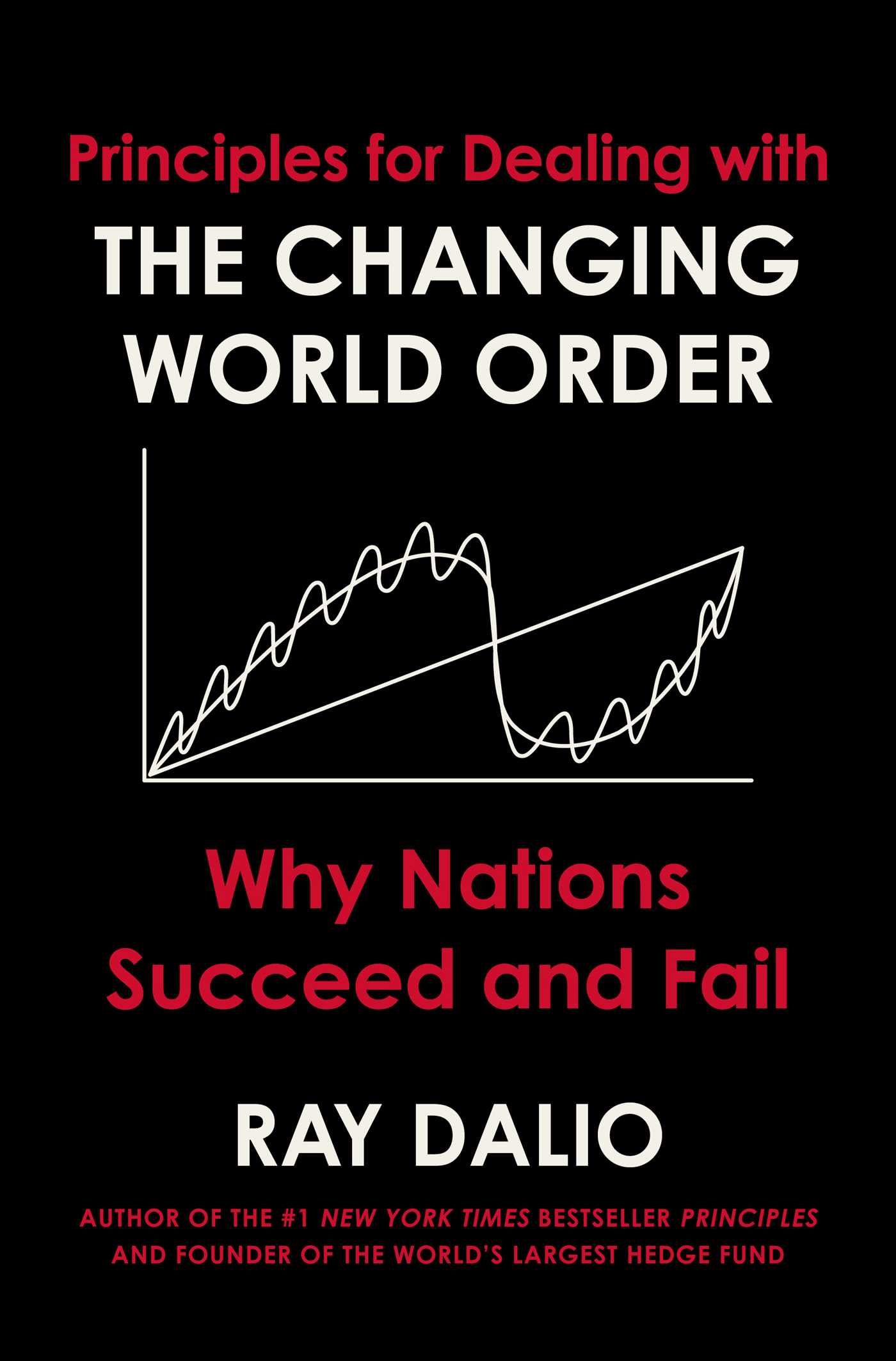
Principles for Dealing with the Changing World Order: Why Nations Succeed and Fail
by Ray Dalio
Rating: 4.3 ⭐
• 21 recommendations ❤️
From legendary investor Ray Dalio, author of the #1 New York Times bestseller Principles, who has spent half a century studying global economies and markets, Principles for Dealing with the Changing World Order examines history’s most turbulent economic and political periods to reveal why the times ahead will likely be radically different from those we’ve experienced in our lifetimes—and to offer practical advice on how to navigate them well.A few years ago, Ray Dalio noticed a confluence of political and economic conditions he hadn’t encountered before. They included huge debts and zero or near-zero interest rates that led to massive printing of money in the world’s three major reserve currencies; big political and social conflicts within countries, especially the US, due to the largest wealth, political, and values disparities in more than 100 years; and the rising of a world power (China) to challenge the existing world power (US) and the existing world order. The last time that this confluence occurred was between 1930 and 1945. This realization sent Dalio on a search for the repeating patterns and cause/effect relationships underlying all major changes in wealth and power over the last 500 years.In this remarkable and timely addition to his Principles series, Dalio brings readers along for his study of the major empires—including the Dutch, the British, and the American—putting into perspective the “Big Cycle” that has driven the successes and failures of all the world’s major countries throughout history. He reveals the timeless and universal forces behind these shifts and uses them to look into the future, offering practical principles for positioning oneself for what’s ahead.
Four Thousand Weeks: Time Management for Mortals
by Oliver Burkeman
Rating: 4.2 ⭐
• 7 recommendations ❤️
The average human lifespan is absurdly, insultingly brief. Assuming you live to be eighty, you have just over four thousand weeks. Nobody needs to be told there isn’t enough time. We’re obsessed with our lengthening to-do lists, overfilled inboxes, work-life balance, and ceaseless battle against distraction; we’re deluged with advice on becoming more productive and efficient and life hacks to optimize our days. But such techniques often end up making things worse. The sense of anxious hurry grows more intense, and still the most meaningful parts of life seem to lie just beyond the horizon. Still, we rarely make the connection between our daily struggles with time and the ultimate time management problem: the challenge of how best to use our four thousand weeks. Drawing on the insights of both ancient and contemporary philosophers, psychologists, and spiritual teachers, Oliver Burkeman delivers an entertaining, humorous, practical, and ultimately profound guide to time and time management. Rejecting the futile modern obsession with “getting everything done,” Four Thousand Weeks introduces readers to tools for constructing a meaningful life by embracing finitude, showing that many of the unhelpful ways we’ve come to think about time aren’t inescapable, unchanging truths, but choices we’ve made as individuals and as a society—and that we could do things differently.

The Gray Lady Winked: How the New York Times's Misreporting, Distortions and Fabrications Radically Alter History
by Ashley Rindsberg
Rating: 4.1 ⭐
• 6 recommendations ❤️
“The New York Times is by far the most influential newspaper in the world and thus receives far too little journalistic scrutiny due to its power to affect careers. Any book that casts a critical eye on the Paper of Record's history, as this book does, is performing a valuable service.” — Glenn Greenwald, Journalist & New York Time s Bestselling Author As flagship of the American news media, the New York Time s is the world’s most powerful news outlet. With thousands of reporters covering events from all corners of the globe, the Times has the power to influence wars, foment revolution, shape economies and change the very nature of our culture. It doesn’t just cover the news: it creates it. The Gray Lady Winked pulls back the curtain on this illustrious institution to reveal a quintessentially human organization where ideology, ego, power and politics compete with the more humble need to present the facts. In its 10 gripping chapters, The Gray Lady Winked offers readers an eye-opening, often shocking, look at the New York Times’s greatest journalistic failures, so devastating they changed the course of history. The result is an essential look at the tangled relationship between media, power and politics in a post-truth world told with novelistic flair to reveal a uniquely powerful institution’s tortured relationship with the truth. Most importantly of all, The Gray Lady Winked presents a cautionary tale that shows what happens when the guardians of the truth abandon that sacred value in favor of self-interest and ideology—and what this means for our future as much as for our past. “For 99 years—since a 1922 description of Hitler as someone ‘actuated by lofty, unselfish patriotism’—it has labored under the shadow of its dynastic owners' triad of problems: capitalist guilt, Jewish self-hatred, and an ambition for power, wealth, and status. — Daniel Pipes, President, Middle East Forum

Stolen Focus: Why You Can't Pay Attention— and How to Think Deeply Again
by Johann Hari
Rating: 4.2 ⭐
• 13 recommendations ❤️
Our ability to pay attention is collapsing. From the New York Times bestselling author of Chasing the Scream and Lost Connections comes a groundbreaking examination of why this is happening--and how to get our attention back. In the United States, teenagers can focus on one task for only sixty-five seconds at a time, and office workers average only three minutes. Like so many of us, Johann Hari was finding that constantly switching from device to device and tab to tab was a diminishing and depressing way to live. He tried all sorts of self-help solutions--even abandoning his phone for three months--but nothing seemed to work. So Hari went on an epic journey across the world to interview the leading experts on human attention--and he discovered that everything we think we know about this crisis is wrong.We think our inability to focus is a personal failure to exert enough willpower over our devices. The truth is even more disturbing: our focus has been stolen by powerful external forces that have left us uniquely vulnerable to corporations determined to raid our attention for profit. Hari found that there are twelve deep causes of this crisis, from the decline of mind-wandering to rising pollution, all of which have robbed some of our attention. In Stolen Focus, he introduces readers to Silicon Valley dissidents who learned to hack human attention, and veterinarians who diagnose dogs with ADHD. He explores a favela in Rio de Janeiro where everyone lost their attention in a particularly surreal way, and an office in New Zealand that discovered a remarkable technique to restore workers' productivity.Crucially, Hari learned how we can reclaim our focus--as individuals, and as a society--if we are determined to fight for it. Stolen Focus will transform the debate about attention and finally show us how to get it back.

The instant #1 New York Times bestseller!“It's the best memoir I've ever read.” —Oprah Winfrey“Will Smith isn't holding back in his bravely inspiring new memoir . . . An ultimately heartwarming read, Will provides a humane glimpse of the man behind the actor, producer and musician, as he bares all his insecurities and trauma.” —USA TodayWinner of the NAACP Image Award for Outstanding Literary AchievementOne of the most dynamic and globally recognized entertainment forces of our time opens up fully about his life, in a brave and inspiring book that traces his learning curve to a place where outer success, inner happiness, and human connection are aligned. Along the way, Will tells the story in full of one of the most amazing rides through the worlds of music and film that anyone has ever had.Will Smith’s transformation from a West Philadelphia kid to one of the biggest rap stars of his era, and then one of the biggest movie stars in Hollywood history, is an epic tale—but it’s only half the story. Will Smith thought, with good reason, that he had won at life: not only was his own success unparalleled, his whole family was at the pinnacle of the entertainment world. Only they didn't see it that way: they felt more like star performers in his circus, a seven-days-a-week job they hadn't signed up for. It turned out Will Smith's education wasn't nearly over. This memoir is the product of a profound journey of self-knowledge, a reckoning with all that your will can get you and all that it can leave behind. Written with the help of Mark Manson, author of the multi-million-copy bestseller The Subtle Art of Not Giving a F*ck, Will is the story of how one person mastered his own emotions, written in a way that can help everyone else do the same. Few of us will know the pressure of performing on the world's biggest stages for the highest of stakes, but we can all understand that the fuel that works for one stage of our journey might have to be changed if we want to make it all the way home. The combination of genuine wisdom of universal value and a life story that is preposterously entertaining, even astonishing, puts Will the book, like its author, in a category by itself.