
Mark Cuban Recommended Books
American investor and entrepreneur (born 1958)
29 Books Recommended

The True Believer: Thoughts on the Nature of Mass Movements
by Eric Hoffer
Rating: 4.2 ⭐
• 16 recommendations ❤️
A stevedore on the San Francisco docks in the 1940s, Eric Hoffer wrote philosophical treatises in his spare time while living in the railroad yards. The True Believer -- the first and most famous of his books -- was made into a bestseller when President Eisenhower cited it during one of the earliest television press conferences. Completely relevant and essential for understanding the world today, The True Believer is a visionary, highly provocative look into the mind of the fanatic and a penetrating study of how an individual becomes one.
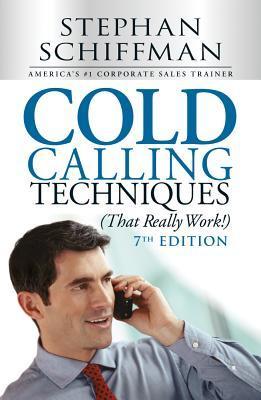
For more than thirty years, Stephan Schiffman, America's #1 corporate sales trainer, has shown millions of salespeople how to close a deal. In this newest edition of Cold Calling Techniques (That Really Work!) , he'll show you why cold calling is still a central element of the sales cycle and where to find the best leads. Updated with new information on e-mail selling, refining voice-mail messages, and online networking, his time-tested advice includes valuable discussion points that you'll need to cover in order to effectively present your product or service and arrange a meeting. Schiffman teaches you how to use his proven strategies With Cold Calling Techniques (That Really Work!), 7th Edition , you'll watch your performance soar as you beat the competition and score a meeting every time!

“ The Only Investment Guide You'll Ever Need . . . actually lives up to its name.” — Los Angeles Times“So full of tips and angles that only a booby or a billionaire could not benefit.” — New York TimesFor nearly forty years, The Only Investment Guide You'll Ever Need has been a favorite finance guide, earning the allegiance of more than a million readers across America. This completely updated edition will show you how to use your money to your best advantage in today's financial marketplace, no matter what your means.Using concise, witty, and truly understandable tips and explanations, Andrew Tobias delivers sensible advice and useful information on savings, investments, preparing for retirement, and much more.
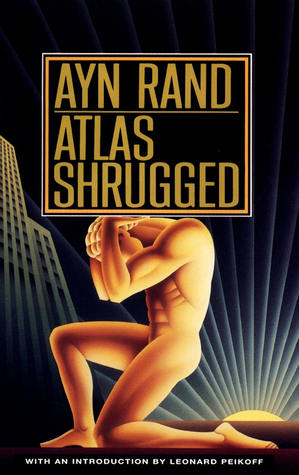
This is the story of a man who said that he would stop the motor of the world and did. Was he a destroyer or the greatest of liberators?Why did he have to fight his battle, not against his enemies, but against those who needed him most, and his hardest battle against the woman he loved? What is the world’s motor — and the motive power of every man? You will know the answer to these questions when you discover the reason behind the baffling events that play havoc with the lives of the characters in this story. Tremendous in its scope, this novel presents an astounding panorama of human life — from the productive genius who becomes a worthless playboy — to the great steel industrialist who does not know that he is working for his own destruction — to the philosopher who becomes a pirate — to the composer who gives up his career on the night of his triumph — to the woman who runs a transcontinental railroad — to the lowest track worker in her Terminal tunnels. You must be prepared, when you read this novel, to check every premise at the root of your convictions.This is a mystery story, not about the murder — and rebirth — of man’s spirit. It is a philosophical revolution, told in the form of an action thriller of violent events, a ruthlessly brilliant plot structure and an irresistible suspense. Do you say this is impossible? Well, that is the first of your premises to check.

Why Men Rebel was first published in 1970 after a decade of political violence across the world. Forty years later, serious conflicts continue in Africa, Asia and the Middle East. Ted Robert Gurr reintroduces us to his landmark work, putting it in context with the research it influenced as well as world events. Why Men Rebel remains highly relevant to today's violent and unstable world with its holistic, people-based understanding of the causes of political protest and rebellion. With its close eye on the politics of group identity, this book provides new insight into contemporary security challenges.

The Innovator's Dilemma: When New Technologies Cause Great Firms to Fail
by Clayton M. Christensen
Rating: 4.1 ⭐
• 39 recommendations ❤️
The bestselling classic on disruptive innovation, by renowned author Clayton M. Christensen. His work is cited by the world’s best-known thought leaders, from Steve Jobs to Malcolm Gladwell. In this classic bestseller—one of the most influential business books of all time—innovation expert Clayton Christensen shows how even the most outstanding companies can do everything right—yet still lose market leadership. Christensen explains why most companies miss out on new waves of innovation. No matter the industry, he says, a successful company with established products will get pushed aside unless managers know how and when to abandon traditional business practices. Offering both successes and failures from leading companies as a guide, The Innovator’s Dilemma gives you a set of rules for capitalizing on the phenomenon of disruptive innovation. Sharp, cogent, and provocative—and consistently noted as one of the most valuable business ideas of all time—The Innovator’s Dilemma is the book no manager, leader, or entrepreneur should be without.
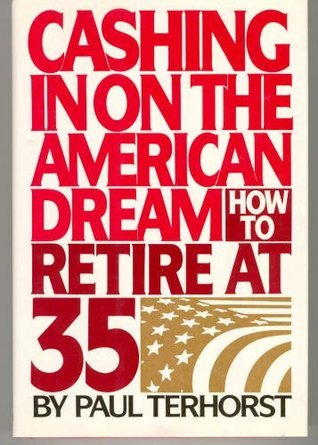
Cashing in on the American Dream: How to Retire at 35
by Paul Terhorst
Rating: 3.8 ⭐
• 2 recommendations ❤️
The author details how and why he retired, at age thirty-three, from a prestigious international accounting firm and presents, to those who do not want to spend the best years of their lives working, a blueprint for early retirement

"Early to bed, early to rise, work like hell and advertise!"These words of fatherly advice helped shape Ted Turner's remarkable life, but they only begin to explain the colorful, energetic, and unique style that has made Ted into one of the most amazing personalities of our time. Along the way - among his numerous accomplishments - Ted became one of the richest men in the world, the largest land owner in the United States, revolutionized the television business with the creation of TBS and CNN, became a champion sailor and winner of the America's Cup, and took home a World Series championship trophy in 1995 as owner of the Atlanta Braves.An innovative entrepreneur, outspoken nonconformist, and groundbreaking philanthropist, Ted Turner is truly a living legend, and now, for the first time, he reveals his personal story. From his difficult childhood to the successful launch of his media empire to the catastrophic AOL/Time Warner deal, Turner spares no details or feelings and takes the reader along on a wild and sometimes bumpy ride.You'll also hear Ted's personal take on how we can save the world...share his experiences in the dugout on the day when he appointed himself as manager of the Atlanta Braves....learn how he almost lost his life in the 1979 Fastnet sailing race (but came out the winner)...and discover surprising details about his dealings with Fidel Castro, Mikhail Gorbachev, Jimmy Carter, Bill Gates, Jack Welch, Warren Buffett, and many more of the most influential people of the past half century.Ted also doesn't shrink from the darker and more intimate details of his life. With his usual frankness, he discusses a childhood of loneliness (he was left at a boarding school by his parents at the tender age of four), and the emotional impact of devastating losses (Ted's beloved sister died at seventeen and his hard-charging father committed suicide when Ted was still in his early twenties). Turner is also forthcoming about his marriages, including the one to Oscar-winning actress, Jane Fonda.Along the way, Ted's friends, colleagues, and family are equally revealing in their unique "Ted Stories" which are peppered throughout the book. Jane Fonda, especially, provides intriguing insights into Ted's inner drive and character.In Call Me Ted , you'll hear Ted Turner's distinctive voice on every page. Always forthright, he tells you what makes him tick and what ticks him off, and delivers an honest account of what he's all about. Inspiring and entertaining, Call Me Ted sheds new light on one of the greatest visionaries of our time.

BRAND NEW, Exactly same ISBN as listed, Please double check ISBN carefully before ordering.

Most business books give you the same old advice: Write a business plan, study the competition, seek investors, yadda yadda. If you're looking for a book like that, put this one back on the shelf.Rework shows you a better, faster, easier way to succeed in business. Read it and you'll know why plans are actually harmful, why you don't need outside investors, and why you're better off ignoring the competition. The truth is, you need less than you think. You don't need to be a workaholic. You don't need to staff up. You don't need to waste time on paperwork or meetings. You don't even need an office. Those are all just excuses. What you really need to do is stop talking and start working. This book shows you the way. You'll learn how to be more productive, how to get exposure without breaking the bank, and tons more counterintuitive ideas that will inspire and provoke you.With its straightforward language and easy-is-better approach, Rework is the perfect playbook for anyone who’s ever dreamed of doing it on their own. Hardcore entrepreneurs, small-business owners, people stuck in day jobs they hate, victims of "downsizing," and artists who don’t want to starve anymore will all find valuable guidance in these pages.

Most startups fail. But many of those failures are preventable. The Lean Startup is a new approach being adopted across the globe, changing the way companies are built and new products are launched. Eric Ries defines a startup as an organization dedicated to creating something new under conditions of extreme uncertainty. This is just as true for one person in a garage or a group of seasoned professionals in a Fortune 500 boardroom. What they have in common is a mission to penetrate that fog of uncertainty to discover a successful path to a sustainable business.The Lean Startup approach fosters companies that are both more capital efficient and that leverage human creativity more effectively. Inspired by lessons from lean manufacturing, it relies on "validated learning," rapid scientific experimentation, as well as a number of counter-intuitive practices that shorten product development cycles, measure actual progress without resorting to vanity metrics, and learn what customers really want. It enables a company to shift directions with agility, altering plans inch by inch, minute by minute.Rather than wasting time creating elaborate business plans, The Lean Startup offers entrepreneurs - in companies of all sizes - a way to test their vision continuously, to adapt and adjust before it's too late. Ries provides a scientific approach to creating and managing successful startups in a age when companies need to innovate more than ever.

Andrew Carnegie was a dedicated massively successful business man and philanthropist. After accumulating a massive fortune of 480 million in 1901 for selling his Carnegie Steel Company, Carnegie decided to give away 90% of his fortune. Carnegie's massive philanthropic efforts emphasized libraries, world peace, education and scientific research. He build Carnegie Hall and founded Carnegie Corporation of New York, the Carnegie Endowment for International Peace, the Carnegie Institution for Science, the Carnegie Trust for the Universities of Scotland, the Carnegie Hero Fund and many more.

Vladimir Putin has his own idealized view of himself as CEO of "Russia, Inc." But rather than leading a transparent public corporation, he runs a closed boardroom, not answerable to its stakeholders. Now that his corporation seems to be in crisis, with political protests marking Mr. Putin's return to the presidency in 2012, will the CEO be held accountable for its failings? "For more than a dozen years--the equivalent of three American presidential terms-- Vladimir Putin has presided over the largest nation on the planet, the second most powerful nuclear arsenal, and massive natural resources. Yet there is still debate about who he really is. Fiona Hill and Clifford Gaddy have gone a long way in answering that question, starting with the title, which makes a crucial point: even though 'Mr. Putin' was, in his upbringing and early career, a prototype of the Soviet man, he's no longer 'Comrade Putin.' His aim is not the restoration of communism. He has made a deal with the capitalists who have thrived in Russia over the past two decades: they support him in the exercise of his political power, and he supports them in amassing their fortunes."--from the foreword by Strobe Talbott

The Sports Gene: Inside the Science of Extraordinary Athletic Performance
by David Epstein
Rating: 4.2 ⭐
• 9 recommendations ❤️
The New York Times bestseller – with a new afterword about early specialization in youth sports – from the author of Range: Why Generalists Triumph in a Specialized World .The debate is as old as physical competition. Are stars like Usain Bolt, Michael Phelps, and Serena Williams genetic freaks put on Earth to dominate their respective sports? Or are they simply normal people who overcame their biological limits through sheer force of will and obsessive training? In this controversial and engaging exploration of athletic success and the so-called 10,000-hour rule, David Epstein tackles the great nature vs. nurture debate and traces how far science has come in solving it. Through on-the-ground reporting from below the equator and above the Arctic Circle, revealing conversations with leading scientists and Olympic champions, and interviews with athletes who have rare genetic mutations or physical traits, Epstein forces us to rethink the very nature of athleticism.

Our Mathematical Universe: My Quest for the Ultimate Nature of Reality
by Max Tegmark
Rating: 4.3 ⭐
• 2 recommendations ❤️
Max Tegmark leads us on an astonishing journey through past, present and future, and through the physics, astronomy and mathematics that are the foundation of his work, most particularly his hypothesis that our physical reality is a mathematical structure and his theory of the ultimate multiverse. In a dazzling combination of both popular and groundbreaking science, he not only helps us grasp his often mind-boggling theories, but he also shares with us some of the often surprising triumphs and disappointments that have shaped his life as a scientist. Fascinating from first to last—this is a book that has already prompted the attention and admiration of some of the most prominent scientists and mathematicians.
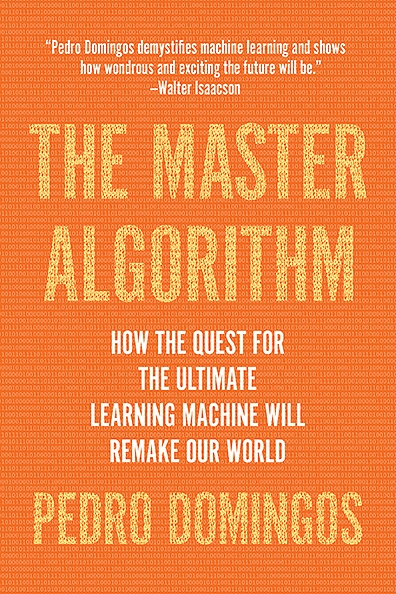
The Master Algorithm: How the Quest for the Ultimate Learning Machine Will Remake Our World
by Pedro Domingos
Rating: 3.8 ⭐
• 4 recommendations ❤️
Recommended by Bill GatesA thought-provoking and wide-ranging exploration of machine learning and the race to build computer intelligences as flexible as our own In the world's top research labs and universities, the race is on to invent the ultimate learning one capable of discovering any knowledge from data, and doing anything we want, before we even ask. In The Master Algorithm , Pedro Domingos lifts the veil to give us a peek inside the learning machines that power Google, Amazon, and your smartphone. He assembles a blueprint for the future universal learner--the Master Algorithm--and discusses what it will mean for business, science, and society. If data-ism is today's philosophy, this book is its bible.

The Power of Broke: How Empty Pockets, a Tight Budget, and a Hunger for Success Can Become Your Greatest Competitive Advantage
by Daymond John
Rating: 4.2 ⭐
• 6 recommendations ❤️
The instant New York Times bestseller from Shark Tank star and Fubu Founder Daymond John on why starting a business on a limited budget can be an entrepreneur's greatest competitive advantage.Daymond John has been practicing the power of broke ever since he started selling his home-sewn t-shirts on the streets of Queens. With a $40 budget, Daymond had to strategize out-of-the-box ways to promote his products. Luckily, desperation breeds innovation, and so he hatched an idea for a creative campaign that eventually launched the FUBU brand into a $6 billion dollar global phenomenon. But it might not have happened if he hadn’t started out broke - with nothing but hope and a ferocious drive to succeed by any means possible.Here, the FUBU founder and star of ABC’s Shark Tank shows that, far from being a liability, broke can actually be your greatest competitive advantage as an entrepreneur. Why? Because starting a business from broke forces you to think more creatively. It forces you to use your resources more efficiently. It forces you to connect with your customers more authentically, and market your ideas more imaginatively. It forces you to be true to yourself, stay laser focused on your goals, and come up with those innovative solutions required to make a meaningful mark. Drawing his own experiences as an entrepreneur and branding consultant, peeks behind-the scenes from the set of Shark Tank, and stories of dozens of other entrepreneurs who have hustled their way to wealth, John shows how we can all leverage the power of broke to phenomenal success. You’ll · Steve Aoki, the electronic dance music (EDM) deejay who managed to parlay a series of $100 gigs into becoming a global superstar who has redefined the music industry· Gigi Butler, a cleaning lady from Nashville who built cupcake empire on the back of a family recipe, her maxed out credit cards, and a heaping dose of faith· 11-year old Shark Tank guest Mo Bridges who stitched together a winning clothing line with just his grandma’s sewing machine, a stash of loose fabric, and his unique sartorial flairWhen your back is up against the wall, your bank account is empty, and creativity and passion are the only resources you can afford, success is your only option. Here you’ll learn how to tap into that Power of Broke to scrape, hustle, and dream your way to the top.

The Only Game in Town: Central Banks, Instability, and Avoiding the Next Collapse
by Mohamed El-Erian
Rating: 3.5 ⭐
• 4 recommendations ❤️
NEW YORK TIMES BESTSELLER • A roadmap to what lies ahead and the decisions we must make now to stave off the next global economic and financial crisis, from one of the world’s most influential economic thinkers and the author of When Markets Collide“The one economic book you must read now . . . If you want to understand [our] bifurcated world and where it’s headed, there is no better interpreter than Mohamed El-Erian.”— Time Our current economic path is coming to an end. The signposts are all around sluggish growth, rising inequality, stubbornly high pockets of unemployment, and jittery financial markets, to name a few. Soon we will reach a fork in the One path leads to renewed growth, prosperity, and financial stability, the other to recession and market disorder.In The Only Game in Town, El-Erian casts his gaze toward the future of the global economy and markets, outlining the choices we face both individually and collectively in an era of economic uncertainty and financial insecurity. Beginning with their response to the 2008 global crisis, El-Erian explains how and why our central banks became the critical policy actors—and, most important, why they cannot continue is this role alone. They saved the financial system from collapse in 2008 and a multiyear economic depression, but lack the tools to enable a return to high inclusive growth and durable financial stability. The time has come for a policy handoff, from a prolonged period of monetary policy experimentation to a strategy that better targets what ails economies and distorts the financial sector—before we stumble into another crisis.The future, critically, is not predestined. It is up to us to decide where we will go from here as households, investors, companies, and governments. Using a mix of insights from economics, finance, and behavioral science, this book gives us the tools we need to properly understand this turning point, prepare for it, and come out of it stronger. A comprehensive, controversial look at the realities of our global economy and markets, The Only Game in Town is required reading for investors, policymakers, and anyone interested in the future.

One of Mark Cuban’s top reads for better understanding A.I. (inc.com, 2021) Your comprehensive entry-level guide to machine learning While machine learning expertise doesn’t quite mean you can create your own Turing Test-proof android―as in the movie Ex Machina―it is a form of artificial intelligence and one of the most exciting technological means of identifying opportunities and solving problems fast and on a large scale. Anyone who masters the principles of machine learning is mastering a big part of our tech future and opening up incredible new directions in careers that include fraud detection, optimizing search results, serving real-time ads, credit-scoring, building accurate and sophisticated pricing models―and way, way more. Unlike most machine learning books, the fully updated 2nd Edition of Machine Learning For Dummies doesn't assume you have years of experience using programming languages such as Python (R source is also included in a downloadable form with comments and explanations), but lets you in on the ground floor, covering the entry-level materials that will get you up and running building models you need to perform practical tasks. It takes a look at the underlying―and fascinating―math principles that power machine learning but also shows that you don't need to be a math whiz to build fun new tools and apply them to your work and study. Whether you want to learn for college or to enhance your business or career performance, this friendly beginner's guide is your best introduction to machine learning, allowing you to become quickly confident using this amazing and fast-developing technology that's impacting lives for the better all over the world.

Self-Made Success: Ivy League Shark Tank Entrepreneur Reveals 48 Secret Strategies To Live Happier, Healthier, And Wealthier
by Shaan Patel
Rating: 4.0 ⭐
• 2 recommendations ❤️
Some people succeed financially. Others succeed academically. Still others succeed spiritually, mentally, and emotionally. But there are a select few who succeed across all fields—the Self-Made Successes. This book reveals the exact blueprint of how you can achieve success on every level. • Universal Success Strategies — From harnessing Parkinson’s Law to mastering the powerful Pareto Principle, learn to get what you want out of life. • Wealth Success Strategies — Dream of amassing wealth? It’s easy to capture it all if you remember to never trade your time for money and be the big fish in a small pond. • Entrepreneurship Success Strategies — Be your own boss. Launch your company by doing what you already know—and never go to a gunfight without bullets. • Social Success Strategies — Outsider no more. Grow your social skills by learning how to embrace your failures and never playing the comparison game. • Productivity Success Strategies — You can work smarter and harder with these six steps to greater productivity, like starting your day with a Morning Power Hour. • Mental Success Strategies — You are in charge of your own mind. Sweat out these mental bench presses, such as treating entitlement as the enemy, for a stronger mind. • Marketing Success Strategies — Get noticed. Learn the secrets to planting viral content and joining people to your cause to make a splash in the world. • Academic Success Strategies — Go to college—and survive! You’ll earn honors with these secrets to studying the easy way. So can you really have it all at a young age? Yes. Throw out the conventional wisdom that says you have to pay your dues or climb the corporate ladder. You can have it all and you can have it now. In Self-Made Success, I will show you how.

Hopping over the Rabbit Hole: How Entrepreneurs Turn Failure into Success
by Anthony Scaramucci
Rating: 3.3 ⭐
• 12 recommendations ❤️
Develop the Scaramucci mindset that drives entrepreneurial success Hopping over the Rabbit Hole chronicles the rise, fall, and resurgence of SkyBridge Capital founder Anthony Scaramucci, giving you a primer on how to thrive in an unpredictable business environment. The sheer number of American success stories has created a false impression that becoming an entrepreneur is a can't-miss endeavor--but nothing could be further from the truth. In the real world, an entrepreneur batting .150 goes directly to the Hall of Fame. Things happen. You make a bad hire, a bad strategic decision, or suffer the consequences of an unforeseen market crash. You can't control what happens to your business, but you can absolutely control how you react, and how you turn bumps in the road into ramps to the sky. Anthony Scaramucci has been there and done that, again and again, and has ultimately come out on top; in this book, he shares what he wishes he knew then.Your chances of becoming an overnight billionaire are approximately the same as your chances of being signed to the NBA. Success is hard work, and anxiety, and tiny hiccups that can turn into disaster with a single misstep. This book shows you how to use adversity to your ultimate advantage, and build the skills you need to respond effectively to the unexpected.Learn how to deal with unforeseen events Map a strategic backup plan, and then a backup-backup plan Train yourself to react in the most productive way Internalize the lessons learned by a leader in entrepreneurship For every 23-year-old billionaire who just created a new way to send a picture on a phone, there are countless others who have failed, and failed miserably. Hopping over the Rabbit Hole gives you the skills, insight, and mindset you need to be one of the winners.
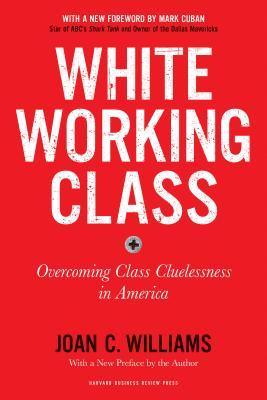
White Working Class, With a New Foreword by Mark Cuban and a New Preface by the Author: Overcoming Class Cluelessness in America
by Joan C. Williams
Rating: 3.5 ⭐
• 2 recommendations ❤️
"It is really worth a read…" -- Former Vice President Joe Biden, interviewed on Pod Save America Now in paperback with a new Foreword by Mark Cuban and a new Preface by the author, White Working Class explains why so much of the elite's analysis of the white working class is misguided, rooted in class cluelessness.Joan C. Williams, described as having "something approaching rock star status" by the New York Times, explains that many people have conflated "working class" with "poor"--but the working class is, in fact, the elusive, purportedly disappearing middle class. They often resent the poor and the professionals alike. But they don't resent the truly rich, nor are they particularly bothered by income inequality. Their dream is not to join the upper middle class, with its different culture, but to stay true to their own values in their own communities--just with more money. While white working-class motivations are often dismissed as racist or xenophobic, Williams shows that they have their own class consciousness.White Working Class is a blunt, bracing narrative that sketches a nuanced portrait of millions of people who have proven to be a potent political force. For anyone stunned by the rise of populist, nationalist movements, wondering why so many would seemingly vote against their own economic interests, or simply feeling like a stranger in their own country, White Working Class will be a convincing primer on how to connect with a crucial set of workers--and voters.

That's What She Said: What Men and Women Need To Know About Working Together
by Joanne Lipman
Rating: 4.1 ⭐
• 2 recommendations ❤️
NATIONAL BESTSELLER The world has changed in the wake of the #MeToo movement. What comes next? Going beyond the message of Lean In and The Confidence Code, Joanne Lippman, Gannett’s Chief Content Officer, offers solutions to help professionals solve gender gap issues and achieve parity at work in this inclusive and realistic handbook. Newly updated by the author to include a cheat sheet for taking positive action now, this timely, essential book also offers tools for having tough—but necessary—discussions. Companies with more women in senior leadership perform better by virtually every financial measure, and women employees help boost creativity and can temper risky behavior—such as the financial gambles behind the 2008 economic collapse. Yet in the United States, ninety-five percent of Fortune 500 chief executives are men, and women hold only seventeen percent of seats on corporate boards. More men are reaching across the gender divide, genuinely trying to reinvent the culture and transform the way we work together. Despite these good intentions, fumbles, missteps, frustration, and misunderstanding continue to inflict real and lasting damage on women’s careers.What can the Enron scandal teach us about the way men and women communicate professionally? How does brain circuitry help explain men’s fear of women’s emotions at work? Why did Kimberly Clark blindly have an all-male team of executives in charge of their Kotex tampon line? In That’s What She Said, veteran media executive Joanne Lipman raises these intriguing questions and more to find workable solutions that individual managers, organizations, and policy makers can employ to make work more equitable and rewarding for all professionals.Filled with illuminating anecdotes, data from the most recent relevant studies, and stories from Lipman’s own journey to the top of a male-dominated industry, That’s What She Said is a book about success that persuasively shows why empowering women as true equals is an essential goal for us all—and offers a roadmap for getting there.

Ray Dalio, one of the world’s most successful investors and entrepreneurs, shares the unconventional principles that he’s developed, refined, and used over the past forty years to create unique results in both life and business—and which any person or organization can adopt to help achieve their goals.In 1975, Ray Dalio founded an investment firm, Bridgewater Associates, out of his two-bedroom apartment in New York City. Forty years later, Bridgewater has made more money for its clients than any other hedge fund in history and grown into the fifth most important private company in the United States, according to Fortune magazine. Dalio himself has been named to Time magazine’s list of the 100 most influential people in the world. Along the way, Dalio discovered a set of unique principles that have led to Bridgewater’s exceptionally effective culture, which he describes as “an idea meritocracy that strives to achieve meaningful work and meaningful relationships through radical transparency.” It is these principles, and not anything special about Dalio—who grew up an ordinary kid in a middle-class Long Island neighborhood—that he believes are the reason behind his success.In Principles, Dalio shares what he’s learned over the course of his remarkable career. He argues that life, management, economics, and investing can all be systemized into rules and understood like machines. The book’s hundreds of practical lessons, which are built around his cornerstones of “radical truth” and “radical transparency,” include Dalio laying out the most effective ways for individuals and organizations to make decisions, approach challenges, and build strong teams. He also describes the innovative tools the firm uses to bring an idea meritocracy to life, such as creating “baseball cards” for all employees that distill their strengths and weaknesses, and employing computerized decision-making systems to make believability-weighted decisions. While the book brims with novel ideas for organizations and institutions, Principles also offers a clear, straightforward approach to decision-making that Dalio believes anyone can apply, no matter what they’re seeking to achieve.Here is a rare opportunity to gain proven advice unlike anything you’ll find in the conventional business press.

The Great Revolt: Inside the Populist Coalition Reshaping American Politics
by Salena Zito
Rating: 4.0 ⭐
• 2 recommendations ❤️
Standout syndicated columnist and CNN contributor Salena Zito, with veteran Republican strategist Brad Todd, reports across five swing states and over 27,000 miles to answer the pressing question: Was Donald Trump's election a fluke or did it represent a fundamental shift in the electorate that will have repercussions--for Republicans and Democrats--for years to come.The history of the American electorate is not a litany of flukes; instead it is a pattern of tectonic plate-grinding, punctuated by a landscape-altering earthquake every generation or so. Donald Trump's electoral coalition is smashing both American political parties and its previously impenetrable political news media.The political experts called the 2016 election wrong and in the wake of the 2016 election surprise, the experts have continued to blow it - looking to predict the coming demise of the President without pausing to consider the durability of the trends and winds that swept him into office.The Great Revolt delves deep into the minds and hearts of the voters the make up this coalition. What emerges is a group of citizens who cannot be described by terms like "angry," "male," "rural," or the often-used "racist." They span job descriptions, income brackets, education levels, and party allegiances. What unites them is their desire to be part of a movement larger than themselves that puts pragmatism before ideology, localism before globalism, and demands the respect it deserve from Washington.Zito and Todd have traveled on over 27,000 miles of country roads to interview more than 300 Trump voters in 10 swing counties. What they have discovered is that these voters were hiding in plain sight--ignored by both parties, the media, and the political experts all at once, ready to unite into the movement that spawned the greatest upset in recent electoral history. Deeply rooted in the culture of these Midwestern swing states, Zito and Brad Todd reframe the discussion of the "Trump voter" to answer the question: What next?

Rebooting AI: Building Artificial Intelligence We Can Trust
by Gary F. Marcus
Rating: 3.7 ⭐
• 2 recommendations ❤️
Two leaders in the field offer a compelling analysis of the current state of the art and reveal the steps we must take to achieve a truly robust AI. Despite the hype surrounding AI, creating an intelligence that rivals or exceeds human levels is far more complicated than we are led to believe. Professors Gary Marcus and Ernest Davis have spent their careers at the forefront of AI research and have witnessed some of the greatest milestones in the field, but they argue that a computer winning in games like Jeopardy and go does not signal that we are on the doorstep of fully autonomous cars or superintelligent machines. The achievements in the field thus far have occurred in closed systems with fixed sets of rules. These approaches are too narrow to achieve genuine intelligence. The world we live in is wildly complex and open-ended. How can we bridge this gap? What will the consequences be when we do? Marcus and Davis show us what we need to first accomplish before we get there and argue that if we are wise along the way, we won't need to worry about a future of machine overlords. If we heed their advice, humanity can create an AI that we can trust in our homes, our cars, and our doctor's offices. Reboot provides a lucid, clear-eyed assessment of the current science and offers an inspiring vision of what we can achieve and how AI can make our lives better.

Healthy Buildings: How Indoor Spaces Drive Performance and Productivity
by Joseph G. Allen
Rating: 3.9 ⭐
• 2 recommendations ❤️
"This book should be essential reading for all who commission, design, manage, and use buildings--indeed anyone who is interested in a healthy environment."--Norman FosterAs businesses around the world consider when and how to reopen their doors to fight COVID-19, the Director of Harvard's Healthy Buildings Program and Harvard Business School's leading expert on urban resilience reveal what you can do to harness the power of your offices and homes to protect your health--and boost every aspect of your performance and well-being.Ever feel tired during a meeting? That's because most conference rooms are not bringing in enough fresh air. When that door opens, it literally breathes life back into the room. But there is a lot more acting on your body that you can't feel or see. From our offices and homes to schools, hospitals, and restaurants, the indoor spaces where we work, learn, play, eat, and heal have an outsized impact on our performance and well-being. They affect our creativity, focus, and problem-solving ability and can make us sick--jeopardizing our future and dragging down profits in the process.Charismatic pioneers of the healthy building movement who have paired up to combine the cutting-edge science of Harvard's School of Public Health with the financial know-how of the Harvard Business School, Joseph Allen and John Macomber make a compelling case in this urgently needed book for why every business and home owner should make certain relatively low-cost investments a top priority. Grounded in exposure and risk science and relevant to anyone newly concerned about how their surroundings impact their health, Healthy Buildings can help you evaluate the impact of small, easily controllable environmental fluctuations on your immediate well-being and long-term reproductive and lung health. It shows how our indoor environment can have a dramatic impact on a whole host of higher order cognitive functions--including things like concentration, strategic thinking, troubleshooting, and decision-making. Study after study has found that your performance will dramatically improve if you are working in optimal conditions (with high rates of ventilation, few damaging persistent chemicals, and optimal humidity, lighting and noise control). So what would it take to turn that knowledge into action?Cutting through the jargon to explain complex processes in simple and compelling language, Allen and Macomber show how buildings can both expose you to and protect you from disease. They reveal the 9 Foundations of a Healthy Building, share insider tips, and show how tracking what they call "health performance indicators" with smart technology can boost a company's performance and create economic value. With decades of practice in protecting worker health, they offer a clear way forward right now, and show us what comes next in a post-COVID world. While the "green" building movement introduced important new efficiencies, it's time to look beyond the four walls--placing the decisions we make around buildings into the larger conversation around development and health, and prioritizing the most important and vulnerable asset of any building: its people.

The Politics Industry: How Political Innovation Can Break Partisan Gridlock and Save Our Democracy
by Katherine M. Gehl
Rating: 4.3 ⭐
• 6 recommendations ❤️
Leading political innovation activist Katherine Gehl and world-renowned business strategist Michael Porter bring fresh perspective, deep scholarship, and a real and actionable solution, Final Five Voting, to the grand challenge of our broken political and democratic system. Final Five Voting has already been adopted in Alaska and is being advanced in states across the country. The truth is, the American political system is working exactly how it is designed to work, and it isn't designed or optimized today to work for us—for ordinary citizens. Most people believe that our political system is a public institution with high-minded principles and impartial rules derived from the Constitution. In reality, it has become a private industry dominated by a textbook duopoly—the Democrats and the Republicans—and plagued and perverted by unhealthy competition between the players. Tragically, it has therefore become incapable of delivering solutions to America's key economic and social challenges. In fact, there's virtually no connection between our political leaders solving problems and getting reelected. In The Politics Industry , business leader and path-breaking political innovator Katherine Gehl and world-renowned business strategist Michael Porter take a radical new approach. They ingeniously apply the tools of business analysis—and Porter's distinctive Five Forces framework—to show how the political system functions just as every other competitive industry does, and how the duopoly has led to the devastating outcomes we see today. Using this competition lens, Gehl and Porter identify the most powerful lever for change—a strategy comprised of a clear set of choices in two key how our elections work and how we make our laws. Their bracing assessment and practical recommendations cut through the endless debate about various proposed fixes, such as term limits and campaign finance reform. The true political innovation. The Politics Industry is an original and completely nonpartisan guide that will open your eyes to the true dynamics and profound challenges of the American political system and provide real solutions for reshaping the system for the benefit of all. THE INSTITUTE FOR POLITICAL INNOVATIONThe authors will donate all royalties from the sale of this book to the Institute for Political Innovation.
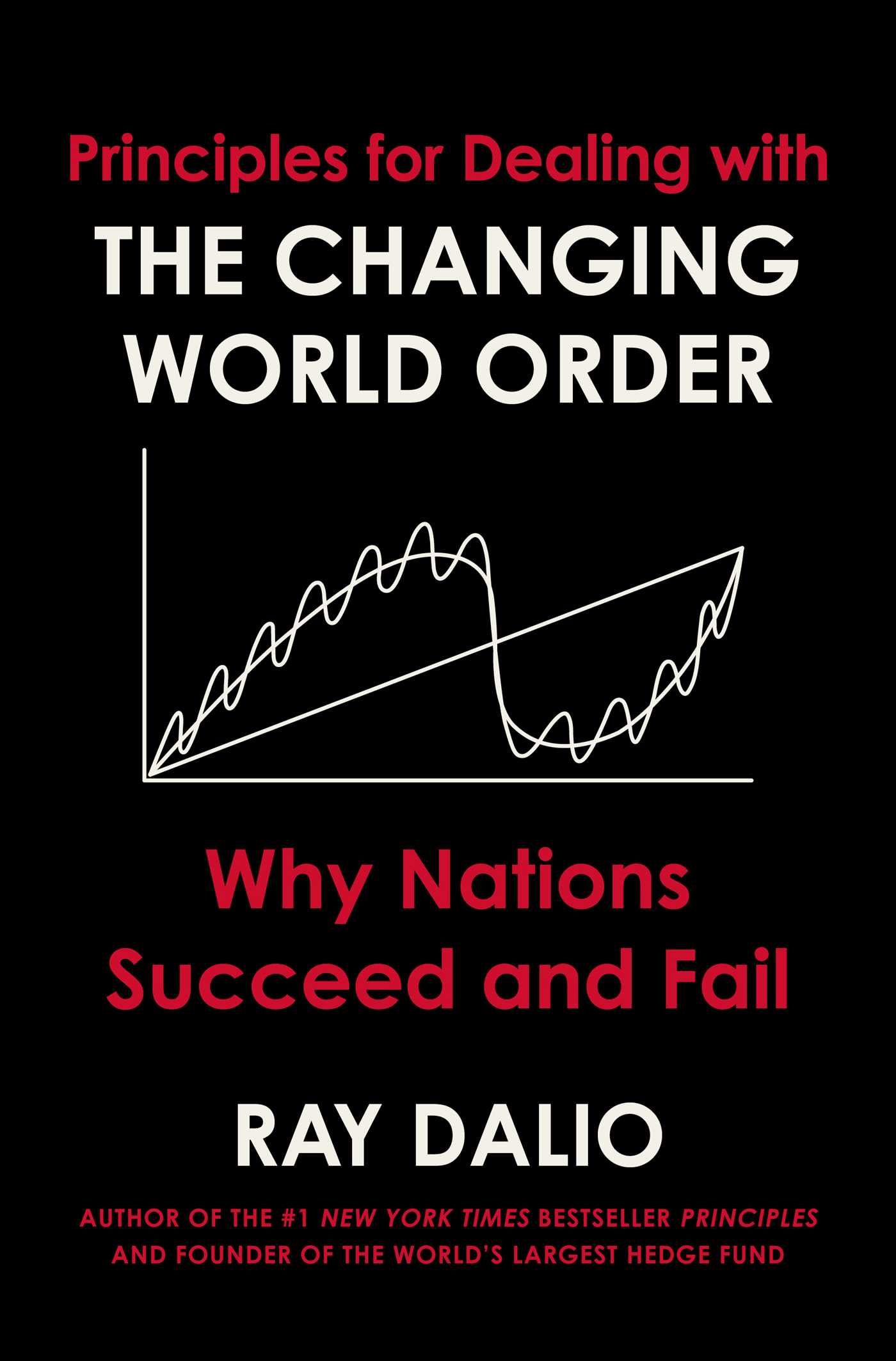
Principles for Dealing with the Changing World Order: Why Nations Succeed and Fail
by Ray Dalio
Rating: 4.3 ⭐
• 21 recommendations ❤️
From legendary investor Ray Dalio, author of the #1 New York Times bestseller Principles, who has spent half a century studying global economies and markets, Principles for Dealing with the Changing World Order examines history’s most turbulent economic and political periods to reveal why the times ahead will likely be radically different from those we’ve experienced in our lifetimes—and to offer practical advice on how to navigate them well.A few years ago, Ray Dalio noticed a confluence of political and economic conditions he hadn’t encountered before. They included huge debts and zero or near-zero interest rates that led to massive printing of money in the world’s three major reserve currencies; big political and social conflicts within countries, especially the US, due to the largest wealth, political, and values disparities in more than 100 years; and the rising of a world power (China) to challenge the existing world power (US) and the existing world order. The last time that this confluence occurred was between 1930 and 1945. This realization sent Dalio on a search for the repeating patterns and cause/effect relationships underlying all major changes in wealth and power over the last 500 years.In this remarkable and timely addition to his Principles series, Dalio brings readers along for his study of the major empires—including the Dutch, the British, and the American—putting into perspective the “Big Cycle” that has driven the successes and failures of all the world’s major countries throughout history. He reveals the timeless and universal forces behind these shifts and uses them to look into the future, offering practical principles for positioning oneself for what’s ahead.