
20 Books Recommended

Hannah Arendt began her scholarly career with an exploration of Saint Augustine's concept of caritas , or neighborly love, written under the direction of Karl Jaspers and the influence of Martin Heidegger. After her German academic life came to a halt in 1933, Arendt carried her dissertation into exile in France, and years later took the same battered and stained copy to New York. During the late 1950s and early 1960s, as she was completing or reworking her most influential studies of political life, Arendt was simultaneously annotating and revising her dissertation on Augustine, amplifying its argument with terms and concepts she was using in her political works of the same period. The disseration became a bridge over which Arendt traveled back and forth between 1929 Heidelberg and 1960s New York, carrying with her Augustine's question about the possibility of social life in an age of rapid political and moral change.In Love and Saint Augustine , Joanna Vecchiarelli Scott and Judith Chelius Stark make this important early work accessible for the first time. Here is a completely corrected and revised English translation that incorporates Arendt's own substantial revisions and provides additional notes based on letters, contracts, and other documents as well as the recollections of Arendt's friends and colleagues during her later years.

Gathering Moss: A Natural and Cultural History of Mosses
by Robin Wall Kimmerer
Rating: 4.4 ⭐
• 2 recommendations ❤️
Living at the limits of our ordinary perception, mosses are a common but largely unnoticed element of the natural world. Gathering Moss is a beautifully written mix of science and personal reflection that invites readers to explore and learn from the elegantly simple lives of mosses. Robin Wall Kimmerer's book is not an identification guide, nor is it a scientific treatise. Rather, it is a series of linked personal essays that will lead general readers and scientists alike to an understanding of how mosses live and how their lives are intertwined with the lives of countless other beings, from salmon and hummingbirds to redwoods and rednecks. Kimmerer clearly and artfully explains the biology of mosses, while at the same time reflecting on what these fascinating organisms have to teach us.Drawing on her diverse experiences as a scientist, mother, teacher, and writer of Native American heritage, Kimmerer explains the stories of mosses in scientific terms as well as in the framework of indigenous ways of knowing. In her book, the natural history and cultural relationships of mosses become a powerful metaphor for ways of living in the world.Gathering Moss will appeal to a wide range of readers, from bryologists to those interested in natural history and the environment, Native Americans, and contemporary nature and science writing.
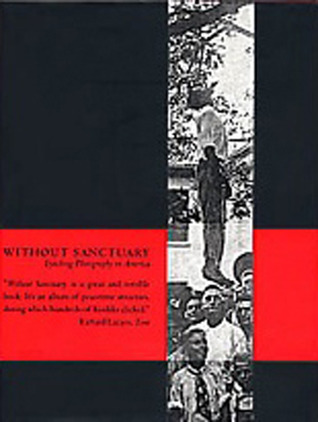
The Tuskegee Institute records the lynching of 3,436 blacks between 1882 and 1950. This is probably a small percentage of these murders, which were seldom reported, and led to the creation of the NAACP in 1909, an organization dedicated to passing federal anti-lynching laws. Through all this terror and carnage someone -- many times a professional photographer -- carried a camera and took pictures of the events. These lynching photographs were often made into postcards and sold as souvenirs to the crowds in attendance. These images are some of photography's most brutal, surviving to this day so that we may now look back on the terrorism unleashed on America's African-American community and perhaps know our history and ourselves better. The almost one hundred images reproduced here are a testament to the camera's ability to make us remember what we often choose to forget.

• Why are lovers quicker to forgive their partners for infidelity than for leaving dirty dishes in the sink? • Why will sighted people pay more to avoid going blind than blind people will pay to regain their sight? • Why do dining companions insist on ordering different meals instead of getting what they really want? • Why do pigeons seem to have such excellent aim; why can’t we remember one song while listening to another; and why does the line at the grocery store always slow down the moment we join it? In this brilliant, witty, and accessible book, renowned Harvard psychologist Daniel Gilbert describes the foibles of imagination and illusions of foresight that cause each of us to mis-conceive our tomorrows and mis-estimate our satisfactions. Vividly bringing to life the latest scientific research in psychology, cognitive neuroscience, philosophy, and behavioral economics, Gilbert reveals what scientists have discovered about the uniquely human ability to imagine the future, and about our capacity to predict how much we will like it when we get there. With penetrating insight and sparkling prose, Gilbert explains why we seem to know so little about the hearts and minds of the people we are about to become.

When Desert Solitaire was first published in 1968, it became the focus of a nationwide cult. Rude and sensitive. Thought-provoking and mystical. Angry and loving. Both Abbey and this book are all of these and more. Here, the legendary author of The Monkey Wrench Gang, Abbey's Road and many other critically acclaimed books vividly captures the essence of his life during three seasons as a park ranger in southeastern Utah. This is a rare view of a quest to experience nature in its purest form--the silence, the struggle, the overwhelming beauty. But this is also the gripping, anguished cry of a man of character who challenges the growing exploitation of the wilderness by oil and mining interests, as well as by the tourist industry.Abbey's observations and challenges remain as relevant now as the day he wrote them. Today, Desert Solitaire asks if any of our incalculable natural treasures can be saved before the bulldozers strike again.

In this remarkable work of fiction, astrophysicist Janna Levin reimagines the lives of two of the most important and influential minds of our time.The narrator is a scientist herself, a physicist obsessed with Kurt Gödel, the greatest logician of many centuries, and with Alan Turing, the extraordinary mathematician, breaker of the Enigma Code during World War II. “They are both brilliantly original and outsiders,” the narrator tells us. “They are both besotted with mathematics. But for all their devotion, mathematics is indifferent, unaltered by any of their dramas . . . Against indifference, I want to tell their stories.” Which she does in a haunting, incantatory voice, the two lives unfolding in parallel narratives that overlap in the magnitude of each man’s achievement and demise: Gödel, delusional and paranoid, would starve himself to death; Turing, arrested for homosexual activities, would be driven to suicide. And they meet as well in the narrator’s mind, where facts are interwoven with her desire and determination to find meaning in the maze of their stories: two men devoted to truth of the highest abstract nature, yet unable to grasp the mundane truths of their own lives.A unique amalgam of luminous imagination and richly evoked historic character and event—A Madman Dreams of Turing Machines is a story about the pursuit of truth and its effect on the lives of two men. A story of genius and madness, incredible yet true.

In 1970 James Baldwin & Margaret Mead met for an extraordinary seven-&-a-half-hour discussion about race & society. Mead brought her knowledge of racism as practiced in remote societies around the world. Baldwin brought his personal experience with the legacy of black American history. They talked with candor, passion, rage & brilliance, & their discussion became this unique volume. Here is Baldwin's creativity & fire. Here is Mead's scholarship & reason. Here, for all to see, are their prejudices, their pain, & finally, their shared desire to find the thread that binds us all. "This book...traces a curve beginning in formal statements, moving thru wary affection & intellectual intimacy, ending with a raw confrontation."--�Newsweek. "Margaret Mead and James Baldwin are no ordinary people...their conversation...takes us along to places to which we could not otherwise go."--�Times Literary Supplement (London)
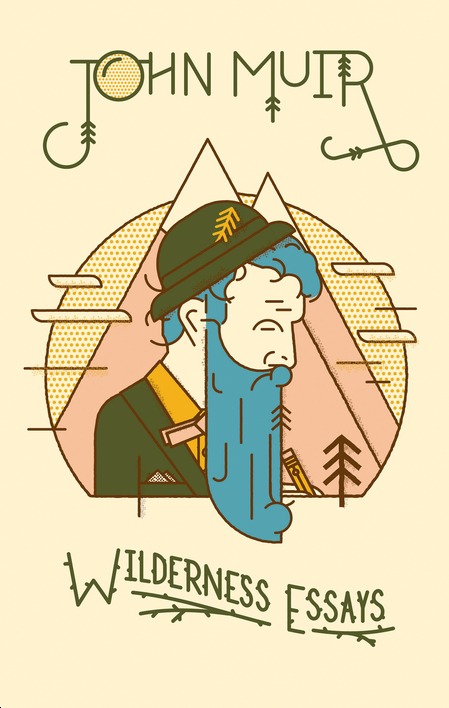
John Muir was one of our first and finest writers on the wilderness of the American West. Part of Muir's attractiveness to modern readers is the fact that he was an activist. He not only explored the West and wrote about its beauties-- he fought for their preservation. His successes dot the landscape in all the natural features that bear his name: forests, lakes, trails, glaciers. Here collected are some of his finest wilderness essays, ranging from Alaska to Yellowstone, from Oregon to the Range of Light-- the High Sierra. This series celebrates the tradition of literary naturalists-- writers who embrace the natural world as the setting for some of our most euphoric and serious experiences. Their literary terrain maps the intimate connections between the human and natural worlds, a subject defined by Mary Austin in 1920 as "a third thing... the sum of what passed between me and the Land." Literary naturalists transcend political boundaries, social concerns, and historical milieus; they speak for what Henry Beston called the "other nations" of the planet. Their message acquires more weight and urgency as wild places become increasingly scarce. This series, then, celebrates both a wonderful body of work and a fundamental truth: that nature counts as a model, a guide to how we can live in the world.

On science, necessity, and the love of God;: Essays
by Simone; Rees Weil
Rating: 4.0 ⭐
• 2 recommendations ❤️
Hardcover with dust jacket. DJ is chipped, rubbed, and worn. Penciling throughout. Foxing on head edge. Photos available upon request.

Byrds bio

Während seines Exils in den Vereinigten Staaten schreibt Antoine de Saint-Exupéry 1941 seinem langjährigen Freund Léon Werth, der sich als Jude im besetzten Frankreich vor den Nazis verstecken muss, einen fiktiven Brief. Darin erzählt er von seiner Reise als Flüchtling, seinen Erlebnissen in der Wüste und verbindet dies mit tiefgreifenden Gedanken über Freundschaft und das »Wesentliche« im Leben.

"So it we are not given a short life but we are wasteful of it... Life is long if you know how to use it." "But life is very short and anxious for those who forget the past, neglect the present, and fear the future." "We must indulge the mind and from time to time allow it the leisure which is its food and strength." "Often a very old man has no other proof of his long life than his age." On the Shortness of Life is Seneca's best-known work. It offers piercing and profound insights into human nature, and a vision of the good life, summarised in his aphorism, "Life is long, if you know how to use it." Seneca elucidates many of the principles of modern productivity manuals, including the wise valuing of " People are frugal in guarding their personal property; but as soon as it comes to squandering time they are most wasteful of the one thing in which it is right to be stingy," living in the "The greatest obstacle to living is expectancy, which hangs upon tomorrow and loses today," "There is nothing the busy man is less busied with than living," and rest and "We must go for walks out of doors, so that the mind can be strengthened and invigorated by a clear sky and plenty of fresh air. At times it will acquire fresh energy from a journey by carriage and a change of scene, or from socializing and drinking freely." Lucius Annaeus Seneca (4 BC - AD 65), also known as Seneca the Younger, was a Roman philosopher, statesman and dramatist. He was the leading intellectual in the mid-first century and was a trusted advisor to the Emperor Nero. Seneca's books are among the most important primary texts of Stoic philosophy. His literary style and ideas were renowned and influential in his time, and ever since. The reformer Calvin published a commentary on one of Seneca's works, while the Catholic philosopher, Erasmus, edited a volume of Seneca. In today's uncertain world, there is a resurgence of interest in Stoic philosophy and Seneca's body of work. The Shortness of Life , a brief, accessible and carefully argued guide to a wise and full life is an essential classic. Stoic philosophy is, above all, practical. It uses reason and the careful observation of human life to address the problems of daily life. It is also universal-the emperor Marcus Aurelius and the freed slave Epictetus were both prominent Stoic philosophers. In recent years, Stoic philosophy has provided invaluable life lessons to people in all spheres of life including prisoners of war and Holocaust survivors, psychiatrists, and those in the business world. Indeed, modern Stoic thought "hold[s] fascinating promise for business and government leaders tackling global problems in a turbulent, post-recession slump," ( Forbes) .

The Republic by Plato is a landmark achievement in Ancient Greek philosophy - this edition combines an authoritative translation with affordability.The Republic is the most famous text written by Plato, which takes the form of a philosophical dialogue. The text is part conversation between a group of friends active in the Athens intellectual community, and part monologue from various participants in the discussion. The narrator and lead character is Socrates, Plato's friend and mentor, who appears in most of his pupil's dialogues and acts as surrogate to Plato's ideas. Throughout the text the 'Socratic method', whereby Socrates feigns ignorance and questions an adversary to receive insight on a given subject, is demonstrated.Ten books in total comprise The Republic , the divisions thought to have been made due to the length of a roll of papyrus in Ancient Greece. The discussion begins with an attempt to find a definition for justice, wherein a disagreement between Thrasymachus - who believes justice is what is good for who is strongest at a given place and time - and Socrates, who believes that all members of society should, for the highest benefit of all, conform to just action.In Book II, the discussion expands to include justice in the sense of a social contract. Whether or not justice happens only due to fear of reprisal, and whether justice is truly a high virtue of itself, are among the questions considered. Eventually the discussion expands further into the idea of a just city ideas of how such a society, embodying justice and order, might work commences with Socrates proposing an educated 'guardian' class of able-bodied men and women who would uphold order and defend such a city against threats from outside.After expanding their ideas on the guardians, the dialogue proceeds onto other classes. It is here that Plato's famous idea of the philosopher king arises - the notion of a ruler who is appointed for holding the highest understanding of good and just rule, imparted to him at an early age by capable educators.Plato as Socrates eventually proposes that the essence of justice is fulfilling one's role in society. The correct assignment of an occupation to each citizen, to which they can happily commit, will result in a just and capable society. Further stipulations upon this ideal society are given; that education be strictly regulated and human reproduction made a matter for the state, with no offspring knowing their parents.The Republic then covers four forms of injustice manifested in systems of government - timocracy, oligarchy, democracy, and finally tyranny. How these unjust societies occur is talked about at length, with examples from Ancient society cited as Socrates/Plato develops theories on how societies go astray. The most unjust ruler - the tyrant - is discussed at length, and determined to be among the most unhappy, unfree and unfulfilled types of man owing to his thrall to passions, and friendless owing to his commitment to hierarchy. Such malfeasant politics are excoriated; in the end, Socrates says, all are harmed and none benefit from tyranny.Between books VII and VIII Socrates establishes the famous Allegory of the Cave as a way of demonstrating education's effects upon the human mind. By using the image of people who have only lived in a dark caves their whole lives, he illustrates how mere shadows against the walls are the closest such individuals come to seeing reality. Philosophy, Socrates argues, is the way by which humans are freed from this cave of ignorance and propelled to an enlightenment.Socrates concludes the discussion of city politics and rulers, and commences to focus upon the nature of art and its place in the just and ideal city. He also discusses reincarnation, the indestructible nature of the human soul, concluding the epic text on a spiritual note.

Uncle Tom's Cabin is an anti-slavery novel by American author Harriet Beecher Stowe. Published in 1852, the novel had a profound effect on attitudes toward African Americans and slavery in the United States, so much in the latter case that the novel intensified the sectional conflict leading to the American Civil War. Stowe, a Connecticut-born preacher at the Hartford Female Academy and an active abolitionist, focused the novel on the character of Uncle Tom, a long-suffering black slave around whom the stories of other characters-both fellow slaves and slave owners-revolve. The sentimental novel depicts the reality of slavery while also asserting that Christian love can overcome something as destructive as enslavement of fellow human beings. Uncle Tom's Cabin was the best-selling novel of the 19th century, and the second best-selling book of that century, following the Bible. It is credited with helping fuel the abolitionist cause in the 1850s. In the first year after it was published, 300,000 copies of the book were sold in the United States alone. The book's impact was so great that when Abraham Lincoln met Stowe at the start of the Civil War, Lincoln is often quoted as having declared, "So this is the little lady who made this big war." The book, and even more the plays it inspired, also helped create a number of stereotypes about black people, many of which endure to this day. These include the affectionate, dark-skinned "mammy"; the "pickaninny" stereotype of black children; and the Uncle Tom, or dutiful, long-suffering servant faithful to his white master or mistress. In recent years, the negative associations with Uncle Tom's Cabinhave, to an extent, overshadowed the historical impact of the book as a "vital antislavery tool."

Man's Search for Meaning has riveted generations of readers with its descriptions of life in Nazi death camps and its lessons for spiritual survival. Between 1942 and 1945 psychiatrist Viktor Frankl labored in four different camps, including Auschwitz, while his parents, brother, and pregnant wife perished. Based on his own experience and the stories of his many patients, Frankl argues that we cannot avoid suffering but we can choose how to cope with it, find meaning in it, and move forward with renewed purpose. Frankl's theory—known as logotherapy, from the Greek word logos ("meaning")—holds that our primary drive in life is not pleasure, as Freud maintained, but the discovery and pursuit of what we personally find meaningful. In the decades since its first publication in 1959, Man's Search for Meaning has become a classic, with more than twelve million copies in print around the world. A 1991 Library of Congress survey that asked readers to name a "book that made a difference in your life" found Man's Search for Meaning among the ten most influential books in America. At once a memoir, a meditation, a treatise, and a history, it continues to inspire us all to find significance in the very act of living.(back cover)

Henry David Thoreau’s Journal was his life’s the daily practice of writing that accompanied his daily walks, the workshop where he developed his books and essays, and a project in its own right—one of the most intensive explorations ever made of the everyday environment, the revolving seasons, and the changing self. It is a treasure trove of some of the finest prose in English and, for those acquainted with it, its prismatic pages exercise a hypnotic fascination. Yet at roughly seven thousand pages, or two million words, it remains Thoreau’s least-known work.This reader’s edition, the largest one-volume edition of Thoreau’s Journal ever published, is the first to capture the scope, rhythms, and variety of the work as a whole. Ranging freely over the world at large, the Journal is no less devoted to the life within. As Thoreau says, “It is in vain to write on the seasons unless you have the seasons in you.”

Still Writing: The Perils and Pleasures of a Creative Life
by Dani Shapiro
Rating: 4.3 ⭐
• 2 recommendations ❤️
“Still Writing offers up a cornucopia of wisdom, insights, and practical lessons gleaned from Dani Shapiro's long experience as a celebrated writer and teacher of writing. The beneficiaries are beginning writers, veteran writers and everyone in between.”—Jennifer EganFrom Dani Shapiro, bestselling author of Devotion and Slow Motion, comes a witty, heartfelt, and practical look at the exhilarating and challenging process of storytelling. At once a memoir, a meditation on the artistic process, and advice on craft, Still Writing is an intimate companion to living a creative life. Writers—and anyone with an artistic temperament—will find inspiration and comfort in these pages. Offering lessons learned over twenty years of teaching and writing, Shapiro shares her own revealing insights to weave an indispensable almanac for modern writers.

INTERNATIONAL BESTSELLER • A “wonderful memoir” ( Los Angeles Times ) about a brilliantly unconventional physician and writer, a man who has illuminated the many ways that the brain makes us human. • “Intimate.... Brim[s] with life and affection.” — The New York TimesWhen Oliver Sacks was twelve years old, a perceptive schoolmaster “Sacks will go far, if he does not go too far.” It is now abundantly clear that Sacks has never stopped going. With unbridled honesty and humor, Sacks writes about the passions that have driven his life—from motorcycles and weight lifting to neurology and poetry. He writes about his love affairs, both romantic and intellectual; his guilt over leaving his family to come to America; his bond with his schizophrenic brother; and the writers and scientists—W. H. Auden, Gerald M. Edelman, Francis Crick—who have influenced his work.

Ultralearning: The Essential Guide To Mastering Hard Skills And Future-Proofing Your Career
by Scott H. Young
Rating: 3.9 ⭐
• 1 recommendation ❤️
Multi-talented author, programmer and entrepreneur Scott Young has learnt four new languages and taught himself the entire four-year MIT curriculum for computer science all within a year. How? By using these seven life-changing ultralearning techniques designed for people, like him, who want to stand apart.Learning has never been easy, perhaps, because it has never been made easy. Scott Young has observed the passive learning subculture, redesigning it for those who want to accomplish more with his seven principles behind every successful ultralearning project. Whether the goal is to be fluent in a language (or ten languages), earn the equivalent of a college degree in a fraction of the time, or learn multiple skills to build a product or business from the ground up, the principles in Ultralearning will guide you to success.Scott’s achievements make one thing clear; it is not what you learn, but how you learn that promises success. And, the best way to learn is not just to learn, but to ultralearn.Both inspiring and practical, this personalised account is a vital read for any driven learner.
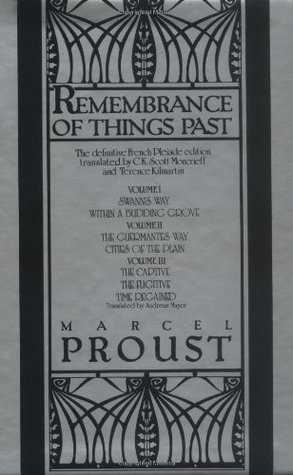
The gift-boxed set of the three paperbacks.