
Marc Benioff Recommended Books
American internet entrepreneur and philanthropist
25 Books Recommended

The Good Heart: A Buddhist Perspective on the Teachings of Jesus
by Dalai Lama XIV
Rating: 4.0 ⭐
• 2 recommendations ❤️
This landmark of interfaith dialogue will inspire readers of all faiths. In The Good Heart, The Dalai Lama provides an extraordinary Buddhist perspective on the teachings of Jesus. His Holiness comments on well-known passages from the four Christian Gospels, including the Sermon on the Mount, the parable of the mustard seed, the Resurrection, and others. Drawing parallels between Jesus and the Buddha — and the rich traditions from which they hail — the Dalai Lama delivers a profound affirmation of the sacred in all religions. Readers will be uplifted by the exploration of each tradition’s endless merits and the common humanity they share.


The Big Switch: Rewiring the World, from Edison to Google
by Nicholas Carr
Rating: 3.9 ⭐
• 2 recommendations ❤️
The definitive guide to the cloud computing revolution.Hailed as "the most influential book so far on the cloud computing movement" (Christian Science Monitor), The Big Switch makes a simple and profound statement: Computing is turning into a utility, and the effects of this transition will ultimately change society as completely as the advent of cheap electricity did. In a new chapter for this edition that brings the story up-to-date, Nicholas Carr revisits the dramatic new world being conjured from the circuits of the "World Wide Computer."

The Innovator's Dilemma: When New Technologies Cause Great Firms to Fail
by Clayton M. Christensen
Rating: 4.1 ⭐
• 39 recommendations ❤️
The bestselling classic on disruptive innovation, by renowned author Clayton M. Christensen. His work is cited by the world’s best-known thought leaders, from Steve Jobs to Malcolm Gladwell. In this classic bestseller—one of the most influential business books of all time—innovation expert Clayton Christensen shows how even the most outstanding companies can do everything right—yet still lose market leadership. Christensen explains why most companies miss out on new waves of innovation. No matter the industry, he says, a successful company with established products will get pushed aside unless managers know how and when to abandon traditional business practices. Offering both successes and failures from leading companies as a guide, The Innovator’s Dilemma gives you a set of rules for capitalizing on the phenomenon of disruptive innovation. Sharp, cogent, and provocative—and consistently noted as one of the most valuable business ideas of all time—The Innovator’s Dilemma is the book no manager, leader, or entrepreneur should be without.
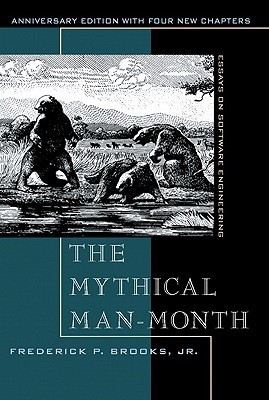
The Mythical Man-Month: Essays on Software Engineering
by Frederick P. Brooks Jr.
Rating: 4.0 ⭐
• 10 recommendations ❤️
Few books on software project management have been as influential and timeless as The Mythical Man-Month. With a blend of software engineering facts and thought-provoking opinions, Fred Brooks offers insight for anyone managing complex projects. These essays draw from his experience as project manager for the IBM System/360 computer family and then for OS/360, its massive software system. Now, 45 years after the initial publication of his book, Brooks has revisited his original ideas and added new thoughts and advice, both for readers already familiar with his work and for readers discovering it for the first time.The added chapters contain (1) a crisp condensation of all the propositions asserted in the original book, including Brooks' central argument in The Mythical Man-Month: that large programming projects suffer management problems different from small ones due to the division of labor; that the conceptual integrity of the product is therefore critical; and that it is difficult but possible to achieve this unity; (2) Brooks' view of these propositions a generation later; (3) a reprint of his classic 1986 paper "No Silver Bullet"; and (4) today's thoughts on the 1986 assertion, "There will be no silver bullet within ten years."

Autobiography of a Yogi is one of the best-selling spiritual biographies of all time. The book is not merely read it is treasured and cherished by millions of spiritual seekers throughout the world.

The former Chairman of the Board of ITT provides an informative and experienced look at the principles and practices of good business management

Crowdsourcing: Why the Power of the Crowd Is Driving the Future of Business
by Jeff Howe
Rating: 3.9 ⭐
• 2 recommendations ❤️
Why does Procter & Gamble repeatedly call on enthusiastic amateurs to solve scientific and technical challenges? How can companies as diverse as iStockphoto and Threadless employ just a handful of people, yet generate millions of dollars in revenue every year?"Crowdsourcing" is how the power of the many can be leveraged to accomplish feats that were once the responsibility of a specialized few. Jeff Howe reveals that the crowd is more than wise–it’s talented, creative, and stunningly productive. It’s also a perfect meritocracy, where age, gender, race, education, and job history no longer matter; the quality of the work is all that counts. If you can perform the service, design the product, or solve the problem, you’ve got the job.But crowdsourcing has also triggered a dramatic shift in the way work is organized, talent is employed, research is conducted, and products are made and marketed. As the crowd comes to supplant traditional forms of labor, pain and disruption are inevitable, and Howe delves into both the positive and negative consequences of this intriguing phenomenon. Through extensive reporting from the front lines of this workplace revolution, he employs a brilliant array of stories to look at the economic, cultural, business, and political implications of crowdsourcing.

Twenty-Five Hundred years ago, Sun Tzu wrote this classic book of military strategy based on Chinese warfare and military thought. Since that time, all levels of military have used the teaching on Sun Tzu to warfare and civilization have adapted these teachings for use in politics, business and everyday life. The Art of War is a book which should be used to gain advantage of opponents in the boardroom and battlefield alike.

First published in 2011 The Precariat is the hugely influential first account of an emerging class of people facing insecurity, moving in and out of precarious work that gives little meaning to their lives. Standing warns that the growth of the precariat is producing instabilities in society. Its internal divisions have led to the villainization of migrants and other vulnerable groups and some are susceptible to the dangers of political extremism. Standing argues for a new politics which puts the fears and aspirations of the precariat at the heart of a progressive strategy of redistribution and income security.The precariat is an increasingly global phenomenon, highly visible in the ongoing migrant crisis and protest movements around the world. In a new preface for the Revelations edition Guy Standing discusses recent political developments and their effect on the precariat.

Can we live robustly until our last breath?Do we have to suffer from debilitating conditions and sickness? Is it possible to add more vibrant years to our lives? In the #1 New York Times bestselling The End of Illness , Dr. David Agus tackles these fundamental questions and dismantles misperceptions about what “health” really means. Presenting an eye-opening picture of the human body and all the ways it works—and fails—Dr. Agus shows us how a new perspective on our individual health will allow us to achieve a long, vigorous life.Offering insights and access to powerful new technologies that promise to transform medicine, Dr. Agus emphasizes his belief that there is no “right” answer, no master guide that is “one size fits all.” Each one of us must get to know our bodies in uniquely personal ways, and he shows us exactly how to do that. A bold call for all of us to become our own personal health advocates, The End of Illness is a moving departure from orthodox thinking.

What will the next global conflict look like? Find out in this ripping, near-futuristic thriller. The United States, China, and Russia eye each other across a twenty-first century version of the Cold War, which suddenly heats up at sea, on land, in the air, in outer space, and in cyberspace. The fighting involves everything from stealthy robotic–drone strikes to old warships from the navy’s “ghost fleet.” Fighter pilots unleash a Pearl Harbor–style attack; American veterans become low-tech insurgents; teenage hackers battle in digital playgrounds; Silicon Valley billionaires mobilize for cyber-war; and a serial killer carries out her own vendetta. Ultimately, victory will depend on blending the lessons of the past with the weapons of the future.Ghost Fleet is a page-turning speculative thriller in the spirit of The Hunt for Red October. The debut novel by two leading experts on the cutting edge of national security, it is unique in that every trend and technology featured in the novel — no matter how sci-fi it may seem — is real, or could be soon.
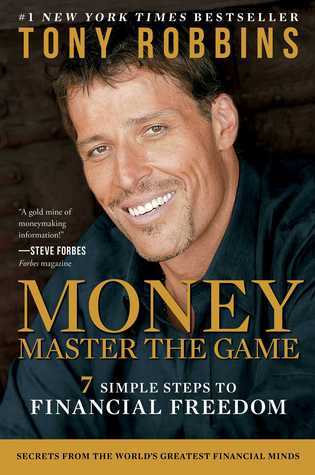
Money Master the Game: 7 Simple Steps to Financial Freedom
by Anthony Robbins
Rating: 4.0 ⭐
• 8 recommendations ❤️
Tony Robbins has coached and inspired more than 50 million people from over 100 countries. More than 4 million people have attended his live events. Oprah Winfrey calls him super-human. Now for the first time - in his first book in two decades - he's turned to the topic that vexes us all: How to secure financial freedom for ourselves and our families. Based on extensive research and one-on-one interviews with more than 50 of the most legendary financial experts in the world - from Carl Icahn and Warren Buffett, to Ray Dalio and Steve Forbes - Tony Robbins has created a simple 7-step blueprint that anyone can use for financial freedom.Robbins has a brilliant way of using metaphor and story to illustrate even the most complex financial concepts - making them simple and actionable. With expert advice on our most important financial decisions, Robbins is an advocate for the reader, dispelling the myths that often rob people of their financial dreams.Tony Robbins walks readers of every income level through the steps to become financially free by creating a lifetime income plan. This book delivers invaluable information and essential practices for getting your financial house in order. MONEY: Master the Game is the book millions of people have been waiting for.

Find Me Unafraid: Love, Loss, and Hope in an African Slum
by Kennedy Odede
Rating: 4.5 ⭐
• 2 recommendations ❤️
Find Me Unafraid tells the uncommon love story between two uncommon people whose collaboration sparked a successful movement to transform the lives of vulnerable girls and the urban poor. With a Foreword by Nicholas Kristof. This is the story of two young people from completely different Kennedy Odede from Kibera, the largest slum in Africa, and Jessica Posner from Denver, Colorado. Kennedy foraged for food, lived on the street, and taught himself to read with old newspapers. When an American volunteer gave him the work of Mandela, Garvey, and King, teenaged Kennedy decided he was going to change his life and his community. He bought a soccer ball and started a youth empowerment group he called Shining Hope for Communities (SHOFCO). Then in 2007, Wesleyan undergraduate Jessica Posner spent a semester abroad in Kenya working with SHOFCO. Breaking all convention, she decided to live in Kibera with Kennedy, and they fell in love.Their connection persisted, and Jessica helped Kennedy to escape political violence and fulfill his lifelong dream of an education, at Wesleyan University. The alchemy of their remarkable union has drawn the support of community members and celebrities alike—The Clintons, Mia Farrow, and Nicholas Kristof are among their fans—and their work has changed the lives of many of Kibera’s most vulnerable its girls. Jess and Kennedy founded Kibera’s first tuition-free school for girls, a large, bright blue building, which stands as a bastion of hope in what once felt like a hopeless place. But Jessica and Kennedy are just getting started—they have expanded their model to connect essential services like health care, clean water, and economic empowerment programs. They’ve opened an identical project in Mathare, Kenya’s second largest slum, and intend to expand their remarkably successful program for change. Ultimately this is a love story about a fight against poverty and hopelessness, the transformation made possible by a true love, and the power of young people to have a deep impact on the world.
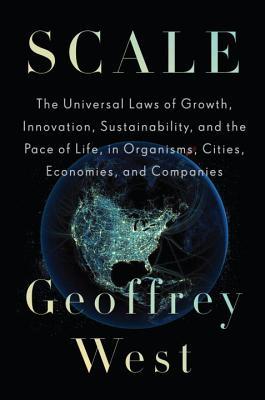
Scale: The Universal Laws of Growth, Innovation, Sustainability, and the Pace of Life in Organisms, Cities, Economies, and Companies
by Geoffrey B. West
Rating: 4.1 ⭐
• 10 recommendations ❤️
The former head of the Sante Fe Institute, visionary physicist Geoffrey West is a pioneer in the field of complexity science, the science of emergent systems and networks. The term “complexity” can be misleading, however, because what makes West’s discoveries so beautiful is that he has found an underlying simplicity that unites the seemingly complex and diverse phenomena of living systems, including our bodies, our cities and our businesses. Fascinated by issues of aging and mortality, West applied the rigor of a physicist to the biological question of why we live as long as we do and no longer. The result was astonishing, and changed science, creating a new understanding of energy use and metabolism: West found that despite the riotous diversity in the sizes of mammals, they are all, to a large degree, scaled versions of each other. If you know the size of a mammal, you can use scaling laws to learn everything from how much food it eats per day, what its heart-rate is, how long it will take to mature, its lifespan, and so on. Furthermore, the efficiency of the mammal’s circulatory systems scales up precisely based on weight: if you compare a mouse, a human and an elephant on a logarithmic graph, you find with every doubling of average weight, a species gets 25% more efficient—and lives 25% longer. This speaks to everything from how long we can expect to live to how many hours of sleep we need. Fundamentally, he has proven, the issue has to do with the fractal geometry of the networks that supply energy and remove waste from the organism's body. West's work has been game-changing for biologists, but then he made the even bolder move of exploring his work's applicability to cities. Cities, too, are constellations of networks and laws of scalability relate with eerie precision to them. For every doubling in a city's size, the city needs 15% less road, electrical wire, and gas stations to support the same population. More amazingly, for every doubling in size, cities produce 15% more patents and more wealth, as well as 15% more crime and disease. This broad pattern lays the groundwork for a new science of cities. Recently, West has applied his revolutionary work on cities and biological life to the business world. This investigation has led to powerful insights into why some companies thrive while others fail. The implications of these discoveries are far-reaching, and are just beginning to be explored. Scale is a thrilling scientific adventure story about the elemental natural laws that bind us together in simple but profound ways. Through the brilliant mind of Geoffrey West, we can envision how cities, companies and biological life alike are dancing to the same simple, powerful tune, however diverse and unrelated they are to each other.From the Hardcover edition.
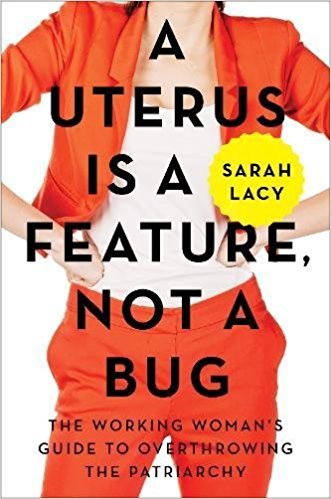
A Uterus Is a Feature, Not a Bug: The Working Woman's Guide to Overthrowing the Patriarchy
by Sarah Lacy
Rating: 3.9 ⭐
• 6 recommendations ❤️
A rallying cry for working mothers everywhere that demolishes the "distracted, emotional, weak" stereotype and definitively shows that these professionals are more focused, decisive, and stronger than any other force.Working mothers aren’t a liability. They are assets you—and every manager and executive—want in your company, in your investment portfolio, and in your corner.There is copious academic research showing the benefits of working mothers on families and the benefits to companies who give women longer and more flexible parental leave. There are even findings that demonstrate women with multiple children actually perform better at work than those with none or one.Yet despite this concrete proof that working mothers are a lucrative asset, they still face the "Maternal Wall"—widespread unconscious bias about their abilities, contributions, and commitment. Nearly eighty percent of women are less likely to be hired if they have children—and are half as likely to be promoted. Mothers earn an average $11,000 less in salary and are held to higher punctuality and performance standards. Forty percent of Silicon Valley women said they felt the need to speak less about their family to be taken more seriously. Many have been told that having a second child would cost them a promotion.Fortunately, this prejudice is slowly giving way to new attitudes, thanks to more women starting their own businesses, and companies like Netflix, Facebook, Apple, and Google implementing more parent-friendly policies. But the most important barrier to change isn’t about men. Women must rethink the way they see themselves after giving birth. As entrepreneur Sarah Lacy makes clear in this cogent, persuasive analysis and clarion cry, the strongest, most lucrative, and most ambitious time of a woman’s career may easily be after she sees a plus sign on a pregnancy test.

Ray Dalio, one of the world’s most successful investors and entrepreneurs, shares the unconventional principles that he’s developed, refined, and used over the past forty years to create unique results in both life and business—and which any person or organization can adopt to help achieve their goals.In 1975, Ray Dalio founded an investment firm, Bridgewater Associates, out of his two-bedroom apartment in New York City. Forty years later, Bridgewater has made more money for its clients than any other hedge fund in history and grown into the fifth most important private company in the United States, according to Fortune magazine. Dalio himself has been named to Time magazine’s list of the 100 most influential people in the world. Along the way, Dalio discovered a set of unique principles that have led to Bridgewater’s exceptionally effective culture, which he describes as “an idea meritocracy that strives to achieve meaningful work and meaningful relationships through radical transparency.” It is these principles, and not anything special about Dalio—who grew up an ordinary kid in a middle-class Long Island neighborhood—that he believes are the reason behind his success.In Principles, Dalio shares what he’s learned over the course of his remarkable career. He argues that life, management, economics, and investing can all be systemized into rules and understood like machines. The book’s hundreds of practical lessons, which are built around his cornerstones of “radical truth” and “radical transparency,” include Dalio laying out the most effective ways for individuals and organizations to make decisions, approach challenges, and build strong teams. He also describes the innovative tools the firm uses to bring an idea meritocracy to life, such as creating “baseball cards” for all employees that distill their strengths and weaknesses, and employing computerized decision-making systems to make believability-weighted decisions. While the book brims with novel ideas for organizations and institutions, Principles also offers a clear, straightforward approach to decision-making that Dalio believes anyone can apply, no matter what they’re seeking to achieve.Here is a rare opportunity to gain proven advice unlike anything you’ll find in the conventional business press.

Dear Founder: Letters of Advice for Anyone Who Leads, Manages, or Wants to Start a Business
by Maynard Webb
Rating: 3.7 ⭐
• 6 recommendations ❤️
The Los Angeles Times and USA Today bestseller!Wise, practical, and profitable letters to entrepreneurs, leaders, managers, and business owners in every field―from a leading executive, investor, and business founderMore than 600,000 new businesses are launched each year. How can a start-up find the funding it needs to survive? When, if at all, should a company go public? How does an entrepreneur build and manage a workplace―and create a lasting legacy?Maynard Webb has helped found, fund, and grow dozens of successful companies, and has driven strategic change at Salesforce, eBay, Everwise, and Visa, among other worldwide corporations. Known for offering savvy insight, encouragement, and a dose of reality in the form of engaging personal letters to a select group of business leaders, Webb now shares his lessons with the rest of America’s aspiring entrepreneurs―at any age and stage in their careers―in Dear Founder.Featuring more than eighty inspiring, informative, and instructive letters, Dear Founder is rich with sound advice on an array of business topics, from turning your idea into a reality to building a culture, to reaching key financial goals. This book is an indispensable guide to navigating the realities, risks, and rewards of being your own boss―and founding the company of your dreams.

Future Forward: Leadership Lessons from Patrick McGovern, the Visionary Who Circled the Globe and Built a Technology Media Empire
by Glenn Rifkin
Rating: 3.9 ⭐
• 10 recommendations ❤️
Powerful lessons in forward-thinking leadership from the visionary business pioneer who turned IDG into a $3 billion technology media and venture capital empireLike Steve Jobs, Patrick McGovern built a worldwide multibillion-dollar industry by thinking differently, disrupting old business models, and embracing new technology trends. He drove the future forward and never looked back. With magazines such as Computerworld, PCWorld, and Macworld, his company, International Data Group (IDG), quickly became a global powerhouse with information technology publications in nearly 100 countries.The story of IDG’s astonishing success has been a source of inspiration for entrepreneurs all around the world. No matter what industry you work in―whether you’re heading up a small startup, expanding a mid-sized company, or running a major global corporation―McGovern’s people-first principles, insights, and integrity will help you lead the way.Learn how •Define a clear mission early in the game―for long-term success.•Identify new markets and stay ahead of the curve.•Expand your business globally but have it managed locally.•Listen to your customers and empower your people.•Hire the best and challenge them to do their best work.•Never stop learning and always remain curious.•Foster a let’s-try-it attitude throughout the company.•Lead with optimism and stay true to your values and vision.In addition to these timeless lessons, you’ll learn how this future-forward leader broke new ground in the 1980s by opening offices in China, the Soviet Union, Eastern Europe, and other markets deemed off-limits. You’ll discover how his company thrived in spite of major industry shifts―from mainframe computers to minicomputers to personal computers, from print to digital to smartphones―that upended many rivals. Living at the intersection of these classic disruptions, McGovern never missed a beat. He understood well before most that a revolution in information technology was underway and not only was there money to be made but that this would soon become the world’s largest industry. Most important, he never forgot the human element that is so crucial to any company’s success. His leadership in the creation of one of the world’s leading brain research institutes at MIT only served to cement his legacy.Future Forward shows you how to apply McGovern’s principles to your own organization. These are the lessons of a true visionary. This is how successful leaders take risks, take charge, and take the future by storm.

"If you had told Roger McNamee even three years ago that he would soon be devoting himself to stopping Facebook from destroying our democracy, he would have howled with laughter. He had mentored many tech leaders in his illustrious career as an investor, but few things had made him prouder, or been better for his fund's bottom line, than his early service to Mark Zuckerberg. Still a large shareholder in Facebook, he had every good reason to stay on the bright side. Until he simply couldn't. ZUCKED is McNamee's intimate reckoning with the catastrophic failure of the head of one of the world's most powerful companies to face up to the damage he is doing. It's a story that begins with a series of rude awakenings. First there is the author's dawning realization that the platform is being manipulated by some very bad actors. Then there is the even more unsettling realization that Zuckerberg and Sheryl Sandberg are unable or unwilling to share his concerns, polite as they may be to his face."

The American Story: Conversations with Master Historians
by David M. Rubenstein
Rating: 4.4 ⭐
• 6 recommendations ❤️
Co-founder of The Carlyle Group and patriotic philanthropist David M. Rubenstein takes readers on a sweeping journey across the grand arc of the American story through revealing conversations with our greatest historians.In these lively dialogues, the biggest names in American history explore the subjects they’ve come to so intimately know and understand.— David McCullough on John Adams— Jon Meacham on Thomas Jefferson— Ron Chernow on Alexander Hamilton— Walter Isaacson on Benjamin Franklin— Doris Kearns Goodwin on Abraham Lincoln— A. Scott Berg on Charles Lindbergh— Taylor Branch on Martin Luther King— Robert Caro on Lyndon B. Johnson— Bob Woodward on Richard Nixon— And many others, including a special conversation with Chief Justice John RobertsThrough his popular program The David Rubenstein Show , David Rubenstein has established himself as one of our most thoughtful interviewers. Now, in The American Story, David captures the brilliance of our most esteemed historians, as well as the souls of their subjects. The book features introductions by Rubenstein as well a foreword by Librarian of Congress Carla Hayden, the first woman and the first African American to lead our national library. Richly illustrated with archival images from the Library of Congress, the book is destined to become a classic for serious readers of American history.Through these captivating exchanges, these bestselling and Pulitzer Prize–winning authors offer fresh insight on pivotal moments from the Founding Era to the late 20th century.

During the next decade, we will experience more disruption and create more wealth than we have in the past hundred years. In this insightful and gripping blueprint for our near future, bestselling authors and futurists Peter Diamandis and Steven Kotler investigate how wave after wave of exponentially accelerating technologies will impact both our daily lives and society as a whole. What happens as AI, robotics, virtual reality, digital biology, and sensors crash into 3D printing, blockchain, and global gigabit networks? How will these convergences transform today's legacy industries? What will happen to the way we raise our kids, govern our nations, and care for our planet? Space entrepreneur-turned-innovation pioneer Peter H. Diamandis and bestselling author and peak performance expert Steven Kotler probe the science of technological convergence and how it will reinvent every part of our lives--transportation, retail, advertising, education, health, entertainment, food, and finance--taking humanity into uncharted territories and reimagining the world as we know it. As indispensable as it is gripping, The Future is Faster Than You Think provides a prescient look at our impending future.

The Ones We've Been Waiting For: How a New Generation of Leaders Will Transform America
by Charlotte Alter
Rating: 3.9 ⭐
• 2 recommendations ❤️
An optimistic look at the future of American leadership by a brilliant young reporterA new generation is stepping up. There are now twenty-six millennials in Congress--a fivefold increase gained in the 2018 midterms alone. They are governing Midwestern cities and college towns, running for city councils, and serving in state legislatures. They are acting urgently on climate change (because they are going to live it); they care deeply about student debt (because they have it); they are utilizing big tech but still want to regulate it (because they understand how it works). In The Ones We've Been Waiting For , TIME correspondent Charlotte Alter defines the class of young leaders who are remaking the nation--how grappling with 9/11 as teens, serving in Iraq and Afghanistan, occupying Wall Street and protesting with Black Lives Matter, and shouldering their way into a financially rigged political system has shaped the people who will govern the future.Through the experiences of millennial leaders--from progressive firebrand Alexandria Ocasio-Cortez to Democratic presidential hopeful Pete Buttigieg to Republican up-and-comer Elise Stefanik--Charlotte Alter gives the big-picture look at how this generation governs differently than their elders, and how they may drag us out of our current political despair. Millennials have already revolutionized technology, commerce, and media and have powered the major social movements of our time. Now government is ripe for disruption. The Ones We've Been Waiting For is a hopeful glimpse into a bright new generation of political leaders, and what America might look like when they are in charge.
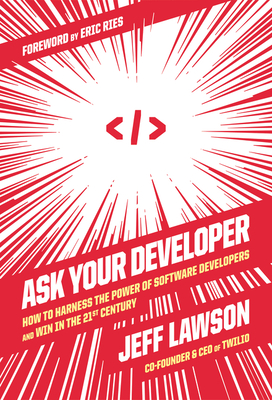
Ask Your Developer: How to Harness the Power of Software Developers and Win in the 21st Century
by Jeff Lawson
Rating: 4.2 ⭐
• 6 recommendations ❤️
Jeff Lawson, software developer turned CEO of Twilio, creates a new playbook for unleashing the full potential of software developers in any organization, showing how to help management utilize this coveted and valuable workforce to enable growth, solve a wide range of business problems and drive digital transformation.From banking and retail to insurance and finance, every industry is turning digital, and every company needs the best software to win the hearts and minds of customers. The landscape has shifted from the classic build vs. buy question, to one of build vs. die. Companies have to get this right to survive. But how do they make this transition?Software developers are sought after, highly paid, and desperately needed to compete in the modern, digital economy. Yet most companies treat them like digital factory workers without really understanding how to unleash their full potential. Lawson argues that developers are the creative workforce who can solve major business problems and create hit products for customers—not just grind through rote tasks. From Google and Amazon, to one-person online software companies—companies that bring software developers in as partners are winning. Lawson shows how leaders who build industry changing software products consistently do three things well. First, they understand why software developers matter more than ever. Second, they understand developers and know how to motivate them. And third, they invest in their developers' success.As a software developer and public company CEO, Lawson uses his unique position to bridge the language and tools executives use with the unique culture of high performing, creative software developers. Ask Your Developer is a toolkit to help business leaders, product managers, technical leaders, software developers, and executives achieve their common goal—building great digital products and experiences.How to compete in the digital economy? In short: Ask Your Developer.

From the Academy Award -winning actor, an unconventional memoir filled with raucous stories, outlaw wisdom, and lessons learned the hard way about living with greater satisfaction.I've been in this life for fifty years, been trying to work out its riddle for forty-two, and been keeping diaries of clues to that riddle for the last thirty-five. Notes about successes and failures, joys and sorrows, things that made me marvel, and things that made me laugh out loud. How to be fair. How to have less stress. How to have fun. How to hurt people less. How to get hurt less. How to be a good man. How to have meaning in life. How to be more me.Recently, I worked up the courage to sit down with those diaries. I found stories I experienced, lessons I learned and forgot, poems, prayers, prescriptions, beliefs about what matters, some great photographs, and a whole bunch of bumper stickers. I found a reliable theme, an approach to living that gave me more satisfaction, at the time, and still: If you know how, and when, to deal with life's challenges - how to get relative with the inevitable - you can enjoy a state of success I call 'catching greenlights.'So I took a one-way ticket to the desert and wrote this book: an album, a record, a story of my life so far. This is fifty years of my sights and seens, felts and figured-outs, cools and shamefuls. Graces, truths, and beauties of brutality. Getting away withs, getting caughts, and getting wets while trying to dance between the raindrops.Hopefully, it's medicine that tastes good, a couple of aspirin instead of the infirmary, a spaceship to Mars without needing your pilot's license, going to church without having to be born again, and laughing through the tears.It's a love letter. To life.It's also a guide to catching more greenlights-and to realising that the yellows and reds eventually turn green too.Good luck.