
Marc Andreessen Recommended Books
American entrepreneur, investor, and software engineer
77 Books Recommended

A Conflict of Visions: Ideological Origins of Political Struggles
by Thomas Sowell
Rating: 4.3 ⭐
• 4 recommendations ❤️
In this classic work, Thomas Sowell analyzes the two competing visions that shape our debates about the nature of reason, justice, equality, and power: the “constrained” vision, which sees human nature as unchanging and selfish, and the “unconstrained” vision, in which human nature is malleable and perfectible. He describes how these two radically opposed views have manifested themselves in the political controversies of the past two centuries, including such contemporary issues as welfare reform, social justice, and crime. Updated to include sweeping political changes since its first publication in 1987, this revised edition of A Conflict of Visions offers a convincing case that ethical and policy disputes circle around the disparity between both outlooks.

The True Believer: Thoughts on the Nature of Mass Movements
by Eric Hoffer
Rating: 4.2 ⭐
• 16 recommendations ❤️
A stevedore on the San Francisco docks in the 1940s, Eric Hoffer wrote philosophical treatises in his spare time while living in the railroad yards. The True Believer -- the first and most famous of his books -- was made into a bestseller when President Eisenhower cited it during one of the earliest television press conferences. Completely relevant and essential for understanding the world today, The True Believer is a visionary, highly provocative look into the mind of the fanatic and a penetrating study of how an individual becomes one.

The Vision of the Anointed: Self-Congratulation as a Basis for Social Policy
by Thomas Sowell
Rating: 4.4 ⭐
• 4 recommendations ❤️
One of America’s pre-eminent economists offers a provocative critique of the failures of liberalismIn The Vision of the Anointed , Thomas Sowell presents a devastating critique of the mind-set behind the failed social policies of the past thirty years. Sowell sees what has happened during that time not as a series of isolated mistakes but as a logical consequence of a tainted vision whose defects have led to crises in education, crime, and family dynamics, and to other social pathologies. In this book, he describes how elites—the anointed—have replaced facts and rational thinking with rhetorical assertions, thereby altering the course of our social policy.

Ever since its first publication in 1992, the New York Times bestselling The End of History and the Last Man has provoked controversy and debate. "Profoundly realistic and important...supremely timely and cogent...the first book to fully fathom the depth and range of the changes now sweeping through the world." —The Washington Post Book WorldFrancis Fukuyama's prescient analysis of religious fundamentalism, politics, scientific progress, ethical codes, and war is as essential for a world fighting fundamentalist terrorists as it was for the end of the Cold War. Now updated with a new afterword, The End of History and the Last Man is a modern classic.

Expert Political Judgment: How Good Is It? How Can We Know?
by Philip E. Tetlock
Rating: 4.0 ⭐
• 6 recommendations ❤️
The intelligence failures surrounding the invasion of Iraq dramatically illustrate the necessity of developing standards for evaluating expert opinion. This book fills that need. Here, Philip E. Tetlock explores what constitutes good judgment in predicting future events, and looks at why experts are often wrong in their forecasts.Tetlock first discusses arguments about whether the world is too complex for people to find the tools to understand political phenomena, let alone predict the future. He evaluates predictions from experts in different fields, comparing them to predictions by well-informed laity or those based on simple extrapolation from current trends. He goes on to analyze which styles of thinking are more successful in forecasting. Classifying thinking styles using Isaiah Berlin's prototypes of the fox and the hedgehog, Tetlock contends that the fox--the thinker who knows many little things, draws from an eclectic array of traditions, and is better able to improvise in response to changing events--is more successful in predicting the future than the hedgehog, who knows one big thing, toils devotedly within one tradition, and imposes formulaic solutions on ill-defined problems. He notes a perversely inverse relationship between the best scientific indicators of good judgement and the qualities that the media most prizes in pundits--the single-minded determination required to prevail in ideological combat.Clearly written and impeccably researched, the book fills a huge void in the literature on evaluating expert opinion. It will appeal across many academic disciplines as well as to corporations seeking to develop standards for judging expert decision-making.

Walt Disney: The Triumph of the American Imagination
by Neal Gabler
Rating: 4.2 ⭐
• 6 recommendations ❤️
ONE OF THE HOLLYWOOD REPORTER 'S 100 GREATEST FILM BOOKS OF ALL TIME • The definitive portrait of one of the most important cultural figures in American Walt Disney.Walt Disney was a true visionary whose desire for escape, iron determination and obsessive perfectionism transformed animation from a novelty to an art form, first with Mickey Mouse and then with his feature films–most notably Snow White, Fantasia, and Bambi . In his superb biography, Neal Gabler shows us how, over the course of two decades, Disney revolutionized the entertainment industry. In a way that was unprecedented and later widely imitated, he built a synergistic empire that combined film, television, theme parks, music, book publishing, and merchandise. Walt Disney is a revelation of both the work and the man–of both the remarkable accomplishment and the hidden life.Winner of the Los Angeles Times Book Prize for Biography and USA Today Biography of the Year
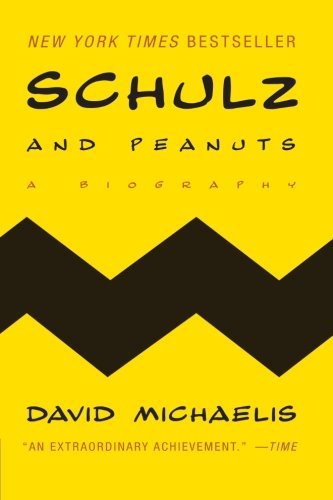
Charles M. Schulz, the most widely syndicated and beloved cartoonist of all time, is also one of the least understood figures in American culture. Now, acclaimed biographer David Michaelis gives us the first full-length biography of the brilliant, unseen man behind Peanuts : at once a creation story, a portrait of a native genius, and a chronicle contrasting the private man with the central role he played in shaping the national imagination. Schulz and Peanuts is the definitive epic biography of an American icon and the unforgettable characters he created.

“Before I knew that I was Jewish or a girl I knew that I was a member of the working class.” So begins Vivian Gornick’s exploration of how the world of socialists, communists, and progressives in the 1940s and 1950s created a rich, diverse world where ordinary men and women felt their lives connected to a larger human project.Now back in print after its initial publication in 1977 and with a new introduction by the author, The Romance of American Communism is a landmark work of new journalism, profiling American Communist Party members and fellow travelers as they joined the Party, lived within its orbit, and left in disillusionment and disappointment as Stalin’s crimes became public.

In this legendary business book and Silicon Valley staple, the former chairman and CEO of Intel shares his perspective on how to build and run a company. A practical handbook for navigating real-life business scenarios and a powerful management manifesto with the ability to revolutionize the way we work. The essential skill of creating and maintaining new businesses—the art of the entrepreneur—can be summed up in a single word: managing. Born of Grove’s experiences at one of America’s leading technology companies (as CEO and employee number three at Intel), High Output Management is equally appropriate for sales managers, accountants, consultants, and teachers, as well as CEOs and startup founders. Grove covers techniques for creating highly productive teams, demonstrating methods of motivation that lead to peak performance. "Generous enough with advice and observations to be required reading." — The Wall Street Journal

One of the most remarkable and influential books of the nineteenth century—Nietzsche's attempt to sum up his philosophy.In nine parts the book is designed to give the reader a comprehensive idea of Nietzsche's thought and style: they span "The Prejudices of Philsophers," "The Free Spirit," religion, morals, scholarship, "Our Virtues," "Peoples and Fatherlands," and "What Is Noble," as well as epigrams and a concluding poem. This translation by Walter Kaufmann has become the standard one, for accuracy and fidelity to the eccentricities and grace of the style of the original. The translation is based on the only edition Nietzsche himself published, and all variant reading in later editions. This volume offers an inclusive index of subjects and persons, as well as a running footnote commentary on the text.
The Power of Productivity: Wealth, Poverty, and the Threat to Global Stability
by William W. Lewis
Rating: 5.0 ⭐
• 2 recommendations ❤️
The disparity between rich and poor countries is the most serious, intractable problem facing the world today. The chronic poverty of many nations affects more than the citizens and economies of those nations; it threatens global stability as the pressures of immigration become unsustainable and rogue nations seek power and influence through extreme political and terrorist acts. To address this tenacious poverty, a vast array of international institutions has pumped billions of dollars into these nations in recent decades, yet despite this infusion of capital and attention, roughly five billion of the world's six billion people continue to live in poor countries. What isn't working? And how can we fix it?The Power of Productivity provides powerful and controversial answers to these questions. William W. Lewis, the director emeritus of the McKinsey Global Institute, here draws on extensive microeconomic studies of thirteen nations over twelve years—conducted by the Institute itself—to counter virtually all prevailing wisdom about how best to ameliorate economic disparity. Lewis's research, which included studying everything from state-of-the-art auto makers to black-market street vendors and mom-and-pop stores, conclusively demonstrates that, contrary to popular belief, providing more capital to poor nations is not the best way to help them. Nor is improving levels of education, exchange-rate flexibility, or government solvency enough. Rather, the key to improving economic conditions in poor countries, argues Lewis, is increasing productivity through intense, fair competition and protecting consumer rights.As The Power of Productivity explains, this sweeping solution affects the economies of poor nations at all levels—from the viability of major industries to how the average consumer thinks about his or her purchases. Policies must be enacted in developing nations that reflect a consumer rather than a producer mindset and an attendant sense of consumer rights. Only one force, Lewis claims, can stand up to producer special privileges—consumer interests.The Institute's unprecedented research method and Lewis's years of experience with economic policy combine to make The Power of Productivity the most authoritative and compelling view of the global economy today, one that will inform political and economic debate throughout the world for years to come.

The Wizard of Menlo Park: How Thomas Alva Edison Invented the Modern World
by Randall E. Stross
Rating: 3.8 ⭐
• 4 recommendations ❤️
Thomas Edison’s greatest invention? His own fame. At the height of his fame Thomas Alva Edison was hailed as “the Napoleon of invention” and blazed in the public imagination as a virtual demigod. Starting with the first public demonstrations of the phonograph in 1878 and extending through the development of incandescent light and the first motion picture cameras, Edison’s name became emblematic of all the wonder and promise of the emerging age of technological marvels. But as Randall Stross makes clear in this critical biography of the man who is arguably the most globally famous of all Americans, Thomas Edison’s greatest invention may have been his own celebrity. Edison was certainly a technical genius, but Stross excavates the man from layers of myth-making and separates his true achievements from his almost equally colossal failures. How much credit should Edison receive for the various inventions that have popularly been attributed to him—and how many of them resulted from both the inspiration and the perspiration of his rivals and even his own assistants? This bold reassessment of Edison’s life and career answers this and many other important questions while telling the story of how he came upon his most famous inventions as a young man and spent the remainder of his long life trying to conjure similar success. We also meet his partners and competitors, presidents and entertainers, his close friend Henry Ford, the wives who competed with his work for his attention, and the children who tried to thrive in his shadow—all providing a fuller view of Edison’s life and times than has ever been offered before. The Wizard of Menlo Park reveals not only how Edison worked, but how he managed his own fame, becoming the first great celebrity of the modern age.

The God That Failed is a classic work and crucial document of the Cold War that brings together essays by six of the most important writers of the twentieth century on their conversion to and subsequent disillusionment with communism. In describing their own experiences, the authors illustrate the fate of leftism around the world. André Gide (France), Richard Wright (the United States), Ignazio Silone (Italy), Stephen Spender (England), Arthur Koestler (Germany), and Louis Fischer, an American foreign correspondent, all tell how their search for the betterment of humanity led them to communism, and the personal agony and revulsion which then caused them to reject it. David Engerman's new foreword to this central work of our time recounts the tumultuous events of the era, providing essential background. It also describes the book's origins and impact, the influence of communism in American intellectual life, and how the events described in The God That Failed continue to affect public discourse today.

Joseph McCarthy: Reexamining the Life and Legacy of America's Most Hated Senator
by Arthur Herman
Rating: 3.7 ⭐
• 2 recommendations ❤️
A re-interpretation of one of the most hated figures in American history shows that many of McCarthy's general suspicions about security risks and communist infiltration did have a basis in truth.
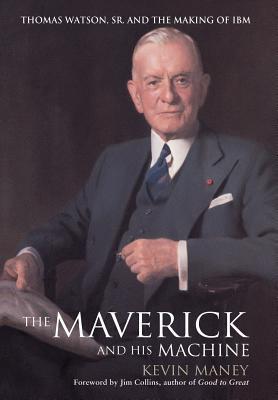
The Maverick and His Machine: Thomas Watson, Sr. and the Making of IBM
by Kevin Maney
Rating: 3.9 ⭐
• 2 recommendations ❤️
The first complete look at one of America's legendary business leadersThis groundbreaking biography by Kevin Maney, acclaimed technology columnist for USA Today, offers fresh insight and new information on one of the twentieth century's greatest business figures. Over the course of forty-two years, Thomas J. Watson took a failing business called The Computer-Tabulating-Recording Company and transformed it into IBM, the world's first and most famous high-tech company. The Maverick and His Machine is the first modern biography of this business titan. Maney secured exclusive access to hundreds of boxes of Watson's long-forgotten papers, and he has produced the only complete picture of Watson the man and Watson the legendary business leader. These uncovered documents reveal new information about how Watson bet the company in the 1920s on tabulating machines-the forerunners to computers-and how he daringly beat the Great Depression of the 1930s. The documents also lead to new insights concerning the controversy that has followed Watson: his suppos ed coll usion with Adolf Hitler's Nazi regime.Maney paints a vivid portrait of Watson, uncovers his motivations, and offers needed context on his mammoth role in the course of modern business history. Jim Collins, author of the bestsellers Good to Great and Built to Last, writes in the Foreword to Maney's book: "Leaders like Watson are like forces of nature-almost terrifying in their release of energy and unpredictable volatility, but underneath they still adhere to certain patterns and principles. The patterns and principles might be hard to see amidst the melee, but they are there nonetheless. It takes a gifted person of insight to highlight those patterns, and that is exactly what Kevin Maney does in this book."The Maverick and His Machine also includes never-before-published photos of Watson from IBM's archives, showing Watson in greater detail than any book ever has before. Essential reading for every businessperson, tech junkie, and IBM follower, the book is also full of the kind of personal detail and reconstructed events that make it a page-turning story for general readers. The Maverick and the Machine is poised to be one of the most important business biographies in years.Kevin Maney is a nationally syndicated, award-winning technology columnist at USA Today, where he has been since 1985. He is a cover story writer whose story about IBM's bet-the-company move gained him national recognition. He was voted best technology columnist by the business journalism publication TJFR. Marketing Computers magazine has four times named him one of the most influential technology columnists. He is the author of Wiley's MEGAMEDIA SHAKEOUT: The Inside Story of the Leaders and the Losers in the Exploding Communications Industry, which was a Business Week Bestseller.Residence: Clifton, VA ."Watson was clearly a genius with a thousand helpers, yet he managed to build an institution that could transcend the genius."-from the Foreword by Jim Collins"Like all great biographers, Kevin Maney gives us an engaging story . . .his fascinating and definitive book about IBM's founder is replete with amazing revelations and character lessons that resonate today."-Rosabeth Moss Kanter, Harvard Business School, bestselling author of Evolve! and When Giants Learn to Dance

Only the Paranoid Survive: How to Exploit the Crisis Points That Challenge Every Company
by Andrew S. Grove
Rating: 4.0 ⭐
• 17 recommendations ❤️
Andy Grove, founder and former CEO of Intel shares his strategy for success as he takes the reader deep inside the workings of a major company in Only the Paranoid Survive .Under Andy Grove's leadership, Intel became the world's largest chip maker and one of the most admired companies in the world. In Only the Paranoid Survive , Grove reveals his strategy for measuring the nightmare moment every leader dreads--when massive change occurs and a company must, virtually overnight, adapt or fall by the wayside--in a new way.Grove calls such a moment a Strategic Inflection Point, which can be set off by almost mega-competition, a change in regulations, or a seemingly modest change in technology. When a Strategic Inflection Point hits, the ordinary rules of business go out the window. Yet, managed right, a Strategic Inflection Point can be an opportunity to win in the marketplace and emerge stronger than ever.Grove underscores his message by examining his own record of success and failure, including how he navigated the events of the Pentium flaw, which threatened Intel's reputation in 1994, and how he has dealt with the explosions in growth of the Internet. The work of a lifetime, Only the Paranoid Survive is a classic of managerial and leadership skills.

The Myth of the Rational Voter: Why Democracies Choose Bad Policies
by Bryan Caplan
Rating: 3.9 ⭐
• 4 recommendations ❤️
The greatest obstacle to sound economic policy is not entrenched special interests or rampant lobbying, but the popular misconceptions, irrational beliefs, and personal biases held by ordinary voters. This is economist Bryan Caplan's sobering assessment in this provocative and eye-opening book. Caplan argues that voters continually elect politicians who either share their biases or else pretend to, resulting in bad policies winning again and again by popular demand.Boldly calling into question our most basic assumptions about American politics, Caplan contends that democracy fails precisely because it does what voters want. Through an analysis of Americans' voting behavior and opinions on a range of economic issues, he makes the convincing case that noneconomists suffer from four prevailing biases: they underestimate the wisdom of the market mechanism, distrust foreigners, undervalue the benefits of conserving labor, and pessimistically believe the economy is going from bad to worse. Caplan lays out several bold ways to make democratic government work better--for example, urging economic educators to focus on correcting popular misconceptions and recommending that democracies do less and let markets take up the slack. The Myth of the Rational Voter takes an unflinching look at how people who vote under the influence of false beliefs ultimately end up with government that delivers lousy results. With the upcoming presidential election season drawing nearer, this thought-provoking book is sure to spark a long-overdue reappraisal of our elective system.

#1 New York Times bestseller for 13 consecutive weeks!"As long as humanity speaks of virtue and dreams of freedom, the life and writings of Whittaker Chambers will ennoble and inspire." - PRESIDENT RONALD REAGAN"One of the dozen or so indispensable books of the century..." - GEORGE F. WILL"Witness changed my worldview, my philosophical perceptions, and, without exaggeration, my life." - ROBERT D. NOVAK, from his Foreward"Chambers has written one of the really significant American autobiographies. When some future Plutarch writes his American Live, he will find in Chambers penetrating and terrible insights into America in the early twentieth century." - ARTHUR SCHLESINGER JR."Chambers had a gift for language....to call Chambers an activist or Witness a political event is to say Dostoevsky was a criminologist or Crime and Punishment a morality tract." - WASHINGTON POST"Chambers was not just the witness against Alger Hiss, but was also one of th articulators of the modern conservative philosophy, a philosophy that has something to do with restoring the spiritual values of politics." - SAM TANENHAUS, author of Whittaker Chambers"One of the few indispensable autobiographies ever written by an American - and one of the best written, too. " - HILTON KRAMER, The New CriterionFirst published in 1952, Witness is the true story of Soviet spies in America and the trial that captivated a nation. Part literary effort, part philosophical treatise, this intriguing autobiography recounts the famous Alger Hiss case and reveals much more. Chambers' worldview and his belief that "man without mysticism is a monster" went on to help make political conservatism a national force.Regnery History's Cold War Classics edition is the most comprehensive version of Witness ever published, featuring forewords collected from all previous editions, including discussions from luminaries William F. Buckley Jr., Robert D. Novak, Milton Hindus, and Alfred S. Regnery.

The Captive Mind begins with a discussion of the novel Insatiability by Stanisław Ignacy Witkiewicz and its plot device of Murti-Bing pills, which are used as a metaphor for dialectical materialism, but also for the deadening of the intellect caused by consumerism in Western society. The second chapter considers the way in which the West was seen at the time by residents of Central and Eastern Europe, while the third outlines the practice of Ketman, the act of paying lip service to authority while concealing personal opposition, describing seven forms applied in the people's democracies of mid-20th century Europe.The four chapters at the heart of the book then follow, each a portrayal of a gifted Polish man who capitulated, in some fashion, to the demands of the Communist state. They are identified only as Alpha, the Moralist; Beta, The Disappointed Lover; Gamma, the Slave of History; and Delta, the Troubadour. However, each of the four portraits were easily identifiable: Alpha is Jerzy Andrzejewski, Beta is Tadeusz Borowski, Gamma is Jerzy Putrament and Delta is Konstanty Ildefons Gałczyński.The book moves toward its climax with an elaboration of "enslavement through consciousness" in the penultimate chapter and closes with a pained and personal assessment of the fate of the Baltic nations in particular.

Private Truths, Public Lies: The Social Consequences of Preference Falsification
by Timur Kuran
Rating: 4.2 ⭐
• 2 recommendations ❤️
Preference falsification, according to the economist Timur Kuran, is the act of misrepresenting one's wants under perceived social pressures. It happens frequently in everyday life, such as when we tell the host of a dinner party that we are enjoying the food when we actually find it bland. In Private Truths, Public Lies Kuran argues convincingly that the phenomenon not only is ubiquitous but has huge social and political consequences. Drawing on diverse intellectual traditions, including those rooted in economics, psychology, sociology, and political science, Kuran provides a unified theory of how preference falsification shapes collective decisions, orients structural change, sustains social stability, distorts human knowledge, and conceals political possibilities.A common effect of preference falsification is the preservation of widely disliked structures. Another is the conferment of an aura of stability on structures vulnerable to sudden collapse. When the support of a policy, tradition, or regime is largely contrived, a minor event may activate a bandwagon that generates massive yet unanticipated change.In distorting public opinion, preference falsification also corrupts public discourse and, hence, human knowledge. So structures held in place by preference falsification may, if the condition lasts long enough, achieve increasingly genuine acceptance. The book demonstrates how human knowledge and social structures co-evolve in complex and imperfectly predictable ways, without any guarantee of social efficiency.Private Truths, Public Lies uses its theoretical argument to illuminate an array of puzzling social phenomena. They include the unexpected fall of communism, the paucity, until recently, of open opposition to affirmative action in the United States, and the durability of the beliefs that have sustained India's caste system.

The wellspring of capital will not be found on Wall Street or in the stuffy halls of corporate America, but instead in the hopes and dreams of people who want to create new products and new approaches to problem solving. It is this wellspring that will ultimately cleanse the soul of corporate America corrupted by power and age. George Gilder's 1984 classic was substantially revised for the 1990s and remains relevant today. This authoritative book looks at what went right in the 1980s and how we can jump-start the economy of the new millenium, featuring unforgettable portraits of entrepreneurs of today and tomorrow, from Bill Gates to members of the dynamic Cuban immigrant community of Miami.

The Innovator's Dilemma: When New Technologies Cause Great Firms to Fail
by Clayton M. Christensen
Rating: 4.1 ⭐
• 39 recommendations ❤️
The bestselling classic on disruptive innovation, by renowned author Clayton M. Christensen. His work is cited by the world’s best-known thought leaders, from Steve Jobs to Malcolm Gladwell. In this classic bestseller—one of the most influential business books of all time—innovation expert Clayton Christensen shows how even the most outstanding companies can do everything right—yet still lose market leadership. Christensen explains why most companies miss out on new waves of innovation. No matter the industry, he says, a successful company with established products will get pushed aside unless managers know how and when to abandon traditional business practices. Offering both successes and failures from leading companies as a guide, The Innovator’s Dilemma gives you a set of rules for capitalizing on the phenomenon of disruptive innovation. Sharp, cogent, and provocative—and consistently noted as one of the most valuable business ideas of all time—The Innovator’s Dilemma is the book no manager, leader, or entrepreneur should be without.
The 4-Hour Workweek: Escape 9-5, Live Anywhere, and Join the New Rich
by Timothy Ferriss
Rating: 3.9 ⭐
• 48 recommendations ❤️
sach ky nang

Nichols examines the major writings of Alexandre Koj_ve, and clarifies the character and brings to light the importance of his political philosophy. While emphasizing the political dimension of Koj_ve's thought, Nichols treats all his major published writings and shows how the remarkably varied parts of Koj_ve's intellectual endeavor go together. This is an essential assessment of Koj_ve which considers the works that preceded his turn to Hegel, seeks to articulate the character of his Hegelianism, and reflects in detail on the two different meanings that the end of history had in two different periods of his thought.

The riveting, mega-bestselling, beloved and highly acclaimed memoir of a man, a vocation, and an era named one of the ten best nonfiction titles of the year by Time and Entertainment Weekly .In the mid-seventies, Steve Martin exploded onto the comedy scene. By 1978 he was the biggest concert draw in the history of stand-up. In 1981 he quit forever. This book is, in his own words, the story of “why I did stand-up and why I walked away.”Emmy and Grammy Award–winner, author of the acclaimed New York Times bestsellers Shopgirl and The Pleasure of My Compan y, and a regular contributor to The New Yorker , Martin has always been a writer. His memoir of his years in stand-up is candid, spectacularly amusing, and beautifully written.At age ten Martin started his career at Disneyland, selling guidebooks in the newly opened theme park. In the decade that followed, he worked in the Disney magic shop and the Bird Cage Theatre at Knott’s Berry Farm, performing his first magic/comedy act a dozen times a week. The story of these years, during which he practiced and honed his craft, is moving and revelatory. The dedication to excellence and innovation is formed at an astonishingly early age and never wavers or wanes.Martin illuminates the sacrifice, discipline, and originality that made him an icon and informs his work to this day. To be this good, to perform so frequently, was isolating and lonely. It took Martin decades to reconnect with his parents and sister, and he tells that story with great tenderness. Martin also paints a portrait of his times—the era of free love and protests against the war in Vietnam, the heady irreverence of The Smothers Brothers Comedy Hour in the late sixties, and the transformative new voice of Saturday Night Live in the seventies.Throughout the text, Martin has placed photographs, many never seen before. Born Standing Up is a superb testament to the sheer tenacity, focus, and daring of one of the greatest and most iconoclastic comedians of all time.

Poor Charlie's Almanack: The Wit and Wisdom of Charles T. Munger
by Charles T. Munger
Rating: 4.6 ⭐
• 37 recommendations ❤️
EXPANDED THIRD EDITION includes Charlie's 2007 USC Law School Commencement address. Edited by Peter D. Kaufman. Brand New.

No Offense: Civil Religion and Protestant Taste
by John Murray Cuddihy
Rating: 3.8 ⭐
• 2 recommendations ❤️
American History

A Guide to the Good Life: The Ancient Art of Stoic Joy
by William B. Irvine
Rating: 4.2 ⭐
• 18 recommendations ❤️
One of the great fears many of us face is that despite all our effort and striving, we will discover at the end that we have wasted our life. In A Guide to the Good Life, William B. Irvine plumbs the wisdom of Stoic philosophy, one of the most popular and successful schools of thought in ancient Rome, and shows how its insight and advice are still remarkably applicable to modern lives. In A Guide to the Good Life, Irvine offers a refreshing presentation of Stoicism, showing how this ancient philosophy can still direct us toward a better life. Using the psychological insights and the practical techniques of the Stoics, Irvine offers a roadmap for anyone seeking to avoid the feelings of chronic dissatisfaction that plague so many of us. Irvine looks at various Stoic techniques for attaining tranquility and shows how to put these techniques to work in our own life. As he does so, he describes his own experiences practicing Stoicism and offers valuable first-hand advice for anyone wishing to live better by following in the footsteps of these ancient philosophers. Readers learn how to minimize worry, how to let go of the past and focus our efforts on the things we can control, and how to deal with insults, grief, old age, and the distracting temptations of fame and fortune. We learn from Marcus Aurelius the importance of prizing only things of true value, and from Epictetus we learn how to be more content with what we have. Finally, A Guide to the Good Life shows readers how to become thoughtful observers of their own life. If we watch ourselves as we go about our daily business and later reflect on what we saw, we can better identify the sources of distress and eventually avoid that pain in our life. By doing this, the Stoics thought, we can hope to attain a truly joyful life.

Whole Earth Discipline: Why Dense Cities, Nuclear Power, Transgenic Crops, Restored Wildlands, and Geoengineering Are Necessary
by Stewart Brand
Rating: 4.2 ⭐
• 10 recommendations ❤️
“Incredible book . . . Best I’ve read this year.” —Jack Dorsey, via TwitterThis eye-opening book by the legendary author of the National Book Award-winning Whole Earth Catalog persuasively details a new approach to our stewardship of the planet. Lifelong ecologist and futurist Stewart Brand relies on scientific rigor to shatter myths concerning nuclear energy, urbanization, genetic engineering, and other controversial subjects, showing exactly where the sources of our dilemmas lie and offering a bold, inventive set of policies and design- based solutions for shaping a more sustainable society. Thought- provoking and passionately argued, this is a pioneering book on one of the hottest issues facing humanity today.

How to Live: Or A Life of Montaigne in One Question and Twenty Attempts at an Answer
by Sarah Bakewell
Rating: 4.2 ⭐
• 6 recommendations ❤️
Winner of the National Book Critics Circle Award for Biography, from the author of Humanly PossibleHow to get along with people, how to deal with violence, how to adjust to losing someone you love—such questions arise in most people’s lives. They are all versions of a bigger How do you live? This question obsessed Renaissance writers, none more than Michel Eyquem de Montaigne, considered by many to be the first truly modern individual. He wrote free-roaming explorations of his thoughts and experience, unlike anything written before. More than four hundred years later, Montaigne’s honesty and charm still draw people to him. Readers come to him in search of companionship, wisdom, and entertainment —and in search of themselves. Just as they will to this spirited and singular biography.

“Ridley writes with panache, wit, and humor and displays remarkable ingenuity in finding ways to present complicated materials for the lay reader.” — Los Angeles TimesIn a bold and provocative interpretation of economic history, Matt Ridley, the New York Times-bestselling author of Genome and The Red Queen, makes the case for an economics of hope, arguing that the benefits of commerce, technology, innovation, and change—what Ridley calls cultural evolution—will inevitably increase human prosperity. Fans of the works of Jared Diamond (Guns, Germs, and Steel), Niall Ferguson (The Ascent of Money), and Thomas Friedman (The World Is Flat) will find much to ponder and enjoy in The Rational Optimist.

Triumph of the City: How Our Greatest Invention Makes Us Richer, Smarter, Greener, Healthier, and Happier
by Edward L. Glaeser
Rating: 3.9 ⭐
• 4 recommendations ❤️
A pioneering urban economist presents a myth-shattering look at the majesty and greatness of citiesAmerica is an urban nation, yet cities get a bad rap: they're dirty, poor, unhealthy, environmentally unfriendly . . . or are they? In this revelatory book, Edward Glaeser, a leading urban economist, declares that cities are actually the healthiest, greenest, and richest (in both cultural and economic terms) places to live. He travels through history and around the globe to reveal the hidden workings of cities and how they bring out the best in humankind. Using intrepid reportage, keen analysis, and cogent argument, Glaeser makes an urgent, eloquent case for the city's importance and splendor, offering inspiring proof that the city is humanity's greatest creation and our best hope for the future.

Most startups fail. But many of those failures are preventable. The Lean Startup is a new approach being adopted across the globe, changing the way companies are built and new products are launched. Eric Ries defines a startup as an organization dedicated to creating something new under conditions of extreme uncertainty. This is just as true for one person in a garage or a group of seasoned professionals in a Fortune 500 boardroom. What they have in common is a mission to penetrate that fog of uncertainty to discover a successful path to a sustainable business.The Lean Startup approach fosters companies that are both more capital efficient and that leverage human creativity more effectively. Inspired by lessons from lean manufacturing, it relies on "validated learning," rapid scientific experimentation, as well as a number of counter-intuitive practices that shorten product development cycles, measure actual progress without resorting to vanity metrics, and learn what customers really want. It enables a company to shift directions with agility, altering plans inch by inch, minute by minute.Rather than wasting time creating elaborate business plans, The Lean Startup offers entrepreneurs - in companies of all sizes - a way to test their vision continuously, to adapt and adjust before it's too late. Ries provides a scientific approach to creating and managing successful startups in a age when companies need to innovate more than ever.
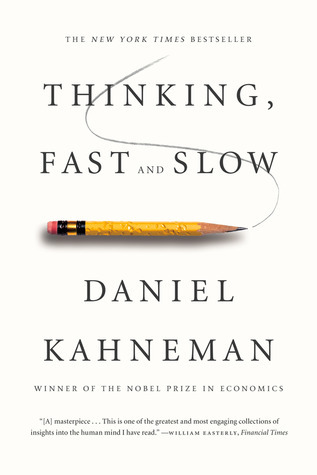
Major New York Times bestsellerWinner of the National Academy of Sciences Best Book Award in 2012Selected by the New York Times Book Review as one of the best books of 2011A Globe and Mail Best Books of the Year 2011 TitleOne of The Economist's 2011 Books of the Year One of The Wall Street Journal's Best Nonfiction Books of the Year 20112013 Presidential Medal of Freedom RecipientIn the international bestseller, Thinking, Fast and Slow, Daniel Kahneman, the renowned psychologist and winner of the Nobel Prize in Economics, takes us on a groundbreaking tour of the mind and explains the two systems that drive the way we think. System 1 is fast, intuitive, and emotional; System 2 is slower, more deliberative, and more logical. The impact of overconfidence on corporate strategies, the difficulties of predicting what will make us happy in the future, the profound effect of cognitive biases on everything from playing the stock market to planning our next vacation—each of these can be understood only by knowing how the two systems shape our judgments and decisions. Engaging the reader in a lively conversation about how we think, Kahneman reveals where we can and cannot trust our intuitions and how we can tap into the benefits of slow thinking. He offers practical and enlightening insights into how choices are made in both our business and our personal lives—and how we can use different techniques to guard against the mental glitches that often get us into trouble. Winner of the National Academy of Sciences Best Book Award and the Los Angeles Times Book Prize and selected by The New York Times Book Review as one of the ten best books of 2011, Thinking, Fast and Slow is destined to be a classic.

Unmanned weaponized drones already exist—they’re widely used by America in our war efforts in the Middle East. In Kill Decision, bestselling author Daniel Suarez takes that fact and the real science behind it one step further, with frightening results. Linda McKinney is a myrmecologist, a scientist who studies the social structure of ants. Her academic career has left her entirely unprepared for the day her sophisticated research is conscripted by unknown forces to help run an unmanned—and thanks to her research, automated—drone army. Odin is the secretive Special Ops soldier with a unique insight into the faceless enemy who has begun to attack the American homeland with drones programmed to seek, identify, and execute targets without human intervention. Together, McKinney and Odin must slow this advance long enough for the world to recognize its destructive power, because for thousands of years the “kill decision” during battle has remained in the hands of humans—and off-loading that responsibility to machines will bring unintended, possibly irreversible, consequences. But as forces even McKinney and Odin don’t understand begin to gather, and death rains down from above, it may already be too late to save humankind from destruction at the hands of our own technology.

An apology for the builder, or, A discourse shewing the cause and effects of the increase of building.
by Nicholas Barbon
Rating: 3.0 ⭐
• 2 recommendations ❤️
EARLY HISTORY OF INDUSTRY & SCIENCE. Imagine holding history in your hands. Now you can. Digitally preserved and previously accessible only through libraries as Early English Books Online, this rare material is now available in single print editions. Thousands of books written between 1475 and 1700 can be delivered to your doorstep in individual volumes of high quality historical reproductions. Acting as a kind of historical Wall Street, this collection of industry manuals and records explores the histories of thriving industries such construction, textile (especially wool and linen), salt, livestock, and many more.++++The below data was compiled from various identification fields in the bibliographic record of this title. This data is provided as an additional tool in helping to insure edition ++++An apology for the builder; or A discourse shewing the cause and effects of the increase of buildingBarbon, Nicholas, d. 1698.By Nicholas Barbon.[2], 37, [1] p.London : [s.n.], printed in the year, MDCLXXXIX. [1689]Wing (2nd ed., 1994) / B705EnglishReproduction of the original in the Guildhall Library (London, England)++++This book represents an authentic reproduction of the text as printed by the original publisher. While we have attempted to accurately maintain the integrity of the original work, there are sometimes problems with the original work or the micro-film from which the books were digitized. This can result in errors in reproduction. Possible imperfections include missing and blurred pages, poor pictures, markings and other reproduction issues beyond our control. Because this work is culturally important, we have made it available as part of our commitment to protecting, preserving and promoting the world's literature.

Without Their Permission: The Story of Reddit and a Blueprint for How to Change the World
by Alexis Ohanian
Rating: 3.6 ⭐
• 8 recommendations ❤️
As Alexis Ohanian learned when he helped to co-found the immensely popular reddit.com, the internet is the most powerful and democratic tool for disseminating information in human history. And when that power is harnessed to create new communities, technologies, businesses or charities, the results can be absolutely stunning.In this book, Alexis will share his ideas, tips and even his own doodles about harnessing the power of the web for good, and along the way, he will share his philosophy with young entrepreneurs all over the globe.At 29, Ohanian has come to personify the dorm-room tech entrepreneur, changing the world without asking permission. Within a couple of years of graduating from the University of Virginia, Ohanian did just that, selling reddit for millions of dollars. He's gone on to start many other companies, like hipmunk and breadpig, all while representing Y Combinator and investing in over sixty other tech startups. Without Their Permission is his personal guidebook as to how other aspiring entrepreneurs can follow in his footsteps.

Zero to One: Notes on Startups, or How to Build the Future
by Peter Thiel
Rating: 4.2 ⭐
• 48 recommendations ❤️
If you want to build a better future, you must believe in secrets.The great secret of our time is that there are still uncharted frontiers to explore and new inventions to create. In Zero to One, legendary entrepreneur and investor Peter Thiel shows how we can find singular ways to create those new things. Thiel begins with the contrarian premise that we live in an age of technological stagnation, even if we’re too distracted by shiny mobile devices to notice. Information technology has improved rapidly, but there is no reason why progress should be limited to computers or Silicon Valley. Progress can be achieved in any industry or area of business. It comes from the most important skill that every leader must master: learning to think for yourself.Doing what someone else already knows how to do takes the world from 1 to n, adding more of something familiar. But when you do something new, you go from 0 to 1. The next Bill Gates will not build an operating system. The next Larry Page or Sergey Brin won’t make a search engine. Tomorrow’s champions will not win by competing ruthlessly in today’s marketplace. They will escape competition altogether, because their businesses will be unique. Zero to One presents at once an optimistic view of the future of progress in America and a new way of thinking about innovation: it starts by learning to ask the questions that lead you to find value in unexpected places.

The Hard Thing About Hard Things: Building a Business When There Are No Easy Answers―Straight Talk on the Challenges of Entrepreneurship
by Ben Horowitz
Rating: 4.2 ⭐
• 60 recommendations ❤️
A lot of people talk about how great it is to start a business, but only Ben Horowitz is brutally honest about how hard it is to run one.In The Hard Thing About Hard Things, Ben Horowitz, cofounder of Andreessen Horowitz and one of Silicon Valley's most respected and experienced entrepreneurs, draws on his own story of founding, running, selling, buying, managing, and investing in technology companies to offer essential advice and practical wisdom for navigating the toughest problems business schools don't cover. His blog has garnered a devoted following of millions of readers who have come to rely on him to help them run their businesses. A lifelong rap fan, Horowitz amplifies business lessons with lyrics from his favorite songs and tells it straight about everything from firing friends to poaching competitors, from cultivating and sustaining a CEO mentality to knowing the right time to cash in.His advice is grounded in anecdotes from his own hard-earned rise—from cofounding the early cloud service provider Loudcloud to building the phenomenally successful Andreessen Horowitz venture capital firm, both with fellow tech superstar Marc Andreessen (inventor of Mosaic, the Internet's first popular Web browser). This is no polished victory lap; he analyzes issues with no easy answers through his trials, including demoting (or firing) a loyal friend;whether you should incorporate titles and promotions, and how to handle them;if it's OK to hire people from your friend's company; how to manage your own psychology, while the whole company is relying on you; what to do when smart people are bad employees; why Andreessen Horowitz prefers founder CEOs, and how to become one; whether you should sell your company, and how to do it.Filled with Horowitz's trademark humor and straight talk, and drawing from his personal and often humbling experiences, The Hard Thing About Hard Things is invaluable for veteran entrepreneurs as well as those aspiring to their own new ventures.


Civilian Warriors: The Inside Story of Blackwater and the Unsung Heroes of the War on Terror
by Erik Prince
Rating: 4.2 ⭐
• 2 recommendations ❤️
The founder of Blackwater offers the gripping true story of the world’s most controversial military contractor.In 1997, former Navy SEAL Erik Prince started a business that would recruit civilians for the riskiest security jobs in the world. As Blackwater’s reputation grew, demand for its services escalated, and its men eventually completed nearly 100,000 missions for both the Bush and Obama administrations.It was a huge success except for one Blackwater was demonized around the world. Its employees were smeared as mercenaries, profiteers, or worse. And because of the secrecy requirements of its contracts with the Pentagon, the State Department, and the CIA, Prince was unable to correct false information. But now he’s finally able to tell the full story about some of the biggest controversies of the War on Terror, in a memoir that reads like a thriller.

The Courage to Be Disliked: The Japanese Phenomenon That Shows You How to Change Your Life and Achieve Real Happiness
by Ichiro Kishimi
Rating: 4.0 ⭐
• 14 recommendations ❤️
The Life-Changing Magic of Tidying Up for the mind, The Courage to Be Disliked is the Japanese phenomenon that shows you how to free yourself from the shackles of past experiences and others’ expectations to achieve real happiness.The Courage to Be Disliked, already an enormous bestseller in Asia with more than 3.5 million copies sold, demonstrates how to unlock the power within yourself to be the person you truly want to be. Using the theories of Alfred Adler, one of the three giants of twentieth century psychology, this book follows an illuminating conversation between a philosopher and a young man. The philosopher explains to his pupil how each of us is able to determine our own life, free from the shackles of past experiences, doubts, and the expectations of others. It’s a way of thinking that is deeply liberating, allowing us to develop the courage to change, and to ignore the limitations that we and those around us have placed on ourselves. The result is a book that is both highly accessible and profound in its importance. Millions have already read and benefitted from its wisdom. This is a truly special book in the vein of Marie Kondo’s The Life-Changing Magic of Tidying Up but for the mind. Those ready to embrace the insights and liberation promised by The Courage to Be Disliked will come to a deeper understanding of themselves and others, and find the inspiration to take the reins of their own life.

A Spy Among Friends: Kim Philby and the Great Betrayal
by Ben Macintyre
Rating: 4.4 ⭐
• 2 recommendations ❤️
Kim Philby is perhaps the most notorious British defector in history. Agent, double agent, charmer and traitor, he betrayed every secret of Allied operations to the Russians in the early years of the cold War. In the aftermath of the Second World War, Philby, Nicholas Elliottt and James Jesus Angleton were rising stars in the intelligence world and shared every secret. Elliott and Angleton thought they knew Philby better than anyone - and then discovered they had not known him at all.This is a story of loyalty, trust and treachery, class and conscience.... of male friendships forged and then systematically betrayed. With access to newly released MI5 files and previously unseen papers. 'A Spy Among Friends' unlocks what is perhaps the last great secret of the Cold War.

Becoming Steve Jobs: The Evolution of a Reckless Upstart into a Visionary Leader
by Brent Schlender
Rating: 4.4 ⭐
• 16 recommendations ❤️
The #1 New York Times bestselling biography of how Steve Jobs became the most visionary CEO in history. Becoming Steve Jobs breaks down the conventional, one-dimensional view of Steve Jobs that he was half-genius, half-jerk from youth, an irascible and selfish leader who slighted friends and family alike. Becoming Steve Jobs answers the central question about the life and career of the Apple cofounder and How did a young man so reckless and arrogant that he was exiled from the company he founded become the most effective visionary business leader of our time, ultimately transforming the daily life of billions of people?Drawing on incredible and sometimes exclusive access, Schlender and Tetzeli tell a different story of a real human being who wrestled with his failings and learned to maximize his strengths over time. Their rich, compelling narrative is filled with stories never told before from the people who knew Jobs best, including his family, former inner circle executives, and top people at Apple, Pixar and Disney, most notably Tim Cook, Jony Ive, Eddy Cue, Ed Catmull, John Lasseter, Robert Iger and many others. In addition, Schlender knew Jobs personally for 25 years and draws upon his many interviews with him, on and off the record, in writing the book. He and Tetzeli humanize the man and explain, rather than simply describe, his behavior. Along the way, the book provides rich context about the technology revolution we've all lived through, and the ways in which Jobs changed our world.A rich and revealing account, Becoming Steve Jobs shows us how one of the most colorful and compelling figures of our times was able to combine his unchanging, relentless passion with an evolution in management style to create one of the most valuable and beloved companies on the planet.

Days of Rage: America's Radical Underground, the FBI, and the Forgotten Age of Revolutionary Violence
by Bryan Burrough
Rating: 4.1 ⭐
• 2 recommendations ❤️
From the bestselling author of Public Enemies & The Big Rich , an account of the battle between the FBI & revolutionary movements of the '70s: Weathermen, The Symbionese Liberation Army, The FALN, The Black Liberation Army. The names seem quaint now, but then bombings by domestic underground groups were daily occurrences. The FBI combated these & other groups as nodes of a single revolutionary underground dedicated to the violent overthrow of the USA. Burrough's Days of Rage recreates an atmosphere almost unbelievable decades later, conjuring a time of native-born radicals, often nice middle-class kids, smuggling bombs into skyscrapers & detonating them inside the Pentagon & the Capitol, at a Boston courthouse & a Wall Street restaurant. The FBI’s response included the formation of a secret task force, Squad 47, dedicated to hunting the groups down. But Squad 47 itself broke laws in its attempts to bring the revolutionaries to justice. Its efforts ended in fiasco. Drawing on interviews about their experiences with members of the underground & the FBI, Days of Rage is a look into the hearts & minds of homegrown terrorists & federal agents alike, weaving their stories into a secret history of the '70s.

Living with a SEAL: 31 Days Training with the Toughest Man on the Planet
by Jesse Itzler
Rating: 4.3 ⭐
• 8 recommendations ❤️
Entrepreneur Jesse Itzler chronicles his month of living and extreme fitness training with a Navy SEAL in the New York Times and #1 LA Times bestseller Living With a Seal, now with two bonus chapters.Entrepreneur Jesse Itzler will try almost anything. His life is about being bold and risky. So when Jesse felt himself drifting on autopilot, he hired a rather unconventional trainer to live with him for a month-an accomplished Navy SEAL widely considered to be "the toughest man on the planet"! Living With a Seal is like a buddy movie if it starred the Fresh Prince of Bel- Air. . .and Rambo. Jesse is about as easy-going as you can get. SEAL is. . . not. Jesse and SEAL's escapades soon produce a great friendship, and Jesse gains much more than muscle. At turns hilarious and inspiring, Living With a Seal ultimately shows you the benefits of stepping out of your comfort zone.

The Nazi regime preached an ideology of physical, mental, and moral purity. Yet as Norman Ohler reveals in this gripping new history, the Third Reich was saturated with drugs: cocaine, opiates, and, most of all, methamphetamines. Troops were encouraged, and in some cases ordered, to take rations of a form of crystal meth – the elevated energy and feelings of invincibility associated with the high even help to account for the breakneck invasion that sealed the fall of France in 1940, as well as other German military victories. Hitler himself became increasingly dependent on a cocktail of drugs – ultimately including Eukodal, a cousin of heroin – administered by his personal doctor.Thoroughly researched and rivetingly readable, Blitzed throws light on a history that, until now, has remained in the shadows.

The Rise and Fall of American Growth: The U.S. Standard of Living since the Civil War
by Robert J. Gordon
Rating: 4.2 ⭐
• 11 recommendations ❤️
How America's high standard of living came to be and why future growth is under threatIn the century after the Civil War, an economic revolution improved the American standard of living in ways previously unimaginable. Electric lighting, indoor plumbing, motor vehicles, air travel, and television transformed households and workplaces. But has that era of unprecedented growth come to an end? Weaving together a vivid narrative, historical anecdotes, and economic analysis, The Rise and Fall of American Growth challenges the view that economic growth will continue unabated, and demonstrates that the life-altering scale of innovations between 1870 and 1970 cannot be repeated. Gordon contends that the nation's productivity growth will be further held back by the headwinds of rising inequality, stagnating education, an aging population, and the rising debt of college students and the federal government, and that we must find new solutions. A critical voice in the most pressing debates of our time, The Rise and Fall of American Growth is at once a tribute to a century of radical change and a harbinger of tougher times to come.
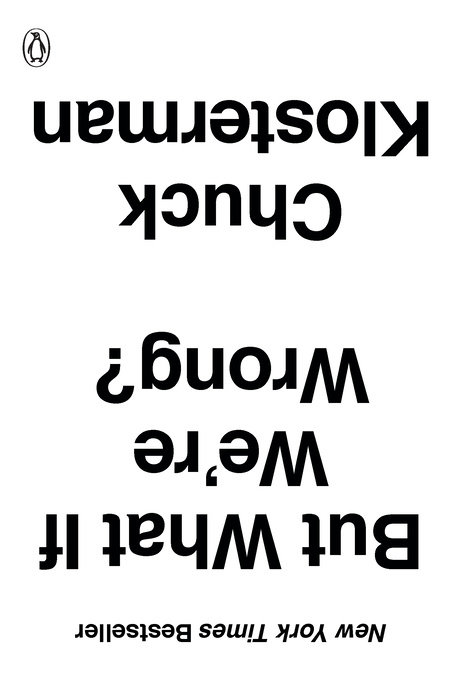
But What If We're Wrong?: Thinking About the Present As If It Were the Past
by Chuck Klosterman
Rating: 3.8 ⭐
• 4 recommendations ❤️
New York Times bestselling author Chuck Klosterman asks questions that are profound in their simplicity: How certain are we about our understanding of gravity? How certain are we about our understanding of time? What will be the defining memory of rock music, five hundred years from today? How seriously should we view the content of our dreams? How seriously should we view the content of television? Are all sports destined for extinction? Is it possible that the greatest artist of our era is currently unknown (or weirder still widely known, but entirely disrespected)? Is it possible that we overrate democracy? And perhaps most disturbing, is it possible that we ve reached the end of knowledge? Klosterman visualizes the contemporary world as it will appear to those who'll perceive it as the distant past.Kinetically slingshotting through a broad spectrum of objective and subjective problems, But What If We re Wrong? is built on interviews with a variety of creative thinkers George Saunders, David Byrne, Jonathan Lethem, Kathryn Schulz, Neil deGrasse Tyson, Brian Greene, Junot Diaz, Amanda Petrusich, Ryan Adams, Nick Bostrom, Dan Carlin, and Richard Linklater, among others interwoven with the type of high-wire humor and nontraditional analysis only Klosterman would dare to attempt. It s a seemingly impossible achievement: a book about the things we cannot know, explained as if we did. It s about how we live now, once now has become then. From the Hardcover edition."

A Very Expensive Poison: The Assassination of Alexander Litvinenko and Putin's War with the West
by Luke Harding
Rating: 4.2 ⭐
• 6 recommendations ❤️
1 November 2006. Alexander Litvinenko is brazenly poisoned in central London. Twenty two days later he dies, killed from the inside. The poison? Polonium; a rare, lethal and highly radioactive substance. His crime? He had made some powerful enemies in Russia.Based on the best part of a decade's reporting, as well as extensive interviews with those closest to the events (including the murder suspects), and access to trial evidence, Luke Harding's A Very Expensive Poison is the definitive inside story of the life and death of Alexander Litvinenko. Harding traces the journey of the nuclear poison across London, from hotel room to nightclub, assassin to victim; it is a deadly trail that seemingly leads back to the Russian state itself.Harding argues that Litvinenko's assassination marked the beginning of the deterioration of Moscow's relations with the west and a decade of geo-political disruptions--from the war in Ukraine, a civilian plane shot down, at least 7,000 dead, two million people displaced and a Russian president's defiant rejection of a law-based international order. With Russia's covert war in Ukraine and annexation of the Crimea, Europe and the US face a new Cold War, but with fewer certainties.This is a shocking real-life revenge tragedy with corruption and subterfuge at every turn, and walk-on parts from Russian mafia, the KGB, MI6 agents, dedicated British coppers, Russian dissidents. At the heart of this all is an individual and his family torn apart by a ruthless crime.

What does everyone in the modern world need to know? Renowned psychologist Jordan B. Peterson's answer to this most difficult of questions uniquely combines the hard-won truths of ancient tradition with the stunning revelations of cutting-edge scientific research.Humorous, surprising, and informative, Dr. Peterson tells us why skateboarding boys and girls must be left alone, what terrible fate awaits those who criticize too easily, and why you should always pet a cat when you meet one on the street.What does the nervous system of the lowly lobster have to tell us about standing up straight (with our shoulders back) and about success in life? Why did ancient Egyptians worship the capacity to pay careful attention as the highest of gods? What dreadful paths do people tread when they become resentful, arrogant, and vengeful? Dr. Peterson journeys broadly, discussing discipline, freedom, adventure, and responsibility, distilling the world's wisdom into 12 practical and profound rules for life. 12 Rules for Life shatters the modern commonplaces of science, faith, and human nature while transforming and ennobling the mind and spirit of its listeners.

The Spider Network: How a Math Genius and a Gang of Scheming Bankers Pulled Off One of the Greatest Scams in History
by David Enrich
Rating: 4.1 ⭐
• 2 recommendations ❤️
The Wall Street Journal's award-winning business reporter unveils the bizarre and sinister story of how a math genius named Tom Hayes, a handful of outrageous confederates, and a deeply corrupt banking system ignited one of the greatest financial scandals in history. The paperback edition includes a new chapter discussing further fallout from the scandal.In 2006, an oddball group of bankers, traders and brokers from some of the world’s largest financial institutions made a startling realization: Libor—the London interbank offered rate, which determines interest rates on trillions in loans worldwide—was set daily by a small group of easily manipulated functionaries. Tom Hayes, a brilliant but troubled mathematician, became the lynchpin of shadowy team that used hook and crook to take over the process and set rates that made them a fortune, no matter the cost to others. Among the motley crew was a French trader nicknamed “Gollum”; the broker “Abbo,” who liked to publicly strip naked when drinking; a Kazakh chicken farmer turned something short of financial whiz kid; an executive called “Clumpy” because of his patchwork hair loss; and a broker uncreatively nicknamed “Big Nose.” Eventually known as the “Spider Network,” Hayes’s circle generated untold riches —until it all unraveled in spectacularly vicious, backstabbing fashion.Praised as reading “like a fast-paced John le Carré thriller” (New York Times), “compelling” (Washington Post) and “jaw-dropping” (Financial Times), The Spider Network is not only a rollicking account of the scam, but a provocative examination of a financial system that was warped and shady throughout.

All Out War: The Full Story of How Brexit Sank Britain's Political Class
by Tim Shipman
Rating: 4.4 ⭐
• 2 recommendations ❤️
'Tim Shipman's dispatches from the political front line are a must read’ NICK ROBINSONPolitics was turned upside down during 2016. This book by Sunday Times political editor Tim Shipman is the first to tell the full story of how and why Britain voted to leave the European Union and how the vote shattered the political status quo.Based on unrivalled access to all the key politicians and their advisors – including Boris Johnson, Michael Gove, George Osborne, Nigel Farage and Dominic Cummings, the mastermind of Vote Leave – Shipman has written a political history that reads like a thriller, and offers a gripping, day-by-day account of what really happened behind-the-scenes in Downing Street, both Leave campaigns, the Labour Party, Ukip and Britain Stronger in Europe.Shipman gives his readers a ringside seat on how decisions were made, mistakes justified and betrayals perpetrated. Filled with stories, anecdotes and juicy leaks the book does not seek to address the rights and wrongs of Brexit but to explore how and why David Cameron chose to take the biggest political gamble of his life and explain why he lost.This is a story of calculation, attempted coups, individuals torn between principles and loyalty. All the events are here – from David Cameron’s pledge to hold a referendum, through to the campaign itself, his resignation as prime minister, the betrayals and rivalries that occurred during the race to find his successor to the arrival of Theresa May in Downing Street as Britain’s second female prime minister.All Out War is a book about leaders and their closest aides, the decisions they make and how and why they make them, as well as how they feel when they turn out to be wrong. It is about men who make decisions that are intellectually consistent and – by their own measure – morally sound that are simultaneously disastrous for themselves and those closest to them. It is about how doing what you know has worked before doesn’t always work again. Most of all it is about asking the question: how far are you prepared to go to win?

The Strange Death of Europe is the internationally bestselling account of a continent and a culture caught in the act of suicide, now updated with new material taking in developments since it was first published to huge acclaim. These include rapid changes in the dynamics of global politics, world leadership and terror attacks across Europe.Douglas Murray travels across Europe to examine first-hand how mass immigration, cultivated self-distrust and delusion have contributed to a continent in the grips of its own demise. From the shores of Lampedusa to migrant camps in Greece, from Cologne to London, he looks critically at the factors that have come together to make Europeans unable to argue for themselves and incapable of resisting their alteration as a society. Murray's "tremendous and shattering" book ( The Times ) addresses the disappointing failures of multiculturalism, Angela Merkel's U-turn on migration, the lack of repatriation and the Western fixation on guilt, uncovering the malaise at the very heart of the European culture. His conclusion is bleak, but the predictions not irrevocable. As Murray argues, this may be our last chance to change the outcome, before it's too late.

Shattered: Inside Hillary Clinton's Doomed Campaign
by Jonathan Allen
Rating: 3.8 ⭐
• 6 recommendations ❤️
#1 NEW YORK TIMES BESTSELLERIt was never supposed to be this close. And of course she was supposed to win. How Hillary Clinton lost the 2016 election to Donald Trump is the riveting story of a sure thing gone off the rails. For every Comey revelation or hindsight acknowledgment about the electorate, no explanation of defeat can begin with anything other than the core problem of Hillary's campaign--the candidate herself.Through deep access to insiders from the top to the bottom of the campaign, political writers Jonathan Allen and Amie Parnes have reconstructed the key decisions and unseized opportunities, the well-intentioned misfires and the hidden thorns that turned a winnable contest into a devastating loss. Drawing on the authors' deep knowledge of Hillary from their previous book, the acclaimed biography HRC, Shattered offers an object lesson in how Hillary herself made victory an uphill battle, how her difficulty articulating a vision irreparably hobbled her impact with voters, and how the campaign failed to internalize the lessons of populist fury from the hard-fought primary against Bernie Sanders.Moving blow-by-blow from the campaign's difficult birth through the bewildering terror of election night, Shattered tells an unforgettable story with urgent lessons both political and personal, filled with revelations that will change the way readers understand just what happened to America on November 8, 2016.

Lenin: The Man, the Dictator, and the Master of Terror
by Victor Sebestyen
Rating: 4.3 ⭐
• 4 recommendations ❤️
Victor Sebestyen’s riveting biography of Vladimir Ilyich Lenin—the first major biography in English in nearly two decades—is not only a political examination of one of the most important historical figures of the twentieth century but also a fascinating portrait of Lenin the man.Brought up in comfort and with a passion for hunting and fishing, chess, and the English classics, Lenin was radicalized after the execution of his brother in 1887. Sebestyen traces the story from Lenin’s early years to his long exile in Europe and return to Petrograd in 1917 to lead the first Communist revolution in history. Uniquely, Sebestyen has discovered that throughout Lenin’s life his closest relationships were with his mother, his sisters, his wife, and his mistress. The long-suppressed story told here of the love triangle that Lenin had with his wife, Nadezhda Krupskaya, and his beautiful, married mistress and comrade, Inessa Armand, reveals a more complicated character than that of the coldly one-dimensional leader of the Bolshevik Revolution.With Lenin’s personal papers and those of other leading political figures now available, Sebestyen gives is new details that bring to life the dramatic and gripping story of how Lenin seized power in a coup and ran his revolutionary state. The product of a violent, tyrannical, and corrupt Russia, he chillingly authorized the deaths of thousands of people and created a system based on the idea that political terror against opponents was justified for a greater ideal. An old comrade what had once admired him said that Lenin “desired the good . . . but created evil.” This included his invention of Stalin, who would take Lenin’s system of the gulag and the secret police to horrifying new heights.In Lenin, Victor Sebestyen has written a brilliant portrait of this dictator as a complex and ruthless figure, and he also brings to light important new revelations about the Russian Revolution, a pivotal point in modern history.

Slugfest: Inside the Epic, 50-year Battle between Marvel and DC
by Reed Tucker
Rating: 4.0 ⭐
• 2 recommendations ❤️
The most bruising battle in the superhero world isn't between spandex-clad characters; it's between the publishers themselves. For more than 50 years, Marvel and DC have been locked in an epic war, tirelessly trading punches and trying to do to each other what Batman regularly does to the Joker's face. Slugfest, the first book to tell the history of this epic rivalry into a single, juicy narrative, is the story of the greatest corporate rivalry never told. It is also an alternate history of the superhero, told through the lens of these two publishers.Slugfest will combine primary-source reporting with in-depth research to create a more fun Barbarians at the Gate for the comic book industry. Complete with interviews with the major names in the industry, Slugfest reveals the arsenal of schemes the two companies have employed in their attempts to outmaneuver the competition, whether it be stealing ideas, poaching employees, planting spies, ripping off characters or launching price wars. Sometimes the feud has been vicious, at other times, more cordial. But it has never completely disappeared, and it simmers on a low boil to this day. The competition has spilled over to the even the casual fans, bisecting the world into two opposing tribes. You are either a Marvel or a DC fan, and allegiance is hardly a trivial matter. Perhaps the most telling question one can ask of a superhero fan is, Marvel or DC? The answer often reveals something deeper about personality, and the reason is wrapped up in the history of both companies."A smart, blow-by-blow narrative of the sometimes-friendly, often bitter rivalry between corporate comic-book behemoths...A wild haymaker for the masses, perhaps, but a knockout read for capes-and-cowls aficionados."―Kirkus "Reed Tucker masterfully dissects the REAL issue dividing us as a nation."―Seth Meyers, host of NBC's Late Night with Seth Meyers "This is a book for 'Fans.' I consider myself a 'Fan.' I love this book. I guess you could say I am a 'Fan' of this book. If you are not a 'Fan' of 'Things' then this is not a book for you. It is a book for me. GIVE ME BACK MY BOOK!"―Bobby Moynihan, comedian and former Saturday Night Live cast member "Slugfest is the ringside commentator for the clash of the comic book titans. A must-read for all comic fans."―Scott Sigler, author of the #1 New York Times bestselling novel Alive

In his book, former FBI director James Comey shares his never-before-told experiences from some of the highest-stakes situations of his career in the past two decades of American government, exploring what good, ethical leadership looks like, and how it drives sound decisions. His journey provides an unprecedented entry into the corridors of power, and a remarkable lesson in what makes an effective leader.Mr. Comey served as director of the FBI from 2013 to 2017, appointed to the post by President Barack Obama. He previously served as U.S. attorney for the Southern District of New York, and the U.S. deputy attorney general in the administration of President George W. Bush. From prosecuting the Mafia and Martha Stewart to helping change the Bush administration's policies on torture and electronic surveillance, overseeing the Hillary Clinton e-mail investigation as well as ties between the Trump campaign and Russia, Comey has been involved in some of the most consequential cases and policies of recent history.

Devil's Bargain: Steve Bannon, Donald Trump, and the Storming of the Presidency
by Joshua Green
Rating: 3.9 ⭐
• 2 recommendations ❤️
The revealing inside story of the partnership between Steve Bannon and Donald Trump—the key to understanding the rise of the alt-right, the fall of Hillary Clinton, and the hidden forces that drove the greatest upset in American political history. Based on dozens of interviews conducted over six years, Green spins the master narrative of the 2016 campaign from its origins in the far fringes of right-wing politics and reality television to its culmination inside Trump’s penthouse on election night. The shocking elevation of Bannon to head Trump’s flagging presidential campaign on August 17, 2016, hit political Washington like a thunderclap and seemed to signal the meltdown of the Republican Party. Bannon was a bomb-throwing pugilist who’d never run a campaign and was despised by Democrats and Republicans alike. Yet Bannon’s hard-edged ethno-nationalism and his elaborate, years-long plot to destroy Hillary Clinton paved the way for Trump’s unlikely victory. Trump became the avatar of a dark but powerful worldview that dominated the airwaves and spoke to voters whom others couldn’t see. Trump’s campaign was the final phase of a populist insurgency that had been building up in America for years, and Bannon, its inscrutable mastermind, believed it was the culmination of a hard-right global uprising that would change the world. Any study of Trump’s rise to the presidency is unavoidably a study of Bannon. Devil’s Bargain is a tour-de-force telling of the remarkable confluence of circumstances that decided the election, many of them orchestrated by Bannon and his allies, who really did plot a vast, right-wing conspiracy to stop Clinton. To understand Trump's extraordinary rise and Clinton’s fall, you have to weave Trump’s story together with Bannon’s, or else it doesn't make sense.

Hacks: The Inside Story of the Break-ins and Breakdowns that Put Donald Trump in the White House
by Donna Brazile
Rating: 3.5 ⭐
• 2 recommendations ❤️
From Donna Brazile, former DNC chair and legendary political operative, an explosive and revealing new look at the 2016 election: the first insider account of the Russian hacking of the DNC and the missteps by the Clinton campaign and Obama administration that enabled a Trump victory.In the fallout of the Russian hacking of the Democratic National Committee--and as chaos threatened to consume the party's convention--Democrats turned to a familiar figure to right the ship: Donna Brazile. Known to millions from her frequent TV appearances, she was no stranger to high stakes and dirty opponents, and the longtime Democratic strategist had a reputation in Washington as a one-stop shop for fixing sticky problems. What Brazile found at the DNC was unlike anything she had experienced before--and much worse than is commonly known. The party was beset by infighting, scandal, and hubris, while reeling from a brazen and wholly unprecedented attempt by a foreign power to influence the presidential election. Plus, its candidate, Hillary Clinton, faced an opponent who broke every rule in the political playbook. Packed with never-before-reported revelations about what went down in 2016, Hacks is equal parts campaign thriller, memoir, and roadmap for the future. With Democrats now in the wilderness after this historic defeat, Hacks argues that staying silent about what went wrong helps no one. Only by laying bare the missteps, miscalculations, and crimes of 2016, Brazile contends, will Americans be able to salvage their democracy.

Thinking in Bets: Making Smarter Decisions When You Don't Have All the Facts
by Annie Duke
Rating: 3.8 ⭐
• 19 recommendations ❤️
In Super Bowl XLIX, Seahawks coach Pete Carroll made one of the most controversial calls in football history: With 26 seconds remaining, and trailing by four at the Patriots' one-yard line, he called for a pass instead of a hand off to his star running back. The pass was intercepted and the Seahawks lost. Critics called it the dumbest play in history. But was the call really that bad? Or did Carroll actually make a great move that was ruined by bad luck?Even the best decision doesn't yield the best outcome every time. There's always an element of luck that you can't control, and there is always information that is hidden from view. So the key to long-term success (and avoiding worrying yourself to death) is to think in bets: How sure am I? What are the possible ways things could turn out? What decision has the highest odds of success? Did I land in the unlucky 10% on the strategy that works 90% of the time? Or is my success attributable to dumb luck rather than great decision making?Annie Duke, a former World Series of Poker champion turned business consultant, draws on examples from business, sports, politics, and (of course) poker to share tools anyone can use to embrace uncertainty and make better decisions. For most people, it's difficult to say "I'm not sure" in a world that values and, even, rewards the appearance of certainty. But professional poker players are comfortable with the fact that great decisions don't always lead to great outcomes and bad decisions don't always lead to bad outcomes.By shifting your thinking from a need for certainty to a goal of accurately assessing what you know and what you don't, you'll be less vulnerable to reactive emotions, knee-jerk biases, and destructive habits in your decision making. You'll become more confident, calm, compassionate and successful in the long run.

From the New York Times bestselling author of The Black Swan, a bold new work that challenges many of our long-held beliefs about risk and reward, politics and religion, finance and personal responsibility In his most provocative and practical book yet, one of the foremost thinkers of our time redefines what it means to understand the world, succeed in a profession, contribute to a fair and just society, detect nonsense, and influence others. Citing examples ranging from Hammurabi to Seneca, Antaeus the Giant to Donald Trump, Nassim Nicholas Taleb shows how the willingness to accept one’s own risks is an essential attribute of heroes, saints, and flourishing people in all walks of life. As always both accessible and iconoclastic, Taleb challenges long-held beliefs about the values of those who spearhead military interventions, make financial investments, and propagate religious faiths. Among his insights: • For social justice, focus on symmetry and risk sharing. You cannot make profits and transfer the risks to others, as bankers and large corporations do. You cannot get rich without owning your own risk and paying for your own losses. Forcing skin in the game corrects this asymmetry better than thousands of laws and regulations. • Ethical rules aren’t universal. You’re part of a group larger than you, but it’s still smaller than humanity in general. • Minorities, not majorities, run the world. The world is not run by consensus but by stubborn minorities imposing their tastes and ethics on others. • You can be an intellectual yet still be an idiot. “Educated philistines” have been wrong on everything from Stalinism to Iraq to low-carb diets. • Beware of complicated solutions (that someone was paid to find). A simple barbell can build muscle better than expensive new machines. • True religion is commitment, not just faith. How much you believe in something is manifested only by what you’re willing to risk for it.The phrase “skin in the game” is one we have often heard but rarely stopped to truly dissect. It is the backbone of risk management, but it’s also an astonishingly rich worldview that, as Taleb shows in this book, applies to all aspects of our lives. As Taleb says, “The symmetry of skin in the game is a simple rule that’s necessary for fairness and justice, and the ultimate BS-buster,” and “Never trust anyone who doesn’t have skin in the game. Without it, fools and crooks will benefit, and their mistakes will never come back to haunt them.”

When the Wolves Bite: Two Billionaires, One Company, and an Epic Wall Street Battle
by Scott Wapner
Rating: 3.9 ⭐
• 2 recommendations ❤️
The inside story of the clash of two of Wall Street's biggest, richest, toughest, most aggressive players--Carl Icahn and Bill Ackman--and the little company caught in the middle.With their unprecedented amounts of capital and their savvy understanding of business, activist investors Carl Icahn and Bill Ackman have the ability to move markets and change the fortunes of investors, workers, and even large companies with the flick of a wrist. But what happens when they run into the one thing in business they can't control: each other?On January 25, 2013, Scott Wapner, the host of CNBC's The Halftime Report, found out firsthand. Ackman and Icahn engaged in an uninterrupted, twenty-seven-minute televised war of accusations and insults over a company called Herbalife, on which they had opposing views--and opposing financial bets. The story quickly went viral and was called "the best business television ever" by Jim Cramer.It was far from the beginning, and even farther from the end. Their feud became a years-long saga, complete with shifting allegiances, lawsuits, and financial roller coaster rides. For this book, Wapner has gained unprecedented access to all the players and unravels this remarkable war of egos, showing the extreme measures the participants were willing to take. The result is both a rollicking business story and a cautionary tale about the power that, ten years after the financial crisis, still lives in the hands of a precious few.

Chasing Hillary: Ten Years, Two Presidential Campaigns, and One Intact Glass Ceiling
by Amy Chozick
Rating: 3.5 ⭐
• 2 recommendations ❤️
“The Devil Wears Prada meets The Boys on the Bus”—New York Times The dishy, rollicking, and deeply personal story of what really happened in the 2016 election, as seen through the eyes of the New York Times reporter who gave eight years of her life to covering the First Woman President who wasn't.For a decade, award-winning New York Times journalist Amy Chozick chronicled Hillary Clinton’s pursuit of the presidency. Chozick’s front-row seat, initially covering Clinton’s imploding 2008 campaign, and then her assignment to “The Hillary Beat” ahead of the 2016 election, took her to 48 states and set off a nearly ten-years-long journey in which the formative years of her twenties and thirties became – both personally and professionally – intrinsically intertwined to Clinton’s presidential ambitions.Chozick’s candor and clear-eyed perspective—from her seat on the Hillary bus and reporting from inside the campaign’s Brooklyn headquarters, to her run-ins with Donald J. Trump and her globetrotting with Bill Clinton— provide fresh intrigue and insights into the story we thought we all knew. This is the real story of what happened, with the kind of dishy, inside details that repeatedly surprise and enlighten.But Chasing Hillary is also a rollicking, irreverent, refreshingly honest personal story of how the would-be first woman president looms over Chozick’s life. And, as she gets married, attempts to infiltrate the upper echelons of political journalism and inquires about freezing her eggs so she can have children after the 2016 campaign, Chozick dives deeper into decisions Clinton made at similar points in her life. In the process, Chozick came to see Clinton not as an unknowable enigma and political animal but as a complex person, full of contradictions and forged in the political battles and media storms that had long predated Chozick’s years of coverage. Trailing Clinton through all of the highs and lows of the most noxious and wildly dramatic presidential election in American history, Chozick comes to understand what drove Clinton, how she accomplished what no woman had before, and why she ultimately failed. Poignant, illuminating, laugh-out-loud funny, Chasing Hillary is a campaign book like never before that reads like a fast-moving political novel.

Conspiracy: Peter Thiel, Hulk Hogan, Gawker, and the Anatomy of Intrigue
by Ryan Holiday
Rating: 4.0 ⭐
• 8 recommendations ❤️
In the tradition of Janet Malcolm's THE JOURNALIST AND THE MURDERER and Robert Greene's THE 48 LAWS OF POWER, author Ryan Holiday examines the case that rocked the media world--and the billionaire mastermind behind itIn 2007, a short blogpost on Valleywag, the Silicon Valley-vertical of Gawker Media, outed PayPal founder and billionaire investor Peter Thiel as gay. Thiel's sexuality had been known to close friends and family, but he didn't consider himself a public figure, and believed the information was private.This post would be the casus belli for a meticulously plotted conspiracy that would end nearly a decade later with a $140 million dollar judgment against Gawker, its bankruptcy and with Nick Denton, Gawker's CEO and founder, out of a job. Only later would the world learn that Gawker's demise was not incidental--it had been masterminded by Thiel.For years, Thiel had searched endlessly for a solution to what he'd come to call the "Gawker Problem." When an unmarked enveloped delivered an illegally recorded sex tape of Hogan with his best friend's wife, Gawker had seen the chance for millions of pageviews and to say the things that others were afraid to say. Thiel saw their publication of the tape as the opportunity he was looking for. He would come to pit Hogan against Gawker in a multi-year proxy war through the Florida legal system, while Gawker remained confidently convinced they would prevail as they had over so many other lawsuit--until it was too late.The verdict would stun the world and so would Peter's ultimate unmasking as the man who had set it all in motion. Why had he done this? How had no one discovered it? What would this mean--for the First Amendment? For privacy? For culture?In Holiday's masterful telling of this nearly unbelievable conspiracy, informed by interviews with all the key players, this case transcends the narrative of how one billionaire took down a media empire or the current state of the free press. It's a study in power, strategy, and one of the most wildly ambitious--and successful--secret plots in recent memory.Some will cheer Gawker's destruction and others will lament it, but after reading these pages--and seeing the access the author was given--no one will deny that there is something ruthless and brilliant about Peter Thiel's shocking attempt to shake up the world.

Can't Hurt Me: Master Your Mind and Defy the Odds
by David Goggins
Rating: 4.5 ⭐
• 14 recommendations ❤️
New York Times Best SellerOver 5 million copies soldFor David Goggins, childhood was a nightmare -- poverty, prejudice, and physical abuse colored his days and haunted his nights. But through self-discipline, mental toughness, and hard work, Goggins transformed himself from a depressed, overweight young man with no future into a U.S. Armed Forces icon and one of the world's top endurance athletes. The only man in history to complete elite training as a Navy SEAL, Army Ranger, and Air Force Tactical Air Controller, he went on to set records in numerous endurance events, inspiring Outside magazine to name him "The Fittest (Real) Man in America."In Can't Hurt Me , he shares his astonishing life story and reveals that most of us tap into only 40% of our capabilities. Goggins calls this The 40% Rule, and his story illuminates a path that anyone can follow to push past pain, demolish fear, and reach their full potential.

The Guarded Gate: Bigotry, Eugenics and the Law That Kept Two Generations of Jews, Italians, and Other European Immigrants Out of America
by Daniel Okrent
Rating: 4.0 ⭐
• 4 recommendations ❤️
NAMED ONE OF THE “100 NOTABLE BOOKS OF THE YEAR” BY THE NEW YORK TIMES BOOK REVIEW“An extraordinary book, I can’t recommend it highly enough.” –Whoopi Goldberg, The ViewBy the widely celebrated New York Times bestselling author of Last Call —the powerful, definitive, and timely account of how the rise of eugenics helped America close the immigration door to “inferiors” in the 1920s.A forgotten, dark chapter of American history with implications for the current day, The Guarded Gate tells the story of the scientists who argued that certain nationalities were inherently inferior, providing the intellectual justification for the harshest immigration law in American history. Brandished by the upper class Bostonians and New Yorkers—many of them progressives—who led the anti-immigration movement, the eugenic arguments helped keep hundreds of thousands of Jews, Italians, and other unwanted groups out of the US for more than 40 years.Over five years in the writing, The Guarded Gate tells the complete story from its beginning in 1895, when Henry Cabot Lodge and other Boston Brahmins launched their anti-immigrant campaign. In 1921, Vice President Calvin Coolidge declared that “biological laws” had proven the inferiority of southern and eastern Europeans; the restrictive law was enacted three years later. In his characteristic style, both lively and authoritative, Okrent brings to life the rich cast of characters from this time, including Lodge’s closest friend, Theodore Roosevelt; Charles Darwin’s first cousin, Francis Galton, the idiosyncratic polymath who gave life to eugenics; the fabulously wealthy and profoundly bigoted Madison Grant, founder of the Bronx Zoo, and his best friend, H. Fairfield Osborn, director of the American Museum of Natural History; Margaret Sanger, who saw eugenics as a sensible adjunct to her birth control campaign; and Maxwell Perkins, the celebrated editor of Hemingway and Fitzgerald. A work of history relevant for today, The Guarded Gate is an important, insightful tale that painstakingly connects the American eugenicists to the rise of Nazism, and shows how their beliefs found fertile soil in the minds of citizens and leaders both here and abroad.

More from Less: The Surprising Story of How We Learned to Prosper Using Fewer Resources―and What Happens Next
by Andrew McAfee
Rating: 3.8 ⭐
• 2 recommendations ❤️
From the coauthor of the New York Times bestseller The Second Machine Age , a compelling argument—masterfully researched and brilliantly articulated—that we have at last learned how to increase human prosperity while treading more lightly on our planet.Throughout history, the only way for humanity to grow was by degrading the chopping down forests, fouling the air and water, and endlessly digging out resources. Since the first Earth Day in 1970, the reigning argument has been that taking better care of the planet means radically changing reducing our consumption, tightening our belts, learning to share and reuse, restraining growth. Is that argument correct?Absolutely not . In More from Less, McAfee argues that to solve our ecological problems we don’t need to make radical changes. Instead, we need to do more of what we’re already growing technologically sophisticated market-based economies around the world.How can he possibly make this claim? Because of the evidence. America—a large, high-tech country that accounts for about 25% of the global economy—is now generally using less of most resources year after year, even as its economy and population continue to grow. What’s more, the US is polluting the air and water less, emitting fewer greenhouse gases, and replenishing endangered animal populations. And, as McAfee shows, America is not alone. Other countries are also transforming themselves in fundamental ways.What has made this turnabout possible? One thing, the collaboration between technology and capitalism, although good governance and public awareness have also been critical. McAfee does warn of issues that haven’t been solved, like global warming, overfishing, and communities left behind as capitalism and tech progress race forward. But overall, More from Less is a revelatory, paradigm-shifting account of how we’ve stumbled into an unexpectedly better balance with nature—one that holds out the promise of more abundant and greener centuries ahead.

What You Do Is Who You Are: How to Create Your Business Culture
by Ben Horowitz
Rating: 4.0 ⭐
• 10 recommendations ❤️
Ben Horowitz, a leading venture capitalist, modern management expert, and New York Times bestselling author, combines lessons both from history and from modern organizational practice with practical and often surprising advice to help executives build cultures that can weather both good and bad times. Ben Horowitz has long been fascinated by history, and particularly by how people behave differently than you’d expect. The time and circumstances in which they were raised often shapes them—yet a few leaders have managed to shape their times. In What You Do Is Who You Are, he turns his attention to a question crucial to every organization: how do you create and sustain the culture you want?To Horowitz, culture is how a company makes decisions. It is the set of assumptions employees use to resolve everyday problems: should I stay at the Red Roof Inn, or the Four Seasons? Should we discuss the color of this product for five minutes or thirty hours? If culture is not purposeful, it will be an accident or a mistake.What You Do Is Who You Are explains how to make your culture purposeful by spotlighting four models of leadership and culture-building—the leader of the only successful slave revolt, Haiti’s Toussaint Louverture; the Samurai, who ruled Japan for seven hundred years and shaped modern Japanese culture; Genghis Khan, who built the world’s largest empire; and Shaka Senghor, a man convicted of murder who ran the most formidable prison gang in the yard and ultimately transformed prison culture.Horowitz connects these leadership examples to modern case-studies, including how Louverture’s cultural techniques were applied (or should have been) by Reed Hastings at Netflix, Travis Kalanick at Uber, and Hillary Clinton, and how Genghis Khan’s vision of cultural inclusiveness has parallels in the work of Don Thompson, the first African-American CEO of McDonalds, and of Maggie Wilderotter, the CEO who led Frontier Communications. Horowitz then offers guidance to help any company understand its own strategy and build a successful culture.What You Do Is Who You Are is a journey through culture, from ancient to modern. Along the way, it answers a question fundamental to any organization: who are we? How do people talk about us when we’re not around? How do we treat our customers? Are we there for people in a pinch? Can we be trusted?Who you are is not the values you list on the wall. It’s not what you say in company-wide meeting. It’s not your marketing campaign. It’s not even what you believe. Who you are is what you do. This book aims to help you do the things you need to become the kind of leader you want to be—and others want to follow.

A stunning, deeply reported investigation into the housing crisis Spacious and affordable homes used to be the hallmark of American prosperity. Today, however, punishing rents and the increasingly prohibitive cost of ownership have turned housing into the foremost symbol of inequality and an economy gone wrong. Nowhere is this more visible than in the San Francisco Bay Area, where fleets of private buses ferry software engineers past the tarp-and-plywood shanties where the homeless make their homes. The adage that California is a glimpse of the nation's future has become a cautionary tale.With propulsive storytelling and ground-level reporting, New York Times journalist Conor Dougherty chronicles America's housing crisis from its West Coast epicenter, peeling back the decades of history and economic forces that brought us here and taking readers inside the activist uprisings that have risen in tandem with housing costs. To tell this new story of housing, Dougherty follows a struggling math teacher who builds a political movement dedicated to ending single-family-house neighborhoods. A teenaged girl who leads her apartment complex against their rent-raising landlord. A nun who tries to outmaneuver private equity investors by amassing a multimillion-dollar portfolio of affordable homes. A suburban bureaucrat who roguishly embraces density in response to the threat of climate change. A developer who manufactures homeless housing on an assembly line.Sweeping in scope and intimate in detail, Golden Gates definitively captures a fundamental political realignment in America as it plays out during a moment of rapid technological and social change.

How to Decide: Simple Tools for Making Better Choices
by Annie Duke
Rating: 3.9 ⭐
• 10 recommendations ❤️
Through a blend of compelling exercises, illustrations, and stories, the bestselling author of Thinking in Bets will train you to combat your own biases, address your weaknesses, and help you become a better and more confident decision-maker.What do you do when you're faced with a big decision? If you're like most people, you probably make a pro and con list, spend a lot of time obsessing about decisions that didn't work out, get caught in analysis paralysis, endlessly seek other people's opinions to find just that little bit of extra information that might make you sure, and finally go with your gut.What if there was a better way to make quality decisions so you can think clearly, feel more confident, second-guess yourself less, and ultimately be more decisive and be more productive?Making good decisions doesn't have to be a series of endless guesswork. Rather, it's a teachable skill that anyone can sharpen. In How to Decide , bestselling author Annie Duke and former professional poker player lays out a series of tools anyone can use to make better decisions. You'll • To identify and dismantle hidden biases. • To extract the highest quality feedback from those whose advice you seek. • To more accurately identify the influence of luck in the outcome of your decisions. • When to decide fast, when to decide slow, and when to decide in advance. • To make decisions that more effectively help you to realize your goals and live your values.Through interactive exercises and engaging thought experiments, this book helps you analyze key decisions you've made in the past and troubleshoot those you're making in the future. Whether you're picking investments, evaluating a job offer, or trying to figure out your romantic life, How to Decide is the key to happier outcomes and fewer regrets.

A New York Times Notable Book of 2020A Bloomberg Best Non-Fiction Book of 2020A Behavioral Scientist Notable Book of 2020A Human Behavior & Evolution Society Must-Read Popular Evolution Book of 2020A bold, epic account of how the co-evolution of psychology and culture created the peculiar Western mind that has profoundly shaped the modern world.Perhaps you are raised in a society that is Western, Educated, Industrialized, Rich, and Democratic. If so, you’re rather psychologically peculiar.Unlike much of the world today, and most people who have ever lived, WEIRD people are highly individualistic, self-obsessed, control-oriented, nonconformist, and analytical. They focus on themselves―their attributes, accomplishments, and aspirations―over their relationships and social roles. How did WEIRD populations become so psychologically distinct? What role did these psychological differences play in the industrial revolution and the global expansion of Europe during the last few centuries?In The WEIRDest People in the World , Joseph Henrich draws on cutting-edge research in anthropology, psychology, economics, and evolutionary biology to explore these questions and more. He illuminates the origins and evolution of family structures, marriage, and religion, and the profound impact these cultural transformations had on human psychology. Mapping these shifts through ancient history and late antiquity, Henrich reveals that the most fundamental institutions of kinship and marriage changed dramatically under pressure from the Roman Catholic Church. It was these changes that gave rise to the WEIRD psychology that would coevolve with impersonal markets, occupational specialization, and free competition―laying the foundation for the modern world.Provocative and engaging in both its broad scope and its surprising details, The WEIRDest People in the World explores how culture, institutions, and psychology shape one another, and explains what this means for both our most personal sense of who we are as individuals and also the large-scale social, political, and economic forces that drive human history.Includes black-and-white illustrations.

War for Eternity: The Return of Traditionalism and the Rise of the Populist Right
by Benjamin R. Teitelbaum
Rating: 3.8 ⭐
• 2 recommendations ❤️
Steve Bannon in the United States. Olavo de Carvalho in Brazil. Aleksandr Dugin in Russia. Gábor Vona in Hungary. All rising to power in the past decade. All affiliated with an obscure philosophical movement called Traditionalism.Since the early 20th century, Traditionalism has defined itself against modernity and Enlightenment values. Traditionalist thinkers such as René Guénon and Julius Evola celebrated hierarchy, denounced the idea of progress, and regarded liberal secularism, capitalism, and communism as aligned forces working to replace social, cultural and political norms. Ethnographer Benjamin Teitelbaum had been studying Traditionalism for years as a sort of novelty, associated with a restless subsection of the right - too antisocial for activism and largely without influence. And yet when Steve Bannon entered the White House in 2017, reports suggested he was an avid reader of Traditionalist teachings.Through exclusive interviews and deep historical context, Teitelbaum reveals the radical worldview infusing the thinking of powerful actors and inspiring a renegade reinterpretation of humanity, geopolitics and history. Fast-paced and gripping, War for Eternity is a must-read for anyone trying to understand the Far Right's vision to change the world.

The Fabric of Civilization: How Textiles Made the World
by Virginia Postrel
Rating: 4.1 ⭐
• 6 recommendations ❤️
From Neanderthal string to 3D knitting, an “expansive” global history that highlights “how textiles truly changed the world” (Wall Street Journal)The story of humanity is the story of textiles—as old as civilization itself. Since the first thread was spun, the need for textiles has driven technology, business, politics, and culture.In The Fabric of Civilization, Virginia Postrel synthesizes groundbreaking research from archaeology, economics, and science to reveal a surprising history. From Minoans exporting wool colored with precious purple dye to Egypt, to Romans arrayed in costly Chinese silk, the cloth trade paved the crossroads of the ancient world. Textiles funded the Renaissance and the Mughal Empire; they gave us banks and bookkeeping, Michelangelo’s David and the Taj Mahal. The cloth business spread the alphabet and arithmetic, propelled chemical research, and taught people to think in binary code. Assiduously researched and deftly narrated, The Fabric of Civilization tells the story of the world’s most influential commodity.“We are taken on a journey as epic, and varying, as the Silk Road itself.… [The Fabric of Civilization is] like a swatch of a Florentine Renaissance brocade: carefully woven, the technique precise, the colors a mix of shade and shine and an accurate representation of the whole cloth."—New York Times“Textile-making hasn’t gotten enough credit for its own sophistication, and for all the ways it undergirds human technological innovation—an error Virginia Postrel’s erudite and complete book goes a long way toward correcting at last.”—Wired

Popular consensus says that the US rose over two centuries to Cold War victory and world domination, and is now in slow decline. But is this right? History's great civilizations have always lasted much longer, and for all its colossal power, American culture was overshadowed by Europe until recently. What if this isn't the end?In History Has Begun , Bruno Maçães offers a compelling vision of America's future, both fascinating and unnerving. From the early American Republic, he takes us to the turbulent present, when, he argues, America is finally forging its own path. We can see the birth pangs of this new civilization in today's debates on guns, religion, foreign policy and the significance of Trump. Should the coronavirus pandemic be regarded as an opportunity to build a new kind of society? What will its values be, and what will this new America look like? Maçães traces the long arc of US history to argue that in contrast to those who see the US on the cusp of decline, it may well be simply shifting to a new model, one equally powerful but no longer liberal. Consequently, it is no longer enough to analyze America's current trajectory through the simple prism of decline vs. progress, which assumes a static model-America as liberal leviathan. Rather, Maçães argues that America may be casting off the liberalism that has defined the country since its founding for a new model, one more appropriate to succeeding in a transformed world.

Believe in People: Bottom-Up Solutions for a Top-Down World
by Charles G. Koch
Rating: 3.7 ⭐
• 6 recommendations ❤️
A surprising take on how you can help tackle the really big problems in society–from one of America’s most successful entrepreneurs.People are looking for a better way. Towering barriers are holding millions of people back, and the institutions that should help everyone rise are not doing the job. Crumbling communities. One-size fits all education. Businesses that rig the economy. Public policy that stifles opportunity and emboldens the extremes. As a result, this country is quickly heading toward a two-tiered society.Today’s challenges call for nothing short of a paradigm shift – away from a top-down approach that sees people as problems to be managed, toward bottom-up solutions that empower everyone to realize their potential and foster a more inclusive society.Such a shift starts by asking: What would it mean to truly believe in people?Businessman and philanthropist Charles Koch has devoted his life to answering that question. Learn what he’s discovered during his 60-year career to help you apply the principles of empowerment in your life, in your business, and in society.By learning from the social movements and applying the principles that have enabled social progress throughout history, Koch has achieved more than he dreamed possible – building one of the world’s most successful companies and founding Stand Together, one of America’s most innovative philanthropic communities. Stand Together CEO Brian Hooks and Koch show how the only way to solve the really big problems – from poverty and addiction to harmful business practices and destructive public policy – is for each and every one of us to find and take action in our unique role as part of the solution.Full of compelling examples of what works – including several first-person accounts from individuals whose lives have been transformed – Koch and Hooks’ refreshing approach promotes partnership instead of partisanship and speaks to people from different perspectives and all walks of life. They show that no injustice is too tough to overcome if you share a deep belief in people, are willing to unite with anyone to do right, and work to empower others from the bottom up.

A conservative take on the antifascist movementAntifascism argues that current self-described antifascists are not struggling against a reappearance of interwar fascism, and that the Left that claims to be opposing fascism has little in common with any earlier Left, except for some overlap with critical theorists of the Frankfurt School. Paul Gottfried looks at antifascism from its roots in early twentieth-century Europe to its American manifestation in the present. The pivotal development for defining the present political spectrum, he suggests, has been the replacement of a recognizably Marxist Left by an intersectional one. Political and ideological struggles have been configured around this new Left, which has become a dominant force throughout the Western world.Gottfried discusses the major changes undergone by antifascist ideology since the 1960s, fascist and antifascist models of the state and assumptions about human nature, nationalism versus globalism, the antifascism of the American conservative establishment, and Antifa in the United States. Also included is an excursus on the theory of knowledge presented by Thomas Hobbes in Leviathan.In Antifascism Gottfried concludes that promoting a fear of fascism today serves the interests of the powerful—in particular, those in positions of political, journalistic, and educational power who want to bully and isolate political opponents. He points out the generous support given to the intersectional Left by multinational capitalists and examines the movement of the white working class in Europe—including former members of Communist parties—toward the populist Right, suggesting this shows a political dynamic that is different from the older dialectic between Marxists and anti-Marxists.